کوکو پاوڈر
Price range: ₨ 120 through ₨ 1,800
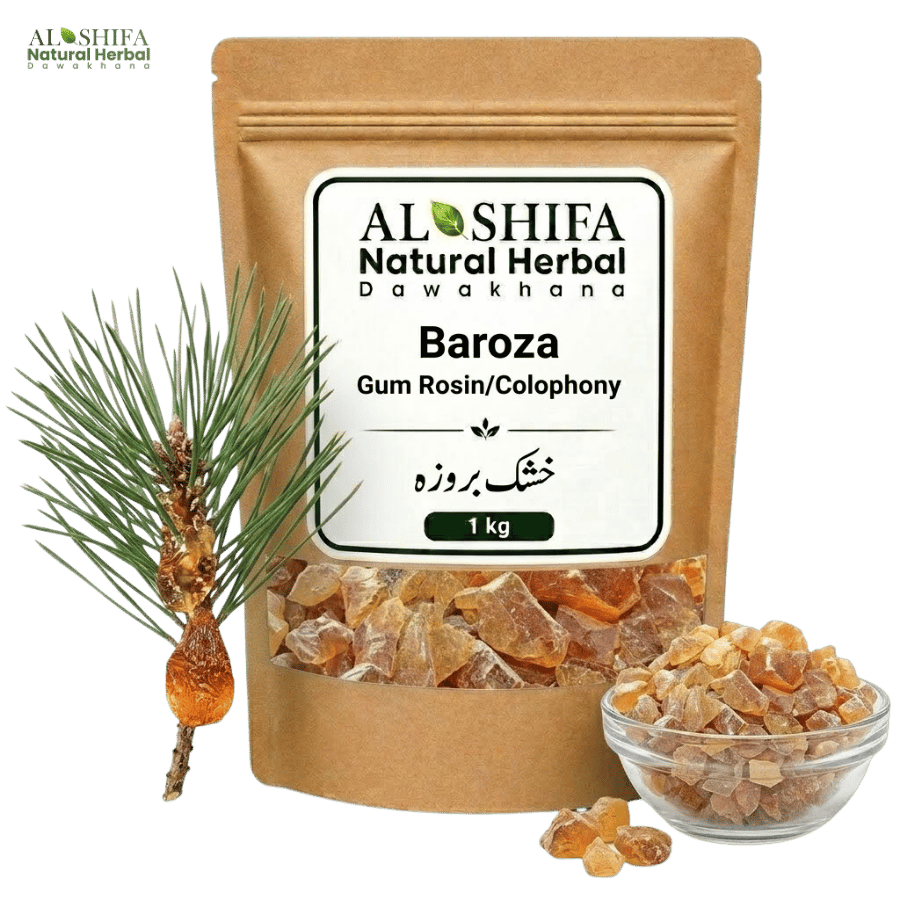
Baroza, also known as Gum Rosin, Colophony or Pine Rosin, is a natural solid resinous material obtained from the oleoresin of pine trees (Pinus species). Traditionally known as Khushk Baroza, it has long been used in selected external preparations, resinous plasters, adhesives, polishing, coatings, crafts and other specialized applications.
Al Shifa Baroza is carefully selected with attention to its characteristic resinous appearance, natural colour, cleanliness, proper dryness and responsible storage.
Key Features:
Important Note: Baroza is pine-derived resin, not an ordinary edible plant gum. Colophony can cause contact allergy in sensitive individuals. Its suitability depends on grade and intended use; industrial or craft-grade rosin should not be consumed or automatically used medicinally.
Baroza, commonly known as Gum Rosin or Colophony, is a natural solid resinous material obtained from the oleoresin of certain pine trees (Pinus species). In Urdu herbal and traditional raw-material trade, it is commonly known as خشک بروزہ.
Fresh pine oleoresin contains both volatile and non-volatile resinous components. During processing, the volatile turpentine portion is separated, leaving behind a hard, brittle resin known as gum rosin or colophony.
Baroza has a long history of use as a traditional natural raw material. It has been used in selected external traditional preparations, plasters, adhesive formulations, polishes, varnishes, soaps, wax-related products, crafts and various technical applications.
It is important to distinguish Baroza from ordinary edible plant gums. Gum rosin is a pine-derived resin, not a food gum such as Gond Katira or another water-swelling edible gum.
At Al Shifa Natural Herbal Dawakhana, Baroza is carefully selected with attention to its traditional identity, characteristic resinous appearance, cleanliness, dryness and responsible storage.
Baroza is the solid resin remaining after volatile turpentine components have been separated from natural pine oleoresin.
Pine trees naturally produce oleoresin, a sticky aromatic material that may be collected from suitable species of the genus Pinus.
After processing, this oleoresin can yield two major fractions:
The solid portion becomes the hard resinous material known as Gum Rosin, Colophony or Baroza.
Depending on processing and handling, Baroza may be supplied as:
English Name: Gum Rosin / Colophony / Pine Rosin
Urdu Name: خشک بروزہ / بروزہ
Roman Name: Baroza / Biroza / Baroza Khushk
Botanical Source: Pinus species
Plant Family: Pinaceae
Source Material: Pine Oleoresin
Material Obtained: Solid Resinous Fraction
Common Form: Solid Pieces / Flakes / Granules
Product Type: Natural Pine-Derived Resinous Raw Material
The terms “gum” and “resin” are sometimes used loosely in traditional trade, but they are not chemically the same type of natural material.
Baroza is primarily a resinous pine product.
It should not be confused with:
Many true plant gums swell or dissolve differently in water, while rosin has distinctly resinous physical properties.
Therefore, the commercial name “Gum Rosin” does not mean that Baroza should be treated like an edible herbal gum.
Natural pine oleoresin contains both resin acids and volatile components.
Traditional gum rosin production generally involves:
The final rosin is usually hard and brittle at ordinary temperatures.
These related materials should not automatically be treated as interchangeable.
Pine Oleoresin:
The natural sticky material obtained from the pine tree before separation into its major components.
Turpentine:
The volatile fraction obtained from pine oleoresin. It has very different physical properties and safety considerations.
Gum Rosin / Colophony:
The solid non-volatile resinous material remaining after turpentine separation.
Processed Rosin Products:
Rosin may undergo further chemical or industrial processing for specialized applications.
Therefore, information about turpentine should not automatically be applied to solid Baroza, and industrially modified rosins should not automatically be treated as ordinary natural gum rosin.
Good-quality Baroza should retain the expected characteristics of properly handled natural gum rosin.
Common quality features include:
Colour can vary according to pine source, processing, oxidation and commercial grade.
Baroza may naturally occur in shades ranging from:
Some pieces may appear more transparent than others.
Colour alone does not establish purity or suitability for a particular application because commercial rosin is available in different grades.
Natural pine resin materials have been used for centuries in different cultures.
Traditional applications of Baroza and related pine resins have included:
The appropriate application depends on the grade, processing and formulation.
Baroza has historically been valued mainly as an ingredient in selected external preparations.
Its resinous and adhesive character makes it useful in formulations where a material needs to:
These physical properties should not be confused with proven medical treatment effects.
Rosin has historically appeared in different plaster and adhesive preparations.
In traditional formulations, it may help provide:
However, a traditional plaster containing Baroza should not be assumed to treat fractures, deep injuries, infected wounds or chronic pain.
Serious injuries require appropriate medical assessment.
Although rosin has a history of external use, it is also a well-recognized cause of contact allergy in some people.
Skin exposure may cause:
Repeated exposure can be particularly problematic for someone who has already developed sensitivity to colophony.
A small-area patch test may be appropriate before using a new external preparation containing Baroza, but suspected allergy should be professionally assessed.
Colophony, another name for rosin, is an important contact allergen.
A person already known to be allergic to colophony or rosin should carefully check products that may contain rosin-derived ingredients.
Exposure may occur through certain:
The exact ingredients of finished products vary.
Raw Baroza or homemade Baroza preparations should not be applied directly to:
Persistent redness, swelling, pain, discharge, warmth or other signs of infection require appropriate medical care.
Gum rosin is widely valued because of its natural resinous properties.
Depending on grade and processing, rosin has been used in products such as:
These technical applications demonstrate the physical usefulness of rosin but do not establish medicinal benefits.
Rosin is also widely associated with bowed string instruments.
Specially prepared rosin can be applied to the hair of bows used with instruments such as:
This increases friction between the bow hair and strings.
Instrument rosin is a specialized product and should not automatically be treated as medicinal or cosmetic-grade Baroza.
Gum rosin contains a mixture of naturally occurring resin acids and related compounds.
Its exact composition can vary according to:
Chemical changes can also occur during ageing and processing.
The presence of natural resin compounds does not by itself establish a medical benefit.
Rosin softens and melts when heated.
Heating can also produce fumes and airborne particles that may irritate the respiratory system, particularly with repeated or occupational exposure.
For this reason:
People with respiratory sensitivity should be particularly careful around fumes or airborne rosin particles.
Finely powdered Baroza can create airborne dust.
Avoid deliberate inhalation of the powder.
When handling significant quantities of finely divided material:
Traditional use does not make concentrated dust or fumes harmless.
Baroza is not an ordinary food ingredient and should not be casually eaten or self-prescribed internally.
Traditional medicinal references involving resinous materials may depend on:
Raw craft-grade, industrial-grade or unidentified rosin should not be consumed.
The intended grade is especially important with Baroza.
Rosin materials may be supplied for:
These grades should not automatically be considered interchangeable.
A product being natural does not mean that every commercial grade is suitable for medicinal, cosmetic or internal use.
Reliable information regarding medicinal internal use of Baroza during pregnancy and breastfeeding is limited.
Pregnant or breastfeeding women should avoid self-prescribing Baroza internally.
External products containing rosin may also cause contact allergy, so known sensitivity should be considered.
Baroza should not be routinely given internally to children.
Keep raw resin pieces and powders away from young children.
External preparations containing rosin should be used cautiously because skin irritation or allergy can occur.
Anyone with a known allergy to rosin, colophony or related resin-containing products should avoid exposure unless an appropriate professional advises otherwise.
Stop using a product and seek medical advice if exposure causes significant:
Breathing difficulty or severe allergic symptoms require urgent medical attention.
At Al Shifa Natural Herbal Dawakhana, Baroza is selected with attention to:
Traditional Identity – Resinous material consistent with natural gum rosin.
Characteristic Appearance – Recognizable hard and brittle resinous structure.
Natural Colour – Appropriate yellow, amber or brown resinous tones according to grade.
Cleanliness – Selected to reduce unnecessary debris and foreign matter.
Proper Dryness – Maintained appropriately for responsible storage.
Responsible Storage – Protected from excessive heat, moisture, dust and contamination.
Al Shifa Natural Herbal Dawakhana, established in 1999, supplies carefully selected traditional herbs and natural raw materials throughout Pakistan.
Our focus includes:
The appropriate use of Baroza depends on its grade and intended application.
Traditionally and technically, it may be used as:
For medicinal or cosmetic applications, the grade and formulation must be appropriate for the intended use.
Do not assume that industrial or craft-grade Baroza is suitable for skin application or internal use.
Baroza is a natural pine-derived resinous material, not an ordinary edible gum.
Its traditional use should not be interpreted as proof that it can treat or cure:
Colophony is also a recognized contact allergen, and sensitive individuals may develop allergic skin reactions.
The suitability of Baroza depends on its grade, purity, processing and intended application.
Industrial, craft or unidentified grades should not be consumed or automatically used for medicinal purposes.
Store Baroza in a cool, dry and clean place in a tightly closed container.
For better storage:
Because rosin can soften with heat, avoid storage near heaters or other high-temperature areas.
Baroza, also known as Gum Rosin, Colophony or Pine Rosin, is a natural solid resinous material obtained from pine oleoresin. It is traditionally known in Urdu as خشک بروزہ and should not be confused with ordinary edible plant gums.
Baroza has traditionally been used in selected external preparations, resinous plasters, adhesives, polishing, coatings, crafts and other specialized applications. The appropriate use depends on its grade and processing.
Customers searching for Baroza Pakistan, Biroza Pakistan, Gum Rosin Pakistan, Colophony Pakistan, Pine Rosin Pakistan, Khushk Baroza, pure Baroza, original Baroza, Baroza uses, Baroza Lahore, Baroza price in Pakistan, Gum Rosin price in Pakistan, buy Baroza Pakistan or Baroza online Pakistan can choose Al Shifa Natural Herbal Dawakhana for carefully selected traditional raw material.
Since 1999, Al Shifa Natural Herbal Dawakhana has focused on supplying traditional herbs and natural raw materials with attention to identity, cleanliness, natural quality, responsible storage and clear product information.
Product Name: Baroza / Khushk Baroza
English Name: Gum Rosin / Colophony / Pine Rosin
Urdu Name: خشک بروزہ / بروزہ
Roman Name: Baroza / Biroza / Baroza Khushk
Botanical Source: Pinus spp.
Plant Family: Pinaceae
Source Material: Pine Oleoresin
Common Form: Solid Resin Pieces / Flakes / Granules
Product Type: Natural Pine-Derived Resinous Raw Material
Traditional Use: Selected external preparations, resinous plasters, adhesives, polishing, coatings and craft applications
Important Note: Baroza is pine-derived gum rosin, not an ordinary edible plant gum. Colophony can cause contact allergy in sensitive individuals. Grade and intended use are important, and industrial or craft-grade rosin should not be consumed or automatically used medicinally.
خشک بروزہ صنوبر کے درختوں سے حاصل ہونے والی قدرتی رال سے تیار کیا جانے والا ایک سخت اور خشک رال دار مادہ ہے۔ صنوبر کے درخت سے نکلنے والی تازہ رال میں روغنی اور اڑنے والے اجزاء بھی موجود ہوتے ہیں۔ اس رال سے روغنِ تارپین اور دوسرے اڑنے والے حصے الگ کرنے کے بعد باقی رہنے والا سخت رال دار مادہ خشک بروزہ کہلاتا ہے۔
خشک بروزہ کی خاص پہچان اس کی قدرتی زرد، سنہری، زردی مائل بھوری سے گہری بھوری رنگت، سخت اور بھربھری ساخت اور مخصوص رال دار ظاہری حالت ہے۔ ٹھنڈی حالت میں یہ عموماً سخت ہوتا ہے جبکہ مناسب گرمی ملنے پر نرم اور پگھل سکتا ہے۔
طب یونانی اور روایتی طریقوں میں بروزہ اور صنوبر سے حاصل ہونے والے رال دار مادوں کا ذکر خصوصاً بعض بیرونی استعمال کی تیاریوں، مرہموں اور دوسرے مرکبات میں ملتا ہے۔ خشک بروزہ کا بڑا استعمال غیر طبی مصنوعات میں بھی ہوتا ہے۔
الشفاء نیچرل ہربل دواخانہ میں خشک بروزہ کو اس کی درست پہچان، قدرتی رنگت، رال دار ساخت، صفائی اور مناسب خشک حالت کو دیکھ کر منتخب کیا جاتا ہے۔ اسے نمی، گرد اور دوسری غیر ضروری چیزوں سے محفوظ رکھنے کے لیے صحیح طریقے سے محفوظ کیا جاتا ہے۔
خشک بروزہ صنوبر کے درختوں سے حاصل ہونے والی قدرتی رال کا سخت حصہ ہے۔
صنوبر کے بعض درختوں کے تنے سے چپچپی رال حاصل کی جاتی ہے۔ اس تازہ رال میں قدرتی روغنی اور اڑنے والے اجزاء موجود ہوتے ہیں۔
جب اس رال سے روغنِ تارپین اور دوسرے اڑنے والے حصے الگ کیے جاتے ہیں تو پیچھے ایک سخت رال دار مادہ باقی رہ جاتا ہے۔ اسی کو عام طور پر:
کہا جاتا ہے۔
خشک بروزہ کی رنگت مختلف ہو سکتی ہے، مثلاً:
اس کی رنگت اور ظاہری حالت صنوبر کی قسم، خام رال، درخت کہاں اگا ہو، رال جمع کرنے کے وقت، صفائی، گرم کرنے اور تیار کرنے کے طریقے کے مطابق مختلف ہو سکتی ہے۔
ضرورت کے مطابق خشک بروزہ کو:
کی شکل میں رکھا یا مختلف تیاریوں میں شامل کیا جا سکتا ہے۔
نام: خشک بروزہ
دوسرا معروف نام: بروزہ خشک
ایک اور معروف نام: روزن
عام نام: صنوبر کی خشک رال
ماخذ: صنوبر کے درختوں سے حاصل ہونے والی قدرتی رال
استعمال ہونے والا حصہ: روغنی اور اڑنے والے اجزاء الگ کرنے کے بعد حاصل ہونے والا سخت رال دار حصہ
عام شکل: سخت، خشک اور بھربھرا رال دار مادہ
عام رنگت: زرد سے زردی مائل بھوری یا گہری بھوری
قسم: صنوبر کی رال سے حاصل ہونے والا قدرتی خشک رال دار مادہ
خشک بروزہ کی درست پہچان ضروری ہے کیونکہ تازہ بروزہ، روغنِ تارپین اور خشک بروزہ ایک ہی حالت کی چیزیں نہیں ہیں۔ یہ ایک ہی بنیادی ماخذ سے تعلق رکھ سکتے ہیں، لیکن ان کی ساخت، تیاری اور استعمال مختلف ہوتے ہیں۔
اچھے خشک بروزہ میں اس کی قدرتی رنگت، رال دار ساخت اور صاف ظاہری حالت موجود رہتی ہے۔
اچھے خشک بروزہ کی عام نشانیاں یہ ہو سکتی ہیں:
رنگت کا بہت زیادہ گہرا ہونا لازماً خراب معیار کی علامت نہیں، کیونکہ رنگ خام رال اور تیاری کے طریقے کے مطابق مختلف ہو سکتا ہے۔
اگر خشک بروزہ میں غیر معمولی گندگی، نمی، پھپھوندی یا خراب بو محسوس ہو تو اسے استعمال نہ کریں۔
تازہ بروزہ اور خشک بروزہ ایک دوسرے سے متعلق ہیں، لیکن دونوں کی حالت مختلف ہوتی ہے۔
تازہ بروزہ:
صنوبر کے درخت سے حاصل ہونے والی ابتدائی چپچپی رال ہے جس میں روغنی اور اڑنے والے اجزاء بھی موجود ہوتے ہیں۔
خشک بروزہ:
تازہ رال سے روغنِ تارپین اور دوسرے اڑنے والے اجزاء الگ کرنے کے بعد باقی رہنے والا سخت رال دار حصہ ہے۔
اسی لیے خشک بروزہ عموماً تازہ رال کے مقابلے میں زیادہ سخت، خشک اور بھربھرا ہوتا ہے۔
خشک بروزہ اور روغنِ تارپین ایک ہی چیز نہیں ہیں۔
خشک بروزہ:
یہ صنوبر کی رال کا سخت اور نسبتاً غیر اڑنے والا حصہ ہے۔
روغنِ تارپین:
یہ صنوبر کی رال سے حاصل ہونے والا روغنی اور اڑنے والا حصہ ہے۔
دونوں کا بنیادی ماخذ صنوبر کی رال ہو سکتا ہے، لیکن ان کی ظاہری حالت، کیمیائی ساخت اور استعمال مختلف ہیں۔
بروزہ اور صنوبر سے حاصل ہونے والے رال دار مادے قدیم زمانے سے مختلف روایتی تیاریوں میں استعمال ہوتے رہے ہیں۔
خشک بروزہ کا ذکر خصوصاً:
میں ملتا ہے۔
یہ استعمال روایتی معلومات پر مبنی ہیں۔ خشک بروزہ کو کسی بیماری کا یقینی یا ثابت شدہ علاج نہیں سمجھنا چاہیے۔
خشک بروزہ اپنی رال دار اور چپکنے والی خاصیت کی وجہ سے بعض روایتی مرہموں اور بیرونی تیاریوں میں شامل کیا جاتا رہا ہے۔
اس قسم کی تیاریوں میں خشک بروزہ بعض اوقات دوسرے روغن، موم یا قدرتی اجزاء کے ساتھ شامل کیا جاتا ہے تاکہ تیار مرکب کی ساخت اور چپکنے کی خاصیت مناسب رہے۔
لیکن ہر قسم کا خشک بروزہ براہ راست جلد پر لگانے کے لیے مناسب نہیں ہوتا۔
خاص طور پر حساس جلد والے افراد میں یہ جلدی حساسیت یا خارش پیدا کر سکتا ہے۔
خشک بروزہ بنیادی طور پر ایک قدرتی رال دار مادہ ہے۔
عام درجہ حرارت پر یہ عموماً:
ہوتا ہے۔
مناسب گرمی ملنے پر یہ نرم یا پگھل سکتا ہے اور ٹھنڈا ہونے پر دوبارہ سخت ہو جاتا ہے۔
اسی خاصیت کی وجہ سے اسے مختلف روایتی اور صنعتی تیاریوں میں استعمال کیا جاتا ہے۔
خشک بروزہ مختلف قدرتی رال دار اجزاء کا مرکب ہوتا ہے۔
اس میں بڑی مقدار میں مختلف رال دار تیزابی اجزاء پائے جا سکتے ہیں، جن میں ابیٹک ایسڈ سے متعلق اجزاء نمایاں ہیں۔
اس میں مختلف مقدار میں:
موجود ہو سکتے ہیں۔
ان اجزاء کی مقدار مختلف ہو سکتی ہے اور اس پر کئی چیزیں اثر انداز ہوتی ہیں، مثلاً:
اسی لیے مختلف جگہوں سے حاصل ہونے والے خشک بروزہ کی رنگت، ساخت اور قدرتی اجزاء بالکل ایک جیسے ہونا ضروری نہیں۔
خشک بروزہ مکمل ٹکڑوں یا سفوف کی شکل میں دستیاب ہو سکتا ہے۔
مکمل خشک بروزہ:
اس میں قدرتی رنگت، سخت رال دار ساخت، صفائی اور ظاہری معیار کو دیکھنا نسبتاً آسان ہوتا ہے۔
خشک بروزہ کا سفوف:
سفوف کو مختلف تیاریوں میں شامل کرنا آسان ہو سکتا ہے، لیکن پیسنے کے بعد اصل رال کی ظاہری شناخت اور صفائی کو جانچنا نسبتاً مشکل ہو جاتا ہے۔
دونوں صورتوں میں اہم باتیں یہ ہیں:
خشک بروزہ بعض افراد میں جلدی حساسیت پیدا کر سکتا ہے۔
خاص طور پر ایسے افراد جنہیں پہلے سے صنوبر کی رال، بروزہ یا اس سے بنی مصنوعات سے حساسیت ہو، انہیں زیادہ احتیاط کرنی چاہیے۔
جلد پر استعمال کے بعد اگر:
پیدا ہوں تو استعمال بند کر دیں۔
اگر کسی شخص کو پہلے سے خشک بروزہ سے الرجی معلوم ہو تو اس پر مشتمل مرہم یا دوسری جلدی مصنوعات استعمال نہ کریں۔
خشک بروزہ کو پیسنے سے باریک ذرات ہوا میں پھیل سکتے ہیں، جبکہ زیادہ گرم کرنے پر دھواں یا بخارات پیدا ہو سکتے ہیں۔
ان ذرات یا دھوئیں کو سانس کے ذریعے اندر لینے سے بعض افراد میں:
ہو سکتی ہے۔
اسی لیے خشک بروزہ کو پیستے یا گرم کرتے وقت مناسب ہوا دار جگہ استعمال کریں اور غیر ضروری دھوئیں کو سانس کے ذریعے اندر لینے سے بچیں۔
خشک بروزہ آگ پکڑنے والا رال دار مادہ ہے۔
اسے:
کے قریب نہ رکھیں۔
اگر کسی تیاری کے لیے اسے گرم کرنا ضروری ہو تو مناسب احتیاط اور محفوظ طریقہ اختیار کریں۔
خشک بروزہ کا سفوف یا پگھلا ہوا مادہ آنکھوں میں نہیں جانا چاہیے۔
اگر سفوف آنکھ میں چلا جائے تو آنکھ کو صاف پانی سے اچھی طرح دھوئیں۔
پگھلا ہوا گرم بروزہ جلد یا آنکھ پر گرنے سے جلن یا جلنے کا سبب بھی بن سکتا ہے، اس لیے گرم کرتے وقت خاص احتیاط ضروری ہے۔
بازار میں دستیاب خشک بروزہ کو عام غذائی چیز سمجھ کر خود سے کھانا یا پینا مناسب نہیں ہے۔
خشک بروزہ کی مختلف اقسام مختلف مقاصد کے لیے تیار کی جا سکتی ہیں اور ان کی صفائی اور معیار ایک جیسے نہیں ہوتے۔
اس لیے غیر معلوم معیار کے خشک بروزہ کو خود سے اندرونی استعمال کے لیے نہ لیں۔
اگر کسی مستند طب یونانی نسخے میں اس کا اندرونی استعمال موجود ہو تو بھی درست قسم، صفائی، مقدار اور طریقہ استعمال مستند معالج سے معلوم کرنا ضروری ہے۔
حمل کے دوران خشک بروزہ کو دوا کے طور پر کھانے یا پینے کے لیے خود سے استعمال نہ کریں۔
حاملہ خواتین میں خشک بروزہ کے اندرونی طبی استعمال کی حفاظت کے بارے میں قابل اعتماد جدید انسانی معلومات محدود ہیں۔
حمل کے دوران بیرونی استعمال بھی ایسی صورت میں احتیاط سے کیا جائے جب جلد حساس ہو یا پہلے سے بروزہ سے الرجی موجود ہو۔
دودھ پلانے والی خواتین کو خشک بروزہ کا اندرونی طبی استعمال خود سے شروع نہیں کرنا چاہیے۔
اگر کسی بیرونی تیاری میں خشک بروزہ موجود ہو تو اسے ایسی جگہ استعمال نہ کریں جہاں سے شیر خوار بچے کی جلد یا منہ کا براہ راست رابطہ ہو سکتا ہو۔
شیر خوار اور چھوٹے بچوں کو خشک بروزہ خود سے دوا کے طور پر نہ دیں۔
بچوں کی جلد بھی حساس ہو سکتی ہے، اس لیے خشک بروزہ پر مشتمل کسی بیرونی تیاری کو استعمال کرنے سے پہلے اس کی مکمل ترکیب اور مناسب استعمال معلوم کرنا ضروری ہے۔
خشک بروزہ کے اندرونی طبی استعمال اور دوسری ادویات کے ساتھ ممکنہ اثرات کے بارے میں مکمل جدید انسانی معلومات موجود نہیں ہیں۔
اگر کوئی شخص پہلے سے مستقل دوا استعمال کر رہا ہو تو خشک بروزہ کو دوا کے طور پر اندرونی استعمال کرنے سے پہلے مستند معالج سے مشورہ کرنا بہتر ہے۔
خشک بروزہ کی محفوظ اندرونی طبی مقدار کے بارے میں جدید انسانی معلومات محدود ہیں۔
صرف یہ سمجھ کر کہ یہ قدرتی رال ہے، اسے زیادہ مقدار یا طویل عرصے تک خود سے استعمال نہیں کرنا چاہیے۔
بیرونی استعمال میں بھی بار بار یا طویل رابطہ بعض افراد میں جلدی حساسیت پیدا کر سکتا ہے۔
اگر استعمال کے بعد:
محسوس ہو تو استعمال بند کر دیں۔ سانس لینے میں واضح دشواری یا شدید الرجی کی صورت میں فوری طبی مدد حاصل کریں۔
خشک بروزہ صنوبر کی رال سے حاصل ہونے والا قدرتی رال دار مادہ ہے۔ قدرتی ہونے کا مطلب یہ نہیں کہ اسے ہر شخص، ہر بیماری یا ہر مقدار میں محفوظ سمجھا جائے۔
اسے خود سے کسی سنگین یا مسلسل بیماری کا ثابت شدہ علاج نہ سمجھیں۔
خاص طور پر:
میں خود سے خشک بروزہ استعمال نہ کریں۔
خشک بروزہ بعض افراد میں جلدی حساسیت پیدا کر سکتا ہے اور اس کے گرم دھوئیں یا باریک ذرات سے حساس افراد میں سانس کی تکلیف بھی ہو سکتی ہے۔
اگر علامات شدید ہوں، بار بار ہوں یا مسلسل برقرار رہیں تو مستند معالج سے معائنہ کروائیں۔
الشفاء نیچرل ہربل دواخانہ میں خشک بروزہ منتخب کرتے وقت درج ذیل باتوں کا خیال رکھا جاتا ہے:
درست پہچان: اصل صنوبر کی رال سے حاصل ہونے والا خشک اور سخت رال دار مادہ ہو۔
قدرتی رنگت: خشک بروزہ میں اس کی قدرتی زرد سے زردی مائل بھوری رنگت موجود ہو۔
قدرتی ساخت: اس کی اصل سخت، خشک اور بھربھری رال دار ساخت برقرار ہو۔
مناسب خشک حالت: غیر ضروری نمی موجود نہ ہو۔
صاف ستھرا: مٹی، گرد، ریت، کنکر، لکڑی، چھال اور دوسری غیر ضروری چیزوں سے پاک صاف ہو۔
ظاہری پھپھوندی سے پاک: خراب ہونے یا آلودگی کی واضح نشانیاں موجود نہ ہوں۔
صحیح طریقے سے محفوظ: نمی، بہت زیادہ گرمی، کھلی آگ اور آلودگی سے محفوظ رکھا گیا ہو۔
الشفاء نیچرل ہربل دواخانہ سنہ ۱۹۹۹ سے قدرتی جڑی بوٹیوں اور روایتی قدرتی اشیاء کی سپلائی کر رہا ہے۔
ہماری توجہ درج ذیل باتوں پر رہتی ہے:
خشک بروزہ کو مختلف روایتی اور بیرونی استعمال کی تیاریوں میں شامل کیا جاتا رہا ہے، خصوصاً:
میں اس کا ذکر ملتا ہے۔
لیکن خشک بروزہ کی مناسب مقدار اور طریقہ استعمال اس کی قسم، صفائی، تیاری اور مقصد کے مطابق مختلف ہو سکتا ہے۔
اسی لیے یہاں خود سے کھانے، پینے یا جلد پر لگانے کی کوئی مخصوص مقدار تجویز نہیں کی جا رہی۔
اگر اسے طبی مقصد کے لیے استعمال کرنا ہو تو پہلے مستند معالج سے درست قسم، مناسب مقدار، مدت اور طریقہ استعمال معلوم کریں۔
خشک بروزہ کو ٹھنڈی، خشک اور صاف ستھری جگہ پر اچھی طرح کسی جار میں پیک کر کے رکھیں۔
بہتر معیار برقرار رکھنے کے لیے:
اگر خشک بروزہ میں غیر معمولی نمی، آلودگی یا خراب بو محسوس ہو تو اسے استعمال نہ کریں۔
خشک بروزہ صنوبر کے درختوں کی قدرتی رال سے حاصل ہونے والا سخت اور خشک رال دار مادہ ہے۔ تازہ رال سے روغنِ تارپین اور دوسرے اڑنے والے اجزاء الگ کرنے کے بعد باقی رہنے والا سخت حصہ خشک بروزہ، روزن یا کولوفونی کہلاتا ہے۔
اگر آپ خشک بروزہ، بروزہ خشک، بروزہ، گم روزن، روزن، کولوفونی، صنوبر کی خشک رال، خالص خشک بروزہ، اصل خشک بروزہ، خشک بروزہ کے استعمال، خشک بروزہ پاکستان، خشک بروزہ لاہور، خشک بروزہ کی قیمت، خشک بروزہ کی قیمت پاکستان، خشک بروزہ آن لائن یا خشک بروزہ خریدیں تلاش کر رہے ہیں تو الشفاء نیچرل ہربل دواخانہ احتیاط سے منتخب، صاف ستھرا اور صحیح طریقے سے محفوظ کیا گیا خشک بروزہ فراہم کرتا ہے۔
سنہ ۱۹۹۹ سے الشفاء نیچرل ہربل دواخانہ قدرتی جڑی بوٹیوں اور روایتی قدرتی اشیاء کی سپلائی میں درست پہچان، صفائی، قدرتی معیار، مناسب خشک حالت، صحیح طریقے سے محفوظ رکھنے اور آسان و ذمہ دارانہ معلومات کو اہمیت دیتا آ رہا ہے۔
نام: خشک بروزہ
دوسرا معروف نام: بروزہ خشک
ایک اور معروف نام: روزن
عام نام: صنوبر کی خشک رال
ماخذ: صنوبر کے درختوں سے حاصل ہونے والی قدرتی رال
استعمال ہونے والا حصہ: رال سے روغنِ تارپین اور دوسرے اڑنے والے اجزاء الگ کرنے کے بعد حاصل ہونے والا سخت حصہ
عام شکل: سخت، خشک اور بھربھرا رال دار مادہ
عام رنگت: زرد سے زردی مائل بھوری یا گہری بھوری
عام روایتی استعمال: بعض مرہم، جلد پر لگانے والی تیاریوں اور دوسرے بیرونی رال دار مرکبات
اہم نوٹ: خشک بروزہ صنوبر کی رال سے حاصل ہونے والا سخت رال دار مادہ ہے اور اسے تازہ بروزہ یا روغنِ تارپین کے برابر نہیں سمجھنا چاہیے۔ یہ بعض افراد میں جلدی حساسیت پیدا کر سکتا ہے اور اس کے باریک ذرات یا گرم دھوئیں سے سانس میں تکلیف ہو سکتی ہے۔ اسے خود سے کھانے یا پینے کے لیے استعمال نہ کریں۔ طبی استعمال کے لیے مستند معالج سے مناسب رہنمائی حاصل کریں۔