کوکو پاوڈر
Price range: ₨ 120 through ₨ 1,800
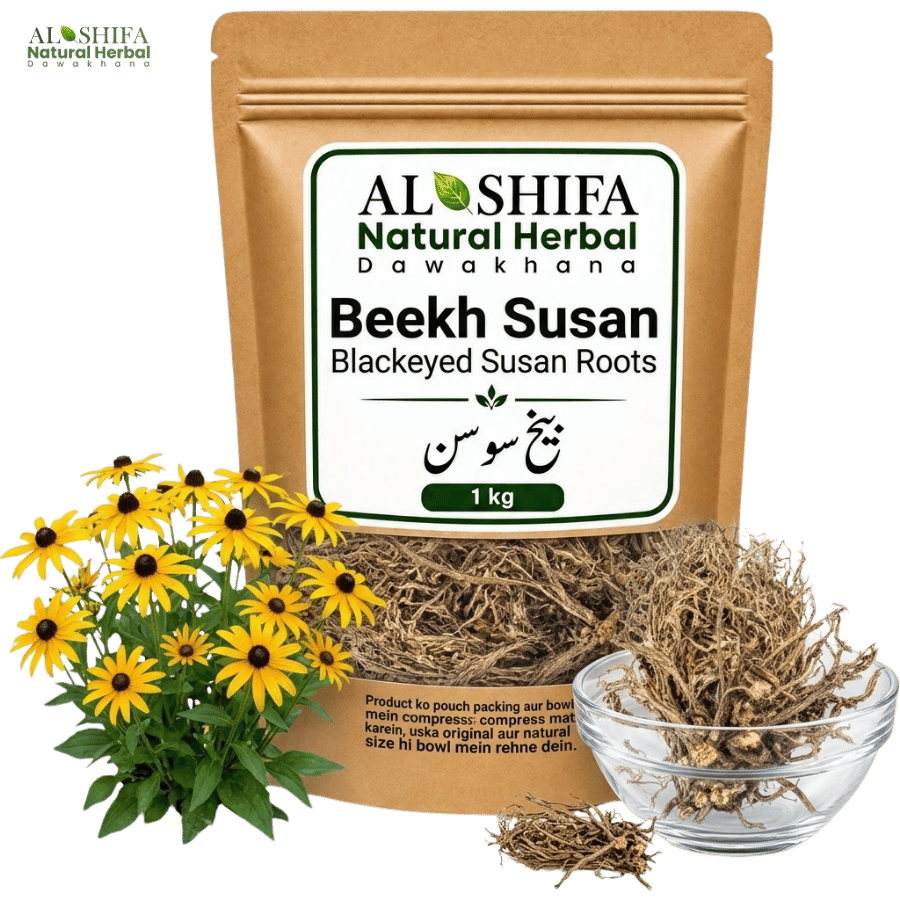
Beekh Susan, commonly known as Black-Eyed Susan Root, is a traditional dried herbal root commonly associated with Rudbeckia hirta of the Asteraceae family. It has a history of use in selected traditional herbal and external preparations.
Al Shifa Beekh Susan is carefully selected with attention to its traditional identity, characteristic root appearance, cleanliness, proper dryness and responsible storage.
Key Features:
Usage: Suitable for selected traditional herbal and external preparations where the correct botanical identity and intended use are known.
Important Note: Beekh Susan is commonly associated with Black-Eyed Susan (Rudbeckia hirta), but trade names may vary. It should not be confused with Echinacea, and traditional use should not be considered a proven treatment for infections or other diseases.
Beekh Susan, commonly sold as Black-Eyed Susan Root, is a traditional dried root material associated with plants known as Black-Eyed Susan. The name is most commonly linked with Rudbeckia hirta, a flowering plant belonging to the Asteraceae family.
Black-Eyed Susan is recognised by its bright yellow flower petals surrounding a dark brown or nearly black central cone. While the flowers make the plant easy to recognise when growing, Beekh Susan refers specifically to the underground root material, not the flower.
The root has a history of traditional use in North American herbal practices, where Rudbeckia species were used in selected preparations associated with general wellness, external applications and other traditional purposes. However, historical use should not be confused with established treatment for modern medical conditions.
At Al Shifa Natural Herbal Dawakhana, Beekh Susan is selected with attention to its traditional identity, characteristic root appearance, cleanliness, proper dryness and responsible storage.
The word Beekh means root.
Therefore, Beekh Susan refers to the dried root portion of a plant traded under the Susan or Black-Eyed Susan name.
The dried root may naturally appear:
Natural variation can occur according to plant age, growing conditions, drying and storage.
English Name: Black-Eyed Susan Root
Urdu Name: بیخ سوسن
Roman Name: Beekh Susan / Bekh Susan
Common Botanical Association: Rudbeckia hirta L.
Plant Family: Asteraceae
Plant Part: Root
Product Type: Dried Herbal Root / Botanical Raw Material
The name Susan alone is not enough to guarantee the exact plant species.
Black-Eyed Susan is most commonly associated with Rudbeckia hirta, but several plants within the genus Rudbeckia share similar common names.
Traditional market names can also vary between regions.
Therefore:
Trade Name ≠ Guaranteed Botanical Species
Where exact species identity is important, botanical verification should be used rather than relying only on the common name.
Black-Eyed Susan is a flowering plant known for its distinctive daisy-like flowers.
The plant commonly produces:
It is native to North America and is widely recognised as an ornamental wildflower.
Different parts of a plant can have different composition and traditional uses.
Therefore:
Black-Eyed Susan Root ≠ Black-Eyed Susan Flower
and
Root ≠ Leaf ≠ Flower
When purchasing Beekh Susan, the plant part should be clearly identified as root material.
Black-Eyed Susan and related Rudbeckia species have a history of use in Native American herbal traditions.
Different plant parts were historically used in selected preparations for general wellness and external applications.
The root has been mentioned in traditional herbal practices, but historical use does not establish it as a proven medicine for a particular disease.
Rudbeckia root has historically been associated with selected external herbal preparations.
Traditional plant-based external applications should still be used carefully because natural plant material can irritate sensitive skin or cause an allergic reaction.
External traditional use does not prove that the root can treat:
Persistent or infected skin problems require appropriate medical care.
Beekh Susan has also been associated with selected traditional herbal preparations intended for general wellness.
However, it should not be presented as a guaranteed treatment for:
Traditional herbal use and clinically proven treatment are different.
This is an important botanical distinction.
Black-Eyed Susan and Echinacea both belong to the Asteraceae family and can have superficially similar flower structures.
However:
Black-Eyed Susan ≠ Echinacea
Rudbeckia and Echinacea are separate botanical genera.
They should not be substituted for each other simply because they belong to the same plant family.
The genus Rudbeckia contains multiple species.
These include plants such as:
They are related but are not automatically identical in chemical composition or traditional use.
Therefore:
Rudbeckia hirta ≠ Every Rudbeckia Species
Exact species identification matters when the material is intended for specialised herbal use.
Rudbeckia roots contain naturally occurring plant compounds.
Depending on species and growing conditions, these may include different:
The exact composition can vary significantly between species, plant parts, harvests and extracts.
The presence of natural plant compounds does not automatically prove a medical treatment effect.
Beekh Susan may appear in different forms.
Whole Dried Root: Minimally processed dried root material.
Cut Root: Root divided into smaller pieces.
Root Powder: Finely ground dried root.
Root Extract: Concentrated preparation produced using a particular extraction method.
Therefore:
Whole Root ≠ Powder ≠ Extract
A research result involving a concentrated extract should not automatically be applied to ordinary dried root.
Botanical extracts can differ according to:
Therefore, two products carrying the name Black-Eyed Susan Extract may not have identical strength or composition.
Historical herbal use is valuable information, but it should be described responsibly.
Beekh Susan should not be promoted as a guaranteed cure or treatment for serious diseases.
Claims involving infections, immune disorders, chronic diseases or other medical conditions require suitable clinical evidence.
Traditional use of a plant for wounds, infections or illness does not make it equivalent to a modern antimicrobial medicine.
Therefore:
Beekh Susan ≠ Antibiotic
Serious bacterial infections require appropriate medical diagnosis and treatment.
Plants in the Asteraceae family are sometimes marketed using broad “immune booster” claims.
However, Black-Eyed Susan should not automatically be treated as an immune medicine.
Supporting general herbal wellness and treating an immune-related disease are very different claims.
Black-Eyed Susan belongs to the Asteraceae family.
People who are sensitive to plants in this family may have an increased possibility of skin or allergic reactions.
The family also includes plants such as:
Sensitivity to one plant does not guarantee sensitivity to all of them, but allergy-prone users should remain cautious.
Direct contact with plant material may cause irritation in sensitive individuals.
If redness, itching, swelling or persistent irritation develops after external exposure, discontinue use.
There is limited modern safety information for concentrated or repeated internal use of Black-Eyed Susan root.
Therefore, bulk dried root should not be self-dosed casually for treating disease.
The intended preparation, botanical identity, amount and individual health condition all matter.
Reliable safety information for concentrated Black-Eyed Susan root use during pregnancy and breastfeeding is limited.
For this reason, unsupervised medicinal internal use should be avoided during pregnancy and breastfeeding.
Beekh Susan should not be given to children as an unsupervised herbal medicine.
The safety of concentrated root preparations in children is not well established.
People with chronic medical conditions or those taking regular medicines should seek suitable professional guidance before using concentrated Black-Eyed Susan root preparations internally.
This is particularly important when botanical identity or extract strength is uncertain.
At Al Shifa Natural Herbal Dawakhana, Beekh Susan is selected with attention to:
Traditional Identity – Material consistent with recognised dried root characteristics.
Root Quality – Attention to suitable mature root material.
Natural Appearance – Characteristic colour, texture and root structure.
Cleanliness – Careful selection to reduce unwanted foreign material.
Proper Dryness – Root material dried appropriately for storage.
Responsible Handling – Careful handling throughout packing and storage.
Proper Storage – Protection from moisture, contamination and unsuitable environmental conditions.
Al Shifa Natural Herbal Dawakhana, established in 1999, supplies carefully selected herbs, roots, seeds, flowers and specialised natural raw materials throughout Pakistan.
Our focus for Beekh Susan includes:
Beekh Susan may be used as a traditional dried botanical root material in suitable herbal preparations where the correct botanical identity and intended use are known.
For internal medicinal use, professional guidance is recommended because reliable modern information about dosage and long-term safety is limited.
For external preparations, discontinue use if significant irritation or allergic reaction develops.
Beekh Susan is a traditional herbal root material and should not be promoted as a proven treatment for infections, immune disorders or other serious diseases.
Important distinctions include:
Store Beekh Susan in a cool, clean and dry place.
For best quality:
Beekh Susan / Black-Eyed Susan Root – بیخ سوسن is a traditional dried herbal root material commonly associated with Rudbeckia hirta, a member of the Asteraceae family. The root has a history of use in traditional herbal practices and is valued as a specialised botanical raw material.
Because the name Susan may be used differently in herbal trade, correct botanical and plant-part identification remains important. Black-Eyed Susan should also be clearly distinguished from Echinacea and other similar-looking Asteraceae plants.
Customers searching for Beekh Susan, Bekh Susan, Black Eyed Susan Root, Black-Eyed Susan Roots, Rudbeckia Hirta Root, Rudbeckia Root, Dried Black Eyed Susan Root, Susan Root, Beekh Susan Pakistan, Black Eyed Susan Root Pakistan, Rudbeckia Hirta Pakistan, Beekh Susan Lahore, Black Eyed Susan Root Lahore, Beekh Susan price in Pakistan, Black Eyed Susan Root price in Pakistan, buy Beekh Susan Pakistan or buy Black Eyed Susan Root Pakistan can choose Al Shifa Natural Herbal Dawakhana for carefully selected traditional botanical raw material.
Since 1999, Al Shifa Natural Herbal Dawakhana has focused on supplying herbs and specialised natural materials with attention to correct identity, quality selection, cleanliness, proper drying, responsible information and suitable storage.
Product Name: Beekh Susan
English Name: Black-Eyed Susan Root
Urdu Name: بیخ سوسن
Roman Name: Beekh Susan / Bekh Susan
Common Botanical Association: Rudbeckia hirta L.
Plant Family: Asteraceae
Plant Part: Root
Product Type: Dried Herbal Root / Botanical Raw Material
Traditional Use: Selected traditional herbal and external preparations
Important Note: Beekh Susan is commonly associated with Black-Eyed Susan (Rudbeckia hirta), but trade names may vary and should not replace botanical verification. It should not be confused with Echinacea, and traditional use should not be interpreted as proven treatment for infections or other diseases.
بیخ سوسن ایک پھول دار جڑی بوٹی کی جڑ ہے۔ اس پودے کے پھول شوخ زرد ہوتے ہیں اور پھول کا درمیانی حصہ گہرا بھورا یا سیاہ ہوتا ہے۔ پاکستان میں پنساری اور جڑی بوٹیوں کی دکانوں پر اس کی خشک جڑ بیخ سوسن کے نام سے ملتی ہے۔
بیخ سوسن کی جڑ نزلہ و زکام، آنتوں کے کیڑوں، پیشاب کے بہاؤ اور جسمانی سوجن کے لیے جڑی بوٹیوں کے استعمال میں مشہور ہے۔ اسے جلد کی صفائی اور بیرونی استعمال کے لیے بھی استعمال کیا جاتا ہے۔
بیخ سوسن پودے کا زمین کے اندر رہنے والا جڑ والا حصہ ہے۔ اس کی جڑیں پودے کو زمین میں مضبوط رکھتی ہیں اور مٹی سے پانی اور غذائی اجزا حاصل کرتی ہیں۔
خشک بیخ سوسن کی رنگت عموماً بھوری، خاکی یا گہری بھوری ہوتی ہے۔ یہ مکمل خشک جڑ، کٹی ہوئی جڑ اور سفوف کی شکل میں ملتی ہے۔
اچھی بیخ سوسن صاف، مناسب طور پر خشک، اپنی قدرتی رنگت والی اور مٹی، کنکر اور دوسری جڑوں کی ملاوٹ سے پاک ہوتی ہے۔
حکمت کی کتبِ مفردات میں بیخ سوسن کا نام ایرسا اور سوسن کی جڑ کے لیے بھی ملتا ہے۔ قدیم مفردات میں ایرسا کو سوسن کبود کی جڑ بیان کیا گیا ہے اور اس کا مزاج گرم و خشک درجہ دوم لکھا ملتا ہے۔
پاکستانی پنساری بازار میں بیخ سوسن کے نام سے فروخت ہونے والی سیاہ مرکز والے زرد پھول کی جڑ کی شناخت قدیم ایرسا سے الگ ہے۔
اس لیے گرم و خشک درجہ دوم قدیم ایرسا کا مزاج ہے۔ سیاہ مرکز والے زرد پھول کی اس بیخ سوسن کے لیے پاکستانی کتبِ مفردات میں الگ اور واضح مزاج دستیاب نہیں، اس لیے اس کے لیے غیر مستند مزاج مقرر نہیں کیا جاتا۔
بیخ سوسن کے پودے میں کئی قدرتی اجزا پائے جاتے ہیں۔ اس کی جڑ میں خوشبودار اور دوسرے فعال قدرتی اجزا کی شناخت کی گئی ہے۔
اس پودے کے اجزا پر جراثیم اور جسم میں پیدا ہونے والے نقصان دہ آزاد ذرات کے خلاف اثرات کے حوالے سے بھی تحقیق کی گئی ہے۔
جڑ کے قدرتی اجزا کی وجہ سے بیخ سوسن جڑی بوٹیوں کے طبی استعمال میں خاص اہمیت رکھتی ہے۔
بیخ سوسن کی جڑ نزلہ و زکام کے لیے استعمال کی جاتی ہے۔ اس مقصد کے لیے جڑ کو پانی میں جوش دے کر استعمال کرنے کا ذکر ملتا ہے۔
نزلہ و زکام کے لیے استعمال ہونے والی جڑی بوٹیوں کی ادویات میں بھی اس جڑ کو شامل کیا جاتا ہے۔
بیخ سوسن کی جڑ آنتوں کے کیڑوں کے لیے استعمال کی جاتی ہے۔
اس مقصد کے لیے جڑ کے سفوف اور پانی میں جوش دی گئی جڑ کا استعمال ملتا ہے۔ بچوں میں آنتوں کے کیڑوں کی بیماری کے لیے اس کی مقدار معالج سے چیک کروائیں۔
بیخ سوسن پیشاب کا بہاؤ بڑھانے کے لیے استعمال کی جاتی ہے۔
اسے جسم سے اضافی پانی کے اخراج کے لیے استعمال ہونے والی جڑی بوٹیوں میں بھی شامل کیا جاتا ہے۔
گردوں کے امراض میں استعمال کرنے سے پہلے مقدار معالج سے چیک کروائیں۔
بیخ سوسن جسمانی سوجن کے لیے استعمال کی جاتی ہے۔
اس کی جڑ کو پانی میں جوش دے کر بیرونی استعمال میں بھی کیا جاتا ہے۔ جسمانی سوجن کے لیے استعمال ہونے والے جڑی بوٹیوں کے نسخوں میں بیخ سوسن کا استعمال ہوتا ہے۔
بیخ سوسن کی جڑ جلد کی صفائی کے لیے بیرونی طور پر استعمال کی جاتی ہے۔
جڑ کو پانی میں جوش دے کر اس پانی کو جلد دھونے کے لیے استعمال کیا جاتا ہے۔ صاف اور اچھی بیخ سوسن بیرونی استعمال کے لیے منتخب کی جاتی ہے۔
بیخ سوسن کی جڑ کو جلد اور زخموں کی بیرونی صفائی کے لیے استعمال کیا جاتا ہے۔
اس مقصد کے لیے جڑ سے تیار کیا گیا پانی بیرونی دھلائی میں استعمال کیا جاتا ہے۔
بیخ سوسن کے پودے میں قدرتی حفاظتی اجزا پائے جاتے ہیں۔ ان اجزا پر جسم میں پیدا ہونے والے نقصان دہ آزاد ذرات کے خلاف اثرات کے حوالے سے تحقیق کی گئی ہے۔
یہ قدرتی اجزا بیخ سوسن کے پودے کی اہم خصوصیات میں شامل ہیں۔
بیخ سوسن کے قدرتی اجزا پر جراثیم کے خلاف اثرات کے حوالے سے تجربہ گاہ میں تحقیق کی گئی ہے۔
اس پودے کے قدرتی اجزا کی یہی خصوصیات اسے جڑی بوٹیوں کی تحقیق میں اہم بناتی ہیں۔
بیخ سوسن سیدھی بڑھنے والی پھول دار جڑی بوٹی ہے۔ اس کے پتے سبز اور سطح پر قدرے کھردرے ہوتے ہیں۔
اس پودے کی سب سے نمایاں پہچان اس کے خوبصورت زرد پھول ہیں۔ پھول کے درمیان گہرا بھورا یا تقریباً سیاہ ابھرا ہوا حصہ ہوتا ہے۔
پھول کی زرد پتیاں سیاہ درمیانی حصے کے گرد پھیلی ہوتی ہیں، جس کی وجہ سے پودے کو آسانی سے پہچانا جاتا ہے۔
خشک بیخ سوسن عموماً بھوری یا خاکی رنگت کی ہوتی ہے۔ مرکزی جڑ کے ساتھ باریک چھوٹی جڑیں بھی موجود ہوتی ہیں۔
اچھی بیخ سوسن مناسب طور پر خشک، صاف، مضبوط اور اپنی قدرتی رنگت والی ہوتی ہے۔
اس میں زیادہ مٹی، کنکر، نمی، پھپھوندی، خراب بو اور دوسری جڑوں کی ملاوٹ نہیں ہونی چاہیے۔
بیخ سوسن اور ایرسا کی شناخت سمجھنا ضروری ہے۔
حکمت کی پرانی کتابوں میں ایرسا کو بیخ سوسن بھی کہا گیا ہے۔ ایرسا سوسن کبود یا زنبق کی ایک قسم کی جڑ ہے۔
پاکستانی پنساری بازار میں سیاہ مرکز والے زرد پھول کی جڑ بھی بیخ سوسن کے نام سے فروخت ہوتی ہے۔
اس لیے ایرسا کے نام سے لکھی گئی تمام طبی خصوصیات اور مزاج کو سیاہ مرکز والے زرد پھول کی بیخ سوسن پر لاگو نہیں کیا جاتا۔
بیخ سوسن مکمل خشک جڑ، کٹی ہوئی جڑ اور سفوف کی شکل میں ملتی ہے۔
مکمل جڑ میں اس کی رنگت، ساخت، خشکی اور صفائی دیکھنا آسان ہوتا ہے۔
سفوف کی شکل میں بیخ سوسن خریدتے وقت صاف اور درست شناخت والی جڑ سے تیار کیے گئے سفوف کو اہمیت دی جاتی ہے۔
بیخ سوسن کو جڑ کے سفوف، جوشاندے اور دوسری جڑی بوٹیوں کے ساتھ نسخوں میں استعمال کیا جاتا ہے۔
اس کی مقدار استعمال کے مقصد اور جڑ کی شکل کے مطابق رکھی جاتی ہے۔
کسی بیماری کے لیے اندرونی استعمال کرتے وقت مناسب مقدار معالج سے چیک کروائیں۔
بیخ سوسن کی زیادہ مقدار معدے کی بے آرامی، متلی اور جسم کو موافق نہ آنے کی شکایت پیدا کر سکتی ہے۔
حساس افراد میں اس کے بیرونی استعمال سے جلد پر خارش یا جلن پیدا ہو سکتی ہے۔
مناسب مقدار میں استعمال کریں اور جسم کو موافق نہ آنے پر استعمال بند کر دیں۔
حاملہ خواتین، دودھ پلانے والی خواتین اور بچوں کے لیے بیخ سوسن کی اندرونی مقدار معالج سے چیک کروائیں۔
جگر کے امراض، گردوں کے امراض اور مستقل ادویات استعمال کرنے والے افراد بھی اندرونی استعمال سے پہلے معالج سے مقدار چیک کروائیں۔
حمل اور دودھ پلانے کے دوران بیخ سوسن کے اندرونی استعمال کی مناسب مقدار کے بارے میں معلومات محدود ہیں۔
اس لیے حاملہ اور دودھ پلانے والی خواتین استعمال سے پہلے مقدار معالج سے چیک کروائیں۔
بیخ سوسن ایک پھول دار جڑی بوٹی کی جڑ ہے۔ اس کے پودے پر زرد پھول آتے ہیں جن کا درمیانی حصہ گہرا بھورا یا سیاہ ہوتا ہے۔
بیخ سوسن نزلہ و زکام، آنتوں کے کیڑوں، پیشاب کے بہاؤ، جسمانی سوجن اور جلد کی بیرونی صفائی کے لیے استعمال کی جاتی ہے۔
اس پودے میں قدرتی اجزا پائے جاتے ہیں جن پر جراثیم اور جسم میں پیدا ہونے والے نقصان دہ آزاد ذرات کے خلاف اثرات کے حوالے سے تحقیق کی گئی ہے۔
حکمت کی پرانی کتابوں میں ایرسا کو بھی بیخ سوسن کہا گیا ہے، لیکن ایرسا اور سیاہ مرکز والے زرد پھول کی بیخ سوسن کی شناخت الگ ہے۔
طبی استعمال کے لیے درست شناخت اور مناسب مقدار کو اہمیت دیں۔
الشفاء نیچرل ہربل دواخانہ میں بیخ سوسن کے لیے درج ذیل باتوں کو اہمیت دی جاتی ہے:
درست شناخت: مطلوبہ بیخ سوسن کی اصل جڑ کی درست شناخت کو اہمیت دی جاتی ہے۔
اچھی جڑ: مضبوط، مناسب طور پر خشک اور اچھی حالت والی جڑ کو اہمیت دی جاتی ہے۔
قدرتی رنگت: خشک جڑ کی اپنی بھوری یا خاکی قدرتی رنگت کو دیکھا جاتا ہے۔
صاف حالت: مٹی، گرد، کنکر اور غیر ضروری اجزا سے پاک جڑ کو اہمیت دی جاتی ہے۔
مناسب خشکی: اچھی طرح خشک جڑ کو اہمیت دی جاتی ہے تاکہ نمی کی وجہ سے خراب نہ ہو۔
قدرتی بو: جڑ کی اپنی قدرتی بو اور تازگی کو دیکھا جاتا ہے۔
غیر ضروری ملاوٹ سے پاک: دوسری جڑوں، مٹی اور غیر ضروری اجزا کی ملاوٹ سے پاک ہونے کو اہمیت دی جاتی ہے۔
الشفاء نیچرل ہربل دواخانہ سنہ ۱۹۹۹ سے قدرتی جڑی بوٹیوں، بیجوں، جڑوں اور حکمت میں استعمال ہونے والے اجزا کی سپلائی کر رہا ہے۔
ہم بیخ سوسن میں درست شناخت، اچھی جڑ، صاف حالت، قدرتی رنگت، مناسب خشکی اور غیر ضروری ملاوٹ سے پاک ہونے کو اہمیت دیتے ہیں۔
اچھی بیخ سوسن کی پہچان اس کی درست شناخت، مضبوط جڑ، صاف حالت، قدرتی رنگت، مناسب خشکی اور اچھی پیکنگ سے کی جاتی ہے۔
بیخ سوسن کو ٹھنڈی، خشک اور روشنی سے محفوظ جگہ پر کسی جار میں اچھی طرح پیک کر کے رکھیں۔
اسے نمی، پانی، تیز دھوپ اور زیادہ گرمی سے بچائیں اور بچوں کی پہنچ سے دور رکھیں۔
بیخ سوسن کے نام سے مختلف سوسن نما جڑیں ملتی ہیں، اس لیے طبی استعمال کے لیے مطلوبہ جڑ کی درست شناخت ضروری ہے۔
پاکستانی پنساری بازار میں سیاہ مرکز والے زرد پھول کی جڑ بیخ سوسن کے نام سے ملتی ہے، جبکہ حکمت کی پرانی کتابوں میں ایرسا کو بھی بیخ سوسن کہا گیا ہے۔
کسی بیماری کے لیے اندرونی استعمال میں مناسب مقدار معالج سے چیک کروائیں۔
بیخ سوسن ایک پھول دار جڑی بوٹی کی جڑ ہے۔ اس کے پودے کی خاص پہچان شوخ زرد پھول اور پھول کا گہرا بھورا یا سیاہ درمیانی حصہ ہے۔
بیخ سوسن نزلہ و زکام، آنتوں کے کیڑوں، پیشاب کے بہاؤ، جسمانی سوجن اور جلد کی بیرونی صفائی کے لیے استعمال کی جاتی ہے۔ پاکستانی پنساری بازار میں یہ مکمل جڑ، کٹی ہوئی جڑ اور سفوف کی شکل میں ملتی ہے۔
اچھی بیخ سوسن صاف، مناسب طور پر خشک، اپنی قدرتی رنگت والی اور غیر ضروری ملاوٹ سے پاک ہوتی ہے۔ طبی استعمال میں جڑ کی درست شناخت اور مناسب مقدار کو اہمیت دینی چاہیے۔