تخم داؤدی
Price range: ₨ 180 through ₨ 2,500
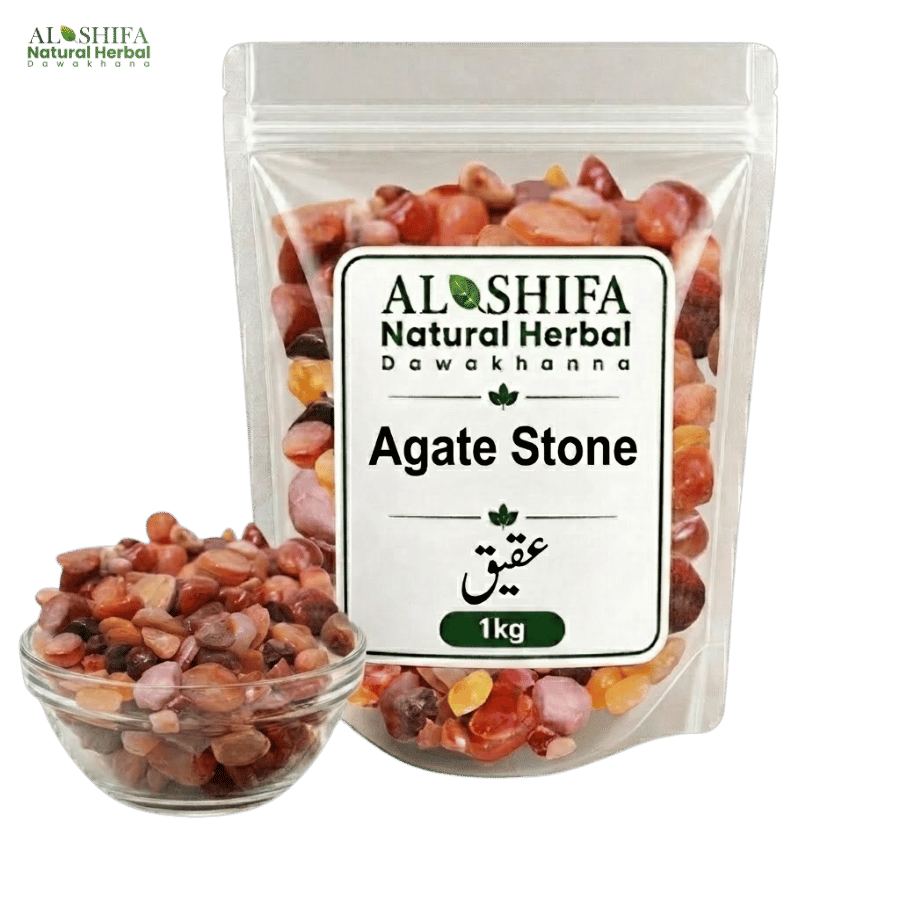
Aqeeq, commonly known as Agate Stone. is a natural ornamental stone belonging to the chalcedony variety of quartz and composed mainly of silicon dioxide (SiO₂). It is traditionally valued for its attractive colours, distinctive patterns and use in rings, jewellery, beads, ornaments and decorative applications.
Al Shifa Aqeeq is carefully selected with attention to its traditional identity, characteristic stone appearance, natural patterns, physical condition, cleanliness and responsible storage.
Key Features:
Usage: Suitable for traditional jewellery, rings, pendants, beads, ornaments, collections and decorative applications. It may be cut and polished by an appropriately equipped stone professional.
Important Note: Aqeeq is an ornamental stone, not a medicine or dietary supplement. Commercial Agate may be dyed, heated or otherwise treated, and appearance alone cannot confirm natural colour or geographic origin. Avoid grinding the stone for internal use.
Aqeeq, commonly known in English as Agate Stone, is a natural ornamental stone belonging to the chalcedony variety of quartz. It is valued for its attractive colours, distinctive patterns, durability and long history of use in rings, jewellery, beads, decorative objects and traditional cultural applications.
Agate is composed mainly of silicon dioxide (SiO₂) and forms through the gradual deposition of microscopic quartz material, commonly inside cavities in volcanic or other rocks. Many Agates display characteristic bands, layers, spots or naturally varying colour patterns.
Aqeeq has been valued for centuries across South Asia, the Middle East and many other regions. It is especially popular for rings, pendants, prayer beads, seals and ornamental stonework.
Traditional and cultural beliefs may associate Aqeeq with protection, confidence, prosperity or personal well-being. These beliefs form part of its cultural history, but they should be distinguished from scientifically established medical effects.
At Al Shifa Natural Herbal Dawakhana, Aqeeq is selected with attention to its stone identity, characteristic appearance, physical condition, cleanliness and responsible storage.
Aqeeq is the traditional Urdu, Persian and Arabic-derived name commonly used for stones belonging to the Agate and related chalcedony group.
Agate is a form of chalcedony, which itself is a microcrystalline form of quartz.
Its primary chemical composition is:
Silicon Dioxide – SiO₂
Agate can occur in many colours and patterns because of natural mineral inclusions and geological formation processes.
English Name: Agate Stone / Agate
Urdu Name: عقیق
Roman Name: Aqeeq / Aqiq
Mineral Group: Chalcedony / Quartz
Chemical Composition: Silicon Dioxide (SiO₂)
Mineral Class: Silicate Mineral
Mohs Hardness: Approximately 6.5–7
Product Type: Natural Ornamental Stone / Traditional Mineral Material
Aqeeq does not come from a plant.
It has no:
It is a geological mineral material.
Therefore:
Aqeeq ≠ Herbal Raw Material
It should be classified as a natural stone rather than a medicinal herb.
Natural Agate may show:
Not every Agate displays obvious bands.
Some stones may have subtle patterns that become clearer after cutting and polishing.
Agate occurs naturally in a wide range of colours.
These may include:
Natural colour depends on geological conditions and mineral impurities.
However, many commercial Agates are also artificially coloured.
Therefore:
Bright Colour ≠ Proof of Natural Colour
Agate can be modified commercially to improve or change its appearance.
Common treatments may include:
These treatments do not necessarily mean the stone is fake, but they should not be confused with completely untreated natural colour.
Therefore:
Natural Agate ≠ Dyed Agate ≠ Heat-Treated Agate
Where treatment status matters, appropriate gemological testing is more reliable than appearance alone.
Aqeeq may be described in the market according to colour, pattern or geographical source.
Common descriptions can include:
These commercial names may describe appearance, traditional identity or claimed origin.
They should not automatically be interpreted as separate mineral species.
Carnelian is an orange to reddish-brown variety of chalcedony.
Because both Agate and Carnelian belong to the chalcedony family, the names may overlap in traditional jewellery markets.
However, gemologically:
Agate is especially associated with patterned or banded chalcedony.
Carnelian is generally more uniformly orange, reddish-orange or reddish-brown chalcedony.
Therefore:
Agate and Carnelian are closely related, but the terms are not always identical.
Sulemani Aqeeq is a traditional trade name generally associated with banded Agate showing contrasting layers or patterns.
Depending on the market, the name may be applied to stones with:
The term is largely based on traditional trade identification rather than a separate chemical mineral composition.
Yemeni Aqeeq is a highly recognised traditional trade description for Aqeeq associated with Yemen.
However, colour or appearance alone cannot reliably prove geographical origin.
A stone sold as Yemeni Aqeeq may require reliable provenance or professional gemological assessment if origin authentication is important.
Therefore:
Traditional Name or Seller Claim ≠ Verified Geographic Origin
Quartz is a broad mineral family composed of silicon dioxide.
Chalcedony is a microcrystalline form of quartz, and Agate is generally classified as a variety of chalcedony.
In simple terms:
Quartz → Chalcedony → Agate
This explains why Agate shares many physical characteristics with other quartz-family stones.
Agate and Onyx are closely related chalcedony materials.
Agate commonly has curved, irregular or varied banding.
Onyx is traditionally associated more strongly with relatively straight, parallel bands.
Commercial terminology can vary considerably.
Therefore:
Agate ≠ Automatically Onyx
Jasper is another microcrystalline quartz material.
Agate is commonly more translucent and may show distinct banding.
Jasper is usually more opaque because of greater mineral inclusions.
However, mixed stones can occur naturally.
Therefore:
Agate and Jasper are related but not identical trade categories.
Aqeeq has been valued for centuries for:
Its durability and attractive appearance make it suitable for polished ornamental use.
One of the most common traditional uses of Aqeeq is in rings.
The stone may be:
Different colours and patterns are selected according to personal preference and traditional significance.
The value of a finished Aqeeq ring depends on both the stone and the workmanship.
Different cultures have associated Aqeeq with ideas such as:
These beliefs are part of cultural and historical traditions.
However:
Traditional Belief ≠ Scientifically Proven Medical Effect
Aqeeq should not be marketed as a guaranteed treatment for physical or psychological disease.
Agate is often described commercially as a “healing crystal.”
Claims may include effects on:
There is not sufficient scientific evidence to establish wearing an Agate stone as a medical treatment for these conditions.
Therefore:
Wearing Aqeeq ≠ Medical Treatment
Some people may personally find jewellery, prayer beads or meaningful stones calming or emotionally comforting.
Such personal experiences can be meaningful.
However, they should not be confused with evidence that the mineral itself treats:
Aqeeq should not be presented as a proven treatment for:
Medical conditions require appropriate diagnosis and treatment.
Some crystal traditions describe placing stones in water and drinking the water.
This practice should not automatically be considered safe.
Natural stones may contain:
Therefore:
Do not assume that an ornamental Aqeeq stone is suitable for preparing drinking water or “crystal elixirs.”
Aqeeq may be sold in different forms.
Raw Aqeeq:
Natural unpolished stone material.
Cut Aqeeq:
Stone shaped for further processing.
Polished Aqeeq:
Stone finished to produce a smooth, attractive surface.
Mounted Aqeeq:
A finished stone set into jewellery.
These forms differ mainly in physical processing rather than basic mineral identity.
A whole ornamental stone is different from finely ground mineral powder.
Grinding creates fine particles that can present inhalation hazards.
Because Agate is largely silica-based:
Aqeeq should not be casually ground into powder for household medicinal use.
Agate contains crystalline silica.
Cutting, grinding or polishing stone can generate fine silica-containing dust.
Repeated inhalation of respirable crystalline silica dust can seriously damage the lungs.
Therefore, professional stone cutting should use appropriate:
Aqeeq is not an ordinary nutritional mineral.
It should not be ground and swallowed as a source of silicon or other minerals.
Therefore:
Agate Stone ≠ Dietary Mineral Supplement
The jewellery market can contain:
Visual inspection may identify obvious imitations, but professional testing may be required for reliable authentication.
A specific shade of red, black, brown or orange does not by itself prove:
Several materials can be made to resemble natural Aqeeq.
A larger stone is not automatically better.
Quality can depend on:
Agate is relatively durable but should still be handled carefully.
Avoid:
A soft cloth can generally be used to clean polished stone surfaces.
At Al Shifa Natural Herbal Dawakhana, Aqeeq is selected with attention to:
Stone Identity – Material consistent with traditional Agate/Aqeeq.
Characteristic Appearance – Natural stone-like colour and pattern.
Physical Condition – Attention to cracks, damage and general condition.
Cleanliness – Clean handling of the stone material.
Traditional Identity – Appropriate recognition as Aqeeq rather than an herbal ingredient.
Responsible Storage – Protection from unnecessary damage and contamination.
Al Shifa Natural Herbal Dawakhana, established in 1999, supplies herbs, minerals and specialised traditional natural raw materials throughout Pakistan.
Our focus for Aqeeq includes:
For Jewellery:
Aqeeq may be cut, polished and mounted in rings, pendants and other suitable jewellery.
For Decorative Use:
It may be used for beads, ornaments, collections and traditional decorative applications.
For Traditional Use:
Aqeeq may be kept or worn according to personal and cultural traditions.
Do not grind Aqeeq into powder for self-medication or use ornamental stones to prepare drinking water unless the material and intended application have been professionally evaluated.
Aqeeq / Agate is a natural ornamental stone belonging to the chalcedony-quartz group and is not an herbal medicine or nutritional supplement.
Important distinctions include:
Store Aqeeq in a clean, dry and protected place.
For best condition:
Aqeeq, commonly known as Agate Stone or عقیق, is a traditional ornamental stone belonging to the chalcedony variety of quartz. It is valued for its natural colours, distinctive patterns, durability and long history of use in rings, jewellery, beads and decorative objects.
Agate is composed mainly of silicon dioxide (SiO₂) and may occur in red, brown, white, grey, black, orange and other natural or commercially treated colours.
Customers searching for Aqeeq, Aqiq, Agate Stone, Natural Agate Stone, Aqeeq Stone, Agate Gemstone, Chalcedony Stone, Red Aqeeq, Black Aqeeq, White Aqeeq, Sulemani Aqeeq, Yemeni Aqeeq, Aqeeq Stone for Ring, Aqeeq Ring Stone, natural Aqeeq Pakistan, original Aqeeq, pure Agate Stone, Aqeeq Pakistan, Agate Stone Pakistan, Aqeeq Lahore, Agate Stone Lahore, Aqeeq price in Pakistan, Agate Stone price in Pakistan, buy Aqeeq Pakistan, buy Agate Stone Pakistan or Aqeeq online Pakistan can choose Al Shifa Natural Herbal Dawakhana for carefully selected traditional stone material.
Since 1999, Al Shifa Natural Herbal Dawakhana has focused on supplying herbs, minerals and traditional natural materials with attention to correct identity, characteristic appearance, clean handling, responsible information and proper storage.
Product Name: Aqeeq
English Name: Agate Stone / Agate
Urdu Name: عقیق
Roman Name: Aqeeq / Aqiq
Mineral Group: Chalcedony / Quartz
Chemical Composition: Silicon Dioxide (SiO₂)
Mineral Class: Silicate Mineral
Product Type: Natural Ornamental Stone / Traditional Mineral Material
Traditional Use: Rings, jewellery, beads, ornaments, collections and cultural applications
Important Note: Aqeeq is an ornamental Agate stone, not a medicine or dietary mineral supplement. Traditional beliefs about healing or protection should not be presented as scientifically established medical effects. Commercial Agate may also be dyed or otherwise treated, so appearance alone does not prove natural colour or geographic origin.
عقیق پتھر ایک خوبصورت، قدرتی اور مشہور معدنی پتھر ہے جو اپنی دلکش رنگت، مضبوطی، قدرتی چمک اور خوبصورت نقش و نگار کی وجہ سے خاص اہمیت رکھتا ہے۔ پاکستان، بھارت، ایران، یمن اور دوسرے ممالک میں عقیق کو انگوٹھیوں، نگینوں، تسبیح، لاکٹ اور آرائشی اشیاء میں استعمال کیا جاتا ہے۔
عقیق کو دیسی حکمت اور یونانی طب میں بھی جانا جاتا ہے۔ حکیمی کتابوں میں قدرتی پتھروں، ان کے مزاج، خواص اور کشتہ جات کا ذکر کیا جاتا ہے۔ عقیق اپنی خوبصورت بناوٹ کے ساتھ ثقافتی اور روحانی اہمیت بھی رکھتا ہے۔
عقیق کی مختلف اقسام میں سرخ عقیق، سفید عقیق، سلیمانی عقیق، سبز عقیق، زرد عقیق اور شجری عقیق زیادہ مشہور ہیں۔ ان پتھروں کی قدرتی رنگت اور خوبصورت دھاریاں انہیں ایک منفرد پہچان دیتی ہیں۔
اردو نام: عقیق، سنگ عقیق، عقیق پتھر
پنجابی نام: عقیق، عقیق پتھر
ہندی نام: اکیک، عقیق
فارسی نام: عقیق، سنگ عقیق
عربی نام: عقیق، حجر العقیق
انگریزی نام: ایگیٹ، ایگیٹ اسٹون
سائنسی معدنی نام: ایگیٹ، کیلسیڈونی
معدنی خاندان: کوارٹز، سلیکا گروہ
عقیق زمین کے اندر قدرتی طور پر بننے والا ایک معدنی پتھر ہے۔ یہ سلیکا کی باریک تہوں سے بنتا ہے اور اس میں مختلف رنگوں کے خوبصورت نقش پیدا ہوتے ہیں۔
عقیق کی سطح پالش کرنے کے بعد خوبصورت اور چمکدار ہو جاتی ہے۔ اس کی مضبوط ساخت اسے انگوٹھیوں، نگینوں اور دوسری آرائشی اشیاء کے لیے بہترین بناتی ہے۔
عقیق کی اہم خصوصیات:
رنگ: سرخ، سفید، سیاہ، سبز، زرد، بھورا اور کئی رنگوں کا ملاپ
ساخت: مضبوط اور باریک تہوں والی
چمک: خوبصورت اور شیشے جیسی
سختی: تقریبا 6.5 سے 7
قدرتی جز: سلیکان ڈائی آکسائیڈ
استعمال: انگوٹھی، نگینہ، تسبیح، لاکٹ اور آرائشی اشیاء
دیسی حکمت اور یونانی طب میں قدرتی معدنی پتھروں کے مزاج اور خواص کو اہمیت دی جاتی ہے۔ حکیمی مفردات میں معدنی ادویات کو ان کی نوعیت اور خصوصیات کے مطابق الگ پہچان دی جاتی ہے۔
عقیق کے مزاج کی گرم، سرد، تر یا خشک درجہ بندی کے لیے کتاب المفردات یا مخزن المفردات کی اصل عبارت درکار ہے، اس لیے یہاں کوئی غیر مصدقہ درجہ درج نہیں کیا گیا۔
عقیق سے منسوب کشتہ کو کشتہ عقیق کہا جاتا ہے۔ یہ حکمت کی معدنی ادویات کے شعبے سے تعلق رکھتا ہے۔
عقیق پتھر اپنی قدرتی رنگت اور دلکش چمک کی وجہ سے انگوٹھیوں اور زیورات کے لیے بہترین انتخاب ہے۔ اس کا خوبصورت نگینہ شخصیت میں نفاست اور کشش پیدا کرتا ہے۔
عقیق کو مختلف معاشروں میں اعتماد، حوصلے، خوش قسمتی اور مثبت سوچ کی علامت سمجھا جاتا ہے۔ بہت سے لوگ اسے اپنی ذاتی پسند اور ثقافتی عقیدے کے مطابق پہنتے ہیں۔
عقیق کو مشرقی اور اسلامی معاشروں میں ثقافتی اور روحانی اہمیت حاصل ہے۔ عقیق کی انگوٹھی پہننا بہت سے لوگوں کی پسند ہے۔
عقیق کی خوبصورت رنگت اور دلکش نقش و نگار اسے پسند کرنے والوں کے لیے خوشی اور اطمینان کا ذریعہ بنتے ہیں۔ اسے مختلف ثقافتوں میں سکون اور مثبت احساسات کی علامت سمجھا جاتا ہے۔
عقیق ایک مضبوط قدرتی پتھر ہے۔ اس کی اچھی تراش خراش اور پالش اس کی خوبصورتی کو مزید بڑھاتی ہے۔
عقیق کو چاندی کی انگوٹھیوں، لاکٹ، کنگن، تسبیح اور دوسرے زیورات میں استعمال کیا جاتا ہے۔ اس کی مختلف رنگتیں مردوں اور خواتین دونوں کے لیے دلکش ہیں۔
عقیق کی انگوٹھی، تسبیح اور لاکٹ خوبصورت تحائف ہیں۔ اس کی منفرد بناوٹ اسے یادگار اور خاص بناتی ہے۔
سرخ عقیق اپنی خوبصورت سرخی اور قدرتی چمک کی وجہ سے مشہور ہے۔ اسے انگوٹھیوں اور نگینوں میں استعمال کیا جاتا ہے۔
سلیمانی عقیق میں سیاہ اور سفید رنگ کی خوبصورت تہیں پائی جاتی ہیں۔ اس کی منفرد بناوٹ اسے ایک خاص آرائشی پتھر بناتی ہے۔
سفید عقیق دودھیا اور ہلکی سفید رنگت میں پایا جاتا ہے۔ یہ تسبیح، لاکٹ اور نگینوں میں خوبصورت دکھائی دیتا ہے۔
سبز عقیق اپنی دلکش رنگت کی وجہ سے پسند کیا جاتا ہے۔ قدرتی سبز عقیق کے ساتھ رنگ شدہ اقسام بھی بازار میں دستیاب ہیں۔
زرد عقیق شہد جیسی، سنہری اور زرد رنگت کی وجہ سے زیورات میں خوبصورتی پیدا کرتا ہے۔
شجری عقیق میں درختوں، پتوں اور شاخوں جیسے خوبصورت قدرتی نقش ہوتے ہیں۔ اسے نگینوں اور آرائشی اشیاء میں استعمال کیا جاتا ہے۔
کشتہ عقیق کا نام حکمت میں معدنی ادویات کے حوالے سے لیا جاتا ہے۔ کشتہ سازی ایک خاص حکیمی فن ہے، جس میں معدنی پتھروں سے ادویات بنانے کے لیے مخصوص مہارت کی ضرورت ہوتی ہے۔
کشتہ عقیق کے طبی استعمال کے لیے پتھر کی درست پہچان، کشتہ کا معیار اور مستند معالج کی رہنمائی ضروری ہے۔
حکمت میں دل، معدہ، جگر، جسمانی کمزوری، مردانہ صحت، خواتین کے امراض اور جسمانی طاقت کے لیے مختلف مفرد اور مرکب ادویات استعمال کی جاتی ہیں۔
تاہم عقیق یا کشتہ عقیق کے لیے ان تمام بیماریوں کے علاجی فوائد کو ایک جیسا نہیں سمجھا جا سکتا۔ خاص طور پر شوگر، جنسی کمزوری، مردانہ جراثیم، منی کی مقدار، مردانہ ٹائمنگ اور لیکوریا کے علاج کے لیے اس کی مخصوص افادیت کی تصدیق ضروری ہے۔
عقیق ایک قدرتی معدنی پتھر ہے، جس کا بنیادی جز سلیکان ڈائی آکسائیڈ ہے۔
| معلومات | تفصیل |
|---|---|
| بنیادی جز | سلیکان ڈائی آکسائیڈ |
| معدنی قسم | کیلسیڈونی |
| معدنی گروہ | کوارٹز |
| سختی | تقریبا 6.5 سے 7 |
| قدرتی رنگ | سرخ، سفید، سیاہ، زرد، بھورا اور دیگر |
| ساخت | باریک بلوری سلیکا |
| غذائی استعمال | خوراک کے لیے نہیں |
| غذائی کیلوریز | غذائی قدر مقرر نہیں |
عقیق دنیا کے کئی ممالک میں پایا جاتا ہے۔
پاکستان: بلوچستان اور دوسرے معدنی علاقوں میں عقیق اور اس سے ملتے جلتے قدرتی پتھر پائے جاتے ہیں۔
یمن: یمنی عقیق اپنی ثقافتی شہرت اور خوبصورت نگینوں کی وجہ سے مشہور ہے۔
ایران: ایران میں عقیق کی انگوٹھیاں اور نگینے بہت پسند کیے جاتے ہیں۔
بھارت: بھارت عقیق کی تراش خراش، پالش اور زیورات کے لیے مشہور ہے۔
برازیل: برازیل قدرتی دھاری دار عقیق کے اہم علاقوں میں شامل ہے۔
یوراگوئے: یہاں خوبصورت رنگوں اور دھاریوں والا عقیق پایا جاتا ہے۔
اچھے عقیق کی پہچان اس کی قدرتی رنگت، خوبصورت دھاریوں، مضبوط ساخت اور اچھی پالش سے ہوتی ہے۔
پتھر کی رنگت خوبصورت اور دلکش ہو۔
سطح صاف اور ہموار ہو۔
قدرتی نقش و نگار واضح ہوں۔
تراش خراش اچھی ہو۔
پتھر مضبوط اور اچھی حالت میں ہو۔
اس کی قسم اور اصل مقام کی درست معلومات موجود ہوں۔
انگوٹھی میں: عقیق کا نگینہ چاندی یا دوسرے زیورات میں لگایا جاتا ہے۔
تسبیح میں: عقیق کے خوبصورت دانوں سے تسبیح بنائی جاتی ہے۔
لاکٹ میں: عقیق کو مختلف شکلوں میں تراش کر لاکٹ بنایا جاتا ہے۔
آرائشی اشیاء میں: عقیق کو شوپیس، خوبصورت پتھروں اور گھر کی سجاوٹ میں استعمال کیا جاتا ہے۔
تحفے کے لیے: عقیق کی انگوٹھی، تسبیح اور لاکٹ تحفے کے طور پر پیش کیے جاتے ہیں۔
الشفاء نیچرل ہربل دواخانہ 1999 سے جڑی بوٹیوں، بیجوں اور ان سے حاصل ہونے والے روغنوں کی سپلائی کر رہا ہے۔
الشفاء نیچرل ہربل دواخانہ میں عقیق پتھر کے انتخاب کے لیے درج ذیل باتوں کو اہمیت دی جاتی ہے:
قدرتی اور خوبصورت رنگت
صاف اور اچھی حالت
دلکش نقش و نگار
مضبوط ساخت
خوبصورت چمک
اچھی تراش خراش
پتھر کی درست پہچان
معیاری انتخاب
الشفاء عقیق پتھر انگوٹھیوں، نگینوں، تسبیح، لاکٹ اور آرائشی استعمال کے لیے ایک بہترین انتخاب ہے۔
عقیق پتھر کو ٹھنڈی، خشک اور محفوظ جگہ پر کسی جار میں اچھی طرح پیک کر کے رکھیں۔ اس کی خوبصورت چمک برقرار رکھنے کے لیے نرم کپڑے سے صاف کریں۔ زیورات میں لگے عقیق کو الگ محفوظ رکھیں تاکہ اس کی پالش خوبصورت رہے۔
عقیق پتھر کو زیورات اور آرائشی استعمال کے لیے منتخب کیا جاتا ہے۔ کشتہ عقیق ایک الگ حکیمی دوا کا موضوع ہے۔ اس کی مقدار خوراک اور جسمانی امراض میں استعمال کے لیے مستند معالج سے مشورہ کریں۔
عقیق پتھر اپنی دلکش رنگت، خوبصورت قدرتی نقش و نگار، مضبوطی اور چمک کی وجہ سے ایک بہترین معدنی پتھر ہے۔ اسے انگوٹھیوں، نگینوں، تسبیح، لاکٹ اور مختلف آرائشی اشیاء میں استعمال کیا جاتا ہے۔
الشفاء نیچرل ہربل دواخانہ میں عقیق پتھر کے انتخاب میں خوبصورتی، قدرتی رنگت، صاف حالت اور معیار کو اہمیت دی جاتی ہے۔