
Jawansa, Turanjabeen, Alhagi pseudalhagi (Bieb) Desv
Contact for Price
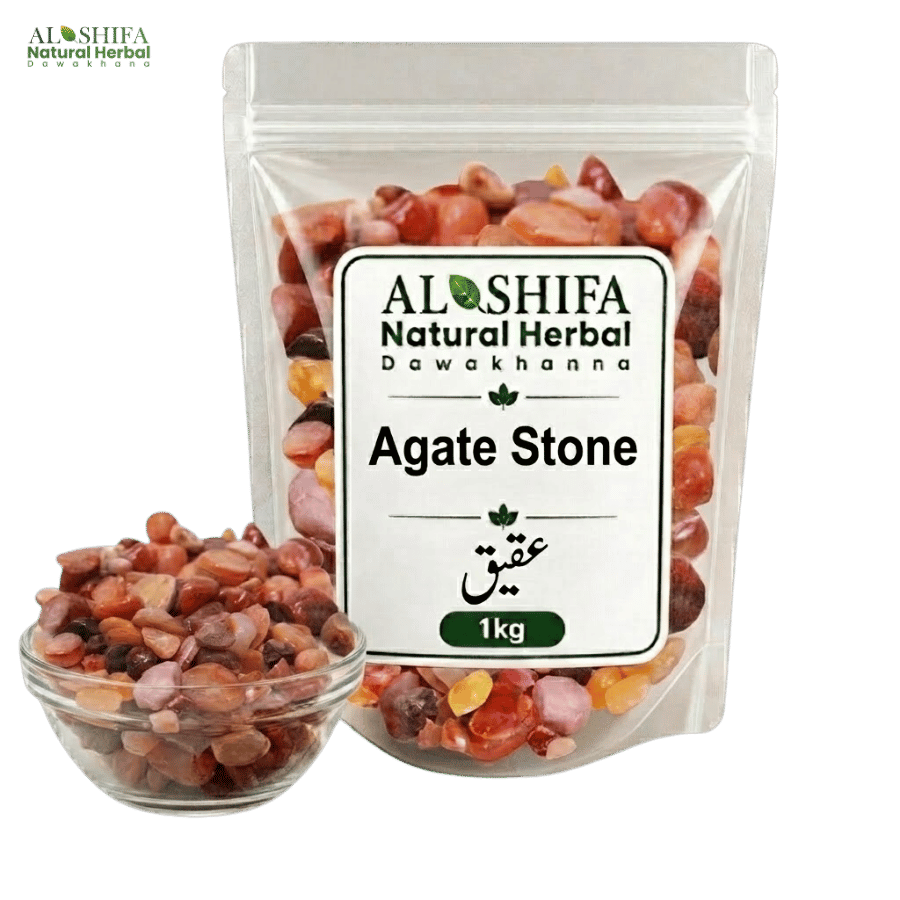
Aqeeq, commonly known as Agate Stone. is a natural ornamental stone belonging to the chalcedony variety of quartz and composed mainly of silicon dioxide (SiO₂). It is traditionally valued for its attractive colours, distinctive patterns and use in rings, jewellery, beads, ornaments and decorative applications.
Al Shifa Aqeeq is carefully selected with attention to its traditional identity, characteristic stone appearance, natural patterns, physical condition, cleanliness and responsible storage.
Key Features:
Usage: Suitable for traditional jewellery, rings, pendants, beads, ornaments, collections and decorative applications. It may be cut and polished by an appropriately equipped stone professional.
Important Note: Aqeeq is an ornamental stone, not a medicine or dietary supplement. Commercial Agate may be dyed, heated or otherwise treated, and appearance alone cannot confirm natural colour or geographic origin. Avoid grinding the stone for internal use.
Aqeeq, commonly known in English as Agate Stone, is a natural ornamental stone belonging to the chalcedony variety of quartz. It is valued for its attractive colours, distinctive patterns, durability and long history of use in rings, jewellery, beads, decorative objects and traditional cultural applications.
Agate is composed mainly of silicon dioxide (SiO₂) and forms through the gradual deposition of microscopic quartz material, commonly inside cavities in volcanic or other rocks. Many Agates display characteristic bands, layers, spots or naturally varying colour patterns.
Aqeeq has been valued for centuries across South Asia, the Middle East and many other regions. It is especially popular for rings, pendants, prayer beads, seals and ornamental stonework.
Traditional and cultural beliefs may associate Aqeeq with protection, confidence, prosperity or personal well-being. These beliefs form part of its cultural history, but they should be distinguished from scientifically established medical effects.
At Al Shifa Natural Herbal Dawakhana, Aqeeq is selected with attention to its stone identity, characteristic appearance, physical condition, cleanliness and responsible storage.
Aqeeq is the traditional Urdu, Persian and Arabic-derived name commonly used for stones belonging to the Agate and related chalcedony group.
Agate is a form of chalcedony, which itself is a microcrystalline form of quartz.
Its primary chemical composition is:
Silicon Dioxide – SiO₂
Agate can occur in many colours and patterns because of natural mineral inclusions and geological formation processes.
English Name: Agate Stone / Agate
Urdu Name: عقیق
Roman Name: Aqeeq / Aqiq
Mineral Group: Chalcedony / Quartz
Chemical Composition: Silicon Dioxide (SiO₂)
Mineral Class: Silicate Mineral
Mohs Hardness: Approximately 6.5–7
Product Type: Natural Ornamental Stone / Traditional Mineral Material
Aqeeq does not come from a plant.
It has no:
It is a geological mineral material.
Therefore:
Aqeeq ≠ Herbal Raw Material
It should be classified as a natural stone rather than a medicinal herb.
Natural Agate may show:
Not every Agate displays obvious bands.
Some stones may have subtle patterns that become clearer after cutting and polishing.
Agate occurs naturally in a wide range of colours.
These may include:
Natural colour depends on geological conditions and mineral impurities.
However, many commercial Agates are also artificially coloured.
Therefore:
Bright Colour ≠ Proof of Natural Colour
Agate can be modified commercially to improve or change its appearance.
Common treatments may include:
These treatments do not necessarily mean the stone is fake, but they should not be confused with completely untreated natural colour.
Therefore:
Natural Agate ≠ Dyed Agate ≠ Heat-Treated Agate
Where treatment status matters, appropriate gemological testing is more reliable than appearance alone.
Aqeeq may be described in the market according to colour, pattern or geographical source.
Common descriptions can include:
These commercial names may describe appearance, traditional identity or claimed origin.
They should not automatically be interpreted as separate mineral species.
Carnelian is an orange to reddish-brown variety of chalcedony.
Because both Agate and Carnelian belong to the chalcedony family, the names may overlap in traditional jewellery markets.
However, gemologically:
Agate is especially associated with patterned or banded chalcedony.
Carnelian is generally more uniformly orange, reddish-orange or reddish-brown chalcedony.
Therefore:
Agate and Carnelian are closely related, but the terms are not always identical.
Sulemani Aqeeq is a traditional trade name generally associated with banded Agate showing contrasting layers or patterns.
Depending on the market, the name may be applied to stones with:
The term is largely based on traditional trade identification rather than a separate chemical mineral composition.
Yemeni Aqeeq is a highly recognised traditional trade description for Aqeeq associated with Yemen.
However, colour or appearance alone cannot reliably prove geographical origin.
A stone sold as Yemeni Aqeeq may require reliable provenance or professional gemological assessment if origin authentication is important.
Therefore:
Traditional Name or Seller Claim ≠ Verified Geographic Origin
Quartz is a broad mineral family composed of silicon dioxide.
Chalcedony is a microcrystalline form of quartz, and Agate is generally classified as a variety of chalcedony.
In simple terms:
Quartz → Chalcedony → Agate
This explains why Agate shares many physical characteristics with other quartz-family stones.
Agate and Onyx are closely related chalcedony materials.
Agate commonly has curved, irregular or varied banding.
Onyx is traditionally associated more strongly with relatively straight, parallel bands.
Commercial terminology can vary considerably.
Therefore:
Agate ≠ Automatically Onyx
Jasper is another microcrystalline quartz material.
Agate is commonly more translucent and may show distinct banding.
Jasper is usually more opaque because of greater mineral inclusions.
However, mixed stones can occur naturally.
Therefore:
Agate and Jasper are related but not identical trade categories.
Aqeeq has been valued for centuries for:
Its durability and attractive appearance make it suitable for polished ornamental use.
One of the most common traditional uses of Aqeeq is in rings.
The stone may be:
Different colours and patterns are selected according to personal preference and traditional significance.
The value of a finished Aqeeq ring depends on both the stone and the workmanship.
Different cultures have associated Aqeeq with ideas such as:
These beliefs are part of cultural and historical traditions.
However:
Traditional Belief ≠ Scientifically Proven Medical Effect
Aqeeq should not be marketed as a guaranteed treatment for physical or psychological disease.
Agate is often described commercially as a “healing crystal.”
Claims may include effects on:
There is not sufficient scientific evidence to establish wearing an Agate stone as a medical treatment for these conditions.
Therefore:
Wearing Aqeeq ≠ Medical Treatment
Some people may personally find jewellery, prayer beads or meaningful stones calming or emotionally comforting.
Such personal experiences can be meaningful.
However, they should not be confused with evidence that the mineral itself treats:
Aqeeq should not be presented as a proven treatment for:
Medical conditions require appropriate diagnosis and treatment.
Some crystal traditions describe placing stones in water and drinking the water.
This practice should not automatically be considered safe.
Natural stones may contain:
Therefore:
Do not assume that an ornamental Aqeeq stone is suitable for preparing drinking water or “crystal elixirs.”
Aqeeq may be sold in different forms.
Raw Aqeeq:
Natural unpolished stone material.
Cut Aqeeq:
Stone shaped for further processing.
Polished Aqeeq:
Stone finished to produce a smooth, attractive surface.
Mounted Aqeeq:
A finished stone set into jewellery.
These forms differ mainly in physical processing rather than basic mineral identity.
A whole ornamental stone is different from finely ground mineral powder.
Grinding creates fine particles that can present inhalation hazards.
Because Agate is largely silica-based:
Aqeeq should not be casually ground into powder for household medicinal use.
Agate contains crystalline silica.
Cutting, grinding or polishing stone can generate fine silica-containing dust.
Repeated inhalation of respirable crystalline silica dust can seriously damage the lungs.
Therefore, professional stone cutting should use appropriate:
Aqeeq is not an ordinary nutritional mineral.
It should not be ground and swallowed as a source of silicon or other minerals.
Therefore:
Agate Stone ≠ Dietary Mineral Supplement
The jewellery market can contain:
Visual inspection may identify obvious imitations, but professional testing may be required for reliable authentication.
A specific shade of red, black, brown or orange does not by itself prove:
Several materials can be made to resemble natural Aqeeq.
A larger stone is not automatically better.
Quality can depend on:
Agate is relatively durable but should still be handled carefully.
Avoid:
A soft cloth can generally be used to clean polished stone surfaces.
At Al Shifa Natural Herbal Dawakhana, Aqeeq is selected with attention to:
Stone Identity – Material consistent with traditional Agate/Aqeeq.
Characteristic Appearance – Natural stone-like colour and pattern.
Physical Condition – Attention to cracks, damage and general condition.
Cleanliness – Clean handling of the stone material.
Traditional Identity – Appropriate recognition as Aqeeq rather than an herbal ingredient.
Responsible Storage – Protection from unnecessary damage and contamination.
Al Shifa Natural Herbal Dawakhana, established in 1999, supplies herbs, minerals and specialised traditional natural raw materials throughout Pakistan.
Our focus for Aqeeq includes:
For Jewellery:
Aqeeq may be cut, polished and mounted in rings, pendants and other suitable jewellery.
For Decorative Use:
It may be used for beads, ornaments, collections and traditional decorative applications.
For Traditional Use:
Aqeeq may be kept or worn according to personal and cultural traditions.
Do not grind Aqeeq into powder for self-medication or use ornamental stones to prepare drinking water unless the material and intended application have been professionally evaluated.
Aqeeq / Agate is a natural ornamental stone belonging to the chalcedony-quartz group and is not an herbal medicine or nutritional supplement.
Important distinctions include:
Store Aqeeq in a clean, dry and protected place.
For best condition:
Aqeeq, commonly known as Agate Stone or عقیق, is a traditional ornamental stone belonging to the chalcedony variety of quartz. It is valued for its natural colours, distinctive patterns, durability and long history of use in rings, jewellery, beads and decorative objects.
Agate is composed mainly of silicon dioxide (SiO₂) and may occur in red, brown, white, grey, black, orange and other natural or commercially treated colours.
Customers searching for Aqeeq, Aqiq, Agate Stone, Natural Agate Stone, Aqeeq Stone, Agate Gemstone, Chalcedony Stone, Red Aqeeq, Black Aqeeq, White Aqeeq, Sulemani Aqeeq, Yemeni Aqeeq, Aqeeq Stone for Ring, Aqeeq Ring Stone, natural Aqeeq Pakistan, original Aqeeq, pure Agate Stone, Aqeeq Pakistan, Agate Stone Pakistan, Aqeeq Lahore, Agate Stone Lahore, Aqeeq price in Pakistan, Agate Stone price in Pakistan, buy Aqeeq Pakistan, buy Agate Stone Pakistan or Aqeeq online Pakistan can choose Al Shifa Natural Herbal Dawakhana for carefully selected traditional stone material.
Since 1999, Al Shifa Natural Herbal Dawakhana has focused on supplying herbs, minerals and traditional natural materials with attention to correct identity, characteristic appearance, clean handling, responsible information and proper storage.
Product Name: Aqeeq
English Name: Agate Stone / Agate
Urdu Name: عقیق
Roman Name: Aqeeq / Aqiq
Mineral Group: Chalcedony / Quartz
Chemical Composition: Silicon Dioxide (SiO₂)
Mineral Class: Silicate Mineral
Product Type: Natural Ornamental Stone / Traditional Mineral Material
Traditional Use: Rings, jewellery, beads, ornaments, collections and cultural applications
Important Note: Aqeeq is an ornamental Agate stone, not a medicine or dietary mineral supplement. Traditional beliefs about healing or protection should not be presented as scientifically established medical effects. Commercial Agate may also be dyed or otherwise treated, so appearance alone does not prove natural colour or geographic origin.
عقیق ایک مشہور قدرتی معدنی پتھر ہے۔
عقیق بنیادی طور پر کوارٹز کی باریک بلوری قسم سے بنا ہوتا ہے۔ اس کا بڑا حصہ سلیکا پر مشتمل ہوتا ہے۔ قدرتی عقیق میں مختلف معدنی اجزاء اور بننے کے حالات کی وجہ سے سفید، سرخ، بھورا، نارنجی، زرد، سیاہی مائل، سرمئی اور کئی دوسری رنگتیں پیدا ہو سکتی ہیں۔
عقیق کی خاص پہچان اس میں نظر آنے والی قدرتی تہیں، دھاریاں، حلقے اور مختلف رنگوں کے نقش ہیں۔ ہر عقیق ایک جیسا نہیں ہوتا اور قدرتی پتھر میں رنگ اور نقش کی تبدیلی اس کی فطری خصوصیت ہے۔
عقیق کو حکمت کی کتابوں میں بھی ایک معدنی مفرد کے طور پر بیان کیا جاتا ہے ۔
الشفاء نیچرل ہربل دواخانہ میں عقیق منتخب کرتے وقت اصل معدنی شناخت، قدرتی ساخت، رنگت، سختی، پالش، ظاہری صفائی اور مصنوعی نقل سے الگ پہچان کو اہمیت دی جاتی ہے۔
عقیق قدرتی طور پر زمین اور چٹانوں میں بننے والا معدنی پتھر ہے۔
یہ کوارٹز خاندان کی باریک بلوری قسم کیلسیڈونی سے جڑا ہوا پتھر ہے۔
عقیق کی تشکیل عام طور پر چٹانوں کے اندر موجود خالی جگہوں میں سلیکا والے محلول کے آہستہ آہستہ جمع ہونے سے ہوتی ہے۔
وقت کے ساتھ مختلف تہیں بنتی جاتی ہیں اور یہی تہیں عقیق کے اندر خوبصورت دھاریاں اور نقش پیدا کر سکتی ہیں۔
نام: عقیق
معروف نام: سنگ عقیق
اصل: قدرتی معدنی پتھر
قسم: سلیکا پر مشتمل باریک بلوری پتھر
بنیادی معدنی مادہ: سلیکا
معدنی خاندان: کوارٹز اور کیلسیڈونی سے جڑا پتھر
عام شکل: گول، بیضوی، بے ترتیب پتھر، کٹا ہوا نگینہ یا پالش شدہ ٹکڑا
عام رنگت: سفید، سرخ، بھوری، نارنجی، زرد، سرمئی، سیاہی مائل اور کئی رنگوں کا ملاپ
خاص پہچان: تہیں، دھاریاں، حلقے اور قدرتی نقش
استعمال: نگینے، انگوٹھیاں، زیورات، آرائشی اشیاء اور حکمت میں طبی استعمال کے طور پر ذکر
عقیق زمین کے اندر طویل قدرتی عمل سے بنتا ہے۔
سلیکا رکھنے والا پانی چٹانوں کی چھوٹی خالی جگہوں اور سوراخوں میں داخل ہوتا ہے۔
پانی ختم ہونے کے ساتھ سلیکا کی باریک تہیں جمع ہوتی جاتی ہیں۔
یہ عمل بار بار ہونے سے:
بن سکتے ہیں۔
اسی وجہ سے قدرتی عقیق کے دو ٹکڑے مکمل طور پر ایک جیسے ہونا ضروری نہیں۔
عقیق کا بنیادی حصہ سلیکا ہوتا ہے۔
اس کی ساخت بہت باریک بلوروں پر مشتمل ہوتی ہے، جنہیں عام آنکھ سے الگ الگ دیکھنا آسان نہیں ہوتا۔
اس میں موجود دوسرے معمولی معدنی اجزاء اور قدرتی حالات اس کی رنگت اور نقش پر اثر ڈال سکتے ہیں۔
عقیق نسبتاً سخت پتھر ہے۔
اسی وجہ سے اسے:
بنانے کے لیے استعمال کیا جاتا ہے۔
مناسب پالش کے بعد عقیق خوبصورت اور ہموار چمک حاصل کر لیتا ہے۔
اچھا عقیق منتخب کرتے وقت:
صرف رنگ دیکھ کر عقیق کے اصل یا نقلی ہونے کا فیصلہ نہیں کرنا چاہیے۔
عقیق کئی قدرتی رنگوں میں پایا جاتا ہے۔
اس میں:
رنگ دیکھے جا سکتے ہیں۔
ایک ہی پتھر میں دو یا زیادہ رنگ بھی موجود ہو سکتے ہیں۔
سرخ عقیق اپنی گرم سرخ، نارنجی یا سرخی مائل بھوری رنگت کی وجہ سے مشہور ہے۔
سفید عقیق دودھیا، سفید یا ہلکی سرمئی رنگت رکھ سکتا ہے۔
اس میں تہیں اور ہلکے نقش موجود ہو سکتے ہیں۔
بازار میں سیاہ عقیق کے نام سے گہرے سیاہ یا سیاہی مائل پتھر فروخت ہوتے ہیں۔
سلیمانی عقیق میں مختلف رنگوں کی واضح تہیں یا پٹیاں نظر آ سکتی ہیں۔
اس کی خوبصورتی کا اہم حصہ اس کی قدرتی تہہ دار ساخت ہے۔
شجری عقیق میں درخت، شاخوں یا پودوں جیسے قدرتی نقش دکھائی دے سکتے ہیں۔
اسی منفرد شکل کی وجہ سے شجری عقیق بہت پسند کیا جاتا ہے۔
عقیق کیلسیڈونی کی تہہ دار یا نقش دار شکلوں سے جڑا ہوا پتھر ہے۔
ہر کیلسیڈونی کو عقیق نہیں کہا جاتا۔
عقیق میں عام طور پر تہہ دار ساخت یا رنگوں کے قدرتی نقش نمایاں ہو تے ہیں۔
عقیق اور کوارٹز ایک دوسرے سے جڑے معدنی پتھر ہیں۔
عقیق میں سلیکا بہت باریک بلوری ساخت میں موجود ہوتا ہے، جبکہ کوارٹز کی کئی دوسری شکلوں میں بلور زیادہ واضح ہو سکتے ہیں۔
عقیق اور رنگین شیشہ دیکھنے میں کبھی ملتے جلتے لگ سکتے ہیں۔
عقیق:
قیمتی یا مہنگا عقیق خریدتے وقت صرف دکاندار کے دعوے پر انحصار کرنے کے بجائے پتھروں کی شناخت کرنے والے ماہر سے چیک کروانا بہتر ہے۔
خاص طور پر مہنگے نگینے کے لیے معتبر پتھر جانچنے والے ادارے کی رپورٹ زیادہ قابلِ اعتماد طریقہ ہے۔
عقیق معدنی ہے، جڑی بوٹی نہیں۔
عقیق مزاج سرد اور خشک۔
حکمت کی کتابوں میں عقیق کا ذکر معدنی مفرد کے طور پر ملتا ہے۔
میں بیان کیا گیا ہے۔
عقیق کے بارے میں حکمت کی کتابوں میں کئی فائدے بیان کیے گئے ہیں۔
حکیمت میں عقیق سے بنی مخصوص ادویات کو:
میں شامل کیا جاتا ہے۔
حکمت میں عقیق سے بنی مخصوص ادویات کا استعمال کیا جاتا ہے۔
دل کے امراض کی ادویات خود سے بند یا تبدیل نہ کریں۔
حکیمت میں عقیق سے بنائی گئی مخصوص ادویات کا استعمال معدے کے امراض میں ہوتا ہے۔
مسلسل معدے کے امراض میں معالج سے چیک کروائیں۔
حکمت میں عقیق سے بنی مخصوص ادویات کو خون بہنے کے مختلف امراض میں استعمال کیا جاتا ہے۔
مسلسل یا زیادہ خون بہنے کی صورت میں معالج سے چیک کروائیں۔
حکمت میں عقیق سے بنائی گئی مخصوص ادویات آنکھوں نظر تیز کرنے کی ادویات میں ہوتا ہے۔
عقیق دماغی سکون، کی ادویات میں استعمال ہوتا ہے۔
کشتہ عقیق:
خود سے استعمال نہ کریں۔
گردوں کے امراض میں کشتہ خود سے استعمال نہ کریں۔
عقیق ایک قدرتی معدنی پتھر ہے۔
عام زیورات والے عقیق کو پیس کر اندرونی طور پر استعمال نہ کریں۔
الشفاء نیچرل ہربل دواخانہ میں عقیق منتخب کرتے وقت درج ذیل باتوں کو اہمیت دی جاتی ہے:
اچھا عقیق: مضبوط اور اچھی حالت والا پتھر منتخب کیا جاتا ہے۔
قدرتی ساخت: قدرتی تہوں، دھاریوں اور نقش کو اہمیت دی جاتی ہے۔
درست شناخت: شیشے اور مصنوعی نقل سے الگ شناخت کو اہمیت دی جاتی ہے۔
رنگت کی پہچان: قدرتی اور مصنوعی طور پر بدلی ہوئی رنگت کو سمجھنا ضروری ہے۔
الشفاء نیچرل ہربل دواخانہ سنہ ۱۹۹۹ سے جڑی بوٹیوں، معدنی مفردات، روغنوں اور قدرتی مصنوعات کی سپلائی کر رہا ہے۔
عقیق میں اصل معدنی شناخت، اچھی حالت، قدرتی ساخت، مناسب پالش اور مصنوعی نقل سے الگ پہچان کو اہمیت دی جاتی ہے۔
عقیق خریدتے وقت صرف خوبصورت رنگ کے بجائے پتھر کی اصل ساخت اور درست شناخت زیادہ اہم ہے۔
عقیق کے چھوٹے ٹکڑوں یا حکیمی استعمال کے لیے رکھی گئی شکل کو جار میں اچھی طرح پیک کر کے رکھیں۔۔
نام: عقیق
معروف نام: سنگ عقیق
اصل: قدرتی معدنی پتھر
قسم: سلیکا پر مشتمل باریک بلوری پتھر
بنیادی معدنی مادہ: سلیکا
معدنی خاندان: کوارٹز اور کیلسیڈونی سے جڑا پتھر
عام شکل: قدرتی پتھر، پالش شدہ ٹکڑا یا نگینہ
عام رنگت: سرخ، سفید، نارنجی، بھوری، زرد، سرمئی اور سیاہی مائل
خاص پہچان: قدرتی تہیں، دھاریاں، حلقے اور نقش
اہم استعمال: حکیمی ادویات میں معدنی مفرد کے طور پر۔
اہم احتیاط: زیورات والے عام عقیق کو پیس کر اندرونی طور پر استعمال نہ کریں۔ بیماری کے علاج کے لیے اندرونی شکل کی مقدار خود سے مقرر نہ کریں مستند حکیم سے رابطہ کریں۔
عقیق ایک مشہور معدنی پتھر ہے۔ یہ زیادہ تر یمن کی کانوں سے نکالا جاتا ہے۔ اس کا بڑا حصہ سلیکان سے بنا ہوتا ہے۔
عقیق سرخی مائل بھورا، سرخ، زرد، سیاہ، چمکدار، زردی مائل سفید یا مکمل سفید رنگ کا ہو سکتا ہے۔ مختلف دھاتوں اور نمکیات کی آمیزش کی وجہ سے اس کے رنگ بدل جاتے ہیں۔
جب اس پتھر کو پانی میں پکایا جاتا ہے تو اس کا رنگ مزید نکھر جاتا ہے۔ اس کے بعد اسے تراش کر انگوٹھیوں اور زیورات میں لگایا جاتا ہے۔ تراشنے کے بعد عقیق کا جو حصہ بچ جاتا ہے، اسے ’’کھڑ‘‘ کہتے ہیں۔ قدیم طب، آیورویدک اور سنیاسی طریقۂ علاج میں اسی کھڑ کا کشتہ بنا کر مختلف بیماریوں میں استعمال کیا جاتا ہے۔
عقیق میں سلیکان سب سے زیادہ پایا جاتا ہے۔ اس کے علاوہ اس میں ایلومینیم، لوہا اور میگنیشیم بھی مختلف مقدار میں موجود ہوتے ہیں۔
عقیق کو اصل حالت میں نہیں کھایا جاتا۔ دوا کے طور پر صرف اس کا تیار شدہ کشتہ استعمال کیا جاتا ہے، جس کا ذائقہ پھیکا ہوتا ہے۔
سرد اور خشک، سوداوی یعنی مخاطی عضلاتی۔
پچاس سے ڈھائی سو ملی گرام تک۔
اہم حفاظتی تنبیہ: کشتہ عقیق ایک معدنی دوا ہے۔ اس کی مقدار مریض کی عمر، صحت اور بیماری کے مطابق مختلف ہو سکتی ہے۔ اسے مستند ڈاکٹر یا ماہر حکیم کے مشورے کے بغیر استعمال نہ کریں۔
حکیمی کتابوں میں کشتہ عقیق کے درج ذیل فوائد بیان کیے گئے ہیں:
عقیق کا سب سے بڑا جز سلیکان بتایا جاتا ہے۔ سلیکان ایک غیر دھاتی عنصر ہے۔ اصل متن کے مطابق اس کے متعلق درج ذیل معلومات بیان کی گئی ہیں:
وضاحت: یہ معلومات اصل فراہم کردہ متن کے مطابق ہیں۔ کشتہ عقیق کے ان تمام فوائد کی مضبوط جدید طبی تحقیق سے مکمل تصدیق موجود نہیں۔ اسے کسی بیماری کا ثابت شدہ علاج نہ سمجھا جائے۔
سلیکان کی کمی کی درج ذیل نشانیاں بیان کی گئی ہیں
سلیکان کو درج ذیل بیماریوں اور کمزوریوں کی دواؤں میں شامل کیا جاتا ہے:
حفاظتی تنبیہ: یہ کتابی نسخہ صرف معلومات کے لیے درج کیا جا رہا ہے۔ کشتہ عقیق کو گھر پر تیار یا استعمال نہ کریں۔ غلط تیاری، نامکمل آگ، آلودگی یا غلط مقدار صحت کو شدید نقصان پہنچا سکتی ہے۔ اس کی تیاری صرف تربیت یافتہ اور مستند ماہر کی نگرانی میں، مکمل لیبارٹری جانچ کے ساتھ ہونی چاہیے۔
ضرورت کے مطابق عقیق لیں۔ ایک انگیٹھی میں کوئلے جلائیں اور ان کے اوپر لوہے کی جالی رکھیں۔ عقیق کے ٹکڑے جالی پر رکھ دیں۔
جب عقیق اچھی طرح گرم ہو کر سرخ ہو جائے تو اسے لمبی چمٹی سے پکڑ کر فوراً خالص عرق گلاب میں بجھا دیں۔ یہی عمل سات مرتبہ کریں۔ اس عمل کے بعد عقیق نرم اور بھربھرا ہو جائے گا۔
اسے باریک پیسیں اور پانی کی مدد سے بیر کے برابر گولیاں بنا لیں۔ گولیوں کو دھوپ میں اچھی طرح خشک کریں۔
مغز بادام اور مغز کنول گٹہ پچاس پچاس گرام لے کر الگ الگ باریک پیس لیں۔ ایک مٹی کے برتن میں ان کا فرش بچھائیں۔ اس کے درمیان عقیق کی دس گرام ٹکیاں رکھیں اور اوپر بھی پسا ہوا مواد ڈال دیں۔
برتن کو اچھی طرح بند کرکے اس پر گیلی مٹی اور کپڑا لگائیں۔ مکمل خشک ہونے کے بعد اسے تیس کلو اُپلوں کی بند آگ دیں۔
برتن ٹھنڈا ہونے پر کھولیں۔ اس میں سے سفید اور چمکدار کشتہ نکلے گا۔ اس کشتہ کو دوبارہ پانی کی مدد سے ٹکیوں کی شکل دیں اور اچھی طرح خشک کر لیں۔
ان ٹکیوں کو دوبارہ اسی طریقے سے تیس کلو اُپلوں کی آگ دیں۔ مکمل ٹھنڈا ہونے کے بعد نکال کر باریک پیس لیں۔ کشتہ عقیق تیار ہو جائے گا۔