کوکو پاوڈر
Price range: ₨ 120 through ₨ 1,800
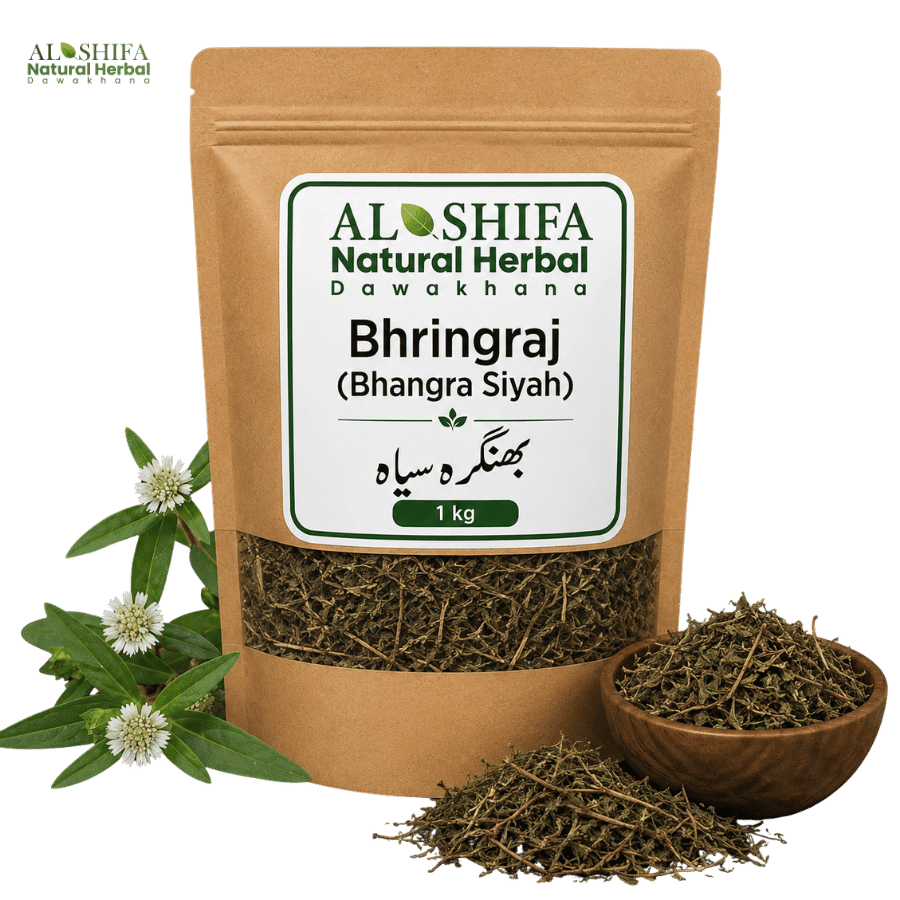
Bhringraj (Bhangra Siyah) is a traditional botanical herb, commonly identified as False Daisy (Eclipta prostrata), valued in traditional herbal practices and widely used in botanical hair and scalp preparations.
How to Use: Use as an ingredient in traditional herbal preparations, infused oils, or other suitable botanical formulations according to an appropriate recipe or professional guidance.
Storage: Store in a cool, dry place away from moisture, heat, and direct sunlight. Keep tightly sealed.
Important Note: Bhringraj is a traditional botanical ingredient and is not intended to diagnose, treat, cure, or prevent any medical condition. Internal medicinal use should be undertaken with appropriate professional guidance.
Bhringraj (Bhangra Siyah) is a traditional herbal botanical identified primarily as Eclipta prostrata (L.) L., belonging to the Asteraceae family. It is widely known in traditional South Asian herbal practices, including Ayurveda and regional herbal traditions, where the whole plant has historically been valued for hair and scalp wellness, general liver wellness, digestive wellbeing, skin care, and overall herbal wellness.
Bhringraj is commonly known as Bhangra, Bhangra Siyah, False Daisy, Trailing Eclipta, and Maka. In traditional Ayurvedic literature, the name Bhringraj is often translated as the “King of Hair,” reflecting its longstanding association with traditional hair and scalp preparations.
The plant naturally contains several phytochemicals, including wedelolactone, demethylwedelolactone, ecliptine, flavonoids, coumestans, triterpenoids, sterols, and other naturally occurring plant compounds. The concentration of these constituents can vary according to botanical source, growing conditions, plant part, harvesting, and processing.
Product Name: Bhringraj (Bhangra Siyah)
Urdu Name: بھنگرہ سیاہ
Herbal Name: Bhringraj
Alternative Names: Bhangra, Bhangra Siyah, False Daisy, Trailing Eclipta, Maka, Bringraj
Scientific Name: Eclipta prostrata (L.) L.
Common Botanical Synonym: Eclipta alba (L.) Hassk.
Plant Family: Asteraceae
Commonly Used Part: Whole Plant / Aerial Parts
Traditional Regions: South Asia and other tropical and subtropical regions
Product Type: Traditional Herbal Botanical
Primary Botanical Material: Dried Bhringraj Herb
Naturally Occurring Constituents: Wedelolactone, Demethylwedelolactone, Coumestans, Flavonoids, Triterpenoids, Sterols and other naturally occurring phytochemicals
Bhringraj is a small herbaceous plant that commonly grows in warm, moist environments throughout South Asia and many other tropical and subtropical regions.
The plant has been used for generations in traditional herbal systems. Its leaves, stems and other aerial portions may be used, while some traditional preparations utilize the whole plant.
Bhringraj is particularly famous for its historical use in traditional hair oils and scalp preparations, but its traditional applications extend beyond hair care.
Depending on regional herbal practice, Bhringraj may be prepared as:
The preparation and intended use should determine how the herb is used.
Bhringraj has a long history in South Asian herbal traditions.
Traditionally, it has been associated with:
These traditional uses should not be interpreted as evidence that Bhringraj can diagnose, treat, cure, or prevent any particular disease.
Bhringraj has earned a particularly strong reputation in traditional hair care.
The Sanskrit-derived name Bhringraj/Bhringaraj is commonly interpreted in herbal literature as “King of Hair.”
For generations, Bhringraj has been incorporated into traditional:
It is traditionally associated with maintaining healthy-looking hair and scalp.
These traditional uses do not establish Bhringraj as a medical treatment for alopecia or other diagnosed hair-loss disorders.
Bhringraj is commonly incorporated into herbal routines intended to support:
Bhringraj oil is one of its most familiar traditional preparations. The herb may be infused into a suitable carrier oil and applied to the scalp and hair.
The effect of a topical preparation also depends substantially on the carrier oil and any additional ingredients present in the formulation.
Bhringraj is frequently marketed for hair fall, but it is important to distinguish traditional use from established medical treatment.
Hair shedding can occur for numerous reasons, including:
Bhringraj can be incorporated into a traditional hair-care routine, but persistent or sudden hair loss should be appropriately evaluated.
Bhringraj has attracted scientific interest regarding its traditional association with hair growth.
Some experimental studies involving Eclipta prostrata or its extracts have explored effects related to hair follicles and hair-growth cycles.
However, much of this evidence is preclinical, including laboratory and animal research.
Therefore, available evidence does not justify claiming that ordinary Bhringraj herb is a clinically proven treatment for human hair loss.
Further high-quality human research is required.
Bhringraj has also traditionally been included in herbal preparations intended for maintaining the natural appearance of hair.
It is sometimes promoted for premature greying, particularly in traditional herbal oils.
However, premature greying can be influenced by:
There is insufficient clinical evidence to guarantee that Bhringraj reverses grey hair or permanently restores natural hair color.
Bhringraj is commonly incorporated into traditional scalp-care routines.
Depending on the formulation, it may be used in herbal oils, powders or washes intended to complement:
Persistent itching, severe dandruff, inflammation, sores, fungal infections or other significant scalp problems require appropriate diagnosis and treatment.
One of the most popular traditional uses of Bhringraj is in herbal hair oil.
Dried or fresh Bhringraj may traditionally be processed with carrier oils such as:
Additional botanicals may also be included depending on the traditional formulation.
When using any topical herbal preparation, a small patch test is sensible, particularly for individuals with sensitive skin.
Beyond hair care, Bhringraj has a longstanding history of use in traditional herbal systems for general liver wellness.
Traditional preparations have been associated with supporting normal digestive and hepatic wellbeing.
Modern experimental research has investigated Eclipta prostrata and some of its constituents in relation to liver-related biological processes.
However, this does not establish Bhringraj as a treatment for:
People with diagnosed liver disease should receive appropriate medical assessment and treatment.
One of the best-known naturally occurring constituents investigated in Bhringraj is wedelolactone.
Wedelolactone is a coumestan-type plant compound found in Eclipta prostrata and some other plants.
Other related constituents can include demethylwedelolactone and various flavonoids, triterpenoids and sterol compounds.
These phytochemicals have been investigated in laboratory research involving several biological pathways.
Their presence in the plant does not by itself establish a therapeutic effect in humans.
Bhringraj contains various naturally occurring phytochemicals that have demonstrated antioxidant activity in experimental studies.
These can include:
Antioxidant compounds participate in biological processes involving oxidative balance.
However, laboratory antioxidant activity should not be interpreted as proof that Bhringraj prevents or treats diseases associated with oxidative stress.
Various constituents of Eclipta prostrata have also been investigated experimentally for their interactions with pathways associated with inflammation.
Much of this research has been performed in laboratory or animal models.
Therefore, Bhringraj should not be considered a substitute for appropriate treatment of inflammatory diseases, arthritis, autoimmune conditions, or chronic pain.
In traditional herbal practice, Bhringraj has also been associated with general digestive wellbeing.
Traditional use may vary considerably between regions and formulations.
Healthy digestive function depends on many factors, including:
Persistent abdominal pain, vomiting, blood in stool, unexplained weight loss, or prolonged digestive problems require medical assessment.
Bhringraj has also been incorporated into traditional topical preparations for general skin wellness.
Depending on the preparation, it may be used externally as part of:
Evidence supporting Bhringraj as a treatment for specific dermatological diseases remains limited.
It should not replace appropriate treatment for eczema, psoriasis, bacterial or fungal infections, or other diagnosed skin conditions.
When sold as a dried botanical, Bhringraj may consist of dried aerial parts or whole-plant material depending on the supplier and traditional preparation.
Whole-herb material naturally contains a broad range of plant constituents.
The actual composition can vary according to:
This is why accurate botanical identification and good-quality raw material are important.
Bhringraj Powder is generally produced by cleaning, drying and finely grinding the botanical material.
Powder may be used in traditional formulations or external hair and scalp preparations.
When a powdered botanical is intended for internal use, appropriate identity, purity and quality controls are especially important.
Bhringraj extracts are produced by extracting selected constituents from the plant.
An extract can be considerably more concentrated than ordinary dried herb or powder.
Extracts may differ according to:
Therefore, 1 gram of dried Bhringraj herb should not automatically be considered equivalent to 1 gram of concentrated Bhringraj extract.
Any specific extract ratio or standardized constituent percentage should only be stated when verified for the actual product.
False Daisy is one of the common English names used for Eclipta prostrata.
Therefore:
Bhringraj = Bhangra = False Daisy = Eclipta prostrata
However, common names can vary by region and may sometimes be applied inconsistently.
For commercial herbal products, the scientific name is more reliable than relying only on a common name.
Bhringraj is frequently encountered under two botanical names:
Eclipta prostrata (L.) L.
and
Eclipta alba (L.) Hassk.
Eclipta alba is widely encountered in traditional herbal literature and commercial herbal references, while Eclipta prostrata is the commonly accepted botanical name in modern taxonomic usage.
For SEO and product identification, both names can be useful, but the principal scientific name may be listed as:
Eclipta prostrata (L.) L.
with Eclipta alba (L.) Hassk. included as a botanical synonym.
In Pakistan and parts of South Asia, Bhringraj may be known as Bhangra or Bhangra Siyah (بھنگرہ سیاہ).
Regional names can sometimes refer to closely related herbs or vary between traditional markets.
For this reason, botanical authentication is especially important when sourcing raw material commercially.
The product should ideally be identified by both its traditional name and scientific name:
Bhangra Siyah / Bhringraj – Eclipta prostrata (L.) L.
The method of using Bhringraj depends on the product form and intended purpose.
Traditional forms include:
Bhringraj may be infused or processed into a suitable carrier oil for scalp and hair application.
Powder may be incorporated into traditional hair masks, herbal mixtures or other preparations.
Traditional systems may prepare the herb in water for particular uses.
Concentrated extracts may be incorporated into supplements or specialized formulations.
Because the concentration varies substantially between these forms, the directions provided for the actual product should always be followed.
For hair and scalp applications, Bhringraj is commonly used externally.
General topical precautions include:
A finished Bhringraj oil containing multiple ingredients should also be assessed according to the safety of its other ingredients.
Bhringraj has a history of internal use in traditional herbal systems, but appropriate amounts vary considerably according to:
For an internally consumed product, follow the serving instructions stated on its packaging or advice from an appropriately qualified healthcare professional.
Do not assume that the serving amount for dried herb is appropriate for a concentrated extract.
Reliable human safety data for concentrated Bhringraj supplements are relatively limited.
Potential unwanted effects may include:
Individual tolerance can vary.
Stop using the product and seek appropriate advice if significant or persistent adverse effects occur.
Bhringraj belongs to the Asteraceae family.
People with known sensitivity to plants in this botanical family should use additional caution.
Topical products should ideally be patch-tested before extensive application, particularly in individuals with sensitive or allergy-prone skin.
Experimental research has investigated Eclipta prostrata in relation to glucose-related biological processes.
The clinical relevance of these findings in humans remains uncertain.
People taking medicines that lower blood glucose should seek appropriate professional advice before regularly using concentrated Bhringraj preparations internally.
Bhringraj should not replace prescribed diabetes treatment.
Reliable safety information regarding concentrated internal Bhringraj supplementation during pregnancy is insufficient.
Pregnant women should avoid self-prescribing concentrated Bhringraj preparations and seek appropriate professional advice before internal use.
Traditional use does not automatically establish safety during pregnancy.
Safety information for concentrated Bhringraj supplements during breastfeeding is also limited.
Breastfeeding women should seek appropriate professional advice before regular internal use.
External cosmetic use should still consider the ingredients of the complete formulation and the possibility of skin irritation.
Concentrated Bhringraj supplements intended for adults should not routinely be given to children without appropriate professional guidance.
Keep dried herbs, extracts and finished supplements securely out of reach of young children.
Information regarding interactions between Bhringraj and prescription medicines remains limited.
People taking regular medicines or receiving treatment for chronic medical conditions should seek appropriate professional advice before regular internal use of concentrated preparations.
This is particularly relevant when medicines influence:
Do not discontinue prescribed medicine in favor of Bhringraj.
Correct botanical identification is particularly important for traditional herbs sold under regional names.
The primary botanical identity for Bhringraj/Bhangra Siyah is:
Eclipta prostrata (L.) L.
A commonly encountered synonym is:
Eclipta alba (L.) Hassk.
Botanical identification helps distinguish genuine Bhringraj from unrelated herbs that may share similar regional names.
Important quality considerations for dried Bhringraj include:
The herb should be protected from contamination during harvesting, drying, processing and storage.
As with other agricultural botanicals, quality testing may include assessment for:
Claims such as “100% Pure,” “Organic,” “Pesticide Free,” “Heavy-Metal Tested,” or “Laboratory Tested” should only be made when supported by appropriate documentation for the actual product.
To maintain the quality of dried Bhringraj:
Do not use botanical material that develops unusual moisture, mold, insects, or an abnormal odor.
Our Bhringraj (Bhangra Siyah) provides this traditionally valued South Asian botanical in a convenient form for traditional herbal and personal-care applications.
Specific claims regarding purity, organic status, geographic origin, active-compound concentration, pesticide testing, heavy-metal testing or laboratory analysis should only be made when verified for the actual product.
Product Name: Bhringraj (Bhangra Siyah)
Urdu Name: بھنگرہ سیاہ
English Name: Bhringraj / False Daisy
Alternative Names: Bhangra, Bhangra Siyah, Bringraj, False Daisy, Trailing Eclipta, Maka
Scientific Name: Eclipta prostrata (L.) L.
Botanical Synonym: Eclipta alba (L.) Hassk.
Plant Family: Asteraceae
Plant Part Used: Whole Plant / Aerial Parts
Traditional Regions: South Asia and Tropical/Subtropical Regions
Product Form: Dried Herb / Herbal Material
Product Category: Traditional Herbal Botanical
Naturally Occurring Constituents: Wedelolactone, Demethylwedelolactone, Coumestans, Flavonoids, Triterpenoids, Sterols and Other Naturally Occurring Phytochemicals
Traditional Uses: Hair and Scalp Wellness, Traditional Hair Care, General Liver Wellness, Digestive Wellbeing, Skin Wellness and General Herbal Wellbeing
Storage: Store in a cool, dry place away from direct sunlight, excessive heat and moisture. Keep securely sealed and out of reach of children.
Bhringraj (Bhangra Siyah) – بھنگرہ سیاہ is a traditional South Asian botanical identified primarily as Eclipta prostrata (L.) L. and historically valued in herbal wellness practices.
It is especially famous for its traditional association with hair and scalp care and is commonly incorporated into herbal oils, powders, masks and other traditional hair preparations. Beyond hair care, traditional herbal systems have also associated Bhringraj with general liver wellness, digestive wellbeing, skin care and overall herbal wellness.
Bhringraj naturally contains several phytochemicals including wedelolactone, demethylwedelolactone, flavonoids, coumestans, triterpenoids, sterols and other naturally occurring plant compounds.
Its traditional reputation as the “King of Hair” has made Bhringraj one of the best-known botanicals in South Asian herbal hair-care traditions.
Important Note: Bhringraj is a traditional herbal botanical and is not intended to diagnose, treat, cure, or prevent disease. Traditional hair-care use should not be interpreted as a guaranteed treatment for alopecia, premature greying, scalp disease, liver disease or other medical conditions. Pregnant or breastfeeding women, people taking regular medicines, and individuals with significant medical conditions should seek appropriate professional advice before regular internal use.
بھنگرہ سیاہ برصغیر میں پائی جانے والی ایک معروف روایتی جڑی بوٹی ہے جو صدیوں سے مختلف نباتاتی طریقہ ہائے علاج میں استعمال ہوتی آ رہی ہے۔ اس جڑی بوٹی کو بالخصوص بالوں اور سر کی جلد کی روایتی دیکھ بھال کے حوالے سے خاص شہرت حاصل ہے۔ اس کے علاوہ روایتی طور پر اسے جگر کی عمومی تندرستی، نظامِ ہاضمہ، جلد کی دیکھ بھال اور مجموعی جسمانی صحت کے لیے بھی استعمال کیا جاتا رہا ہے۔
بھنگرہ سیاہ کے مکمل پودے یا زمین سے اوپر کے حصوں کو مختلف روایتی تیاریوں میں استعمال کیا جاتا ہے۔ اس میں قدرتی طور پر متعدد نباتاتی مرکبات پائے جاتے ہیں جن میں ویڈیلو لیکٹون، ڈی میتھائل ویڈیلو لیکٹون، کومیسٹانز، فلیوونائڈز، ٹرائی ٹرپینائڈز اور نباتاتی سٹیرولز شامل ہیں۔
ان قدرتی اجزاء کی مقدار پودے کی قسم، زمین، موسم، کاشت، کٹائی، خشک کرنے کے طریقے اور ذخیرہ کرنے کے حالات کے مطابق مختلف ہو سکتی ہے۔
پروڈکٹ کا نام: بھنگرہ سیاہ
اردو نام: بھنگرہ سیاہ
سائنسی نام: ایکلپٹا پروسٹریٹا
نباتاتی مترادف: ایکلپٹا البا
نباتاتی خاندان: ایسٹریسی
استعمال ہونے والا حصہ: مکمل پودا یا زمین سے اوپر کے حصے
روایتی خطہ: جنوبی ایشیا اور دیگر گرم و مرطوب علاقے
پروڈکٹ کی قسم: روایتی نباتاتی جڑی بوٹی
اہم قدرتی اجزاء: ویڈیلو لیکٹون، ڈی میتھائل ویڈیلو لیکٹون، کومیسٹانز، فلیوونائڈز، ٹرائی ٹرپینائڈز، نباتاتی سٹیرولز اور دیگر قدرتی نباتاتی مرکبات
بھنگرہ سیاہ ایک چھوٹا نباتاتی پودا ہے جو عموماً گرم اور مرطوب علاقوں میں اگتا ہے۔ یہ جنوبی ایشیا سمیت دنیا کے مختلف گرم علاقوں میں پایا جاتا ہے۔
روایتی طور پر اس کے پتے، تنے اور دیگر حصے استعمال کیے جاتے ہیں جبکہ بعض تیاریوں میں مکمل پودا بھی استعمال کیا جاتا ہے۔
بھنگرہ سیاہ خاص طور پر بالوں کی روایتی دیکھ بھال کے حوالے سے مشہور ہے۔ اسے مختلف شکلوں میں استعمال کیا جاتا رہا ہے، مثلاً:
بھنگرہ سیاہ کو برصغیر کے روایتی نباتاتی طریقوں میں ایک اہم جڑی بوٹی سمجھا جاتا ہے۔
روایتی طور پر اسے درج ذیل عمومی مقاصد سے منسوب کیا جاتا ہے:
یہ تمام استعمال روایتی معلومات پر مبنی ہیں اور انہیں کسی مخصوص بیماری کے یقینی علاج کے طور پر نہیں سمجھنا چاہیے۔
بھنگرہ سیاہ کی سب سے نمایاں شہرت بالوں کی دیکھ بھال سے متعلق ہے۔ صدیوں سے اسے بالوں اور سر کی جلد کے لیے تیار کیے جانے والے مختلف روایتی نسخوں میں شامل کیا جاتا رہا ہے۔
اسے بالوں کے لیے درج ذیل شکلوں میں استعمال کیا جاتا ہے:
روایتی طور پر اسے صحت مند اور خوبصورت نظر آنے والے بالوں کی دیکھ بھال سے منسوب کیا جاتا ہے۔
بھنگرہ سیاہ کو روایتی طور پر ایسے نباتاتی معمول میں شامل کیا جاتا ہے جس کا مقصد بالوں اور سر کی جلد کی عمومی دیکھ بھال ہو۔
اس کا روایتی استعمال درج ذیل مقاصد سے منسوب ہے:
بھنگرہ سیاہ سے تیار کردہ روغن اس جڑی بوٹی کے سب سے معروف روایتی استعمالات میں شامل ہے۔
بھنگرہ سیاہ کو روایتی طور پر بالوں کی دیکھ بھال کے لیے استعمال کیا جاتا ہے، تاہم ہر قسم کے بالوں کے جھڑنے کو صرف ایک جڑی بوٹی کے ذریعے دور نہیں کیا جا سکتا۔
بالوں کے زیادہ جھڑنے کی مختلف وجوہات ہو سکتی ہیں، مثلاً:
اچانک، شدید یا طویل عرصے تک بال جھڑنے کی صورت میں اصل وجہ معلوم کرنا زیادہ اہم ہے۔
بھنگرہ سیاہ پر بالوں کی نشوونما اور بالوں کی جڑوں سے متعلق مختلف تجرباتی تحقیقات کی گئی ہیں۔
بعض تحقیقات میں بھنگرہ سیاہ کے عرق اور اس کے قدرتی نباتاتی اجزاء کا بالوں کی نشوونما کے مختلف مراحل کے حوالے سے مطالعہ کیا گیا ہے۔
تاہم اس موضوع پر موجود تحقیق کا بڑا حصہ تجربہ گاہ یا جانوروں پر کیے گئے مطالعات پر مشتمل ہے۔
اس لیے بھنگرہ سیاہ کو انسانوں میں گنج پن یا بالوں کے جھڑنے کا یقینی اور ثابت شدہ علاج قرار دینا مناسب نہیں۔
روایتی طور پر بھنگرہ سیاہ کو ایسے نباتاتی روغن اور نسخوں میں بھی شامل کیا جاتا رہا ہے جن کا مقصد بالوں کی قدرتی ظاہری حالت برقرار رکھنا ہوتا ہے۔
بالوں کے وقت سے پہلے سفید ہونے کی کئی وجوہات ہو سکتی ہیں:
بھنگرہ سیاہ کا روایتی استعمال بالوں کی عمومی نگہداشت کے لیے کیا جا سکتا ہے، لیکن اسے سفید بالوں کو لازماً دوبارہ سیاہ کرنے والا ثابت شدہ علاج نہیں سمجھنا چاہیے۔
بھنگرہ سیاہ کو روایتی طور پر سر کی جلد کی عمومی دیکھ بھال کے لیے بھی استعمال کیا جاتا ہے۔
اسے مختلف نباتاتی تیاریوں میں شامل کرکے درج ذیل مقاصد کے لیے استعمال کیا جاتا رہا ہے:
اگر سر کی جلد پر شدید خارش، زخم، مسلسل خشکی، سوزش یا کسی قسم کا انفیکشن موجود ہو تو مناسب طبی مشورہ حاصل کرنا چاہیے۔
بھنگرہ سیاہ کا روغن اس جڑی بوٹی کے سب سے معروف روایتی استعمالات میں شامل ہے۔
تازہ یا خشک بھنگرہ سیاہ کو روایتی طور پر مختلف نباتاتی تیلوں کے ساتھ تیار کیا جاتا ہے، مثلاً:
بعض روایتی نسخوں میں اس کے ساتھ دوسری جڑی بوٹیاں بھی شامل کی جاتی ہیں۔
حساس جلد رکھنے والے افراد کو کسی بھی نئے روغن کو پورے سر پر استعمال کرنے سے پہلے جلد کے ایک چھوٹے حصے پر آزما لینا چاہیے۔
بھنگرہ سیاہ کا روایتی استعمال صرف بالوں تک محدود نہیں ہے۔ روایتی نباتاتی طریقوں میں اسے جگر کی عمومی تندرستی سے بھی منسوب کیا جاتا رہا ہے۔
اس جڑی بوٹی اور اس میں موجود بعض قدرتی مرکبات پر جگر سے متعلق مختلف جسمانی عوامل کے حوالے سے تجرباتی تحقیق بھی ہوئی ہے۔
تاہم بھنگرہ سیاہ کو درج ذیل بیماریوں کا ثابت شدہ علاج نہیں سمجھنا چاہیے:
جگر کی تشخیص شدہ بیماری کی صورت میں مستند طبی علاج ضروری ہے۔
بھنگرہ سیاہ میں متعدد قدرتی نباتاتی مرکبات پائے جاتے ہیں۔
ان میں نمایاں طور پر شامل ہیں:
ان اجزاء کی مقدار ہر خام مال میں یکساں ہونا ضروری نہیں۔ پودے کی عمر، مقام، موسم، کٹائی اور تیاری کا طریقہ ان کی مقدار پر اثر انداز ہو سکتا ہے۔
بھنگرہ سیاہ میں موجود بعض قدرتی نباتاتی مرکبات پر ضدِ تکسیدی سرگرمی کے حوالے سے تحقیق کی گئی ہے۔
ضدِ تکسیدی مرکبات جسم کے قدرتی تکسیدی توازن سے متعلق مختلف حیاتیاتی عمل میں کردار ادا کر سکتے ہیں۔
تاہم تجربہ گاہ میں کسی جڑی بوٹی میں ضدِ تکسیدی سرگرمی پائے جانے کا مطلب یہ نہیں کہ وہ کسی بیماری کو روکنے یا ختم کرنے کی ضمانت دیتی ہے۔
بھنگرہ سیاہ کے بعض قدرتی اجزاء پر جسم میں سوزش سے متعلق مختلف حیاتیاتی عمل کے حوالے سے تجرباتی تحقیق بھی ہوئی ہے۔
موجودہ تحقیق کا بڑا حصہ تجرباتی نوعیت کا ہے، اس لیے اسے:
کے مستند علاج کا متبادل نہیں سمجھنا چاہیے۔
روایتی طریقہ ہائے علاج میں بھنگرہ سیاہ کو نظامِ ہاضمہ کی عمومی تندرستی سے بھی منسوب کیا جاتا ہے۔
صحت مند نظامِ ہاضمہ کے لیے درج ذیل عوامل بنیادی اہمیت رکھتے ہیں:
اگر پیٹ میں مسلسل درد، قے، پاخانے میں خون، غیر واضح وزن میں کمی یا ہاضمے کا طویل مسئلہ موجود ہو تو طبی جانچ ضروری ہے۔
بھنگرہ سیاہ کو بعض روایتی نباتاتی تیاریوں میں جلد کی عمومی دیکھ بھال کے لیے بھی استعمال کیا جاتا رہا ہے۔
اسے روایتی طور پر:
میں شامل کیا جا سکتا ہے۔
تاہم اسے جلد کی تشخیص شدہ بیماریوں یا جراثیمی اور پھپھوندی کے انفیکشن کا مستند علاج نہیں سمجھنا چاہیے۔
خشک جڑی بوٹی کی صورت میں بھنگرہ سیاہ مکمل پودے یا اس کے زمین سے اوپر کے حصوں پر مشتمل ہو سکتا ہے۔
اس کے قدرتی اجزاء اور معیار پر درج ذیل عوامل اثر انداز ہوتے ہیں:
اسی لیے معیاری خام مال اور صحیح نباتاتی شناخت بہت اہم ہے۔
بھنگرہ سیاہ کا سفوف عموماً صاف اور خشک جڑی بوٹی کو باریک پیس کر تیار کیا جاتا ہے۔
روایتی طور پر اسے:
میں شامل کیا جاتا ہے۔
اگر سفوف اندرونی استعمال کے لیے ہو تو اس کی صفائی، شناخت اور معیار پر خصوصی توجہ ضروری ہے۔
بھنگرہ سیاہ کا عرق پودے سے منتخب قدرتی اجزاء حاصل کرکے تیار کیا جاتا ہے۔
عرق عام خشک جڑی بوٹی یا سفوف کے مقابلے میں زیادہ مرتکز ہو سکتا ہے۔
اسی لیے خشک جڑی بوٹی اور مرتکز عرق کی مقدار کو ایک جیسا نہیں سمجھنا چاہیے۔
کسی مخصوص عرق کی طاقت یا کسی فعال جزو کی مخصوص مقدار کا دعویٰ صرف اس وقت کیا جانا چاہیے جب اصل پروڈکٹ کے لیے اس کی باقاعدہ تصدیق موجود ہو۔
بھنگرہ سیاہ کے استعمال کا طریقہ اس کی شکل اور مطلوبہ مقصد کے مطابق مختلف ہو سکتا ہے۔
بھنگرہ سیاہ کو مناسب نباتاتی تیل میں شامل کرکے سر کی جلد اور بالوں پر استعمال کیا جا سکتا ہے۔
اسے بالوں کے روایتی لیپ یا دوسری نباتاتی تیاریوں میں شامل کیا جا سکتا ہے۔
بعض روایتی طریقوں میں اسے پانی میں جوش دے کر تیار کیا جاتا ہے۔
مرتکز عرق کو مخصوص نباتاتی فارمولیشنز میں استعمال کیا جا سکتا ہے۔
ہر شکل کی طاقت مختلف ہونے کی وجہ سے اصل پروڈکٹ پر درج طریقہ استعمال کو ترجیح دینی چاہیے۔
بھنگرہ سیاہ کو بالوں اور سر کی جلد پر استعمال کرتے وقت:
بھنگرہ سیاہ کا روایتی طور پر اندرونی استعمال بھی کیا جاتا رہا ہے، تاہم مناسب مقدار اس کی شکل اور تیاری کے مطابق مختلف ہو سکتی ہے۔
مثلاً:
ان تمام شکلوں کی طاقت یکساں نہیں ہوتی، اس لیے پروڈکٹ پر درج ہدایات یا مستند معالج کی تجویز کے مطابق استعمال کرنا بہتر ہے۔
بھنگرہ سیاہ کے مرتکز اندرونی استعمال سے متعلق انسانی معلومات محدود ہیں۔
بعض افراد میں ممکنہ طور پر درج ذیل علامات ظاہر ہو سکتی ہیں:
شدید یا مسلسل علامات کی صورت میں استعمال بند کرکے مناسب طبی مشورہ حاصل کریں۔
حمل اور دودھ پلانے کے دوران بھنگرہ سیاہ کی مرتکز مصنوعات کے اندرونی استعمال کی حفاظت کے حوالے سے قابلِ اعتماد معلومات محدود ہیں۔
اس لیے حاملہ اور دودھ پلانے والی خواتین کو باقاعدہ اندرونی استعمال سے پہلے مستند معالج سے مشورہ کرنا چاہیے۔
کسی جڑی بوٹی کا روایتی استعمال لازماً حمل یا دودھ پلانے کے دوران اس کی مکمل حفاظت ثابت نہیں کرتا۔
بالغ افراد کے لیے تیار کردہ مرتکز بھنگرہ سیاہ مصنوعات بچوں کو مستند معالج کی ہدایت کے بغیر باقاعدگی سے نہیں دینی چاہئیں۔
خشک جڑی بوٹی، سفوف اور عرق کو بچوں کی پہنچ سے دور رکھیں۔
بھنگرہ سیاہ اور مختلف ادویات کے باہمی اثرات کے حوالے سے انسانی تحقیق محدود ہے۔
مستقل ادویات استعمال کرنے والے یا کسی دائمی بیماری کا علاج کروانے والے افراد کو مرتکز بھنگرہ سیاہ کے اندرونی استعمال سے پہلے مناسب طبی مشورہ حاصل کرنا چاہیے۔
تجویز کردہ دوا کو خود سے بند کرکے اس کی جگہ جڑی بوٹی استعمال نہیں کرنی چاہیے۔
علاقائی ناموں سے فروخت ہونے والی جڑی بوٹیوں میں صحیح نباتاتی شناخت بہت اہم ہوتی ہے کیونکہ مختلف علاقوں میں ایک جیسے نام مختلف پودوں کے لیے بھی استعمال ہو سکتے ہیں۔
بھنگرہ سیاہ کی بنیادی نباتاتی شناخت ایکلپٹا پروسٹریٹا ہے جبکہ ایکلپٹا البا اس کے معروف نباتاتی مترادفات میں شامل ہے۔
درست شناخت اصلی بھنگرہ سیاہ کو ملتی جلتی دوسری جڑی بوٹیوں سے الگ کرنے میں مدد دیتی ہے۔
اچھے معیار کے بھنگرہ سیاہ کے لیے درج ذیل عوامل اہم ہیں:
کٹائی سے لے کر پیکنگ تک جڑی بوٹی کو نمی، گندگی اور غیر ضروری بیرونی مواد سے محفوظ رکھنا اس کے معیار کے لیے اہم ہے۔
بھنگرہ سیاہ کا معیار برقرار رکھنے کے لیے:
اگر جڑی بوٹی میں پھپھوندی، غیر معمولی نمی، کیڑے یا خراب بو محسوس ہو تو استعمال نہ کریں۔
پروڈکٹ کا نام: بھنگرہ سیاہ
سائنسی نام: ایکلپٹا پروسٹریٹا
نباتاتی مترادف: ایکلپٹا البا
نباتاتی خاندان: ایسٹریسی
استعمال ہونے والا حصہ: مکمل پودا یا زمین سے اوپر کے حصے
روایتی خطہ: جنوبی ایشیا اور دیگر گرم و مرطوب علاقے
پروڈکٹ کی شکل: خشک جڑی بوٹی
پروڈکٹ کی قسم: روایتی نباتاتی جڑی بوٹی
اہم قدرتی اجزاء: ویڈیلو لیکٹون، ڈی میتھائل ویڈیلو لیکٹون، کومیسٹانز، فلیوونائڈز، ٹرائی ٹرپینائڈز، نباتاتی سٹیرولز اور دیگر قدرتی نباتاتی مرکبات
روایتی استعمال: بالوں اور سر کی جلد کی عمومی دیکھ بھال، بالوں کی روایتی نگہداشت، جگر کی عمومی تندرستی، نظامِ ہاضمہ، جلد کی دیکھ بھال اور مجموعی نباتاتی تندرستی
بھنگرہ سیاہ برصغیر کی معروف روایتی جڑی بوٹی ہے جو بالخصوص بالوں اور سر کی جلد کی دیکھ بھال کے حوالے سے طویل عرصے سے استعمال ہوتی آ رہی ہے۔
اسے روایتی طور پر بالوں کے روغن، سفوف، لیپ اور مختلف نباتاتی نسخوں میں شامل کیا جاتا رہا ہے۔ بالوں کے علاوہ اسے روایتی طور پر جگر کی عمومی تندرستی، نظامِ ہاضمہ، جلد کی دیکھ بھال اور مجموعی جسمانی صحت سے بھی منسوب کیا جاتا ہے۔
بھنگرہ سیاہ میں قدرتی طور پر ویڈیلو لیکٹون، ڈی میتھائل ویڈیلو لیکٹون، فلیوونائڈز، کومیسٹانز، ٹرائی ٹرپینائڈز، نباتاتی سٹیرولز اور دیگر قدرتی مرکبات پائے جاتے ہیں۔
اہم احتیاط: بھنگرہ سیاہ ایک روایتی نباتاتی جڑی بوٹی ہے۔ اسے کسی بیماری کی تشخیص، یقینی علاج یا روک تھام کا متبادل نہ سمجھیں۔ بالوں کے لیے اس کا روایتی استعمال گنج پن، شدید بالوں کے جھڑنے، سفید بالوں، سر کی جلد کی بیماری یا کسی دوسری طبی حالت کے یقینی علاج کی ضمانت نہیں ہے۔ حاملہ یا دودھ پلانے والی خواتین، مستقل ادویات استعمال کرنے والے افراد اور کسی اہم طبی بیماری میں مبتلا افراد باقاعدہ اندرونی استعمال سے پہلے مستند معالج سے مشورہ کریں۔