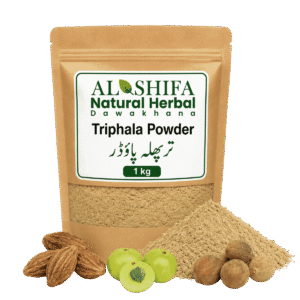
ترپھلہ پاؤڈر
Price range: ₨ 250 through ₨ 3,500
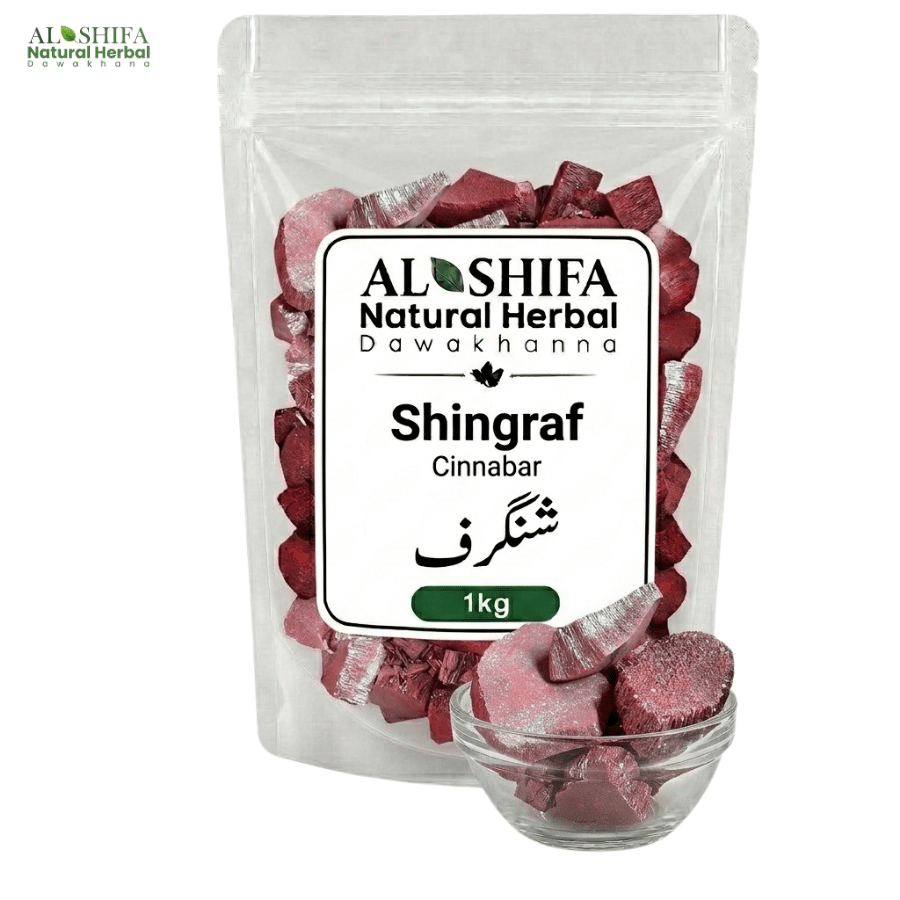
Shingraf, commonly known as Cinnabar, is a naturally occurring red mineral composed primarily of mercury sulfide (HgS). It has a long historical association with mineral pigments and selected traditional Unani and mineral preparations. Unlike herbal products, Shingraf is an inorganic, mercury-containing material that requires careful handling.
Al Shifa Shingraf is supplied as a specialized traditional raw material with attention to its material identity, characteristic red appearance, careful handling, suitable packaging and responsible storage.
Key Features:
Important Safety Note: Shingraf contains mercury and should not be self-administered internally. Do not heat, burn or unnecessarily grind it, and avoid inhaling its dust. Keep securely away from children, food and homemade cosmetic preparations.
Shingraf, commonly known as Cinnabar, is a naturally occurring red mineral composed primarily of mercury sulfide (HgS). In Urdu and traditional Unani markets, it is known as Shingraf.
Cinnabar is recognized by its characteristic bright red to deep reddish colour and has a long historical association with pigments, traditional mineral preparations and certain old medical systems.
Unlike herbs, roots or seeds, Shingraf is an inorganic mercury-containing mineral material. This distinction is extremely important because mercury compounds can present serious health risks when improperly handled, heated, inhaled or used medicinally.
Historical use should therefore not be interpreted as evidence that raw Cinnabar is safe for routine internal or external medicinal use.
At Al Shifa Natural Herbal Dawakhana, Shingraf is identified as a specialized traditional mineral raw material, with clear emphasis on correct identity, careful handling, responsible storage and appropriate safety information.
Shingraf is the traditional name commonly used for Cinnabar, a red mineral consisting mainly of mercury sulfide.
Its chemical formula is:
HgS
In natural mineral form, Cinnabar may occur as:
Its strong colour made it historically important as a pigment as well as a material appearing in certain traditional mineral preparations.
Product Name: Shingraf
English Name: Cinnabar
Urdu Name: شنگرف
Roman Name: Shingraf / Shingarf / Shangraf
Chemical Name: Mercury Sulfide / Mercuric Sulfide
Chemical Formula: HgS
Mineral Class: Sulfide Mineral
Major Elements: Mercury & Sulfur
Common Form: Mineral Pieces / Granules / Powder
Product Type: Traditional Mercury-Containing Mineral Raw Material
Shingraf should not be classified as a medicinal herb.
It does not come from a plant and has no botanical scientific name.
It is a naturally occurring mineral containing mercury and sulfur.
Therefore, safety principles used for ordinary culinary herbs or plant powders cannot automatically be applied to Cinnabar.
Natural Cinnabar is a mineral source of mercury sulfide.
Mercury sulfide can also be produced or processed artificially.
Materials sold under names such as Cinnabar, Vermilion or Shingraf may therefore differ in:
Colour alone cannot establish purity or safety.
The terms Cinnabar and Vermilion are historically related but are not always used in exactly the same way.
Cinnabar generally refers to naturally occurring mercury sulfide mineral.
Vermilion commonly refers to the brilliant red pigment historically prepared from mercury sulfide, whether obtained from natural Cinnabar or manufactured.
A red pigment should therefore not automatically be assumed to be natural Cinnabar.
Cinnabar has been known for centuries because of its intense red colour and mercury content.
Historically, it has appeared in:
These historical uses document how the material was used in the past; they do not establish that raw Cinnabar is safe or effective as a modern medicine.
Shingraf has appeared in certain historical Unani and other traditional formulations.
Old medical systems sometimes subjected mineral materials to specialized processing before incorporating them into compound preparations.
However, historical processing terminology should not be interpreted as a guarantee that mercury has been made harmless.
Modern toxicology recognizes mercury as a hazardous element.
For this reason, raw or traditionally processed Shingraf should not be casually self-administered.
The defining safety issue with Cinnabar is its mercury content.
Mercury exists in different chemical forms, and their absorption and toxicity can differ.
Mercury sulfide is generally less soluble than some other mercury compounds, but lower solubility does not mean harmlessness.
Exposure can still become medically important depending on:
Cinnabar should therefore be treated as a hazardous mercury-containing mineral.
Cinnabar should not be heated, burned or subjected to uncontrolled high-temperature processing.
Heating mercury-containing materials can create hazardous mercury-containing fumes or vapours and other decomposition products.
Inhalation exposure can be particularly dangerous.
Do not attempt traditional heating, roasting, burning or purification procedures at home.
Grinding or crushing mineral material can generate fine particles.
Avoid:
If material is already powdered, unnecessary disturbance should be minimized.
Raw Shingraf should not be used as a self-directed oral remedy.
Mercury exposure can affect important organs and body systems, including the:
Repeated exposure can be especially concerning because mercury may accumulate or produce effects over time depending on its chemical form and exposure pattern.
Traditional references to internal use should not be treated as modern safety instructions.
Shingraf should not be consumed at home for conditions such as:
Historical mention of a mineral in traditional medicine does not establish a safe home dosage or prove that it treats these conditions.
Traditional literature may describe various procedures intended to purify or process mineral substances.
Such procedures should not be attempted at home.
Visual changes in colour, texture or appearance do not prove that mercury-related hazards have been removed.
There is no simple household test that can establish that processed Shingraf is safe for internal medicinal use.
External use should not automatically be considered harmless simply because the material is not swallowed.
Avoid applying Shingraf or Cinnabar powder to:
Products intended for cosmetic or skin use should comply with applicable safety standards for mercury and other heavy metals.
Because of its historically attractive red colour, Cinnabar was once widely valued as a pigment.
However, mercury-containing mineral powder should not be casually added to:
Modern safer pigments are available for many applications.
Pregnant women should avoid unnecessary exposure to mercury-containing materials.
Mercury exposure is particularly concerning during pregnancy because the developing nervous system can be vulnerable to toxic effects.
Breastfeeding women should also avoid unnecessary exposure and should not use Shingraf medicinally without specialist medical advice.
Shingraf should be kept away from children.
Children should not be allowed to:
Young children can be particularly vulnerable to toxic exposures.
People with kidney disease, neurological conditions or known heavy-metal exposure should avoid unnecessary contact with mercury-containing materials.
Anyone concerned about significant mercury exposure should seek professional medical advice rather than attempting herbal or household detoxification methods.
Mercury toxicity can present differently depending on the chemical form, amount and duration of exposure.
Potential symptoms associated with significant mercury exposure may include:
These symptoms are not specific to mercury exposure.
Suspected significant exposure requires appropriate medical assessment and, where indicated, laboratory testing.
If significant exposure to Cinnabar or another mercury-containing material is suspected, do not rely on herbal detox products, home remedies or unverified chelation methods.
Medical evaluation is important because treatment depends on the type and degree of exposure.
Chelation medicines themselves can cause harm when used incorrectly and require professional supervision.
A bright red colour does not prove that Shingraf is pure or authentic.
Mineral products can contain:
Laboratory analysis is required when precise chemical composition or contaminant levels need to be established.
Traditional mineral raw material should not automatically be considered equivalent to laboratory-grade mercury sulfide.
Laboratory-grade substances are manufactured and tested according to defined specifications.
Traditional mineral material may naturally contain additional minerals or contaminants.
The terms “natural,” “pure” or “traditional” do not by themselves establish pharmaceutical or laboratory-grade purity.
Because Shingraf contains mercury, responsible handling is essential.
Basic precautions include:
Local hazardous-material guidance should be followed where applicable.
At Al Shifa Natural Herbal Dawakhana, Shingraf is treated as a specialized traditional mineral raw material rather than an ordinary herbal product.
Attention is given to:
Material Identity – Supplied according to the traditional identity of Cinnabar.
Characteristic Appearance – Recognition of its traditional red mineral appearance.
Clean Handling – Appropriate care during handling and packaging.
Clear Labelling – Identification as a mercury-containing mineral material.
Responsible Storage – Protection from contamination and unnecessary exposure.
Safety Information – Clear distinction between historical use and modern safety requirements.
Al Shifa Natural Herbal Dawakhana, established in 1999, supplies traditional herbal and specialized raw materials throughout Pakistan.
For Shingraf, our focus is on:
Shingraf should not be self-administered internally or used in homemade medicinal preparations.
Do not attempt to:
Where a specialized professional, laboratory, historical or technical application is intended, handling should follow appropriate safety requirements for mercury-containing materials.
Shingraf / Cinnabar contains mercury and is potentially hazardous.
Historical use in Unani or other traditional systems does not establish that raw Cinnabar is safe for modern medicinal consumption.
Mercury sulfide may differ in absorption from other mercury compounds, but it should not be described as harmless or safe for unrestricted use.
Shingraf should not be used as a self-treatment for sexual weakness, infertility, neurological disease, skin disease, infection or other medical conditions.
Pregnant women, breastfeeding women and children should avoid unnecessary exposure.
Suspected significant mercury exposure requires appropriate medical evaluation.
Store Shingraf in a secure, tightly closed and clearly labelled container in a cool, dry place.
For safer storage:
Do not transfer Shingraf into an unlabelled food or household container.
Shingraf, commonly known as Cinnabar, is a traditional red mineral composed primarily of mercury sulfide (HgS). It has a long historical association with mineral pigments and selected traditional Unani and mineral preparations.
Unlike ordinary herbal products, Shingraf is a mercury-containing mineral and requires careful handling. Historical medicinal use should not be interpreted as proof of safety for internal consumption, and home heating, grinding, purification or medicinal preparation is not recommended.
Customers searching for Shingraf, Shingarf, Cinnabar, Mercury Sulfide, HgS, Cinnabar mineral, red Cinnabar, Shingraf Pakistan, Cinnabar Pakistan, Shingraf Lahore, Shingraf price in Pakistan, Cinnabar price in Pakistan or traditional Shingraf mineral can choose Al Shifa Natural Herbal Dawakhana for clearly identified and carefully handled traditional raw material.
Since 1999, Al Shifa Natural Herbal Dawakhana has focused on supplying traditional raw materials with attention to identity, careful handling, responsible storage and clear product information.
Product Name: Shingraf
English Name: Cinnabar
Urdu Name: شنگرف
Roman Name: Shingraf / Shingarf / Shangraf
Chemical Name: Mercury Sulfide / Mercuric Sulfide
Chemical Formula: HgS
Mineral Class: Sulfide Mineral
Major Elements: Mercury & Sulfur
Common Form: Mineral Pieces / Granules / Powder
Product Type: Traditional Mercury-Containing Mineral Raw Material
Historical Use: Mineral pigments and selected historical traditional preparations
Important Note: Shingraf contains mercury. Do not self-administer internally, heat, burn or unnecessarily grind the material. Keep away from children, food and household cosmetic preparations.
شنگرف ایک سرخ رنگ کا معدنی مادہ ہے جو بنیادی طور پر پارہ اور گندھک کے مرکب سے بنتا ہے۔ یہ عام جڑی بوٹی نہیں بلکہ معدنی دوا ہے۔ حکیمی اور قدیم طبی کتابوں میں اس کا ذکر ملتا ہے، لیکن اس میں پارہ موجود ہونے کی وجہ سے اس کا استعمال عام جڑی بوٹیوں کی طرح نہیں کیا جا سکتا۔
شنگرف عموماً شوخ سرخ، گہرے سرخ یا سرخی مائل بھورے رنگ میں پایا جاتا ہے۔ اسے پیسنے پر سرخ سفوف حاصل ہوتا ہے۔ قدرتی طور پر ملنے والے شنگرف کے ساتھ بازار میں مصنوعی طور پر تیار کیا گیا شنگرف بھی موجود ہو سکتا ہے۔
قدیم حکیمی طریقوں میں شنگرف کو خاص عمل سے گزارنے کے بعد بہت محدود مقدار میں جلد کے امراض اور چند دوسری طبی ادویات میں شامل کرنے کا ذکر ملتا ہے۔ تاہم پارے کی موجودگی کی وجہ سے غلط، غیر معیاری یا خود سے کیا گیا استعمال جسم کے لیے نقصان دہ ہو سکتا ہے۔
الشفاء نیچرل ہربل دواخانہ میں شنگرف کے معاملے میں درست پہچان، اصل معدنی ساخت، رنگت، صفائی اور محفوظ طریقے سے سنبھالنے کو اہمیت دی جاتی ہے۔
شنگرف ایک معدنی مرکب ہے جو پارے اور گندھک سے بنا ہوتا ہے۔ اس کا نمایاں سرخ رنگ اس کی اہم ظاہری پہچان ہے۔
یہ قدرتی معدنی شکل میں زمین سے حاصل ہو سکتا ہے اور پارے اور گندھک کے ملاپ سے مصنوعی طور پر بھی بنایا جا سکتا ہے۔
شنگرف کی عام خصوصیات میں شامل ہیں:
صرف سرخ رنگ دیکھ کر کسی مادے کو اصلی شنگرف قرار نہیں دینا چاہیے، کیونکہ دوسری سرخ معدنی اشیاء یا مصنوعی رنگ بھی اس سے ملتے جلتے دکھائی دے سکتے ہیں۔
نام: شنگرف
دوسرے معروف نام: ہنگول
بنیادی کیمیائی ساخت: پارے اور گندھک کا مرکب
قسم: معدنی مفرد دوا
استعمال ہونے والا حصہ: مکمل معدنی مادہ
عام شکل: سرخ معدنی ٹکڑے یا سفوف
عام رنگت: شوخ سرخ، گہرا سرخ یا سرخی مائل
بو: عام طور پر نمایاں خوشبو نہیں ہوتی
اہم خصوصیت: اس میں پارہ موجود ہوتا ہے
شنگرف کو جڑی بوٹی سمجھنا درست نہیں۔ یہ ایک معدنی مادہ ہے۔
جڑی بوٹیوں میں پودوں کے قدرتی اجزاء ہوتے ہیں، جبکہ شنگرف میں پارہ موجود ہوتا ہے۔ اسی وجہ سے اس کے استعمال، مقدار اور حفاظت کے اصول عام جڑی بوٹیوں سے بہت مختلف ہیں۔
اسے عام سفوف، قہوے یا گھریلو نسخے کی طرح استعمال کرنا خطرناک ہو سکتا ہے۔
شنگرف کی ظاہری جانچ میں درج ذیل باتیں دیکھی جا سکتی ہیں:
اہم بات یہ ہے کہ صرف رنگ، وزن یا ظاہری شکل سے شنگرف کی خالص حالت اور حفاظت کی مکمل تصدیق نہیں کی جا سکتی۔
پارہ رکھنے والے معدنی مادوں کے معیار کی درست جانچ کے لیے تجربہ گاہ کی جانچ زیادہ قابلِ اعتماد طریقہ ہے۔
قدیم حکیمی کتابوں میں شنگرف کو خاص عمل سے گزارنے کے بعد مختلف مرکب ادویات میں شامل کرنے کا ذکر ملتا ہے۔
اس کا ذکر بالخصوص:
میں ملتا ہے۔
یہ استعمال تاریخی اور حکیمی کتابوں میں درج ہیں۔ انہیں جدید طبی تحقیق سے ثابت شدہ علاج نہیں سمجھنا چاہیے۔
شنگرف میں پارہ ہونے کی وجہ سے اسے خود سے کسی بیماری کے علاج کے لیے استعمال کرنا محفوظ نہیں۔
قدیم طبی کتابوں میں شنگرف کو جلد کے امراض کے لیے استعمال ہونے والی چند بیرونی ادویات میں شامل کرنے کا ذکر ملتا ہے۔
موجودہ طبی معلومات کے مطابق پارے والے مادے جلد اور جسم کے لیے نقصان دہ ہو سکتے ہیں۔ اسی لیے خارش، داد، پھپھوندی، دانوں، زخم یا کسی دوسری جلد کی بیماری میں شنگرف خود سے نہ لگائیں۔
جلد کے امراض میں محفوظ اور ثابت شدہ علاج کے لیے جلد کے مستند معالج سے معائنہ کروائیں۔
پرانی حکیمی کتابوں اور بازار میں فروخت ہونے والی چند مرکب ادویات میں شنگرف کو جسمانی یا جنسی کمزوری کے لیے شامل کرنے کا ذکر مل سکتا ہے۔
اس مقصد کے لیے شنگرف خود سے کھانا محفوظ طریقہ نہیں ہے۔ جنسی کمزوری کئی بیماریوں، ہارمون کی خرابی، ذیابیطس، دل اور خون کی نالیوں کے امراض، ذہنی دباؤ یا ادویات کے اثرات کی وجہ سے ہو سکتی ہے۔
اصل وجہ معلوم کیے بغیر پارے والا معدنی مادہ استعمال کرنا نقصان کا سبب بن سکتا ہے۔
شنگرف میں موجود پارہ اس کی حفاظت کے حوالے سے سب سے اہم بات ہے۔
پارہ ایک زہریلی دھات ہے۔ جسم میں زیادہ مقدار پہنچنے یا بار بار سامنا ہونے سے یہ خاص طور پر:
کو نقصان پہنچا سکتا ہے۔
نقصان کا خطرہ اس بات پر منحصر ہوتا ہے کہ پارہ کس شکل میں موجود ہے، کتنی مقدار جسم میں داخل ہوئی، کس راستے سے داخل ہوا اور کتنے عرصے تک سامنا ہوتا رہا۔
شنگرف کو گھر میں گرم، جلانا یا آگ پر رکھنا خطرناک ہو سکتا ہے۔
زیادہ درجہ حرارت پر پارے والی نقصان دہ بھاپ پیدا ہونے کا خطرہ بڑھ سکتا ہے۔ ایسی بھاپ سانس کے ذریعے جسم میں داخل ہو سکتی ہے۔
اس لیے شنگرف کے ساتھ گھر میں تجربات نہ کریں اور اسے آگ یا بہت زیادہ گرمی کے قریب نہ رکھیں۔
شنگرف کا باریک سفوف سنبھالتے وقت خاص احتیاط ضروری ہے۔
باریک ذرات:
اسی وجہ سے اسے بچوں کے کھیلنے، عام گھریلو استعمال یا کھانے پینے کی چیزوں کے قریب نہیں رکھنا چاہیے۔
پارہ جسم میں نقصان دہ مقدار میں پہنچنے کی صورت میں مختلف علامات پیدا کر سکتا ہے، جن میں شامل ہو سکتی ہیں:
علامات پارے کی قسم، مقدار اور جسم میں داخل ہونے کے راستے کے مطابق مختلف ہو سکتی ہیں۔
اگر کسی شخص نے شنگرف کھا لیا ہو، اس کا سفوف بڑی مقدار میں سانس کے ذریعے اندر چلا گیا ہو یا گرم کیے گئے شنگرف کی بھاپ کا سامنا ہوا ہو تو علامات کا انتظار کیے بغیر فوری طبی مدد حاصل کریں۔
شنگرف کو گھر میں خود سے سفوف، گولی، معجون یا کسی دوسری شکل میں کھانا مناسب نہیں۔
یہ عام خوراک یا روزمرہ استعمال کی جڑی بوٹی نہیں ہے۔
قدیم کتابوں میں کسی خاص عمل سے گزارنے یا بہت کم مقدار کے ذکر کو گھر میں استعمال کی اجازت نہ سمجھیں۔ پارے والے مادے کی حفاظت صرف مقدار دیکھ کر طے نہیں کی جا سکتی۔
حاملہ خواتین کو شنگرف سے خاص طور پر دور رہنا چاہیے۔
پارہ حمل کے دوران بچے کے بڑھتے ہوئے دماغ اور اعصابی نظام کے لیے نقصان دہ ہو سکتا ہے۔ اس لیے حاملہ خواتین شنگرف کو کھانے، سفوف کی شکل میں سنبھالنے یا اس کی دھول اور بھاپ کے غیر ضروری سامنا سے بچیں۔
حمل میں شنگرف والی کسی حکیمی دوا کو خود سے استعمال نہ کریں۔
دودھ پلانے والی خواتین شنگرف کا اندرونی استعمال نہ کریں۔
پارے کے جسم میں داخل ہونے سے ماں اور بچے دونوں کے لیے خطرہ پیدا ہو سکتا ہے۔ اگر کسی دوا میں شنگرف شامل ہو تو اسے استعمال کرنے سے پہلے مستند معالج کو اس کے تمام اجزاء دکھائیں۔
بچوں کو شنگرف دوا کے طور پر خود سے ہرگز نہ دیں۔
بچوں کا بڑھتا ہوا دماغ اور اعصابی نظام پارے کے نقصان دہ اثرات کے لیے زیادہ حساس ہو سکتا ہے۔
شنگرف کو بچوں کی پہنچ سے مکمل طور پر دور رکھیں۔
گردوں کی بیماری والے افراد کے لیے پارے کا سامنا خاص تشویش کا باعث ہو سکتا ہے کیونکہ پارہ گردوں کو نقصان پہنچا سکتا ہے۔
جگر، گردوں یا اعصابی نظام کی بیماری والے افراد شنگرف والی دوا خود سے استعمال نہ کریں۔
اگر کوئی شخص مستقل ادویات استعمال کر رہا ہے تو شنگرف والی کسی دوا کا خود سے استعمال مناسب نہیں۔
خاص طور پر گردوں، جگر، اعصابی نظام یا دوسری سنگین بیماریوں کی ادویات لینے والے افراد اپنے معالج کو شنگرف والی دوا کے تمام اجزاء ضرور بتائیں۔
بازار میں سرخ رنگ کے کئی معدنی اور مصنوعی مادے موجود ہو سکتے ہیں۔ صرف سرخ رنگ دیکھ کر شنگرف کی پہچان کرنا محفوظ طریقہ نہیں ہے۔
اصل شناخت کے لیے مادے کی معدنی اور کیمیائی جانچ زیادہ قابلِ اعتماد ہے۔
گھر میں آگ، تیزاب یا کسی دوسرے کیمیکل کے ذریعے شنگرف کی جانچ کرنے کی کوشش نہ کریں۔ اس سے نقصان دہ مادے یا بھاپ پیدا ہو سکتی ہے۔
ہنگول کا نام بھی شنگرف کے لیے استعمال ہوتا ہے۔ تاہم بازار میں ناموں اور معیار میں فرق ہو سکتا ہے۔
طبی استعمال کے لیے صرف نام کافی نہیں۔ یہ جاننا ضروری ہے کہ مادہ حقیقت میں کیا ہے، اس میں پارے کی مقدار اور شکل کیا ہے اور آیا اس کی مناسب جانچ ہوئی ہے یا نہیں۔
شنگرف کا غلط یا زیادہ استعمال سنگین نقصان کا باعث بن سکتا ہے۔
پارے کے زیادہ سامنا سے:
پیدا ہو سکتی ہے۔
طویل عرصے تک کم مقدار میں سامنا بھی نقصان دہ ہو سکتا ہے، اس لیے صرف فوری علامات نہ ہونے کو حفاظت کی علامت نہ سمجھیں۔
شنگرف کے اندرونی استعمال کے لیے یہاں کوئی مقدار نہیں دی جا رہی۔
اس میں پارہ موجود ہونے کی وجہ سے گھر میں خود سے مقدار مقرر کرنا، سفوف بنانا یا کسی نسخے میں شامل کرنا محفوظ نہیں ہے۔
اگر کسی مستند طبی ادارے یا معالج کی تجویز کردہ دوا میں شنگرف موجود ہو تو اس دوا کی مکمل ساخت، معیار اور حفاظتی معلومات معلوم کرنا ضروری ہے۔
شنگرف قدرتی معدنی شکل میں مل سکتا ہے، لیکن قدرتی ہونے کا مطلب محفوظ ہونا نہیں ہے۔
اس میں پارہ موجود ہوتا ہے، اس لیے اسے خود سے درج ذیل بیماریوں کا علاج نہ سمجھیں:
قدیم طبی کتابوں میں شنگرف کے طبی استعمال درج ہیں، لیکن اس کی بنیاد پر خود سے استعمال محفوظ قرار نہیں دیا جا سکتا۔ پارے کے نقصان دہ اثرات کے بارے میں جدید طبی معلومات واضح ہیں۔
شنگرف کے معاملے میں صرف خوبصورت سرخ رنگ یا باریک سفوف کو معیار نہیں سمجھنا چاہیے۔
الشفاء نیچرل ہربل دواخانہ میں اس معدنی مادے کے حوالے سے درج ذیل باتوں کو اہمیت دی جاتی ہے:
درست پہچان: مادے کی اصل شناخت اہم ہے۔
قدرتی معدنی ساخت: غیر معلوم سرخ رنگ یا دوسری معدنی ملاوٹ سے بچنا ضروری ہے۔
صفائی: مٹی، گرد اور غیر ضروری چیزوں سے پاک حالت کو اہمیت دی جاتی ہے۔
محفوظ پیکنگ: پارے والے مادے کو کھلا رکھنے کے بجائے مضبوط اور اچھی طرح بند پیکنگ میں رکھنا ضروری ہے۔
واضح معلومات: خریدار کو یہ معلوم ہونا چاہیے کہ شنگرف عام جڑی بوٹی نہیں بلکہ پارہ رکھنے والا معدنی مادہ ہے۔
الشفاء نیچرل ہربل دواخانہ سنہ ۱۹۹۹ سے قدرتی جڑی بوٹیوں اور حکیمی مفرد ادویات کی سپلائی کر رہا ہے۔
شنگرف جیسے معدنی مادے میں درست شناخت، صفائی، مناسب پیکنگ اور حفاظتی معلومات کو خاص اہمیت دی جاتی ہے۔
شنگرف کو عام جڑی بوٹی سمجھ کر خود سے کھانے یا کسی بیماری کے علاج کے لیے استعمال نہ کریں۔
شنگرف کو مضبوط، اچھی طرح بند اور واضح نام والے برتن میں رکھیں۔
اگر شنگرف گر جائے اور سفوف پھیل جائے تو اسے خشک جھاڑو سے ہوا میں نہ اڑائیں۔ پارے والے مادے کی صفائی میں غیر ضروری براہِ راست سامنا سے بچنا ضروری ہے۔
شنگرف ایک سرخ معدنی مادہ ہے جو بنیادی طور پر پارے اور گندھک کے مرکب سے بنتا ہے۔ قدیم حکیمی کتابوں میں اسے مختلف مرکب ادویات میں شامل کرنے کا ذکر ملتا ہے، لیکن پارے کی موجودگی کی وجہ سے اس کا خود سے اندرونی استعمال محفوظ نہیں سمجھا جانا چاہیے۔
پاکستان میں شنگرف خریدتے وقت صرف رنگ اور ظاہری شکل کے بجائے درست پہچان، صفائی، محفوظ پیکنگ اور واضح حفاظتی معلومات کو اہمیت دینی چاہیے۔
اگر آپ شنگرف، ہنگول، اصلی شنگرف، خالص شنگرف، شنگرف کے فوائد، شنگرف کے استعمال، شنگرف پاکستان، شنگرف لاہور، شنگرف کی قیمت، شنگرف آن لائن یا شنگرف خریدیں تلاش کر رہے ہیں تو خریداری سے پہلے اس کی شناخت اور حفاظتی معلومات ضرور سمجھیں۔
نام: شنگرف
دوسرا معروف نام: ہنگول
قسم: معدنی مفرد دوا
بنیادی ساخت: پارے اور گندھک کا مرکب
عام شکل: سرخ معدنی ٹکڑے یا سرخ سفوف
عام رنگت: شوخ یا گہرا سرخ
اہم خصوصیت: اس میں پارہ موجود ہوتا ہے۔
حکیمی استعمال: قدیم طبی کتابوں میں جلد کے امراض اور چند دوسری مرکب ادویات میں استعمال کا ذکر ملتا ہے۔
اہم احتیاط: شنگرف عام جڑی بوٹی نہیں ہے۔ اس میں پارہ موجود ہونے کی وجہ سے اسے خود سے کھانا، گرم کرنا، جلانا یا کسی بیماری کے علاج کے لیے استعمال کرنا نقصان دہ ہو سکتا ہے۔ حاملہ خواتین، دودھ پلانے والی مائیں اور بچے اس کے غیر ضروری سامنا سے خاص طور پر بچیں۔ شنگرف کھا لینے، اس کی زیادہ دھول سانس میں جانے یا گرم شنگرف کی بھاپ کا سامنا ہونے کی صورت میں فوری طبی مدد حاصل کریں۔