روغن کدو
Price range: ₨ 2,200 through ₨ 17,500
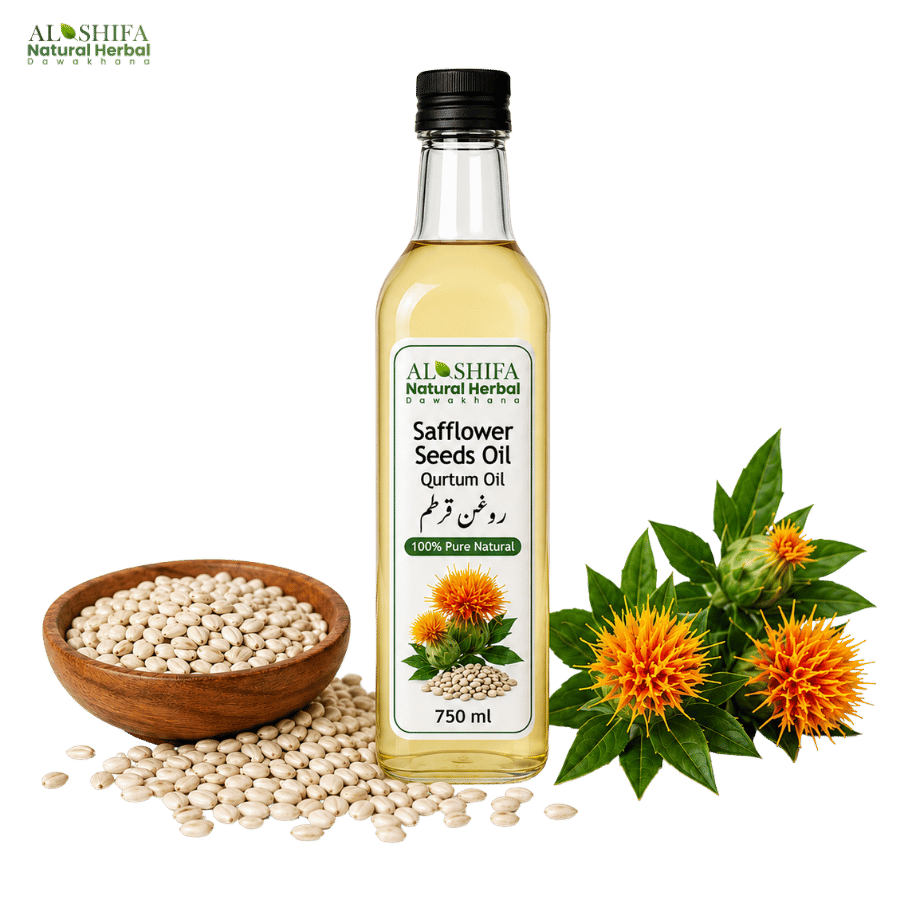
Safflower Seed Oil / Qurtum Oil is a natural vegetable oil extracted from safflower seeds. Naturally rich in unsaturated fatty acids, particularly linoleic or oleic acid depending on the variety, it is valued for culinary use as well as skin, hair, scalp, and body care.
How to Use: Food-grade safflower oil can be used in suitable culinary preparations according to the product directions. For external care, apply a small amount to the skin, hair, or scalp and massage gently.
Storage: Keep in a cool, dry place away from direct sunlight and excessive heat. Keep the bottle tightly closed after use.
Important Note: Only safflower oil specifically manufactured and labelled as food-grade should be consumed. This product should not be considered a treatment for heart disease, high cholesterol, hair loss, skin disorders, or other medical conditions.
Safflower Seed Oil / Qurtum Oil – روغن قرطم is a natural vegetable oil obtained from the seeds of the safflower plant. Safflower has a long history of cultivation in different parts of Asia, the Middle East, and other regions, where its seeds and oil have traditionally been valued for culinary use, skin care, hair care, massage, and general personal care.
Safflower oil is particularly known for its naturally occurring unsaturated fatty acids. Depending on the safflower variety, the oil may be predominantly rich in linoleic acid or oleic acid. It also naturally contains varying amounts of tocopherols and other lipid-soluble plant compounds.
When produced and labelled as food-grade oil, safflower oil can be incorporated into a balanced diet. Cosmetic-grade safflower oil is widely suitable for external skin, hair, scalp, and massage applications. Always use the product according to its stated grade and directions.
Product Name: Safflower Seed Oil
Urdu Name: روغن قرطم
Roman Name: Roghan-e-Qurtum / Qurtum Oil
Common English Names: Safflower Oil / Safflower Seed Oil
Botanical Name: Carthamus tinctorius L.
Plant Family: Asteraceae
Plant Part Used: Seeds
Product Type: Natural Vegetable Seed Oil
Product Form: Oil
Common Uses: Culinary Use, Skin Conditioning, Hair Care, Scalp Care & Body Massage
Safflower seed oil is obtained from the seeds of the safflower plant.
Safflower is an annual flowering plant traditionally cultivated for its colorful flowers as well as its oil-rich seeds. Mature safflower seeds contain natural oils that can be extracted through mechanical pressing or other suitable processing methods.
The characteristics of the finished oil can vary according to:
These factors can influence the oil’s color, aroma, flavor, fatty-acid composition, and stability.
One of the most notable characteristics of safflower oil is its fatty-acid composition.
Depending on the cultivar, safflower oil may naturally contain significant amounts of:
Traditional high-linoleic varieties contain a particularly high proportion of linoleic acid, while specially developed high-oleic varieties contain more oleic acid.
For this reason, the exact fatty-acid composition should not be assumed without information about the particular oil or laboratory analysis.
Linoleic acid is an essential polyunsaturated fatty acid that the human body cannot manufacture in sufficient quantities and therefore obtains from the diet.
Safflower oil made from high-linoleic varieties can be a particularly rich dietary source of linoleic acid.
Linoleic acid contributes to the normal structure of cell membranes and forms part of dietary fat intake.
As with all dietary fats, safflower oil should be consumed in appropriate quantities within an overall balanced diet.
Some safflower varieties are specifically cultivated to produce oil with a higher concentration of oleic acid.
Oleic acid is a monounsaturated fatty acid also naturally found in several other plant oils.
High-oleic safflower oil generally has different cooking and storage characteristics compared with high-linoleic safflower oil.
The product label or manufacturer information should be checked when a particular fatty-acid profile is important.
Safflower seed oil naturally contains varying amounts of tocopherols, compounds belonging to the vitamin E family.
Tocopherols have antioxidant activity and contribute to protecting lipids from oxidative reactions.
Their actual amount can vary according to:
Specific vitamin E quantities should only be stated when supported by appropriate product analysis.
Food-grade safflower oil is used as an edible vegetable oil.
Depending on whether the oil is refined, cold-pressed, high-linoleic, or high-oleic, it may be suitable for different culinary applications.
It can be used in:
Cooking suitability, particularly for high-temperature use, depends on the specific type and processing of the oil. Follow the manufacturer’s recommendations.
Dietary fats are an important part of normal nutrition, providing energy and essential fatty acids.
Food-grade safflower oil can contribute unsaturated fats to the diet.
When appropriate, replacing some sources of saturated fat with foods containing unsaturated fats can form part of a balanced dietary pattern.
However, safflower oil remains calorie-dense, as are all edible oils, so portion size is important.
Safflower oil is often discussed in the context of heart-conscious diets because of its unsaturated fatty-acid content.
A balanced dietary pattern that emphasizes vegetables, fruits, whole grains, legumes, nuts, seeds, and appropriate sources of unsaturated fats can support overall cardiovascular health.
However, safflower oil should not be described as a cure for:
People with diagnosed cardiovascular conditions should follow the dietary and medical advice provided by qualified healthcare professionals.
The type of fat consumed can influence blood lipid levels.
Replacing some saturated fats with polyunsaturated fats, including linoleic acid-containing oils, may be useful within an appropriately designed diet.
This does not mean that simply adding unlimited quantities of safflower oil to an existing diet will lower cholesterol.
The overall balance of dietary fats and total calorie intake remains important.
Safflower oil is widely used in cosmetic and personal-care formulations because of its lightweight texture and fatty-acid content.
When applied externally to suitable skin, it may help:
It can be used alone or incorporated into suitable creams, lotions, body oils, and massage formulations.
Oil-based products can help reduce moisture loss from the skin surface.
Safflower oil may provide a light emollient layer that helps dry or rough skin feel softer and smoother.
For external use:
Persistent severe dryness, cracking, inflammation, or itching may require professional evaluation.
Safflower oil is sometimes included in facial oils and moisturizing formulations.
Its relatively light texture can make it suitable for different cosmetic preparations.
Individual skin responses vary, particularly in people with:
A small patch test is advisable before regular facial application.
Safflower seed oil can serve as a useful carrier or massage oil.
Its smooth consistency helps:
It can also be blended with other suitable carrier oils or cosmetic ingredients when properly formulated.
Safflower oil can be used as part of a hair-conditioning routine.
Applied in suitable quantities, it may help:
These effects primarily involve conditioning existing hair rather than altering the biological rate of hair growth.
Safflower oil may also be used for gentle scalp massage.
A small amount can be distributed over the scalp using the fingertips.
Scalp massage with an appropriate oil may:
Avoid scratching the scalp with fingernails and discontinue use if significant redness, itching, or irritation develops.
Safflower oil is sometimes promoted online as a hair-growth oil.
Its fatty-acid content can make it useful for hair and scalp conditioning, but this should not be confused with clinically established treatment for hair loss.
There is insufficient evidence to claim that ordinary topical safflower oil can reliably:
Persistent or sudden hair loss may have medical, hormonal, nutritional, genetic, or scalp-related causes and should be appropriately evaluated.
Oil applied to the hair shaft can coat its surface and reduce friction.
This may temporarily make hair appear:
These are useful cosmetic effects but do not necessarily indicate increased hair growth.
Safflower and its oil have been used in traditional practices in different regions.
Traditional applications may include:
Traditional use can provide useful historical context, but it should not automatically be interpreted as evidence that safflower oil treats a medical condition.
Safflower oil can function as a carrier oil in topical preparations.
Carrier oils are used to:
Any concentrated aromatic or essential oil added to a carrier oil must be diluted appropriately and used according to its own safety requirements.
Food-grade safflower oil can be consumed by adults of either sex as part of a balanced diet.
Safflower and safflower-derived preparations have also been used traditionally in various women’s-health contexts. However, traditional uses should not be converted into claims that ordinary safflower seed oil can treat menstrual, fertility, pregnancy, or hormonal conditions.
Pregnant individuals should be especially cautious with concentrated traditional safflower preparations and should seek professional guidance before using them medicinally.
Safflower oil naturally contains lipid-soluble antioxidant compounds, particularly tocopherols.
Antioxidants help protect molecules against oxidative reactions.
However, the presence of antioxidant compounds does not mean that safflower oil can:
Such claims require evidence far beyond the general composition of an oil.
Only use safflower oil internally when the specific product is manufactured and labelled as food-grade.
Depending on the type, it can be used:
The amount should fit within the individual’s overall dietary requirements.
For external skin conditioning:
Stop use if persistent redness, burning, rash, or itching develops.
For hair or scalp care:
The amount can be adjusted according to hair length, thickness, and dryness.
Before regular topical application, particularly on sensitive skin, test a small amount on a limited area of healthy skin.
Discontinue use if you experience:
Do not apply to severely irritated or infected skin.
Although safflower allergy is not among the most common food allergies, sensitivity is possible.
Individuals with known allergies to safflower or related plant materials should use caution.
Food-grade status does not guarantee suitability for a person with a specific allergy.
Seek medical advice when there is a history of serious allergic reactions.
Cold pressing is a mechanical extraction method that can be used to obtain oil from safflower seeds with relatively limited processing.
Cold-pressed safflower oil may retain more of its characteristic natural aroma, color, and minimally processed qualities.
However, a product should only be described as cold-pressed when it has actually been manufactured using an appropriate cold-pressing process.
Refined safflower oil undergoes additional processing that can alter:
Some refined high-oleic safflower oils may be suitable for higher-temperature cooking than certain minimally processed oils.
Always follow the specific product’s cooking instructions rather than assuming that all safflower oils have the same heat tolerance.
Depending on processing, safflower oil may range from:
Cold-pressed and refined products can differ in clarity and color.
Natural variation does not necessarily indicate poor quality.
Safflower oil is often relatively mild in flavor, particularly when refined.
Less-refined products may retain more characteristic seed-like aroma and flavor.
A strong rancid or unpleasant odor can indicate oxidation or deterioration.
The quality of safflower seed oil can be affected by:
A properly sealed container helps protect the oil from contamination and unnecessary oxidation.
Safflower oil, particularly varieties rich in polyunsaturated fatty acids, should be protected from conditions that accelerate oxidation.
For best quality:
Avoid using the oil if it develops:
A slight natural variation in color or clarity can occur depending on the extraction and filtration method.
Safflower Seed Oil / Qurtum Oil – روغن قرطم is a versatile natural seed oil suitable for nutritional and personal-care applications when appropriately manufactured.
Product Name: Safflower Seed Oil
Urdu Name: روغن قرطم
Roman Name: Roghan-e-Qurtum / Qurtum Oil
Botanical Name: Carthamus tinctorius L.
Plant Family: Asteraceae
Plant Part Used: Seeds
Product Type: Natural Vegetable Seed Oil
Form: Oil
Typical Color: Pale Yellow to Golden Yellow
Common Uses: Culinary Use, Skin Conditioning, Hair Care, Scalp Massage & Body Massage
Storage: Keep tightly closed in a cool, dry place away from direct sunlight, excessive heat, and moisture.
Safflower Seed Oil / Qurtum Oil – روغن قرطم is obtained from the oil-rich seeds of Carthamus tinctorius. It is valued particularly for its naturally occurring unsaturated fatty acids, with different varieties producing oils richer in either linoleic or oleic acid.
When manufactured as food-grade oil, it can be incorporated into a balanced diet and various culinary preparations. For external care, safflower oil provides a lightweight, smooth oil suitable for skin conditioning, hair care, scalp massage, and body massage.
Important Note: Only safflower oil specifically manufactured and labelled as food-grade should be consumed. The oil should not be considered a replacement for medical treatment for high cholesterol, heart disease, hair loss, skin disease, hormonal disorders, or other medical conditions.
روغن قرطم قرطم کے بیجوں سے حاصل کیا جانے والا ایک قدرتی نباتاتی روغن ہے۔ قرطم ایک قدیم کاشت ہونے والا پودا ہے جس کے بیج قدرتی طور پر روغنی اجزاء سے بھرپور ہوتے ہیں۔ اس روغن کو روایتی طور پر غذائی استعمال، جلد کی نگہداشت، بالوں کی دیکھ بھال، سر کی مالش اور جسمانی مالش کے لیے استعمال کیا جاتا رہا ہے۔
روغن قرطم میں قدرتی طور پر غیر سیر شدہ روغنی تیزاب نمایاں مقدار میں پائے جاتے ہیں۔ قرطم کی قسم کے مطابق بعض روغنوں میں لینولیک روغنی تیزاب زیادہ ہوتا ہے جبکہ بعض اقسام میں اولیک روغنی تیزاب کی مقدار زیادہ ہو سکتی ہے۔ اس کے علاوہ اس میں قدرتی مانع تکسید اجزاء اور دوسرے نباتاتی روغنی مرکبات بھی پائے جا سکتے ہیں۔
اگر روغن قرطم خوردنی معیار کے مطابق تیار کیا گیا ہو تو اسے غذا میں استعمال کیا جا سکتا ہے، جبکہ بیرونی استعمال کے لیے تیار کردہ روغن جلد، بالوں اور جسمانی مالش کے لیے موزوں ہو سکتا ہے۔ ہمیشہ اصل پروڈکٹ پر درج طریقۂ استعمال کو ترجیح دیں۔
پروڈکٹ کا نام: روغن قرطم
عام نام: قرطم کے بیجوں کا تیل
ماخذ: قرطم کے بیج
استعمال ہونے والا حصہ: بیج
پروڈکٹ کی قسم: قدرتی نباتاتی بیجوں کا روغن
شکل: مائع روغن
عمومی رنگ: ہلکے زرد سے سنہری زرد تک
عام استعمال: غذائی استعمال، جلد کی نگہداشت، بالوں کی نگہداشت، سر کی مالش اور جسمانی مالش
روغن قرطم قرطم کے پکے ہوئے بیجوں سے قدرتی تیل نکال کر حاصل کیا جاتا ہے۔
قرطم کے بیجوں میں قدرتی طور پر چکنائی موجود ہوتی ہے جسے دباؤ یا دوسرے مناسب طریقوں سے الگ کیا جا سکتا ہے۔
تیار ہونے والے روغن کی خصوصیات مختلف عوامل کے مطابق تبدیل ہو سکتی ہیں، مثلاً:
اسی وجہ سے مختلف اقسام کے روغن قرطم کے رنگ، ذائقے، خوشبو اور روغنی ساخت میں فرق ہو سکتا ہے۔
روغن قرطم کی سب سے نمایاں خصوصیات میں اس کے قدرتی روغنی اجزاء شامل ہیں۔
اس میں مختلف مقدار میں:
موجود ہو سکتے ہیں۔
بعض اقسام کے قرطم میں لینولیک روغنی تیزاب زیادہ ہوتا ہے جبکہ کچھ اقسام کو خاص طور پر زیادہ اولیک روغنی تیزاب حاصل کرنے کے لیے کاشت کیا جاتا ہے۔
کسی مخصوص پروڈکٹ میں ان اجزاء کی درست مقدار صرف مناسب تجزیے سے معلوم کی جا سکتی ہے۔
لینولیک روغنی تیزاب ایک ضروری غیر سیر شدہ روغنی جزو ہے جسے انسانی جسم مناسب مقدار میں خود تیار نہیں کر سکتا اور اسے غذا سے حاصل کرنا ضروری ہوتا ہے۔
قرطم کی بعض اقسام کے بیجوں کا روغن قدرتی طور پر لینولیک روغنی تیزاب سے بھرپور ہوتا ہے۔
یہ روزمرہ غذا میں شامل مختلف روغنی اجزاء کا حصہ بن سکتا ہے۔
دیگر خوردنی روغنوں کی طرح اسے بھی متوازن غذا کے اندر مناسب مقدار میں استعمال کرنا چاہیے۔
قرطم کی بعض اقسام میں اولیک روغنی تیزاب کی مقدار زیادہ ہوتی ہے۔
یہ ایک غیر سیر شدہ روغنی جزو ہے جو بہت سے دوسرے نباتاتی روغنوں میں بھی قدرتی طور پر پایا جاتا ہے۔
زیادہ اولیک روغنی تیزاب رکھنے والے روغن قرطم کی محفوظ رہنے اور حرارت برداشت کرنے کی خصوصیات زیادہ لینولیک روغنی تیزاب رکھنے والے روغن سے مختلف ہو سکتی ہیں۔
اس لیے کسی مخصوص غذائی مقصد کے لیے اصل پروڈکٹ کی معلومات دیکھنا ضروری ہے۔
روغن قرطم میں قدرتی طور پر ایسے نباتاتی اجزاء بھی موجود ہو سکتے ہیں جو مانع تکسید خصوصیات رکھتے ہیں۔
ان اجزاء کی مقدار درج ذیل عوامل سے متاثر ہو سکتی ہے:
ان اجزاء کی موجودگی روغن کی قدرتی خصوصیات کا حصہ ہے، لیکن اسے کسی بیماری کے علاج کا ثبوت نہیں سمجھنا چاہیے۔
خوردنی معیار کا روغن قرطم مختلف غذائی استعمالات کے لیے موزوں ہو سکتا ہے۔
اسے حسبِ ضرورت:
میں استعمال کیا جا سکتا ہے۔
پکانے کے لیے موزونیت روغن کی قسم اور تیاری کے طریقے پر منحصر ہوتی ہے، اس لیے اصل پروڈکٹ پر درج ہدایات پر عمل کرنا بہتر ہے۔
چکنائی انسانی غذا کا ایک اہم حصہ ہے جو جسم کو توانائی اور ضروری روغنی اجزاء فراہم کرتی ہے۔
خوردنی روغن قرطم متوازن غذا میں غیر سیر شدہ روغنی اجزاء کا ایک ذریعہ بن سکتا ہے۔
متوازن غذائی طرز میں:
شامل کرنا مجموعی صحت کے لیے اہم ہے۔
صرف کسی ایک روغن کو مکمل صحت یا کسی بیماری کے علاج کا ذریعہ نہیں سمجھنا چاہیے۔
غیر سیر شدہ چکنائی رکھنے والے نباتاتی روغن متوازن غذائی طرز کا حصہ بن سکتے ہیں۔
بعض حالات میں زیادہ سیر شدہ چکنائی والی غذاؤں کی جگہ مناسب مقدار میں غیر سیر شدہ چکنائی والی غذائیں استعمال کرنا بہتر غذائی انتخاب ہو سکتا ہے۔
روغن قرطم کو اسی تناظر میں متوازن غذا کا حصہ بنایا جا سکتا ہے۔
تاہم اسے:
کا علاج نہیں سمجھنا چاہیے۔
غذا میں استعمال ہونے والی چکنائی کی قسم خون میں چکنائی کی سطح پر اثر انداز ہو سکتی ہے۔
بعض غذائی حالات میں سیر شدہ چکنائی کی جگہ غیر سیر شدہ چکنائی کا مناسب استعمال فائدہ مند غذائی تبدیلی ہو سکتی ہے۔
اس کا مطلب یہ نہیں کہ روزمرہ غذا میں بڑی مقدار میں اضافی روغن قرطم شامل کرنے سے خون میں چکنائی لازماً کم ہو جائے گی۔
مجموعی خوراک اور استعمال ہونے والی توانائی کی مقدار بھی اہم ہے۔
روغن قرطم اپنی ہلکی روغنی ساخت کی وجہ سے بیرونی جلدی نگہداشت میں بھی استعمال کیا جاتا ہے۔
مناسب مقدار میں جلد پر لگانے سے یہ:
ہر فرد کی جلد مختلف ہوتی ہے، اس لیے پہلی مرتبہ تھوڑی مقدار استعمال کرنا بہتر ہے۔
خشک جلد میں قدرتی نمی کا اخراج زیادہ محسوس ہو سکتا ہے۔
روغن قرطم جیسا روغنی مادہ جلد کی سطح پر ہلکی تہہ قائم کرکے اسے نرم اور ہموار محسوس کرانے میں مدد دے سکتا ہے۔
اس کے بیرونی استعمال سے:
اگر جلد مسلسل بہت زیادہ خشک، پھٹی ہوئی، سوزش زدہ یا خارش کا شکار ہو تو اصل وجہ معلوم کرنا ضروری ہے۔
روغن قرطم کو چہرے کی مختلف نگہداشتی مصنوعات میں بھی شامل کیا جا سکتا ہے۔
اسے:
میں استعمال کیا جا سکتا ہے۔
حساس یا دانوں والی جلد رکھنے والے افراد کو پورے چہرے پر استعمال کرنے سے پہلے جلد کے ایک چھوٹے حصے پر آزمائش کرنا بہتر ہے۔
روغن قرطم جسمانی مالش کے لیے ایک مناسب نباتاتی روغن کے طور پر استعمال کیا جا سکتا ہے۔
مالش کے دوران یہ:
مالش کے دوران پیدا ہونے والی گرمائش یا سکون کو کسی اندرونی بیماری کے علاج کا ثبوت نہیں سمجھنا چاہیے۔
روغن قرطم کو اکیلے یا دوسرے مناسب نباتاتی روغنوں کے ساتھ ملا کر جسمانی مالش میں استعمال کیا جا سکتا ہے۔
اس کی روغنی ساخت اسے جسم کے مختلف حصوں پر آسانی سے پھیلنے میں مدد دیتی ہے۔
مالش کے لیے بہت زیادہ مقدار استعمال کرنے کے بجائے ضرورت کے مطابق تھوڑی مقدار سے آغاز کرنا بہتر ہے۔
روغن قرطم بالوں کی بیرونی نگہداشت کے لیے بھی استعمال کیا جاتا ہے۔
مناسب مقدار میں بالوں پر لگانے سے یہ:
یہ اثرات بنیادی طور پر موجودہ بالوں کی نگہداشت اور نرمی سے متعلق ہیں۔
روغن قرطم کو سر کی جلد پر نرم مالش کے لیے بھی استعمال کیا جا سکتا ہے۔
استعمال کے لیے:
اگر سر کی جلد پر جلن، شدید خارش یا دانے پیدا ہوں تو استعمال بند کر دیں۔
بالوں کی سطح پر روغن کی ہلکی تہہ بالوں کے درمیان رگڑ کم کرنے میں مدد دے سکتی ہے۔
اس سے بال عارضی طور پر:
محسوس ہو سکتے ہیں۔
یہ ظاہری اور نگہداشتی اثرات ہیں اور انہیں لازماً نئی افزائش کی علامت نہیں سمجھنا چاہیے۔
روغن قرطم کو بعض جگہ بالوں کی افزائش کے لیے بھی پیش کیا جاتا ہے۔
تاہم عام روغن قرطم کو سر پر لگانے سے گنج پن ختم ہونے یا نئے بال اگنے کے حوالے سے مضبوط اور قابلِ اعتماد طبی ثبوت موجود نہیں۔
اس لیے اسے زیادہ مناسب طور پر:
کے لیے بیان کرنا چاہیے۔
اگر بال اچانک یا بہت زیادہ جھڑ رہے ہوں تو اس کی اصل وجہ معلوم کرنا ضروری ہے۔
قرطم اور اس سے حاصل ہونے والے روغن کا استعمال مختلف علاقوں کی روایتی نگہداشت میں بھی ملتا ہے۔
روایتی استعمال میں شامل ہو سکتے ہیں:
روایتی استعمال کو کسی بیماری کے ثابت شدہ علاج کے برابر نہیں سمجھنا چاہیے۔
روغن قرطم کو بعض بیرونی مصنوعات میں بنیادی روغن کے طور پر بھی استعمال کیا جا سکتا ہے۔
اسے مناسب طریقے سے دوسرے نباتاتی روغنوں کے ساتھ ملا کر:
میں استعمال کیا جا سکتا ہے۔
اگر کسی تیز خوشبودار یا مرتکز روغن کو اس میں شامل کیا جائے تو اس کی محفوظ مقدار اور استعمال کی ہدایات کا خیال رکھنا ضروری ہے۔
خوردنی معیار کا روغن قرطم مرد اور خواتین دونوں متوازن غذا میں مناسب مقدار میں استعمال کر سکتے ہیں۔
قرطم کا روایتی ذکر خواتین سے متعلق بعض مخصوص استعمالات میں بھی ملتا ہے، لیکن عام روغن قرطم کو:
کا ثابت شدہ علاج نہیں سمجھنا چاہیے۔
حمل کے دوران قرطم کی مرتکز روایتی تیاریوں یا غیر معمولی مقدار کے استعمال سے پہلے مستند معالج سے مشورہ کرنا بہتر ہے۔
صرف خوردنی معیار کے مطابق تیار کردہ روغن قرطم کو کھانے میں استعمال کریں۔
اسے پروڈکٹ کی نوعیت کے مطابق:
مقدار اور حرارت کے حوالے سے اصل پروڈکٹ پر درج ہدایات کو ترجیح دیں۔
بیرونی جلدی نگہداشت کے لیے:
بالوں کی نگہداشت کے لیے:
استعمال ہونے والی مقدار بالوں کی لمبائی، گھنے پن اور خشکی کے مطابق مختلف ہو سکتی ہے۔
روغن قرطم کو بیرونی طور پر پہلی مرتبہ استعمال کرنے سے پہلے جلد کے ایک چھوٹے اور صحت مند حصے پر تھوڑی مقدار لگا کر آزمائش کرنا بہتر ہے۔
درج ذیل علامات کی صورت میں استعمال بند کر دیں:
شدید علامات کی صورت میں مستند معالج سے رجوع کریں۔
اگر کسی شخص کو قرطم یا اس سے متعلق نباتاتی اجزاء سے معلوم حساسیت ہو تو روغن قرطم استعمال کرتے وقت احتیاط ضروری ہے۔
شدید غذائی حساسیت کی سابقہ تاریخ رکھنے والے افراد کو خوردنی استعمال سے پہلے مناسب طبی مشورہ لینا چاہیے۔
قرطم کے بیجوں کو دباؤ کے ذریعے کم حرارت میں روغن حاصل کرنے کے لیے استعمال کیا جا سکتا ہے۔
اس طریقے سے تیار ہونے والے روغن میں بیجوں کی:
زیادہ نمایاں رہ سکتی ہیں۔
تاہم کسی پروڈکٹ کو کم حرارت پر نکالا ہوا صرف اسی صورت میں کہنا چاہیے جب وہ حقیقتاً اسی طریقے سے تیار کیا گیا ہو۔
بعض روغن قرطم مزید صفائی اور تیاری کے مراحل سے گزرتے ہیں۔
اس عمل سے روغن کی:
میں تبدیلی آ سکتی ہے۔
تمام اقسام کے روغن قرطم کی حرارت برداشت کرنے کی صلاحیت ایک جیسی نہیں ہوتی، اس لیے پکانے سے پہلے اصل پروڈکٹ کی ہدایات دیکھنا ضروری ہے۔
روغن قرطم کا رنگ تیاری کے طریقے کے مطابق مختلف ہو سکتا ہے۔
یہ عموماً:
نظر آ سکتا ہے۔
قدرتی یا کم عمل کاری والے روغن اور زیادہ صاف شدہ روغن کی رنگت اور شفافیت میں فرق ہو سکتا ہے۔
معمولی قدرتی فرق لازماً خراب معیار کی علامت نہیں ہوتا۔
روغن قرطم کا ذائقہ عموماً نسبتاً ہلکا ہوتا ہے۔
کم عمل کاری والے روغن میں بیجوں سے متعلق قدرتی خوشبو اور ذائقہ زیادہ نمایاں ہو سکتا ہے۔
اگر روغن میں بہت تیز، ناگوار یا باسی بو پیدا ہو جائے تو یہ خراب ہونے کی علامت ہو سکتی ہے۔
روغن قرطم کے معیار کو کئی عوامل متاثر کر سکتے ہیں:
اچھی پیکنگ روغن کو آلودگی، روشنی اور غیر ضروری ہوا سے محفوظ رکھنے میں مدد دیتی ہے۔
روغن قرطم کو مناسب طریقے سے محفوظ رکھنا اس کے معیار کو برقرار رکھنے کے لیے ضروری ہے۔
درج ذیل علامات ظاہر ہونے پر روغن استعمال نہ کریں:
قدرتی روغن میں معمولی رنگ یا شفافیت کا فرق لازماً خرابی کی علامت نہیں ہوتا۔
روغن قرطم ایک کثیر المقاصد قدرتی نباتاتی روغن ہے۔
پروڈکٹ کا نام: روغن قرطم
عام نام: قرطم کے بیجوں کا تیل
ماخذ: قرطم کے بیج
استعمال ہونے والا حصہ: بیج
پروڈکٹ کی قسم: قدرتی نباتاتی بیجوں کا روغن
شکل: مائع روغن
عمومی رنگ: ہلکے زرد سے سنہری زرد تک
عمومی ذائقہ: نسبتاً ہلکا اور بیجوں سے متعلق قدرتی ذائقہ
عام استعمال: غذائی استعمال، جلد کی نگہداشت، بالوں کی نگہداشت، سر کی مالش اور جسمانی مالش
محفوظ رکھنے کا طریقہ: ٹھنڈی اور خشک جگہ پر اچھی طرح بند کرکے رکھیں اور براہِ راست دھوپ، زیادہ گرمی اور نمی سے محفوظ رکھیں۔
روغن قرطم قرطم کے بیجوں سے حاصل ہونے والا قدرتی نباتاتی روغن ہے جو اپنی غیر سیر شدہ روغنی ساخت اور کثیر المقاصد استعمال کی وجہ سے اہمیت رکھتا ہے۔ قرطم کی مختلف اقسام سے حاصل ہونے والے روغن میں لینولیک یا اولیک روغنی تیزاب کی مقدار مختلف ہو سکتی ہے۔
خوردنی معیار کے مطابق تیار کردہ روغن قرطم کو مناسب مقدار میں روزمرہ غذا کا حصہ بنایا جا سکتا ہے، جبکہ بیرونی استعمال کے لیے موزوں روغن جلد کی نرمی، بالوں کی نگہداشت، سر کی مالش اور جسمانی مالش کے لیے استعمال کیا جا سکتا ہے۔
اہم نوٹ: صرف خوردنی معیار کے مطابق تیار کردہ روغن قرطم کو خوراک میں استعمال کریں۔ روغن قرطم کو دل کی بیماری، بلند فشار خون، خون میں زیادہ چکنائی، بالوں کے جھڑنے، جلدی بیماری، ہارمون کی خرابی یا کسی دوسری طبی کیفیت کا متبادل علاج نہ سمجھیں۔ کسی بیماری یا مسلسل علامت کی صورت میں مستند معالج سے مشورہ کریں۔