روغن مالکنگنی
Price range: ₨ 2,500 through ₨ 8,000
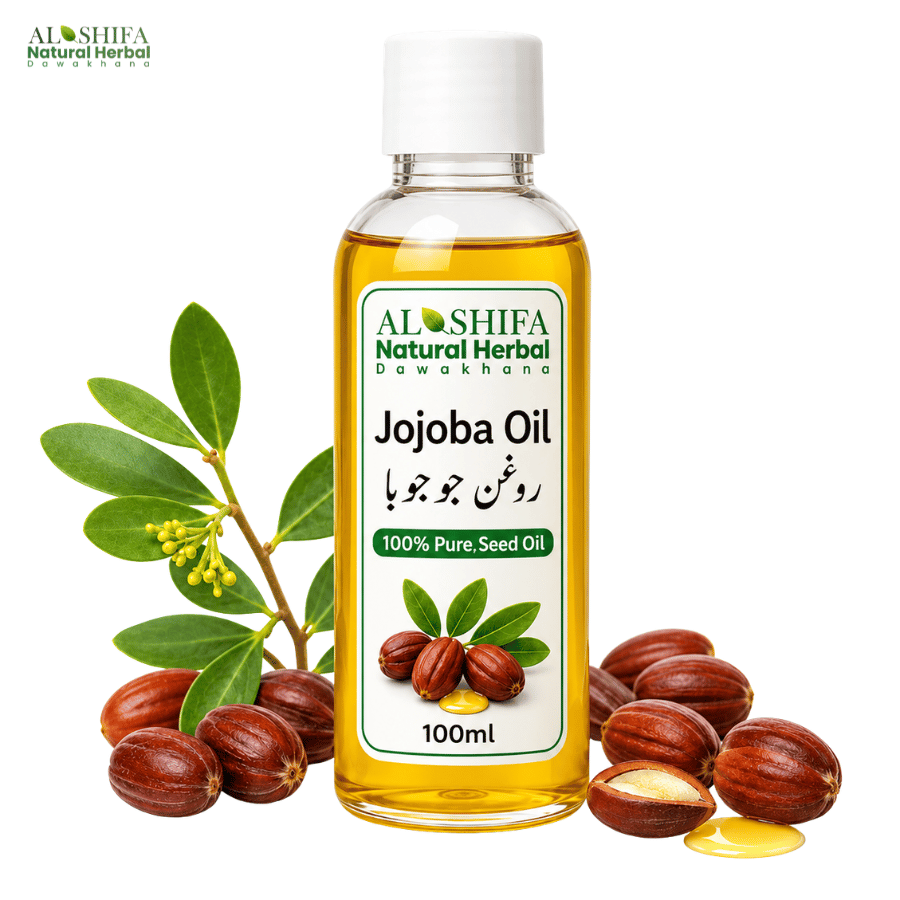
Jojoba Oil / Roghan-e-Jojoba is a premium botanical oil obtained from the seeds of Jojoba (Simmondsia chinensis). Naturally rich in unique liquid wax esters, it has a smooth, lightweight texture and is widely used for skin conditioning, facial care, hair and scalp care, beard care, nail care, and body massage.
How to Use: Apply a few drops to clean skin, hair, scalp, beard, or cuticles and massage gently. For hair, use a small amount on the lengths and ends or as a pre-shampoo oil.
Storage: Store in a cool, dry place away from direct sunlight, excessive heat, moisture, and contamination. Keep the bottle tightly closed.
Important Note: For external cosmetic use unless specifically labelled otherwise. Jojoba Oil is intended for personal care and should not be considered a treatment for acne, eczema, psoriasis, hair loss, baldness, fungal infections, or other medical conditions.
Jojoba Oil / Roghan-e-Jojoba – روغن جوجوبا is a premium botanical oil obtained from the seeds of the jojoba shrub (Simmondsia chinensis), a hardy plant native to the arid regions of North America. Despite being commonly called an “oil,” jojoba oil is chemically unusual because it consists predominantly of liquid wax esters rather than the triglycerides that make up most conventional vegetable oils.
This distinctive composition gives jojoba oil excellent stability and a smooth, lightweight texture, making it highly valued in modern skin care, facial care, hair conditioning, scalp care, beard care, massage, and cosmetic formulations.
Jojoba oil is particularly popular as an emollient because it spreads easily over the skin and hair without requiring heavy application. Its natural wax esters, along with small amounts of tocopherols and other naturally occurring constituents, make it a versatile ingredient for everyday personal care.
High-quality jojoba oil begins with carefully selected jojoba seeds. After harvesting and cleaning, the seeds are processed to obtain their naturally occurring liquid wax.
Depending on the production method, jojoba oil may be:
The extraction and refining process can influence the finished product’s color, aroma, clarity, and natural minor constituents.
For cosmetic use, good manufacturing practices, clean processing, suitable packaging, and proper storage are important for maintaining product quality.
Jojoba Oil – روغن جوجوبا is a versatile botanical personal-care oil with several useful cosmetic characteristics.
English Name: Jojoba Oil
Urdu Name: روغن جوجوبا
Roman Name: Roghan-e-Jojoba / Roghan Jojoba
Alternative English Name: Jojoba Seed Oil
Botanical Name: Simmondsia chinensis (Link) C.K.Schneid.
Plant Family: Simmondsiaceae
Plant Part Used: Seeds
Product Type: Botanical Liquid Wax / Cosmetic Oil
Product Form: Liquid Oil-Like Wax
Jojoba is an evergreen shrub adapted to hot and dry environments. It produces seeds that contain a high proportion of naturally occurring liquid wax.
The plant is particularly valued commercially because the material obtained from its seeds is chemically different from most ordinary vegetable oils.
Jojoba-derived ingredients are now widely used in:
Jojoba is commonly referred to as an oil because it remains liquid at normal room temperatures and behaves like an oil during application.
Chemically, however, it is primarily a liquid wax composed of long-chain wax esters.
Most familiar vegetable oils contain mainly triglycerides. Jojoba has a different lipid structure, which contributes to its characteristic:
This is one of the main reasons jojoba is widely used in personal-care formulations.
Wax esters are the defining components of jojoba oil.
These naturally occurring lipids consist primarily of long-chain fatty acids linked to long-chain fatty alcohols.
The exact composition can vary according to:
Because jojoba is dominated by wax esters, its composition should not be described in exactly the same way as conventional edible vegetable oils.
One of jojoba oil’s notable characteristics is its relatively high oxidative stability.
Its wax-ester structure makes it less prone to rapid rancidity than many oils rich in polyunsaturated triglycerides.
However, good storage remains important.
Exposure to:
can still affect product quality over time.
Jojoba oil is widely used as an emollient in skin-care products.
When applied in an appropriate amount, it can help:
It spreads easily, so only a small amount is generally required.
Dry skin may feel rough, tight, flaky, or uncomfortable.
Jojoba oil can form a light emollient layer over the skin surface and may help dry areas feel softer and smoother.
It can be particularly useful for:
Applying a small amount to slightly damp skin can be a useful way to incorporate jojoba into a moisture-maintaining routine.
Jojoba oil does not function exactly like a water-based moisturizer.
Instead, its oily wax-esters can help form an emollient layer over the skin surface, reducing the dry feeling associated with moisture loss.
For this reason, jojoba oil may be applied after:
when a light layer of moisture is still present on the skin.
Jojoba oil is widely used in facial-care products because of its smooth texture and excellent spreadability.
A small amount can be incorporated into a routine for:
It may help the skin feel softer and more comfortable without requiring a thick application.
Individual responses vary, particularly in people with acne-prone or highly sensitive skin.
Jojoba is sometimes described as being “identical to human sebum.” This wording is an oversimplification.
Human sebum contains a complex mixture of lipids, including wax esters, triglycerides, free fatty acids, squalene, and cholesterol-related compounds.
Jojoba oil also contains wax esters, which gives it some structural similarities to part of the skin’s natural surface lipids, but the two are not chemically identical.
A more accurate description is that jojoba’s wax-ester-rich composition makes it particularly interesting for skin-care applications.
Jojoba oil can be used by some people with oily or combination skin because a small quantity spreads easily and can provide emollient conditioning.
However, it should not be claimed that jojoba oil automatically:
Skin response differs from person to person.
For acne-prone skin, introduce any new facial oil gradually and discontinue use if breakouts or irritation worsen.
Jojoba oil is frequently included in products marketed for acne-prone skin, but ordinary cosmetic jojoba oil should not be presented as a treatment for acne.
Acne can involve:
Jojoba may serve as an emollient within a suitable routine, but persistent or severe acne may require appropriate dermatological treatment.
Oil-based products can help loosen some oil-soluble makeup and cosmetic residues.
Jojoba oil may therefore be used as part of an oil-cleansing routine to help remove:
After oil cleansing, the face can be washed according to the individual’s usual cleansing routine.
Take care around the eyes and follow the directions of waterproof eye cosmetics.
Jojoba oil is commonly incorporated into lip-care products because of its smooth waxy texture.
It can help:
Avoid use on severely cracked, infected, or bleeding areas without appropriate care.
Hands are frequently exposed to water, detergents, sanitizers, weather, and friction.
A small amount of jojoba oil can be massaged into the hands to help:
It may be especially useful after hand washing or before bedtime.
Jojoba oil is widely used for nail and cuticle conditioning.
Applied around the nails, it may help:
It should not be considered a treatment for fungal nail infections or other nail diseases.
Jojoba oil may also be applied to dry feet and heels.
Regular application can help:
Deep cracks, bleeding, infection, or persistent foot problems require appropriate professional assessment.
Jojoba oil’s excellent spreadability makes it useful for body massage.
It can:
It can be used alone or incorporated into suitable massage-oil formulations.
Jojoba oil is also widely used for hair conditioning.
When applied to the hair shaft, it can help:
These effects relate primarily to the appearance and conditioning of existing hair.
Hair may become dry, rough, or frizzy due to:
A small amount of jojoba oil applied to the lengths and ends can help smooth the hair surface and improve manageability.
Fine hair generally requires less oil than thick or coarse hair.
Jojoba oil can create a thin coating over the hair surface.
This can help hair appear:
Only a small amount is usually needed to avoid a greasy appearance.
Jojoba oil can be used for gentle scalp conditioning.
When used appropriately, it may:
Persistent dandruff, severe itching, scalp sores, or significant inflammation should be appropriately evaluated.
Jojoba oil is commonly marketed for hair growth, but available evidence does not justify claiming that ordinary topical jojoba oil reliably:
It is better described as a hair-conditioning and scalp-care oil.
Hair loss can have genetic, hormonal, nutritional, autoimmune, medication-related, and other medical causes.
Jojoba oil is a popular ingredient in beard-care products.
A small amount may help:
Its smooth texture makes it suitable for daily beard-care formulations.
Jojoba oil is frequently used as a carrier in cosmetic and aromatherapy-style preparations because of its stability and pleasant skin feel.
It can form the base of:
When essential oils are added, they must be appropriately diluted according to their individual safety requirements.
Jojoba oil may naturally contain small amounts of tocopherols and other minor lipid-soluble constituents.
The quantity varies according to:
These compounds form part of the oil’s natural composition, but their presence should not be translated into unsupported disease-prevention claims.
Jojoba’s stability is primarily related to its unusual wax-ester composition.
Some naturally occurring minor constituents may also contribute to oxidative stability.
However, it would be inappropriate to claim that applying jojoba oil can:
Cosmetic benefits should be distinguished from medical treatment claims.
Jojoba has a long history of traditional use among Indigenous peoples of the southwestern regions of North America and northern Mexico, particularly for practical skin and hair care.
Today it has become an internationally important cosmetic ingredient because of its:
Traditional use provides valuable historical context but should not be treated as proof of disease treatment.
Natural jojoba oil can vary depending on extraction and refining.
Unrefined or minimally processed jojoba oil may appear:
Refined jojoba may be:
Its texture is generally smooth and fluid at normal room temperature.
Unrefined jojoba oil may have a mild characteristic aroma, while refined jojoba is generally much more neutral.
A strong rancid, spoiled, or unexpectedly unpleasant odor may indicate poor storage or contamination.
Natural aroma can vary slightly between batches.
Cold-pressed jojoba oil is mechanically extracted while limiting excessive processing heat.
When genuinely cold-pressed, it may retain more of its characteristic:
A product should only be labelled “cold-pressed” when this accurately reflects its manufacturing process.
Refining can produce a lighter-colored, more neutral-smelling jojoba oil.
Refining may alter:
Both refined and unrefined jojoba oils can have legitimate cosmetic applications depending on the intended formulation.
For general skin conditioning:
A small quantity is generally sufficient.
For facial use:
People with sensitive or acne-prone skin should introduce it gradually.
For hair conditioning:
A few drops can also be applied to dry hair for finishing, depending on hair type.
For scalp conditioning:
Avoid applying oil to infected, wounded, or severely inflamed areas.
For beard and moustache conditioning:
The amount required depends on beard length and thickness.
Although jojoba oil is widely used cosmetically, individual sensitivity is still possible.
Before extensive use:
Stop use if you experience:
Seek medical attention for severe allergic reactions.
Jojoba oil sold as a cosmetic product should primarily be used according to its labelled purpose.
Do not assume that a cosmetic jojoba oil is suitable for consumption.
For an online personal-care product listing, it is safer and more accurate to describe jojoba oil according to its intended external cosmetic use unless the specific product is manufactured and certified for another purpose.
Ordinary external cosmetic use differs from internal or medicinal use.
Pregnant or breastfeeding individuals should use the product according to its labelled cosmetic directions and avoid unnecessary internal use of concentrated botanical preparations.
If the formulation contains additional essential oils or active ingredients, their individual precautions should also be considered.
The quality of jojoba oil depends on several factors:
Transparent information about whether the product is refined, unrefined, or cold-pressed can help customers understand what they are purchasing.
Jojoba oil is particularly valued because it combines a lightweight skin feel with excellent versatility.
It is suitable for people looking for a botanical oil that can be incorporated into several personal-care routines rather than requiring a separate oil for each purpose.
Common reasons for choosing jojoba oil include:
Jojoba Oil may be used in:
To maintain jojoba oil quality:
Jojoba is naturally stable, but correct storage still helps preserve its quality.
Avoid using the product if you notice:
Minor natural variations in color or aroma may occur between batches.
Product Name: Jojoba Oil
Urdu Name: روغن جوجوبا
Roman Name: Roghan-e-Jojoba / Roghan Jojoba
Alternative English Name: Jojoba Seed Oil
Botanical Name: Simmondsia chinensis (Link) C.K.Schneid.
Plant Family: Simmondsiaceae
Plant Part Used: Seeds
Product Type: Natural Botanical Liquid Wax / Cosmetic Oil
Form: Liquid
Typical Color: Golden Yellow to Pale Yellow depending on processing
Primary Natural Constituents: Long-Chain Wax Esters with Naturally Occurring Minor Lipid-Soluble Components
Common Applications: Skin Conditioning, Facial Care, Hair Care, Scalp Conditioning, Beard Care, Nail & Cuticle Care, Body Massage & Cosmetic Formulations
Storage: Keep tightly closed in a cool, dry place away from direct sunlight, excessive heat, moisture, and contamination.
Jojoba Oil / Roghan-e-Jojoba – روغن جوجوبا is a highly versatile botanical personal-care oil valued for its unusual wax-ester-rich composition, natural stability, smooth texture, and excellent spreadability. It can be incorporated into daily routines for facial care, dry-skin conditioning, hair softness and shine, scalp massage, beard conditioning, nail and cuticle care, and body massage.
Unlike most conventional vegetable oils, jojoba is technically a liquid wax rather than a triglyceride oil. This distinctive composition is one of the reasons it has become an important ingredient in modern cosmetic and personal-care formulations.
Disclaimer: This product is intended for cosmetic and personal-care purposes and is not intended to diagnose, treat, cure, or prevent any disease. Jojoba oil should not be considered a treatment for acne, eczema, psoriasis, alopecia, baldness, fungal infections, or other medical conditions.
روغن جوجوبا جوجوبا نامی صحرائی جھاڑی کے پکے ہوئے بیجوں سے حاصل ہونے والا قدرتی روغن ہے۔ جوجوبا کا سائنسی نام سیمونڈسیا چائنی نسس ہے اور اس کا تعلق سیمونڈسیسی خاندان سے ہے۔
جوجوبا کو عام زبان میں روغن کہا جاتا ہے، لیکن اس کی قدرتی ساخت عام بیجوں کے روغن سے منفرد ہے۔ یہ بنیادی طور پر مائع مومی اجزا سے بنا ہوتا ہے۔ یہی خاص ساخت اسے جلد، چہرے، بالوں، سر کی جلد، داڑھی، ناخن اور کاسمیٹک استعمال کے لیے بہت مشہور بناتی ہے۔
خالص جوجوبا کی رنگت سنہری زرد اور خوشبو بہت ہلکی، بیجوں جیسی اور قدرتی ہوتی ہے۔ صاف کیے ہوئے جوجوبا کی رنگت بہت ہلکی یا تقریباً بے رنگ بھی ہو سکتی ہے۔
اردو نام: جوجوبا، روغن جوجوبا، جوجوبا کے بیجوں کا روغن
پنجابی نام: جوجوبا، جوجوبا دے بیجاں دا تیل
ہندی نام: جوجوبا، جوجوبا بیج تیل
فارسی نام: جوجوبا، روغن جوجوبا
عربی نام: جوجوبا، زيت الجوجوبا
انگریزی نام: جوجوبا آئل، جوجوبا سیڈ آئل، جوجوبا لیکوئڈ ویکس
سائنسی نام: سیمونڈسیا چائنی نسس
خاندان: سیمونڈسیسی
استعمال ہونے والا حصہ: پکے ہوئے بیج
روغن حاصل کرنے کا طریقہ: بیجوں کو دبا کر روغن نکالنا
جوجوبا ایک سدا بہار صحرائی جھاڑی ہے۔
یہ گرم، خشک اور کم پانی والے علاقوں میں اچھی طرح اگتی ہے۔
اس کی جڑیں زمین میں کافی گہرائی تک جاتی ہیں، جس کی وجہ سے یہ خشک ماحول برداشت کرتی ہے۔
اس کے پتے موٹے، سبز سے سرمئی سبز اور قدرے چمڑے جیسے ہوتے ہیں۔
جوجوبا کے پودوں پر چھوٹے پھول آتے ہیں اور بعد میں پھل بنتے ہیں۔
پھل کے اندر بھورے رنگ کے بیج ہوتے ہیں۔
انہی بیجوں میں جوجوبا کا قیمتی مائع موم موجود ہوتا ہے۔
جوجوبا کے پکے ہوئے بیج سخت، بھورے اور نسبتاً بڑے ہوتے ہیں۔
ان کی شکل لمبوتری، بیضوی یا قدرے نوکیلی ہو سکتی ہے۔
بیجوں میں قدرتی مائع موم کی مقدار نمایاں ہوتی ہے۔
اچھے بیج صاف، خشک، پھپھوندی اور خراب بو سے پاک ہوتے ہیں۔
پکے ہوئے جوجوبا کے بیج جمع کیے جاتے ہیں۔
بیجوں کو صاف اور خشک کیا جاتا ہے۔
اس کے بعد انہیں دبا کر قدرتی روغن نکالا جاتا ہے۔
اچھے معیار کے کولڈ پریسڈ جوجوبا کے لیے بیجوں کو زیادہ گرمی دیے بغیر دبایا جاتا ہے۔
نکالے گئے روغن کو چھان کر صاف کیا جاتا ہے۔
اس طرح حاصل ہونے والا خالص جوجوبا عموما سنہری زرد رنگ اور بہت ہلکی قدرتی خوشبو رکھتا ہے۔
جوجوبا کو عام طور پر روغن کہا جاتا ہے، لیکن قدرتی ساخت کے لحاظ سے یہ مائع موم ہے۔
زیتون، بادام، سورج مکھی اور کئی دوسرے بیجوں کے روغن میں ٹرائی گلیسرائیڈز نمایاں ہوتے ہیں۔
جوجوبا میں لمبی زنجیر والے مومی ایسٹر نمایاں ہوتے ہیں۔
یہ خاص ساخت جوجوبا کو جلد اور بالوں کی دیکھ بھال کے لیے ایک منفرد بنیادی روغن بناتی ہے۔
اس کی یہی ساخت اسے کئی دوسرے بیجوں کے روغنوں کے مقابلے میں زیادہ دیر تک اچھی حالت میں رہنے کی خاصیت بھی دیتی ہے۔
خالص اور غیر صاف شدہ جوجوبا کی رنگت:
ہوتی ہے۔
زیادہ صاف کیے ہوئے جوجوبا کی رنگت بہت ہلکی زرد یا تقریباً بے رنگ ہو سکتی ہے۔
قدرتی رنگت کا انحصار بیجوں اور صفائی کے طریقے پر بھی رہتا ہے۔
خالص جوجوبا کی خوشبو بہت ہلکی ہوتی ہے۔
اس میں:
محسوس ہوتی ہے۔
یہ خوشبودار ایسینشل آئل نہیں ہے، اس لیے اس سے گلاب، چنبیلی یا لیونڈر جیسی تیز خوشبو کی توقع نہیں کرنی چاہیے۔
پاکستانی اور برصغیر کی معروف حکیمی کتب مفردات میں جوجوبا ایک معروف قدیم مفرد دوا کے طور پر عام طور پر شامل نہیں ہے، کیونکہ یہ امریکہ اور میکسیکو کے صحرائی علاقوں کا پودا ہے اور برصغیر کی قدیم حکیمی ادویات میں اس کا استعمال عام نہیں تھا۔
اسی وجہ سے روغن جوجوبا کا الگ مستند حکیمی مزاج اور درجہ واضح طور پر مقرر نہیں ہے۔
اس لیے بادام، زیتون، تل یا کسی دوسرے روغن کا مزاج جوجوبا کے نام سے لکھنا درست نہیں۔
روغن جوجوبا کو اس کے اصل بیج، مومی ساخت اور جلد و بالوں کے استعمال کے مطابق الگ پہچان کے ساتھ بیان کیا جاتا ہے۔
روغن جوجوبا میں لمبی زنجیر والے قدرتی مومی ایسٹر نمایاں مقدار میں پائے جاتے ہیں۔
اس میں خاص طور پر:
پائے جاتے ہیں۔
اس کی ساخت عام بیجوں کے روغن سے اسی وجہ سے مختلف ہے۔
جوجوبا کی سب سے نمایاں خاصیت اس میں موجود مومی ایسٹر ہیں۔
یہ مومی اجزا جوجوبا کو ہلکا، نرم اور جلد پر آسانی سے پھیلنے والا بناتے ہیں۔
یہی وجہ ہے کہ جوجوبا چہرے کے روغن، جسمانی روغن، بالوں کے روغن، داڑھی کے روغن، کریم، لوشن اور دوسری کاسمیٹک چیزوں میں بہت مشہور ہے۔
روغن جوجوبا خاص طور پر:
میں استعمال ہوتا ہے۔
روغن جوجوبا چہرے کی روزانہ دیکھ بھال کے لیے بہت مشہور بنیادی روغن ہے۔
یہ جلد پر آسانی سے پھیلتا ہے اور بہت زیادہ بھاری چکنائی کا احساس نہیں دیتا۔
صاف چہرے پر چند قطرے لگا کر نرم ہاتھ سے پھیلائے جاتے ہیں۔
اسے دن یا رات کے چہرے کے روغن میں استعمال کیا جاتا ہے۔
روغن جوجوبا خشک اور کھردری جلد کو نرم اور ملائم رکھنے کے لیے فائدہ مند ہے۔
چہرے، ہاتھوں، بازوؤں، ٹانگوں، کہنیوں اور گھٹنوں پر اس کی تھوڑی مقدار لگائی جاتی ہے۔
نہانے کے بعد ہلکی نم جلد پر استعمال کرنے سے جلد کی نمی برقرار رکھنے میں فائدہ ملتا ہے۔
جوجوبا کی ہلکی اور مومی ساخت کی وجہ سے اسے چکنی جلد کے لیے تیار کئی چہرے کے روغنوں میں بھی استعمال کیا جاتا ہے۔
چکنی جلد پر بہت زیادہ مقدار کے بجائے چند قطرے استعمال کیے جاتے ہیں۔
اسے جوجوبا پر مبنی چہرے کے سیرم اور رات کے روغن میں بھی شامل کیا جاتا ہے۔
مہاسوں یا جلد کے امراض میں طبی استعمال معالج سے پوچھ کر کریں۔
روغن جوجوبا کو حساس جلد کے لیے تیار کئی سادہ روغنی آمیزوں میں بنیادی روغن کے طور پر استعمال کیا جاتا ہے۔
اس کی خوشبو ہلکی ہوتی ہے اور اس میں خوشبودار ایسینشل آئل جیسی تیزی نہیں ہوتی۔
پہلی بار استعمال سے پہلے جلد کے چھوٹے حصے پر تھوڑی مقدار آزمائیں۔
سرخی، خارش یا جلن پیدا ہونے پر استعمال بند کریں۔
جوجوبا جلد کی سطح کو نرم رکھنے اور نمی کی کمی سے پیدا ہونے والی خشکی کم رکھنے کے لیے استعمال ہوتا ہے۔
یہ چہرے، ہاتھوں اور جسمانی جلد کے روغنی آمیزوں میں بہت مشہور ہے۔
خشک موسم میں اسے جلد نرم رکھنے والی کریم اور لوشن میں بھی شامل کیا جاتا ہے۔
کہنیوں، گھٹنوں، ہاتھوں اور ایڑیوں کی کھردری جلد پر روغن جوجوبا استعمال کیا جاتا ہے۔
اسے اکیلے یا روغن بادام، ایواکاڈو اور دوسرے بنیادی روغنوں کے ساتھ ملایا جاتا ہے۔
روزانہ استعمال جلد کو نرم اور ملائم رکھنے کے لیے فائدہ مند ہے۔
جوجوبا کو روغن سے چہرہ صاف کرنے والے آمیزوں میں بھی استعمال کیا جاتا ہے۔
تھوڑی مقدار چہرے پر لگا کر نرم ہاتھ سے پھیلائی جاتی ہے اور پھر نرم کپڑے یا روئی سے صاف کیا جاتا ہے۔
آنکھوں کے اندر روغن نہ جانے دیں۔
روغن جوجوبا میک اپ صاف کرنے والے روغنی آمیزوں میں بھی استعمال ہوتا ہے۔
اس کی مومی اور نرم ساخت جلد پر آسانی سے پھیلتی ہے۔
آنکھوں کے میک اپ کے قریب استعمال کرتے وقت خاص احتیاط کریں تاکہ روغن آنکھ کے اندر نہ جائے۔
جوجوبا ہونٹوں کے لیے تیار بام اور کاسمیٹک روغنوں میں استعمال ہوتا ہے۔
یہ خشک ہونٹوں کو نرم رکھنے والے آمیزوں میں خاص طور پر پسند کیا جاتا ہے۔
ہونٹوں کے لیے صرف اسی مقصد کے لیے تیار کیے گئے صاف معیار کے جوجوبا کا انتخاب کریں۔
روغن جوجوبا خشک ہاتھوں اور انگلیوں کے اردگرد کی جلد کے لیے استعمال ہوتا ہے۔
رات کے وقت چند قطرے ہاتھوں پر لگا کر نرم مالش کی جاتی ہے۔
اسے ہاتھوں کی کریم اور لوشن میں بھی شامل کیا جاتا ہے۔
جوجوبا ناخنوں کے اردگرد خشک جلد کو نرم رکھنے کے لیے بہت مشہور ہے۔
چند قطرے انگلیوں پر لے کر ناخنوں اور ان کے کناروں پر نرم ہاتھ سے مالش کریں۔
اسے ناخنوں کے روغن اور ہاتھوں کی کریم میں بھی شامل کیا جاتا ہے۔
روغن جوجوبا خشک اور بے رونق بالوں کی دیکھ بھال میں استعمال ہوتا ہے۔
اسے بالوں کے روغن، سیرم، کنڈیشنر اور شیمپو میں شامل کیا جاتا ہے۔
چند قطرے بالوں کے خشک سروں پر لگانے سے بال نرم اور چمکدار نظر آتے ہیں۔
زیادہ مقدار لگانے سے بال چکنے محسوس ہو سکتے ہیں، اس لیے کم مقدار کافی رہتی ہے۔
روغن جوجوبا سر کی خشک جلد کے لیے بنائے جانے والے روغنی آمیزوں میں بہت مشہور ہے۔
اسے سر کی جلد پر تھوڑی مقدار میں لگا کر نرم ہاتھ سے مالش کی جاتی ہے۔
اسے ناریل، بادام یا دوسرے بنیادی روغنوں کے ساتھ بھی ملایا جاتا ہے۔
سر کی جلد کے امراض میں طبی استعمال معالج سے پوچھ کر کریں۔
جوجوبا داڑھی کے روغن میں بہت مشہور بنیادی روغن ہے۔
یہ داڑھی کے بالوں اور نیچے کی جلد کو نرم رکھنے کے لیے استعمال ہوتا ہے۔
اس میں دیودار، صندل، روزمیری یا دوسرے خوشبودار روغن بہت کم مقدار میں ملا کر داڑھی کا روغن تیار کیا جاتا ہے۔
روغن جوجوبا جسمانی مالش میں اکیلا یا دوسرے بنیادی روغنوں کے ساتھ استعمال ہوتا ہے۔
اس کی نرم ساخت جلد پر آسانی سے پھیلتی ہے۔
اسے روغن بادام، ناریل، تل اور دوسرے مالش والے روغنوں کے ساتھ بھی ملایا جاتا ہے۔
جوجوبا خوشبودار روغنوں کو جلد پر استعمال کے لیے ملانے والے بہترین بنیادی روغنوں میں شمار ہوتا ہے۔
لیونڈر، ٹی ٹری، جیرانیم، صندل، لوبان، روزمیری اور دوسرے طاقتور خوشبودار روغنوں کو جوجوبا میں کم مقدار میں ملا کر جلد اور جسمانی مالش کے آمیزے تیار کیے جاتے ہیں۔
جوجوبا روغنی پرفیوم بنانے کے لیے بھی بہت مشہور ہے۔
اس کی اپنی خوشبو بہت ہلکی ہوتی ہے، اس لیے یہ شامل کی گئی خوشبو کو نمایاں رہنے دیتا ہے۔
اسے رول آن پرفیوم اور جسمانی خوشبودار روغنوں میں بنیادی روغن کے طور پر استعمال کیا جاتا ہے۔
روغن جوجوبا چہرے کی کریم، جسمانی لوشن، ہاتھوں کی کریم، بالوں کے کنڈیشنر اور جلد نرم رکھنے والی کاسمیٹک چیزوں میں استعمال ہوتا ہے۔
اس کی مومی ساخت کاسمیٹک آمیزوں میں خاص اہمیت رکھتی ہے۔
روغن جوجوبا کو:
کے ساتھ جلد، بالوں اور جسمانی مالش کے آمیزوں میں ملایا جاتا ہے۔
جوجوبا عام بیجوں کے روغن سے قدرتی ساخت کے لحاظ سے مختلف ہے۔
بادام، سورج مکھی، تل اور کئی دوسرے روغن میں ٹرائی گلیسرائیڈز نمایاں ہوتے ہیں۔
جوجوبا میں مومی ایسٹر نمایاں ہوتے ہیں۔
اسی وجہ سے اسے قدرتی مائع موم بھی کہا جاتا ہے۔
یہ خاصیت جوجوبا کو کاسمیٹک استعمال کے لیے منفرد بناتی ہے۔
جوجوبا ایسینشل آئل نہیں ہے۔
یہ بیجوں کو دبا کر حاصل ہونے والا بنیادی روغن یا مائع موم ہے۔
خوشبودار ایسینشل آئل عموما خوشبودار پتوں، پھولوں، چھال، جڑ یا دوسرے حصوں سے کشید کے ذریعے حاصل ہوتے ہیں۔
جوجوبا کو ایسینشل آئل کے ساتھ ملا کر جلد پر استعمال کرنے کے لیے بنیادی روغن کے طور پر استعمال کیا جاتا ہے۔
کولڈ پریسڈ اور کم صاف کیا ہوا جوجوبا زیادہ تر سنہری زرد رنگ کا ہوتا ہے اور اس میں ہلکی قدرتی خوشبو موجود رہتی ہے۔
زیادہ صاف کیے ہوئے جوجوبا کی رنگت بہت ہلکی یا تقریباً بے رنگ ہوتی ہے اور خوشبو بھی بہت کم رہتی ہے۔
دونوں جوجوبا ہو سکتے ہیں، لیکن ان کی صفائی اور تیاری کا طریقہ الگ ہوتا ہے۔
جوجوبا قدرتی مائع موم ہے۔
بہت کم درجہ حرارت میں یہ گاڑھا یا نیم جما ہوا نظر آ سکتا ہے۔
درجہ حرارت بڑھنے پر دوبارہ مائع حالت میں آ جاتا ہے۔
اس تبدیلی سے خالص جوجوبا کی بنیادی خاصیت خراب نہیں ہوتی۔
اچھے روغن جوجوبا کی پہچان کے لیے:
اہم ہیں۔
چہرہ صاف کرنے کے بعد دو سے تین قطرے جوجوبا انگلیوں پر لیں۔
چہرے اور گردن پر نرم ہاتھ سے پھیلائیں۔
خشک جلد پر ضرورت کے مطابق مقدار بڑھائی جاتی ہے۔
چکنی جلد پر کم مقدار استعمال کریں۔
آنکھوں کے اندر روغن نہ جانے دیں۔
خشک بالوں کے سروں پر ایک سے چند قطرے جوجوبا لگائیں۔
سر کی جلد کی مالش کے لیے ضرورت کے مطابق مقدار لے کر انگلیوں سے نرم مالش کریں۔
اسے دوسرے بالوں کے روغن کے ساتھ ملا کر بھی استعمال کیا جاتا ہے۔
پہلی بار استعمال سے پہلے جلد کے چھوٹے حصے پر تھوڑی مقدار آزمائیں۔
سرخی، خارش، جلن یا سوجن پیدا ہونے پر استعمال بند کریں۔
کھلے زخموں اور آنکھوں کے اندر استعمال نہ کریں۔
روغن جوجوبا بنیادی طور پر جلد، بالوں اور کاسمیٹک استعمال کے لیے مشہور ہے۔
اسے عام کھانے کے روغن کے طور پر استعمال نہ کریں۔
کاسمیٹک گریڈ جوجوبا خود سے نہ پئیں۔
کسی بیماری کے لیے اندرونی استعمال معالج سے پوچھ کر کریں۔
روغن جوجوبا جلد اور بالوں کے کاسمیٹک آمیزوں میں استعمال ہوتا ہے۔
حمل یا دودھ پلانے کے دوران کسی بیماری یا طبی مقصد کے لیے استعمال معالج سے پوچھ کر کریں۔
دودھ پلانے کے دوران ایسی جگہ نہ لگائیں جہاں سے روغن بچے کے منہ تک پہنچے۔
روغن جوجوبا سیمونڈسیا چائنی نسس کے پکے ہوئے بیجوں سے حاصل ہونے والا قدرتی مائع موم ہے۔
اس میں لمبی زنجیر والے مومی ایسٹر، قدرتی روغنی الکوحل، ٹوکوفرولز اور سٹیرولز پائے جاتے ہیں۔
اس کا بیرونی استعمال چہرے، خشک جلد، چکنی جلد کی روزانہ دیکھ بھال، جسمانی جلد، ہاتھوں، ناخنوں، بالوں، سر کی جلد، داڑھی، جسمانی مالش اور خوشبودار روغنوں کے بنیادی روغن کے طور پر بہت مشہور ہے۔
یہ ایسینشل آئل نہیں بلکہ جوجوبا کے بیجوں سے حاصل ہونے والا بنیادی مائع موم ہے۔
پاکستانی اور برصغیر کی معروف حکیمی کتب مفردات میں جوجوبا کا الگ مستند حکیمی مزاج اور درجہ واضح طور پر مقرر نہیں ہے، اس لیے کسی دوسرے بیج یا روغن کا مزاج جوجوبا کے نام سے نہیں لکھا جاتا۔
الشفاء نیچرل ہربل دواخانہ میں روغن جوجوبا کے لیے درج ذیل باتوں کو اہمیت دی جاتی ہے:
اچھے جوجوبا کے بیج: صاف، خشک اور اچھی حالت والے پکے بیجوں کو اہمیت دی جاتی ہے۔
قدرتی مومی ساخت: جوجوبا کی اصل مائع مومی ساخت کو اہمیت دی جاتی ہے۔
قدرتی رنگت: خالص کم صاف شدہ جوجوبا کی سنہری زرد قدرتی رنگت کو دیکھا جاتا ہے۔
قدرتی خوشبو: بہت ہلکی بیجوں جیسی اور قدرتی مومی خوشبو کو اہمیت دی جاتی ہے۔
صاف روغن: پانی، گرد اور غیر ضروری ذرات سے پاک جوجوبا کو اہمیت دی جاتی ہے۔
تازگی: خراب یا غیر معمولی بو والے روغن سے بچا جاتا ہے۔
غیر ضروری ملاوٹ سے پاک: مصنوعی خوشبو، غیر ضروری رنگ اور کم معیار کے دوسرے روغنوں کی ملاوٹ سے پاک ہونے کو اہمیت دی جاتی ہے۔
الشفاء نیچرل ہربل دواخانہ سنہ ۱۹۹۹ سے قدرتی جڑی بوٹیوں، پھولوں، پھلوں، بیجوں اور ان سے حاصل ہونے والے روغنوں کی سپلائی کر رہا ہے۔
ہم روغن جوجوبا میں اچھے بیج، قدرتی مومی ساخت، صاف حالت، قدرتی رنگت، ہلکی قدرتی خوشبو، تازگی اور غیر ضروری ملاوٹ سے پاک ہونے کو اہمیت دیتے ہیں۔
اچھے روغن جوجوبا کی پہچان اس کے صحیح سائنسی نام، جوجوبا کے بیجوں، مائع مومی ساخت، صاف حالت، قدرتی رنگت اور ہلکی قدرتی خوشبو سے کی جاتی ہے۔
روغن جوجوبا کو ٹھنڈی، خشک اور روشنی سے محفوظ جگہ پر کسی جار میں اچھی طرح پیک کر کے رکھیں۔
تیز دھوپ اور زیادہ گرمی سے دور رکھیں۔
استعمال کے بعد ڈھکن اچھی طرح بند کریں۔
پانی اور نمی سے محفوظ رکھیں۔
سردی میں جوجوبا گاڑھا یا نیم جما ہوا نظر آئے تو اسے کمرے کے درجہ حرارت پر رکھیں، یہ دوبارہ مائع ہو جاتا ہے۔
روغن جوجوبا بیرونی اور کاسمیٹک استعمال کے لیے مشہور ہے۔
پہلی بار استعمال سے پہلے جلد کے چھوٹے حصے پر تھوڑی مقدار آزمائیں۔
آنکھوں کے اندر، منہ کے اندر اور کھلے زخموں پر استعمال نہ کریں۔
جلد کے امراض میں طبی استعمال معالج سے پوچھ کر کریں۔
کاسمیٹک گریڈ جوجوبا کو خوراک کے طور پر استعمال نہ کریں۔
روغن جوجوبا صحرائی جھاڑی سیمونڈسیا چائنی نسس کے بیجوں سے حاصل ہونے والا قدرتی مائع موم ہے۔
اس کی مومی ساخت اسے عام بیجوں کے روغن سے منفرد بناتی ہے۔
یہ چہرے، خشک اور چکنی جلد کی روزانہ دیکھ بھال، جسمانی جلد، ہاتھوں، ناخنوں، بالوں، سر کی جلد، داڑھی، جسمانی مالش، روغنی پرفیوم، کریم اور لوشن میں بہت مشہور ہے۔
یہ خوشبودار ایسینشل آئل نہیں بلکہ خوشبودار روغنوں کو ملانے کے لیے بھی استعمال ہونے والا بنیادی روغن ہے۔
صحیح سیمونڈسیا چائنی نسس، اچھے جوجوبا کے بیج، قدرتی مائع مومی ساخت، صاف حالت، سنہری رنگت، ہلکی قدرتی خوشبو اور غیر ضروری ملاوٹ سے پاک ہونا اچھے روغن جوجوبا کی اہم پہچان ہے۔