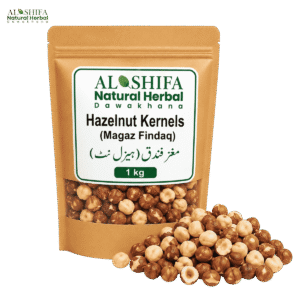
مغز فندق / ہیزل نٹ
Price range: ₨ 700 through ₨ 11,000
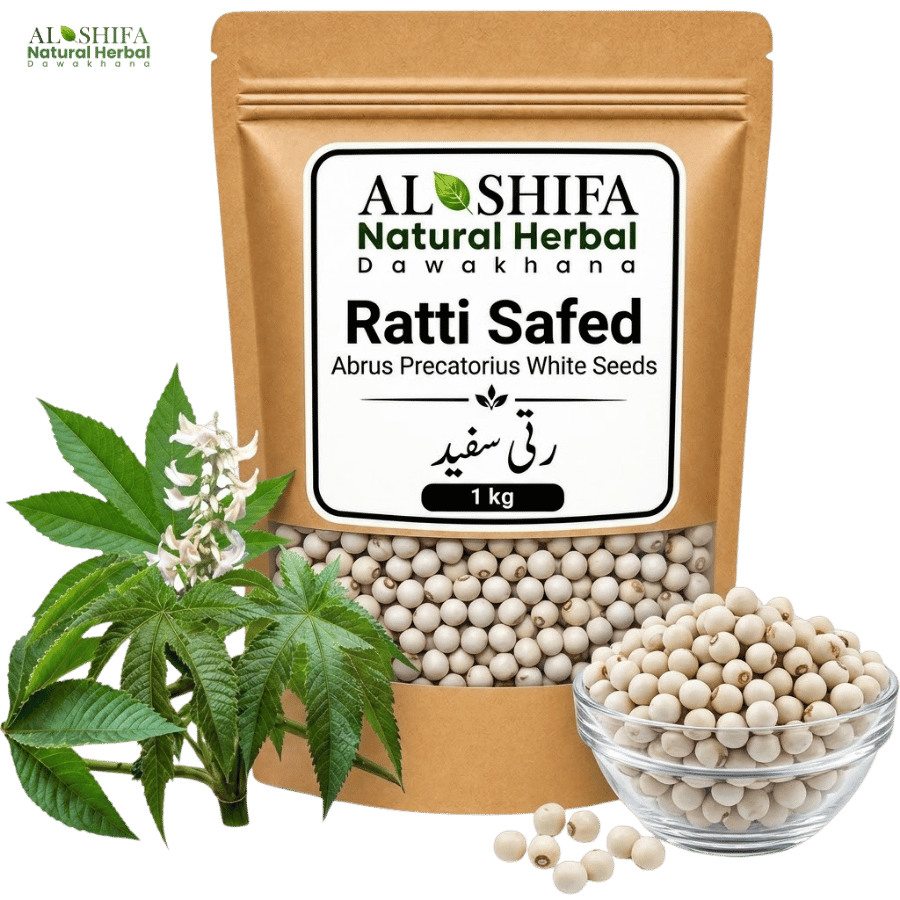
Ratti Safed, also known as White Ratti or White Abrus Seeds. is a specialised traditional seed material associated with Abrus precatorius. It is recognised by its hard, smooth seed form and has historical importance in South Asian traditional raw-material use, but it is not an ordinary edible seed.
Al Shifa Ratti Safed is carefully selected with attention to its traditional identity, characteristic appearance, seed condition, cleanliness, careful handling and responsible storage.
Key Features:
Usage: For specialised traditional professional use only under appropriately qualified supervision. Do not chew, crush, grind, consume or prepare Ratti Safed for self-use, and do not attempt home detoxification.
Important Note: Abrus precatorius seeds can contain abrin, a highly toxic protein. White colour does not make the seeds safe. Keep securely away from children and pets, and seek urgent medical advice if a seed is chewed, broken or accidentally ingested.
Ratti Safed, commonly known as White Ratti, White Rosary Pea Seeds or رتی سفید, refers to a white-seeded form associated with Abrus precatorius L., a climbing plant of the legume family Fabaceae.
Abrus precatorius is widely recognised for its distinctive hard seeds. The common form usually has bright red seeds with a black marking, while less-common colour forms may be described in traditional trade as white, black or differently coloured Ratti.
Ratti has a long history in South Asian traditional systems and has also been known historically as a seed used in traditional weight measurement. However, its medicinal history requires exceptional caution because Abrus seeds can contain abrin, a highly toxic plant protein.
The hard seed coat can limit release of the toxic internal material when a seed remains completely intact, but broken, chewed, crushed, drilled or damaged seeds can present a much greater poisoning risk.
For this reason, Ratti Safed should never be treated as an ordinary edible seed, nutritional ingredient or harmless household herb.
At Al Shifa Natural Herbal Dawakhana, Ratti Safed is handled as a specialised traditional botanical raw material, with emphasis on correct identity, careful handling, clear safety information and responsible storage.
Ratti Safed is a traditional name used for pale or white seeds associated with the plant:
Abrus precatorius L.
The plant is a slender climbing vine that produces pods containing hard seeds.
Abrus precatorius is also known internationally by names such as:
The familiar red-and-black seed is the most widely recognised form.
White Ratti refers to a less-common colour form or traditional trade variety associated with the same species.
English Name: White Rosary Pea Seeds / White Abrus Seeds
Urdu Name: رتی سفید
Roman Name: Ratti Safed / Safed Ratti
Scientific Name: Abrus precatorius L.
Plant Family: Fabaceae
Plant Part: Seeds
Product Type: Traditional Botanical Raw Material / Toxic Seed Material
Safety Classification: Not an Ordinary Edible Seed
Ratti seeds are generally:
The common Abrus seed is typically red with a black area.
White forms may have a pale, cream or whitish appearance.
However:
Seed Colour Alone Does Not Confirm Botanical Identity
Commercial material should be identified carefully because traditional names and colour descriptions can vary between markets.
Traditional trade may distinguish Ratti according to seed colour.
Common descriptions include:
Colour variation should not be interpreted as proof that one form is harmless.
If the material is genuinely Abrus precatorius, toxicological caution remains necessary.
Therefore:
White Colour ≠ Proof of Safety
Abrus belongs to the legume family, but this does not make its seeds ordinary edible pulses.
It should not be confused with:
Therefore:
Abrus Seed ≠ Edible Pulse
Abrus precatorius seeds can contain abrin, a highly toxic protein.
Abrin can interfere with normal cellular protein production and can cause severe poisoning when sufficient toxin enters the body.
This is the most important safety fact associated with Ratti seeds.
Intact Abrus seeds have a hard outer coat.
This may reduce the release of internal seed material if a seed passes through the digestive system completely intact.
However, this should never be interpreted as proof that swallowing seeds is safe.
The risk can increase substantially if seeds are:
Therefore:
Hard Seed Coat ≠ Safe for Consumption
Ratti Safed should not be casually:
These actions can expose the internal seed material.
Home experimentation with Abrus seeds is unsafe.
Ratti has historical importance in South Asia beyond medicinal traditions.
The seed was historically associated with small weight measurements because individual seeds were considered relatively uniform in size and weight.
The term Ratti became associated with a traditional unit used historically for weighing valuable materials.
This historical role should be distinguished from medicinal use.
Abrus precatorius appears in historical herbal and traditional medical literature.
Different parts of the plant have been mentioned in traditional preparations.
However:
Historical Medicinal Use ≠ Safe Self-Medication
Traditional systems may involve specialised processing and practitioner knowledge that cannot be safely reproduced through general household instructions.
Historical systems sometimes describe specialised processing of potent or toxic materials.
However, the effectiveness and consistency of such methods cannot be assumed without proper validated controls.
For this reason:
Do not attempt home detoxification or purification of Ratti seeds.
No household preparation should be assumed to reliably remove abrin.
Raw Abrus seeds and material described as traditionally processed should not automatically be considered equivalent.
However, even a claim that material has been “processed,” “purified” or “detoxified” does not independently prove safety.
Appropriate identity, processing controls and professional oversight remain essential.
Ratti Safed and Ratti Surkh may be sold as different traditional varieties based on seed appearance.
However, when both are associated with Abrus precatorius, the fundamental toxicity concern remains relevant.
Therefore:
Ratti Safed should not be assumed safer than Ratti Surkh merely because its colour is different.
Gunja is another traditional name widely associated with Abrus precatorius.
Depending on regional terminology, names such as:
may refer to the same botanical species or its traditional colour forms.
Accurate botanical identification is more reliable than relying only on a regional common name.
The English name Rosary Pea comes from the historical decorative use of the attractive seeds.
Seeds have been used in:
However, drilling or damaging the seeds can increase exposure to their internal contents.
Decorative use therefore also requires responsible handling.
Abrus seeds have historically been used in jewellery because of their bright appearance.
However, damaged seeds can present a risk.
Children should not be allowed to:
Decorative use does not remove the toxicity concern.
Traditional literature and commercial claims may associate Abrus preparations with hair applications.
However, raw Ratti seeds should not be casually ground or converted into homemade hair preparations.
There is insufficient evidence to guarantee that Ratti Safed:
The toxicity of the seed is more important than unverified cosmetic claims.
Abrus has also appeared historically in external preparations.
However, raw seed material can be irritating and should not be casually used in homemade skin products.
Ratti Safed should not be presented as a proven treatment for:
The phrase “for external use” should not be interpreted as unlimited safety.
Broken or powdered plant material may contact:
Avoid casual exposure to raw Abrus seed material.
Ratti appears in historical discussions of reproductive and traditional medicinal preparations.
However, Ratti Safed should not be marketed as a self-use treatment for:
Its toxicity makes unsupervised internal experimentation particularly inappropriate.
Abrus seeds should never be consumed for weight loss.
Any gastrointestinal symptoms caused by poisoning should not be misinterpreted as a beneficial slimming effect.
Abrus poisoning can be serious.
Possible symptoms after significant exposure may include:
Symptoms may not necessarily appear immediately.
Suspected exposure requires urgent professional medical assessment.
If Ratti Safed or another Abrus seed is accidentally swallowed, especially if it was chewed, broken or crushed, seek urgent medical or poison-control advice.
Do not rely on home remedies.
Do not intentionally induce vomiting unless specifically instructed by an appropriate medical professional.
Ratti seeds can look attractive because of their:
This can make them particularly hazardous around children.
Keep Ratti Safed:
Children should never be allowed to play with the seeds.
Ratti Safed should not be used internally during pregnancy or breastfeeding without specialised professional oversight.
Because Abrus seeds can contain a potent toxin, casual medicinal use is inappropriate.
Traditional claims should not override basic toxicological safety.
Keep Ratti seeds away from pets and domestic animals.
Accidental chewing or ingestion may be dangerous.
Abrus material may appear in different forms.
Whole Seeds:
Hard-coated natural seeds.
Broken or Ground Seeds:
Internal material becomes more accessible and may present greater exposure risk.
Extracts:
Can concentrate particular plant compounds and should not be treated as equivalent to whole seeds.
Therefore:
Whole Seed ≠ Powder ≠ Extract
Because of toxicity concerns, none should be used casually.
Abrus compounds have been investigated in laboratory research.
Research involving isolated compounds, controlled extracts or experimental systems should not be interpreted as evidence that raw Ratti seeds are safe medicines.
Therefore:
Experimental Research ≠ Safe Household Use
Because Abrus seeds can contain abrin and toxin exposure can vary, Ratti Safed should not be treated like an ordinary herb for which casual spoon-based or seed-count dosing is appropriate.
Al Shifa does not recommend self-dosing raw Abrus seeds.
A common misunderstanding with natural products is that “pure” means safe.
For Ratti Safed:
Pure Botanical Identity ≠ Edible Safety
A genuine Abrus seed may be correctly identified and still be toxic.
Abrin is naturally produced by the plant.
Therefore:
Natural ≠ Non-Toxic
Correct identification and responsible handling are especially important for potent traditional materials.
At Al Shifa Natural Herbal Dawakhana, Ratti Safed is treated as a specialised traditional raw material with attention to:
Botanical Identity – Material associated with Abrus precatorius.
Traditional Colour Form – Attention to the characteristic pale or white-seeded form.
Seed Condition – Attention to intact seed appearance.
Clean Handling – Responsible handling and packaging.
Clear Identification – Avoiding confusion with ordinary edible seeds.
Responsible Storage – Secure storage away from children, food and casual household use.
Al Shifa Natural Herbal Dawakhana, established in 1999, supplies herbs, seeds, oils and specialised traditional raw materials throughout Pakistan.
Our focus for Ratti Safed includes:
Ratti Safed should not be used as an ordinary household herb or edible seed.
Because Abrus precatorius seeds can contain the highly toxic protein abrin:
For traditional professional applications, handling should be limited to appropriately qualified practitioners familiar with the material and its toxicological risks.
Ratti Safed / White Abrus Seeds is a potentially toxic traditional botanical material and is not an ordinary edible seed.
Important distinctions include:
Store Ratti Safed in a secure, clearly labelled, tightly closed container.
For responsible storage:
Safe storage is especially important because Ratti seeds may be mistaken for decorative beads or other small seeds.
Ratti Safed, also known as White Ratti or White Abrus Seeds (رتی سفید), is a specialised traditional seed material associated with Abrus precatorius L.
It is recognised by its traditional pale or white seed form and has historical importance in South Asian traditional raw-material trade. However, Abrus seeds can contain abrin, a highly toxic plant protein, and should never be treated as ordinary edible seeds.
Customers searching for Ratti Safed, Safed Ratti, White Ratti, White Abrus Seeds, Abrus Precatorius White Seeds, White Rosary Pea Seeds, Gunja White Seeds, Ratti Safed Pakistan, White Ratti Pakistan, Abrus Precatorius Seeds Pakistan, Ratti Safed Lahore, Ratti Safed price in Pakistan, White Ratti price in Pakistan, buy Ratti Safed Pakistan or Ratti Safed online Pakistan can choose Al Shifa Natural Herbal Dawakhana for carefully identified traditional botanical material.
Since 1999, Al Shifa Natural Herbal Dawakhana has focused on supplying herbs and traditional natural raw materials with attention to correct identity, clean handling, secure packaging, responsible storage and clear safety information.
Product Name: Ratti Safed
English Name: White Abrus Seeds / White Rosary Pea Seeds
Urdu Name: رتی سفید
Roman Name: Ratti Safed / Safed Ratti
Scientific Name: Abrus precatorius L.
Plant Family: Fabaceae
Plant Part: Seeds
Product Type: Traditional Botanical Raw Material / Toxic Seed Material
Traditional Use: Specialised traditional raw material with historical use in traditional systems; not intended as an ordinary edible or self-use seed
Important Note: Abrus precatorius seeds can contain abrin, a highly toxic protein. White colour does not make the seeds safe. Do not chew, crush, grind or use raw Ratti Safed internally, and do not attempt home detoxification. Keep securely away from children and pets.
رتی سفید ایک خاص قسم کے سفید یا ہلکے رنگ کے بیج ہیں جو رتی کی بیل سے حاصل ہوتے ہیں۔ اسی پودے کے سرخ و سیاہ بیج زیادہ مشہور ہیں، جبکہ سفید رنگ کے بیج نسبتاً کم دیکھنے کو ملتے ہیں۔
رتی کے بیج اپنی خوبصورت، سخت اور چمکدار سطح کی وجہ سے آسانی سے پہچانے جاتے ہیں، لیکن ان کی خوبصورتی کے باوجود ان کے اندر ابریِن نامی نہایت زہریلا جز پایا جاتا ہے۔ خاص طور پر بیج چبانے، توڑنے، پیسنے یا اندرونی حصہ جسم میں جانے سے شدید زہریلا اثر پیدا ہو سکتا ہے۔
اسی وجہ سے رتی سفید کو عام غذائی بیج، گھریلو نسخہ یا خود سے استعمال کی جانے والی جڑی بوٹی نہیں سمجھنا چاہیے۔
حکیمی کتابوں میں رتی کے بیجوں کا ذکر ملتا ہے، لیکن موجودہ حفاظتی معلومات کے مطابق اس کے اندرونی استعمال میں شدید احتیاط ضروری ہے۔
الشفاء نیچرل ہربل دواخانہ میں رتی سفید کی شناخت کرتے وقت اصل بیج، سفید یا ہلکی قدرتی رنگت، صاف حالت، مناسب خشکی اور دوسری اقسام سے درست پہچان کو اہمیت دی جاتی ہے۔
رتی سفید رتی کی بیل سے حاصل ہونے والے سفید رنگ کے بیج ہیں۔
یہ پودا ایک باریک چڑھنے والی بیل کی شکل میں بڑھتا ہے اور پھلیوں کے اندر سخت بیج پیدا کرتا ہے۔
رتی کی کئی رنگی شکلیں مل سکتی ہیں، جن میں:
شامل ہیں۔
رنگ بدلنے سے بیج کے زہریلے ہونے کا خطرہ ختم نہیں ہوتا۔
نام: رتی سفید
معروف نام: سفید رتی، سفید گنجا
اصل پودا: رتی کی بیل
رتی کا سائنسی نام: ابروس پریکیٹوریئس
خاندان: فابیسی خاندان
استعمال ہونے والا حصہ: بیج
قسم: زہریلا بیج
عام شکل: چھوٹے، سخت، ہموار اور چمکدار بیج
عام رنگت: سفید، دودھیا یا ہلکی رنگت
خاص پہچان: سخت اور چمکدار بیرونی سطح
اہم زہریلا جز: ابریِن
رتی ایک چڑھنے والی باریک بیل ہے۔
اس کی اہم نشانیاں یہ ہیں:
رتی سفید غذائی استعمال کے لیے منتخب نہیں کی جاتی۔ اس کی درست شناخت کے لیے:
صرف سفید رنگ دیکھ کر کسی نامعلوم بیج کو رتی سفید قرار نہیں دینا چاہیے۔
پاکستان میں رائج حکیمی اور مفردات کی کتابوں میں رتی کو گرم اور خشک اثر رکھنے والا مفرد بیان کیا جاتا ہے۔
رتی کی مختلف اقسام، بیج اور دوسرے حصوں کے درجۂ مزاج کے بیان میں یکسانیت نہیں پائی جاتی، اس لیے بغیر واضح معتبر کتابی حوالے کے یہاں کوئی خاص درجہ مقرر نہیں کیا جاتا۔
رتی سفید کے لیے صرف رنگ کی بنیاد پر الگ درجۂ مزاج مقرر کرنا درست نہیں۔
رتی کے بیجوں کا ذکر پرانی حکیمی ادویات میں ملتا ہے۔
انہیں جلد، بالوں اور جسم کے مختلف مسائل کے لیے بنائی جانے والی حکیمی ادویات میں بیان کیا گیا ہے۔
لیکن رتی سفید میں ابریِن جیسے شدید زہریلے جز کی موجودگی کی وجہ سے اس کا اندرونی استعمال خود سے نہیں کرنا چاہیے۔
اس بیج کے تاریخی حکیمی استعمال اور آج کی زہریلے اثرات کی معلومات دونوں کو ساتھ سمجھنا ضروری ہے۔
رتی کے بیجوں میں ابریِن نامی نہایت زہریلا پروٹین پایا جاتا ہے۔
یہ جسم کے خلیوں میں پروٹین بنانے کے عمل کو روک سکتا ہے، جس سے خلیوں کو شدید نقصان پہنچ سکتا ہے۔
بیج کا سخت بیرونی چھلکا اندرونی زہریلے حصے کو ڈھانپتا ہے۔
بیج ٹوٹنے، چبانے یا پیسنے سے اندرونی حصہ باہر آ جاتا ہے اور خطرہ بہت بڑھ جاتا ہے۔
ثابت بیج کا سخت چھلکا زہریلے اندرونی حصے کو گھیرے رکھتا ہے۔
اس کے باوجود ثابت بیج کو کھانا محفوظ نہیں سمجھا جاتا۔
خاص طور پر:
زیادہ خطرناک ہو سکتا ہے کیونکہ زہریلا اندرونی حصہ جسم کے سامنے آ جاتا ہے۔
حکیمی کتابوں میں رتی کے استعمال کا ذکر:
میں ملتا ہے۔
یہ استعمال تاریخی حکیمی معلومات کا حصہ ہیں۔ شدید زہریلے اثرات کی وجہ سے رتی سفید کو خود سے اندرونی طور پر استعمال نہیں کرنا چاہیے۔
رتی کے بیجوں کا ذکر جلد کے امراض کے لیے استعمال ہونے والی حکیمی ادویات میں ملتا ہے۔
لیکن پسا ہوا بیج جلد میں جلن، سرخی اور نقصان پیدا کر سکتا ہے۔
زخم، کٹی ہوئی جلد یا حساس جلد پر رتی سفید خود سے نہ لگائیں۔
رتی کے بیجوں کا ذکر بالوں اور سر کی جلد کے لیے بنائی جانے والی پرانی حکیمی ادویات میں بھی ملتا ہے۔
تاہم رتی سفید کے پاؤڈر یا بیج کو براہ راست سر کی جلد پر خود سے لگانا مناسب نہیں، کیونکہ اس سے جلد میں جلن پیدا ہو سکتی ہے۔
رتی کا ذکر بال گرنے کی بیماری کے لیے حکیمی نسخوں میں مل سکتا ہے، لیکن رتی سفید کو براہ راست پیس کر سر پر لگانے کی سفارش نہیں کی جاتی۔
بال تیزی سے گر رہے ہوں، سر پر خالی جگہیں بن رہی ہوں یا سر کی جلد میں سوزش ہو تو معالج سے چیک کروائیں۔
سر کی جلد کے امراض میں رتی سفید کا خود سے استعمال نہ کریں۔
پسا ہوا بیج حساس سر کی جلد پر جلن، سرخی اور تکلیف پیدا کر سکتا ہے۔
رتی کا ذکر جوڑوں کے امراض کے لیے استعمال ہونے والے پرانے حکیمی مرکبات میں بھی ملتا ہے۔
لیکن بیج کے زہریلے اثرات کی وجہ سے گھر میں رتی سفید پیس کر مالش کا مرکب بنانا محفوظ طریقہ نہیں ہے۔
رتی سفید کا خطرہ خاص طور پر اس وقت بڑھتا ہے جب بیج:
ابریِن جسم میں پہنچنے کے بعد شدید زہریلا اثر پیدا کر سکتا ہے۔
رتی کے زہریلے اجزاء جسم میں جانے کے بعد علامات میں شامل ہو سکتے ہیں:
علامات فوراً شروع ہونا ضروری نہیں۔
رتی سفید کھانے یا چبانے کا شبہ ہو تو علامات کا انتظار نہ کریں اور فوراً ہسپتال یا زہر کے علاج کی سہولت سے رابطہ کریں۔
رتی کے بیج چھوٹے، ہموار اور خوبصورت نظر آتے ہیں، اس لیے بچے انہیں کھیلنے کی چیز یا کھانے والا بیج سمجھ سکتے ہیں۔
رتی سفید بچوں کی پہنچ سے مکمل طور پر دور رکھیں۔
بچے کے بیج چبانے یا نگلنے کا شبہ ہو تو فوری ہسپتال لے جائیں۔
حمل میں رتی سفید کا اندرونی استعمال نہیں کرنا چاہیے۔
اس کے زہریلے اثرات کی وجہ سے اسے گھریلو حکیمی نسخے کے طور پر استعمال نہ کریں۔
دودھ پلانے کے دوران رتی سفید کا اندرونی استعمال نہ کریں۔
زہریلے بیج ہونے کی وجہ سے اسے خوراک یا خود سے بنائی گئی دوا میں شامل نہ کریں۔
رتی کے زہریلے اثرات جسم کے اہم اعضا کو نقصان پہنچا سکتے ہیں۔
اگر جگر کے امراض موجود ہوں تو رتی سفید کا خود سے اندرونی استعمال خاص طور پر خطرناک ہو سکتا ہے۔
رتی کے زہریلے اثرات میں گردوں کو نقصان پہنچنے کا خطرہ بھی شامل ہے۔
گردوں کے امراض میں رتی سفید کا اندرونی استعمال خود سے نہ کریں۔
رتی سفید کا زہریلا اثر معدے اور آنتوں کو شدید متاثر کر سکتا ہے۔
اس سے:
پیدا ہو سکتی ہے۔
پیٹ اور آنتوں کے امراض کے لیے رتی سفید کو گھریلو علاج کے طور پر استعمال نہ کریں۔
سفید اور سرخ رتی ایک ہی پودے کی رنگی شکلوں سے جڑی ہو سکتی ہیں۔
رتی سفید:
رتی سرخ:
سفید رنگ رتی کو محفوظ نہیں بناتا۔
رتی کے بیج تاریخی طور پر وزن کی ایک چھوٹی اکائی کے تصور سے بھی جڑے ہوئے ہیں، کیونکہ بیجوں کا وزن نسبتاً یکساں سمجھا جاتا تھا۔
اسی نسبت سے برصغیر میں رتی وزن کے ایک پرانے پیمانے کے نام کے طور پر بھی مشہور ہوئی۔
یہ تاریخی معلومات ہیں اور انہیں دوا کی مقدار مقرر کرنے کے لیے استعمال نہیں کرنا چاہیے۔
رتی سفید کو:
کی طرح غذائی بیج نہیں سمجھنا چاہیے۔
اسے خوراک میں شامل نہ کریں۔
رتی سفید کا مسئلہ صرف ادویات کے ساتھ اثر کا نہیں بلکہ خود بیج کے شدید زہریلے ہونے کا ہے۔
اس لیے کسی بیماری کی دوا کے ساتھ اسے خود سے استعمال کرنے کا تجربہ نہ کریں۔
رتی سفید کے لیے گھر پر محفوظ اندرونی مقدار مقرر نہیں کی جا سکتی۔
اس لیے اسے کھانے، چبانے، سفوف بنا کر لینے یا پانی کے ساتھ نگلنے کی مقدار یہاں بیان نہیں کی جاتی۔
رتی سفید زہریلا بیج ہے۔
اس کے اندرونی استعمال کے لیے گھر پر کوئی مقدار مقرر نہ کریں۔
اسے خود سے:
حکیمی کتاب میں درج کسی مقدار کو دیکھ کر بھی خود سے استعمال شروع نہ کریں۔
اگر رتی سفید چبانے، کھانے یا نگلنے کا شبہ ہو تو گھر میں علاج کرنے کی کوشش نہ کریں۔
الٹی خود سے کروانے کی کوشش نہ کریں۔
فوری طور پر ہسپتال یا زہر کے علاج کی سہولت سے رابطہ کریں۔
اگر ممکن ہو تو بیج یا اس کی پیکنگ ساتھ لے جائیں تاکہ درست شناخت میں آسانی ہو۔
رتی سفید ابریِن رکھنے والا زہریلا بیج ہے۔
اسے غذائی بیج سمجھ کر استعمال نہیں کرنا چاہیے۔
بیج چبانے، توڑنے یا پیسنے سے زہریلے اندرونی حصے کے جسم میں جانے کا خطرہ بڑھ جاتا ہے۔
اس کے حکیمی استعمال کا ذکر کتابوں میں موجود ہونے کے باوجود اندرونی استعمال خود سے کرنا محفوظ نہیں۔
رتی سفید کھانے یا چبانے کا شبہ ہو تو علامات کا انتظار کیے بغیر ہسپتال سے رابطہ کریں۔
الشفاء نیچرل ہربل دواخانہ میں رتی سفید کی شناخت کے لیے درج ذیل باتوں کو اہمیت دی جاتی ہے:
اصل بیج: رتی کی درست قسم کی شناخت کو اہمیت دی جاتی ہے۔
قدرتی رنگت: سفید یا دودھیا قدرتی رنگت دیکھی جاتی ہے۔
صاف حالت: گرد، مٹی اور غیر ضروری اجزاء سے پاک بیجوں کو اہمیت دی جاتی ہے۔
مناسب خشکی: نمی اور پھپھوندی سے پاک بیج اہم ہیں۔
کیڑوں سے پاک: کیڑے لگے ہوئے بیجوں سے بچا جاتا ہے۔
درست شناخت: دوسرے سفید بیجوں کی ملاوٹ سے پاک ہونے کو اہمیت دی جاتی ہے۔
الشفاء نیچرل ہربل دواخانہ سنہ ۱۹۹۹ سے جڑی بوٹیوں، بیجوں اور حکیمی مفردات کی سپلائی کر رہا ہے۔
رتی سفید میں اصل بیج کی شناخت، قدرتی رنگت، صاف حالت، مناسب خشکی اور ملاوٹ سے پاک ہونے کو اہمیت دی جاتی ہے۔
رتی سفید زہریلا بیج ہے، اس لیے اس کی درست شناخت اور محفوظ رکھنا عام غذائی بیجوں سے زیادہ اہم ہے۔
رتی سفید کو ٹھنڈی، خشک اور بچوں سے مکمل طور پر محفوظ جگہ پر کسی جار میں اچھی طرح پیک کر کے رکھیں۔
رتی سفید پاکستان میں جڑی بوٹیوں اور حکیمی مفردات کی مارکیٹ میں کم مقدار میں مل سکتی ہے۔
اسے خریدتے وقت درست شناخت بہت اہم ہے کیونکہ سفید رنگ کے دوسرے بیج ظاہری طور پر اس سے ملتے جلتے ہو سکتے ہیں۔
رتی سفید کو غذائی استعمال کے لیے نہ خریدیں اور نہ اسے عام خوراک والے بیجوں کے ساتھ رکھیں۔
الشفاء نیچرل ہربل دواخانہ رتی سفید میں درست شناخت، صاف حالت، مناسب خشکی اور ملاوٹ سے پاک ہونے کو اہمیت دیتا ہے۔
نام: رتی سفید
معروف نام: سفید رتی، سفید گنجا
اصل پودا: رتی کی بیل
سائنسی نام: ابروس پریکیٹوریئس
خاندان: فابیسی خاندان
استعمال ہونے والا حصہ: بیج
قسم: زہریلا بیج
مزاج: پاکستانی حکیمی اور مفردات کی کتابوں میں رتی کو گرم اور خشک اثر رکھنے والا بیان کیا جاتا ہے۔ واضح معتبر کتابی حوالے کے بغیر خاص درجہ مقرر نہیں کیا جاتا۔
عام شکل: چھوٹے، سخت، ہموار اور چمکدار بیج
عام رنگت: سفید یا دودھیا
اہم زہریلا جز: ابریِن
حکیمی ذکر: جلد، بالوں اور جسم کے مختلف مسائل کے لیے بنائی جانے والی حکیمی ادویات میں رتی کا ذکر ملتا ہے۔
اہم احتیاط: رتی سفید زہریلا بیج ہے۔ اسے کھانا، چبانا یا پیس کر اندرونی طور پر استعمال کرنا خطرناک ہو سکتا ہے۔ نگلنے یا چبانے کا شبہ ہو تو علامات کا انتظار کیے بغیر ہسپتال سے رابطہ کریں۔