تخم کرفس
Price range: ₨ 300 through ₨ 2,500
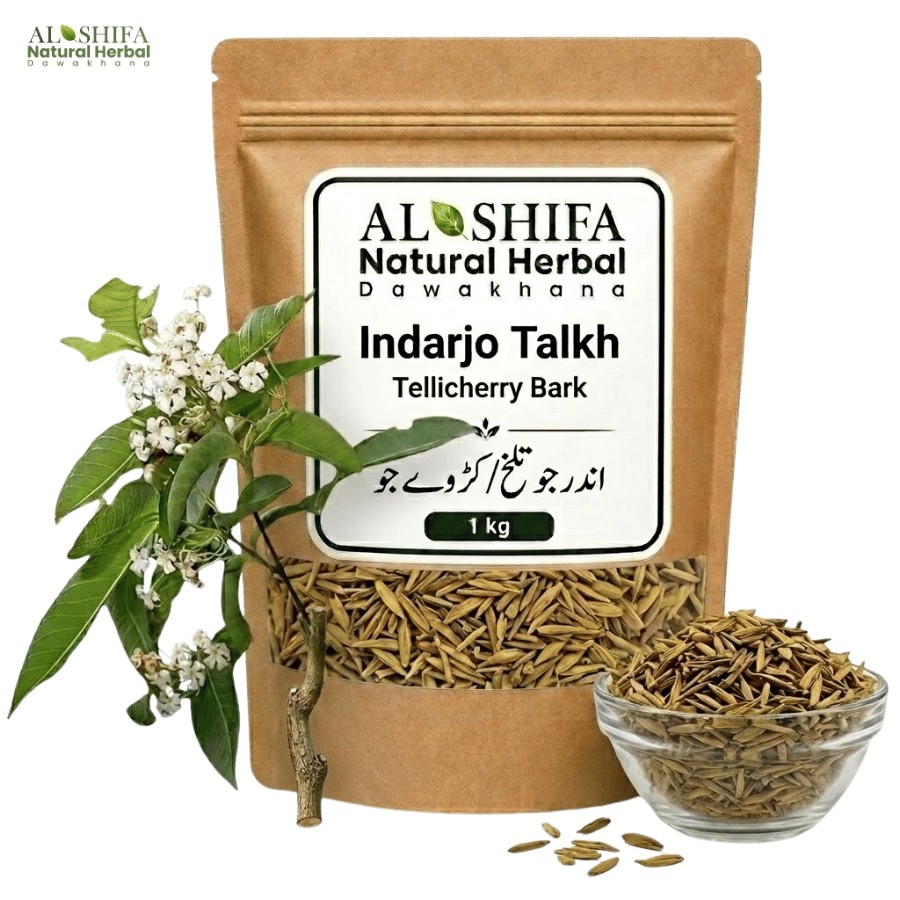
Indarjo Talkh, commonly known as Tellicherry Bark, is a strongly bitter traditional medicinal bark obtained from Holarrhena pubescens. It has traditionally been used in digestive, bowel-related, intestinal wellness and selected Unani preparations.
Al Shifa Indarjo Talkh is carefully selected with attention to its botanical identity, characteristic bitter taste, natural bark appearance, cleanliness, proper dryness and responsible storage.
Key Features:
Important Note: Indarjo Talkh is a medicinal bark and should not be confused with Holarrhena seeds or concentrated extracts. Traditional bowel-related use does not replace proper hydration or medical care for severe, persistent or bloody diarrhoea.
Indarjo Talkh, commonly known as Tellicherry Bark, is a strongly bitter traditional herbal raw material obtained from the bark of Holarrhena pubescens Wall. ex G.Don, a medicinal tree belonging to the Apocynaceae family. In Urdu herbal trade, it is known as اندرجو تلخ / کڑوے جو and has long been used in Unani, Ayurvedic and regional herbal preparations.
The bark is particularly recognized for its intensely bitter taste and its historical association with digestive, bowel-related and selected intestinal wellness preparations.
Holarrhena has an important place in South Asian traditional medicine. However, the bark, seeds and concentrated extracts of the plant are different materials and should not automatically be treated as interchangeable.
At Al Shifa Natural Herbal Dawakhana, Indarjo Talkh is carefully selected with attention to its traditional identity, characteristic bitter taste, natural bark appearance, cleanliness, proper dryness and responsible storage.
Indarjo Talkh is the dried bark obtained from the medicinal tree Holarrhena pubescens.
The tree grows in parts of South Asia and other tropical regions and has historically supplied different medicinal raw materials.
Its bark has traditionally been valued because of its characteristic bitterness and natural alkaloid content.
Depending on regional terminology, Holarrhena products may be sold under several related traditional names, making the plant part especially important when identifying the material.
Product Name: Indarjo Talkh
English Name: Tellicherry Bark
Urdu Name: اندرجو تلخ / کڑوے جو
Roman Name: Indarjo Talkh / Inderjo Talkh / Indrajav Talkh
Scientific Name: Holarrhena pubescens Wall. ex G.Don
Common Botanical Synonym: Holarrhena antidysenterica
Plant Family: Apocynaceae
Plant Part: Bark
Common Form: Dried Bark Pieces / Crushed Bark / Powder
Product Type: Traditional Medicinal Bark Material
Dried Tellicherry Bark may generally appear as:
Natural colour and thickness can vary according to the age of the tree, collection, drying and storage.
The word Talkh refers to its bitter character.
Indarjo Talkh is naturally known for a pronounced bitter taste associated with its plant constituents.
This bitterness is one of its recognizable traditional characteristics.
However:
A stronger bitter taste does not automatically mean stronger medicinal effectiveness.
Taste alone is not enough to establish purity, botanical identity or dosage.
Good-quality Indarjo Talkh should generally have:
Whole or cut bark generally retains more visible identification features than finely ground powder.
Indarjo Talkh has a long history in South Asian traditional medicine.
It has traditionally appeared in preparations associated with:
Its historical reputation is especially connected with the digestive and intestinal systems.
Traditional use, however, should not be interpreted as proof that the bark treats a specific gastrointestinal disease.
Indarjo Talkh has traditionally been included in bitter digestive preparations.
Such preparations may be associated with:
Bitter plant materials have historically been used in several medical traditions as digestive ingredients.
Persistent abdominal pain, vomiting, unexplained weight loss or blood in the stool requires medical assessment.
One of the best-known traditional applications of Holarrhena bark is in preparations associated with bowel complaints.
It has historically appeared in formulations used for:
However, diarrhoea can result from many causes, including infection, contaminated food, medicines and chronic intestinal diseases.
Traditional use of Indarjo Talkh does not replace proper diagnosis, hydration or medical treatment when needed.
The older botanical name Holarrhena antidysenterica reflects the plant’s historical association with dysentery-related traditional preparations.
This historical naming should be interpreted carefully.
It does not mean that raw Tellicherry Bark should be considered a proven treatment for dysentery.
Dysentery, especially diarrhoea containing blood or mucus, can be serious and may require:
Children, older adults and people with dehydration require particular care.
Holarrhena bark has also been used in selected traditional preparations associated with intestinal wellness.
This use is connected with the plant’s long-standing role in digestive medicine.
However, traditional intestinal use should not be interpreted as evidence that the raw bark eliminates intestinal infections or parasites.
Suspected intestinal infection or persistent digestive symptoms should be properly investigated.
Holarrhena bark contains naturally occurring plant compounds, particularly steroidal alkaloids.
Reported constituents associated with Holarrhena include compounds related to:
The exact chemical profile can vary according to:
The presence of natural alkaloids is also one reason medicinal use should be approached responsibly.
Conessine is one of the better-known alkaloids associated with Holarrhena.
It has been investigated scientifically for different biological activities.
However, an important distinction is required:
Isolated Conessine ≠ Whole Tellicherry Bark
Laboratory research involving purified compounds or concentrated extracts should not automatically be interpreted as evidence that ordinary dried bark produces the same effects in humans.
Research dose, preparation and concentration can differ substantially from traditional raw material.
Historical use can help explain why a plant remains important in Unani and herbal practice.
It does not automatically establish modern clinical effectiveness.
This is especially important for bowel complaints because similar symptoms can result from very different causes.
For example, loose stools may occur because of:
A single traditional raw material should not automatically be used for all of these conditions.
This is an important product distinction.
Holarrhena bark and Holarrhena seeds come from the same plant but are different medicinal raw materials.
Therefore:
Tellicherry Bark ≠ Holarrhena Seeds
They differ in:
When a traditional formula specifies bark, seeds should not automatically be substituted, and vice versa.
Indarjo Talkh may be supplied in different forms.
Whole or Cut Bark:
Retains recognizable natural bark characteristics.
Bark Powder:
Finely ground material that is convenient for formulations but more difficult to identify visually.
Extract:
A processed preparation designed to concentrate selected soluble constituents.
These forms are not automatically equivalent.
A concentrated extract may contain very different amounts of active plant compounds compared with ordinary dried bark.
Whole or cut bark allows better examination of:
Fine powder removes many visible identification features.
Reliable sourcing is therefore particularly important when purchasing powdered Indarjo Talkh.
Indarjo Talkh is a medicinal bark containing naturally occurring alkaloids and should not be treated like an ordinary food ingredient.
Internal medicinal use should consider:
Excessive or inappropriate use of medicinal plant materials may cause unwanted effects.
When Indarjo Talkh is considered because of loose stools, it is important not to overlook dehydration.
Warning signs can include:
Severe diarrhoea, persistent vomiting, blood in the stool, high fever or significant dehydration requires medical care.
Maintaining appropriate fluids and electrolytes is especially important.
Reliable modern safety information for medicinal amounts of Holarrhena bark during pregnancy and breastfeeding is limited.
Pregnant or breastfeeding women should avoid self-directed medicinal use unless appropriately advised by a qualified healthcare professional.
Children can become dehydrated quickly during diarrhoeal illness.
Indarjo Talkh should not be used as a substitute for appropriate fluid replacement or medical assessment.
Medicinal use in children should be considered only with suitable professional guidance.
People with chronic medical conditions or those taking regular medicines should seek appropriate guidance before medicinal use.
Extra care is sensible for people with:
The complete formulation and individual health situation should be considered.
At Al Shifa Natural Herbal Dawakhana, Indarjo Talkh is selected with attention to:
Botanical Identity – Material consistent with traditional Holarrhena bark characteristics.
Correct Plant Part – Attention to bark material rather than automatically substituting seeds or unrelated herbs.
Natural Appearance – Characteristic dried bark structure and colour.
Characteristic Bitterness – Natural bitter character associated with the traditional material.
Proper Dryness – Maintained in a suitably dry condition.
Cleanliness – Selected to minimize soil, dust and unnecessary foreign material.
Material Condition – Checked for excessive moisture, mould, insects and deterioration.
Al Shifa Natural Herbal Dawakhana, established in 1999, supplies traditional herbs and natural raw materials throughout Pakistan.
Our focus for Indarjo Talkh includes:
Indarjo Talkh has traditionally been included in digestive, bowel-related, intestinal wellness and selected compound Unani preparations.
It may be supplied as:
The appropriate preparation and amount depend on the intended formulation.
Because Holarrhena bark contains naturally occurring alkaloids, medicinal use should follow a recognized formulation or guidance from an appropriately qualified practitioner.
Do not use traditional bark preparations as a substitute for medical treatment of severe or persistent diarrhoea.
Indarjo Talkh / Tellicherry Bark is the medicinal bark of Holarrhena pubescens and should be distinguished from the seeds and concentrated extracts of the same plant.
Important distinctions include:
Store Indarjo Talkh in a cool, dry and clean place in a tightly closed container.
For responsible storage:
Do not use bark showing visible mould, excessive moisture, significant insect damage, contamination or an unusual unpleasant smell.
Indarjo Talkh, commonly known as Tellicherry Bark, is the dried medicinal bark of Holarrhena pubescens, known in Urdu herbal trade as اندرجو تلخ / کڑوے جو.
It has traditionally been used in digestive, bowel-related, loose-stool-related, intestinal wellness and selected compound Unani preparations. Its naturally strong bitter character and long history in South Asian traditional medicine make it a recognized medicinal bark material.
Customers searching for Indarjo Talkh, Inderjo Talkh, Indrajav Talkh, Tellicherry Bark, Holarrhena Bark, Holarrhena pubescens, Holarrhena antidysenterica, bitter Holarrhena bark, dried Tellicherry Bark, pure Indarjo Talkh, original Indarjo Talkh, Indarjo Talkh benefits, Indarjo Talkh uses, Tellicherry Bark benefits, Tellicherry Bark uses, Holarrhena Bark uses, Indarjo Talkh digestive use, Indarjo Talkh bowel use, Indarjo Talkh Unani, Tellicherry Bark Unani, Indarjo Talkh Pakistan, Tellicherry Bark Pakistan, Holarrhena Bark Pakistan, pure Indarjo Talkh Pakistan, original Indarjo Talkh Pakistan, Indarjo Talkh Lahore, Indarjo Talkh price in Pakistan, Tellicherry Bark price in Pakistan, Holarrhena Bark price in Pakistan, buy Indarjo Talkh Pakistan, buy Tellicherry Bark Pakistan, Indarjo Talkh online Pakistan or Tellicherry Bark online Pakistan can choose Al Shifa Natural Herbal Dawakhana for carefully selected traditional bark material.
Since 1999, Al Shifa Natural Herbal Dawakhana has focused on supplying traditional herbs and natural raw materials with attention to identity, correct plant part, cleanliness, proper drying, careful handling and responsible storage.
Product Name: Indarjo Talkh
English Name: Tellicherry Bark
Urdu Name: اندرجو تلخ / کڑوے جو
Roman Name: Indarjo Talkh / Inderjo Talkh / Indrajav Talkh
Scientific Name: Holarrhena pubescens Wall. ex G.Don
Common Botanical Synonym: Holarrhena antidysenterica
Plant Family: Apocynaceae
Plant Part: Bark
Product Type: Traditional Medicinal Bark Material
Traditional Use: Digestive, bowel-related, intestinal wellness and selected compound Unani preparations
Important Note: Indarjo Talkh bark should not be confused with Holarrhena seeds or concentrated extracts. Its traditional use for bowel complaints does not replace appropriate hydration, diagnosis or medical treatment for severe or persistent diarrhoea.
اندرجو تلخ جسے کڑوے جو بھی کہا جاتا ہے، طبِ یونانی میں استعمال ہونے والی معروف نباتاتی مفرد دوا ہے۔ یہ ایک درخت سے حاصل ہوتی ہے اور اپنی نمایاں کڑواہٹ کی وجہ سے آسانی سے پہچانی جاتی ہے۔
حکیمی ادویات میں اندرجو تلخ کو خاص طور پر اسہال کی بیماری، پیچش کی بیماری، معدے اور آنتوں کے امراض، بدہضمی کی بیماری، پیٹ کے کیڑوں کی بیماری اور بخار کی بیماری کے لیے استعمال کیا جاتا ہے۔
اس کا ذائقہ بہت کڑوا ہوتا ہے، اسی وجہ سے اسے ہاضمے اور آنتوں کے لیے بنائی جانے والی کئی حکیمی ادویات میں شامل کیا جاتا ہے۔
الشفاء نیچرل ہربل دواخانہ میں اندرجو تلخ منتخب کرتے وقت اس کی درست نباتاتی شناخت، قدرتی رنگت، نمایاں کڑواہٹ، صفائی اور مناسب خشک حالت کو اہمیت دی جاتی ہے۔
اندرجو تلخ ایک درخت سے حاصل ہونے والی نباتاتی مفرد دوا ہے۔
حکیمی استعمال میں اس کے خشک حصے کو مکمل حالت یا سفوف کی شکل میں استعمال کیا جاتا ہے۔
اس کی سب سے نمایاں پہچان اس کا سخت کڑوا ذائقہ ہے۔
عام پہچان یہ ہے:
نام: اندرجو تلخ
معروف نام: کڑوے جو، اندرجو کڑوا
نباتاتی نام: ہولارینا اینٹی ڈیسینٹریکا
خاندان: اپوسائنیسی خاندان
استعمال ہونے والا حصہ: چھال اور حکیمی استعمال کے مطابق منتخب خشک حصہ
قسم: نباتاتی مفرد دوا
عام شکل: خشک ٹکڑے یا سفوف
عام رنگت: خاکی بھوری سے زردی مائل بھوری
ذائقہ: بہت کڑوا
بو: ہلکی نباتاتی
اندرجو تلخ ایک درخت سے حاصل ہوتا ہے۔
اس درخت کی چھال حکیمی استعمال میں خاص اہمیت رکھتی ہے۔ خشک چھال باہر سے بھوری یا خاکی دکھائی دے سکتی ہے جبکہ اندرونی حصہ نسبتاً ہلکا ہوتا ہے۔
اس کی نمایاں کڑواہٹ شناخت میں مدد دیتی ہے، لیکن صرف ذائقے کی بنیاد پر کسی نامعلوم چھال کو اندرجو تلخ سمجھ کر استعمال نہیں کرنا چاہیے۔
پاکستان میں رائج حکیمی اور مفردات کی کتابوں میں اندرجو تلخ کا مزاج سرد و خشک بیان کیا جاتا ہے۔
اس کے قابض اور کڑوے اثر کی وجہ سے اسے خاص طور پر اسہال کی بیماری، پیچش کی بیماری اور معدے اور آنتوں کے امراض کے لیے بنائی جانے والی حکیمی ادویات میں شامل کیا جاتا ہے۔
مقدار کا انتخاب عمر، جسمانی حالت اور بیماری کے مطابق کیا جاتا ہے۔
اچھا اندرجو تلخ پہچاننے کے لیے درج ذیل باتیں دیکھی جاتی ہیں:
مکمل خشک ٹکڑوں میں اصل ساخت دیکھنا سفوف کے مقابلے میں آسان ہوتا ہے۔
طبِ یونانی میں اندرجو تلخ کے اہم افعال یہ بیان کیے جاتے ہیں:
قابض: اسہال کی بیماری اور پیچش کی بیماری کے حکیمی نسخوں میں شامل کیا جاتا ہے۔
ہاضم: ہاضمے کے امراض اور بدہضمی کی بیماری کے لیے استعمال ہونے والی ادویات میں شامل کیا جاتا ہے۔
آنتوں کے لیے استعمال: آنتوں کے امراض کے حکیمی نسخوں میں شامل کیا جاتا ہے۔
پیٹ کے کیڑوں کے لیے استعمال: پیٹ کے کیڑوں کی بیماری کے لیے بنائی جانے والی حکیمی ادویات میں شامل کیا جاتا ہے۔
بخار کے لیے استعمال: بخار کی بیماری کے مخصوص حکیمی نسخوں میں شامل کیا جاتا ہے۔
اندرجو تلخ کا سب سے معروف حکیمی استعمال اسہال کی بیماری میں ہے۔
اس کے قابض اثر کی وجہ سے اسے پتلے پاخانے اور بار بار پاخانہ آنے کی صورت میں استعمال ہونے والی حکیمی ادویات میں شامل کیا جاتا ہے۔
اسہال کی بیماری میں جسم میں پانی اور نمکیات کی کمی کا خیال رکھنا بہت ضروری ہے۔
اگر اسہال کی بیماری میں بہت زیادہ کمزوری، مسلسل قے، خون والا پاخانہ یا پانی کی شدید کمی ہو تو معالج سے چیک کروائیں۔
اندرجو تلخ کو پیچش کی بیماری کے لیے استعمال ہونے والی حکیمی ادویات میں خاص اہمیت حاصل ہے۔
پیچش کی بیماری میں بار بار پاخانہ، پیٹ میں مروڑ، بلغم یا خون آ سکتا ہے۔
اگر پاخانے میں خون آ رہا ہو، بخار زیادہ ہو یا شدید کمزوری پیدا ہو تو معالج سے چیک کروائیں۔
اندرجو تلخ کو معدے اور آنتوں کے امراض کے لیے استعمال ہونے والی حکیمی ادویات میں شامل کیا جاتا ہے۔
اس کی کڑواہٹ اور قابض خاصیت کی وجہ سے اسے خاص طور پر آنتوں کی خرابی کے حکیمی نسخوں میں شامل کیا جاتا ہے۔
اگر پیٹ میں مسلسل شدید درد، خون والا پاخانہ یا وزن میں تیزی سے کمی ہو تو معالج سے چیک کروائیں۔
اندرجو تلخ کو بدہضمی کی بیماری کے لیے استعمال ہونے والی حکیمی ادویات میں شامل کیا جاتا ہے۔
کڑوی نباتاتی مفرد ادویات ہاضمے کے لیے بنائی جانے والی کئی حکیمی ادویات کا حصہ ہوتی ہیں۔
اگر بدہضمی کی بیماری مسلسل موجود ہو، کھانے کے بعد شدید درد ہو یا بار بار قے آئے تو معالج سے چیک کروائیں۔
اندرجو تلخ کی کڑواہٹ کی وجہ سے اسے بھوک کی کمی کی بیماری کے لیے استعمال ہونے والی حکیمی ادویات میں شامل کیا جاتا ہے۔
اگر بھوک کی کمی کی بیماری کے ساتھ وزن مسلسل کم ہو رہا ہو، شدید کمزوری ہو یا کھانا نگلنے میں مشکل ہو تو معالج سے چیک کروائیں۔
اندرجو تلخ کو پیٹ کے کیڑوں کی بیماری کے لیے بنائی جانے والی حکیمی ادویات میں بھی شامل کیا جاتا ہے۔
پیٹ کے کیڑوں کی بیماری میں:
جیسی علامات ہو سکتی ہیں۔
خاص طور پر بچوں میں پیٹ کے کیڑوں کی بیماری کا علاج خود سے نہ کریں اور معالج سے چیک کروائیں۔
اندرجو تلخ کا ذکر بخار کی بیماری کے لیے استعمال ہونے والے حکیمی نسخوں میں بھی ملتا ہے۔
بخار کی بیماری کی وجہ معلوم کرنا اہم ہے۔
اگر بخار بہت زیادہ ہو، کئی دن تک رہے، شدید کمزوری ہو، سانس لینے میں دشواری ہو یا ہوش میں تبدیلی محسوس ہو تو معالج سے چیک کروائیں۔
اسہال اور پیچش کی بیماری آنتوں کے انفیکشن کی وجہ سے بھی پیدا ہو سکتی ہے۔
اندرجو تلخ کا ذکر آنتوں کے لیے استعمال ہونے والی حکیمی ادویات میں ملتا ہے، لیکن آنتوں کے انفیکشن کی بیماری میں پانی اور نمکیات کی کمی سے بچنا بہت ضروری ہے۔
اگر خون والا پاخانہ، تیز بخار یا شدید پیٹ درد ہو تو معالج سے چیک کروائیں۔
اسہال کی بیماری اور پیچش کی بیماری میں پیٹ کے مروڑ پیدا ہو سکتے ہیں۔
اندرجو تلخ کو آنتوں کے لیے بنائی جانے والی مرکب حکیمی ادویات میں شامل کیا جاتا ہے۔
اگر مروڑ بہت شدید ہوں، پیٹ سخت ہو جائے یا بار بار قے آئے تو معالج سے چیک کروائیں۔
اندرجو تلخ میں کئی قدرتی نباتاتی اجزاء پائے جاتے ہیں، جن میں شامل ہیں:
اس کی کڑواہٹ اور طبی خصوصیات میں الکلائیڈز خاص اہمیت رکھتے ہیں۔
کونیسین اندرجو تلخ میں پایا جانے والا ایک اہم قدرتی الکلائیڈ ہے۔
یہ پودے کی نمایاں کڑواہٹ اور اس کے نباتاتی خواص میں حصہ رکھتا ہے۔
اسی وجہ سے اندرجو تلخ پر آنتوں کے جراثیم اور پیٹ کے کیڑوں کے حوالے سے بھی تحقیق کی گئی ہے۔
مکمل خشک اندرجو تلخ:
مکمل خشک حصے میں رنگت، ساخت، صفائی اور اصل شناخت دیکھنا آسان ہوتا ہے۔
اندرجو تلخ کا سفوف:
سفوف حکیمی ادویات میں شامل کرنا آسان ہوتا ہے، لیکن پسی ہوئی حالت میں اصل شناخت مشکل ہو جاتی ہے۔
درست شناخت والا مکمل اندرجو تلخ لے کر ضرورت کے مطابق باریک کرنا بہتر ہے۔
اندرجو تلخ اور اندرجو شیریں کو ایک ہی چیز سمجھ کر استعمال نہیں کرنا چاہیے۔
اندرجو تلخ اپنی نمایاں کڑواہٹ اور آنتوں کے حکیمی استعمال کے لیے معروف ہے۔
اندرجو شیریں کا نام الگ حکیمی مفرد کے لیے استعمال کیا جاتا ہے اور اس کا استعمال بھی الگ ہو سکتا ہے۔
حکیمی نسخہ بناتے وقت صحیح قسم کا انتخاب ضروری ہے۔
اسہال کی بیماری میں صرف پاخانے روکنا مقصد نہیں ہونا چاہیے۔
جسم سے پانی اور نمکیات نکلنے کی وجہ سے:
جیسی علامات پیدا ہو سکتی ہیں۔
ایسی حالت میں پانی اور مناسب نمکیات کی کمی پوری کرنا ضروری ہے۔
اندرجو تلخ قابض اثر رکھتا ہے۔
قبض کی بیماری والے افراد اسے خود سے بڑی مقدار میں استعمال نہ کریں۔
زیادہ استعمال سے قبض کی بیماری بڑھ سکتی ہے اور پیٹ میں بھاری پن پیدا ہو سکتا ہے۔
معدے کے السر کی بیماری والے افراد اندرجو تلخ کی بڑی طبی مقدار خود سے استعمال نہ کریں۔
اگر پیٹ میں شدید جلن، کالا پاخانہ یا خون والی قے ہو تو معالج سے چیک کروائیں۔
خواتین میں اسہال کی بیماری، پیچش کی بیماری یا ہاضمے کے امراض کے لیے اندرجو تلخ والی حکیمی ادویات استعمال کی جا سکتی ہیں۔
طبی مقدار خود سے مقرر نہ کریں۔
حاملہ خواتین اندرجو تلخ کی طبی مقدار خود سے استعمال نہ کریں۔
حمل کے دوران اسہال کی بیماری یا پیچش کی بیماری میں پانی کی کمی ماں اور بچے دونوں کے لیے نقصان دہ ہو سکتی ہے۔
ایسی صورت میں معالج سے چیک کروائیں۔
دودھ پلانے والی خواتین اندرجو تلخ کی بڑی طبی مقدار خود سے استعمال نہ کریں۔
اگر اسہال کی بیماری یا آنتوں کے امراض مسلسل موجود ہوں تو مستند معالج سے رہنمائی حاصل کریں۔
بچوں کو اندرجو تلخ کی طبی مقدار خود سے نہ دیں۔
بچوں میں اسہال کی بیماری اور پیچش کی بیماری کے دوران پانی کی کمی جلد پیدا ہو سکتی ہے۔
اگر بچہ بہت سست ہو، پانی نہ پی رہا ہو، آنکھیں دھنس رہی ہوں یا پیشاب کم ہو تو معالج سے چیک کروائیں۔
ذیابیطس کی بیماری والے افراد اندرجو تلخ کی بڑی طبی مقدار خود سے استعمال نہ کریں۔
اگر ذیابیطس کی بیماری کی ادویات استعمال ہو رہی ہوں تو مستند معالج کو ان کے بارے میں بتائیں۔
اسہال کی بیماری کی صورت میں خوراک اور ادویات کے معمول پر بھی اثر پڑ سکتا ہے۔
جگر کی بیماری والے افراد اندرجو تلخ کی طبی مقدار خود سے استعمال نہ کریں۔
اگر جگر کی بیماری کی مستقل ادویات استعمال ہو رہی ہوں تو معالج سے رہنمائی حاصل کریں۔
گردوں کی بیماری والے افراد اسہال کی بیماری کے دوران خاص احتیاط کریں کیونکہ جسم میں پانی اور نمکیات کی کمی گردوں پر اثر ڈال سکتی ہے۔
اندرجو تلخ کی طبی مقدار خود سے مقرر نہ کریں۔
اگر پیشاب کم ہو جائے یا جسم میں شدید کمزوری پیدا ہو تو معالج سے چیک کروائیں۔
اگر کوئی شخص ذیابیطس کی بیماری، بلڈ پریشر کی بیماری، جگر کی بیماری، گردوں کی بیماری یا معدے اور آنتوں کے امراض کی مستقل ادویات استعمال کر رہا ہو تو اندرجو تلخ کی طبی مقدار خود سے شروع نہ کرے۔
اپنی مستقل ادویات کے بارے میں مستند معالج کو بتائیں۔
اندرجو تلخ یا اس خاندان کے پودوں سے حساس افراد میں جسمانی ردعمل پیدا ہو سکتا ہے۔
اگر استعمال کے بعد:
پیدا ہو تو استعمال بند کریں اور معالج سے چیک کروائیں۔
اندرجو تلخ کی بڑی مقدار خود سے استعمال نہ کریں۔
زیادہ استعمال سے:
پیدا ہو سکتی ہے۔
اگر علامات شدید ہوں یا مسلسل موجود رہیں تو معالج سے چیک کروائیں۔
اندرجو تلخ کے مصلح اور بدل کا انتخاب بیماری اور حکیمی نسخے کے مطابق کیا جاتا ہے۔
اسہال کی بیماری، پیچش کی بیماری یا ہاضمے کے امراض کے لیے استعمال ہونے والی ہر قابض مفرد دوا اندرجو تلخ کا مکمل بدل نہیں ہوتی۔
مناسب مصلح اور بدل مستند حکیم سے معلوم کریں۔
اندرجو تلخ کو حکیمی ادویات میں:
استعمال کیا جاتا ہے۔
مقدار عمر، جسمانی حالت، استعمال ہونے والے حصے اور بیماری کے مطابق مقرر کی جاتی ہے۔
خاص طور پر اسہال کی بیماری، پیچش کی بیماری، آنتوں کے انفیکشن کی بیماری، جگر کی بیماری اور گردوں کی بیماری میں مقدار خود سے مقرر نہ کریں۔
اندرجو تلخ بہت کڑوی نباتاتی مفرد دوا ہے اور اس کا مشہور حکیمی استعمال اسہال کی بیماری، پیچش کی بیماری اور معدے اور آنتوں کے امراض میں ہے۔
اسہال اور پیچش میں پانی اور نمکیات کی کمی کو نظر انداز نہ کریں۔
اگر پاخانے میں خون ہو، مسلسل قے آئے، تیز بخار ہو، شدید پیٹ درد ہو، پیشاب بہت کم ہو یا جسم میں شدید کمزوری پیدا ہو تو معالج سے چیک کروائیں۔
الشفاء نیچرل ہربل دواخانہ میں اندرجو تلخ منتخب کرتے وقت درج ذیل باتوں کا خیال رکھا جاتا ہے:
درست نباتاتی شناخت: اصل اندرجو تلخ کی شناخت کو اہمیت دی جاتی ہے۔
قدرتی رنگت: خشک حصے کی قدرتی خاکی یا بھوری رنگت دیکھی جاتی ہے۔
نمایاں کڑواہٹ: اصل اندرجو تلخ کا ذائقہ واضح طور پر کڑوا ہوتا ہے۔
اصل ساخت: مکمل خشک حصے کی قدرتی ساخت کو دیکھا جاتا ہے۔
مناسب خشک حالت: غیر ضروری نمی موجود نہیں ہونی چاہیے۔
صاف ستھری حالت: مٹی، گرد اور غیر ضروری چیزوں سے پاک حالت کو اہمیت دی جاتی ہے۔
خرابی سے حفاظت: پھپھوندی، کیڑے یا خراب بو والا اندرجو تلخ استعمال کے لیے مناسب نہیں سمجھا جاتا۔
الشفاء نیچرل ہربل دواخانہ سنہ ۱۹۹۹ سے قدرتی جڑی بوٹیوں اور حکیمی مفردات کی سپلائی کر رہا ہے۔
ہم اندرجو تلخ کی درست نباتاتی شناخت، قدرتی رنگت، نمایاں کڑواہٹ، صفائی اور مناسب خشک حالت کو اہمیت دیتے ہیں۔
پسی ہوئی مفرد دوا کے مقابلے میں مکمل خشک حالت میں اصل ساخت اور صفائی دیکھنا زیادہ آسان ہوتا ہے۔
اندرجو تلخ کو ٹھنڈی، خشک اور صاف جگہ پر اچھی طرح بند جار یا پیکٹ میں رکھیں۔
سفوف مکمل خشک حصے کے مقابلے میں جلد نمی پکڑ سکتا ہے، اس لیے ضرورت کے مطابق تازہ باریک کرنا بہتر ہے۔
اگر اندرجو تلخ میں پھپھوندی، کیڑے، غیر ضروری نمی یا خراب بو پیدا ہو جائے تو اسے استعمال نہ کریں۔
اندرجو تلخ / کڑوے جو پاکستان میں معروف حکیمی مفرد دوا ہے۔ اسے خاص طور پر اسہال کی بیماری، پیچش کی بیماری، معدے اور آنتوں کے امراض، بدہضمی کی بیماری، بھوک کی کمی کی بیماری اور پیٹ کے کیڑوں کی بیماری کے لیے بنائی جانے والی حکیمی ادویات میں شامل کیا جاتا ہے۔
اگر آپ اندرجو تلخ، کڑوے جو، خالص اندرجو تلخ، اصل اندرجو تلخ، اندرجو تلخ کے فوائد، اندرجو تلخ کے استعمال، اندرجو تلخ پاکستان، اندرجو تلخ لاہور، اندرجو تلخ کی قیمت، اندرجو تلخ آن لائن یا اندرجو تلخ خریدیں تلاش کر رہے ہیں تو الشفاء نیچرل ہربل دواخانہ درست نباتاتی شناخت، قدرتی کڑواہٹ، صفائی اور مناسب خشک حالت کو اہمیت دیتا ہے۔
نام: اندرجو تلخ
معروف نام: کڑوے جو، اندرجو کڑوا
نباتاتی نام: ہولارینا اینٹی ڈیسینٹریکا
خاندان: اپوسائنیسی خاندان
استعمال ہونے والا حصہ: چھال اور حکیمی استعمال کے مطابق منتخب خشک حصہ
قسم: نباتاتی مفرد دوا
مزاج: سرد و خشک
عام شکل: خشک ٹکڑے یا سفوف
عام رنگت: خاکی بھوری سے زردی مائل بھوری
ذائقہ: بہت کڑوا
بو: ہلکی نباتاتی
اہم قدرتی اجزاء: کونیسین، کونیمین، ہولارینین، نباتاتی الکلائیڈز، ٹینن، فلیوونائڈز اور نباتاتی ریشہ۔
اہم حکیمی استعمال: اسہال کی بیماری، پیچش کی بیماری، معدے اور آنتوں کے امراض، بدہضمی کی بیماری، بھوک کی کمی کی بیماری اور پیٹ کے کیڑوں کی بیماری کے لیے بنائی جانے والی حکیمی ادویات میں شامل کیا جاتا ہے۔
اہم احتیاط: حاملہ خواتین، دودھ پلانے والی خواتین، بچے اور جگر یا گردوں کی بیماری والے افراد طبی مقدار خود سے مقرر نہ کریں۔ اسہال کی بیماری اور پیچش کی بیماری میں جسم میں پانی اور نمکیات کی کمی کا خاص خیال رکھیں۔