الشفاء طلاء شیر
Original price was: ₨ 35,000.₨ 32,000Current price is: ₨ 32,000.
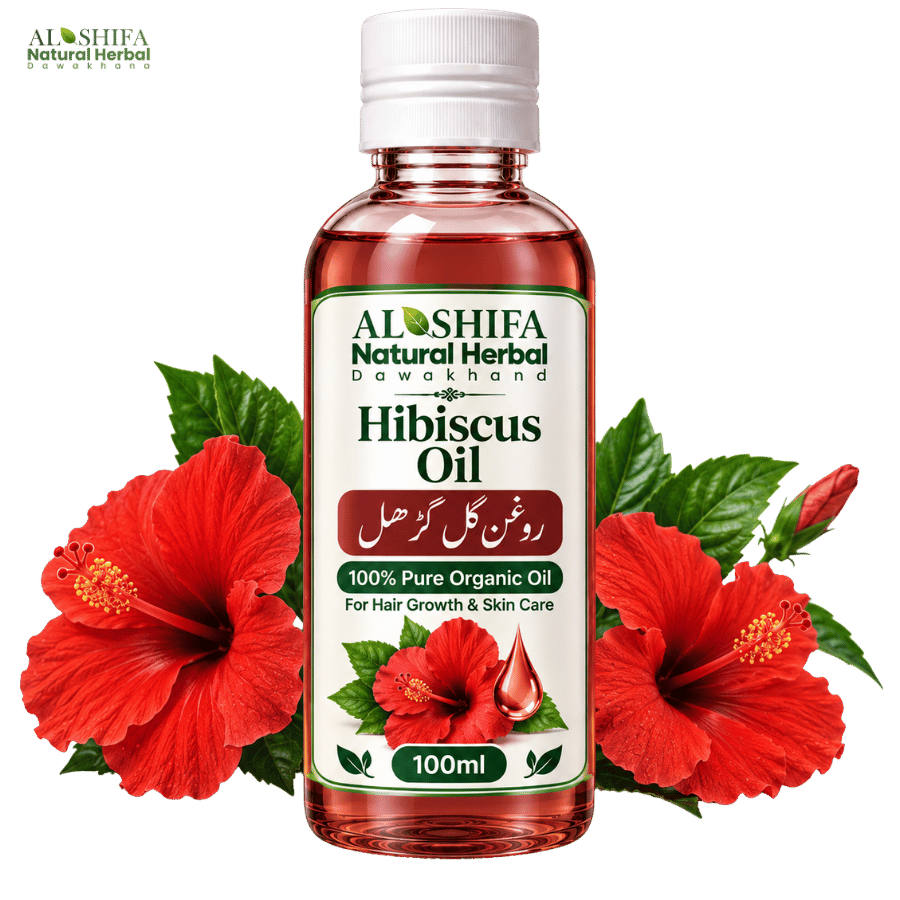
Hibiscus Oil for Hair Growth & Skin Care
Hibiscus Oil is a botanical herbal oil associated with the flowers and leaves of Hibiscus rosa-sinensis. Traditionally valued in hair-care routines, it is widely used for hair conditioning, scalp care, dry and rough hair, skin care, massage and herbal cosmetic formulations.
Al Shifa Hibiscus Oil is carefully selected with attention to its correct botanical identity, characteristic herbal quality, clean handling, protective packaging and suitability for hair, scalp and skin-care applications.
Key Features:
Usage: Apply an appropriate amount to the hair and scalp and massage gently, or incorporate into compatible hair, scalp, skin-care and herbal oil formulations.
Important Note: Hibiscus Oil is commonly prepared as an infused or extracted herbal oil rather than a conventional essential oil. Although Hibiscus is traditionally associated with hair-growth care, cosmetic conditioning benefits should not be considered a guaranteed treatment for hair loss or hair regrowth. Patch test before wider topical use.
Hibiscus Oil / For Hair Growth & Skin Care – روغن گل گڑھل is a botanical herbal oil associated with the flowers and other useful parts of Hibiscus rosa-sinensis L., commonly known as Chinese Hibiscus, Shoe Flower or Tropical Hibiscus. The plant is recognised for its large, colourful flowers and its long-standing use in traditional hair and skin-care practices across South Asia.
Hibiscus is particularly popular in hair oils, scalp preparations, herbal masks, conditioners and skin-care formulations. Its flowers and leaves contain naturally occurring plant compounds including anthocyanins, flavonoids, phenolic compounds, organic acids and mucilage-like constituents.
Commercial Hibiscus Oil is commonly prepared by infusing or extracting Hibiscus flowers and/or leaves into a suitable carrier-oil base. It should therefore not automatically be classified as a conventional steam-distilled essential oil.
At Al Shifa Natural Herbal Dawakhana, Hibiscus Oil is selected with attention to its Hibiscus botanical identity, characteristic herbal quality, clean handling, suitability for hair and skin-care formulations, protective packaging and responsible product information.
Hibiscus Oil is an oil-based botanical preparation containing constituents derived from Hibiscus plant material.
A commonly recognised botanical source is:
Hibiscus rosa-sinensis L.
It belongs to the Malvaceae family.
Depending on the manufacturer and production method, Hibiscus Oil may be prepared using:
For this reason, the exact composition of commercial Hibiscus Oils can vary.
Product Name: Hibiscus Oil / For Hair Growth & Skin Care – روغن گل گڑھل
English Name: Hibiscus Oil / Hibiscus Hair & Skin Oil
Urdu Name: روغن گل گڑھل / گل گڑھل کا تیل
Roman Name: Roghan Gul-e-Gurhal / Gul Gurhal Oil / Hibiscus Oil
Scientific Name: Hibiscus rosa-sinensis L.
Plant Family: Malvaceae
Plant Part: Flowers and/or Leaves, Depending on Preparation
Oil Type: Herbal Infused / Macerated Botanical Oil or Hibiscus-Based Oil Preparation
Common Production Method: Infusion or Extraction of Hibiscus Plant Material into a Suitable Carrier-Oil Base
Appearance: Yellowish, Golden, Reddish or Darker Herbal Oil, Depending on Hibiscus Material, Carrier Oil and Processing
Aroma: Mild, Herbal & Characteristic, Depending on Preparation
Primary Applications: Hair Care, Scalp Care, Skin Care, Hair-Oil Blends, Massage, Herbal Cosmetics & Personal-Care Formulations
Product Type: Hibiscus-Based Herbal Hair & Skin-Care Oil
Hibiscus rosa-sinensis is a flowering shrub belonging to the Malvaceae family.
It is recognised by its large ornamental flowers, which occur in colours including:
Red Hibiscus flowers are especially familiar in traditional hair-care preparations.
The flowers and leaves are used in different botanical preparations, including:
Hibiscus has a particularly strong association with traditional South Asian hair-care practices.
Flowers and leaves have been incorporated into herbal hair preparations intended to support:
This traditional importance has made Hibiscus a popular ingredient in modern botanical hair oils.
Hibiscus Oil can be incorporated into regular hair-care routines as a botanical conditioning oil.
Depending on the carrier-oil base and formulation, it can help:
These effects are primarily cosmetic and conditioning in nature.
Hibiscus is widely marketed as a hair-growth herb, particularly in traditional herbal hair oils.
Laboratory and animal research has explored Hibiscus rosa-sinensis extracts in relation to hair-growth activity. However, these findings should not automatically be interpreted as proof that ordinary commercial Hibiscus Oil will regrow hair in people.
Therefore:
Hibiscus Oil Can Support a Healthy Hair-Care Routine, but It Should Not Be Presented as a Guaranteed Hair-Regrowth Treatment.
Hair growth depends on numerous factors including:
These terms should be distinguished carefully.
A well-formulated Hibiscus hair oil can contribute to:
However:
Hair Conditioning ≠ New Hair Follicle Formation
and
Healthy-Looking Hair ≠ Proven Treatment for Hair Loss
Hair breakage and hair loss are not always the same problem.
Conditioning oils can reduce dryness and friction, which may help hair feel smoother and reduce breakage associated with rough handling.
However, hair loss from the root may have very different causes.
Therefore:
Reduced Hair Breakage ≠ Treatment for Medical Hair Loss
Persistent or sudden hair loss requires appropriate evaluation.
Hibiscus Oil can be incorporated into scalp-care routines.
A suitable formulation can provide:
The benefits also depend heavily on the carrier oil used to prepare the Hibiscus infusion.
An oil-based Hibiscus preparation can reduce the dry, tight feeling associated with insufficient surface oils.
However:
Dry-Scalp Conditioning ≠ Treatment for Dandruff or Scalp Disease
Persistent scaling, inflammation, itching or scalp lesions may have causes that require appropriate treatment.
Hibiscus is frequently included in herbal products marketed for dandruff.
However:
Hibiscus Oil Should Not Be Presented as a Proven Treatment for Dandruff
Dandruff can involve multiple factors, including scalp oil balance and microorganisms such as Malassezia species.
A cosmetic Hibiscus Oil may support scalp conditioning but should not replace appropriate dandruff treatment when required.
One of the most practical uses of Hibiscus Oil is as part of a conditioning hair-oil blend.
The oil base can coat and lubricate the hair surface, helping hair feel:
The final result depends on the complete formulation and individual hair type.
Dry hair often benefits from oil-based conditioning.
Hibiscus Oil may be used as:
Avoid excessive application if the scalp or hair becomes overly greasy.
Oil-based formulations can improve the way light reflects from the hair surface by smoothing and coating the hair shaft.
This can make hair appear shinier.
However:
Cosmetic Shine ≠ Repair of All Forms of Hair Damage
Severely damaged hair may require broader changes in hair-care practices.
Both Hibiscus flowers and leaves are used in traditional hair-care preparations.
Flowers are particularly associated with:
Leaves contain:
The exact compounds transferred into an oil preparation depend on the extraction method.
Hibiscus rosa-sinensis contains several classes of naturally occurring plant compounds, including:
However, the concentration of these compounds in Hibiscus Oil is not necessarily the same as in fresh flowers, powders or water/alcohol extracts.
Hibiscus flowers, particularly red varieties, are associated with anthocyanin pigments.
However, anthocyanins are not strongly oil-soluble compounds.
Therefore:
The Presence of Anthocyanins in Hibiscus Flowers Does Not Mean an Oil Infusion Contains the Same Anthocyanin Profile as a Water-Based or Alcohol-Based Hibiscus Extract.
This is an important formulation distinction.
Hibiscus leaves and flowers contain mucilage-like polysaccharides associated with their slippery texture when crushed with water.
These compounds are primarily associated with water-containing preparations.
Therefore:
Hibiscus Oil Does Not Automatically Contain the Same Mucilage Profile as Fresh Hibiscus Paste or Water-Based Hibiscus Extract.
Hibiscus Oil may also be incorporated into botanical skin-care formulations.
Depending on its carrier-oil base, it can contribute to:
It may be included in:
A suitable Hibiscus-infused carrier oil can help reduce the rough feel associated with dry skin.
Its oil base can support moisture retention by reducing excessive surface water loss.
However:
Skin Moisturising ≠ Treatment for Skin Disease
Hibiscus Oil can be incorporated into facial oils and other cosmetic formulations when the carrier oil and complete formulation are suitable for facial use.
People with sensitive or acne-prone skin should evaluate individual tolerance.
Patch testing is advisable before wider application.
Hibiscus is sometimes marketed online as a “Botox plant” or “natural Botox.”
This description is misleading when interpreted literally.
Hibiscus Oil does not work like botulinum toxin injections.
Therefore:
Hibiscus Oil ≠ Botox
Its cosmetic conditioning properties should not be presented as equivalent to a medical cosmetic procedure.
Hibiscus-derived materials contain plant compounds of cosmetic and scientific interest.
However:
Hibiscus Oil Should Not Be Presented as Reversing Skin Ageing
Moisturising and conditioning can temporarily improve the appearance of dry, rough skin, but this is different from reversing biological ageing.
Hibiscus extracts have been studied for different biological properties.
However:
Hibiscus Oil ≠ Proven Treatment for Melasma or Hyperpigmentation
Claims involving skin-lightening or pigmentation disorders require evidence specific to the exact preparation.
A suitable cosmetic Hibiscus Oil formulation may condition the skin.
However:
Hibiscus Oil ≠ Acne Treatment
The carrier oil and complete formulation are especially important for acne-prone skin.
Commercial Hibiscus Oil is commonly prepared as an infused, macerated or extracted botanical oil rather than a conventional steam-distilled essential oil.
Therefore:
Hibiscus Oil ≠ Automatically Hibiscus Essential Oil
The production method should be checked before technical classification.
Hibiscus Oil is often produced using a carrier-oil base.
Possible bases can include oils such as:
The properties of the final Hibiscus Oil therefore depend partly on the carrier oil.
Hibiscus Extract can be produced using water, alcohol, glycerin or other extraction systems.
Therefore:
Hibiscus Extract ≠ Hibiscus Oil
The two preparations can contain different groups and concentrations of plant compounds.
Hibiscus Powder consists of dried and ground plant material.
It contains plant fibres and compounds that may not transfer efficiently into oil.
Therefore:
Hibiscus Powder ≠ Hibiscus Oil
Hibiscus Tea is a water-based preparation and often comes from Hibiscus sabdariffa, a different commonly used Hibiscus species.
Therefore:
Hibiscus Tea ≠ Hibiscus Hair Oil
Research involving Hibiscus tea should not automatically be transferred to Hibiscus Oil.
These two species are frequently confused.
Hibiscus rosa-sinensis is widely associated with ornamental Hibiscus and traditional hair-care use.
Hibiscus sabdariffa is widely known for its edible calyces used in beverages such as roselle tea.
Therefore:
Hibiscus rosa-sinensis ≠ Hibiscus sabdariffa
The exact botanical source should be identified whenever possible.
Despite its colourful flowers, Hibiscus is not a rose.
Rose Oil comes from plants belonging to the genus Rosa.
Therefore:
Hibiscus Oil ≠ Rose Oil
Rosehip Oil is obtained from the fruits or seeds of selected Rosa species.
Hibiscus Oil comes from Hibiscus plant material.
Therefore:
Hibiscus Oil ≠ Rosehip Oil
Amla Oil is associated with Phyllanthus emblica fruit.
Hibiscus Oil is associated with Hibiscus.
Both may appear together in traditional hair-oil formulations, but:
Hibiscus Oil ≠ Amla Oil
Bhringraj Oil is associated with Eclipta prostrata or closely related botanical naming used in herbal practice.
Hibiscus and Bhringraj are separate plants.
Therefore:
Hibiscus Oil ≠ Bhringraj Oil
They may be combined in multi-herb hair oils but should retain their individual botanical identities.
Coconut Oil is obtained from Cocos nucifera.
It is commonly used as a base for herbal infusions, including Hibiscus preparations.
Therefore:
Hibiscus Oil Prepared in Coconut Oil ≠ Pure Coconut Oil
The finished product combines the carrier-oil characteristics with Hibiscus-derived material.
Hibiscus rosa-sinensis has been investigated experimentally in relation to hair growth.
Some preclinical research has examined flower and leaf extracts.
However:
Preclinical Extract Research ≠ Clinical Proof That Commercial Hibiscus Oil Regrows Human Hair
The exact plant part, extraction method, concentration and research model matter.
Hibiscus flowers and extracts contain compounds investigated for antioxidant activity.
However:
Antioxidant Findings from Hibiscus Extracts ≠ Automatic Antioxidant Performance of Every Hibiscus Oil
Oil extraction may transfer a different chemical profile than water- or alcohol-based extraction.
Hibiscus-derived materials have been investigated experimentally for antimicrobial activity.
However:
Laboratory Antimicrobial Activity ≠ Treatment for Scalp or Skin Infection
A cosmetic Hibiscus Oil should not replace appropriate treatment for infection.
Different Hibiscus extracts have been studied experimentally in relation to inflammatory pathways.
However:
Experimental Anti-Inflammatory Activity ≠ Medical Treatment by Hibiscus Hair or Skin Oil
Before wider topical use, apply a small amount to a limited area.
Observe for:
Discontinue use if a significant reaction develops.
Because Hibiscus Oil is frequently an infused product, sensitivity may come from:
The complete ingredient list matters when evaluating sensitivity.
Routine external cosmetic use of an appropriately formulated Hibiscus Oil is different from taking concentrated Hibiscus preparations internally.
During pregnancy and breastfeeding, use the product according to its intended cosmetic purpose and avoid assuming that topical hair oil and concentrated internal herbal preparations have the same safety profile.
For children, use only an appropriately formulated product suitable for their age.
Avoid contact with the eyes and keep the product securely out of reach of young children.
Hibiscus Oil sold for hair, skin or cosmetic use should not automatically be considered edible.
Therefore:
Cosmetic Hibiscus Oil ≠ Food-Grade Hibiscus Oil
Do not swallow a product supplied for external use.
At Al Shifa Natural Herbal Dawakhana, Hibiscus Oil is selected with attention to:
Botanical Identity – Associated with Hibiscus rosa-sinensis.
Plant-Part Awareness – Flowers and/or leaves depending on preparation.
Oil-Type Awareness – Recognition that Hibiscus Oil is commonly an infused or macerated herbal oil.
Hair-Care Applications – Suitable for conditioning hair oils and herbal blends.
Scalp-Care Applications – Suitable for selected scalp-conditioning formulations.
Skin-Care Applications – Useful in appropriate botanical skin-care products.
Characteristic Quality – Appropriate colour, aroma and texture according to preparation.
Carrier-Oil Awareness – Recognition that the final oil properties depend partly on its base oil.
Clean Handling – Carefully handled during packing.
Protective Packaging – Helps preserve product quality.
Responsible Information – No guaranteed hair-regrowth, anti-ageing or disease-treatment claims.
Proper Storage – Protected from unnecessary heat, light and contamination.
Al Shifa Natural Herbal Dawakhana, established in 1999, supplies natural oils, herbs and specialised botanical materials throughout Pakistan.
Our focus for Hibiscus Oil includes:
For Hair Care: Apply an appropriate amount to the hair and scalp as a pre-wash or regular hair-oil treatment according to the product formulation.
For Scalp Massage: Massage a suitable amount gently into the scalp. Avoid excessive application and discontinue if irritation develops.
For Hair-Oil Blends: Combine with compatible carrier oils or other suitable botanical hair oils according to the desired formulation.
For Skin Care: Use only when the carrier-oil base and complete formulation are suitable for topical skin application.
For Massage: Apply an appropriate amount as part of a suitable herbal massage-oil formulation.
Hibiscus Oil / For Hair Growth & Skin Care – روغن گل گڑھل is a Hibiscus-based herbal oil commonly prepared by infusing or extracting Hibiscus rosa-sinensis flowers and/or leaves into a suitable carrier-oil base. It should not automatically be classified as a conventional steam-distilled essential oil.
Important distinctions include:
Store Hibiscus Oil in a cool, clean and dry place.
For best quality:
Hibiscus Oil / For Hair Growth & Skin Care – روغن گل گڑھل is a botanical herbal oil associated with Hibiscus rosa-sinensis L., a flowering plant widely recognised in traditional South Asian hair-care practices.
It is particularly suitable for hair conditioning, scalp care, dry and rough hair, herbal hair-oil blends, skin conditioning, body care, massage and cosmetic formulations. Hibiscus flowers and leaves contain naturally occurring botanical compounds, while the oil base contributes emollient and conditioning properties.
Commercial Hibiscus Oil is commonly prepared by infusing or extracting Hibiscus flowers and/or leaves into a suitable carrier oil, so the exact composition can vary according to the preparation method and carrier-oil base.
Customers searching for Hibiscus Oil, Hibiscus Hair Oil, Hibiscus Oil for Hair Growth, Hibiscus Oil for Hair, Hibiscus Oil for Skin, Hibiscus Oil for Scalp, Roghan Gul-e-Gurhal, Gul Gurhal Oil, Hibiscus rosa-sinensis Oil, Hibiscus Hair Growth Oil, Hibiscus Carrier Oil, Hibiscus Oil Pakistan, Hibiscus Oil Lahore, Hibiscus Oil price in Pakistan, Roghan Gul Gurhal price in Pakistan, buy Hibiscus Oil Pakistan or Hibiscus Oil online Pakistan can choose Al Shifa Natural Herbal Dawakhana for carefully selected botanical quality.
Since 1999, Al Shifa Natural Herbal Dawakhana has focused on supplying natural oils and botanical materials with attention to correct identity, quality selection, clean handling, responsible product information, protective packaging and proper storage.
Product Name: Hibiscus Oil / For Hair Growth & Skin Care – روغن گل گڑھل
English Name: Hibiscus Oil / Hibiscus Hair & Skin Oil
Urdu Name: روغن گل گڑھل / گل گڑھل کا تیل
Roman Name: Roghan Gul-e-Gurhal / Gul Gurhal Oil / Hibiscus Oil
Scientific Name: Hibiscus rosa-sinensis L.
Plant Family: Malvaceae
Plant Part: Flowers and/or Leaves, Depending on Preparation
Oil Type: Herbal Infused / Macerated Botanical Oil or Hibiscus-Based Oil Preparation
Common Production Method: Infusion or Extraction of Hibiscus Plant Material into a Suitable Carrier-Oil Base
Appearance: Yellowish, Golden, Reddish or Darker Herbal Oil, Depending on Hibiscus Material, Carrier Oil and Processing
Aroma: Mild, Herbal & Characteristic, Depending on Preparation
Primary Applications: Hair Care, Scalp Care, Skin Care, Hair-Oil Blends, Massage, Herbal Cosmetics & Personal-Care Formulations
Product Type: Hibiscus-Based Herbal Hair & Skin-Care Oil
Important Note: Hibiscus Oil is widely used in traditional and modern hair-care formulations, but conditioning benefits should not be confused with guaranteed hair regrowth. Commercial Hibiscus Oil is commonly an infused or extracted herbal oil rather than a conventional essential oil, and its characteristics depend partly on the Hibiscus material, extraction method and carrier-oil base.
روغن گل گڑھل گل گڑھل کے خوبصورت پھولوں اور پتوں کو کسی اچھے بنیادی روغن میں شامل کر کے تیار کیا جانے والا مشہور ہربل روغن ہے۔ اسے خاص طور پر بالوں، سر کی جلد اور جسمانی جلد کی دیکھ بھال کے لیے استعمال کیا جاتا ہے۔
گل گڑھل کے پھول عموما سرخ، گلابی، سفید، زرد یا نارنجی رنگ کے ہوتے ہیں۔ بالوں کے روغن میں سرخ گل گڑھل بہت مشہور ہے۔ اس کے پھولوں اور پتوں میں قدرتی رنگ دار اجزا، فلیوونائڈز، پولی فینولز، قدرتی تیزاب اور لعاب دار اجزا پائے جاتے ہیں۔
روغن گل گڑھل بالوں کو نرم، چمک دار اور سنوارنے میں آسان رکھنے، سر کی خشک جلد کی روغنی دیکھ بھال اور بالوں کے سروں کی خشکی کم کرنے کے لیے استعمال کیا جاتا ہے۔
اردو: گل گڑھل، گڑھل، گل گڑھل کا پھول، روغن گل گڑھل
پنجابی: گڑھل، گڑھل دا پھل، گڑھل دا تیل
ہندی: گڑہل، جوا پھول، گڑہل کا تیل
فارسی: گل خطمی چینی
عربی: ورد صینی، خطمی صینی
انگریزی نام: ہبسکس، ہبسکس آئل، چائنیز ہبسکس، شو فلاور
سائنسی نام: ہبسکس روزا سائنینسس
خاندان: مالویسی
استعمال ہونے والا حصہ: پھول اور پتے
گل گڑھل ایک خوبصورت پھول دار جھاڑی ہے جو پاکستان سمیت گرم علاقوں میں عام اگائی جاتی ہے۔
اس کے پتے سبز اور پھول بڑے، نمایاں اور خوبصورت ہوتے ہیں۔
سرخ گل گڑھل سب سے زیادہ پہچانی جانے والی قسم ہے، لیکن اس کے پھول کئی دوسرے رنگوں میں بھی پائے جاتے ہیں۔
بالوں کی دیکھ بھال میں گل گڑھل کے پھول اور پتے دونوں استعمال کیے جاتے ہیں۔
پھولوں اور پتوں کو ناریل، تل، زیتون یا دوسرے بنیادی روغن میں شامل کر کے گل گڑھل کا روغن تیار کیا جاتا ہے۔
اچھے گل گڑھل کے پھول:
تازہ پھول استعمال کیے جائیں تو صاف اور بیماری سے پاک پھول منتخب کیے جاتے ہیں۔
گل گڑھل عام طور پر تیز خوشبودار روغن دینے والا پودا نہیں ہے۔
اس کے پھولوں یا پتوں کو ناریل، تل، زیتون، بادام یا دوسرے بنیادی روغن میں شامل کر کے گل گڑھل کا روغن تیار کیا جاتا ہے۔
گل گڑھل کے پھول اور پتے بنیادی روغن میں اپنی قدرتی خوبیاں شامل کرتے ہیں۔
اسی لیے بوتل پر استعمال ہونے والا بنیادی روغن جاننا بھی اہم ہے۔
پاکستانی اور برصغیر کی حکیمی کتب مفردات میں گل گڑھل کو سرد اور تر مزاج کے ساتھ بیان کیا جاتا ہے۔
حکمت میں گل گڑھل کے پھول اور پتے اپنی نرم خاصیت کی وجہ سے اہم سمجھے جاتے ہیں۔
روغن کی آخری کیفیت اس بنیادی روغن سے بھی جڑی ہوتی ہے جس میں گل گڑھل شامل کیا گیا ہو۔
گل گڑھل حکمت میں معروف پھول ہے۔
اس کے پھول اور پتے بالوں، سر کی جلد اور بیرونی حکیمی ادویات میں استعمال کیے جاتے ہیں۔
بالوں کے روغن میں گل گڑھل کو خاص اہمیت حاصل ہے۔
اسے ناریل، تل، زیتون اور دوسرے روغنوں کے ساتھ ملا کر بالوں اور سر کی جلد پر لگایا جاتا ہے۔
روغن گل گڑھل کے اہم بیرونی استعمال یہ ہیں:
گل گڑھل بالوں کی دیکھ بھال میں بہت مشہور ہے اور اسی وجہ سے اسے بالوں کی بڑھوتری والے ہربل روغنوں میں شامل کیا جاتا ہے۔
روغن گل گڑھل سے سر کی جلد کی باقاعدہ مالش کی جاتی ہے اور بالوں کی جڑوں کو روغنی دیکھ بھال ملتی ہے۔
بالوں کی اچھی نشوونما کے لیے سر کی جلد کی صفائی، اچھی غذا، بالوں کی نرم دیکھ بھال اور جسمانی صحت بھی اہم ہیں۔
بال تیزی سے گر رہے ہوں یا سر میں خالی جگہیں بن رہی ہوں تو بالوں کے امراض کے لیے معالج سے چیک کروائیں۔
روغن گل گڑھل کو بالوں کی جڑوں اور سر کی جلد پر ہلکے ہاتھ سے لگایا جاتا ہے۔
اسے ناریل، زیتون، تل یا بادام کے روغن کے ساتھ ملا کر بھی استعمال کیا جاتا ہے۔
سر کی جلد کی ہلکی مالش بالوں کی روزمرہ روغنی دیکھ بھال کا اچھا حصہ ہے۔
خشک اور بے رونق بالوں کے لیے روغن گل گڑھل فائدہ مند روغنی دیکھ بھال فراہم کرتا ہے۔
یہ بالوں کو نرم اور ہموار محسوس کراتا ہے۔
اسے بالوں کی لمبائی اور خشک سروں پر کم مقدار میں لگایا جاتا ہے۔
روغن گل گڑھل بالوں کو روغنی نرمی دیتا ہے جس سے بال زیادہ چمک دار اور سنورے ہوئے نظر آتے ہیں۔
خاص طور پر خشک اور کھردرے بالوں پر کم مقدار میں استعمال فائدہ مند رہتا ہے۔
بالوں کے سروں پر بار بار خشکی آنے سے بال بے جان اور کھردرے نظر آتے ہیں۔
روغن گل گڑھل کی تھوڑی مقدار بالوں کے سروں پر لگائی جاتی ہے۔
اسے ناریل، بادام یا جوجوبا کے روغن کے ساتھ ملا کر بھی استعمال کیا جاتا ہے۔
روغن گل گڑھل بالوں کو نرم رکھنے کے لیے استعمال کیا جاتا ہے۔
نرم بال کنگھی کرنے اور سنوارنے میں آسان رہتے ہیں۔
زیادہ مقدار لگانے کے بجائے چند قطرے بالوں کی لمبائی پر لگائیں۔
روغن گل گڑھل سر کی جلد کی روغنی دیکھ بھال میں استعمال کیا جاتا ہے۔
اس سے سر کی جلد پر ہلکے ہاتھ سے مالش کی جاتی ہے۔
خشک سر کی جلد کے لیے اسے ناریل، تل یا بادام کے روغن کے ساتھ استعمال کیا جاتا ہے۔
خشک سر کی جلد میں روغنی دیکھ بھال اہم ہوتی ہے۔
گل گڑھل والا روغن سر کی جلد کو نرم رکھنے کے لیے استعمال کیا جاتا ہے۔
سر کی جلد پر خارش، زخم یا جلدی امراض موجود ہوں تو طبی استعمال معالج سے پوچھ کر کریں۔
خشک سر کی جلد اور بالوں کی خشکی میں گل گڑھل والا روغن سر کی جلد اور بالوں کو نرم رکھنے کے لیے استعمال کیا جاتا ہے۔
اگر سر کی جلد پر مسلسل تہہ دار خشکی، شدید خارش یا جلدی بیماری موجود ہو تو معالج سے چیک کروائیں۔
گل گڑھل کے پھول بالوں کے لیے بنائے جانے والے ہربل روغن میں بہت مشہور ہیں۔
سرخ گل گڑھل کے پھول خاص طور پر بالوں کے روغن، بالوں کے ماسک اور سر کی جلد کی دیکھ بھال میں استعمال کیے جاتے ہیں۔
پھولوں کو صاف کر کے بنیادی روغن میں شامل کیا جاتا ہے۔
گل گڑھل کے پتے نرم اور لعاب دار خاصیت رکھتے ہیں۔
انہیں بالوں اور سر کی جلد کی دیکھ بھال میں پھولوں کے ساتھ استعمال کیا جاتا ہے۔
پتوں سے تیار کیا گیا لیپ اور روغنی آمیزہ بالوں کو نرم رکھنے کے لیے استعمال کیا جاتا ہے۔
گل گڑھل کے پھولوں اور پتوں میں اہم قدرتی اجزا یہ ہیں:
روغن میں موجود چکنائی والے اجزا اس بنیادی تیل پر منحصر ہوتے ہیں جس میں گل گڑھل شامل کیا گیا ہو۔
اینتھوسائننز گل گڑھل کے سرخ پھولوں کی نمایاں رنگت بنانے والے قدرتی اجزا ہیں۔
یہ خاص طور پر سرخ اور گہرے رنگ کے پھولوں میں نمایاں ہوتے ہیں۔
گل گڑھل کی خوبصورت سرخ رنگت کی بڑی وجہ یہی قدرتی رنگ دار اجزا ہیں۔
گل گڑھل کے پھولوں میں فلیوونائڈز پائے جاتے ہیں۔
یہ پھول کی قدرتی ساخت کا اہم حصہ ہیں اور گل گڑھل کو جلد اور بالوں کی ہربل دیکھ بھال میں خاص مقام دیتے ہیں۔
گل گڑھل میں پولی فینولز بھی پائے جاتے ہیں۔
یہ پھول اور پتوں میں موجود قدرتی اجزا کا حصہ ہیں۔
گل گڑھل کے پتوں اور پھولوں میں قدرتی لعاب دار اجزا پائے جاتے ہیں۔
یہی وجہ ہے کہ پتے اور پھول پیسنے پر نرم اور لیس دار کیفیت پیدا کرتے ہیں۔
بالوں کے ہربل ماسک میں یہ خاصیت بہت پسند کی جاتی ہے۔
روغن گل گڑھل صرف بالوں کے لیے نہیں بلکہ جلد کی روغنی دیکھ بھال میں بھی استعمال کیا جاتا ہے۔
اسے خشک اور کھردری جلد کے لیے بنیادی روغن کے ساتھ لگایا جاتا ہے۔
یہ جلد کو نرم اور ملائم محسوس کراتا ہے۔
خشک جلد پر روغن گل گڑھل کی تھوڑی مقدار لگائی جاتی ہے۔
اسے بادام، جوجوبا، ناریل یا دوسرے نرم روغن کے ساتھ ملا کر بھی استعمال کیا جاتا ہے۔
خاص طور پر ہاتھوں، پاؤں، کہنیوں اور گھٹنوں کی خشک جلد کے لیے روغنی آمیزوں میں شامل کیا جاتا ہے۔
روغن گل گڑھل ہاتھوں اور پاؤں کی خشک جلد کی دیکھ بھال میں استعمال کیا جاتا ہے۔
رات کے وقت تھوڑی مقدار لگا کر ہلکی مالش کی جاتی ہے۔
خشک اور کھردری ایڑیوں کے روغنی آمیزوں میں گل گڑھل کا روغن شامل کیا جاتا ہے۔
اسے ناریل، بادام یا زیتون کے روغن کے ساتھ ملا کر لگایا جاتا ہے۔
روغن گل گڑھل جسمانی جلد کی مالش میں بھی استعمال کیا جاتا ہے۔
اسے دوسرے بنیادی روغن کے ساتھ ملا کر جسم پر ہلکے ہاتھ سے لگایا جاتا ہے۔
یہ خشک جسمانی جلد کو نرم رکھنے کے لیے فائدہ مند ہے۔
روغن گل گڑھل داڑھی کے روغن میں بھی شامل کیا جاتا ہے۔
اسے جوجوبا، بادام یا ناریل کے روغن کے ساتھ ملا کر داڑھی اور اس کے نیچے کی جلد پر لگایا جاتا ہے۔
گل گڑھل عام طور پر لیونڈر، پودینہ یا یوکلپٹس کی طرح تیز خوشبودار روغن دینے والا پودا نہیں ہے۔
بازار میں روغن گل گڑھل کے نام سے ملنے والا تیل عموما گل گڑھل کے پھولوں یا پتوں کو کسی بنیادی روغن میں شامل کر کے تیار کیا جاتا ہے۔
اسی لیے خریدتے وقت یہ دیکھیں کہ گل گڑھل کے ساتھ کون سا بنیادی روغن استعمال کیا گیا ہے۔
روغن کی رنگت استعمال ہونے والے گل گڑھل اور بنیادی روغن کے مطابق زرد، سنہری، سرخی مائل یا ہلکی گہری نظر آتی ہے۔
سرخ گل گڑھل استعمال ہونے پر روغن میں ہلکی سرخی یا گہری رنگت آ سکتی ہے۔
مصنوعی طور پر بہت شوخ سرخ رنگ کو معیار کی واحد پہچان نہ سمجھیں۔
اچھے روغن گل گڑھل میں بنیادی روغن اور گل گڑھل کی ہلکی قدرتی بو محسوس ہوتی ہے۔
اس میں باسی، سڑی ہوئی یا خراب بو نہیں ہونی چاہیے۔
اگر خوشبو شامل نہ کی گئی ہو تو اس کی بو بہت تیز عطر جیسی نہیں ہوتی۔
روغن گل گڑھل کی تھوڑی مقدار سر کی جلد اور بالوں کی جڑوں پر لگائیں۔
انگلیوں کے پوروں سے ہلکے ہاتھ سے مالش کریں۔
اسے بالوں کی لمبائی اور سروں پر بھی کم مقدار میں لگایا جاتا ہے۔
بعد میں بال اپنے معمول کے مطابق دھو لیں۔
جلد پر چند قطرے لگا کر ہلکے ہاتھ سے مالش کریں۔
چہرے کے لیے استعمال کرتے وقت بہت کم مقدار رکھیں۔
پہلی بار جلد کے چھوٹے حصے پر تھوڑی مقدار آزمائیں۔
حساس جلد پر پہلی بار تھوڑی مقدار آزمائیں۔
خارش، سرخی یا جلن پیدا ہو تو استعمال بند کریں۔
جلدی امراض میں طبی استعمال معالج سے پوچھ کر کریں۔
بالوں کا تیزی سے گرنا، سر میں خالی جگہیں بننا یا بالوں کا مسلسل کمزور ہونا مختلف جسمانی وجوہات سے جڑا ہو سکتا ہے۔
ایسی حالت میں صرف روغن پر انحصار کرنے کے بجائے بالوں کے امراض کے لیے معالج سے چیک کروائیں۔
روغن گل گڑھل بالوں اور سر کی جلد کی روزمرہ روغنی دیکھ بھال میں استعمال کیا جاتا ہے۔
بالوں، جلد اور بیرونی استعمال کے لیے تیار روغن گل گڑھل کو نہ پئیں۔
ہر روغن خوراک کے لیے تیار نہیں کیا جاتا۔
کسی بیماری کے لیے اندرونی طبی استعمال معالج سے پوچھ کر کریں۔
حمل کے دوران بالوں اور جلد کے لیے صاف بیرونی روغن استعمال کرنے سے پہلے اس کے تمام اجزا دیکھیں۔
اندرونی طبی استعمال معالج سے پوچھ کر کریں۔
دودھ پلانے کے دوران روغن کو چھاتی اور بچے کے منہ سے لگنے والی جگہ پر نہ لگائیں۔
اندرونی طبی استعمال معالج سے پوچھ کر کریں۔
بچوں کی جلد اور سر کی جلد پر استعمال سے پہلے تھوڑی مقدار آزمائیں۔
بچوں میں کسی بیماری کے لیے طبی استعمال معالج سے پوچھ کر کریں۔
روغن کو بچوں کی پہنچ سے دور رکھیں۔
اصل گل گڑھل: درست شناخت والے گل گڑھل کے پھول اور پتے استعمال کیے گئے ہوں۔
اچھے پھول: صاف، اچھی حالت والے اور پھپھوندی سے پاک پھولوں کو اہمیت دی جاتی ہے۔
اچھے پتے: صاف، سبز اور بیماری سے پاک پتے اہم ہیں۔
بنیادی روغن: یہ واضح ہونا چاہیے کہ گل گڑھل کس روغن میں شامل کیا گیا ہے۔
قدرتی رنگت: روغن کی رنگت استعمال ہونے والے پھول اور بنیادی تیل کے مطابق ہونی چاہیے۔
صاف روغن: پانی، گرد اور غیر ضروری ذرات سے پاک ہونا چاہیے۔
تازگی: باسی اور خراب بو نہیں ہونی چاہیے۔
غیر ضروری ملاوٹ سے پاک: مصنوعی رنگ اور کم معیار کے دوسرے روغن کی ملاوٹ سے پاک ہونا چاہیے۔
روغن گل گڑھل گل گڑھل کے پھولوں اور پتوں کو کسی اچھے بنیادی روغن میں شامل کر کے تیار کیا جاتا ہے۔
گل گڑھل میں اینتھوسائننز، فلیوونائڈز، پولی فینولز، قدرتی تیزاب اور لعاب دار اجزا پائے جاتے ہیں۔
اس کا بیرونی استعمال بالوں، سر کی جلد، خشک بالوں، بالوں کے سروں، خشک جلد، ہاتھوں، پاؤں اور جسمانی جلد کی دیکھ بھال میں کیا جاتا ہے۔
گل گڑھل بالوں کی بڑھوتری والے ہربل روغنوں میں مشہور ہے اور سر کی جلد و بالوں کی روزمرہ روغنی دیکھ بھال کے لیے استعمال کیا جاتا ہے۔
بال تیزی سے گر رہے ہوں، سر میں خالی جگہیں بن رہی ہوں یا سر کی جلد کے امراض موجود ہوں تو معالج سے چیک کروائیں۔
بالوں اور جلد کے لیے تیار روغن کو نہ پئیں۔
الشفاء نیچرل ہربل دواخانہ میں روغن گل گڑھل کے لیے درج ذیل باتوں کو اہمیت دی جاتی ہے:
اچھے گل گڑھل کے پھول: صاف، اچھی حالت والے اور درست شناخت والے پھولوں کو اہمیت دی جاتی ہے۔
صاف پتے: گل گڑھل کے صاف اور اچھی حالت والے پتوں کو اہمیت دی جاتی ہے۔
اچھا بنیادی روغن: صاف اور اچھی کوالٹی کے بنیادی روغن کو اہمیت دی جاتی ہے۔
قدرتی رنگت: گل گڑھل اور بنیادی روغن سے بننے والی قدرتی رنگت کو دیکھا جاتا ہے۔
صاف روغن: پانی، گرد اور غیر ضروری ذرات سے پاک روغن کو اہمیت دی جاتی ہے۔
قدرتی بو: روغن کی اپنی ہلکی قدرتی بو کو اہمیت دی جاتی ہے۔
تازگی: باسی اور خراب بو والے روغن سے بچا جاتا ہے۔
غیر ضروری ملاوٹ سے پاک: مصنوعی رنگ اور کم معیار کے دوسرے روغن کی ملاوٹ سے پاک ہونے کو اہمیت دی جاتی ہے۔
الشفاء نیچرل ہربل دواخانہ سنہ ۱۹۹۹ سے قدرتی جڑی بوٹیوں، پھولوں، بیجوں اور ان سے حاصل یا تیار ہونے والے روغنوں کی سپلائی کر رہا ہے۔
ہم روغن گل گڑھل میں اصل گل گڑھل، صاف پھول اور پتے، اچھا بنیادی روغن، قدرتی رنگت، صاف حالت، تازگی اور غیر ضروری ملاوٹ سے پاک ہونے کو اہمیت دیتے ہیں۔
اچھے روغن گل گڑھل کی پہچان اصل گل گڑھل، صاف پھول، اچھے بنیادی روغن، قدرتی رنگت، تازگی اور اچھی پیکنگ سے کی جاتی ہے۔
روغن گل گڑھل کو ٹھنڈی، خشک اور روشنی سے محفوظ جگہ پر کسی جار میں اچھی طرح پیک کر کے رکھیں۔
اسے تیز دھوپ، پانی اور زیادہ گرمی سے بچائیں۔
استعمال کے بعد ڈھکن اچھی طرح بند کریں۔
اسے بچوں کی پہنچ سے دور رکھیں۔
روغن گل گڑھل خریدتے وقت اس میں استعمال ہونے والا بنیادی روغن ضرور دیکھیں۔
پہلی بار جلد یا سر کی جلد کے چھوٹے حصے پر تھوڑی مقدار آزمائیں۔
آنکھوں اور کھلے زخموں پر نہ لگائیں۔
خارش، سرخی یا جلن پیدا ہو تو استعمال بند کریں۔
بالوں یا سر کی جلد کے امراض میں طبی استعمال معالج سے پوچھ کر کریں۔
حمل، دودھ پلانے، بچوں اور اندرونی طبی استعمال کے لیے معالج سے پوچھ کر کریں۔
روغن گل گڑھل گل گڑھل کے پھولوں اور پتوں سے تیار کیا جانے والا مشہور بالوں اور جلد کا روغن ہے۔
پاکستانی اور برصغیر کی حکیمی کتب مفردات میں گل گڑھل کو سرد اور تر مزاج کے ساتھ بیان کیا جاتا ہے۔
گل گڑھل کے پھولوں اور پتوں میں اینتھوسائننز، فلیوونائڈز، پولی فینولز، قدرتی تیزاب اور لعاب دار اجزا پائے جاتے ہیں۔
اس کا استعمال بالوں کی روزمرہ دیکھ بھال، سر کی جلد کی مالش، خشک بالوں، بالوں کے سروں، خشک جلد، ہاتھوں، پاؤں اور جسمانی جلد کے لیے کیا جاتا ہے۔
گل گڑھل عام تیز خوشبودار روغن نہیں ہے۔ اس کے پھولوں اور پتوں کو ناریل، تل، زیتون، بادام یا دوسرے بنیادی روغن میں شامل کر کے روغن گل گڑھل تیار کیا جاتا ہے۔
اچھے روغن گل گڑھل کی پہچان اصل گل گڑھل، صاف پھول اور پتے، اچھے بنیادی روغن، قدرتی رنگت، صاف حالت، تازگی اور غیر ضروری ملاوٹ سے پاک ہونے سے کی جاتی ہے۔