مصطگی رومی
Price range: ₨ 900 through ₨ 45,000
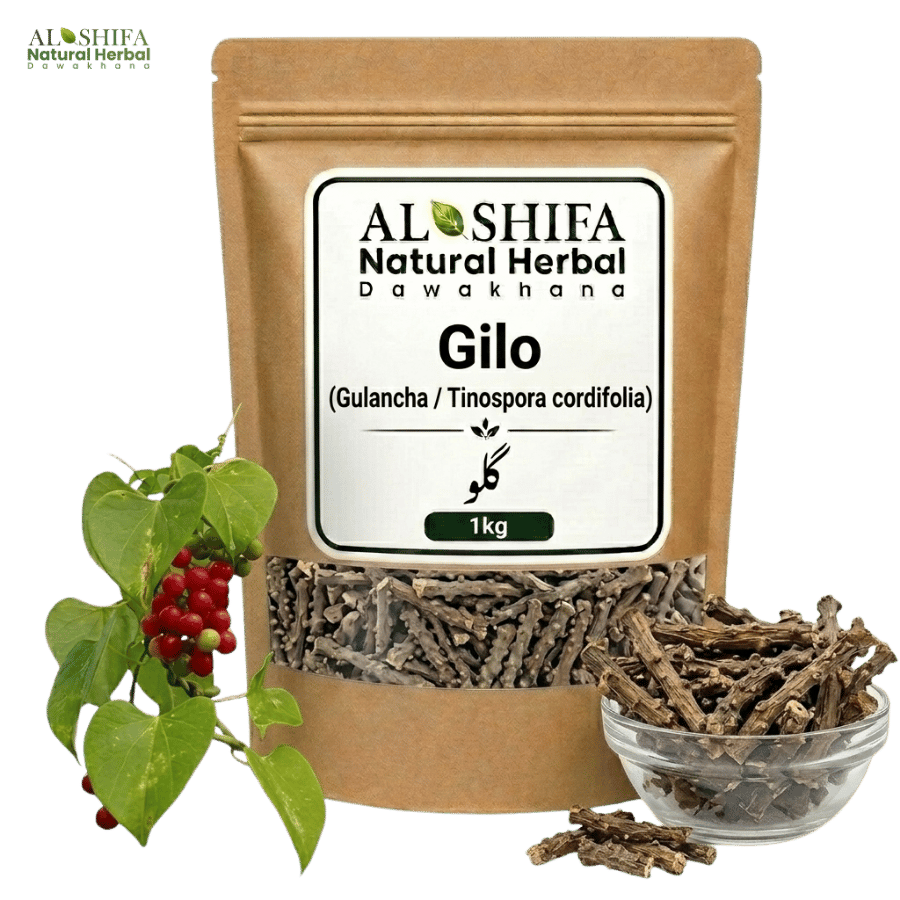
Gilo, also known as Gulancha, Giloy or Guduchi, is a traditional herbal raw material obtained primarily from the dried stem of Tinospora cordifolia. It has long been used in South Asian herbal traditions in selected digestive, appetite, restorative, seasonal-wellness and general vitality formulations.
Al Shifa Gilo is carefully selected with attention to its characteristic stem appearance, botanical identity, cleanliness, proper dryness and responsible storage.
Key Features:
Important Note: Gilo is a traditional medicinal herb, not a proven treatment for infections, diabetes, arthritis, autoimmune disorders or liver disease. People with liver disease, autoimmune conditions or diabetes, or those taking regular medicines, should seek qualified professional guidance before medicinal use.
Gilo, also known as Gulancha, Giloy or Guduchi, is a traditional climbing medicinal plant botanically known as Tinospora cordifolia. It has a long history of use in Ayurvedic, Unani and South Asian herbal traditions and is commonly valued as a bitter botanical raw material used in a variety of traditional wellness formulations.
The plant is a climbing vine with characteristic stems, broad heart-shaped leaves and aerial roots. In traditional herbal trade, the stem is one of the most commonly used parts and may be supplied whole, cut, dried, crushed or powdered.
Gilo has traditionally appeared in preparations associated with general wellness, digestive support, appetite, seasonal wellness, restorative care and selected metabolic and joint-related formulations. In modern herbal marketing, it is also frequently described as an “immunity herb,” although such claims should not be interpreted as proof that it prevents or treats infections.
At Al Shifa Natural Herbal Dawakhana, Gilo is carefully selected with attention to its traditional identity, characteristic stem appearance, cleanliness, proper dryness and responsible storage.
Gilo is a perennial climbing plant belonging to the family Menispermaceae.
It commonly grows by climbing over trees, shrubs and other supports. Its stems become thicker as the plant matures and are traditionally collected, cut and dried for herbal use.
Depending on processing, Gilo may be available as:
Natural variation in colour, thickness and appearance can occur according to plant maturity, growing conditions, harvesting and drying.
English Name: Gulancha / Heart-Leaved Moonseed
Urdu Name: گلو
Roman Name: Gilo / Giloy / Gulancha / Guduchi
Scientific Name: Tinospora cordifolia (Willd.) Hook.f. & Thomson
Plant Family: Menispermaceae
Plant Part: Primarily Stem
Common Form: Whole Dried Stem / Cut Stem / Powder
Product Type: Traditional Botanical Raw Material
The stem is one of the most recognizable and commonly traded parts of Gilo.
Depending on maturity, dried stems may show:
Natural raw herbs do not need to be completely uniform in size, colour or shape.
Good-quality Gilo should retain the expected characteristics of properly identified and dried Tinospora stem.
Common quality features include:
Correct botanical identification is especially important because unrelated climbing plants should not be substituted for genuine Tinospora cordifolia.
Gilo has an extensive history in South Asian herbal practice.
Traditional preparations containing Gilo have been associated with:
These traditional uses should not be interpreted as proof that Gilo treats specific diseases.
Gilo has traditionally been regarded as an important restorative botanical.
Restorative herbs are generally used in traditional practice to support the body during periods of:
Persistent or unexplained weakness, however, may have many causes, including anaemia, nutritional deficiencies, thyroid disorders, diabetes, infection and other medical conditions.
Such symptoms should not be managed only with herbal products without appropriate evaluation.
The naturally bitter character of Gilo explains part of its traditional reputation in digestive formulations.
Bitter herbs have historically been used in preparations intended to support:
This does not establish Gilo as a treatment for ulcers, inflammatory bowel disease, liver disease or chronic digestive disorders.
Persistent abdominal pain, repeated vomiting, blood in stool, unexplained weight loss or other significant digestive symptoms require medical assessment.
Gilo may appear in traditional bitter formulations intended for temporary poor appetite.
However, persistent loss of appetite can result from many underlying conditions.
Medical evaluation is particularly important when poor appetite is accompanied by:
Traditional appetite use should not delay appropriate diagnosis.
Gilo has traditionally appeared in formulations used during seasonal changes and periods of temporary physical discomfort.
This historical use has contributed to its reputation as a general wellness herb.
However, Gilo should not be promoted as a substitute for appropriate diagnosis or treatment of:
Persistent or high fever requires appropriate medical evaluation.
Gilo is widely marketed today as an immune-support herb.
Traditional use and experimental research have created considerable interest in the plant, but the term “immunity booster” can be misleading when interpreted as guaranteed protection from disease.
Gilo should not be presented as proven to:
The immune system is complex, and stronger immune activity is not always beneficial, particularly in people with certain immune-related conditions.
Gilo has a long traditional association with formulations used during fever and seasonal illness.
This historical reputation does not mean that Gilo itself treats the underlying cause of fever.
Fever can occur because of many conditions, including serious infections.
Seek appropriate medical advice for:
Gilo has traditionally appeared in selected herbal preparations intended for joint and general body comfort.
Its historical use should not be interpreted as proof that it treats:
Persistent swelling, severe pain, redness or restricted movement requires appropriate medical evaluation.
Gilo has also been used in selected traditional preparations associated with metabolic wellness.
Modern research has explored Tinospora preparations for possible effects related to blood glucose and other metabolic processes.
However, this does not establish ordinary dried Gilo stem as a treatment for diabetes.
People with diabetes should not replace prescribed medicines, monitoring or dietary management with Gilo.
Because Tinospora preparations may potentially influence blood glucose, people taking medicines for diabetes should use additional caution.
Combining herbal products with glucose-lowering medicines could potentially contribute to excessively low blood sugar in some circumstances.
People with diabetes should therefore seek qualified professional guidance before regular medicinal use and continue appropriate glucose monitoring.
Gilo has historically appeared in certain traditional formulations associated with liver wellness.
However, traditional liver use should not be interpreted as evidence that Gilo protects or detoxifies the liver.
Importantly, cases of liver injury have been reported in association with Tinospora-containing herbal products.
The exact circumstances can vary, and factors such as product identity, dose, duration, individual susceptibility and combined ingredients may be relevant.
For this reason, Gilo should not be marketed as a guaranteed “liver detox” or treatment for liver disease.
Anyone using a Tinospora-containing product should seek medical advice if symptoms such as the following develop:
People with existing liver disease should seek professional guidance before medicinal use.
Because Gilo is frequently described as having immune-modulating activity, people with autoimmune or immune-related conditions should be particularly cautious with medicinal use.
Examples include:
People taking immunosuppressive medicines should also seek qualified medical advice before using Gilo medicinally.
“Boosting immunity” is not necessarily desirable in every health condition.
Tinospora cordifolia contains numerous naturally occurring plant compounds.
Different preparations have been studied for various groups of constituents, including:
The exact composition depends on:
The presence of these compounds does not by itself establish a clinical medical benefit.
Different parts and preparations of Tinospora should not automatically be treated as interchangeable.
Stem:
One of the most commonly used traditional raw materials.
Leaves:
Used separately in certain traditional preparations.
Root:
Has its own traditional applications.
Whole Plant:
May be used in preparations different from stem-only material.
Extracts:
Concentrated products whose composition depends on the extraction process.
A research finding involving a concentrated extract should not automatically be applied to ordinary dried Gilo stem.
Gilo is available in several forms.
Whole or Cut Stem:
Natural stem structure remains visible, making basic botanical identification easier.
Powder:
Convenient for compound preparations, but visual identification becomes more difficult after grinding.
Extracts:
Concentrated preparations that may contain substantially different amounts of plant constituents.
Compound Products:
May combine Gilo with several other herbs, making their effects and safety different from single-ingredient raw Gilo.
These forms should not automatically be considered equivalent.
The name Giloy or Gilo may sometimes be applied loosely in herbal trade.
Correct identification of Tinospora cordifolia is important because different Tinospora species and unrelated climbing plants may differ in their chemical composition and safety.
A traditional name alone should not replace proper botanical identification when the material is intended for medicinal use.
Tinospora cordifolia has been studied experimentally for several possible biological activities.
However:
For these reasons, experimental findings should not be converted into guaranteed treatment claims for raw Gilo.
Gilo is a traditional medicinal botanical rather than an ordinary everyday food.
For medicinal internal use, suitability may depend on:
A single universal medicinal amount should not be assumed suitable for everyone.
Reliable safety information for medicinal amounts of Gilo during pregnancy is limited.
Pregnant women should avoid self-prescribing Gilo or concentrated Tinospora preparations unless specifically advised by an appropriately qualified healthcare professional.
Traditional use does not automatically establish safety during pregnancy.
There is insufficient reliable information to establish the safety of medicinal amounts of Gilo during breastfeeding.
Breastfeeding women should seek professional guidance before regular medicinal internal use.
Gilo should not be routinely given medicinally to infants or young children without qualified professional guidance.
A child with persistent fever, weakness, poor appetite, vomiting or other ongoing symptoms requires appropriate medical assessment.
Professional guidance is especially important for people who:
Natural herbal products can still produce biological effects and may not be suitable for everyone.
At Al Shifa Natural Herbal Dawakhana, Gilo is selected with attention to:
Traditional Identity – Stem material consistent with genuine Gilo.
Characteristic Appearance – Natural dried stem structure and colour.
Proper Dryness – Appropriately dried for responsible storage.
Cleanliness – Selected to reduce unnecessary debris and foreign material.
No Visible Mould – Checked for obvious moisture-related deterioration.
Responsible Storage – Protected from moisture, insects and contamination.
Al Shifa Natural Herbal Dawakhana, established in 1999, supplies carefully selected traditional herbs and natural raw materials throughout Pakistan.
Our focus includes:
Gilo has traditionally been used as an ingredient in different herbal preparations.
Depending on traditional practice, it may be supplied or used as:
For medicinal internal use, the preparation method, amount and duration should be determined according to the intended formulation and qualified professional guidance.
Gilo is a traditional medicinal botanical raw material obtained primarily from the stem of Tinospora cordifolia.
Its traditional use should not be interpreted as proof that it can treat, cure or prevent:
Special caution is appropriate for people with liver disease, autoimmune conditions or diabetes, and for those taking regular medicines.
Traditional use and established medical treatment are different.
Store Gilo in a cool, dry and clean place in a tightly closed container.
For better storage:
Do not use material showing visible mould, excessive moisture, insect infestation or an unusual spoiled smell.
Gilo, also known as Gulancha, Giloy or Guduchi, is a traditional herbal raw material obtained primarily from the dried stem of Tinospora cordifolia. It has a long history of use in South Asian herbal practice in selected digestive, restorative, seasonal-wellness, appetite and general wellness formulations.
Correct botanical identity is important because Gilo stem, leaves, roots and concentrated extracts are not automatically equivalent.
Customers searching for Gilo Pakistan, Gulancha Pakistan, Giloy Pakistan, Tinospora Cordifolia Pakistan, pure Gilo, original Gilo, dried Gilo stem, Gilo benefits, Gilo uses, Giloy benefits, Gulancha benefits, Gilo Lahore, Gilo price in Pakistan, Giloy price in Pakistan, buy Gilo Pakistan or Gilo online Pakistan can choose Al Shifa Natural Herbal Dawakhana for carefully selected traditional botanical material.
Since 1999, Al Shifa Natural Herbal Dawakhana has focused on supplying traditional herbs and natural raw materials with attention to identity, cleanliness, natural quality, proper dryness, responsible storage and clear product information.
Product Name: Gilo / Gulancha
English Name: Gulancha / Heart-Leaved Moonseed
Urdu Name: گلو
Roman Name: Gilo / Giloy / Gulancha / Guduchi
Scientific Name: Tinospora cordifolia (Willd.) Hook.f. & Thomson
Plant Family: Menispermaceae
Plant Part: Primarily Stem
Common Form: Whole Dried Stem / Cut Stem / Powder
Product Type: Traditional Botanical Raw Material
Traditional Use: Selected digestive, restorative, appetite, seasonal-wellness and general herbal formulations
Important Note: Gilo is a traditional medicinal botanical and should not be promoted as a proven treatment or preventive remedy for infections, diabetes, arthritis, autoimmune disease or liver disease. Reported liver-injury concerns and possible effects on blood glucose and immune activity make professional guidance particularly important for some users.
گلو ایک مشہور روایتی جڑی بوٹی ہے جو ایک چڑھنے والی بیل سے حاصل ہوتی ہے۔ یہ بیل درختوں، جھاڑیوں اور دوسری مضبوط چیزوں کے سہارے اوپر چڑھتی ہے۔ اس کے تنے کو طب یونانی، آیوروید اور دوسرے روایتی طبی طریقوں میں قدیم زمانے سے استعمال کیا جاتا رہا ہے۔
گلو کی خاص پہچان اس کا بیل نما تنا، قدرتی سبزی مائل بھوری سے خاکی بھوری رنگت، گانٹھ دار ظاہری حالت اور خشک ہونے کے بعد سخت یا ریشے دار ساخت ہے۔ پرانے تنوں کی بیرونی سطح نسبتاً کھردری اور چھوٹی ابھری ہوئی جگہوں والی ہو سکتی ہے۔
روایتی طبی طریقوں میں گلو کو خصوصاً بخار سے متعلق بعض نسخوں، عمومی جسمانی صحت، ہاضمے، جوڑوں سے متعلق بعض مرکبات، خون میں شکر سے متعلق بعض روایتی تیاریوں اور مختلف مقوی ادویات میں شامل کیا جاتا رہا ہے۔
الشفاء نیچرل ہربل دواخانہ میں گلو کو اس کی درست پہچان، قدرتی رنگت، ظاہری حالت، صفائی اور اچھی طرح خشک ہونے کو دیکھ کر منتخب کیا جاتا ہے۔ اسے نمی اور دوسری غیر ضروری چیزوں سے محفوظ رکھنے کے لیے صحیح طریقے سے محفوظ کیا جاتا ہے۔
گلو ایک کئی سال برقرار رہنے والی چڑھنے والی بیل ہے۔
اس کے تنے دوسری جھاڑیوں اور درختوں کا سہارا لے کر اوپر کی طرف بڑھتے ہیں۔ اس کے پتے عموماً چوڑے اور دل سے ملتی جلتی شکل کے ہوتے ہیں۔
روایتی طبی استعمال میں اس کے مختلف حصوں کا ذکر ملتا ہے، لیکن خشک جڑی بوٹی کے طور پر خصوصاً اس کا تنا عام طور پر استعمال کیا جاتا ہے۔
خشک گلو کے تنے کی رنگت مختلف ہو سکتی ہے، مثلاً:
اس کی رنگت اور ساخت بیل کی عمر، تنے کے حصے، پودا کہاں اگا ہو، موسم، جمع کرنے کے وقت، خشک کرنے کے طریقے اور محفوظ رکھنے کی حالت کے مطابق مختلف ہو سکتی ہے۔
ضرورت کے مطابق گلو کو:
کی شکل میں رکھا یا مختلف طبی مرکبات میں شامل کیا جا سکتا ہے۔
نام: گلو
دوسرا معروف نام: گلانچہ
ایک اور معروف نام: گلوئے
عام نام: دل نما پتوں والی گلو بیل
ماخذ: گلو کی چڑھنے والی بیل
خاندان: مینی سپرم خاندان
استعمال ہونے والا حصہ: روایتی طور پر خصوصاً تنا، جبکہ دوسرے حصے بھی بعض طریقوں میں استعمال ہوتے ہیں
عام شکل: خشک بیل یا تنے کے چھوٹے بڑے ٹکڑے
عام رنگت: سبزی مائل بھوری سے گہری بھوری
قسم: طب یونانی اور دوسرے روایتی طبی طریقوں میں استعمال ہونے والی جڑی بوٹی
گلو کی درست پہچان بہت ضروری ہے کیونکہ ٹینوسپورا کی مختلف اقسام موجود ہیں۔ صرف ملتے جلتے تنے یا عام نام کی بنیاد پر کسی دوسری بیل کو گلو نہیں سمجھنا چاہیے۔
اچھی گلو میں اس کی قدرتی رنگت، تنے کی اصل ساخت اور خشک ظاہری حالت موجود رہتی ہے۔
اچھی گلو کی عام نشانیاں یہ ہو سکتی ہیں:
اگر گلو میں بہت زیادہ نمی، پھپھوندی، کیڑے یا غیر معمولی خراب بو محسوس ہو تو اسے استعمال نہ کریں۔
گلو کے مختلف حصے روایتی طریقوں میں استعمال ہوتے رہے ہیں، لیکن ہر حصے کو ایک ہی چیز نہیں سمجھنا چاہیے۔
گلو کا تنا:
خشک جڑی بوٹی کے طور پر عام طور پر گلو کے تنے یا تنے کے ٹکڑے استعمال کیے جاتے ہیں۔
گلو کے پتے:
یہ اسی بیل کے پتے ہیں اور ان کی شکل عموماً چوڑی اور دل سے ملتی جلتی ہوتی ہے۔
پتے، تنا اور جڑ ایک ہی پودے سے حاصل ہوتے ہیں، لیکن ان میں موجود قدرتی اجزاء کی مقدار مختلف ہو سکتی ہے۔ اس لیے ایک حصے پر ہونے والی تحقیق کو بغیر احتیاط دوسرے حصے پر لاگو نہیں کرنا چاہیے۔
گلو کا استعمال طب یونانی، آیوروید اور دوسرے روایتی طبی طریقوں میں قدیم زمانے سے ہوتا آ رہا ہے۔
اسے خصوصاً:
میں شامل کیا جاتا رہا ہے۔
یہ استعمال طب یونانی اور دوسری روایتی طبی معلومات پر مبنی ہیں۔ انہیں کسی بیماری کا یقینی یا ثابت شدہ علاج نہیں سمجھنا چاہیے۔
گلو کا ذکر بخار سے متعلق مختلف روایتی طبی طریقوں میں ملتا ہے۔
اسے بعض ایسی مرکب ادویات میں شامل کیا جاتا رہا ہے جو بخار اور بیماری کے بعد ہونے والی عمومی کمزوری سے متعلق تیار کی جاتی ہیں۔
لیکن بخار کی بہت سی مختلف وجوہات ہو سکتی ہیں، مثلاً:
اس لیے مسلسل یا شدید بخار میں صرف گلو پر انحصار نہیں کرنا چاہیے۔
اگر بخار زیادہ ہو، کئی دن برقرار رہے یا اس کے ساتھ شدید کمزوری، سانس میں دشواری، مسلسل قے، خون آنا یا دوسری غیر معمولی علامات موجود ہوں تو مستند معالج سے معائنہ کروائیں۔
گلو کو بعض روایتی طبی طریقوں میں عمومی جسمانی صحت اور طاقت سے متعلق مرکبات میں شامل کیا جاتا رہا ہے۔
بیماری کے بعد ہونے والی کمزوری اور عمومی نقاہت سے متعلق بعض روایتی تیاریوں میں بھی اس کا ذکر ملتا ہے۔
لیکن جسمانی کمزوری کی کئی وجوہات ہو سکتی ہیں، مثلاً:
اس لیے مسلسل جسمانی کمزوری میں صرف گلو پر انحصار نہیں کرنا چاہیے۔
گلو کو نظامِ ہاضمہ سے متعلق بعض طب یونانی اور روایتی نسخوں میں بھی شامل کیا جاتا رہا ہے۔
روایتی طور پر اسے بھوک اور ہاضمے سے متعلق بعض مرکبات کا حصہ بنایا جاتا ہے۔
لیکن مسلسل بدہضمی، پیٹ میں شدید درد، قے، وزن میں غیر معمولی کمی یا پاخانے میں خون کی صورت میں پہلے اصل وجہ معلوم کرنا ضروری ہے۔
گلو کا ذکر جوڑوں اور جسمانی درد سے متعلق بعض روایتی طبی تیاریوں میں بھی ملتا ہے۔
اسے بعض مرکبات میں جوڑوں کی تکلیف اور جسمانی بے آرامی سے متعلق روایتی مقاصد کے لیے شامل کیا جاتا رہا ہے۔
لیکن جوڑوں کے درد کی کئی مختلف وجوہات ہو سکتی ہیں، اس لیے گلو کو گٹھیا یا کسی مخصوص جوڑوں کی بیماری کا خود سے ثابت شدہ علاج نہیں سمجھنا چاہیے۔
گلو کا ذکر خون میں شکر سے متعلق بعض روایتی طبی طریقوں میں بھی ملتا ہے۔
اس موضوع پر تجرباتی اور محدود انسانی تحقیق بھی موجود ہے، لیکن گلو کو ذیابیطس کی تجویز کردہ دوا کا متبادل نہیں سمجھنا چاہیے۔
خاص طور پر اگر کوئی شخص پہلے سے خون میں شکر کم کرنے والی دوا استعمال کر رہا ہو تو گلو کا اندرونی استعمال خود سے شروع نہ کریں۔
خون میں شکر بہت کم ہونے کی صورت میں:
جیسی علامات پیدا ہو سکتی ہیں۔
گلو کو حالیہ برسوں میں جسم کے قدرتی دفاعی نظام سے متعلق بہت زیادہ مشہور کیا گیا ہے۔
اس کے مختلف اجزاء کے جسم کے دفاعی نظام پر ممکنہ اثرات کے بارے میں تجرباتی تحقیق موجود ہے، لیکن اسے ہر شخص کے لیے محفوظ دفاعی نظام بڑھانے والی دوا سمجھنا درست نہیں۔
جسم کے دفاعی نظام کو ضرورت سے زیادہ متحرک کرنا ہر شخص کے لیے فائدہ مند نہیں ہوتا، خصوصاً ایسے افراد میں جنہیں جسم کے دفاعی نظام سے متعلق کوئی بیماری ہو۔
اس لیے گلو کو خود سے طویل عرصے تک صرف جسمانی دفاع بڑھانے کے مقصد سے استعمال نہیں کرنا چاہیے۔
گلو کے بارے میں یہ ایک بہت اہم طبی احتیاط ہے۔
اگرچہ روایتی طریقوں میں گلو کا ذکر جگر سے متعلق بعض نسخوں میں ملتا ہے، لیکن جدید طبی رپورٹس میں گلو کے استعمال کے بعد جگر کو نقصان پہنچنے کے واقعات بھی سامنے آئے ہیں۔
خصوصاً مسلسل یا طویل عرصے تک اندرونی استعمال کے بعد بعض افراد میں جگر کی سوزش اور جگر کے کام میں خرابی رپورٹ ہوئی ہے۔
اگر گلو استعمال کرتے ہوئے:
تو گلو کا استعمال بند کریں اور فوری طور پر مستند معالج سے رابطہ کریں۔
گلو کو فیٹی لیور، یرقان، جگر کی سوزش یا کسی دوسری جگر کی بیماری کا خود سے علاج نہ سمجھیں۔
گلو میں مختلف قدرتی نباتاتی اجزاء پائے جاتے ہیں۔
ان میں مختلف مقدار میں:
شامل ہو سکتے ہیں۔
ان اجزاء کی مقدار مختلف ہو سکتی ہے اور اس پر کئی چیزیں اثر انداز ہوتی ہیں، مثلاً:
اسی لیے مختلف جگہوں سے حاصل ہونے والی گلو کی رنگت، ساخت اور قدرتی اجزاء بالکل ایک جیسے ہونا ضروری نہیں۔
گلو مکمل خشک تنے، تنے کے ٹکڑوں یا سفوف کی شکل میں دستیاب ہو سکتی ہے۔
مکمل خشک گلو:
اس میں قدرتی رنگت، تنے کی ساخت، صفائی اور ظاہری معیار کو دیکھنا نسبتاً آسان ہوتا ہے۔
گلو کا سفوف:
سفوف کو مختلف مرکبات میں شامل کرنا آسان ہوتا ہے، لیکن پیسنے کے بعد اصل تنے کی ظاہری شناخت مشکل ہو جاتی ہے۔
دونوں صورتوں میں اہم باتیں یہ ہیں:
خواتین کو گلو خود سے کسی اندرونی بیماری، ہارمون کی خرابی یا تولیدی مسئلے کے علاج کے لیے استعمال نہیں کرنا چاہیے۔
اگر کسی خاتون کو:
ہو تو پہلے اس کی اصل وجہ معلوم کرنا ضروری ہے۔
حمل کے دوران گلو کو دوا کے طور پر کھانے یا پینے کے لیے خود سے استعمال نہ کریں۔
حاملہ خواتین میں گلو کے محفوظ اندرونی طبی استعمال سے متعلق قابل اعتماد جدید انسانی معلومات کافی نہیں ہیں۔
صرف روایتی استعمال کی تاریخ کو حمل کے دوران محفوظ ہونے کا ثبوت نہیں سمجھنا چاہیے۔
اگر حمل کے دوران کسی طبی مسئلے کے لیے اس کا استعمال مقصود ہو تو پہلے مستند معالج سے مشورہ کریں۔
دودھ پلانے والی خواتین کو گلو کا اندرونی طبی استعمال خود سے شروع نہیں کرنا چاہیے۔
اس دوران اس کے محفوظ طبی استعمال کے بارے میں قابل اعتماد انسانی معلومات محدود ہیں، اس لیے دوا کے طور پر استعمال سے پہلے مستند معالج سے مشورہ کرنا بہتر ہے۔
شیر خوار اور چھوٹے بچوں کو گلو خود سے دوا کے طور پر نہ دیں۔
بچوں میں بخار، کمزوری، بھوک کی کمی یا دوسری طبی علامات کی اصل وجہ معلوم کرنا ضروری ہے۔
خاص طور پر مسلسل بخار یا شدید بیماری کی صورت میں بچوں کے معالج سے مشورہ کریں۔
اگر کوئی شخص مستقل دوا استعمال کر رہا ہو تو گلو کا اندرونی استعمال خود سے شروع نہیں کرنا چاہیے۔
خصوصاً احتیاط ضروری ہے اگر کوئی شخص:
استعمال کر رہا ہو۔
ایسی صورت میں گلو استعمال کرنے سے پہلے مستند معالج سے مشورہ کرنا بہتر ہے۔
گلو کو زیادہ مقدار یا طویل عرصے تک خود سے استعمال نہیں کرنا چاہیے۔
اگر استعمال کے بعد:
محسوس ہو تو استعمال بند کر دیں اور ضرورت کے مطابق مستند معالج سے مشورہ کریں۔
گلو ایک روایتی جڑی بوٹی ہے۔ قدرتی ہونے کا مطلب یہ نہیں کہ اسے ہر شخص، ہر بیماری یا ہر مقدار میں محفوظ سمجھا جائے۔
اسے خود سے درج ذیل مسائل کا ثابت شدہ علاج نہ سمجھیں:
گلو کے بہت سے استعمال طب یونانی، آیوروید اور دوسری روایتی معلومات پر مبنی ہیں۔ مختلف طبی فوائد سے متعلق جدید انسانی تحقیق محدود ہے، جبکہ گلو کے استعمال سے جگر کو نقصان پہنچنے کے واقعات بھی رپورٹ ہوئے ہیں۔
اگر علامات شدید ہوں، بار بار ہوں یا مسلسل برقرار رہیں تو مستند معالج سے معائنہ کروائیں۔
الشفاء نیچرل ہربل دواخانہ میں گلو منتخب کرتے وقت درج ذیل باتوں کا خیال رکھا جاتا ہے:
درست پہچان: اصل گلو کی خشک بیل یا تنا ہو اور دوسری ملتی جلتی بیلوں سے الگ پہچانی جائے۔
قدرتی رنگت: تنے میں اس کی قدرتی سبزی مائل بھوری سے بھوری رنگت موجود ہو۔
قدرتی ساخت: خشک تنے کی اصل گانٹھ دار، سخت یا ریشے دار ظاہری حالت برقرار ہو۔
اچھی طرح خشک: غیر ضروری نمی موجود نہ ہو۔
صاف ستھری: مٹی، گرد، ریت، کنکر، تنکے اور دوسری غیر ضروری چیزوں سے پاک صاف ہو۔
پھپھوندی سے پاک: خراب ہونے یا پھپھوندی کی واضح نشانیاں موجود نہ ہوں۔
صحیح طریقے سے محفوظ: نمی، بہت زیادہ گرمی، کیڑوں اور آلودگی سے محفوظ رکھی گئی ہو۔
الشفاء نیچرل ہربل دواخانہ سنہ ۱۹۹۹ سے قدرتی جڑی بوٹیوں کی سپلائی کر رہا ہے۔
ہماری توجہ درج ذیل باتوں پر رہتی ہے:
گلو کو طب یونانی، آیوروید اور دوسرے روایتی طبی طریقوں میں مختلف ادویات اور مرکبات میں شامل کیا جاتا ہے، خصوصاً:
میں اس کا ذکر ملتا ہے۔
لیکن گلو کی مناسب مقدار استعمال ہونے والے حصے، تیاری کی شکل، مقصد، عمر اور صحت کی حالت کے مطابق مختلف ہو سکتی ہے۔
اسی لیے یہاں خود سے کھانے یا پینے کی کوئی مقدار تجویز نہیں کی جا رہی۔
اگر اسے دوا کے طور پر اندرونی استعمال کے لیے لینا ہو تو پہلے مستند معالج سے مناسب مقدار، مدت اور طریقہ استعمال معلوم کریں۔
گلو کو ٹھنڈی، خشک اور صاف ستھری جگہ پر اچھی طرح کسی جار میں پیک کر کے رکھیں۔
بہتر معیار برقرار رکھنے کے لیے:
اگر گلو میں پھپھوندی، بہت زیادہ نمی، کیڑے یا غیر معمولی خراب بو محسوس ہو تو اسے استعمال نہ کریں۔
گلو ایک معروف چڑھنے والی جڑی بوٹی ہے جس کا استعمال طب یونانی، آیوروید اور مختلف دیسی طبی مرکبات میں قدیم زمانے سے ہوتا آ رہا ہے۔ اس کا خشک تنا خصوصاً بخار، عمومی جسمانی صحت، ہاضمے، جوڑوں اور خون میں شکر سے متعلق بعض روایتی مرکبات میں شامل کیا جاتا رہا ہے۔
اگر آپ گلو، گلانچہ، گلوئے، خالص گلو، اصل گلو، خشک گلو، گلو کی بیل، گلو کے فوائد، گلو کے استعمال، گلو پاکستان، گلو لاہور، گلو کی قیمت، گلو کی قیمت پاکستان، گلو آن لائن یا گلو خریدیں تلاش کر رہے ہیں تو الشفاء نیچرل ہربل دواخانہ احتیاط سے منتخب، صاف ستھری اور اچھی طرح محفوظ کی گئی گلو فراہم کرتا ہے۔
سنہ ۱۹۹۹ سے الشفاء نیچرل ہربل دواخانہ قدرتی جڑی بوٹیوں کی سپلائی میں درست پہچان، صفائی، قدرتی معیار، مناسب خشک حالت، صحیح طریقے سے محفوظ رکھنے اور آسان و ذمہ دارانہ معلومات کو اہمیت دیتا آ رہا ہے۔
نام: گلو
دوسرا معروف نام: گلانچہ
ایک اور معروف نام: گلوئے
عام نام: دل نما پتوں والی گلو بیل
ماخذ: گلو کی چڑھنے والی بیل
خاندان: مینی سپرم خاندان
استعمال ہونے والا حصہ: روایتی طور پر خصوصاً تنا
عام شکل: خشک تنے یا بیل کے چھوٹے بڑے ٹکڑے
عام رنگت: سبزی مائل بھوری سے گہری بھوری
عام دیسی طبی استعمال: بخار، عمومی جسمانی صحت، نظامِ ہاضمہ، جوڑوں اور خون میں شکر سے متعلق بعض طب یونانی، آیوروید اور دیسی طبی مرکبات
اہم نوٹ: گلو ایک روایتی جڑی بوٹی ہے اور اس کے بہت سے استعمال قدیم طبی معلومات پر مبنی ہیں۔ اسے ذیابیطس، بخار، جگر کی بیماری یا کسی دوسری بیماری کا خود سے ثابت شدہ علاج نہ سمجھیں۔ جدید طبی رپورٹس میں گلو کے استعمال سے جگر کو نقصان پہنچنے کے واقعات بھی سامنے آئے ہیں۔ حمل، دودھ پلانے کے دوران، بچوں، جگر کی بیماری والے افراد اور مستقل ادویات استعمال کرنے والے افراد کو اسے خود سے دوا کے طور پر استعمال نہیں کرنا چاہیے۔ اندرونی استعمال سے پہلے مستند معالج سے مشورہ کرنا بہتر ہے۔