سرس گاچھ/ ہارسٹیل
Price range: ₨ 350 through ₨ 6,000
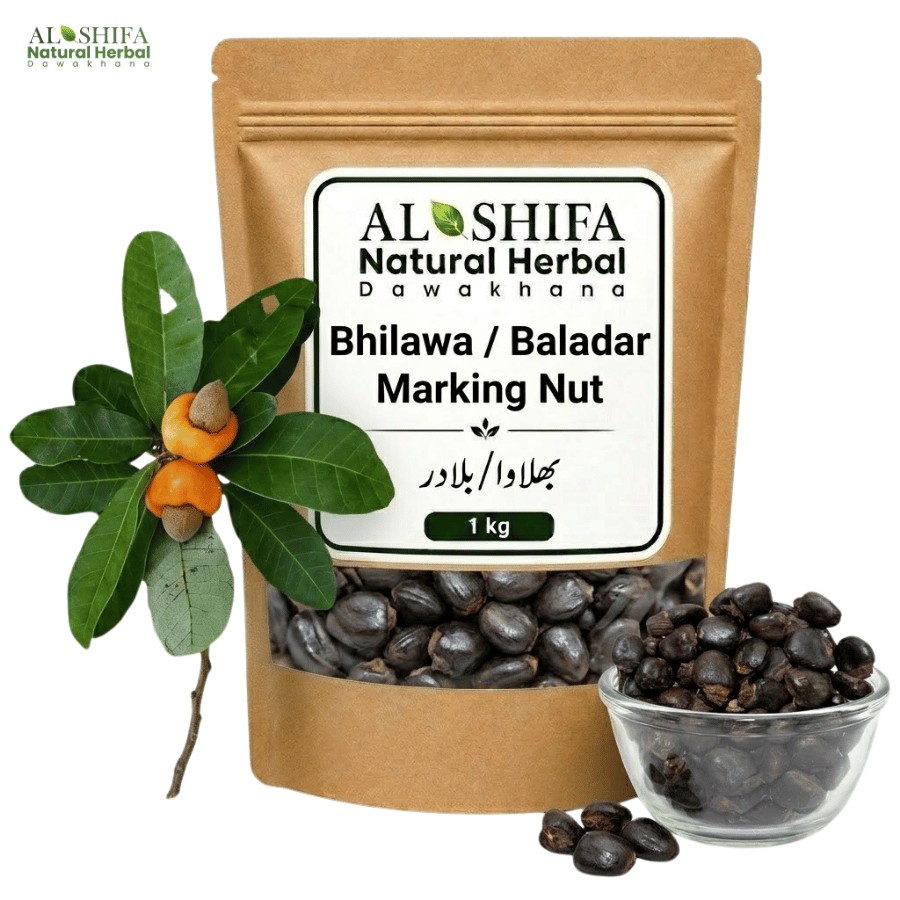
Bhilawa, also known as Baladar, Bhallatak or Marking Nut, is a potent traditional natural material obtained from the fruit of Semecarpus anacardium L.f. and is known in Urdu as Baladar. It has historically been included in carefully prepared traditional formulations associated with digestive wellness, strengthening, restorative support, joint-related preparations and selected external uses.
Al Shifa Bhilawa is carefully selected with attention to its correct identity, natural fruit characteristics, proper dryness, cleanliness, careful handling and responsible storage.
Key Features:
Important Note: Raw Bhilawa is a strong irritant and is not an ordinary edible nut. It can cause severe skin irritation and blistering. Avoid direct skin and eye contact, do not self-administer internally, and do not attempt home purification or medicinal preparation.
Bhilawa, also known as Baladar, Bhallatak or Marking Nut, is a potent traditional natural material obtained from the fruit of Semecarpus anacardium L.f., a tree belonging to the Anacardiaceae family. In Urdu herbal trade, it is commonly known as بلادر and بھلاوا.
The fruit is distinctive because its outer tissues contain a dark, oily and strongly irritating substance. Historically, this dark material was used for marking cloth and other surfaces, which gave the plant its English name Marking Nut.
Bhilawa has a long history in South Asian traditional medicine and has appeared in carefully prepared compound formulations associated with digestive wellness, strengthening, joint-related preparations, skin-related external traditions and selected restorative uses.
However, raw Bhilawa is not an ordinary edible nut. Its irritating fruit material can cause significant skin and mucous-membrane reactions. Traditional systems therefore placed considerable importance on careful handling and specialized processing before medicinal use.
At Al Shifa Natural Herbal Dawakhana, Bhilawa is treated as a specialized traditional raw material requiring attention to correct identity, material condition, careful handling, proper storage and clear safety information.
Bhilawa is the fruit material of:
Semecarpus anacardium L.f.
The tree grows in parts of South Asia and produces fruits containing a seed-like kernel associated with a fleshy fruit structure.
The material is known by several regional names, including:
Despite the word “nut” in its English name, Bhilawa should not be treated like an ordinary edible nut.
Its raw fruit tissues contain strongly irritating natural compounds.
Product Name: Bhilawa / Baladar
English Name: Marking Nut
Urdu Name: بلادر / بھلاوا
Roman Name: Bhilawa / Bhilava / Baladar / Bhallatak
Scientific Name: Semecarpus anacardium L.f.
Plant Family: Anacardiaceae
Plant Part: Fruit / Nut-Like Fruit Material
Common Form: Whole Dried Fruit Material
Product Type: Potent Traditional Herbal Raw Material
The name Marking Nut comes from the dark substance associated with the fruit.
Historically, this material was used to make marks on:
The dark marking substance can become strongly coloured and persistent.
This historical use explains the English trade name but does not mean that the raw fruit is safe for casual handling.
Dried Bhilawa generally has a distinctive appearance.
Depending on maturity and processing, it may show:
Appearance can vary according to source, maturity, drying and previous handling.
Material sold as Bhilawa should be selected with attention to:
Because Bhilawa is an irritant material, quality assessment should not involve unnecessary direct skin contact.
Semecarpus anacardium belongs to the Anacardiaceae family.
This botanical family also includes plants such as:
However, belonging to the same botanical family does not mean these materials have the same composition or safety profile.
Bhilawa contains particularly irritating fruit compounds and should not be handled or consumed like an ordinary food nut.
Marking Nut and cashew belong to the same botanical family, but they are different plants.
Bhilawa:
Semecarpus anacardium
Cashew:
Anacardium occidentale
Therefore:
Bhilawa ≠ Cashew Nut
The food use and safety information associated with properly processed commercial cashews should not be applied to raw Bhilawa.
Bhilawa has historically been regarded as a potent material in South Asian traditional medicine.
It has appeared in carefully prepared formulations associated with:
Its traditional reputation does not mean that raw Bhilawa is suitable for unsupervised home use.
Processed Bhilawa has historically appeared in selected digestive formulations.
Traditional preparations may have been associated with:
Persistent indigestion, abdominal pain, vomiting, blood in stool or unexplained weight loss should receive appropriate medical assessment.
Bhilawa should not be considered a routine home remedy for digestive symptoms.
Bhilawa has also appeared in selected traditional strengthening and restorative formulations.
Such preparations may historically have been associated with:
These traditional uses do not establish that Bhilawa increases testosterone, builds muscle or treats a specific weakness-related disease.
Bhilawa has been included in selected traditional preparations associated with joint and musculoskeletal wellness.
Historical use does not establish that raw or processed Bhilawa cures:
Persistent swelling, redness, severe pain or loss of joint movement requires appropriate medical evaluation.
Bhilawa has a history of carefully controlled external use in selected traditional practices.
However, this is particularly important:
Raw Bhilawa can itself cause severe skin irritation.
Direct contact may cause:
Therefore, traditional external use should never be interpreted as permission to rub raw Bhilawa directly onto the skin.
Semecarpus anacardium contains several biologically active natural compounds.
The fruit material has been investigated for compounds including:
Some of the same compounds that make the plant chemically interesting are also responsible for its strong irritant properties.
Natural origin does not mean harmlessness.
Bhilawa is particularly known for irritating phenolic substances often discussed under terms such as bhilawanol and related compounds.
These substances can produce strong reactions when they come into contact with skin.
The reaction may not always remain limited to the exact point of contact.
People who are sensitive to plants in the Anacardiaceae family may require additional caution.
Traditional systems have historically described specialized processing of Bhilawa before medicinal use.
This distinction is essential:
Raw Bhilawa ≠ Traditionally Processed Bhilawa
Raw material contains strongly irritating compounds.
Traditional processing was intended to modify the material before incorporation into selected formulations.
However, traditional processing should not be interpreted as a guarantee that the finished material is completely free from risk.
Because Bhilawa is strongly irritating, home processing is not recommended.
Improper handling can expose:
to irritating material.
No home purification or detoxification method should be assumed to make Bhilawa automatically safe for internal use.
Bhilawa may be encountered in different forms.
Whole Fruit Material:
Retains recognizable physical characteristics but still requires careful handling.
Powder:
Creates greater opportunity for accidental contact and contamination of surfaces.
Extract:
May concentrate selected chemical compounds.
These forms should not automatically be considered equivalent.
Research using a laboratory extract should not be directly applied to ordinary raw Bhilawa.
Semecarpus anacardium and its extracts have been investigated experimentally for several biological activities.
However, laboratory or animal research does not automatically prove that raw Bhilawa safely treats disease in humans.
Research results can depend on:
Traditional medicinal use and modern clinical evidence should therefore be kept clearly separate.
Raw Bhilawa should not be self-administered internally.
Improper exposure or ingestion may cause serious irritation and other harmful effects.
Internal medicinal use, where part of an established traditional practice, requires appropriately qualified professional supervision and properly identified, professionally prepared material.
Do not estimate a medicinal dose from raw material at home.
Avoid unnecessary direct contact with raw Bhilawa.
When handling the raw material:
If significant burning, swelling, blistering or another strong reaction develops, seek appropriate medical care.
Bhilawa material should be kept strictly away from the eyes.
If irritating material enters the eye, rinse promptly with plenty of clean water and seek urgent medical advice, especially if pain, redness or visual disturbance continues.
Because Bhilawa belongs to the Anacardiaceae family, people with known sensitivity to related plant materials should be particularly cautious.
A previous reaction to one member of the botanical family does not prove that a person will react to every other member, but it is an important safety consideration.
Bhilawa is not suitable for unsupervised medicinal use during pregnancy or breastfeeding.
Reliable modern safety information is limited, and the material has significant irritant properties.
Pregnant or breastfeeding women should avoid self-directed internal or external medicinal use.
Bhilawa should be kept out of reach of children.
It should not be used as a home strengthening, digestive, skin or joint remedy for children.
Accidental handling or ingestion requires prompt attention.
People with chronic medical conditions or those taking regular medicines should not begin medicinal Bhilawa preparations without appropriate professional guidance.
Extra caution is appropriate in people with:
At Al Shifa Natural Herbal Dawakhana, Bhilawa is handled as a specialized traditional raw material with attention to:
Correct Identity – Material consistent with Semecarpus anacardium.
Natural Appearance – Attention to characteristic fruit structure and colour.
Proper Dryness – Material maintained under suitable dry conditions.
Cleanliness – Selected to minimize unnecessary foreign material.
Material Condition – Checked for mould, excessive moisture, insects and deterioration.
Careful Handling – Appropriate attention to the naturally irritating character of the material.
Responsible Packaging – Packed to reduce unnecessary contact and help maintain product condition.
Al Shifa Natural Herbal Dawakhana, established in 1999, supplies traditional herbs and specialized natural raw materials throughout Pakistan.
Our focus for Bhilawa includes:
Bhilawa has historically appeared in carefully prepared traditional compound formulations.
Because the raw material is strongly irritating:
Medicinal use should only be considered under the guidance of an appropriately qualified practitioner familiar with the material.
Bhilawa / Marking Nut is a potent irritant traditional raw material and is not an ordinary edible nut.
Important points include:
Significant accidental ingestion, severe skin reaction, facial swelling, breathing difficulty, eye exposure or other serious symptoms require prompt medical attention.
Store Bhilawa in a secure, cool, dry and well-ventilated place in a tightly closed container.
For responsible storage:
Do not use material showing mould, excessive moisture, severe deterioration or significant insect contamination.
Bhilawa, also known as Baladar, Bhallatak and Marking Nut, is the traditional fruit material of Semecarpus anacardium L.f. and is known in Urdu as بلادر / بھلاوا.
It has historically appeared in carefully prepared traditional formulations associated with digestive wellness, strengthening, restorative, joint-related and selected external preparations. However, Bhilawa is a potent irritant material and should not be treated as an ordinary edible nut or casual home remedy.
Customers searching for Bhilawa, Bhilava, Baladar, Bhallatak, Bhallataka, Marking Nut, Semecarpus Anacardium, Semecarpus Anacardium Fruit, dried Bhilawa, whole Bhilawa, pure Bhilawa, original Bhilawa, Bhilawa benefits, Bhilawa uses, Marking Nut uses, Bhallatak uses, Baladar benefits, Baladar uses, Bhilawa traditional uses, Bhilawa Unani, Bhilawa Pakistan, Baladar Pakistan, Marking Nut Pakistan, Semecarpus Anacardium Pakistan, Bhilawa Lahore, Bhilawa price in Pakistan, Baladar price in Pakistan, Marking Nut price in Pakistan, buy Bhilawa Pakistan, buy Baladar Pakistan, Bhilawa online Pakistan or Marking Nut online Pakistan can choose Al Shifa Natural Herbal Dawakhana for carefully selected traditional raw material.
Since 1999, Al Shifa Natural Herbal Dawakhana has focused on supplying traditional herbs and natural raw materials with attention to identity, cleanliness, careful handling, proper storage and responsible product information.
Product Name: Bhilawa / Baladar
English Name: Marking Nut
Urdu Name: بلادر / بھلاوا
Roman Name: Bhilawa / Bhilava / Baladar / Bhallatak
Scientific Name: Semecarpus anacardium L.f.
Plant Family: Anacardiaceae
Plant Part: Fruit / Nut-Like Fruit Material
Common Form: Whole Dried Fruit Material
Product Type: Potent Traditional Herbal Raw Material
Traditional Use: Carefully prepared digestive, strengthening, restorative, joint-related and selected traditional compound formulations
Important Note: Raw Bhilawa is strongly irritating and is not an ordinary edible nut. Avoid direct skin and eye contact, do not self-administer internally, and do not attempt home purification or medicinal preparation.
بلادر جسے بھلاوا بھی کہا جاتا ہے، ایک معروف نباتاتی مفرد دوا ہے۔ یہ ایک درخت کا پھل ہے جس کی بیرونی تہہ میں سیاہ، گاڑھا اور بہت تیز اثر رکھنے والا روغنی مادہ پایا جاتا ہے۔ یہ مادہ جلد کو شدید جلن، سوزش اور چھالوں کی بیماری کا شکار کر سکتا ہے، اس لیے بلادر کو ہاتھ لگانے اور طبی استعمال دونوں میں خاص احتیاط ضروری ہے۔
طبِ یونانی میں بلادر کو تدبیر کے بعد جوڑوں کے امراض، بواسیر کی بیماری، جلد کے امراض، اعصابی کمزوری اور ہاضمے کے امراض کے لیے بنائی جانے والی حکیمی ادویات میں شامل کیا جاتا ہے۔
بلادر عام خوراک نہیں ہے اور اسے گھر میں خود سے صاف، بھون، پیس یا دوا کے طور پر استعمال کرنا مناسب نہیں۔ غلط استعمال منہ، معدے، جلد اور جسم کے اندر شدید نقصان پیدا کر سکتا ہے۔
الشفاء نیچرل ہربل دواخانہ میں بلادر منتخب کرتے وقت اس کی درست نباتاتی شناخت، اصل پھل کی ساخت، قدرتی رنگت، صفائی اور مناسب خشک حالت کو اہمیت دی جاتی ہے۔
بلادر ایک درخت کا پھل ہے۔ خشک ہونے پر اس کا رنگ گہرا بھورا سے سیاہ ہو جاتا ہے۔
پھل کے بیرونی حصے میں تیز اثر رکھنے والا سیاہ روغنی مادہ موجود ہوتا ہے۔ یہی مادہ جلد پر لگنے سے جلن، سرخی، سوجن اور چھالے پیدا کر سکتا ہے۔
اس وجہ سے بلادر کو عام خشک پھل یا عام بیج کی طرح استعمال نہیں کیا جاتا۔
اس کی عام پہچان یہ ہے:
نام: بلادر
دوسرے معروف نام: بھلاوا، بھلاوہ
نباتاتی نام: سیمیکارپس ایناکارڈیم
خاندان: ایناکارڈیسی خاندان
استعمال ہونے والا حصہ: تدبیر کے بعد پھل کا مخصوص حصہ
قسم: نباتاتی مفرد دوا
عام شکل: سخت خشک پھل
عام رنگت: گہری بھوری سے سیاہ
خاص پہچان: بیرونی حصے میں تیز اور جلن پیدا کرنے والا روغنی مادہ
پاکستان میں رائج حکیمی اور مفردات کی کتابوں میں بلادر کا مزاج گرم و خشک درجہ چہارم بیان کیا جاتا ہے۔
درجہ چہارم اس کے بہت تیز اثر کی طرف اشارہ کرتا ہے۔ اسی لیے اسے عام مفرد ادویات کی طرح خود سے استعمال نہیں کیا جاتا۔
بلادر کی مقدار، تدبیر اور استعمال کا طریقہ مستند حکیم کی نگرانی میں ہونا ضروری ہے۔
اچھا بلادر پہچاننے کے لیے درج ذیل باتیں دیکھی جاتی ہیں:
بلادر کی ظاہری حالت کے ساتھ درست نباتاتی شناخت سب سے اہم ہے۔
بلادر کے پھل کے بیرونی حصے میں تیز روغنی اجزاء موجود ہوتے ہیں۔
یہ اجزاء جلد سے لگنے پر:
پیدا کر سکتے ہیں۔
اسی لیے کچے بلادر کو ننگے ہاتھ سے توڑنا، کاٹنا یا پیسنا محفوظ نہیں۔
بلادر کو طبِ یونانی میں تیز اثر رکھنے والی مفرد دوا سمجھا جاتا ہے۔ طبی استعمال سے پہلے اس کی مخصوص تدبیر کی جاتی ہے۔
تدبیر کا مقصد اس کے نقصان دہ اور بہت تیز اثر کو کم کرنا ہوتا ہے۔
یہ کام تجربہ رکھنے والے حکیم یا دوا ساز کا ہے۔ گھر میں بلادر کی تدبیر کرنے کی کوشش نہ کریں۔
غلط تدبیر کے بعد استعمال ہونے والا بلادر شدید جلن اور زہریلے اثرات پیدا کر سکتا ہے۔
تدبیر شدہ بلادر کو حکیمی ادویات میں درج ذیل مقاصد کے لیے شامل کیا جاتا ہے:
جوڑوں کے لیے استعمال: جوڑوں کے امراض کے حکیمی نسخوں میں شامل کیا جاتا ہے۔
اعصاب کے لیے استعمال: اعصابی کمزوری کے لیے بنائی جانے والی حکیمی ادویات میں شامل کیا جاتا ہے۔
ہاضمے کے لیے استعمال: ہاضمے کے امراض کے مخصوص حکیمی نسخوں میں شامل کیا جاتا ہے۔
بواسیر کے لیے استعمال: بواسیر کی بیماری کے لیے بنائی جانے والی حکیمی ادویات میں شامل کیا جاتا ہے۔
جلد کے لیے استعمال: جلد کے امراض کے مخصوص حکیمی نسخوں میں اس کا ذکر ملتا ہے، لیکن براہِ راست کچا بلادر جلد پر لگانا خطرناک ہے۔
تدبیر شدہ بلادر کو جوڑوں کے امراض کے لیے بنائی جانے والی حکیمی ادویات میں شامل کیا جاتا ہے۔
جوڑوں میں درد، اکڑاؤ اور سوجن کی صورت میں اس کا ذکر حکیمی نسخوں میں ملتا ہے۔
اگر جوڑ بہت زیادہ سوج جائے، سرخ اور گرم ہو، بخار ہو یا چلنا مشکل ہو تو معالج سے چیک کروائیں۔
بلادر کو گٹھیا کی بیماری کے لیے استعمال ہونے والی حکیمی ادویات میں شامل کیا جاتا ہے۔
اس کا استعمال صرف مناسب تدبیر اور مقررہ مقدار کے ساتھ کیا جاتا ہے۔
گٹھیا کی بیماری میں کچا بلادر خود سے کھانا یا جلد پر لگانا مناسب نہیں۔
تدبیر شدہ بلادر کا ذکر اعصابی کمزوری کے لیے استعمال ہونے والی حکیمی ادویات میں بھی ملتا ہے۔
اگر ہاتھ پاؤں میں مسلسل سن ہونا، شدید کمزوری، کپکپی، جسم کے کسی حصے میں طاقت کم ہونا یا چلنے میں مشکل ہو تو معالج سے چیک کروائیں۔
طبِ یونانی میں تدبیر شدہ بلادر کو ہاضمے کے امراض کے لیے بنائی جانے والی مخصوص حکیمی ادویات میں شامل کیا جاتا ہے۔
کچا بلادر معدے اور آنتوں کے لیے سخت جلن پیدا کر سکتا ہے، اس لیے اسے ہاضمہ بہتر کرنے کے لیے گھر میں خود سے استعمال نہ کریں۔
اگر پیٹ میں شدید درد، مسلسل قے یا پاخانے میں خون ہو تو معالج سے چیک کروائیں۔
بلادر کا ذکر بواسیر کی بیماری کے لیے استعمال ہونے والی حکیمی ادویات میں بھی ملتا ہے۔
اس کا تیز روغنی مادہ مقعد یا حساس جلد پر خود سے لگانا شدید جلن اور زخم پیدا کر سکتا ہے۔
اگر بواسیر کی بیماری میں زیادہ خون آئے، شدید درد ہو یا سوجن بڑھ جائے تو معالج سے چیک کروائیں۔
بلادر کا نام جلد کے امراض کے حکیمی استعمال میں ملتا ہے، لیکن اس کا کچا روغنی مادہ جلد کے لیے شدید جلن پیدا کرنے والا ہے۔
اسے داد، خارش، مسے یا کسی جلدی بیماری پر خود سے براہِ راست نہ لگائیں۔
غلط استعمال سے جلد جل سکتی ہے اور بڑے چھالے پیدا ہو سکتے ہیں۔
بلادر کے تیز مادے کا ذکر مسوں کی بیماری کے حکیمی استعمال میں ملتا ہے، لیکن اسے گھر میں مسے پر لگانا محفوظ نہیں۔
غلط مقدار صحت مند جلد کو بھی جلا سکتی ہے۔
مسوں کی بیماری کے لیے معالج سے چیک کروائیں۔
بلادر کے پھل میں تیز اثر رکھنے والے قدرتی نباتاتی اجزاء پائے جاتے ہیں، جن میں شامل ہیں:
ان میں موجود تیز فینول والے اجزاء جلد کی شدید جلن اور چھالوں کا سبب بن سکتے ہیں۔
اگر کچے بلادر کا روغنی مادہ جلد پر لگ جائے تو اسے پھیلنے نہ دیں۔
متاثرہ حصے کو رگڑنے سے پرہیز کریں اور ہاتھ آنکھ، منہ یا جسم کے حساس حصوں پر نہ لگائیں۔
جلد پر:
پیدا ہوں تو معالج سے چیک کروائیں۔
بلادر کا روغنی مادہ آنکھ کے لیے بہت نقصان دہ ہو سکتا ہے۔
اگر آنکھ میں چلا جائے تو آنکھ کو صاف پانی سے اچھی طرح دھوئیں اور معالج سے چیک کروائیں۔
آنکھ کو رگڑیں نہیں۔
کچا بلادر منہ، زبان اور گلے میں شدید جلن پیدا کر سکتا ہے۔
اگر غلطی سے منہ میں چلا جائے اور:
پیدا ہو تو معالج سے چیک کروائیں۔
کچا بلادر:
اس میں تیز اور جلن پیدا کرنے والا روغنی مادہ موجود ہوتا ہے۔ اسے خود سے اندرونی یا بیرونی استعمال کے لیے استعمال نہیں کرنا چاہیے۔
تدبیر شدہ بلادر:
طبِ یونانی میں مخصوص طریقے سے تدبیر کے بعد اسے حکیمی ادویات میں شامل کیا جاتا ہے۔
تدبیر شدہ ہونے کا مطلب یہ نہیں کہ اسے ہر شخص خود سے استعمال کر سکتا ہے۔ مقدار مستند معالج مقرر کرتا ہے۔
مکمل بلادر:
مکمل پھل میں شکل، رنگت اور اصل شناخت دیکھنا آسان ہوتا ہے، لیکن اسے ہاتھ لگاتے وقت احتیاط ضروری ہے۔
بلادر کا سفوف:
پسی ہوئی شکل میں اصل شناخت اور تدبیر کی کیفیت جاننا مشکل ہو سکتا ہے۔
نامعلوم سفوف خود سے استعمال نہ کریں۔
بلادر کا تعلق اسی نباتاتی خاندان سے ہے جس میں کاجو اور آم جیسے پودے شامل ہیں۔
اس خاندان کے کئی پودوں میں ایسے قدرتی اجزاء پائے جا سکتے ہیں جو حساس افراد کی جلد پر ردعمل پیدا کرتے ہیں۔
کاجو یا آم کی چھال سے شدید حساسیت رکھنے والے افراد بلادر کو ہاتھ لگاتے وقت خاص احتیاط کریں۔
بلادر شدید جلدی ردعمل پیدا کر سکتا ہے۔
اگر رابطے کے بعد:
پیدا ہو تو معالج سے چیک کروائیں۔
خواتین بلادر کی اندرونی طبی مقدار خود سے استعمال نہ کریں۔
اس کی تیز تاثیر کی وجہ سے کسی بھی بیماری کے لیے استعمال مستند معالج کی نگرانی میں ہونا چاہیے۔
حاملہ خواتین بلادر کا اندرونی استعمال خود سے نہ کریں۔
حمل کے دوران کچے یا تدبیر شدہ بلادر کی طبی مقدار مستند معالج کی واضح ہدایت کے بغیر استعمال نہ کریں۔
دودھ پلانے والی خواتین بلادر کی طبی مقدار خود سے استعمال نہ کریں۔
اس کے تیز اجزاء کی وجہ سے دودھ پلانے کے دوران خاص احتیاط ضروری ہے۔
بچوں کو بلادر نہ دیں۔
کچا پھل اور اس کا روغنی مادہ بچوں کی جلد، منہ اور آنکھوں کے لیے شدید نقصان دہ ہو سکتا ہے۔
اسے بچوں کی پہنچ سے مکمل طور پر دور رکھیں۔
معدے اور آنتوں کے امراض والے افراد بلادر خود سے استعمال نہ کریں۔
خاص طور پر معدے کے السر کی بیماری، آنتوں کے زخم یا شدید تیزابیت میں اس کا غلط استعمال جلن بڑھا سکتا ہے۔
جگر کی بیماری والے افراد بلادر کی طبی مقدار خود سے استعمال نہ کریں۔
اگر جگر کی بیماری کی ادویات استعمال ہو رہی ہوں تو بلادر استعمال کرنے سے پہلے مستند معالج سے رہنمائی حاصل کریں۔
گردوں کی بیماری والے افراد بلادر کی اندرونی طبی مقدار خود سے استعمال نہ کریں۔
اگر پیشاب کم ہو، جسم میں سوجن ہو یا گردوں کی بیماری کی ادویات استعمال ہو رہی ہوں تو معالج سے چیک کروائیں۔
دل کے امراض والے افراد بلادر خود سے استعمال نہ کریں۔
اگر دل کی مستقل ادویات استعمال ہو رہی ہوں تو مستند معالج کو ان کے بارے میں ضرور بتائیں۔
ذیابیطس کی بیماری والے افراد بلادر کی طبی مقدار خود سے استعمال نہ کریں۔
ذیابیطس کی بیماری میں جلد کے زخم دیر سے ٹھیک ہو سکتے ہیں، اس لیے بلادر کا تیز مادہ جلد پر لگانا خاص طور پر خطرناک ہو سکتا ہے۔
اگر کوئی شخص دل کے امراض، ذیابیطس کی بیماری، بلڈ پریشر کی بیماری، جگر کی بیماری، گردوں کی بیماری یا معدے اور آنتوں کے امراض کی ادویات استعمال کر رہا ہو تو بلادر خود سے استعمال نہ کرے۔
اپنی تمام مستقل ادویات کے بارے میں مستند معالج کو بتائیں۔
بلادر کا غلط یا زیادہ اندرونی استعمال سنگین نقصان پیدا کر سکتا ہے۔
ممکنہ علامات میں شامل ہیں:
ایسی علامات پیدا ہوں تو مزید استعمال نہ کریں اور معالج سے چیک کروائیں۔
کچے بلادر کو توڑنے یا پیسنے کے دوران اس کا تیز روغنی مادہ ہاتھوں، آنکھوں اور جلد پر لگ سکتا ہے۔
اس وجہ سے گھر کے عام گرائنڈر یا کچن کے برتن میں اسے پیسنا مناسب نہیں۔
استعمال کے بعد وہی برتن خوراک کے لیے استعمال کرنے سے بھی آلودگی کا خطرہ پیدا ہو سکتا ہے۔
بلادر تیز اثر رکھنے والی مفرد دوا ہے، اس لیے طبِ یونانی میں اس کی تدبیر اور مصلح کو خاص اہمیت دی جاتی ہے۔
مصلح، تدبیر اور مقدار کا انتخاب مستند حکیم کرتا ہے۔
گھر میں خود سے بلادر کی تدبیر کرنے کے مراحل آزمانا مناسب نہیں۔
بلادر کی اندرونی مقدار خود سے مقرر نہیں کرنی چاہیے۔
اس کی شدت، جلن پیدا کرنے والے اجزاء اور غلط استعمال کے خطرے کی وجہ سے مقدار مستند حکیم یا معالج مقرر کرتا ہے۔
حکیمی ادویات میں صرف مناسب طریقے سے تدبیر شدہ بلادر استعمال کیا جاتا ہے۔
کچا بلادر:
بلادر عام غذائی پھل یا عام جڑی بوٹی نہیں ہے۔ یہ تیز اثر رکھنے والی نباتاتی مفرد دوا ہے۔
اس کے کچے پھل میں موجود روغنی مادہ جلد کو جلا سکتا ہے اور شدید چھالے پیدا کر سکتا ہے۔ اندرونی غلط استعمال منہ، گلے، معدے اور جسم کے کئی حصوں کو نقصان پہنچا سکتا ہے۔
جوڑوں کے امراض، گٹھیا کی بیماری، بواسیر کی بیماری، جلد کے امراض یا اعصابی کمزوری کے لیے بلادر خود سے استعمال نہ کریں۔ استعمال کی ضرورت ہو تو مستند حکیم یا معالج سے رہنمائی حاصل کریں۔
الشفاء نیچرل ہربل دواخانہ میں بلادر منتخب کرتے وقت درج ذیل باتوں کا خیال رکھا جاتا ہے:
درست شناخت: اصل بلادر کے پھل کی شناخت کو سب سے زیادہ اہمیت دی جاتی ہے۔
قدرتی رنگت: پھل کی قدرتی گہری بھوری سے سیاہ رنگت دیکھی جاتی ہے۔
اصل ساخت: مکمل اور قدرتی پھل کی ساخت کو دیکھا جاتا ہے۔
مناسب خشک حالت: پھل میں غیر ضروری نمی نہیں ہونی چاہیے۔
صاف ستھری حالت: مٹی، گرد اور غیر ضروری چیزوں سے پاک حالت کو اہمیت دی جاتی ہے۔
خرابی سے حفاظت: پھپھوندی، کیڑے یا خراب بو والا بلادر استعمال کے لیے مناسب نہیں سمجھا جاتا۔
الشفاء نیچرل ہربل دواخانہ سنہ ۱۹۹۹ سے قدرتی جڑی بوٹیوں اور حکیمی مفردات کی سپلائی کر رہا ہے۔
ہم بلادر کی درست نباتاتی شناخت، قدرتی رنگت، اصل پھل کی ساخت، صفائی اور مناسب خشک حالت کو اہمیت دیتے ہیں۔
بلادر جیسی تیز مفرد دوا میں درست شناخت خاص طور پر اہم ہے۔ طبی استعمال کے لیے تدبیر اور مقدار مستند حکیم سے معلوم کریں۔
بلادر کو ٹھنڈی، خشک اور محفوظ جگہ پر اچھی طرح بند مضبوط ڈبے میں رکھیں۔
اگر پھل میں پھپھوندی، کیڑے، غیر ضروری نمی یا خراب بو پیدا ہو جائے تو اسے استعمال نہ کریں۔
بلادر / بھلاوا پاکستان اور برصغیر میں حکیمی مفردات کے طور پر پہچانا جاتا ہے۔ طبِ یونانی میں مناسب تدبیر کے بعد اسے جوڑوں کے امراض، گٹھیا کی بیماری، بواسیر کی بیماری، جلد کے امراض، اعصابی کمزوری اور ہاضمے کے امراض کے لیے بنائی جانے والی حکیمی ادویات میں شامل کیا جاتا ہے۔
اگر آپ بلادر، بھلاوا، بھلاوہ، خالص بلادر، اصل بلادر، بلادر کے فوائد، بلادر کے استعمال، بلادر پاکستان، بلادر لاہور، بلادر کی قیمت، بلادر آن لائن یا بلادر خریدیں تلاش کر رہے ہیں تو الشفاء نیچرل ہربل دواخانہ درست شناخت، صفائی اور مناسب خشک حالت کو اہمیت دیتا ہے۔
بلادر خریدنے کے بعد اسے عام جڑی بوٹی سمجھ کر خود سے استعمال نہ کریں۔ طبی استعمال کے لیے مستند حکیم سے مقدار اور مناسب تدبیر معلوم کریں۔
نام: بلادر
دوسرے معروف نام: بھلاوا، بھلاوہ
نباتاتی نام: سیمیکارپس ایناکارڈیم
خاندان: ایناکارڈیسی خاندان
استعمال ہونے والا حصہ: تدبیر کے بعد پھل کا مخصوص حصہ
قسم: تیز اثر رکھنے والی نباتاتی مفرد دوا
مزاج: گرم و خشک درجہ چہارم
عام شکل: سخت خشک پھل
عام رنگت: گہری بھوری سے سیاہ
خاص پہچان: بیرونی حصے میں تیز، سیاہ اور جلد پر جلن پیدا کرنے والا روغنی مادہ
اہم قدرتی اجزاء: بھلاوانول، سیمیکارپول، نباتاتی فینول اجزاء، فلیوونائڈز اور قدرتی روغنی اجزاء۔
اہم حکیمی استعمال: مناسب تدبیر کے بعد جوڑوں کے امراض، گٹھیا کی بیماری، بواسیر کی بیماری، جلد کے امراض، اعصابی کمزوری اور ہاضمے کے امراض کے لیے بنائی جانے والی حکیمی ادویات میں شامل کیا جاتا ہے۔
اہم احتیاط: کچا بلادر جلد پر شدید جلن اور چھالے پیدا کر سکتا ہے۔ اسے خود سے نہ کھائیں، نہ پیسیں اور نہ جلد پر لگائیں۔ اندرونی مقدار خود سے مقرر نہ کریں۔ حاملہ خواتین، دودھ پلانے والی خواتین، بچے اور جگر، گردوں، دل، ذیابیطس یا معدے کی بیماری والے افراد اسے مستند معالج کی ہدایت کے بغیر استعمال نہ کریں۔