پریمیم فل کریم ملک پاوڈر
Price range: ₨ 150 through ₨ 3,000
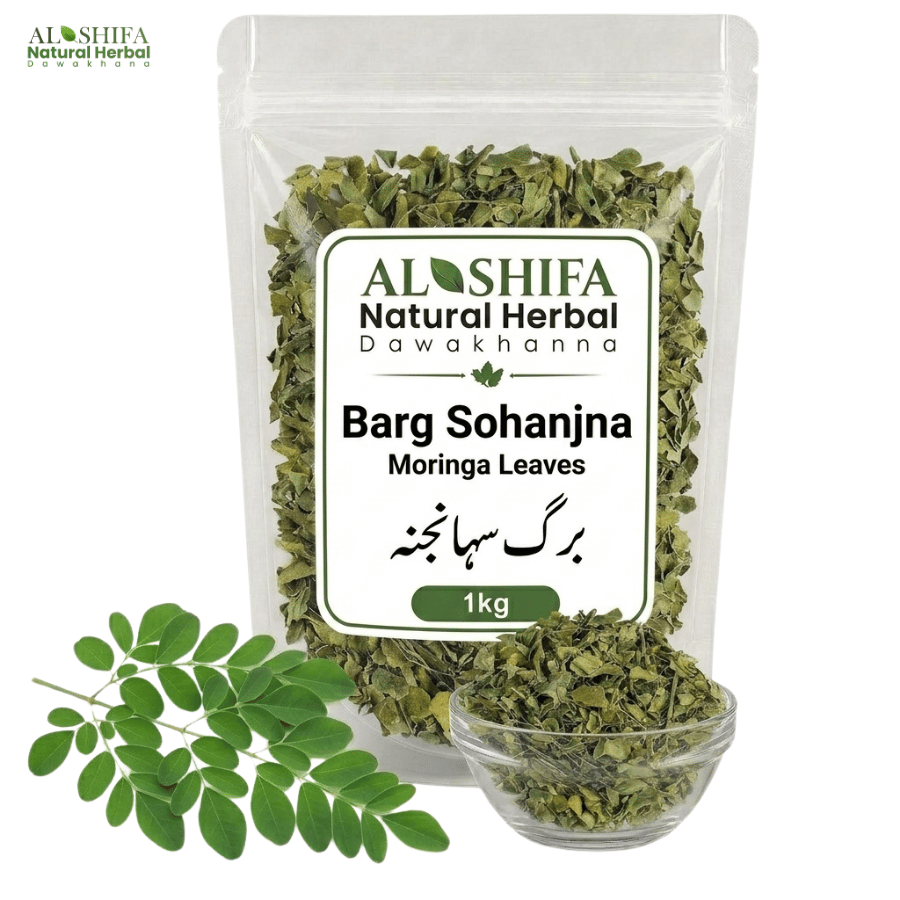
Barg Sohanjna, commonly known as Moringa Leaves, is the dried leaf material of Moringa oleifera Lam. and is known in Urdu as Barg Sohanjna. Naturally containing plant protein, fibre, carotenoids, minerals, polyphenols and other plant nutrients, Moringa leaves have traditionally been used in nourishing, strengthening, restorative, digestive and general wellness preparations.
Al Shifa Barg Sohanjna is carefully selected with attention to its natural green leaf characteristics, cleanliness, proper dryness and responsible storage.
Key Features:
Important Note: Moringa leaves are different from Moringa seeds, pods, roots, bark, seed oil and concentrated extracts. They can support a nutritious diet but should not be considered a replacement for treatment of anaemia, diabetes or other medical conditions.
Barg Sohanjna, commonly known as Moringa Leaves or Drumstick Tree Leaves, is the dried leaf material obtained from Moringa oleifera Lam., a well-known nutritious and traditionally used plant belonging to the Moringaceae family. In Urdu herbal trade, the leaves are known as برگ سہانجنہ, while the plant itself is commonly called Sohanjna, Suhanjna or Moringa.
Moringa is a fast-growing tree widely cultivated across South Asia and other tropical and subtropical regions. Its leaves, pods, seeds and other parts have been used as food and in traditional health preparations for generations.
The leaves are particularly valued because they naturally contain plant protein, fibre, minerals, carotenoids, polyphenols and other plant nutrients. Fresh Moringa leaves are commonly cooked as food in several cultures, while dried leaves and leaf powder are used in nutritional and herbal preparations.
In traditional practice, Barg Sohanjna has been associated with general nourishment, physical strength, recovery, digestive wellness, general vitality and selected metabolic wellness preparations.
It is important to distinguish the leaves from other parts of the tree. Moringa leaves, seeds, pods, roots, bark, seed oil and concentrated extracts are different materials and should not automatically be given the same uses or safety information.
At Al Shifa Natural Herbal Dawakhana, Barg Sohanjna is selected with attention to its natural leaf characteristics, cleanliness, proper drying, colour, freshness and responsible storage.
The word Barg means leaf.
Therefore, Barg Sohanjna specifically refers to the leaves of the Moringa tree.
Moringa oleifera is a small to medium-sized tree known for its:
The leaves are collected, cleaned and carefully dried before being supplied as herbal raw material.
They may be available as:
Product Name: Barg Sohanjna
English Name: Moringa Leaves / Drumstick Tree Leaves
Urdu Name: برگ سہانجنہ
Roman Name: Barg Sohanjna / Barg Suhanjna / Sohanjna Leaves
Scientific Name: Moringa oleifera Lam.
Plant Family: Moringaceae
Plant Part: Leaves
Common Form: Whole Dried Leaves / Crushed Leaves / Leaf Powder
Product Type: Traditional Nutritional & Herbal Leaf Material
Sohanjna, Moringa and Drumstick Tree are common names associated with Moringa oleifera.
Regional spellings may include:
The name Drumstick Tree comes from the plant’s long pods rather than its leaves.
Barg Sohanjna specifically refers to the leaf material.
Moringa has compound leaves made up of numerous small leaflets.
Fresh leaves are normally green. After careful drying, they may become:
Dried Moringa leaves generally have:
Some colour variation is normal, but excessively brown, blackened or damp material may indicate poor drying or storage.
Good-quality dried Moringa leaves should generally have:
Good drying and storage are particularly important because leafy herbs can quickly lose quality when exposed to moisture.
This distinction is important.
Moringa Leaves:
Used as a nutritious leafy food and traditional herbal material.
Moringa Seeds:
Come from mature pods and have a different composition and traditional use.
The nutritional profile and natural compounds present in the leaves and seeds are not identical.
Therefore:
Moringa Leaves ≠ Moringa Seeds
Information about Moringa seeds should not automatically be applied to Barg Sohanjna.
Young Moringa pods are commonly eaten as vegetables and are often called drumsticks.
The leaves and pods come from the same plant but are different food materials.
They differ in:
Barg Sohanjna refers specifically to the leaves, not the pods.
The root and bark of Moringa are chemically different from the leaves.
Safety information for one plant part should not automatically be applied to another.
This distinction is particularly important because the long history of food use associated with Moringa leaves does not mean that every part of the Moringa tree should be consumed in the same way.
Moringa Oil, also called Ben Oil, is obtained mainly from the seeds.
It is different from dried Moringa leaves.
Moringa oil is commonly associated with:
Barg Sohanjna is dried leaf material and should not be confused with seed oil.
Moringa leaves have a long history as both food and traditional herbal material.
They have traditionally been used in connection with:
These uses should be understood in the context of food and traditional herbal practice rather than as claims that Moringa leaves cure disease.
Moringa leaves are best known for their nutritional value.
They naturally provide a mixture of:
The exact nutrient content varies according to:
Dried leaf powder is more concentrated by weight than fresh leaves because much of the water has been removed.
Moringa leaves contain plant protein and can contribute to the overall nutritional value of a diet.
However, Moringa should not be presented as a complete replacement for a balanced protein intake.
A healthy diet may obtain protein from several sources, including:
Moringa can complement a balanced diet rather than replace it.
Moringa leaves naturally contain iron and are often promoted as an iron-rich plant food.
However, the presence of iron in a food does not mean that it can independently treat iron-deficiency anaemia.
The amount absorbed from plant foods can be affected by several dietary factors.
People with confirmed anaemia may require:
Moringa leaves can be part of a nutritious diet but should not replace appropriate treatment for diagnosed anaemia.
Moringa leaves naturally contain calcium and other minerals.
However, ordinary Moringa leaf powder should not automatically be treated as a standardized calcium supplement.
The actual mineral content can vary, and absorption depends on the overall diet and individual health.
Moringa leaves contain carotenoids, including beta-carotene-related compounds.
The body can convert certain carotenoids into vitamin A according to its needs.
This is different from saying that dried Moringa leaves contain unlimited ready-made vitamin A.
Moringa can contribute to dietary carotenoid intake as part of a varied diet.
Fresh Moringa leaves contain considerably more water.
When leaves are dried:
Therefore, the nutritional values of fresh leaves and dried powder should not be compared gram-for-gram without considering moisture.
Barg Sohanjna has traditionally been used in nourishing and strengthening preparations.
Its nutritional composition helps explain why it has been valued in diets intended to support:
Traditional strengthening use does not establish that Moringa directly increases testosterone, builds muscle or provides instant energy.
Moringa leaves may be included in diets or herbal preparations for people experiencing general weakness.
However, persistent weakness can result from conditions such as:
Persistent or unexplained weakness should receive appropriate medical assessment.
Barg Sohanjna has also been included in selected traditional preparations associated with digestive wellness.
Its natural fibre content may contribute to normal dietary fibre intake.
However, Moringa leaves should not be presented as a treatment for chronic digestive diseases.
Persistent abdominal pain, blood in stool, unexplained weight loss or long-lasting bowel changes require medical assessment.
Moringa leaves have attracted research interest for possible effects on blood glucose and metabolic health.
Studies have examined leaf powders, extracts and naturally occurring compounds.
However:
Moringa Leaves are not a replacement for diabetes medicine.
Research involving concentrated extracts should not automatically be applied to ordinary dried leaves.
People with diabetes who regularly use substantial amounts of Moringa alongside glucose-lowering medicines should continue appropriate blood glucose monitoring.
Moringa has also been studied in relation to lipid metabolism and cardiovascular wellness.
Research may examine:
These areas remain different from claiming that ordinary Moringa leaves treat cardiovascular disease or replace prescribed cholesterol medicine.
Moringa leaves naturally contain plant compounds with antioxidant activity.
These include various:
“Antioxidant” describes a chemical property and should not be interpreted as proof that a food or herb prevents or cures cancer, heart disease or another medical condition.
Moringa leaves naturally contain a complex mixture of nutrients and plant compounds, including:
The exact composition varies according to the plant source and processing.
Barg Sohanjna may be available in different forms.
Whole Dried Leaves:
Retain recognizable leaf characteristics and are easier to inspect.
Crushed Leaves:
Smaller pieces suitable for herbal and food preparations.
Leaf Powder:
Finely ground dried leaves with concentrated nutrients by weight.
Extract:
A processed preparation designed to concentrate selected soluble compounds.
These forms should not automatically be considered equivalent.
This distinction is particularly important.
Moringa leaf powder is essentially dried leaves that have been ground.
A concentrated extract is processed differently and may contain a higher concentration of selected compounds.
Therefore, research using a standardized Moringa extract cannot automatically be applied to ordinary leaf powder.
Whole dried leaves retain more visible identification characteristics.
They allow examination of:
Once the leaves are finely powdered, visual identification becomes much more difficult.
Reliable sourcing is therefore particularly important for Moringa powder.
Moringa leaves have an established history as food in several cultures.
However, there is a difference between:
A plant being edible does not mean every concentrated preparation should be used without consideration.
Normal food use of Moringa leaves is different from concentrated medicinal use.
Pregnant women should avoid assuming that information about the edible leaves applies to Moringa root, bark or highly concentrated extracts.
For regular medicinal quantities or concentrated supplements during pregnancy or breastfeeding, appropriate professional guidance is recommended.
Moringa leaves can be used as food in cultures where they are traditionally eaten.
For children, the preparation should be:
Moringa should not be relied upon as the sole treatment for malnutrition, anaemia, poor growth or another medical condition.
Children with poor growth or nutritional concerns require appropriate assessment.
People taking insulin or other glucose-lowering medicines should be aware that Moringa leaves and extracts have been investigated for effects on blood glucose.
Regular medicinal or concentrated use may therefore require closer monitoring.
Do not stop or reduce prescribed diabetes medicine without medical advice.
Moringa has also been investigated for possible effects on cardiovascular and metabolic pathways.
People taking regular medicines for:
should discuss substantial medicinal or concentrated supplement use with an appropriate healthcare professional.
At Al Shifa Natural Herbal Dawakhana, Barg Sohanjna is selected with attention to:
Botanical Identity – Leaves consistent with Moringa oleifera characteristics.
Natural Leaf Appearance – Attention to recognizable leaf structure and natural green colour.
Proper Dryness – Carefully dried to support quality and responsible storage.
Cleanliness – Selected to minimize dust, thick stems and unnecessary foreign material.
Material Condition – Checked for moisture, mould, insects and deterioration.
Whole Leaf Quality – Whole or coarsely cut leaves retain more visible identification characteristics.
Careful Handling – Suitable handling and packaging to help maintain freshness and quality.
Al Shifa Natural Herbal Dawakhana, established in 1999, supplies traditional herbs, leaves, roots, seeds and natural raw materials throughout Pakistan.
Our focus for Barg Sohanjna includes:
Barg Sohanjna has traditionally been used in nutritional, strengthening, restorative, digestive and general wellness preparations.
Depending on the intended preparation, dried Moringa leaves may be:
The appropriate amount and preparation depend on the product form, diet and individual circumstances.
People using concentrated preparations for medicinal purposes should seek appropriate professional guidance.
Barg Sohanjna refers specifically to the leaves of Moringa oleifera Lam.
Important distinctions include:
Store Barg Sohanjna in a cool, dry and clean place in a tightly closed container.
For responsible storage:
Dried leaves should remain properly dry.
Do not use material showing visible mould, excessive moisture, severe discolouration, significant insect contamination or an unpleasant stale smell.
Barg Sohanjna, commonly known as Moringa Leaves, is the dried leaf material of Moringa oleifera Lam. and is known in Urdu as برگ سہانجنہ.
Moringa leaves are valued as a naturally nutritious plant material containing plant protein, fibre, carotenoids, minerals, polyphenols and other beneficial plant compounds. They have traditionally been used in nourishing, strengthening, restorative, digestive and general wellness preparations.
Barg Sohanjna should be distinguished from Moringa seeds, pods, roots, bark, seed oil and concentrated extracts, as these are different materials with different compositions and uses.
Customers searching for Barg Sohanjna, Barg Suhanjna, Sohanjna Leaves, Suhanjna Leaves, Moringa Leaves, Moringa Leaf, Moringa Oleifera Leaves, Moringa Oleifera Leaf, Drumstick Tree Leaves, dried Moringa Leaves, whole Moringa Leaves, Moringa Leaf Powder, pure Moringa Leaves, original Moringa Leaves, natural Moringa Leaves, Barg Sohanjna benefits, Barg Sohanjna uses, Moringa Leaves benefits, Moringa Leaves uses, Moringa Leaf nutrition, Moringa traditional uses, Moringa Leaves for general weakness, Moringa Leaves strengthening, Moringa Leaves nutritional support, Barg Sohanjna Unani, Moringa Leaves Pakistan, Barg Sohanjna Pakistan, pure Moringa Leaves Pakistan, original Barg Sohanjna Pakistan, Barg Sohanjna Lahore, Moringa Leaves price in Pakistan, Barg Sohanjna price in Pakistan, Moringa Leaf Powder price in Pakistan, buy Moringa Leaves Pakistan, buy Barg Sohanjna Pakistan, Barg Sohanjna online Pakistan or Moringa Leaves online Pakistan can choose Al Shifa Natural Herbal Dawakhana for carefully selected dried Moringa leaf material.
Since 1999, Al Shifa Natural Herbal Dawakhana has focused on supplying traditional herbs and natural raw materials with attention to identity, cleanliness, proper drying, careful handling, responsible storage and clear product information.
Product Name: Barg Sohanjna
English Name: Moringa Leaves / Drumstick Tree Leaves
Urdu Name: برگ سہانجنہ
Roman Name: Barg Sohanjna / Barg Suhanjna / Sohanjna Leaves
Scientific Name: Moringa oleifera Lam.
Plant Family: Moringaceae
Plant Part: Leaves
Common Form: Whole Dried Leaves / Crushed Leaves / Leaf Powder
Product Type: Traditional Nutritional & Herbal Leaf Material
Traditional Use: Nourishing, strengthening, restorative, digestive and general wellness preparations
Important Note: Barg Sohanjna refers specifically to Moringa oleifera leaves. Leaves, seeds, pods, roots, bark, seed oil and concentrated extracts are different materials and should not automatically be considered equivalent.
برگ سہانجنہ سہانجنہ کے درخت کے سبز پتے ہیں، جنہیں غذا اور حکیمی ادویات دونوں میں استعمال کیا جاتا ہے۔ سہانجنہ پاکستان میں بھی پایا جانے والا معروف درخت ہے۔ اس کے چھوٹے سبز پتے غذائی اجزاء سے بھرپور ہوتے ہیں اور تازہ، خشک یا سفوف کی شکل میں استعمال کیے جاتے ہیں۔
طبِ یونانی اور دیسی طبی ادویات میں برگ سہانجنہ کو خاص طور پر جسمانی کمزوری، غذائی کمی، خون کی کمی کی بیماری، ہاضمے کے امراض، قبض کی بیماری، جوڑوں کے امراض اور ذیابیطس کی بیماری کے لیے استعمال ہونے والی ادویات میں شامل کیا جاتا ہے۔
سہانجنہ کے پتے غذا کے طور پر بھی استعمال کیے جاتے ہیں، اس لیے ان کی اہمیت صرف حکیمی نسخوں تک محدود نہیں۔ ان میں نباتاتی پروٹین، ریشہ، وٹامن اور معدنی اجزاء پائے جاتے ہیں۔
الشفاء نیچرل ہربل دواخانہ میں برگ سہانجنہ منتخب کرتے وقت اس کی قدرتی سبز رنگت، پتوں کی اصل ساخت، صفائی، مناسب خشک حالت اور تازگی کو اہمیت دی جاتی ہے۔
برگ سہانجنہ سے مراد سہانجنہ کے درخت کے پتے ہیں۔
سہانجنہ تیزی سے بڑھنے والا درخت ہے۔ اس کی شاخوں پر چھوٹے چھوٹے سبز پتے ایک ترتیب سے لگے ہوتے ہیں۔
حکیمی اور غذائی استعمال کے لیے پتوں کو صاف کر کے مناسب طریقے سے خشک کیا جاتا ہے۔ خشک پتوں کو مکمل حالت میں رکھا جا سکتا ہے یا پیس کر سفوف بنایا جا سکتا ہے۔
برگ سہانجنہ کی عام پہچان یہ ہے:
نام: برگ سہانجنہ
دوسرے معروف نام: سہانجنہ کے پتے، سوہانجنا کے پتے
نباتاتی نام: مورنگا اولیفیرا
خاندان: مورنگیسی خاندان
استعمال ہونے والا حصہ: پتے
قسم: نباتاتی مفرد دوا اور غذائی پتے
عام شکل: مکمل خشک پتے یا سفوف
عام رنگت: سبز سے سبزی مائل
ذائقہ: ہلکا کڑوا اور سبزی جیسا
بو: ہلکی نباتاتی بو
پاکستان میں رائج حکیمی اور مفردات کی کتابوں میں سہانجنہ کو گرم و خشک مزاج رکھنے والی نباتاتی دوا کے طور پر بیان کیا جاتا ہے۔
برگ سہانجنہ کو جسمانی طاقت، ہاضمے اور جوڑوں کے لیے استعمال ہونے والی حکیمی ادویات میں شامل کیا جاتا ہے۔
مزاج کے ساتھ مقدار، عمر، جسمانی حالت اور بیماری کو بھی دیکھنا ضروری ہے۔
اچھا برگ سہانجنہ پہچاننے کے لیے درج ذیل باتیں دیکھی جاتی ہیں:
بہت زیادہ بھورے، سیاہ، نم یا خراب بو والے پتے کم معیار کی علامت ہو سکتے ہیں۔
برگ سہانجنہ کو حکیمی ادویات میں کئی مقاصد کے لیے شامل کیا جاتا ہے۔
اہم استعمال یہ ہیں:
مقوی جسم: جسمانی کمزوری کے لیے استعمال ہونے والی حکیمی ادویات میں شامل کیا جاتا ہے۔
غذائیت کے لیے: غذائی کمی میں خوراک کے ساتھ استعمال کیا جاتا ہے۔
ہاضم: ہاضمے کے امراض کے لیے استعمال ہونے والی حکیمی ادویات میں شامل کیا جاتا ہے۔
جوڑوں کے لیے استعمال: جوڑوں کے امراض اور جسمانی اکڑاؤ کے حکیمی نسخوں میں شامل کیا جاتا ہے۔
غذائی ریشہ: آنتوں کی حرکت بہتر رکھنے اور قبض کی بیماری میں خوراک کا حصہ بنایا جا سکتا ہے۔
برگ سہانجنہ کی خاص بات اس کی غذائی ساخت ہے۔
اس کے پتوں میں قدرتی طور پر:
پائے جاتے ہیں۔
خشک کرنے کے بعد پانی کی مقدار کم ہونے کی وجہ سے کئی غذائی اجزاء نسبتاً زیادہ مرتکز ہو جاتے ہیں، جبکہ گرمی اور خشک کرنے کے طریقے سے حساس وٹامن کی مقدار کم ہو سکتی ہے۔
برگ سہانجنہ کو جسمانی طاقت اور غذائیت کے لیے خوراک اور حکیمی ادویات میں شامل کیا جاتا ہے۔
خاص طور پر مناسب غذا نہ لینے والے افراد میں غذائیت بہتر بنانے کے لیے اسے خوراک کا حصہ بنایا جا سکتا ہے۔
اگر جسمانی کمزوری مسلسل موجود ہو، وزن تیزی سے کم ہو، بھوک ختم ہو یا معمول کے کام کرنا مشکل ہو جائیں تو معالج سے چیک کروائیں۔
برگ سہانجنہ میں کئی غذائی اجزاء موجود ہوتے ہیں، اس لیے اسے غذائی کمی پوری کرنے والی متوازن خوراک میں شامل کیا جا سکتا ہے۔
صرف ایک نباتاتی چیز پر مکمل غذائیت کے لیے انحصار مناسب نہیں۔ روزمرہ خوراک میں پروٹین، سبزیاں، پھل، اناج اور مناسب چکنائی کا توازن ضروری ہے۔
برگ سہانجنہ کے پتوں میں آئرن پایا جاتا ہے، اس لیے اسے خون کی کمی کی بیماری میں غذائی مدد کے طور پر خوراک میں شامل کیا جا سکتا ہے۔
خون کی کمی کی بیماری صرف آئرن کی کمی سے نہیں ہوتی۔ فولیٹ، وٹامن بی بارہ کی کمی، خون بہنے یا جسم کے اندر موجود مسائل کی وجہ سے بھی خون کی کمی ہو سکتی ہے۔
اگر بہت زیادہ تھکن، چکر، سانس پھولنا یا چہرے پر زردی ہو تو معالج سے چیک کروائیں۔
برگ سہانجنہ میں غذائی ریشہ موجود ہوتا ہے، اس لیے اسے ہاضمے کے امراض میں مناسب خوراک کا حصہ بنایا جا سکتا ہے۔
غذائی ریشہ آنتوں کی حرکت کو برقرار رکھنے میں مدد دیتا ہے۔
اگر پیٹ میں مسلسل درد، پاخانے میں خون یا وزن میں غیر معمولی کمی ہو تو معالج سے چیک کروائیں۔
برگ سہانجنہ میں موجود غذائی ریشہ قبض کی بیماری میں خوراک کے ساتھ فائدہ مند ہو سکتا ہے۔
قبض کی بیماری میں مناسب پانی پینا اور روزمرہ خوراک میں ریشہ شامل کرنا اہم ہے۔
اگر قبض کی بیماری کئی دن تک برقرار رہے، پیٹ میں شدید درد ہو یا پاخانے میں خون آئے تو معالج سے چیک کروائیں۔
برگ سہانجنہ کا استعمال ذیابیطس کی بیماری میں بھی کیا جاتا ہے۔ اس کے پتوں میں موجود نباتاتی مرکبات پر خون میں شکر کے حوالے سے تحقیق کی گئی ہے۔
ذیابیطس کی بیماری والے افراد اسے اپنی مقررہ ادویات کا متبادل نہ بنائیں۔
اگر خون میں شکر کم کرنے والی ادویات یا انسولین استعمال ہو رہی ہو تو برگ سہانجنہ کی بڑی طبی مقدار خود سے شروع نہ کریں اور خون میں شکر باقاعدگی سے چیک کروائیں۔
سہانجنہ کے پتوں میں پوٹاشیم سمیت کئی معدنی اجزاء پائے جاتے ہیں۔
بلڈ پریشر کی بیماری والے افراد برگ سہانجنہ کو خوراک میں شامل کر سکتے ہیں، لیکن طبی مقدار میں مسلسل استعمال سے پہلے معالج سے رہنمائی حاصل کریں۔
بلڈ پریشر کی بیماری کی ادویات خود سے بند یا کم نہ کریں۔
برگ سہانجنہ میں نباتاتی اینٹی آکسیڈنٹ اجزاء اور غذائی ریشہ موجود ہوتے ہیں۔
اسے متوازن خوراک کے حصے کے طور پر استعمال کیا جا سکتا ہے۔
دل کے امراض والے افراد اگر مستقل ادویات استعمال کر رہے ہوں تو بڑی طبی مقدار شروع کرنے سے پہلے معالج سے رہنمائی حاصل کریں۔
حکیمی ادویات میں برگ سہانجنہ کو جوڑوں کے امراض اور جسمانی اکڑاؤ کے لیے استعمال ہونے والے نسخوں میں شامل کیا جاتا ہے۔
اگر جوڑ میں شدید سوجن، سرخی، بہت زیادہ درد یا حرکت میں مسلسل مشکل ہو تو معالج سے چیک کروائیں۔
برگ سہانجنہ میں کیلشیم، میگنیشیم اور کئی غذائی اجزاء پائے جاتے ہیں۔
یہ اجزاء متوازن غذا کے ساتھ ہڈیوں کی صحت کے لیے اہم ہیں۔
اگر ہڈیوں میں مسلسل درد، بار بار ہڈی ٹوٹنے یا ہڈیوں کی کمزوری کی بیماری موجود ہو تو معالج سے چیک کروائیں۔
برگ سہانجنہ میں وٹامن، معدنی اجزاء اور نباتاتی اینٹی آکسیڈنٹ اجزاء پائے جاتے ہیں۔
متوازن خوراک کے حصے کے طور پر یہ جسم کو غذائیت فراہم کرتا ہے اور جسم کے قدرتی دفاعی نظام کو مناسب غذائی مدد فراہم کر سکتا ہے۔
غذائی کمی جلد کی صحت کو متاثر کر سکتی ہے۔
برگ سہانجنہ میں موجود وٹامن اور معدنی اجزاء جلد کی عمومی غذائیت کے لیے مفید خوراک کا حصہ بن سکتے ہیں۔
اگر جلد کے امراض میں شدید خارش، زخم، پیپ، سوجن یا تیزی سے پھیلتی ہوئی سرخی ہو تو معالج سے چیک کروائیں۔
پروٹین، آئرن اور غذائی اجزاء کی کمی بالوں کی صحت کو متاثر کر سکتی ہے۔
برگ سہانجنہ کو غذائیت کے لیے خوراک میں شامل کیا جا سکتا ہے۔
اگر بال بہت تیزی سے جھڑ رہے ہوں تو صرف نباتاتی سفوف استعمال کرنے کے بجائے معالج سے چیک کروائیں۔
برگ سہانجنہ میں کئی قدرتی نباتاتی اجزاء پائے جاتے ہیں، جن میں شامل ہیں:
یہ اجزاء برگ سہانجنہ کو غذائی لحاظ سے اہم بناتے ہیں۔
تازہ پتے:
تازہ سہانجنہ کے پتے سبزی اور خوراک میں استعمال کیے جا سکتے ہیں۔
خشک پتے:
خشک پتے لمبے عرصے تک محفوظ رکھنا آسان ہوتے ہیں اور انہیں حکیمی ادویات میں استعمال کیا جا سکتا ہے۔
خشک کرتے وقت بہت زیادہ گرمی پتوں کی رنگت اور حساس غذائی اجزاء کو متاثر کر سکتی ہے۔
مکمل خشک پتے:
مکمل پتوں میں رنگت، صفائی اور اصل ساخت دیکھنا آسان ہوتا ہے۔
برگ سہانجنہ کا سفوف:
سفوف کو خوراک میں شامل کرنا آسان ہوتا ہے، لیکن پسی ہوئی شکل میں اصل پتوں کی شناخت مشکل ہو جاتی ہے۔
درست شناخت والے خشک پتے لے کر ضرورت کے مطابق تازہ پیسنا بہتر ہے۔
سہانجنہ کے پتے اور پھلی دونوں ایک ہی درخت سے حاصل ہوتے ہیں، لیکن دونوں کی ساخت اور غذائی استعمال الگ ہیں۔
برگ سہانجنہ چھوٹے سبز پتے ہیں۔
سہانجنہ کی پھلی لمبی پھلی ہوتی ہے جسے سبزی کے طور پر بھی استعمال کیا جاتا ہے۔
حکیمی یا غذائی مقصد کے مطابق صحیح حصہ منتخب کرنا ضروری ہے۔
سہانجنہ کی جڑ اور پتے ایک ہی پودے کے حصے ہیں، لیکن دونوں کو ایک جیسا استعمال نہیں کرنا چاہیے۔
پتے غذا کے طور پر بھی استعمال ہوتے ہیں، جبکہ جڑ کی طبی مقدار اور حفاظتی احتیاط الگ ہوتی ہے۔
روزمرہ غذائی استعمال کے لیے پتے زیادہ معروف ہیں۔
برگ سہانجنہ کا سفوف مناسب مقدار میں:
میں شامل کیا جا سکتا ہے۔
بہت زیادہ مقدار ایک ساتھ شامل کرنے سے ذائقہ کڑوا ہو سکتا ہے اور معدے میں بے آرامی پیدا ہو سکتی ہے۔
برگ سہانجنہ کا سفوف غذائیت کے لیے دودھ کے ساتھ بھی استعمال کیا جا سکتا ہے۔
اگر دودھ سے اسہال کی بیماری، گیس یا معدے اور آنتوں کے امراض بڑھتے ہوں تو دودھ کے ساتھ استعمال مناسب نہیں ہو سکتا۔
ذیابیطس کی بیماری والے افراد میٹھا دودھ استعمال کرتے وقت خون میں شکر کا خیال رکھیں۔
برگ سہانجنہ غذائی ریشہ اور نباتاتی پروٹین فراہم کرتا ہے، اس لیے اسے متوازن خوراک میں شامل کیا جا سکتا ہے۔
وزن کم کرنے کے لیے صرف برگ سہانجنہ پر انحصار نہ کریں۔ خوراک کی مجموعی مقدار، جسمانی سرگرمی، نیند اور روزمرہ عادات اہم ہیں۔
اگر وزن بغیر کوشش کے تیزی سے کم ہو رہا ہو تو معالج سے چیک کروائیں۔
برگ سہانجنہ خواتین کے لیے بھی غذائی پتے ہیں۔
اس میں آئرن، کیلشیم اور کئی غذائی اجزاء موجود ہوتے ہیں۔
اگر خواتین میں خون کی کمی کی بیماری، ماہواری کے امراض یا مسلسل جسمانی کمزوری موجود ہو تو معالج سے چیک کروائیں۔
حمل کے دوران سہانجنہ کے عام غذائی پتوں اور مرتکز طبی مقدار میں فرق رکھنا ضروری ہے۔
حاملہ خواتین برگ سہانجنہ کی بڑی طبی مقدار یا بہت زیادہ سفوف خود سے استعمال نہ کریں۔
حمل میں کسی حکیمی دوا یا زیادہ مقدار میں نباتاتی سفوف شروع کرنے سے پہلے مستند معالج سے رہنمائی حاصل کریں۔
دودھ پلانے والی خواتین برگ سہانجنہ کو عام غذا کے حصے کے طور پر استعمال کر سکتی ہیں۔
بڑی طبی مقدار یا مرتکز سفوف روزانہ شروع کرنے سے پہلے مستند معالج سے رہنمائی حاصل کریں۔
اگر ماں یا بچے میں پیٹ کی خرابی یا حساسیت پیدا ہو تو استعمال روک کر معالج سے چیک کروائیں۔
سہانجنہ کے پتے مناسب غذا کے حصے کے طور پر استعمال کیے جا سکتے ہیں۔
بچوں کو مرتکز سفوف کی بڑی مقدار خود سے نہ دیں۔
اگر بچے میں خون کی کمی کی بیماری، جسمانی کمزوری، وزن میں کمی یا ہاضمے کے امراض مسلسل موجود ہوں تو معالج سے چیک کروائیں۔
برگ سہانجنہ خون میں شکر پر اثر ڈال سکتا ہے۔
اگر ذیابیطس کی بیماری کی ادویات یا انسولین استعمال ہو رہی ہو تو بڑی طبی مقدار کے ساتھ خون میں شکر کم ہونے کا امکان مدنظر رکھیں۔
کمزوری، کپکپی، پسینہ یا چکر محسوس ہوں تو خون میں شکر چیک کریں اور معالج سے چیک کروائیں۔
بلڈ پریشر کی بیماری کی ادویات استعمال کرنے والے افراد برگ سہانجنہ کی بڑی طبی مقدار خود سے شروع نہ کریں۔
بلڈ پریشر باقاعدگی سے چیک کریں اور مقررہ ادویات خود سے بند نہ کریں۔
جگر کی بیماری والے افراد برگ سہانجنہ کے مرتکز سفوف یا بڑی طبی مقدار خود سے استعمال نہ کریں۔
اگر جگر کی بیماری کی ادویات استعمال ہو رہی ہوں تو مستند معالج سے رہنمائی حاصل کریں۔
برگ سہانجنہ میں پوٹاشیم اور معدنی اجزاء موجود ہوتے ہیں۔
گردوں کی بیماری والے افراد بڑی مقدار میں برگ سہانجنہ یا اس کا سفوف خود سے استعمال نہ کریں۔
اگر گردوں کی بیماری میں پوٹاشیم محدود رکھنے کی ہدایت دی گئی ہو تو خاص احتیاط کریں۔
اگر کوئی شخص ذیابیطس کی بیماری، بلڈ پریشر کی بیماری، دل کے امراض، جگر کی بیماری یا گردوں کی بیماری کی مستقل ادویات استعمال کر رہا ہو تو برگ سہانجنہ کی بڑی طبی مقدار شروع کرنے سے پہلے مستند معالج سے رہنمائی حاصل کرے۔
اپنی مقررہ ادویات خود سے بند یا کم نہ کریں۔
برگ سہانجنہ سے حساسیت کم دیکھی جاتی ہے، لیکن کسی بھی نباتاتی چیز سے حساسیت پیدا ہو سکتی ہے۔
اگر استعمال کے بعد:
پیدا ہو تو استعمال بند کریں اور معالج سے چیک کروائیں۔
برگ سہانجنہ کا بہت زیادہ سفوف ایک ساتھ استعمال کرنے سے:
پیدا ہو سکتی ہے۔
کم مقدار سے آغاز کرنا اور جسم کی برداشت دیکھنا بہتر ہے۔
اگر علامات شدید ہوں یا مسلسل موجود رہیں تو معالج سے چیک کروائیں۔
برگ سہانجنہ کے مصلح اور بدل کا انتخاب استعمال کے مقصد کے مطابق کیا جاتا ہے۔
غذائیت کے لیے اس کا بدل روزمرہ متوازن خوراک، سبز پتوں والی سبزیاں اور مناسب پروٹین والی غذائیں ہو سکتی ہیں۔
حکیمی استعمال کے لیے مناسب مصلح یا بدل مستند حکیم سے معلوم کریں۔
برگ سہانجنہ کو غذا اور حکیمی دوا دونوں انداز میں استعمال کیا جاتا ہے۔
اسے:
استعمال کیا جا سکتا ہے۔
طبی مقدار عمر، جسمانی حالت، بیماری اور استعمال کے مقصد کے مطابق مقرر کی جاتی ہے۔
خاص طور پر ذیابیطس کی بیماری، بلڈ پریشر کی بیماری، دل کے امراض، جگر کی بیماری اور گردوں کی بیماری میں بڑی طبی مقدار خود سے مقرر نہ کریں۔
برگ سہانجنہ غذائیت سے بھرپور نباتاتی پتے ہیں اور عام خوراک کا حصہ بھی بن سکتے ہیں، لیکن خوراک میں استعمال اور بڑی طبی مقدار ایک جیسی چیز نہیں۔
اگر خون کی کمی کی بیماری، ذیابیطس کی بیماری، بلڈ پریشر کی بیماری، جوڑوں کے امراض، جگر کی بیماری یا گردوں کی بیماری موجود ہو تو مقررہ ادویات جاری رکھیں اور بڑی طبی مقدار شروع کرنے سے پہلے مستند معالج سے رہنمائی حاصل کریں۔
الشفاء نیچرل ہربل دواخانہ میں برگ سہانجنہ منتخب کرتے وقت درج ذیل باتوں کا خیال رکھا جاتا ہے:
قدرتی رنگت: مناسب سبز یا سبزی مائل پتوں کو اہمیت دی جاتی ہے۔
اصل پتوں کی ساخت: سہانجنہ کے اصل چھوٹے پتوں کی شناخت دیکھی جاتی ہے۔
مناسب خشک حالت: پتوں میں غیر ضروری نمی نہیں ہونی چاہیے۔
صاف ستھری حالت: مٹی، گرد اور غیر ضروری چیزوں سے پاک حالت کو اہمیت دی جاتی ہے۔
خوشبو اور تازگی: باسی یا خراب بو والے پتے استعمال کے لیے مناسب نہیں سمجھے جاتے۔
پھپھوندی اور کیڑوں سے حفاظت: پھپھوندی والے یا کیڑے لگے پتے منتخب نہیں کیے جاتے۔
الشفاء نیچرل ہربل دواخانہ سنہ ۱۹۹۹ سے قدرتی جڑی بوٹیوں اور حکیمی مفردات کی سپلائی کر رہا ہے۔
ہم برگ سہانجنہ کی قدرتی سبز رنگت، اصل پتوں کی ساخت، صفائی اور مناسب خشک حالت کو اہمیت دیتے ہیں۔
خشک پتوں میں رنگت اور تازگی خاص اہمیت رکھتی ہے، کیونکہ بہت زیادہ نمی، دھوپ یا گرمی ان کے معیار کو متاثر کر سکتی ہے۔
برگ سہانجنہ کو ٹھنڈی، خشک اور صاف جگہ پر اچھی طرح بند جار یا پیکٹ میں رکھیں۔
برگ سہانجنہ کا سفوف مکمل خشک پتوں کے مقابلے میں جلد نمی پکڑ سکتا ہے، اس لیے ڈبہ استعمال کے فوراً بعد اچھی طرح بند کریں۔
اگر پتوں یا سفوف میں پھپھوندی، غیر ضروری نمی، کیڑے یا خراب بو پیدا ہو جائے تو اسے استعمال نہ کریں۔
برگ سہانجنہ پاکستان میں غذا اور حکیمی استعمال دونوں کے لیے معروف نباتاتی پتے ہیں۔ انہیں خاص طور پر جسمانی کمزوری، غذائی کمی، خون کی کمی کی بیماری، ہاضمے کے امراض، قبض کی بیماری، جوڑوں کے امراض اور ذیابیطس کی بیماری میں غذائی مدد اور حکیمی ادویات کے حصے کے طور پر استعمال کیا جاتا ہے۔
اگر آپ برگ سہانجنہ، سہانجنہ کے پتے، سوہانجنا کے پتے، خالص برگ سہانجنہ، برگ سہانجنہ کے فوائد، برگ سہانجنہ کا سفوف، برگ سہانجنہ پاکستان، برگ سہانجنہ لاہور، برگ سہانجنہ کی قیمت، برگ سہانجنہ آن لائن یا برگ سہانجنہ خریدیں تلاش کر رہے ہیں تو الشفاء نیچرل ہربل دواخانہ قدرتی رنگت، صفائی اور مناسب خشک حالت کو اہمیت دیتا ہے۔
نام: برگ سہانجنہ
دوسرے معروف نام: سہانجنہ کے پتے، سوہانجنا کے پتے
نباتاتی نام: مورنگا اولیفیرا
خاندان: مورنگیسی خاندان
استعمال ہونے والا حصہ: پتے
قسم: نباتاتی مفرد دوا اور غذائی پتے
مزاج: گرم و خشک
عام شکل: مکمل خشک پتے یا سفوف
عام رنگت: سبز سے سبزی مائل
ذائقہ: ہلکا کڑوا اور سبزی جیسا
بو: ہلکی نباتاتی بو
اہم غذائی اجزاء: نباتاتی پروٹین، غذائی ریشہ، کیلشیم، آئرن، پوٹاشیم، میگنیشیم، فلیوونائڈز، پولی فینول اجزاء، کیروٹین والے اجزاء اور وٹامن۔
اہم استعمال: جسمانی کمزوری، غذائی کمی، خون کی کمی کی بیماری، ہاضمے کے امراض، قبض کی بیماری، جوڑوں کے امراض اور ذیابیطس کی بیماری میں غذائی مدد اور حکیمی ادویات میں استعمال کیا جاتا ہے۔
اہم احتیاط: ذیابیطس، بلڈ پریشر، دل، جگر یا گردوں کی بیماری والے افراد بڑی طبی مقدار خود سے مقرر نہ کریں۔ حاملہ خواتین اور دودھ پلانے والی خواتین مرتکز سفوف کی بڑی مقدار استعمال کرنے سے پہلے مستند معالج سے رہنمائی حاصل کریں۔