خشک بلیو بیریز
Price range: ₨ 550 through ₨ 11,000
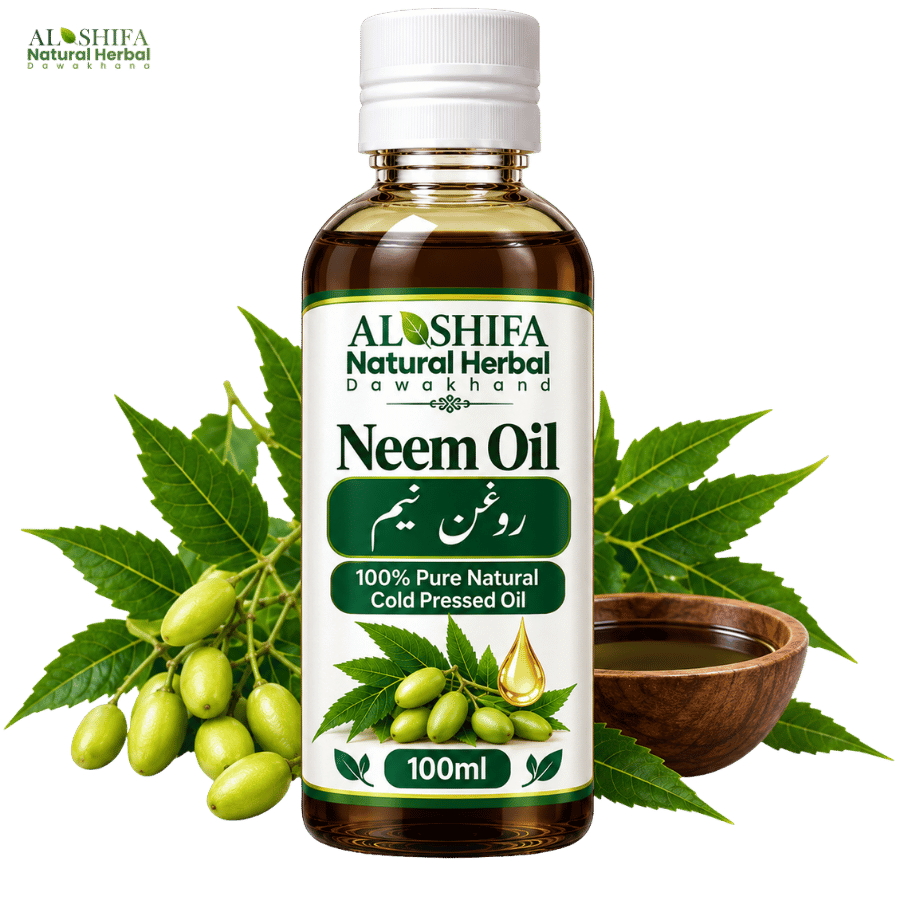
Neem Oil / Neem Seed Oil is a natural fixed botanical oil obtained primarily from the seeds and kernels of Azadirachta indica. Known for its strong characteristic herbal aroma, rich seed-oil profile and distinctive botanical properties, it is widely used in skin care, hair care, scalp care, herbal oils, soaps and specialised cosmetic formulations.
Al Shifa Neem Oil is carefully selected with attention to its correct botanical identity, seed source, characteristic oil quality, clean handling, protective packaging and proper storage.
Key Features:
Usage: Use an appropriate amount in skin, hair or scalp formulations, or blend with compatible carrier oils according to the intended application. Patch test before wider topical use.
Important Note: Neem Oil is a fixed botanical seed oil, not a conventional essential oil, and should not be confused with Babchi/Bakuchi Seed Oil, Neem Leaf Extract or pure Azadirachtin. Products supplied for cosmetic or external use should not be swallowed, and particular caution is required around young children.
Neem Oil / Neem Seed Oil is a distinctive natural botanical oil obtained primarily from the seeds and kernels of the Neem tree, Azadirachta indica A. Juss. Neem is a well-known tree of the Indian subcontinent and has a long history of use in traditional herbal practices, agriculture, skin care, scalp care, hair-care preparations, soaps and specialised botanical formulations.
Neem Oil is easily recognised by its strong characteristic aroma, yellow-brown to dark brown colour and rich oily consistency. Unlike lightly scented cosmetic carrier oils, genuine minimally processed Neem Oil can have a powerful herbal, earthy and somewhat pungent smell.
Neem seeds contain a complex mixture of fatty acids and naturally occurring botanical constituents. One of the best-known Neem compounds is azadirachtin, although its amount in an oil depends strongly on extraction and processing. Neem Oil should therefore not be treated as equivalent to pure azadirachtin or a standardised Neem extract.
At Al Shifa Natural Herbal Dawakhana, Neem Oil is selected with attention to its botanical identity, seed source, characteristic oil quality, clean handling, protective packaging and proper storage.
Neem Oil is a fixed botanical oil obtained primarily from the seeds and kernels of the Neem tree.
Its botanical source is:
Azadirachta indica A. Juss.
The Neem tree belongs to the Meliaceae family.
Neem produces fruits containing seeds from which the characteristic oil can be extracted.
Neem Oil is different from Neem leaf extract, Neem leaf powder, Neem bark and other Neem-derived materials.
Product Name: Neem Oil / Neem Seed Oil – روغن نیم / نیم کا تیل
English Name: Neem Oil / Neem Seed Oil
Urdu Name: روغن نیم / نیم کا تیل / نیم کے بیجوں کا تیل
Roman Name: Roghan Neem / Neem Oil
Scientific Name: Azadirachta indica A. Juss.
Plant Family: Meliaceae
Plant Part: Seeds / Seed Kernels
Oil Type: Fixed Botanical Oil / Seed Oil
Common Production Method: Mechanical Pressing / Cold Pressing of Neem Seeds or Kernels, with Further Processing Depending on Product Grade
Appearance: Yellow-Brown to Brown or Dark Brown Oily Liquid, Depending on Processing and Temperature
Aroma: Strong, Characteristic, Earthy, Herbal & Pungent
Texture: Rich, Oily & Variable in Viscosity
Primary Applications: Skin-Care Formulations, Hair Care, Scalp Care, Soap, Herbal Oils, Agricultural Preparations & Specialised Botanical Formulations
Product Type: Natural Plant-Derived Fixed / Seed Oil
Neem is an evergreen or semi-evergreen tree widely recognised throughout South Asia.
Different parts of the Neem tree have been used traditionally, including:
However, these plant parts have different compositions and should not automatically be considered interchangeable.
Neem Oil is particularly associated with the lipid-rich fraction obtained from the seeds or kernels.
Neem Oil can be produced through different extraction and processing methods.
Mechanical or cold pressing of Neem seeds or kernels is commonly associated with natural Neem Oil.
Production can involve:
The final oil can vary considerably according to the quality of the seeds and the extraction and refining process.
Characteristic Neem Oil may have:
Natural variation can occur between batches.
Colour and smell alone, however, cannot establish purity or exact chemical composition.
Neem Oil may become:
at cooler temperatures.
This physical change does not automatically mean the oil has spoiled.
Gentle warming of the closed container to a suitable temperature can return naturally thickened oil to a more fluid consistency.
Excessive heating should be avoided.
Neem Oil contains a natural mixture of fatty acids commonly associated with seed oils.
Its fatty-acid profile can include:
The proportions vary according to plant source, seed quality, extraction and processing.
One of the best-known natural compounds associated with Neem is azadirachtin.
Azadirachtin has attracted substantial scientific and agricultural interest, particularly because of its activity involving insects.
However:
Neem Oil ≠ Pure Azadirachtin
Neem Oil is a complex botanical oil containing fatty acids and multiple naturally occurring components.
Its azadirachtin content can vary substantially according to:
A strong Neem smell does not establish a specific azadirachtin concentration.
Similarly:
Dark Colour ≠ High Azadirachtin Content
A measured concentration requires appropriate analytical testing.
Neem Oil is incorporated into selected herbal and cosmetic skin-care products.
It may be used in:
Because Neem Oil has a strong aroma and distinctive character, it is often incorporated at an appropriate concentration rather than used as the sole oil in a formulation.
The fatty-oil component of Neem Oil can provide emollient properties.
In suitable formulations, it may contribute to:
However:
Skin Conditioning ≠ Treatment for Skin Disease
Neem Oil should not be presented as a cure for eczema, psoriasis, dermatitis or other diagnosed skin diseases.
Neem Oil may be incorporated into carefully designed facial products.
Because of its:
many users may prefer formulations containing Neem Oil rather than applying large amounts of concentrated Neem Oil directly to the face.
Patch testing is advisable before wider use.
Neem has received considerable attention in traditional and modern skin-care discussions.
However:
Neem Oil ≠ Proven Acne Treatment
Acne is a complex skin condition and may require appropriate medical treatment.
Laboratory findings involving Neem extracts or isolated compounds should not automatically be converted into claims that ordinary Neem Oil cures acne.
Neem Oil is widely incorporated into herbal hair-care preparations.
It may be used in:
Its fixed-oil component contributes lubrication and conditioning to the hair.
Neem Oil has a particularly established role in traditional scalp-care formulations.
It may be blended with oils such as:
Blending can reduce the intensity of Neem’s characteristic aroma and create a more practical scalp-oil formulation.
Neem Oil is frequently marketed for dandruff.
However, dandruff-like flaking can have different causes, including:
Therefore:
Neem Scalp Care ≠ Guaranteed Dandruff Treatment
Persistent or severe scalp problems require appropriate evaluation.
Neem Oil can condition the scalp and hair.
However:
Neem Oil ≠ Proven Hair-Regrowth Treatment
Improving scalp condition or hair lubrication does not establish stimulation of new hair growth.
Hair loss can have genetic, hormonal, nutritional, inflammatory and other causes.
Neem Oil is commonly incorporated into herbal soap formulations.
It can contribute:
However, its percentage in a soap formulation should be selected according to the complete recipe and desired characteristics.
Neem Oil can be incorporated into:
The strong characteristic aroma should be considered during formulation.
Neem-derived products are widely recognised for agricultural applications involving insect management.
Neem Oil and azadirachtin-containing products can affect insects through different biological mechanisms depending on:
However, a cosmetic Neem Oil should not automatically be assumed to be a registered agricultural pesticide product.
Neem-derived materials may have insect-related applications, but effectiveness depends heavily on the formulation and intended use.
Therefore:
Neem Oil ≠ Guaranteed Protection Against Every Insect
A general Neem Oil product should not replace specifically tested protective measures where reliable insect-bite prevention is important.
Neem-based agricultural formulations are commonly used in plant care.
However, concentrated Neem Oil should not be indiscriminately applied to plants.
Incorrect concentration or application under unsuitable conditions can damage sensitive foliage.
Agricultural use should follow instructions appropriate to the specific product and plant.
Neem leaves contain a different balance of plant constituents from Neem seeds.
Therefore:
Neem Leaves ≠ Neem Seed Oil
Research involving Neem leaves should not automatically be attributed to Neem Oil.
Neem leaf extracts can be produced using water, alcohol or other extraction systems.
These extracts can contain compounds that differ from the lipid-rich seed oil.
Therefore:
Neem Leaf Extract ≠ Neem Oil
A Neem seed extract may be designed to concentrate specific botanical compounds.
Neem Oil is primarily an oil-based seed product.
Therefore:
Neem Seed Extract ≠ Neem Oil
The extraction process matters when interpreting research or product claims.
Azadirachtin is an individual natural compound associated with Neem.
Neem Oil is a complex mixture.
Therefore:
Neem Oil ≠ Pure Azadirachtin
A product standardised to a specific azadirachtin concentration should not be considered equivalent to an ordinary cosmetic Neem Oil unless supported by its specification.
Neem Oil is primarily a fixed seed oil.
It should not be confused with conventional volatile essential oils such as Lavender, Eucalyptus or Tea Tree Oil.
Therefore:
Neem Seed Oil ≠ Conventional Essential Oil
Neem Oil and Tea Tree Essential Oil are frequently found in similar skin and scalp products, but they are fundamentally different oils.
Neem Oil: Azadirachta indica seed-derived fixed oil.
Tea Tree Oil: Melaleuca alternifolia volatile essential oil.
Therefore:
Neem Oil ≠ Tea Tree Oil
Black Seed Oil is obtained from:
Nigella sativa
Neem Oil is obtained primarily from:
Azadirachta indica
Therefore:
Neem Oil ≠ Black Seed Oil
Their botanical origins and chemical profiles are different.
Neem Oil and Bakuchi/Babchi Oil should not be confused.
Neem Oil: Azadirachta indica
Bakuchi/Babchi Oil: Psoralea corylifolia / Cullen corylifolium
Therefore:
Neem Oil ≠ Bakuchi / Babchi Seed Oil
Bakuchi is particularly associated with compounds such as Bakuchiol and Psoralen, while Neem has a completely different botanical and chemical identity.
Neem Oil is a triglyceride-rich botanical seed oil.
Jojoba consists primarily of liquid wax esters.
Therefore:
Neem Oil ≠ Jojoba Oil
They may be used together in formulations but have different chemical characteristics.
Neem Oil is plant-derived from Azadirachta indica seeds.
Mineral Oil is a highly refined petroleum-derived hydrocarbon oil.
Therefore:
Neem Oil ≠ Mineral Oil
Neem Oil is a fixed botanical oil and can form part of an oil blend.
However, because of its:
it is frequently used as a specialised component rather than as the only carrier oil in a formulation.
Cold-pressed Neem Oil is mechanically obtained under controlled temperature conditions.
It may retain more of the characteristic:
than extensively refined oil.
However:
Cold-Pressed ≠ Automatic Proof of Purity
Botanical authenticity and product quality still require appropriate control.
Refining can alter:
A lighter colour or weaker smell therefore does not automatically indicate adulteration.
The processing history should be considered.
Neem Oil is naturally associated with a strong characteristic smell.
However:
Strong Smell ≠ Proof of Purity
Fragrance intensity alone cannot establish botanical authenticity, extraction method or concentration.
Neem Oil can vary naturally in colour.
Therefore:
Darker Neem Oil ≠ Automatically Higher Quality
Extraction method, seed condition, filtration and processing can all affect colour.
Neem extracts, oils and isolated compounds have been investigated experimentally for activity against different microorganisms.
However, findings vary according to:
Therefore:
Laboratory Antimicrobial Activity ≠ Treatment for Infection
Neem Oil should not replace appropriate treatment for bacterial or fungal infections.
Neem is often promoted online for fungal skin and scalp conditions.
However:
Neem Oil ≠ Proven Universal Antifungal Treatment
A suspected fungal infection should be correctly identified and treated appropriately.
Neem-derived materials have been investigated experimentally for activity associated with inflammatory pathways.
However:
Experimental Activity ≠ Clinical Treatment
Neem Oil should not be presented as a medical treatment for inflammatory diseases based solely on laboratory findings.
Neem plant materials contain compounds investigated for antioxidant activity.
However, research involving Neem leaves, bark, extracts or isolated compounds should not automatically be applied to Neem Seed Oil.
Therefore:
Neem Antioxidant Research ≠ Proof that Neem Oil Treats Disease
Neem Oil should not be applied indiscriminately to:
without appropriate professional guidance.
Cosmetic use on intact skin is different from medical wound treatment.
Neem Oil can cause irritation or sensitivity in susceptible individuals.
Stop use if significant:
develops.
Before wider topical use, particularly on sensitive skin, apply a small amount of the appropriately formulated product to a limited area.
Observe for any unwanted reaction before broader application.
Avoid direct contact with:
Rinse appropriately if accidental contact occurs.
Neem Oil should not automatically be treated as an edible culinary seed oil.
Ingestion of Neem Oil can cause serious adverse effects, and particular concern exists for children.
Therefore:
External-Use Neem Oil Should Not Be Swallowed
A cosmetic or external-use Neem Oil should never be assumed suitable for internal use.
Concentrated Neem preparations have a complex safety profile.
Routine therapeutic or internal use of Neem Oil during pregnancy should be avoided unless specifically advised by an appropriately qualified healthcare professional.
For breastfeeding, the intended product, concentration and area of application should also be considered carefully.
Do not apply a concentrated product where an infant could directly ingest it from the skin.
Neem Oil requires particular caution around young children.
Do not allow children to swallow Neem Oil.
Products intended for children should be specifically formulated for their age and application.
Keep concentrated Neem Oil securely out of reach of children.
Neem products are sometimes used in animal-care products, but species sensitivity and formulation requirements vary.
A human cosmetic Neem Oil should not automatically be used on pets.
Veterinary guidance or a product specifically formulated for the animal species is preferable.
At Al Shifa Natural Herbal Dawakhana, Neem Oil is selected with attention to:
Botanical Identity – Genuine Azadirachta indica source.
Plant Part Identity – Primarily obtained from Neem seeds / kernels.
Characteristic Aroma – Recognisable Neem seed-oil profile.
Natural Colour – Appropriate variation according to processing.
Seed-Oil Character – Rich fixed botanical oil.
Skin-Care Applications – Suitable for selected herbal and cosmetic formulations.
Hair & Scalp Applications – Useful in carefully designed hair-care blends.
Soap Applications – Suitable for selected herbal soap formulations.
Clear Product Distinction – Not confused with Neem Leaf Extract, Tea Tree Oil, Black Seed Oil or Babchi Oil.
Clean Handling – Carefully handled during packing.
Protective Packaging – Helps maintain oil quality.
Responsible Information – No exaggerated acne, fungal, dandruff or hair-growth claims.
Proper Storage – Protected from unnecessary heat, light and contamination.
Al Shifa Natural Herbal Dawakhana, established in 1999, supplies natural oils, herbs and specialised botanical materials throughout Pakistan.
Our focus for Neem Oil includes:
For Skin Care: Incorporate a suitable amount into an appropriate skin-care or herbal-oil formulation. Patch test before wider application.
For Hair Care: Blend with compatible fixed oils or incorporate into hair masks, pre-wash oils and conditioning formulations.
For Scalp Care: Use an appropriate amount in a suitable scalp-oil blend rather than assuming concentrated Neem Oil is ideal for unrestricted application.
For Soap: Incorporate according to the complete soap formulation and required oil calculations.
For Cosmetic Formulation: Use according to the desired concentration, aroma, texture and complete product formula.
For Agricultural Use: Only use according to directions appropriate to the specific agricultural product and intended plant application.
Neem Oil / Neem Seed Oil is a natural fixed botanical oil obtained primarily from the seeds or kernels of Azadirachta indica. It has a strong characteristic aroma and contains a complex mixture of fatty acids and Neem-associated botanical constituents.
Important distinctions include:
Store Neem Oil in a cool, clean and dry place.
For best quality:
If the oil naturally thickens at a lower temperature, gently warming the closed container can help restore fluidity. Avoid excessive heating.
Neem Oil / Neem Seed Oil – روغنِ نیم / نیم کا تیل is a natural botanical fixed oil obtained primarily from the seeds and kernels of Azadirachta indica.
It is recognised for its strong characteristic Neem aroma, rich seed-oil profile and versatility in skin-care, hair-care, scalp-care, herbal oil, soap and specialised botanical formulations.
Correct identification is important because Neem Oil is different from Neem Leaf Extract, pure Azadirachtin, Tea Tree Oil, Black Seed Oil and Bakuchi/Babchi Seed Oil.
Customers searching for Neem Oil, Neem Seed Oil, Roghan Neem, Azadirachta indica Oil, Pure Neem Oil, Natural Neem Oil, Cold Pressed Neem Oil, Neem Oil for Skin, Neem Oil for Hair, Neem Oil for Scalp, Neem Oil for Soap, Neem Oil for Cosmetics, Neem Oil Pakistan, Neem Oil Lahore, Neem Oil price in Pakistan, Pure Neem Oil price in Pakistan, buy Neem Oil Pakistan or Neem Oil online Pakistan can choose Al Shifa Natural Herbal Dawakhana for carefully selected botanical oil quality.
Since 1999, Al Shifa Natural Herbal Dawakhana has focused on supplying natural oils and botanical materials with attention to correct identity, quality selection, clean handling, responsible information, protective packaging and proper storage.
Product Name: Neem Oil / Neem Seed Oil – روغنِ نیم / نیم کا تیل
English Name: Neem Oil / Neem Seed Oil
Urdu Name: روغنِ نیم / نیم کا تیل / نیم کے بیجوں کا تیل
Roman Name: Roghan Neem / Neem Oil
Scientific Name: Azadirachta indica A. Juss.
Plant Family: Meliaceae
Plant Part: Seeds / Seed Kernels
Oil Type: Fixed Botanical Oil / Seed Oil
Common Production Method: Mechanical Pressing / Cold Pressing of Neem Seeds or Kernels, with Further Processing Depending on Product Grade
Appearance: Yellow-Brown to Brown or Dark Brown Oily Liquid, Depending on Processing and Temperature
Aroma: Strong, Characteristic, Earthy, Herbal & Pungent
Texture: Rich, Oily & Variable in Viscosity
Primary Applications: Skin-Care Formulations, Hair Care, Scalp Care, Soap, Herbal Oils, Agricultural Preparations & Specialised Botanical Formulations
Product Type: Natural Plant-Derived Fixed / Seed Oil
Important Note: Neem Oil is a fixed botanical seed oil from Azadirachta indica and should not be confused with Babchi/Bakuchi Seed Oil, which comes from a completely different plant. Neem Oil is also different from pure Azadirachtin, Neem Leaf Extract and conventional essential oils. Products supplied for cosmetic or external use should not be swallowed, and particular care is required around children.
روغن نیم نیم کے درخت کے پھلوں کے بیج اور گٹھلی سے حاصل ہونے والا قدرتی روغن ہے۔ نیم برصغیر کا مشہور درخت ہے جس کے پتے، چھال، پھل اور بیج حکمت میں استعمال کیے جاتے ہیں۔ اس کے بیجوں سے حاصل ہونے والا روغن اپنی خاص تیز بو، گہری رنگت اور جلد، سر کی جلد اور بالوں کی دیکھ بھال میں استعمال کی وجہ سے آسانی سے پہچانا جاتا ہے۔
نیم کے روغن میں اولیک تیزاب، لینولیک تیزاب، پالمیٹک تیزاب، سٹیئرک تیزاب اور نیم کے خاص قدرتی اجزا پائے جاتے ہیں۔ ان میں ازاڈیریکٹن، نمبن، نمبیڈن اور دوسرے اجزا شامل ہیں۔
روغنِ نیم عام خوشبودار روغن نہیں ہے۔ اس کی بو تیز، کڑوی اور نیم کے بیجوں جیسی ہوتی ہے۔ جلد اور بالوں کے استعمال میں اسے اکثر ناریل، بادام، جوجوبا یا دوسرے بنیادی روغن کے ساتھ ملا کر استعمال کیا جاتا ہے۔
اردو: روغنِ نیم، نیم کا تیل، نیم آئل
پنجابی: نیم دا تیل، روغن نیم
ہندی: نیم کا تیل، نیم تیل
فارسی: روغن نیم
عربی: زیت النیم
انگریزی نام: نیم آئل، نیم سیڈ آئل
سائنسی نام: ازاڈیریکٹا انڈیکا
خاندان: میلی ایسی
استعمال ہونے والا حصہ: پھل کے بیج اور گٹھلی
نیم ایک درمیانے سے بڑے قد کا سدا بہار درخت ہے جو پاکستان اور برصغیر کے گرم علاقوں میں عام پایا جاتا ہے۔
اس کے پتے لمبوترے، کناروں سے دندانے دار اور ذائقے میں بہت کڑوے ہوتے ہیں۔
نیم کے پھول چھوٹے، سفید اور خوشبودار ہوتے ہیں جبکہ اس کا پکا ہوا پھل زردی مائل ہوتا ہے۔
پھل کے اندر موجود گٹھلی اور بیج روغن حاصل کرنے کے لیے استعمال کیے جاتے ہیں۔
روغنِ نیم نیم کے پھلوں کی گٹھلی اور بیجوں سے حاصل کیا جاتا ہے۔
اچھے معیار کے روغن کے لیے صاف اور اچھی حالت والے بیج منتخب کیے جاتے ہیں۔
بیجوں سے روغن نکالنے کے بعد اسے چھان کر غیر ضروری ذرات سے صاف کیا جاتا ہے۔
کم گرمی کے ساتھ نکالا گیا روغن نیم کی خاص بو، قدرتی رنگت اور اہم اجزا کو بہتر طور پر برقرار رکھتا ہے۔
پاکستانی اور برصغیر کی حکیمی کتبِ مفردات میں نیم کا مزاج سرد اور خشک بیان کیا جاتا ہے۔
نیم کے پتے، چھال اور بیج اپنی کڑواہٹ اور خشک خاصیت کی وجہ سے حکمت میں جلد، سر کی جلد اور مختلف بیرونی حکیمی ادویات میں استعمال کیے جاتے ہیں۔
روغنِ نیم بیجوں سے حاصل ہوتا ہے، اس لیے اسے بھی نیم کے حکیمی استعمال کے ساتھ جلد اور بالوں کی بیرونی دیکھ بھال میں اہمیت دی جاتی ہے۔
نیم حکمت میں جلد اور جسم کی صفائی کے لیے مشہور درخت ہے۔
اس کے پتے، چھال اور بیج جلدی ادویات، بالوں کے روغن اور سر کی جلد کے لیے استعمال کیے جاتے ہیں۔
نیم کے پتوں سے غسل، نیم والے روغن اور نیم سے تیار بیرونی ادویات جلد کی صفائی کے لیے مشہور ہیں۔
اس کی خاص کڑواہٹ اور تیز بو اس کی نمایاں پہچان ہے۔
روغنِ نیم کے اہم استعمال یہ ہیں:
روغنِ نیم جلد کی دیکھ بھال میں مشہور ہے۔
اس کی تیز بو اور گاڑھی ساخت کی وجہ سے اسے اکثر دوسرے بنیادی روغن میں کم مقدار میں ملا کر استعمال کیا جاتا ہے۔
ناریل، بادام اور جوجوبا کے روغن کے ساتھ نیم کا روغن ملا کر خشک اور کھردری جلد پر لگایا جاتا ہے۔
خشک جلد کے لیے روغنِ نیم کو کسی ہلکے بنیادی روغن کے ساتھ ملا کر استعمال کیا جاتا ہے۔
یہ جلد کو روغنی نرمی دیتا ہے اور خشک حصوں کو نرم محسوس کراتا ہے۔
ہاتھوں، پاؤں، کہنیوں اور گھٹنوں پر اسے کم مقدار میں لگایا جاتا ہے۔
کہنیوں، گھٹنوں، ایڑیوں اور ہاتھوں کی کھردری جلد پر نیم والا روغن استعمال کیا جاتا ہے۔
روغنِ نیم کی تھوڑی مقدار ناریل یا بادام کے روغن میں ملا کر جلد پر ہلکی مالش کی جاتی ہے۔
چہرے پر روغنِ نیم بہت کم مقدار میں استعمال کریں۔
اسے جوجوبا یا کسی دوسرے ہلکے روغن میں ملا کر لگایا جاتا ہے۔
چکنی یا دانوں والی جلد پر پہلے چھوٹے حصے پر آزمائیں۔
چہرے کے جلدی امراض میں طبی استعمال معالج سے پوچھ کر کریں۔
نیم جلد صاف رکھنے والی جڑی بوٹی کے طور پر مشہور ہے اور دانوں والی جلد کی دیکھ بھال میں بھی استعمال کیا جاتا ہے۔
روغنِ نیم کو خالص زیادہ مقدار میں چہرے پر لگانے کے بجائے کسی ہلکے روغن میں کم مقدار میں ملائیں۔
اگر مہاسوں کی بیماری شدید ہو تو طبی استعمال معالج سے پوچھ کر کریں۔
نیم حکمت میں جلدی ادویات میں استعمال کیا جاتا ہے۔
خارش، ایگزیما، داد اور دوسرے جلدی امراض کے لیے نیم کے پتے اور روغن بیرونی ادویات میں شامل کیے جاتے ہیں۔
ان بیماریوں کے لیے روغنِ نیم کا طبی استعمال معالج سے پوچھ کر کریں۔
کھلی یا زخمی جلد پر اپنی طرف سے نہ لگائیں۔
نیم والا روغن خارش والی جلد کی دیکھ بھال میں استعمال کیا جاتا ہے۔
اسے دوسرے بنیادی روغن کے ساتھ ملا کر محدود حصے پر لگایا جاتا ہے۔
اگر خارش کسی جلدی بیماری، الرجی یا انفیکشن کی وجہ سے ہو تو معالج سے چیک کروائیں۔
خشک اور کھردرے ہاتھوں کے لیے نیم کے روغن کو بادام یا ناریل کے روغن میں ملا کر استعمال کیا جاتا ہے۔
رات کے وقت ہاتھ صاف کرنے کے بعد تھوڑی مقدار سے مالش کی جاتی ہے۔
خشک پاؤں اور کھردری ایڑیوں پر روغنِ نیم کو ناریل، زیتون یا بادام کے روغن میں ملا کر لگایا جاتا ہے۔
رات کے وقت پاؤں صاف کرنے کے بعد استعمال جلد کو نرم رکھنے میں فائدہ مند ہے۔
روغنِ نیم ناخنوں اور ان کے اردگرد کی خشک جلد کی دیکھ بھال میں بھی استعمال کیا جاتا ہے۔
اس کی تھوڑی مقدار بنیادی روغن کے ساتھ ملا کر ناخنوں کے اردگرد لگائی جاتی ہے۔
ناخنوں کی بیماری میں طبی استعمال معالج سے پوچھ کر کریں۔
روغنِ نیم بالوں کے روغن میں مشہور جز ہے۔
اسے ناریل، بادام، تل یا دوسرے بالوں کے روغن کے ساتھ ملا کر استعمال کیا جاتا ہے۔
یہ خاص طور پر سر کی جلد کی صفائی اور خشکی والی سر کی جلد کی دیکھ بھال میں استعمال کیا جاتا ہے۔
روغنِ نیم کی تھوڑی مقدار ناریل یا بادام کے روغن میں ملا کر سر کی جلد پر لگائی جاتی ہے۔
ہلکے ہاتھ سے مالش کے بعد کچھ وقت کے لیے چھوڑا جاتا ہے اور پھر بال دھو لیے جاتے ہیں۔
سر کی جلد پر زخم یا جلدی امراض ہوں تو طبی استعمال معالج سے پوچھ کر کریں۔
روغنِ نیم سر کی خشکی والی جلد کی دیکھ بھال میں مشہور ہے۔
اسے ناریل یا دوسرے بالوں کے روغن میں کم مقدار میں ملا کر سر کی جلد پر لگایا جاتا ہے۔
اگر خشکی کے ساتھ شدید خارش، زخم یا سر کی جلد کی بیماری موجود ہو تو معالج سے چیک کروائیں۔
روغنِ نیم کو دوسرے بالوں کے روغن میں شامل کر کے خشک بالوں پر استعمال کیا جاتا ہے۔
نیم کی مقدار کم رکھنے سے اس کی تیز بو بھی ہلکی رہتی ہے۔
اسے بالوں کی جڑوں کے ساتھ بالوں کی لمبائی پر بھی کم مقدار میں لگایا جاتا ہے۔
روغنِ نیم کو داڑھی کے روغن میں کم مقدار میں شامل کیا جاتا ہے۔
یہ داڑھی کے نیچے کی خشک جلد کی دیکھ بھال میں استعمال کیا جاتا ہے۔
اس کی تیز بو کی وجہ سے اسے جوجوبا یا بادام کے روغن کے ساتھ ملانا بہتر رہتا ہے۔
روغنِ نیم عام جسمانی مالش کے لیے اکیلا زیادہ مقدار میں استعمال نہیں کیا جاتا۔
اس کی تھوڑی مقدار دوسرے بنیادی روغن میں ملا کر جلد کے مخصوص حصوں پر مالش کی جاتی ہے۔
جلد کی دیکھ بھال کے لیے یہ طریقہ زیادہ آسان رہتا ہے۔
روغنِ نیم جلد صاف کرنے والے صابن میں بھی استعمال کیا جاتا ہے۔
نیم والے صابن خاص طور پر چکنی، کھردری اور صفائی کی زیادہ ضرورت والی جلد کے لیے مشہور ہیں۔
نیم کے بیجوں کے روغن میں اہم روغنی اجزا شامل ہیں:
یہ اجزا روغن کی ساخت، گاڑھے پن اور جلد پر پھیلنے کی خاصیت میں اہم کردار رکھتے ہیں۔
نیم کے بیجوں میں کئی خاص قدرتی اجزا پائے جاتے ہیں، جن میں نمایاں یہ ہیں:
ان اجزا کی مقدار بیج، روغن نکالنے کے طریقے اور صفائی کے درجے کے مطابق بدلتی ہے۔
ازاڈیریکٹن نیم کے بیجوں کا مشہور قدرتی جز ہے۔
اس کی وجہ سے نیم کے بیج اور ان سے حاصل روغن باغبانی اور پودوں کو کیڑوں سے محفوظ رکھنے والے محلول میں بہت مشہور ہیں۔
زیادہ صاف کیے گئے روغن میں اس جز کی مقدار کم رہتی ہے۔
نیم کا روغن باغبانی میں بھی بہت مشہور ہے۔
اسے پانی اور دوسرے ضروری اجزا کے ساتھ ملا کر پودوں پر چھڑکاؤ کے لیے استعمال کیا جاتا ہے۔
یہ باغات اور گھریلو پودوں کی دیکھ بھال میں کیڑوں کے خلاف استعمال کیا جاتا ہے۔
پودوں کے لیے فروخت ہونے والا نیم آئل انسانی جلد یا بالوں پر استعمال کرنے سے پہلے اس کا درجہ ضرور دیکھیں۔
نیم کے پتے اور روغنِ نیم ایک چیز نہیں ہیں۔
پتے درخت کا سبز حصہ ہیں جبکہ روغن بنیادی طور پر نیم کے بیجوں اور گٹھلی سے حاصل ہوتا ہے۔
دونوں کے استعمال اور مقدار الگ رکھی جاتی ہے۔
نیم کے بیج مکمل بیج ہیں جبکہ روغن ان بیجوں سے حاصل ہونے والا چکنا حصہ ہے۔
بیجوں کے تمام اجزا اسی مقدار میں روغن کے اندر موجود نہیں ہوتے۔
اس لیے نیم کے بیج اور روغنِ نیم کو ایک ہی چیز نہ سمجھیں۔
نیم کا جوہر اور روغنِ نیم بھی الگ چیزیں ہیں۔
روغن نیم کے بیجوں سے حاصل ہونے والا چکنا مادہ ہے جبکہ جوہر نیم کے پتے، چھال یا دوسرے حصوں سے مختلف طریقے سے حاصل کیا جاتا ہے۔
دونوں کا استعمال ایک جیسا نہیں ہوتا۔
کم صفائی والا خالص روغنِ نیم عموماً زردی مائل بھورا، گہرا بھورا یا سبزی مائل بھورا نظر آتا ہے۔
زیادہ صاف کیے گئے روغن کی رنگت نسبتاً ہلکی رہتی ہے۔
رنگ کے ساتھ بو، اصل بیج اور صفائی بھی معیار کی اہم نشانیاں ہیں۔
خالص روغنِ نیم کی بو تیز اور خاص ہوتی ہے۔
اس کی خوشبو کو عموماً نیم کے بیجوں، لہسن اور کڑوی جڑی بوٹی جیسی بو سے تشبیہ دی جاتی ہے۔
بالکل خوشبو سے خالی روغن زیادہ صفائی سے گزارا ہوا ہو سکتا ہے۔
سرد موسم میں روغنِ نیم گاڑھا ہو جاتا ہے اور اس کے اندر قدرتی روغنی اجزا جمے ہوئے نظر آ سکتے ہیں۔
ہلکی گرم جگہ پر رکھنے سے یہ دوبارہ روانی اختیار کرتا ہے۔
اسے براہِ راست بہت زیادہ گرم نہ کریں۔
اچھے نیم کے بیج: صاف اور اچھی حالت والے بیجوں سے حاصل روغن کو اہمیت دی جاتی ہے۔
درست شناخت: اصل نیم یعنی ازاڈیریکٹا انڈیکا سے حاصل روغن ہونا چاہیے۔
قدرتی بو: نیم کے بیجوں کی اپنی خاص تیز بو ہونی چاہیے۔
قدرتی رنگت: زردی مائل بھوری سے گہری بھوری قدرتی رنگت دیکھی جاتی ہے۔
صاف حالت: پانی، گرد اور غیر ضروری ذرات سے پاک ہونا چاہیے۔
تازگی: سڑی ہوئی یا خراب بو والا روغن استعمال نہیں کرنا چاہیے۔
درست استعمال: جلد، بالوں یا باغبانی کے لیے روغن کا درجہ واضح ہونا چاہیے۔
غیر ضروری ملاوٹ سے پاک: مصنوعی رنگ، مصنوعی خوشبو اور کم معیار کے دوسرے روغن کی ملاوٹ سے پاک ہونا چاہیے۔
روغنِ نیم کی تھوڑی مقدار ناریل، بادام، جوجوبا یا دوسرے بنیادی روغن میں ملائیں۔
پہلی بار جلد کے چھوٹے حصے پر آزمائیں۔
آنکھوں، ہونٹوں، ناک کے اندر اور کھلی جلد پر نہ لگائیں۔
روغنِ نیم کی تھوڑی مقدار ناریل، بادام یا تل کے روغن میں ملائیں۔
اس آمیزے سے سر کی جلد پر ہلکی مالش کریں۔
کچھ وقت بعد بال دھو لیں۔
اس کی تیز بو کی وجہ سے کم مقدار کافی رہتی ہے۔
حساس جلد پر روغنِ نیم براہِ راست زیادہ مقدار میں نہ لگائیں۔
اسے دوسرے بنیادی روغن میں ملا کر پہلے جلد کے چھوٹے حصے پر آزمائیں۔
جلن، سرخی یا خارش محسوس ہو تو استعمال بند کریں۔
روغنِ نیم کو اپنی طرف سے پینا درست نہیں۔
نیم کے بیجوں کا روغن اندرونی استعمال میں نقصان دہ ثابت ہو سکتا ہے، خاص طور پر بچوں کے لیے اس میں زیادہ خطرہ ہے۔
کسی بیماری کے لیے اندرونی طبی استعمال معالج سے پوچھ کر کریں۔
حمل کے دوران روغنِ نیم کا اندرونی استعمال نہ کریں۔
کسی جلدی بیماری کے لیے طبی بیرونی استعمال معالج سے پوچھ کر کریں۔
دودھ پلانے کے دوران روغنِ نیم کا اندرونی استعمال اپنی طرف سے نہ کریں۔
بیرونی استعمال میں اسے چھاتی اور بچے کے منہ سے لگنے والی جگہ سے دور رکھیں۔
طبی استعمال معالج سے پوچھ کر کریں۔
بچوں کو روغنِ نیم پلانا خطرناک ہو سکتا ہے، اس لیے اندرونی طور پر استعمال نہ کریں۔
بچوں کی جلد پر استعمال کے لیے بھی اپنی طرف سے خالص روغن زیادہ مقدار میں نہ لگائیں۔
بچوں میں طبی استعمال معالج سے پوچھ کر کریں۔
روغنِ نیم نیم کے پھلوں کے بیج اور گٹھلی سے حاصل ہونے والا خاص قدرتی روغن ہے۔
اس میں اولیک تیزاب، لینولیک تیزاب، پالمیٹک تیزاب، سٹیئرک تیزاب اور نیم کے خاص قدرتی اجزا پائے جاتے ہیں۔
اس کا بیرونی استعمال جلد، سر کی جلد، بالوں، ہاتھوں، پاؤں اور مختلف حکیمی جلدی ادویات میں کیا جاتا ہے۔
اس کی قدرتی بو تیز ہوتی ہے اور حساس جلد پر جلن یا سرخی پیدا ہو سکتی ہے، اس لیے پہلی بار چھوٹے حصے پر تھوڑی مقدار آزمائیں۔
روغنِ نیم کو اپنی طرف سے پینا درست نہیں، خاص طور پر بچوں میں اندرونی استعمال خطرناک ہو سکتا ہے۔
الشفاء نیچرل ہربل دواخانہ میں روغنِ نیم کے لیے درج ذیل باتوں کو اہمیت دی جاتی ہے:
اچھے نیم کے بیج: صاف، اچھی حالت والے اور درست پہچان کے بیجوں کو اہمیت دی جاتی ہے۔
درست شناخت: اصل نیم کے درخت کے بیجوں سے حاصل روغن کو اہمیت دی جاتی ہے۔
قدرتی خوشبو: نیم کے بیجوں کی اپنی خاص تیز بو کو اہمیت دی جاتی ہے۔
قدرتی رنگت: روغن کی زردی مائل بھوری سے گہری بھوری قدرتی رنگت کو دیکھا جاتا ہے۔
صاف روغن: پانی، گرد اور غیر ضروری ذرات سے پاک روغن کو اہمیت دی جاتی ہے۔
تازگی: سڑی ہوئی یا خراب بو والے روغن سے بچا جاتا ہے۔
درست درجہ: جلد اور بالوں کے استعمال کے لیے صاف اور اچھی حالت والے روغن کو اہمیت دی جاتی ہے۔
غیر ضروری ملاوٹ سے پاک: مصنوعی رنگ، مصنوعی خوشبو اور کم معیار کے دوسرے روغن کی ملاوٹ سے پاک ہونے کو اہمیت دی جاتی ہے۔
الشفاء نیچرل ہربل دواخانہ سنہ ۱۹۹۹ سے قدرتی جڑی بوٹیوں، بیجوں اور ان سے حاصل ہونے والے روغنوں کی سپلائی کر رہا ہے۔
ہم روغنِ نیم میں اصل نیم کے بیج، صاف حالت، قدرتی رنگت، خاص بو، تازگی اور غیر ضروری ملاوٹ سے پاک ہونے کو اہمیت دیتے ہیں۔
اچھے روغنِ نیم کی پہچان اس کی اصل، قدرتی رنگت، مخصوص بو، صاف حالت، تازگی اور اچھی پیکنگ سے کی جاتی ہے۔
روغنِ نیم کو ٹھنڈی، خشک اور روشنی سے محفوظ جگہ پر کسی جار میں اچھی طرح پیک کر کے رکھیں۔
اسے پانی، تیز دھوپ اور زیادہ گرمی سے بچائیں۔
استعمال کے بعد ڈھکن اچھی طرح بند کریں۔
اسے بچوں کی پہنچ سے دور رکھیں۔
روغنِ نیم کی بو قدرتی طور پر تیز ہوتی ہے۔
حساس جلد پر پہلی بار استعمال سے پہلے چھوٹے حصے پر تھوڑی مقدار آزمائیں۔
آنکھوں، ہونٹوں، ناک کے اندر، کھلے زخم اور تازہ چھلی ہوئی جلد پر نہ لگائیں۔
جلن، سرخی یا خارش پیدا ہونے پر استعمال بند کریں۔
جلدی امراض کے لیے طبی استعمال معالج سے پوچھ کر کریں۔
روغنِ نیم کو اپنی طرف سے نہ پئیں۔
حمل، دودھ پلانے اور بچوں میں طبی استعمال معالج سے پوچھ کر کریں۔
روغنِ نیم نیم کے بیجوں اور گٹھلی سے حاصل ہونے والا گہری رنگت اور خاص تیز بو رکھنے والا قدرتی روغن ہے۔
حکمت میں نیم کا مزاج سرد اور خشک بیان کیا جاتا ہے۔
اس میں اولیک تیزاب، لینولیک تیزاب، پالمیٹک تیزاب، سٹیئرک تیزاب اور نیم کے خاص قدرتی اجزا پائے جاتے ہیں۔
اس کا استعمال جلد، خشک اور کھردری جلد، سر کی جلد، بالوں، ہاتھوں، پاؤں، صابن اور بیرونی حکیمی ادویات میں کیا جاتا ہے۔
روغنِ نیم باغبانی میں بھی بہت مشہور ہے، لیکن باغبانی کے لیے فروخت ہونے والے روغن کو انسانی جلد پر استعمال کرنے سے پہلے اس کا درجہ ضرور دیکھیں۔
اچھے روغنِ نیم کی پہچان اصل نیم کے بیج، قدرتی تیز بو، اصل رنگت، صاف حالت، تازگی اور غیر ضروری ملاوٹ سے پاک ہونے سے کی جاتی ہے۔