
Kaju, Cashew Nut
Contact for Price
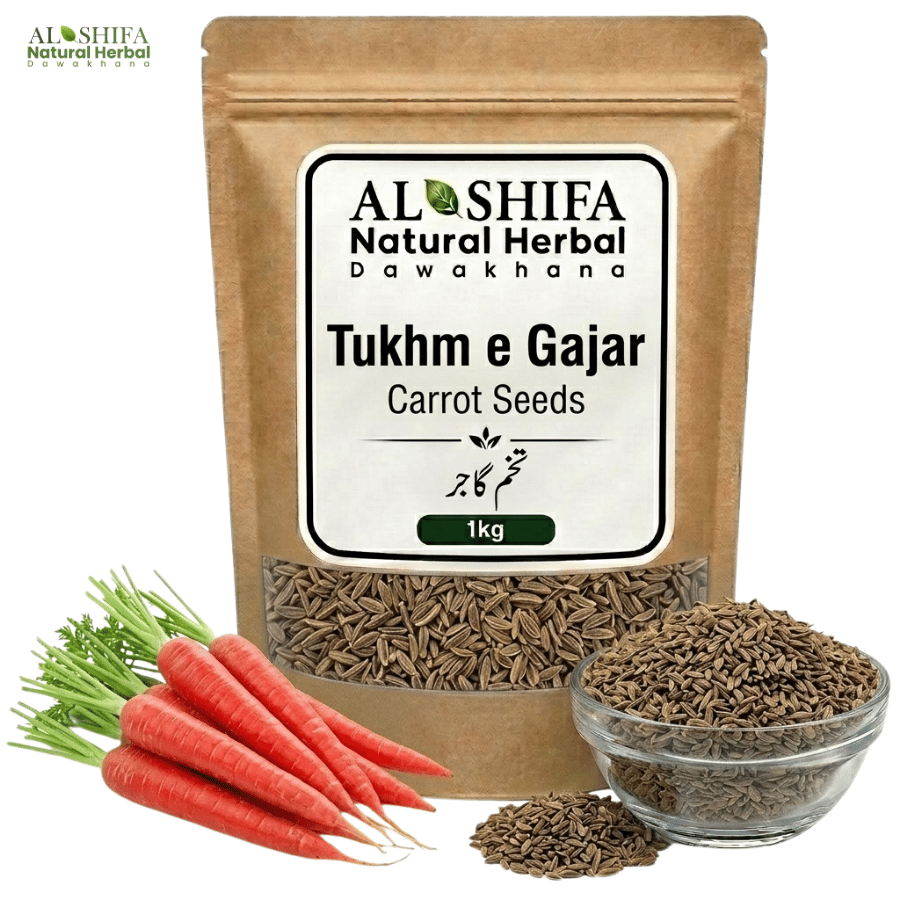
Tukhm e Gajar, commonly known as Carrot Seeds, is the dried seed material of Daucus carota. It has a long history in Unani and regional herbal practice and has traditionally been included in digestive, urinary, menstrual and selected reproductive wellness preparations. Carrot seeds are different from the familiar edible carrot root and from concentrated carrot seed essential oil.
Al Shifa Tukhm e Gajar is carefully selected with attention to its botanical identity, natural seed appearance, characteristic aroma, cleanliness, proper dryness and responsible storage.
Key Features:
Important Note: Traditional menstrual and reproductive uses do not establish treatment for fertility or hormonal conditions. Medicinal use of carrot seed preparations should be avoided during pregnancy unless specifically advised by an appropriately qualified healthcare professional.
Tukhm e Gajar, commonly known as Carrot Seeds, is the dried seed-like fruit of the carrot plant Daucus carota, a well-known member of the Apiaceae family. In Urdu, it is known as Tukhm e Gajar.
Although carrots are best known for their edible orange roots, the mature plant also produces small aromatic fruits commonly referred to as seeds. These have a long history of use in Unani and regional herbal practice and should be considered separately from the familiar carrot root.
Tukhm e Gajar has traditionally been included in preparations associated with digestion, urinary wellness, menstrual complaints and selected reproductive wellness formulations. Because traditional carrot seed preparations may also have effects relevant to the uterus and pregnancy, medicinal internal use requires appropriate caution.
At Al Shifa Natural Herbal Dawakhana, Tukhm e Gajar is selected with attention to its natural seed characteristics, cleanliness, aroma, proper dryness, purity and responsible storage.
Tukhm e Gajar refers to the dried reproductive material collected from mature carrot plants after flowering.
Carrot plants produce clusters of small flowers arranged in umbrella-like structures known as umbels. After pollination, these flowers develop into small dry fruits containing the seed.
In everyday herbal trade, this material is simply called Carrot Seed.
It may be supplied as:
Product Name: Tukhm e Gajar
English Name: Carrot Seeds
Urdu Name: تخم گاجر
Roman Name: Tukhm e Gajar / Tukham Gajar / Gajar Seeds
Scientific Name: Daucus carota L.
Plant Family: Apiaceae
Plant Part: Dried Fruit / Seed
Common Form: Whole Dried Seeds / Crushed Seeds / Powder
Product Type: Traditional Herbal Seed Material
The familiar carrot is usually grown for its edible root.
When allowed to complete its natural life cycle, the plant develops flowering stems with clusters of small white flowers.
These flowers eventually produce the material commonly sold as carrot seeds.
Therefore, carrot root and carrot seed come from the same general plant species but are different plant parts with different composition and uses.
The edible carrot root is widely consumed as a vegetable.
Carrot seeds are different.
Carrot Root:
Used mainly as a vegetable and food.
Carrot Seeds:
Used as seed material and in selected traditional herbal preparations.
The nutritional information and benefits commonly associated with eating carrots should not automatically be transferred to carrot seeds.
Carrot roots are famous for their carotenoid content, especially beta-carotene.
This does not mean carrot seeds should be described as simply a concentrated form of carrot root.
Seeds and roots have different chemical profiles.
Claims commonly made about the nutritional value of orange carrot root should therefore not automatically be applied to Tukhm e Gajar.
Good-quality Tukhm e Gajar should generally have:
Natural variation in size and colour can occur according to variety, growing conditions and maturity.
Carrot seeds have been mentioned in traditional herbal systems for several purposes.
Their historical uses include preparations associated with:
These uses reflect traditional practice and should not be interpreted as guaranteed medical effects.
Tukhm e Gajar has traditionally been included in herbal preparations associated with digestion.
Aromatic seeds from the Apiaceae family have a long history of use in digestive mixtures.
Traditional carrot seed preparations may be used in formulations intended for:
Persistent or severe digestive symptoms require appropriate medical evaluation.
Carrot seeds contain aromatic plant compounds, which is one reason they have historically appeared in digestive preparations.
Traditional herbal practice may include them in mixtures intended to support comfort after meals or during mild abdominal fullness.
However, severe abdominal pain, repeated vomiting, unexplained weight loss, blood in stool or persistent digestive problems should not be managed only with herbal remedies.
Tukhm e Gajar has also been mentioned in traditional preparations associated with urinary flow and urinary wellness.
This traditional use should not be confused with treatment for:
Painful urination, blood in urine, fever, severe flank pain or inability to pass urine requires medical assessment.
Carrot seeds have a historical place in selected traditional formulations associated with women’s wellness and menstrual complaints.
This area requires particular caution because traditional literature has also associated carrot seed preparations with effects on menstruation and the uterus.
For this reason, concentrated medicinal use should not be considered appropriate during pregnancy without professional medical guidance.
Tukhm e Gajar has historically appeared in preparations intended to influence or support menstrual flow.
Traditional use does not establish that carrot seeds are a safe treatment for delayed or irregular periods.
Menstrual changes can occur due to:
The underlying cause should be considered rather than relying only on herbal preparations.
Carrot seeds may also appear in older compound formulations associated with reproductive wellness.
However, traditional use does not prove that Tukhm e Gajar:
Reproductive and fertility concerns require appropriate medical evaluation.
Carrot seeds contain naturally occurring volatile and non-volatile plant compounds.
Their composition can include:
The exact composition depends on:
Carrot seed essential oil is produced by distilling suitable carrot seed material.
It is a concentrated aromatic product and is different from whole Tukhm e Gajar.
Essential oil should not be treated as though it has the same concentration, use or safety profile as whole seeds.
A few drops of concentrated essential oil cannot be compared directly with an ordinary amount of whole seed material.
The term Carrot Seed Oil can be confusing.
It may refer to:
These products are not automatically equivalent.
Consumers should check exactly which type of oil they are purchasing.
Products marketed as Carrot Oil may sometimes be made by infusing carrot root into a carrier oil.
This differs from genuine carrot seed-derived products.
Therefore:
Carrot Seed Essential Oil = concentrated volatile oil obtained from seed material.
Carrot Seed Carrier Oil = fixed oil derived from seeds where commercially produced.
Carrot Root Infused Oil = carrot root material infused into another carrier oil.
These should not be treated as interchangeable.
Tukhm e Gajar can occur in several forms.
Whole Seeds:
Retain visible natural characteristics.
Powder:
Ground dried seed material.
Essential Oil:
Highly concentrated aromatic volatile fraction.
Fixed/Carrier Oil:
Fatty oil obtained from seed where produced.
Extract:
Processed material containing selected concentrated constituents.
Research or safety information for one form should not automatically be applied to every other form.
Whole Tukhm e Gajar allows better examination of:
After grinding, many visible identification characteristics are lost.
For this reason, reliable sourcing becomes especially important when purchasing powdered seed.
Carrot seeds and their extracts have been investigated experimentally for different biological properties.
Laboratory or animal research may examine:
These findings should not automatically be interpreted as evidence that ordinary carrot seeds treat disease in humans.
Whole seed, concentrated extract and essential oil are also different preparations.
Tukhm e Gajar is not generally treated like an extremely toxic botanical, but medicinal use should still be responsible.
Particular caution is appropriate when:
Do not assume that a natural seed is automatically suitable for every person.
Medicinal use of Tukhm e Gajar should be avoided during pregnancy unless specifically advised by an appropriately qualified healthcare professional.
Traditional references to menstrual and uterine effects make self-directed medicinal use unsuitable during pregnancy.
Carrot as an ordinary vegetable is entirely different from taking concentrated carrot seed preparations.
Do not use carrot seed, extracts or essential oil in an attempt to end a pregnancy.
Reliable safety information for concentrated medicinal use of carrot seed during breastfeeding is limited.
Normal dietary consumption of carrot root should not be confused with medicinal use of the seeds.
Breastfeeding women should seek professional guidance before regularly using concentrated carrot seed preparations.
Carrot root is a common food, but this does not automatically make medicinal carrot seed preparations suitable for children.
For children:
Carrot belongs to the Apiaceae family.
This family also includes plants such as:
People with known sensitivity to carrot or related plants should use caution.
Stop use if significant allergic symptoms develop.
People taking regular medicines or managing chronic medical conditions should seek appropriate guidance before using concentrated carrot seed preparations regularly.
The safety of an ordinary culinary exposure cannot automatically be applied to concentrated extracts or essential oils.
At Al Shifa Natural Herbal Dawakhana, Tukhm e Gajar is selected with attention to:
Natural Seed Identity – Material consistent with traditional carrot seed characteristics.
Natural Appearance – Appropriate colour and seed structure.
Characteristic Aroma – Attention to the naturally aromatic character of the material.
Proper Dryness – Carefully dried for responsible storage.
Cleanliness – Selected to minimize unnecessary foreign matter.
Material Condition – Attention to moisture, mould, insects and deterioration.
Careful Handling – Suitable handling and packaging to maintain quality.
Al Shifa Natural Herbal Dawakhana, established in 1999, supplies traditional herbs, seeds and natural raw materials throughout Pakistan.
Our focus for Tukhm e Gajar includes:
Tukhm e Gajar has traditionally been included in digestive, urinary, menstrual and selected compound herbal preparations.
Depending on the intended traditional formulation, the seeds may be:
Medicinal use, particularly for menstrual or reproductive purposes, should follow appropriate professional guidance.
Carrot seed essential oil is a concentrated product and should not be used in the same way as whole seeds.
Tukhm e Gajar is a traditional herbal seed material and should not be presented as a guaranteed treatment for infertility, menstrual disorders, urinary disease, digestive disease or hormonal conditions.
Traditional references to menstrual and uterine effects make pregnancy an especially important safety consideration.
Do not use carrot seed preparations to induce menstruation or terminate a pregnancy.
Carrot root, whole carrot seeds, carrot seed essential oil and concentrated extracts are different materials and should not be treated as interchangeable.
Store Tukhm e Gajar in a cool, dry and clean place in a tightly closed container.
For responsible storage:
Do not use seeds showing visible mould, unusual moisture, insect infestation, unpleasant odour or significant deterioration.
Tukhm e Gajar, commonly known as Carrot Seeds, is the dried seed material of Daucus carota. It has a long history in Unani and regional herbal practice and has traditionally been included in digestive, urinary, menstrual and selected reproductive wellness formulations.
Carrot seeds are different from the familiar edible carrot root and should also be distinguished from concentrated carrot seed essential oil, carrier oil and carrot root-infused oils.
Customers searching for Tukhm e Gajar, Tukham Gajar, Gajar Seeds, Carrot Seeds, Daucus carota seeds, dried carrot seeds, pure carrot seeds, original carrot seeds, Tukhm e Gajar benefits, Tukhm e Gajar uses, carrot seed traditional uses, carrot seeds Unani, carrot seeds for digestion, carrot seeds Pakistan, Tukhm e Gajar Pakistan, pure carrot seeds Pakistan, Tukhm e Gajar Lahore, carrot seeds Lahore, Tukhm e Gajar price in Pakistan, carrot seeds price in Pakistan, Daucus carota seeds price in Pakistan, buy Tukhm e Gajar Pakistan, buy carrot seeds Pakistan or carrot seeds online Pakistan can choose Al Shifa Natural Herbal Dawakhana for carefully selected traditional seed material.
Since 1999, Al Shifa Natural Herbal Dawakhana has focused on supplying traditional herbs and natural raw materials with attention to identity, cleanliness, proper drying, careful handling, responsible storage and clear product information.
Product Name: Tukhm e Gajar
English Name: Carrot Seeds
Urdu Name: تخم گاجر
Roman Name: Tukhm e Gajar / Tukham Gajar / Gajar Seeds
Scientific Name: Daucus carota L.
Plant Family: Apiaceae
Plant Part: Dried Fruit / Seed
Common Form: Whole Dried Seeds / Crushed Seeds / Powder
Product Type: Traditional Herbal Seed Material
Traditional Use: Digestive, urinary, menstrual and selected compound herbal preparations
Important Note: Carrot seeds are different from carrot root, carrot seed essential oil and concentrated extracts. Traditional menstrual and reproductive uses do not establish treatment for fertility or hormonal conditions. Medicinal use should be avoided during pregnancy unless specifically advised by an appropriately qualified healthcare professional.
تخمِ گاجر گاجر کے پودے سے حاصل ہونے والے چھوٹے خوشبودار بیج ہیں۔ گاجر ایک مشہور سبزی ہے، لیکن اس کے بیج بھی طبِ یونانی اور حکیمی ادویات میں خاص اہمیت رکھتے ہیں۔ جب گاجر کے پودے کو مکمل بڑھنے دیا جائے تو اس پر چھوٹے سفید پھول آتے ہیں اور بعد میں انہی پھولوں سے بیج حاصل کیے جاتے ہیں۔
تخمِ گاجر عموماً چھوٹے، لمبوترے، بھورے یا سرمئی مائل بھورے ہوتے ہیں۔ ان کی سطح پر باریک ابھار اور ریشے دکھائی دے سکتے ہیں۔ بیجوں میں خاص خوشبودار بو اور قدرے تیز ذائقہ پایا جاتا ہے۔
طبِ یونانی میں تخمِ گاجر کو معدے اور ہاضمے کے امراض، پیٹ کی گیس، پیشاب کے امراض، ماہواری کی بیماری اور جسمانی کمزوری کے لیے استعمال ہونے والی ادویات میں شامل کیا جاتا ہے۔ خواتین میں اس کا طبی استعمال احتیاط سے کیا جاتا ہے، خاص طور پر حمل کے دوران۔
الشفاء نیچرل ہربل دواخانہ میں تخمِ گاجر منتخب کرتے وقت اس کی درست پہچان، قدرتی رنگت، خاص خوشبو، اصل ساخت، صفائی اور مناسب خشک حالت کو اہمیت دی جاتی ہے۔
گاجر کا پودا مکمل بڑھنے پر باریک شاخیں اور چھوٹے سفید پھول پیدا کرتا ہے۔ یہ پھول ایک جگہ جمع ہو کر چھتری جیسی شکل بناتے ہیں۔ پھول پکنے اور خشک ہونے کے بعد ان سے تخمِ گاجر حاصل کیے جاتے ہیں۔
تخمِ گاجر کی عام پہچان یہ ہے:
بیج کی جسامت اور رنگت گاجر کی قسم، موسم اور بیج کے پکنے کی حالت کے مطابق تبدیل ہو سکتی ہے۔
نام: تخمِ گاجر
دوسرے معروف نام: گاجر کے بیج، بیجِ گاجر
نباتاتی نام: ڈاکس کیروٹا
خاندان: ایپی ایسی خاندان
استعمال ہونے والا حصہ: بیج
قسم: نباتاتی مفرد دوا
عام شکل: چھوٹے، خشک اور لمبوترے بیج
عام رنگت: بھوری، سرمئی مائل بھوری یا ہلکی خاکی
ذائقہ: قدرے تیز اور خوشبودار
بو: خاص اور خوشبودار
پاکستان میں استعمال ہونے والی حکیمی اور مفردات کی کتابوں میں تخمِ گاجر کا مزاج گرم و خشک درجہ دوم لکھا جاتا ہے۔
اسی گرم اور خشک تاثیر کی وجہ سے اسے ہاضمے، پیٹ کی گیس، پیشاب اور ماہواری کے لیے استعمال ہونے والی حکیمی ادویات میں شامل کیا جاتا ہے۔
گرم مزاج رکھنے والے افراد یا ایسے افراد جنہیں استعمال کے بعد جسم میں غیر معمولی گرمی، معدے میں جلن یا دوسری تکلیف محسوس ہو، وہ مقدار میں احتیاط کریں۔
اچھا تخمِ گاجر پہچاننے کے لیے درج ذیل باتیں دیکھی جاتی ہیں:
اگر بیج نم، پھپھوندی والے، کیڑے لگے یا خراب بو والے ہوں تو انہیں استعمال نہ کریں۔
طبِ یونانی میں تخمِ گاجر کے کئی افعال بیان کیے جاتے ہیں۔
ہاضم: کھانا ہضم کرنے میں مدد کے لیے حکیمی ادویات میں شامل کیا جاتا ہے۔
کاسرِ ریاح: پیٹ کی گیس اور اپھارے کے لیے استعمال کیا جاتا ہے۔
مدرِ بول: پیشاب کی روانی بڑھانے کے لیے استعمال ہونے والی حکیمی ادویات میں شامل کیا جاتا ہے۔
مدرِ حیض: ماہواری کی بندش یا تاخیر کے لیے استعمال ہونے والی حکیمی ادویات میں شامل کیا جاتا ہے۔
مقوی: جسمانی طاقت کے لیے استعمال ہونے والے حکیمی نسخوں میں شامل کیا جاتا ہے۔
تخمِ گاجر کو معدے اور ہاضمے کے امراض کے لیے استعمال ہونے والی حکیمی ادویات میں شامل کیا جاتا ہے۔
اس کی خوشبودار خاصیت ہاضمے میں مدد دیتی ہے اور کھانے کے بعد ہونے والے بھاری پن میں استعمال کی جاتی ہے۔
اگر معدے کی بیماری کے ساتھ مسلسل درد، بار بار قے، شدید سینے کی جلن، وزن میں تیزی سے کمی یا پاخانے میں خون آئے تو طبی معائنہ ضروری ہے۔
تخمِ گاجر کو پیٹ کی گیس، اپھارے اور بدہضمی کی بیماری میں استعمال ہونے والی حکیمی ادویات میں شامل کیا جاتا ہے۔
اسے کاسرِ ریاح مانا جاتا ہے، یعنی یہ پیٹ میں جمع گیس خارج کرنے اور بھاری پن کم کرنے کے لیے استعمال کیا جاتا ہے۔
اگر گیس، پیٹ پھولنے یا بدہضمی کی بیماری بار بار ہو تو خوراک کے ساتھ معدے اور آنتوں کے امراض کی جانچ بھی ضروری ہو سکتی ہے۔
تخمِ گاجر کو ہاضمے میں مدد دینے والی حکیمی ادویات میں شامل کیا جاتا ہے، اس لیے بھوک کی کمی میں بھی استعمال کیا جاتا ہے۔
ہاضمہ بہتر ہونے سے کھانے کی رغبت میں مدد مل سکتی ہے۔
اگر بھوک کی کمی مسلسل رہے اور ساتھ وزن بھی کم ہو رہا ہو تو یہ معدے کی بیماری، جگر کی بیماری، ذیابیطس یا دوسری بیماری کی علامت ہو سکتی ہے۔
طبِ یونانی میں تخمِ گاجر کو مدرِ بول مانا جاتا ہے۔ اسے پیشاب کی روانی بڑھانے کے لیے استعمال ہونے والی حکیمی ادویات میں شامل کیا جاتا ہے۔
اس کا استعمال پیشاب کی کمی اور پیشاب کے امراض میں کیا جاتا ہے۔
اگر پیشاب بہت کم ہو جائے، مکمل بند ہو جائے، پیشاب میں خون آئے یا کمر اور پیٹ میں شدید درد ہو تو فوری طبی معائنہ کروائیں۔
تخمِ گاجر کو پیشاب کی جلن کی بیماری کے لیے استعمال ہونے والی حکیمی ادویات میں بھی شامل کیا جاتا ہے۔
پیشاب کی جلن انفیکشن، پتھری، پانی کی کمی یا پیشاب کی نالی کے دوسرے امراض کی وجہ سے بھی ہو سکتی ہے۔
اگر جلن کے ساتھ بخار، کمر میں درد، پیشاب میں خون یا بار بار پیشاب آنے کی شکایت ہو تو طبی جانچ کروائیں۔
تخمِ گاجر کا ذکر گردوں اور مثانے کے امراض کے لیے استعمال ہونے والی حکیمی ادویات میں ملتا ہے، خاص طور پر جہاں پیشاب کی روانی کم ہو۔
گردے کی بیماری میں پیشاب بڑھانے والی کسی بھی دوا کو خود سے استعمال کرنا مناسب نہیں۔
جسم میں سوجن، پیشاب میں خون، شدید کمر درد یا پیشاب میں واضح کمی کی صورت میں معالج سے رجوع کریں۔
تخمِ گاجر کو طبِ یونانی میں مدرِ حیض مانا جاتا ہے۔
اسے ماہواری کی بندش، ماہواری کی تاخیر اور ماہواری کی بیماری کے لیے استعمال ہونے والی حکیمی ادویات میں شامل کیا جاتا ہے۔
اگر ماہواری میں تاخیر ہو تو سب سے پہلے حمل کے امکان کو دیکھنا ضروری ہے۔
ہارمون کی بیماری، جسمانی وزن میں تیزی سے تبدیلی، ذہنی دباؤ، خون کی کمی اور دوسری بیماریاں بھی ماہواری میں خرابی پیدا کر سکتی ہیں۔
تخمِ گاجر کو ماہواری جاری کرنے کے لیے استعمال ہونے والی حکیمی ادویات میں شامل کیا جاتا ہے۔
اگر ماہواری کی بندش کی بیماری موجود ہو تو اس کی وجہ معلوم کیے بغیر بڑی مقدار میں تخمِ گاجر استعمال نہ کریں۔
خاص طور پر اگر حمل کا امکان موجود ہو تو اس کا طبی استعمال نہ کریں۔
خواتین میں تخمِ گاجر کا طبی استعمال کرتے وقت ماہواری اور حمل کی حالت کو ضرور مدنظر رکھیں۔
اگر ماہواری میں تاخیر ہو اور حمل کا امکان موجود ہو تو تخمِ گاجر کو طبی مقدار میں استعمال نہ کریں۔
اگر ماہواری کی بیماری بار بار ہو، بہت زیادہ خون آئے، شدید درد ہو یا کئی ماہ تک ماہواری نہ آئے تو مستند معالج سے معائنہ کروائیں۔
حاملہ خواتین تخمِ گاجر کو طبی مقدار میں خود سے استعمال نہ کریں۔
طبِ یونانی میں اسے مدرِ حیض مانا جاتا ہے اور ماہواری جاری کرنے والی حکیمی ادویات میں شامل کیا جاتا ہے، اس لیے حمل کے دوران اس کا طبی استعمال مناسب نہیں۔
گاجر کو عام سبزی کے طور پر کھانا اور تخمِ گاجر کو حکیمی دوا کے طور پر استعمال کرنا ایک جیسی چیزیں نہیں ہیں۔
دودھ پلانے والی خواتین تخمِ گاجر کو طبی مقدار میں استعمال کرنے سے پہلے مستند معالج سے رہنمائی حاصل کریں۔
کھانے میں معمولی مقدار اور بیماری کے لیے استعمال کی جانے والی مقدار کو ایک جیسا نہ سمجھیں۔
تخمِ گاجر کو جسمانی طاقت کے لیے استعمال ہونے والی حکیمی ادویات میں بھی شامل کیا جاتا ہے۔
اگر جسمانی کمزوری مسلسل موجود ہو تو صرف ایک مفرد دوا پر انحصار نہ کریں۔
خون کی کمی، ذیابیطس، تھائرائڈ کی بیماری، جگر کی بیماری، نیند کی کمی اور دوسری بیماریاں بھی مسلسل جسمانی کمزوری پیدا کر سکتی ہیں۔
تخمِ گاجر میں قدرتی طور پر کئی خوشبودار اور نباتاتی اجزاء پائے جاتے ہیں۔
ان میں شامل ہیں:
ان اجزاء کی مقدار گاجر کی قسم، موسم، زمین، بیج کے پکنے اور خشک کرنے کے طریقے کے مطابق تبدیل ہو سکتی ہے۔
گاجر کے بیجوں میں قدرتی خوشبودار روغنی اجزاء موجود ہوتے ہیں۔
بیجوں سے حاصل ہونے والا مرتکز خوشبودار روغن عام تخمِ گاجر سے زیادہ طاقتور ہوتا ہے۔
اس لیے مرتکز روغن کو بیجوں کے برابر مقدار میں استعمال نہیں کیا جا سکتا۔
مرتکز روغن کو اندرونی طور پر خود سے استعمال نہ کریں۔
گاجر کی جڑ اور تخمِ گاجر ایک ہی پودے سے حاصل ہوتے ہیں، لیکن دونوں کا استعمال مختلف ہے۔
گاجر کی جڑ:
عام سبزی اور غذا کے طور پر استعمال ہوتی ہے۔
تخمِ گاجر:
حکیمی ادویات میں ہاضمے، پیشاب اور ماہواری کے لیے استعمال کیا جاتا ہے۔
گاجر کی جڑ کے غذائی فوائد کو تخمِ گاجر کے طبی افعال کے برابر نہیں سمجھنا چاہیے۔
گاجر کی مختلف اقسام کے بیج ظاہری طور پر ایک دوسرے سے ملتے جلتے ہو سکتے ہیں۔
طبی استعمال کے لیے صرف رنگت یا خوشبو دیکھنا کافی نہیں۔ درست نباتاتی شناخت ضروری ہے۔
نامعلوم بیج کو تخمِ گاجر سمجھ کر استعمال نہ کریں۔
مکمل تخمِ گاجر:
مکمل بیجوں میں رنگت، خوشبو، ساخت، صفائی اور دوسرے بیجوں کی آمیزش دیکھنا آسان ہوتا ہے۔
تخمِ گاجر کا سفوف:
پیسنے کے بعد بیج کی اصل ظاہری شناخت مشکل ہو جاتی ہے اور وقت کے ساتھ خوشبو بھی کم ہو سکتی ہے۔
درست پہچان شدہ مکمل تخمِ گاجر لے کر ضرورت کے مطابق تازہ پیسنا بہتر ہے۔
اصل تخمِ گاجر پہچاننے کے لیے ان باتوں کو دیکھیں:
صرف خوشبو کی بنیاد پر اصل ہونے کا فیصلہ نہ کریں۔
بچوں کو کسی بیماری کے علاج کے لیے تخمِ گاجر خود سے نہ دیں۔
بچے کی عمر، وزن اور بیماری کے مطابق طبی مقدار مختلف ہو سکتی ہے۔
بچے کو مسلسل پیٹ درد، پیشاب کی بیماری یا دوسری طبی شکایت ہو تو معالج سے معائنہ کروائیں۔
جگر کی بیماری والے افراد تخمِ گاجر یا اس سے حاصل ہونے والے مرتکز روغن کو بڑی طبی مقدار میں خود سے استعمال نہ کریں۔
اگر جگر کی بیماری کے لیے ادویات پہلے سے استعمال ہو رہی ہوں تو مستند معالج سے مشورہ کریں۔
گردوں کی بیماری والے افراد تخمِ گاجر کو پیشاب بڑھانے کے مقصد سے خود سے استعمال نہ کریں۔
گردوں کی بیماری میں جسم کے پانی اور نمکیات کا توازن اہم ہوتا ہے۔ پیشاب بڑھانے والی ادویات کا غلط استعمال مریض کی حالت خراب کر سکتا ہے۔
گاجر یا اسی نباتاتی خاندان کی دوسری چیزوں سے حساسیت رکھنے والے افراد تخمِ گاجر استعمال کرتے وقت احتیاط کریں۔
اگر استعمال کے بعد:
ہو تو استعمال فوراً بند کریں۔
سانس لینے میں دشواری یا گلے اور زبان کی سوجن کی صورت میں فوری طبی مدد حاصل کریں۔
اگر کوئی شخص گردوں، جگر، بلڈ پریشر، ذیابیطس یا دوسری مسلسل بیماری کی ادویات استعمال کر رہا ہو تو تخمِ گاجر کی بڑی طبی مقدار خود سے شروع نہ کرے۔
ایک سے زیادہ حکیمی اور دوسری ادویات ایک ساتھ استعمال کرنے کی صورت میں مستند معالج کو تمام استعمال ہونے والی ادویات کے بارے میں بتائیں۔
تخمِ گاجر کی بہت زیادہ مقدار استعمال نہ کریں۔
زیادہ مقدار سے:
پیدا ہو سکتی ہے۔
خواتین میں ماہواری اور حمل کی حالت کو خاص طور پر مدنظر رکھنا ضروری ہے۔
تخمِ گاجر کے ساتھ استعمال ہونے والی دوسری حکیمی اشیاء کا انتخاب مریض کی حالت اور استعمال کے مقصد کے مطابق کیا جاتا ہے۔
کسی دوسرے خوشبودار بیج کو صرف شکل یا خوشبو کی وجہ سے تخمِ گاجر کا مکمل بدل نہ سمجھیں۔
مناسب مصلح اور بدل کے انتخاب کے لیے مستند حکیم سے رہنمائی حاصل کریں۔
تخمِ گاجر کی مقدار فرد کی عمر، جسمانی حالت، بیماری اور استعمال کے مقصد کے مطابق مقرر کی جاتی ہے۔
حکیمی ادویات میں اسے:
استعمال کیا جاتا ہے۔
کسی بیماری، پیشاب کے امراض یا ماہواری کی بیماری کے لیے مقدار خود سے مقرر نہ کریں۔
حاملہ خواتین اور حمل کا امکان رکھنے والی خواتین طبی مقدار میں استعمال نہ کریں۔
تخمِ گاجر ایک نباتاتی مفرد دوا ہے۔ اس کے طبی استعمال میں درست مقدار، مریض کی عمر، جسمانی حالت اور بیماری کو مدنظر رکھنا ضروری ہے۔
خاص طور پر ماہواری کی بیماری، پیشاب کے امراض، گردوں کی بیماری، جگر کی بیماری اور حمل کی صورت میں خود سے زیادہ مقدار میں استعمال نہ کریں۔
اگر کوئی بیماری مسلسل موجود ہو یا علامات بڑھ رہی ہوں تو مستند معالج سے تشخیص اور علاج کروائیں۔
الشفاء نیچرل ہربل دواخانہ میں تخمِ گاجر منتخب کرتے وقت درج ذیل باتوں کا خیال رکھا جاتا ہے:
درست پہچان: اصل گاجر کے بیج کی شناخت کو اہمیت دی جاتی ہے۔
قدرتی رنگت: بھوری یا سرمئی مائل قدرتی رنگت دیکھی جاتی ہے۔
قدرتی خوشبو: تخمِ گاجر کی خاص نباتاتی خوشبو کو اہمیت دی جاتی ہے۔
اصل ساخت: مکمل، پکے ہوئے اور قدرتی ساخت والے بیج منتخب کیے جاتے ہیں۔
مناسب خشک حالت: بیجوں میں غیر ضروری نمی نہیں ہونی چاہیے۔
صاف ستھری حالت: مٹی، گرد اور دوسری غیر ضروری چیزوں سے پاک حالت کو اہمیت دی جاتی ہے۔
پھپھوندی اور کیڑوں سے حفاظت: پھپھوندی والے، خراب یا کیڑے لگے بیج استعمال کے لیے مناسب نہیں سمجھے جاتے۔
الشفاء نیچرل ہربل دواخانہ سنہ ۱۹۹۹ سے قدرتی جڑی بوٹیوں کی سپلائی کر رہا ہے۔
ہم تخمِ گاجر کی درست پہچان، قدرتی رنگت، خاص خوشبو، اصل ساخت، صفائی اور مناسب خشک حالت کو اہمیت دیتے ہیں۔
طبی استعمال کے لیے تخمِ گاجر خریدتے وقت تازہ خوشبو، اصل ساخت اور درست شناخت اہم ہیں، کیونکہ پرانے، نم یا ملاوٹ شدہ بیج معیار کو متاثر کر سکتے ہیں۔
تخمِ گاجر کو ٹھنڈی، خشک اور صاف جگہ پر اچھی طرح بند جار یا پیکٹ میں رکھیں۔
پسا ہوا تخمِ گاجر مکمل بیجوں کے مقابلے میں اپنی خوشبو جلد کھو سکتا ہے، اس لیے ضرورت کے مطابق تازہ پیسنا بہتر ہے۔
اگر بیجوں میں پھپھوندی، کیڑے، زیادہ نمی یا خراب بو پیدا ہو جائے تو انہیں استعمال نہ کریں۔
تخمِ گاجر ایک خوشبودار نباتاتی مفرد دوا ہے جسے طبِ یونانی اور دیسی طبی ادویات میں خاص اہمیت حاصل ہے۔ اسے معدے اور ہاضمے کے امراض، پیٹ کی گیس، پیشاب کے امراض، ماہواری کی بیماری اور جسمانی کمزوری کے لیے استعمال ہونے والی حکیمی ادویات میں شامل کیا جاتا ہے۔
اگر آپ تخمِ گاجر، گاجر کے بیج، خالص تخمِ گاجر، اصل تخمِ گاجر، تخمِ گاجر کے فوائد، تخمِ گاجر کے استعمال، تخمِ گاجر پاکستان، تخمِ گاجر لاہور، تخمِ گاجر کی قیمت، تخمِ گاجر آن لائن یا تخمِ گاجر خریدیں تلاش کر رہے ہیں تو الشفاء نیچرل ہربل دواخانہ احتیاط سے منتخب، صاف ستھرے اور مناسب طریقے سے محفوظ کیے گئے تخمِ گاجر فراہم کرتا ہے۔
نام: تخمِ گاجر
دوسرے معروف نام: گاجر کے بیج، بیجِ گاجر
نباتاتی نام: ڈاکس کیروٹا
خاندان: ایپی ایسی خاندان
استعمال ہونے والا حصہ: بیج
قسم: نباتاتی مفرد دوا
مزاج: گرم و خشک درجہ دوم
عام شکل: چھوٹے، خشک اور لمبوترے بیج
عام رنگت: بھوری، سرمئی مائل بھوری یا ہلکی خاکی
ذائقہ: قدرے تیز اور خوشبودار
بو: خاص نباتاتی خوشبو
اہم قدرتی اجزاء: خوشبودار روغنی اجزاء، فلیوونائڈز، نباتاتی تیزاب، قدرتی روغنی مادے اور دوسرے نباتاتی اجزاء۔
اہم افعال: ہاضم، کاسرِ ریاح، مدرِ بول، مدرِ حیض اور مقوی۔
طبِ یونانی میں استعمال: معدے اور ہاضمے کے امراض، پیٹ کی گیس، پیشاب کے امراض، ماہواری کی بیماری اور جسمانی کمزوری کے لیے استعمال ہونے والی حکیمی ادویات میں شامل کیا جاتا ہے۔
اہم احتیاط: حاملہ خواتین اور حمل کا امکان رکھنے والی خواتین تخمِ گاجر کی طبی مقدار خود سے استعمال نہ کریں۔ گردوں، جگر یا دوسری مسلسل بیماری کے مریض استعمال سے پہلے مستند معالج سے رہنمائی حاصل کریں۔