
jo, Oats, Oatmeal
Contact for Price
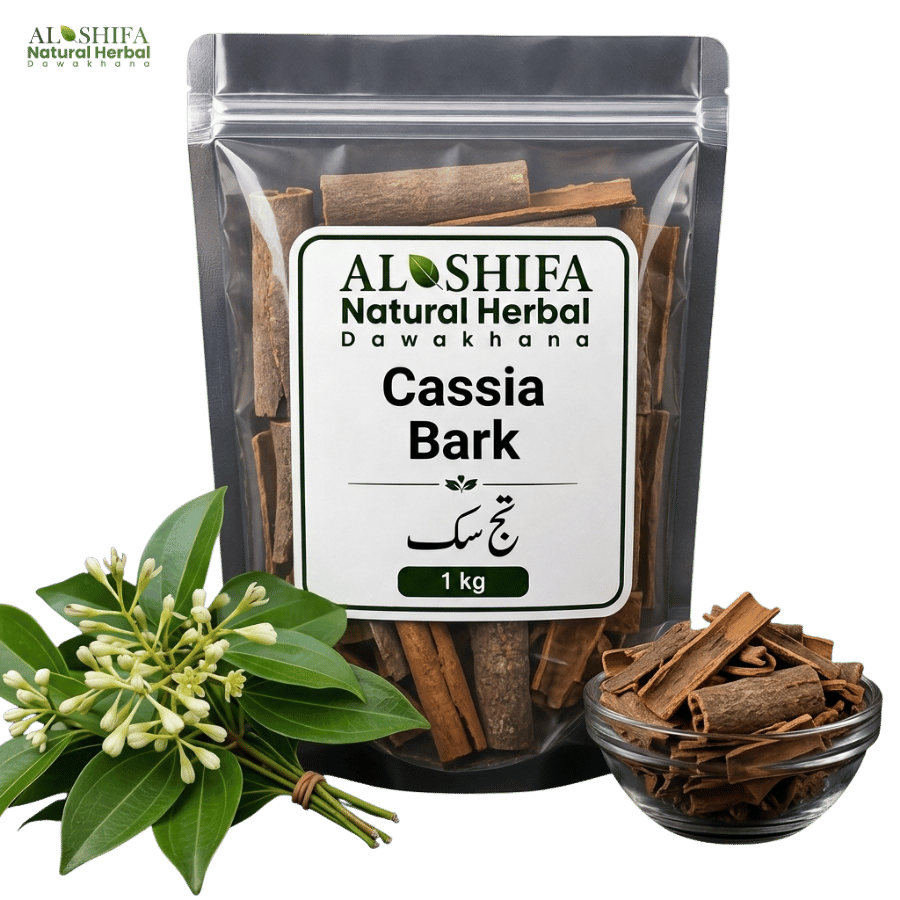
Taj Sak (Cassia Bark / Taj) is a naturally aromatic dried bark traditionally valued in Unani, herbal, and culinary preparations. Known for its strong sweet-spicy aroma and warming character, it has historically been used in preparations associated with digestive comfort, appetite, seasonal wellness, general vitality, and aromatic spice blends.
Al Shifa Taj Sak is carefully selected with attention to characteristic aroma, natural bark appearance, cleanliness, proper drying, and overall raw-material quality.
Key Features:
Important Note: Cassia Bark differs from true Ceylon Cinnamon and naturally contains higher levels of coumarin. Excessive or prolonged medicinal consumption should be avoided, particularly in people with liver conditions.
Taj Sak (Cassia Bark / Taj) is a warm, aromatic dried bark obtained from a cinnamon-related tree commonly associated with Cinnamomum cassia. It is traditionally valued as both an aromatic spice and a herbal raw material and has a long history of use in Unani, traditional Asian, and culinary preparations.
Cassia Bark is recognized for its strong sweet-spicy aroma, warming character, woody flavour, and naturally occurring aromatic compounds. Traditionally, it has been included in preparations associated with digestive comfort, appetite, general warmth, respiratory and seasonal wellness, restorative vitality, and aromatic herbal formulations.
Al Shifa Taj Sak is carefully selected with attention to characteristic aroma, natural bark appearance, cleanliness, appropriate dryness, and overall raw-material quality.
Taj Sak consists of dried aromatic bark obtained from the Cassia tree.
After harvesting, suitable bark is dried, during which it develops its characteristic:
It may be supplied as whole bark pieces or further processed for appropriate culinary and traditional formulations.
English Name: Cassia Bark / Chinese Cinnamon
Urdu Name: تج / تج سک
Roman Name: Taj Sak / Taj
Scientific Name: Cinnamomum cassia (L.) J.Presl
Family: Lauraceae
Plant Part: Dried Bark
Product Type: Aromatic Bark / Spice / Traditional Herbal Raw Material
Cassia is also encountered botanically under the name Cinnamomum aromaticum in older or alternative references.
Cassia and true or Ceylon Cinnamon are closely related aromatic barks, but they should not automatically be considered identical.
Cassia Bark is generally:
True Cinnamon is generally:
Their natural chemical profiles also differ.
One particularly important distinction is that Cassia generally contains considerably more naturally occurring coumarin than Ceylon Cinnamon.
This difference becomes especially relevant when Cassia is consumed frequently or in concentrated medicinal quantities.
Taj Sak has a longstanding place in traditional herbal and culinary practices.
Historical applications have been associated with:
These uses describe traditional practice and do not establish Cassia Bark as a proven treatment for a diagnosed disease.
Cassia Bark naturally contains aromatic plant compounds responsible for its characteristic fragrance and flavour.
These include compounds associated with its natural volatile oil fraction, particularly cinnamaldehyde, along with various polyphenolic and other plant constituents.
The amount and composition can vary according to:
Whole Cassia Bark, powdered Cassia, concentrated extract, and Cassia essential oil are therefore not equivalent.
Taj Sak has traditionally been used in digestive and warming formulations.
Historical applications may include preparations associated with:
Its aromatic and warming character makes it a familiar ingredient in many traditional compound preparations.
However, Cassia Bark should not be presented as a treatment for ulcers, gastrointestinal infections, inflammatory bowel disease, or other diagnosed digestive conditions.
In Unani and other traditional systems, aromatic spices such as Taj are often described according to their traditional warming characteristics.
This concept has historically influenced its inclusion in:
“Warming” is a traditional descriptive concept and should not be interpreted as evidence that Cassia treats fever, infection, inflammation, or another medical condition.
Cassia Bark has traditionally been combined with other aromatic ingredients in preparations used during colder seasons.
Historical use may associate it with:
It should not be promoted as a treatment for asthma, bronchitis, pneumonia, tuberculosis, influenza, respiratory infections, or persistent cough.
Persistent breathing difficulty, chest pain, high fever, or prolonged cough requires appropriate medical evaluation.
Taj Sak has also been included in selected traditional formulations associated with:
These historical uses do not establish Cassia Bark as a treatment for chronic fatigue, anaemia, hormonal disorders, sexual dysfunction, or another medical cause of weakness.
Cinnamon-related materials have received considerable scientific interest for possible effects on glucose metabolism.
However, several distinctions are important.
Research may involve:
The results should not be generalized to every Cassia product.
Taj Sak should not replace diabetes medication, blood-glucose monitoring, diet, or medical care.
People using glucose-lowering medicines should seek professional advice before taking Cassia regularly in concentrated medicinal quantities because combined effects may influence blood-glucose control.
Cinnamon preparations have also been studied in relation to cholesterol and cardiovascular risk factors.
However, ordinary Taj Sak should not be marketed as a medicine to treat:
A culinary spice or traditional raw material should not replace appropriate cardiovascular treatment.
Cassia naturally contains coumarin.
This is particularly important because Cassia generally contains substantially more coumarin than true Ceylon Cinnamon.
Occasional culinary use is different from consuming large or concentrated amounts regularly.
Excessive or prolonged intake of high-coumarin Cassia may be a concern, particularly for the liver in susceptible individuals.
For this reason:
Cassia should not be promoted for unrestricted daily high-dose consumption.
Normal culinary amounts and concentrated medicinal use are different.
During pregnancy or breastfeeding, regular medicinal or concentrated use of Cassia should preferably be discussed with an appropriately qualified healthcare professional.
Taj Sak should not be promoted as a method to induce menstruation, stimulate labour, terminate pregnancy, or manage pregnancy-related complications.
Professional advice is recommended before regular concentrated medicinal use for people who:
This is especially important when Cassia is being used in amounts substantially greater than normal culinary seasoning.
Cassia Bark is widely valued for its strong aromatic character.
Depending on the recipe, it may be used in:
Its strong flavour means only an appropriate amount is generally required for culinary purposes.
Different Cassia products should not be considered interchangeable.
Whole Bark: Dried pieces of Cassia bark.
Powder: Finely ground dried bark.
Extract: A concentrated preparation containing selected constituents.
Essential Oil: Highly concentrated aromatic oil obtained from plant material.
Cassia essential oil is much more concentrated than ordinary bark and has different safety requirements. It should not be treated as equivalent to whole Taj Sak.
At Al Shifa Natural Herbal Dawakhana, Taj Sak is selected with attention to:
Characteristic Identity – Bark consistent with traditional Cassia characteristics.
Natural Aroma – Strong characteristic sweet and spicy fragrance.
Natural Appearance – Appropriate brown to reddish-brown bark.
Cleanliness – Carefully handled to minimize unnecessary foreign matter.
Proper Drying – Appropriately dried for responsible storage.
Quality Selection – Material showing significant mould, excessive moisture, infestation, or deterioration is avoided.
Al Shifa Natural Herbal Dawakhana, established in 1999, supplies carefully selected herbs, barks, seeds, roots, fruits, spices, gums, resins, powders, oils, and other traditional natural raw materials throughout Pakistan.
Our Taj Sak is selected for customers seeking aromatic Cassia Bark for appropriate culinary, Unani, digestive, warming, seasonal, and traditional herbal preparations.
We focus on:
Taj Sak may be used as an aromatic culinary spice or as an ingredient in appropriate traditional compound preparations.
The appropriate amount depends on:
Because Cassia naturally contains coumarin, there is no universal medicinal dosage appropriate for unrestricted long-term self-use.
For concentrated, regular, or condition-specific medicinal use, professional guidance is recommended.
Taj Sak is a traditional aromatic botanical raw material and culinary spice. It should not be presented as a proven treatment for:
Traditional use and scientific research provide useful information but do not replace professional diagnosis, prescribed medication, or established medical treatment.
Store Taj Sak in a cool, clean, dry place in a tightly closed container.
For better preservation:
Taj Sak (Cassia Bark / Taj) is a strongly aromatic dried bark traditionally valued as a spice and herbal raw material. It has historically been used in preparations associated with digestive wellness, appetite, warming formulations, seasonal comfort, general vitality, and aromatic culinary use.
Customers searching for Taj Sak Pakistan, Cassia Bark Pakistan, Taj Pakistan, pure Taj Sak, original Cassia Bark, Taj Sak Lahore, Taj Sak benefits, Cassia Bark benefits, Taj Sak uses, Cassia Bark uses, Taj Sak price in Pakistan, Cassia Bark price in Pakistan, buy Taj Sak Pakistan, or Cassia Bark online Pakistan can choose Al Shifa Natural Herbal Dawakhana for carefully selected traditional raw material.
Since 1999, Al Shifa Natural Herbal Dawakhana has focused on supplying traditional natural ingredients with attention to identity, cleanliness, appropriate drying, natural quality, responsible storage, and accurate product information.
Product Name: Taj Sak / Cassia Bark / Taj
English Name: Cassia Bark / Chinese Cinnamon
Urdu Name: تج / تج سک
Roman Name: Taj Sak / Taj
Scientific Name: Cinnamomum cassia (L.) J.Presl
Family: Lauraceae
Plant Part: Dried Bark
Product Type: Aromatic Bark / Spice / Traditional Herbal Raw Material
Traditional Use: Digestive wellness, appetite-related preparations, warming formulations, seasonal wellness, general vitality, and culinary use
Important Note: Cassia Bark is related to but different from true Ceylon Cinnamon. Cassia naturally contains higher levels of coumarin, so excessive or prolonged medicinal consumption should be avoided.
تج سک، جسے مختصراً تج بھی کہا جاتا ہے، ایک خوشبودار اور گرم مزاج رکھنے والی خشک چھال ہے جو دارچینی سے قریبی تعلق رکھنے والے ایک درخت سے حاصل ہوتی ہے۔ یہ اپنی تیز خوشبو، میٹھے اور قدرے تیکھے ذائقے، گرم تاثیر اور مخصوص بھوری مائل سرخی کی وجہ سے روایتی طب اور کھانوں میں ایک معروف خام جزو کے طور پر استعمال ہوتی رہی ہے۔
طبِ یونانی اور مختلف روایتی طریقوں میں تج سک کو نظامِ ہضم کی آسودگی، بھوک، معدے کی عمومی نگہداشت، موسمی آرام، حلق و سینہ کی روایتی معاونت، عمومی قوت و نشاط اور مختلف خوشبودار و مقوی مرکبات میں شامل کیا جاتا رہا ہے۔
الشفاء نیچرل ہربل دواخانہ میں تج سک کو قدرتی خوشبو، چھال کی ظاہری حالت، صفائی، مناسب خشکی اور مجموعی معیار کو مدنظر رکھتے ہوئے منتخب کیا جاتا ہے۔
تج سک ایک خوشبودار درخت کی خشک چھال ہے۔
درخت سے مناسب چھال حاصل کرنے کے بعد اسے خشک کیا جاتا ہے۔ خشک ہونے کے دوران اس میں مخصوص بھورا یا سرخی مائل بھورا رنگ، مضبوط ساخت اور نمایاں خوشبو پیدا ہوتی ہے۔
معیاری تج سک عموماً:
علاقے، درخت کی عمر، چھال کی پختگی، موسم، برداشت، خشک کرنے کے طریقے اور ذخیرے کے مطابق رنگ اور خوشبو میں قدرتی فرق ہو سکتا ہے۔
تج سک دارچینی سے تعلق رکھنے والے درخت کی خشک خوشبودار چھال ہے اور اسے روایتی طور پر دارچینی کی نسبتاً موٹی اور تیز خوشبو والی قسم کے طور پر پہچانا جاتا ہے۔
اردو نام: تج / تج سک
معروف نام: تج سک، تج، موٹی دارچینی
مستعمل حصہ: خشک چھال
نباتاتی خاندان: تیج پات خاندان
قسم: خوشبودار خشک چھال، مصالحہ اور روایتی نباتاتی خام جزو
درست شناخت ضروری ہے کیونکہ بازار میں دارچینی سے تعلق رکھنے والی مختلف اقسام ایک جیسے یا ملتے جلتے ناموں سے فروخت ہو سکتی ہیں۔
تج سک اور باریک دارچینی ایک ہی نباتاتی گروہ سے تعلق رکھنے والی خوشبودار چھالیں ہیں، لیکن انہیں مکمل طور پر ایک جیسا نہیں سمجھنا چاہیے۔
تج سک عموماً:
باریک دارچینی عموماً:
دونوں میں موجود قدرتی خوشبودار اجزاء کی مقدار بھی مختلف ہو سکتی ہے۔
خصوصاً تج سک میں ایک قدرتی خوشبودار جزو کومارین باریک دارچینی کی نسبت زیادہ مقدار میں پایا جا سکتا ہے۔ اسی وجہ سے تج سک کے بہت زیادہ اور مسلسل طبی استعمال میں احتیاط ضروری ہے۔
تج سک قدیم زمانے سے خوشبودار، ہاضم اور گرم مرکبات میں استعمال ہوتی رہی ہے۔
روایتی طور پر اس کا تعلق:
سے بیان کیا جاتا ہے۔
یہ تمام استعمال روایتی طبی تجربات کی نمائندگی کرتے ہیں اور انہیں کسی تشخیص شدہ بیماری کے ثابت شدہ علاج کے طور پر نہیں سمجھنا چاہیے۔
تج سک میں قدرتی طور پر مختلف خوشبودار نباتاتی اجزاء پائے جاتے ہیں جو اس کی مخصوص مہک اور ذائقے کا سبب بنتے ہیں۔
ان اجزاء کی مقدار کا انحصار:
پر ہو سکتا ہے۔
اسی لیے مکمل خشک چھال، اس کا سفوف، مرتکز عصارہ اور خوشبودار روغن ایک دوسرے کے برابر نہیں ہوتے۔
تج سک کو روایتی طور پر ہاضم اور خوشبودار مرکبات میں خاص اہمیت حاصل رہی ہے۔
اسے ایسے نسخوں میں شامل کیا جاتا رہا ہے جن کا تعلق:
سے ہو۔
اس کی مخصوص خوشبو اور گرم روایتی خصوصیت اسے مختلف مرکب نسخوں میں ایک معروف جزو بناتی ہے۔
تاہم تج سک کو معدے کے زخم، آنتوں کی سوزش، جراثیمی بیماری یا دیگر تشخیص شدہ ہاضم امراض کا ثابت شدہ علاج نہیں سمجھنا چاہیے۔
طبِ یونانی میں تج سک کو روایتی طور پر گرم مزاج رکھنے والے اجزاء