Nature's Healing, Trusted Since 1999
Al Shifa Natural Herbal Product

سرکہ انگوری

Natural Herbal Product

سرکہ انگوری

★★★★★ Trusted Herbal Product
Price range: ₨ 450 through ₨ 950

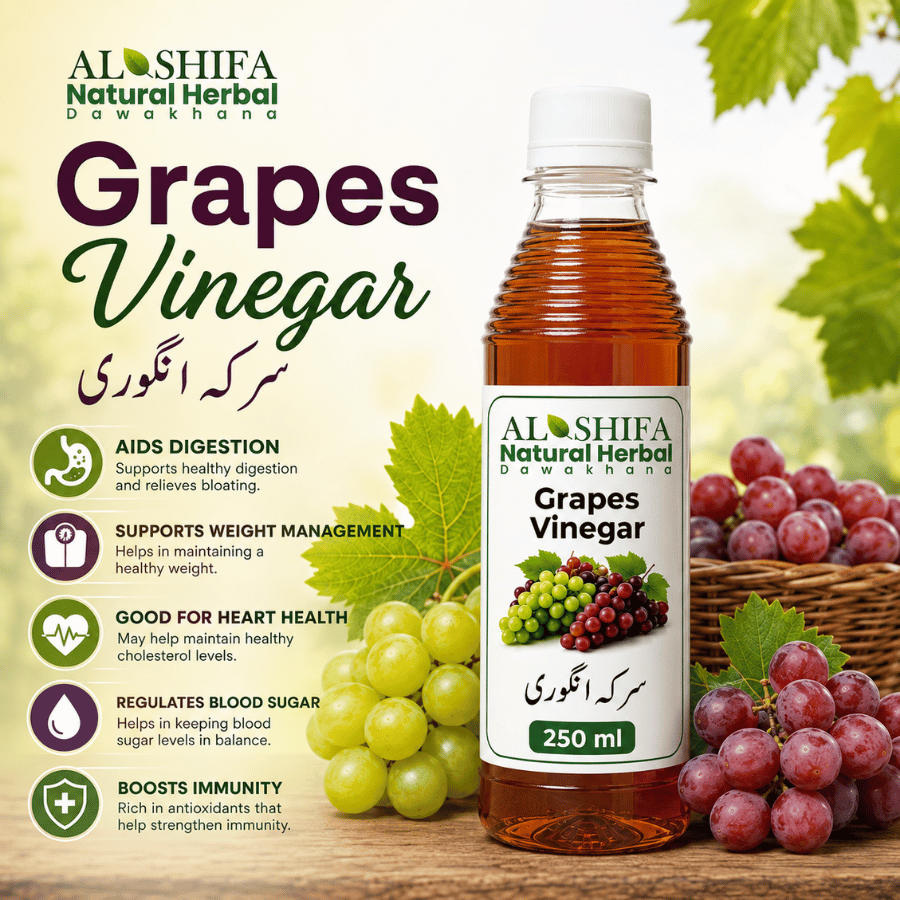
Grapes Vinegar / Sirka Angoori – سرکہ انگوری is a traditional fermented fruit vinegar prepared from grapes, offering a naturally tangy taste with a distinctive fruity character for everyday culinary use.

  • Premium Quality Grapes Vinegar
  • Prepared from Grapes
  • Traditional Fermented Fruit Vinegar
  • Naturally Tangy & Fruity Flavor
  • Suitable for Salads, Chutneys & Sauces
  • Ideal for Marinades & Culinary Use

How to Use: Use according to taste in salads, dressings, chutneys, sauces, marinades, and suitable pickling recipes.

Storage: Keep tightly closed in a cool, dry place away from direct sunlight and excessive heat.

Important Note: Grapes Vinegar is a culinary food product, not a treatment for diabetes, weight loss, cholesterol, or other medical conditions. Avoid consuming large quantities undiluted.

All herbs are available in Whole as well as Powder form at the same rates.
تمام جڑی بوٹیاں ثابت اور پاؤڈر دونوں شکلوں میں ایک ہی قیمت پر دستیاب ہیں۔
Weight:
Please select product options.
Quantity
Important Notice: Due to frequent market price fluctuations in Pakistan, product prices may change without prior notice. Please confirm the latest price via WhatsApp before placing your order.
اہم نوٹ: پاکستان میں مارکیٹ ریٹ میں بار بار تبدیلی کی وجہ سے مصنوعات کی قیمتیں بغیر پیشگی اطلاع کے تبدیل ہو سکتی ہیں۔ آرڈر کرنے سے پہلے تازہ قیمت واٹس ایپ پر ضرور کنفرم کر لیں۔
Share:
100% Herbal
Fast Delivery
Trusted Since 1999

Description

Grapes Vinegar / Sirka Angoori – سرکہ انگوری

Grapes Vinegar / Sirka Angoori – سرکہ انگوری is a traditional fruit-based fermented vinegar prepared from grapes (Vitis vinifera L.). Through fermentation, naturally occurring grape sugars are first converted into alcohol and subsequently transformed by acetic acid bacteria into acetic acid, which gives vinegar its characteristic tangy taste and acidic nature.

Grape Vinegar has been valued for generations as a versatile culinary ingredient. Its pleasant fruity acidity, characteristic grape-derived aroma, and balanced sourness make it suitable for salad dressings, chutneys, sauces, marinades, pickles, vegetables, and numerous everyday recipes.

Unlike ordinary white vinegar, properly prepared grape vinegar originates from grapes and may retain varying amounts of naturally occurring grape-derived compounds depending on the raw material, fermentation process, filtration, maturation, and final processing.


Premium Quality Grapes Vinegar

Quality Grapes Vinegar combines characteristic vinegar acidity with subtle grape-derived flavor and aroma.

Key Features

  • Prepared from Grapes
  • Traditional Fermented Fruit Vinegar
  • Naturally Tangy & Fruity Character
  • Versatile Culinary Ingredient
  • Suitable for Salads & Dressings
  • Ideal for Chutneys & Sauces
  • Suitable for Marinades
  • Useful in Appropriate Pickling Recipes
  • Distinctive Grape-Derived Flavor
  • Convenient for Everyday Culinary Use

Product Information

Product Name: Grapes Vinegar

Urdu Name: سرکہ انگوری

Roman Name: Sirka Angoori

Alternative Names: Grape Vinegar / Angoor Vinegar / Angoori Sirka

Botanical Name: Vitis vinifera L.

Family: Vitaceae

Plant Part Used: Fruit / Grape Juice

Product Type: Fermented Fruit Vinegar

Category: Vinegar / Fermented Food Product / Culinary Condiment

Form: Liquid

Primary Acid: Acetic Acid

Taste: Tangy, Sour & Characteristically Fruity

Aroma: Vinegar Aroma with Grape-Derived Notes

Color: May range from pale golden to amber, reddish, or darker shades depending on grape variety and processing


What Is Grapes Vinegar?

Grapes Vinegar is vinegar produced from grapes or grape-derived fermentable juice.

Grapes naturally contain sugars, primarily glucose and fructose. During vinegar production, these sugars undergo fermentation.

In simplified form, the process occurs in two major stages:

Grape Sugars → Alcohol → Acetic Acid

During the first stage, yeast converts fermentable sugars into alcohol. During the second stage, acetic acid bacteria convert alcohol into acetic acid.

The resulting product develops the characteristic acidity, aroma, and flavor associated with grape vinegar.


Botanical Information

Grapes are the fruits of plants belonging to the genus Vitis. One of the most widely cultivated grape species is:

Botanical Name: Vitis vinifera L.

Family: Vitaceae

Common Name: Grape

Plant Part: Fruit

Vitis vinifera includes numerous cultivated grape varieties that differ considerably in:

  • Color
  • Sweetness
  • Acidity
  • Aroma
  • Phenolic Composition
  • Pigmentation
  • Flavor

Consequently, the characteristics of grape vinegar may vary depending on the grape variety used.


Grapes & Their Naturally Occurring Compounds

Fresh grapes naturally contain a variety of compounds, including:

  • Natural Sugars
  • Organic Acids
  • Polyphenols
  • Phenolic Acids
  • Flavonoid-Related Compounds
  • Tannins
  • Natural Pigments
  • Minerals
  • Aromatic Compounds

Dark-colored grapes may also contain anthocyanin pigments, particularly in their skins.

However, grape vinegar should not be assumed to contain these compounds in the same amounts as fresh grapes.

Fermentation, filtration, clarification, maturation, dilution, grape variety, and manufacturing conditions can substantially change the final composition.


Acetic Acid

The defining acid in Grapes Vinegar is acetic acid.

Acetic acid is responsible for much of vinegar’s:

  • Sour Taste
  • Characteristic Aroma
  • Acidic Nature
  • Culinary Function
  • Role in Suitable Pickling Applications

The actual acidity of a finished vinegar should be determined from its product specification or label rather than estimated from taste.


Grapes Vinegar vs Fresh Grapes

Fresh grapes and grape vinegar are not nutritionally identical.

Fresh grapes provide:

  • Water
  • Natural Sugars
  • Fruit Structure
  • Dietary Components
  • Grape-Derived Plant Compounds

During vinegar fermentation, much of the fermentable sugar is metabolized, and the chemical composition changes considerably.

Therefore:

Fresh Grapes ≠ Grapes Vinegar

Health findings associated with whole grapes should not automatically be transferred to grape vinegar.


Grapes Vinegar vs Grape Juice

Grape juice is produced directly from grapes and generally retains considerably more naturally occurring fruit sugars.

Grape vinegar undergoes fermentation, during which sugars are converted through alcohol into acetic acid.

Therefore, grape juice and grape vinegar differ substantially in:

  • Acidity
  • Sugar Content
  • Flavor
  • Fermentation Status
  • Culinary Applications

The residual sugar in a particular grape vinegar depends on its production process and final formulation.


Grapes Vinegar vs Wine Vinegar

The terminology can sometimes overlap because wine itself is produced by fermenting grape juice.

Wine vinegar is generally produced by further acetification of wine, converting its alcohol into acetic acid.

A grape vinegar may similarly involve grape-derived alcoholic fermentation before acetification.

However, labeling and production standards can differ between products and regions.

The actual product label should therefore be used when distinguishing between grape vinegar and a specifically marketed wine vinegar.


Grapes Vinegar vs White Vinegar

White Vinegar generally has a clean, sharp and relatively neutral acidic character.

Grapes Vinegar may retain more distinctive grape-derived:

  • Aroma
  • Color
  • Flavor
  • Phenolic Character
  • Fruity Notes

This makes grape vinegar particularly suitable where both acidity and subtle fruit character are desired.

Neither vinegar should automatically be described as medically superior to the other.


Traditional Culinary Importance

Grape-derived vinegars have a long history of culinary use in different food traditions.

They have traditionally been used for:

  • Adding Sourness to Food
  • Preparing Dressings
  • Flavoring Vegetables
  • Making Chutneys
  • Preparing Sauces
  • Marinades
  • Suitable Pickling Preparations
  • Balancing Sweet & Savory Flavors

Its combination of acidity and grape-derived character makes it a versatile kitchen ingredient.


Salad Dressings

Grapes Vinegar can be used to prepare flavorful salad dressings.

It may be combined with:

  • Olive or Other Culinary Oils
  • Herbs
  • Garlic
  • Mustard
  • Spices
  • Other Seasonings

Its fruity acidity can complement vegetables and leafy salads while adding a pleasant sour note.


Chutneys & Sauces

Grapes Vinegar may be incorporated into:

  • Fruit Chutneys
  • Vegetable Chutneys
  • Chili Sauces
  • Tomato-Based Sauces
  • Sweet-and-Sour Sauces
  • Savory Condiments

It provides acidity while contributing a subtle fruit-derived character.


Marinades

Grapes Vinegar can be used as an acidic ingredient in marinades.

Depending on the recipe, it may be combined with herbs, spices, garlic, ginger, oil, and other ingredients.

Acidity can influence the surface texture and flavor of foods. Excessive quantities or prolonged exposure to highly acidic marinades may negatively affect texture, so appropriate recipe quantities should be followed.


Pickling & Preservation

Grapes Vinegar may be suitable for certain pickling recipes when its acidity meets the requirements of the tested recipe.

For shelf-stable preservation:

  • Follow a tested preservation recipe.
  • Check the vinegar’s stated acidity.
  • Do not unnecessarily dilute vinegar.
  • Do not substitute vinegar of unknown acidity.
  • Maintain appropriate hygiene and processing conditions.

A strongly sour taste alone does not prove that a vinegar has sufficient acidity for safe shelf-stable preservation.


Naturally Fermented Grapes Vinegar

A genuine fermented grape vinegar is produced through biological fermentation of grape-derived fermentable material.

This differs from simply adding grape flavor to a prepared acetic acid solution.

However, product claims such as:

  • Naturally Fermented
  • Traditionally Fermented
  • Raw
  • Unfiltered
  • With Mother
  • Unpasteurized
  • Preservative-Free

should only be used when they accurately describe the actual manufacturing process and finished product.


Understanding the “Mother” of Vinegar

Some minimally filtered vinegars may contain a cloudy or strand-like material commonly known as the vinegar mother.

This material can be associated with the fermentation process and may contain cellulose and microorganisms involved in vinegar production.

Its presence is not essential for a product to be genuine vinegar, and its absence does not automatically indicate poor quality.

Similarly, the presence of vinegar mother does not establish that a vinegar has superior medicinal properties.


Natural Sediment & Variation

Depending on filtration and processing, natural Grapes Vinegar may occasionally show:

  • Fine Sediment
  • Slight Cloudiness
  • Minor Color Variation
  • Natural Changes During Storage

These characteristics can occur in minimally processed vinegar.

However, unusual mold growth, severe bottle swelling, abnormal gas production, leakage, or an offensive spoiled odor should not automatically be considered normal.


Grapes Vinegar & Antioxidant Research

Grapes naturally contain numerous phenolic compounds, and grape-derived vinegar may retain some plant-derived compounds depending on production.

Laboratory research may report antioxidant activity in certain grape vinegars.

However:

Laboratory antioxidant activity does not mean that grape vinegar treats or prevents disease in humans.

The amount and type of phenolic compounds can differ considerably between commercial products.


Grapes Vinegar & Blood Sugar

Vinegar and acetic acid have been investigated for possible effects on post-meal glucose responses in certain research settings.

This does not make Grapes Vinegar a diabetes treatment.

It should not be claimed to:

  • Cure Diabetes
  • Reverse Diabetes
  • Replace Insulin
  • Replace Diabetes Medication
  • Restore Pancreatic Function
  • Permanently Normalize Blood Sugar

People with diabetes should follow their prescribed medical treatment and dietary plan.

Residual sugar may also vary between grape vinegar products, so individuals monitoring carbohydrate intake should refer to the actual nutrition information where available.


Grapes Vinegar & Weight Management

Vinegar is sometimes marketed for weight loss, but Grapes Vinegar should not be promoted as a guaranteed fat-burning product.

It should not be claimed to:

  • Melt Body Fat
  • Remove Belly Fat
  • Produce Rapid Weight Loss
  • Cure Obesity
  • Permanently Increase Metabolism

Using vinegar in an unsweetened dressing may fit within a balanced diet, but sustainable weight management depends on overall dietary intake, physical activity, sleep, health status, and long-term habits.


Cholesterol, Blood Pressure & Heart Health

Grapes and grape-derived compounds are widely researched, but this does not mean ordinary grape vinegar is a treatment for cardiovascular disease.

Grapes Vinegar should not be claimed to:

  • Cure High Cholesterol
  • Clear Blocked Arteries
  • Treat High Blood Pressure
  • Prevent Heart Attacks
  • Treat Heart Disease
  • Replace Cardiovascular Medicines

Research involving grapes, isolated polyphenols, concentrated extracts, or other grape products cannot automatically be transferred to ordinary culinary grape vinegar.


Digestive Health

Grapes Vinegar is traditionally consumed as a food ingredient and acidic condiment.

It should not be promoted as a treatment for:

  • Chronic Indigestion
  • Gastritis
  • Acid Reflux
  • Stomach Ulcers
  • Intestinal Disease

Because vinegar is acidic, excessive intake may actually worsen heartburn or gastrointestinal discomfort in sensitive individuals.


Detox Claims

Grapes Vinegar should not be claimed to:

  • Detoxify the Whole Body
  • Cleanse the Liver
  • Cleanse the Kidneys
  • Purify the Blood
  • Remove Toxins from Every Organ

The body has its own physiological systems for processing and eliminating various substances.

Grape vinegar is best positioned as a fermented culinary food product rather than a detoxification treatment.


Diluted Beverage Use

Some people use food-grade grape vinegar diluted with water.

If the specific product is intended for this type of dietary use, follow its label instructions.

Avoid drinking large amounts of undiluted vinegar.

Concentrated acidic liquids can irritate the:

  • Mouth
  • Throat
  • Esophagus
  • Stomach

Normal culinary quantities and repeated medicinal-style high intake should not be considered equivalent.


Dental Safety

Frequent exposure of teeth to acidic liquids may contribute to enamel erosion.

When consuming diluted food-grade vinegar:

  • Dilute appropriately.
  • Avoid holding it in the mouth.
  • Avoid frequent sipping over long periods.
  • Consider rinsing the mouth with plain water afterward.

Do not apply concentrated grape vinegar directly to teeth.


Medicines & Health Conditions

Normal culinary use is different from consuming large quantities of vinegar as a health remedy.

People using regular medicines—particularly those affecting:

  • Blood Glucose
  • Potassium Balance
  • Blood Pressure
  • Other Metabolic Factors

should seek appropriate professional advice before adopting unusually high or medicinal-style vinegar intake.

Vinegar should never replace prescribed medication.


Pregnancy & Breastfeeding

Food-grade Grapes Vinegar used in normal culinary quantities is generally different from high-dose medicinal-style consumption.

During pregnancy and breastfeeding:

  • Choose properly manufactured food-grade vinegar.
  • Use normal culinary quantities.
  • Follow label instructions.
  • Avoid questionable homemade products.
  • Seek professional guidance before unusually high or concentrated intake.

Children

Grapes Vinegar can be incorporated into age-appropriate foods as a culinary ingredient.

It should not be given to children in concentrated form as a health remedy.

Keep the bottle securely stored away from young children.


Quality Characteristics

Quality Grapes Vinegar should ideally offer:

  • Characteristic Grape-Derived Aroma
  • Pleasant Tangy Flavor
  • Appropriate Food-Grade Acidity
  • Hygienic Production
  • Secure Packaging
  • Accurate Labeling
  • No Abnormal Contamination
  • Consistent Product Character

Color and aroma may naturally vary according to grape variety and manufacturing process.


How to Use Grapes Vinegar

Use according to taste, recipe requirements, and label directions.

Common Culinary Uses

  • Add to salad dressings.
  • Use in chutneys.
  • Add to sauces.
  • Incorporate into marinades.
  • Use in suitable pickle recipes.
  • Add to vegetable preparations.
  • Use in sweet-and-sour recipes.
  • Use as an acidic seasoning where a fruity character is desired.

If used as a diluted beverage, follow the directions provided for the specific food-grade product.


Storage Instructions

For best quality:

  • Store in a cool, dry place.
  • Keep away from direct sunlight.
  • Protect from excessive heat.
  • Keep the bottle tightly closed.
  • Avoid contamination of the bottle opening.
  • Follow any storage instructions printed on the packaging.

Natural sediment or slight color variation may occur in minimally filtered vinegar.


Why Choose Grapes Vinegar?

Grapes Vinegar / Sirka Angoori – سرکہ انگوری combines the characteristic acidity of vinegar with the distinctive flavor profile of grapes.

Product Highlights

  • Prepared from Grapes
  • Traditional Fermented Fruit Vinegar
  • Naturally Tangy Flavor
  • Distinctive Fruity Character
  • Versatile Culinary Ingredient
  • Suitable for Salads & Dressings
  • Ideal for Chutneys & Sauces
  • Useful in Marinades
  • Suitable for Appropriate Pickling Recipes
  • Convenient for Everyday Cooking

Complete Product Details

Product Name: Grapes Vinegar

Urdu Name: سرکہ انگوری

Roman Name: Sirka Angoori

Botanical Name: Vitis vinifera L.

Botanical Family: Vitaceae

Plant Part: Fruit / Grape Juice

Product Type: Fermented Fruit Vinegar

Category: Vinegar / Fermented Food Product / Culinary Condiment

Form: Liquid

Primary Acid: Acetic Acid

Taste: Tangy, sour, and characteristically fruity

Common Uses: Salads, dressings, chutneys, sauces, marinades, appropriate pickling recipes, vegetables, and general culinary preparations

Storage: Keep tightly closed in a cool, dry place away from direct sunlight, excessive heat, and contamination.


Traditional Grape-Based Culinary Vinegar

Grapes Vinegar / Sirka Angoori – سرکہ انگوری is a versatile fermented fruit vinegar prepared from grapes. Its characteristic acidity, subtle fruit-derived aroma, and pleasant sour flavor make it suitable for a wide range of everyday culinary preparations.

Its composition can vary according to the grape variety, fermentation process, maturation, filtration, and final processing. Claims such as naturally fermented, raw, unfiltered, preservative-free, or with mother should therefore only be used when verified for the actual product.

Important Safety Note: Grapes Vinegar is a culinary fermented food product and should not be presented as a treatment for diabetes, obesity, high cholesterol, high blood pressure, digestive disorders, or other diseases. Avoid consuming large quantities undiluted. For shelf-stable pickling and preservation, use vinegar with the verified acidity required by a tested recipe.

سرکہ انگوری

سرکہ انگوری انگور سے تیار کیا جانے والا ایک روایتی خمیر شدہ پھلوں کا سرکہ ہے۔ انگور میں قدرتی طور پر موجود شکر خمیر کے عمل کے دوران پہلے الکحل میں تبدیل ہوتی ہے، جس کے بعد مخصوص سرکہ ساز جراثیم اسے ایسیٹک تیزاب میں تبدیل کرتے ہیں۔ یہی تیزاب سرکے کو اس کا مخصوص ترش ذائقہ، خوشبو اور تیزابی خصوصیت فراہم کرتا ہے۔

انگوری سرکہ طویل عرصے سے مختلف غذائی روایات میں بطور پکوانی جزو استعمال ہوتا آیا ہے۔ اس کی خوشگوار ترشی، انگور سے حاصل ہونے والی مخصوص خوشبو اور پھل دار ذائقہ اسے سلاد، چٹنیوں، ساس، مصالحہ دار آمیزوں، اچار، سبزیوں اور مختلف روزمرہ کھانوں کے لیے موزوں بناتا ہے۔

معیاری انگوری سرکے کی خصوصیات انگور کی قسم، خمیر کے طریقے، تیاری، چھاننے، محفوظ رکھنے اور پختگی کے عمل کے مطابق مختلف ہو سکتی ہیں۔


بنیادی معلومات

نام: سرکہ انگوری

متبادل نام: انگور کا سرکہ، خمیر شدہ انگوری سرکہ

نباتاتی نام: وائٹس وینی فیرا

نباتاتی خاندان: وائٹیسی

استعمال ہونے والا حصہ: پھل یا انگور کا رس

قسم: خمیر شدہ پھلوں کا سرکہ

درجہ بندی: غذائی سرکہ، خمیر شدہ غذائی مصنوعات، پکوانی جزو

شکل: مائع

بنیادی تیزاب: ایسیٹک تیزاب

ذائقہ: ترش، تیزابی اور ہلکا پھل دار

خوشبو: سرکے کی مخصوص خوشبو کے ساتھ انگور سے حاصل ہونے والی خوشبودار خصوصیات

رنگت: استعمال ہونے والے انگور اور طریقۂ تیاری کے مطابق ہلکی سنہری، عنبری، سرخی مائل یا گہری ہو سکتی ہے


سرکہ انگوری کیا ہے؟

سرکہ انگوری انگور یا انگور سے حاصل ہونے والے قابلِ خمیر رس سے تیار کیا جانے والا سرکہ ہے۔

انگور میں قدرتی طور پر گلوکوز اور فرکٹوز جیسی شکر پائی جاتی ہے۔ سرکہ بنانے کے دوران یہ شکر خمیر کے مختلف مراحل سے گزرتی ہے۔

پہلے مرحلے میں خمیر قدرتی شکر کو الکحل میں تبدیل کرتا ہے۔ اس کے بعد سرکہ ساز جراثیم اس الکحل کو ایسیٹک تیزاب میں تبدیل کرتے ہیں۔

سادہ الفاظ میں یہ عمل یوں سمجھا جا سکتا ہے:

انگور کی قدرتی شکر ← الکحل ← ایسیٹک تیزاب

اس عمل کے نتیجے میں انگور کا میٹھا رس ایک ترش اور تیزابی سرکے میں تبدیل ہو جاتا ہے۔


انگور کی نباتاتی شناخت

انگور کا تعلق وائٹس نسل سے ہے اور عام طور پر کاشت کیے جانے والے انگوروں کی ایک معروف نباتاتی نوع وائٹس وینی فیرا ہے۔

اس کا تعلق وائٹیسی نباتاتی خاندان سے ہے۔

انگور کی بہت سی اقسام پائی جاتی ہیں اور ان میں درج ذیل خصوصیات مختلف ہو سکتی ہیں:

  • رنگت
  • مٹھاس
  • قدرتی تیزابیت
  • خوشبو
  • ذائقہ
  • نباتاتی مرکبات
  • قدرتی رنگ دار اجزاء

اسی وجہ سے مختلف انگوروں سے تیار کیے گئے سرکے کی رنگت، خوشبو اور ذائقے میں قدرتی فرق ہو سکتا ہے۔


انگور میں قدرتی طور پر پائے جانے والے اجزاء

تازہ انگور میں قدرتی طور پر مختلف غذائی اور نباتاتی اجزاء پائے جاتے ہیں، جن میں شامل ہو سکتے ہیں:

  • قدرتی شکر
  • نامیاتی تیزاب
  • پولی فینولز
  • فینولک تیزاب
  • فلیوونائڈز سے متعلق مرکبات
  • ٹیننز
  • قدرتی رنگ دار مرکبات
  • معدنی اجزاء
  • خوشبودار نباتاتی مرکبات

گہرے رنگ کے بعض انگوروں کی کھال میں اینتھوسائنن نامی قدرتی رنگ دار مرکبات بھی پائے جا سکتے ہیں۔

تاہم یہ سمجھنا درست نہیں کہ انگوری سرکے میں یہ تمام اجزاء تازہ انگور جتنی مقدار میں موجود رہتے ہیں۔

خمیر، چھاننے، صفائی، پختگی، ذخیرہ، پانی کی مقدار اور دیگر مراحل تیار سرکے کی حتمی ساخت کو تبدیل کر سکتے ہیں۔


ایسیٹک تیزاب کی اہمیت

سرکہ انگوری میں بنیادی تیزاب ایسیٹک تیزاب ہوتا ہے۔

یہ سرکے کی:

  • مخصوص ترشی
  • تیزابی ذائقے
  • نمایاں خوشبو
  • پکوانی خصوصیات
  • مناسب اچار میں تیزابی کردار

کا اہم سبب ہے۔

تیار سرکے میں تیزابیت کی حقیقی مقدار کا تعین صرف ذائقے سے نہیں کیا جا سکتا۔ جہاں مخصوص تیزابیت ضروری ہو وہاں مصنوعات پر درج یا تصدیق شدہ تیزابیت کو بنیاد بنانا چاہیے۔


تازہ انگور اور انگوری سرکے میں فرق

تازہ انگور اور انگوری سرکہ ایک جیسی غذائی مصنوعات نہیں ہیں۔

تازہ انگور میں پانی، قدرتی شکر، غذائی ساخت اور مختلف نباتاتی اجزاء اپنی اصل پھل والی صورت میں موجود ہوتے ہیں۔

سرکہ تیار کرتے وقت خمیر کے دوران انگور کی قدرتی شکر کا ایک بڑا حصہ مختلف مراحل سے گزرتا ہے اور مصنوعات کی کیمیائی ساخت تبدیل ہو جاتی ہے۔

اس لیے تازہ انگور سے متعلق کسی تحقیق یا غذائی خصوصیت کو خود بخود انگوری سرکے پر لاگو نہیں کرنا چاہیے۔


انگور کے رس اور انگوری سرکے میں فرق

انگور کا رس براہِ راست پھل سے حاصل کیا جاتا ہے اور اس میں عموماً قدرتی شکر نمایاں مقدار میں موجود رہتی ہے۔

اس کے برعکس انگوری سرکہ خمیر کے مراحل سے گزرتا ہے، جن میں قدرتی شکر پہلے الکحل اور پھر ایسیٹک تیزاب میں تبدیل ہوتی ہے۔

اسی لیے دونوں میں:

  • مٹھاس
  • تیزابیت
  • خوشبو
  • ذائقہ
  • شکر کی مقدار
  • استعمال

نمایاں طور پر مختلف ہو سکتے ہیں۔

تیار انگوری سرکے میں باقی رہ جانے والی شکر کی مقدار اس کے طریقۂ تیاری اور حتمی ترکیب پر منحصر ہوتی ہے۔


انگوری سرکہ اور سفید سرکہ

سفید سرکہ عموماً صاف، تیز اور نسبتاً غیر جانب دار ترشی رکھتا ہے۔

اس کے مقابلے میں انگوری سرکہ انگور سے حاصل ہونے والی مخصوص:

  • خوشبو
  • رنگت
  • پھل دار ذائقہ
  • نباتاتی خصوصیات

رکھ سکتا ہے۔

اسی وجہ سے انگوری سرکہ ان پکوانوں کے لیے موزوں ہو سکتا ہے جہاں ترشی کے ساتھ ہلکا پھل دار ذائقہ بھی مطلوب ہو۔

تاہم صرف انگور سے تیار ہونے کی بنیاد پر اسے سفید سرکے سے طبی طور پر بہتر قرار دینا مناسب نہیں۔


انگوری سرکہ اور انگور سے تیار دوسرے خمیر شدہ سرکے

انگور کے رس کو پہلے الکحل والے خمیر شدہ مشروب میں تبدیل کرکے پھر اس میں موجود الکحل کو ایسیٹک تیزاب میں تبدیل کیا جا سکتا ہے۔

انگوری سرکے کی تیاری میں بھی انگور سے حاصل مواد اسی نوعیت کے خمیری مراحل سے گزر سکتا ہے۔

مختلف علاقوں اور تیار کنندگان میں مصنوعات کی درجہ بندی اور نام مختلف ہو سکتے ہیں، اس لیے اصل مصنوعات کی شناخت اس کے طریقۂ تیاری اور پیکنگ پر درج معلومات کے مطابق کی جانی چاہیے۔


روایتی غذائی اہمیت

انگور سے تیار سرکہ مختلف غذائی روایات میں طویل عرصے سے استعمال کیا جاتا رہا ہے۔

روایتی طور پر اسے:

  • کھانوں میں ترشی پیدا کرنے
  • سلاد تیار کرنے
  • چٹنیاں بنانے
  • مختلف ساس میں
  • سبزیوں کے پکوان میں
  • مصالحہ دار آمیزوں میں
  • مناسب اچار کی تیاری میں
  • کھٹے میٹھے ذائقوں میں توازن پیدا کرنے

کے لیے استعمال کیا جاتا ہے۔

اس کی پھل دار ترشی اسے روزمرہ باورچی خانے میں ایک منفرد غذائی جزو بناتی ہے۔


سلاد میں استعمال

سرکہ انگوری مختلف سلاد اور ان کے ترش آمیزوں میں استعمال کیا جا سکتا ہے۔

اسے حسبِ ذائقہ درج ذیل اجزاء کے ساتھ ملایا جا سکتا ہے:

  • زیتون یا دیگر غذائی تیل
  • لہسن
  • رائی
  • جڑی بوٹیاں
  • مصالحے
  • دیگر غذائی اجزاء

اس کی انگوری ترشی سبزیوں اور پتوں والے سلاد کے ذائقے میں خوشگوار توازن پیدا کر سکتی ہے۔


چٹنیوں اور ساس میں استعمال

سرکہ انگوری مختلف چٹنیوں اور ساس میں بطور ترش جزو شامل کیا جا سکتا ہے۔

مثلاً:

  • پھلوں کی چٹنیاں
  • سبزیوں کی چٹنیاں
  • مرچ کی چٹنی
  • ٹماٹر سے تیار ساس
  • کھٹی میٹھی ساس
  • مختلف مصالحہ دار آمیزے

یہ ترشی کے ساتھ انگور سے حاصل ہونے والا ہلکا پھل دار ذائقہ بھی فراہم کر سکتا ہے۔


مصالحہ دار آمیزوں میں استعمال

انگوری سرکہ گوشت، سبزیوں اور دیگر مناسب غذاؤں کے مصالحہ دار آمیزوں میں استعمال کیا جا سکتا ہے۔

اسے حسبِ ترکیب:

  • لہسن
  • ادرک
  • جڑی بوٹیوں
  • مصالحوں
  • غذائی تیل

کے ساتھ ملایا جا سکتا ہے۔

تیزابیت غذا کی سطحی ساخت کو متاثر کر سکتی ہے، اس لیے بہت زیادہ سرکہ یا بہت طویل وقت تک تیزابی آمیزے میں رکھنے سے بعض غذاؤں کی ساخت غیر مطلوبہ طور پر تبدیل ہو سکتی ہے۔


اچار اور غذائی تحفظ

مناسب تیزابیت والا انگوری سرکہ بعض اچار کی ترکیبوں میں استعمال کیا جا سکتا ہے۔

تاہم طویل عرصے تک محفوظ کیے جانے والے اچار کے لیے صرف سرکے کا ترش ذائقہ کافی نہیں۔

ضروری ہے کہ:

  • آزمودہ ترکیب استعمال کی جائے۔
  • مطلوبہ تیزابیت والا سرکہ استعمال کیا جائے۔
  • سرکے کو اپنی طرف سے ضرورت سے زیادہ پانی ملا کر کمزور نہ کیا جائے۔
  • نامعلوم تیزابیت والے سرکے کو طویل مدتی محفوظ خوراک کے لیے استعمال نہ کیا جائے۔
  • صفائی اور محفوظ تیاری کے اصولوں پر عمل کیا جائے۔

صرف بہت زیادہ ترش محسوس ہونے سے یہ ثابت نہیں ہوتا کہ سرکہ محفوظ غذائی ذخیرے کے لیے مطلوبہ تیزابیت رکھتا ہے۔


قدرتی طور پر خمیر شدہ انگوری سرکہ

اصل خمیر شدہ انگوری سرکہ انگور سے حاصل قابلِ خمیر مواد کو حیاتیاتی خمیر کے مراحل سے گزار کر تیار کیا جاتا ہے۔

یہ محض تیار ایسیٹک تیزاب والے محلول میں انگور کا ذائقہ شامل کرنے سے مختلف طریقہ ہے۔

تاہم درج ذیل الفاظ صرف اسی صورت میں استعمال کیے جانے چاہئیں جب اصل مصنوعات واقعی ان خصوصیات کی حامل ہو:

  • قدرتی طور پر خمیر شدہ
  • روایتی طور پر خمیر شدہ
  • خام
  • بغیر چھنا ہوا
  • قدرتی خمیری تہہ والا
  • بغیر حرارتی عمل کے
  • بغیر محافظ اجزاء کے

مصنوعات کی اصل تیاری کی تصدیق کے بغیر ایسے دعوے نہیں کرنے چاہئیں۔


سرکے کی قدرتی خمیری تہہ

بعض کم چھنے ہوئے قدرتی سرکوں میں دھندلا پن، باریک تہہ یا ریشے نما مادہ نظر آ سکتا ہے۔

یہ خمیر کے عمل سے متعلق قدرتی اجزاء اور سرکہ ساز جراثیم کے پیدا کردہ مادوں سے وابستہ ہو سکتا ہے۔

تاہم اس تہہ کا موجود ہونا ہر اچھے سرکے کے لیے ضروری نہیں۔

اسی طرح اس تہہ کی موجودگی سے یہ ثابت نہیں ہوتا کہ سرکہ طبی اعتبار سے دوسرے سرکوں سے زیادہ مؤثر ہے۔


قدرتی تلچھٹ اور رنگت میں فرق

کم چھنے ہوئے انگوری سرکے میں وقت کے ساتھ:

  • باریک تلچھٹ
  • ہلکا دھندلا پن
  • رنگت میں معمولی تبدیلی
  • قدرتی ذرات

نظر آ سکتے ہیں۔

یہ بعض قدرتی یا کم عمل شدہ سرکوں میں معمول کی بات ہو سکتی ہے۔

تاہم واضح پھپھوندی، بوتل کا غیر معمولی پھولنا، بہت زیادہ گیس، رساؤ یا شدید خراب بو کو معمول کی قدرتی تبدیلی نہیں سمجھنا چاہیے۔


قدرتی نباتاتی مرکبات

انگور میں مختلف پولی فینولز اور دوسرے نباتاتی مرکبات پائے جاتے ہیں اور تیاری کے طریقے کے مطابق ان میں سے بعض اجزاء انگوری سرکے میں بھی باقی رہ سکتے ہیں۔

ان میں شامل ہو سکتے ہیں:

  • پولی فینولز
  • فینولک تیزاب
  • فلیوونائڈز سے متعلق مرکبات
  • ٹیننز
  • قدرتی رنگ دار اجزاء
  • نامیاتی تیزاب
  • خوشبودار مرکبات

ان کی حقیقی مقدار انگور کی قسم، خمیر، چھاننے اور حتمی تیاری پر منحصر ہوتی ہے۔

تجربہ گاہ میں کسی نمونے کی ضدِ تکسیدی سرگرمی سامنے آنا اس بات کا ثبوت نہیں کہ عام انگوری سرکہ انسانوں میں کسی بیماری کا علاج یا یقینی تحفظ فراہم کرتا ہے۔


خون میں شکر سے متعلق معلومات

سرکے اور ایسیٹک تیزاب پر کھانے کے بعد خون میں شکر کی تبدیلیوں کے حوالے سے تحقیق موجود ہے۔

تاہم اس تحقیق کی بنیاد پر انگوری سرکے کو ذیابیطس کا علاج قرار دینا درست نہیں۔

اسے یہ دعویٰ نہیں کرنا چاہیے کہ یہ:

  • ذیابیطس ختم کرتا ہے
  • ذیابیطس کو واپس پلٹ دیتا ہے
  • انسولین کا متبادل ہے
  • ذیابیطس کی دوا کی جگہ لیتا ہے
  • لبلبے کو دوبارہ مکمل درست کرتا ہے
  • خون میں شکر کو مستقل معمول پر لاتا ہے

ذیابیطس کے مریضوں کو اپنی تجویز کردہ ادویات، مناسب غذائی منصوبے اور طبی نگرانی جاری رکھنی چاہیے۔

انگوری سرکے میں باقی رہ جانے والی شکر کی مقدار مختلف مصنوعات میں مختلف ہو سکتی ہے، اس لیے شکر یا نشاستہ دار اجزاء کی مقدار پر نظر رکھنے والے افراد کو اصل مصنوعات کی غذائی معلومات دیکھنی چاہئیں۔


وزن کے انتظام سے متعلق حقیقت

سرکے کو بعض اوقات وزن کم کرنے والی مصنوعات کے طور پر پیش کیا جاتا ہے، لیکن انگوری سرکہ جسمانی چربی گھلانے یا تیزی سے وزن کم کرنے کی ثابت شدہ دوا نہیں۔

اسے یہ دعویٰ نہیں کرنا چاہیے کہ یہ:

  • جسم کی چربی پگھلاتا ہے
  • پیٹ کی چربی ختم کرتا ہے
  • تیزی سے وزن کم کرتا ہے
  • موٹاپا ختم کرتا ہے
  • جسمانی تحول کو مستقل تیز کرتا ہے

بغیر اضافی شکر کے تیار سلاد یا کھانے میں سرکہ ایک متوازن غذا کا حصہ ہو سکتا ہے، لیکن وزن کا پائیدار انتظام مجموعی خوراک، جسمانی سرگرمی، نیند، صحت کی کیفیت اور روزمرہ عادات پر منحصر ہوتا ہے۔


کولیسٹرول، فشارِ خون اور قلبی صحت

انگور اور اس کے مختلف نباتاتی مرکبات پر قلبی صحت کے حوالے سے تحقیق کی گئی ہے۔

تاہم تازہ انگور، انگور کے مرتکز جوہر، الگ کیے گئے نباتاتی مرکبات اور عام انگوری سرکہ ایک جیسی مصنوعات نہیں ہیں۔

اس لیے انگوری سرکے کو یہ دعویٰ نہیں کرنا چاہیے کہ یہ:

  • زیادہ کولیسٹرول ختم کرتا ہے
  • بند شریانیں کھولتا ہے
  • بلند فشارِ خون کا علاج کرتا ہے
  • دل کے دورے کو روکتا ہے
  • قلبی بیماری کا علاج کرتا ہے
  • تجویز کردہ قلبی ادویات کی جگہ لیتا ہے

اسے ایک غذائی سرکے کے طور پر متوازن خوراک میں شامل کیا جا سکتا ہے۔


نظامِ ہاضمہ کے حوالے سے احتیاط

انگوری سرکہ ایک تیزابی غذائی مصنوعات ہے۔

اگرچہ اسے روایتی طور پر مختلف کھانوں میں استعمال کیا جاتا ہے، لیکن اسے معدے اور آنتوں کی بیماریوں کا علاج نہیں سمجھنا چاہیے۔

خاص طور پر زیادہ مقدار بعض حساس افراد میں:

  • سینے کی جلن
  • تیزابیت
  • معدے میں جلن
  • متلی
  • پیٹ میں بے آرامی

پیدا یا بڑھا سکتی ہے۔

ایسے افراد جو تیزابی غذاؤں سے تکلیف محسوس کرتے ہیں انہیں اپنی برداشت کے مطابق مقدار استعمال کرنی چاہیے۔


جسم کی صفائی سے متعلق دعوے

انگوری سرکے کو جسم کی مکمل صفائی کی مصنوعات کے طور پر پیش نہیں کرنا چاہیے۔

یہ دعویٰ درست نہیں کہ عام انگوری سرکہ:

  • پورے جسم سے تمام زہریلے مادے نکال دیتا ہے
  • خون مکمل صاف کرتا ہے
  • جگر کی صفائی کرتا ہے
  • گردوں کی صفائی کرتا ہے
  • جسم سے تمام چربی خارج کر دیتا ہے

انسانی جسم میں مختلف مادوں کو سنبھالنے اور خارج کرنے کے لیے قدرتی جسمانی نظام موجود ہیں۔

انگوری سرکہ بنیادی طور پر ایک خمیر شدہ غذائی اور پکوانی مصنوعات ہے۔


پانی میں ملا کر استعمال

بعض افراد غذائی سرکے کو پانی میں ملا کر استعمال کرتے ہیں۔

اگر مخصوص انگوری سرکہ اس مقصد کے لیے موزوں ہو تو اسے پیکنگ پر درج ہدایات کے مطابق مناسب مقدار میں پانی کے ساتھ استعمال کیا جا سکتا ہے۔

خالص سرکے کو بڑی مقدار میں براہِ راست پینے سے اجتناب کرنا چاہیے۔

زیادہ تیزابی مائع منہ، حلق، غذائی نالی اور معدے میں جلن پیدا کر سکتا ہے۔


دانتوں کے لیے احتیاط

تیزابی مشروبات سے دانتوں کا بار بار رابطہ دانتوں کی حفاظتی بیرونی تہہ کو متاثر کر سکتا ہے۔

اگر انگوری سرکہ پانی میں ملا کر استعمال کیا جائے تو:

  • اسے مناسب مقدار میں پانی کے ساتھ استعمال کریں۔
  • زیادہ دیر منہ میں نہ رکھیں۔
  • پورے دن بار بار گھونٹ لیتے رہنے سے اجتناب کریں۔
  • استعمال کے بعد سادہ پانی سے منہ صاف کیا جا سکتا ہے۔

خالص سرکہ براہِ راست دانتوں پر نہ لگائیں۔


ادویات استعمال کرنے والے افراد

کھانوں میں معمولی مقدار میں سرکہ استعمال کرنا اور اسے روزانہ بڑی مقدار میں صحت کے نسخے کے طور پر استعمال کرنا ایک جیسی بات نہیں۔

خصوصاً ایسے افراد جو:

  • خون میں شکر سے متعلق ادویات
  • فشارِ خون کی ادویات
  • جسمانی نمکیات کو متاثر کرنے والی ادویات
  • دیگر مستقل ادویات

استعمال کرتے ہیں، انہیں غیر معمولی طور پر زیادہ مقدار میں سرکہ استعمال کرنے سے پہلے مناسب طبی رہنمائی حاصل کرنی چاہیے۔

سرکہ کسی تجویز کردہ دوا کا متبادل نہیں۔


حمل اور دودھ پلانے کے دوران

حمل اور دودھ پلانے کے دوران مناسب طریقے سے تیار کردہ غذائی معیار کا انگوری سرکہ معمول کی پکوانی مقدار میں استعمال کرنا، اسے زیادہ مقدار میں صحت کے نسخے کے طور پر لینے سے مختلف ہے۔

اس دوران:

  • غذائی معیار کا سرکہ استعمال کریں۔
  • معمول کی پکوانی مقدار کو ترجیح دیں۔
  • غیر معیاری گھریلو مصنوعات سے احتیاط کریں۔
  • زیادہ یا مسلسل علاجی مقدار استعمال کرنے سے پہلے مناسب رہنمائی حاصل کریں۔

بچوں کے لیے احتیاط

انگوری سرکہ بچوں کے لیے موزوں کھانوں میں بطور غذائی جزو مناسب مقدار میں شامل کیا جا سکتا ہے۔

تاہم خالص سرکہ بچوں کو بطور صحت نسخہ براہِ راست نہیں پلانا چاہیے۔

بوتل کو چھوٹے بچوں کی پہنچ سے دور رکھیں۔


معیار کی نمایاں خصوصیات

معیاری انگوری سرکے میں عموماً درج ذیل خصوصیات ہونی چاہئیں:

  • انگور سے حاصل مخصوص خوشبو
  • متوازن ترش ذائقہ
  • مناسب غذائی تیزابیت
  • صاف ستھری تیاری
  • محفوظ پیکنگ
  • درست معلومات کے ساتھ لیبل
  • غیر معمولی آلودگی سے پاک
  • خراب یا ناگوار بو سے پاک
  • مصنوعات کی نوعیت کے مطابق قدرتی رنگت

انگور کی قسم اور طریقۂ تیاری کے مطابق رنگ، خوشبو اور ذائقے میں معمولی قدرتی فرق ممکن ہے۔


استعمال کا طریقہ

سرکہ انگوری کو ذائقے، ترکیب اور مصنوعات پر درج ہدایات کے مطابق استعمال کریں۔

عام استعمال

  • سلاد میں شامل کریں۔
  • سلاد کے ترش آمیزے تیار کریں۔
  • چٹنیوں میں استعمال کریں۔
  • مختلف ساس میں شامل کریں۔
  • مصالحہ دار آمیزوں میں استعمال کریں۔
  • مناسب اچار کی ترکیبوں میں شامل کریں۔
  • سبزیوں کے پکوانوں میں استعمال کریں۔
  • کھٹے میٹھے پکوانوں میں شامل کریں۔
  • ایسے کھانوں میں استعمال کریں جہاں پھل دار ترشی مطلوب ہو۔

اگر اسے پانی میں ملا کر استعمال کرنا ہو تو اصل مصنوعات پر درج غذائی ہدایات کو ترجیح دیں۔


محفوظ رکھنے کا طریقہ

بہتر معیار برقرار رکھنے کے لیے:

  • ٹھنڈی اور خشک جگہ پر رکھیں۔
  • براہِ راست دھوپ سے محفوظ رکھیں۔
  • شدید گرمی سے دور رکھیں۔
  • بوتل اچھی طرح بند رکھیں۔
  • بوتل کے منہ کو آلودگی سے محفوظ رکھیں۔
  • پیکنگ پر درج مخصوص ہدایات پر عمل کریں۔

کم چھنے ہوئے قدرتی سرکے میں معمولی تلچھٹ یا رنگت میں تبدیلی ممکن ہو سکتی ہے۔


سرکہ انگوری کی نمایاں خصوصیات

سرکہ انگوری انگور سے تیار ہونے والا خوش ذائقہ خمیر شدہ غذائی سرکہ ہے جو سرکے کی مخصوص ترشی کے ساتھ انگور سے حاصل ہونے والی ہلکی پھل دار خصوصیات فراہم کر سکتا ہے۔

اہم خصوصیات

  • انگور سے تیار کردہ
  • روایتی خمیر شدہ پھلوں کا سرکہ
  • قدرتی ترش ذائقہ
  • مخصوص انگوری خوشبو
  • روزمرہ پکوانی استعمال کے لیے موزوں
  • سلاد اور ترش آمیزوں کے لیے موزوں
  • چٹنیوں اور ساس میں قابلِ استعمال
  • مصالحہ دار آمیزوں کے لیے موزوں
  • مناسب اچار کی ترکیبوں میں قابلِ استعمال
  • مختلف کھانوں میں آسان استعمال

مکمل مصنوعات کی معلومات

نام: سرکہ انگوری

متبادل نام: انگور کا سرکہ، خمیر شدہ انگوری سرکہ

نباتاتی نام: وائٹس وینی فیرا

نباتاتی خاندان: وائٹیسی

استعمال ہونے والا حصہ: پھل یا انگور کا رس

قسم: خمیر شدہ پھلوں کا سرکہ

درجہ بندی: غذائی سرکہ، خمیر شدہ غذائی مصنوعات، پکوانی جزو

شکل: مائع

بنیادی تیزاب: ایسیٹک تیزاب

ذائقہ: ترش، تیزابی اور ہلکا پھل دار

عام استعمال: سلاد، چٹنیاں، ساس، مصالحہ دار آمیزے، مناسب اچار، سبزیاں، کھٹے میٹھے پکوان اور عمومی غذائی استعمال

ذخیرہ: بوتل اچھی طرح بند کرکے ٹھنڈی اور خشک جگہ پر رکھیں اور براہِ راست دھوپ، شدید گرمی اور آلودگی سے محفوظ رکھیں۔


روایتی انگور سے تیار کردہ غذائی سرکہ

سرکہ انگوری انگور سے تیار کیا جانے والا ایک ہمہ جہت خمیر شدہ غذائی سرکہ ہے۔ اس کی مخصوص ترشی، انگور سے حاصل ہونے والی خوشبو اور ہلکا پھل دار ذائقہ اسے روزمرہ کی متعدد غذائی تیاریوں کے لیے موزوں بناتا ہے۔

اس کی حتمی خصوصیات استعمال ہونے والے انگور کی قسم، خمیر کے طریقے، پختگی، چھاننے اور حتمی تیاری کے مطابق مختلف ہو سکتی ہیں۔ اسی لیے قدرتی طور پر خمیر شدہ، خام، بغیر چھنا ہوا، بغیر محافظ اجزاء کے یا قدرتی خمیری تہہ والا جیسے دعوے صرف اسی صورت میں استعمال کیے جانے چاہئیں جب اصل مصنوعات میں ان کی تصدیق موجود ہو۔

اہم حفاظتی نوٹ: سرکہ انگوری بنیادی طور پر ایک خمیر شدہ غذائی اور پکوانی مصنوعات ہے۔ اسے ذیابیطس، موٹاپے، بلند کولیسٹرول، بلند فشارِ خون، قلبی بیماری، نظامِ ہاضمہ کی بیماری یا کسی دوسری طبی کیفیت کا علاج نہیں سمجھنا چاہیے۔ خالص سرکہ بڑی مقدار میں براہِ راست پینے سے اجتناب کریں۔ اچار یا طویل عرصے تک محفوظ کی جانے والی غذاؤں کے لیے آزمودہ ترکیب اور مطلوبہ تصدیق شدہ تیزابیت والا سرکہ استعمال کریں۔