سرکہ جامن
Price range: ₨ 450 through ₨ 950
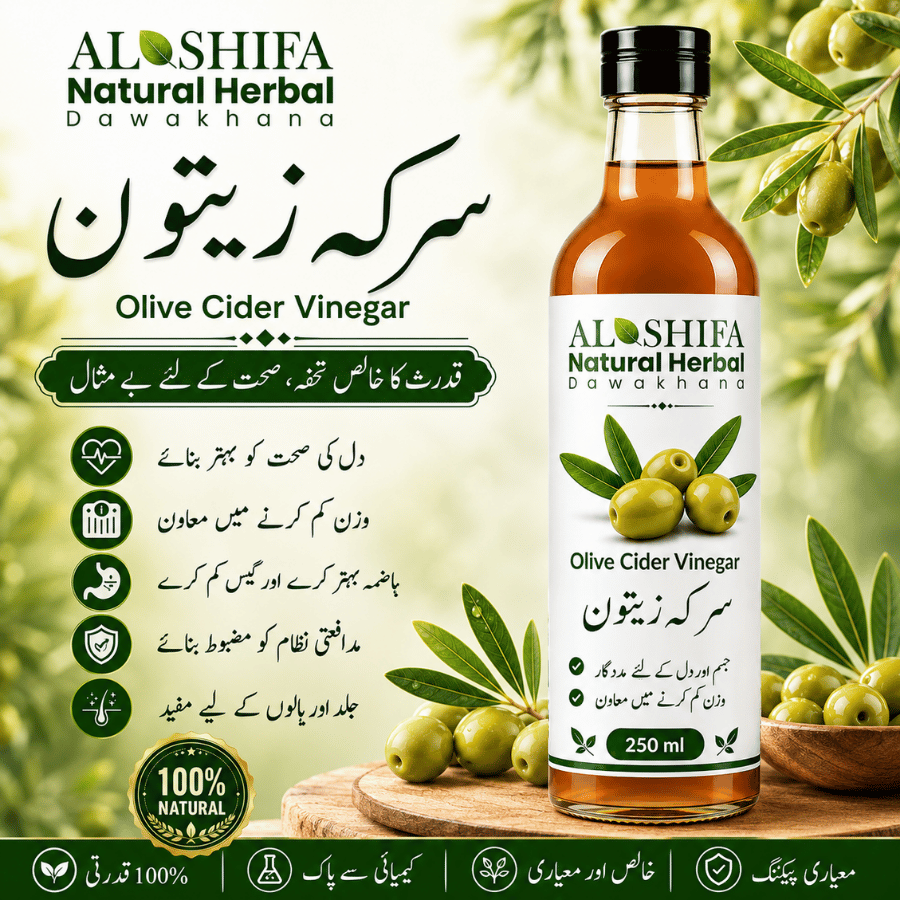
Olive Vinegar / Sirka Zaitoon is a premium specialty vinegar associated with Olea europaea. It has a characteristic sour, acidic taste and distinctive vinegar aroma, making it suitable for salad dressings, marinades, sauces and other culinary preparations.
Al Shifa Olive Vinegar is carefully prepared with attention to ingredient identity, characteristic acidity and flavor, preparation consistency, quality, clean handling and proper packaging.
Key Features:
Usage: Use an appropriate quantity in salad dressings, marinades, sauces, dips and other culinary preparations according to taste. If used as a diluted dietary vinegar, follow the product-label directions.
Important Note: Olive Vinegar is different from olive oil, olive brine and olive leaf extract. Its exact olive-derived starting material, fermentation process and acidity depend on the actual product specification.
Olive Vinegar / Sirka Zaitoon / سرکہ زیتون is a specialty vinegar associated with olive (Olea europaea), the evergreen fruit tree belonging to the Oleaceae family. Vinegar is produced through fermentation in which fermentable sugars are first converted into alcohol and subsequently transformed by acetic acid bacteria into acetic acid, producing the characteristic sour taste and acidity of vinegar.
Olive vinegar should be distinguished from olive oil, olive fruit, olive leaf extract and ordinary grape or apple vinegar. It is a fermented product, and its exact characteristics depend on the olive-derived starting material, fermentation process, acidity and final formulation.
Because the commercial term “Olive Vinegar” does not by itself establish the exact manufacturing process, the finished product should be described according to its actual production specification. It may be produced from an appropriate olive-derived fermentable material or through a formulated process involving olive ingredients, depending on the manufacturer.
Al Shifa Olive Vinegar is carefully selected and prepared with attention to ingredient identity, characteristic acidity and flavor, product quality, clean handling and proper packaging.
Olive Vinegar is a sour, acidic liquid sold as a specialty vinegar associated with olive-derived ingredients.
The botanical reference is:
Olea europaea L.
The olive tree is best known for its fruit and olive oil, but olive-derived materials may also be incorporated into fermented and specialty food products.
Common names include:
Product Name: Olive Vinegar / Sirka Zaitoon
English Name: Olive Vinegar
Urdu Name: سرکہ زیتون
Roman Name: Sirka Zaitoon / Sirka-e-Zaitoon
Botanical Reference: Olea europaea L.
Plant Family: Oleaceae
Plant Part / Source: Olive-Derived Material; Exact Starting Material According to Product Specification
Product Type: Specialty Vinegar / Fermented Acidic Food Product
Production Method: Fermentation / According to Actual Manufacturing Specification
Primary Acid: Acetic Acid
Appearance: Liquid; Color Varies According to Raw Material and Processing
Aroma: Characteristically Acidic with Product-Specific Olive/Fermented Notes
Taste: Sour, Acidic & Characteristic
Primary Applications: Culinary Use, Dressings, Marinades & Traditional Food Use
Olea europaea is the botanical species responsible for the familiar olive fruit.
It belongs to the Oleaceae family and has been cultivated for thousands of years throughout Mediterranean regions and beyond.
The tree produces olives that are widely used for:
However, each olive-derived product has a different composition.
Traditional vinegar production generally involves two biological stages.
First, fermentable sugars are converted into ethanol through alcoholic fermentation.
In the second stage, acetic acid bacteria convert ethanol into acetic acid under suitable conditions.
Acetic acid gives vinegar its characteristic:
The exact fermentation pathway for Al Shifa Olive Vinegar should be stated according to its actual manufacturing process.
Olive fruit is naturally rich in oil and is not compositionally identical to high-sugar fruits such as grapes or apples.
For this reason, the name Olive Vinegar alone should not be used to infer exactly how the vinegar was produced.
Depending on the commercial product, olive vinegar may involve different olive-derived substrates or manufacturing approaches.
Therefore, claims such as:
“Naturally fermented directly from whole olives”
should only be used when confirmed by the actual production specification.
The defining acidic constituent of vinegar is acetic acid.
Acetic acid is responsible for much of vinegar’s characteristic sourness and low pH.
However, the exact acidity of a commercial vinegar should not be guessed.
Statements such as:
should only appear on the product page when supported by the actual product specification.
Olives naturally contain several classes of plant compounds, including phenolic substances.
However, the amount and type of olive-derived compounds retained in finished Olive Vinegar depend heavily on:
Therefore, fresh-olive or extra-virgin-olive-oil research should not automatically be applied to Olive Vinegar.
This distinction is particularly important.
Olive Oil: A lipid-rich product obtained from olive fruit.
Olive Vinegar: An acidic vinegar product associated with olive-derived material and fermentation/formulation.
Therefore:
Olive Vinegar ≠ Olive Oil
Vinegar should not be promoted using the nutritional profile of extra virgin olive oil.
Apple cider vinegar is produced from apple-derived fermentable material.
Olive Vinegar is associated with olive-derived ingredients.
Therefore:
Olive Vinegar ≠ Apple Cider Vinegar
Their raw materials, flavor profiles and plant-derived minor constituents can differ.
Grape vinegar is traditionally made from fermented grape-derived material and is naturally associated with Vitis vinifera.
Olive Vinegar is associated with Olea europaea.
Therefore:
Olive Vinegar ≠ Grape Vinegar
Olive leaf extract is produced from the leaves of Olea europaea and may be standardized for specific compounds.
Olive Vinegar is a completely different product.
Therefore:
Olive Vinegar ≠ Olive Leaf Extract
Research involving concentrated olive leaf extracts should not be attributed to Olive Vinegar.
Olive brine is the salty liquid used during the curing and preservation of table olives.
It may contain:
But olive brine should not automatically be called vinegar.
Therefore:
Olive Brine ≠ Olive Vinegar
Olive Vinegar may be used as an acidic ingredient in food preparation according to taste and the product’s labeling.
Possible culinary applications include:
Its sourness means only a modest quantity may be required depending on the recipe.
Research involving vinegar commonly examines acetic acid or specific types of vinegar.
Other research may separately examine:
These materials are not interchangeable.
Research on olive oil or olive leaf extracts cannot automatically be used to claim that Olive Vinegar has the same composition or effects.
Similarly, general vinegar research does not establish that a particular commercial Olive Vinegar treats a disease.
Vinegar has a long history of culinary and traditional dietary use.
However, traditional use should not be converted into claims that Olive Vinegar cures:
The product is best presented as a specialty acidic food product rather than a disease treatment.
Vinegar and acetic acid have been investigated in relation to post-meal metabolic responses.
This does not make Olive Vinegar a substitute for diabetes medication, dietary management or medical care.
People using glucose-lowering medicines should not change their treatment based on vinegar use without professional advice.
Vinegar is sometimes marketed aggressively for weight loss.
Olive Vinegar should not be described as a guaranteed:
Body-weight management depends on overall dietary intake, activity and numerous individual factors.
Vinegar is acidic.
Frequent direct exposure to concentrated acidic liquids can affect tooth enamel and may irritate the mouth, throat or digestive tract in sensitive individuals.
For dietary use:
People with significant reflux or gastrointestinal sensitivity may tolerate acidic foods differently.
For accurate identification:
Olive Vinegar = Specialty Acidic Vinegar Product
Olive Vinegar ≠ Olive Oil
Olive Vinegar ≠ Olive Leaf Extract
Olive Vinegar ≠ Olive Brine
Olive Vinegar ≠ Apple Cider Vinegar
Olive Vinegar ≠ Grape Vinegar
Culinary/Traditional Use ≠ Medical Treatment
For Olive Vinegar, 100% Pure should only be used according to the actual product specification.
It should not automatically be interpreted as:
These claims require confirmation from the actual manufacturing and ingredient specifications.
Al Shifa Natural Herbal selects and prepares Olive Vinegar with attention to:
For Culinary Use: Add an appropriate quantity to salad dressings, marinades, sauces, dips or other recipes according to taste.
For Diluted Dietary Use: If the product label permits this use, dilute appropriately rather than consuming concentrated vinegar directly.
Avoid excessive consumption.
Do not apply undiluted vinegar to the eyes, damaged skin or other sensitive tissues.
Al Shifa Olive Vinegar is an acidic food product, not a medicine.
The botanical reference Olea europaea identifies the olive source associated with the product, but it does not by itself establish the exact starting material, fermentation method or concentration of olive-derived compounds in the finished vinegar.
Claims such as Raw, Organic, Unfiltered, Naturally Fermented, Preservative-Free or 5% Acidity should only be used when verified by the actual Al Shifa product specification.
Store Olive Vinegar in a cool, clean and dry place, protected from direct sunlight and excessive heat.
Keep the bottle tightly closed after use.
Follow any refrigeration instructions stated on the finished-product label.
Natural sediment or variation should only be described as normal when consistent with the actual product specification.
Al Shifa Natural Herbal offers Olive Vinegar / Sirka Zaitoon / سرکہ زیتون, associated with Olea europaea, for customers seeking a premium specialty vinegar for culinary and traditional food use.
Customers searching for Olive Vinegar in Pakistan, Sirka Zaitoon, سرکہ زیتون, Zaitoon Vinegar, Olea europaea vinegar, Olive Vinegar Lahore, Sirka Zaitoon price in Pakistan, Olive Vinegar price in Pakistan or buy Olive Vinegar online in Pakistan can choose Al Shifa for quality-focused preparation, characteristic vinegar flavor and proper packaging.
Product Name: Olive Vinegar / Sirka Zaitoon
English Name: Olive Vinegar
Urdu Name: سرکہ زیتون
Roman Name: Sirka Zaitoon / Sirka-e-Zaitoon
Botanical Reference: Olea europaea L.
Plant Family: Oleaceae
Source: Olive-Derived Material; Exact Starting Material According to Product Specification
Product Type: Specialty Vinegar / Acidic Food Product
Production Method: Fermentation / According to Actual Manufacturing Specification
Primary Acid: Acetic Acid
Taste: Characteristically Sour & Acidic
Primary Applications: Culinary Use, Dressings, Marinades & Traditional Food Use
Important Note: The name Olive Vinegar does not by itself establish that the product was fermented directly from whole olive fruit. The exact olive-derived starting material, fermentation process, acidity and additional ingredients should be stated according to the actual finished-product manufacturing specification.
سرکہ زیتون زیتون سے منسوب ایک قدرتی سرکہ ہے جسے غذائی استعمال، سلاد، اچار، چٹنیوں اور مختلف کھانوں میں کھٹا ذائقہ پیدا کرنے کے لیے استعمال کیا جاتا ہے۔ زیتون کا سائنسی نام اولیا یوروپیا ہے اور اس کا تعلق اولیسی خاندان سے ہے۔
سرکہ بنیادی طور پر ایک خمیری غذائی پراڈکٹ ہے۔ سرکہ بننے کے عمل میں پہلے قدرتی شکر سے الکحل بنتی ہے اور پھر مخصوص جراثیم اس الکحل کو ایسیٹک ایسڈ میں تبدیل کرتے ہیں۔ یہی ایسیٹک ایسڈ سرکے کی مخصوص کھٹاس، خوشبو اور تیز ذائقے کا بنیادی سبب ہے۔
الشفاء سرکہ زیتون کو قدرتی ذائقے، صاف تیاری، درست کھٹاس اور اچھی پیکنگ کو مدنظر رکھتے ہوئے منتخب کیا جاتا ہے۔
اردو نام: سرکہ زیتون، زیتون کا سرکہ
پنجابی نام: زیتون دا سرکہ
ہندی نام: زیتون سرکہ
فارسی نام: سرکہ زیتون
عربی نام: خل الزيتون
انگریزی نام: اولیو ونیگر
سائنسی نام: اولیا یوروپیا
خاندان: اولیسی
استعمال ہونے والا حصہ: زیتون سے حاصل شدہ غذائی مادہ
پراڈکٹ کی قسم: قدرتی غذائی سرکہ
اہم تیزابی جز: ایسیٹک ایسڈ
استعمال: غذائی اور بیرونی استعمال
کوالٹی: 100% خالص
زیتون ایک سدا بہار درخت کا پھل ہے جو بحیرہ روم کے علاقوں سے خاص طور پر مشہور ہے۔
زیتون کو:
کی شکل میں استعمال کیا جاتا ہے۔
زیتون کے پھل اور زیتون کے تیل کی غذائی ساخت سرکے سے مختلف ہوتی ہے، اس لیے ان کے فوائد کو براہ راست سرکہ زیتون پر لاگو نہ کریں۔
سرکہ ایک کھٹا غذائی محلول ہے جو خمیر کے قدرتی عمل سے تیار ہوتا ہے۔
اس عمل میں دو بنیادی مراحل ہوتے ہیں۔
پہلے مرحلے میں شکر خمیر کے ذریعے الکحل میں تبدیل ہوتی ہے۔
دوسرے مرحلے میں مخصوص جراثیم اس الکحل کو ایسیٹک ایسڈ میں تبدیل کرتے ہیں۔
اسی وجہ سے تیار شدہ سرکے کا ذائقہ تیز، کھٹا اور مخصوص خوشبو والا ہوتا ہے۔
سرکہ زیتون زیتون سے منسوب خمیری سرکہ ہے۔
اس کی اصل خصوصیات کا انحصار:
پر ہوتا ہے۔
اچھی کوالٹی کے غذائی سرکے میں اس کی اصل، تیزابیت اور تیاری واضح ہونا اہم ہے۔
یہ فرق بہت اہم ہے۔
زیتون کا تیل زیتون کے پھل سے حاصل ہونے والا چکنائی والا تیل ہے۔
سرکہ زیتون ایک کھٹا خمیری محلول ہے جس میں ایسیٹک ایسڈ بنیادی تیزابی جز ہوتا ہے۔
زیتون کے تیل میں موجود چکنائیاں اور سرکے کی کیمیائی ساخت ایک جیسی نہیں۔
اس لیے زیتون کے تیل کے تمام غذائی فوائد کو سرکہ زیتون کے فوائد نہ سمجھیں۔
سرکہ زیتون کی رنگت تیاری اور فلٹریشن کے مطابق مختلف ہو سکتی ہے۔
یہ:
نظر آ سکتا ہے۔
قدرتی اور کم فلٹر شدہ سرکے میں ہلکی تلچھٹ بھی پیدا ہو سکتی ہے۔
اس کا ذائقہ عموما:
ہو سکتا ہے۔
کھٹاس کا اصل درجہ سرکے میں موجود ایسیٹک ایسڈ کی مقدار پر منحصر ہوتا ہے۔
ایسیٹک ایسڈ سرکے کا بنیادی تیزابی جز ہے۔
یہی سرکے کو:
دیتا ہے۔
غذائی سرکے میں ایسیٹک ایسڈ کی مقدار محدود ہوتی ہے۔ اسے صنعتی یا مرتکز ایسیٹک ایسڈ کے برابر نہ سمجھیں۔
سرکہ کی تیاری میں خمیر کا عمل اہم ہے۔
صحیح طریقے سے تیار سرکے میں شکر پہلے الکحل اور پھر ایسیٹک ایسڈ میں تبدیل ہوتی ہے۔
مکمل خمیر کے بعد تیار سرکہ اپنی مخصوص کھٹاس حاصل کرتا ہے۔
گھریلو یا نامکمل خمیر شدہ محلول اور معیاری تیار شدہ غذائی سرکہ ایک جیسی چیزیں نہیں ہیں۔
سرکہ زیتون کو مختلف غذاؤں میں استعمال کیا جا سکتا ہے۔
مثال کے طور پر:
اسے ہمیشہ خوراک کے ذائقے اور اپنی برداشت کے مطابق مقدار میں استعمال کریں۔
سرکہ زیتون کو سلاد ڈریسنگ میں استعمال کیا جا سکتا ہے۔
اسے زیتون کے تیل، جڑی بوٹیوں اور دوسرے غذائی اجزا کے ساتھ ملا کر ڈریسنگ تیار کی جا سکتی ہے۔
یہ سلاد کو کھٹا اور تازہ ذائقہ دیتا ہے۔
سرکہ مختلف اچاروں میں اپنی کھٹاس کی وجہ سے استعمال ہوتا ہے۔
اچار بناتے وقت صرف ذائقہ نہیں بلکہ سرکے کی تیزابیت بھی اہم ہوتی ہے، خاص طور پر اگر خوراک کو زیادہ عرصے تک محفوظ رکھنا ہو۔
گھریلو محفوظ خوراک کے لیے آزمودہ ترکیب اور درست تیزابیت استعمال کریں۔
سرکہ زیتون کو گوشت، مرغی یا دوسری غذاؤں کی میرینیشن میں محدود مقدار میں استعمال کیا جا سکتا ہے۔
اس کی تیزابیت:
بہت زیادہ سرکہ گوشت کے ذائقے اور ساخت کو ضرورت سے زیادہ تیز کر سکتا ہے۔
سرکہ کھانے میں ذائقہ اور تیزابیت شامل کرتا ہے۔
کچھ افراد اسے کھانے کے ساتھ آسانی سے برداشت کرتے ہیں جبکہ کچھ افراد میں زیادہ تیزابیت:
بڑھا سکتی ہے۔
اگر سرکہ استعمال کرنے سے معدے کی تکلیف بڑھے تو مقدار کم کریں یا استعمال بند کریں۔
سرکے اور ایسیٹک ایسڈ پر ہونے والی جدید تحقیق میں کھانے کے بعد خون میں گلوکوز کے ردعمل پر اثرات کا مطالعہ کیا گیا ہے۔
تاہم سرکہ ذیابیطس کی دوا کا متبادل نہیں۔
اگر آپ شوگر کی دوا یا انسولین استعمال کرتے ہیں تو سرکہ کو علاج سمجھ کر اپنی دوا میں تبدیلی نہ کریں۔
سرکے کے استعمال اور جسمانی وزن کے حوالے سے بھی تحقیق کی گئی ہے، لیکن صرف سرکہ استعمال کرنا وزن کم کرنے کا مکمل طریقہ نہیں۔
وزن کے لیے بنیادی چیزیں:
ہیں۔
سرکہ کو وزن کم کرنے والی دوا نہ سمجھیں۔
کھانے میں سرکہ شامل کرنے سے ذائقہ تبدیل ہوتا ہے اور کچھ افراد میں کھانے کے بعد پیٹ بھرنے کا احساس مختلف ہو سکتا ہے۔
لیکن صرف سرکہ استعمال کرکے بھوک کو غیر ضروری طور پر دبانا درست طریقہ نہیں۔
روزمرہ خوراک میں پروٹین، سبزیاں، پھل اور غذائی فائبر زیادہ اہم ہیں۔
سرکہ زیتون کو خالی پیٹ پینا ضروری نہیں۔
خاص طور پر مرتکز شکل میں براہ راست پینے سے:
ہو سکتا ہے۔
اگر غذائی استعمال مطلوب ہو تو اسے خوراک، سلاد یا مناسب مقدار میں پانی کے ساتھ استعمال کرنا زیادہ بہتر ہے۔
سرکہ تیزابی ہوتا ہے۔
بار بار خالص سرکہ پینے سے تیزاب:
کو متاثر کر سکتا ہے۔
اس لیے بڑی مقدار میں خالص سرکہ براہ راست پینا درست نہیں۔
اگر سرکہ زیتون کو مشروب کی شکل میں استعمال کرنا ہو تو بہت کم مقدار کو کافی پانی میں ملا کر استعمال کریں۔
تیزابیت کی وجہ سے ہر شخص کے لیے اس طرح استعمال ضروری نہیں۔
معدے کی جلن، السر یا ریفلوکس والے افراد خاص احتیاط کریں۔
سرکے کی تیزابیت دانتوں کی بیرونی سخت سطح کو متاثر کر سکتی ہے۔
سرکہ والا مشروب استعمال کرنے کے بعد:
سرکہ پینے کے فوراً بعد زور سے برش کرنے سے بھی گریز کریں۔
جن افراد کو:
کی شکایت رہتی ہو، ان میں سرکہ علامات بڑھا سکتا ہے۔
ایسی صورت میں اپنی برداشت کے مطابق استعمال کم کریں یا بند کریں۔
معدے یا آنت کے السر والے افراد خالص یا زیادہ مقدار میں سرکہ استعمال کرنے سے گریز کریں۔
تیزابی غذائیں کچھ افراد میں درد یا جلن بڑھا سکتی ہیں۔
مسلسل معدے کے درد، کالے پاخانے یا خون کی الٹی کی صورت میں فوری طبی امداد حاصل کریں۔
سرکہ زیتون تیزابی پراڈکٹ ہے۔
اسے خالص حالت میں جلد پر لگانے سے:
ہو سکتا ہے۔
خاص طور پر حساس جلد، زخم یا جلی ہوئی جلد پر خالص سرکہ استعمال نہ کریں۔
سرکہ بعض ہیئر رنس فارمولوں میں بہت زیادہ پانی کے ساتھ پتلا کرکے استعمال کیا جاتا ہے۔
اگر سرکہ زیتون بالوں یا سر کی جلد کے لیے استعمال کرنا ہو تو:
سر کی زخمی یا بہت حساس جلد پر استعمال نہ کریں۔
سرکہ آنکھوں میں شدید جلن پیدا کر سکتا ہے۔
آنکھ میں چلا جائے تو فوراً کافی مقدار میں صاف پانی سے دھوئیں۔
شدید درد، مسلسل سرخی یا نظر میں تبدیلی کی صورت میں طبی امداد حاصل کریں۔
حمل کے دوران غذائی معیار کا سرکہ کھانے میں محدود مقدار میں استعمال کیا جا سکتا ہے۔
بڑی مقدار میں خالص سرکہ پینے کی ضرورت نہیں۔
اگر حمل کے دوران معدے کی جلن یا ریفلوکس ہو تو سرکہ علامات بڑھا سکتا ہے۔
دودھ پلانے کے دوران غذائی سرکہ عام کھانوں میں محدود مقدار میں استعمال کیا جا سکتا ہے۔
اپنی طرف سے بہت زیادہ سرکہ روزانہ پینے کی ضرورت نہیں۔
بچوں کو خالص سرکہ پینے کے لیے نہ دیں۔
کھانے میں استعمال ہونے والی معمولی غذائی مقدار الگ بات ہے۔
سرکہ کی بوتل بچوں کی پہنچ سے دور رکھیں تاکہ وہ اسے براہ راست نہ پی سکیں۔
اگر آپ مستقل ادویات استعمال کرتے ہیں، خاص طور پر:
تو بڑی مقدار میں سرکہ باقاعدگی سے استعمال کرنے سے پہلے معالج سے پوچھیں۔
عام غذائی مقدار اور بہت زیادہ روزانہ استعمال میں فرق ہے۔
قدرتی یا کم فلٹر شدہ سرکے میں وقت کے ساتھ ہلکی تلچھٹ یا دھندلا پن پیدا ہو سکتا ہے۔
یہ ہر صورت خرابی کی علامت نہیں۔
لیکن اگر سرکے میں:
نظر آئے تو استعمال سے پہلے کوالٹی چیک کریں۔
سرکہ زیتون کے لیے 100% خالص سے مراد یہ ہونی چاہیے کہ اصل سرکہ ہو اور اس میں غیر ضروری مصنوعی ذائقہ یا غیر ضروری ملاوٹ شامل نہ کی گئی ہو۔
اس کا مطلب یہ نہیں کہ:
غذائی سرکہ ہمیشہ محدود تیزابیت والا محلول ہوتا ہے۔
اچھی کوالٹی کے سرکہ زیتون میں درج ذیل باتیں اہم ہیں:
صرف بہت زیادہ کھٹا ہونا اچھی کوالٹی کی واحد پہچان نہیں۔
الشفاء نیچرل ہربل دواخانہ میں سرکہ زیتون کے لیے درج ذیل باتوں کو اہمیت دی جاتی ہے:
درست پراڈکٹ: اصل زیتون سے منسوب غذائی سرکے کی پہچان اہم ہے۔
100% خالص: غیر ضروری مصنوعی ملاوٹ سے پاک سرکے کو اہمیت دی جاتی ہے۔
قدرتی کھٹاس: سرکے کے مخصوص کھٹے ذائقے اور خوشبو کو اہمیت دی جاتی ہے۔
صاف تیاری: صفائی اور محفوظ ہینڈلنگ اہم ہے۔
اچھی کوالٹی: ذائقہ، خوشبو اور مجموعی پراڈکٹ کوالٹی کو اہمیت دی جاتی ہے۔
محفوظ پیکنگ: سرکے کی تیزابیت کے لیے موزوں اور مضبوط بوتل کو اہمیت دی جاتی ہے۔
الشفاء نیچرل ہربل دواخانہ سنہ 1999 سے قدرتی جڑی بوٹیوں، تیلوں، سرکوں اور مختلف ہربل و غذائی اشیا کی سپلائی کر رہا ہے۔
الشفاء سرکہ زیتون میں قدرتی ذائقے، صاف تیاری، مخصوص کھٹاس، غیر ضروری ملاوٹ سے پاک کوالٹی اور محفوظ پیکنگ کو اہمیت دی جاتی ہے۔
اسے سلاد، اچار، چٹنی، میرینیشن اور مختلف کھانوں میں ذائقے کے مطابق استعمال کیا جا سکتا ہے۔
سرکہ زیتون کو ٹھنڈی، خشک اور روشنی سے محفوظ جگہ پر کسی بوتل میں اچھی طرح پیک کر کے رکھیں۔
تیز دھوپ اور زیادہ گرمی سے دور رکھیں۔
ہر استعمال کے بعد بوتل کا ڈھکن اچھی طرح بند کریں۔
بوتل میں پانی یا دوسری غذائی اشیا داخل نہ ہونے دیں۔
اگر لیبل پر کھولنے کے بعد محفوظ رکھنے کی مخصوص ہدایت موجود ہو تو اس پر عمل کریں۔
سرکہ زیتون تیزابی غذائی پراڈکٹ ہے۔
اسے بڑی مقدار میں خالص حالت میں براہ راست نہ پئیں۔
معدے کی جلن، ریفلوکس یا السر میں خاص احتیاط کریں۔
خالص سرکہ آنکھوں، زخموں اور حساس جلد پر استعمال نہ کریں۔
شوگر یا دوسری مستقل ادویات استعمال کرنے والے افراد بہت زیادہ روزانہ استعمال سے پہلے معالج سے پوچھیں۔
سرکہ زیتون کو زیتون کے تیل کا متبادل نہ سمجھیں کیونکہ دونوں کی ساخت اور غذائی خصوصیات مختلف ہیں۔
سرکہ زیتون زیتون سے منسوب ایک خمیری غذائی سرکہ ہے جس کی مخصوص کھٹاس کا بنیادی سبب ایسیٹک ایسڈ ہوتا ہے۔
اسے سلاد، چٹنی، اچار، میرینیشن اور مختلف کھانوں میں کھٹا ذائقہ پیدا کرنے کے لیے استعمال کیا جا سکتا ہے۔
سرکہ اور زیتون کا تیل دو الگ پراڈکٹس ہیں، اس لیے زیتون کے تیل کے فوائد کو براہ راست سرکہ زیتون پر لاگو نہ کریں۔
سرکے میں موجود ایسیٹک ایسڈ کے حوالے سے خون میں گلوکوز اور دوسرے غذائی اثرات پر تحقیق موجود ہے، لیکن سرکہ کسی تجویز کردہ دوا کا متبادل نہیں۔
اچھی کوالٹی کے سرکہ زیتون میں اصل پراڈکٹ کی پہچان، صاف تیاری، قدرتی کھٹاس، درست تیزابیت، غیر ضروری ملاوٹ سے پاک کوالٹی اور محفوظ پیکنگ اہم ہیں۔