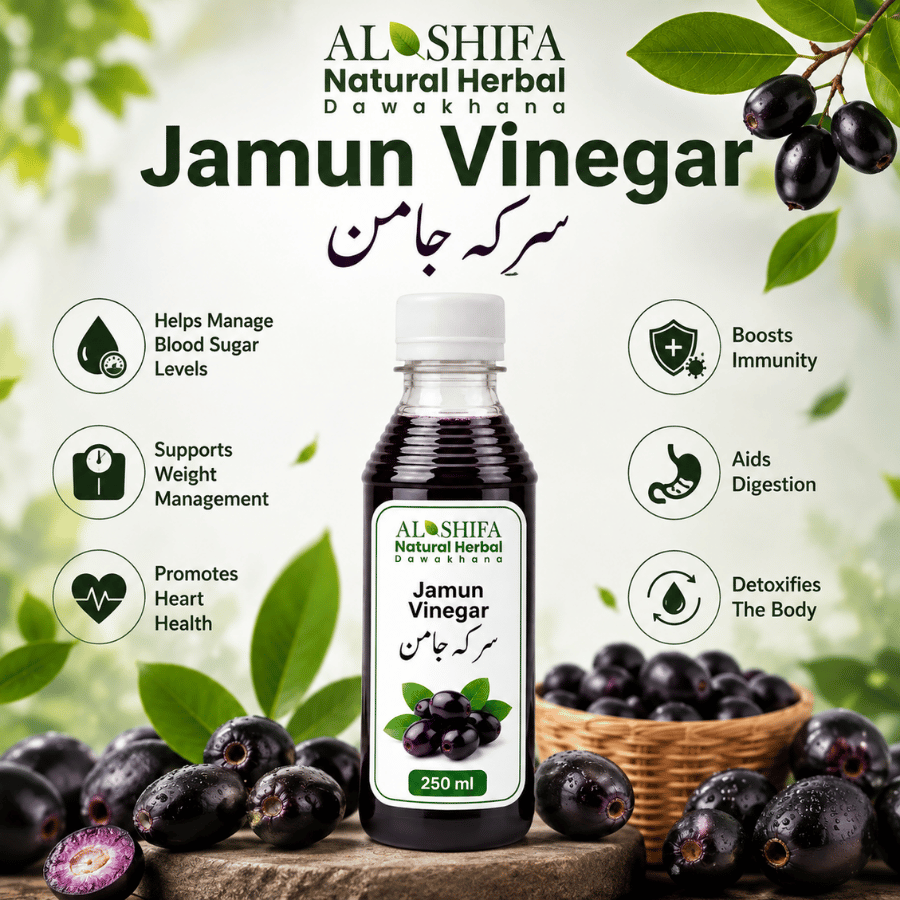
Jamun Vinegar / Sirka Jamun – سرکہ جامن is a naturally tangy fruit-based fermented vinegar prepared from Jamun fruit (Syzygium cumini), offering a distinctive fruity character for everyday culinary use.
How to Use: Use according to taste in salads, chutneys, sauces, marinades, and suitable pickling recipes. If consumed as a beverage, dilute appropriately according to product directions.
Storage: Keep tightly closed in a cool, dry place away from direct sunlight and excessive heat.
Important Note: Jamun Vinegar is a culinary food product, not a treatment for diabetes, weight loss, cholesterol, or other medical conditions. Avoid consuming large quantities of undiluted vinegar.
Jamun Vinegar / Sirka Jamun – سرکہ جامن is a distinctive fruit-based fermented vinegar prepared from Jamun fruit, traditionally valued across South Asia for its characteristic deep color, mildly fruity aroma, and naturally tangy flavor. Through an appropriate fermentation process, fruit-derived sugars are transformed and the resulting vinegar develops its characteristic acidity, primarily from acetic acid.
Jamun, also known as Java Plum, Indian Blackberry, or Black Plum, is the fruit of Syzygium cumini (L.) Skeels, a member of the Myrtaceae family. The fruit naturally contains various organic acids, pigments, polyphenols, and other plant compounds. The composition of finished Jamun Vinegar, however, depends on the fruit quality, fermentation method, filtration, maturation, acidity, and final processing.
Sirka Jamun is best regarded as a fermented culinary fruit product, not as a medicine. Although Jamun and vinegar have both been investigated scientifically for various nutritional and metabolic properties, ordinary Jamun Vinegar should not be presented as a treatment for diabetes, obesity, high cholesterol, digestive disorders, or other diseases.
Quality Jamun Vinegar should be prepared from suitable Jamun fruit or appropriate Jamun-derived material under hygienic fermentation conditions.
Proper fermentation helps develop its characteristic:
It can be incorporated into everyday culinary preparations according to taste and product directions.
Product Name: Jamun Vinegar
Urdu Name: سرکہ جامن
Roman Name: Sirka Jamun
English Alternative Names: Java Plum Vinegar / Indian Blackberry Vinegar / Black Plum Vinegar
Fruit: Jamun / Java Plum
Botanical Name: Syzygium cumini (L.) Skeels
Family: Myrtaceae
Plant Part: Fruit
Product Type: Fermented Fruit Vinegar
Product Category: Vinegar / Fermented Food Product / Culinary Condiment
Form: Liquid
Taste: Characteristically Sour, Tangy & Mildly Fruity
Color: May range from reddish-brown to deep brown or purple-brown depending on fruit, fermentation, filtration, and processing
Primary Acid: Acetic Acid
Jamun Vinegar is a fermented fruit product made using Jamun fruit or suitable Jamun-derived material.
Vinegar production typically involves two major biological stages.
During the initial fermentation, yeasts convert fermentable sugars present in the fruit into alcohol.
During the subsequent stage, acetic acid bacteria convert much of this alcohol into acetic acid, creating the characteristic sourness and acidity associated with vinegar.
The exact manufacturing process can vary depending on whether whole fruit, juice, pulp, or another suitable Jamun fruit preparation is used.
Jamun is a tropical and subtropical fruit widely recognized throughout the Indian subcontinent.
The ripe fruit typically has:
Its natural color is partly associated with plant pigments present in the fruit.
Jamun fruit has a long history of culinary and traditional use, but the properties of fresh Jamun fruit should not automatically be considered identical to those of fermented Jamun Vinegar.
Fermentation transforms the original fruit material considerably.
Naturally occurring fruit sugars provide a substrate that yeast can convert into alcohol under appropriate conditions.
Acetic acid bacteria subsequently convert alcohol into acetic acid.
Depending on the production method, the vinegar may be allowed to mature so that its flavor and aroma become more balanced.
The final product may be filtered before bottling, or it may be left relatively unfiltered depending on the intended product style.
These processing differences can influence appearance, aroma, sediment, and flavor.
Acetic acid is primarily responsible for the characteristic sour taste and acidity of vinegar.
Its concentration depends on the fermentation process and final product formulation.
Acidity is particularly important when vinegar is used for food preservation.
Sour taste alone should not be used to determine whether a vinegar has sufficient acidity for shelf-stable pickling or canning.
Fresh Jamun fruit naturally contains several classes of plant compounds.
Depending on fruit variety, maturity, processing, and other factors, these may include:
Fermentation can alter the amounts and forms of some of these compounds.
Therefore, the chemical composition of Jamun Vinegar is not identical to fresh Jamun fruit.
The characteristic purple coloration of ripe Jamun is associated partly with anthocyanins, a group of naturally occurring plant pigments.
Anthocyanins are widely studied as components of deeply colored fruits and vegetables.
However, their concentration can change during:
Therefore, the deep color of fresh Jamun does not guarantee a particular anthocyanin concentration in finished vinegar.
Jamun fruit contains naturally occurring polyphenols and related phenolic compounds.
Some fruit-derived compounds may remain after fermentation, but their final levels depend on manufacturing conditions.
The presence of polyphenols does not mean that Jamun Vinegar should be marketed as a medicine.
Jamun fruit and its naturally occurring plant compounds have been studied for antioxidant properties, particularly in laboratory and experimental settings.
Fermented fruit products may also contain compounds that demonstrate antioxidant activity.
However, laboratory antioxidant activity is not equivalent to proving that Jamun Vinegar prevents or treats disease in humans.
The actual concentration of such compounds in a commercial vinegar should be determined through product-specific analysis rather than assumed.
Fresh Jamun and Jamun Vinegar are related but distinctly different products.
Provides the nutritional components naturally present in whole fruit, including water, carbohydrates, dietary fiber, and various plant compounds.
Is a fermented liquid in which fruit sugars and other constituents undergo substantial changes during fermentation.
Therefore, nutritional or traditional information about whole Jamun fruit should not automatically be transferred to Jamun Vinegar.
Jamun fruit and Jamun seeds are also chemically different plant materials.
Jamun seeds have their own traditional uses and phytochemical composition.
Research conducted on Jamun seed powder or Jamun seed extract should not be used as evidence for ordinary Jamun fruit vinegar unless the vinegar formulation specifically contains those ingredients and appropriate evidence exists for the finished product.
This distinction is particularly important when discussing blood sugar.
Jamun has a long history of use as a seasonal fruit and in various traditional preparations across South Asia.
Fruit vinegars have likewise been used as:
Jamun Vinegar combines the culinary character of fermented vinegar with the distinctive fruit source of Jamun.
Traditional use, however, should not be interpreted as proof of disease treatment.
Jamun Vinegar can be incorporated into a variety of foods.
Common culinary applications may include:
Its distinctive fruit-derived character can provide an alternative to more commonly used vinegars.
Sirka Jamun may be combined with oil, herbs, spices, and other seasonings to prepare a tangy salad dressing.
The amount can be adjusted according to the desired level of acidity and flavor.
Jamun Vinegar can be used as an acidic component in suitable marinades.
It may be combined with ingredients such as:
Acidic ingredients can influence the surface texture and flavor of foods. Excessively long marination may negatively affect the texture of certain foods.
Vinegar is widely used in pickling because of its acidity.
However, safe shelf-stable preservation requires adequate and reliably measured acidity.
If Jamun Vinegar is intended for home canning or long-term shelf-stable pickling, use only a tested preservation recipe that specifies the required vinegar acidity.
Do not assume that artisanal or homemade Jamun Vinegar has adequate acidity simply because it tastes strongly sour.
Jamun is strongly associated with blood-sugar-related traditional use in South Asian herbal traditions, particularly certain preparations made from its seeds.
This requires careful distinction.
Research on:
should not automatically be applied to ordinary Jamun fruit vinegar.
Similarly, vinegar itself has been investigated for possible effects on post-meal glucose responses in certain contexts.
However, Jamun Vinegar should not be claimed to:
People with diabetes should continue appropriate dietary, monitoring, and medical management.
People using insulin or other blood-glucose-lowering medicines should be particularly cautious about consuming unusually large quantities of vinegar or concentrated herbal preparations for medicinal purposes.
Regular culinary use is different from high-dose medicinal-style consumption.
Any diagnosed diabetes should be managed according to an appropriate healthcare plan rather than relying on vinegar.
Jamun Vinegar should not be presented as a guaranteed weight-loss product.
Although vinegar has been studied in relation to appetite, metabolic responses, and body weight, ordinary Jamun Vinegar should not be claimed to:
Sustainable weight management depends on overall nutrition, calorie intake, physical activity, sleep, health conditions, and long-term lifestyle habits.
Jamun fruit compounds and vinegar have both been subjects of metabolic research.
This does not establish Jamun Vinegar as a treatment for cardiovascular disease.
It should not be claimed to:
It is more appropriately presented as a fermented culinary ingredient within an overall balanced dietary pattern.
The acidic taste of vinegar can complement many foods, but Jamun Vinegar should not be described as a cure for digestive disorders.
It should not be claimed to treat:
In fact, acidic products can worsen heartburn or digestive discomfort in some sensitive individuals.
Jamun Vinegar should not be promoted as something that:
The body uses multiple organs and physiological systems to process and eliminate various substances.
Vinegar is a food ingredient, not a universal detoxification treatment.
Some people prefer to use food-grade fruit vinegar diluted in water.
Because Jamun Vinegar is acidic, it should not be consumed in large quantities undiluted.
If the specific product is suitable for dietary beverage use, follow its recommended dilution instructions.
Large medicinal-style quantities should not be assumed to provide greater benefit.
Frequent contact with acidic beverages can gradually affect dental enamel.
When using diluted Jamun Vinegar:
Do not apply concentrated vinegar directly to teeth.
Undiluted or excessive vinegar can irritate sensitive tissues.
Potential problems may include:
People with significant acid reflux or sensitive digestive systems may need to limit acidic foods and beverages according to individual tolerance.
Some naturally fermented and relatively unfiltered vinegars may contain cloudy strands or sediment commonly referred to as the vinegar mother.
This material can contain cellulose and microorganisms associated with vinegar fermentation.
However:
Depending on processing, Jamun Vinegar may develop slight:
These characteristics can occur naturally in minimally filtered fruit vinegars.
However, visible mold, severe bottle swelling, abnormal gas formation, offensive odor, or obvious spoilage should not be considered normal.
Normal culinary quantities of vinegar differ substantially from consuming large quantities every day as a health remedy.
People taking regular medicines should be cautious with excessive medicinal-style vinegar intake, particularly those using medicines that influence:
Jamun Vinegar should never be used to replace prescribed treatment.
Properly prepared food-grade Jamun Vinegar used in normal culinary quantities is different from high-dose medicinal use.
During pregnancy and breastfeeding:
Jamun Vinegar may be used as an ingredient in suitable foods intended for children.
However, concentrated vinegar should not be given directly to young children as a health remedy.
Keep the bottle safely out of their reach.
Quality Jamun Vinegar should ideally have:
If claims such as naturally fermented, raw, unfiltered, preservative-free, or with mother are used, they should accurately reflect the actual product.
As Jamun is a natural agricultural fruit, reasonable variation between batches may occur.
Differences may appear in:
Fruit variety, maturity, growing conditions, fermentation, maturation, filtration, and storage can all influence the finished vinegar.
Jamun Vinegar can be used according to recipe and taste requirements.
If consumed as a beverage and the product is specifically suitable for that purpose, dilute according to the product directions rather than drinking concentrated vinegar directly.
To maintain quality:
Storage requirements can vary according to processing, filtration, pasteurization, and formulation.
Jamun Vinegar / Sirka Jamun – سرکہ جامن combines the characteristic tanginess of fermented vinegar with the distinctive fruit character of Jamun.
Product Name: Jamun Vinegar
Urdu Name: سرکہ جامن
Roman Name: Sirka Jamun
English Alternative Names: Java Plum Vinegar / Indian Blackberry Vinegar / Black Plum Vinegar
Fruit: Jamun / Java Plum
Botanical Name: Syzygium cumini (L.) Skeels
Botanical Family: Myrtaceae
Plant Part: Fruit
Product Type: Fermented Fruit Vinegar
Product Category: Vinegar / Fermented Food Product / Culinary Condiment
Form: Liquid
Primary Acid: Acetic Acid
Naturally Occurring Constituents: Depending on fruit quality and processing, Jamun-derived polyphenols, anthocyanins, phenolic acids, flavonoid-related compounds, organic acids, pigments, and other plant compounds may be present.
Common Uses: Salad dressings, marinades, chutneys, sauces, suitable pickling recipes, and general culinary seasoning
Storage: Keep securely closed in a cool, dry place protected from excessive heat, direct sunlight, and contamination.
Jamun Vinegar / Sirka Jamun – سرکہ جامن is best understood as a fermented Jamun fruit-based culinary product. Its natural acidity, characteristic tanginess, and Jamun-derived flavor make it a versatile addition to a variety of traditional and modern recipes.
Jamun fruit has an established place in South Asian food traditions, while fermentation gives the finished vinegar properties distinct from fresh Jamun, Jamun seeds, seed powder, or concentrated botanical extracts. Claims associated with those other preparations should therefore not automatically be transferred to Jamun Vinegar.
Important Safety Note: Jamun Vinegar is a fermented culinary food product and is not intended to diagnose, treat, cure, or prevent disease. It should not be promoted as a treatment for diabetes, obesity, high cholesterol, high blood pressure, heart disease, or digestive disorders. Research or traditional use involving Jamun seeds, seed powder, or concentrated extracts should not be treated as evidence for ordinary Jamun fruit vinegar. Avoid drinking large quantities of undiluted vinegar, and use only appropriately verified acidity when vinegar is required for shelf-stable food preservation.
سرکہ جامن جامن کے پھل سے تیار کیا جانے والا ایک منفرد قدرتی خمیر شدہ پھلوں کا سرکہ ہے۔ جامن برصغیر کا معروف موسمی پھل ہے جو اپنی گہری رنگت، مخصوص کھٹے میٹھے ذائقے اور قدرتی نباتاتی اجزاء کی وجہ سے پہچانا جاتا ہے۔ مناسب خمیر کے عمل سے جامن میں موجود قابلِ خمیر شکر مختلف مراحل سے گزرتی ہے اور بالآخر سرکے کی مخصوص تیزابیت پیدا ہوتی ہے، جس کا بنیادی سبب ایسیٹک تیزاب ہے۔
جامن کے درخت کی نباتاتی شناخت سائزیجیم کیومینی کے نام سے کی جاتی ہے اور اس کا تعلق مرٹاسی خاندان سے ہے۔ سرکہ تیار کرنے کے لیے بنیادی طور پر اس کا پھل استعمال کیا جاتا ہے۔
جامن کے تازہ پھل میں قدرتی طور پر مختلف نامیاتی تیزاب، پولی فینولز، اینتھوسائننز، فلیوونائڈز سے متعلق مرکبات، فینولک اجزاء اور قدرتی رنگ دار مادے پائے جا سکتے ہیں۔ تاہم خمیر کے عمل کے بعد تیار ہونے والے سرکے کی ترکیب تازہ جامن سے مختلف ہوتی ہے۔
سرکہ جامن کو بنیادی طور پر خمیر شدہ غذائی اور پکوانی مصنوعات سمجھنا چاہیے، نہ کہ کسی بیماری کے علاج کی دوا۔
نام: سرکہ جامن
متبادل نام: جامن کا سرکہ، خمیر شدہ جامن کا سرکہ
ماخذ: جامن کا پھل
نباتاتی نام: سائزیجیم کیومینی
نباتاتی خاندان: مرٹاسی
استعمال ہونے والا حصہ: پھل
قسم: خمیر شدہ پھلوں کا سرکہ
درجہ بندی: غذائی سرکہ، خمیر شدہ غذائی مصنوعات، پکوانی جزو
شکل: مائع
ذائقہ: ترش، تیز اور ہلکی پھل دار خصوصیات لیے ہوئے
رنگت: جامن، خمیر، چھاننے اور تیاری کے طریقے کے مطابق سرخی مائل بھوری، گہری بھوری یا جامنی مائل بھوری ہو سکتی ہے
بنیادی تیزاب: ایسیٹک تیزاب
سرکہ جامن ایک خمیر شدہ غذائی مصنوعات ہے جو جامن کے پھل یا اس سے حاصل مناسب پھل دار مواد سے تیار کی جاتی ہے۔
سرکہ تیار ہونے کے عمل میں عموماً دو اہم خمیری مراحل شامل ہوتے ہیں۔
پہلے مرحلے میں جامن میں موجود قابلِ خمیر قدرتی شکر مناسب خمیر کی مدد سے الکحل میں تبدیل ہو سکتی ہے۔
اس کے بعد سرکہ بنانے والے مخصوص جراثیم اس الکحل کو ایسیٹک تیزاب میں تبدیل کرتے ہیں۔
یہی ایسیٹک تیزاب تیار سرکے کو اس کی مخصوص ترشی اور تیزابیت فراہم کرتا ہے۔
اصل تیاری میں جامن کا رس، گودا یا دیگر مناسب پھل دار مواد استعمال کیا جا سکتا ہے، اس لیے مختلف تیار کنندگان کی مصنوعات میں معمولی فرق ممکن ہے۔
خمیر وہ بنیادی عمل ہے جو پھلوں کے رس یا پھل دار مواد کو سرکے میں تبدیل کرتا ہے۔
جامن میں قدرتی طور پر موجود شکر مناسب خمیر کی سرگرمی کے ذریعے الکحل اور دوسرے خمیری مرکبات میں تبدیل ہو سکتی ہے۔
بعد کے مرحلے میں مخصوص سرکہ ساز جراثیم الکحل کو ایسیٹک تیزاب میں تبدیل کرتے ہیں۔
بعض طریقوں میں سرکے کو کچھ عرصے کے لیے محفوظ رکھا جاتا ہے تاکہ اس کی خوشبو، ترشی اور مجموعی ذائقہ زیادہ متوازن ہو سکے۔
تیار سرکے کو مصنوعات کی مطلوبہ نوعیت کے مطابق چھانا جا سکتا ہے اور پھر صاف ستھری بوتلوں میں محفوظ کیا جاتا ہے۔
خمیر، پختگی اور چھاننے کے طریقوں میں فرق تیار سرکے کے ذائقے، خوشبو، رنگت اور شفافیت کو متاثر کر سکتا ہے۔
جامن برصغیر میں پایا جانے والا معروف پھل ہے۔ مکمل طور پر پکا ہوا جامن عموماً گہری جامنی سے تقریباً سیاہ رنگت رکھتا ہے۔
اس کی نمایاں قدرتی خصوصیات میں شامل ہیں:
جامن کے پھل کی رنگت میں قدرتی نباتاتی رنگ دار مرکبات اہم کردار ادا کرتے ہیں۔
تاہم تازہ جامن اور خمیر شدہ سرکہ جامن ایک جیسی غذائی مصنوعات نہیں ہیں۔ خمیر کے دوران پھل کی اصل ترکیب میں نمایاں تبدیلیاں واقع ہوتی ہیں۔
سرکے کی مخصوص ترشی اور تیزابیت کا بنیادی سبب ایسیٹک تیزاب ہے۔
اس کی مقدار خمیر کے طریقے اور تیار مصنوعات کی حتمی تیزابیت پر منحصر ہوتی ہے۔
سرکے کو صرف ذائقے سے اس کی درست تیزابیت کا اندازہ نہیں لگایا جا سکتا۔
خصوصاً اگر سرکہ طویل عرصے تک محفوظ کیے جانے والے اچار یا دوسری محفوظ غذاؤں میں استعمال کیا جائے تو اس کی تصدیق شدہ تیزابیت اہم ہوتی ہے۔
تازہ جامن کے پھل میں مختلف قدرتی نباتاتی مرکبات پائے جاتے ہیں۔
ان میں شامل ہو سکتے ہیں:
خمیر کا عمل ان میں سے بعض اجزاء کی مقدار اور کیمیائی صورت کو تبدیل کر سکتا ہے۔
اسی لیے تیار سرکہ جامن کی ترکیب کو تازہ جامن کے پھل کے بالکل مساوی نہیں سمجھنا چاہیے۔
پکے ہوئے جامن کی گہری جامنی رنگت میں اینتھوسائننز نامی قدرتی نباتاتی رنگ دار مرکبات اہم کردار ادا کرتے ہیں۔
یہ مرکبات گہرے رنگ کے مختلف پھلوں اور سبزیوں میں بھی پائے جاتے ہیں۔
ان کی مقدار درج ذیل عوامل سے متاثر ہو سکتی ہے:
اس لیے تازہ جامن کی گہری رنگت کا مطلب یہ نہیں کہ تیار سرکے میں بھی ان مرکبات کی کوئی مخصوص مقدار لازماً موجود ہوگی۔
جامن میں قدرتی طور پر پولی فینولز اور مختلف فینولک مرکبات پائے جاتے ہیں۔
خمیر کے بعد ان میں سے کچھ اجزاء تیار سرکے میں موجود رہ سکتے ہیں، تاہم ان کی مقدار مصنوعات کے طریقۂ تیاری کے مطابق مختلف ہو سکتی ہے۔
صرف ان مرکبات کی موجودگی کو بیماریوں کے علاج یا روک تھام کا ثبوت نہیں سمجھنا چاہیے۔
جامن اور اس کے بعض نباتاتی اجزاء پر ضدِ تکسیدی خصوصیات کے حوالے سے تجربہ گاہی اور دیگر سائنسی تحقیقات کی گئی ہیں۔
اسی طرح بعض خمیر شدہ پھلوں کی مصنوعات میں بھی ضدِ تکسیدی سرگرمی رکھنے والے مرکبات کا مطالعہ کیا گیا ہے۔
تاہم تجربہ گاہ میں کسی مرکب کی ضدِ تکسیدی سرگرمی ظاہر ہونا اس بات کا ثبوت نہیں کہ عام سرکہ جامن انسانی بیماریوں کا علاج یا یقینی روک تھام کرتا ہے۔
تجارتی مصنوعات میں ان اجزاء کی حقیقی مقدار جاننے کے لیے اسی مخصوص مصنوعات کا تجزیہ ضروری ہوتا ہے۔
تازہ جامن اور سرکہ جامن ایک ہی پھل سے متعلق ہونے کے باوجود مختلف مصنوعات ہیں۔
تازہ پھل میں پانی، قدرتی شکر، غذائی ریشہ اور مختلف نباتاتی اجزاء اپنی اصل غذائی شکل میں موجود ہوتے ہیں۔
خمیر کے دوران پھل میں موجود شکر اور متعدد دوسرے اجزاء میں تبدیلی آتی ہے اور تیار مصنوعات میں ایسیٹک تیزاب نمایاں خصوصیت بن جاتا ہے۔
اس لیے تازہ جامن کے تمام غذائی فوائد کو بغیر ثبوت سرکہ جامن سے منسوب نہیں کرنا چاہیے۔
جامن کا پھل اور جامن کی گٹھلی نباتاتی طور پر ایک ہی پودے کے حصے ہیں لیکن ان کی کیمیائی ترکیب ایک جیسی نہیں ہوتی۔
جامن کی گٹھلی کو روایتی طور پر مختلف مقاصد کے لیے استعمال کیا جاتا رہا ہے اور اس پر الگ سائنسی تحقیق بھی موجود ہے۔
لیکن:
پر ہونے والی تحقیق کو عام جامن کے پھل سے تیار سرکے کا ثبوت نہیں سمجھنا چاہیے۔
یہ فرق خصوصاً خون میں شکر سے متعلق دعووں میں بہت اہم ہے۔
جامن برصغیر میں طویل عرصے سے موسمی پھل اور مختلف روایتی غذائی تیاریوں کا حصہ رہا ہے۔
اسی طرح پھلوں سے تیار سرکے روایتی طور پر مختلف پکوانی مقاصد کے لیے استعمال ہوتے رہے ہیں، مثلاً:
سرکہ جامن، جامن کے پھل کی خصوصیات اور خمیر شدہ سرکے کے مخصوص ذائقے کو ایک منفرد غذائی مصنوعات میں یکجا کرتا ہے۔
روایتی استعمال کو کسی بیماری کے علاج کا یقینی ثبوت نہیں سمجھنا چاہیے۔
سرکہ جامن کو مختلف غذائی تیاریوں میں حسبِ ذائقہ شامل کیا جا سکتا ہے۔
عام استعمال میں شامل ہیں:
اس کا منفرد پھل دار اور ترش ذائقہ عام سرکوں کے مقابلے میں مختلف پکوانی تجربہ فراہم کر سکتا ہے۔
سرکہ جامن کو تیل، جڑی بوٹیوں، مصالحوں اور دوسرے غذائی اجزاء کے ساتھ ملا کر سلاد کے لیے ترش آمیزہ تیار کیا جا سکتا ہے۔
اس کی مقدار ذائقے اور مطلوبہ ترشی کے مطابق رکھی جا سکتی ہے۔
سرکہ جامن کو گوشت، سبزیوں اور دیگر مناسب غذاؤں کے مصالحہ دار آمیزوں میں ترش جزو کے طور پر شامل کیا جا سکتا ہے۔
اسے حسبِ ترکیب درج ذیل اجزاء کے ساتھ استعمال کیا جا سکتا ہے:
بہت زیادہ تیزابیت یا ضرورت سے زیادہ دیر تک آمیزے میں رکھنے سے بعض غذاؤں کی سطحی ساخت متاثر ہو سکتی ہے۔
سرکہ اپنی تیزابیت کی وجہ سے مختلف اچاروں میں روایتی طور پر استعمال کیا جاتا ہے۔
لیکن طویل عرصے تک کمرے کے درجہ حرارت پر محفوظ کیے جانے والے اچار میں تیزابیت کی مناسب اور قابلِ اعتماد مقدار غذائی حفاظت کے لیے بہت اہم ہے۔
ایسی صورت میں آزمودہ ترکیب اور مطلوبہ تصدیق شدہ تیزابیت رکھنے والا سرکہ استعمال کرنا چاہیے۔
صرف بہت زیادہ کھٹا ذائقہ اس بات کا ثبوت نہیں کہ کسی گھریلو یا غیر معیاری سرکے کی تیزابیت محفوظ خوراک تیار کرنے کے لیے کافی ہے۔
جامن کا نام برصغیر کی روایتی غذائی اور نباتاتی روایات میں خون میں شکر سے متعلق استعمال کے حوالے سے بھی لیا جاتا ہے، خصوصاً اس کی گٹھلی سے تیار بعض روایتی مصنوعات کے ضمن میں۔
لیکن اس معاملے میں مختلف مصنوعات کے درمیان فرق ضروری ہے۔
جامن کی گٹھلی، گٹھلی کے سفوف یا مرتکز عرق پر ہونے والی تحقیق کو عام سرکہ جامن پر براہِ راست لاگو نہیں کرنا چاہیے۔
اسی طرح سرکے پر کھانے کے بعد خون میں شکر کی تبدیلیوں کے حوالے سے کچھ تحقیقات موجود ہیں، مگر اس بنیاد پر سرکہ جامن کو ذیابیطس کی دوا نہیں کہا جا سکتا۔
اسے یہ دعویٰ نہیں کرنا چاہیے کہ یہ:
ذیابیطس کے مریضوں کو اپنی تجویز کردہ ادویات، غذائی منصوبے اور طبی نگرانی جاری رکھنی چاہیے۔
سرکے کو بعض اوقات وزن کم کرنے والی مصنوعات کے طور پر پیش کیا جاتا ہے۔
اگرچہ ایسیٹک تیزاب اور مختلف سرکوں پر جسمانی وزن اور تحولی عوامل کے حوالے سے تحقیق موجود ہے، لیکن عام سرکہ جامن کو وزن کم کرنے کی یقینی دوا قرار دینا درست نہیں۔
اسے یہ دعویٰ نہیں کرنا چاہیے کہ یہ:
صحت مند وزن کا انتظام مجموعی غذا، جسمانی سرگرمی، نیند، صحت کی کیفیت اور طویل مدتی عادات سے متعلق ہوتا ہے۔
جامن کے بعض نباتاتی مرکبات اور مختلف اقسام کے سرکوں پر تحولی اور قلبی عوامل کے حوالے سے تحقیق کی گئی ہے۔
تاہم اس بنیاد پر سرکہ جامن کو:
قرار نہیں دینا چاہیے۔
اسے متوازن غذا کے اندر ایک خمیر شدہ پکوانی جزو کے طور پر استعمال کرنا زیادہ مناسب ہے۔
سرکہ مختلف کھانوں میں روایتی طور پر استعمال ہوتا ہے، لیکن اس کی تیزابیت ہر شخص کے لیے یکساں طور پر موزوں نہیں ہوتی۔
زیادہ مقدار بعض افراد میں:
پیدا یا بڑھا سکتی ہے۔
سرکہ جامن کو دائمی بدہضمی، معدے کی سوزش، تیزابیت، معدے کے زخم یا آنتوں کی بیماریوں کا علاج قرار نہیں دینا چاہیے۔
سرکہ جامن کو ایسی مصنوعات کے طور پر پیش کرنا مناسب نہیں جو:
انسانی جسم میں مختلف مادوں کو سنبھالنے اور خارج کرنے کے لیے قدرتی جسمانی نظام موجود ہیں۔
سرکہ ایک غذائی مصنوعات ہے، جسم کی مکمل صفائی کی دوا نہیں۔
بعض افراد غذائی سرکے کو پانی میں ملا کر استعمال کرتے ہیں۔
چونکہ سرکہ جامن تیزابی ہوتا ہے، اس لیے اسے بہت زیادہ مقدار میں خالص حالت میں براہِ راست پینا مناسب نہیں۔
اگر اصل مصنوعات پانی میں ملا کر غذائی استعمال کے لیے موزوں ہو تو پیکنگ پر درج ہدایات کے مطابق مناسب مقدار میں پانی کے ساتھ استعمال کیا جا سکتا ہے۔
زیادہ مقدار استعمال کرنا زیادہ فائدے کی ضمانت نہیں۔
تیزابی مشروبات سے دانتوں کا بار بار رابطہ دانتوں کی بیرونی حفاظتی تہہ کو متاثر کر سکتا ہے۔
اگر سرکہ جامن کو پانی میں ملا کر استعمال کیا جائے تو:
خالص سرکہ دانتوں پر براہِ راست نہ لگائیں۔
بہت زیادہ یا خالص سرکہ حساس بافتوں میں جلن پیدا کر سکتا ہے۔
ممکنہ مسائل میں شامل ہیں:
جن افراد کو پہلے سے شدید تیزابیت یا معدے کی حساسیت ہو، انہیں اپنی برداشت کے مطابق احتیاط کرنی چاہیے۔
بعض قدرتی طور پر خمیر شدہ اور کم چھنے ہوئے سرکوں میں ہلکی دھندلاہٹ، تلچھٹ یا ریشے دار خمیری تہہ نظر آ سکتی ہے۔
یہ خمیر کے عمل سے متعلق قدرتی مادوں اور جرثومی سرگرمی سے وابستہ ہو سکتی ہے۔
تاہم:
تیاری اور چھاننے کے طریقے کے مطابق سرکہ جامن میں کبھی کبھار:
دیکھا جا سکتا ہے۔
یہ خصوصیات کم چھنی ہوئی قدرتی مصنوعات میں ممکن ہیں۔
تاہم واضح پھپھوندی، شدید خراب بو، غیر معمولی گیس بننا یا بوتل کا غیر معمولی طور پر پھولنا فساد کی علامت ہو سکتا ہے اور اسے معمول کی قدرتی تبدیلی نہیں سمجھنا چاہیے۔
کھانے میں معمولی مقدار میں سرکہ استعمال کرنا اور اسے روزانہ بڑی مقدار میں علاج کے انداز میں استعمال کرنا مختلف صورتیں ہیں۔
خصوصاً وہ افراد جو:
استعمال کرتے ہیں، انہیں بہت زیادہ مقدار میں سرکہ استعمال کرنے سے پہلے مناسب طبی رہنمائی حاصل کرنی چاہیے۔
سرکہ تجویز کردہ دوا کا متبادل نہیں ہے۔
غذائی معیار کا مناسب طور پر تیار کردہ سرکہ معمول کی پکوانی مقدار میں استعمال کرنا، اسے زیادہ مقدار میں علاج کے انداز میں استعمال کرنے سے مختلف ہے۔
حمل اور دودھ پلانے کے دوران:
سرکہ جامن بچوں کے لیے تیار مناسب کھانوں میں بطور غذائی جزو استعمال کیا جا سکتا ہے۔
تاہم خالص یا مرتکز سرکہ بچوں کو صحت کے نسخے کے طور پر براہِ راست نہیں پلانا چاہیے۔
بوتل کو چھوٹے بچوں کی پہنچ سے دور رکھیں۔
اچھے معیار کے سرکہ جامن میں درج ذیل خصوصیات ہونی چاہئیں:
قدرتی طور پر خمیر شدہ، بغیر چھنا ہوا، خام، بغیر محافظ اجزاء یا قدرتی خمیری تہہ جیسے دعوے صرف اسی صورت میں کیے جانے چاہئیں جب اصل مصنوعات واقعی ان خصوصیات پر پورا اترتی ہو۔
جامن قدرتی زرعی پھل ہے، اس لیے مختلف کھیپوں میں معمولی فرق ممکن ہے۔
یہ فرق درج ذیل خصوصیات میں ظاہر ہو سکتا ہے:
جامن کی قسم، پختگی، موسم، خمیر، پختگی کا دورانیہ، چھاننے اور ذخیرہ کرنے کے طریقے تیار سرکے کی خصوصیات پر اثر انداز ہو سکتے ہیں۔
سرکہ جامن کو ذائقے اور پکوان کی ضرورت کے مطابق استعمال کیا جا سکتا ہے۔
اگر مصنوعات پانی میں ملا کر استعمال کے لیے موزوں ہو تو اسے پیکنگ پر درج مقدار کے مطابق مناسب پانی میں ملا کر استعمال کریں۔ زیادہ مقدار میں خالص سرکہ براہِ راست پینے سے اجتناب کریں۔
سرکہ جامن کے معیار کو برقرار رکھنے کے لیے:
سرکہ جامن جامن کے مخصوص پھل دار ذائقے اور خمیر شدہ سرکے کی قدرتی ترشی کا ایک منفرد امتزاج ہے۔
نام: سرکہ جامن
متبادل نام: جامن کا سرکہ، خمیر شدہ جامن کا سرکہ
ماخذ: جامن کا پھل
نباتاتی نام: سائزیجیم کیومینی
نباتاتی خاندان: مرٹاسی
استعمال ہونے والا حصہ: پھل
قسم: خمیر شدہ پھلوں کا سرکہ
درجہ بندی: غذائی سرکہ، خمیر شدہ غذائی مصنوعات، پکوانی جزو
شکل: مائع
بنیادی تیزاب: ایسیٹک تیزاب
قدرتی اجزاء: جامن کے معیار اور تیاری کے طریقے کے مطابق پولی فینولز، اینتھوسائننز، فینولک تیزاب، فلیوونائڈز سے متعلق مرکبات، نامیاتی تیزاب، قدرتی رنگ دار اجزاء اور دیگر نباتاتی مرکبات مختلف مقدار میں موجود ہو سکتے ہیں۔
عام استعمال: سلاد، چٹنیاں، ساس، مصالحہ دار آمیزے، مناسب اچار کی ترکیبیں اور عمومی پکوانی استعمال
ذخیرہ: بوتل مضبوطی سے بند کرکے ٹھنڈی اور خشک جگہ پر رکھیں اور براہِ راست دھوپ، شدید گرمی اور آلودگی سے محفوظ رکھیں۔
سرکہ جامن کو بنیادی طور پر جامن کے پھل سے تیار ایک خمیر شدہ غذائی اور پکوانی مصنوعات سمجھنا زیادہ مناسب ہے۔ جامن کی مخصوص پھل دار خصوصیات اور سرکے کی قدرتی ترشی اسے مختلف روایتی اور جدید غذائی تیاریوں میں استعمال کے قابل بناتی ہیں۔
یہ بات اہم ہے کہ تازہ جامن، جامن کی گٹھلی، گٹھلی کا سفوف، مرتکز نباتاتی عرق اور سرکہ جامن الگ الگ مصنوعات ہیں۔ کسی دوسری شکل پر ہونے والی تحقیق یا اس کے روایتی استعمال کو بغیر مناسب ثبوت سرکہ جامن سے منسوب نہیں کرنا چاہیے۔
اہم حفاظتی نوٹ: سرکہ جامن ایک خمیر شدہ غذائی مصنوعات ہے، کسی بیماری کی تشخیص، علاج یا یقینی روک تھام کے لیے تیار کردہ دوا نہیں۔ اسے ذیابیطس، موٹاپے، بلند کولیسٹرول، بلند فشارِ خون، دل کی بیماری یا نظامِ ہاضمہ کی بیماریوں کا علاج قرار نہیں دینا چاہیے۔ جامن کی گٹھلی، گٹھلی کے سفوف یا مرتکز عرق سے متعلق تحقیق کو عام جامن کے سرکے کا ثبوت نہ سمجھا جائے۔ خالص سرکے کو بہت زیادہ مقدار میں براہِ راست پینے سے اجتناب کریں اور طویل عرصے تک محفوظ کیے جانے والے اچار کے لیے مطلوبہ تصدیق شدہ تیزابیت والا سرکہ استعمال کریں۔