منقہ / مُنقیٰ
Price range: ₨ 550 through ₨ 2,200
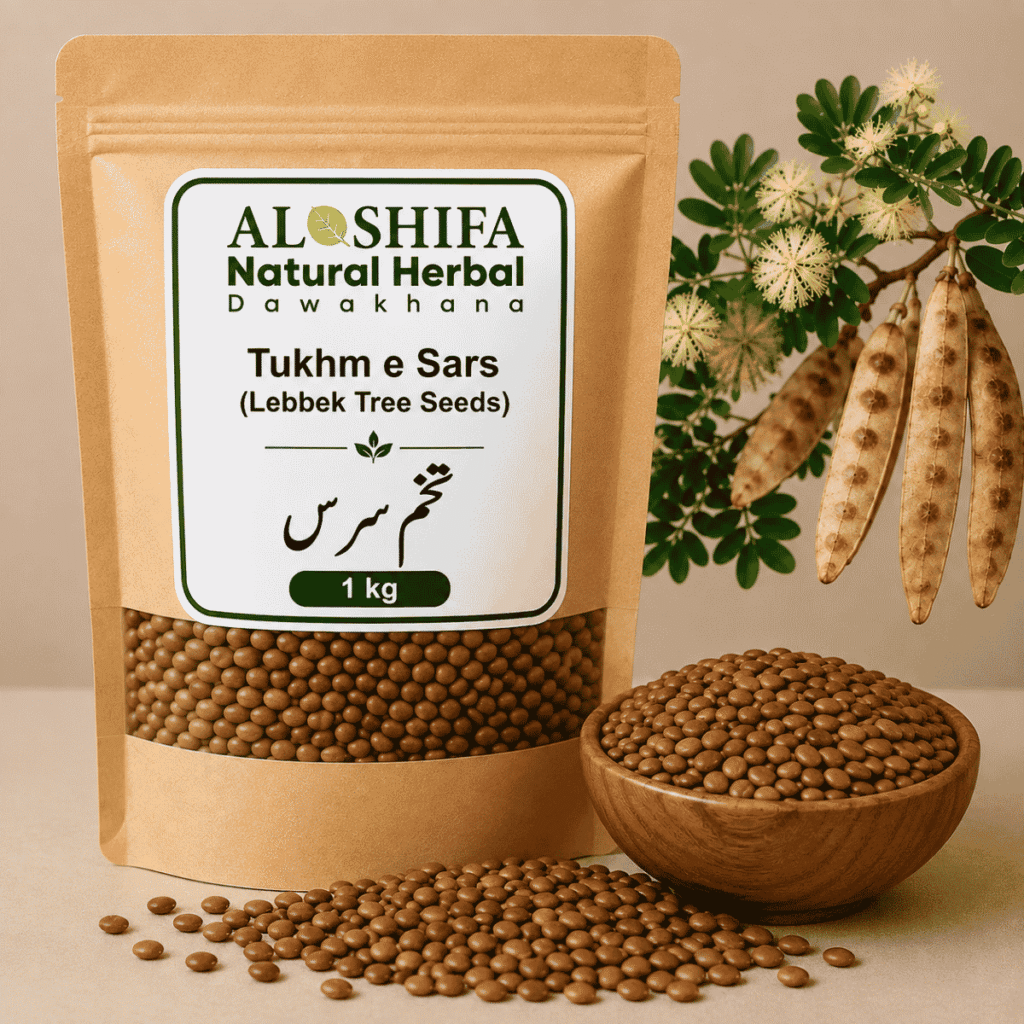
Tukhm-e-Saras / Lebbek Tree Seeds are the dried seeds of the Lebbek Tree (Albizia lebbeck), a traditional botanical ingredient valued in herbal practices.
How to Use: Use according to an appropriate traditional formulation or under the guidance of a qualified herbal practitioner.
Storage: Keep in a cool, dry place away from moisture, heat, and direct sunlight.
Important Note: Tukhm-e-Saras is a traditional botanical ingredient and should not be considered a treatment for any medical condition. Internal medicinal use should be undertaken with appropriate professional guidance.
Tukhm-e-Saras / Lebbek Tree Seeds – تخم سرس are the seeds obtained from the Lebbek Tree (Albizia lebbeck (L.) Benth.), a well-known tree belonging to the legume family Fabaceae. The tree is widely distributed across tropical and subtropical regions and has a long history of use in traditional South Asian systems of herbal practice.
The seeds, commonly known as Tukhm-e-Saras, are traditionally collected, cleaned, dried, and used in various traditional preparations. Like many botanical seeds, they naturally contain a complex mixture of proteins, carbohydrates, lipids, saponins, phenolic compounds, flavonoids, and other plant constituents, although their exact composition varies according to origin, maturity, processing, and storage.
Tukhm-e-Saras should primarily be described as a traditional botanical raw material rather than as a proven treatment for any disease. Historical uses can be discussed as traditional knowledge, but they should not be interpreted as established clinical benefits.
Carefully selected Lebbek Tree Seeds retain their characteristic natural appearance and botanical identity.
Product Name: Tukhm-e-Saras
English Name: Lebbek Tree Seeds
Urdu Name: تخم سرس
Roman Name: Tukhm-e-Saras / Tukhm Saras
Botanical Name: Albizia lebbeck (L.) Benth.
Common English Names of Tree: Lebbek Tree / Lebbeck Tree / Siris Tree / Woman’s Tongue Tree
Plant Family: Fabaceae
Genus: Albizia
Species: Albizia lebbeck
Plant Part Used: Seeds
Product Type: Whole Botanical Seeds / Traditional Herbal Raw Material
Common Form: Whole Dried Seeds
The Lebbek Tree is a medium to large deciduous tree scientifically known as Albizia lebbeck.
It belongs to the Fabaceae, or legume, family and is found across many warm regions. The tree is recognized for its spreading crown, compound leaves, pale flowers, and characteristic flattened seed pods.
As the pods mature and dry, they contain seeds that can be collected and processed as a botanical raw material.
Different parts of the tree have appeared in traditional practices, but the seeds should be distinguished from the bark, leaves, flowers, and other plant parts because each may have a different chemical composition.
The word Tukhm traditionally refers to seeds, while Tukhm-e-Saras refers specifically to the seeds associated with the Saras or Siris tree.
After mature pods are collected, the seeds are separated and may be:
Their intended use depends on the particular traditional preparation and method of processing.
Correct botanical identification is especially important for traditional herbal ingredients.
For Tukhm-e-Saras, the accepted botanical source is:
Albizia lebbeck (L.) Benth.
The plant belongs to the Fabaceae family.
Regional names can sometimes be applied inconsistently to different plants, so botanical identification is more reliable than relying only on a local name.
Seeds of Albizia lebbeck contain a range of naturally occurring plant compounds.
Research into the seeds and other parts of the plant has identified or investigated groups of constituents such as:
The presence and concentration of individual compounds depend on numerous factors.
These include:
The chemical composition of a laboratory extract should not automatically be considered identical to that of ordinary whole seeds.
As seeds of a leguminous plant, Tukhm-e-Saras naturally contains plant proteins.
Protein content can vary according to seed maturity, variety, environmental conditions, and analytical method.
The presence of plant protein is a normal nutritional characteristic of many seeds and should not itself be interpreted as evidence of a particular medicinal effect.
Lebbek seeds also contain naturally occurring lipid components.
The amount and composition of these lipids may vary considerably.
These naturally occurring seed lipids are part of the seed’s biological structure and stored energy reserves.
Tukhm-e-Saras should not automatically be described as an oilseed comparable to high-oil culinary seeds unless the specific product is processed for that purpose.
Saponins are a broad group of naturally occurring plant compounds found in many botanical species.
Various parts of Albizia lebbeck, including its seeds, have been investigated for saponin-related constituents.
These compounds contribute to scientific interest in the plant, but their presence does not mean that ordinary whole Tukhm-e-Saras has clinically proven therapeutic effects.
Concentrated laboratory extracts and whole traditional botanical material can differ substantially in composition and strength.
Tukhm-e-Saras and other parts of the Lebbek Tree contain naturally occurring phenolic and flavonoid compounds.
These classes of plant compounds are widely distributed throughout the plant kingdom.
Their concentration can vary according to:
Statements about laboratory antioxidant activity of extracts should not be converted into claims that the whole seeds prevent or cure disease.
Albizia lebbeck has a substantial history in traditional South Asian botanical practices.
Different parts of the tree have historically been used for different purposes, including:
It is important not to combine the traditional uses of all these parts and attribute them specifically to the seeds.
Tukhm-e-Saras refers specifically to the seeds, and information about seed use should therefore remain distinct from information relating to the bark or leaves.
Tukhm-e-Saras may appear as a raw ingredient in traditional herbal preparations.
Depending on the traditional practice, seeds may be:
The method of preparation can significantly affect the resulting product.
For this reason, raw seeds should not automatically be used in the same quantity or manner as a concentrated extract or professionally prepared formulation.
Different parts of the Lebbek Tree have historically appeared in traditional preparations associated with respiratory wellness.
However, it is important to distinguish historical use from established medical treatment.
Tukhm-e-Saras should not be claimed to cure or replace treatment for:
Anyone experiencing persistent wheezing, shortness of breath, chest tightness, or significant breathing difficulty should obtain appropriate medical care.
Albizia lebbeck is sometimes discussed in traditional literature in connection with allergy-related complaints.
This historical association does not establish ordinary whole Lebbek Seeds as a proven treatment for allergic disease.
Allergic reactions can range from mild to life-threatening, and serious allergy symptoms require appropriate medical evaluation and treatment.
Different parts of Albizia lebbeck have also appeared in traditional preparations associated with skin care.
However, the historical use of bark or leaves should not automatically be attributed to the seeds.
Furthermore, raw seed material should not be applied to damaged or diseased skin without appropriate knowledge of the preparation and its safety.
Tukhm-e-Saras may also appear in traditional compound preparations associated with general digestive wellness.
However, its use should be understood within the context of the complete traditional formulation rather than as evidence that the seeds treat gastrointestinal disease.
Persistent abdominal pain, vomiting, blood in the stool, unexplained weight loss, or prolonged digestive problems require appropriate medical evaluation.
In traditional botanical practice, plant materials are often selected according to the characteristics of the complete formulation rather than being used as isolated ingredients.
Tukhm-e-Saras may therefore be combined with other ingredients depending on the intended traditional preparation.
The safety and suitability of such combinations depend on:
Tukhm-e-Saras may be supplied as whole seeds or processed into powder.
Whole seeds generally offer:
Grinding increases surface area and makes the material easier to incorporate into certain preparations.
However, powdered botanical material can be more exposed to:
For this reason, freshly ground material should be stored carefully.
Whole Tukhm-e-Saras and concentrated extracts are not equivalent.
An extract may concentrate selected compounds depending on:
Therefore, research performed using a concentrated extract cannot automatically establish the same effect or dosage for whole dried seeds.
Good-quality Tukhm-e-Saras should be:
Natural variations in size, shape, and shade are expected because this is a botanical agricultural product.
Lebbek Tree Seeds have their own characteristic natural appearance, which may vary according to:
Minor natural variation does not necessarily indicate poor quality.
Artificially uniform appearance should not be considered a requirement for genuine botanical seeds.
Properly dried seeds generally have a mild characteristic botanical aroma.
A strong:
odor may indicate inappropriate storage or deterioration.
Botanical seeds intended for traditional use should be handled hygienically.
Good handling practices may include:
Further preparation should depend on the intended traditional use.
Tukhm-e-Saras is a traditional botanical ingredient and should not automatically be treated as an ordinary snack or culinary seed.
If intended for internal traditional use, the appropriate:
should be determined according to a reliable traditional formulation or guidance from a suitably qualified practitioner.
Avoid assuming that “natural” means unlimited quantities are safe.
Botanical seeds contain biologically active plant compounds.
Using unusually large quantities, highly concentrated preparations, or prolonged courses without appropriate knowledge may increase the possibility of unwanted effects.
Traditional use generally depends on a defined preparation and amount rather than unrestricted consumption.
There is insufficient reliable information to assume that medicinal quantities of Tukhm-e-Saras are safe during pregnancy or breastfeeding.
Pregnant or breastfeeding individuals should avoid self-prescribing concentrated or medicinal preparations containing Lebbek Seeds unless advised by an appropriately qualified healthcare professional.
Children should not be given medicinal quantities of Tukhm-e-Saras without appropriate professional guidance.
Children differ from adults in:
Keep raw botanical seeds safely out of reach of young children.
People taking regular medicines or living with chronic health conditions should seek appropriate advice before using concentrated traditional botanical preparations.
This is particularly important when several herbal ingredients are combined because the safety profile of a complete mixture may differ from that of a single ingredient.
Do not discontinue prescribed medication in favor of Tukhm-e-Saras.
The Lebbek Tree belongs to the Fabaceae, or legume, family.
Individuals with known sensitivities to botanical products should introduce unfamiliar herbal ingredients cautiously.
Stop use if symptoms such as:
occur.
Severe allergic symptoms require urgent medical attention.
To maintain the quality of Tukhm-e-Saras:
Moisture is one of the most important factors affecting the quality of dried botanical seeds.
Excessive moisture can encourage:
Always close the package securely after use.
Do not use Tukhm-e-Saras if you notice:
When the safety or identity of a botanical ingredient is uncertain, it should not be used.
Tukhm-e-Saras / Lebbek Tree Seeds – تخم سرس are valued primarily as an authentic traditional botanical raw material.
They offer:
Product Name: Tukhm-e-Saras
English Name: Lebbek Tree Seeds
Urdu Name: تخم سرس
Roman Name: Tukhm-e-Saras / Tukhm Saras
Botanical Name: Albizia lebbeck (L.) Benth.
Common Tree Names: Lebbek Tree / Lebbeck Tree / Siris Tree / Woman’s Tongue Tree
Family: Fabaceae
Plant Part Used: Seeds
Product Category: Whole Botanical Seeds / Traditional Herbal Raw Material
Product Form: Whole Dried Seeds
Naturally Occurring Constituents: Proteins, carbohydrates, lipid components, saponins, phenolic compounds, flavonoids and other naturally occurring phytochemicals.
Traditional Context: Used as a botanical raw material in traditional preparations. Historical uses vary according to preparation, region, plant part, and traditional system.
Storage: Store tightly sealed in a cool, dry place away from sunlight, heat, humidity, insects, and contamination.
Tukhm-e-Saras / Lebbek Tree Seeds – تخم سرس are the seeds of Albizia lebbeck, a historically important tree in South Asian botanical traditions. The seeds naturally contain several classes of plant constituents and may be used as a raw material in carefully prepared traditional formulations.
Because the seeds, bark, leaves, and flowers of the Lebbek Tree are chemically different plant materials, claims or traditional uses associated with one part should not automatically be applied to another. Likewise, laboratory research on concentrated extracts should not be interpreted as proof that ordinary whole seeds provide the same effects.
Important Note: Tukhm-e-Saras is a traditional botanical raw material and is not intended to diagnose, treat, cure, or prevent disease. It should not replace prescribed medicines or professional medical care. Internal medicinal use, particularly during pregnancy, breastfeeding, childhood, chronic illness, or alongside regular medication, should be undertaken only with appropriate professional guidance.
تخم سرس سرس کے درخت کے بیج ہیں جو برصغیر کی روایتی نباتاتی روایات میں ایک معروف خام نباتاتی جزو کے طور پر استعمال ہوتے رہے ہیں۔ سرس ایک درمیانے سے بڑے قد کا درخت ہے جو گرم اور نیم گرم علاقوں میں پایا جاتا ہے اور اس کا تعلق پھلی دار پودوں کے خاندان سے ہے۔
اس درخت کے پختہ پھلوں سے حاصل ہونے والے بیجوں کو جمع کرکے صاف، خشک اور محفوظ کیا جاتا ہے۔ تخم سرس میں قدرتی طور پر نباتاتی لحمیات، نشاستہ دار اجزاء، روغنی اجزاء، سیپونن، فینولک مرکبات، فلیوونائڈز اور دیگر قدرتی نباتاتی اجزاء پائے جا سکتے ہیں۔ ان اجزاء کی مقدار پودے کی قسم، مقام، موسم، پختگی، خشک کرنے کے طریقے اور ذخیرہ کرنے کے حالات کے مطابق مختلف ہو سکتی ہے۔
تخم سرس کو بنیادی طور پر ایک روایتی نباتاتی خام جزو کے طور پر سمجھنا زیادہ مناسب ہے۔ اس سے منسوب روایتی استعمال تاریخی معلومات فراہم کرتے ہیں، لیکن انہیں کسی بیماری کے ثابت شدہ علاج کے طور پر نہیں سمجھنا چاہیے۔
پروڈکٹ کا نام: تخم سرس
معروف نام: سرس کے بیج
رومن نام: تخمِ سرس
سائنسی نام: البیزیا لیبیک
پودے کا خاندان: فیبیسی
جنس: البیزیا
استعمال ہونے والا حصہ: بیج
پروڈکٹ کی قسم: مکمل خشک نباتاتی بیج / روایتی نباتاتی خام جزو
شکل: مکمل خشک بیج
سرس ایک معروف پھلی دار درخت ہے جو مختلف گرم اور نیم گرم علاقوں میں پایا جاتا ہے۔ یہ اپنی پھیلی ہوئی شاخوں، مرکب پتوں، ہلکے رنگ کے پھولوں اور چپٹی پھلیوں کی وجہ سے پہچانا جاتا ہے۔
پھلیاں مکمل پختگی کے بعد خشک ہونے لگتی ہیں اور ان کے اندر موجود بیج حاصل کیے جاتے ہیں۔
سرس کے درخت کے مختلف حصے روایتی استعمال میں آتے رہے ہیں، جن میں:
شامل ہیں۔
یہ بات اہم ہے کہ درخت کے ہر حصے کی قدرتی کیمیائی ترکیب مختلف ہو سکتی ہے۔ اس لیے چھال، پتوں یا پھولوں سے منسوب استعمال کو خود بخود بیجوں سے منسوب کرنا درست نہیں۔
لفظ تخم سے مراد بیج ہے، جبکہ تخم سرس سے مراد سرس کے درخت کے بیج ہیں۔
پختہ پھلیوں سے بیج حاصل کرنے کے بعد انہیں عموماً:
اس کا طریقۂ استعمال متعلقہ روایتی نسخے اور تیاری کے طریقے کے مطابق مختلف ہو سکتا ہے۔
روایتی نباتاتی اجزاء میں درست شناخت بہت اہم ہوتی ہے۔
تخم سرس کا نباتاتی ماخذ البیزیا لیبیک ہے اور اس کا تعلق فیبیسی خاندان سے ہے۔
مختلف علاقوں میں ایک ہی مقامی نام کبھی کبھار مختلف پودوں کے لیے استعمال ہو سکتا ہے۔ اسی لیے صرف مقامی نام کی بجائے نباتاتی شناخت کو بھی اہمیت دینی چاہیے۔
تخم سرس میں مختلف قدرتی نباتاتی اجزاء پائے جا سکتے ہیں۔
ان میں شامل ہیں:
ان اجزاء کی مقدار ہر بیج اور ہر فصل میں یکساں ہونا ضروری نہیں۔
یہ مختلف عوامل سے متاثر ہو سکتی ہے، مثلاً:
تحقیق میں استعمال ہونے والے مرتکز عرق اور عام مکمل خشک بیج کی کیمیائی مقدار کو ایک جیسا نہیں سمجھنا چاہیے۔
تخم سرس ایک پھلی دار درخت کے بیج ہیں اور ان میں قدرتی طور پر نباتاتی لحمیات پائی جا سکتی ہیں۔
ان کی مقدار:
کے مطابق مختلف ہو سکتی ہے۔
بیج میں لحمیات کی موجودگی ایک قدرتی غذائی خصوصیت ہے، لیکن صرف اس بنیاد پر کسی مخصوص طبی فائدے کا دعویٰ نہیں کیا جا سکتا۔
تخم سرس میں قدرتی طور پر کچھ روغنی اجزاء بھی پائے جا سکتے ہیں۔
یہ روغنی اجزاء بیج کی قدرتی ساخت اور اس میں محفوظ توانائی کا حصہ ہوتے ہیں۔
تاہم تخم سرس کو تل، سورج مکھی یا دوسرے معروف روغنی بیجوں کے برابر ایک عام خوردنی روغنی بیج تصور نہیں کرنا چاہیے۔
سیپونن قدرتی نباتاتی مرکبات کا ایک وسیع گروہ ہے جو مختلف پودوں میں پایا جاتا ہے۔
سرس کے درخت کے مختلف حصوں اور اس کے بیجوں میں بھی سیپونن سے متعلق اجزاء پر تحقیق کی گئی ہے۔
ان مرکبات کی موجودگی نباتاتی اور سائنسی اعتبار سے اہم ہو سکتی ہے، لیکن اس کا مطلب یہ نہیں کہ عام مکمل تخم سرس کسی بیماری کا ثابت شدہ علاج ہیں۔
تخم سرس میں قدرتی طور پر فینولک اور فلیوونائڈ مرکبات بھی پائے جا سکتے ہیں۔
یہ نباتاتی مرکبات پودوں کی دنیا میں وسیع پیمانے پر موجود ہوتے ہیں۔
ان کی مقدار کا انحصار:
پر ہو سکتا ہے۔
کسی مرتکز عرق میں تجرباتی سطح پر دیکھی جانے والی خصوصیات کو عام مکمل بیج کے یقینی طبی اثرات کے طور پر بیان کرنا مناسب نہیں۔
سرس کے درخت کو برصغیر کی مختلف روایتی نباتاتی روایات میں اہمیت حاصل رہی ہے۔
اس درخت کے مختلف حصے مختلف روایتی مقاصد کے لیے استعمال کیے جاتے رہے ہیں۔
تخم سرس سے مراد صرف سرس کے بیج ہیں، اس لیے بیجوں کی معلومات کو درخت کی چھال، پتوں یا پھولوں کے استعمال سے الگ رکھنا ضروری ہے۔
روایتی استعمال کسی نباتاتی جزو کی تاریخی اہمیت ظاہر کر سکتا ہے، لیکن اسے جدید طبی تحقیق سے ثابت شدہ علاج کا متبادل نہیں سمجھنا چاہیے۔
تخم سرس کو مخصوص روایتی نسخوں میں خام نباتاتی جزو کے طور پر استعمال کیا جا سکتا ہے۔
روایتی طریقۂ تیاری کے مطابق بیجوں کو:
تیاری کا طریقہ تیار شدہ چیز کی نوعیت اور طاقت کو متاثر کر سکتا ہے۔
اسی لیے خام مکمل بیج، سفوف اور مرتکز عرق کو ایک جیسی مقدار میں استعمال کرنا مناسب نہیں۔
سرس کے درخت کے مختلف حصے روایتی طور پر سانس سے متعلق بعض تیاریوں میں استعمال ہوتے رہے ہیں۔
تاہم اس روایتی پس منظر کو کسی طبی بیماری کے ثابت شدہ علاج کے طور پر نہیں سمجھنا چاہیے۔
تخم سرس کو:
کا یقینی علاج قرار دینا مناسب نہیں۔
سانس لینے میں شدید دشواری، سینے میں جکڑن یا مسلسل گھرگھراہٹ کی صورت میں فوری طور پر مناسب طبی مشورہ حاصل کرنا چاہیے۔
سرس کے درخت کا ذکر بعض روایتی حوالوں میں جسمانی حساسیت سے متعلق تیاریوں کے ضمن میں بھی ملتا ہے۔
تاہم روایتی ذکر اس بات کا ثبوت نہیں کہ عام تخم سرس ہر قسم کی الرجی یا حساسیت کا علاج کر سکتے ہیں۔
الرجی معمولی بھی ہو سکتی ہے اور بعض صورتوں میں شدید بھی۔ شدید الرجی کی صورت میں فوری طبی مدد ضروری ہے۔
سرس کے درخت کے بعض حصے روایتی طور پر جلد سے متعلق تیاریوں میں بھی استعمال ہوتے رہے ہیں۔
لیکن یہ ضروری نہیں کہ چھال یا پتوں سے منسوب ہر استعمال بیجوں پر بھی لاگو ہو۔
خام تخم سرس کو بغیر مناسب معلومات کے:
پر استعمال نہیں کرنا چاہیے۔
تخم سرس بعض روایتی مرکب تیاریوں میں عمومی نظامِ ہاضمہ سے متعلق استعمال میں بھی شامل ہو سکتے ہیں۔
تاہم انہیں معدے یا آنتوں کی بیماری کا ثابت شدہ علاج نہیں سمجھنا چاہیے۔
اگر کسی شخص کو:
ہو تو مناسب طبی معائنہ ضروری ہے۔
تخم سرس مکمل بیج اور سفوف دونوں شکلوں میں استعمال کیے جا سکتے ہیں۔
مکمل بیج رکھنے کے چند فوائد یہ ہیں:
بیج پیسنے سے سطحی رقبہ بڑھ جاتا ہے اور انہیں مخصوص تیاریوں میں شامل کرنا آسان ہو جاتا ہے۔
تاہم سفوف:
کے اثرات سے نسبتاً جلد متاثر ہو سکتا ہے۔
اسی لیے سفوف کو اچھی طرح بند برتن میں محفوظ رکھنا ضروری ہے۔
مکمل تخم سرس اور ان سے تیار کردہ مرتکز عرق ایک جیسی چیزیں نہیں ہیں۔
عرق تیار کرنے کے دوران مخصوص اجزاء کی مقدار کئی گنا زیادہ ہو سکتی ہے۔
اس پر اثر انداز ہونے والے عوامل میں شامل ہیں:
اسی لیے مرتکز عرق پر ہونے والی تحقیق کو براہِ راست عام مکمل بیج کی مقدار اور اثرات پر لاگو کرنا درست نہیں۔
تخم سرس ایک روایتی نباتاتی جزو ہے اور اسے عام ناشتے یا روزمرہ خوردنی بیج کے طور پر استعمال نہیں کرنا چاہیے۔
اگر اسے کسی روایتی نسخے میں اندرونی طور پر استعمال کرنا مقصود ہو تو:
کسی معتبر نسخے یا مستند معالج کی رہنمائی کے مطابق ہونا چاہیے۔
صرف قدرتی ہونے کا مطلب یہ نہیں کہ کسی نباتاتی جزو کو غیر محدود مقدار میں استعمال کرنا محفوظ ہے۔
نباتاتی بیجوں میں قدرتی طور پر مختلف فعال مرکبات موجود ہوتے ہیں۔
بغیر مناسب معلومات کے:
غیر مطلوبہ اثرات کا امکان بڑھا سکتا ہے۔
روایتی نباتاتی استعمال عموماً مخصوص مقدار اور طریقۂ تیاری کے مطابق کیا جاتا ہے۔
حمل اور دودھ پلانے کے دوران تخم سرس کی دوائی مقدار کے محفوظ ہونے کے بارے میں کافی قابلِ اعتماد معلومات موجود نہیں۔
اس لیے حاملہ یا دودھ پلانے والی خواتین کو تخم سرس یا اس کے مرتکز نسخوں کا خود سے استعمال نہیں کرنا چاہیے۔
اگر کسی روایتی نسخے میں اس کا استعمال ضروری سمجھا جائے تو پہلے مستند معالج سے مشورہ کرنا بہتر ہے۔
بچوں کو تخم سرس کی دوائی مقدار کسی مستند معالج کی رہنمائی کے بغیر نہ دیں۔
بچوں کا:
بالغ افراد سے مختلف ہو سکتی ہے۔
بیجوں کو چھوٹے بچوں کی پہنچ سے دور رکھیں۔
جو افراد مستقل ادویات استعمال کر رہے ہوں یا کسی طویل مدتی طبی کیفیت میں مبتلا ہوں، انہیں تخم سرس یا کسی مرتکز نباتاتی تیاری کے استعمال سے پہلے مستند معالج سے مشورہ کرنا چاہیے۔
خصوصاً کئی نباتاتی اجزاء کو ملا کر تیار کیے گئے نسخوں میں باہمی اثرات کا امکان مختلف ہو سکتا ہے۔
تخم سرس کی وجہ سے اپنی تجویز کردہ دوا بند نہ کریں۔
سرس کا درخت پھلی دار نباتاتی خاندان سے تعلق رکھتا ہے۔
جو افراد مختلف نباتاتی مصنوعات سے حساسیت رکھتے ہوں انہیں نئے نباتاتی اجزاء استعمال کرتے وقت احتیاط کرنی چاہیے۔
استعمال کے بعد درج ذیل علامات ظاہر ہوں تو استعمال بند کر دیں:
شدید الرجی کی صورت میں فوری طبی مدد حاصل کریں۔
اچھی کوالٹی کے تخم سرس عام طور پر:
ہونے چاہئیں۔
قدرتی زرعی پیداوار ہونے کی وجہ سے بیجوں کے رنگ، شکل اور حجم میں معمولی فرق ہو سکتا ہے۔
تخم سرس کی ظاہری شکل مختلف عوامل کے مطابق کچھ مختلف ہو سکتی ہے۔
ان عوامل میں شامل ہیں:
قدرتی رنگ یا جسامت میں معمولی فرق خراب معیار کی علامت نہیں ہوتا۔
مناسب طور پر خشک کیے گئے تخم سرس میں عموماً ہلکی قدرتی نباتاتی خوشبو ہوتی ہے۔
اگر بیجوں سے:
آئے تو استعمال سے پہلے ان کے معیار کو اچھی طرح جانچنا چاہیے۔
معیاری تخم سرس کی تیاری میں مناسب صفائی اہم ہے۔
عام طور پر:
۱۔ بیجوں کو چھانٹا جاتا ہے۔
۲۔ پتھر، مٹی، گرد اور غیر ضروری مواد الگ کیا جاتا ہے۔
۳۔ خراب بیج نکالے جاتے ہیں۔
۴۔ مناسب طریقے سے خشک کیا جاتا ہے۔
۵۔ نمی سے محفوظ رکھا جاتا ہے۔
۶۔ صاف اور محفوظ پیکنگ میں بند کیا جاتا ہے۔
۷۔ کیڑوں اور آلودگی سے حفاظت کی جاتی ہے۔
اس کے بعد مزید تیاری مطلوبہ روایتی استعمال کے مطابق کی جا سکتی ہے۔
تخم سرس کا قدرتی معیار برقرار رکھنے کے لیے:
خشک نباتاتی بیجوں کے معیار کو متاثر کرنے والے اہم عوامل میں نمی شامل ہے۔
زیادہ نمی کی وجہ سے:
استعمال کے بعد پیکٹ کو فوراً اچھی طرح بند کریں۔
درج ذیل علامات کی صورت میں تخم سرس استعمال نہ کریں:
اگر کسی نباتاتی خام جزو کی شناخت یا محفوظ ہونے کے بارے میں شک ہو تو اسے استعمال نہ کرنا بہتر ہے۔
تخم سرس ایک روایتی نباتاتی خام جزو ہے جسے اس کی اصل نباتاتی شناخت اور روایتی اہمیت کی وجہ سے قدر کی نگاہ سے دیکھا جاتا ہے۔
نام: تخم سرس
معروف نام: سرس کے بیج
رومن نام: تخمِ سرس
سائنسی نام: البیزیا لیبیک
خاندان: فیبیسی
استعمال ہونے والا حصہ: بیج
پروڈکٹ کی قسم: مکمل خشک نباتاتی بیج / روایتی نباتاتی خام جزو
شکل: مکمل خشک بیج
قدرتی اجزاء: نباتاتی لحمیات، نشاستہ دار اجزاء، قدرتی روغنی اجزاء، سیپونن، فینولک مرکبات، فلیوونائڈز اور دیگر قدرتی نباتاتی اجزاء
روایتی حیثیت: مختلف روایتی تیاریوں میں نباتاتی خام جزو کے طور پر استعمال۔ استعمال کا طریقہ، مقدار اور دوسرے اجزاء کے ساتھ امتزاج متعلقہ روایتی نسخے کے مطابق مختلف ہو سکتا ہے۔
ذخیرہ: ٹھنڈی اور خشک جگہ پر اچھی طرح بند کرکے رکھیں اور دھوپ، گرمی، نمی، کیڑوں اور آلودگی سے محفوظ رکھیں۔
تخم سرس سرس کے درخت سے حاصل ہونے والے قدرتی بیج ہیں جو برصغیر کی نباتاتی روایات میں ایک معروف خام جزو کی حیثیت رکھتے ہیں۔ ان میں قدرتی طور پر مختلف نباتاتی لحمیات، روغنی اجزاء، سیپونن، فینولک مرکبات، فلیوونائڈز اور دوسرے نباتاتی اجزاء پائے جا سکتے ہیں۔
سرس کے بیج، چھال، پتے اور پھول ایک دوسرے سے مختلف نباتاتی حصے ہیں، اس لیے ایک حصے سے منسوب روایتی استعمال کو دوسرے حصے سے خود بخود منسوب نہیں کرنا چاہیے۔ اسی طرح مرتکز عرق پر ہونے والی تحقیق کو عام مکمل بیج کے یقینی اثر کے طور پر بیان کرنا مناسب نہیں۔
اہم طبی نوٹ: تخم سرس ایک روایتی نباتاتی خام جزو ہے، کسی بیماری کی تشخیص، علاج یا روک تھام کے لیے منظور شدہ دوا نہیں۔ اسے تجویز کردہ ادویات یا مستند طبی علاج کے متبادل کے طور پر استعمال نہ کریں۔ اندرونی دوائی استعمال، خصوصاً حمل، دودھ پلانے، بچپن، طویل مدتی بیماری یا مستقل ادویات کے ساتھ، مستند معالج کی رہنمائی میں کیا جانا چاہیے۔