بند کھوڑ
Price range: ₨ 300 through ₨ 4,400
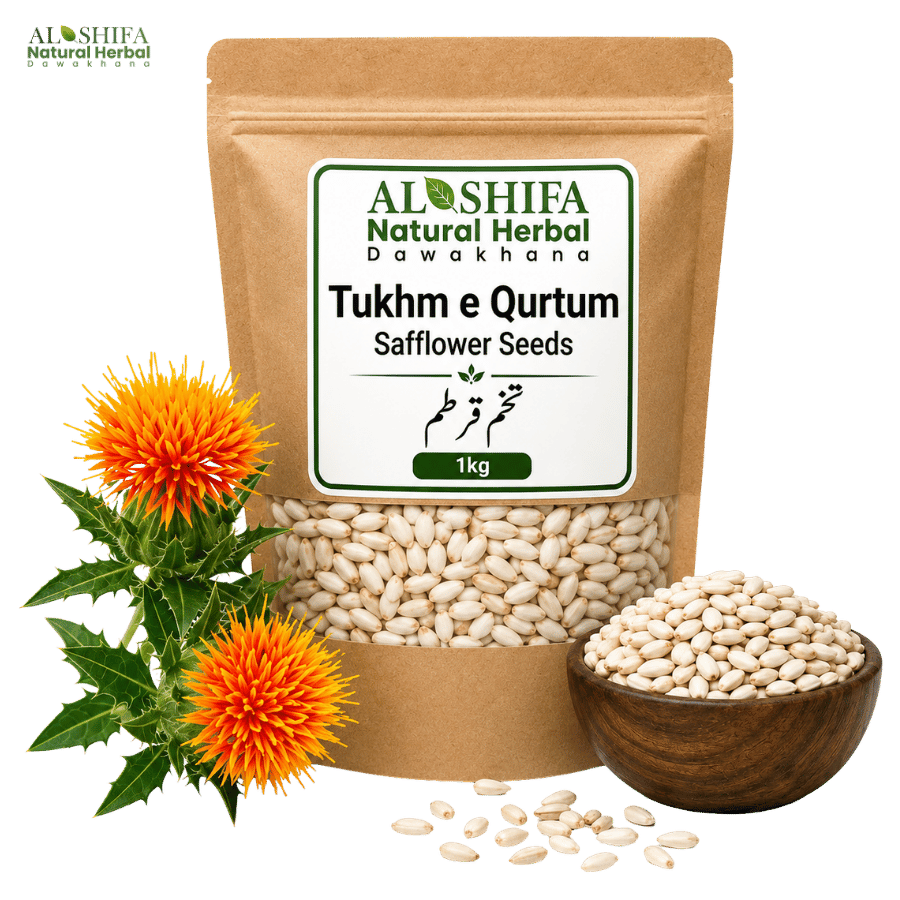
Tukhm e Qurtum (Safflower Seeds) are natural oil-bearing seeds obtained from Carthamus tinctorius. Traditionally valued in Unani and other herbal practices, these seeds have historically been used in preparations associated with digestive wellness, bowel comfort, nutritional support, general vitality, and selected women’s wellness formulations.
Al Shifa Tukhm e Qurtum is carefully selected with attention to natural seed identity, maturity, cleanliness, proper dryness, storage, and overall quality.
Key Features:
Important Note: Safflower Seeds are different from true saffron and should also be distinguished from extracted Safflower Oil. Pregnant women and individuals using medicines that affect blood clotting should seek professional advice before concentrated or medicinal use.
Tukhm e Qurtum (Safflower Seeds) are the mature seeds of Carthamus tinctorius, a traditional flowering plant belonging to the Asteraceae family. Safflower has been cultivated for centuries for its seeds, flowers, natural colouring properties, and seed oil, while its seeds have also held a place in Unani and other traditional systems of herbal practice.
Tukhm e Qurtum is traditionally valued in preparations associated with digestive wellness, bowel comfort, nutritional support, general vitality, and selected traditional women’s wellness formulations. The seeds are naturally oil-bearing and contain fatty acids, protein, fibre, and other plant constituents.
Al Shifa Tukhm e Qurtum is carefully selected with attention to natural seed identity, cleanliness, maturity, proper dryness, storage, and overall quality.
Tukhm e Qurtum is the traditional name for the seeds of the safflower plant.
Safflower is an annual flowering plant recognized by its yellow, orange, or reddish flowers. After flowering, the plant produces seed heads containing pale-coloured seeds that are harvested when mature.
These seeds have traditionally been used for several purposes, including:
The seeds should not be confused with saffron. Safflower and saffron are entirely different plants, despite safflower flowers sometimes historically being used as a colouring substitute.
Tukhm e Qurtum is obtained from:
Scientific Name: Carthamus tinctorius L.
Family: Asteraceae
Plant Part: Seeds
English Name: Safflower Seeds
Traditional Name: Tukhm e Qurtum
Product Type: Natural Oil-Bearing Herbal Seed
Correct identification is important because safflower should not be confused with other similarly named seeds or with true saffron.
Safflower has a long history of cultivation across Asia, the Middle East, and other regions.
In traditional herbal practice, the seeds have been incorporated into preparations associated with:
Traditional applications can vary considerably according to region and system of medicine.
These historical uses should not be interpreted as evidence that Safflower Seeds can diagnose, prevent, cure, or treat a specific disease.
One of the most important characteristics of Safflower Seeds is their natural oil content.
Safflower seed oil is valued as a source of unsaturated fatty acids. Depending on the safflower variety, the oil may contain different proportions of:
This is why safflower is widely cultivated as an oilseed crop.
However, whole Safflower Seeds are not nutritionally identical to purified or commercially processed safflower oil because the whole seed also contains fibre, protein, seed structure, and other natural components.
Safflower Seeds naturally contain a combination of:
Their exact nutritional composition can vary according to plant variety, cultivation conditions, maturity, processing, and storage.
These nutrients make Safflower Seeds an interesting traditional oilseed and nutritional raw material, but they should not be promoted as a substitute for a balanced diet.
Tukhm e Qurtum has historically appeared in selected herbal preparations associated with digestive and bowel wellness.
Traditional applications may include formulations intended to support:
Because the seeds contain natural oils and fibre, their characteristics differ from many dry aromatic seeds commonly used in herbal practice.
Traditional digestive use does not mean Safflower Seeds are a proven treatment for chronic constipation, inflammatory bowel disease, intestinal obstruction, or another digestive disorder.
Persistent abdominal pain, vomiting, blood in stool, severe constipation, or unexplained changes in bowel habits require appropriate medical assessment.
Oil-bearing seeds have historically been incorporated into various traditional dietary and herbal preparations.
Tukhm e Qurtum has similarly been associated with formulations intended to support comfortable bowel function.
However, bowel symptoms can have many causes, and repeated reliance on herbal products without identifying the underlying cause is not appropriate where symptoms are persistent or severe.
Safflower has a history of use in certain traditional systems in preparations associated with women’s wellness and menstrual-related care.
It is important to distinguish historical traditional use from clinically established treatment.
Tukhm e Qurtum should not be promoted as a proven treatment for:
Women experiencing persistent menstrual irregularities, unusual bleeding, severe pelvic pain, or fertility concerns should seek appropriate medical evaluation.
Because safflower preparations have historically been associated with menstrual and uterine-related traditional uses, medicinal or concentrated use during pregnancy should be avoided unless specifically advised by an appropriately qualified healthcare professional.
Food-level exposure and medicinal use are not necessarily equivalent.
Pregnant women should therefore not self-prescribe concentrated Safflower Seed preparations based solely on traditional recommendations.
Tukhm e Qurtum may also be incorporated into traditional formulations intended for nourishment and general wellbeing.
Its naturally occurring oils, protein, fibre, and plant constituents contribute to its nutritional profile.
Rather than treating it as a miracle ingredient, Safflower Seeds are better understood as a traditional oil-bearing botanical seed that may form part of an appropriately balanced dietary or herbal routine.
Safflower seed oil is known for containing unsaturated fatty acids, particularly in varieties rich in linoleic or oleic acid.
Replacing some sources of saturated fat in the overall diet with appropriate sources of unsaturated fat can be part of a balanced dietary approach.
However, this does not mean that eating Safflower Seeds alone prevents or treats:
Overall diet, activity, smoking status, body weight, medical history, and prescribed treatment remain important.
The terms can sometimes create confusion.
Safflower and Saffron are different botanical materials.
Safflower comes from Carthamus tinctorius, whereas true saffron comes from the stigmas of a different flowering plant.
Therefore:
Correct product identification is important when purchasing herbal raw materials.
Whole Tukhm e Qurtum and extracted Safflower Oil should also be distinguished.
Whole seeds contain:
Extracted oil primarily represents the lipid portion of the seed.
Therefore, research or nutritional information relating specifically to safflower oil should not automatically be applied to whole Safflower Seeds.
Safflower Seeds contain a variety of naturally occurring plant compounds.
These may include:
The composition varies according to the variety and processing of the seeds.
The presence of these compounds does not by itself prove that Tukhm e Qurtum can treat cardiovascular, hormonal, metabolic, digestive, or inflammatory diseases.
At Al Shifa Natural Herbal Dawakhana, Tukhm e Qurtum is selected with attention to:
Natural Identity – Characteristic mature Safflower Seeds.
Cleanliness – Carefully handled to reduce unnecessary dust and foreign material.
Proper Dryness – Selected and stored under suitable dry conditions.
Natural Appearance – Attention to characteristic seed colour, shape, and condition.
Quality Selection – Excessively damaged, damp, spoiled, or visibly deteriorated material is avoided during selection.
Responsible Packaging – Proper packaging helps protect the seeds from moisture and contamination.
Al Shifa Natural Herbal Dawakhana, established in 1999, supplies traditional herbs, seeds, roots, oils, powders, and other natural raw materials throughout Pakistan.
Our Tukhm e Qurtum is selected for customers seeking carefully handled Safflower Seeds for traditional herbal, nutritional, or oil-related applications.
Whether you are searching for Tukhm e Qurtum Pakistan, Safflower Seeds Pakistan, Carthamus tinctorius Seeds, Tukhm e Qurtum Lahore, Safflower Seeds price in Pakistan, pure Tukhm e Qurtum, original Safflower Seeds, or Safflower Seeds online, Al Shifa focuses on natural identity, cleanliness, appropriate dryness, storage, and quality.
The appropriate use of Safflower Seeds depends on whether they are intended for:
There is no single universal medicinal quantity suitable for every individual.
For therapeutic or concentrated use, seek guidance from an appropriately qualified healthcare professional or trained traditional practitioner, particularly where the individual has an existing health condition or uses regular medicines.
Tukhm e Qurtum should be used responsibly.
Professional guidance is recommended before medicinal or concentrated use for:
People using medicines that affect blood clotting should discuss concentrated herbal use with their healthcare professional.
Safflower belongs to the Asteraceae botanical family.
Individuals with significant allergies to plants from this family should introduce unfamiliar herbal materials cautiously.
Stop use and seek medical assistance if symptoms of a significant allergic reaction occur, particularly swelling, difficulty breathing, widespread hives, or severe dizziness.
Tukhm e Qurtum is a natural seed and traditional herbal raw material.
It should not be considered a clinically proven treatment for heart disease, high cholesterol, hypertension, diabetes, infertility, menstrual disorders, digestive diseases, or other medical conditions.
Traditional use and nutritional composition provide useful context but do not replace medical diagnosis or prescribed treatment.
Store Safflower Seeds in a cool, clean, dry place.
Because the seeds naturally contain oil, proper storage is particularly important.
For better preservation:
Long exposure to heat, air, moisture, and light can gradually affect the quality of oil-bearing seeds.
Tukhm e Qurtum (Safflower Seeds) are the mature oil-bearing seeds of Carthamus tinctorius, traditionally valued in Unani and other herbal practices. They have historically been incorporated into preparations associated with digestive wellness, bowel comfort, nutritional support, general vitality, and selected traditional women’s wellness formulations.
Customers searching for Tukhm e Qurtum in Pakistan, Safflower Seeds Pakistan, Carthamus tinctorius Pakistan, Tukhm e Qurtum Lahore, Tukhm e Qurtum price in Pakistan, Safflower Seeds price in Pakistan, pure Tukhm e Qurtum, original Safflower Seeds, or Safflower Seeds online can choose Al Shifa Natural Herbal Dawakhana for carefully selected natural seeds.
Since 1999, Al Shifa Natural Herbal Dawakhana has remained committed to supplying traditional herbal ingredients with attention to identity, cleanliness, quality, proper storage, and responsible product information.
Product Name: Tukhm e Qurtum / Safflower Seeds
English Name: Safflower Seeds
Urdu Name: تخم قرطم
Roman Name: Tukhm e Qurtum / Tukhm-e-Qurtum
Scientific Name: Carthamus tinctorius L.
Family: Asteraceae
Plant Part: Seeds
Product Type: Natural Oil-Bearing Herbal Seed
Traditional Use: Historically used in digestive, bowel-comfort, nutritional, restorative, and selected women’s wellness preparations
Important Note: Safflower is botanically different from true saffron, and whole Safflower Seeds should also be distinguished from extracted Safflower Oil.
تخم قرطم ایک معروف قدرتی روغنی بیج ہے جو قرطم کے پودے سے حاصل کیا جاتا ہے۔ قرطم کو صدیوں سے اس کے بیجوں، پھولوں، قدرتی رنگ اور بیجوں سے حاصل ہونے والے روغن کی وجہ سے کاشت کیا جاتا رہا ہے۔ طبِ یونانی اور دیگر روایتی طریقہ ہائے علاج میں بھی تخم قرطم کو ایک اہم نباتاتی خام جزو کے طور پر استعمال کیا جاتا رہا ہے۔
روایتی طور پر تخم قرطم کو نظامِ ہضم کی عمومی معاونت، آنتوں کی آرام دہ کیفیت، غذائی تقویت، عمومی توانائی اور بعض نسوانی صحت سے متعلق روایتی مرکبات میں شامل کیا جاتا رہا ہے۔
یہ بیج قدرتی طور پر روغنی اجزاء، لحمیات، غذائی ریشے اور مختلف نباتاتی اجزاء پر مشتمل ہوتے ہیں۔
الشفاء نیچرل ہربل دواخانہ میں تخم قرطم کو قدرتی شناخت، پختگی، صفائی، مناسب خشکی، محفوظ ذخیرے اور مجموعی معیار کو مدنظر رکھتے ہوئے منتخب کیا جاتا ہے۔
تخم قرطم، قرطم کے پھول دار پودے کے پختہ بیج ہیں۔
قرطم ایک سالانہ پھول دار پودا ہے جس کے پھول عموماً:
رنگوں میں پائے جاتے ہیں۔
پھول مکمل ہونے کے بعد پودے پر بیج بنتے ہیں جنہیں مناسب پختگی کے بعد حاصل کرکے خشک کیا جاتا ہے۔
روایتی طور پر ان بیجوں کو:
میں استعمال کیا جاتا رہا ہے۔
تخم قرطم ایک معروف روغنی نباتاتی بیج ہے۔
نام: تخم قرطم
معروف نام: قرطم کے بیج
قسم: قدرتی روغنی نباتاتی بیج
مستعمل حصہ: پختہ بیج
نباتاتی خاندان: گلِ آفتاب کا خاندان
درست شناخت ضروری ہے کیونکہ قرطم کو بعض اوقات زعفران کے ساتھ غلط طور پر ملا دیا جاتا ہے، حالانکہ دونوں بالکل مختلف پودے ہیں۔
قرطم اور زعفران کو ایک ہی چیز سمجھنا درست نہیں۔
دونوں مختلف نباتاتی ماخذ رکھتے ہیں اور ان کی:
ایک دوسرے سے مختلف ہیں۔
قرطم کے پھول کو تاریخی طور پر بعض جگہ قدرتی رنگ کے طور پر استعمال کیا جاتا رہا ہے، جس کی وجہ سے اسے کبھی کبھار زعفران سے تشبیہ دی جاتی ہے۔
لیکن تخم قرطم زعفران کے بیج نہیں ہیں۔
طبِ یونانی اور دیگر قدیم طبی روایات میں تخم قرطم کو مختلف مرکبات میں استعمال کیا جاتا رہا ہے۔
روایتی طور پر اس کا تعلق درج ذیل مقاصد سے بیان کیا جاتا ہے:
سے رہا ہے۔
یہ استعمال تاریخی اور روایتی معلومات کی نمائندگی کرتے ہیں، انہیں کسی بیماری کے ثابت شدہ علاج کے طور پر نہیں لینا چاہیے۔
تخم قرطم کی نمایاں خصوصیات میں اس کے بیجوں میں قدرتی روغن کی موجودگی شامل ہے۔
قرطم کے بیجوں سے حاصل ہونے والا روغن غذائی طور پر اہم غیر سیر شدہ چکنائیوں کا قدرتی ذریعہ ہو سکتا ہے۔
قرطم کی مختلف اقسام کے مطابق اس روغن میں مختلف اقسام کی چکنائیوں کا تناسب مختلف ہو سکتا ہے۔
یہی وجہ ہے کہ قرطم دنیا کے مختلف علاقوں میں بطور روغنی فصل بھی کاشت کیا جاتا ہے۔
تاہم مکمل تخم قرطم اور صرف بیج سے نکالا گیا روغن ایک جیسی غذائی چیزیں نہیں ہیں۔
مکمل بیج میں روغن کے ساتھ:
بھی موجود ہوتے ہیں۔
تخم قرطم میں قدرتی طور پر مختلف غذائی اجزاء پائے جا سکتے ہیں، جن میں:
شامل ہو سکتے ہیں۔
ان اجزاء کی مقدار پودے کی قسم، زمین، آب و ہوا، پختگی، خشک کرنے کے طریقے اور ذخیرے کے مطابق مختلف ہو سکتی ہے۔
تخم قرطم کو متوازن غذا کا متبادل نہیں بلکہ ایک قدرتی روغنی بیج سمجھنا زیادہ مناسب ہے۔
تخم قرطم کو روایتی طور پر بعض ہاضمی تیاریوں میں شامل کیا جاتا رہا ہے۔
اس کا تاریخی استعمال:
میں بیان کیا جاتا ہے۔
چونکہ تخم قرطم میں قدرتی روغنی اجزاء اور غذائی ریشہ موجود ہوتے ہیں، اس لیے اس کی خصوصیات بہت سے خشک خوشبودار بیجوں سے مختلف ہوتی ہیں۔
تاہم اسے دائمی قبض، آنتوں کی سوزش، آنتوں کی بندش یا کسی دوسری ہاضمی بیماری کا ثابت شدہ علاج نہیں سمجھنا چاہیے۔
قدرتی روغنی بیج قدیم غذائی اور طبی روایات میں آنتوں کی عمومی نگہداشت سے متعلق مختلف تیاریوں میں شامل کیے جاتے رہے ہیں۔
تخم قرطم کو بھی بعض ایسے روایتی مرکبات میں استعمال کیا جاتا رہا ہے جن کا مقصد آنتوں کی عمومی آرام دہ کیفیت اور معمول کے اخراج کی معاونت ہوتا تھا۔
اگر قبض مسلسل رہے، پیٹ میں شدید درد ہو، بار بار قے آئے، پاخانے میں خون ہو یا آنتوں کی عادات میں غیر معمولی تبدیلی برقرار رہے تو طبی معائنہ ضروری ہے۔
قرطم اور اس کے بعض روایتی اجزاء کا ذکر قدیم طبی طریقوں میں نسوانی صحت اور ماہواری سے متعلق بعض تیاریوں میں بھی ملتا ہے۔
تاہم روایتی استعمال اور جدید طبی طور پر ثابت شدہ علاج میں واضح فرق رکھنا ضروری ہے۔
تخم قرطم کو:
کا ثابت شدہ علاج نہیں سمجھنا چاہیے۔
ماہواری میں مسلسل بے قاعدگی، غیر معمولی خون کا اخراج، شدید پیڑو درد یا حمل ٹھہرنے میں دشواری کی صورت میں مستند طبی معائنہ ضروری ہے۔
قرطم سے متعلق بعض روایتی تیاریوں کا تعلق ماہواری اور رحم سے متعلق استعمال سے بھی بیان کیا گیا ہے۔
اسی وجہ سے حمل کے دوران تخم قرطم کا زیادہ، مرتکز یا باقاعدہ طبی استعمال مستند معالج کی ہدایت کے بغیر نہیں کرنا چاہیے۔
عام غذائی مقدار اور طبی مقصد کے لیے استعمال کی جانے والی مرتکز مقدار ایک جیسی نہیں ہوتیں۔
حاملہ خواتین صرف روایتی شہرت کی بنیاد پر تخم قرطم یا اس کے مرتکز مرکبات خود سے استعمال نہ کریں۔
تخم قرطم کو بعض روایتی تقویتی اور غذائی مرکبات میں بھی شامل کیا جاتا رہا ہے۔
اس میں موجود قدرتی:
اس کی غذائی اہمیت میں حصہ ڈالتے ہیں۔
اسے کسی غیر معمولی یا معجزاتی دوا کے بجائے ایک قدرتی روغنی اور غذائی نباتاتی بیج سمجھنا زیادہ مناسب ہے۔
قرطم کے روغن میں غیر سیر شدہ چکنائیاں پائی جاتی ہیں۔ متوازن غذا میں بعض سیر شدہ چکنائیوں کی جگہ مناسب غیر سیر شدہ چکنائیوں کا استعمال مجموعی غذائی حکمتِ عملی کا حصہ ہو سکتا ہے۔
تاہم صرف تخم قرطم استعمال کرنے سے یہ دعویٰ نہیں کیا جا سکتا کہ یہ:
دل کی صحت کے لیے مجموعی غذا، جسمانی سرگرمی، وزن، تمباکو نوشی سے اجتناب، طبی تاریخ اور ضرورت کے مطابق تجویز کردہ ادویات سب اہم ہیں۔
تخم قرطم اور اس سے نکالا جانے والا روغن ایک ہی شکل کی غذائی چیز نہیں ہیں۔
مکمل بیج میں:
موجود ہوتے ہیں۔
جبکہ بیج سے حاصل شدہ روغن بنیادی طور پر اس کے چکنائی والے حصے پر مشتمل ہوتا ہے۔
اسی لیے صرف روغنِ قرطم سے متعلق معلومات کو مکمل تخم قرطم پر من و عن لاگو کرنا درست نہیں۔
تخم قرطم میں قدرتی طور پر مختلف نباتاتی اجزاء پائے جاتے ہیں۔
ان میں:
شامل ہو سکتے ہیں۔
ان کی مقدار قرطم کی قسم، کاشت، آب و ہوا، پختگی اور ذخیرے کے مطابق مختلف ہو سکتی ہے۔
صرف ان اجزاء کی موجودگی سے یہ ثابت نہیں ہوتا کہ تخم قرطم کسی قلبی، ہارمونی، ہاضمی یا دوسری بیماری کا علاج کر سکتا ہے۔
الشفاء نیچرل ہربل دواخانہ میں تخم قرطم کے انتخاب میں درج ذیل امور کو اہمیت دی جاتی ہے:
قدرتی شناخت: پختہ اور مخصوص ساخت والے قرطم کے بیج۔
صفائی: غیر ضروری گرد، مٹی اور بیرونی مواد کو کم سے کم رکھنے کی کوشش۔
مناسب خشکی: نمی سے محفوظ اور اچھی طرح خشک بیجوں کا انتخاب۔
قدرتی ظاہری حالت: بیج کی مخصوص شکل، رنگت اور ساخت پر توجہ۔
معیاری انتخاب: بہت زیادہ خراب، نم، پھپھوندی زدہ یا بظاہر متاثرہ بیجوں سے گریز۔
محفوظ پیکنگ: نمی اور آلودگی سے حفاظت کے لیے مناسب طریقے سے پیکنگ۔
الشفاء نیچرل ہربل دواخانہ سنہ ۱۹۹۹ سے جڑی بوٹیوں، بیجوں، جڑوں، روغنی اجزاء، قدرتی سفوف اور دیگر روایتی خام نباتاتی مواد کی فراہمی سے وابستہ ہے۔
ہمارا تخم قرطم ایسے صارفین اور معالجین کے لیے فراہم کیا جاتا ہے جو اسے غذائی، روایتی یا مرکب نباتاتی تیاریوں میں استعمال کرنا چاہتے ہیں۔
ہم تخم قرطم کی فراہمی میں قدرتی شناخت، صفائی، مناسب خشکی، محفوظ ذخیرے اور مجموعی معیار کو بنیادی اہمیت دیتے ہیں۔
تخم قرطم کے استعمال کا مناسب طریقہ اس کے مقصد کے مطابق مختلف ہو سکتا ہے۔
اسے روایتی طور پر:
میں استعمال کیا جاتا رہا ہے۔
طبی مقصد کے لیے ہر فرد کے لیے ایک ہی مقدار مقرر کرنا مناسب نہیں۔
مقدار اور استعمال کا طریقہ عمر، صحت، استعمال کے مقصد، دیگر اجزاء اور پہلے سے استعمال ہونے والی ادویات کے مطابق مختلف ہو سکتا ہے۔
درج ذیل افراد تخم قرطم کو زیادہ یا طبی مقدار میں استعمال کرنے سے پہلے مستند معالج سے مشورہ کریں:
کسی غیر معمولی جسمانی ردِعمل کی صورت میں استعمال روک کر مناسب طبی مشورہ حاصل کریں۔
قرطم کا تعلق پھول دار پودوں کے ایک بڑے نباتاتی خاندان سے ہے۔
ایسے افراد جنہیں اس خاندان کی جڑی بوٹیوں یا پھول دار پودوں سے شدید حساسیت ہو، انہیں پہلی مرتبہ استعمال میں احتیاط کرنی چاہیے۔
اگر استعمال کے بعد:
محسوس ہوں تو فوری طبی مدد حاصل کریں۔
تخم قرطم ایک قدرتی روغنی بیج اور روایتی نباتاتی خام جزو ہے۔
اسے دل کی بیماری، بلند فشارِ خون، ذیابیطس، بانجھ پن، ماہواری کی بیماریوں، دائمی قبض یا کسی دوسری طبی بیماری کا ثابت شدہ علاج نہیں سمجھنا چاہیے۔
روایتی استعمال اور غذائی خصوصیات معلوماتی اہمیت رکھتے ہیں، لیکن یہ مناسب طبی تشخیص اور مستند معالج کے تجویز کردہ علاج کا متبادل نہیں ہیں۔
تخم قرطم کو صاف، ٹھنڈی اور خشک جگہ پر محفوظ رکھیں۔
چونکہ یہ قدرتی طور پر روغنی بیج ہیں، اس لیے مناسب ذخیرہ خصوصی اہمیت رکھتا ہے۔
بہتر حفاظت کے لیے:
زیادہ گرمی، ہوا، نمی اور روشنی میں طویل عرصے تک رہنے سے روغنی بیجوں کے معیار پر اثر پڑ سکتا ہے۔
تخم قرطم ایک معروف قدرتی روغنی بیج ہے جسے طبِ یونانی اور دیگر روایتی طریقوں میں عرصۂ دراز سے استعمال کیا جاتا رہا ہے۔ تاریخی طور پر اسے نظامِ ہضم، آنتوں کی عمومی راحت، غذائی تقویت، عمومی صحت اور بعض نسوانی صحت سے متعلق روایتی مرکبات میں شامل کیا جاتا رہا ہے۔
اگر آپ تخم قرطم پاکستان، تخم قرطم لاہور، خالص تخم قرطم، اصل تخم قرطم، تخم قرطم کے فوائد، تخم قرطم کے استعمال، تخم قرطم کی قیمت پاکستان یا تخم قرطم آن لائن تلاش کر رہے ہیں تو الشفاء نیچرل ہربل دواخانہ احتیاط سے منتخب، صاف اور مناسب طریقے سے محفوظ کیا گیا قدرتی خام نباتاتی جزو فراہم کرتا ہے۔
سنہ ۱۹۹۹ سے الشفاء نیچرل ہربل دواخانہ روایتی نباتاتی اجزاء کی فراہمی میں شناخت، صفائی، معیار، مناسب ذخیرے اور ذمہ دارانہ معلومات کو بنیادی اہمیت دیتا آ رہا ہے۔
نام: تخم قرطم
معروف نام: قرطم کے بیج
قسم: قدرتی روغنی نباتاتی بیج
مستعمل حصہ: پختہ بیج
روایتی استعمال: نظامِ ہضم، آنتوں کی عمومی راحت، غذائی تقویت، عمومی صحت اور بعض نسوانی مرکبات میں روایتی استعمال
اہم نوٹ: قرطم اور زعفران دو مختلف نباتات ہیں۔ مکمل تخم قرطم اور اس سے حاصل ہونے والا روغن بھی غذائی اعتبار سے ایک ہی چیز نہیں ہیں۔