گل غافث
Price range: ₨ 350 through ₨ 6,000

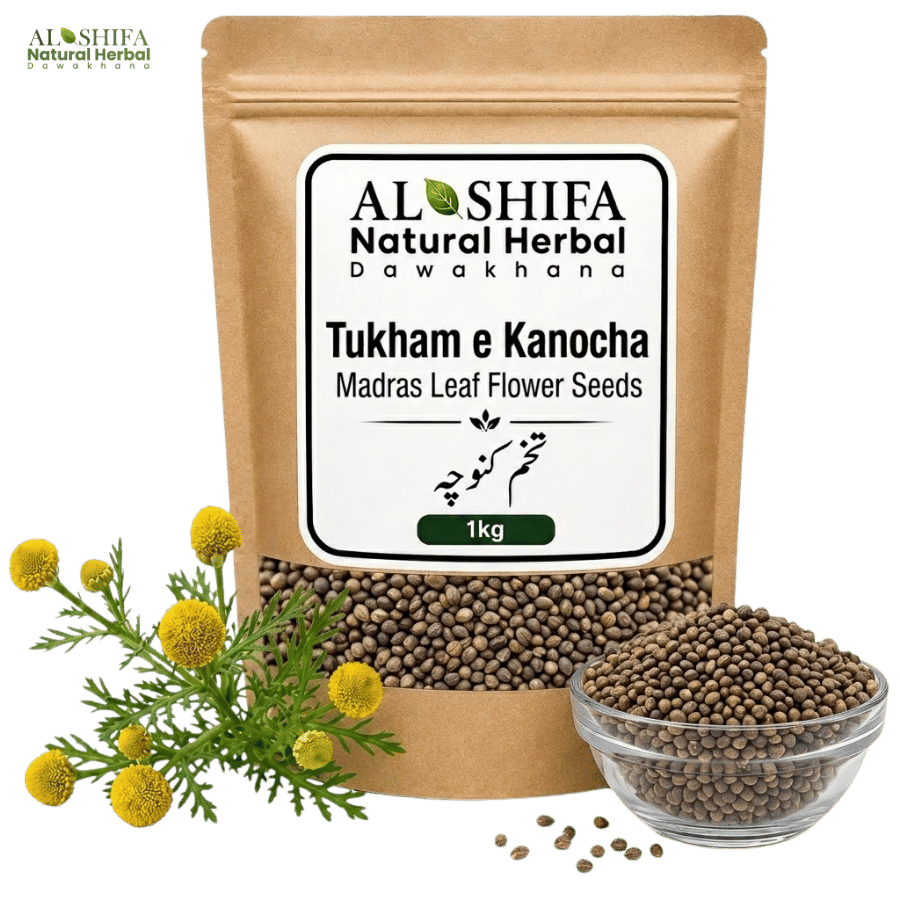
Tukham e Kanocha, commonly known as Madras Leaf Flower Seeds or Phyllanthus maderaspatensis Seeds, is a traditional dried herbal seed material used in selected Unani and regional herbal preparations. It has traditionally been associated with digestive, urinary, liver-related, restorative and general wellness formulations.
Al Shifa Tukham e Kanocha is carefully selected with attention to its natural seed appearance, cleanliness, proper dryness and responsible storage.
Key Features:
Important Note: Phyllanthus maderaspatensis is different from Phyllanthus niruri, Phyllanthus amarus and other related species. Traditional use does not establish Tukham e Kanocha as a treatment for liver disease, kidney stones, urinary infections or other medical conditions.
Tukham e Kanocha, commonly associated with Phyllanthus maderaspatensis Seeds and known in English as Madras Leaf Flower Seeds, is a traditional dried herbal seed material used in selected South Asian herbal and Unani preparations. In Urdu herbal trade, it is known as تخم کنو چہ.
The seeds come from Phyllanthus maderaspatensis, a small herb belonging to the Phyllanthaceae family. The plant grows in warm and dry regions and has been known in traditional herbal practice for the use of different plant parts.
Tukham e Kanocha has historically appeared in preparations associated with digestive wellness, liver-related traditional formulations, urinary wellness, general restorative care and selected compound herbal preparations.
Different parts of Phyllanthus plants are sometimes discussed together in traditional or online herbal information. However, the seeds, leaves, stems, roots, whole plant and extracts are not automatically interchangeable. Research involving one plant part or another Phyllanthus species should not automatically be applied to Tukham e Kanocha seeds.
At Al Shifa Natural Herbal Dawakhana, Tukham e Kanocha is carefully selected with attention to its recognizable seed appearance, cleanliness, proper dryness and responsible storage.
Tukham e Kanocha refers to the mature dried seeds associated with Phyllanthus maderaspatensis.
The seeds are generally supplied as a traditional botanical raw material for use in herbal preparations.
Depending on natural source, maturity and processing, they may show some variation in:
They may be supplied as:
Whole seeds retain more visible identification features than finely powdered material.
Product Name: Tukham e Kanocha
English Name: Madras Leaf Flower Seeds / Phyllanthus maderaspatensis Seeds
Urdu Name: تخم کنو چہ
Roman Name: Tukham e Kanocha / Tukhm e Kanocha / Kanocha Seeds
Scientific Name: Phyllanthus maderaspatensis L.
Plant Family: Phyllanthaceae
Plant Part: Seeds
Common Form: Whole Dried Seeds / Powder
Product Type: Traditional Dried Herbal Seed Material
Phyllanthus maderaspatensis is a small herbaceous plant belonging to the genus Phyllanthus.
The genus contains many species distributed across tropical and subtropical regions.
The plant develops small flowers and fruits, from which the seeds are obtained after maturity.
Different parts of the plant may be used in regional herbal traditions, including:
The traditional use of one part should not automatically be applied to another.
Correct botanical identification is particularly important with Phyllanthus herbs.
The genus Phyllanthus contains many different species, and several are used in traditional herbal systems.
These may include:
Although these plants belong to related botanical groups, they are not the same herbal raw material.
Their:
may differ.
Information about another Phyllanthus species should therefore not automatically be presented as information about Tukham e Kanocha.
The English name Madras Leaf Flower is associated with Phyllanthus maderaspatensis.
It should not automatically be confused with other herbs marketed under names such as:
These common names may refer to different species.
Accurate botanical identification is more reliable than relying only on a common name.
Good-quality Tukham e Kanocha should retain the natural characteristics of properly collected and dried seed material.
Common quality features include:
Natural variation between batches can occur because botanical materials are affected by growing conditions, maturity, harvesting and storage.
Tukham e Kanocha has been used as a traditional botanical ingredient in selected herbal preparations.
Its traditional applications may be associated with:
These uses describe traditional herbal practice and should not be interpreted as proof that the seeds treat specific diseases.
Tukham e Kanocha has historically appeared in selected preparations associated with digestive wellness.
Traditional formulations may use the seeds alone or combine them with other herbal ingredients.
Such preparations may be intended to support:
Traditional digestive use does not establish Tukham e Kanocha as a treatment for:
Ongoing or severe digestive symptoms require appropriate medical evaluation.
Plants belonging to the Phyllanthus genus are widely discussed in traditional herbal systems in relation to liver wellness.
Tukham e Kanocha may also appear in selected traditional liver-related formulations.
However, an important distinction is necessary.
Research involving other Phyllanthus species, whole plants or concentrated extracts should not automatically be applied to Phyllanthus maderaspatensis seeds.
Traditional liver-related use does not establish that Tukham e Kanocha can:
Persistent jaundice, abnormal liver tests or suspected liver disease requires proper medical assessment.
Tukham e Kanocha may also appear in selected traditional formulations associated with urinary wellness.
Its traditional role may be part of a larger herbal combination rather than use as a single ingredient.
Traditional urinary use should not be interpreted as proof that these seeds:
Painful urination, fever, blood in urine, severe flank pain or persistent urinary symptoms require medical evaluation.
Different Phyllanthus species are widely marketed online in connection with kidney stones.
This can create confusion.
Research involving another species commonly marketed as “stonebreaker” should not automatically be transferred to Phyllanthus maderaspatensis seeds.
The scientific species, plant part, preparation and research method must be considered separately.
Tukham e Kanocha should therefore not be marketed as a proven kidney-stone treatment.
Tukham e Kanocha may be included in compound traditional preparations intended for general restorative or body wellness.
Such use may be associated with:
The term “restorative” describes traditional use and does not mean that the seeds treat nutritional deficiency, anaemia, chronic fatigue or weakness caused by disease.
Persistent unexplained weakness should be medically assessed.
Some traditional herbal practices may include Tukham e Kanocha in formulations associated with bowel wellness.
The effect of a compound preparation depends on:
Traditional bowel-related use should not replace diagnosis of persistent diarrhoea, constipation, bleeding or unexplained changes in bowel habits.
Phyllanthus plants contain a wide variety of naturally occurring plant compounds.
Research on different Phyllanthus species and plant parts has identified groups such as:
However, the exact composition of Tukham e Kanocha can vary according to:
The presence of naturally occurring compounds does not by itself establish a medical benefit.
Different parts of Phyllanthus maderaspatensis should not automatically be considered interchangeable.
Tukham e Kanocha:
Refers specifically to the seeds.
Leaves:
Represent a separate plant material.
Stems / Aerial Herb:
Contain different proportions of natural constituents.
Roots:
Are another distinct botanical material.
Whole Plant:
May include several plant parts together.
Research or traditional uses involving the whole herb should not automatically be attributed specifically to the seeds.
Tukham e Kanocha may be supplied in different forms.
Whole Seeds:
Retain more visible identification characteristics and natural seed structure.
Powder:
Convenient for compound preparations but more difficult to identify visually.
Extracts:
Concentrated preparations produced through specific processing methods.
Standardized Products:
May contain controlled concentrations of selected compounds.
Results obtained from concentrated extracts should not automatically be applied to ordinary dried seeds.
This distinction is particularly important.
Phyllanthus maderaspatensis is the botanical identity associated here with Tukham e Kanocha.
Phyllanthus niruri is a separate species and is widely discussed internationally in herbal products and research.
They should not be treated as botanical synonyms.
Claims, studies or traditional applications involving Phyllanthus niruri should not automatically be used to describe Phyllanthus maderaspatensis seeds.
Phyllanthus amarus is another species frequently discussed in relation to traditional liver and urinary applications.
It is not automatically the same as Phyllanthus maderaspatensis.
Research involving Phyllanthus amarus extracts or whole herb should not be presented as direct evidence for Tukham e Kanocha seeds.
Correct species identification is essential when evaluating herbal information.
Research on plants within the Phyllanthus genus may involve:
These forms can differ greatly from ordinary dried Tukham e Kanocha.
Laboratory or animal research can provide useful scientific information, but it does not automatically establish clinical effectiveness in humans.
The exact species, plant part and preparation used in each study must be considered.
Tukham e Kanocha is a traditional medicinal seed material rather than an ordinary everyday food ingredient.
Medicinal internal use should consider:
Long-term or concentrated medicinal use should not be undertaken casually.
Reliable information regarding medicinal use of Phyllanthus maderaspatensis seeds during pregnancy is limited.
Pregnant women should avoid self-prescribing Tukham e Kanocha for medicinal purposes unless specifically advised by an appropriately qualified healthcare professional.
Traditional use does not establish pregnancy safety.
Reliable safety information for medicinal amounts during breastfeeding is also limited.
Breastfeeding women should seek appropriate professional guidance before regular medicinal use.
Medicinal use in infants and young children should not be undertaken without appropriate professional guidance.
Whole seeds should also be stored safely away from young children.
As with other botanical materials, individual sensitivity can occur.
Stop use and seek appropriate advice if significant:
develops.
People with chronic medical conditions or those taking regular medicines should seek professional guidance before medicinal use.
This is particularly important when Tukham e Kanocha is being used:
Traditional herbal use should not replace prescribed medical treatment.
At Al Shifa Natural Herbal Dawakhana, Tukham e Kanocha is selected with attention to:
Recognizable Identity – Seed material consistent with the supplied botanical product.
Natural Appearance – Characteristic natural seed colour and texture.
Cleanliness – Selected to reduce unnecessary dust and foreign material.
Proper Dryness – Appropriately dried for responsible storage.
No Visible Mould – Checked for obvious moisture-related deterioration.
Responsible Storage – Protected from moisture, insects and contamination.
Al Shifa Natural Herbal Dawakhana, established in 1999, supplies carefully selected traditional herbs and natural raw materials throughout Pakistan.
Our focus includes:
Tukham e Kanocha has traditionally been used as an ingredient in different herbal preparations.
Depending on traditional practice, it may be supplied or used as:
The appropriate preparation and amount depend on the intended traditional formulation.
For medicinal internal use, professional guidance is recommended, particularly during pregnancy, breastfeeding, childhood, chronic illness or regular medicine use.
Tukham e Kanocha is identified here with the seeds of Phyllanthus maderaspatensis.
The genus Phyllanthus contains many related species, and common herbal names can sometimes create confusion.
Phyllanthus maderaspatensis, Phyllanthus niruri, Phyllanthus amarus and other Phyllanthus species should not automatically be considered interchangeable.
Traditional use of Tukham e Kanocha does not establish it as a proven treatment for:
Research involving another Phyllanthus species, another plant part or concentrated extracts should not automatically be applied to ordinary dried Phyllanthus maderaspatensis seeds.
Store Tukham e Kanocha in a cool, dry and clean place in a tightly closed container.
For better storage:
Do not use seed material showing visible mould, excessive moisture, significant insect infestation or an unusual spoiled smell.
Tukham e Kanocha, commonly known as Madras Leaf Flower Seeds and associated with Phyllanthus maderaspatensis, is a traditional dried herbal seed material used in selected digestive, liver-related, urinary, restorative and compound herbal preparations.
Correct botanical identity is important because several Phyllanthus species are used in traditional herbal systems. Phyllanthus maderaspatensis should not automatically be confused with Phyllanthus niruri, Phyllanthus amarus or other Phyllanthus herbs, and research involving those species should not automatically be applied to Tukham e Kanocha seeds.
Customers searching for Tukham e Kanocha Pakistan, Tukhm e Kanocha Pakistan, Kanocha Seeds Pakistan, Phyllanthus maderaspatensis Seeds Pakistan, Madras Leaf Flower Seeds Pakistan, pure Tukham e Kanocha, original Tukham e Kanocha, Tukham e Kanocha benefits, Tukham e Kanocha uses, Phyllanthus maderaspatensis benefits, Phyllanthus maderaspatensis uses, Tukham e Kanocha Lahore, Tukham e Kanocha price in Pakistan, Kanocha Seeds price in Pakistan, buy Tukham e Kanocha Pakistan or Tukham e Kanocha online Pakistan can choose Al Shifa Natural Herbal Dawakhana for carefully selected traditional seed material.
Since 1999, Al Shifa Natural Herbal Dawakhana has focused on supplying traditional herbs and natural raw materials with attention to identity, cleanliness, natural quality, proper dryness, responsible storage and clear product information.
Product Name: Tukham e Kanocha
English Name: Madras Leaf Flower Seeds / Phyllanthus maderaspatensis Seeds
Urdu Name: تخم کنو چہ
Roman Name: Tukham e Kanocha / Tukhm e Kanocha / Kanocha Seeds
Scientific Name: Phyllanthus maderaspatensis L.
Plant Family: Phyllanthaceae
Plant Part: Seeds
Common Form: Whole Dried Seeds / Powder
Product Type: Traditional Dried Herbal Seed Material
Traditional Use: Digestive, liver-related, urinary, restorative and compound herbal preparations
Important Note: Phyllanthus maderaspatensis is distinct from Phyllanthus niruri, Phyllanthus amarus and other related species. Research or traditional claims involving another species, plant part or concentrated extract should not automatically be applied to ordinary Tukham e Kanocha seeds.
تخم کنوچہ طبِ یونانی اور دیسی طبی ادویات میں استعمال ہونے والا ایک معروف نباتاتی مفرد ہے۔ اس سے مراد کنوچہ نامی پودے کے خشک اور پختہ بیج ہیں، جس کا نباتاتی نام فائی لینتھس مدراس پٹینسس بیان کیا جاتا ہے۔
یہ ایک چھوٹی نباتاتی بوٹی ہے جو گرم اور نیم گرم علاقوں میں پائی جاتی ہے۔ اس کے بیج عموماً چھوٹے، سخت اور خاکی سے گہری بھوری رنگت کے ہوتے ہیں۔ طبِ یونانی میں اسے خصوصاً قابض، مبرد، مجفف اور مدرِ بول افعال رکھنے والے بعض مرکب نسخوں میں شامل کیا جاتا رہا ہے۔
تخم کنوچہ کنوچہ نامی پودے کے خشک اور پختہ بیج ہیں۔ پختگی کے بعد انہیں جمع کرکے صاف اور مناسب طور پر خشک کیا جاتا ہے۔
بیجوں کی رنگت، جسامت اور ظاہری حالت پودے کی قسم، علاقے، موسم، پختگی اور خشک کرنے کے طریقے کے مطابق معمولی مختلف ہو سکتی ہے۔
نام: تخم کنوچہ
دوسرا معروف نام: کنوچہ کے بیج، ہزارمنی
نباتاتی نام: فائی لینتھس مدراس پٹینسس
خاندان: فائی لینتھیسی
استعمال ہونے والا حصہ: خشک اور پختہ بیج
قسم: نباتاتی مفرد دوا
عام شکل: چھوٹے، خشک اور سخت بیج
عام رنگت: خاکی سے گہری بھوری
ذائقہ: قدرے پھیکا، کسیلا یا ہلکا تلخ
بو: معمولی یا تقریباً بے بو
مزاج: سرد و خشک
درجہ: عموماً دوسرے درجے کے قریب بیان کیا جاتا ہے۔
تخم کنوچہ کی بازاری پہچان اور مزاج کے درجے میں بعض علاقائی اختلافات ملتے ہیں۔ اس لیے مذکورہ مزاج کا اطلاق اسی وقت کیا جائے جب دوا کی پہچان فائی لینتھس مدراس پٹینسس کے بیجوں کے طور پر درست ہو۔
اچھی تخم کنوچہ میں درج ذیل خصوصیات ہونی چاہییں:
اگر بیجوں میں نمی، کیڑے، پھپھوندی یا غیر معمولی بو محسوس ہو تو انہیں طبی استعمال میں نہ لائیں۔
طبِ یونانی اور حکیمی معلومات میں تخم کنوچہ کے درج ذیل افعال بیان کیے جاتے ہیں:
قابض: زائد رطوبات اور غیر معمولی اخراج کو کم کرنے والے بعض مرکبات میں شامل کیا جاتا ہے۔
مبرد: جسم کی غیر معمولی حرارت سے متعلق بعض کیفیات میں استعمال کیا جاتا ہے۔
مجفف: زائد رطوبات کو خشک کرنے والے بعض حکیمی نسخوں کا حصہ بنایا جاتا ہے۔
مدرِ بول: پیشاب کے اخراج میں معاون طبِ یونانی مرکبات میں شامل کیا جاتا ہے۔
حابسِ خون: معمولی خون ریزی سے متعلق بعض قدیم نسخوں میں اس کا ذکر ملتا ہے۔
مقوی معدہ: معدے کی کمزوری اور بعض ہاضم کیفیات سے متعلق مرکبات میں شامل کیا جاتا ہے۔
یہ افعال طبی معلومات پر مبنی ہیں۔
تخم کنوچہ کو بعض حکیمی نسخوں میں درج ذیل کیفیات سے متعلق استعمال کیا جاتا رہا ہے:
اسے عموماً اکیلا استعمال کرنے کے بجائے دوسری قابض، مبرد یا لعاب دار ادویات کے ساتھ مرکب شکل میں شامل کیا جاتا ہے۔
شدید دست، پاخانے میں خون، تیز بخار، مسلسل قے، شدید پیٹ درد یا پانی کی کمی کی علامات میں فوری طبی معائنہ ضروری ہے۔
تخم کنوچہ کو بواسیر کی بعض ادویات اور مرکبات میں شامل کیا جاتا ہے، خصوصاً جہاں زائد رطوبت یا معمولی خون آنے کی کیفیت موجود ہو۔
مقعد سے مسلسل یا زیادہ خون آنا ہمیشہ بواسیر کی وجہ سے نہیں ہوتا۔ ایسی صورت میں کسی حکیمی نسخے پر انحصار کرنے کے بجائے اصل وجہ معلوم کروانا ضروری ہے۔
تخم کنوچہ کو بعض دیسی طبی نسخوں میں پیشاب کے اخراج اور پیشاب کی معمولی تکلیف سے متعلق دوسری ادویات کے ساتھ شامل کیا جاتا ہے۔
اگر پیشاب میں خون آئے، پیشاب بند ہو جائے، بخار کے ساتھ شدید جلن ہو یا گردوں کے مقام پر تیز درد محسوس ہو تو فوری طبی معائنہ کروائیں۔
فائی لینتھس جنس کے مختلف پودوں کا ذکر طبی طور پر جگر سے متعلق ادویات میں ملتا ہے۔ تخم کنوچہ کو بھی بعض مرکب حکیمی نسخوں میں جگر کی ادویات میں شامل کیا جاتا ہے۔
تاہم فائی لینتھس کی مختلف اقسام کے خواص کو تخم کنوچہ کے بیجوں پر یکساں طور پر لاگو نہیں کیا جا سکتا۔ یرقان، آنکھوں یا جلد کی زردی، پیٹ میں سوجن یا بہت گہرے پیشاب کی صورت میں مستند معالج سے معائنہ کروائیں۔
فائی لینتھس کی مختلف اقسام میں درج ذیل قدرتی نباتاتی اجزاء کی موجودگی بیان کی گئی ہے:
ان اجزاء کی مقدار پودے کی اصل قسم، علاقے، آب و ہوا، بیجوں کی پختگی، جمع کرنے کے وقت اور محفوظ رکھنے کے طریقے کے مطابق مختلف ہو سکتی ہے۔
مکمل تخم کنوچہ:
مکمل بیجوں میں شکل، رنگت، صفائی، پختگی اور ظاہری معیار دیکھنا نسبتاً آسان ہوتا ہے۔
تخم کنوچہ کا سفوف:
سفوف کو مرکب ادویات میں شامل کرنا آسان ہوتا ہے، لیکن پیسنے کے بعد اصل بیج کی پہچان، صفائی اور ممکنہ ملاوٹ جانچنا مشکل ہو جاتا ہے۔
اسی لیے طبی استعمال کے لیے درست پہچان کے بعد مکمل بیج لے کر ضرورت کے مطابق تازہ سفوف بنوانا بہتر ہو سکتا ہے۔
تخم کنوچہ اور تخم کونچ دو الگ نباتاتی ادویات ہیں۔
تخم کنوچہ:
یہ چھوٹے بیج ہیں اور یہاں ان کی نباتاتی پہچان فائی لینتھس مدراس پٹینسس کے طور پر بیان کی گئی ہے۔
تخم کونچ:
یہ ایک پھلی دار پودے کے نسبتاً بڑے بیج ہیں جنہیں طبِ یونانی میں عموماً مقوی باہ مرکبات میں استعمال کیا جاتا ہے۔
تخم کنوچہ کے نام سے بعض علاقوں میں مختلف اقسام یا ملتے جلتے بیج فروخت ہو سکتے ہیں۔ فائی لینتھس کی مختلف اقسام بھی ظاہری طور پر ایک دوسرے سے مشابہ ہو سکتی ہیں۔
طبی استعمال سے پہلے درج ذیل باتوں کی تصدیق ضروری ہے:
صرف رنگت یا جسامت دیکھ کر ہر ملتے جلتے بیج کو تخم کنوچہ نہیں سمجھنا چاہیے۔
خواتین تخم کنوچہ کو ماہواری کی بے قاعدگی، زیادہ خون آنے، رحم کی بیماری یا دوسرے تولیدی مسائل کے علاج کے لیے خود سے استعمال نہ کریں۔
ماہواری کے دوران بہت زیادہ خون آنے، شدید کمزوری، چکر یا پیٹ کے نچلے حصے میں مسلسل درد کی صورت میں پہلے اصل وجہ معلوم کروائیں۔
حمل کے دوران تخم کنوچہ کا طبی استعمال خود سے نہ کریں۔
دودھ پلانے والی خواتین بھی اس کا اندرونی طبی استعمال شروع کرنے سے پہلے مستند معالج سے رہنمائی حاصل کریں۔
شیر خوار اور چھوٹے بچوں کو تخم کنوچہ خود سے دوا کے طور پر نہ دیں۔
خصوصاً بچوں میں دست، پیچش، قے یا پانی کی کمی تیزی سے خطرناک صورت اختیار کر سکتی ہے۔ ایسی علامات میں بچوں کے مستند معالج سے رابطہ کریں۔
جگر یا گردوں کی بیماری میں تخم کنوچہ کا خود سے استعمال مناسب نہیں۔ ایسے مریضوں میں جڑی بوٹیوں کے اجزاء کے جسم سے خارج ہونے اور دوسری ادویات کے ساتھ اثرات مختلف ہو سکتے ہیں۔
اگر کوئی شخص درج ذیل ادویات استعمال کر رہا ہو تو تخم کنوچہ کے طبی استعمال سے پہلے معالج سے مشورہ کرے:
زیادہ مقدار، ناموافق مزاج یا ناقص معیار کی تخم کنوچہ کے استعمال سے بعض افراد میں درج ذیل علامات پیدا ہو سکتی ہیں:
ایسی صورت میں استعمال بند کرکے مستند معالج سے رابطہ کریں۔
تخم کنوچہ کے مصلح اور بدل کا انتخاب اس کے استعمال کے مقصد، مریض کے مزاج اور نسخے کی نوعیت کے مطابق کیا جاتا ہے۔
چونکہ اس کے نام اور پہچان میں اختلاف پایا جاتا ہے، اس لیے کسی دوسری دوا کو خود سے اس کا مصلح یا بدل قرار نہیں دینا چاہیے۔ مستند حکیم مطلوبہ فعل کے مطابق مناسب انتخاب کر سکتا ہے۔
تخم کنوچہ کی مناسب مقدار اس کی درست پہچان، معیار، تیاری، مریض کی عمر، مزاج، صحت کی حالت اور استعمال کے مقصد کے مطابق مختلف ہو سکتی ہے۔
اسی لیے یہاں خود سے کھانے یا پینے کے لیے کوئی مخصوص مقدار تجویز نہیں کی جا رہی۔ طبی استعمال کے لیے مستند حکیم یا معالج سے مقدار، مدت اور طریقۂ استعمال معلوم کریں۔
تخم کنوچہ ایک نباتاتی مفرد دوا ہے۔ قدرتی ہونے کا مطلب یہ نہیں کہ اسے ہر شخص، ہر بیماری یا ہر مقدار میں استعمال کر سکتا ہے۔
اسے خود سے درج ذیل بیماریوں کا ثابت شدہ علاج نہ سمجھیں:
اس کے مختلف استعمال طبِ یونانی اور روایتی طبی طریقوں میں بیان کیے گئے ہیں۔
الشفاء نیچرل ہربل دواخانہ میں تخم کنوچہ منتخب کرتے وقت درج ذیل باتوں کا خیال رکھا جاتا ہے:
درست پہچان: مطلوبہ جڑی بوٹی سے حاصل ہونے والے پختہ بیج منتخب کیے جاتے ہیں۔
قدرتی رنگت اور ساخت: بیجوں کی اصل خاکی سے گہری بھوری رنگت اور سخت نباتاتی ساخت برقرار ہو۔
مناسب خشک حالت: بیجوں میں غیر ضروری نمی، چپچپاہٹ یا باسی پن موجود نہ ہو۔
صاف ستھری حالت: مٹی، گرد، ریت، کنکر، تنکے اور دوسری غیر ضروری چیزوں سے پاک صاف ہو۔
پھپھوندی اور کیڑوں سے محفوظ: خراب ہونے، کیڑے لگنے یا پھپھوندی کی واضح علامات موجود نہ ہوں۔
مناسب ذخیرہ: بیجوں کو نمی، گرمی، تیز بو، بیرونی آلودگی اور کیمیکل والی چیزوں سے دور رکھا گیا ہو۔
الشفاء نیچرل ہربل دواخانہ سنہ ۱۹۹۹ سے قدرتی جڑی بوٹیوں کی سپلائی کر رہا ہے۔
ہم تخم کنوچہ کی درست پہچان، مناسب معیار، احتیاط سے انتخاب اور ذمہ دارانہ معلومات کو اہمیت دیتے ہیں۔ مناسب طریقے سے محفوظ کیا گیا تخم کنوچہ پاکستان بھر میں فراہم کیا جاتا ہے۔
تخم کنوچہ کو ٹھنڈی، خشک اور صاف جگہ پر کسی جار میں پیک کرکے رکھیں۔
اگر بیجوں میں پھپھوندی، کیڑے، زیادہ نمی یا غیر معمولی خراب بو پیدا ہو جائے تو انہیں استعمال نہ کریں۔
تخم کنوچہ کنوچہ نامی پودے کے خشک اور پختہ بیج ہیں۔ انہیں طبِ یونانی اور دیسی طبی ادویات میں خصوصاً معدہ اور آنتوں، زائد رطوبات، بواسیر، پیشاب اور امراضِ جگر سے متعلق بعض مرکب نسخوں میں شامل کیا جاتا ہے۔
اگر آپ تخم کنوچہ، کنوچہ کے بیج، ہزارمنی، خالص تخم کنوچہ، اصل تخم کنوچہ، تخم کنوچہ کے فوائد، تخم کنوچہ کے استعمال، تخم کنوچہ پاکستان، تخم کنوچہ لاہور، تخم کنوچہ کی قیمت، تخم کنوچہ کی قیمت پاکستان، تخم کنوچہ آن لائن یا تخم کنوچہ خریدیں تلاش کر رہے ہیں تو الشفاء نیچرل ہربل دواخانہ احتیاط سے منتخب، صاف ستھرا اور مناسب طریقے سے محفوظ کیا گیا تخم کنوچہ فراہم کرتا ہے۔
نام: تخم کنوچہ
دوسرا معروف نام: کنوچہ کے بیج، ہزارمنی
نباتاتی نام: فائی لینتھس مدراس پٹینسس
خاندان: فائی لینتھیسی
استعمال ہونے والا حصہ: خشک اور پختہ بیج
مزاج: سرد و خشک
درجہ: عموماً دوسرے درجے کے قریب
افعال: قابض، مبرد، مجفف، مدرِ بول اور بعض روایات کے مطابق مقوی معدہ
طبِ یونانی میں استعمال: معدہ اور آنتوں، زائد رطوبات، بواسیر، پیشاب اور جگر کے امراض کے بعض مرکب نسخوں میں استعمال۔
اہم نوٹ: تخم کنوچہ کے نام سے بازار میں مختلف تخم دستیاب ہو سکتے ہیں، اس لیے طبی استعمال کے لیے درست پہچان ضروری ہے۔ حاملہ خواتین، دودھ پلانے والی مائیں، بچے، جگر یا گردوں کے مریض اور مستقل ادویات استعمال کرنے والے افراد مستند معالج کی رہنمائی کے بغیر اسے استعمال نہ کریں۔