
روغن آملہ، ریٹھا، سکاکائی
Price range: ₨ 750 through ₨ 1,500
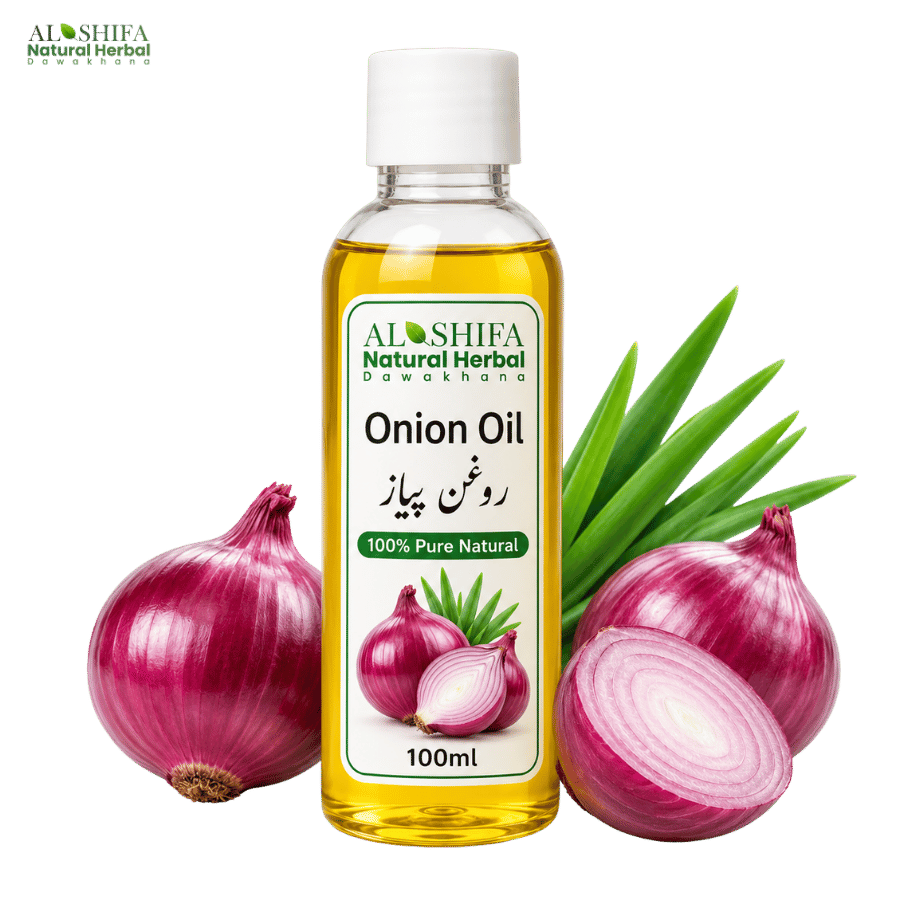
Onion Oil / Roghan-e-Piyaz is a botanical hair-care oil prepared with Onion (Allium cepa L.) derived ingredients and a suitable carrier oil. Traditionally valued for hair and scalp care, it is ideal for scalp massage, pre-shampoo oiling, and conditioning dry, rough, and difficult-to-manage hair.
How to Use: Apply a small amount to the scalp and hair. Massage gently with fingertips and distribute through the hair lengths and ends. Leave according to your normal hair-care routine, then wash with a suitable shampoo.
Storage: Store in a cool, dry place away from direct sunlight, excessive heat, moisture, and contamination. Keep the bottle tightly closed.
Important Note: For external use only unless specifically labelled otherwise. Onion Oil is intended for cosmetic hair and scalp care and should not be considered a guaranteed treatment for hair loss, baldness, alopecia, dandruff, scalp infections, or other medical conditions.
Onion Oil / Roghan-e-Piyaz – روغن پیاز is a botanical hair and scalp-care preparation made using onion (Allium cepa L.). Onion has a long history of traditional use in personal-care preparations, particularly for the hair and scalp. Modern onion oils are commonly prepared by incorporating onion-derived material into a suitable carrier oil, creating an easy-to-apply oil-based preparation for scalp massage and hair conditioning.
Onion naturally contains a variety of plant compounds, including organosulfur compounds, flavonoids, and other phytochemicals. However, the composition of finished Onion Oil depends greatly on the preparation method, onion material used, carrier oil, processing, and storage.
Onion Oil is best described as a hair-conditioning and scalp-care oil rather than a guaranteed treatment for hair loss or baldness.
Product Name: Onion Oil
Urdu Name: روغن پیاز
Roman Name: Roghan-e-Piyaz / Roghan Piyaz
Common English Names: Onion Oil / Onion Hair Oil / Onion-Infused Oil
Botanical Name: Allium cepa L.
Plant Family: Amaryllidaceae
Plant Part Commonly Used: Bulb
Product Type: Botanical Infused Oil / Herbal Hair Oil
Product Form: Oil
Common Uses: Hair Conditioning, Scalp Care, Scalp Massage, Dry-Hair Care, Pre-Shampoo Oiling & Cosmetic Hair Care
Onion is a widely cultivated bulbous plant belonging to the genus Allium. It has been used as a food ingredient for centuries and also has a history of traditional external use.
The characteristic aroma of fresh onion is associated largely with its naturally occurring sulfur-containing compounds.
Onion contains naturally occurring plant constituents such as:
The quantities of these compounds can vary considerably according to onion variety, growing conditions, storage, processing, and extraction.
The term Onion Oil can refer to different preparations.
Unlike naturally oil-rich seeds such as sesame or sunflower, the fleshy onion bulb is not normally pressed to produce a conventional fixed vegetable oil in substantial quantities.
Many commercial Onion Oils are therefore prepared by:
Consequently, the exact composition of one Onion Oil may differ considerably from another.
Onion Oil and fresh onion juice should not be considered the same product.
Onion juice is a water-rich preparation made directly from onion tissue.
Onion Oil is an oil-based preparation and may contain onion-derived components incorporated into a carrier oil.
Because water-soluble and oil-soluble plant constituents behave differently, it is inaccurate to assume that every constituent present in fresh onion juice will be present in the same amount in Onion Oil.
Onion-based preparations have traditionally been associated with hair and scalp care.
Today, Onion Oil is commonly incorporated into routines for:
Traditional use provides useful historical context but should not be interpreted as proof that Onion Oil can treat every form of hair loss.
One of the most practical uses of Onion Oil is hair conditioning.
Depending on the carrier oil and formulation, it can coat and lubricate the hair shaft, helping:
These are primarily cosmetic effects on existing hair.
Hair may become dry and rough because of:
Applying a suitable Onion Oil can help lubricate the hair surface and make dry or rough hair feel softer and easier to manage.
The carrier oil present in Onion Oil can form a thin layer over the hair shaft.
This may help reduce surface friction and make hair feel:
The amount required depends on hair length, thickness, texture, and dryness.
A small amount of oil distributed over the hair surface can improve the way light reflects from the hair.
As a result, appropriately applied Onion Oil may help hair appear:
Using too much may make fine hair appear greasy or heavy.
Onion Oil may be incorporated into a pre-shampoo hair-care routine.
Applying oil before shampooing can provide lubrication to the hair shaft and may help reduce the excessively dry feeling that some people experience after washing.
A typical routine may involve:
Avoid excessively aggressive scalp massage.
Onion Oil may also be used for general scalp conditioning.
Depending on its formulation, it can:
Oil should not be applied over infected, bleeding, or severely inflamed areas.
The oil base provides useful glide for scalp massage.
For gentle scalp massage:
Scalp massage itself can be relaxing, but this should not be confused with proven treatment of a hair-loss disorder.
Onion Oil is widely marketed for hair growth, but strong claims require caution.
It should not be guaranteed to:
Some research has investigated topical onion juice in specific hair-loss settings, but this is not the same as proving that every commercial Onion Oil produces hair regrowth.
The formulation, concentration, extraction method, carrier oil, and condition being studied all matter.
Therefore, Onion Oil is more appropriately marketed as a traditional hair and scalp-care preparation.
Hair loss can result from numerous factors, including:
Persistent, sudden, patchy, or severe hair loss should be appropriately evaluated rather than treated only with cosmetic oils.
Hair breakage and hair loss from the root are not the same thing.
Dry, rough, or chemically damaged hair may break along the hair shaft. Conditioning oils can help lubricate existing hair and reduce friction, which may make hair easier to handle.
This is different from treating a medical cause of hair shedding or stimulating new follicles.
Understanding this distinction helps keep product claims accurate.
Onion is well known for its naturally occurring sulfur-containing compounds.
These compounds contribute to onion’s characteristic:
However, it is misleading to assume that applying Onion Oil directly “feeds sulfur” to hair follicles in a way that guarantees hair growth.
The amount and type of sulfur-containing compounds retained in a finished oil depend greatly on how the product is prepared.
Onion also contains flavonoids, including compounds related to quercetin.
The concentration of these compounds varies according to:
Many flavonoids in fresh onion are not necessarily transferred completely into an oil-based preparation.
For this reason, the composition of finished Onion Oil should not automatically be considered identical to fresh onion.
Most Onion Oils contain a carrier oil that makes up an important part of the final formulation.
Depending on the product, the carrier may influence:
Transparent ingredient labeling is therefore particularly important for Onion Oil.
When dryness is primarily related to a lack of surface lubrication, an oil-based preparation may help the scalp feel softer and less dry.
However, a dry or flaky scalp can also result from:
Onion Oil should not be presented as a universal treatment for scalp flaking.
Onion Oil is sometimes promoted as a dandruff treatment.
This claim should be used cautiously.
Dandruff is a scalp condition influenced by several factors, and ordinary cosmetic Onion Oil has not been established as a guaranteed treatment.
Oil may help condition a dry-feeling scalp, but persistent dandruff, redness, severe itching, or scaling may require appropriate scalp-care treatment.
Once a hair fiber is physically split, no cosmetic oil can permanently fuse it back into undamaged hair.
Onion Oil may temporarily:
Regular trimming remains the practical way to remove established split ends.
A small amount of Onion Oil may help reduce the rough appearance of frizzy hair by coating the hair surface.
It can help:
Use sparingly, particularly on fine or naturally oily hair.
If the formulation is suitable for facial use, Onion Oil may also be used as a conditioning oil for beard hair.
It can help:
However, it should not be claimed to guarantee new beard growth.
Although Onion Oil is primarily marketed for hair and scalp care, some formulations may also be suitable for external body massage or skin conditioning.
This depends heavily on the:
Because onion-derived preparations may irritate sensitive skin, the manufacturer’s directions should always be followed.
Onion has a naturally strong and characteristic aroma.
The finished Onion Oil may have:
depending on its formulation.
A natural onion-like smell is not automatically an indication of poor quality.
Similarly, a completely fragrance-free product does not necessarily indicate that it contains more or less onion extract.
For general hair conditioning:
The appropriate amount varies according to hair length and texture.
For scalp conditioning:
More oil does not necessarily provide better results.
The ideal frequency depends on:
Some people may prefer occasional pre-shampoo use, while others may incorporate it more regularly.
People with naturally oily scalps may require smaller quantities or less frequent application.
Onion-derived preparations can cause irritation in some individuals.
Before widespread application:
Stop using the product if you experience:
Seek medical attention for a severe allergic reaction.
People with sensitive scalps should introduce Onion Oil gradually.
Sensitivity can result from:
A reaction to a finished Onion Oil does not necessarily mean onion itself is the only responsible ingredient.
Keep Onion Oil away from:
Onion-derived ingredients may cause significant eye irritation.
If accidental eye contact occurs, rinse thoroughly with clean water.
Avoid applying ordinary cosmetic Onion Oil to:
Such conditions may require appropriate medical care.
Onion Oil sold as a hair or cosmetic product should be considered for external use unless the product is specifically manufactured and labelled for another purpose.
Do not consume a cosmetic Onion Oil.
Carrier oils, fragrances, preservatives, or other ingredients used in cosmetic formulations may not be intended for ingestion.
Ordinary external cosmetic use differs from consuming concentrated botanical preparations.
Pregnant or breastfeeding individuals should use the product according to its labelled external-use directions.
If the formula contains essential oils or other concentrated botanical ingredients, their individual precautions should also be considered.
Keep the product out of reach of young children.
Children can have more sensitive skin and scalp, and some Onion Oil formulations may contain additional ingredients unsuitable for them.
Check the full ingredient list and age-related directions before applying to a child.
The quality of Onion Oil depends on several factors:
Because Onion Oil is often a formulated product rather than oil directly pressed from onion bulbs, transparent ingredient information is especially important.
The phrase “100% Pure Onion Oil” can be misleading if the product consists of onion extract or onion material infused into another vegetable oil.
Onion bulbs do not produce a conventional fixed oil in the same manner as oil-rich seeds.
Depending on the actual preparation, more accurate descriptions may include:
Product labeling should reflect the actual manufacturing process and ingredients.
The color of Onion Oil varies depending on the carrier oil, onion preparation, and additional ingredients.
It may appear:
Color alone does not establish quality, purity, or onion concentration.
To maintain product quality:
Avoid using the product if you notice:
Natural differences in color and aroma may occur between batches.
Onion Oil / Roghan-e-Piyaz – روغن پیاز is a traditional botanical hair-care preparation suitable for everyday hair and scalp conditioning.
Product Name: Onion Oil
Urdu Name: روغن پیاز
Roman Name: Roghan-e-Piyaz / Roghan Piyaz
Common English Names: Onion Oil / Onion Hair Oil / Onion-Infused Oil
Botanical Name: Allium cepa L.
Plant Family: Amaryllidaceae
Plant Part Used: Bulb
Product Type: Botanical Infused Oil / Herbal Hair Oil
Form: Oil
Naturally Occurring Onion Constituents: Organosulfur Compounds, Flavonoids, Phenolic Compounds and Other Naturally Occurring Plant Constituents
Common Uses: Hair Conditioning, Dry-Hair Care, Scalp Conditioning, Scalp Massage, Pre-Shampoo Oiling & General Cosmetic Hair Care
Storage: Keep tightly closed in a cool, dry place away from direct sunlight, excessive heat, moisture, and contamination.
Onion Oil / Roghan-e-Piyaz – روغن پیاز provides a convenient oil-based preparation for incorporating onion-derived botanical ingredients into a regular hair-care routine. It is particularly suitable for pre-shampoo oiling, scalp massage, dry-hair conditioning, improving softness and manageability, smoothing rough hair, and maintaining a well-conditioned appearance.
Because commercial Onion Oil is commonly prepared by incorporating onion-derived material into a carrier oil, the finished product’s properties depend greatly on its carrier oil, onion concentration, extraction method, additional ingredients, and overall formulation.
Disclaimer: Onion Oil is intended primarily for cosmetic hair and scalp care and is not intended to diagnose, treat, cure, or prevent disease. It should not be presented as a guaranteed treatment for hair loss, alopecia, baldness, dandruff, scalp infections, or other medical conditions. Persistent or sudden hair loss and significant scalp problems should be appropriately evaluated.
روغن پیاز پیاز کے نباتاتی اجزاء سے تیار کیا جانے والا ایک روایتی بیرونی نگہداشتی روغن ہے جسے خصوصاً بالوں، سر کی جلد، خشک اور کھردرے بالوں، سر کی مالش اور شیمپو سے پہلے بالوں کی نگہداشت کے لیے استعمال کیا جاتا ہے۔
پیاز ایک معروف نباتاتی پودا ہے جس میں قدرتی طور پر گندھک پر مشتمل نباتاتی مرکبات، فلیوونائڈز، فینولک مرکبات اور دوسرے قدرتی اجزاء پائے جاتے ہیں۔ تاہم تیار شدہ روغن پیاز میں ان اجزاء کی مقدار اس کے بنانے کے طریقے، استعمال کیے گئے پیاز، بنیادی روغن، عمل کاری اور محفوظ رکھنے کے حالات کے مطابق مختلف ہو سکتی ہے۔
یہ بات بھی اہم ہے کہ پیاز کا بلب تل، سورج مکھی یا بادام کی طرح قدرتی طور پر بڑی مقدار میں مستقل روغن پیدا نہیں کرتا۔ اسی لیے بازار میں دستیاب روغن پیاز عموماً پیاز کے نباتاتی اجزاء کو کسی مناسب بنیادی نباتاتی روغن میں شامل کرکے تیار کیا جاتا ہے۔
پروڈکٹ کا نام: روغن پیاز
رومن نام: روغنِ پیاز
ماخذ: پیاز
استعمال ہونے والا حصہ: بلب
پودے کا خاندان: ایمریلیڈیسی
پروڈکٹ کی قسم: نباتاتی آمیزشی روغن / بالوں کا نگہداشتی روغن
شکل: مائع روغن
عام استعمال: بالوں کی نگہداشت، خشک بالوں کی نرمی، سر کی جلد کی نگہداشت، سر کی مالش، شیمپو سے پہلے روغن لگانا اور عمومی بیرونی بالوں کی دیکھ بھال
پیاز دنیا بھر میں استعمال ہونے والا ایک معروف بلب دار نباتاتی پودا ہے۔ غذا میں استعمال کے ساتھ ساتھ مختلف روایتی طریقوں میں اسے بیرونی ذاتی نگہداشت کے لیے بھی استعمال کیا جاتا رہا ہے۔
پیاز کی مخصوص تیز خوشبو اس میں قدرتی طور پر موجود گندھک والے مرکبات سے منسلک ہوتی ہے۔
پیاز میں قدرتی طور پر مختلف نباتاتی اجزاء پائے جاتے ہیں، جن میں:
شامل ہو سکتے ہیں۔
ان اجزاء کی مقدار پیاز کی قسم، کاشت، موسم، ذخیرہ اور تیاری کے طریقے کے مطابق مختلف ہو سکتی ہے۔
روغن پیاز کو عام بیجوں کے روغن سے مختلف سمجھنا ضروری ہے۔
پیاز کے بلب میں اتنی مقدار میں قدرتی مستقل روغن موجود نہیں ہوتا کہ اسے تل، سرسوں یا سورج مکھی کے بیجوں کی طرح دبا کر بڑی مقدار میں روغن حاصل کیا جا سکے۔
اسی لیے روغن پیاز مختلف طریقوں سے تیار کیا جا سکتا ہے، مثلاً:
اسی وجہ سے ہر تیار شدہ روغن پیاز کی اصل ترکیب ایک جیسی ہونا ضروری نہیں۔
پیاز کا رس اور روغن پیاز ایک ہی چیز نہیں ہیں۔
پیاز کا رس تازہ پیاز سے حاصل ہونے والی پانی پر مبنی تیاری ہے۔
روغن پیاز ایک روغنی تیاری ہے جس میں پیاز کے مخصوص نباتاتی اجزاء کسی مناسب بنیادی روغن میں شامل کیے جا سکتے ہیں۔
چونکہ پانی میں حل ہونے والے اور روغن میں حل ہونے والے نباتاتی اجزاء مختلف ہوتے ہیں، اس لیے یہ فرض کرنا درست نہیں کہ تازہ پیاز کے رس میں موجود تمام اجزاء روغن پیاز میں بھی اسی مقدار میں موجود ہوں گے۔
پیاز سے تیار کردہ مختلف بیرونی تیاریوں کو روایتی طور پر بالوں اور سر کی جلد کی نگہداشت سے منسوب کیا جاتا رہا ہے۔
آج روغن پیاز عام طور پر درج ذیل مقاصد کے لیے استعمال کیا جاتا ہے:
روایتی استعمال کو کسی طبی بیماری کے ثابت شدہ علاج کے برابر نہیں سمجھنا چاہیے۔
روغن پیاز کا ایک اہم اور عملی استعمال بالوں کی بیرونی نگہداشت ہے۔
اس میں موجود بنیادی روغن بالوں کی سطح پر ہلکی روغنی تہہ قائم کرکے بالوں کو چکنا رکھنے میں مدد دے سکتا ہے۔
مناسب استعمال سے یہ:
یہ اثرات بنیادی طور پر موجودہ بالوں کی بیرونی حالت اور ظاہری نگہداشت سے متعلق ہیں۔
بال مختلف وجوہات سے خشک، کھردرے یا بے رونق محسوس ہو سکتے ہیں۔
ان وجوہات میں شامل ہیں:
روغن پیاز کی مناسب مقدار بالوں کی سطح کو چکنا کرکے انہیں زیادہ نرم اور سنبھالنے میں آسان محسوس کرا سکتی ہے۔
روغن پیاز میں موجود بنیادی نباتاتی روغن بالوں کی سطح پر ایک باریک تہہ قائم کرنے میں مدد دے سکتا ہے۔
اس سے بال:
محسوس ہو سکتے ہیں۔
باریک بالوں کے لیے کم مقدار جبکہ گھنے اور خشک بالوں کے لیے نسبتاً زیادہ مقدار درکار ہو سکتی ہے۔
بالوں کی سطح پر مناسب مقدار میں روغن پھیلنے سے روشنی کا انعکاس بہتر محسوس ہو سکتا ہے۔
اس کے نتیجے میں بال عارضی طور پر:
نظر آ سکتے ہیں۔
ضرورت سے زیادہ روغن استعمال کرنے سے خصوصاً باریک بال چکنے یا بھاری دکھائی دے سکتے ہیں۔
خشک بال اکثر بے ترتیب اور پھولے ہوئے محسوس ہوتے ہیں۔
روغن پیاز کی تھوڑی مقدار بالوں کی سطح پر لگا کر:
میں مدد لی جا سکتی ہے۔
بالوں کے سرے عموماً باقی بالوں کے مقابلے میں زیادہ خشک اور کمزور محسوس ہو سکتے ہیں۔
روغن پیاز کی تھوڑی مقدار بالوں کے سروں پر لگانے سے:
اگر بالوں کے سرے حقیقتاً پھٹ چکے ہوں تو کوئی روغن انہیں مستقل طور پر دوبارہ جوڑ نہیں سکتا۔ ایسے سروں کو تراشنا زیادہ عملی طریقہ ہے۔
روغن پیاز کو شیمپو سے پہلے بالوں میں لگانے کے معمول میں شامل کیا جا سکتا ہے۔
اس مقصد کے لیے:
بالوں پر بہت زیادہ روغن لگانا ضروری نہیں۔
روغن پیاز کو صحت مند سر کی جلد کی عمومی بیرونی نگہداشت کے لیے بھی استعمال کیا جا سکتا ہے۔
مناسب استعمال سے یہ:
زخمی، خون آلود، شدید متاثرہ یا انفیکشن والی سر کی جلد پر عام کاسمیٹک روغن استعمال نہ کریں۔
روغن پیاز کی روغنی ساخت سر کی مالش کے دوران مناسب پھسلن فراہم کرتی ہے۔
مالش کے لیے:
نرم سر کی مالش آرام دہ محسوس ہو سکتی ہے، لیکن اسے بالوں کی کسی بیماری کے ثابت شدہ علاج کے برابر نہیں سمجھنا چاہیے۔
روغن پیاز کو عام طور پر بالوں کی افزائش سے منسوب کیا جاتا ہے، لیکن اس حوالے سے غیر حقیقی دعووں سے گریز کرنا ضروری ہے۔
عام کاسمیٹک روغن پیاز کے بارے میں یہ ضمانت نہیں دی جا سکتی کہ یہ:
پیاز کے رس پر بعض مخصوص حالات میں تحقیق کی گئی ہے، لیکن پیاز کا تازہ رس اور بازار میں دستیاب روغن پیاز ایک جیسی تیاری نہیں ہیں۔
اسی لیے روغن پیاز کو زیادہ مناسب طور پر روایتی بالوں اور سر کی جلد کی نگہداشت کے روغن کے طور پر بیان کرنا چاہیے۔
بالوں کے جھڑنے کی صرف ایک وجہ نہیں ہوتی۔
اس کی ممکنہ وجوہات میں شامل ہیں:
اگر بال اچانک، بہت زیادہ یا مخصوص جگہوں سے جھڑ رہے ہوں تو اصل وجہ معلوم کرنا ضروری ہے۔
بالوں کا درمیان سے ٹوٹنا اور جڑ سے جھڑنا دو مختلف چیزیں ہیں۔
خشک، کمزور یا کیمیائی طور پر متاثرہ بال درمیان سے ٹوٹ سکتے ہیں۔
روغنی نگہداشت:
میں مدد دے سکتی ہے۔
یہ اثر بالوں کے کسی طبی مسئلے کی وجہ سے جڑ سے جھڑنے کے علاج کے برابر نہیں ہے۔
پیاز اپنی مخصوص گندھک پر مشتمل قدرتی نباتاتی ترکیب کے لیے معروف ہے۔
یہ اجزاء پیاز کی:
میں حصہ لیتے ہیں۔
تاہم یہ کہنا درست نہیں کہ روغن پیاز لگانے سے گندھک براہِ راست بالوں کی جڑوں کو اس طرح غذا فراہم کرتی ہے کہ لازماً نئے بال پیدا ہونے لگیں۔
تیار شدہ روغن میں موجود گندھک والے مرکبات کی نوعیت اور مقدار اس کے بنانے کے طریقے کے مطابق مختلف ہو سکتی ہے۔
پیاز میں قدرتی طور پر مختلف فلیوونائڈز پائے جاتے ہیں جن میں کوئرسیٹن سے متعلق مرکبات بھی شامل ہیں۔
ان کی مقدار مختلف عوامل سے متاثر ہوتی ہے:
تازہ پیاز میں موجود تمام فلیوونائڈز کا روغنی تیاری میں مکمل طور پر منتقل ہونا ضروری نہیں۔
چونکہ روغن پیاز عموماً کسی بنیادی نباتاتی روغن کے ساتھ تیار کیا جاتا ہے، اس لیے اس بنیادی روغن کا معیار اور نوعیت بہت اہم ہوتی ہے۔
بنیادی روغن تیار شدہ پروڈکٹ کے:
پر اثر انداز ہو سکتا ہے۔
اسی لیے پروڈکٹ کے مکمل اجزاء کی واضح معلومات اہم ہیں۔
اگر سر کی جلد صرف سطحی خشکی کی وجہ سے خشک محسوس ہوتی ہو تو مناسب روغنی تیاری اسے نرم اور چکنا محسوس کرانے میں مدد دے سکتی ہے۔
تاہم سر کی خشکی کی دوسری وجوہات بھی ہو سکتی ہیں، مثلاً:
اس لیے ہر قسم کی خشکی کو صرف روغن سے ٹھیک ہونے والی کیفیت نہیں سمجھنا چاہیے۔
روغن پیاز کو بعض اوقات سر کی خشکی کے علاج کے طور پر پیش کیا جاتا ہے، لیکن ایسا قطعی دعویٰ مناسب نہیں۔
یہ خشک محسوس ہونے والی سر کی جلد کو روغنی نرمی فراہم کر سکتا ہے، لیکن مسلسل خشکی، شدید خارش، سرخی یا موٹی تہہ بننے کی صورت میں اصل وجہ معلوم کرنا ضروری ہے۔
اگر تیار شدہ روغن چہرے پر استعمال کے لیے موزوں ہو تو اسے داڑھی کی عمومی نگہداشت کے لیے بھی استعمال کیا جا سکتا ہے۔
مناسب مقدار:
تاہم اسے نئی داڑھی اگانے یا خالی جگہیں لازماً بھرنے کی ضمانت کے طور پر پیش نہیں کرنا چاہیے۔
اگر مخصوص روغن پیاز جلد پر استعمال کے لیے بھی تیار کیا گیا ہو تو اسے بیرونی جسمانی نگہداشت یا مالش میں استعمال کیا جا سکتا ہے۔
یہ مکمل طور پر پروڈکٹ میں موجود:
پر منحصر ہے۔
پیاز سے تیار کردہ بعض مصنوعات حساس جلد میں جلن پیدا کر سکتی ہیں، اس لیے پیکنگ پر درج ہدایات پر عمل کرنا ضروری ہے۔
پیاز کی اپنی مخصوص تیز خوشبو ہوتی ہے۔
تیار شدہ روغن پیاز کی خوشبو:
ہو سکتی ہے۔
یہ اس کی تیاری اور شامل کیے گئے اجزاء پر منحصر ہے۔
صرف خوشبو کی شدت سے پروڈکٹ میں پیاز کی اصل مقدار یا معیار کا فیصلہ نہیں کیا جا سکتا۔
بالوں کی عمومی نگہداشت کے لیے:
بالوں کی لمبائی اور گھنے پن کے مطابق مقدار کم یا زیادہ کی جا سکتی ہے۔
سر کی نگہداشت کے لیے:
زیادہ مقدار استعمال کرنا لازماً بہتر نتائج نہیں دیتا۔
روغن پیاز کتنی مرتبہ استعمال کرنا چاہیے، اس کا انحصار درج ذیل عوامل پر ہے:
خشک بالوں والے افراد اور چکنی سر کی جلد رکھنے والے افراد کی ضروریات ایک جیسی نہیں ہوتیں۔
پیاز سے تیار کردہ مصنوعات بعض افراد میں حساسیت پیدا کر سکتی ہیں۔
باقاعدہ استعمال سے پہلے:
درج ذیل علامات ظاہر ہونے پر استعمال بند کر دیں:
شدید الرجی کی صورت میں طبی مدد حاصل کریں۔
حساس سر کی جلد والے افراد روغن پیاز کا استعمال کم مقدار سے شروع کریں۔
حساسیت صرف پیاز سے ہی نہیں بلکہ درج ذیل اجزاء سے بھی ہو سکتی ہے:
اسی لیے مکمل اجزاء کی فہرست دیکھنا بہتر ہے۔
پیاز سے حاصل شدہ اجزاء آنکھوں میں نمایاں جلن پیدا کر سکتے ہیں۔
روغن پیاز کو:
سے دور رکھیں۔
اگر غلطی سے آنکھ میں چلا جائے تو صاف پانی سے اچھی طرح دھوئیں۔
عام کاسمیٹک روغن پیاز کو درج ذیل جگہوں پر استعمال نہ کریں:
ایسی صورت میں مناسب طبی نگہداشت حاصل کریں۔
بالوں کے لیے تیار کردہ روغن پیاز کو بنیادی طور پر بیرونی استعمال کے لیے سمجھنا چاہیے۔
اگر کسی پروڈکٹ پر واضح طور پر خوردنی ہونے کی ہدایت موجود نہ ہو تو اسے اندرونی طور پر استعمال نہ کریں۔
کاسمیٹک روغن میں موجود بنیادی روغن، خوشبو، محفوظ رکھنے والے اجزاء یا دوسرے مواد کھانے کے لیے تیار نہیں کیے گئے ہو سکتے۔
عام بیرونی استعمال اور مرتکز نباتاتی تیاری کے اندرونی استعمال میں فرق ہوتا ہے۔
حاملہ اور دودھ پلانے والی خواتین روغن کو صرف اس کی پیکنگ پر درج ہدایات کے مطابق استعمال کریں۔
اگر پروڈکٹ میں دوسرے مرتکز نباتاتی یا خوشبودار اجزاء شامل ہوں تو ان کی مخصوص احتیاطی ہدایات بھی دیکھیں۔
روغن پیاز کو چھوٹے بچوں کی پہنچ سے دور رکھیں۔
بچوں کی جلد اور سر کی جلد زیادہ حساس ہو سکتی ہے۔
اگر کسی پروڈکٹ میں پیاز کے ساتھ:
شامل ہوں تو بچوں پر استعمال سے پہلے مکمل ہدایات دیکھیں۔
معیاری روغن پیاز کی تیاری میں کئی عوامل اہم ہیں:
چونکہ روغن پیاز عام طور پر براہِ راست پیاز سے دباکر حاصل ہونے والا مستقل روغن نہیں ہوتا، اس لیے اجزاء کی شفاف معلومات خاص اہمیت رکھتی ہیں۔
اگر کوئی پروڈکٹ پیاز کے اجزاء کو کسی دوسرے نباتاتی روغن میں شامل کرکے تیار کی گئی ہو تو اسے ایسا ظاہر نہیں کرنا چاہیے جیسے یہ مکمل طور پر پیاز کے بلب سے دباکر نکالا گیا روغن ہو۔
پیاز کے بلب عام روغنی بیجوں کی طرح بڑی مقدار میں مستقل نباتاتی روغن پیدا نہیں کرتے۔
اسی لیے پروڈکٹ کا نام اور تفصیل اس کی اصل تیاری کے مطابق واضح ہونا بہتر ہے۔
روغن پیاز کی رنگت اس کے بنیادی روغن، پیاز کے اجزاء اور تیاری کے طریقے کے مطابق مختلف ہو سکتی ہے۔
یہ:
نظر آ سکتا ہے۔
صرف رنگ دیکھ کر معیار یا پیاز کی مقدار کا درست اندازہ نہیں لگایا جا سکتا۔
روغن پیاز کا معیار برقرار رکھنے کے لیے:
درج ذیل صورتوں میں روغن استعمال نہ کریں:
قدرتی اجزاء کی وجہ سے مختلف تیاریوں میں رنگ اور خوشبو کا معمولی فرق ہو سکتا ہے۔
روغن پیاز بالوں اور سر کی جلد کی روایتی بیرونی نگہداشت کے لیے ایک کثیر المقاصد نباتاتی تیاری ہے۔
پروڈکٹ کا نام: روغن پیاز
عام نام: پیاز کا روغن / پیاز کا تیل
ماخذ: پیاز
استعمال ہونے والا حصہ: بلب
پودے کا خاندان: ایمریلیڈیسی
پروڈکٹ کی قسم: نباتاتی آمیزشی روغن / بالوں کا نگہداشتی روغن
شکل: مائع روغن
قدرتی نباتاتی اجزاء: گندھک پر مشتمل مرکبات، فلیوونائڈز، فینولک مرکبات اور دیگر قدرتی نباتاتی اجزاء
عام استعمال: بالوں کی کنڈیشننگ، خشک اور کھردرے بالوں کی نگہداشت، سر کی جلد کی بیرونی نگہداشت، سر کی مالش اور شیمپو سے پہلے روغن لگانا
محفوظ رکھنے کا طریقہ: ٹھنڈی اور خشک جگہ پر اچھی طرح بند کرکے رکھیں اور براہِ راست دھوپ، زیادہ گرمی، نمی اور آلودگی سے محفوظ رکھیں۔
روغن پیاز پیاز کے نباتاتی اجزاء کو روغنی شکل میں روزمرہ بالوں کی نگہداشت کا حصہ بنانے کا ایک آسان طریقہ ہے۔ اسے خصوصاً خشک اور کھردرے بالوں کی نرمی، بالوں کو سنبھالنے میں آسانی، بالوں کی ظاہری چمک، سر کی نرم مالش اور شیمپو سے پہلے بالوں میں روغن لگانے کے لیے استعمال کیا جا سکتا ہے۔
چونکہ بازار میں دستیاب روغن پیاز عموماً پیاز کے نباتاتی اجزاء کو کسی بنیادی نباتاتی روغن میں شامل کرکے تیار کیا جاتا ہے، اس لیے اس کی اصل خصوصیات بنیادی روغن، پیاز کی مقدار، تیاری کے طریقے اور دوسرے شامل کردہ اجزاء کے مطابق مختلف ہو سکتی ہیں۔
اہم طبی نوٹ: روغن پیاز بنیادی طور پر بالوں اور سر کی جلد کی بیرونی نگہداشت کے لیے استعمال کیا جاتا ہے۔ اسے بالوں کے جھڑنے، گنج پن، ایلوپیشیا، سر کی خشکی، فنگس، انفیکشن یا کسی دوسری طبی کیفیت کا یقینی یا ثابت شدہ علاج نہ سمجھیں۔ اچانک، بہت زیادہ یا مخصوص جگہوں سے بال جھڑنے اور سر کی جلد کے مسلسل مسائل کی صورت میں مستند معالج سے مشورہ کریں۔