روغن خوبانی
₨ 600
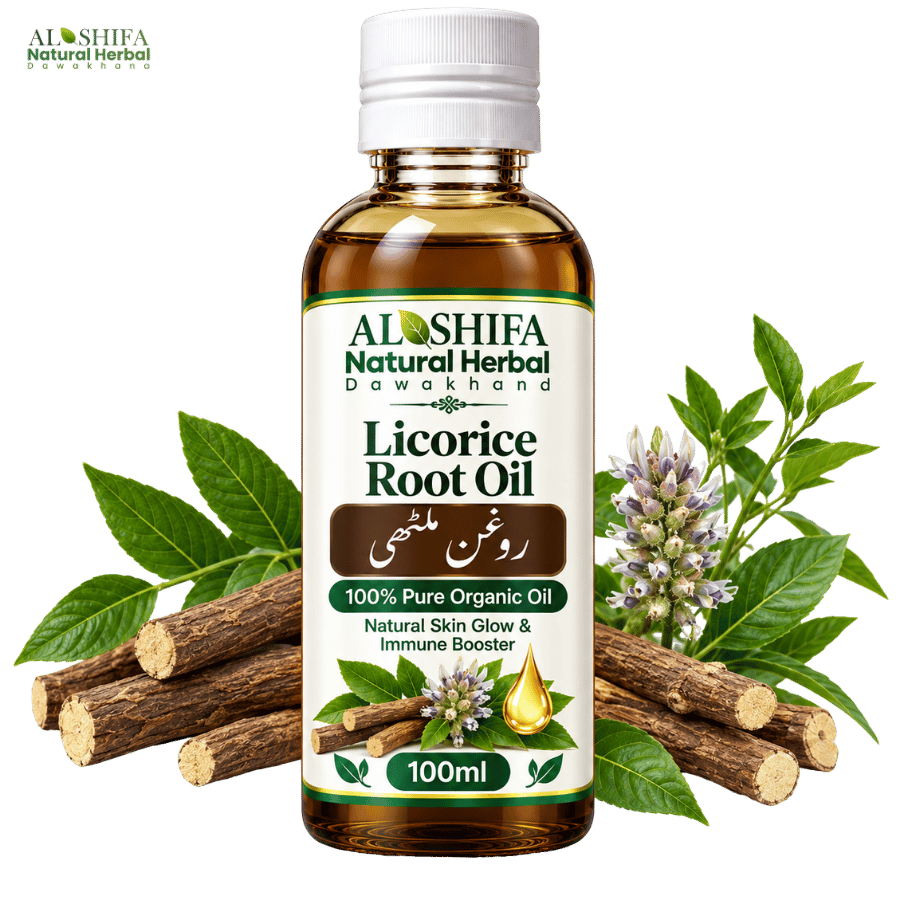
Licorice Oil / Mulethi Oil is a botanical oil preparation associated with the roots of Glycyrrhiza glabra. Valued in modern cosmetic care, it is widely used in facial care, skin conditioning, skin-tone formulations, dry-skin care, scalp care, massage and herbal cosmetic products.
Al Shifa Licorice Oil is carefully selected with attention to its correct botanical identity, genuine Licorice root source, characteristic quality, clean handling, protective packaging and suitability for skin, face and scalp-care applications.
Key Features:
Usage: Apply an appropriate amount to the skin, face or scalp according to the formulation, or incorporate into compatible facial oils, skin-care products, massage oils and herbal cosmetic blends.
Important Note: Licorice Oil is commonly an infused or extract-based botanical oil rather than a conventional essential oil. Its composition depends on the extraction method and carrier-oil base. Cosmetic skin-brightening and conditioning benefits should not be considered treatment for melasma, pigmentation disorders, skin diseases or hair loss. Patch test before wider topical use.
Licorice Oil / Mulethi Oil – روغن ملٹھی / ملیٹھی آئل is a specialised botanical oil preparation associated with the roots and underground parts of Glycyrrhiza glabra L., commonly known as Licorice or Mulethi. Licorice has a long history of use in traditional herbal practice and is now widely incorporated into modern skin-care, facial-care, scalp-care and cosmetic formulations.
Commercial Licorice Oil is commonly prepared by infusing Licorice root in a suitable carrier oil or incorporating an oil-compatible Licorice extract into an oil base. It is therefore important to understand that Licorice Oil is generally not a conventional steam-distilled essential oil.
Licorice root contains naturally occurring plant compounds including glycyrrhizin, glycyrrhetinic acid-related compounds, flavonoids, chalcones and other phenolic constituents. However, not all of these compounds transfer into an oil preparation in the same way or at the same concentration as they occur in whole root or specialised extracts.
At Al Shifa Natural Herbal Dawakhana, Licorice Oil is selected with attention to its correct botanical identity, root source, characteristic quality, clean handling, cosmetic suitability, protective packaging and proper storage.
Licorice Oil is an oil-based botanical preparation made using Licorice root or an appropriate Licorice-derived extract.
Its principal botanical source is:
Glycyrrhiza glabra L.
It belongs to the Fabaceae family.
The plant develops underground roots and stolons that are the principal herbal materials associated with Licorice.
Depending on production method, commercial Licorice Oil may be:
The exact composition therefore depends on the manufacturing process.
Product Name: Licorice Oil / Mulethi Oil – روغن ملٹھی / ملیٹھی آئل
English Name: Licorice Oil / Mulethi Oil
Urdu Name: روغن ملٹھی / ملیٹھی آئل / ملٹھی کا تیل
Roman Name: Roghan Mulethi / Mulethi Oil / Licorice Oil
Scientific Name: Glycyrrhiza glabra L.
Plant Family: Fabaceae
Plant Part: Roots & Underground Stolons
Oil Type: Herbal Infused / Extract-Based Botanical Oil, Depending on Production Method
Common Forms: Licorice Root-Infused Oil / Oil-Compatible Licorice Extract in Carrier Oil / Cosmetic Licorice Oil
Appearance: Pale Yellow to Golden or Brownish, Depending on Extract, Carrier Oil and Processing
Aroma: Mild, Herbal, Root-Like & Characteristic, Depending on Preparation
Primary Applications: Facial Care, Skin Care, Skin-Tone Formulations, Scalp Care, Massage, Herbal Cosmetics & Personal-Care Products
Product Type: Licorice Root-Based Botanical Oil Preparation
Licorice is a perennial herb recognised particularly for its long underground roots.
The root has a naturally characteristic sweet taste due largely to compounds associated with glycyrrhizin.
Licorice root is used in several forms, including:
These forms should not automatically be considered chemically equivalent.
Licorice-derived ingredients are particularly popular in modern skin-care formulations.
Licorice Oil may be incorporated into products designed for:
The final effects depend on the Licorice extract used, its concentration and the carrier-oil base.
Licorice Oil can be incorporated into suitable facial-care formulations.
Depending on the formulation, it may be used in:
People with sensitive or acne-prone skin should consider the complete ingredient composition rather than evaluating the Licorice component alone.
Licorice-derived ingredients are widely used in cosmetic formulations designed to improve the appearance of uneven skin tone.
A particularly important Licorice-derived compound in cosmetic research is:
Glabridin
Glabridin is a flavonoid associated with Glycyrrhiza glabra and has attracted considerable interest in skin-care research.
Other Licorice-derived compounds may also be relevant depending on the extract.
However:
Licorice Oil ≠ Pure Glabridin
The amount of glabridin present in a commercial oil preparation depends on its extraction and formulation.
Licorice extracts are widely incorporated into cosmetic products intended for the appearance of uneven pigmentation and dark spots.
However, an important distinction is necessary:
Cosmetic Skin-Tone Support ≠ Treatment for a Pigmentation Disorder
Dark spots can develop for many reasons, and persistent or changing pigmentation may require appropriate evaluation.
Research involving specific Licorice extracts and compounds has examined pathways associated with melanin production.
This has contributed to the use of Licorice-derived ingredients in cosmetic brightening formulations.
However:
Research on Standardised Licorice Extracts ≠ Proof That Every Licorice Oil Has the Same Effect
The concentration and extraction method are critical.
Licorice-derived ingredients may appear in cosmetic formulations intended to improve the appearance of uneven skin tone.
However:
Licorice Oil Should Not Be Presented as a Cure for Melasma
Melasma is a complex pigmentation condition influenced by factors including ultraviolet exposure, hormones and individual susceptibility.
“Skin brightening” in cosmetics generally refers to improving the appearance of:
It should not be interpreted as changing a person’s natural skin colour.
Licorice-derived cosmetic ingredients may be incorporated into formulations for a more even and radiant appearance.
When Licorice is supplied in a suitable carrier-oil base, the oil component can contribute to:
However:
Moisturising ≠ Treatment for Eczema or Other Skin Disease
Licorice-derived cosmetic ingredients are commonly incorporated into formulations intended for comfortable and conditioned skin.
However, “natural” does not guarantee that a product will suit every individual.
Patch testing remains advisable.
Licorice Oil may be incorporated into specialised scalp-care and herbal hair-oil formulations.
Depending on the carrier oil, it can provide:
These are cosmetic roles.
Licorice Oil may also be incorporated into:
The carrier oil contributes significantly to the hair-conditioning effect.
Licorice is sometimes promoted online for hair growth.
However:
Licorice Oil Should Not Be Presented as a Guaranteed Hair-Regrowth Treatment.
Research involving isolated compounds, extracts or experimental systems should not automatically be transferred to ordinary cosmetic Licorice Oil.
Licorice Oil may be incorporated into botanical massage blends when its carrier-oil base is suitable.
It can be blended with compatible fixed oils to adjust:
Licorice root contains numerous naturally occurring compounds.
Important groups include:
Frequently discussed Licorice constituents include:
The exact profile varies according to the botanical material and extraction system.
Glycyrrhizin is one of the best-known naturally occurring constituents of Licorice root.
It contributes substantially to the characteristic sweetness of Licorice.
However:
Licorice Oil ≠ Pure Glycyrrhizin
Glycyrrhizin is not necessarily efficiently transferred into a simple oil infusion.
Therefore, the glycyrrhizin content of an oil-based Licorice preparation should not be assumed from the composition of whole Licorice root.
Glabridin is a Licorice-derived flavonoid of particular interest in cosmetic research.
It has been investigated in relation to:
However:
Glabridin Research ≠ Proof That Every Licorice Oil Contains a Standardised Effective Concentration
Products specifically standardised for glabridin differ from ordinary herbal oil infusions.
Liquiritin is another Licorice flavonoid investigated in relation to skin appearance and pigmentation pathways.
However:
Licorice Oil ≠ Pure Liquiritin
Research on isolated or concentrated Licorice compounds should not be used to make exaggerated claims about an ordinary oil preparation.
Licorice root and its extracts contain compounds investigated for antioxidant activity.
However:
Experimental Antioxidant Activity ≠ Treatment or Prevention of Disease
The exact extract and concentration matter.
Licorice-derived compounds have been studied in relation to inflammatory pathways.
However:
Experimental Anti-Inflammatory Findings ≠ Medical Treatment by Cosmetic Licorice Oil
A skin-care oil should not be presented as a substitute for treatment of inflammatory skin disease.
Different Licorice extracts and compounds have demonstrated activity against selected microorganisms in laboratory studies.
However:
Laboratory Antimicrobial Activity ≠ Treatment for Skin or Scalp Infection
Licorice-derived ingredients are sometimes included in products designed for blemish-prone skin.
However:
Licorice Oil ≠ Acne Treatment
The suitability of an oil for acne-prone skin depends heavily on the complete formulation and individual response.
Licorice-derived compounds have been investigated for different biological effects.
However:
Licorice Oil Should Not Be Presented as a Cure for Eczema
A cosmetic oil can provide conditioning and moisturising benefits but does not replace appropriate treatment for inflammatory skin disease.
The same distinction applies to psoriasis.
Licorice Oil ≠ Psoriasis Treatment
Persistent scaling, plaques, inflammation or significant itching should not be managed solely with cosmetic botanical oils.
Whole Licorice root contains the complete natural root material.
Licorice Oil contains only the compounds transferred or incorporated into the oil preparation.
Therefore:
Licorice Oil ≠ Whole Licorice Root
Licorice Powder consists of finely ground dried root.
It contains fibres and numerous plant constituents that may not transfer efficiently into oil.
Therefore:
Licorice Oil ≠ Licorice Powder
Licorice Extract may be prepared using:
These extracts can have very different chemical profiles.
Therefore:
Licorice Extract ≠ Licorice Oil
Licorice Oil sold for skin and hair applications is commonly an infused or extract-based oil preparation.
It should not automatically be described as a steam-distilled essential oil.
Therefore:
Licorice Oil ≠ Conventional Essential Oil
In South Asian markets, Mulethi Oil generally refers to an oil preparation associated with Licorice.
However, formulations can differ between manufacturers.
One Mulethi Oil may contain:
Therefore, product composition should be checked when exact identity matters.
Mulethi Powder is powdered Licorice root.
Mulethi Oil is an oil-based preparation.
Therefore:
Mulethi Oil ≠ Mulethi Powder
Their composition, concentration and applications differ.
Licorice Fragrance Oil is produced primarily to provide aroma.
It may contain fragrance ingredients rather than therapeutically or cosmetically relevant Licorice root constituents.
Therefore:
Licorice Botanical Oil ≠ Licorice Fragrance Oil
Licorice Oil and Vitamin E Oil are separate materials.
Vitamin E preparations contain tocopherol-related compounds.
Licorice Oil is associated with Glycyrrhiza glabra root.
Therefore:
Licorice Oil ≠ Vitamin E Oil
They may be combined in cosmetic formulations when appropriate.
Sweet Almond Oil is obtained from Prunus dulcis kernels and is commonly used as a carrier oil.
Licorice Oil is a Licorice-root-based botanical preparation.
If Sweet Almond Oil is used as the carrier for Licorice:
Licorice-Infused Almond Oil ≠ Pure Sweet Almond Oil
People with tree-nut allergy should check the carrier-oil composition.
White Mineral Oil is a highly refined mineral-derived oil.
Licorice Oil is a botanical preparation associated with Licorice root.
Therefore:
Licorice Oil ≠ Mineral Oil
An important formulation point is that not every compound found in Licorice root dissolves equally well in oil.
Simple oil infusion may extract a different group of compounds compared with:
Therefore:
Whole-Root Composition ≠ Oil-Infusion Composition
This is particularly important when evaluating claims involving glycyrrhizin, glabridin or other specific constituents.
Licorice is widely marketed in skin-lightening products.
A more appropriate cosmetic description is:
It should not be promoted as a product intended to unnaturally alter a person’s normal skin colour.
Licorice-derived compounds may be investigated for effects involving oxidative or pigmentation pathways.
However:
Licorice Oil ≠ Sunscreen
It should not replace a properly formulated and tested broad-spectrum sunscreen.
Sun protection remains particularly important when managing visible pigmentation.
Before wider topical application, apply a small amount to a limited area.
Observe for:
Discontinue use if a significant reaction develops.
Because Licorice Oil is often an infused or extract-based product, the carrier oil should be considered.
Potential sensitivity may arise from:
Check the complete ingredient composition where available.
Licorice root taken internally can have clinically important effects, particularly when substantial amounts of glycyrrhizin are consumed repeatedly.
Excessive internal exposure to glycyrrhizin can contribute to:
However, these concerns relate especially to systemic Licorice exposure and should not automatically be equated with normal cosmetic use of an appropriately formulated topical oil.
People with high blood pressure should be particularly cautious with internal Licorice products containing glycyrrhizin.
This is another reason why cosmetic Licorice Oil should not automatically be considered suitable for consumption.
Internal medicinal use of significant amounts of Licorice during pregnancy requires particular caution.
Topical cosmetic use is a different exposure route, but pregnancy and breastfeeding are still situations where unnecessary concentrated herbal use should be avoided.
Use according to the intended cosmetic purpose and seek professional guidance when medicinal use is being considered.
For children, use only an appropriately formulated product suitable for their age.
Avoid:
Keep the product securely out of reach of young children.
Licorice Oil supplied for skin, hair, massage or cosmetic use should not automatically be considered edible.
Therefore:
Cosmetic-Grade Licorice Oil ≠ Food-Grade or Medicinal Licorice Preparation
Do not swallow a product labelled or supplied for external use.
At Al Shifa Natural Herbal Dawakhana, Licorice Oil is selected with attention to:
Botanical Identity – Genuine Glycyrrhiza glabra source.
Root Source – Associated with Licorice roots and underground parts.
Oil-Type Awareness – Recognition that commercial Licorice Oil is commonly infused or extract-based.
Skin-Care Applications – Suitable for specialised botanical skin-care formulations.
Facial-Care Applications – Suitable for compatible facial oils and cosmetic preparations.
Skin-Tone Formulations – Useful in formulations designed for more even-looking and radiant skin.
Scalp-Care Applications – Suitable for selected botanical scalp preparations.
Characteristic Quality – Appropriate colour, aroma and texture according to production method.
Carrier-Oil Awareness – Recognition that the base oil contributes to the final product properties.
Clean Handling – Carefully handled during packing.
Protective Packaging – Helps preserve product quality.
Responsible Information – No exaggerated skin-whitening, pigmentation-cure, hair-regrowth or disease-treatment claims.
Proper Storage – Protected from unnecessary heat, light and contamination.
Al Shifa Natural Herbal Dawakhana, established in 1999, supplies natural oils, herbs and specialised botanical materials throughout Pakistan.
Our focus for Licorice Oil includes:
For Face Care: Use an appropriate amount according to the formulation or blend with a compatible facial carrier oil.
For Skin Care: Apply a suitable amount to clean skin or incorporate into creams, lotions, balms and botanical body oils.
For Skin-Tone Care: Incorporate into an appropriate cosmetic routine designed to support a more even-looking complexion. Use suitable sun protection during the daytime.
For Scalp Care: Massage a suitable amount gently into the scalp when the product is formulated for scalp use.
For Hair Care: Incorporate into compatible pre-wash oils, scalp oils or botanical hair-care blends.
For Massage: Use alone when suitable or blend with compatible carrier oils according to the desired formulation.
Licorice Oil / Mulethi Oil – روغن ملٹھی / ملیٹھی آئل is an oil-based botanical preparation associated with the roots of Glycyrrhiza glabra. Commercial Licorice Oil is commonly produced through infusion or by incorporating a suitable Licorice extract into a carrier oil and should not automatically be classified as a conventional essential oil.
Important distinctions include:
Store Licorice Oil in a cool, clean and dry place.
For best quality:
Licorice Oil / Mulethi Oil – روغن ملٹھی / ملیٹھی آئل is a specialised botanical oil preparation associated with the roots of Glycyrrhiza glabra L., the well-known Licorice or Mulethi plant.
It is particularly suitable for facial care, skin conditioning, skin-tone formulations, dry-skin care, scalp care, massage, herbal cosmetics and personal-care formulations.
Licorice-derived ingredients such as glabridin and other flavonoids have attracted particular interest in modern cosmetic research, especially in formulations designed to improve the appearance of uneven or dull-looking skin. However, the exact composition of Licorice Oil depends on its extraction method and carrier-oil base.
Customers searching for Licorice Oil, Mulethi Oil, Licorice Root Oil, Roghan Mulethi, Glycyrrhiza Glabra Oil, Licorice Oil for Face, Licorice Oil for Skin, Licorice Oil for Dark Spots, Licorice Oil for Skin Brightening, Mulethi Oil for Skin, Licorice Oil for Scalp, Licorice Oil for Hair, Licorice Oil Pakistan, Mulethi Oil Pakistan, Licorice Oil Lahore, Licorice Oil price in Pakistan, Mulethi Oil price in Pakistan, buy Licorice Oil Pakistan or Licorice Oil online Pakistan can choose Al Shifa Natural Herbal Dawakhana for carefully selected botanical quality.
Since 1999, Al Shifa Natural Herbal Dawakhana has focused on supplying natural oils and botanical materials with attention to correct identity, quality selection, clean handling, responsible product information, protective packaging and proper storage.
Product Name: Licorice Oil / Mulethi Oil – روغن ملٹھی / ملیٹھی آئل
English Name: Licorice Oil / Mulethi Oil
Urdu Name: روغن ملٹھی / ملیٹھی آئل / ملٹھی کا تیل
Roman Name: Roghan Mulethi / Mulethi Oil / Licorice Oil
Scientific Name: Glycyrrhiza glabra L.
Plant Family: Fabaceae
Plant Part: Roots & Underground Stolons
Oil Type: Herbal Infused / Extract-Based Botanical Oil, Depending on Production Method
Common Forms: Licorice Root-Infused Oil / Oil-Compatible Licorice Extract in Carrier Oil / Cosmetic Licorice Oil
Appearance: Pale Yellow to Golden or Brownish, Depending on Extract, Carrier Oil and Processing
Aroma: Mild, Herbal, Root-Like & Characteristic, Depending on Preparation
Primary Applications: Facial Care, Skin Care, Skin-Tone Formulations, Scalp Care, Massage, Herbal Cosmetics & Personal-Care Products
Product Type: Licorice Root-Based Botanical Oil Preparation
Important Note: Licorice Oil is generally an infused or extract-based preparation rather than a conventional essential oil. The presence and concentration of compounds such as glycyrrhizin, glabridin and other Licorice constituents depend on the extraction method. Cosmetic skin-brightening or conditioning benefits should not be interpreted as treatment for pigmentation disorders, skin diseases or hair loss.
روغن ملیٹھی ملیٹھی کی جڑ سے تیار کیا جانے والا ہربل روغن ہے۔ ملیٹھی ایک مشہور جڑی بوٹی ہے جس کی جڑ قدرتی طور پر میٹھی ہوتی ہے اور حکمت میں اسے خاص اہمیت حاصل ہے۔
ملیٹھی کی جڑ بیجوں کی طرح زیادہ چکنائی رکھنے والا حصہ نہیں ہے، اس لیے بازار میں ملیٹھی آئل کے نام سے ملنے والا روغن عموما ملیٹھی کی جڑ یا اس کے جوہر کو کسی اچھے بنیادی روغن میں شامل کر کے تیار کیا جاتا ہے۔
ملیٹھی کی جڑ میں گلائسریزین، گلیبریڈن، لیکوئرٹیجنن، آئسولیکوئرٹیجنن، فلیوونائڈز اور دوسرے قدرتی اجزا پائے جاتے ہیں۔
روغن ملیٹھی کو خاص طور پر جلد کی دیکھ بھال، خشک جلد، چہرے کی جلد، غیر ہموار رنگت، ہاتھوں، پاؤں، بالوں اور سر کی جلد کے لیے استعمال کیا جاتا ہے۔
اردو: ملیٹھی، اصل السوس، روغن ملیٹھی، ملیٹھی کا تیل
پنجابی: ملٹھی، ملیٹھی، ملٹھی دا تیل
ہندی: ملٹھی، یشٹھی مدھو، ملٹھی تیل
فارسی: شیرین بیان، بیخ شیرین بیان
عربی: اصل السوس، عرق السوس
انگریزی نام: لیکورائس، لیکورائس روٹ، لیکورائس آئل
سائنسی نام: گلائسریزا گلیبرا
خاندان: فیبیسی
استعمال ہونے والا حصہ: جڑ اور زیر زمین شاخیں
ملیٹھی ایک بارہ ماسی جڑی بوٹی ہے جس کی اصل اہمیت اس کی جڑ میں ہوتی ہے۔
اس کی جڑ باہر سے بھوری جبکہ اندر سے زرد مائل ہوتی ہے۔
ملیٹھی کی سب سے نمایاں پہچان اس کا قدرتی میٹھا ذائقہ ہے۔
خشک جڑ کو ٹکڑوں، سفوف اور مختلف حکیمی ادویات میں استعمال کیا جاتا ہے۔
جلد اور بالوں کے لیے ملیٹھی کی جڑ کو روغنی آمیزوں میں بھی شامل کیا جاتا ہے۔
اچھی ملیٹھی کی جڑ:
روغن کے لیے صاف، اچھی حالت والی اور درست شناخت کی ملیٹھی کی جڑ کو اہمیت دی جاتی ہے۔
ملیٹھی کی جڑ خود زیادہ چکنائی والا حصہ نہیں ہے۔
اسی لیے روغن ملیٹھی عموما ملیٹھی کی جڑ یا اس کے جوہر کو ناریل، تل، بادام، جوجوبا یا دوسرے بنیادی روغن میں شامل کر کے تیار کیا جاتا ہے۔
اس طریقے سے ملیٹھی کے روغن میں بنیادی تیل کی چکنائی اور ملیٹھی کی جڑ کے منتخب اجزا شامل رہتے ہیں۔
خریدتے وقت یہ جاننا ضروری ہے کہ ملیٹھی کس بنیادی روغن میں شامل کی گئی ہے۔
پاکستانی اور برصغیر کی حکیمی کتب مفردات میں ملیٹھی کا مزاج گرم و تر بیان کیا جاتا ہے۔
ملیٹھی حکمت کی معروف مفرد دوا ہے اور اس کی جڑ کو گلے، آواز، معدے اور کئی حکیمی ادویات میں استعمال کیا جاتا ہے۔
روغن ملیٹھی کی بیرونی پہچان جلد، بالوں اور سر کی جلد کی دیکھ بھال سے جڑی ہے۔
ملیٹھی حکمت میں بہت معروف جڑی بوٹی ہے۔
اس کی جڑ کو حکیمی ادویات میں خاص اہمیت حاصل ہے۔
ملیٹھی کو گلے اور آواز کی دیکھ بھال کے ساتھ معدے کے لیے تیار ادویات میں استعمال کیا جاتا ہے۔
اس کی جڑ کو بیرونی جلدی ادویات اور روغنی آمیزوں میں بھی شامل کیا جاتا ہے۔
روغن ملیٹھی کے اہم بیرونی استعمال یہ ہیں:
روغن ملیٹھی چہرے کی جلد کی دیکھ بھال والے روغنوں میں استعمال کیا جاتا ہے۔
ملیٹھی میں موجود گلیبریڈن اور فلیوونائڈز کی وجہ سے اسے جلد کی صاف اور ہموار ظاہری رنگت کے لیے تیار کیے جانے والے روغنوں میں خاص اہمیت حاصل ہے۔
چہرے پر بہت زیادہ مقدار کے بجائے چند قطرے استعمال کیے جاتے ہیں۔
ملیٹھی کی جڑ جلد کی غیر ہموار رنگت کی دیکھ بھال کے لیے مشہور ہے۔
اسی وجہ سے ملیٹھی کے جوہر اور روغنی آمیزے چہرے اور جسمانی جلد کی دیکھ بھال میں استعمال کیے جاتے ہیں۔
روغن ملیٹھی کو صاف جلد پر کم مقدار میں لگایا جاتا ہے۔
روغن ملیٹھی جلد پر نظر آنے والے داغ دھبوں اور غیر ہموار رنگت کی روزمرہ دیکھ بھال میں استعمال کیا جاتا ہے۔
اسے چہرے کے روغن، کریم اور جلد کی دوسری بیرونی ادویات میں شامل کیا جاتا ہے۔
اگر جلد کے داغ کسی جلدی بیماری سے جڑے ہوں تو طبی استعمال معالج سے پوچھ کر کریں۔
ملیٹھی والے جلدی روغن دھوپ سے متاثر اور بے رونق نظر آنے والی جلد کی روزمرہ دیکھ بھال میں استعمال کیے جاتے ہیں۔
روغن ملیٹھی کو رات کے وقت یا جلد کی روزمرہ دیکھ بھال کے معمول میں کم مقدار میں استعمال کیا جاتا ہے۔
دن کے وقت جلد کو تیز دھوپ سے بچانا بھی اہم ہے۔
روغن ملیٹھی خشک اور کھردری جلد کی دیکھ بھال کے لیے استعمال کیا جاتا ہے۔
اس میں موجود بنیادی روغن جلد کو روغنی نرمی فراہم کرتا ہے جبکہ ملیٹھی کی جڑ کے اجزا جلد کی دیکھ بھال میں فائدہ مند رہتے ہیں۔
اسے ہاتھوں، پاؤں، کہنیوں اور دوسری خشک جگہوں پر لگایا جاتا ہے۔
خشک اور کھردرے ہاتھوں پر روغن ملیٹھی کی تھوڑی مقدار لگائی جاتی ہے۔
رات کے وقت ہلکی مالش کے ساتھ استعمال کیا جاتا ہے۔
اسے بادام، جوجوبا یا ناریل کے روغن کے ساتھ ملا کر بھی لگایا جاتا ہے۔
خشک پاؤں اور کھردری ایڑیوں کی روغنی دیکھ بھال میں روغن ملیٹھی استعمال کیا جاتا ہے۔
اسے ناریل، زیتون، بادام یا دوسرے بنیادی روغن کے ساتھ ملا کر لگایا جاتا ہے۔
روغن ملیٹھی جسمانی جلد کے روغنی آمیزوں میں شامل کیا جاتا ہے۔
یہ خاص طور پر خشک اور بے رونق نظر آنے والی جلد کی روزمرہ دیکھ بھال کے لیے استعمال کیا جاتا ہے۔
اس سے جسمانی جلد پر ہلکی مالش کی جاتی ہے۔
روغن ملیٹھی بالوں کی روغنی دیکھ بھال میں استعمال کیا جاتا ہے۔
اسے ناریل، تل، بادام یا دوسرے بالوں کے روغن کے ساتھ ملا کر بالوں کی جڑوں اور لمبائی پر لگایا جاتا ہے۔
خشک اور کھردرے بالوں کے لیے روغنی آمیزوں میں بھی اسے شامل کیا جاتا ہے۔
روغن ملیٹھی سر کی خشک جلد کی روغنی دیکھ بھال میں استعمال کیا جاتا ہے۔
اسے دوسرے بنیادی روغن کے ساتھ ملا کر سر کی جلد پر ہلکی مالش کی جاتی ہے۔
سر کی جلد پر خارش، زخم یا جلدی امراض موجود ہوں تو طبی استعمال معالج سے پوچھ کر کریں۔
بالوں کے خشک اور کھردرے سروں پر روغن ملیٹھی والے نرم روغنی آمیزے استعمال کیے جاتے ہیں۔
چند قطرے بالوں کے سروں پر لگانے سے بال نرم اور سنورے ہوئے نظر آتے ہیں۔
روغن ملیٹھی کو داڑھی کے روغن میں بھی شامل کیا جاتا ہے۔
اسے جوجوبا، بادام یا دوسرے نرم روغن کے ساتھ ملا کر داڑھی اور اس کے نیچے کی جلد پر لگایا جاتا ہے۔
ملیٹھی کی جڑ میں اہم قدرتی اجزا یہ ہیں:
ملیٹھی کے روغنی آمیزے کی چکنائی اس بنیادی روغن سے آتی ہے جس میں ملیٹھی شامل کی گئی ہو۔
گلائسریزین ملیٹھی کی جڑ کے نمایاں قدرتی اجزا میں شامل ہے۔
ملیٹھی کی خاص میٹھی پہچان میں اس جز کا اہم حصہ ہے۔
ملیٹھی کی جڑ کو دوسری بہت سی جڑی بوٹیوں سے الگ پہچان دینے میں اس کی قدرتی مٹھاس نمایاں ہے۔
گلیبریڈن ملیٹھی کی جڑ کا اہم قدرتی جز ہے۔
جلد کی دیکھ بھال میں ملیٹھی کی خاص شہرت میں گلیبریڈن کو اہم سمجھا جاتا ہے۔
اسی وجہ سے ملیٹھی کے جوہر کو جلد کی غیر ہموار رنگت اور داغ دھبوں کی دیکھ بھال کے لیے بنائے جانے والے روغن اور کریم میں شامل کیا جاتا ہے۔
ملیٹھی کی جڑ میں مختلف فلیوونائڈز پائے جاتے ہیں۔
یہ ملیٹھی کی قدرتی ساخت کا اہم حصہ ہیں۔
جلد کی دیکھ بھال کے لیے استعمال ہونے والے ملیٹھی کے جوہر میں ان اجزا کو خاص اہمیت دی جاتی ہے۔
لیکوئرٹیجنن ملیٹھی میں پایا جانے والا قدرتی جز ہے۔
یہ ملیٹھی کی جڑ میں پائے جانے والے فلیوونائڈز کے گروہ کا حصہ ہے۔
آئسولیکوئرٹیجنن بھی ملیٹھی کی جڑ میں پایا جاتا ہے۔
یہ ملیٹھی کی قدرتی ساخت میں شامل اہم جز ہے۔
ملیٹھی کا روغن اور ملیٹھی کا جوہر ایک چیز نہیں ہیں۔
ملیٹھی کا جوہر جڑ سے منتخب اجزا حاصل کر کے تیار کیا جاتا ہے۔
روغن ملیٹھی میں ملیٹھی کی جڑ یا اس کا جوہر کسی بنیادی روغن میں شامل کیا جاتا ہے۔
اسی لیے دونوں کی گاڑھا پن، رنگت اور استعمال کی مقدار الگ رہتی ہے۔
ملیٹھی لیونڈر، پودینہ یا یوکلپٹس کی طرح عام تیز خوشبودار روغن دینے والی جڑی بوٹی نہیں ہے۔
اس لیے ملیٹھی آئل کے نام سے ملنے والا تیل عموما جڑ سے تیار کیا گیا روغنی آمیزہ ہوتا ہے۔
خریدتے وقت اس کی مکمل ترکیب دیکھنا ضروری ہے۔
روغن ملیٹھی کی رنگت اس کے بنیادی روغن اور ملیٹھی کے استعمال شدہ جوہر کے مطابق ہلکی زرد، سنہری، بھوری یا قدرے گہری نظر آتی ہے۔
بہت شوخ مصنوعی رنگ خالص معیار کی لازمی پہچان نہیں ہے۔
اچھے روغن ملیٹھی میں بنیادی روغن اور ملیٹھی کی ہلکی قدرتی بو محسوس ہوتی ہے۔
اس میں باسی، سڑی ہوئی یا خراب بو نہیں ہونی چاہیے۔
بغیر خوشبو شامل کیے روغن میں بہت تیز عطر جیسی بو نہیں ہوتی۔
چہرہ صاف کرنے کے بعد روغن ملیٹھی کے چند قطرے لگائیں۔
اسے انگلیوں سے ہلکے ہاتھ سے جلد پر پھیلائیں۔
پہلی بار چہرے پر لگانے سے پہلے بازو یا جلد کے چھوٹے حصے پر تھوڑی مقدار آزمائیں۔
خشک جسمانی جلد پر روغن ملیٹھی کی تھوڑی مقدار لگائی جاتی ہے۔
اسے نہانے کے بعد ہلکی نم جلد پر بھی لگایا جاتا ہے۔
اس سے جلد پر ہلکے ہاتھ سے مالش کی جاتی ہے۔
حساس جلد پر پہلی بار تھوڑی مقدار آزمائیں۔
خارش، سرخی یا جلن پیدا ہو تو استعمال بند کریں۔
جلدی امراض میں طبی استعمال معالج سے پوچھ کر کریں۔
ایگزیما، سورائسس یا دوسرے جلدی امراض میں اپنی طرف سے روغن ملیٹھی کو طبی دوا کے طور پر استعمال نہ کریں۔
ان جلدی امراض میں طبی استعمال معالج سے پوچھ کر کریں۔
جلد، بالوں اور بیرونی استعمال کے لیے تیار روغن ملیٹھی کو نہ پئیں۔
ملیٹھی کی جڑ کھانے اور حکیمی ادویات میں بھی استعمال کی جاتی ہے، لیکن بیرونی روغن کو اسی مقصد کے لیے استعمال نہیں کیا جاتا۔
کسی بیماری کے لیے ملیٹھی کا اندرونی طبی استعمال معالج سے پوچھ کر کریں۔
ملیٹھی کی جڑ میں گلائسریزین پایا جاتا ہے۔
ملیٹھی کی زیادہ مقدار کا مسلسل اندرونی استعمال بلڈ پریشر کی بیماری والے افراد کے لیے اہم احتیاط رکھتا ہے۔
بلڈ پریشر کی بیماری میں ملیٹھی کا اندرونی طبی استعمال معالج سے پوچھ کر کریں۔
دل اور گردوں کے امراض والے افراد ملیٹھی کا اندرونی طبی استعمال اپنی طرف سے نہ کریں۔
ایسے امراض میں ملیٹھی کھانے یا اس کی اندرونی ادویات استعمال کرنے سے پہلے معالج سے پوچھ کر کریں۔
حمل کے دوران ملیٹھی کا اندرونی طبی استعمال اپنی طرف سے نہ کریں۔
اندرونی طبی استعمال معالج سے پوچھ کر کریں۔
بیرونی استعمال کے لیے روغن میں شامل تمام اجزا دیکھیں اور پہلی بار تھوڑی مقدار آزمائیں۔
دودھ پلانے کے دوران اندرونی طبی استعمال معالج سے پوچھ کر کریں۔
بیرونی روغن کو چھاتی اور بچے کے منہ سے لگنے والی جگہ پر نہ لگائیں۔
بچوں کی جلد پر استعمال سے پہلے بہت تھوڑی مقدار آزمائیں۔
بچوں میں کسی بیماری کے لیے ملیٹھی یا روغن ملیٹھی کا طبی استعمال معالج سے پوچھ کر کریں۔
روغن کو بچوں کی پہنچ سے دور رکھیں۔
اصل ملیٹھی: درست شناخت والی ملیٹھی کی جڑ استعمال کی گئی ہو۔
اچھی جڑ: صاف، خشک، قدرتی طور پر میٹھی اور اچھی حالت والی جڑ کو اہمیت دی جاتی ہے۔
بنیادی روغن: یہ واضح ہونا چاہیے کہ ملیٹھی کس بنیادی روغن میں شامل کی گئی ہے۔
قدرتی رنگت: روغن میں اس کے اجزا کے مطابق قدرتی رنگت ہونی چاہیے۔
قدرتی بو: ہلکی اور صاف قدرتی بو ہونی چاہیے۔
صاف روغن: پانی، گرد اور غیر ضروری ذرات سے پاک ہونا چاہیے۔
تازگی: باسی اور خراب بو نہیں ہونی چاہیے۔
غیر ضروری ملاوٹ سے پاک: مصنوعی رنگ، غیر ضروری مصنوعی خوشبو اور کم معیار کے دوسرے روغن کی ملاوٹ سے پاک ہونا چاہیے۔
روغن ملیٹھی ملیٹھی کی جڑ یا اس کے جوہر کو کسی اچھے بنیادی روغن میں شامل کر کے تیار کیا جاتا ہے۔
ملیٹھی کی جڑ میں گلائسریزین، گلیبریڈن، لیکوئرٹیجنن، آئسولیکوئرٹیجنن اور فلیوونائڈز جیسے قدرتی اجزا پائے جاتے ہیں۔
اس کا بیرونی استعمال چہرے، خشک جلد، غیر ہموار رنگت، ہاتھوں، پاؤں، بالوں اور سر کی جلد کی دیکھ بھال میں کیا جاتا ہے۔
ملیٹھی کی جڑ خود زیادہ چکنائی والا حصہ نہیں ہے، اس لیے روغن ملیٹھی خریدتے وقت بنیادی روغن اور ملیٹھی کے استعمال شدہ حصے کی معلومات دیکھیں۔
جلد اور بالوں کے لیے تیار روغن کو نہ پئیں۔
بلڈ پریشر، دل یا گردوں کے امراض میں ملیٹھی کا اندرونی طبی استعمال معالج سے پوچھ کر کریں۔
الشفاء نیچرل ہربل دواخانہ میں روغن ملیٹھی کے لیے درج ذیل باتوں کو اہمیت دی جاتی ہے:
اچھی ملیٹھی: صاف، خشک اور درست شناخت والی ملیٹھی کی جڑ کو اہمیت دی جاتی ہے۔
قدرتی مٹھاس: ملیٹھی کی اپنی خاص قدرتی مٹھاس کو دیکھا جاتا ہے۔
اچھا بنیادی روغن: صاف اور اچھی کوالٹی کے بنیادی روغن کو اہمیت دی جاتی ہے۔
قدرتی رنگت: ملیٹھی اور بنیادی روغن سے بننے والی قدرتی رنگت کو دیکھا جاتا ہے۔
قدرتی بو: ملیٹھی اور بنیادی روغن کی صاف قدرتی بو کو اہمیت دی جاتی ہے۔
صاف روغن: پانی، گرد اور غیر ضروری ذرات سے پاک روغن کو اہمیت دی جاتی ہے۔
تازگی: باسی اور خراب بو والے روغن سے بچا جاتا ہے۔
غیر ضروری ملاوٹ سے پاک: مصنوعی رنگ، غیر ضروری مصنوعی خوشبو اور کم معیار کے دوسرے روغن کی ملاوٹ سے پاک ہونے کو اہمیت دی جاتی ہے۔
الشفاء نیچرل ہربل دواخانہ سنہ ۱۹۹۹ سے قدرتی جڑی بوٹیوں، جڑوں، بیجوں اور ان سے حاصل یا تیار ہونے والے روغنوں کی سپلائی کر رہا ہے۔
ہم روغن ملیٹھی میں اصل ملیٹھی کی درست شناخت، صاف جڑ، اچھے بنیادی روغن، قدرتی رنگت، صاف حالت، تازگی اور غیر ضروری ملاوٹ سے پاک ہونے کو اہمیت دیتے ہیں۔
اچھے روغن ملیٹھی کی پہچان اصل ملیٹھی، صاف جڑ، اچھے بنیادی روغن، قدرتی رنگت، ہلکی قدرتی بو، تازگی اور اچھی پیکنگ سے کی جاتی ہے۔
روغن ملیٹھی کو ٹھنڈی، خشک اور روشنی سے محفوظ جگہ پر کسی جار میں اچھی طرح پیک کر کے رکھیں۔
اسے تیز دھوپ، پانی اور زیادہ گرمی سے بچائیں۔
استعمال کے بعد ڈھکن اچھی طرح بند کریں۔
اسے بچوں کی پہنچ سے دور رکھیں۔
روغن ملیٹھی خریدتے وقت یہ دیکھیں کہ اس میں ملیٹھی کی جڑ یا اس کا جوہر کس بنیادی روغن میں شامل کیا گیا ہے۔
پہلی بار جلد یا سر کی جلد کے چھوٹے حصے پر تھوڑی مقدار آزمائیں۔
آنکھوں اور کھلے زخموں پر نہ لگائیں۔
خارش، سرخی یا جلن پیدا ہو تو استعمال بند کریں۔
جلدی امراض میں طبی استعمال معالج سے پوچھ کر کریں۔
بیرونی استعمال کے لیے تیار روغن ملیٹھی کو نہ پئیں۔
بلڈ پریشر، دل اور گردوں کے امراض، حمل، دودھ پلانے، بچوں اور اندرونی طبی استعمال کے لیے معالج سے پوچھ کر کریں۔
روغن ملیٹھی ملیٹھی کی جڑ یا اس کے جوہر کو بنیادی روغن میں شامل کر کے تیار کیا جانے والا ہربل روغن ہے۔
پاکستانی اور برصغیر کی حکیمی کتب مفردات میں ملیٹھی کا مزاج گرم و تر بیان کیا جاتا ہے۔
ملیٹھی کی جڑ میں گلائسریزین، گلیبریڈن، لیکوئرٹیجنن، آئسولیکوئرٹیجنن اور فلیوونائڈز جیسے قدرتی اجزا پائے جاتے ہیں۔
اس کا استعمال چہرے کی جلد، غیر ہموار رنگت، خشک جلد، ہاتھوں، پاؤں، بالوں، سر کی جلد اور جسمانی جلد کی روزمرہ دیکھ بھال کے لیے کیا جاتا ہے۔
ملیٹھی کی جڑ زیادہ چکنائی والا حصہ نہیں ہے، اس لیے ملیٹھی آئل عموما جڑ یا اس کے جوہر کو کسی بنیادی روغن میں شامل کر کے تیار کیا جاتا ہے۔
اچھے روغن ملیٹھی کی پہچان اصل ملیٹھی، صاف جڑ، اچھے بنیادی روغن، قدرتی رنگت، صاف حالت، تازگی اور غیر ضروری ملاوٹ سے پاک ہونے سے کی جاتی ہے۔