کہربا شمعی
Price range: ₨ 750 through ₨ 15,000
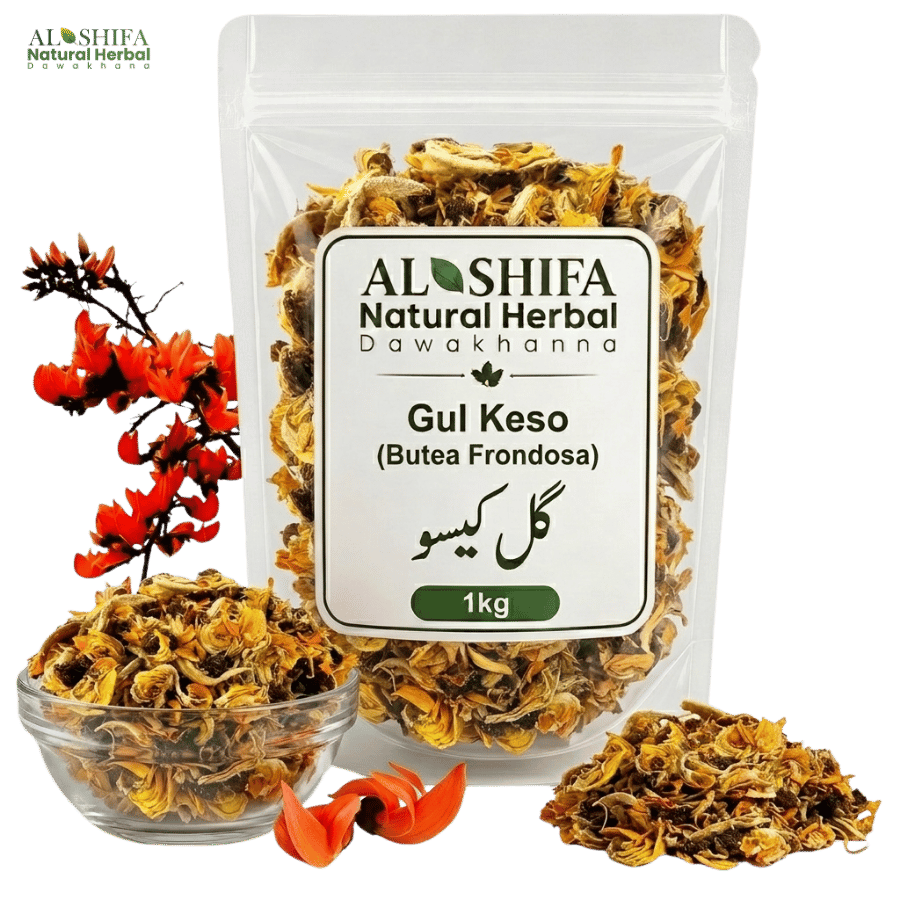
Gul Keso, also known as Palash Flower or Flame of the Forest Flower, is the dried flower of Butea monosperma, historically known as Butea frondosa. Its distinctive orange-red flowers have traditionally been used in selected skin and hair preparations, natural colouring, herbal baths, digestive, urinary and general wellness formulations.
Al Shifa Gul Keso is carefully selected with attention to its natural floral colour, characteristic appearance, cleanliness, proper dryness and responsible storage.
Key Features:
Important Note: Gul Keso refers specifically to the flower of Butea monosperma. Its flowers, seeds, bark, gum and roots are different plant materials and should not be treated as interchangeable. Traditional use does not establish treatment for specific medical conditions.
Gul Keso, commonly associated with Butea frondosa and more currently known botanically as Butea monosperma, is the dried flower of the Palash or Flame of the Forest tree. In Urdu herbal trade, these bright orange to reddish flowers are commonly known as گل کیسو.
The tree is well known across South Asia for its striking clusters of orange-red flowers. The flowers have a long history of use in traditional herbal practice, natural colouring, skin and hair preparations, and selected digestive and urinary formulations.
Gul Keso should be identified specifically as the flower of the plant. Butea flowers, seeds, bark, gum and roots are different plant materials and should not automatically be treated as interchangeable.
At Al Shifa Natural Herbal Dawakhana, Gul Keso is carefully selected with attention to its characteristic floral appearance, natural colour, cleanliness, proper dryness and responsible storage.
Gul Keso consists of the dried flowers of Butea monosperma, a medium-sized deciduous tree belonging to the legume family.
The tree is famous for producing brilliant orange, reddish-orange or flame-coloured flowers, particularly when many of its leaves have fallen. This striking appearance is responsible for the popular English name Flame of the Forest.
After collection, the flowers are carefully dried for storage and traditional use.
Gul Keso may be available as:
Natural variation in colour, size and shape is expected.
Product Name: Gul Keso
English Name: Palash Flower / Flame of the Forest Flower
Urdu Name: گل کیسو
Roman Name: Gul Keso / Gul Kesu / Kesu Flower
Accepted Scientific Name: Butea monosperma (Lam.) Taub.
Older Botanical Name: Butea frondosa Roxb.
Plant Family: Fabaceae
Plant Part: Flower
Common Form: Whole Dried Flowers / Broken Flowers / Powder
Product Type: Traditional Dried Botanical Raw Material
The name Butea frondosa is commonly encountered in older herbal literature and traditional trade.
The botanical name generally accepted today for this plant is Butea monosperma.
Therefore, products described as:
may refer to the same botanical source when correctly identified.
Using both names in product information can help customers recognize older herbal terminology while maintaining clearer botanical identification.
Gul Keso is particularly recognizable because of its naturally colourful flowers.
Properly dried material may show:
The exact colour may change naturally according to maturity, drying and storage.
Dried flowers should not be expected to retain exactly the same bright colour as freshly collected flowers.
Good-quality Gul Keso should retain the recognizable characteristics of properly collected and dried Palash flowers.
Common quality features include:
Natural herbs do not need to be completely uniform in size, shape or colour.
Palash flowers have a long history of use in South Asian traditional practices.
Gul Keso has traditionally appeared in preparations associated with:
These are traditional applications and should not be interpreted as proof that Gul Keso treats specific diseases.
Gul Keso has historically been included in selected external herbal preparations for the skin.
The dried flowers may be incorporated into:
Its colourful floral material has also contributed to its traditional cosmetic use.
Traditional skin use does not establish Gul Keso as a treatment for eczema, fungal infection, bacterial infection, psoriasis or another diagnosed skin disorder.
Palash flowers have also been used traditionally in selected hair and scalp preparations.
Depending on regional practice, the flowers may be incorporated into:
These uses are part of traditional cosmetic practice.
They should not be presented as proven treatments for hair loss, alopecia, scalp infection or other medical causes of hair and scalp problems.
One of the most recognizable traditional applications of Palash flowers is their use as a natural source of colour.
The flowers have historically been used to prepare yellow, orange or saffron-like natural colouring solutions.
They have also been associated with traditional festive colour preparations in South Asia.
The exact colour produced can depend on:
Natural botanical colour can vary between batches.
Gul Keso has historically been added to water and other herbal mixtures used for traditional bathing and body-care preparations.
Its natural colour and floral character make it suitable for selected traditional external formulations.
People with sensitive skin should test unfamiliar preparations on a small area before wider use.
Gul Keso has also appeared in selected traditional digestive formulations.
Traditional practitioners may combine the flowers with other herbs according to the intended preparation.
Historical use may include formulations associated with:
This does not establish Palash flowers as a treatment for ulcers, intestinal infection, inflammatory bowel disease or other diagnosed digestive conditions.
Gul Keso may appear in selected compound formulations used traditionally for temporary bowel-related complaints.
Persistent diarrhoea, constipation, blood in stool, severe abdominal pain or unexplained changes in bowel habits require appropriate medical assessment.
Herbal preparations should not delay diagnosis of an underlying condition.
Palash flowers have historically appeared in selected traditional preparations associated with urinary wellness.
This traditional use should not be interpreted as proof that Gul Keso treats:
Burning urination, fever, persistent urinary pain, blood in urine or difficulty passing urine requires appropriate medical evaluation.
Gul Keso has traditionally been associated with certain seasonal and cooling preparations.
The flowers may be included in traditional formulations used during warmer weather or for general body comfort.
Terms such as “cooling” describe traditional herbal concepts and should not be interpreted as a specific medical effect.
Gul Keso may also appear in selected traditional compound preparations intended for women.
However, historical use does not establish the flowers as a treatment for:
Persistent, unusual or severe gynaecological symptoms require appropriate medical assessment.
Butea flowers contain naturally occurring plant constituents and pigments.
Different studies have examined groups of compounds such as:
Their concentration can vary according to:
The presence of naturally occurring compounds does not by itself establish a medical treatment effect.
Different parts of the Butea tree have different traditional uses and should not automatically be treated as equivalent.
Flowers:
Used in selected herbal, cosmetic, colouring and traditional wellness preparations.
Seeds:
A separate botanical material with different traditional applications and safety considerations.
Bark:
Used separately in certain traditional formulations.
Gum / Resin:
A natural exudate traditionally known by names such as Bengal Kino in some contexts.
Roots:
Another distinct plant part used separately in traditional practice.
Research or traditional information about one plant part should not automatically be applied to another.
This distinction is especially important in herbal trade.
Gul Keso refers specifically to the flowers.
Palash seeds are a separate raw material and have historically been associated with different and sometimes stronger traditional applications.
Therefore, safety information, preparation methods and traditional uses of Butea seeds should not automatically be applied to the flowers.
Gul Keso may be available in different forms.
Whole Dried Flowers:
The natural floral structure remains visible and basic identification is easier.
Broken Flowers:
Smaller pieces of the same dried floral material.
Powder:
Convenient for compound preparations, but visual botanical identification becomes more difficult.
Extracts:
Concentrated preparations produced through specific extraction methods.
These forms should not automatically be considered equivalent in strength or use.
Butea monosperma has been studied experimentally for several possible biological activities.
However, it is important to distinguish between:
Experimental findings involving concentrated extracts or other plant parts should not automatically be converted into medical claims for dried Gul Keso flowers.
More evidence may be required before specific therapeutic conclusions can be made.
For cosmetic or external use, people with sensitive skin should introduce a new botanical preparation carefully.
A small-area patch test may be appropriate before wider use.
Discontinue use if significant:
develops.
Do not place unverified homemade preparations into the eyes or on serious wounds, burns or infected skin.
Gul Keso is a traditional medicinal botanical rather than an ordinary everyday food.
For medicinal internal use, suitability may depend on:
A universal medicinal amount should not be assumed appropriate for everyone.
Reliable safety information for medicinal amounts of Gul Keso during pregnancy is limited.
Pregnant women should avoid self-prescribing medicinal preparations containing Butea flowers unless specifically advised by an appropriately qualified healthcare professional.
Traditional use does not establish pregnancy safety.
There is insufficient reliable information to establish the safety of medicinal amounts of Gul Keso during breastfeeding.
Breastfeeding women should seek qualified professional guidance before regular medicinal internal use.
Medicinal use of Gul Keso in infants or young children should not be undertaken without appropriate professional guidance.
External traditional preparations should also be used carefully on sensitive childhood skin.
Natural flowers can occasionally cause allergic or sensitivity reactions.
Stop use and seek appropriate advice if significant:
develops after use.
People with chronic medical conditions or those taking regular medicines should seek qualified professional guidance before using Gul Keso medicinally.
This is particularly important when several herbs are being combined in one formulation.
At Al Shifa Natural Herbal Dawakhana, Gul Keso is selected with attention to:
Correct Identity – Floral material consistent with genuine Palash flowers.
Natural Colour – Characteristic orange to reddish dried floral appearance.
Cleanliness – Selected to reduce unnecessary stems, dust and foreign material.
Proper Dryness – Appropriately dried for responsible storage.
No Visible Mould – Checked for obvious moisture-related deterioration.
Responsible Storage – Protected from moisture, insects and contamination.
Al Shifa Natural Herbal Dawakhana, established in 1999, supplies carefully selected traditional herbs and natural raw materials throughout Pakistan.
Our focus includes:
Gul Keso has traditionally been used in different herbal and external preparations.
Depending on traditional practice, it may be supplied or used as:
For medicinal internal use, the preparation method, amount and duration should be determined according to the intended formulation and qualified professional guidance.
Gul Keso is the dried flower of Butea monosperma, historically also known as Butea frondosa.
Its traditional use should not be interpreted as proof that it can treat, cure or prevent:
Information about Butea seeds, bark, gum or concentrated extracts should not automatically be applied to Gul Keso flowers.
Traditional use and established medical treatment are different.
Store Gul Keso in a cool, dry and clean place in a tightly closed container.
For better storage:
Do not use flowers showing visible mould, excessive moisture, insect infestation or an unusual spoiled smell.
Gul Keso, also known as Palash Flower or Flame of the Forest Flower, is the dried floral material of Butea monosperma, historically known as Butea frondosa. These distinctive orange-red flowers have long been used in South Asian traditional practice for skin and hair preparations, natural colouring, bathing preparations and selected digestive, urinary and general wellness formulations.
Gul Keso flowers should be distinguished from Butea seeds, bark, gum and roots because these plant parts have different traditional applications and should not automatically be considered interchangeable.
Customers searching for Gul Keso Pakistan, Butea Frondosa Pakistan, Butea Monosperma Flower Pakistan, Palash Flower Pakistan, pure Gul Keso, original Gul Keso, dried Palash flowers, Gul Keso benefits, Gul Keso uses, Palash Flower benefits, Gul Keso Lahore, Gul Keso price in Pakistan, Palash Flower price in Pakistan, buy Gul Keso Pakistan or Gul Keso online Pakistan can choose Al Shifa Natural Herbal Dawakhana for carefully selected traditional floral material.
Since 1999, Al Shifa Natural Herbal Dawakhana has focused on supplying traditional herbs and natural raw materials with attention to identity, cleanliness, natural quality, proper dryness, responsible storage and clear product information.
Product Name: Gul Keso
English Name: Palash Flower / Flame of the Forest Flower
Urdu Name: گل کیسو
Roman Name: Gul Keso / Gul Kesu / Kesu Flower
Scientific Name: Butea monosperma (Lam.) Taub.
Older Botanical Name: Butea frondosa Roxb.
Plant Family: Fabaceae
Plant Part: Flower
Common Form: Whole Dried Flowers / Broken Flowers / Powder
Product Type: Traditional Dried Botanical Raw Material
Traditional Use: Selected skin, hair, natural-colouring, bathing, digestive, urinary and general wellness preparations
Important Note: Gul Keso refers specifically to the flower of Butea monosperma. Flowers, seeds, bark, gum, roots and concentrated extracts are different materials and should not automatically be treated as interchangeable. Traditional use does not establish treatment for specific medical conditions.
گل کیسو ایک درخت کے پھول ہیں۔ یہ درخت بیوٹیا فرنڈوسا یا بیوٹیا مونوسپرما کے نام سے جانا جاتا ہے، جسے عام طور پر پلاش، ڈھاک یا فلیم آف دی فارسٹ بھی کہا جاتا ہے۔ اس کے پھول گل کیسو یا گل تیسو کہلاتے ہیں۔
گل کیسو کی خاص پہچان اس کے خشک، نرم یا نیم سخت پھولوں کے ٹکڑے، بے قاعدہ شکل اور قدرتی روشن نارنجی، نارنجی مائل سرخ سے گہری سرخی مائل نارنجی رنگت ہے۔ تازہ پھول نرم اور چمکدار ہوتے ہیں، لیکن خشک ہونے کے بعد ہلکے، خشک اور خوشبودار ٹکڑوں کی شکل اختیار کر لیتے ہیں۔
طب یونانی اور مختلف دیسی طبی ادویات میں اس درخت کے مختلف حصوں کے ساتھ اس کے پھولوں کا بھی استعمال ہوتا ہے۔ گل کیسو کو بعض طب یونانی مرکبات، پیشاب کے امراض کی ادویات، عمومی جسمانی طاقت اور دوسرے دیسی طبی نسخوں میں شامل کیا جاتا ہے۔
الشفاء نیچرل ہربل دواخانہ میں گل کیسو منتخب کرتے وقت اس کی درست پہچان، قدرتی رنگت، صفائی اور مناسب خشک حالت کو دیکھا جاتا ہے۔
گل کیسو پلاش یا ڈھاک کے درخت کے پھول ہیں۔ درخت پر یہ پھول عام طور پر موسم بہار میں کھلتے ہیں۔ جمع کرنے اور خشک کرنے کے بعد یہ آہستہ آہستہ ہلکے، خشک اور قدرتی رنگ والے ٹکڑوں کی شکل اختیار کر لیتے ہیں۔
خشک گل کیسو کی رنگت مختلف ہو سکتی ہے، مثلاً:
اس کی رنگت اور ساخت درخت کی عمر، موسم، پھول کھلنے کے وقت، جمع کرنے، خشک کرنے اور محفوظ رکھنے کے طریقے کے مطابق مختلف ہو سکتی ہے۔
ضرورت کے مطابق گل کیسو کو:
کی شکل میں رکھا یا مختلف دیسی ادویات میں شامل کیا جا سکتا ہے۔
نام: گل کیسو
دوسرا معروف نام: گل تیسو
ایک اور معروف نام: پلاش کے پھول
عام نام: ڈھاک کے پھول / فلیم آف دی فارسٹ کے پھول
ماخذ: پلاش / ڈھاک کا درخت (بیوٹیا فرنڈوسا / بیوٹیا مونوسپرما)
خاندان: پھلی دار خاندان (فابیسی)
حاصل ہونے والا حصہ: درخت کے پھول
عام شکل: خشک، نرم یا نیم سخت بے قاعدہ پھول دار ٹکڑے
عام رنگت: روشن نارنجی سے سرخی مائل نارنجی یا گہری نارنجی
قسم: طب یونانی میں استعمال ہونے والے پھول
گل کیسو کی درست پہچان ضروری ہے۔
اچھی گل کیسو میں اس کی قدرتی رنگت، اصل پھول دار ساخت اور صاف ظاہری حالت موجود رہتی ہے۔
اچھی گل کیسو کی عام نشانیاں یہ ہو سکتی ہیں:
قدرتی پھول ہونے کی وجہ سے مختلف علاقوں سے حاصل ہونے والی گل کیسو کی رنگت، سائز اور ساخت میں معمولی فرق ہو سکتا ہے۔
اگر پھولوں میں بہت زیادہ نمی، پھپھوندی، کیڑے یا غیر معمولی خراب بو محسوس ہو تو اسے استعمال نہ کریں۔
پلاش کے درخت کے مختلف حصے استعمال ہوتے ہیں۔
گل کیسو: درخت کے پھول ہیں جو خشک کر کے استعمال کیے جاتے ہیں۔
پلاش کے دوسرے حصوں میں چھال، بیج، پتے اور گوند بھی شامل ہو سکتے ہیں۔ یہ تمام حصے ایک ہی درخت سے حاصل ہوتے ہیں، لیکن ان کی ساخت اور قدرتی اجزاء ایک جیسے نہیں ہوتے۔ اس لیے دوسرے حصوں کے فوائد یا استعمال کو خود سے گل کیسو پر لاگو نہیں کرنا چاہیے۔
گل کیسو کو طب یونانی اور دیسی طبی ادویات میں استعمال کیا جاتا ہے۔ روایتی طور پر اسے بعض:
میں شامل کیا جاتا ہے۔
یہ استعمال طب یونانی اور طبی معلومات پر مبنی ہیں۔ انہیں کسی بیماری کا یقینی یا ثابت شدہ علاج نہیں سمجھنا چاہیے۔
گل کیسو کو طبی مرکبات میں پیشاب کے امراض کے لیے بھی شامل کیا جاتا ہے۔
لیکن پیشاب کی مسلسل تکلیف، شدید درد، بار بار پیشاب آنا، پیشاب میں خون یا دوسری غیر معمولی علامات کی صورت میں پہلے اصل وجہ معلوم کرنا ضروری ہے۔
ایسی علامات میں صرف گل کیسو پر انحصار نہیں کرنا چاہیے۔
گل کیسو کو طبی مرکبات میں جسمانی طاقت اور کمزوری سے متعلق استعمال کیا جاتا ہے۔ دیسی طبی ادویات میں اسے دوسری جڑی بوٹیوں اور قدرتی اجزاء کے ساتھ شامل کیا جاتا ہے۔
لیکن مسلسل جسمانی کمزوری کی بہت سی وجوہات ہو سکتی ہیں، مثلاً:
اس لیے مسلسل جسمانی کمزوری میں صرف گل کیسو پر انحصار نہیں کرنا چاہیے۔
گل کیسو ایک قدرتی پھول ہے۔ خشک حالت میں یہ نرم یا نیم سخت ہو سکتا ہے۔
خشک ہونے کے بعد بھی اس میں پھول کی اصل ساخت اور قدرتی نارنجی سے سرخی مائل نارنجی رنگت کسی حد تک موجود رہ سکتی ہے۔
گل کیسو بنیادی طور پر مختلف قدرتی فلیوونائڈز، رنگدار اجزاء اور دوسرے نباتاتی مادوں پر مشتمل ہوتا ہے۔
ان اجزاء کی مقدار اور تناسب پر کئی چیزیں اثر انداز ہو سکتی ہیں، مثلاً:
اسی لیے مختلف جگہوں سے حاصل ہونے والی گل کیسو کی رنگت، ساخت اور قدرتی اجزاء بالکل ایک جیسے ہونا ضروری نہیں۔
گل کیسو مکمل خشک پھولوں یا سفوف کی شکل میں دستیاب ہو سکتا ہے۔
مکمل گل کیسو:
اس میں قدرتی رنگت، پھول دار ساخت، صفائی اور ظاہری معیار کو دیکھنا نسبتاً آسان ہوتا ہے۔
گل کیسو کا سفوف:
سفوف کو مختلف مرکبات میں شامل کرنا آسان ہو سکتا ہے، لیکن پیسنے کے بعد اصل پھول کی ظاہری شناخت اور صفائی کو جانچنا نسبتاً مشکل ہو جاتا ہے۔
دونوں صورتوں میں اہم باتیں یہ ہیں:
گل کیسو ایک مخصوص درخت سے حاصل ہونے والے قدرتی پھول ہیں۔
اس لیے عام خشک پھولوں یا ملتی جلتی نارنجی رنگت والے پھولوں کو گل کیسو نہیں سمجھنا چاہیے۔ طبی استعمال کے لیے درست شناخت ضروری ہے۔
گل کیسو کی درست شناخت، صفائی اور معیار معلوم ہونا ضروری ہے۔
اگر گل کیسو کو کسی دوا یا ادویات کی تیاری میں استعمال کرنا ہو تو ایسی گل کیسو منتخب کریں جو:
اندرونی استعمال کی مقدار مستند معالج سے معلوم کرنا بہتر ہے۔
خواتین کو گل کیسو خود سے کسی اندرونی بیماری، ہارمون کی خرابی یا تولیدی مسئلے کے علاج کے لیے استعمال نہیں کرنا چاہیے۔
اگر کسی خاتون کو مسلسل کمزوری، غیر معمولی خون آنا، ماہواری میں غیر معمولی تبدیلی یا دوسری مسلسل علامات ہوں تو پہلے ان کی اصل وجہ معلوم کرنا ضروری ہے۔
حمل کے دوران گل کیسو کو طبی مقدار میں خود سے استعمال نہ کریں۔
اگر حمل کے دوران کسی طبی نسخے میں اس کا استعمال مقصود ہو تو پہلے مستند معالج سے مناسب رہنمائی حاصل کریں۔
دودھ پلانے والی خواتین کو گل کیسو کا طبی اندرونی استعمال خود سے شروع نہیں کرنا چاہیے۔
استعمال سے پہلے مستند معالج سے مناسب رہنمائی حاصل کریں۔
شیر خوار اور چھوٹے بچوں کو گل کیسو خود سے دوا کے طور پر نہ دیں۔
بچوں میں اس کی مناسب طبی مقدار اور طویل مدت کے استعمال کے لیے بچوں کے مستند معال