روغن خشخاش
Price range: ₨ 850 through ₨ 6,500
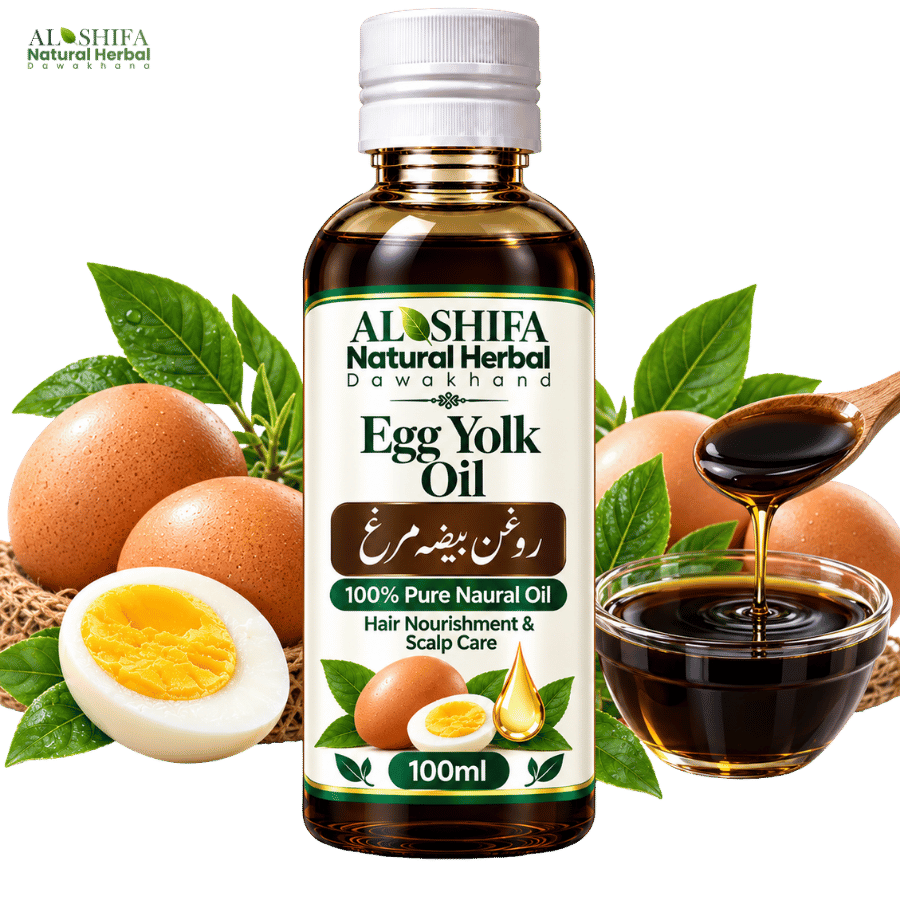
100% Pure Egg Yolk Oil – Natural Hair Growth, Strength & Repair.
Pure Egg Yolk Oil / Roghan Baiza Murgh is a natural animal-derived lipid oil obtained from the yolk of chicken eggs (Gallus gallus domesticus). Naturally containing triglycerides, phospholipids and characteristic fatty acids, it is traditionally used for hair conditioning, scalp care, dry hair, skin conditioning, massage and specialised cosmetic formulations.
Al Shifa Egg Yolk Oil is carefully selected with attention to its correct identity, characteristic quality, freshness, clean handling, protective packaging and suitability for hair, scalp and skin-care applications.
Key Features:
Usage: Apply an appropriate amount to the hair or scalp as a pre-wash conditioning oil, use for skin or massage when suitable, or incorporate into compatible cosmetic and hair-care formulations.
Important Note: Egg Yolk Oil is an animal-derived lipid oil, not a botanical carrier oil or essential oil. It should not be confused with raw egg yolk, egg protein or purified lecithin. People with a known egg allergy should use appropriate caution. Hair-conditioning benefits should not be considered a guaranteed treatment for hair loss or hair regrowth.
100% Pure Egg Yolk Oil – Natural Hair Growth, Strength & Repair.
Egg Yolk Oil / Roghan Baiza Murgh – روغن بیضہ مرغ is a lipid-rich oil obtained from the yolk of chicken eggs. Unlike botanical carrier oils, Egg Yolk Oil is an animal-derived natural oil and is traditionally associated with hair care, scalp conditioning, skin care, massage and specialised cosmetic formulations.
Egg yolk naturally contains a complex mixture of triglycerides, phospholipids, cholesterol, fatty acids and other lipid-soluble components. Depending on the extraction and purification process, Egg Yolk Oil may contain varying proportions of oleic acid, linoleic acid, palmitic acid and other fatty acids, together with characteristic egg-yolk lipids.
Egg Yolk Oil should not be confused with raw egg yolk, whole egg, egg protein or ordinary vegetable carrier oils. Proper processing, freshness, hygiene and storage are especially important because it is an animal-derived lipid material.
At Al Shifa Natural Herbal Dawakhana, Egg Yolk Oil is selected with attention to its correct identity, characteristic quality, clean processing, freshness, appropriate handling, protective packaging and proper storage.
Egg Yolk Oil is the lipid fraction obtained from chicken egg yolks.
It may be produced through different specialised extraction processes designed to separate the oil-rich fraction from the remaining yolk components.
Unlike plant oils, it does not have a botanical scientific name because its source is animal-derived.
Its biological source is the domestic chicken:
Gallus gallus domesticus
Egg Yolk Oil may also be known as:
Product Name: Egg Yolk Oil / Roghan Baiza Murgh – روغن بیضہ مرغ
English Name: Egg Yolk Oil / Egg Oil
Urdu Name: روغن بیضہ مرغ / انڈے کی زردی کا تیل
Roman Name: Roghan Baiza Murgh / Roghan Baiza-e-Murgh / Egg Yolk Oil
Biological Source: Domestic Chicken Egg
Scientific Source Name: Gallus gallus domesticus
Source Part: Egg Yolk
Oil Type: Animal-Derived Natural Lipid Oil
Common Forms: Extracted Egg Yolk Oil / Purified Egg Oil / Traditional Egg-Yolk-Derived Oil
Appearance: Yellow to Golden, Orange-Yellow or Brownish-Yellow, Depending on Extraction and Processing
Aroma: Mild to Characteristic Egg-Lipid Aroma, Depending on Purification and Freshness
Primary Applications: Hair Care, Scalp Care, Skin Conditioning, Massage & Specialised Cosmetic Formulations
Product Type: Egg-Yolk-Derived Natural Oil
Egg yolk naturally contains a substantial lipid fraction.
Different production methods can be used to separate these lipids from the remaining yolk material.
The exact process affects:
For this reason, not every commercial Egg Yolk Oil has exactly the same characteristics.
Most oils commonly used in herbal and cosmetic care are obtained from plants.
Examples include:
Egg Yolk Oil is fundamentally different because its source is animal-derived.
Therefore:
Egg Yolk Oil ≠ Vegetable Carrier Oil
Egg yolk contains a complex mixture of lipids.
These include:
The precise composition of the extracted oil depends on the eggs and extraction process.
Egg Yolk Oil can contain fatty acids including:
These occur primarily as components of the natural lipid fraction.
Oleic acid is a monounsaturated fatty acid found naturally in egg-yolk lipids.
It contributes to the oil’s emollient characteristics.
However:
Egg Yolk Oil ≠ Pure Oleic Acid
Linoleic acid is an Omega-6 polyunsaturated fatty acid naturally present in egg-yolk lipids.
Its proportion can vary according to factors including the hen’s diet.
Therefore:
Egg Yolk Oil ≠ Pure Linoleic Acid
Egg yolk is naturally rich in phospholipids.
One particularly important phospholipid associated with egg yolk is:
Phosphatidylcholine
Phospholipids contribute to the distinctive composition of egg yolk.
However, their concentration in finished Egg Yolk Oil depends on the extraction and purification process.
Egg yolk is a well-known natural source of lecithin-related phospholipids.
However:
Egg Yolk Oil ≠ Pure Lecithin
Purified lecithin is a specialised ingredient, while Egg Yolk Oil contains a broader mixture of natural lipids.
Egg yolk naturally contains cholesterol as part of its lipid composition.
Therefore, Egg Yolk Oil can also contain cholesterol depending on the extraction method.
This is a normal characteristic of an animal-derived lipid and distinguishes it from ordinary plant-derived carrier oils.
Egg Yolk Oil has a long history of use in traditional hair-care preparations.
As an oil-rich material, it can contribute to:
These are primarily cosmetic conditioning effects.
Dry hair can feel rough and become difficult to manage.
Egg Yolk Oil can coat and lubricate the hair surface, contributing to:
However:
Hair Conditioning ≠ Repairing Permanently Damaged Hair Structure
Egg Yolk Oil is traditionally incorporated into scalp oils and massage preparations.
Its lipid-rich nature can provide:
However:
Scalp Conditioning ≠ Treatment for Scalp Disease
Egg Yolk Oil is sometimes promoted as a traditional hair-growth oil.
However:
Egg Yolk Oil Should Not Be Presented as a Guaranteed Hair-Regrowth Treatment.
Improved conditioning can make hair feel healthier and may reduce the appearance of dryness or breakage, but this is different from stimulating new hair follicles.
This distinction is important.
Conditioning oils can reduce friction and improve hair manageability.
This may help reduce mechanical breakage.
However:
Reduced Hair Breakage ≠ Treatment for Hair Loss
Hair loss can have hormonal, nutritional, genetic, autoimmune, medication-related and other causes.
Egg Yolk Oil can also function as an emollient in selected skin-care preparations.
Its lipid content may contribute to:
Its suitability depends on the formulation and individual skin response.
As a lipid-rich oil, Egg Yolk Oil may be incorporated into preparations intended for dry-feeling skin.
It can contribute to surface conditioning and reduce the rough feel associated with dryness.
However:
Moisturising ≠ Treatment for Eczema, Psoriasis or Other Skin Disease
Egg Yolk Oil may be used alone when suitable or incorporated into specialised massage blends.
Its lipid-rich texture provides:
It may also be blended with compatible fixed oils to modify its texture and application.
Traditional oil formulations may combine Egg Yolk Oil with botanical oils or herbal ingredients.
Possible accompanying oils can include:
The final properties depend on the complete formulation.
Raw egg yolk contains:
Egg Yolk Oil represents primarily the separated lipid fraction.
Therefore:
Egg Yolk Oil ≠ Raw Egg Yolk
Whole egg contains both yolk and egg white.
Egg white is particularly rich in proteins and contains very little fat compared with yolk.
Egg Yolk Oil is obtained specifically from the lipid-rich yolk portion.
Therefore:
Egg Yolk Oil ≠ Whole Egg
Egg white consists mainly of water and proteins.
Egg Yolk Oil is a lipid-rich material obtained from yolk.
Therefore:
Egg Yolk Oil ≠ Egg White
Egg proteins and Egg Yolk Oil are different materials.
The oil primarily contains lipids, whereas egg protein preparations are protein-rich.
Therefore:
Egg Yolk Oil ≠ Egg Protein
This distinction is important when discussing hair-protein claims.
Because Egg Yolk Oil comes from eggs, it is sometimes assumed to be a concentrated protein treatment.
However, oil extraction primarily separates lipids.
Therefore:
Egg Yolk Oil Should Not Automatically Be Described as a High-Protein Hair Oil.
The amount of residual protein depends on processing.
Egg yolk naturally contains phospholipids associated with lecithin.
However:
Egg Yolk Oil ≠ Purified Lecithin
Purified lecithin is a specialised ingredient with its own composition and applications.
Vitamin E Oil refers to preparations containing tocopherol-related compounds.
Egg Yolk Oil is a complex animal-derived lipid oil.
Therefore:
Egg Yolk Oil ≠ Vitamin E Oil
Sweet Almond Oil is a botanical fixed oil obtained from Prunus dulcis kernels.
Egg Yolk Oil is animal-derived.
Therefore:
Egg Yolk Oil ≠ Sweet Almond Oil
Their composition and allergen profiles differ.
Coconut Oil is a vegetable oil obtained from coconut kernel.
Egg Yolk Oil is obtained from chicken egg yolk.
Therefore:
Egg Yolk Oil ≠ Coconut Oil
They also have substantially different fatty-acid profiles.
Egg Yolk Oil is not a volatile aromatic essential oil.
It is a lipid-rich natural oil.
Therefore:
Egg Yolk Oil ≠ Essential Oil
It should not be classified alongside Lavender, Peppermint, Eucalyptus or other volatile essential oils.
Egg is a recognised food allergen.
People with egg allergy may react primarily to proteins found in egg white or yolk.
The amount of residual protein in a processed Egg Yolk Oil depends on how it is produced and purified.
Therefore:
Egg Allergy Requires Caution with Egg Yolk Oil
People with a known significant egg allergy should not assume that a topical Egg Yolk Oil is automatically suitable.
Processing may reduce residual proteins, but the degree of purification can differ between products.
Without specific analytical information:
Low Protein Content Should Not Be Assumed
A person with a history of severe egg allergy should seek appropriate professional guidance before using an egg-derived product.
Before wider topical use, apply a small amount to a limited area when appropriate.
Observe for:
Discontinue use if significant irritation or an allergic reaction develops.
A simple patch test is not a substitute for medical guidance in someone with a history of serious egg allergy.
Because Egg Yolk Oil is an animal-derived lipid product, appropriate processing and storage are particularly important.
Exposure to:
can negatively affect quality and stability.
The unsaturated lipids in Egg Yolk Oil can undergo oxidation.
Signs of deterioration can include significant changes in:
Clearly rancid or contaminated oil should not be used.
Egg-derived materials require careful hygienic handling.
Properly prepared Egg Yolk Oil should not be confused with simply storing or applying untreated raw egg yolk.
Commercial oil preparation requires appropriate:
Raw eggs can carry microbial contamination.
This is another reason why:
Properly Processed Egg Yolk Oil ≠ Raw Egg Applied Directly to Skin or Hair
Users should not assume that raw homemade egg preparations have the same stability or safety characteristics as properly processed oil.
Egg Yolk Oil is a rich lipid material.
Individual skin response can vary.
People with oily or acne-prone skin should assess:
Egg Yolk Oil should not be presented as an acne treatment.
Egg-derived lipids have been investigated in different scientific and formulation contexts.
However:
Egg Yolk Oil Should Not Be Presented as a Proven Treatment for Open Wounds, Burns or Skin Infection.
Do not apply an ordinary cosmetic oil to serious wounds or burns unless specifically formulated and medically appropriate for that purpose.
Egg yolk contains naturally occurring lipid-soluble compounds and other constituents that can participate in antioxidant systems.
However:
Antioxidant Activity ≠ Treatment or Prevention of Disease
The composition of processed Egg Yolk Oil can also differ significantly from whole egg yolk.
Normal external cosmetic use of a properly processed Egg Yolk Oil is different from medicinal internal use.
During pregnancy and breastfeeding, use according to the intended product purpose.
People with egg allergy should continue to observe appropriate allergy precautions.
Use only an appropriately prepared product suitable for the child’s age.
Children with known egg allergy require particular caution with egg-derived products.
Keep the bottle securely out of reach of young children.
Egg Yolk Oil may be produced for different purposes.
An oil sold for:
should not automatically be assumed to be suitable for eating.
Therefore:
Cosmetic-Grade Egg Yolk Oil ≠ Automatically Food-Grade Egg Oil
Follow the labelled intended use.
At Al Shifa Natural Herbal Dawakhana, Egg Yolk Oil is selected with attention to:
Correct Identity – Genuine egg-yolk-derived oil.
Source Quality – Derived from chicken egg yolk.
Oil-Type Identity – Animal-derived natural lipid oil rather than vegetable or essential oil.
Lipid Quality – Naturally containing triglycerides, phospholipids and characteristic fatty acids.
Hair-Care Applications – Suitable for specialised conditioning oils and hair-care formulations.
Scalp-Care Applications – Suitable for appropriate scalp-conditioning preparations.
Skin-Care Applications – Useful as an emollient in selected formulations.
Massage Applications – Suitable for specialised oil blends.
Allergen Awareness – Clear recognition of egg-allergy considerations.
Freshness Awareness – Attention to characteristic quality and stability.
Clean Handling – Carefully handled during packing.
Protective Packaging – Helps protect against contamination and deterioration.
Responsible Information – No exaggerated hair-regrowth, wound-healing or disease-treatment claims.
Proper Storage – Protected from unnecessary heat, light and contamination.
Al Shifa Natural Herbal Dawakhana, established in 1999, supplies natural oils, herbs and specialised traditional materials throughout Pakistan.
Our focus for Egg Yolk Oil includes:
For Hair Care: Apply an appropriate amount to the hair as a pre-wash conditioning oil or incorporate into compatible hair-oil blends.
For Scalp Care: Massage a suitable amount gently into the scalp when the product is appropriate for the individual.
For Dry Hair: Apply a small amount to the lengths and ends or use as part of a pre-wash oil treatment.
For Skin Care: Apply a suitable amount to the intended area or incorporate into compatible cosmetic formulations.
For Massage: Use an appropriate amount alone when suitable or blend with compatible fixed oils.
For Cosmetic Formulation: Incorporate according to the requirements of the finished product.
Egg Yolk Oil / Roghan Baiza Murgh – روغن بیضہ مرغ is an animal-derived lipid oil obtained from chicken egg yolk. It is fundamentally different from vegetable carrier oils and volatile essential oils and should also be distinguished from raw egg yolk, egg protein and purified lecithin.
Important distinctions include:
Store Egg Yolk Oil in a cool, clean and dry place, following any specific storage directions supplied with the product.
For best quality:
Egg Yolk Oil / Roghan Baiza Murgh – روغن بیضہ مرغ is a specialised natural oil obtained from the lipid-rich yolk of chicken eggs. Unlike ordinary botanical oils, it is an animal-derived lipid preparation naturally containing triglycerides, phospholipids, cholesterol and a mixture of fatty acids.
Egg Yolk Oil has a long-standing place in traditional hair and scalp care and may also be incorporated into skin-conditioning, massage and specialised cosmetic formulations. Its rich lipid character makes it particularly suitable for products designed for dry-feeling hair and conditioning applications.
Proper processing is important because Egg Yolk Oil should not be confused with untreated raw egg yolk. Product freshness, hygienic handling, oxidation control and appropriate storage all contribute to the quality of the finished oil.
Customers searching for Egg Yolk Oil, Egg Oil, Roghan Baiza Murgh, Roghan Baiza e Murgh, Egg Yolk Hair Oil, Egg Oil for Hair, Egg Yolk Oil for Dry Hair, Egg Yolk Oil for Scalp, Egg Oil for Skin, Egg Yolk Massage Oil, Egg Yolk Oil Pakistan, Egg Oil Pakistan, Roghan Baiza Murgh Pakistan, Egg Yolk Oil Lahore, Egg Yolk Oil price in Pakistan, Roghan Baiza Murgh price, buy Egg Yolk Oil Pakistan or Egg Yolk Oil online Pakistan can choose Al Shifa Natural Herbal Dawakhana for carefully selected quality.
Since 1999, Al Shifa Natural Herbal Dawakhana has focused on supplying natural oils and specialised traditional materials with attention to correct identity, quality selection, clean handling, responsible product information, protective packaging and proper storage.
Product Name: Egg Yolk Oil / Roghan Baiza Murgh – روغن بیضہ مرغ
English Name: Egg Yolk Oil / Egg Oil
Urdu Name: روغن بیضہ مرغ / انڈے کی زردی کا تیل
Roman Name: Roghan Baiza Murgh / Roghan Baiza-e-Murgh / Egg Yolk Oil
Biological Source: Domestic Chicken Egg
Scientific Source Name: Gallus gallus domesticus
Source Part: Egg Yolk
Oil Type: Animal-Derived Natural Lipid Oil
Common Forms: Extracted Egg Yolk Oil / Purified Egg Oil / Traditional Egg-Yolk-Derived Oil
Appearance: Yellow to Golden, Orange-Yellow or Brownish-Yellow, Depending on Extraction and Processing
Aroma: Mild to Characteristic Egg-Lipid Aroma, Depending on Purification and Freshness
Primary Applications: Hair Care, Scalp Care, Skin Conditioning, Massage & Specialised Cosmetic Formulations
Product Type: Egg-Yolk-Derived Natural Oil
Important Note: Egg Yolk Oil is an animal-derived lipid oil rather than a botanical carrier oil or essential oil. It should be distinguished from raw egg yolk, whole egg, egg protein and purified lecithin. Egg allergy is an important consideration, and residual protein content depends on processing. Hair and scalp conditioning benefits should not be interpreted as guaranteed hair-regrowth or treatment for hair-loss disorders.
روغن بیضہ مرغ مرغی کے انڈے کی زردی سے حاصل ہونے والا قدرتی روغن ہے۔ اسے عام زبان میں انڈے کی زردی کا تیل بھی کہا جاتا ہے۔
انڈے کی زردی قدرتی چکنائی سے بھرپور ہوتی ہے۔ اس سے حاصل روغن میں اولیک تیزاب، لینولیک تیزاب، پالمیٹک تیزاب، سٹیئرک تیزاب، فاسفولیپڈز، کولیسٹرول، لیسیتھین اور وٹامن ای سمیت کئی قدرتی روغنی اجزا پائے جاتے ہیں۔
روغن بیضہ مرغ کو حکمت میں بالوں، سر کی جلد، خشک جلد اور بیرونی مالش کے لیے استعمال کیا جاتا ہے۔ بالوں کی روغنی دیکھ بھال میں اس کی خاص شہرت ہے۔
اردو: روغن بیضہ مرغ، انڈے کی زردی کا روغن، انڈے کی زردی کا تیل
پنجابی: انڈے دی زردی دا تیل، مرغی دے انڈے دی زردی دا تیل
ہندی: انڈے کی زردی کا تیل، انڈا زردی تیل
فارسی: روغن زردہ تخم مرغ، روغن بیضہ مرغ
عربی: زیت صفار البیض، دهن صفار البیض
انگریزی نام: ایگ یولک آئل، ایگ آئل
سائنسی نام: گیلس گیلس ڈومیسٹیکس
حاصل ہونے والا حصہ: مرغی کے انڈے کی زردی
مرغی کے انڈے میں سفید حصہ اور زردی الگ حصے ہوتے ہیں۔
زردی میں قدرتی چکنائی، پروٹین، فاسفولیپڈز، لیسیتھین، کولیسٹرول اور کئی غذائی اجزا پائے جاتے ہیں۔
اسی زردی سے خاص طریقے کے ذریعے چکنائی الگ کر کے روغن بیضہ مرغ حاصل کیا جاتا ہے۔
خالص روغن کی رنگت عموما زرد، سنہری، نارنجی مائل یا قدرے گہری ہوتی ہے۔
اس کی اپنی خاص بو بھی ہوتی ہے۔
انڈے کی زردی میں قدرتی چکنائی موجود ہوتی ہے۔
زردی کو سفیدی سے الگ کر کے اس میں موجود چکنائی حاصل کی جاتی ہے۔
روغن حاصل کرنے کا طریقہ اس کا رنگ ڈارک براون، سیاہ ٹائپ، ہا سنہری گولڈن ہوتا ہے، بو اور گاڑھے پن پر نمایاں رہتا ہے۔
اچھے روغن میں پانی اور انڈے کے غیر ضروری ٹھوس ذرات نہیں ہونے چاہئیں تاکہ روغن جلد خراب نہ ہو۔
اچھے روغن بیضہ مرغ میں یہ خصوصیات دیکھی جاتی ہیں:
پاکستانی اور برصغیر کی حکیمی کتب مفردات میں انڈے کی زردی کو گرم و تر مزاج کے ساتھ بیان کیا جاتا ہے۔
روغن بیضہ مرغ زردی کے روغنی حصے سے حاصل ہوتا ہے، اسی لیے حکیمی استعمال میں اسے بھی گرم اور تر خاصیت کے قریب سمجھا جاتا ہے۔
حکمت میں اسے خاص طور پر بالوں، سر کی جلد اور جسمانی جلد کے بیرونی استعمال میں اہمیت دی جاتی ہے۔
روغن بیضہ مرغ حکیمی روغنوں میں بالوں کی دیکھ بھال کے لیے مشہور ہے۔
اسے بالوں کی جڑوں، سر کی خشک جلد اور خشک و کھردرے بالوں کے لیے استعمال کیا جاتا ہے۔
اسے دوسرے روغنوں کے ساتھ ملا کر بھی بالوں اور جلد کی بیرونی ادویات میں شامل کیا جاتا ہے۔
روغن بیضہ مرغ کے اہم بیرونی استعمال یہ ہیں:
روغن بیضہ مرغ بالوں کی دیکھ بھال کے لیے مشہور روغن ہے۔
اسے بالوں کی جڑوں، سر کی جلد اور بالوں کی لمبائی پر کم مقدار میں لگایا جاتا ہے۔
اسے ناریل، بادام، زیتون یا دوسرے بالوں کے روغن کے ساتھ ملا کر بھی استعمال کیا جاتا ہے۔
اس کی قدرتی چکنائی خشک بالوں کو نرم اور ہموار رکھنے کے لیے فائدہ مند ہے۔
روغن بیضہ مرغ کو بالوں کی جڑوں پر لگا کر انگلیوں کے پوروں سے ہلکی مالش کی جاتی ہے۔
اسے اکیلا یا دوسرے بالوں کے روغن کے ساتھ ملا کر استعمال کیا جاتا ہے۔
سر کی جلد کو صاف رکھنا بھی بالوں کی اچھی دیکھ بھال کا اہم حصہ ہے۔
خشک، کھردرے اور بے رونق بالوں کے لیے روغن بیضہ مرغ استعمال کیا جاتا ہے۔
اس کی قدرتی چکنائی بالوں کو روغنی نرمی دیتی ہے۔
اسے بالوں کی لمبائی اور خشک سروں پر کم مقدار میں لگایا جاتا ہے۔
بالوں کے خشک اور کھردرے سروں پر روغن بیضہ مرغ کی تھوڑی مقدار لگائی جاتی ہے۔
اسے بادام، ناریل یا جوجوبا کے روغن کے ساتھ ملا کر بھی استعمال کیا جاتا ہے۔
یہ بالوں کے سروں کو نرم اور ہموار رکھنے کے لیے فائدہ مند ہے۔
روغن بیضہ مرغ کی قدرتی چکنائی خشک بالوں کو نرم اور چمک دار دکھانے کے لیے فائدہ مند ہے۔
بالوں پر بہت زیادہ روغن لگانے کے بجائے کم مقدار استعمال کی جاتی ہے۔
روغن بیضہ مرغ سر کی خشک جلد کی روغنی دیکھ بھال میں استعمال کیا جاتا ہے۔
اسے سر کی جلد پر کم مقدار میں لگا کر ہلکی مالش کی جاتی ہے۔
اسے ناریل، بادام یا دوسرے بنیادی روغن کے ساتھ ملا کر بھی استعمال کیا جاتا ہے۔
خشک سر کی جلد پر روغن بیضہ مرغ کم مقدار میں لگایا جاتا ہے۔
اس کی قدرتی چکنائی سر کی جلد کو نرم اور روغنی رکھنے کے لیے فائدہ مند ہے۔
سر کی جلد پر زخم یا جلدی امراض موجود ہوں تو طبی استعمال معالج سے پوچھ کر کریں۔
بالوں کا بہت زیادہ گرنا، بالوں کا مسلسل پتلا ہونا یا سر پر خالی جگہیں بننا بالوں کے امراض سے جڑا مسئلہ ہے۔
ایسی حالت میں معالج سے چیک کروائیں۔
روغن بیضہ مرغ کو بالوں اور سر کی جلد کی بیرونی روغنی دیکھ بھال کے لیے استعمال کیا جاتا ہے۔
روغن بیضہ مرغ کو داڑھی کی روغنی دیکھ بھال میں بھی استعمال کیا جاتا ہے۔
اسے بادام یا جوجوبا کے روغن کے ساتھ ملا کر داڑھی اور اس کے نیچے کی خشک جلد پر کم مقدار میں لگایا جاتا ہے۔
روغن بیضہ مرغ خشک جلد کی بیرونی روغنی دیکھ بھال میں استعمال کیا جاتا ہے۔
اس میں موجود قدرتی چکنائی جلد کو نرم رکھنے کے لیے فائدہ مند ہے۔
اسے جسم کی خشک جگہوں پر کم مقدار میں لگایا جاتا ہے۔
خشک ہاتھوں اور پاؤں پر روغن بیضہ مرغ کی تھوڑی مقدار لگائی جاتی ہے۔
اسے دوسرے بنیادی روغن کے ساتھ ملا کر بھی استعمال کیا جاتا ہے۔
خشک اور کھردری کہنیوں اور ایڑیوں پر روغن بیضہ مرغ کو بادام، ناریل یا زیتون کے روغن کے ساتھ ملا کر لگایا جاتا ہے۔
یہ خشک جلد کو روغنی نرمی دینے کے لیے فائدہ مند ہے۔
روغن بیضہ مرغ جسمانی مالش کے روغنوں میں بھی شامل کیا جاتا ہے۔
اسے دوسرے بنیادی روغن کے ساتھ ملا کر خشک جسمانی جلد پر ہلکے ہاتھ سے لگایا جاتا ہے۔
روغن بیضہ مرغ میں اہم اجزا یہ ہیں:
یہ اجزا انڈے کی زردی کی قدرتی چکنائی کا حصہ ہیں۔
اولیک تیزاب روغن بیضہ مرغ کے اہم روغنی اجزا میں شامل ہے۔
یہ کئی قدرتی روغنوں میں بھی پایا جاتا ہے۔
یہ جلد اور بالوں کو روغنی نرمی دینے کے لیے فائدہ مند چکنائی ہے۔
لینولیک تیزاب انڈے کی زردی کی چکنائی میں پایا جاتا ہے۔
یہ جلد اور بالوں کے لیے استعمال ہونے والی قدرتی چکنائیوں کا اہم حصہ ہے۔
پالمیٹک تیزاب روغن بیضہ مرغ کی قدرتی چکنائی میں شامل ہے۔
یہ انڈے کی زردی کے روغنی حصے کی ساخت کا حصہ ہے۔
سٹیئرک تیزاب بھی انڈے کی زردی کی چکنائی میں پایا جاتا ہے۔
یہ کئی قدرتی چکنائیوں میں موجود روغنی جز ہے۔
لیسیتھین انڈے کی زردی کا مشہور قدرتی جز ہے۔
یہ زردی کی روغنی ساخت میں اہم جگہ رکھتا ہے۔
بالوں اور جلد کی دیکھ بھال کے لیے تیار روغنی آمیزوں میں انڈے کی زردی کی خاص پہچان میں لیسیتھین اہم ہے۔
انڈے کی زردی میں فاسفولیپڈز پائے جاتے ہیں۔
یہ زردی کی قدرتی چکنائی کا اہم حصہ ہیں اور روغن بیضہ مرغ کی خاص ساخت میں شامل رہتے ہیں۔
انڈے کی زردی میں قدرتی طور پر کولیسٹرول پایا جاتا ہے۔
یہ زردی کی چکنائی کا حصہ ہے۔
روغن بیضہ مرغ میں بھی زردی سے حاصل ہونے والے روغنی اجزا کے ساتھ کولیسٹرول موجود رہتا ہے۔
انڈے کی زردی میں قدرتی وٹامن ای بھی پایا جاتا ہے۔
یہ روغن بیضہ مرغ کے قدرتی غذائی اور روغنی اجزا میں شامل ہے۔
خالص روغن بیضہ مرغ کی رنگت زرد، سنہری، نارنجی مائل یا قدرے گہری ہو سکتی ہے۔
رنگت مرغی کی خوراک، انڈے کی زردی اور روغن حاصل کرنے کے طریقے سے جڑی ہوتی ہے۔
غیر ضروری مصنوعی رنگ اچھے روغن کی پہچان نہیں ہے۔
روغن بیضہ مرغ میں انڈے کی زردی کی اپنی خاص بو ہوتی ہے۔
اچھے اور تازہ روغن میں باسی، سڑی ہوئی یا بہت خراب بو نہیں ہونی چاہیے۔
باسی بو روغن کے خراب ہونے کی اہم پہچان ہے۔
عام انڈے کی زردی اور روغن بیضہ مرغ ایک چیز نہیں ہیں۔
انڈے کی زردی میں پانی، پروٹین، چکنائی اور دوسرے اجزا موجود ہوتے ہیں۔
روغن بیضہ مرغ زردی کے چکنائی والے حصے کو الگ کر کے حاصل کیا جاتا ہے۔
اسی وجہ سے روغن کی ساخت عام زردی سے زیادہ روغنی ہوتی ہے۔
روغن بیضہ مرغ کی تھوڑی مقدار سر کی جلد اور بالوں کی جڑوں پر لگائیں۔
انگلیوں کے پوروں سے ہلکی مالش کریں۔
بالوں کی لمبائی اور خشک سروں پر بھی کم مقدار لگائیں۔
بعد میں بال اپنے معمول کے مطابق دھو لیں۔
روغن بیضہ مرغ کو درج ذیل روغنوں کے ساتھ ملا کر استعمال کیا جاتا ہے:
اس طرح اسے بالوں، سر کی جلد اور جسمانی جلد کے لیے استعمال کیا جاتا ہے۔
روغن بیضہ مرغ کی تھوڑی مقدار جلد پر لگا کر ہلکے ہاتھ سے مالش کریں۔
پہلی بار استعمال سے پہلے جلد کے چھوٹے حصے پر تھوڑی مقدار آزمائیں۔
آنکھوں اور کھلے زخموں پر نہ لگائیں۔
حساس جلد پر پہلی بار بہت تھوڑی مقدار آزمائیں۔
خارش، سرخی یا جلن پیدا ہو تو استعمال بند کریں۔
جلدی امراض میں طبی استعمال معالج سے پوچھ کر کریں۔
انڈے کی الرجی والے افراد روغن بیضہ مرغ استعمال کرنے سے پہلے خاص احتیاط رکھیں۔
انڈے سے الرجی کی بیماری موجود ہو تو روغن بیضہ مرغ کو جلد، سر کی جلد یا بالوں پر اپنی طرف سے استعمال نہ کریں۔
ایسی صورت میں معالج سے چیک کروائیں۔
بالوں، جلد اور جسمانی مالش کے لیے تیار روغن بیضہ مرغ کو نہ پئیں۔
انڈا خوراک ہے لیکن بیرونی استعمال کے لیے تیار روغن کو خوراک کے طور پر استعمال نہیں کیا جاتا۔
کسی بیماری کے لیے اندرونی طبی استعمال معالج سے پوچھ کر کریں۔
بیرونی استعمال سے پہلے روغن کی صفائی اور اس میں شامل دوسرے اجزا دیکھیں۔
انڈے کی الرجی موجود ہو تو استعمال نہ کریں۔
کسی بیماری کے لیے طبی استعمال معالج سے پوچھ کر کریں۔
روغن بیضہ مرغ کو چھاتی اور بچے کے منہ سے لگنے والی جگہ پر نہ لگائیں۔
انڈے کی الرجی موجود ہو تو استعمال نہ کریں۔
کسی بیماری کے لیے طبی استعمال معالج سے پوچھ کر کریں۔
بچوں میں انڈے کی الرجی کا خاص خیال رکھیں۔
بچے کو انڈے کی الرجی کی بیماری ہو تو روغن بیضہ مرغ اپنی طرف سے استعمال نہ کریں۔
بچوں میں طبی استعمال معالج سے پوچھ کر کریں۔
روغن کو بچوں کی پہنچ سے دور رکھیں۔
اچھی زردی: صاف اور تازہ مرغی کے انڈوں کی زردی استعمال کی گئی ہو۔
صاف روغن: پانی اور غیر ضروری ٹھوس ذرات سے پاک ہو۔
قدرتی رنگت: زرد سے سنہری یا نارنجی مائل قدرتی رنگت ہو۔
قدرتی بو: انڈے کی زردی کی اپنی ہلکی خاص بو ہو۔
تازگی: باسی یا سڑی ہوئی بو نہ ہو۔
اچھی صفائی: روغن صاف اور اچھی حالت میں ہو۔
غیر ضروری ملاوٹ سے پاک: مصنوعی رنگ، غیر ضروری مصنوعی خوشبو اور کم معیار کے دوسرے روغن کی ملاوٹ سے پاک ہو۔
روغن بیضہ مرغ مرغی کے انڈے کی زردی سے حاصل ہونے والا قدرتی روغن ہے۔
اس میں اولیک تیزاب، لینولیک تیزاب، پالمیٹک تیزاب، سٹیئرک تیزاب، فاسفولیپڈز، لیسیتھین، کولیسٹرول، وٹامن ای اور دوسرے قدرتی روغنی اجزا پائے جاتے ہیں۔
اس کا بیرونی استعمال بالوں، سر کی جلد، خشک بالوں، بالوں کے سروں، خشک جلد اور جسمانی مالش میں کیا جاتا ہے۔
انڈے کی الرجی والے افراد اس روغن کے استعمال میں خاص احتیاط رکھیں۔
بالوں اور جلد کے لیے تیار روغن بیضہ مرغ کو نہ پئیں۔
الشفاء نیچرل ہربل دواخانہ میں روغن بیضہ مرغ کے لیے درج ذیل باتوں کو اہمیت دی جاتی ہے:
اچھی زردی: صاف اور تازہ مرغی کے انڈوں کی زردی کو اہمیت دی جاتی ہے۔
قدرتی چکنائی: زردی سے حاصل ہونے والی اصل قدرتی چکنائی کو اہمیت دی جاتی ہے۔
قدرتی رنگت: زرد، سنہری یا نارنجی مائل قدرتی رنگت کو دیکھا جاتا ہے۔
قدرتی بو: انڈے کی زردی کی اپنی خاص بو کو اہمیت دی جاتی ہے۔
صاف روغن: پانی اور غیر ضروری ذرات سے پاک روغن کو اہمیت دی جاتی ہے۔
تازگی: باسی یا سڑی ہوئی بو والے روغن سے بچا جاتا ہے۔
غیر ضروری ملاوٹ سے پاک: مصنوعی رنگ، غیر ضروری مصنوعی خوشبو اور کم معیار کے دوسرے روغن کی ملاوٹ سے پاک ہونے کو اہمیت دی جاتی ہے۔
الشفاء نیچرل ہربل دواخانہ سنہ ۱۹۹۹ سے قدرتی روغنوں، جڑی بوٹیوں، بیجوں اور حکیمی اشیا کی سپلائی کر رہا ہے۔
ہم روغن بیضہ مرغ میں اچھی زردی، صاف حالت، قدرتی رنگت، قدرتی چکنائی، تازگی اور غیر ضروری ملاوٹ سے پاک ہونے کو اہمیت دیتے ہیں۔
اچھے روغن بیضہ مرغ کی پہچان قدرتی رنگت، صاف حالت، اپنی خاص بو، تازگی اور اچھی پیکنگ سے کی جاتی ہے۔
روغن بیضہ مرغ کو ٹھنڈی، خشک اور روشنی سے محفوظ جگہ پر کسی جار میں اچھی طرح پیک کر کے رکھیں۔
اسے تیز دھوپ، پانی اور زیادہ گرمی سے بچائیں۔
استعمال کے بعد ڈھکن اچھی طرح بند کریں۔
اگر روغن کی بو باسی یا سڑی ہوئی محسوس ہو تو استعمال نہ کریں۔
اسے بچوں کی پہنچ سے دور رکھیں۔
روغن بیضہ مرغ جانور سے حاصل ہونے والا قدرتی روغن ہے۔
انڈے کی الرجی والے افراد اسے اپنی طرف سے استعمال نہ کریں۔
پہلی بار جلد یا سر کی جلد کے چھوٹے حصے پر تھوڑی مقدار آزمائیں۔
آنکھوں اور کھلے زخموں پر نہ لگائیں۔
خارش، سرخی یا جلن پیدا ہو تو استعمال بند کریں۔
بالوں اور جلد کے لیے تیار روغن کو نہ پئیں۔
جلدی امراض اور سر کی جلد کے امراض میں طبی استعمال معالج سے پوچھ کر کریں۔
حمل، دودھ پلانے اور بچوں میں طبی استعمال معالج سے پوچھ کر کریں۔
روغن بیضہ مرغ مرغی کے انڈے کی زردی میں موجود قدرتی چکنائی سے حاصل کیا جانے والا روغن ہے۔
پاکستانی اور برصغیر کی حکیمی کتب مفردات میں انڈے کی زردی کو گرم و تر مزاج کے ساتھ بیان کیا جاتا ہے۔
اس روغن میں اولیک تیزاب، لینولیک تیزاب، پالمیٹک تیزاب، سٹیئرک تیزاب، فاسفولیپڈز، لیسیتھین، کولیسٹرول اور وٹامن ای جیسے قدرتی اجزا پائے جاتے ہیں۔
اسے بالوں، سر کی جلد، خشک بالوں، بالوں کے سروں، داڑھی، خشک جسمانی جلد اور بیرونی مالش کے لیے استعمال کیا جاتا ہے۔
انڈے کی زردی اور روغن بیضہ مرغ ایک شکل نہیں ہیں۔ روغن زردی کے چکنائی والے حصے سے حاصل کیا جاتا ہے۔
اچھے روغن بیضہ مرغ کی پہچان صاف حالت، قدرتی رنگت، تازگی، اپنی خاص بو اور غیر ضروری ملاوٹ سے پاک ہونے سے کی جاتی ہے۔