الشفاء طلاء شیر۔
₨ 25,000
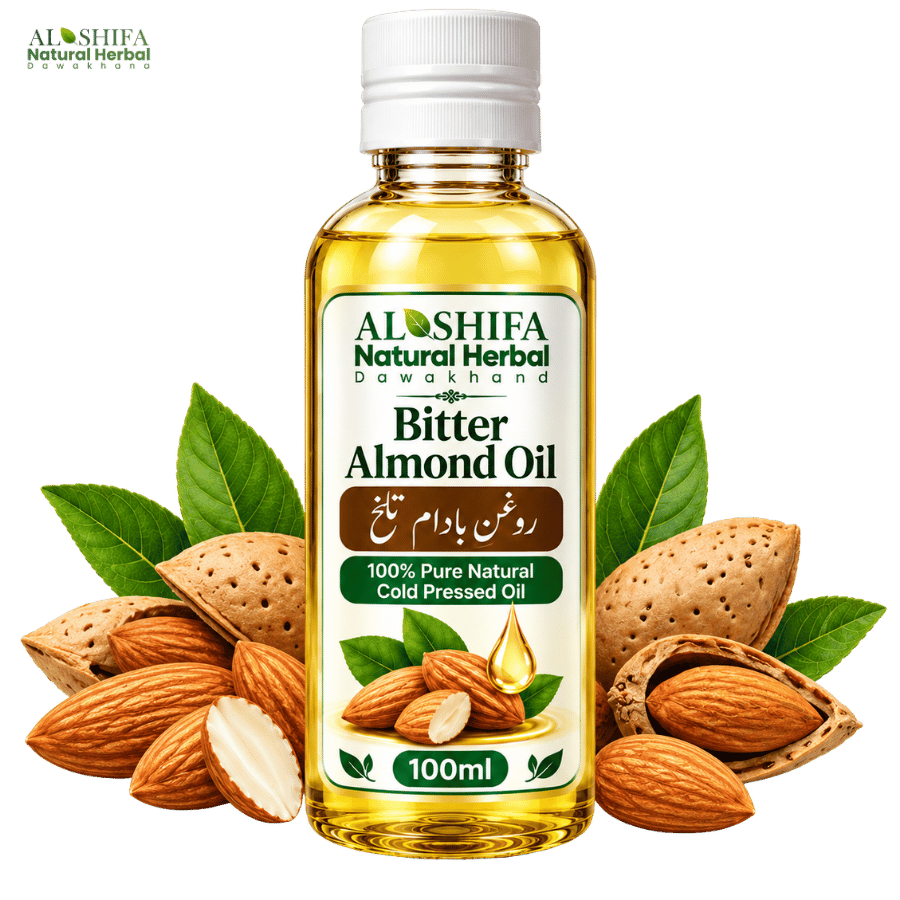
Bitter Almond Oil is a specialised almond-derived oil associated with bitter varieties of Prunus dulcis. Depending on its production method, it may be supplied as a fixed kernel oil or specially processed aromatic material and is used in selected skin-care, hair-care, scalp-care, massage, soap and cosmetic formulations.
Al Shifa Bitter Almond Oil is carefully selected with attention to its correct botanical identity, product type, characteristic quality, clean handling, protective packaging and responsible safety information.
Key Features:
Usage: Use only according to the exact product type and intended cosmetic application. Patch test before wider topical use and avoid contact with the eyes and sensitive areas.
Important Note: Bitter Almond Oil should not be confused with Sweet Almond Oil. Bitter almond kernels can contain Amygdalin, which can generate highly toxic Hydrogen Cyanide under suitable conditions. Products supplied for cosmetic or external use should not be swallowed, and people with almond or tree-nut allergies should use additional caution.
Bitter Almond Oil – روغن بادامِ تلخ is a specialised almond-derived oil associated with bitter varieties of Prunus dulcis (Mill.) D.A.Webb. Bitter almonds are botanically related to sweet almonds, but their chemical and safety profile can be significantly different.
The most important distinction is the natural presence of amygdalin in bitter almond kernels. Under suitable conditions, amygdalin can break down and generate hydrogen cyanide, a highly toxic substance. For this reason, Bitter Almond Oil should never automatically be treated as interchangeable with ordinary Sweet Almond Oil.
The name “Bitter Almond Oil” can also refer to different commercial materials. A product may represent a fixed oil expressed from bitter almond kernels, a specially processed aromatic material, or a flavour/fragrance ingredient associated with the characteristic bitter-almond aroma. Correct identification of the exact product is therefore essential.
At Al Shifa Natural Herbal Dawakhana, Bitter Almond Oil is selected with attention to its botanical identity, product type, characteristic quality, clean handling, protective packaging and responsible safety information.
Bitter Almond Oil is an almond-derived oil associated with bitter almond kernels.
The almond tree is botanically identified as:
Prunus dulcis (Mill.) D.A.Webb
and belongs to the Rosaceae family.
Sweet and bitter almonds may belong to the same botanical species, but differences in their natural chemical composition are extremely important.
Bitter almond kernels can contain significantly greater amounts of cyanogenic compounds than ordinary sweet almonds.
Product Name: Bitter Almond Oil – روغن بادامِ تلخ
English Name: Bitter Almond Oil
Urdu Name: روغن بادامِ تلخ / کڑوے بادام کا تیل
Roman Name: Roghan Badam Talkh / Bitter Almond Oil
Scientific Name: Prunus dulcis (Mill.) D.A.Webb
Plant Family: Rosaceae
Plant Part: Bitter Almond Kernels / Seeds
Oil Type: Almond-Derived Oil – Exact Classification Depends on Production Method
Common Product Forms: Fixed Bitter Almond Kernel Oil / Processed Bitter Almond Aromatic Material / Fragrance or Flavour Material
Appearance: Pale Yellow to Golden Oily Liquid for Fixed Oil, Depending on Processing
Aroma: Mild in Fixed Oil or Characteristically Almond-Like in Aromatic Preparations, Depending on Product Type
Primary Applications: Specialised Cosmetic Formulations, Hair & Scalp Products, Massage Blends, Soap, Fragrance and Other Product-Specific Applications
Product Type: Specialised Almond-Derived Botanical Oil
Sweet and bitter almonds are closely related botanically.
However, they should not be treated as chemically identical materials.
Sweet almonds are widely consumed as food and are the common source of Sweet Almond Oil used in skin, hair and massage formulations.
Bitter almonds require substantially greater caution because of their cyanogenic compounds.
Therefore:
Bitter Almond ≠ Sweet Almond
and
Bitter Almond Oil ≠ Automatically Sweet Almond Oil
One of the most important compounds associated with bitter almond kernels is amygdalin.
Amygdalin is a cyanogenic glycoside.
Under suitable enzymatic conditions, it can break down into substances that include:
The potential formation of hydrogen cyanide is the primary reason untreated bitter almond material presents serious safety concerns.
Hydrogen cyanide is highly toxic.
This means raw bitter almond kernels and poorly characterised bitter almond preparations should never be assumed safe simply because they are natural.
The safety of a commercial Bitter Almond Oil depends on:
A fixed oil may be obtained from almond kernels by pressing or another suitable extraction process.
Fixed almond oil primarily consists of fatty components.
Its natural fatty-acid profile can include:
However, the use of bitter almond kernels introduces additional identity and safety considerations compared with ordinary Sweet Almond Oil.
This distinction is particularly important.
The term Bitter Almond Oil is sometimes used loosely for both fixed and aromatic products.
A fixed kernel oil and an aromatic bitter-almond material are not necessarily the same product.
Therefore:
Bitter Almond Fixed Oil ≠ Bitter Almond Essential / Aromatic Oil
The production method and specification should always be considered.
The familiar marzipan-like or bitter-almond aroma is strongly associated with benzaldehyde.
However:
Benzaldehyde ≠ Bitter Almond Fixed Oil
A product with a strong almond fragrance should not automatically be assumed to be pure fixed almond oil.
Benzaldehyde is an aromatic compound associated with the characteristic smell of bitter almonds.
It can be obtained from different sources and can also be produced synthetically.
Therefore:
Bitter-Almond Aroma ≠ Proof of Botanical Authenticity
A strong almond smell alone cannot establish that a product is genuine Bitter Almond Oil.
An appropriately processed Bitter Almond Oil may be incorporated into specialised cosmetic formulations according to its exact specification.
Potential applications can include:
However, the exact product must be confirmed as suitable for cosmetic use.
The fixed-oil component of an appropriate almond-derived oil can contribute:
However:
Skin Conditioning ≠ Treatment for Skin Disease
Bitter Almond Oil should not be presented as a treatment for eczema, psoriasis, dermatitis or other diagnosed skin conditions.
Because Bitter Almond Oil can represent different product types, it should not automatically be recommended for unrestricted facial application.
Before facial use, confirm that the product is:
Patch testing is advisable.
Suitable Bitter Almond Oil preparations may be incorporated into hair-care products such as:
The fixed-oil component can contribute lubrication and conditioning.
An appropriately processed cosmetic-grade product may be incorporated into selected scalp-oil blends.
However, scalp use should not be confused with medical treatment.
Persistent:
requires appropriate evaluation.
Bitter Almond Oil is sometimes promoted for hair growth.
However:
Bitter Almond Oil ≠ Proven Hair-Regrowth Treatment
Hair conditioning and scalp lubrication do not establish stimulation of new hair growth.
A suitable fixed Bitter Almond Oil preparation may contribute to massage formulations because of its oily texture and spreadability.
However, only a product specifically suitable for topical cosmetic use should be used for this purpose.
An aromatic concentrate or poorly characterised Bitter Almond product should not automatically be applied like an ordinary massage carrier oil.
Appropriately specified fixed almond oil can be incorporated into soap formulations.
Its role is different from that of a concentrated aromatic bitter-almond fragrance material.
Therefore, formulation should be based on the exact material being supplied.
The characteristic bitter-almond aroma is useful in fragrance compositions.
It can contribute:
However, perfumery materials designed to reproduce Bitter Almond aroma may not necessarily be fixed botanical Bitter Almond Oil.
This is the most important product comparison.
Sweet Almond Oil is widely used as a mild carrier oil in:
Bitter Almond Oil requires more careful product identification because bitter almond material can contain cyanogenic compounds.
Therefore:
Sweet Almond Oil ≠ Bitter Almond Oil
The two names should never be used interchangeably on product labels.
Apricot Kernel Oil comes from:
Prunus armeniaca
Bitter Almond Oil is associated with:
Prunus dulcis
Although both belong to the Rosaceae family and can have similar fatty-oil characteristics:
Bitter Almond Oil ≠ Apricot Kernel Oil
Peach Kernel Oil comes from Prunus persica.
It is a different botanical oil.
Therefore:
Bitter Almond Oil ≠ Peach Kernel Oil
Cherry kernels belong to other Prunus species and can also contain cyanogenic compounds.
However:
Cherry Kernel Oil ≠ Bitter Almond Oil
Botanical identity should remain specific.
An Almond Fragrance Oil is designed primarily to provide an almond-like scent.
It may contain synthetic or blended aromatic ingredients.
Therefore:
Bitter Almond Oil ≠ Almond Fragrance Oil
A pleasant almond aroma does not establish botanical origin.
Culinary almond extracts are formulated specifically for flavouring and may contain benzaldehyde or other aromatic components in a suitable base.
They are not equivalent to cosmetic Bitter Almond Oil.
Therefore:
Almond Extract ≠ Bitter Almond Oil
Pure benzaldehyde is an individual aromatic compound.
Bitter Almond Oil is a product category whose composition depends on the production method.
Therefore:
Bitter Almond Oil ≠ Pure Benzaldehyde
Almond-derived fixed oils may naturally contain small amounts of tocopherol-related compounds.
However:
Bitter Almond Oil ≠ Vitamin E Oil
Natural tocopherols in an oil do not make it equivalent to concentrated Vitamin E.
A fixed almond kernel oil has a completely different chemical structure from conventional volatile essential oils.
Therefore:
Fixed Bitter Almond Oil ≠ Conventional Essential Oil
This distinction should be clear when determining dilution, formulation and intended use.
Amygdalin is sometimes marketed online as “Vitamin B17.”
However:
Amygdalin is not an established vitamin.
The term “Vitamin B17” is a marketing or alternative name and should not be interpreted as recognition of amygdalin as an essential human vitamin.
Amygdalin and laetrile are often discussed together, but the terms should not automatically be treated as chemically identical in every context.
Laetrile has been promoted in alternative medicine for serious diseases, including cancer.
These claims should not be transferred to Bitter Almond Oil.
Bitter almond, amygdalin and laetrile have historically been promoted as alternative cancer treatments.
However:
Bitter Almond Oil Should Not Be Presented as a Cancer Treatment
The potential release of cyanide from cyanogenic compounds creates serious safety concerns.
Cancer requires appropriate medical diagnosis and treatment.
Almond-derived materials may contain compounds investigated for antioxidant properties.
However:
Experimental Antioxidant Activity ≠ Treatment or Prevention of Disease
Research involving whole almonds, extracts or isolated compounds should not automatically be attributed to Bitter Almond Oil.
Bitter-almond-derived aromatic compounds and other plant materials may be investigated experimentally for antimicrobial activity.
However:
Laboratory Antimicrobial Activity ≠ Treatment for Infection
Bitter Almond Oil should not replace appropriate treatment for bacterial or fungal infections.
Before using Bitter Almond Oil on the skin, determine whether the supplied product is specifically intended for topical cosmetic use.
Do not assume suitability from the product name alone.
This is especially important because “Bitter Almond Oil” can describe chemically different commercial materials.
For an appropriately processed topical product, patch testing is advisable before broader use.
Observe for:
Discontinue use if a significant unwanted reaction occurs.
Keep concentrated Bitter Almond preparations away from:
Do not apply to severely damaged or irritated skin unless the finished product is specifically designed for that purpose.
This is one of the most important safety considerations.
Do not assume Bitter Almond Oil is safe to swallow.
Raw bitter almond material can contain amygdalin capable of generating hydrogen cyanide.
A product supplied for:
should not be consumed.
The word “oil” does not make a Bitter Almond product edible.
A product should only be considered suitable for food use when its:
are specifically established for that purpose.
Therefore:
Cosmetic Bitter Almond Oil ≠ Automatically Food-Grade Oil
Because Bitter Almond products can vary substantially in composition and may involve cyanogenic compounds or concentrated aromatic materials, routine therapeutic use during pregnancy and breastfeeding should be approached cautiously.
Internal use of an unverified Bitter Almond preparation should be avoided.
Topical use should be limited to appropriately processed products intended for cosmetic application.
Bitter Almond products require particular caution around children.
Do not allow children to ingest:
Keep the product securely out of reach.
People with almond or tree-nut allergy should exercise particular caution with almond-derived products.
Topical exposure can cause reactions in susceptible individuals.
If there is a known serious almond allergy, professional medical advice is appropriate before using an almond-derived cosmetic product.
At Al Shifa Natural Herbal Dawakhana, Bitter Almond Oil is selected with attention to:
Botanical Identity – Associated with Prunus dulcis bitter almond material.
Plant Part Identity – Derived from or associated with bitter almond kernels.
Product-Type Awareness – Recognition that fixed oil and aromatic Bitter Almond products are different.
Characteristic Quality – Appropriate appearance and profile according to the supplied oil type.
Cosmetic Applications – Suitable only according to the specification of the actual product.
Hair & Scalp Applications – Used according to product type and concentration.
Safety Awareness – Clear recognition of amygdalin and potential cyanide concerns.
Clear Product Distinction – Not confused with Sweet Almond Oil, Almond Fragrance Oil or pure Benzaldehyde.
Clean Handling – Carefully handled during packing.
Protective Packaging – Helps maintain product quality.
Responsible Information – No exaggerated cancer, disease-treatment or hair-growth claims.
Proper Storage – Protected from unnecessary heat, light and contamination.
Al Shifa Natural Herbal Dawakhana, established in 1999, supplies natural oils, herbs and specialised botanical materials throughout Pakistan.
Our focus for Bitter Almond Oil includes:
For Skin-Care Formulations: Use only when the exact Bitter Almond Oil supplied is confirmed as suitable for cosmetic topical use. Incorporate according to the complete formulation.
For Hair & Scalp Care: Add an appropriate amount of a suitable cosmetic-grade product to hair oils, masks or scalp formulations.
For Massage: Use only a fixed oil or appropriately formulated product intended for topical massage applications.
For Soap: Incorporate according to the exact oil type, product specification and complete soap formulation.
For Perfumery: Aromatic Bitter Almond materials should be used according to their specific fragrance specification and safe formulation level.
Bitter Almond Oil – روغنِ بادامِ تلخ is a specialised almond-derived product associated with bitter varieties of Prunus dulcis. The term can refer to different commercial materials, including fixed kernel oil and processed aromatic preparations, so exact product identity is essential.
Important distinctions include:
Store Bitter Almond Oil in a cool, clean and dry place.
For best quality and safety:
Bitter Almond Oil – روغنِ بادامِ تلخ is a specialised almond-derived botanical oil associated with bitter varieties of Prunus dulcis.
Depending on the exact product type and processing, Bitter Almond Oil may be used in selected skin-care, hair-care, scalp-care, massage, soap, fragrance and cosmetic formulations.
Correct identification is especially important because Bitter Almond Oil is different from Sweet Almond Oil, Almond Fragrance Oil, Almond Extract and pure Benzaldehyde, while raw bitter almond material can contain the cyanogenic compound Amygdalin.
Customers searching for Bitter Almond Oil, Roghan Badam Talkh, Prunus dulcis Bitter Almond Oil, Bitter Almond Kernel Oil, Bitter Almond Oil for Skin, Bitter Almond Oil for Hair, Bitter Almond Oil for Scalp, Bitter Almond Oil for Massage, Bitter Almond Oil Pakistan, Bitter Almond Oil Lahore, Bitter Almond Oil price in Pakistan, Roghan Badam Talkh price in Pakistan, buy Bitter Almond Oil Pakistan or Bitter Almond Oil online Pakistan can choose Al Shifa Natural Herbal Dawakhana for carefully selected botanical quality.
Since 1999, Al Shifa Natural Herbal Dawakhana has focused on supplying natural oils and botanical materials with attention to correct identity, quality selection, clean handling, responsible safety information, protective packaging and proper storage.
Product Name: Bitter Almond Oil – روغنِ بادامِ تلخ
English Name: Bitter Almond Oil
Urdu Name: روغنِ بادامِ تلخ / کڑوے بادام کا تیل
Roman Name: Roghan Badam Talkh / Bitter Almond Oil
Scientific Name: Prunus dulcis (Mill.) D.A.Webb
Plant Family: Rosaceae
Plant Part: Bitter Almond Kernels / Seeds
Oil Type: Almond-Derived Oil – Exact Classification Depends on Production Method
Common Product Forms: Fixed Bitter Almond Kernel Oil / Processed Bitter Almond Aromatic Material / Fragrance or Flavour Material
Appearance: Pale Yellow to Golden Oily Liquid for Fixed Oil, Depending on Processing
Aroma: Mild in Fixed Oil or Characteristically Almond-Like in Aromatic Preparations, Depending on Product Type
Primary Applications: Specialised Cosmetic Formulations, Hair & Scalp Products, Massage Blends, Soap, Fragrance and Other Product-Specific Applications
Product Type: Specialised Almond-Derived Botanical Oil
Important Note: Bitter Almond Oil should not be confused with ordinary Sweet Almond Oil. Bitter almond kernels can contain Amygdalin, which can generate highly toxic Hydrogen Cyanide under suitable conditions. The exact commercial product and its processing must therefore be identified before use, and cosmetic or external-use Bitter Almond Oil should not be swallowed.
روغن بادامِ تلخ تلخ بادام کی گری سے حاصل ہونے والا خاص روغن ہے۔ تلخ بادام اور میٹھا بادام دیکھنے میں ایک دوسرے سے ملتے جلتے ہیں، لیکن ان کی قدرتی ساخت، ذائقہ اور استعمال میں اہم فرق ہے۔
تلخ بادام میں امیگڈالن نامی قدرتی جز پایا جاتا ہے۔ کچے تلخ بادام میں موجود یہ جز ٹوٹنے پر ہائیڈروجن سائنائیڈ جیسا سخت زہریلا مادہ بنا سکتا ہے۔ اسی وجہ سے تلخ بادام، اس کے غیر صاف شدہ روغن اور خوشبودار روغن کو خوراک کے طور پر اپنی طرف سے استعمال نہیں کرنا چاہیے۔
تلخ بادام سے حاصل ہونے والے روغن کی قسم جاننا بہت ضروری ہے۔ ایک قسم گری کو دبا کر حاصل کیا جانے والا چکنائی والا روغن ہے، جبکہ دوسری قسم خوشبو کے لیے حاصل کیا جانے والا تیز روغن ہے۔ دونوں کی ساخت اور استعمال ایک جیسے نہیں ہوتے۔
روغنِ بادامِ تلخ کو بالوں، سر کی جلد، جسمانی مالش اور بیرونی حکیمی ادویات میں استعمال کیا جاتا ہے، لیکن اس کی اصل قسم اور صفائی کا معیار واضح ہونا ضروری ہے۔
اردو: روغن بادام تلخ، تلخ بادام کا تیل، کڑوے بادام کا روغن
پنجابی: کڑوے بادام دا تیل، تلخ بادام دا روغن
ہندی: کڑوا بادام تیل، تلخ بادام تیل
فارسی: روغن بادام تلخ
عربی: زیت اللوز المر
انگریزی نام: بِٹر آلمنڈ آئل، بِٹر آلمنڈ ایسینشل آئل
سائنسی نام: پرونَس ڈلسیس ورائٹی امارا
خاندان: روزیسی
استعمال ہونے والا حصہ: تلخ بادام کی گری
تلخ بادام بادام کے درخت کی ایک قسم کی گری ہے جس کا ذائقہ بہت کڑوا ہوتا ہے۔
اس کی شکل عام میٹھے بادام سے کافی ملتی ہے، اس لیے صرف ظاہری شکل سے دونوں کی پہچان ہمیشہ آسان نہیں ہوتی۔
تلخ بادام میں امیگڈالن کی مقدار میٹھے بادام کے مقابلے میں زیادہ ہوتی ہے۔
اسی وجہ سے تلخ بادام کو عام میٹھے بادام کی طرح کھانے کے لیے استعمال نہیں کیا جاتا۔
اچھے تلخ بادام:
روغن کے لیے صاف اور درست شناخت والی گری کو اہمیت دی جاتی ہے۔
تلخ بادام سے مختلف قسم کے روغن حاصل کیے جاتے ہیں۔
گری کو دبا کر چکنائی والا روغن حاصل کیا جاتا ہے۔
تلخ بادام سے خوشبودار تیز روغن بھی حاصل کیا جاتا ہے، جسے مزید صاف کرنا ضروری ہوتا ہے۔
اسی لیے بوتل پر صرف روغنِ بادامِ تلخ لکھا ہونا کافی نہیں؛ یہ جاننا بھی ضروری ہے کہ روغن کس طریقے سے حاصل ہوا اور کس استعمال کے لیے تیار کیا گیا ہے۔
پاکستانی اور برصغیر کی حکیمی کتبِ مفردات میں بادامِ تلخ کا مزاج گرم اور خشک بیان کیا جاتا ہے۔
حکمت میں بادامِ تلخ کو میٹھے بادام سے الگ شناخت کے ساتھ استعمال کیا جاتا ہے۔
بادامِ تلخ کی گری اور اس سے حاصل روغن کو جسمانی مالش، جلد، بالوں، سر کی جلد اور بیرونی حکیمی ادویات میں استعمال کیا جاتا ہے۔
اس کی تیز خاصیت کی وجہ سے مقدار کا خاص خیال رکھا جاتا ہے۔
بادامِ تلخ حکمت میں معروف مفرد دوا ہے۔
اسے بیرونی حکیمی ادویات، جسمانی مالش اور جلد و بالوں کے روغن میں شامل کیا جاتا ہے۔
بادامِ تلخ اور بادامِ شیریں کو ایک دوسرے کا بدل سمجھ کر استعمال نہیں کیا جاتا، کیونکہ دونوں کی قدرتی ساخت اور استعمال الگ ہیں۔
روغنِ بادامِ تلخ کے اہم بیرونی استعمال یہ ہیں:
روغنِ بادامِ تلخ جسمانی مالش میں استعمال کیا جاتا ہے۔
اسے دوسرے مالشی روغنوں کے ساتھ ملا کر جسم کے مطلوبہ حصے پر لگایا جاتا ہے۔
گردن، کندھوں، بازوؤں، کمر اور ٹانگوں کی مالش میں بھی اسے استعمال کیا جاتا ہے۔
پٹھوں کے کھنچاؤ والے حصے پر روغنِ بادامِ تلخ سے ہلکی مالش کی جاتی ہے۔
اسے دوسرے بنیادی روغن کے ساتھ ملا کر بھی استعمال کیا جاتا ہے۔
پٹھوں کے مسلسل درد یا پٹھوں کے امراض میں معالج سے چیک کروائیں۔
گردن اور کندھوں کی جسمانی تھکن اور کھنچاؤ میں روغنِ بادامِ تلخ والے مالشی روغن استعمال کیے جاتے ہیں۔
اس سے ہلکے ہاتھ سے مالش کی جاتی ہے۔
روغنِ بادامِ تلخ کمر کی بیرونی مالش میں استعمال کیا جاتا ہے۔
اسے دوسرے مالشی روغن کے ساتھ ملا کر کمر کے پٹھوں پر لگایا جاتا ہے۔
کمر کے مسلسل درد یا ریڑھ کی ہڈی کے امراض میں معالج سے چیک کروائیں۔
چکنائی والے صاف روغنِ بادامِ تلخ کو خشک جلد کی بیرونی دیکھ بھال میں استعمال کیا جاتا ہے۔
یہ جلد پر روغنی تہہ قائم رکھتا ہے اور خشک جلد کو نرم محسوس کراتا ہے۔
پہلی بار استعمال سے پہلے جلد کے چھوٹے حصے پر تھوڑی مقدار آزمائیں۔
خشک ہاتھوں، پاؤں، ایڑیوں اور کہنیوں کی بیرونی دیکھ بھال میں چکنائی والا روغن استعمال کیا جاتا ہے۔
رات کے وقت تھوڑی مقدار لگا کر ہلکی مالش کی جاتی ہے۔
روغنِ بادامِ تلخ بالوں کے روغن میں استعمال کیا جاتا ہے۔
اسے ناریل، زیتون، تل یا دوسرے بالوں کے روغن کے ساتھ ملا کر بھی لگایا جاتا ہے۔
یہ خشک بالوں اور بالوں کے سروں کی روغنی دیکھ بھال کے لیے استعمال کیا جاتا ہے۔
روغنِ بادامِ تلخ کو سر کی جلد پر کم مقدار میں لگایا جاتا ہے۔
اسے دوسرے بالوں کے روغن میں شامل کر کے ہلکی مالش کی جاتی ہے۔
سر کی جلد پر زخم یا جلدی امراض موجود ہوں تو طبی استعمال معالج سے پوچھ کر کریں۔
تلخ بادام کی گری میں اہم اجزا یہ ہیں:
تلخ بادام سے حاصل خوشبودار روغن میں صفائی کے بعد بینزالڈیہائڈ اس کی خاص بادامی خوشبو کا اہم حصہ بنتا ہے۔
امیگڈالن تلخ بادام کی اہم قدرتی پہچان ہے۔
یہ تلخ بادام میں میٹھے بادام کے مقابلے میں زیادہ مقدار میں پایا جاتا ہے۔
کچی گری میں امیگڈالن ٹوٹنے پر ہائیڈروجن سائنائیڈ بنا سکتا ہے، اسی لیے کچے تلخ بادام اور غیر صاف شدہ روغن کا اندرونی استعمال خطرناک ہے۔
بینزالڈیہائڈ تلخ بادام کی خاص بادامی خوشبو سے جڑا اہم جز ہے۔
صاف کیے گئے خوشبودار روغن میں یہی جز بادام جیسی نمایاں خوشبو دیتا ہے۔
اس خوشبودار روغن کو چکنائی والے بادام کے روغن سے الگ سمجھنا ضروری ہے۔
تلخ بادام کی گری کو دبا کر حاصل کیا جانے والا روغن چکنائی والا ہوتا ہے۔
اس میں اولیک اور لینولیک تیزاب جیسے روغنی اجزا نمایاں ہوتے ہیں۔
اس قسم کا صاف روغن بیرونی مالش، جلد اور بالوں کی دیکھ بھال میں استعمال کیا جاتا ہے۔
تلخ بادام سے حاصل خوشبودار روغن چکنائی والے روغن سے الگ ہوتا ہے۔
یہ زیادہ تیز اور خوشبودار ہوتا ہے۔
اسے خوشبو اور مخصوص بیرونی استعمال میں بہت کم مقدار میں استعمال کیا جاتا ہے۔
اس روغن کی صفائی بہت اہم ہے کیونکہ غیر صاف شدہ حالت میں نقصان دہ سائنائیڈ والے اجزا موجود رہ سکتے ہیں۔
روغنِ بادامِ تلخ اور روغنِ بادامِ شیریں ایک چیز نہیں ہیں۔
روغنِ بادامِ شیریں میٹھے بادام سے حاصل کیا جاتا ہے اور جلد، بالوں، جسمانی مالش اور خوراک کے لیے مخصوص درجے میں عام استعمال رکھتا ہے۔
روغنِ بادامِ تلخ تلخ بادام سے حاصل کیا جاتا ہے اور اس میں امیگڈالن کی وجہ سے خاص احتیاط ضروری ہے۔
اسی لیے دونوں روغنوں کو ایک دوسرے کی جگہ استعمال نہ کریں۔
چکنائی والا صاف روغن عموماً ہلکی زرد سے سنہری رنگت رکھتا ہے۔
اس کی رنگت صاف ہونی چاہیے اور اس میں غیر ضروری ذرات نظر نہیں آنے چاہئیں۔
خوشبودار روغن کی شکل اور خوشبو چکنائی والے روغن سے الگ ہوتی ہے۔
چکنائی والے روغن کی بو ہلکی رہتی ہے۔
خوشبودار روغن میں بادام جیسی نمایاں اور تیز خوشبو ہوتی ہے۔
باسی، سڑی ہوئی یا خراب بو والا روغن استعمال نہ کریں۔
جلد کے لیے صرف وہ روغن استعمال کریں جس کی قسم اور بیرونی استعمال واضح ہو۔
پہلی بار جلد کے چھوٹے حصے پر تھوڑی مقدار آزمائیں۔
آنکھوں، ہونٹوں اور کھلے زخموں پر نہ لگائیں۔
جن افراد کو بادام یا دوسرے گری دار میووں سے الرجی ہو وہ روغنِ بادامِ تلخ استعمال کرنے سے پہلے خاص احتیاط کریں۔
جلد پر خارش، سرخی، سوجن یا جلن پیدا ہو تو استعمال بند کریں۔
الرجی کی بیماری میں طبی استعمال معالج سے پوچھ کر کریں۔
کچے تلخ بادام اور غیر صاف شدہ روغن میں زہریلے سائنائیڈ والے اجزا موجود رہ سکتے ہیں۔
اسی لیے عام روغنِ بادامِ تلخ کو اپنی طرف سے نہ پئیں اور نہ خوراک میں شامل کریں۔
صرف واضح طور پر کھانے کے لیے تیار اور زہریلے اجزا سے صاف کیے گئے درجے کی چیز کو اس کے درج استعمال کے مطابق استعمال کیا جاتا ہے۔
کسی بیماری کے لیے اندرونی طبی استعمال معالج سے پوچھ کر کریں۔
تلخ بادام اور اس کے غیر صاف شدہ روغن کو بچوں کی پہنچ سے دور رکھیں۔
بچوں کو تلخ بادام یا عام روغنِ بادامِ تلخ اپنی طرف سے نہ کھلائیں اور نہ پلائیں۔
بچوں میں طبی استعمال معالج سے پوچھ کر کریں۔
حمل کے دوران روغنِ بادامِ تلخ کا اندرونی استعمال اپنی طرف سے نہ کریں۔
طبی استعمال معالج سے پوچھ کر کریں۔
بیرونی استعمال کے لیے بھی روغن کی اصل قسم اور صفائی واضح ہونی چاہیے۔
دودھ پلانے کے دوران روغنِ بادامِ تلخ کا اندرونی استعمال اپنی طرف سے نہ کریں۔
اسے چھاتی اور بچے کے منہ سے لگنے والی جگہ پر نہ لگائیں۔
طبی استعمال معالج سے پوچھ کر کریں۔
درست شناخت: اصل تلخ بادام سے حاصل روغن ہونا چاہیے۔
روغن کی قسم: یہ واضح ہونا چاہیے کہ روغن چکنائی والا ہے یا خوشبودار تیز روغن۔
صاف حالت: پانی، گرد اور غیر ضروری ذرات سے پاک ہونا چاہیے۔
قدرتی رنگت: اپنی قسم کے مطابق صاف اور قدرتی رنگت رکھتا ہو۔
قدرتی بو: خراب یا باسی بو سے پاک ہو۔
تازگی: پرانا اور بدبودار روغن استعمال نہ کریں۔
استعمال کی وضاحت: بیرونی، خوشبودار یا کسی دوسرے استعمال کی قسم واضح ہونی چاہیے۔
غیر ضروری ملاوٹ سے پاک: مصنوعی رنگ، غیر ضروری خوشبو اور کم معیار کے دوسرے روغن کی ملاوٹ سے پاک ہونا چاہیے۔
روغنِ بادامِ تلخ تلخ بادام کی گری سے حاصل کیا جاتا ہے اور اسے میٹھے بادام کے روغن سے الگ سمجھنا ضروری ہے۔
تلخ بادام میں امیگڈالن پایا جاتا ہے، جس سے ہائیڈروجن سائنائیڈ جیسا زہریلا مادہ بن سکتا ہے۔
تلخ بادام سے چکنائی والا روغن اور خوشبودار تیز روغن دونوں حاصل کیے جاتے ہیں، اس لیے استعمال سے پہلے روغن کی اصل قسم واضح ہونا ضروری ہے۔
چکنائی والے صاف روغن کا بیرونی استعمال جلد، بالوں، سر کی جلد اور جسمانی مالش میں کیا جاتا ہے۔
غیر صاف شدہ تلخ بادام کے روغن کو نہ پئیں۔
خوراک یا کسی بیماری کے لیے اندرونی طبی استعمال معالج سے پوچھ کر کریں۔
الشفاء نیچرل ہربل دواخانہ میں روغنِ بادامِ تلخ کے لیے درج ذیل باتوں کو اہمیت دی جاتی ہے:
اچھے تلخ بادام: صاف، خشک، مکمل اور اچھی حالت والی گری کو اہمیت دی جاتی ہے۔
درست شناخت: میٹھے اور تلخ بادام کی درست پہچان کو اہمیت دی جاتی ہے۔
روغن کی واضح قسم: چکنائی والے روغن اور خوشبودار روغن کی الگ شناخت کو اہمیت دی جاتی ہے۔
قدرتی رنگت: روغن کی اپنی اصل رنگت کو دیکھا جاتا ہے۔
صاف روغن: پانی، گرد اور غیر ضروری ذرات سے پاک روغن کو اہمیت دی جاتی ہے۔
تازگی: باسی اور خراب بو والے روغن سے بچا جاتا ہے۔
درست استعمال: بیرونی یا دوسرے درج استعمال کی واضح شناخت کو اہمیت دی جاتی ہے۔
غیر ضروری ملاوٹ سے پاک: مصنوعی رنگ، غیر ضروری خوشبو اور کم معیار کے دوسرے روغن کی ملاوٹ سے پاک ہونے کو اہمیت دی جاتی ہے۔
الشفاء نیچرل ہربل دواخانہ سنہ ۱۹۹۹ سے قدرتی جڑی بوٹیوں، بیجوں، گریوں اور ان سے حاصل ہونے والے روغنوں کی سپلائی کر رہا ہے۔
ہم روغنِ بادامِ تلخ میں اصل تلخ بادام، درست شناخت، صاف حالت، قدرتی رنگت، تازگی، روغن کی واضح قسم اور غیر ضروری ملاوٹ سے پاک ہونے کو اہمیت دیتے ہیں۔
اچھے روغن بادام تلخ کی پہچان اصل تلخ بادام، صاف حالت، قدرتی رنگت، تازگی اور اچھی پیکنگ سے کی جاتی ہے۔
روغن بادام تلخ کو ٹھنڈی، خشک اور روشنی سے محفوظ جگہ پر کسی جار میں اچھی طرح پیک کر کے رکھیں۔
اسے تیز دھوپ، پانی اور زیادہ گرمی سے بچائیں۔
استعمال کے بعد ڈھکن اچھی طرح بند کریں۔
اسے بچوں کی پہنچ سے دور رکھیں۔
تلخ بادام کو میٹھے بادام کی طرح عام خوراک نہ سمجھیں۔
کچے تلخ بادام اور غیر صاف شدہ روغن میں سائنائیڈ بنانے والے اجزا موجود ہوتے ہیں، اس لیے انہیں کھانا یا پینا خطرناک ہے۔
روغن کی قسم معلوم کیے بغیر اسے خوراک میں شامل نہ کریں۔
خوشبودار تیز روغن کو چکنائی والے بادام کے روغن کی طرح استعمال نہ کریں۔
آنکھوں، ہونٹوں اور کھلے زخموں سے دور رکھیں۔
بادام سے الرجی رکھنے والے افراد خاص احتیاط کریں۔
حمل، دودھ پلانے، بچوں اور اندرونی طبی استعمال کے لیے معالج سے پوچھ کر کریں۔
روغن بادام تلخ تلخ بادام کی گری سے حاصل ہونے والا خاص روغن ہے۔
پاکستانی اور برصغیر کی حکیمی کتبِ مفردات میں بادامِ تلخ کا مزاج گرم اور خشک بیان کیا جاتا ہے۔
تلخ بادام میں امیگڈالن پایا جاتا ہے، جبکہ اس کے چکنائی والے روغن میں اولیک اور لینولیک تیزاب جیسے روغنی اجزا نمایاں ہوتے ہیں۔
اس کا بیرونی استعمال جسمانی مالش، خشک جلد، بالوں، سر کی جلد اور بیرونی حکیمی ادویات میں کیا جاتا ہے۔
تلخ بادام سے حاصل چکنائی والا روغن اور خوشبودار تیز روغن الگ قسمیں ہیں، اس لیے استعمال سے پہلے اصل قسم جاننا ضروری ہے۔
اچھے روغن بادام تلخ کی پہچان اصل تلخ بادام، درست شناخت، صاف حالت، تازگی، قدرتی رنگت، واضح قسم اور غیر ضروری ملاوٹ سے پاک ہونے سے کی جاتی ہے۔