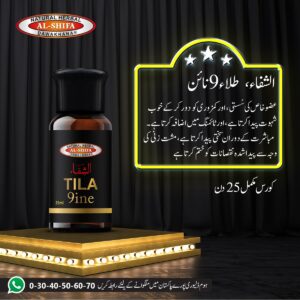
الشفاء طلاء 9 نائن۔
₨ 6,500
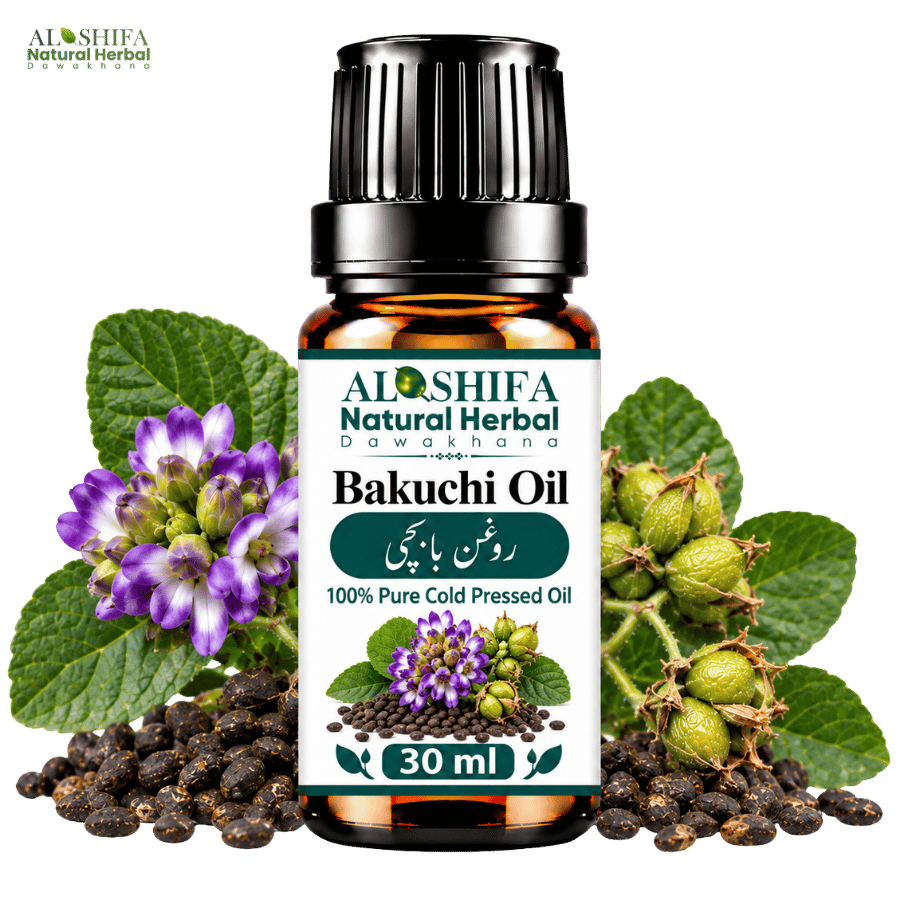
Bakuchi Oil / Babchi Seed Oil is a specialised botanical oil associated with the seeds of Psoralea corylifolia (Cullen corylifolium). Naturally associated with compounds such as Bakuchiol and Psoralen, it is used in carefully formulated skin-care, hair-care, scalp-care and herbal cosmetic preparations.
Al Shifa Bakuchi Oil is carefully selected with attention to its botanical identity, seed source, characteristic oil quality, clean handling, protective packaging and responsible usage guidance.
Key Features:
Usage: Use in an appropriately formulated and suitably diluted topical preparation. Patch test before wider application and avoid unnecessary UV or strong sun exposure on treated skin.
Important Note: Bakuchi Oil is not the same as pure Bakuchiol and should not be treated as an ordinary mild carrier oil. Babchi-derived preparations may contain photoreactive compounds such as Psoralen, which can increase sensitivity to ultraviolet light. Avoid deliberate strong sun exposure after application, and do not use concentrated Bakuchi Oil as an unsupervised treatment for vitiligo or other pigmentation disorders.
Bakuchi Oil / Babchi Seed Oil is a distinctive botanical oil associated with the seeds of Psoralea corylifolia L., also classified botanically as Cullen corylifolium (L.) Medik. The plant is widely known as Babchi, Bakuchi or Babachi and has a long history of use in traditional herbal and Ayurvedic preparations, particularly those associated with skin and scalp care.
Babchi seeds contain several biologically active natural constituents, including bakuchiol and furocoumarin compounds such as psoralen. These constituents make correct product identification and responsible topical use particularly important.
Bakuchi Oil should not automatically be treated like an ordinary mild carrier oil. Depending on how it is produced, its concentration and chemical composition can vary considerably.
At Al Shifa Natural Herbal Dawakhana, Bakuchi Oil is selected with attention to its botanical identity, seed source, characteristic oil quality, clean handling, protective packaging, responsible usage information and proper storage.
Bakuchi Oil is an oil-based product derived from or prepared using the seeds of the Babchi plant.
The plant is botanically identified as:
Psoralea corylifolia L.
An accepted botanical classification also used for this species is:
Cullen corylifolium (L.) Medik.
The plant belongs to the Fabaceae family.
Babchi produces small seeds that contain naturally occurring compounds responsible for much of the plant’s traditional and scientific interest.
Product Name: Bakuchi Oil / Babchi Seed Oil – روغنِ بابچی / بابچی آئل / باکوچی آئل
English Name: Bakuchi Oil / Babchi Seed Oil
Urdu Name: روغنِ بابچی / بابچی آئل / باکوچی آئل / بابچی کا تیل
Roman Name: Roghan Babchi / Babchi Oil / Bakuchi Oil
Scientific Name: Psoralea corylifolia L.
Accepted Botanical Name: Cullen corylifolium (L.) Medik.
Plant Family: Fabaceae
Plant Part: Seeds
Oil Type: Botanical Seed-Derived Oil / Herbal Oil – Exact Composition Depends on Production Method
Appearance: Yellowish to Brownish Oily Liquid, Depending on Extraction and Processing
Aroma: Characteristic, Herbal & Seed-Like
Primary Applications: Specialised Skin-Care Formulations, Scalp Care, Hair-Care Formulations, Herbal Oils & Cosmetic Formulations
Product Type: Concentrated Botanical / Herbal Seed Oil
Babchi is a herbaceous plant known particularly for its small seeds.
The seeds have a long history of use in traditional herbal systems and contain several naturally occurring compounds that have attracted scientific attention.
Important constituents associated with Babchi include:
The exact composition varies according to plant material, extraction process and final product.
The term Bakuchi Oil can be used for products prepared through different processes.
These may include:
Therefore:
The Name “Bakuchi Oil” Does Not Always Describe One Standardised Composition
The production method should be considered when determining concentration, usage and safety.
Babchi Oil should not automatically be classified as a conventional steam-distilled essential oil.
It is more accurately treated according to the actual seed-derived or herbal-oil preparation supplied.
Therefore:
Bakuchi Oil ≠ Conventional Essential Oil
The product’s extraction method and composition should be confirmed where exact classification is required.
Babchi has a particularly important history in traditional skin-related herbal preparations.
Its seeds and seed-derived preparations have been used in traditional systems in formulations associated with:
Historical use, however, does not automatically establish modern clinical effectiveness or make concentrated Babchi preparations suitable for unrestricted self-treatment.
Bakuchi Oil may be incorporated into carefully formulated skin-care products.
Potential cosmetic applications include:
Because Babchi contains biologically active compounds, concentration and sun exposure require more attention than with ordinary carrier oils.
Oils such as Sunflower Oil or Sweet Almond Oil are commonly used as broad carrier oils.
Bakuchi Oil has a different botanical profile.
Therefore:
Bakuchi Oil ≠ Ordinary Mild Carrier Oil
Direct application of concentrated Babchi-derived material over large areas should not be assumed appropriate.
Babchi is naturally associated with psoralen, a furocoumarin compound.
Psoralen can interact with ultraviolet light and is one of the major reasons Babchi-derived preparations require particular caution with sun exposure.
This is especially important when the exact psoralen content of a product is unknown.
Babchi-derived products containing photoreactive furocoumarins can increase skin sensitivity to ultraviolet light.
Inappropriate exposure can contribute to:
Therefore:
Bakuchi Oil + UV Exposure Requires Particular Caution
Avoid assuming that a natural herbal oil is automatically safe for unrestricted daytime sun exposure.
Babchi has a long history of association with traditional preparations used for vitiligo and loss of skin pigmentation.
Psoralen-related compounds have also played a role in medically supervised photochemotherapy.
However:
Traditional Babchi Use ≠ Safe Home Treatment for Vitiligo
Vitiligo is a medical condition requiring proper diagnosis and treatment planning.
Applying concentrated Babchi preparations followed by sunlight exposure without professional supervision can cause significant skin injury.
Babchi’s traditional association with pigmentation should not be interpreted as instructions to apply the oil and deliberately expose the skin to strong sunlight.
Uncontrolled ultraviolet exposure can cause phototoxic reactions.
Therefore:
Do Not Use Unsupervised Sun Exposure as a Home Treatment with Concentrated Bakuchi Oil
Bakuchiol is a naturally occurring compound associated with Babchi seeds.
It has received considerable attention in modern cosmetic research, particularly in products marketed for mature skin, uneven appearance and cosmetic skin conditioning.
However:
Bakuchi Oil ≠ Pure Bakuchiol
Bakuchi Oil is a complex botanical preparation that may contain multiple natural constituents.
Pure or standardised cosmetic Bakuchiol is a specifically isolated or purified ingredient with a defined concentration.
This distinction is particularly important.
Bakuchiol and Psoralen are different chemical compounds.
Bakuchiol has become popular as a cosmetic ingredient.
Psoralen is a photoreactive furocoumarin associated with increased ultraviolet sensitivity.
Therefore:
Bakuchiol ≠ Psoralen
and
Bakuchiol Product ≠ Automatically the Same as Babchi Seed Oil
Bakuchiol is frequently marketed as a “natural retinol alternative.”
This is a convenient cosmetic comparison, but Bakuchiol and Retinol are chemically different substances.
Therefore:
Bakuchiol ≠ Retinol
They have different chemical structures and should not be presented as the same ingredient.
Retinol is a Vitamin A-related compound widely used in cosmetic skin-care products.
Bakuchi Oil is a complex botanical seed-derived preparation.
Therefore:
Bakuchi Oil ≠ Retinol
Any similarities discussed in cosmetic research involving isolated Bakuchiol should not automatically be transferred to crude or non-standardised Bakuchi Oil.
Bakuchi-derived ingredients may be incorporated into cosmetic products designed for mature-looking skin.
Depending on the exact formulation, they may be used in products intended to improve:
However:
Cosmetic Skin Improvement ≠ Reversal of Biological Ageing
Bakuchi Oil should not be promoted as permanently removing wrinkles or reversing ageing.
Babchi is strongly associated with pigmentation-related traditional use.
However, pigmentation disorders can have many different causes.
Bakuchi Oil should not be presented as a general treatment for:
These conditions require appropriate evaluation.
Bakuchi-derived cosmetic ingredients have received interest in modern skin-care formulations.
However:
Bakuchi Oil ≠ Proven Acne Treatment
Acne can have multiple causes and may require appropriate medical treatment.
Babchi and individual compounds isolated from the plant have been investigated experimentally for antimicrobial activity.
However, research involving:
should not automatically be interpreted as proof that ordinary Bakuchi Oil treats infections.
Therefore:
Laboratory Antimicrobial Activity ≠ Treatment for Infection
Babchi-derived compounds have also received scientific interest for antioxidant activity.
However:
Experimental Antioxidant Activity ≠ Clinical Treatment
Laboratory findings should not be converted into unsupported claims that Bakuchi Oil treats or prevents disease.
Individual Babchi compounds have been investigated for activity involving inflammatory pathways.
However:
Experimental Activity ≠ Medical Treatment
Bakuchi Oil should not replace appropriate treatment for inflammatory skin diseases.
Bakuchi Oil may be incorporated into specialised herbal hair-care formulations.
It may be included in:
Its use should be based on the concentration and complete formulation.
Babchi-derived oil may be incorporated into selected scalp formulations.
However, because of its active botanical profile, direct concentrated application should not automatically be assumed appropriate.
A well-designed scalp formulation may combine a suitable amount with compatible carrier oils.
Babchi may appear in traditional herbal hair products, but:
Bakuchi Oil ≠ Proven Hair-Regrowth Treatment
Hair loss can result from nutritional, hormonal, genetic, inflammatory and other causes.
Cosmetic scalp conditioning should not be confused with proven treatment for alopecia.
Whole Babchi seeds contain numerous plant constituents.
Bakuchi Oil represents only a specific oil-based or extracted preparation.
Therefore:
Whole Babchi Seeds ≠ Bakuchi Oil
Research involving powdered seeds or whole-seed preparations should not automatically be applied to the oil.
Babchi extracts can be produced using different solvents and extraction systems.
These extracts may concentrate different compounds.
Therefore:
Babchi Extract ≠ Bakuchi Oil
The extraction process matters when interpreting composition and research.
Modern cosmetic serums may contain a measured concentration of purified Bakuchiol.
Such products are different from crude or traditional Bakuchi Oil.
Therefore:
Bakuchi Oil ≠ Standardised Bakuchiol Serum
A percentage stated for pure Bakuchiol cannot automatically be used as a dosage guideline for Bakuchi Oil.
Bakuchi Oil should not automatically be treated like Lavender, Tea Tree or Eucalyptus Essential Oil.
Its botanical chemistry, extraction and usage considerations differ.
Therefore:
Bakuchi Oil ≠ Conventional Aromatherapy Essential Oil
Sweet Almond Oil is a widely used fixed carrier oil obtained from Prunus dulcis kernels.
Bakuchi Oil is derived from or prepared using Psoralea corylifolia / Cullen corylifolium seeds.
Therefore:
Bakuchi Oil ≠ Sweet Almond Oil
Black Seed Oil comes from Nigella sativa.
Bakuchi Oil comes from Psoralea corylifolia / Cullen corylifolium.
Therefore:
Bakuchi Oil ≠ Black Seed Oil
The two should not be confused despite both being dark botanical seed products in some preparations.
A fragrance oil is designed primarily for scent.
A genuine Babchi-derived product is associated with actual botanical material.
Therefore:
Bakuchi Oil ≠ Fragrance Oil
Bakuchi products can vary significantly in concentration.
A product containing a small amount of Babchi extract in a carrier base is different from:
Therefore, safe usage cannot be determined from the product name alone.
Before wider topical use, test a small amount of the properly formulated product on a limited area.
Observe for:
Discontinue use if a significant unwanted reaction occurs.
Do not apply concentrated Bakuchi Oil to:
unless the finished product is specifically intended and professionally formulated for that purpose.
Keep Bakuchi Oil away from:
If accidental contact occurs, rinse appropriately.
Because Babchi contains biologically active compounds and concentrated preparations can vary substantially, routine therapeutic use during pregnancy and breastfeeding should be avoided unless specifically advised by an appropriately qualified professional.
This is especially important for concentrated or poorly characterised products.
Concentrated Babchi preparations are not appropriate for casual unsupervised use on children.
Products intended for children should be specifically formulated for their age and application.
Keep concentrated Bakuchi Oil securely out of reach of children.
Botanical products can cause individual sensitivity.
People with highly reactive skin should use additional caution.
Discontinue use if significant irritation, swelling, blistering or persistent redness develops.
Bakuchi Oil should not automatically be treated as an edible seed oil.
Products supplied for cosmetic or external use should not be swallowed.
Babchi contains biologically active compounds, and internal therapeutic use requires appropriate professional supervision.
Therefore:
External-Use Bakuchi Oil ≠ Edible Carrier Oil
At Al Shifa Natural Herbal Dawakhana, Bakuchi Oil is selected with attention to:
Botanical Identity – Associated with Psoralea corylifolia / Cullen corylifolium.
Plant Part Identity – Derived from or prepared using Babchi seeds.
Characteristic Herbal Profile – Recognisable Babchi seed-derived character.
Responsible Skin-Care Use – Intended for carefully formulated topical applications.
Bakuchiol Awareness – Clear distinction between complete Bakuchi Oil and isolated Bakuchiol.
Psoralen Awareness – Recognition of potential photosensitivity associated with Babchi-derived preparations.
Clear Product Distinction – Not confused with conventional essential oils or ordinary carrier oils.
Clean Handling – Carefully handled during packing.
Protective Packaging – Helps maintain product quality.
Responsible Information – No exaggerated vitiligo, pigmentation, acne, anti-ageing or hair-growth claims.
Proper Storage – Protected from unnecessary heat, light and contamination.
Al Shifa Natural Herbal Dawakhana, established in 1999, supplies natural oils, herbs and specialised botanical materials throughout Pakistan.
Our focus for Bakuchi Oil includes:
For Skin Care: Use only in an appropriately formulated and suitably diluted topical product. Avoid assuming that concentrated Bakuchi Oil is suitable for unrestricted direct application.
For Facial Care: Incorporate a suitable amount into a carefully designed cosmetic formulation. Patch test before broader use.
For Hair & Scalp Care: Add an appropriate amount to a compatible carrier-oil or hair-care formulation according to the concentration of the actual product.
For Herbal Oil Blends: Combine with suitable carrier oils according to the intended formulation and product strength.
Sun Exposure: Because Babchi-derived preparations may contain photoreactive compounds, avoid unnecessary ultraviolet exposure on treated skin unless the exact formulation has been specifically assessed for such use.
Bakuchi Oil / Babchi Seed Oil is a biologically active botanical oil associated with the seeds of Psoralea corylifolia, also classified as Cullen corylifolium. Its composition and concentration depend on the extraction or preparation method, and it should not automatically be treated as an ordinary carrier oil.
Important distinctions include:
Store Bakuchi Oil in a cool, clean and dry place.
For best quality:
Bakuchi Oil / Babchi Seed Oil – روغنِ بابچی / بابچی آئل / باکوچی آئل is a specialised botanical oil associated with the seeds of Psoralea corylifolia / Cullen corylifolium.
It is particularly recognised for its connection with natural compounds such as Bakuchiol and Psoralen, making it an important but carefully used ingredient in specialised skin-care, scalp-care, hair-care and herbal cosmetic formulations.
Correct identification and responsible use are especially important because Bakuchi Oil is different from pure Bakuchiol serum, ordinary carrier oils, conventional essential oils and Black Seed Oil, and Babchi-derived preparations can present photosensitivity concerns.
Customers searching for Bakuchi Oil, Babchi Oil, Babchi Seed Oil, Roghan Babchi, Psoralea corylifolia Oil, Cullen corylifolium Oil, Bakuchi Oil for Skin, Babchi Oil for Hair, Babchi Oil for Scalp, Bakuchi Herbal Oil, Bakuchi Oil Pakistan, Babchi Oil Pakistan, Bakuchi Oil Lahore, Bakuchi Oil price in Pakistan, Babchi Oil price in Pakistan, buy Bakuchi Oil Pakistan or Bakuchi Oil online Pakistan can choose Al Shifa Natural Herbal Dawakhana for carefully selected botanical quality.
Since 1999, Al Shifa Natural Herbal Dawakhana has focused on supplying natural oils and botanical materials with attention to correct identity, quality selection, clean handling, responsible usage information, protective packaging and proper storage.
Product Name: Bakuchi Oil / Babchi Seed Oil – روغنِ بابچی / بابچی آئل / باکوچی آئل
English Name: Bakuchi Oil / Babchi Seed Oil
Urdu Name: روغنِ بابچی / بابچی آئل / باکوچی آئل / بابچی کا تیل
Roman Name: Roghan Babchi / Babchi Oil / Bakuchi Oil
Scientific Name: Psoralea corylifolia L.
Accepted Botanical Name: Cullen corylifolium (L.) Medik.
Plant Family: Fabaceae
Plant Part: Seeds
Oil Type: Botanical Seed-Derived Oil / Herbal Oil – Exact Composition Depends on Production Method
Appearance: Yellowish to Brownish Oily Liquid, Depending on Extraction and Processing
Aroma: Characteristic, Herbal & Seed-Like
Primary Applications: Specialised Skin-Care Formulations, Scalp Care, Hair-Care Formulations, Herbal Oils & Cosmetic Formulations
Product Type: Concentrated Botanical / Herbal Seed Oil
Important Note: Bakuchi Oil is associated with biologically active compounds including Bakuchiol and photoreactive furocoumarins such as Psoralen. Bakuchiol is not the same as Psoralen or Retinol, and complete Bakuchi Oil is not equivalent to purified Bakuchiol. Because Babchi-derived preparations may increase sensitivity to ultraviolet light, concentrated or poorly characterised products require careful topical use and should not be combined with deliberate strong sun exposure as an unsupervised home treatment.
روغنِ بابچی بابچی کے بیجوں سے حاصل ہونے والا خاص روغن ہے۔ بابچی چھوٹے، گہرے بھورے سے سیاہی مائل خوشبودار بیجوں والی مشہور جڑی بوٹی ہے جسے حکمت میں خاص طور پر جلد کی دیکھ بھال اور جلدی ادویات میں استعمال کیا جاتا ہے۔
بابچی کے بیجوں میں باکوچیول، پسورالین، آئسوپسورالین اور کئی دوسرے قدرتی اجزا پائے جاتے ہیں۔ انہی اجزا کی وجہ سے بابچی عام مالش والے بیجوں سے الگ پہچان رکھتی ہے۔
روغنِ بابچی عام جسمانی روغنوں کی طرح زیادہ مقدار میں لگانے والا روغن نہیں ہے۔ یہ جلد پر تیز محسوس ہو سکتا ہے، اس لیے کم مقدار سے استعمال شروع کیا جاتا ہے۔ خاص طور پر دھوپ میں جانے سے پہلے اسے احتیاط سے استعمال کرنا ضروری ہے۔
اردو: روغنِ بابچی، بابچی آئل، باکوچی آئل، بابچی کا تیل
پنجابی: بابچی دا تیل، روغن بابچی
ہندی: باوچی تیل، بابچی تیل، باکچی تیل
فارسی: روغن بابچی
عربی: زیت بابچی
انگریزی نام: باکوچی آئل، بابچی سیڈ آئل
سائنسی نام: پسورالیا کوریلی فولیا
دوسرا سائنسی نام: کولیا کوریلی فولیا
خاندان: فیبی ایسی
استعمال ہونے والا حصہ: بیج
بابچی ایک جڑی بوٹی ہے جس کے بیج چھوٹے، قدرے لمبوترے، بھورے سے سیاہی مائل اور خاص بو والے ہوتے ہیں۔
یہ بیج حکمت اور برصغیر کے جڑی بوٹیوں کے طریقہ استعمال میں خاص اہمیت رکھتے ہیں۔
بابچی کی سب سے نمایاں پہچان جلد کی دیکھ بھال میں اس کا استعمال ہے۔
اس کے بیجوں کو مختلف حکیمی ادویات، سفوف اور بیرونی روغنوں میں شامل کیا جاتا ہے۔
اچھی بابچی کے بیج:
روغن کے معیار کے لیے اچھی حالت والے بیجوں کا انتخاب بہت اہم ہے۔
روغنِ بابچی بابچی کے صاف بیجوں سے حاصل کیا جاتا ہے۔
بازار میں بابچی کے نام سے مختلف قسم کے روغن ملتے ہیں۔ ایک قسم بیجوں سے نکالا گیا روغنی حصہ ہوتا ہے، جبکہ دوسری قسم میں بابچی کے بیج یا ان کا جوہر کسی دوسرے بنیادی روغن میں شامل کیا جاتا ہے۔
اسی لیے روغنِ بابچی خریدتے وقت اس کی اصل ساخت اور استعمال کی ہدایات دیکھنا ضروری ہے۔
پاکستانی اور برصغیر کی معروف حکیمی کتبِ مفردات میں بابچی کا مزاج گرم اور خشک بیان کیا جاتا ہے۔
بابچی کی گرم اور خشک خاصیت کی وجہ سے اسے حکمت میں خاص طور پر جلدی ادویات میں اہم مقام حاصل ہے۔
بابچی کے بیج اور ان سے تیار روغن جلد پر تیز محسوس ہو سکتے ہیں، اس لیے زیادہ مقدار کے بجائے کم مقدار استعمال کی جاتی ہے۔
بابچی حکمت میں جلد کے لیے مشہور جڑی بوٹی ہے۔
اس کے بیج بیرونی حکیمی ادویات میں خاص طور پر جلد کی رنگت، سفید دھبوں اور دوسری جلدی کیفیتوں کے لیے استعمال کیے جاتے ہیں۔
اس کا روغن بھی جلد کی دیکھ بھال اور حکیمی روغنی ادویات میں شامل کیا جاتا ہے۔
بابچی کی تیز خاصیت کی وجہ سے جلدی بیماری کے لیے اس کا طبی استعمال معالج سے پوچھ کر کریں۔
روغنِ بابچی کے اہم استعمال یہ ہیں:
روغنِ بابچی بنیادی طور پر جلد کی دیکھ بھال کے لیے مشہور ہے۔
اسے عام جسمانی مالش والے روغن کی طرح پورے جسم پر زیادہ مقدار میں نہیں لگایا جاتا۔
جلد کے مخصوص حصے پر کم مقدار سے استعمال شروع کیا جاتا ہے۔
پہلی بار استعمال سے پہلے جلد کے چھوٹے حصے پر بہت تھوڑی مقدار آزمائیں۔
بابچی کے بیج جلد کی رنگت کی دیکھ بھال میں طویل عرصے سے استعمال کیے جاتے ہیں۔
اسی وجہ سے بابچی کے بیج اور ان سے حاصل روغن جلد پر لگانے والی حکیمی ادویات میں شامل کیے جاتے ہیں۔
جلد کی رنگت میں واضح تبدیلی یا جلدی بیماری موجود ہو تو روغنِ بابچی کا طبی استعمال معالج سے پوچھ کر کریں۔
بابچی خاص طور پر برص یا سفید داغ کی بیماری کے حکیمی استعمال کے حوالے سے مشہور جڑی بوٹی ہے۔
اس کے بیجوں میں پائے جانے والے پسورالین اور آئسوپسورالین روشنی کے لیے جلد کی حساسیت بڑھاتے ہیں۔ اسی خاصیت کی وجہ سے بابچی کا استعمال سفید دھبوں کے لیے اپنی طرف سے شروع نہیں کرنا چاہیے۔
برص یا سفید داغ کی بیماری میں روغنِ بابچی کا استعمال معالج سے پوچھ کر کریں۔
زیادہ مقدار یا غلط طریقے سے استعمال جلد میں شدید سرخی، جلن یا چھالے پیدا کر سکتا ہے۔
روغنِ بابچی کے استعمال میں دھوپ کی احتیاط بہت اہم ہے۔
بابچی میں موجود پسورالین جیسے اجزا جلد کو سورج کی روشنی کے لیے زیادہ حساس بناتے ہیں۔
روغن لگانے کے فوراً بعد تیز دھوپ میں نہ جائیں۔
اگر بابچی کو سفید دھبوں کی بیماری کے کسی باقاعدہ طریقے میں روشنی کے ساتھ استعمال کیا جا رہا ہو تو وقت، مقدار اور روشنی کا دورانیہ معالج سے پوچھ کر رکھیں۔
اپنی طرف سے روغن لگا کر دھوپ میں بیٹھنا جلد کے لیے نقصان دہ ہو سکتا ہے۔
بابچی والے روغن کو خشک اور کھردری جلد کی دیکھ بھال میں کم مقدار میں استعمال کیا جاتا ہے۔
اسے بادام، ناریل، جوجوبا یا تل کے روغن کے ساتھ ملا کر لگایا جاتا ہے۔
حساس جلد پر مقدار بہت کم رکھیں۔
روغنِ بابچی خاص طور پر جلد کے محدود حصوں پر استعمال کے لیے بہتر رہتا ہے۔
بہت زیادہ مقدار پورے جسم پر لگانے کے بجائے پہلے چھوٹے حصے سے آغاز کریں۔
اس طرح جلد کی برداشت بھی دیکھی جاتی ہے۔
روغنِ بابچی چہرے پر احتیاط سے استعمال کیا جاتا ہے۔
خالص یا تیز بابچی روغن کو اپنی طرف سے پورے چہرے پر نہ لگائیں۔
اگر چہرے کی کسی جلدی بیماری کے لیے استعمال کرنا ہو تو معالج سے پوچھ کر کریں۔
آنکھوں، ہونٹوں اور ناک کے اندر نہ لگائیں۔
بابچی کے روغن کی کم مقدار بالوں کے دوسرے روغنوں میں شامل کی جاتی ہے۔
اسے ناریل، بادام یا تل کے روغن کے ساتھ ملا کر سر کی جلد پر استعمال کیا جاتا ہے۔
سر کی جلد پر زخم، شدید خارش یا جلد کے امراض ہوں تو طبی استعمال معالج سے پوچھ کر کریں۔
بابچی کو بالوں کے لیے بنائے جانے والے جڑی بوٹیوں کے روغن میں بھی شامل کیا جاتا ہے۔
اسے اکیلا زیادہ مقدار میں استعمال کرنے کے بجائے دوسرے بنیادی روغن کے ساتھ کم مقدار میں ملایا جاتا ہے۔
بالوں کے روغن میں بابچی کی اصل اہمیت سر کی جلد کی دیکھ بھال ہے۔
بابچی کے بیجوں میں کئی خاص قدرتی اجزا پائے جاتے ہیں، جن میں نمایاں یہ ہیں:
بابچی کے مختلف اجزا اس کی جلدی استعمال والی خاص پہچان بناتے ہیں۔
باکوچیول بابچی کے بیجوں میں پایا جانے والا مشہور قدرتی جز ہے۔
یہ جلد کی دیکھ بھال میں خاص اہمیت رکھتا ہے اور اسی وجہ سے جدید جلدی کریم، سیرم اور روغن میں بھی استعمال کیا جاتا ہے۔
باکوچیول کو خالص بابچی کے روغن کے برابر نہیں سمجھنا چاہیے۔ خالص الگ کیا گیا باکوچیول اور پورا روغنِ بابچی دو الگ چیزیں ہیں۔
پسورالین بابچی کے بیجوں کا بہت اہم قدرتی جز ہے۔
یہ جلد کو سورج اور دوسری تیز روشنی کے لیے زیادہ حساس بناتا ہے۔
اسی وجہ سے بابچی کے روغن میں دھوپ سے احتیاط بہت ضروری ہے۔
آئسوپسورالین بھی بابچی کے بیجوں میں پایا جانے والا خاص جز ہے۔
یہ بھی روشنی کے ساتھ جلد کی حساسیت سے جڑا ہوا ہے۔
بابچی کو سفید دھبوں کی بیماری میں استعمال کرتے وقت اسی وجہ سے معالج کی ہدایت اہم ہے۔
روغنِ بابچی اور باکوچیول ایک چیز نہیں ہیں۔
روغنِ بابچی میں بابچی کے بیجوں کے کئی قدرتی اجزا موجود ہوتے ہیں۔
باکوچیول بابچی میں پایا جانے والا ایک الگ قدرتی جز ہے۔
جلد کے لیے بنے خالص باکوچیول والے سیرم کو پورا بابچی آئل نہیں سمجھنا چاہیے۔
بابچی کے بیج مکمل جڑی بوٹی کا حصہ ہیں جبکہ روغنِ بابچی ان بیجوں سے حاصل یا ان کے ذریعے تیار کیا گیا روغن ہوتا ہے۔
بیجوں کی مقدار اور روغن کی مقدار ایک جیسی نہیں رکھی جاتی۔
خاص طور پر جلدی بیماری کے لیے دونوں کا استعمال معالج سے پوچھ کر کریں۔
بازار میں بابچی کے نام سے ایسا روغن بھی ملتا ہے جس میں بابچی کو تل، ناریل، سرسوں یا دوسرے بنیادی روغن میں شامل کیا گیا ہوتا ہے۔
یہ خالص بیجوں سے حاصل روغن سے الگ ہوتا ہے۔
خریدتے وقت بوتل پر درج اجزا دیکھنا ضروری ہے تاکہ اصل نوعیت واضح رہے۔
روغنِ بابچی کی رنگت اس کی تیاری کے طریقے کے مطابق زرد، سنہری، بھوری یا گہری بھوری نظر آ سکتی ہے۔
اگر بابچی کسی دوسرے بنیادی روغن میں شامل ہو تو رنگت بنیادی روغن کے مطابق بھی نظر آتی ہے۔
اصل بابچی والے روغن میں جڑی بوٹی اور بیجوں جیسی خاص بو محسوس ہوتی ہے۔
بہت تیز مصنوعی خوشبو اصل بابچی کے روغن کی ضروری پہچان نہیں ہے۔
اچھے بابچی کے بیج: صاف، بھرے ہوئے اور اچھی حالت والے بیجوں کو اہمیت دی جاتی ہے۔
درست شناخت: اصل بابچی یعنی پسورالیا کوریلی فولیا کے بیج ہونے چاہئیں۔
قدرتی رنگت: روغن کی اپنی اصل زرد سے بھوری رنگت کو دیکھا جاتا ہے۔
قدرتی بو: بابچی کے بیجوں جیسی خاص بو ہونی چاہیے۔
صاف حالت: پانی، گرد اور غیر ضروری ذرات سے پاک ہونا چاہیے۔
تازگی: خراب اور باسی بو والا روغن استعمال نہیں کرنا چاہیے۔
اصل ساخت: یہ واضح ہونا چاہیے کہ روغن بیجوں سے حاصل ہوا ہے یا بابچی کو کسی دوسرے روغن میں شامل کر کے تیار کیا گیا ہے۔
غیر ضروری ملاوٹ سے پاک: مصنوعی رنگ، مصنوعی خوشبو اور کم معیار کے روغن کی ملاوٹ سے پاک ہونا چاہیے۔
پہلی بار روغنِ بابچی استعمال کرتے وقت جلد کے بہت چھوٹے حصے پر تھوڑی مقدار آزمائیں۔
اگر روغن تیز ہو تو اسے بادام، ناریل، جوجوبا یا تل کے روغن کے ساتھ ملا کر استعمال کریں۔
آنکھوں، ہونٹوں، ناک کے اندر اور کھلی جلد پر نہ لگائیں۔
استعمال کے بعد تیز دھوپ سے جلد کو محفوظ رکھیں۔
روغنِ بابچی میں زیادہ مقدار بہتر نہیں ہوتی۔
کم مقدار سے آغاز کریں اور جلد کی برداشت دیکھیں۔
جلد کی بیماری کے لیے مقدار اور استعمال کا دورانیہ معالج سے پوچھ کر رکھیں۔
دھوپ سے حساسیت کی وجہ سے روغنِ بابچی کو جلد کی روزمرہ دیکھ بھال میں رات کے وقت استعمال کرنا زیادہ آسان رہتا ہے۔
صبح جلد کو صاف کریں اور دھوپ میں جانے سے پہلے جلد کو محفوظ رکھیں۔
حساس جلد پر بابچی بہت احتیاط سے استعمال کریں۔
پہلی بار بہت تھوڑی مقدار چھوٹے حصے پر آزمائیں۔
جلن، سرخی، خارش یا چھالے محسوس ہوں تو استعمال بند کریں۔
بابچی حکمت میں جلدی ادویات میں خاص مقام رکھتی ہے۔
برص، سفید داغ، ایگزیما، سورائسس یا دوسرے جلدی امراض میں اپنی طرف سے زیادہ مقدار استعمال نہ کریں۔
ان بیماریوں کے لیے روغنِ بابچی کا طبی استعمال معالج سے پوچھ کر کریں۔
روغنِ بابچی کھلے زخم، کٹی ہوئی جلد یا تازہ چھالوں پر نہ لگائیں۔
جلد مکمل ٹھیک ہونے کے بعد بھی طبی استعمال کی ضرورت ہو تو معالج سے پوچھ کر کریں۔
روغنِ بابچی بنیادی طور پر بیرونی استعمال کے لیے رکھا جاتا ہے۔
اسے اپنی طرف سے نہ پئیں۔
بابچی کے بیجوں یا روغن کو کسی بیماری کے لیے اندرونی طور پر استعمال کرنا ہو تو معالج سے پوچھ کر کریں۔
حمل کے دوران روغنِ بابچی کا طبی استعمال اپنی طرف سے نہ کریں۔
جلد کی کسی بیماری کے لیے استعمال معالج سے پوچھ کر کریں۔
دودھ پلانے کے دوران روغنِ بابچی کا طبی استعمال معالج سے پوچھ کر کریں۔
چھاتی اور بچے کے منہ سے لگنے والی جلد پر اسے نہ لگائیں۔
بچوں کی جلد نازک ہوتی ہے، اس لیے روغنِ بابچی اپنی طرف سے استعمال نہ کریں۔
بچوں میں جلدی بیماری کے لیے اس کا استعمال معالج سے پوچھ کر کریں۔
روغنِ بابچی بابچی کے بیجوں سے حاصل یا بابچی کے بیجوں کے ذریعے تیار کیا جانے والا خاص روغن ہے۔
بابچی کے بیجوں میں باکوچیول، پسورالین اور آئسوپسورالین جیسے قدرتی اجزا پائے جاتے ہیں۔
اس کا استعمال خاص طور پر جلد کی دیکھ بھال اور حکیمی جلدی ادویات میں مشہور ہے۔
بابچی میں موجود پسورالین جیسے اجزا جلد کو دھوپ کے لیے زیادہ حساس بناتے ہیں، اس لیے روغن لگانے کے بعد تیز دھوپ سے احتیاط ضروری ہے۔
برص یا سفید داغ کی بیماری میں بابچی کا استعمال معروف ہے، لیکن مقدار، وقت اور روشنی کے ساتھ استعمال معالج سے پوچھ کر کریں۔
خالص روغن کو زیادہ مقدار میں استعمال نہ کریں اور پہلی بار جلد کے چھوٹے حصے پر آزمائیں۔
الشفاء نیچرل ہربل دواخانہ میں روغنِ بابچی کے لیے درج ذیل باتوں کو اہمیت دی جاتی ہے:
اچھے بابچی کے بیج: صاف، خشک، بھرے ہوئے اور اچھی حالت والے بیجوں کو اہمیت دی جاتی ہے۔
درست شناخت: اصل بابچی کے بیجوں کی درست شناخت کو اہمیت دی جاتی ہے۔
قدرتی بو: بابچی کے بیجوں کی اپنی خاص بو کو اہمیت دی جاتی ہے۔
قدرتی رنگت: روغن کی اصل زرد سے بھوری رنگت کو دیکھا جاتا ہے۔
صاف روغن: پانی، گرد اور غیر ضروری ذرات سے پاک روغن کو اہمیت دی جاتی ہے۔
تازگی: خراب، باسی یا غیر معمولی بو والے روغن سے بچا جاتا ہے۔
اصل ساخت: بیجوں سے حاصل روغن اور بابچی ملا بنیادی روغن کی درست شناخت کو اہمیت دی جاتی ہے۔
غیر ضروری ملاوٹ سے پاک: مصنوعی رنگ، مصنوعی خوشبو اور کم معیار کے دوسرے روغن کی ملاوٹ سے پاک ہونے کو اہمیت دی جاتی ہے۔
الشفاء نیچرل ہربل دواخانہ سنہ ۱۹۹۹ سے قدرتی جڑی بوٹیوں، بیجوں اور ان سے حاصل ہونے والے روغنوں کی سپلائی کر رہا ہے۔
ہم روغنِ بابچی میں اصل بابچی کے بیج، درست شناخت، صاف حالت، قدرتی رنگت، خاص بو، تازگی اور غیر ضروری ملاوٹ سے پاک ہونے کو اہمیت دیتے ہیں۔
اچھے روغنِ بابچی کی پہچان اصل بیجوں، قدرتی رنگت، خاص بو، صاف حالت، تازگی اور اچھی پیکنگ سے کی جاتی ہے۔
روغنِ بابچی کو ٹھنڈی، خشک اور روشنی سے محفوظ جگہ پر کسی جار میں اچھی طرح پیک کر کے رکھیں۔
اسے تیز دھوپ، پانی اور زیادہ گرمی سے بچائیں۔
استعمال کے بعد ڈھکن اچھی طرح بند کریں۔
اسے بچوں کی پہنچ سے دور رکھیں۔
روغنِ بابچی عام جسمانی روغن کے مقابلے میں جلد پر زیادہ تیز ہو سکتا ہے۔
پہلی بار بہت تھوڑی مقدار جلد کے چھوٹے حصے پر آزمائیں۔
روغن لگانے کے بعد جلد کو تیز دھوپ سے محفوظ رکھیں۔
اپنی طرف سے بابچی لگا کر دھوپ میں نہ بیٹھیں۔
آنکھوں، ہونٹوں، ناک کے اندر، کھلے زخم اور تازہ چھالوں پر نہ لگائیں۔
جلن، شدید سرخی، خارش یا چھالے بننے پر استعمال بند کریں۔
برص، سفید داغ یا دوسرے جلدی امراض کے لیے طبی استعمال معالج سے پوچھ کر کریں۔
اندرونی استعمال، حمل، دودھ پلانے اور بچوں میں استعمال بھی معالج سے پوچھ کر کریں۔
روغنِ بابچی بابچی کے بیجوں سے حاصل ہونے والا جلد کی دیکھ بھال کا خاص روغن ہے۔
بابچی پاکستانی اور برصغیر کی حکمت میں جلدی استعمال کے لیے معروف جڑی بوٹی ہے اور اس کا مزاج گرم اور خشک بیان کیا جاتا ہے۔
اس کے بیجوں میں باکوچیول، پسورالین اور آئسوپسورالین جیسے اہم قدرتی اجزا پائے جاتے ہیں۔
بابچی کی سب سے اہم احتیاط دھوپ ہے، کیونکہ اس کے مخصوص اجزا جلد کو روشنی کے لیے زیادہ حساس بناتے ہیں۔
اس کا استعمال جلد کی دیکھ بھال، سفید دھبوں والی جلد کی حکیمی دیکھ بھال، سر کی جلد اور مخصوص بیرونی روغنی ادویات میں کیا جاتا ہے۔
اچھے روغنِ بابچی کی پہچان اصل بابچی کے بیج، درست شناخت، قدرتی رنگت، خاص بو، صاف حالت، تازگی اور غیر ضروری ملاوٹ سے پاک ہونے سے کی جاتی ہے۔