
Parsiaonshan, Maidenhair Fern
Contact for Price

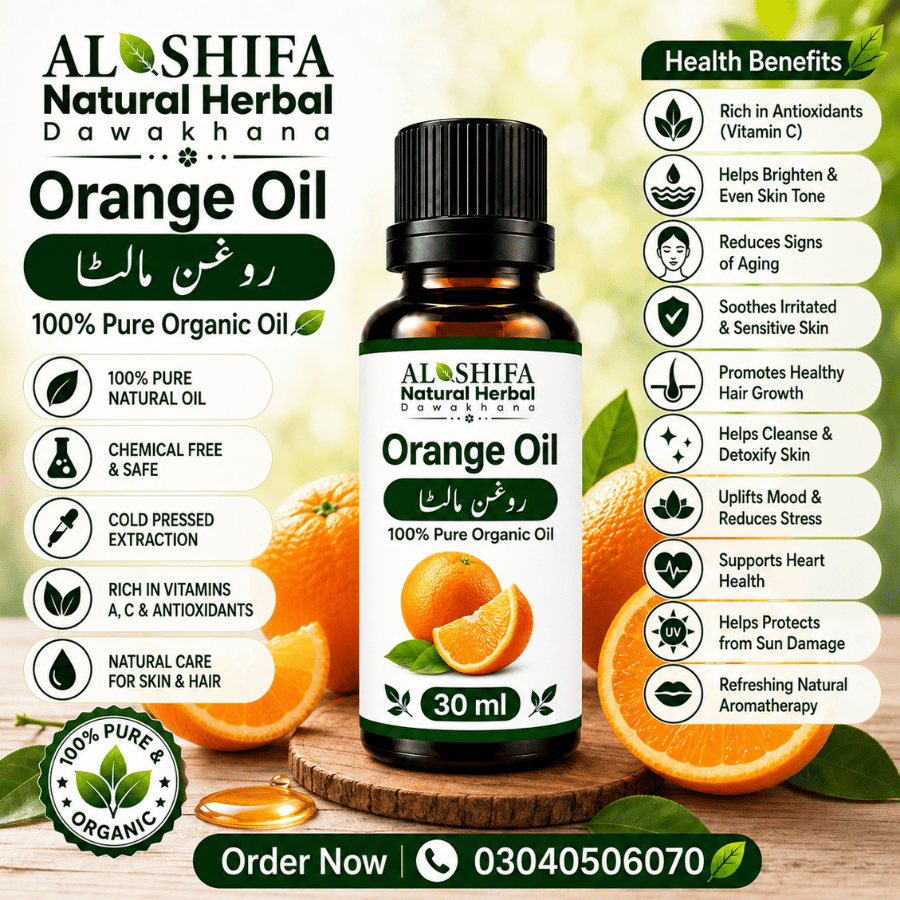
Orange Oil, known as Roghan Malta is an aromatic essential oil commonly obtained from the peel of Sweet Orange (Citrus sinensis). Naturally rich in citrus aroma and limonene, it is widely used in aromatherapy, fragrance, diluted massage blends, skin-care, hair-care and cosmetic formulations.
Al Shifa Orange Oil is carefully supplied with attention to its aromatic identity, characteristic citrus aroma, clean handling, suitable packaging and responsible storage.
Key Features:
Usage: Use in aromatherapy or dilute appropriately with a suitable carrier oil before topical application. Patch test before wider skin use and avoid contact with the eyes.
Important Note: Orange Oil is a concentrated essential oil, not Orange Seed Oil or a carrier oil. Avoid undiluted widespread skin application and casual internal use. Protect from heat, direct light and air because oxidized citrus oil may increase skin-sensitivity risk.
Orange Oil, known in Urdu as روغن مالٹا, is an aromatic essential oil commonly obtained from the outer peel of Sweet Orange (Citrus sinensis (L.) Osbeck), a citrus fruit tree belonging to the Rutaceae family.
The fresh orange peel contains small natural oil glands. When the peel is appropriately processed, particularly through expression or cold pressing, these glands release a strongly aromatic volatile oil known as Sweet Orange Essential Oil.
Orange Oil is widely used in aromatherapy, perfumery, soaps, cosmetic formulations, massage blends, room-fragrance products and selected skin-care preparations because of its fresh citrus aroma and naturally high limonene content.
Unlike fixed carrier oils such as Almond Oil, Grape Seed Oil or Cucumber Seed Oil, Orange Essential Oil is a concentrated volatile oil and should normally be diluted appropriately before direct skin application.
At Al Shifa Natural Herbal Dawakhana, Orange Oil is supplied with attention to its aromatic identity, characteristic citrus aroma, clean handling, suitable packaging and responsible storage.
Orange Oil is primarily obtained from the coloured outer peel of ripe oranges.
The botanical source commonly associated with Sweet Orange Oil is:
Citrus sinensis (L.) Osbeck
Tiny oil glands are naturally present in the peel.
When these glands are mechanically expressed or otherwise appropriately processed, they release the fragrant essential oil.
Product Name: Orange Oil
English Name: Sweet Orange Essential Oil / Orange Peel Oil
Urdu Name: روغن مالٹا
Roman Name: Roghan Malta / Malta Oil
Scientific Name: Citrus sinensis (L.) Osbeck
Plant Family: Rutaceae
Plant Part: Fruit Peel
Oil Type: Essential Oil / Volatile Oil
Product Type: Aromatic Botanical Oil / Cosmetic & Aromatherapy Raw Material
This distinction is particularly important.
Orange Peel Oil:
An aromatic volatile essential oil obtained mainly from the outer peel.
Orange Seed Oil:
A fixed oil obtained from orange seeds.
These oils differ significantly in composition, aroma and use.
Therefore:
Orange Peel Essential Oil ≠ Orange Seed Carrier Oil
A product simply labelled “Orange Oil” should ideally identify which type of oil it contains.
Not all orange oils come from the same citrus species.
Sweet Orange:
Commonly identified as Citrus sinensis.
Bitter Orange:
Commonly identified as Citrus aurantium.
Different citrus species and plant parts can produce different aromatic oils.
Therefore:
Sweet Orange Oil ≠ Bitter Orange Oil
Botanical identity matters.
Several essential oils can come from citrus plants.
Orange Peel Oil:
Obtained from the fruit peel.
Neroli Oil:
Obtained from the flowers of bitter orange.
Petitgrain Oil:
Obtained mainly from leaves and young twigs.
These products have different aromatic profiles and compositions.
Therefore:
Orange Peel Oil ≠ Neroli Oil ≠ Petitgrain Oil
Natural Sweet Orange Essential Oil may generally have:
Colour and aroma can vary depending on:
Natural variation does not automatically indicate poor quality.
Orange Peel Oil belongs to the category of volatile essential oils.
Essential oils contain concentrated aromatic compounds that evaporate more readily than fixed oils.
Therefore:
Orange Essential Oil ≠ Carrier Oil
This means it should not generally be treated like Almond Oil, Coconut Oil, Grape Seed Oil or other fixed oils when applied to the skin.
The major natural aromatic component of Sweet Orange Oil is usually limonene.
Limonene contributes strongly to the characteristic citrus aroma.
Orange Oil may also contain smaller amounts of other naturally occurring volatile compounds.
However, exact chemical percentages vary between oils.
Therefore:
Naturally Rich in Limonene ≠ Guaranteed Limonene Percentage
A precise percentage requires product-specific laboratory analysis.
Orange Essential Oil is widely used in aromatherapy because of its fresh and pleasant citrus aroma.
It may be incorporated into:
Its aroma is often described as:
A pleasant aroma can contribute to a relaxing environment, but this should not be confused with medical treatment.
Orange Oil is commonly used in aromatic routines intended to create a pleasant or calming atmosphere.
However:
Pleasant Aroma ≠ Treatment of Anxiety or Depression
Mental health conditions require appropriate professional assessment and care.
Aromatherapy can be used as a wellness practice without being presented as a replacement for medical treatment.
Properly diluted Orange Essential Oil may be included in selected cosmetic preparations.
It can be found in:
Because it is concentrated, direct undiluted application is generally not recommended.
Orange Essential Oil should normally be diluted in a suitable carrier oil or properly formulated cosmetic base before widespread skin use.
Suitable carrier oils may include:
The appropriate dilution depends on the intended formulation and user.
Facial skin can be more sensitive than many body areas.
If Orange Oil is used in facial formulations, it should be:
People with sensitive or reactive skin should exercise additional caution.
Orange Oil is sometimes promoted online for acne because of laboratory observations involving certain aromatic compounds.
However:
Laboratory Activity ≠ Acne Treatment
Acne is a medical skin condition with several possible contributing factors.
Orange Essential Oil should not replace appropriate acne treatment.
Citrus oils are sometimes marketed as “skin whitening” or “skin brightening” ingredients.
Orange Oil may contribute fragrance and cosmetic sensory properties to skin-care products, but it should not be presented as a guaranteed treatment for:
These concerns can have several causes and may require appropriate dermatological care.
Properly diluted Orange Oil may be incorporated into:
Its main role is generally aromatic and cosmetic.
Orange Essential Oil is sometimes promoted as a hair-growth ingredient.
However:
Scalp Massage & Aromatic Care ≠ Proven Hair Regrowth
Hair loss can have genetic, hormonal, nutritional and medical causes.
Orange Oil should not be presented as a treatment for baldness or significant hair loss.
Orange Oil may be added in appropriate dilution to a carrier oil for aromatic massage.
This can combine:
Orange Essential Oil itself is not a substitute for a carrier oil.
The fresh citrus aroma of Orange Oil makes it useful in:
Its citrus top note is widely used in fragrance compositions.
Orange Oil may also be incorporated into appropriately formulated household fragrance and cleaning products.
However:
Fresh Citrus Aroma ≠ Proven Disinfection
A product smelling strongly of orange should not automatically be considered a disinfectant or sterilizing agent.
Orange essential oil and limonene-containing preparations have been investigated in laboratory studies for antimicrobial activity.
However:
Laboratory Antimicrobial Activity ≠ Treatment of Infection
Orange Oil should not be used as a substitute for appropriate treatment of bacterial, fungal or viral infections.
Citrus-derived compounds have also been investigated for antioxidant activity.
However:
Antioxidant Activity ≠ Prevention or Treatment of Disease
Laboratory findings should not be converted into claims that Orange Oil treats chronic diseases.
Citrus oils are often discussed in relation to sunlight sensitivity.
This subject requires an important distinction.
Certain expressed citrus oils, particularly some oils rich in furanocoumarins, can cause phototoxic skin reactions when exposed to ultraviolet light after application.
Sweet Orange Oil (Citrus sinensis) is generally considered to have a much lower phototoxic concern than strongly phototoxic citrus oils such as expressed Bergamot Oil.
However, citrus oils should not automatically be treated as identical.
Product identity, processing and formulation matter.
When the exact oil composition is uncertain, sensible sun-exposure caution after topical use is appropriate.
Orange Oil should not be confused with Bergamot Oil.
Bergamot Oil is obtained from:
Citrus bergamia
Expressed Bergamot Oil is particularly known for phototoxicity concerns related to furanocoumarins unless these compounds have been appropriately removed.
Therefore:
Sweet Orange Oil ≠ Bergamot Oil
Safety information should not be transferred blindly from one citrus oil to another.
Sweet Orange, Lemon, Lime, Grapefruit and Bergamot are different citrus sources.
Their essential oils differ in:
Therefore:
Orange Oil ≠ Lemon Oil ≠ Lime Oil ≠ Grapefruit Oil ≠ Bergamot Oil
Orange peel essential oil is commonly obtained through mechanical expression, often described commercially as cold pressing.
This process releases oil from glands in the peel.
However, the exact extraction method should only be claimed for a specific product when confirmed.
Some citrus oils may be produced through:
Extraction method can influence:
Therefore, expressed and distilled citrus oils should not automatically be treated as chemically identical.
A commercial product labelled “Orange Fragrance Oil” may contain synthetic or blended fragrance ingredients designed to reproduce an orange-like aroma.
It is not automatically genuine Orange Essential Oil.
Therefore:
Orange Essential Oil ≠ Orange Fragrance Oil
Product identity should be confirmed.
Orange Essential Oil is particularly sensitive to oxidation because of its high natural limonene content.
Repeated exposure to:
can gradually change its chemical composition.
Oxidized citrus oils may become more likely to irritate or sensitize the skin.
Proper storage is therefore especially important.
Quality should be reconsidered if the oil develops:
Old or poorly stored oxidized oil should not be used on the skin simply because some aroma remains.
Essential oils can cause irritation or allergic reactions in sensitive individuals.
Before wider topical use:
Avoid application to broken or severely irritated skin.
Orange Essential Oil should be kept away from:
If accidental eye exposure occurs, appropriate first-aid or medical guidance may be required.
Orange Essential Oil is highly concentrated.
The fact that oranges are edible does not mean that concentrated Orange Essential Oil should be casually swallowed.
Food flavouring products, professionally formulated preparations and concentrated essential oils are not automatically interchangeable.
Therefore:
Eating Orange Fruit ≠ Swallowing Orange Essential Oil
Do not use cosmetic or aromatherapy-grade Orange Oil internally unless the specific product is explicitly suitable for that purpose and appropriate professional guidance is available.
During pregnancy and breastfeeding, concentrated essential oils should be used carefully.
External aromatic use at appropriate dilution differs from internal medicinal use.
Avoid unnecessary concentrated exposure and seek professional guidance where appropriate.
Essential oils require additional caution around young children.
Keep Orange Oil:
Use child-appropriate formulations rather than applying concentrated essential oil directly.
Concentrated essential oils may not be suitable for every animal.
When using Orange Oil in a diffuser or household fragrance product:
Pet-specific safety advice should be obtained when necessary.
At Al Shifa Natural Herbal Dawakhana, Orange Oil is supplied with attention to:
Oil Identity – Aromatic orange-derived essential oil.
Botanical Association – Sweet Orange / Citrus sinensis.
Characteristic Aroma – Fresh natural citrus fragrance.
Oil Condition – Attention to aroma and signs of deterioration.
Clean Handling – Carefully handled during filling and packing.
Suitable Packaging – Packed to help protect the concentrated aromatic oil.
Responsible Storage – Protected from unnecessary exposure to heat, light and air.
Al Shifa Natural Herbal Dawakhana, established in 1999, supplies herbal oils and natural raw materials throughout Pakistan.
Our focus for Orange Oil includes:
Orange Essential Oil may be used in:
For topical use, dilute appropriately in a suitable carrier oil or properly formulated cosmetic base.
Patch test before wider skin application.
Avoid direct eye contact and application to sensitive mucous membranes.
Do not casually swallow concentrated Orange Essential Oil.
Orange Oil is a concentrated aromatic essential oil commonly obtained from the peel of Citrus sinensis and should not be confused with Orange Seed Oil, Orange Fragrance Oil or other citrus essential oils.
Important distinctions include:
Store Orange Oil in a cool, dry and dark place in a tightly closed bottle.
For best quality:
Proper storage is especially important because limonene-rich citrus essential oils can oxidize over time.
Orange Oil, known as Roghan Malta / روغن مالٹا, is an aromatic essential oil commonly obtained from the peel of Sweet Orange (Citrus sinensis).
It is widely used in aromatherapy, perfumery, massage blends, soaps, skin-care products, hair-care formulations and household fragrance preparations because of its fresh citrus aroma and naturally occurring limonene.
Customers searching for Orange Oil, Sweet Orange Oil, Orange Essential Oil, Orange Peel Oil, Roghan Malta, Malta Oil, Citrus Sinensis Oil, Citrus Sinensis Peel Oil, Orange Oil benefits, Orange Oil uses, Orange Oil for skin, Orange Oil for hair, Orange Oil for massage, Orange Oil for aromatherapy, Orange Oil for diffuser, Orange Oil for soap, pure Orange Oil, natural Orange Essential Oil, original Orange Oil, Orange Oil Pakistan, Orange Oil Lahore, Orange Oil price in Pakistan, Roghan Malta price in Pakistan, buy Orange Oil Pakistan, buy Roghan Malta Pakistan or Orange Oil online Pakistan can choose Al Shifa Natural Herbal Dawakhana for carefully handled aromatic oil.
Since 1999, Al Shifa Natural Herbal Dawakhana has focused on supplying herbal oils and natural raw materials with attention to product identity, natural quality, clean handling, suitable packaging, responsible storage and clear product information.
Product Name: Orange Oil
English Name: Sweet Orange Essential Oil / Orange Peel Oil
Urdu Name: روغن مالٹا
Roman Name: Roghan Malta / Malta Oil
Scientific Name: Citrus sinensis (L.) Osbeck
Plant Part: Fruit Peel
Oil Type: Essential Oil / Volatile Oil
Product Type: Aromatic Botanical Oil / Cosmetic & Aromatherapy Raw Material
Traditional & Cosmetic Use: Aromatherapy, fragrance, diluted massage blends, soaps, skin-care and hair-care formulations
Important Note: Orange Oil is a concentrated peel-derived essential oil, not a fixed carrier oil or Orange Seed Oil. It should normally be diluted before topical use, protected from oxidation and kept away from the eyes and sensitive tissues. Concentrated cosmetic or aromatherapy-grade Orange Oil should not be casually swallowed.
روغن مالٹا مالٹے کے تازہ چھلکے سے حاصل کیا جانے والا خوشبودار نباتاتی روغن ہے۔ اس کی خاص پہچان تازہ مالٹے جیسی تیز، میٹھی اور خوشگوار خوشبو ہے۔ اسے خوشبو، جلد کی دیکھ بھال، بالوں کی دیکھ بھال، جسمانی مالش اور خوشبودار مصنوعات میں استعمال کیا جاتا ہے۔
روغن مالٹا میں لیمونین سب سے نمایاں قدرتی جز ہوتا ہے۔ اس کے ساتھ مائرسین، الفا پائینین، لینالول اور کئی خوشبودار اجزاء بھی کم مقدار میں پائے جا سکتے ہیں۔
یہ عام گاڑھے نباتاتی روغنوں سے مختلف ہوتا ہے۔ روغن مالٹا بہت خوشبودار اور طاقت والا روغن ہے، اس لیے اسے جلد پر لگانے سے پہلے مناسب نباتاتی روغن میں ملا کر استعمال کرنا بہتر ہوتا ہے۔
بیرونی استعمال میں اسے خشک جلد کی بیماری، جلد کے کھردرے پن کی بیماری، سر کی جلد کی خشکی کی بیماری اور بالوں کی خشکی کی بیماری میں استعمال ہونے والے روغنی مرکبات میں شامل کیا جا سکتا ہے۔
الشفاء نیچرل ہربل دواخانہ میں روغن مالٹا منتخب کرتے وقت درست نباتاتی ذریعہ، تازہ مالٹے جیسی قدرتی خوشبو، صاف روغن، قدرتی رنگت، تازگی اور غیر ضروری ملاوٹ سے پاک ہونے کو اہمیت دی جاتی ہے۔
روغن مالٹا عام طور پر مالٹے کے بیرونی رنگ دار چھلکے سے حاصل کیا جاتا ہے۔
مالٹے کے چھلکے میں بہت چھوٹے روغنی خانے موجود ہوتے ہیں جن میں خوشبودار روغن پایا جاتا ہے۔
چھلکے کو دبانے یا مناسب طریقے سے اس کا روغن حاصل کرنے پر خوشبودار روغن الگ ہو جاتا ہے۔
اس کی عام پہچان یہ ہے:
نام: روغن مالٹا
معروف نام: مالٹے کے چھلکے کا روغن
اصل پودا: مالٹا
نباتاتی نام: سٹرس سائنینسس
خاندان: روٹیسی خاندان
استعمال ہونے والا حصہ: پھل کا بیرونی رنگ دار چھلکا
قسم: خوشبودار نباتاتی روغن
عام شکل: ہلکا خوشبودار روغن
عام رنگت: ہلکی زرد سے نارنجی مائل
بو: تیز، میٹھی اور تازہ مالٹے جیسی
خاص پہچان: تازہ مالٹے جیسی نمایاں خوشبو اور لیمونین کی زیادہ مقدار
مالٹے کے چھلکے کا بیرونی رنگ دار حصہ خوشبودار روغن سے بھرپور ہوتا ہے۔
چھلکے کو موڑنے یا دبانے پر بہت باریک روغنی قطرے نکلتے دکھائی دے سکتے ہیں۔
یہی قدرتی روغنی حصہ روغن مالٹا حاصل کرنے کے لیے استعمال کیا جاتا ہے۔
مالٹا ایک معروف پھل دار درخت ہے۔
اس کی اہم نشانیاں یہ ہیں:
پاکستان میں رائج حکیمی اور غذائی کتابوں میں مالٹے کو عموماً سرد و تر اثر رکھنے والے پھلوں میں شمار کیا جاتا ہے۔
مالٹے کے چھلکے اور اس سے حاصل ہونے والے خوشبودار روغن کی نوعیت پھل کے رس سے الگ ہوتی ہے۔
پرانے پاکستانی حکیمی ماخذ میں روغن مالٹا کا الگ اور یکساں درجہ ہر جگہ واضح طور پر درج نہیں ہوتا، اس لیے روغن کے لیے غیر مستند درجہ مقرر نہیں کیا جاتا۔
اس کے استعمال میں مالٹے کے چھلکے کی خوشبودار نوعیت اور روغن کی طاقت کو سامنے رکھا جاتا ہے۔
اچھا روغن مالٹا منتخب کرتے وقت درج ذیل باتیں دیکھی جاتی ہیں:
روغن مالٹا میں کئی خوشبودار قدرتی اجزاء پائے جاتے ہیں، جن میں اہم ہیں:
لیمونین روغن مالٹا کا سب سے نمایاں قدرتی جز ہے۔
یہی جز مالٹے کے چھلکے کی خاص خوشبو میں اہم کردار ادا کرتا ہے۔
لیمونین پر جراثیم، جسمانی سوزش اور قدرتی حفاظتی عمل کے حوالے سے تحقیق کی گئی ہے۔
لیمونین ہوا اور روشنی کے اثر سے آہستہ آہستہ بدل سکتا ہے، اس لیے پرانا یا خراب بو والا روغن جلد پر حساسیت پیدا کرنے کا امکان بڑھا سکتا ہے۔
لینالول خوشبودار نباتاتی روغنوں میں پایا جانے والا قدرتی جز ہے۔
یہ روغن مالٹا میں کم مقدار میں موجود ہو سکتا ہے اور اس کی مجموعی خوشبو میں حصہ لیتا ہے۔
روغن مالٹا کو جلد کے امراض کے لیے استعمال ہونے والی بیرونی نباتاتی مصنوعات میں مناسب مقدار میں شامل کیا جا سکتا ہے۔
اسے خالص حالت میں زیادہ مقدار میں جلد پر نہ لگائیں۔
اگر جلد کے امراض کے ساتھ شدید سوجن، پیپ، کھلے زخم یا پھیلتی ہوئی سرخی موجود ہو تو معالج سے چیک کروائیں۔
روغن مالٹا کو خشک جلد کی بیماری میں کسی نرم نباتاتی روغن کے ساتھ ملا کر استعمال کیا جا سکتا ہے۔
روغن بادام، روغن جوجوبا یا کسی مناسب ہلکے روغن میں اس کی بہت کم مقدار شامل کی جا سکتی ہے۔
خالص روغن مالٹا خشک یا حساس جلد پر براہِ راست لگانے سے جلن پیدا کر سکتا ہے۔
روغن مالٹا کو جلد کے کھردرے پن کی بیماری میں استعمال ہونے والے روغنی مرکبات میں شامل کیا جا سکتا ہے۔
اسے اکیلا لگانے کے بجائے کسی نرم نباتاتی روغن کے ساتھ ملا کر استعمال کریں۔
اگر جلد کی خارش کی بیماری خشکی کی وجہ سے ہو تو روغن مالٹا کو مناسب نباتاتی روغن میں بہت کم مقدار میں ملا کر استعمال کیا جا سکتا ہے۔
اگر خارش بڑھ جائے، جلن ہو یا سرخی پیدا ہو تو استعمال بند کریں۔
شدید جلد کی خارش کی بیماری میں معالج سے چیک کروائیں۔
اگر جلد کی حساسیت کی بیماری موجود ہو تو روغن مالٹا استعمال کرتے وقت خاص احتیاط کریں۔
استعمال سے پہلے مناسب نباتاتی روغن میں ملا کر جلد کے چھوٹے حصے پر آزمائیں۔
اگر خارش، سرخی، جلن یا سوجن پیدا ہو تو استعمال نہ کریں۔
روغن مالٹا کے خوشبودار اجزاء حساس افراد میں جلد کی الرجی کی بیماری پیدا کر سکتے ہیں۔
علامات میں شامل ہو سکتی ہیں:
ایسی علامات پیدا ہوں تو استعمال بند کریں اور معالج سے چیک کروائیں۔
اگر جلد کے دانوں کی بیماری موجود ہو تو روغن مالٹا چہرے پر خالص حالت میں استعمال نہ کریں۔
اسے بہت کم مقدار میں مناسب نباتاتی روغن کے ساتھ ملا کر استعمال کیا جا سکتا ہے۔
اگر دانے یا جلن بڑھیں تو استعمال روک دیں۔
ایگزیما کی بیماری میں جلد بہت حساس ہو سکتی ہے۔
روغن مالٹا خوشبودار اور طاقت والا روغن ہے، اس لیے فعال ایگزیما کی بیماری، کھلے زخم یا رسنے والی جلد پر خود سے استعمال نہ کریں۔
ایگزیما کی بیماری میں معالج سے مناسب طریقہ معلوم کریں۔
روغن مالٹا اور اس کے اہم جز لیمونین پر جراثیم کے خلاف اثرات کے حوالے سے تحقیق کی گئی ہے۔
اسے جلد کے جراثیمی امراض کے لیے استعمال ہونے والی بیرونی مصنوعات میں مناسب مقدار میں شامل کیا جا سکتا ہے۔
کھلے، گہرے یا پیپ والے زخم پر خود سے روغن نہ لگائیں۔
روغن مالٹا کو بالوں کے امراض کے لیے استعمال ہونے والے نباتاتی روغنی مرکبات میں خوشبو اور سر کی جلد کی دیکھ بھال کے لیے شامل کیا جاتا ہے۔
اسے کسی نرم نباتاتی روغن میں ملا کر سر کی جلد پر استعمال کیا جا سکتا ہے۔
روغن مالٹا کو بالوں کی خشکی کی بیماری میں روغن ناریل، روغن بادام، روغن جوجوبا یا کسی مناسب نباتاتی روغن کے ساتھ ملا کر استعمال کیا جا سکتا ہے۔
یہ بالوں کو خوشبودار رکھنے اور روغنی دیکھ بھال میں مدد دیتا ہے۔
اگر سر کی جلد کی خشکی کی بیماری موجود ہو تو روغن مالٹا کو کسی مناسب نباتاتی روغن میں بہت کم مقدار میں ملا کر استعمال کیا جا سکتا ہے۔
خالص روغن براہِ راست سر کی جلد پر لگانے سے جلن ہو سکتی ہے۔
روغن مالٹا کو سر کی پپڑی کی بیماری کے لیے استعمال ہونے والے روغنی مرکبات میں شامل کیا جا سکتا ہے۔
اگر سر کی پپڑی کی بیماری کے ساتھ شدید خارش، سرخی، زخم یا پیپ موجود ہو تو معالج سے چیک کروائیں۔
روغن مالٹا کو بال جھڑنے کی بیماری کے لیے استعمال ہونے والے مالش کے مرکبات میں خوشبودار جز کے طور پر شامل کیا جا سکتا ہے۔
اگر بال جھڑنے کی بیماری اچانک شروع ہو، بہت زیادہ ہو یا سر پر خالی جگہیں بن رہی ہوں تو معالج سے چیک کروائیں۔
روغن مالٹا کو جسمانی مالش میں خالص حالت میں استعمال نہیں کرنا چاہیے۔
اسے مناسب نباتاتی روغن میں تھوڑی مقدار میں ملا کر استعمال کیا جاتا ہے۔
اس کی خوشبو مالش کے دوران تازگی اور خوشگوار احساس پیدا کرتی ہے۔
روغن مالٹا کو پٹھوں کے امراض کے لیے استعمال ہونے والے مالش کے روغنی مرکبات میں خوشبودار جز کے طور پر شامل کیا جا سکتا ہے۔
اسے مناسب نباتاتی روغن میں ملا کر استعمال کریں۔
اگر پٹھوں کے امراض کے ساتھ شدید درد، سوجن یا مسلسل کمزوری ہو تو معالج سے چیک کروائیں۔
روغن مالٹا کو جوڑوں کے امراض کے لیے استعمال ہونے والے مالش کے مرکبات میں شامل کیا جا سکتا ہے۔
اس کا بنیادی استعمال خوشبودار مالش کے روغن کے طور پر ہوتا ہے۔
اگر جوڑوں کے امراض کے ساتھ شدید سوجن، سرخی یا حرکت میں بہت زیادہ مشکل ہو تو معالج سے چیک کروائیں۔
روغن مالٹا کی تازہ اور میٹھی خوشبو گھر اور ذاتی خوشبودار استعمال میں مشہور ہے۔
اس کی خوشبو ماحول میں تازگی کا احساس پیدا کر سکتی ہے۔
اسے خوشبودار چراغ یا مناسب خوشبو پھیلانے والے آلے میں بہت کم مقدار میں استعمال کیا جا سکتا ہے۔
روغن مالٹا کی خوشبو پر ذہنی سکون اور آرام کے حوالے سے تحقیق کی گئی ہے۔
اگر بے چینی کی بیماری موجود ہو تو خوشبو کو صرف آرام دہ ماحول بنانے کے لیے استعمال کیا جا سکتا ہے۔
اگر بے چینی کی بیماری روزمرہ زندگی، نیند یا کام کو مسلسل متاثر کرے تو معالج سے چیک کروائیں۔
روغن مالٹا کی نرم خوشبو آرام دہ ماحول بنانے میں مدد دے سکتی ہے۔
اگر نیند کے امراض مسلسل موجود رہیں تو معالج سے چیک کروائیں۔
روغن کو نیند کی ادویات کے بدلے استعمال نہ کریں اور ادویات خود سے بند نہ کریں۔
روغن مالٹا اور مالٹے کا رس ایک جیسی چیزیں نہیں ہیں۔
مالٹے کا رس پھل کے اندرونی رسیلے حصے سے حاصل ہوتا ہے۔
روغن مالٹا زیادہ تر بیرونی رنگ دار چھلکے سے حاصل کیا جاتا ہے۔
رس میں پانی، قدرتی شکر اور غذائی اجزاء نمایاں ہوتے ہیں جبکہ روغن میں خوشبودار اجزاء، خاص طور پر لیمونین، زیادہ نمایاں ہوتے ہیں۔
مالٹے کے چھلکے میں خوشبودار روغنی خانے موجود ہوتے ہیں۔
روغن مالٹا اسی چھلکے کے خوشبودار حصے سے حاصل کیا جاتا ہے۔
مکمل چھلکے میں ریشہ اور کئی اجزاء موجود ہوتے ہیں جبکہ روغن میں زیادہ تر خوشبودار روغنی اجزاء نمایاں ہوتے ہیں۔
دونوں ترش پھلوں کے چھلکوں سے حاصل ہونے والے خوشبودار روغن ہیں۔
دونوں میں لیمونین نمایاں ہو سکتا ہے لیکن ان کی خوشبو الگ ہوتی ہے۔
روغن مالٹا کی خوشبو زیادہ میٹھی اور نرم محسوس ہوتی ہے جبکہ روغن لیموں کی خوشبو زیادہ تیز اور ترش محسوس ہو سکتی ہے۔
روغن مالٹا اور روغن بادام کی نوعیت الگ ہے۔
روغن مالٹا خوشبودار اور طاقت والا روغن ہے۔
روغن بادام نرم نباتاتی روغن ہے جسے جلد اور مالش کے لیے براہِ راست مناسب مقدار میں استعمال کیا جا سکتا ہے۔
روغن مالٹا کو روغن بادام میں تھوڑی مقدار میں ملا کر استعمال کیا جا سکتا ہے۔
ترش پھلوں کے خوشبودار روغنوں کے ساتھ دھوپ کے حوالے سے احتیاط اہم سمجھی جاتی ہے۔
روغن مالٹا حاصل کرنے کے طریقے کے مطابق جلد پر دھوپ کے اثر کا امکان الگ ہو سکتا ہے۔
احتیاط کے طور پر روغن مالٹا لگا کر فوراً تیز دھوپ میں جانے سے گریز کریں، خاص طور پر اگر روغن کی مکمل معلومات دستیاب نہ ہوں۔
روغن مالٹا آنکھوں کے اندر یا آنکھوں کے بہت قریب استعمال نہ کریں۔
اگر روغن غلطی سے آنکھ میں چلا جائے تو آنکھ کو رگڑیں نہیں۔
اگر جلن برقرار رہے یا آنکھوں کے امراض کی علامات پیدا ہوں تو معالج سے چیک کروائیں۔
روغن مالٹا کو منہ، ناک یا جسم کے حساس اندرونی حصوں پر خالص حالت میں استعمال نہ کریں۔
اس کے خوشبودار اجزاء جلن پیدا کر سکتے ہیں۔
بازار میں ملنے والا ہر روغن مالٹا پینے کے لیے مناسب نہیں ہوتا۔
خوشبودار روغن بہت طاقت والا ہوتا ہے۔
صرف بیرونی استعمال کے لیے فروخت ہونے والا روغن نہ پئیں۔
کسی بیماری کے لیے روغن مالٹا کے قطرے خود سے پینا مناسب نہیں۔
مالٹے یا ترش پھلوں سے حساس افراد میں الرجی کی بیماری پیدا ہو سکتی ہے۔
روغن استعمال کرنے کے بعد:
پیدا ہو تو استعمال بند کریں اور معالج سے چیک کروائیں۔
روغن مالٹا پہلی بار استعمال کرنے سے پہلے اسے مناسب نباتاتی روغن میں ملا کر جلد کے چھوٹے حصے پر آزمائیں۔
اگر ایک دن کے اندر خارش، جلن، سرخی یا سوجن پیدا ہو تو پورے حصے پر استعمال نہ کریں۔
خواتین روغن مالٹا کو جلد، بالوں اور جسمانی مالش کے خوشبودار مرکبات میں استعمال کر سکتی ہیں۔
اگر جلد کی حساسیت کی بیماری یا الرجی کی بیماری موجود ہو تو پہلے چھوٹے حصے پر آزمائیں۔
حمل کے دوران روغن مالٹا کو خالص حالت میں جلد پر بڑی مقدار میں استعمال نہ کریں۔
خوشبو یا بیرونی استعمال کے لیے بہت کم مقدار مناسب نباتاتی روغن میں ملا کر استعمال کی جا سکتی ہے۔
کسی بیماری کے لیے اندرونی استعمال خود سے نہ کریں۔
دودھ پلانے والی خواتین روغن مالٹا کو چھاتی اور بچے کے منہ کے قریب نہ لگائیں۔
اگر جسم پر استعمال کیا جائے تو مناسب نباتاتی روغن میں ملا کر کم مقدار استعمال کریں۔
بچے کو دودھ پلانے سے پہلے چھاتی کی جلد صاف رکھیں۔
بچوں کی جلد زیادہ حساس ہو سکتی ہے۔
روغن مالٹا بچوں کی جلد پر خالص حالت میں نہ لگائیں۔
اگر بچے کو جلد کے امراض، الرجی کی بیماری یا سانس کے امراض موجود ہوں تو استعمال سے پہلے معالج سے مناسب طریقہ معلوم کریں۔
تیز خوشبو حساس افراد میں کھانسی یا سانس کی بے آرامی پیدا کر سکتی ہے۔
اگر سانس کے امراض موجود ہوں تو روغن مالٹا کی خوشبو بہت زیادہ مقدار میں نہ پھیلائیں۔
اگر سانس لینے میں دشواری پیدا ہو تو استعمال بند کریں اور معالج سے چیک کروائیں۔
اگر جگر کی بیماری موجود ہو تو روغن مالٹا کا اندرونی استعمال خود سے نہ کریں۔
جگر کی بیماری کی ادویات خود سے بند یا تبدیل نہ کریں۔
اگر گردوں کی بیماری موجود ہو تو روغن مالٹا کا اندرونی طبی استعمال خود سے نہ کریں۔
گردوں کی بیماری کی ادویات خود سے بند یا تبدیل نہ کریں۔
روغن مالٹا بہت خوشبودار اور طاقت والا روغن ہے۔
زیادہ مقدار یا خالص حالت میں جلد پر استعمال کرنے سے:
پیدا ہو سکتی ہے۔
اس لیے بیرونی استعمال میں اسے مناسب نباتاتی روغن میں ملا کر استعمال کریں۔
روغن مالٹا ہوا، گرمی اور روشنی سے متاثر ہو سکتا ہے۔
پرانے روغن کی خوشبو بدل سکتی ہے اور جلد پر حساسیت کا امکان بڑھ سکتا ہے۔
اگر روغن میں تیز باسی، کھٹی یا غیر معمولی بو پیدا ہو جائے تو استعمال نہ کریں۔
روغن مالٹا کو مناسب مقدار میں بیرونی دیکھ بھال کے لیے استعمال کیا جا سکتا ہے۔
اگر اسے جلد کے امراض، بالوں کے امراض، سر کی جلد کی خشکی کی بیماری یا جلد کی خارش کی بیماری کے لیے مسلسل استعمال کرنے کے باوجود مسئلہ برقرار رہے تو معالج سے چیک کروائیں۔
روغن مالٹا طاقت والا خوشبودار روغن ہے۔
بیرونی استعمال کے لیے اسے مناسب مقدار میں ان نباتاتی روغنوں کے ساتھ ملایا جا سکتا ہے:
جلد کی نوعیت کے مطابق مناسب روغن منتخب کریں۔
جلد کے لیے:
روغن مالٹا کو خالص حالت میں بڑی مقدار میں نہ لگائیں۔ چند قطرے مناسب نباتاتی روغن میں ملا کر استعمال کریں۔
جسمانی مالش کے لیے:
کسی نرم نباتاتی روغن میں بہت کم مقدار شامل کرکے ہلکی مالش کریں۔
بالوں کے لیے:
روغن ناریل، روغن بادام یا کسی مناسب نباتاتی روغن میں چند قطرے ملا کر سر کی جلد اور بالوں پر لگائیں۔
خوشبو کے لیے:
مناسب خوشبو پھیلانے والے آلے میں بہت کم مقدار استعمال کریں اور کمرے میں ہوا کی آمدورفت رکھیں۔
اندرونی استعمال:
کسی بیماری کے لیے خود سے روغن مالٹا نہ پئیں۔
روغن مالٹا مالٹے کے بیرونی رنگ دار چھلکے سے حاصل ہونے والا طاقت والا خوشبودار نباتاتی روغن ہے۔
اس میں لیمونین سب سے نمایاں قدرتی جز ہوتا