بوریٹی آئل
Original price was: ₨ 8,500.₨ 8,000Current price is: ₨ 8,000.
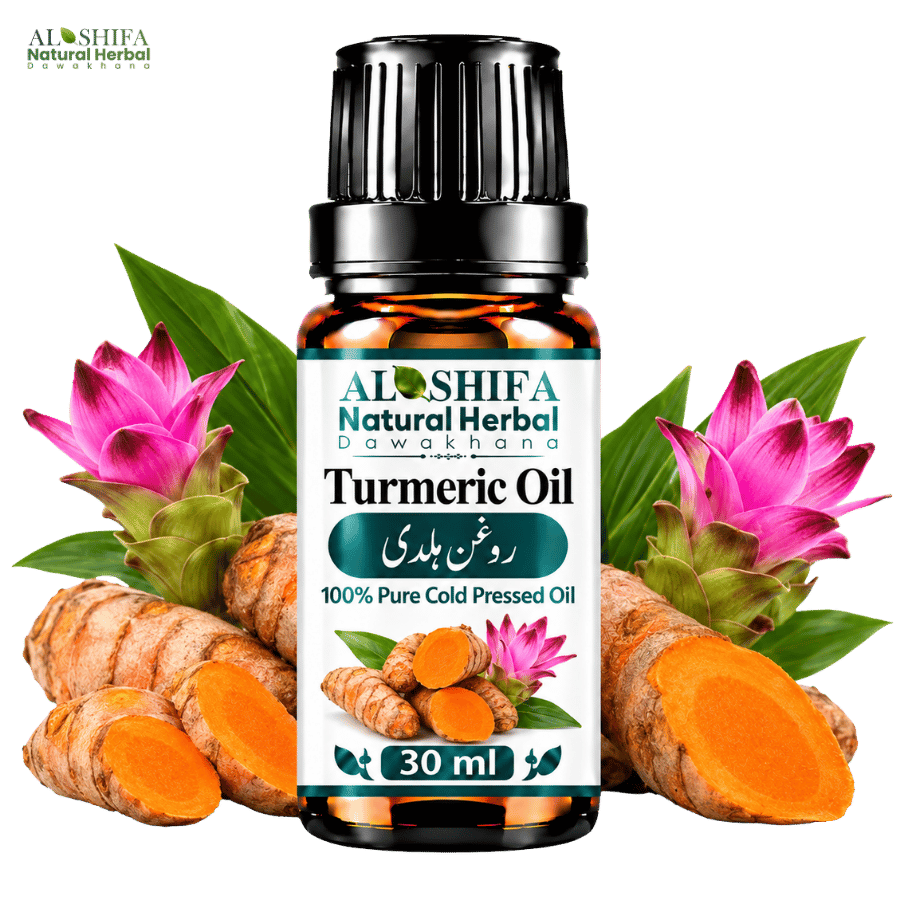
Turmeric Oil / Roghan Haldi is an aromatic oil derived from the rhizomes of Curcuma longa. Genuine steam-distilled Turmeric Essential Oil has a characteristic warm, earthy, woody and spicy aroma and contains volatile turmeric compounds including turmerones. It is valued for diluted skin care, massage blends, hair and scalp formulations, soaps, perfumery, aromatherapy and cosmetic use.
Al Shifa Turmeric Oil is carefully selected with attention to its correct botanical identity, characteristic aromatic profile, clean handling, quality and protective packaging.
Key Features:
Usage: Dilute appropriately with a compatible carrier oil before topical use, or incorporate in suitable skin-care, massage, hair, scalp, soap, perfumery and cosmetic formulations.
Important Note: Genuine Turmeric Essential Oil is a concentrated volatile oil, not turmeric powder, curcumin, turmeric extract or turmeric-infused carrier oil. It should generally be diluted before topical application and should not automatically be considered suitable for internal use.
Turmeric Oil / Roghan Haldi – روغن ہلدی is an aromatic oil associated with the rhizomes of Curcuma longa L., the well-known turmeric plant belonging to the Zingiberaceae family. Genuine Turmeric Essential Oil is generally obtained by steam distillation of turmeric rhizomes and contains volatile aromatic compounds that are different from the non-volatile components found in ordinary turmeric powder.
Turmeric Essential Oil is valued for its warm, earthy, spicy and woody aroma and is used in skin-care formulations, massage blends, hair and scalp products, soaps, perfumery, aromatherapy and other cosmetic preparations.
An important distinction is that Turmeric Essential Oil is not the same as turmeric powder, turmeric extract, curcumin or turmeric-infused carrier oil. Curcumin, the yellow compound strongly associated with turmeric, is not a major volatile component of steam-distilled Turmeric Essential Oil.
At Al Shifa Natural Herbal Dawakhana, Turmeric Oil is selected with attention to its correct botanical identity, characteristic aromatic profile, clean handling, quality and protective packaging.
Turmeric Oil generally refers to the aromatic volatile oil obtained from the rhizomes of the turmeric plant.
When produced as a genuine essential oil, it is obtained through steam distillation and contains concentrated volatile compounds responsible for turmeric’s characteristic aroma.
Turmeric Essential Oil is primarily used for:
Because it is a concentrated essential oil, it should normally be diluted appropriately before application to the skin.
Product Name: Turmeric Oil / Roghan Haldi – روغن ہلدی
English Name: Turmeric Oil / Turmeric Essential Oil
Urdu Name: روغن ہلدی / ہلدی کا تیل
Roman Name: Turmeric Oil / Roghan Haldi
Scientific Name: Curcuma longa L.
Plant Family: Zingiberaceae
Plant Part: Rhizome
Oil Type: Essential Oil / Volatile Aromatic Oil
Common Forms: Steam-Distilled Turmeric Essential Oil / Turmeric Oil / Turmeric-Infused Carrier Oil
Appearance: Pale Yellow to Golden-Yellow, Amber or Reddish-Brown depending on source and processing
Aroma: Warm, Earthy, Woody, Spicy and Characteristically Turmeric-Like
Primary Applications: Skin Care, Massage Blends, Hair & Scalp Formulations, Soap, Perfumery, Aromatherapy & Cosmetic Formulations
Product Type: Turmeric Aromatic Oil
Curcuma longa is a perennial plant from the ginger family.
The underground rhizome is the familiar part commonly dried and ground to produce turmeric powder. The same rhizome also contains a smaller volatile aromatic fraction that can be separated by distillation.
The rhizome therefore contains both:
Turmeric powder and Turmeric Essential Oil originate from the same plant part but have significantly different chemical profiles.
Genuine Turmeric Essential Oil is commonly obtained through steam distillation of turmeric rhizomes.
Production generally involves:
The resulting essential oil is concentrated and aromatic.
Its exact colour, aroma and chemical composition can vary according to:
Good-quality Turmeric Essential Oil generally has:
The aroma should be recognisably turmeric-like rather than simply resembling a neutral vegetable carrier oil.
The volatile composition of Turmeric Essential Oil can include compounds from several terpene groups.
Important constituents may include:
The exact proportions vary considerably according to botanical source, geography, processing and distillation.
Turmerones are particularly important in the characteristic volatile profile of many turmeric oils.
Turmerones are aromatic compounds naturally present in turmeric rhizome essential oil.
They contribute to:
Research has investigated turmerones for various biological properties, but laboratory findings involving isolated compounds should not automatically be interpreted as established medical benefits of ordinary cosmetic Turmeric Oil.
Turmeric is strongly associated with curcumin, the yellow polyphenolic compound widely studied in turmeric extracts.
However, curcumin is non-volatile.
Steam distillation primarily collects volatile aromatic compounds.
Therefore:
Turmeric Essential Oil ≠ Curcumin Oil
A genuine steam-distilled Turmeric Essential Oil should not automatically be marketed as a concentrated source of curcumin.
This distinction is particularly important when evaluating claims based on research involving curcumin supplements or standardized turmeric extracts.
Properly diluted Turmeric Essential Oil can be incorporated into cosmetic skin-care formulations.
It may be used in:
Because essential oils are concentrated, direct undiluted application is generally not recommended.
Turmeric Essential Oil may be incorporated in small, properly diluted amounts into compatible facial formulations.
Its main contribution includes:
It should not be treated like a mild fixed carrier oil.
Careful dilution is especially important for facial application.
Turmeric is widely associated with traditional beauty care and modern skin-brightening products.
However, many of these products contain:
These are chemically different from steam-distilled Turmeric Essential Oil.
Turmeric Essential Oil should therefore not automatically be described as a proven treatment for pigmentation, dark spots or uneven skin tone.
Turmeric-derived compounds have been investigated for antimicrobial and anti-inflammatory activity.
However, laboratory findings involving turmeric extracts, curcumin or isolated compounds do not establish ordinary Turmeric Essential Oil as an acne medication.
It may be included in properly formulated cosmetic products, but:
Cosmetic Skin Care ≠ Acne Treatment
Persistent or severe acne requires appropriate medical assessment and treatment.
Diluted Turmeric Oil can be incorporated into:
Its warm, spicy and earthy aroma can give botanical formulations a distinctive character.
Turmeric Essential Oil can be diluted into a suitable carrier oil for massage.
Suitable carrier oils may include compatible vegetable oils selected according to the desired texture and skin feel.
A massage blend containing Turmeric Oil can provide:
However, massage use should not be presented as proven treatment for arthritis, muscular disease or chronic pain.
Turmeric and curcumin are widely discussed in relation to joint health.
Much of this discussion relates to oral turmeric preparations or standardized curcumin extracts.
This evidence should not automatically be transferred to topical Turmeric Essential Oil.
A diluted massage oil may provide a pleasant massage experience, but this is different from treating arthritis or another diagnosed joint disorder.
Turmeric Essential Oil may be incorporated in small amounts into suitable hair-care formulations.
It can be used in:
It should normally be diluted rather than applied directly to the hair or scalp in concentrated form.
Properly diluted Turmeric Oil may be incorporated into scalp massage formulations.
Its role can include:
However:
Scalp Care ≠ Treatment for Dandruff, Dermatitis or Scalp Infection
Turmeric Oil is sometimes promoted online for hair growth.
Current evidence does not justify describing ordinary Turmeric Essential Oil as a guaranteed treatment for baldness or hair loss.
The carrier oils used in a diluted formulation may condition the hair and scalp, while the essential oil contributes its aromatic botanical profile.
Hair & Scalp Conditioning ≠ New Hair Growth
Turmeric Oil may be incorporated into compatible soap formulations for its characteristic botanical aroma.
The final scent can vary depending on:
Turmeric Essential Oil should be distinguished from adding turmeric powder or turmeric extract directly to soap.
Its warm, earthy, woody and spicy character can make Turmeric Oil useful in selected natural fragrance compositions.
It may complement:
Its strong character means relatively small amounts may be sufficient in many blends.
Turmeric Essential Oil may be used in aromatic applications where its warm, earthy botanical scent is desired.
Aromatherapy use should focus on the sensory and aromatic experience rather than unsupported claims about curing disease.
Avoid excessive inhalation of concentrated vapour, particularly in poorly ventilated spaces.
Turmeric essential oil and its volatile constituents have been investigated experimentally for antioxidant activity.
However:
Laboratory Antioxidant Activity ≠ Proven Prevention or Treatment of Disease
Research involving isolated compounds or laboratory concentrations should not automatically be interpreted as clinical effectiveness of ordinary topical Turmeric Oil.
Turmeric essential oil and turmeric-derived compounds have also been studied experimentally for antimicrobial properties.
These studies can involve concentrations and conditions very different from normal cosmetic use.
Therefore, Turmeric Oil should not be presented as a replacement for appropriate treatment of bacterial or fungal infections.
The name Turmeric Oil can be used commercially for more than one type of product, so the product form should be identified clearly.
Important distinctions include:
These products are not interchangeable.
The composition, concentration, uses and safety requirements can differ significantly.
Turmeric Essential Oil is concentrated and should generally be diluted appropriately before topical application.
A suitable carrier oil can be used to prepare a skin or massage blend.
Avoid:
Essential oils can cause irritation or sensitivity in susceptible individuals.
Patch testing of the properly diluted formulation is advisable before wider use.
Stop use if significant:
develops.
Turmeric-derived materials can vary in colour.
Although steam-distilled essential oil differs considerably from turmeric powder and curcumin-rich extracts, coloured grades may still leave marks on light fabrics or surfaces.
Use carefully where staining would be undesirable.
Concentrated essential oils require additional care during pregnancy and breastfeeding.
Pregnant or breastfeeding individuals should seek appropriate professional guidance before extensive use of concentrated Turmeric Essential Oil.
Ordinary dietary turmeric and concentrated essential oil should not be treated as equivalent forms.
Use only age-appropriate formulations for children.
Do not apply concentrated Turmeric Essential Oil directly to a child’s skin.
Avoid application:
Keep the bottle securely out of reach of children.
Culinary turmeric is widely consumed as a food and spice.
This does not mean that Turmeric Essential Oil should be casually swallowed.
A concentrated essential oil has a very different chemical profile and potency from turmeric powder used in food.
Therefore:
Culinary Turmeric ≠ Turmeric Essential Oil
Cosmetic or aromatherapy-grade Turmeric Oil should not automatically be considered suitable for internal use.
At Al Shifa Natural Herbal Dawakhana, Turmeric Oil is selected with attention to:
Botanical Identity – Correctly associated with Curcuma longa.
Plant Part – Turmeric rhizome-derived aromatic oil.
Oil Identity – Clear distinction between essential oil and infused carrier oil.
Aromatic Profile – Characteristic warm, earthy, woody and spicy aroma.
Volatile Constituents – Characteristic turmerone-rich aromatic profile where applicable.
Skin Applications – Suitable for properly diluted cosmetic formulations.
Massage Applications – Suitable for diluted botanical massage blends.
Hair Applications – Suitable for compatible hair-care formulations.
Scalp Applications – Suitable for appropriately diluted scalp blends.
Perfumery Applications – Useful in selected earthy, woody and spicy fragrance compositions.
Cosmetic Applications – Suitable for soaps and other compatible formulations.
Clean Handling – Carefully handled during packing.
Protective Packaging – Helps preserve aromatic quality.
Responsible Claims – No exaggerated pigmentation, acne, joint-treatment or hair-regrowth claims.
Al Shifa Natural Herbal Dawakhana, established in 1999, supplies carefully selected natural oils, herbs and botanical materials throughout Pakistan.
Our focus for Turmeric Oil includes:
For Skin Care: Dilute appropriately in a compatible carrier oil or incorporate at a suitable level into a finished cosmetic formulation.
For Facial Care: Use only in properly diluted formulations and avoid the eye area.
For Body Care: Incorporate into body oils, creams, lotions and balms at an appropriate cosmetic concentration.
For Massage: Add a suitable amount to a compatible carrier oil before application.
For Hair: Incorporate in small amounts into hair oils, masks, conditioners or other suitable formulations.
For Scalp Care: Use only as part of an appropriately diluted scalp massage blend.
For Soap & Cosmetics: Incorporate according to the formulation requirements of the finished product.
For Aromatic Use: Use a suitable small amount according to the intended aromatic application and ensure appropriate ventilation.
Turmeric Oil / Roghan Haldi – روغن ہلدی is an aromatic oil associated with the rhizomes of Curcuma longa. Genuine steam-distilled Turmeric Essential Oil contains volatile aromatic compounds, including characteristic turmerones, and is chemically different from turmeric powder, curcumin and turmeric extracts.
Its appropriate uses include diluted skin-care formulations, massage blends, hair and scalp products, soaps, perfumery, aromatherapy and cosmetic formulations.
Research on curcumin, turmeric extracts or isolated turmeric compounds should not automatically be used to make medical claims for Turmeric Essential Oil.
It should not be described as a guaranteed treatment for pigmentation, acne, fungal infection, arthritis, chronic pain, scalp disease or hair loss.
For best quality:
Turmeric Oil / Roghan Haldi – روغن ہلدی is an aromatic oil derived from Curcuma longa rhizomes and valued for its characteristic warm, earthy, woody and spicy aroma. Genuine Turmeric Essential Oil contains volatile turmeric compounds, including characteristic turmerones, and is suitable for diluted skin care, massage blends, hair and scalp formulations, soaps, perfumery, aromatherapy and cosmetic use.
Customers searching for Turmeric Oil, Roghan Haldi, Turmeric Essential Oil, Curcuma Longa Oil, Pure Turmeric Oil, Natural Turmeric Oil, Haldi Oil, Turmeric Oil for Skin, Turmeric Oil for Face, Turmeric Oil for Massage, Turmeric Oil for Hair, Turmeric Oil for Scalp, Turmeric Oil for Soap, Turmeric Oil for Perfumery, Turmeric Essential Oil Pakistan, Roghan Haldi Pakistan, Turmeric Oil Lahore, Turmeric Oil price in Pakistan, buy Turmeric Oil Pakistan or Turmeric Oil online Pakistan can choose Al Shifa Natural Herbal Dawakhana for carefully selected quality.
Since 1999, Al Shifa Natural Herbal Dawakhana has focused on supplying natural oils and botanical materials with attention to correct identity, quality selection, clean handling, responsible product information, protective packaging and proper storage.
Product Name: Turmeric Oil / Roghan Haldi – روغن ہلدی
English Name: Turmeric Oil / Turmeric Essential Oil
Urdu Name: روغن ہلدی / ہلدی کا تیل
Roman Name: Turmeric Oil / Roghan Haldi
Scientific Name: Curcuma longa L.
Plant Family: Zingiberaceae
Plant Part: Rhizome
Oil Type: Essential Oil / Volatile Aromatic Oil
Common Forms: Steam-Distilled Turmeric Essential Oil / Turmeric Oil / Turmeric-Infused Carrier Oil
Appearance: Pale Yellow to Golden-Yellow, Amber or Reddish-Brown depending on source and processing
Aroma: Warm, Earthy, Woody, Spicy and Characteristically Turmeric-Like
Primary Applications: Skin Care, Massage Blends, Hair & Scalp Formulations, Soap, Perfumery, Aromatherapy & Cosmetic Formulations
Product Type: Turmeric Aromatic Oil
Important Note: Genuine Turmeric Essential Oil is a concentrated volatile oil derived from Curcuma longa rhizomes. It is different from turmeric powder, turmeric extract, curcumin and turmeric-infused carrier oil. It should generally be diluted before topical use and should not be assumed suitable for internal use merely because culinary turmeric is edible.
روغن ہلدی ہلدی کی زیر زمین موٹی جڑ سے حاصل ہونے والا خوشبودار روغن ہے۔ ہلدی پاکستان اور برصغیر میں کھانے، گھریلو استعمال اور حکیمی ادویات میں بہت معروف ہے۔
ہلدی کی جڑ سے کشید کیا گیا روغن تیز خوشبو اور کم مقدار میں استعمال ہونے والا روغن ہے۔ اس میں اے آر ٹرمرون، الفا ٹرمرون، بیٹا ٹرمرون، کرلون، زنجیبرین اور دوسرے خوشبودار قدرتی اجزا پائے جاتے ہیں۔
روغن ہلدی کو جلد کی روغنی دیکھ بھال، جسمانی مالش، سر کی جلد اور بالوں کے لیے بنیادی روغن میں ملا کر استعمال کیا جاتا ہے۔
خالص کشید شدہ روغن ہلدی تیز ہوتا ہے، اس لیے اسے جلد پر براہ راست زیادہ مقدار میں نہیں لگایا جاتا بلکہ روغن بادام، روغن جوجوبا، روغن ناریل یا دوسرے بنیادی روغن میں ملا کر استعمال کیا جاتا ہے۔
اردو: ہلدی، روغن ہلدی
پنجابی: ہلدی، ہلدی دا تیل
ہندی: ہلدی، ہلدی کا تیل
فارسی: زرد چوب، روغن زرد چوب
عربی: کركم، زيت الكركم
انگریزی نام: ٹرمرک، ٹرمرک آئل
سائنسی نام: کرکیوما لونگا
خاندان: زنجیبیریسی
استعمال ہونے والا حصہ: زیر زمین موٹی جڑ
ہلدی ادرک کے خاندان سے تعلق رکھنے والا پودا ہے۔
اس کے پتے لمبے، چوڑے اور سبز ہوتے ہیں۔
پودے کا اہم حصہ زمین کے نیچے موجود موٹی جڑ ہے۔
یہ جڑ باہر سے بھوری اور اندر سے زرد سے گہری نارنجی رنگت رکھتی ہے۔
تازہ ہلدی کی جڑ میں خاص خوشبو ہوتی ہے۔
جڑ کو خشک کرنے کے بعد ثابت ہلدی یا ہلدی پاؤڈر تیار کیا جاتا ہے۔
اسی جڑ سے کشید کر کے خوشبودار روغن ہلدی بھی حاصل کیا جاتا ہے۔
اچھی ہلدی میں یہ خصوصیات دیکھی جاتی ہیں:
ہلدی کی صاف جڑیں منتخب کی جاتی ہیں۔
جڑوں کو صاف کر کے چھوٹے حصوں میں کاٹا یا خشک کیا جاتا ہے۔
خوشبودار روغن حاصل کرنے کے لیے ہلدی کی جڑ کو بھاپ کے ذریعے کشید کیا جاتا ہے۔
اس طریقے سے جڑ میں موجود خوشبودار روغنی اجزا الگ ہو جاتے ہیں۔
حاصل ہونے والا روغن ہلدی کی خاص گرم، مصالحہ دار اور مٹی جیسی خوشبو رکھتا ہے۔
پاکستان اور برصغیر کی معروف حکیمی کتب مفردات میں ہلدی کو گرم اور خشک مزاج کے ساتھ بیان کیا جاتا ہے۔
ہلدی کو حکمت میں جلد، زخموں کی بیرونی دیکھ بھال، جسمانی سوجن، چوٹ اور ہاضمے سے جڑی ادویات میں شامل کیا جاتا ہے۔
لیکن ہلدی کی جڑ سے کشید کیے گئے روغن ہلدی کا الگ مستند مزاج معروف پاکستانی کتب مفردات میں واضح طور پر مقرر نہیں ہے۔
اس لیے ہلدی کی جڑ کے مزاج کو کشید شدہ روغن کا الگ مزاج لکھنا درست نہیں۔
ہلدی پاکستان اور برصغیر کی معروف حکیمی اور گھریلو جڑی بوٹی ہے۔
حکمت میں اسے بیرونی طور پر جلد کی دیکھ بھال، جسمانی سوجن، چوٹ اور جسمانی مالش سے جڑے نسخوں میں شامل کیا جاتا ہے۔
ہلدی کھانے میں مصالحے کے طور پر بھی بہت مشہور ہے۔
کسی بیماری کے لیے ہلدی یا اس کے روغن کا طبی استعمال معالج سے پوچھ کر کریں۔
روغن ہلدی ہلدی کی جڑ کے خوشبودار اجزا پر مشتمل تیز روغن ہے۔
اس کی خاص پہچان ٹرمرون خاندان کے قدرتی اجزا ہیں۔
اسے جلد اور بالوں پر اکیلا زیادہ مقدار میں لگانے کے بجائے بنیادی روغن میں ملا کر استعمال کیا جاتا ہے۔
جسمانی مالش کے روغنوں میں بھی اس کی کم مقدار شامل کی جاتی ہے۔
روغن ہلدی کے اہم بیرونی استعمال یہ ہیں:
روغن ہلدی جسمانی مالش میں کم مقدار میں استعمال کیا جاتا ہے۔
خالص کشید شدہ روغن ہلدی کے چند قطرے روغن بادام، روغن ناریل، روغن جوجوبا یا دوسرے بنیادی روغن میں ملا کر جسمانی مالش کی جاتی ہے۔
یہ طریقہ روغن کو جلد پر آسانی سے پھیلانے کے لیے بہتر ہے۔
روغن ہلدی کو بنیادی روغن میں ملا کر پٹھوں کے کھنچاؤ کے دوران بیرونی مالش میں استعمال کیا جاتا ہے۔
اسے روغن سرسوں، روغن بادام یا روغن زیتون میں کم مقدار میں ملا کر مالش کی جاتی ہے۔
پٹھوں کے امراض یا چوٹ میں طبی استعمال معالج سے پوچھ کر کریں۔
ہلدی کو حکیمی اور گھریلو طریقوں میں جسمانی سوجن اور چوٹ کے لیے بیرونی طور پر استعمال کیا جاتا ہے۔
روغن ہلدی کو بھی بنیادی روغن میں ملا کر جسمانی مالش میں استعمال کیا جاتا ہے۔
مسلسل یا کسی بیماری سے جڑی سوجن میں طبی استعمال معالج سے پوچھ کر کریں۔
روغن ہلدی کو خشک جلد کی روغنی دیکھ بھال کے لیے بنیادی روغن میں ملا کر استعمال کیا جاتا ہے۔
چند قطرے روغن جوجوبا، روغن بادام یا روغن ناریل میں شامل کر کے جلد پر لگائے جاتے ہیں۔
خالص کشید شدہ روغن ہلدی کو براہ راست زیادہ مقدار میں جلد پر نہ لگائیں۔
خشک اور کھردری جلد کی دیکھ بھال کے لیے روغن ہلدی کو بنیادی روغن میں ملا کر استعمال کیا جاتا ہے۔
اسے ہاتھوں، پاؤں، کہنیوں اور گھٹنوں کی روغنی مالش میں شامل کیا جاتا ہے۔
چہرے پر روغن ہلدی ہمیشہ بہت کم مقدار میں بنیادی روغن کے ساتھ ملا کر استعمال کریں۔
چند قطرے بنیادی روغن میں شامل کر کے کم مقدار چہرے پر لگائی جاتی ہے۔
آنکھوں کے قریب نہ لگائیں۔
جلدی امراض میں طبی استعمال معالج سے پوچھ کر کریں۔
روغن ہلدی کو جلد کی روغنی دیکھ بھال کے مرکبات میں استعمال کیا جاتا ہے۔
اسے بنیادی روغن میں ملا کر صرف مکمل بند اور ٹھیک جلد پر لگایا جاتا ہے۔
تازہ، کھلے یا خون آنے والے زخم پر روغن ہلدی نہ لگائیں۔
مہاسوں والی جلد پر روغن ہلدی کا استعمال بہت کم مقدار میں بنیادی روغن کے ساتھ کیا جاتا ہے۔
پہلی بار استعمال سے پہلے جلد کے چھوٹے حصے پر آزمائیں۔
مہاسوں کی بیماری شدید یا مسلسل ہو تو معالج سے چیک کروائیں۔
روغن ہلدی کے چند قطرے بنیادی روغن میں ملا کر خشک ہاتھوں اور پاؤں کی مالش میں استعمال کیے جاتے ہیں۔
یہ جلد کی روغنی دیکھ بھال کے لیے فائدہ مند ہے۔
روغن ہلدی کو بالوں کے روغن میں کم مقدار میں شامل کیا جاتا ہے۔
اسے روغن ناریل، روغن بادام، روغن جوجوبا یا دوسرے بالوں کے بنیادی روغن میں ملا کر استعمال کیا جاتا ہے۔
خالص کشید شدہ روغن ہلدی کو سر کی جلد پر براہ راست زیادہ مقدار میں نہ لگائیں۔
روغن ہلدی کے چند قطرے بنیادی روغن میں ملا کر سر کی جلد پر لگائے جاتے ہیں۔
انگلیوں کے پوروں سے ہلکی مالش کی جاتی ہے۔
سر کی جلد کے امراض میں طبی استعمال معالج سے پوچھ کر کریں۔
بالوں کا بہت زیادہ گرنا، مسلسل پتلا ہونا یا سر پر خالی جگہیں بننا بالوں کے امراض سے جڑا مسئلہ ہے۔
ایسی صورت میں معالج سے چیک کروائیں۔
روغن ہلدی کو بالوں اور سر کی جلد کی روغنی دیکھ بھال میں کم مقدار میں شامل کیا جاتا ہے۔
کشید شدہ روغن ہلدی میں اہم خوشبودار قدرتی اجزا یہ ہیں:
ٹرمرون خاندان کے اجزا روغن ہلدی کی خاص پہچان ہیں۔
اے آر ٹرمرون، الفا ٹرمرون اور بیٹا ٹرمرون ہلدی کی جڑ کے خوشبودار روغن میں پائے جاتے ہیں۔
یہ روغن ہلدی کی خاص خوشبو اور کیمیائی پہچان کا اہم حصہ ہیں۔
زنجیبرین ہلدی کی جڑ کے خوشبودار روغن میں پایا جانے والا قدرتی جز ہے۔
یہ ادرک کے خاندان کے کئی خوشبودار پودوں میں بھی پایا جاتا ہے۔
ہلدی کی مکمل خشک جڑ اور روغن ہلدی ایک چیز نہیں ہیں۔
خشک ہلدی کی جڑ میں نشاستہ، ریشہ، رنگ دار اجزا، کرکیومین خاندان کے اجزا اور خوشبودار روغنی اجزا موجود ہوتے ہیں۔
کشید شدہ روغن ہلدی میں بنیادی طور پر ہلدی کے خوشبودار اور بھاپ کے ساتھ الگ ہونے والے اجزا جمع ہوتے ہیں۔
اسی لیے مکمل ہلدی اور کشید شدہ روغن کی ساخت ایک جیسی نہیں ہوتی۔
یہ پہچان بہت اہم ہے۔
کرکیومین ہلدی کی زرد رنگت دینے والے اہم اجزا میں شامل ہے۔
بھاپ سے کشید کیے گئے روغن ہلدی کی بنیادی پہچان کرکیومین نہیں بلکہ ٹرمرون اور دوسرے خوشبودار اجزا ہیں۔
اس لیے ہلدی پاؤڈر میں موجود کرکیومین کی مقدار کو کشید شدہ روغن ہلدی کی مقدار نہ سمجھیں۔
بازار میں روغن ہلدی دو مختلف شکلوں میں ملتا ہے۔
ایک ہلدی کی جڑ سے بھاپ کے ذریعے کشید کیا گیا تیز خوشبودار روغن ہے۔
دوسرا ہلدی کی جڑ یا ہلدی پاؤڈر کو روغن ناریل، روغن تل یا دوسرے بنیادی روغن میں شامل کر کے تیار کیا جاتا ہے۔
دونوں کی طاقت، رنگت، خوشبو اور استعمال کی مقدار ایک جیسی نہیں ہوتی۔
خریدتے وقت روغن کی قسم ضرور دیکھیں۔
روغن ہلدی اور ہلدی کا جوہر ایک چیز نہیں ہیں۔
کشید شدہ روغن ہلدی جڑ کے خوشبودار اجزا پر مشتمل ہوتا ہے۔
ہلدی کا جوہر الگ طریقے سے تیار کیا جاتا ہے اور اس میں دوسرے اجزا بھی شامل ہو سکتے ہیں۔
اس لیے دونوں کا استعمال اور مقدار ایک جیسی نہیں رکھی جاتی۔
کشید شدہ روغن ہلدی کی رنگت زرد، سنہری، نارنجی مائل یا بھوری زرد ہو سکتی ہے۔
رنگت جڑ کی قسم اور روغن حاصل کرنے کے طریقے کے مطابق بدلتی ہے۔
ہلدی ملا بنیادی روغن زیادہ زرد یا نارنجی بھی دکھائی دے سکتا ہے۔
خالص کشید شدہ روغن ہلدی میں گرم، مصالحہ دار، مٹی جیسی اور ہلدی کی جڑ سے ملتی خوشبو ہوتی ہے۔
خوشبو صاف اور قدرتی ہونی چاہیے۔
باسی، سڑی ہوئی یا غیر ضروری مصنوعی خوشبو اچھے روغن کی پہچان نہیں ہے۔
خالص کشید شدہ روغن ہلدی کے چند قطرے بنیادی روغن میں ملائیں۔
اس آمیزے کی تھوڑی مقدار صاف جلد پر لگائیں۔
پہلی بار استعمال سے پہلے جلد کے چھوٹے حصے پر آزمائیں۔
آنکھوں، ہونٹوں اور حساس حصوں کے قریب نہ لگائیں۔
روغن ہلدی کے چند قطرے روغن ناریل، روغن بادام یا روغن جوجوبا میں ملائیں۔
اسے سر کی جلد اور بالوں پر لگائیں۔
انگلیوں کے پوروں سے ہلکی مالش کریں۔
بعد میں بال اپنے معمول کے مطابق دھو لیں۔
روغن ہلدی کو درج ذیل بنیادی روغنوں کے ساتھ ملا کر استعمال کیا جاتا ہے:
جسمانی مالش، جلد اور بالوں کے لیے خالص کشید شدہ روغن ہلدی کی کم مقدار استعمال کی جاتی ہے۔
حساس جلد پر روغن ہلدی ہمیشہ کم مقدار میں بنیادی روغن کے ساتھ ملا کر استعمال کریں۔
پہلی بار جلد کے چھوٹے حصے پر آزمائیں۔
خارش، سرخی یا جلن پیدا ہو تو استعمال بند کریں۔
جلدی امراض میں طبی استعمال معالج سے پوچھ کر کریں۔
ہلدی کی قسم اور روغن تیار کرنے کے طریقے کے مطابق جلد یا ہلکے رنگ کے کپڑوں پر زرد نشان پڑ سکتا ہے۔
اس لیے استعمال کے بعد فوراً ہلکے رنگ کے کپڑے پہننے سے بچیں۔
کھانے میں استعمال ہونے والی ہلدی اور جلد یا خوشبو کے لیے فروخت ہونے والا روغن ہلدی ایک چیز نہیں ہیں۔
جلد اور خوشبو کے لیے فروخت ہونے والے کشید شدہ روغن کو اپنی طرف سے خوراک میں شامل نہ کریں۔
خوراک کے لیے صرف وہ شکل استعمال کریں جس پر کھانے کے قابل ہونے کی واضح ہدایت موجود ہو۔
کشید شدہ روغن ہلدی کا اندرونی طبی استعمال اپنی طرف سے نہ کریں۔
اندرونی طبی استعمال معالج سے پوچھ کر کریں۔
کھانے میں عام ہلدی کا استعمال اور تیز کشید شدہ روغن کا اندرونی استعمال الگ چیزیں ہیں۔
ہلدی یا اس کے کشید شدہ روغن کا اندرونی طبی استعمال پتہ یا صفرا کے امراض میں اپنی طرف سے نہ کریں۔
ایسی بیماری میں اندرونی طبی استعمال معالج سے پوچھ کر کریں۔
اگر آپ خون پتلا کرنے والی ادویات لیتے ہیں تو روغن ہلدی کا اندرونی طبی استعمال معالج سے پوچھ کر کریں۔
آپریشن سے پہلے اندرونی استعمال کے بارے میں بھی معالج کو بتائیں۔
حمل کے دوران کھانے میں عام مقدار میں ہلدی اور تیز کشید شدہ روغن ہلدی کا طبی استعمال ایک جیسا نہیں ہے۔
کشید شدہ روغن ہلدی کا اندرونی طبی استعمال اپنی طرف سے نہ کریں۔
اندرونی طبی استعمال معالج سے پوچھ کر کریں۔
بیرونی استعمال سے پہلے اسے بنیادی روغن میں ملا کر جلد کے چھوٹے حصے پر آزمائیں۔
دودھ پلانے کے دوران روغن ہلدی کا اندرونی طبی استعمال معالج سے پوچھ کر کریں۔
بیرونی روغن کو چھاتی اور بچے کے منہ سے لگنے والی جگہ پر نہ لگائیں۔
بچوں میں خالص کشید شدہ روغن ہلدی کا طبی استعمال اپنی طرف سے نہ کریں۔
طبی استعمال معالج سے پوچھ کر کریں۔
روغن کو بچوں کی پہنچ سے دور رکھیں۔
اچھی ہلدی: صاف، خشک، خوشبودار اور قدرتی زرد سے نارنجی رنگت والی جڑ سے حاصل کیا گیا ہو۔
درست قسم: واضح ہو کہ روغن کشید شدہ ہے یا ہلدی کو کسی بنیادی روغن میں شامل کر کے تیار کیا گیا ہے۔
قدرتی خوشبو: گرم، مصالحہ دار اور ہلدی کی جڑ جیسی خوشبو ہو۔
قدرتی رنگت: زرد، سنہری، نارنجی مائل یا بھوری زرد رنگت ہو۔
صاف روغن: پانی، گرد اور غیر ضروری ذرات سے پاک ہو۔
تازگی: باسی یا خراب بو نہ ہو۔
غیر ضروری ملاوٹ سے پاک: مصنوعی رنگ، غیر ضروری مصنوعی خوشبو اور کم معیار کے روغن کی ملاوٹ سے پاک ہو۔
روغن ہلدی ہلدی کی زیر زمین موٹی جڑ سے حاصل ہونے والا خوشبودار روغن ہے۔
کشید شدہ روغن ہلدی میں اے آر ٹرمرون، الفا ٹرمرون، بیٹا ٹرمرون، کرلون، زنجیبرین اور دوسرے خوشبودار قدرتی اجزا پائے جاتے ہیں۔
اس کا بیرونی استعمال جسمانی مالش، جلد کی روغنی دیکھ بھال، سر کی جلد اور بالوں کے روغن میں کم مقدار کے ساتھ کیا جاتا ہے۔
پاکستانی اور برصغیر کی معروف حکیمی کتب مفردات میں ہلدی کو گرم اور خشک مزاج کے ساتھ بیان کیا جاتا ہے، لیکن کشید شدہ روغن ہلدی کا الگ مستند مزاج واضح طور پر مقرر نہیں ہے۔
ہلدی میں موجود کرکیومین اور کشید شدہ روغن میں موجود ٹرمرون اجزا کو ایک چیز نہ سمجھیں۔
خالص کشید شدہ روغن ہلدی کو جلد پر لگانے سے پہلے بنیادی روغن میں ملائیں۔
الشفاء نیچرل ہربل دواخانہ میں روغن ہلدی کے لیے درج ذیل باتوں کو اہمیت دی جاتی ہے:
اچھی ہلدی: صاف، خشک اور اچھی حالت والی ہلدی کی جڑ کو اہمیت دی جاتی ہے۔
درست اصل: کرکیوما لونگا کی جڑ سے حاصل روغن کو اہمیت دی جاتی ہے۔
قدرتی خوشبو: ہلدی کی اپنی گرم، مصالحہ دار اور مٹی جیسی خوشبو کو اہمیت دی جاتی ہے۔
قدرتی رنگت: روغن کی اپنی زرد سے سنہری اور نارنجی مائل رنگت کو دیکھا جاتا ہے۔
صاف روغن: پانی، گرد اور غیر ضروری ذرات سے پاک روغن کو اہمیت دی جاتی ہے۔
تازگی: باسی یا خراب بو والے روغن سے بچا جاتا ہے۔
غیر ضروری ملاوٹ سے پاک: مصنوعی رنگ، غیر ضروری مصنوعی خوشبو اور کم معیار کے روغن کی ملاوٹ سے پاک ہونے کو اہمیت دی جاتی ہے۔
الشفاء نیچرل ہربل دواخانہ سنہ ۱۹۹۹ سے قدرتی جڑی بوٹیوں، جڑوں، بیجوں اور ان سے حاصل ہونے والے روغنوں کی سپلائی کر رہا ہے۔
ہم روغن ہلدی میں درست اصل، اچھی ہلدی کی جڑ، قدرتی رنگت، مخصوص قدرتی خوشبو، صاف حالت، تازگی اور غیر ضروری ملاوٹ سے پاک ہونے کو اہمیت دیتے ہیں۔
اچھے روغن ہلدی کی پہچان درست ہلدی کی جڑ، قدرتی رنگت، گرم مصالحہ دار خوشبو، صاف حالت، تازگی اور اچھی پیکنگ سے کی جاتی ہے۔
روغن ہلدی کو ٹھنڈی، خشک اور روشنی سے محفوظ جگہ پر کسی جار میں اچھی طرح پیک کر کے رکھیں۔
اسے تیز دھوپ، پانی اور زیادہ گرمی سے بچائیں۔
استعمال کے بعد ڈھکن اچھی طرح بند کریں۔
اگر روغن میں باسی یا خراب بو پیدا ہو جائے تو استعمال نہ کریں۔
اسے بچوں کی پہنچ سے دور رکھیں۔
روغن ہلدی خریدتے وقت یہ ضرور دیکھیں کہ وہ ہلدی کی جڑ سے کشید شدہ روغن ہے یا ہلدی کو کسی بنیادی روغن میں شامل کر کے تیار کیا گیا ہے۔
خالص کشید شدہ روغن ہلدی تیز ہوتا ہے، اس لیے جلد پر استعمال سے پہلے بنیادی روغن میں ملائیں۔
پہلی بار جلد کے چھوٹے حصے پر تھوڑی مقدار آزمائیں۔
آنکھوں، ہونٹوں اور کھلے زخموں پر نہ لگائیں۔
خارش، سرخی یا جلن پیدا ہو تو استعمال بند کریں۔
جلد اور خوشبو کے لیے تیار روغن کو اپنی طرف سے نہ پئیں۔
کسی بیماری میں طبی استعمال معالج سے پوچھ کر کریں۔
روغن ہلدی ہلدی کی زیر زمین موٹی جڑ سے حاصل ہونے والا خوشبودار روغن ہے۔
پاکستانی اور برصغیر کی معروف حکیمی کتب مفردات میں ہلدی کو گرم اور خشک مزاج کے ساتھ بیان کیا جاتا ہے، لیکن کشید شدہ روغن ہلدی کا الگ مستند مزاج واضح طور پر مقرر نہیں ہے۔
اس کے نمایاں قدرتی اجزا میں اے آر ٹرمرون، الفا ٹرمرون، بیٹا ٹرمرون، کرلون اور زنجیبرین شامل ہیں۔
اسے جسمانی مالش، خشک جلد کی روغنی دیکھ بھال، سر کی جلد اور بالوں کے روغن میں کم مقدار کے ساتھ استعمال کیا جاتا ہے۔
ہلدی کی مکمل جڑ، ہلدی پاؤڈر، کرکیومین، ہلدی کا جوہر، کشید شدہ روغن ہلدی اور ہلدی ملا بنیادی روغن الگ شکلیں ہیں۔
اچھے روغن ہلدی کی پہچان درست ہلدی کی جڑ، قدرتی رنگت، مخصوص مصالحہ دار خوشبو، صاف حالت، تازگی اور غیر ضروری ملاوٹ سے پاک ہونے سے کی جاتی ہے۔