مصطگی رومی
Price range: ₨ 900 through ₨ 45,000
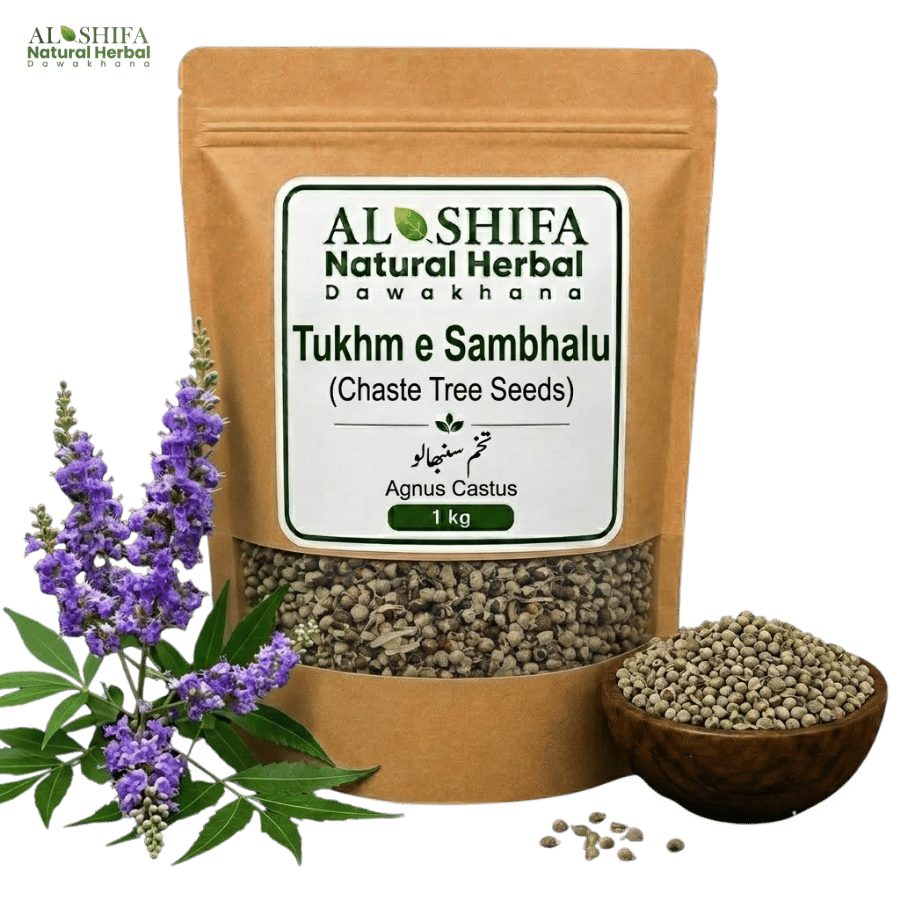
Tukhm-e-Sambhalu (Chaste Tree Seeds / Chasteberry) is a traditional botanical material obtained from Vitex agnus-castus, historically valued in women’s wellness and menstrual-related herbal preparations.
How to Use: Use in traditional herbal preparations according to appropriate product-specific or professional guidance.
Important Note: Chasteberry may influence hormone- and dopamine-related pathways. Pregnant or breastfeeding women, people undergoing fertility treatment, or those using hormonal or dopamine-related medicines should seek professional guidance before medicinal use.
Tukhm-e-Sambhalu (تخم سنبھالو), commonly known as Chaste Tree Seeds or Agnus Castus, are the dried fruits commonly referred to as “seeds” of Vitex agnus-castus L., an aromatic shrub or small tree belonging to the Lamiaceae family. The plant is also widely known as Chaste Tree, Chasteberry, Vitex, and Monk’s Pepper.
Chaste Tree has a long history of traditional use, particularly in preparations associated with women’s menstrual and reproductive wellness. In modern herbal practice, Vitex agnus-castus fruit preparations have also been investigated for certain premenstrual and menstrual-cycle-related symptoms. However, the traditional herb, powdered fruit, herbal infusion, concentrated extract, and standardized medicinal preparations are not equivalent and should not be assumed to provide the same effects.
An important botanical point is that the commercially used material is primarily the plant’s dried ripe fruit, commonly called Chasteberry. Although the traditional trade name “Tukhm” and the commercial term “seeds” are frequently used, professional botanical labeling is more accurately described as dried fruit of Vitex agnus-castus.
Good-quality Tukhm-e-Sambhalu should consist of properly identified, mature, clean, and appropriately dried fruits of Vitex agnus-castus.
The dried fruits are generally small, rounded, and dark brown to blackish-brown, with a characteristic aromatic and somewhat pepper-like quality.
Product Name: Tukhm-e-Sambhalu
English Name: Chaste Tree Seeds / Chasteberry
Urdu Name: تخم سنبھالو
Roman Name: Tukhm-e-Sambhalu / Tukhm Sambhalu
Scientific Name: Vitex agnus-castus L.
Family: Lamiaceae
Plant Type: Aromatic Shrub / Small Tree
Commercially Used Part: Dried Ripe Fruit
Common Names: Chaste Tree, Chasteberry, Vitex, Monk’s Pepper, Agnus Castus
Traditional Category: Women’s wellness and specialized botanical preparations
Tukhm-e-Sambhalu is the traditional trade name used for the small dried reproductive structures of the Chaste Tree.
Although commonly sold as seeds, the principal medicinal raw material recognized in modern herbal practice is the dried ripe fruit.
The fruits are generally:
The dried fruit contains the actual seed structures internally, which helps explain why the material may traditionally be referred to as “Tukhm.”
The terms Chaste Tree and Chasteberry refer to the same plant but different aspects of it.
Chaste Tree refers to the plant itself.
Chasteberry generally refers to its dried fruit.
Therefore:
Chaste Tree = Vitex agnus-castus
while
Chasteberry = Dried fruit of Vitex agnus-castus
This distinction is useful for accurate herbal product labeling.
“Agnus Castus” is another widely used name derived directly from the botanical name Vitex agnus-castus.
Products may therefore appear in herbal commerce under names such as:
When correctly identified, these names commonly refer to material derived from Vitex agnus-castus.
Vitex agnus-castus is an aromatic woody plant native to areas around the Mediterranean and Western Asia and cultivated or naturalized in other regions.
Typical characteristics include:
The plant belongs to the mint family, although it does not resemble ordinary culinary mint.
Chasteberry contains a range of naturally occurring phytochemicals.
Research has identified groups such as:
Frequently discussed constituents include compounds related to:
The exact chemical profile depends on the plant source, growing conditions, harvest stage, drying, storage, and extraction method.
Agnuside is an iridoid glycoside naturally associated with Vitex agnus-castus.
It is sometimes used as one of the chemical markers in quality assessment or standardization of Chasteberry preparations.
However, the presence of agnuside alone does not determine the entire biological activity of the plant.
Whole dried fruit contains a complex mixture of constituents.
Casticin is a flavonoid-related compound found in Chasteberry and is another constituent commonly discussed in phytochemical research and quality assessment.
Its presence contributes to the botanical chemical profile of Vitex agnus-castus, but isolated casticin research should not be treated as evidence that whole Tukhm-e-Sambhalu treats a medical condition.
Chasteberry has a particularly strong historical association with women’s wellness.
Traditional herbal practices have used the fruit in preparations related to:
These historical associations should be presented carefully because the plant may influence hormone-related physiological pathways.
It should not be marketed simply as a general-purpose “hormone balancing” herb for every woman.
Standardized Vitex agnus-castus preparations have been studied in relation to certain premenstrual symptoms.
Research has investigated symptoms such as:
Some clinical evidence suggests that certain properly prepared Chasteberry products may be useful for some premenstrual symptoms.
However, the evidence does not mean that ordinary dried Tukhm-e-Sambhalu is equivalent to the standardized extracts used in clinical studies.
Product formulation, extraction method, dose, and duration matter substantially.
Chasteberry is frequently marketed online as a “hormone balancing” herb, but this phrase can be misleading.
Research suggests that certain Vitex agnus-castus constituents may influence dopaminergic pathways, particularly those associated with dopamine receptors. This may indirectly influence prolactin-related physiology in some circumstances.
This is more scientifically accurate than claiming that Chasteberry simply “balances all female hormones.”
The human endocrine system includes many interacting hormones, and a single herb cannot be assumed to normalize every hormonal disorder.
Some Chasteberry preparations have been investigated in relation to prolactin-related physiology.
However, Tukhm-e-Sambhalu should not be presented as a treatment for diagnosed hyperprolactinemia.
High prolactin can have important causes, including:
Persistent or significantly elevated prolactin requires appropriate medical assessment.
Chasteberry is often promoted for irregular menstrual cycles.
However, irregular periods can have many causes, including:
Therefore, Tukhm-e-Sambhalu should not be promoted as a universal treatment for irregular menstruation.
Persistent cycle changes should be appropriately evaluated.
Chasteberry is sometimes promoted online for polycystic ovary syndrome.
The available evidence does not justify presenting ordinary Tukhm-e-Sambhalu as a treatment for this condition.
Polycystic ovary syndrome can involve:
Management should be individualized rather than based on the assumption that all hormonal symptoms require Chasteberry.
Traditional and modern herbal discussions sometimes associate Chasteberry with fertility.
However, it should not be claimed to:
Infertility has many possible causes and requires appropriate evaluation.
Because Chasteberry may affect reproductive hormonal pathways, people actively undergoing fertility treatment should discuss its use with their healthcare professional.
Chasteberry should not be self-used medicinally during pregnancy.
Once pregnancy is suspected or confirmed, continued use of concentrated Chasteberry preparations should be discussed with an appropriately qualified healthcare professional.
Historical use is not proof of safety during pregnancy.
Pregnancy involves major hormonal changes, making unsupervised use of hormone-active botanical preparations inappropriate.
Chasteberry has a complicated historical relationship with lactation.
Traditional sources have sometimes associated it with breast-milk production, while its potential effects on prolactin-related pathways make the situation more complex.
Therefore, Chasteberry should not be marketed as a guaranteed milk-supply booster.
Breastfeeding women should seek professional advice before using medicinal or concentrated Chasteberry preparations, particularly if milk supply is a concern.
Because Chasteberry may influence dopamine and hormone-related pathways, caution is appropriate for people using:
Potential interactions may depend on the medicine and the Chasteberry preparation.
People using these medicines should seek professional guidance before regular medicinal use.
Chasteberry’s potential dopaminergic activity also means caution is appropriate with medicines that affect dopamine pathways.
These may include certain medicines used for:
The direction and clinical significance of interactions may vary.
Therefore, people taking dopamine-related medicines should not self-start concentrated Chasteberry products.
People with hormone-sensitive medical conditions should discuss Chasteberry use with a healthcare professional.
This is especially relevant where changes in reproductive hormone signaling could potentially matter.
A traditional reputation for women’s wellness does not mean the herb is appropriate for every hormone-related condition.
Historically, the Chaste Tree acquired names such as “Chasteberry” and “Monk’s Pepper” because of cultural beliefs regarding chastity and sexual desire.
These historical names should not be converted into modern medical claims.
Tukhm-e-Sambhalu should not be claimed to:
Historical beliefs and modern clinical evidence should remain clearly separated.
The name Chaste Tree is linked to historical European and Mediterranean traditions in which the plant became associated with chastity and restraint.
Monastic communities historically used or referred to the fruit, contributing to the common name Monk’s Pepper.
These historical associations are culturally interesting but do not establish predictable effects on human sexual behavior.
This distinction is extremely important.
The following are not equivalent:
Clinical research frequently uses specifically prepared extracts with defined manufacturing characteristics.
Therefore:
Research on standardized extract ≠ guaranteed effect from raw Tukhm-e-Sambhalu
A clinical extract dose should not be converted directly into a raw-herb dose without an appropriate basis.
Tukhm-e-Sambhalu may be incorporated into traditional herbal preparations according to the intended formulation and qualified guidance.
Because the product has potential hormone-related biological activity, there is no appropriate universal home dose that should be recommended for every person.
For regular internal medicinal use:
It should not replace medical assessment for persistent menstrual or hormonal symptoms.
Chasteberry preparations are generally tolerated by many adults when appropriately used, but side effects may occur.
Reported effects can include:
Individual response can vary according to preparation and amount.
Significant or persistent symptoms should prompt discontinuation and appropriate professional advice.
Tukhm-e-Sambhalu should not be routinely given to children as a general wellness herb.
Adolescents with menstrual irregularity or significant hormonal symptoms should receive appropriate assessment rather than automatically being given hormone-active herbal preparations.
The menstrual cycle can vary naturally after menarche, but persistent or severe abnormalities may require evaluation.
Modern research on Vitex agnus-castus is more developed than for many traditional botanicals, particularly regarding certain premenstrual symptoms.
However, evidence must still be interpreted according to:
Laboratory research, animal studies, traditional use, and human clinical evidence are different levels of evidence.
Claims should reflect these distinctions.
Chasteberry contains flavonoids, phenolics, and other natural constituents investigated for antioxidant-related activity.
However, antioxidant activity does not establish Chasteberry as a treatment for:
Such claims would go beyond the available evidence for ordinary dried fruit.
Extracts of Vitex agnus-castus have been investigated experimentally against certain microorganisms.
Laboratory findings should not be interpreted to mean that Tukhm-e-Sambhalu can treat human bacterial, fungal, or viral infections.
Medical infections require appropriate diagnosis and treatment.
Good-quality dried Tukhm-e-Sambhalu should ideally have:
Natural variation in fruit size, shade, and aroma can occur.
Botanical authentication is important because traditional trade names may occasionally be applied inconsistently.
A genuine product sold specifically as Agnus Castus or Chasteberry should be verified as:
Vitex agnus-castus
Other species of Vitex should not automatically be substituted because species can differ in their chemical composition and traditional applications.
To maintain quality:
For accurate product information:
Tukhm-e-Sambhalu = Traditionally Named Chaste Tree Fruit Material
Chasteberry = Dried Fruit of Vitex agnus-castus
Chasteberry ≠ Ordinary Culinary Pepper
Whole Dried Fruit ≠ Standardized Extract
Traditional Women’s Use ≠ Treatment for Every Hormonal Disorder
Premenstrual Research ≠ Proof of Infertility Treatment
Hormone-Related Activity ≠ Universal “Hormone Balancing”
These distinctions help maintain responsible herbal product information.
Product Name: Tukhm-e-Sambhalu
English Name: Chaste Tree Seeds / Chasteberry
Urdu Name: تخم سنبھالو
Roman Name: Tukhm-e-Sambhalu / Tukhm Sambhalu
Scientific Name: Vitex agnus-castus L.
Family: Lamiaceae
Plant Type: Aromatic Shrub / Small Tree
Commercially Used Part: Dried Ripe Fruit
Common Names: Chasteberry, Chaste Tree, Agnus Castus, Vitex, Monk’s Pepper
Natural Constituents: Iridoid glycosides, flavonoids, diterpenes, phenolic compounds and volatile aromatic constituents
Notable Constituents: Agnuside, casticin and other naturally occurring compounds
Traditional Association: Menstrual, premenstrual and general women’s wellness preparations
Product Form: Whole dried fruit commonly sold as seeds
Storage: Cool, dry and protected from moisture and direct sunlight
Tukhm-e-Sambhalu (Chaste Tree Seeds / Chasteberry / تخم سنبھالو) is the traditional dried botanical material associated with Vitex agnus-castus. Although commonly sold as “seeds,” the principal herbal raw material is more accurately the plant’s dried ripe fruit.
Chasteberry has a long history of use in women’s wellness, and certain standardized extracts have been clinically investigated for some premenstrual symptoms. However, these findings should not be interpreted as evidence that raw Tukhm-e-Sambhalu treats infertility, polycystic ovary syndrome, high prolactin, menstrual disorders, or other hormonal conditions.
Because Chasteberry may influence dopamine- and hormone-related physiological pathways, pregnant or breastfeeding women, people undergoing fertility treatment, those using hormonal medicines or contraceptives, and people taking dopamine-related medicines should seek appropriate professional guidance before medicinal use.
Whole dried Tukhm-e-Sambhalu and standardized Chasteberry extracts can differ substantially in concentration and biological activity. Traditional use should therefore be distinguished from standardized clinical preparations.
تخم سنبھالو ایک معروف روایتی نباتاتی مادہ ہے جو وائٹیکس اگنس کاسٹس نامی خوشبودار جھاڑی یا چھوٹے درخت سے حاصل ہوتا ہے۔ یہ نبات لیمیا ایسی خاندان سے تعلق رکھتی ہے۔ اسے مختلف علاقوں اور روایتی نظاموں میں سنبھالو، چیسٹ بیری، اگنس کاسٹس اور وائٹیکس جیسے ناموں سے پہچانا جاتا ہے۔
اگرچہ تجارتی اور روایتی طور پر اسے تخم سنبھالو یعنی بیج کہا جاتا ہے، لیکن نباتاتی اعتبار سے عام طور پر استعمال ہونے والا حصہ دراصل اس نبات کا خشک پختہ پھل ہوتا ہے۔ اس چھوٹے پھل کے اندر بیج موجود ہوتے ہیں، اسی وجہ سے روایتی تجارت میں اسے تخم کے نام سے فروخت کیا جانا عام ہے۔
تخم سنبھالو کو تاریخی طور پر خصوصاً خواتین کی عمومی تندرستی، ماہواری سے متعلق آرام اور ماہواری سے پہلے محسوس ہونے والی بعض کیفیات سے متعلق روایتی تیاریوں میں اہمیت حاصل رہی ہے۔ جدید دور میں بھی وائٹیکس اگنس کاسٹس سے تیار کیے جانے والے بعض مخصوص اور معیار بند عرقوں پر خواتین کی ماہواری سے پہلے کی علامات کے حوالے سے تحقیق کی گئی ہے۔
تاہم خام خشک تخم سنبھالو، اس کا سفوف، جوشاندہ، عرق اور معیار بند مرتکز تیاری ایک جیسی نہیں ہوتیں، اس لیے کسی مخصوص عرق پر ہونے والی تحقیق کو خام جڑی بوٹی پر براہ راست لاگو نہیں کرنا چاہیے۔
مصنوعات کا نام: تخم سنبھالو
معروف نام: سنبھالو، چیسٹ بیری، اگنس کاسٹس
نباتاتی نام: وائٹیکس اگنس کاسٹس
نباتاتی خاندان: لیمیا ایسی
نبات کی قسم: خوشبودار جھاڑی یا چھوٹا درخت
عام طور پر استعمال ہونے والا حصہ: خشک پختہ پھل
روایتی تجارتی نام: تخم یا بیج
روایتی اہمیت: خواتین کی عمومی تندرستی اور ماہواری سے متعلق روایتی تیاریوں میں استعمال
تخم سنبھالو دراصل وائٹیکس اگنس کاسٹس کے چھوٹے پختہ اور خشک کیے گئے پھلوں کو کہا جاتا ہے۔
یہ پھل عموماً:
اسی ظاہری مماثلت کی وجہ سے بعض تاریخی روایات میں اس نبات کے پھل کو راہبوں کی مرچ سے متعلق نام بھی دیا گیا۔
یہ ایک اہم نباتاتی وضاحت ہے۔
روایتی تجارت میں اسے تخم سنبھالو اور انگریزی تجارت میں چیسٹ ٹری سیڈز یعنی سنبھالو کے بیج کہا جا سکتا ہے، لیکن جدید نباتاتی اور نباتی ادویاتی شناخت میں عام طور پر استعمال ہونے والا خام حصہ خشک پختہ پھل ہے۔
پھل کے اندر اصل بیج موجود ہوتے ہیں۔
اس لیے زیادہ درست انداز میں:
تخم سنبھالو = وائٹیکس اگنس کاسٹس کا خشک پختہ پھل
کہنا مناسب ہے۔
تاہم روایتی تجارتی نام ہونے کی وجہ سے تخم سنبھالو کا نام برقرار رکھا جا سکتا ہے۔
اگنس کاسٹس دراصل اس نبات کے سائنسی نام وائٹیکس اگنس کاسٹس کا حصہ ہے اور اسی وجہ سے تجارتی مصنوعات میں بھی یہ نام عام طور پر استعمال ہوتا ہے۔
یہ نبات مختلف جگہوں پر درج ذیل ناموں سے معروف ہو سکتی ہے:
اگر نباتاتی شناخت درست ہو تو یہ نام عموماً وائٹیکس اگنس کاسٹس سے حاصل شدہ نباتاتی مادے کی طرف اشارہ کرتے ہیں۔
وائٹیکس اگنس کاسٹس ایک خوشبودار لکڑی دار جھاڑی یا چھوٹا درخت ہے۔
اس کی عمومی خصوصیات میں شامل ہیں:
یہ نبات لیمیا ایسی خاندان سے تعلق رکھتی ہے، لیکن ظاہری شکل میں عام پودینے جیسی نہیں ہوتی۔
تخم سنبھالو میں مختلف قدرتی نباتاتی مرکبات پائے جاتے ہیں۔
تحقیقات میں اس سے متعلق درج ذیل اجزاء اور مرکبات کے گروہوں کا مطالعہ کیا گیا ہے:
اس نبات سے منسوب معروف قدرتی مرکبات میں شامل ہیں:
ان اجزاء کی مقدار ہر خام مصنوعات میں یکساں نہیں ہوتی۔
تخم سنبھالو کی قدرتی کیمیائی ساخت پر متعدد عوامل اثر انداز ہو سکتے ہیں، مثلاً:
اسی لیے خام خشک پھل اور کسی مخصوص معیار بند عرق کو ایک جیسی طاقت کا حامل نہیں سمجھنا چاہیے۔
اگنوسائیڈ وائٹیکس اگنس کاسٹس سے منسوب معروف قدرتی آئریڈائڈ گلائیکوسائیڈ مرکبات میں شامل ہے۔
بعض تیار شدہ مصنوعات میں اسے معیار جانچنے یا معیار بندی کے لیے ایک اہم کیمیائی نشان کے طور پر دیکھا جا سکتا ہے۔
تاہم صرف اگنوسائیڈ کی موجودگی سے پوری جڑی بوٹی کے تمام ممکنہ حیاتیاتی اثرات کا تعین نہیں کیا جا سکتا۔
خشک تخم سنبھالو متعدد قدرتی اجزاء کا پیچیدہ مجموعہ ہے۔
کاسٹیسن تخم سنبھالو میں پایا جانے والا ایک فلیوونائڈ سے متعلق قدرتی مرکب ہے۔
اس کا مطالعہ نباتاتی تحقیق اور معیار سے متعلق جائزوں میں کیا گیا ہے۔
تاہم الگ کیے گئے کاسٹیسن پر ہونے والی تحقیق کو اس بات کا ثبوت نہیں سمجھنا چاہیے کہ مکمل تخم سنبھالو کسی مخصوص بیماری کا علاج کرتا ہے۔
تخم سنبھالو کی سب سے نمایاں تاریخی شہرت خواتین کی عمومی تندرستی سے متعلق ہے۔
روایتی نباتاتی طریقوں میں اسے ایسی تیاریوں میں استعمال کیا جاتا رہا ہے جن کا تعلق:
سے تھا۔
تاہم اسے ہر خاتون کے لیے عام طور پر ہارمون متوازن کرنے والی جڑی بوٹی کہنا سائنسی طور پر درست نہیں۔
وائٹیکس اگنس کاسٹس کے بعض مخصوص اور معیار بند عرقوں پر ماہواری سے پہلے محسوس ہونے والی بعض علامات کے حوالے سے انسانی سطح پر بھی تحقیق کی گئی ہے۔
تحقیقات میں جن کیفیات کا جائزہ لیا گیا ہے ان میں شامل ہو سکتی ہیں:
بعض تحقیقات میں مخصوص تیار شدہ عرقوں کے حوالے سے حوصلہ افزا نتائج سامنے آئے ہیں۔
لیکن اس کا مطلب یہ نہیں کہ عام خام تخم سنبھالو وہی اثر یا وہی طاقت رکھتے ہیں جو تحقیق میں استعمال ہونے والے مخصوص عرق کی تھی۔
یہ فرق خاص طور پر اہم ہے۔
درج ذیل تمام شکلیں ایک جیسی نہیں:
ان تمام تیاریوں میں قدرتی اجزاء کی مقدار اور جسم پر ممکنہ اثرات مختلف ہو سکتے ہیں۔
اسی لیے کسی مخصوص معیار بند عرق کی مقدار کو خود سے خام تخم سنبھالو کی مقدار میں تبدیل کرنا مناسب نہیں۔
تخم سنبھالو کو اکثر خواتین کے ہارمون متوازن کرنے والی جڑی بوٹی کے طور پر بیان کیا جاتا ہے، لیکن یہ جملہ ضرورت سے زیادہ عمومی ہے۔
تحقیقات سے معلوم ہوتا ہے کہ وائٹیکس اگنس کاسٹس کے بعض اجزاء جسم میں ڈوپامین سے متعلق حیاتیاتی راستوں پر اثر انداز ہو سکتے ہیں۔
یہ سرگرمی بعض حالات میں بالواسطہ طور پر پرولیکٹن سے متعلق جسمانی نظام کو متاثر کر سکتی ہے۔
یہ کہنا زیادہ درست ہے کہ اس نبات کے بعض اجزاء مخصوص اعصابی اور ہارمون سے متعلق راستوں پر حیاتیاتی سرگرمی رکھتے ہیں۔
یہ کہنا درست نہیں کہ تخم سنبھالو جسم کے تمام ہارمون خود بخود متوازن کر دیتے ہیں۔
وائٹیکس اگنس کاسٹس کی بعض تیاریوں پر پرولیکٹن سے متعلق جسمانی سرگرمی کے حوالے سے تحقیق کی گئی ہے۔
تاہم تخم سنبھالو کو پرولیکٹن کی زیادتی کا علاج نہیں سمجھنا چاہیے۔
پرولیکٹن بڑھنے کی متعدد وجوہات ہو سکتی ہیں، مثلاً:
اگر پرولیکٹن مسلسل زیادہ ہو تو مناسب طبی تشخیص ضروری ہے۔
تخم سنبھالو کو بعض اوقات بے قاعدہ ماہواری کے لیے استعمال کیا جاتا ہے، لیکن بے قاعدہ ماہواری کی متعدد وجوہات ہو سکتی ہیں۔
ان میں شامل ہیں:
اس لیے تخم سنبھالو کو ہر قسم کی بے قاعدہ ماہواری کا عمومی علاج قرار دینا مناسب نہیں۔
تخم سنبھالو کو بعض جگہ پولی سسٹک اووری سے متعلق مسائل کے لیے بھی پیش کیا جاتا ہے۔
تاہم عام تخم سنبھالو کو اس کیفیت کا ثابت شدہ علاج قرار دینے کے لیے مناسب شواہد موجود نہیں۔
اس کیفیت میں مختلف مسائل شامل ہو سکتے ہیں:
ہر خاتون کی صورتحال مختلف ہو سکتی ہے، اس لیے ایک ہی جڑی بوٹی کو ہر صورت کے لیے موزوں سمجھنا درست نہیں۔
تخم سنبھالو کو روایتی اور جدید نباتاتی گفتگو میں بعض اوقات خواتین کی زرخیزی کے ساتھ منسلک کیا جاتا ہے۔
تاہم اسے یہ دعویٰ کرتے ہوئے پیش نہیں کرنا چاہیے کہ یہ:
بانجھ پن کی بہت سی وجوہات ہو سکتی ہیں اور مناسب طبی تشخیص ضروری ہے۔
جو خواتین زرخیزی کا باقاعدہ علاج کروا رہی ہوں انہیں تخم سنبھالو یا اس کا مرتکز عرق استعمال کرنے سے پہلے اپنے معالج سے مشورہ کرنا چاہیے۔
حمل کے دوران تخم سنبھالو کا خود سے علاجی استعمال مناسب نہیں۔
اگر تخم سنبھالو استعمال کرتے ہوئے حمل کا شبہ ہو یا حمل کی تصدیق ہو جائے تو اس کے مزید استعمال کے بارے میں مناسب طبی رہنمائی حاصل کرنی چاہیے۔
حمل کے دوران جسم کے ہارمون میں بڑی تبدیلیاں ہوتی ہیں، اس لیے ہارمون سے متعلق حیاتیاتی راستوں پر اثر انداز ہونے والی نباتاتی تیاریوں کا خود سے استعمال مناسب نہیں۔
روایتی استعمال کو حمل میں حفاظت کا حتمی ثبوت نہیں سمجھنا چاہیے۔
تخم سنبھالو کا دودھ پلانے سے متعلق تاریخی استعمال پیچیدہ ہے۔
بعض روایتی ذرائع میں اسے دودھ کی مقدار سے متعلق تیاریوں میں بیان کیا گیا ہے، جبکہ پرولیکٹن سے متعلق اس کی ممکنہ حیاتیاتی سرگرمی کی وجہ سے اس معاملے کو سادہ انداز میں بیان کرنا درست نہیں۔
اس لیے تخم سنبھالو کو:
دودھ بڑھانے والی یقینی جڑی بوٹی
کے طور پر پیش نہیں کرنا چاہیے۔
دودھ پلانے والی خواتین کو علاجی یا مرتکز مقدار استعمال کرنے سے پہلے مناسب طبی رہنمائی حاصل کرنی چاہیے۔
چونکہ تخم سنبھالو ڈوپامین اور تولیدی ہارمون سے متعلق بعض حیاتیاتی راستوں کو متاثر کر سکتا ہے، اس لیے درج ذیل ادویات استعمال کرنے والے افراد کو احتیاط کرنی چاہیے:
ممکنہ باہمی اثر مصنوعات اور دوا کی نوعیت کے مطابق مختلف ہو سکتا ہے۔
وائٹیکس اگنس کاسٹس کی ممکنہ ڈوپامین سے متعلق سرگرمی کی وجہ سے ایسی ادویات کے ساتھ بھی احتیاط ضروری ہے جو ڈوپامین کے نظام کو متاثر کرتی ہیں۔
ان میں بعض ادویات شامل ہو سکتی ہیں جو استعمال ہوتی ہیں:
ایسی ادویات استعمال کرنے والے افراد کو مرتکز تخم سنبھالو مصنوعات خود سے شروع نہیں کرنی چاہئیں۔
ایسے افراد جنہیں ہارمون سے حساس کوئی طبی مسئلہ ہو، انہیں تخم سنبھالو کے علاجی استعمال سے پہلے مناسب طبی مشورہ حاصل کرنا چاہیے۔
خواتین کی تندرستی سے متعلق روایتی شہرت کا مطلب یہ نہیں کہ یہ ہر ہارمون سے متعلق بیماری یا کیفیت کے لیے موزوں ہے۔
اس نبات کے بعض قدیم نام اس سے وابستہ تاریخی اور ثقافتی تصورات کی وجہ سے سامنے آئے۔
قدیم یورپی روایات میں اسے ضبط نفس اور جنسی خواہش میں کمی جیسے تصورات کے ساتھ بھی منسلک کیا گیا تھا۔
تاہم ان تاریخی تصورات کو جدید طبی حقیقت نہیں سمجھنا چاہیے۔
تخم سنبھالو کو یہ دعویٰ کرتے ہوئے پیش نہیں کرنا چاہیے کہ یہ:
تاریخی عقائد اور جدید طبی شواہد کو الگ رکھنا ضروری ہے۔
مناسب طریقے سے تیار کردہ وائٹیکس اگنس کاسٹس مصنوعات بہت سے بالغ افراد برداشت کر لیتے ہیں، لیکن بعض افراد میں مضر اثرات ہو سکتے ہیں۔
ممکنہ اثرات میں شامل ہو سکتے ہیں:
ہر فرد کا ردعمل مختلف ہو سکتا ہے۔
اگر علامات شدید، غیر معمولی یا مسلسل ہوں تو استعمال بند کرکے مناسب طبی رہنمائی حاصل کرنا بہتر ہے۔
تخم سنبھالو کو بچوں کے لیے عمومی تندرستی کی جڑی بوٹی کے طور پر استعمال نہیں کرنا چاہیے۔
کم عمر لڑکیوں میں ماہواری شروع ہونے کے ابتدائی عرصے میں کچھ بے قاعدگی قدرتی طور پر ہو سکتی ہے، لیکن مسلسل، بہت زیادہ یا پریشان کن علامات میں خود سے ہارمون پر اثر انداز ہونے والی جڑی بوٹی دینے کے بجائے مناسب طبی معائنہ کروانا بہتر ہے۔
وائٹیکس اگنس کاسٹس پر ہونے والی جدید تحقیق بہت سی دوسری روایتی نباتات کے مقابلے میں نسبتاً زیادہ ہے، خصوصاً ماہواری سے پہلے کی بعض علامات کے حوالے سے۔
تاہم ہر تحقیق کو سمجھتے وقت درج ذیل چیزوں کو مدنظر رکھنا ضروری ہے:
روایتی استعمال، تجربہ گاہی تحقیق، جانوروں پر تحقیق اور انسانوں پر کی گئی طبی تحقیق ایک ہی درجے کے شواہد نہیں ہیں۔
تخم سنبھالو میں فلیوونائڈز، فینولک مرکبات اور دوسرے قدرتی اجزاء پائے جاتے ہیں جن پر ضدِ تکسیدی سرگرمی کے حوالے سے تحقیق ہوئی ہے۔
تاہم اس قسم کی تحقیق کی بنیاد پر تخم سنبھالو کو:
کا علاج قرار دینا مناسب نہیں۔
وائٹیکس اگنس کاسٹس کے مختلف عرقوں پر بعض جراثیم کے خلاف تجربہ گاہی تحقیق بھی کی گئی ہے۔
تاہم تجربہ گاہ میں کسی عرق کی سرگرمی اس بات کا ثبوت نہیں کہ خام تخم سنبھالو انسانوں میں جراثیمی، وائرسی یا پھپھوندی کی بیماری کا علاج کرتے ہیں۔
انفیکشن کی صورت میں مناسب طبی تشخیص اور ثابت شدہ علاج کو ترجیح دینی چاہیے۔
اچھے معیار کے تخم سنبھالو میں درج ذیل خصوصیات اہم ہیں:
پھلوں کے حجم، رنگ اور خوشبو میں قدرتی طور پر معمولی فرق ہو سکتا ہے۔
تخم سنبھالو کی درست نباتاتی شناخت بہت اہم ہے۔
اگر مصنوعات کو اگنس کاسٹس یا چیسٹ بیری کے طور پر فروخت کیا جا رہا ہو تو اس کی شناخت وائٹیکس اگنس کاسٹس کے طور پر درست ہونی چاہیے۔
وائٹیکس کی دوسری انواع کو خود بخود اس کا متبادل نہیں سمجھنا چاہیے، کیونکہ مختلف انواع کی قدرتی کیمیائی ساخت اور روایتی استعمال مختلف ہو سکتے ہیں۔
تخم سنبھالو کو مصنوعات کی نوعیت اور روایتی طریقے کے مطابق مخصوص نباتاتی تیاریوں میں شامل کیا جا سکتا ہے۔
چونکہ یہ نبات جسم کے بعض ہارمون اور ڈوپامین سے متعلق راستوں پر اثر انداز ہو سکتی ہے، اس لیے ہر فرد کے لیے ایک ہی عمومی گھریلو علاجی مقدار مقرر کرنا مناسب نہیں۔
مسلسل اندرونی استعمال سے پہلے:
تخم سنبھالو کو مسلسل ماہواری یا ہارمون سے متعلق علامات کی طبی تشخیص کا متبادل نہیں بنانا چاہیے۔
تخم سنبھالو کا معیار برقرار رکھنے کے لیے:
درست معلومات کے لیے درج ذیل فرق سمجھنا ضروری ہے:
تخم سنبھالو روایتی نام ہے، جبکہ استعمال ہونے والا حصہ بنیادی طور پر خشک پختہ پھل ہے۔
خشک مکمل پھل اور معیار بند مرتکز عرق ایک چیز نہیں۔
روایتی زنانہ استعمال ہر ہارمون کی بیماری کے علاج کا ثبوت نہیں۔
ماہواری سے پہلے کی علامات پر تحقیق بانجھ پن کے علاج کا ثبوت نہیں۔
ہارمون سے متعلق حیاتیاتی سرگرمی کا مطلب تمام ہارمون کو متوازن کرنا نہیں۔
ڈوپامین سے متعلق سرگرمی کا مطلب یہ نہیں کہ یہ ہر اعصابی یا ہارمون کی بیماری کے لیے موزوں ہے۔
مصنوعات کا نام: تخم سنبھالو
معروف نام: سنبھالو، چیسٹ بیری، اگنس کاسٹس
نباتاتی نام: وائٹیکس اگنس کاسٹس
نباتاتی خاندان: لیمیا ایسی
نبات کی قسم: خوشبودار جھاڑی یا چھوٹا درخت
استعمال ہونے والا حصہ: خشک پختہ پھل
روایتی تجارتی شناخت: تخم یا بیج
اہم قدرتی اجزاء: آئریڈائڈ گلائیکوسائیڈز، فلیوونائڈز، ڈائٹرپینز، فینولک مرکبات اور قدرتی خوشبودار اجزاء
معروف قدرتی مرکبات: اگنوسائیڈ، آکیوبن، کاسٹیسن اور وائٹیکسن
روایتی اہمیت: خواتین کی عمومی تندرستی، ماہواری اور ماہواری سے پہلے کی بعض کیفیات سے متعلق روایتی تیاریاں
ذخیرہ: ٹھنڈی، خشک اور نمی و براہ راست دھوپ سے محفوظ جگہ
تخم سنبھالو ایک روایتی نباتاتی مادہ ہے جو وائٹیکس اگنس کاسٹس سے حاصل ہوتا ہے۔ اگرچہ اسے عام طور پر بیج کہا جاتا ہے، لیکن نباتاتی طور پر استعمال ہونے والا بنیادی خام حصہ اس نبات کا خشک پختہ پھل ہے۔
اس نبات کو خواتین کی عمومی تندرستی اور ماہواری سے متعلق تیاریوں میں تاریخی اہمیت حاصل رہی ہے، جبکہ اس کے بعض مخصوص اور معیار بند عرقوں پر ماہواری سے پہلے کی کچھ علامات کے حوالے سے جدید انسانی تحقیق بھی موجود ہے۔ تاہم ان نتائج کو خام تخم سنبھالو پر براہ راست لاگو نہیں کرنا چاہیے۔
تخم سنبھالو کو بانجھ پن، پولی سسٹک اووری، پرولیکٹن کی زیادتی، بے قاعدہ ماہواری یا دوسری ہارمون سے متعلق بیماریوں کا ثابت شدہ علاج قرار نہیں دینا چاہیے۔
چونکہ یہ نبات ڈوپامین اور ہارمون سے متعلق بعض جسمانی راستوں پر اثر انداز ہو سکتی ہے، اس لیے حاملہ یا دودھ پلانے والی خواتین، زرخیزی کا علاج کروانے والے افراد، ہارمون پر مبنی مانع حمل ادویات استعمال کرنے والی خواتین، ہارمون سے متعلق ادویات لینے والے افراد اور ڈوپامین کے نظام پر اثر انداز ہونے والی ادویات استعمال کرنے والے افراد کو علاجی یا مرتکز استعمال سے پہلے مناسب طبی رہنمائی حاصل کرنی چاہیے۔