ترپھلہ پاؤڈر
Price range: ₨ 250 through ₨ 3,500

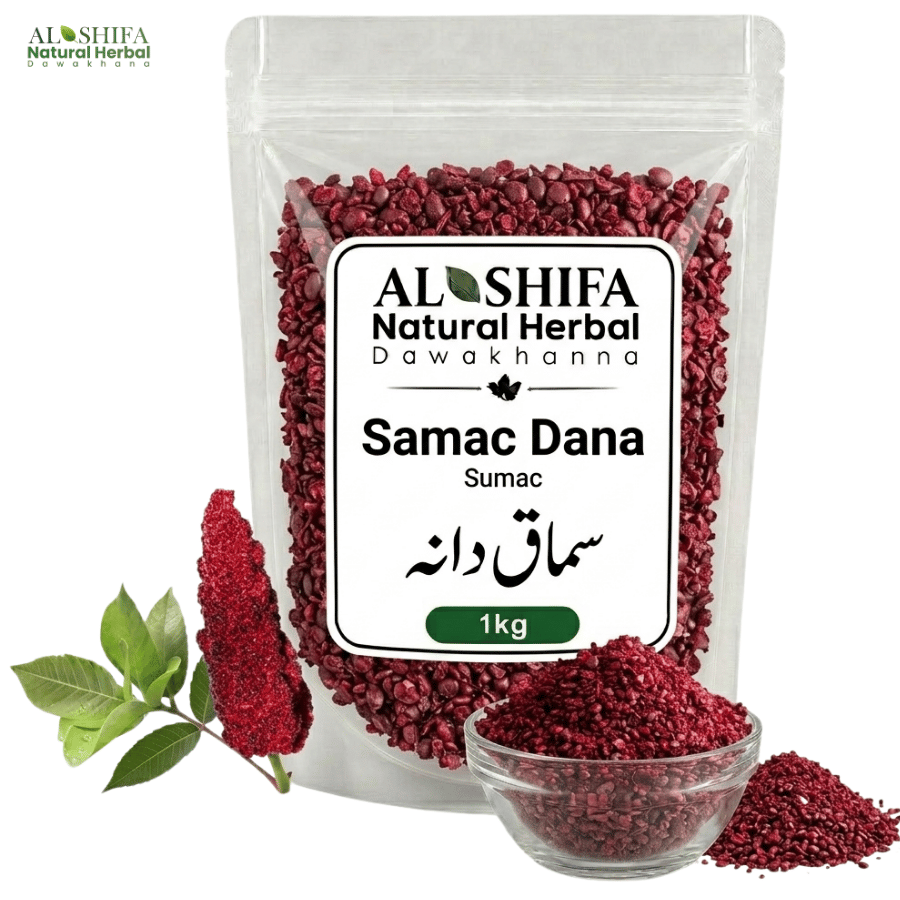
Samac Dana, commonly known as Sumac, is the naturally tart dried fruit traditionally associated with Rhus coriaria. Recognized for its characteristic red to reddish-brown colour and pleasantly sour taste, Sumac has long been valued in culinary, digestive, appetite-related, astringent and selected traditional herbal preparations.
Al Shifa Samac Dana is carefully selected with attention to its botanical identity, natural colour, characteristic tart flavour, cleanliness, proper dryness and responsible storage.
Key Features:
Important Note: Edible Sumac (Rhus coriaria) should not be confused with Poison Sumac (Toxicodendron vernix). Concentrated extracts and ordinary culinary Sumac should not automatically be treated as equivalent preparations.
Samac Dana, commonly known as Sumac, is the dried fruit of edible sumac shrubs belonging to the Rhus genus. In Urdu and traditional herbal markets, it is commonly known as Samac Dana or Samac .
Sumac is recognized for its characteristic deep red to reddish-brown colour and pleasantly sour, tangy taste. The dried fruits have been valued for centuries as both a traditional culinary ingredient and a natural raw material used in Unani and regional herbal preparations.
Traditionally, Samac Dana has been associated with digestive preparations, appetite-related formulations, mouth and throat preparations, astringent herbal mixtures and general culinary use.
At Al Shifa Natural Herbal Dawakhana, Samac Dana is selected with attention to its correct identity, characteristic natural colour, sour taste, cleanliness, proper dryness and responsible storage.
Samac Dana consists of the dried fruits of edible Sumac.
The fruits develop in dense clusters and are generally small, round and covered with a naturally textured outer surface. After drying, they may be used whole, coarsely crushed or ground into powder.
Dried Sumac is especially recognized for its naturally tart flavour, which is why it has traditionally been used as a souring ingredient in foods.
Depending on species, origin and processing, dried Sumac may appear:
Natural variation in colour is normal.
Product Name: Samac Dana
English Name: Sumac / Sumac Berries
Urdu Name: سماق دانہ
Roman Name: Samac Dana / Samaq Dana / Sumac Dana
Common Botanical Association: Rhus coriaria L.
Plant Family: Anacardiaceae
Plant Part: Dried Fruit
Common Form: Whole Dried Fruits / Crushed Sumac / Powder
Product Type: Traditional Culinary & Herbal Fruit Material
The species most strongly associated with culinary and traditional medicinal Sumac across the Mediterranean, Middle East and surrounding regions is Rhus coriaria.
However, several edible Rhus species exist in different parts of the world.
For this reason, the common name “Sumac” alone does not always identify one botanical species.
For traditional South Asian and Middle Eastern herbal trade, Rhus coriaria is an important botanical reference for Samac Dana.
Sumac has a naturally sour, tart and slightly fruity taste.
This characteristic flavour makes it useful as a natural souring ingredient.
Unlike chilli, Sumac is not primarily valued for heat or pungency.
Its culinary role is closer to adding acidity and tanginess to food.
The strength of the sour flavour can vary according to:
Good-quality dried Samac Dana should generally have:
Extremely bright or unnatural-looking colour should not automatically be interpreted as better quality.
Natural Sumac can vary noticeably in shade.
Sumac has a long history in both food and traditional herbal practice.
Traditionally, it has been valued for:
These traditional uses should not be interpreted as guaranteed treatment effects.
Samac Dana has historically been included in digestive preparations.
Its sour and astringent character has made it a familiar ingredient in formulations associated with:
Occasional digestive discomfort is different from persistent abdominal disease.
Long-lasting pain, repeated vomiting, blood in stool, unexplained weight loss or persistent bowel changes require appropriate medical evaluation.
The naturally tart taste of Sumac has traditionally made it useful in preparations associated with appetite and digestion.
Sour culinary ingredients can add flavour and variety to meals, but persistent loss of appetite may have many underlying causes.
Samac Dana should not be presented as a treatment for chronic appetite loss or unexplained weight loss.
Sumac fruits contain naturally occurring plant compounds that contribute to their traditional astringent character.
Astringency is the dry, slightly puckering sensation produced by certain plant compounds in the mouth.
This characteristic helps explain why Sumac has historically appeared in selected traditional mouth, digestive and external preparations.
Astringency should not be confused with proof of antibacterial or disease-treating action.
Sumac has historically appeared in selected preparations associated with oral and throat care.
Its sour and astringent characteristics contributed to this traditional use.
However, Samac Dana should not be considered a substitute for professional treatment of:
Unexplained or persistent mouth and throat symptoms should be appropriately assessed.
Sumac is widely valued as a culinary ingredient.
Depending on regional cuisine, crushed or powdered Sumac may be used with:
Its natural tartness can provide acidity without adding the liquid of lemon juice or vinegar.
Sumac fruits naturally contain a variety of plant compounds.
These may include:
These compounds contribute to Sumac’s characteristic colour, flavour and astringency.
Their presence does not by itself prove that ordinary Sumac treats disease.
Sumac has been investigated for its naturally occurring polyphenolic and antioxidant compounds.
Laboratory studies may measure antioxidant activity in plant extracts.
However, antioxidant activity measured in a laboratory should not automatically be interpreted as evidence that eating Sumac prevents or cures a particular disease.
Whole-food use, concentrated extracts and isolated compounds represent different levels of exposure.
Research has investigated Sumac preparations in relation to blood glucose, lipids and other metabolic markers.
Results from specific preparations or controlled studies should not be interpreted as evidence that ordinary Samac Dana can replace medical treatment.
People with diabetes should continue prescribed treatment and appropriate monitoring.
Concentrated Sumac supplements should be discussed with a healthcare professional when blood-sugar-lowering medicines are being used.
Samac Dana may be available in several forms.
Whole Dried Fruit:
Retains more visible natural fruit characteristics.
Crushed Sumac:
Dried fruit material broken into smaller particles for culinary or traditional use.
Sumac Powder:
Finely ground dried material.
Extract:
A processed preparation containing concentrated soluble plant constituents.
These forms should not automatically be treated as equivalent.
Research involving concentrated extracts does not automatically establish the same effects from ordinary culinary Sumac.
Whole dried material retains more visible identification characteristics than finely powdered Sumac.
Once the material is ground, it becomes more difficult to evaluate:
Reliable sourcing is therefore particularly important when purchasing Sumac powder.
Commercial “Sumac” seasoning may sometimes contain ingredients in addition to Sumac.
Depending on the product, these may include:
Pure Samac Dana or pure Sumac powder should therefore be distinguished from a prepared seasoning blend.
People limiting sodium intake should check whether a commercial Sumac product contains added salt.
Edible culinary Sumac should not be confused with plants commonly called Poison Sumac.
Poison Sumac is botanically associated with Toxicodendron vernix, not Rhus coriaria.
These plants are different.
Poison Sumac can cause severe allergic contact dermatitis due to urushiol and should never be collected or consumed as culinary Sumac.
For food or herbal use, Sumac should come from a reliable edible source rather than unidentified wild plants.
Sumac belongs to the Anacardiaceae family.
This botanical family also includes plants such as:
A person with significant allergies to related plants should use unfamiliar Sumac products cautiously and seek professional advice if necessary.
Allergic reactions to edible Sumac are not inevitable, but individual sensitivity can occur.
Culinary quantities of edible Sumac are generally used as a food ingredient.
However, large amounts or concentrated preparations may cause digestive discomfort in sensitive individuals.
Possible symptoms can include:
Stop use if significant or persistent symptoms develop.
Normal culinary use of edible Sumac and concentrated medicinal use are different situations.
Medicinal amounts or concentrated Sumac extracts during pregnancy or breastfeeding should not be self-directed because safety information for concentrated preparations is limited.
Professional guidance is appropriate when Sumac is intended for regular medicinal use.
Edible Sumac used appropriately as part of normal food preparation is different from concentrated herbal preparations.
Concentrated extracts or medicinal amounts should not routinely be given to young children without appropriate professional guidance.
People taking regular medicines, particularly medicines affecting blood glucose or blood pressure, should seek professional advice before using concentrated Sumac extracts or supplements regularly.
Ordinary culinary use does not necessarily carry the same considerations as concentrated extracts.
At Al Shifa Natural Herbal Dawakhana, Samac Dana is selected with attention to:
Traditional Botanical Identity – Material consistent with edible Sumac fruit.
Characteristic Colour – Naturally red to reddish-brown fruit material.
Natural Tartness – Characteristic sour Sumac flavour.
Proper Dryness – Carefully dried for responsible storage.
Cleanliness – Selected to minimize unnecessary foreign matter.
Material Condition – Attention to moisture, mould and deterioration.
Responsible Storage – Protected from moisture, excessive heat and contamination.
Al Shifa Natural Herbal Dawakhana, established in 1999, supplies traditional herbs, fruits, seeds, spices and natural raw materials throughout Pakistan.
Our focus includes:
Samac Dana has traditionally been used in culinary, digestive, appetite-related and selected compound herbal preparations.
Depending on the intended use, it may be used as:
For culinary use, Sumac is commonly added according to taste.
Medicinal or concentrated use should depend on the product form, individual health and appropriate professional guidance.
Never use unidentified wild Sumac for food or medicinal purposes.
Samac Dana / Sumac is a traditional culinary and herbal fruit material and should not be presented as a guaranteed treatment for diabetes, high cholesterol, digestive diseases, infections, oral diseases or other medical conditions.
Research involving concentrated Rhus coriaria extracts does not automatically establish the same effects for ordinary whole or powdered Sumac.
Edible Sumac should also never be confused with Poison Sumac (Toxicodendron vernix).
Store Samac Dana in a cool, dry and clean place in a tightly closed container.
For responsible storage:
Do not use material showing mould, unusual moisture, insect infestation or significant deterioration.
Samac Dana, commonly known as Sumac, is a naturally tart dried fruit traditionally associated with Rhus coriaria. It has been valued for centuries as both a culinary ingredient and a traditional herbal material used in digestive, appetite-related, astringent and selected compound preparations.
Its characteristic red to reddish-brown colour and pleasantly sour taste make Sumac a distinctive ingredient in traditional foods and herbal mixtures.
Customers searching for Samac Dana, Samaq Dana, Sumac, Sumac Berries, Rhus coriaria, Sumac powder, pure Sumac, original Sumac, Sumac benefits, Sumac uses, Samac Dana benefits, Samac Dana uses, Sumac for digestion, Sumac spice, Sumac Pakistan, Samac Dana Pakistan, Sumac Lahore, Samac Dana Lahore, Sumac price in Pakistan, Samac Dana price in Pakistan, Sumac powder price in Pakistan, buy Sumac Pakistan, buy Samac Dana Pakistan or Sumac online Pakistan can choose Al Shifa Natural Herbal Dawakhana for carefully selected traditional Sumac material.
Since 1999, Al Shifa Natural Herbal Dawakhana has focused on supplying traditional herbs and natural products with attention to identity, cleanliness, proper drying, careful handling and responsible storage.
Product Name: Samac Dana
English Name: Sumac / Sumac Berries
Urdu Name: سماق دانہ
Roman Name: Samac Dana / Samaq Dana / Sumac Dana
Scientific Name: Rhus coriaria L.
Plant Family: Anacardiaceae
Plant Part: Dried Fruit
Common Form: Whole Dried Fruits / Crushed Sumac / Powder
Product Type: Traditional Culinary & Herbal Fruit Material
Traditional Use: Culinary, digestive, appetite-related, astringent and selected compound herbal preparations
Important Note: Edible Sumac (Rhus coriaria) should not be confused with Poison Sumac (Toxicodendron vernix). Whole fruit, powder and concentrated extracts should not automatically be treated as equivalent preparations.
سماق دانہ ایک مشہور کھٹا ذائقہ رکھنے والا نباتاتی مفرد ہے جو سماق کے پودے کے پھل سے حاصل کیا جاتا ہے۔ یہ چھوٹے، گول اور سرخی مائل دانوں کی شکل میں ہوتا ہے۔ خشک ہونے کے بعد اس کا رنگ گہرا سرخ، سرخی مائل بھورا یا جامنی مائل ہو سکتا ہے۔
سماق اپنے خاص کھٹے اور قدرے کسیلے ذائقے کی وجہ سے پہچانا جاتا ہے۔ اسے کھانوں میں ذائقہ بڑھانے کے ساتھ طبِ یونانی اور دیسی طبی ادویات میں بھی استعمال کیا جاتا رہا ہے۔
طبِ یونانی میں سماق دانہ کو خصوصاً معدے اور آنتوں کے امراض، اسہال، بھوک کی کمی، منہ اور مسوڑھوں کے امراض اور زیادہ پیاس کے لیے استعمال ہونے والی ادویات میں شامل کیا جاتا ہے۔
الشفاء نیچرل ہربل دواخانہ میں سماق دانہ منتخب کرتے وقت اس کی درست پہچان، قدرتی سرخی مائل رنگت، خاص کھٹا ذائقہ، صفائی اور مناسب خشک حالت کو اہمیت دی جاتی ہے۔
سماق ایک جھاڑی نما پودا ہے جس پر چھوٹے چھوٹے سرخ پھل گچھوں کی شکل میں لگتے ہیں۔ مکمل پکنے کے بعد ان پھلوں کو جمع کرکے خشک کیا جاتا ہے۔
خشک سماق کو مکمل دانوں یا پیسی ہوئی شکل میں استعمال کیا جا سکتا ہے۔ اس کا ذائقہ قدرتی طور پر کھٹا اور قدرے کسیلا ہوتا ہے۔
خشک سماق دانہ کی عام خصوصیات میں شامل ہیں:
اس کی رنگت، جسامت اور ذائقہ پودے کی قسم، اگنے کی جگہ، پختگی اور خشک کرنے کے طریقے کے مطابق مختلف ہو سکتا ہے۔
نام: سماق دانہ
دوسرا معروف نام: سماق
نباتاتی نام: رس کوریاریا
خاندان: ایناکارڈیسی خاندان
استعمال ہونے والا حصہ: خشک پھل
قسم: نباتاتی مفرد دوا
عام شکل: چھوٹے خشک سرخ دانے
عام رنگت: سرخ، گہرا سرخ یا سرخی مائل بھورا
ذائقہ: کھٹا اور قدرے کسیلا
بو: ہلکی اور خاص
مزاج: سرد و خشک
سماق کو طبِ یونانی میں ٹھنڈی اور خشک تاثیر رکھنے والا نباتاتی مفرد سمجھا جاتا ہے۔
اس کے کھٹے اور کسیلے ذائقے کی وجہ سے اسے جسم سے غیر ضروری رطوبت کے اخراج کو کم کرنے اور معدے کو مضبوط کرنے والی ادویات میں شامل کیا جاتا ہے۔
سرد مزاج افراد یا ایسے افراد جنہیں کھٹی چیزوں سے معدے میں تکلیف ہوتی ہو، وہ سماق کا طبی استعمال خود سے زیادہ مقدار میں نہ کریں۔
اچھی سماق دانہ میں درج ذیل خصوصیات ہونی چاہییں:
اگر سماق نم، پھپھوندی زدہ، بے ذائقہ، کیڑوں سے متاثر یا غیر معمولی بو والا ہو تو اسے طبی یا غذائی استعمال کے لیے منتخب نہ کریں۔
طبِ یونانی اور حکیمی معلومات میں سماق دانہ کے درج ذیل افعال بیان کیے جاتے ہیں:
قابض: آنتوں سے زیادہ رطوبت کے اخراج کو کم کرنے والی ادویات میں شامل کیا جاتا ہے۔
مقوی معدہ: معدے کی کمزوری اور ہاضمے کے امراض کے لیے استعمال ہونے والی حکیمی ادویات میں شامل کیا جاتا ہے۔
اشتها بڑھانے میں مدد: اس کا کھٹا ذائقہ کھانے میں دلچسپی بڑھانے میں مدد دے سکتا ہے۔
پیاس کم کرنے میں مدد: گرمی اور زیادہ پیاس کی کیفیت میں استعمال ہونے والی دیسی طبی ادویات میں شامل کیا جاتا ہے۔
مسوڑھوں کے لیے استعمال: مسوڑھوں اور منہ کے امراض کے لیے استعمال ہونے والی چند حکیمی ادویات میں شامل کیا جاتا ہے۔
رطوبت کم کرنے میں مدد: اس کی کسیلی خاصیت کی وجہ سے زیادہ رطوبت والی کیفیت میں استعمال ہونے والی ادویات میں جگہ دی جاتی ہے۔
یہ افعال طبِ یونانی اور حکیمی معلومات میں بیان کیے گئے ہیں۔ انہیں ہر بیماری کا ثابت شدہ علاج نہیں سمجھنا چاہیے۔
سماق دانہ کو طبِ یونانی میں معدے کی کمزوری، بدہضمی اور ہاضمے کے امراض کے لیے استعمال ہونے والی ادویات میں شامل کیا جاتا ہے۔
اس کا کھٹا اور کسیلا ذائقہ اسے دوسری ہاضم جڑی بوٹیوں سے منفرد بناتا ہے۔
اسے درج ذیل کیفیات میں استعمال ہونے والی حکیمی ادویات میں شامل کیا جاتا ہے:
اگر پیٹ میں شدید یا مسلسل درد، خون والی قے، کالا پاخانہ، مسلسل قے یا وزن میں غیر معمولی کمی ہو تو یہ معدے یا آنتوں کی بیماری کی علامت ہو سکتی ہے۔ ایسی صورت میں خود علاج نہ کریں۔
سماق کا کسیلا ذائقہ اس کی اہم خصوصیات میں سے ایک ہے۔ اسی وجہ سے طبِ یونانی میں اسے اسہال اور آنتوں کے امراض کے لیے استعمال ہونے والی قابض ادویات میں شامل کیا جاتا ہے۔
اسہال کی صورت میں جسم میں پانی اور نمکیات کی کمی سب سے اہم خطرہ ہے۔
اگر اسہال کے ساتھ:
ہو تو یہ سنگین بیماری کی علامت ہو سکتی ہے۔ ایسی حالت میں سماق پر انحصار کرنے کے بجائے فوری طبی معائنہ کروائیں۔
سماق کے کھٹے ذائقے کی وجہ سے اسے بھوک کی کمی کے لیے استعمال ہونے والی دیسی طبی ادویات اور کھانوں میں شامل کیا جاتا ہے۔
کھٹے ذائقے والی غذائیں منہ میں لعاب پیدا کرنے اور کھانے کا ذائقہ بڑھانے میں مدد دے سکتی ہیں۔
اگر بھوک کی کمی کئی ہفتوں تک رہے، وزن مسلسل کم ہو، شدید کمزوری ہو یا کھانا دیکھ کر متلی محسوس ہو تو یہ کسی بیماری کی علامت ہو سکتی ہے۔
سماق کی کسیلی خاصیت کی وجہ سے اسے منہ اور مسوڑھوں کے امراض کے لیے استعمال ہونے والی حکیمی ادویات میں شامل کیا جاتا رہا ہے۔
اس کا ذکر خاص طور پر مسوڑھوں کی کمزوری اور منہ کی صفائی کے لیے استعمال ہونے والی ادویات میں ملتا ہے۔
اگر مسوڑھوں سے مسلسل خون آئے، پیپ نکلے، دانت ہلنے لگیں، منہ میں زخم بار بار ہوں یا شدید دانت درد ہو تو دندان ساز سے معائنہ کروائیں۔
طبِ یونانی میں سماق کو اس کے کھٹے ذائقے اور ٹھنڈی تاثیر کی وجہ سے زیادہ پیاس اور جسم میں گرمی محسوس ہونے کی کیفیت کے لیے استعمال ہونے والی ادویات میں شامل کیا جاتا ہے۔
اگر پیاس معمول سے بہت زیادہ ہو اور اس کے ساتھ بار بار پیشاب آنا، وزن کم ہونا، دھندلا دکھائی دینا یا شدید تھکن ہو تو یہ ذیابیطس یا دوسری بیماری کی علامت ہو سکتی ہے۔
ایسی حالت میں صرف ٹھنڈی چیزیں یا سماق استعمال کرنے کے بجائے خون میں شکر اور دوسری ضروری طبی جانچ کروائیں۔
سماق صرف طبی استعمال تک محدود نہیں۔ اسے کھانوں میں قدرتی کھٹا ذائقہ دینے کے لیے بھی استعمال کیا جاتا ہے۔
اسے پیس کر:
میں شامل کیا جا سکتا ہے۔
اس کا کھٹا ذائقہ لیموں سے مختلف ہوتا ہے اور کھانے کو خاص خوشبو اور ذائقہ دیتا ہے۔
غذائی مقدار اور طبی مقدار میں فرق ہوتا ہے۔ کھانے میں مناسب مقدار میں استعمال کو طبی علاج کے برابر نہیں سمجھنا چاہیے۔
سماق کے پھل میں کئی قدرتی نباتاتی اجزاء پائے جاتے ہیں۔
ان میں شامل ہیں:
سماق کے سرخ رنگ اور کھٹے کسیلے ذائقے میں ان قدرتی اجزاء کا کردار ہوتا ہے۔
ان اجزاء کی مقدار پودے کی قسم، اگنے کی جگہ، پختگی، خشک کرنے اور محفوظ رکھنے کے طریقے کے مطابق مختلف ہو سکتی ہے۔
مکمل سماق دانہ:
مکمل دانوں میں رنگت، ساخت، صفائی اور ظاہری معیار دیکھنا آسان ہوتا ہے۔ دوسری چیزوں کی ملاوٹ کا اندازہ لگانا بھی نسبتاً آسان رہتا ہے۔
سماق کا سفوف:
سفوف کھانوں اور حکیمی ادویات میں شامل کرنا آسان ہوتا ہے، لیکن پیسنے کے بعد اصل سماق کی ظاہری پہچان اور ملاوٹ کو جانچنا مشکل ہو جاتا ہے۔
طبی یا غذائی استعمال کے لیے درست پہچان شدہ مکمل سماق لے کر ضرورت کے مطابق تازہ پیسنا بہتر ہو سکتا ہے۔
سماق اور املی دونوں کھٹا ذائقہ رکھتے ہیں، لیکن دونوں الگ نباتاتی چیزیں ہیں۔
سماق:
یہ چھوٹے سرخ پھلوں سے حاصل ہوتا ہے۔ اس کا ذائقہ کھٹا ہونے کے ساتھ قدرے کسیلا بھی ہوتا ہے۔
املی:
یہ ایک الگ درخت کی پھلی کے اندر موجود گودے سے حاصل ہوتی ہے۔ اس کا ذائقہ کھٹا اور قدرے میٹھا ہو سکتا ہے۔
املی کے تمام طبی استعمال اور خصوصیات کو سماق پر لاگو نہیں کرنا چاہیے۔
سماق کی مختلف اقسام پائی جاتی ہیں اور ہر قسم خوراک کے لیے مناسب نہیں ہوتی۔
کھانے اور طبی استعمال کے لیے درست شناخت شدہ خوردنی سماق ہی استعمال کریں۔ صرف سرخ دانے یا ظاہری مشابہت دیکھ کر کسی جنگلی پودے کو خوردنی سماق نہ سمجھیں۔
نامعلوم جنگلی پودے کے پھل خود جمع کرکے کھانے یا طبی استعمال میں لانے سے گریز کریں۔
پسا ہوا سماق خریدتے وقت غیر معمولی طور پر شوخ رنگ کو معیار کی واحد علامت نہ سمجھیں۔
قدرتی سماق کا رنگ پودے اور خشک ہونے کے طریقے کے مطابق سرخ سے سرخی مائل بھورا ہو سکتا ہے۔
مصنوعی رنگ، دوسری چیزوں کا سفوف یا غیر ضروری نمک شامل ہونے کی صورت میں اصل سماق کی پہچان مشکل ہو سکتی ہے۔
سماق کا ذائقہ کھٹا ہوتا ہے۔ ایسے افراد جنہیں کھٹی چیزیں کھانے سے معدے میں جلن، سینے میں جلن یا تیزابیت بڑھتی ہو، وہ اسے زیادہ مقدار میں استعمال نہ کریں۔
اگر سینے کی جلن بار بار ہو، نگلنے میں مشکل ہو، خون والی قے آئے یا وزن کم ہو رہا ہو تو یہ معدے یا غذائی نالی کی بیماری کی علامت ہو سکتی ہے۔
سماق ایک ایسے نباتاتی خاندان سے تعلق رکھتا ہے جس میں کئی دوسرے پودے بھی شامل ہیں۔
اگر سماق کھانے یا استعمال کرنے کے بعد:
تو استعمال فوراً بند کریں۔ سانس میں دشواری یا گلے اور زبان کی سوجن کی صورت میں فوری طبی مدد حاصل کریں۔
خواتین سماق کو ماہواری کی بیماری، رحم کی بیماری یا بانجھ پن کے علاج کے لیے خود سے استعمال نہ کریں۔
ماہواری میں مسلسل خرابی، غیر معمولی خون، پیٹ کے نچلے حصے میں شدید درد یا دوسری غیر معمولی علامات میں مستند معالج سے معائنہ کروائیں۔
کھانے میں استعمال ہونے والی مناسب مقدار اور طبی مقصد سے زیادہ مقدار میں استعمال ایک جیسا نہیں ہے۔
حاملہ خواتین سماق کو زیادہ طبی مقدار، سفوف یا مرکب حکیمی دوا کی شکل میں خود سے استعمال نہ کریں۔ حمل کے دوران کسی بیماری کے علاج کے لیے استعمال سے پہلے مستند معالج سے مشورہ کریں۔
دودھ پلانے والی خواتین کھانے سے زیادہ طبی مقدار میں سماق کا استعمال خود سے شروع نہ کریں۔
اگر اسے کسی بیماری کے لیے استعمال کرنا مقصود ہو تو مستند معالج سے مقدار اور استعمال کی مدت معلوم کریں۔
بچوں کو سماق طبی دوا کے طور پر خود سے زیادہ مقدار میں نہ دیں۔
اسہال، مسلسل پیٹ درد، قے یا بخار کی بیماری میں بچے کو صرف سماق دینے کے بجائے اصل وجہ معلوم کرنا ضروری ہے۔
خاص طور پر چھوٹے بچوں میں اسہال کے دوران پانی کی کمی تیزی سے ہو سکتی ہے۔
جگر یا گردوں کی بیماری والے افراد سماق کو زیادہ طبی مقدار میں خود سے استعمال نہ کریں۔
ایسے افراد اگر مستقل ادویات استعمال کر رہے ہوں تو سماق کو طبی مقصد سے لینے سے پہلے اپنے معالج سے مشورہ کریں۔
اگر کوئی شخص مستقل دوائیں استعمال کر رہا ہو تو سماق کا زیادہ طبی استعمال شروع کرنے سے پہلے مستند معالج سے مشورہ کرنا بہتر ہے۔
خاص طور پر:
استعمال کرنے والے افراد احتیاط کریں۔
جڑی بوٹیوں اور جدید ادویات کو ایک ساتھ استعمال کرنے سے جسم پر اثرات تبدیل ہو سکتے ہیں۔
زیادہ مقدار یا جسم کو موافق نہ آنے کی صورت میں سماق سے:
ہو سکتی ہے۔
ایسی علامات پیدا ہونے پر استعمال بند کریں۔ شدید الرجی یا سانس لینے میں مشکل کی صورت میں فوری طبی مدد حاصل کریں۔
سماق کے مصلح اور بدل کا انتخاب استعمال کے مقصد، مریض کے مزاج اور دوا کی نوعیت کے مطابق کیا جاتا ہے۔
صرف کھٹا ذائقہ ہونے کی وجہ سے املی، لیموں یا کسی دوسری کھٹی چیز کو سماق کا مکمل طبی بدل نہیں سمجھنا چاہیے۔
مستند حکیم مطلوبہ طبی مقصد کے مطابق مناسب مصلح یا بدل تجویز کر سکتا ہے۔
سماق کی مناسب طبی مقدار اس کی شکل، معیار، مریض کی عمر، مزاج، صحت کی حالت اور استعمال کے مقصد کے مطابق مختلف ہو سکتی ہے۔
کھانے میں مصالحے کے طور پر استعمال اور بیماری کے لیے طبی استعمال میں فرق ہوتا ہے۔
اسی لیے کسی بیماری کے علاج کے لیے خود سے مقرر مقدار لینے کے بجائے مستند حکیم یا معالج سے مقدار، مدت اور طریقۂ استعمال معلوم کریں۔
سماق ایک قدرتی نباتاتی چیز ہے۔ قدرتی ہونے کا مطلب یہ نہیں کہ اسے ہر شخص، ہر بیماری اور ہر مقدار میں استعمال کر سکتا ہے۔
اسے خود سے درج ذیل بیماریوں کا ثابت شدہ علاج نہ سمجھیں:
سماق کے کئی طبی استعمال طبِ یونانی اور دیسی طبی معلومات میں بیان کیے گئے ہیں۔ اس کے نباتاتی اجزاء پر سائنسی تحقیق بھی ہوئی ہے، لیکن ہر بیان کردہ طبی فائدے کے لیے مضبوط انسانی تحقیق موجود نہیں۔
الشفاء نیچرل ہربل دواخانہ میں سماق دانہ منتخب کرتے وقت درج ذیل باتوں کا خیال رکھا جاتا ہے:
درست پہچان: خوردنی اور مطلوبہ سماق کے پھل کو اہمیت دی جاتی ہے۔
قدرتی رنگت: اصل سرخ، گہری سرخ یا سرخی مائل بھوری رنگت دیکھی جاتی ہے۔
قدرتی ذائقہ: سماق کا خاص کھٹا اور قدرے کسیلا ذائقہ موجود ہونا چاہیے۔
مناسب خشک حالت: دانوں میں غیر ضروری نمی یا چپچپاہٹ نہیں ہونی چاہیے۔
صاف ستھری حالت: مٹی، گرد اور دوسری غیر ضروری چیزوں سے پاک سماق کو ترجیح دی جاتی ہے۔
پھپھوندی اور کیڑوں سے حفاظت: خراب، کیڑے لگے یا پھپھوندی والے دانے استعمال کے لیے مناسب نہیں سمجھے جاتے۔
مناسب حفاظت: سماق کو نمی، زیادہ گرمی، کیڑوں اور تیز بو والی چیزوں سے محفوظ رکھا جاتا ہے۔
الشفاء نیچرل ہربل دواخانہ سنہ ۱۹۹۹ سے قدرتی جڑی بوٹیوں کی سپلائی کر رہا ہے۔
ہم سماق دانہ کی درست پہچان، قدرتی رنگت، خاص کھٹے ذائقے، صفائی اور مناسب خشک حالت کو اہمیت دیتے ہیں۔ احتیاط سے منتخب اور مناسب طریقے سے محفوظ کیا گیا سماق دانہ پاکستان بھر میں فراہم کیا جاتا ہے۔
سماق دانہ کو ٹھنڈی، خشک اور صاف جگہ پر اچھی طرح بند جار یا پیکٹ میں رکھیں۔
اگر سماق میں پھپھوندی، کیڑے، زیادہ نمی یا غیر معمولی خراب بو پیدا ہو جائے تو اسے استعمال نہ کریں۔
سماق دانہ سرخ رنگ کا کھٹا اور قدرے کسیلا پھل ہے جو کھانوں کے ساتھ طبِ یونانی اور دیسی طبی ادویات میں بھی استعمال کیا جاتا ہے۔ اسے خصوصاً معدے اور آنتوں کے امراض، اسہال، بھوک کی کمی، منہ اور مسوڑھوں کے امراض اور زیادہ پیاس کے لیے استعمال ہونے والی ادویات میں شامل کیا جاتا رہا ہے۔
اگر آپ سماق دانہ، سماق، خالص سماق، اصل سماق دانہ، سماق دانہ کے فوائد، سماق دانہ کے استعمال، سماق دانہ پاکستان، سماق دانہ لاہور، سماق دانہ کی قیمت، سماق دانہ آن لائن یا سماق دانہ خریدیں تلاش کر رہے ہیں تو الشفاء نیچرل ہربل دواخانہ احتیاط سے منتخب، صاف ستھرا اور مناسب طریقے سے محفوظ کیا گیا سماق دانہ فراہم کرتا ہے۔
نام: سماق دانہ
دوسرا معروف نام: سماق
نباتاتی نام: رس کوریاریا
خاندان: ایناکارڈیسی خاندان
استعمال ہونے والا حصہ: خشک پھل
قسم: نباتاتی مفرد دوا
مزاج: سرد و خشک
ذائقہ: کھٹا اور قدرے کسیلا
اہم افعال: قابض، معدے کو طاقت دینے والی، بھوک بڑھانے میں مدد دینے والی اور زیادہ پیاس کم کرنے والی حکیمی ادویات میں استعمال۔
طبِ یونانی میں استعمال: معدے اور آنتوں کے امراض، اسہال، بھوک کی کمی، منہ اور مسوڑھوں کے امراض اور زیادہ پیاس کے لیے استعمال ہونے والی ادویات میں شامل کیا جاتا ہے۔
اہم نوٹ: طبی اور غذائی استعمال میں فرق ہے۔ درست شناخت شدہ خوردنی سماق استعمال کریں۔ حاملہ خواتین، دودھ پلانے والی مائیں، بچے، جگر یا گردوں کی بیماری والے افراد اور مستقل ادویات استعمال کرنے والے افراد طبی مقدار میں استعمال سے پہلے مستند معالج سے رہنمائی حاصل کریں۔