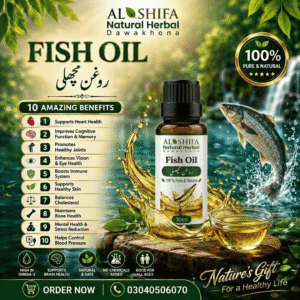
روغن مچھلی
Price range: ₨ 400 through ₨ 10,000
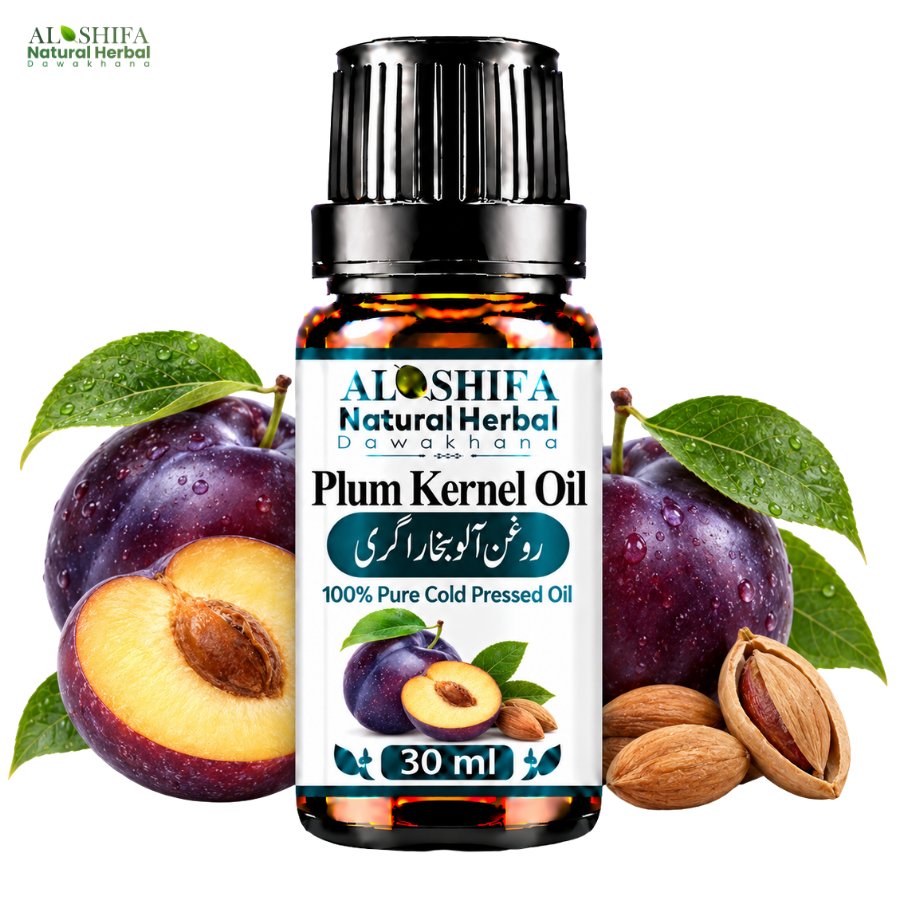
Plum Kernel Oil / Roghan Alu Bukhara Giri is a natural fixed vegetable oil obtained from the inner kernels of Prunus domestica. It is naturally rich in oleic acid (Omega-9) and contains linoleic acid (Omega-6), tocopherols and phytosterols. Its light, smooth emollient character makes it suitable for facial care, dry and rough-feeling skin, lip care, body care, massage, hair and scalp conditioning.
Al Shifa Plum Kernel Oil is carefully selected with attention to its genuine Plum kernel origin, natural fatty-acid profile, freshness, clean handling and protective packaging.
Key Features:
Usage: Apply a few drops to the face, body, hair or scalp, use in suitable lip-care formulations, use as a massage carrier oil, or incorporate into serums, creams, lotions and balms.
Important Note: Plum Kernel Oil is different from Peach Kernel Oil, Apricot Kernel Oil, Plum fragrance oil and raw Plum kernels. Cosmetic-grade Plum Kernel Oil should not automatically be considered food-grade.
Plum Kernel Oil / Roghan Alu Bukhara Giri – روغن آلوبخارا گری is a natural fixed vegetable oil obtained from the inner kernels of the Plum fruit, commonly associated with Prunus domestica L., a member of the Rosaceae family. It is a smooth, lightweight carrier oil naturally rich in oleic acid (Omega-9) and linoleic acid (Omega-6), with smaller amounts of palmitic and stearic acids.
Plum Kernel Oil is valued in cosmetic formulations for its soft emollient character, smooth spreadability and relatively light skin feel. It is suitable for facial care, dry and rough-feeling skin, body care, massage, lip care, hair and scalp conditioning, facial serums, creams, lotions, balms and other cosmetic formulations.
At Al Shifa Natural Herbal Dawakhana, Plum Kernel Oil is selected with attention to its genuine Plum kernel origin, characteristic fatty-acid profile, freshness, clean handling and protective packaging.
Plum Kernel Oil is the natural fixed oil obtained from the kernel located inside the hard stone of the Plum fruit.
A Plum fruit contains:
The inner kernel contains natural lipids that can be extracted and processed into Plum Kernel Oil.
It is a:
It is not a conventional essential oil.
Product Name: Plum Kernel Oil / Roghan Alu Bukhara Giri – روغن آلوبخارا گری
English Name: Plum Kernel Oil / Plum Seed Oil
Urdu Name: روغن آلوبخارا گری / آلوبخارا کی گری کا تیل / آلوبخارا کے بیج کا تیل
Roman Name: Plum Kernel Oil / Roghan Alu Bukhara Giri
Scientific Name: Prunus domestica L.
Plant Family: Rosaceae
Plant Part: Kernel / Seed
Oil Type: Fixed Vegetable Oil / Kernel Oil / Carrier Oil
Common Forms: Cold-Pressed Plum Kernel Oil / Virgin Plum Kernel Oil / Refined Plum Kernel Oil / Cosmetic-Grade Plum Kernel Oil
Appearance: Pale Yellow to Golden-Yellow, Depending on Extraction and Refining
Aroma: Mild, Characteristic, Often Slightly Nutty or Marzipan-Like
Primary Applications: Facial Care, Dry & Rough-Feeling Skin, Lip Care, Body Care, Massage, Hair & Scalp Conditioning, Serums, Creams, Lotions & Balms
Product Type: Plum Kernel Fixed Oil
Prunus domestica is one of the principal botanical species associated with cultivated European Plum.
It belongs to the Rosaceae family and produces fleshy fruits containing a hard central stone.
Inside the stone is a kernel from which Plum Kernel Oil can be extracted.
The oil should be distinguished from:
The edible fruit and the kernel-derived fixed oil have substantially different compositions.
Production generally involves:
Cold-pressed Plum Kernel Oil generally retains more of its characteristic aroma and natural appearance.
Refined oil may be:
The final characteristics depend on the kernel source and processing method.
Good-quality Plum Kernel Oil generally has:
Some unrefined Plum Kernel Oils may have a noticeable sweet, nutty or marzipan-like aroma.
The intensity of this aroma can vary considerably according to processing.
Plum Kernel Oil naturally contains a mixture of unsaturated and saturated fatty acids.
Important fatty acids generally include:
Oleic and linoleic acids generally make up the majority of its fatty-acid profile.
Exact percentages vary according to Plum variety, growing conditions, kernel quality, extraction and refining.
Oleic acid is generally the dominant fatty acid in Plum Kernel Oil.
It contributes to:
However:
Plum Kernel Oil ≠ Pure Omega-9
It naturally contains several fatty acids and minor plant components.
Linoleic acid is another important component of Plum Kernel Oil.
It contributes to:
However:
Plum Kernel Oil ≠ Pure Omega-6
Its exact concentration varies according to the natural oil source.
Plum Kernel Oil naturally contains varying amounts of tocopherols belonging to the Vitamin E family.
Their concentration can be influenced by:
However:
Plum Kernel Oil ≠ Pure Vitamin E
Naturally occurring tocopherols should not be confused with concentrated Vitamin E preparations.
Plum Kernel Oil may also naturally contain:
Their amounts depend on the oil source and processing.
These components form part of the natural oil rather than existing as standardized concentrated extracts.
Plum Kernel Oil is well suited to cosmetic skin-care formulations because of its smooth, relatively lightweight emollient character.
It can contribute to:
It can be used alone where suitable or blended with other compatible carrier oils.
Plum Kernel Oil can be incorporated into:
Its smooth spreadability makes it particularly useful where a soft and comfortable facial-oil texture is desired.
Plum Kernel Oil can be incorporated into products designed for dry-feeling skin.
It may provide:
Its role is cosmetic conditioning rather than treatment of medical skin diseases.
Plum Kernel Oil can be incorporated into products for areas such as:
It can also be blended with richer oils, waxes and plant butters when additional emollience is desired.
Plum Kernel Oil can be included in cosmetic products intended for mature-looking or dry skin.
Its natural lipid profile can contribute to:
However:
Cosmetic Conditioning ≠ Reversal of Biological Aging
Plum Kernel Oil should not be presented as permanently removing wrinkles or reversing natural skin aging.
Plum Kernel Oil can be incorporated into:
Its smooth texture and characteristic aroma can make it particularly attractive for lip-care formulations.
However, only ingredients and finished products specifically formulated for lip application should be used around the mouth.
Plum Kernel Oil can be incorporated into:
Its relatively light texture can provide emollience without the same heavy feel associated with some thicker carrier oils.
Plum Kernel Oil can be used as a carrier oil in massage formulations.
It provides:
It may be blended with other compatible carrier oils according to the desired texture.
Massage use should not be confused with medical treatment for muscular, joint or neurological diseases.
Plum Kernel Oil can serve as a carrier for appropriately diluted essential oils and compatible oil-soluble cosmetic ingredients.
It can be used in:
Essential oils should always be diluted according to their individual safety requirements.
Plum Kernel Oil can be incorporated into cosmetic hair-care formulations.
It may contribute to:
Its relatively lightweight texture can make it useful in hair serums and leave-on formulations.
Plum Kernel Oil can be incorporated into:
It can improve the cosmetic feel and appearance of dry, rough or frizzy-looking hair.
A small amount can be applied to hair lengths and ends to improve:
However:
Hair Conditioning ≠ Permanent Split-End Repair
Plum Kernel Oil cannot permanently reconnect physically split hair fibres.
Plum Kernel Oil may be incorporated into compatible scalp-care formulations.
It can provide:
It should not be presented as treatment for dandruff, psoriasis, dermatitis, fungal infections or other scalp diseases.
Plum Kernel Oil can condition the hair and scalp and improve the cosmetic appearance of dry hair.
However:
Hair Conditioning ≠ Proven Hair-Regrowth Treatment
It should not be marketed as a guaranteed treatment for baldness, alopecia or medical causes of hair loss.
Plum Kernel Oil is particularly suitable for oil-based facial serums.
It can be blended with:
Its relatively light texture can help create a smooth facial-oil formulation.
Plum Kernel Oil can be incorporated into the oil phase of:
It contributes:
Plum Kernel Oil can be combined with:
to create:
The edible Plum fruit and Plum Kernel Oil have very different compositions.
Whole Plum fruit contains substantial amounts of:
Plum Kernel Oil consists primarily of lipids extracted from the inner kernel.
Therefore:
Whole Plum Nutrition ≠ Plum Kernel Oil Composition
Nutrients associated with eating fresh or dried Plums should not automatically be attributed to the kernel oil.
The word prune generally refers to a dried Plum.
Commercial naming can sometimes include terms such as Plum Oil or Prune Kernel Oil depending on the source and market.
The actual botanical species and plant part should therefore be checked rather than relying only on a common commercial name.
Plum, Peach and Apricot belong to the Prunus group and their kernel oils can have overlapping cosmetic characteristics.
However:
They are separate botanical oils and should not be labelled interchangeably.
Plum kernels belong to the Prunus group. Raw kernels of plants in this group can contain naturally occurring cyanogenic compounds.
This creates an important distinction:
Raw Plum Kernel ≠ Properly Processed Plum Kernel Oil
Raw Plum kernels should not be consumed based on assumptions about the cosmetic benefits of the oil.
The safety and composition of a professionally processed cosmetic oil should not be assumed to be identical to eating, crushing or preparing raw kernels at home.
Products containing cyanogenic kernel compounds should not be promoted as cancer treatments or as so-called “Vitamin B17” therapy.
Plum Kernel Oil naturally contains varying amounts of tocopherols.
However:
Natural Tocopherols ≠ Concentrated Vitamin E
Plum Kernel Oil should not be marketed as equivalent to pure Vitamin E or a standardized Vitamin E product.
Plum Kernel Oil contains natural lipids and minor plant components.
However:
Plum Kernel Oil ≠ Tested Sunscreen
It should not replace a properly formulated and tested sunscreen when reliable ultraviolet protection is required.
Research involving Plum may examine:
These materials are not interchangeable.
Research findings involving whole Plum fruit, extracts or isolated compounds should not automatically be attributed to topical Plum Kernel Oil.
For cosmetic applications, Plum Kernel Oil is primarily valued for its oleic- and linoleic-rich fatty-acid profile, smooth spreadability, emollient character and pleasant sensory properties.
Correct product identification is important when purchasing or formulating with Plum Kernel Oil.
These distinctions are important for accurate labelling and responsible use.
Individual sensitivity to botanical oils is possible.
People with known allergies to Plum or related Prunus fruits should use additional caution.
Before extensive topical use:
Possible sensitivity signs include:
Avoid direct contact with eyes and mucous membranes.
For ordinary external cosmetic use, appropriately processed Plum Kernel Oil may be used according to the directions of the finished product.
However:
For dietary use, choose only oil specifically manufactured, tested and labelled for food use.
For cosmetic use on children:
Raw Plum kernels should not be given to children as a substitute for Plum Kernel Oil.
Keep cosmetic oils securely out of reach of young children.
Plum Kernel Oil can be produced in different commercial grades.
Therefore:
Cosmetic Grade ≠ Automatically Food Grade
Do not consume Plum Kernel Oil sold specifically for cosmetic or external use.
Food use requires appropriate processing, hygiene controls, quality standards, packaging and labelling.
At Al Shifa Natural Herbal Dawakhana, Plum Kernel Oil is selected with attention to:
Botanical Identity – Genuine Plum kernel origin.
Plant Part – Inner kernel rather than fruit pulp, juice or fragrance.
Fixed-Oil Identity – Natural vegetable kernel oil rather than conventional essential oil.
Fatty-Acid Profile – Characteristic oleic- and linoleic-rich composition.
Omega-9 Content – Naturally rich in oleic acid.
Omega-6 Content – Naturally contains linoleic acid.
Natural Components – Naturally occurring tocopherols, phytosterols and minor plant components.
Skin Applications – Suitable for facial and body-care formulations.
Dry-Skin Applications – Suitable for dry and rough-feeling skin conditioning.
Lip Applications – Suitable for properly formulated cosmetic lip-care products.
Massage Applications – Suitable as a cosmetic carrier oil.
Hair Applications – Suitable for hair oils, serums and conditioners.
Scalp Applications – Suitable for compatible scalp-care formulations.
Cosmetic Applications – Suitable for creams, lotions, serums, balms and body butters.
Freshness – Attention to the natural condition of the oil.
Clean Handling – Carefully handled during packing.
Protective Packaging – Helps maintain product quality.
Responsible Claims – No exaggerated anti-aging, sunscreen or hair-growth claims.
Al Shifa Natural Herbal Dawakhana, established in 1999, supplies carefully selected natural oils, essential oils, herbs and botanical materials throughout Pakistan.
Our focus for Plum Kernel Oil includes:
For Facial Care: Apply a few drops to clean skin or incorporate into suitable facial oils and serums.
For Dry & Rough-Feeling Skin: Apply a small amount to areas requiring additional emollient conditioning.
For Lip Care: Incorporate into properly formulated lip oils and balms intended for use around the lips.
For Body Care: Use alone where appropriate or blend into body oils, creams, lotions and body butters.
For Massage: Use as a carrier oil alone or combine with other compatible massage oils.
For Essential-Oil Blends: Use as a carrier for appropriately diluted essential oils according to their individual safety requirements.
For Hair: Apply a small amount to hair lengths and ends or incorporate into hair oils, masks, conditioners and serums.
For Scalp Care: Massage a small amount into the scalp as part of a suitable cosmetic scalp-care routine.
For Cosmetic Formulations: Incorporate into compatible creams, lotions, serums, balms, body butters and hair-care formulations.
Plum Kernel Oil / Roghan Alu Bukhara Giri – روغن آلوبخارا گری is a natural fixed vegetable oil obtained from Plum kernels, commonly associated with Prunus domestica. It naturally contains oleic acid (Omega-9), linoleic acid (Omega-6), palmitic acid, stearic acid, tocopherols and phytosterols in varying amounts.
It is primarily suitable for facial care, dry and rough-feeling skin, lip care, body care, massage, hair and scalp conditioning, serums, creams, lotions, balms and other cosmetic formulations.
Plum Kernel Oil should not be confused with Peach Kernel Oil, Apricot Kernel Oil, Plum fruit extract, Plum fragrance oil or raw Plum kernels. Raw kernels should not be consumed for medicinal purposes, and cosmetic-grade Plum Kernel Oil should not automatically be considered food-grade.
For best quality:
Plum Kernel Oil / Roghan Alu Bukhara Giri – روغن آلوبخارا گری is a natural fixed vegetable kernel oil commonly obtained from Prunus domestica. Its naturally oleic- and linoleic-rich fatty-acid profile and smooth emollient character make it suitable for face, dry and rough-feeling skin, lips, body care, massage, hair, scalp, serums, creams, lotions, balms and other cosmetic formulations.
Customers searching for Plum Kernel Oil, Plum Seed Oil, Roghan Alu Bukhara Giri, Prunus Domestica Oil, Pure Plum Kernel Oil, Natural Plum Oil, Cold Pressed Plum Kernel Oil, Plum Carrier Oil, Plum Oil Omega 9, Plum Oil Omega 6, Plum Kernel Oil for Skin, Plum Oil for Face, Plum Oil for Dry Skin, Plum Oil for Lips, Plum Oil for Massage, Plum Oil for Hair, Plum Oil for Scalp, Plum Oil for Cosmetics, Plum Kernel Oil Pakistan, Roghan Alu Bukhara Giri Pakistan, Plum Oil Lahore, Plum Kernel Oil price in Pakistan, buy Plum Kernel Oil Pakistan or Plum Kernel Oil online Pakistan can choose Al Shifa Natural Herbal Dawakhana for carefully selected quality.
Since 1999, Al Shifa Natural Herbal Dawakhana has focused on supplying natural oils and botanical materials with attention to correct identity, quality selection, freshness, clean handling, responsible product information, protective packaging and proper storage.
Product Name: Plum Kernel Oil / Roghan Alu Bukhara Giri – روغن آلوبخارا گری
English Name: Plum Kernel Oil / Plum Seed Oil
Urdu Name: روغن آلوبخارا گری / آلوبخارا کی گری کا تیل / آلوبخارا کے بیج کا تیل
Roman Name: Plum Kernel Oil / Roghan Alu Bukhara Giri
Scientific Name: Prunus domestica L.
Plant Family: Rosaceae
Plant Part: Kernel / Seed
Oil Type: Fixed Vegetable Oil / Kernel Oil / Carrier Oil
Common Forms: Cold-Pressed Plum Kernel Oil / Virgin Plum Kernel Oil / Refined Plum Kernel Oil / Cosmetic-Grade Plum Kernel Oil
Appearance: Pale Yellow to Golden-Yellow, Depending on Extraction and Refining
Aroma: Mild, Characteristic, Often Slightly Nutty or Marzipan-Like
Primary Applications: Facial Care, Dry & Rough-Feeling Skin, Lip Care, Body Care, Massage, Hair & Scalp Conditioning, Serums, Creams, Lotions & Balms
Product Type: Plum Kernel Fixed Oil
Important Note: Plum Kernel Oil is a fixed vegetable oil obtained from the inner kernel of Plum fruit, commonly associated with Prunus domestica. It is different from Peach Kernel Oil, Apricot Kernel Oil, Plum fragrance oil and raw Plum kernels. It should not be presented as pure Vitamin E, sunscreen or a proven hair-growth treatment, and cosmetic-grade oil should not automatically be consumed.
روغن آلوبخارا گری آلوبخارا کے پھل کی سخت گٹھلی کے اندر موجود گری سے حاصل ہونے والا قدرتی روغن ہے۔ آلوبخارا ایک معروف پھل ہے، لیکن اس کا روغن پھل کے نرم گودے سے نہیں بلکہ گٹھلی کے اندر چھپی گری سے حاصل کیا جاتا ہے۔
صاف اور خشک آلوبخارا گری کو دبا کر اس میں موجود قدرتی روغن الگ کیا جاتا ہے۔ سرد دباو سے حاصل روغن اپنی نرم ساخت اور گری جیسی ہلکی خوشبو کی وجہ سے جلد اور بالوں کی دیکھ بھال میں خاص اہمیت رکھتا ہے۔
روغن آلوبخارا گری میں اولیک تیزاب اور لینولیک تیزاب نمایاں قدرتی چکنائیاں ہیں۔ اس کے ساتھ پالمیٹک تیزاب، سٹیئرک تیزاب، قدرتی ٹوکوفیرولز اور سٹیرولز بھی پائے جاتے ہیں۔
اسے خشک جلد، چہرے، ہاتھوں، پاؤں، جسمانی مالش، خشک بالوں، سر کی خشک جلد، داڑھی اور ناخنوں کی روغنی دیکھ بھال میں استعمال کیا جاتا ہے۔
اردو: آلوبخارا، آلوچہ، آلوبخارا گری، مغز آلوبخارا، روغن آلوبخارا گری
پنجابی: آلوچہ، آلوچے دی گٹھلی، آلوچے دی گری، آلوچے دی گری دا تیل
ہندی: آلو بخارا، آلوچہ، آلو بخارا کی گٹھلی، آلو بخارا گری کا تیل
فارسی: آلو، آلو بخارا، مغز هسته آلو، روغن هسته آلو
عربی: برقوق، نواة البرقوق، لب نواة البرقوق، زيت نواة البرقوق
انگریزی نام: پلم، پلم کرنل، پلم کرنل آئل، پلم سیڈ آئل
سائنسی نام: پرونَس ڈومیسٹیکا
خاندان: روزیسی
استعمال ہونے والا حصہ: پھل کی سخت گٹھلی کے اندر موجود گری
آلوبخارا ایک چھوٹے سے درمیانے قد کا پھل دار درخت ہے۔
اس کی شاخیں پھیلی ہوئی ہوتی ہیں۔
اس کے پتے سبز اور بیضوی ہوتے ہیں۔
موسم بہار میں درخت پر سفید سے ہلکے رنگ کے پھول آتے ہیں۔
پھولوں کے بعد گول یا بیضوی پھل بنتے ہیں۔
قسم کے مطابق پکے پھل کی رنگت سرخ، جامنی، نیلگوں، زرد یا سبزی مائل ہو سکتی ہے۔
پھل کا گودا نرم اور رس دار ہوتا ہے۔
پھل کے درمیان سخت گٹھلی موجود ہوتی ہے۔
اس گٹھلی کے اندر ایک گری ہوتی ہے۔
اسی گری سے روغن آلوبخارا گری حاصل کیا جاتا ہے۔
اچھی آلوبخارا گری:
پکے آلوبخارا کے پھل سے گٹھلی الگ کی جاتی ہے۔
گٹھلی کو صاف اور خشک کیا جاتا ہے۔
سخت گٹھلی توڑ کر اندر موجود گری نکالی جاتی ہے۔
گری کو دوبارہ صاف اور اچھی طرح خشک کیا جاتا ہے۔
اس کے بعد گری کو دبا کر اس میں موجود قدرتی روغن حاصل کیا جاتا ہے۔
سرد دباو سے حاصل روغن جلد اور بالوں کی روغنی دیکھ بھال میں خاص اہمیت رکھتا ہے۔
حاصل شدہ روغن سے غیر ضروری ذرات الگ کر کے اسے صاف کیا جاتا ہے۔
آلوبخارا پاکستان اور برصغیر کی حکمت میں معروف پھل ہے۔
حکمت کی معروف کتب مفردات میں آلوبخارا کے پھل کے مزاج کو عموماً سرد اور تر بیان کیا جاتا ہے۔
لیکن پھل کی سخت گٹھلی کے اندر موجود گری سے حاصل روغن آلوبخارا گری کے لیے الگ اور واضح مزاج ہر معروف مفردات میں ایک ہی درجے کے ساتھ مقرر نہیں ہے۔
اس لیے آلوبخارا کے پھل کا مزاج خود سے روغن آلوبخارا گری پر لاگو نہیں کرنا چاہیے۔
روغن کی طبی پہچان اس کی گری اور اس میں موجود قدرتی چکنائیوں کے مطابق رکھنا زیادہ درست ہے۔
روغن آلوبخارا گری کی خاص پہچان اولیک اور لینولیک تیزاب سے بھرپور نرم روغنی ساخت ہے۔
یہ نسبتاً ہلکا اور آسانی سے پھیلنے والا روغن ہے۔
اسے خشک اور کھردری جلد، چہرے، ہاتھوں، پاؤں اور جسمانی مالش میں استعمال کیا جاتا ہے۔
بالوں پر اس کی کم مقدار خشک اور روکھے بالوں کو نرم اور چمک دار رکھنے کے لیے فائدہ مند ہے۔
روغن آلوبخارا گری خشک اور کھردری جلد کی روغنی دیکھ بھال میں استعمال کیا جاتا ہے۔
اس کی تھوڑی مقدار صاف جلد پر لگا کر ہلکے ہاتھ سے پھیلائی جاتی ہے۔
اس میں موجود اولیک اور لینولیک تیزاب جلد کی قدرتی نرمی برقرار رکھنے کے لیے فائدہ مند ہیں۔
روغن آلوبخارا گری چہرے کی خشک جلد پر کم مقدار میں استعمال کیا جاتا ہے۔
دو سے تین قطرے صاف چہرے پر لگا کر ہلکے ہاتھ سے پھیلائے جاتے ہیں۔
اس کی نرم ساخت جلد کو ہموار اور نرم رکھنے کے لیے فائدہ مند ہے۔
تیل والی یا دانوں والی جلد پر پہلے چھوٹے حصے پر تھوڑی مقدار آزمائیں۔
ہونٹوں کے اردگرد خشک جلد پر روغن آلوبخارا گری کی بہت کم مقدار لگائی جاتی ہے۔
یہ خشک جلد کو نرم رکھنے کے لیے فائدہ مند ہے۔
روغن کو منہ کے اندر جانے سے بچائیں۔
خشک ہاتھوں اور پاؤں پر روغن آلوبخارا گری کی تھوڑی مقدار لگا کر ہلکی مالش کی جاتی ہے۔
یہ خشک موسم اور بار بار دھونے سے کھردری ہونے والی جلد کو نرم رکھنے کے لیے فائدہ مند ہے۔
خشک اور کھردری ایڑیوں پر روغن آلوبخارا گری کی تھوڑی مقدار لگائی جاتی ہے۔
رات کے وقت ہلکی مالش جلد کو نرم رکھنے کے لیے فائدہ مند ہے۔
کہنیوں اور گھٹنوں کی خشک جلد پر روغن آلوبخارا گری استعمال کیا جاتا ہے۔
اس کی قدرتی چکنائیاں ان حصوں کی جلد کو نرم اور ہموار رکھنے کے لیے فائدہ مند ہیں۔
روغن آلوبخارا گری جسمانی مالش میں بنیادی روغن کے طور پر استعمال کیا جاتا ہے۔
اس کی نرم ساخت جلد پر آسانی سے پھیلتی ہے۔
اسے اکیلا یا دوسرے بنیادی روغنوں کے ساتھ ملا کر استعمال کیا جاتا ہے۔
روغن آلوبخارا گری خشک، روکھے اور بے رونق بالوں کی روغنی دیکھ بھال میں استعمال کیا جاتا ہے۔
اس کی تھوڑی مقدار بالوں کی لمبائی اور سروں پر لگائی جاتی ہے۔
یہ بالوں کو نرم، ہموار اور چمک دار رکھنے کے لیے فائدہ مند ہے۔
بالوں کے خشک اور کھردرے سروں پر روغن آلوبخارا گری کے چند قطرے لگائے جاتے ہیں۔
اسے ہتھیلیوں پر پھیلا کر بالوں کے سروں پر لگایا جاتا ہے۔
یہ بالوں کے خشک سروں کو نرم رکھنے کے لیے فائدہ مند ہے۔
سر کی خشک جلد پر روغن آلوبخارا گری کی تھوڑی مقدار لگا کر ہلکی مالش کی جاتی ہے۔
اسے دوسرے بنیادی روغنوں کے ساتھ ملا کر بھی استعمال کیا جاتا ہے۔
سر کی جلد کے امراض میں طبی استعمال معالج سے پوچھ کر کریں۔
روغن آلوبخارا گری داڑھی کے خشک اور کھردرے بالوں پر کم مقدار میں استعمال کیا جاتا ہے۔
چند قطرے ہتھیلیوں پر پھیلا کر داڑھی میں لگائے جاتے ہیں۔
یہ داڑھی کے بالوں اور ان کے نیچے موجود خشک جلد کو نرم رکھنے کے لیے فائدہ مند ہے۔
روغن آلوبخارا گری ناخنوں اور ان کے اردگرد خشک جلد پر استعمال کیا جاتا ہے۔
ایک یا دو قطرے لگا کر ہلکی مالش کی جاتی ہے۔
یہ ناخنوں کے کناروں کی خشک جلد کو نرم رکھنے کے لیے فائدہ مند ہے۔
روغن آلوبخارا گری میں اہم قدرتی روغنی اجزا یہ ہیں:
اولیک تیزاب روغن آلوبخارا گری کی نمایاں قدرتی چکنائیوں میں شامل ہے۔
یہ اومیگا نو خاندان کی غیر سیر شدہ چکنائی ہے۔
یہ روغن کی نرم، ہموار اور آسانی سے پھیلنے والی ساخت میں اہم جگہ رکھتا ہے۔
لینولیک تیزاب اومیگا چھ خاندان کی غیر سیر شدہ چکنائی ہے۔
یہ روغن آلوبخارا گری کی اہم قدرتی چکنائیوں میں شامل ہے۔
یہ جلد کی روغنی نرمی برقرار رکھنے کے لیے فائدہ مند ہے۔
پالمیٹک تیزاب آلوبخارا گری میں موجود قدرتی سیر شدہ چکنائیوں میں شامل ہے۔
یہ روغن کی قدرتی ساخت کا حصہ ہے۔
سٹیئرک تیزاب بھی روغن آلوبخارا گری میں موجود قدرتی سیر شدہ چکنائیوں میں شامل ہے۔
یہ روغن کی قدرتی ساخت میں حصہ رکھتا ہے۔
روغن آلوبخارا گری میں قدرتی ٹوکوفیرولز پائے جاتے ہیں۔
یہ وٹامن ای خاندان کے قدرتی اجزا ہیں۔
یہ آلوبخارا گری سے حاصل روغن کی قدرتی ساخت کا حصہ ہیں۔
روغن آلوبخارا گری میں قدرتی سٹیرولز بھی پائے جاتے ہیں۔
یہ آلوبخارا گری کی قدرتی روغنی ساخت میں شامل ہیں۔
روغن آلوبخارا گری میں اولیک اور لینولیک تیزاب نمایاں ہیں۔
اولیک تیزاب اومیگا نو خاندان کی چکنائی ہے۔
لینولیک تیزاب اومیگا چھ خاندان کی چکنائی ہے۔
یہ دونوں قدرتی چکنائیاں روغن آلوبخارا گری کی نرم اور ہلکی ساخت میں اہم جگہ رکھتی ہیں۔
آلوبخارا کے مکمل پھل میں پانی، قدرتی شکر، ریشہ، وٹامن اور دوسرے غذائی اجزا موجود ہوتے ہیں۔
روغن آلوبخارا گری پھل کے نرم گودے سے حاصل نہیں کیا جاتا۔
یہ پھل کی سخت گٹھلی کے اندر موجود گری سے حاصل کیا جاتا ہے۔
اس لیے مکمل آلوبخارا کے تمام غذائی اجزا کو روغن آلوبخارا گری کا حصہ نہیں سمجھنا چاہیے۔
آلوبخارا کے پھل کے درمیان موجود سخت حصہ گٹھلی ہے۔
اس گٹھلی کے اندر موجود نرم حصہ گری ہے۔
روغن آلوبخارا گری سخت گٹھلی کے چھلکے سے نہیں بلکہ اندر موجود گری سے حاصل کیا جاتا ہے۔
مکمل آلوبخارا گری میں روغن کے ساتھ پروٹین اور دوسرے قدرتی اجزا بھی موجود ہوتے ہیں۔
روغن آلوبخارا گری اس گری سے الگ کیا گیا چکنائی والا حصہ ہے۔
اسی لیے مکمل گری اور اس سے حاصل روغن کی ساخت ایک جیسی نہیں ہے۔
آلوبخارا کا جوہر اور روغن آلوبخارا گری الگ شکلیں ہیں۔
جوہر پھل یا اس کے منتخب حصے سے دوسرے طریقے سے حاصل کیا جاتا ہے۔
روغن آلوبخارا گری پھل کی گٹھلی کے اندر موجود گری کی قدرتی چکنائی سے حاصل کیا جاتا ہے۔
اسی لیے دونوں کی ساخت اور استعمال الگ ہیں۔
آلوبخارا اور آڑو ایک ہی بڑے پودوں کے خاندان سے تعلق رکھتے ہیں، لیکن دونوں الگ پھل ہیں۔
روغن آلوبخارا گری آلوبخارا کی گٹھلی کے اندر موجود گری سے حاصل کیا جاتا ہے۔
روغن آڑو گری آڑو کی گٹھلی کے اندر موجود گری سے حاصل کیا جاتا ہے۔
دونوں میں اولیک اور لینولیک تیزاب پائے جاتے ہیں، لیکن دونوں کو ایک ہی روغن نہیں سمجھنا چاہیے۔
روغن آلوبخارا گری اور روغن بادام دونوں گری سے حاصل ہونے والے بنیادی روغن ہیں۔
روغن آلوبخارا گری پرونَس ڈومیسٹیکا کی گری سے حاصل کیا جاتا ہے۔
روغن بادام بادام کی گری سے حاصل کیا جاتا ہے۔
دونوں کی اپنی قدرتی خوشبو، گری اور روغنی ساخت ہوتی ہے۔
روغن آلوبخارا گری کی قدرتی رنگت بہت ہلکی زرد سے سنہری ہو سکتی ہے۔
سرد دباو سے حاصل روغن میں ہلکی زرد یا سنہری رنگت زیادہ نمایاں رہ سکتی ہے۔
زیادہ صاف کیے گئے روغن کی رنگت بہت ہلکی ہو سکتی ہے۔
خالص سرد دباو سے حاصل روغن آلوبخارا گری میں ہلکی گری دار خوشبو ہوتی ہے۔
اس میں بادام یا مارزیپان جیسی نرم خوشبو بھی محسوس ہو سکتی ہے۔
یہ خوشبو بہت تیز نہیں ہونی چاہیے۔
باسی، کھٹی یا سڑی ہوئی بو تازہ روغن کی پہچان نہیں ہے۔
روغن آلوبخارا گری نرم، ہموار اور نسبتاً ہلکی روغنی ساخت رکھتا ہے۔
یہ جلد پر آسانی سے پھیلتا ہے۔
کم مقدار میں استعمال کرنے پر جلد کو نرم روغنی احساس دیتا ہے۔
بالوں اور داڑھی کے لیے بھی اس کی کم مقدار استعمال کی جاتی ہے۔
سرد دباو سے حاصل روغن آلوبخارا گری صاف اور خشک گری کو کم حرارت میں دبا کر حاصل کیا جاتا ہے۔
اس طریقے سے حاصل روغن میں گری کی قدرتی چکنائیاں اور ہلکی قدرتی خوشبو موجود رہتی ہے۔
اسے تیز روشنی، زیادہ گرمی اور پانی سے محفوظ رکھا جاتا ہے۔
آلوبخارا پرونَس خاندان کا پھل ہے اور اس کی گری میں قدرتی امیگڈالن موجود ہو سکتا ہے۔
اسی لیے کچی آلوبخارا گری کو خود سے کھانا درست نہیں ہے۔
گری کو چبانے یا کھانے اور جلد کے لیے تیار صاف روغن استعمال کرنے کو ایک جیسا نہیں سمجھنا چاہیے۔
خوراک کے لیے صرف وہ روغن استعمال کریں جسے واضح طور پر کھانے کے قابل تیار کیا گیا ہو۔
صاف جلد پر روغن آلوبخارا گری کے دو سے تین قطرے لگائیں۔
ہلکے ہاتھ سے جلد پر پھیلائیں۔
خشک اور کھردرے حصوں پر نرم مالش کریں۔
پہلی بار استعمال سے پہلے جلد کے چھوٹے حصے پر تھوڑی مقدار آزمائیں۔
روغن آلوبخارا گری کے چند قطرے ہتھیلیوں پر پھیلائیں۔
اسے بالوں کی لمبائی اور خشک سروں پر لگائیں۔
سر کی خشک جلد پر تھوڑی مقدار لگا کر ہلکی مالش کریں۔
زیادہ مقدار کے بجائے چند قطرے استعمال کریں۔
روغن آلوبخارا گری کو روغن بادام، روغن آڑو گری، روغن جوجوبا، روغن آرگن، روغن مارولا اور دوسرے بنیادی روغنوں کے ساتھ ملا کر استعمال کیا جاتا ہے۔
اسے جلد اور بالوں کی ضرورت کے مطابق اکیلا بھی استعمال کیا جاتا ہے۔
آلوبخارا گری میں قدرتی امیگڈالن موجود ہو سکتا ہے، اس لیے کچی گری کو خود سے خوراک کے طور پر استعمال نہ کریں۔
جلد، بالوں یا جسمانی مالش کے لیے فروخت ہونے والا روغن آلوبخارا گری خود سے نہ پئیں۔
خوراک کے لیے صرف وہ روغن استعمال کریں جس پر واضح طور پر کھانے کے قابل ہونے کی ہدایت موجود ہو۔
کسی بیماری کے لیے روغن آلوبخارا گری کا اندرونی طبی استعمال معالج سے پوچھ کر کریں۔
صرف بیرونی استعمال کے لیے تیار روغن کو نہ پئیں۔
کچی آلوبخارا گری یا گھر میں گری سے نکالا گیا روغن خود سے اندرونی استعمال میں نہ لیں۔
حساس جلد پر پہلی بار روغن آلوبخارا گری کی تھوڑی مقدار آزمائیں۔
خارش، سرخی، سوجن یا جلن پیدا ہو تو استعمال بند کریں۔
جلدی امراض میں طبی استعمال معالج سے پوچھ کر کریں۔
آلوبخارا روزیسی خاندان سے تعلق رکھتا ہے۔
آلوبخارا، آڑو، خوبانی، بادام یا اسی خاندان کی گریوں سے حساسیت کی بیماری رکھنے والے افراد پہلی بار روغن استعمال کرنے سے پہلے جلد کے چھوٹے حصے پر تھوڑی مقدار آزمائیں۔
خارش، سرخی یا سوجن پیدا ہو تو استعمال بند کریں۔
حمل کے دوران روغن آلوبخارا گری کا اندرونی طبی استعمال خود سے نہ کریں۔
کسی بیماری کے لیے اندرونی استعمال معالج سے پوچھ کر کریں۔
بیرونی استعمال سے پہلے جلد کے چھوٹے حصے پر تھوڑی مقدار آزمائیں۔
دودھ پلانے کے دوران روغن آلوبخارا گری کا اندرونی طبی استعمال معالج سے پوچھ کر کریں۔
بیرونی استعمال میں اسے ایسی جگہ نہ لگائیں جہاں سے بچے کے منہ تک روغن پہنچے۔
بچوں کی جلد پر پہلی بار روغن آلوبخارا گری استعمال کرنے سے پہلے چھوٹے حصے پر تھوڑی مقدار آزمائیں۔
بچوں کو کچی آلوبخارا گری نہ کھلائیں۔
کسی بیماری کے لیے اندرونی طبی استعمال معالج سے پوچھ کر کریں۔
اسے بچوں کی پہنچ سے دور رکھیں۔
اچھی آلوبخارا گری: صاف، خشک اور اچھی حالت والی گری سے روغن حاصل کیا گیا ہو۔
قدرتی رنگت: بہت ہلکی زرد سے سنہری قدرتی رنگت رکھتا ہو۔
قدرتی خوشبو: ہلکی گری دار خوشبو رکھتا ہو۔
نرم روغنی ساخت: صاف، ہموار اور آسانی سے پھیلنے والا ہو۔
صاف روغن: پانی، گرد اور غیر ضروری ذرات سے پاک ہو۔
تازگی: باسی، کھٹی یا سڑی ہوئی بو نہ رکھتا ہو۔
غیر ضروری ملاوٹ سے پاک: مصنوعی رنگ، غیر ضروری مصنوعی خوشبو اور کم معیار کے دوسرے روغن کی ملاوٹ سے پاک ہو۔
روغن آلوبخارا گری پرونَس ڈومیسٹیکا کے پھل کی سخت گٹھلی کے اندر موجود گری سے حاصل ہونے والا قدرتی روغن ہے۔
اس میں اولیک تیزاب اور لینولیک تیزاب نمایاں قدرتی چکنائیاں ہیں۔ اس کے ساتھ پالمیٹک تیزاب، سٹیئرک تیزاب، قدرتی ٹوکوفیرولز اور سٹیرولز بھی پائے جاتے ہیں۔
اس کا بیرونی استعمال خشک اور کھردری جلد، چہرے، ہاتھوں، پاؤں، خشک ایڑیوں، جسمانی مالش، خشک بالوں، بالوں کے سروں، سر کی خشک جلد، داڑھی اور ناخنوں کی روغنی دیکھ بھال میں کیا جاتا ہے۔
آلوبخارا گری میں قدرتی امیگڈالن موجود ہو سکتا ہے، اس لیے کچی گری یا صرف بیرونی استعمال کے لیے تیار روغن کو خود سے نہ کھائیں اور نہ پئیں۔
خوراک کے لیے صرف واضح طور پر کھانے کے قابل روغن استعمال کریں۔
الشفاء نیچرل ہربل دواخانہ میں روغن آلوبخارا گری کے لیے درج ذیل باتوں کو اہمیت دی جاتی ہے:
اچھی آلوبخارا گری: صاف، خشک اور اچھی حالت والی گری سے حاصل روغن کو اہمیت دی جاتی ہے۔
قدرتی رنگت: بہت ہلکی زرد سے سنہری قدرتی رنگت کو دیکھا جاتا ہے۔
قدرتی خوشبو: گری جیسی ہلکی قدرتی خوشبو کو اہمیت دی جاتی ہے۔
نرم روغنی ساخت: صاف، ہموار اور آسانی سے پھیلنے والی ساخت کو اہمیت دی جاتی ہے۔
صاف روغن: پانی، گرد اور غیر ضروری ذرات سے پاک روغن کو اہمیت دی جاتی ہے۔
تازگی: باسی یا خراب بو والے روغن سے بچا جاتا ہے۔
غیر ضروری ملاوٹ سے پاک: مصنوعی رنگ، غیر ضروری مصنوعی خوشبو اور کم معیار کے دوسرے روغن کی ملاوٹ سے پاک ہونے کو اہمیت دی جاتی ہے۔
الشفاء نیچرل ہربل دواخانہ سنہ ۱۹۹۹ سے قدرتی جڑی بوٹیوں، پھلوں، بیجوں، گریوں اور ان سے حاصل ہونے والے روغنوں کی سپلائی کر رہا ہے۔
ہم روغن آلوبخارا گری میں اچھی گری، صاف حالت، قدرتی ہلکی رنگت، ہلکی گری دار خوشبو، نرم روغنی ساخت، تازگی اور غیر ضروری ملاوٹ سے پاک ہونے کو اہمیت دیتے ہیں۔
اچھے روغن آلوبخارا گری کی پہچان صاف اور خشک گری، قدرتی ہلکی زرد سے سنہری رنگت، ہلکی گری دار خوشبو، نرم روغنی ساخت اور تازگی سے کی جاتی ہے۔
روغن آلوبخارا گری کو ٹھنڈی، خشک اور روشنی سے محفوظ جگہ پر کسی جار میں اچھی طرح پیک کر کے رکھیں۔
تیز دھوپ اور زیادہ گرمی سے بچائیں۔
استعمال کے بعد ڈھکن اچھی طرح بند کریں۔
پانی سے محفوظ رکھیں۔
باسی یا خراب بو پیدا ہونے پر استعمال نہ کریں۔
اسے بچوں کی پہنچ سے دور رکھیں۔
آلوبخارا کے پھل، سخت گٹھلی، اندر موجود گری اور گری سے حاصل روغن کی پہچان الگ رکھیں۔
روغن آلوبخارا گری پھل کے گودے سے نہیں بلکہ گٹھلی کے اندر موجود گری سے حاصل کیا جاتا ہے۔
کچی آلوبخارا گری خود سے نہ کھائیں۔
جلد اور بالوں کے لیے فروخت ہونے والا روغن خود سے نہ پئیں۔
خوراک کے لیے صرف واضح طور پر کھانے کے قابل روغن استعمال کریں۔
جلد پر پہلی بار استعمال سے پہلے تھوڑی مقدار آزمائیں۔
خارش، سرخی، سوجن یا جلن پیدا ہو تو استعمال بند کریں۔
آنکھوں اور کھلے زخموں پر نہ لگائیں۔
کسی بیماری کے لیے اندرونی طبی استعمال معالج سے پوچھ کر کریں۔
روغن آلوبخارا گری پرونَس ڈومیسٹیکا کے پھل کی سخت گٹھلی کے اندر موجود گری سے حاصل ہونے والا قدرتی روغن ہے۔
اس کی نمایاں پہچان اولیک اور لینولیک تیزاب سے بھرپور نرم روغنی ساخت ہے۔ اس کے ساتھ پالمیٹک تیزاب، سٹیئرک تیزاب، قدرتی ٹوکوفیرولز اور سٹیرولز بھی پائے جاتے ہیں۔
اسے خشک جلد، چہرے، ہاتھوں، پاؤں، جسمانی مالش، خشک اور روکھے بالوں، بالوں کے سروں، سر کی خشک جلد، داڑھی اور ناخنوں کی روغنی دیکھ بھال میں استعمال کیا جاتا ہے۔
آلوبخارا کا نرم پھل اور اس کی گٹھلی کے اندر موجود گری الگ حصے ہیں۔ روغن آلوبخارا گری پھل کے نرم گودے سے حاصل نہیں کیا جاتا۔
حکمت کی معروف کتب مفردات میں آلوبخارا کے پھل کا مزاج سرد اور تر بیان کیا جاتا ہے، لیکن گری سے حاصل روغن کے لیے الگ اور واضح مزاج ہر معروف کتاب میں ایک ہی درجے کے ساتھ مقرر نہیں ہے۔
اچھی قسم کے روغن آلوبخارا گری کی پہچان صاف اور خشک گری، قدرتی ہلکی زرد سے سنہری رنگت، ہلکی گری دار خوشبو، نرم روغنی ساخت، تازگی اور غیر ضروری ملاوٹ سے پاک ہونے سے کی جاتی ہے۔