روز میری آئل
₨ 600
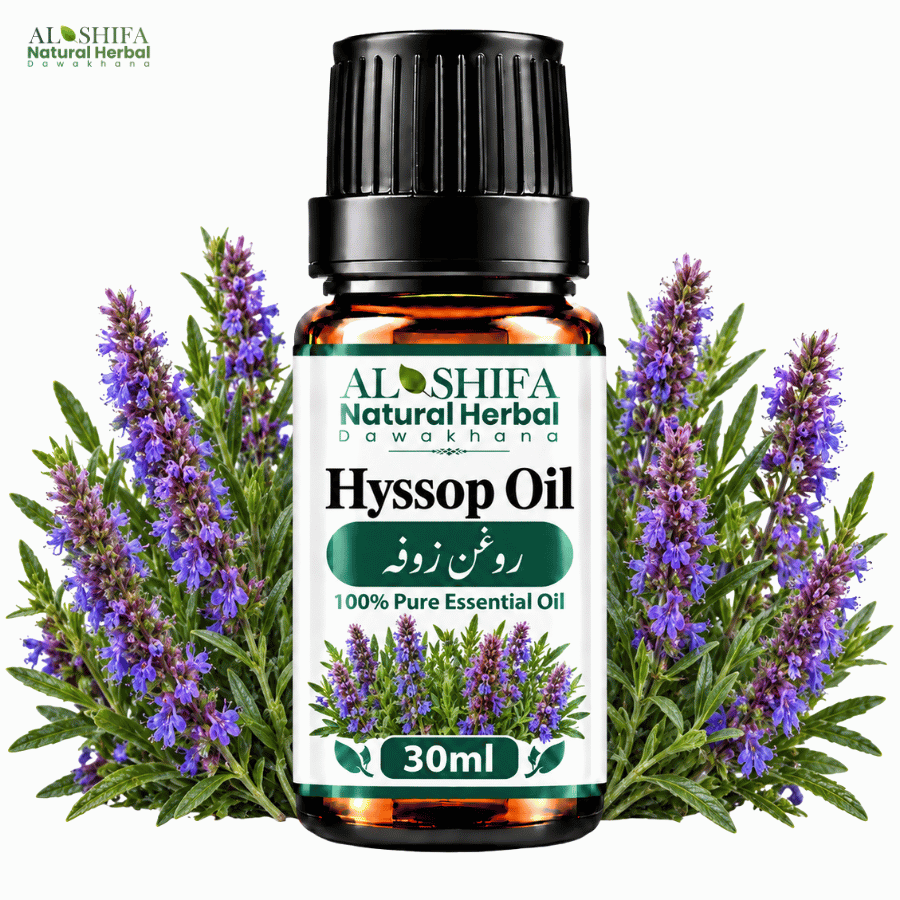
Hyssop Essential Oil / Roghan Zofa is a steam-distilled essential oil obtained from the flowering aerial parts and leaves of Hyssop. Its fresh, herbal, camphoraceous, warm, spicy and slightly sweet aroma makes it ideal for perfumery, aromatic blends, diluted massage formulations, body care, hair products, soaps and cosmetics.
Al Shifa Hyssop Essential Oil is carefully selected for botanical identity, characteristic herbal aroma, freshness, quality and clean handling.
Key Features:
Usage: Dilute appropriately with a suitable carrier oil before topical use or use at a suitable concentration in perfumes, aromatic blends and compatible cosmetic formulations.
Important Note: Hyssop Essential Oil is a concentrated volatile oil and should not be confused with Hyssop herb, herbal extract or infused carrier oil. Appropriate dilution and conservative use are recommended.
Hyssop Essential Oil / Roghan Zofa – روغن زوفہ is a concentrated aromatic essential oil obtained primarily from the flowering aerial parts and leaves of Hyssop, traditionally known botanically as Hyssopus officinalis L. Modern Kew taxonomy treats this name as a synonym of Dracocephalum officinale (L.) Y.P.Chen & B.T.Drew. The plant belongs to the Lamiaceae family and is an aromatic perennial herb or subshrub native across parts of Europe and the Mediterranean region extending towards Iran.
Hyssop Essential Oil has a distinctive fresh, herbal, camphoraceous, warm, spicy and slightly sweet aroma. Its strong aromatic profile makes it suitable for perfumery, aromatic blends, massage formulations, soaps, cosmetics, body-care and compatible personal-care products.
The essential oil is generally produced through steam distillation or hydrodistillation of flowering above-ground plant material. Its chemical composition varies considerably according to plant origin, chemotype, climate, harvest stage and extraction method.
At Al Shifa Natural Herbal Dawakhana, Hyssop Essential Oil is selected with attention to its botanical identity, characteristic herbal aroma, freshness, quality, clean handling and suitability for compatible aromatic and cosmetic applications.
Hyssop Essential Oil is the volatile aromatic oil obtained from the flowering aerial parts of the Hyssop plant.
Hyssop has a long history as an aromatic herb and is recognised for its small leaves, flowering shoots and powerful herbal fragrance. Kew’s medicinal plant records specifically associate Hyssop essential oil with flowering tops and leaves.
It is commonly known as:
Product Name: Hyssop Essential Oil / Roghan Zofa – روغن زوفہ
English Name: Hyssop Essential Oil / Hyssop Oil / Common Hyssop Oil
Urdu Name: روغن زوفہ
Roman Name: Roghan Zofa / Zofa Oil
Traditional Scientific Name: Hyssopus officinalis L.
Current Accepted Botanical Name: Dracocephalum officinale (L.) Y.P.Chen & B.T.Drew
Plant Family: Lamiaceae
Plant Part: Flowering Aerial Parts / Flowering Tops / Leaves
Oil Type: Volatile Botanical Essential Oil
Extraction Method: Steam Distillation / Hydrodistillation
Common Names: Hyssop / Common Hyssop
Appearance: Usually clear, colourless to pale yellow or yellowish-green liquid
Aroma: Fresh, Herbal, Camphoraceous, Warm, Spicy & Slightly Sweet
Primary Applications: Perfumery, Aromatic Blends, Massage Formulations, Soaps, Cosmetics & Personal Care
Product Type: Concentrated Botanical Essential Oil
Hyssop is an aromatic perennial plant belonging to the mint family, Lamiaceae.
It typically grows as a small herb or subshrub and produces narrow leaves and flowering spikes. Its above-ground flowering material contains the volatile compounds responsible for its characteristic aroma.
The plant is recognised for:
Hyssop has historically and commercially been identified as:
Hyssopus officinalis L.
This remains the name widely encountered in essential-oil commerce, scientific literature and herbal references.
However, current Kew taxonomy places Hyssopus officinalis L. as a synonym under the accepted name:
Dracocephalum officinale (L.) Y.P.Chen & B.T.Drew.
For product recognition and SEO, Hyssopus officinalis remains important because it is still extensively used in the essential-oil industry and published literature.
Hyssop Essential Oil is generally obtained through steam distillation or hydrodistillation of flowering above-ground plant material.
The process generally involves:
Scientific literature describes the flowering above-ground parts as the principal source for Hyssop Essential Oil.
Hyssop Oil has a strong and distinctive aromatic character.
Its fragrance is commonly described as:
This aromatic complexity makes Hyssop particularly useful in herbal, green and camphoraceous fragrance compositions.
Hyssop Essential Oil contains a complex mixture of volatile botanical compounds.
Frequently reported constituents include:
Hyssop oils from different regions can have significantly different chemical profiles. Some oils are rich in pinocamphone and isopinocamphone, while others may contain higher proportions of 1,8-cineole, linalool or other volatile compounds.
Pinocamphone is one of the characteristic monoterpene ketones associated with many Hyssop Essential Oil chemotypes.
It contributes to the oil’s distinctive herbal and camphoraceous character.
Its concentration can vary substantially between different Hyssop oils.
Pinocamphone is also important from a safety perspective, because high exposure to Hyssop oils rich in monoterpene ketones has been associated with neurological toxicity and seizure risk.
Isopinocamphone is another characteristic constituent reported in Hyssop Essential Oil.
Like pinocamphone, its concentration can differ significantly according to:
This is one reason why Hyssop Essential Oil should not be assumed to have one universal chemical composition.
β-Pinene is frequently reported among the important volatile constituents of Hyssop Oil.
It contributes fresh, green, woody and resinous aromatic characteristics.
However:
β-Pinene ≠ Hyssop Essential Oil
The complete oil contains numerous volatile compounds working together to produce its overall fragrance and properties.
Some Hyssop oils contain significant amounts of 1,8-cineole, a volatile compound associated with a fresh and camphoraceous aroma.
Research has demonstrated major differences between Hyssop oils from different geographical origins, with some samples containing considerably more 1,8-cineole than others.
Hyssop Essential Oil does not have one fixed chemical profile.
Its composition is affected by:
For this reason:
One published GC-MS profile should not be treated as the exact composition of every Hyssop Essential Oil.
Hyssop’s fresh herbal character makes it suitable for selected fragrance compositions.
It can contribute:
Potential applications include:
Because Hyssop has a powerful aroma, relatively small amounts may significantly influence a fragrance composition.
Hyssop Oil can be incorporated into compatible aromatic formulations.
Its herbal character can complement oils such as:
The appropriate concentration depends on the complete formulation and intended application.
Hyssop Essential Oil is concentrated and should be appropriately diluted before topical massage use.
Compatible carrier oils can include:
Because the chemical profile of Hyssop Oil can vary and some chemotypes contain significant levels of pinocamphone and isopinocamphone, conservative topical use is appropriate.
At an appropriate concentration, Hyssop Essential Oil may be incorporated into compatible cosmetic formulations such as:
Its primary role in such formulations should be considered aromatic and cosmetic rather than a proven treatment for skin diseases.
When appropriately diluted, Hyssop Essential Oil may be incorporated into compatible hair and scalp formulations.
Potential applications include:
It should not be presented as a proven treatment for hair loss, dandruff or scalp diseases.
The fresh, herbal and camphoraceous aroma of Hyssop can be used in compatible soap formulations.
Potential applications include:
The concentration should be selected according to the complete formulation and applicable essential-oil safety guidance.
Depending on formulation requirements, Hyssop Essential Oil may be incorporated into compatible:
Hyssop Essential Oil has been investigated scientifically for:
Scientific reviews also emphasise that Hyssop Essential Oil composition varies considerably among different populations and chemotypes.
Scientific findings involving Hyssop require careful interpretation.
Laboratory Activity ≠ Proven Clinical Treatment
Plant Extract Research ≠ Evidence for the Same Effect from Essential Oil
Individual Compound Research ≠ Evidence for the Same Effect from the Complete Oil
Animal Research ≠ Proven Human Clinical Benefit
Traditional Herbal Use ≠ Proven Medical Effect of Hyssop Essential Oil
Hyssop Essential Oil requires more caution than many ordinary aromatic oils.
Certain Hyssop oils contain substantial concentrations of pinocamphone and isopinocamphone. Scientific toxicology literature has associated Hyssop Essential Oil and monoterpene ketones of this type with convulsant activity at sufficiently high exposure.
For this reason:
These are different product forms.
Hyssop Herb: Dried or fresh aerial botanical material.
Hyssop Essential Oil: Concentrated volatile aromatic fraction obtained by distillation.
Therefore:
Hyssop Herb ≠ Hyssop Essential Oil
The safety profile and concentration of the essential oil are substantially different from ordinary dried herb.
Hyssop Extract may be prepared using water, alcohol or another extraction medium.
Essential oil is obtained through distillation and contains primarily volatile aromatic compounds.
Therefore:
Hyssop Essential Oil ≠ Hyssop Herbal Extract
Research conducted on one preparation should not automatically be transferred to the other.
Hyssop-infused oil is generally prepared by infusing plant material in a fixed carrier oil.
It is fundamentally different from steam-distilled Hyssop Essential Oil.
Hyssop Essential Oil: Concentrated volatile oil.
Hyssop-Infused Oil: Fixed carrier oil containing oil-soluble botanical material.
Therefore:
Essential Oil ≠ Infused Carrier Oil
Hyssop Essential Oil should be appropriately diluted before topical application.
For topical use:
Possible sensitivity can include:
Because Hyssop Essential Oil may contain significant concentrations of pinocamphone and related monoterpene ketones, conservative safety practice is appropriate during pregnancy and breastfeeding.
Avoid unsupervised medicinal or internal use. When use during pregnancy or breastfeeding is being considered, seek guidance from a suitably qualified healthcare professional familiar with essential-oil safety.
Hyssop Essential Oil is highly concentrated and should be used with particular caution around children.
Hyssop Essential Oil should not automatically be considered suitable for oral consumption.
Unless an individual product is specifically manufactured, tested and labelled for appropriate food use:
Cosmetic Grade ≠ Food Grade
At Al Shifa Natural Herbal Dawakhana, Hyssop Essential Oil is selected with attention to:
Botanical Identity – Traditionally identified as Hyssopus officinalis.
Plant Material – Flowering aerial parts and leaves.
Essential Oil Character – Concentrated volatile botanical oil.
Characteristic Aroma – Fresh, herbal, warm, spicy and camphoraceous.
Perfumery Applications – Suitable for compatible herbal fragrance formulations.
Aromatic Applications – Suitable for compatible essential-oil blends.
Massage Applications – Suitable only when appropriately diluted.
Body Care – Suitable for compatible cosmetic formulations.
Hair Applications – Suitable for appropriately formulated hair products.
Soap & Cosmetics – Suitable for compatible formulations.
Responsible Information – Laboratory findings are not presented as proof of disease treatment.
Safety Awareness – The presence of potentially significant monoterpene ketones is taken into account.
Clean Handling – Carefully handled during packing.
Protective Packaging – Helps preserve the oil from unnecessary heat, light and air exposure.
Al Shifa Natural Herbal Dawakhana, established in 1999, supplies carefully selected essential oils, herbal oils and botanical products throughout Pakistan.
Our focus for Hyssop Essential Oil includes:
For Perfumery: Use at a suitable concentration in compatible herbal, green and botanical fragrance compositions.
For Aromatic Blends: Blend carefully with compatible essential oils according to the desired aromatic profile.
For Massage: Dilute appropriately with a suitable carrier oil before topical application.
For Body Care: Incorporate at a suitable concentration into compatible cosmetic formulations.
For Hair & Scalp Care: Use at a suitable concentration in compatible hair oils and scalp formulations.
For Soap & Cosmetics: Use according to the complete formulation and applicable essential-oil safety guidance.
Hyssop Essential Oil / Roghan Zofa – روغن زوفہ is a concentrated botanical essential oil obtained from the flowering aerial parts and leaves of the plant historically known as Hyssopus officinalis L. Current Kew taxonomy recognises Dracocephalum officinale (L.) Y.P.Chen & B.T.Drew as the accepted botanical name, with Hyssopus officinalis treated as a synonym.
Hyssop Oil may contain significant amounts of pinocamphone, isopinocamphone, β-pinene, 1,8-cineole and other volatile compounds, although its chemical composition varies considerably between different plant populations and chemotypes.
Because pinocamphone-rich Hyssop Essential Oil has important neurological safety considerations, the oil should be used conservatively and should not be casually consumed or used medicinally without appropriate professional guidance.
For best quality:
Hyssop Essential Oil / Roghan Zofa – روغن زوفہ is a concentrated botanical essential oil with a distinctive fresh, herbal, camphoraceous, warm and spicy aroma. Obtained from the flowering aerial parts of Hyssop, it is suitable for carefully formulated perfumery, aromatic blends, massage products, body care, hair formulations, soaps and cosmetics.
Customers searching for Hyssop Essential Oil, Hyssop Oil, Common Hyssop Oil, Roghan Zofa, Zofa Oil, Hyssopus officinalis Oil, Hyssop Oil for Perfume, Hyssop Oil for Aromatic Blends, Hyssop Oil for Massage, Hyssop Oil for Body Care, Hyssop Oil for Hair, Hyssop Oil for Soap, Hyssop Oil for Cosmetics, Hyssop Essential Oil Pakistan, Roghan Zofa Pakistan, Hyssop Oil Lahore, Hyssop Oil price in Pakistan or buy Hyssop Essential Oil online Pakistan can choose Al Shifa Natural Herbal Dawakhana for carefully selected quality.
Since 1999, Al Shifa Natural Herbal Dawakhana has focused on supplying essential oils and herbal products with attention to botanical identity, quality, freshness, clean handling, responsible safety information, protective packaging and proper storage.
Product Name: Hyssop Essential Oil / Roghan Zofa – روغن زوفہ
English Name: Hyssop Essential Oil / Hyssop Oil / Common Hyssop Oil
Urdu Name: روغن زوفہ
Roman Name: Roghan Zofa / Zofa Oil
Traditional Scientific Name: Hyssopus officinalis L.
Current Accepted Botanical Name: Dracocephalum officinale (L.) Y.P.Chen & B.T.Drew
Plant Family: Lamiaceae
Plant Part: Flowering Aerial Parts / Flowering Tops / Leaves
Oil Type: Volatile Botanical Essential Oil
Extraction Method: Steam Distillation / Hydrodistillation
Common Names: Hyssop / Common Hyssop
Appearance: Clear, Colourless to Pale Yellow or Yellowish-Green
Aroma: Fresh, Herbal, Camphoraceous, Warm, Spicy & Slightly Sweet
Primary Applications: Perfumery, Aromatic Blends, Diluted Massage Formulations, Body Care, Hair Products, Soaps & Cosmetics
Product Type: Concentrated Botanical Essential Oil
Important Note: Hyssop Essential Oil can contain substantial concentrations of pinocamphone and isopinocamphone depending on its chemotype. It is a concentrated essential oil and should not be confused with Hyssop herb, herbal extract or infused carrier oil. Conservative use and appropriate dilution are important.
روغن زوفہ خوشبودار جڑی بوٹی زوفہ کے پھولوں، پتوں اور نرم اوپری شاخوں سے بھاپ کے ذریعے حاصل کیا جانے والا تیز خوشبودار روغن ہے۔ زوفہ ایک قدیم طبی جڑی بوٹی ہے جسے حکمت میں خاص اہمیت حاصل ہے۔ اس کی خوشبو تازہ، جڑی بوٹیوں جیسی، ہلکی میٹھی، قدرے تیز اور کافور جیسی محسوس ہوتی ہے۔
زوفہ کی جڑی بوٹی اور اس سے حاصل ہونے والا خالص خوشبودار روغن ایک جیسی شکلیں نہیں ہیں۔ خالص روغن زوفہ بہت تیز ہوتا ہے، اس لیے جلد اور جسمانی مالش کے لیے اسے بنیادی روغن میں بہت کم مقدار میں ملا کر استعمال کیا جاتا ہے۔
اردو: زوفہ، روغن زوفہ
پنجابی: زوفہ
ہندی: زوفا، زوفہ
فارسی: زوفا، زوفہ
عربی: زوفا، زوفى
انگریزی نام: ہیسپ، ہیسپ آئل
سائنسی نام: ہائسوپس آفسینالس
خاندان: لیمی ایسی
استعمال ہونے والا حصہ: پھول، پتے اور نرم اوپری شاخیں
روغن کی قسم: بھاپ سے حاصل ہونے والا خالص خوشبودار روغن
زوفہ ایک خوشبودار بارہ ماسی جڑی بوٹی ہے۔
اس کا پودا چھوٹا، شاخ دار اور جھاڑی نما ہوتا ہے۔
اس کے پتے باریک، لمبے اور سبز ہوتے ہیں۔
پودے کی شاخوں کے اوپری حصے پر نیلے، جامنی، گلابی یا سفید رنگ کے چھوٹے پھول آتے ہیں۔
پتوں اور پھولوں کو ہاتھ سے مسلنے پر تیز خوشبودار مہک محسوس ہوتی ہے۔
زوفہ کا تعلق پودینہ اور تلسی والے خاندان سے ہے۔
زوفہ کی اہم پہچان:
ہے۔
اصل زوفہ کی درست پہچان کے لیے ہائسوپس آفسینالس کا نام دیکھنا اہم ہے۔
اچھا زوفہ:
روغن حاصل کرنے کے لیے خوشبودار پھول، پتے اور نرم اوپری شاخیں خاص اہمیت رکھتے ہیں۔
زوفہ کے پھولوں، پتوں اور نرم اوپری شاخوں کو بھاپ کے ذریعے کشید کیا جاتا ہے۔
بھاپ پودے کے خوشبودار روغنی اجزا کو اپنے ساتھ لے جاتی ہے۔
ٹھنڈا ہونے کے بعد پانی اور خوشبودار روغن الگ ہو جاتے ہیں۔
اس طریقے سے حاصل ہونے والا روغن بہت تیز اور خوشبودار ہوتا ہے، اس لیے تھوڑی مقدار کافی رہتی ہے۔
روغن زوفہ کی خوشبو:
ہوتی ہے۔
اس کی مہک پودینہ، کافور اور سبز جڑی بوٹیوں کی خوشبو کا احساس دیتی ہے۔
خالص روغن زوفہ کی رنگت بے رنگ سے ہلکی زرد یا زرد مائل سبز رہتی ہے۔
پودے کی قسم، کٹائی کے وقت اور روغن حاصل کرنے کے طریقے کے مطابق قدرتی رنگت ہلکی یا قدرے گہری رہتی ہے۔
بہت شوخ مصنوعی رنگ خالص روغن زوفہ کی قدرتی پہچان نہیں ہے۔
پاکستانی اور برصغیر کی معروف حکیمی کتب مفردات میں زوفہ کو گرم اور خشک جڑی بوٹی مانا جاتا ہے۔
زوفہ کی جڑی بوٹی کا حکیمی مزاج گرم و خشک بیان کیا جاتا ہے۔
بھاپ سے حاصل ہونے والے جدید خالص روغن زوفہ کا الگ مستند درجہ واضح طور پر مقرر نہیں ہے، اس لیے روغن کے لیے خود سے کوئی الگ درجہ مقرر نہیں کیا جاتا۔
زوفہ کی جڑی بوٹی اور خالص روغن کی مقدار ایک جیسی نہیں رکھی جاتی۔
زوفہ حکمت میں خاص طور پر سانس کے نظام سے جڑی جڑی بوٹی کے طور پر معروف ہے۔
زوفہ کو جڑی بوٹیوں سے تیار ادویات میں:
کے لیے استعمال کیا جاتا ہے۔
یہ استعمال زوفہ کی جڑی بوٹی اور اس سے تیار حکیمی ادویات کے ہیں۔ خالص روغن زوفہ زیادہ تیز ہوتا ہے اور اس کا اندرونی استعمال خود سے نہیں کیا جاتا۔
روغن زوفہ میں کئی قدرتی خوشبودار اجزا پائے جاتے ہیں، جن میں:
شامل ہیں۔
ان اجزا کی مقدار زوفہ کی قسم اور روغن حاصل کرنے کے وقت کے مطابق مختلف تناسب میں رہتی ہے۔
روغن زوفہ خالص حالت میں تیز ہوتا ہے، اس لیے جسمانی مالش کے لیے اسے بنیادی روغن میں کم مقدار میں ملایا جاتا ہے۔
اسے روغن بادام، روغن جوجوبا، روغن تل یا روغن ناریل کے ساتھ ملایا جاتا ہے۔
تیار روغن سے کندھوں، بازوؤں، ٹانگوں اور پاؤں کی نرم مالش کی جاتی ہے۔
جسمانی تھکن کے بعد مالش کے روغنوں میں روغن زوفہ کم مقدار میں شامل کیا جاتا ہے۔
اس کی تازہ اور جڑی بوٹیوں جیسی خوشبو مالش کے روغن کو خاص مہک دیتی ہے۔
جسمانی کھنچاؤ والی جگہ کی نرم مالش کے لیے روغن زوفہ کو بنیادی روغن میں کم مقدار میں ملایا جاتا ہے۔
کندھوں، بازوؤں، کمر، ٹانگوں اور پاؤں کی نرم مالش کی جاتی ہے۔
پٹھوں اور جوڑوں کے امراض میں طبی استعمال معالج سے پوچھ کر کریں۔
روغن زوفہ کو سینے کے خوشبودار مالش والے روغنوں میں بہت کم مقدار میں شامل کیا جاتا ہے۔
اسے روغن بادام، روغن زیتون یا دوسرے بنیادی روغن کے ساتھ ملا کر استعمال کیا جاتا ہے۔
خالص روغن براہ راست سینے کی جلد پر زیادہ مقدار میں نہ لگائیں۔
سانس کی نالی یا پھیپھڑوں کے امراض میں طبی استعمال معالج سے پوچھ کر کریں۔
روغن زوفہ کو جلد کے روغنی آمیزوں میں بہت کم مقدار میں شامل کیا جاتا ہے۔
اسے روغن جوجوبا، روغن بادام یا دوسرے بنیادی روغن کے ساتھ ملایا جاتا ہے۔
خالص روغن کو براہ راست زیادہ مقدار میں جلد پر نہ لگائیں۔
پہلی بار استعمال سے پہلے جلد کے چھوٹے حصے پر تھوڑی مقدار آزمائیں۔
روغن زوفہ کو بنیادی روغن کے ساتھ ملا کر ہاتھوں اور پاؤں کی مالش میں استعمال کیا جاتا ہے۔
خاص طور پر جسمانی تھکن کے بعد پاؤں کے مالش والے روغنوں میں اس کی کم مقدار شامل کی جاتی ہے۔
روغن زوفہ کو بالوں کے خوشبودار روغنوں میں کم مقدار میں شامل کیا جاتا ہے۔
اسے روغن ناریل، روغن بادام یا روغن جوجوبا کے ساتھ ملایا جاتا ہے۔
اس کی تازہ جڑی بوٹیوں جیسی خوشبو بالوں کے روغن کو الگ مہک دیتی ہے۔
روغن زوفہ کو بنیادی روغن میں ملا کر سر کی جلد کی روغنی دیکھ بھال میں استعمال کیا جاتا ہے۔
خالص روغن براہ راست زیادہ مقدار میں سر کی جلد پر نہ لگائیں۔
سر کی جلد کے امراض میں طبی استعمال معالج سے پوچھ کر کریں۔
روغن زوفہ کی تیز جڑی بوٹیوں جیسی خوشبو خوشبودار بھاپ کے آمیزوں میں بھی استعمال کی جاتی ہے۔
بہت زیادہ مقدار استعمال نہ کریں اور بھاپ کو آنکھوں کے بہت قریب نہ لائیں۔
بچوں، حاملہ خواتین اور مرگی کی بیماری والے افراد کے لیے اس استعمال سے گریز کریں۔
روغن زوفہ کو خوشبو پھیلانے والے آلے میں بہت کم مقدار میں استعمال کیا جاتا ہے۔
اس کی تازہ، سبز اور جڑی بوٹیوں جیسی خوشبو ماحول کو خاص مہک دیتی ہے۔
صرف وہ روغن خوشبو والے آلے میں استعمال کریں جس پر اس استعمال کی واضح ہدایت موجود ہو۔
روغن زوفہ اپنی تازہ، سبز، جڑی بوٹیوں اور کافور جیسی خوشبو کی وجہ سے خوشبو سازی میں استعمال کیا جاتا ہے۔
اسے دوسرے جڑی بوٹیوں، لکڑی اور ترش پھلوں جیسے خوشبودار روغنوں کے ساتھ کم مقدار میں ملایا جاتا ہے۔
اس کی خوشبو تیز ہوتی ہے، اس لیے تھوڑی مقدار کافی رہتی ہے۔
روغن زوفہ کو:
کے ساتھ خوشبودار آمیزوں میں ملایا جاتا ہے۔
خشک زوفہ پوری جڑی بوٹی کی شکل ہے جبکہ روغن زوفہ اس کے پھولوں، پتوں اور نرم اوپری شاخوں سے حاصل ہونے والا تیز خوشبودار روغن ہے۔
خشک جڑی بوٹی میں پائے جانے والے تمام اجزا خالص خوشبودار روغن میں موجود نہیں ہوتے۔
اسی لیے زوفہ کی جڑی بوٹی کی مقدار اور روغن زوفہ کی مقدار ایک جیسی نہیں رکھی جاتی۔
روغن زوفہ ایک تیز خوشبودار روغن ہے۔
روغن بادام، روغن جوجوبا، روغن ناریل، روغن تل اور روغن زیتون بنیادی روغن ہیں۔
جلد اور جسمانی مالش کے لیے روغن زوفہ کو بنیادی روغن میں بہت کم مقدار میں شامل کیا جاتا ہے۔
اصل روغن زوفہ کے لیے سائنسی نام ہائسوپس آفسینالس دیکھیں۔
اس کی خوشبو تازہ، سبز، جڑی بوٹیوں، ہلکی میٹھی اور کافور جیسی ہوتی ہے۔
رنگت بے رنگ سے ہلکی زرد یا زرد مائل سبز رہتی ہے۔
اس کی خوشبو تیز ہوتی ہے اور بہت تھوڑی مقدار بھی واضح محسوس ہوتی ہے۔
روغن زوفہ کو بنیادی روغن میں بہت کم مقدار میں ملائیں۔
تیار آمیزہ جلد پر تھوڑی مقدار میں لگائیں۔
پہلی بار استعمال سے پہلے جلد کے چھوٹے حصے پر آزمائیں۔
خارش، سرخی، سوجن یا جلن پیدا ہو تو استعمال بند کریں۔
روغن بادام، روغن جوجوبا، روغن ناریل یا روغن تل میں روغن زوفہ کی بہت کم مقدار شامل کریں۔
تیار روغن سے مطلوبہ جسمانی حصے پر نرم ہاتھ سے مالش کریں۔
خالص روغن کو براہ راست زیادہ مقدار میں جسم پر نہ لگائیں۔
حساس جلد پر خالص روغن زوفہ براہ راست استعمال نہ کریں۔
اسے بنیادی روغن میں بہت کم مقدار میں ملا کر پہلے جلد کے چھوٹے حصے پر آزمائیں۔
خارش، سرخی، سوجن یا جلن پیدا ہو تو استعمال بند کریں۔
جلدی امراض میں طبی استعمال معالج سے پوچھ کر کریں۔
روغن زوفہ کو آنکھوں، ہونٹوں، منہ، ناک کے اندرونی حصے اور جسم کے حساس حصوں پر نہ لگائیں۔
کھلے زخم، کٹی یا جلی ہوئی جلد پر استعمال نہ کریں۔
استعمال کے بعد ہاتھ اچھی طرح دھوئیں۔
خالص روغن زوفہ بہت تیز ہوتا ہے۔
اس میں پینو کیمفون اور آئسو پینو کیمفون جیسے اجزا پائے جاتے ہیں، اس لیے اسے خود سے پینا محفوظ طریقہ نہیں ہے۔
بیرونی استعمال کے لیے فروخت ہونے والا روغن زوفہ خود سے نہ پئیں۔
کسی بیماری کے لیے اندرونی طبی استعمال معالج سے پوچھ کر کریں۔
روغن زوفہ میں پینو کیمفون اور آئسو پینو کیمفون جیسے اجزا پائے جاتے ہیں۔
مرگی یا دوروں کی بیماری والے افراد روغن زوفہ کا اندرونی استعمال نہ کریں اور خوشبودار یا بیرونی طبی استعمال بھی معالج سے پوچھ کر کریں۔
حمل کے دوران روغن زوفہ کا اندرونی استعمال نہ کریں۔
حمل کے دوران خالص روغن زوفہ کے بیرونی اور خوشبودار استعمال سے بھی گریز کریں۔
طبی استعمال معالج سے پوچھ کر کریں۔
دودھ پلانے کے دوران روغن زوفہ کا اندرونی استعمال خود سے نہ کریں۔
اسے چھاتی یا ایسی جگہ نہ لگائیں جہاں سے بچے کے منہ تک پہنچے۔
طبی استعمال معالج سے پوچھ کر کریں۔
بچوں کو روغن زوفہ خود سے نہ پلائیں۔
خالص روغن بچوں کی جلد، چہرے، ناک یا منہ کے قریب استعمال نہ کریں۔
بچوں کے لیے طبی یا خوشبودار استعمال معالج سے پوچھ کر کریں۔
روغن بچوں کی پہنچ سے دور رکھیں۔
اصل زوفہ: ہائسوپس آفسینالس سے حاصل کیا گیا ہو۔
اچھی جڑی بوٹی: صاف، خوشبودار اور اچھی حالت والے پھول، پتے اور نرم شاخیں استعمال کی گئی ہوں۔
قدرتی خوشبو: تازہ، جڑی بوٹیوں، ہلکی میٹھی اور کافور جیسی مہک رکھتا ہو۔
قدرتی رنگت: بے رنگ سے ہلکی زرد یا زرد مائل سبز قدرتی رنگت رکھتا ہو۔
صاف روغن: پانی، گرد اور غیر ضروری ذرات سے پاک ہو۔
تازگی: باسی یا خراب بو نہ رکھتا ہو۔
اصل پہچان: ہائسوپس آفسینالس اور بھاپ سے روغن حاصل ہونے کی معلومات واضح ہوں۔
غیر ضروری ملاوٹ سے پاک: غیر ضروری رنگ، مصنوعی خوشبو اور کم معیار کے دوسرے روغن کی ملاوٹ سے پاک ہو۔
روغن زوفہ ہائسوپس آفسینالس کے پھولوں، پتوں اور نرم اوپری شاخوں سے بھاپ کے ذریعے حاصل ہونے والا تیز خوشبودار روغن ہے۔
اس میں پینو کیمفون، آئسو پینو کیمفون، بیٹا پائینین، الفا پائینین، کیمفین، لیمونین، مائرسین اور سینیول جیسے قدرتی خوشبودار اجزا پائے جاتے ہیں۔
زوفہ کی جڑی بوٹی حکمت میں کھانسی کی بیماری، نزلہ و زکام کے امراض، بلغم، گلے اور سانس کی نالی کے امراض کے لیے تیار ادویات میں استعمال کی جاتی ہے۔
خالص روغن زوفہ جڑی بوٹی کے مقابلے میں بہت تیز ہوتا ہے۔ اسے جلد اور جسمانی مالش کے لیے بنیادی روغن میں بہت کم مقدار میں ملا کر استعمال کریں۔
مرگی یا دوروں کی بیماری والے افراد اور حاملہ خواتین خالص روغن زوفہ کے استعمال سے گریز کریں۔
بیرونی استعمال کے لیے فروخت ہونے والا روغن خود سے نہ پئیں۔
الشفاء نیچرل ہربل دواخانہ میں روغن زوفہ کے لیے درج ذیل باتوں کو اہمیت دی جاتی ہے:
اصل زوفہ: ہائسوپس آفسینالس کی اصل خوشبودار جڑی بوٹی کو اہمیت دی جاتی ہے۔
اچھے پھول اور پتے: صاف، خوشبودار اور اچھی حالت والے پھولوں، پتوں اور نرم شاخوں کو اہمیت دی جاتی ہے۔
قدرتی خوشبو: زوفہ کی اپنی تازہ، جڑی بوٹیوں، ہلکی میٹھی اور کافور جیسی خوشبو کو اہمیت دی جاتی ہے۔
قدرتی رنگت: روغن کی بے رنگ سے ہلکی زرد یا زرد مائل سبز قدرتی رنگت کو دیکھا جاتا ہے۔
صاف روغن: پانی، گرد اور غیر ضروری ذرات سے پاک روغن کو اہمیت دی جاتی ہے۔
تازگی: باسی یا خراب بو والے روغن سے بچا جاتا ہے۔
اصل پہچان: ہائسوپس آفسینالس سے بھاپ کے ذریعے حاصل روغن کو اہمیت دی جاتی ہے۔
غیر ضروری ملاوٹ سے پاک: غیر ضروری رنگ، مصنوعی خوشبو اور کم معیار کے دوسرے روغن کی ملاوٹ سے پاک ہونے کو اہمیت دی جاتی ہے۔
الشفاء نیچرل ہربل دواخانہ سنہ ۱۹۹۹ سے قدرتی جڑی بوٹیوں، پھولوں، پتوں، جڑوں، بیجوں اور ان سے حاصل ہونے والے روغنوں کی سپلائی کر رہا ہے۔
ہم روغن زوفہ میں اصل ہائسوپس آفسینالس، اچھی جڑی بوٹی، صاف حالت، قدرتی رنگت، مخصوص خوشبو، تازگی اور غیر ضروری ملاوٹ سے پاک ہونے کو اہمیت دیتے ہیں۔
اچھے روغن زوفہ کی پہچان اس کی تازہ جڑی بوٹیوں اور کافور جیسی خوشبو، قدرتی رنگت، صاف حالت اور تازگی سے کی جاتی ہے۔
روغن زوفہ کو ٹھنڈی، خشک اور روشنی سے محفوظ جگہ پر کسی جار میں اچھی طرح پیک کر کے رکھیں۔
تیز دھوپ اور زیادہ گرمی سے بچائیں۔
استعمال کے بعد ڈھکن اچھی طرح بند کریں۔
پانی سے محفوظ رکھیں۔
باسی یا خراب بو پیدا ہونے پر استعمال نہ کریں۔
بچوں کی پہنچ سے دور رکھیں۔
روغن زوفہ خریدتے وقت ہائسوپس آفسینالس کا نام اور بھاپ سے روغن حاصل ہونے کی معلومات دیکھیں۔
خالص روغن کو براہ راست زیادہ مقدار میں جلد پر نہ لگائیں۔
پہلی بار بیرونی استعمال سے پہلے جلد کے چھوٹے حصے پر تھوڑی مقدار آزمائیں۔
خارش، سرخی، سوجن یا جلن پیدا ہو تو استعمال بند کریں۔
آنکھوں، ہونٹوں، منہ، ناک کے اندرونی حصے اور کھلے زخموں پر نہ لگائیں۔
مرگی یا دوروں کی بیماری والے افراد اور حاملہ خواتین اس روغن کے استعمال سے گریز کریں۔
بیرونی استعمال کے لیے فروخت ہونے والا روغن خود سے نہ پئیں۔
کسی بیماری کے لیے اندرونی طبی استعمال معالج سے پوچھ کر کریں۔
روغن زوفہ ہائسوپس آفسینالس کے پھولوں، پتوں اور نرم اوپری شاخوں سے بھاپ کے ذریعے حاصل ہونے والا تیز اور خوشبودار روغن ہے۔
اس کی نمایاں پہچان تازہ، جڑی بوٹیوں، ہلکی میٹھی، قدرے تیز اور کافور جیسی خوشبو ہے۔
پاکستانی اور برصغیر کی حکمت میں زوفہ کو گرم و خشک جڑی بوٹی مانا جاتا ہے اور اسے خاص طور پر کھانسی کی بیماری، نزلہ و زکام کے امراض، بلغم، گلے اور سانس کی نالی کے امراض کے لیے تیار ادویات میں استعمال کیا جاتا ہے۔
خشک زوفہ اور خالص روغن زوفہ کی مقدار ایک جیسی نہیں رکھی جاتی۔ خالص روغن بہت تیز ہوتا ہے اور بیرونی استعمال میں بنیادی روغن کے ساتھ بہت کم مقدار میں استعمال کیا جاتا ہے۔
روغن زوفہ کو جسمانی مالش، جسمانی تھکن، جسمانی کھنچاؤ، سینے کے خوشبودار مالش والے روغن، جلد، بالوں، سر کی جلد، خوشبو سازی اور ماحول کو خوشبودار بنانے کے لیے استعمال کیا جاتا ہے۔
اچھے روغن زوفہ کی پہچان اصل ہائسوپس آفسینالس، تازہ جڑی بوٹیوں جیسی خوشبو، قدرتی رنگت، صاف حالت، تازگی اور غیر ضروری ملاوٹ سے پاک ہونے سے کی جاتی ہے۔