خس آئل
Original price was: ₨ 3,600.₨ 3,000Current price is: ₨ 3,000.
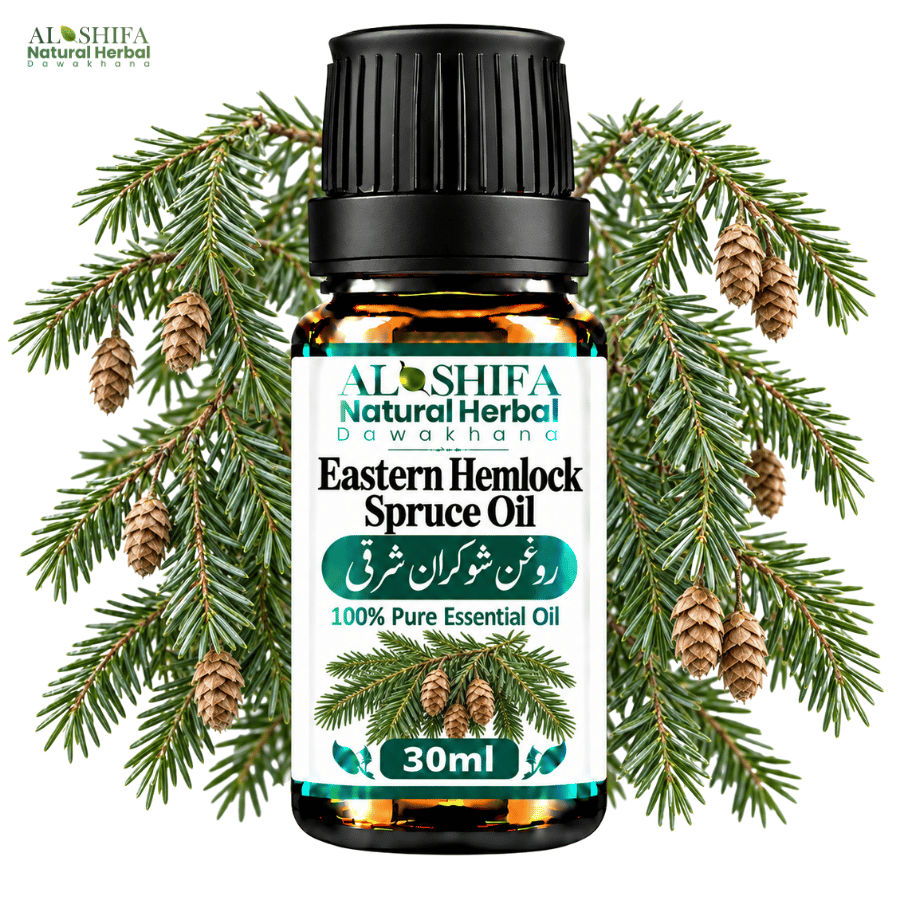
Eastern Hemlock Essential Oil / Roghan Shokran Sharki is a natural conifer essential oil obtained from the needles, foliage and young twigs of Tsuga canadensis through steam distillation. It has a fresh, green, coniferous, forest-like, resinous, slightly citrus-like and woody aroma, with naturally occurring constituents such as alpha-pinene, beta-pinene, bornyl acetate, camphene and limonene. It is suitable for aromatherapy, diffuser blends, perfumery, attars, massage blends, soaps and cosmetics.
Al Shifa Eastern Hemlock Essential Oil is carefully selected for botanical identity, characteristic fresh coniferous aroma, freshness, quality and clean handling.
Key Features:
Usage: For topical applications, dilute appropriately in a suitable carrier oil; for aromatherapy, use a small amount in a compatible diffuser or aromatic blend.
Important Note: Eastern Hemlock Essential Oil is obtained from Tsuga canadensis and must not be confused with Poison Hemlock (Conium maculatum) or Water Hemlock (Cicuta species), which are entirely different and highly toxic plants.
Hemlock Essential Oil, more accurately known as Eastern Hemlock Essential Oil, is an aromatic conifer essential oil obtained from the needles and young twigs of Tsuga canadensis (L.) Carrière, an evergreen tree belonging to the Pinaceae family. It has a distinctive fresh, forest-like, coniferous, green, resinous, slightly citrus-like and woody aroma.
The oil is produced through steam distillation of the aromatic foliage and young branch material. Its volatile composition can include monoterpenes such as α-pinene, β-pinene, bornyl acetate, camphene, limonene and other naturally occurring terpenes, with proportions varying according to plant material, geographic origin and distillation conditions.
Al Shifa Hemlock Essential Oil is carefully selected for its botanical identity, characteristic fresh coniferous aroma, freshness, quality and clean handling.
Hemlock Essential Oil is the concentrated volatile aromatic oil distilled from the foliage of Tsuga canadensis.
Common names include:
The word “Hemlock” requires particular care because the coniferous Hemlock tree should not be confused with the highly poisonous herb commonly called Poison Hemlock.
Product Name: Hemlock Essential Oil
English Name: Eastern Hemlock Essential Oil / Hemlock Essential Oil
Urdu Name: روغن شوکران شرقی
Roman Name: Roghan Shokran Sharki
Scientific Name: Tsuga canadensis (L.) Carrière
Plant Family: Pinaceae
Plant Part: Needles / Foliage & Young Twigs
Oil Type: Volatile Botanical Essential Oil
Extraction Method: Steam Distillation
Common Forms/Names: Eastern Hemlock Oil, Hemlock Essential Oil, Hemlock Spruce Oil, Tsuga canadensis Oil
Appearance: Clear to Pale Yellow; natural variation may occur
Aroma: Fresh, Green, Coniferous, Forest-Like, Resinous, Slightly Citrus-Like and Woody
Primary Applications: Aromatherapy, Diffuser Blends, Perfumery, Attars, Massage Blends, Soaps, Cosmetics and Forest-Type Fragrance Formulations
Product Type: Natural Essential Oil
Tsuga canadensis is a large evergreen conifer native to eastern North America. It belongs to the Pinaceae family, which also includes many familiar pine, fir and spruce species.
Its branches carry numerous flat evergreen needles. These aromatic needles and young twigs contain volatile compounds that can be collected through distillation.
Despite its common name, Eastern Hemlock is not botanically related to Poison Hemlock.
The common name can cause considerable confusion.
Eastern Hemlock: Tsuga canadensis — a coniferous tree in the Pinaceae family.
Poison Hemlock: Conium maculatum — a poisonous herb in the Apiaceae family.
These plants are completely different botanically.
For an essential-oil product, the scientific name Tsuga canadensis is therefore particularly important for confirming identity.
The needles, foliage and young twigs are subjected to steam distillation.
Steam releases the volatile aromatic molecules contained in the plant material. The vapour is subsequently cooled and condensed, allowing the essential oil to separate from the aromatic water.
The finished oil captures the fresh coniferous and resinous character of the foliage.
Eastern Hemlock Essential Oil has a distinctive woodland fragrance that can be described as:
Its aroma makes it particularly suitable for forest, woodland, fresh-green and coniferous fragrance compositions.
The chemical composition of Eastern Hemlock Essential Oil can vary according to harvest, plant part, origin and distillation.
Naturally occurring volatile constituents can include:
A batch-specific GC-MS analysis provides the most reliable chemical profile for an individual essential-oil batch.
α-Pinene is commonly associated with the characteristic fresh, pine-like, green and woody aroma found in many conifer essential oils.
It occurs naturally in numerous pine, fir, spruce and other aromatic botanical oils.
β-Pinene contributes additional green, woody, fresh and resinous aromatic notes.
Together with other monoterpenes, it forms part of the crisp forest-like character of Hemlock Essential Oil.
Bornyl acetate is associated with the characteristic sweet, fresh, balsamic and coniferous character found in various needle and forest essential oils.
Its proportion varies according to botanical material and oil composition.
The fresh woodland aroma of Eastern Hemlock makes it useful in aromatic blends designed around green, woody and coniferous fragrance profiles.
It can be blended with compatible oils such as:
The resulting fragrance can range from fresh and uplifting in character to deep, woody and forest-like depending on the blend.
A small amount of Hemlock Essential Oil can be incorporated into compatible diffuser formulations.
It works particularly well in:
Use an amount appropriate for the diffuser, room size and intended users.
Hemlock Essential Oil can provide a distinctive green, coniferous, resinous and woody note in fragrance formulations.
It may be incorporated into:
Its forest-like character pairs particularly well with woody, resinous, citrus and herbal aromatic materials.
For massage formulations, Hemlock Essential Oil should be appropriately diluted in a compatible carrier oil.
Suitable carrier oils include:
The essential oil should form only an appropriate percentage of the finished massage formulation.
When appropriately diluted, Hemlock Essential Oil can be incorporated into:
Its principal role in such formulations is its distinctive fresh coniferous fragrance.
The crisp forest aroma makes Hemlock Essential Oil suitable for appropriately formulated:
Use concentrations appropriate for the finished formulation.
Research involving Eastern Hemlock can examine:
These materials are not chemically interchangeable.
Research involving an isolated constituent should not automatically be converted into a therapeutic claim for complete Hemlock Essential Oil.
Correct identification is particularly important for this oil.
Eastern Hemlock Essential Oil: Tsuga canadensis — Pinaceae
It should be distinguished from:
Although several conifer essential oils share fresh forest-like notes, they originate from different botanical species.
This is the most important distinction.
Eastern Hemlock (Tsuga canadensis) is a coniferous tree.
Poison Hemlock (Conium maculatum) is a highly poisonous herb containing dangerous alkaloids.
The name “Hemlock Essential Oil” should therefore always be accompanied by the botanical name Tsuga canadensis to prevent potentially dangerous confusion.
Eastern Hemlock belongs to the genus Tsuga, while true spruce trees belong to the genus Picea.
Therefore, although “Hemlock Spruce” may appear as a common or commercial name, Eastern Hemlock is not a true spruce.
Eastern Hemlock: Tsuga canadensis
Spruce: Picea species
Hemlock, Pine and Fir are all conifers and can produce similarly fresh forest-like essential oils.
However:
Hemlock: Tsuga
Pine: Pinus
Fir: Abies
Their botanical identities and chemical profiles are different, so they should not be labelled interchangeably.
Hemlock Essential Oil is concentrated and should be diluted appropriately for topical use.
As with other terpene-rich essential oils, proper storage is important because prolonged oxidation can increase the likelihood of skin sensitivity.
During pregnancy and breastfeeding, concentrated essential oils should be used conservatively.
For frequent or extensive use, guidance from an appropriately qualified healthcare professional familiar with the specific product is advisable.
For children, use only appropriately diluted, age-suitable essential-oil formulations.
Avoid unnecessary concentrated exposure and keep the undiluted bottle securely out of children’s reach.
Hemlock Essential Oil should not be casually consumed.
A product supplied for aromatherapy, perfumery or cosmetic applications should not automatically be considered food-grade or suitable for internal use.
The confusing common name “Hemlock” provides an additional reason to keep the product clearly identified and labelled.
Al Shifa Natural Herbal selects Hemlock Essential Oil with attention to:
For Aromatherapy: Add a small amount to a compatible diffuser or aromatic blend.
For Perfumery & Attars: Incorporate into suitable forest, green, woody, resinous or fresh fragrance compositions.
For Massage: Dilute appropriately in Jojoba, Sweet Almond, Grapeseed or another suitable carrier oil.
For Body Care: Use at an appropriate concentration in compatible cosmetic formulations.
For Soap & Cosmetics: Incorporate according to the requirements and safe concentration of the finished product.
Hemlock Essential Oil in this product refers specifically to Tsuga canadensis, the Eastern Hemlock conifer.
It must never be confused with Poison Hemlock (Conium maculatum) or Water Hemlock (Cicuta species), which are entirely different and highly toxic plants. Botanical identification is essential whenever the common name “Hemlock” is used.
Store Hemlock Essential Oil in a tightly closed dark glass bottle in a cool, dry place away from direct sunlight and excessive heat.
Minimize exposure to air and close the bottle promptly after use to reduce oxidation and preserve its fresh coniferous aroma.
Al Shifa Natural Herbal offers Hemlock Essential Oil / Roghan Shokran Sharki / روغن شوکران شرقی for customers seeking a distinctive conifer essential oil for aromatherapy, diffuser blends, perfumery, attars, forest fragrances, massage formulations, soaps and cosmetics.
For customers searching for Hemlock Essential Oil in Pakistan, Eastern Hemlock Oil price in Pakistan, Roghan Shokran Sharki, Tsuga canadensis Essential Oil, Hemlock Oil in Lahore or buy Hemlock Essential Oil online in Pakistan, Al Shifa provides carefully selected botanical oils with attention to identity, freshness, quality and clean handling.
Product Name: Hemlock Essential Oil
English Name: Eastern Hemlock Essential Oil / Hemlock Essential Oil
Urdu Name: روغن شوکران شرقی
Roman Name: Roghan Shokran Sharki
Scientific Name: Tsuga canadensis (L.) Carrière
Plant Family: Pinaceae
Plant Part: Needles / Foliage & Young Twigs
Extraction Method: Steam Distillation
Oil Type: Volatile Botanical Essential Oil
Appearance: Clear to Pale Yellow
Aroma: Fresh, Green, Coniferous, Forest-Like, Resinous, Slightly Citrus-Like and Woody
Primary Applications: Aromatherapy, Diffuser Blends, Perfumery, Attars, Massage Formulations, Forest Fragrances, Soaps and Cosmetics
Important Note: This product refers specifically to Tsuga canadensis (Eastern Hemlock). It must not be confused with poisonous Conium maculatum or Cicuta species.
روغن شوکران شرقی ایک خوشبودار روغن ہے جو مشرقی ہیم لاک نامی سدا بہار مخروطی درخت کی سوئی نما پتیاں اور نرم شاخوں سے بھاپ کے ذریعے حاصل ہوتا ہے۔ اس درخت کا سائنسی نام ٹسوگا کینیڈینسس ہے اور اس کا تعلق پائنیسی خاندان سے ہے۔
اس روغن کی خوشبو تازہ، صاف، جنگلی درختوں جیسی، صنوبر جیسی، ہلکی لکڑی جیسی اور قدرے ترش ہوتی ہے۔ اسے جسمانی مالش، تھکے ہوئے پٹھوں، پٹھوں کے کھنچاؤ، گردن، کندھوں اور کمر کی مالش، سینے اور کمر کے خوشبودار آمیزوں، صابن سازی، خوشبودار غسل اور ماحول کو خوشبودار بنانے کے لیے استعمال کیا جاتا ہے۔
یہاں ایک اہم فرق سمجھنا ضروری ہے: مشرقی ہیم لاک درخت زہریلی شوکران نامی جڑی بوٹی نہیں ہے۔ دونوں بالکل الگ پودے ہیں۔
اردو نام: روغن شوکران شرقی، روغن مشرقی ہیم لاک
پنجابی نام: مستند الگ نام دستیاب نہیں؛ مشرقی ہیم لاک کے نام سے معروف ہے
ہندی نام: مستند الگ نام دستیاب نہیں؛ مشرقی ہیم لاک کے نام سے معروف ہے
فارسی نام: مستند الگ نام دستیاب نہیں؛ مشرقی ہیم لاک کے نام سے معروف ہے
عربی نام: مستند الگ نام دستیاب نہیں؛ ہیم لاک شرقی کے نام سے معروف ہے
انگریزی نام: ایسٹرن ہیم لاک ایسینشل آئل، ہیم لاک اسپروس آئل
سائنسی نام: ٹسوگا کینیڈینسس
خاندان: پائنیسی
استعمال ہونے والا حصہ: سوئی نما پتیاں اور نرم شاخیں
روغن حاصل کرنے کا طریقہ: بھاپ کے ذریعے کشید
شوکران شرقی شمالی امریکا میں پایا جانے والا سدا بہار مخروطی درخت ہے۔
یہ بڑا درخت بن سکتا ہے اور اس کی شاخوں پر چھوٹی، چپٹی اور سبز سوئی نما پتیاں لگتی ہیں۔
اس کے چھوٹے مخروطی پھل بھی بنتے ہیں۔
اس کی پتیاں اور نرم شاخیں مسلنے پر تازہ جنگلی، صنوبر جیسی اور ہلکی ترش خوشبو دیتی ہیں۔
خوشبودار روغن زیادہ تر سوئی نما پتیاں اور نرم شاخوں سے بھاپ کے ذریعے حاصل کیا جاتا ہے۔
شوکران شرقی کی اہم پہچان:
ہے۔
صحیح روغن کے لیے ٹسوگا کینیڈینسس کی درست پہچان بہت اہم ہے۔
نام میں شوکران آنے کی وجہ سے مشرقی ہیم لاک درخت کو زہریلی شوکران جڑی بوٹی کے ساتھ نہیں ملانا چاہیے۔
شوکران شرقی ایک مخروطی درخت ہے اور اس کا سائنسی نام ٹسوگا کینیڈینسس ہے۔
زہریلی شوکران ایک الگ جڑی بوٹی ہے اور اس کا سائنسی نام کونیم میکولیٹم ہے۔
زہریلی شوکران میں انتہائی زہریلے اجزا پائے جاتے ہیں، جبکہ مشرقی ہیم لاک ایک الگ درخت ہے جس کی سوئی نما پتیاں اور نرم شاخیں خوشبودار روغن حاصل کرنے کے لیے استعمال ہوتی ہیں۔
اسی لیے خریدتے وقت صرف لفظ شوکران پر انحصار نہ کریں بلکہ سائنسی نام ضرور دیکھیں۔
مشرقی ہیم لاک کی سوئی نما پتیاں اور نرم شاخیں جمع کی جاتی ہیں۔
انہیں صاف کرنے کے بعد بھاپ کے ذریعے کشید کیا جاتا ہے۔
بھاپ پتوں اور شاخوں میں موجود خوشبودار اجزا کو اپنے ساتھ لے جاتی ہے۔
ٹھنڈا ہونے کے بعد خوشبودار روغن پانی سے الگ ہو جاتا ہے۔
اس روغن کو صاف کر کے روشنی سے محفوظ بوتل میں بھرا جاتا ہے۔
روغن شوکران شرقی کی رنگت:
ہو سکتی ہے۔
اس کی قدرتی رنگت فصل، پتوں کی حالت اور کشید کے طریقے کے مطابق الگ رہتی ہے۔
روغن شوکران شرقی کی خوشبو:
ہوتی ہے۔
یہ خوشبو جنگل اور تازہ مخروطی درختوں کی مہک سے ملتی جلتی محسوس ہوتی ہے۔
شوکران شرقی شمالی امریکا کا درخت ہے اور پاکستانی و برصغیر کی معروف قدیم حکیمی جڑی بوٹیوں میں شامل نہیں ہے۔
پاکستانی کتب مفردات میں ٹسوگا کینیڈینسس کا مستند حکیمی مزاج معروف نہیں، اس لیے اسے زہریلی شوکران یا کسی دوسری جڑی بوٹی کا مزاج دینا درست نہیں۔
اس روغن کی معلومات اس کے اصل درخت، خوشبودار اجزا اور بیرونی استعمال کے مطابق لکھی جاتی ہیں۔
روغن شوکران شرقی میں اہم خوشبودار اجزا میں:
شامل رہتے ہیں۔
ان اجزا کی مقدار درخت، علاقے، موسم، فصل کے وقت، استعمال ہونے والے حصے اور کشید کے طریقے کے مطابق الگ رہتی ہے۔
الفا پنین مخروطی درختوں کے روغنوں میں پایا جانے والا معروف خوشبودار جز ہے۔
یہ روغن شوکران شرقی کی تازہ، صاف، سبز اور صنوبر جیسی خوشبو میں اہم حصہ رکھتا ہے۔
اسی مہک کی وجہ سے یہ روغن جسمانی مالش اور ماحول کی خوشبو والے آمیزوں میں خاص مقام رکھتا ہے۔
بیٹا پنین روغن کی سبز، جنگلی اور لکڑی جیسی خوشبو میں حصہ رکھتا ہے۔
الفا پنین کے ساتھ مل کر یہ مشرقی ہیم لاک کی مخصوص مخروطی درخت جیسی مہک بناتا ہے۔
لیمونین روغن شوکران شرقی کی تازہ اور ہلکی ترش مہک میں حصہ رکھتا ہے۔
اس کی وجہ سے روغن کی خوشبو صرف لکڑی جیسی نہیں رہتی بلکہ اس میں تازگی بھی محسوس ہوتی ہے۔
بورنائل ایسیٹیٹ کئی مخروطی درختوں کے خوشبودار روغنوں میں پایا جاتا ہے۔
یہ روغن کی نرم، تازہ، جنگلی اور قدرے میٹھی خوشبو میں حصہ رکھتا ہے۔
یہ خوشبو جسمانی مالش اور خوشبودار غسل کے آمیزوں میں خاص طور پر پسند کی جاتی ہے۔
روغن شوکران شرقی خاص طور پر:
کے لیے استعمال ہوتا ہے۔
روغن شوکران شرقی جسمانی مالش کے روغنوں میں کم مقدار میں شامل کیا جاتا ہے۔
اسے روغن بادام، جوجوبا، ناریل یا تل کے ساتھ ملا کر جسم پر نرم ہاتھ سے مالش کی جاتی ہے۔
اس کی تازہ جنگلی اور صنوبر جیسی خوشبو مالش کے روغن کو خوشگوار بناتی ہے۔
ورزش، جسمانی مشقت یا طویل سفر کے بعد تھکے ہوئے پٹھوں کے مالش والے آمیزوں میں روغن شوکران شرقی استعمال ہوتا ہے۔
اسے بنیادی روغن میں ملا کر بازوؤں، ٹانگوں، کندھوں اور کمر پر نرم ہاتھ سے مالش کی جاتی ہے۔
روغن شوکران شرقی پٹھوں کے مالش والے روغنوں میں شامل کیا جاتا ہے۔
اسے بنیادی روغن کے ساتھ کم مقدار میں ملا کر مطلوبہ حصے پر نرم ہاتھ سے مالش کریں۔
پٹھوں کے امراض یا مسلسل درد میں طبی استعمال معالج سے پوچھ کر کریں۔
گردن اور کندھوں کی جسمانی تھکن اور کھنچاؤ کے لیے روغن شوکران شرقی کو بنیادی روغن میں ملا کر استعمال کیا جاتا ہے۔
اس کی تازہ صنوبر جیسی خوشبو جسمانی مالش کے دوران خوشگوار احساس دیتی ہے۔
کمر کے مالش والے روغنوں میں روغن شوکران شرقی کم مقدار میں شامل کیا جاتا ہے۔
اسے روغن تل، بادام یا جوجوبا میں ملا کر کمر پر نرم ہاتھ سے مالش کی جاتی ہے۔
زیادہ چلنے، ورزش یا جسمانی مشقت کے بعد ٹانگوں اور پاؤں کے مالش والے روغن میں اسے شامل کیا جاتا ہے۔
بنیادی روغن میں ملا کر پاؤں، پنڈلیوں اور ٹانگوں پر نرم ہاتھ سے مالش کریں۔
روغن شوکران شرقی کی تازہ مخروطی درخت جیسی مہک اسے سینے اور کمر کے خوشبودار مالش والے آمیزوں کے لیے خاص بناتی ہے۔
اسے بنیادی روغن میں کم مقدار میں ملا کر استعمال کریں۔
خالص روغن کو ناک کے اندر یا چہرے کے بہت قریب نہ لگائیں۔
روغن شوکران شرقی اپنی تازہ، سبز اور جنگلی خوشبو کی وجہ سے جسمانی خوشبودار روغنوں میں استعمال ہوتا ہے۔
یہ لکڑی، ترش پھلوں اور دوسرے مخروطی درختوں کے روغنوں کے ساتھ اچھی خوشبو بناتا ہے۔
روغن شوکران شرقی صابن میں تازہ، سبز، جنگلی اور لکڑی جیسی خوشبو کے لیے استعمال ہوتا ہے۔
اسے دیودار، لیموں، لیونڈر اور دوسرے خوشبودار روغنوں کے ساتھ بھی ملایا جاتا ہے۔
روغن شوکران شرقی خوشبودار غسل کے آمیزوں میں کم مقدار میں استعمال ہوتا ہے۔
خالص روغن کو براہ راست زیادہ مقدار میں نہانے کے پانی میں نہ ڈالیں۔
اسے پہلے بنیادی روغن یا غسل کے لیے تیار آمیزے میں اچھی طرح ملائیں۔
روغن شوکران شرقی کو خوشبو پھیلانے والے آلے میں استعمال کیا جاتا ہے۔
اس کی تازہ، صاف اور جنگلی درختوں جیسی خوشبو ماحول میں قدرتی جنگل جیسی مہک پیدا کرتی ہے۔
روغن شوکران شرقی کو:
کے ساتھ جسمانی مالش اور خوشبودار آمیزوں میں ملایا جاتا ہے۔
شوکران شرقی اور صنوبر دونوں مخروطی سدا بہار درخت ہیں، لیکن ایک ہی درخت نہیں ہیں۔
شوکران شرقی کا سائنسی نام ٹسوگا کینیڈینسس ہے۔
صنوبر کے نام سے مختلف مخروطی درخت معروف ہیں اور ان کے سائنسی نام الگ ہوتے ہیں۔
دونوں کے روغنوں کی خوشبو میں جنگلی اور مخروطی درخت جیسی مماثلت ہو سکتی ہے، لیکن پودے کی درست پہچان کے لیے سائنسی نام دیکھنا ضروری ہے۔
اچھے روغن شوکران شرقی کی پہچان کے لیے:
اہم ہیں۔
روغن شوکران شرقی کو جلد پر استعمال کرنے کے لیے بنیادی روغن میں ملائیں۔
اسے روغن بادام، جوجوبا، ناریل یا تل میں کم مقدار میں ملا کر استعمال کریں۔
پہلی بار استعمال سے پہلے جلد کے چھوٹے حصے پر تھوڑی مقدار آزمائیں۔
حساس جلد والے افراد روغن شوکران شرقی کو بنیادی روغن میں اچھی طرح ملا کر استعمال کریں۔
پہلی بار استعمال سے پہلے جلد کے چھوٹے حصے پر آزمائیں۔
سرخی، خارش، جلن یا سوجن ہونے پر استعمال بند کریں۔
جلد کے امراض میں طبی استعمال معالج سے پوچھ کر کریں۔
خوشبودار اور بیرونی استعمال کے لیے تیار روغن شوکران شرقی خود سے نہ پئیں۔
اسے زہریلی شوکران جڑی بوٹی کے ساتھ نہ ملائیں، لیکن اس نام کی مماثلت کو اندرونی استعمال کی اجازت بھی نہ سمجھیں۔
کسی طبی مقصد کے لیے خالص روغن کا اندرونی استعمال معالج سے پوچھ کر کریں۔
حمل اور دودھ پلانے کے دوران خالص روغن شوکران شرقی کا طبی استعمال معالج سے پوچھ کر کریں۔
جلد پر استعمال کرتے وقت اسے بنیادی روغن میں کم مقدار میں ملائیں۔
دودھ پلانے کے دوران ایسی جگہ نہ لگائیں جہاں سے روغن بچے کے منہ تک پہنچے۔
بچوں پر خالص روغن شوکران شرقی براہ راست استعمال نہ کریں۔
بچوں کے لیے طبی استعمال معالج سے پوچھ کر کریں۔
بچے کی آنکھوں، ناک، منہ اور چہرے کے بہت قریب خالص روغن استعمال نہ کریں۔
روغن شوکران شرقی ٹسوگا کینیڈینسس کی سوئی نما پتیاں اور نرم شاخوں سے بھاپ کے ذریعے حاصل ہونے والا خوشبودار روغن ہے۔
اس میں الفا پنین، بیٹا پنین، کیمفین، لیمونین، بورنائل ایسیٹیٹ، ٹرپینولین اور دوسرے قدرتی خوشبودار اجزا پائے جاتے ہیں۔
اس کا بیرونی استعمال جسمانی مالش، تھکے ہوئے پٹھوں، پٹھوں کے کھنچاؤ، گردن، کندھوں، کمر، ٹانگوں، سینے اور کمر کے خوشبودار آمیزوں، صابن اور خوشبودار غسل میں ہوتا ہے۔
مشرقی ہیم لاک درخت کو زہریلی شوکران جڑی بوٹی نہ سمجھیں۔ دونوں الگ پودے ہیں اور ان کے سائنسی نام بھی الگ ہیں۔
خالص روغن شوکران شرقی کو جلد پر بنیادی روغن میں کم مقدار میں ملا کر استعمال کریں۔
الشفاء نیچرل ہربل دواخانہ میں روغن شوکران شرقی کے لیے درج ذیل باتوں کو اہمیت دی جاتی ہے:
اچھی سوئی نما پتیاں: صاف، تازہ، خوشبودار اور اچھی حالت والی پتیاں اور نرم شاخیں اہم سمجھی جاتی ہیں۔
صحیح قسم: ٹسوگا کینیڈینسس کی درست پہچان کو اہمیت دی جاتی ہے۔
قدرتی خوشبو: تازہ، صاف، صنوبر جیسی، سبز اور ہلکی لکڑی جیسی قدرتی خوشبو کو دیکھا جاتا ہے۔
صحیح حصہ: سوئی نما پتیاں اور نرم خوشبودار شاخیں استعمال کی جاتی ہیں۔
صحیح کشید: پتوں اور نرم شاخوں سے بھاپ کے ذریعے حاصل ہونے والے روغن کو اہمیت دی جاتی ہے۔
قدرتی اجزا: الفا پنین، بیٹا پنین، لیمونین، بورنائل ایسیٹیٹ اور دوسرے قدرتی خوشبودار اجزا کو اہمیت دی جاتی ہے۔
صاف روغن: پانی، گرد اور غیر ضروری ذرات سے پاک روغن کو اہمیت دی جاتی ہے۔
تازگی: باسی یا خراب بو والے روغن سے بچا جاتا ہے۔
غیر ضروری ملاوٹ سے پاک: مصنوعی خوشبو، غیر ضروری رنگ اور کم معیار کے دوسرے روغنوں کی ملاوٹ سے پاک ہونے کو اہمیت دی جاتی ہے۔
الشفاء نیچرل ہربل دواخانہ سنہ ۱۹۹۹ سے قدرتی جڑی بوٹیوں، پتوں، بیجوں اور ان سے حاصل ہونے والے روغنوں کی سپلائی کر رہا ہے۔
ہم روغن شوکران شرقی میں صحیح ٹسوگا کینیڈینسس، اچھی سوئی نما پتیاں، نرم شاخیں، قدرتی خوشبو، صاف حالت، تازگی اور غیر ضروری ملاوٹ سے پاک ہونے کو اہمیت دیتے ہیں۔
اچھے روغن شوکران شرقی کی پہچان اس کے صحیح سائنسی نام، اصل استعمال ہونے والے حصے، تازہ مخروطی درخت جیسی خوشبو، صاف حالت اور بھاپ کے ذریعے کشید سے کی جاتی ہے۔
روغن شوکران شرقی کو ٹھنڈی، خشک اور روشنی سے محفوظ جگہ پر کسی جار میں اچھی طرح پیک کر کے رکھیں۔
تیز دھوپ اور زیادہ گرمی سے دور رکھیں۔
استعمال کے بعد ڈھکن اچھی طرح بند کریں۔
پانی اور نمی سے محفوظ رکھیں۔
بچوں کی پہنچ سے دور رکھیں۔
روغن شوکران شرقی خالص خوشبودار روغن ہے۔
اسے جلد پر خالص حالت میں زیادہ مقدار میں استعمال نہ کریں۔
بنیادی روغن میں کم مقدار میں ملا کر استعمال کریں۔
پہلی بار استعمال سے پہلے جلد کے چھوٹے حصے پر آزمائیں۔
آنکھوں، ہونٹوں، منہ، ناک کے اندرونی حصے اور کھلے زخموں سے دور رکھیں۔
بیرونی اور خوشبودار استعمال کے لیے تیار خالص روغن خود سے نہ پئیں۔
حمل، دودھ پلانے اور بچوں میں طبی استعمال معالج سے پوچھ کر کریں۔
روغن شوکران شرقی ٹسوگا کینیڈینسس کی سوئی نما پتیاں اور نرم شاخوں سے بھاپ کے ذریعے حاصل ہونے والا خوشبودار روغن ہے۔
اس کی خاص پہچان تازہ، صاف، صنوبر جیسی، سبز، ہلکی لکڑی جیسی اور قدرے ترش خوشبو ہے۔
اس میں الفا پنین، بیٹا پنین، کیمفین، لیمونین، بورنائل ایسیٹیٹ، ٹرپینولین اور دوسرے قدرتی خوشبودار اجزا پائے جاتے ہیں۔
یہ جسمانی مالش، تھکے ہوئے پٹھوں، پٹھوں کے کھنچاؤ، گردن، کندھوں، کمر اور ٹانگوں کی مالش، سینے اور کمر کے خوشبودار آمیزوں، صابن، خوشبودار غسل اور ماحول کو خوشبودار بنانے کے لیے استعمال ہوتا ہے۔
سب سے اہم پہچان یہ ہے کہ مشرقی ہیم لاک یعنی ٹسوگا کینیڈینسس زہریلی شوکران جڑی بوٹی نہیں ہے۔ دونوں کو ایک دوسرے کے ساتھ نہیں ملانا چاہیے۔
خالص روغن شوکران شرقی کے لیے صحیح ٹسوگا کینیڈینسس، سوئی نما پتیاں اور نرم شاخیں، بھاپ کے ذریعے کشید، قدرتی جنگلی خوشبو، صاف حالت، تازگی اور غیر ضروری ملاوٹ سے پاک ہونا اہم پہچان ہے۔