روغن گلاب
Original price was: ₨ 450.₨ 199Current price is: ₨ 199.
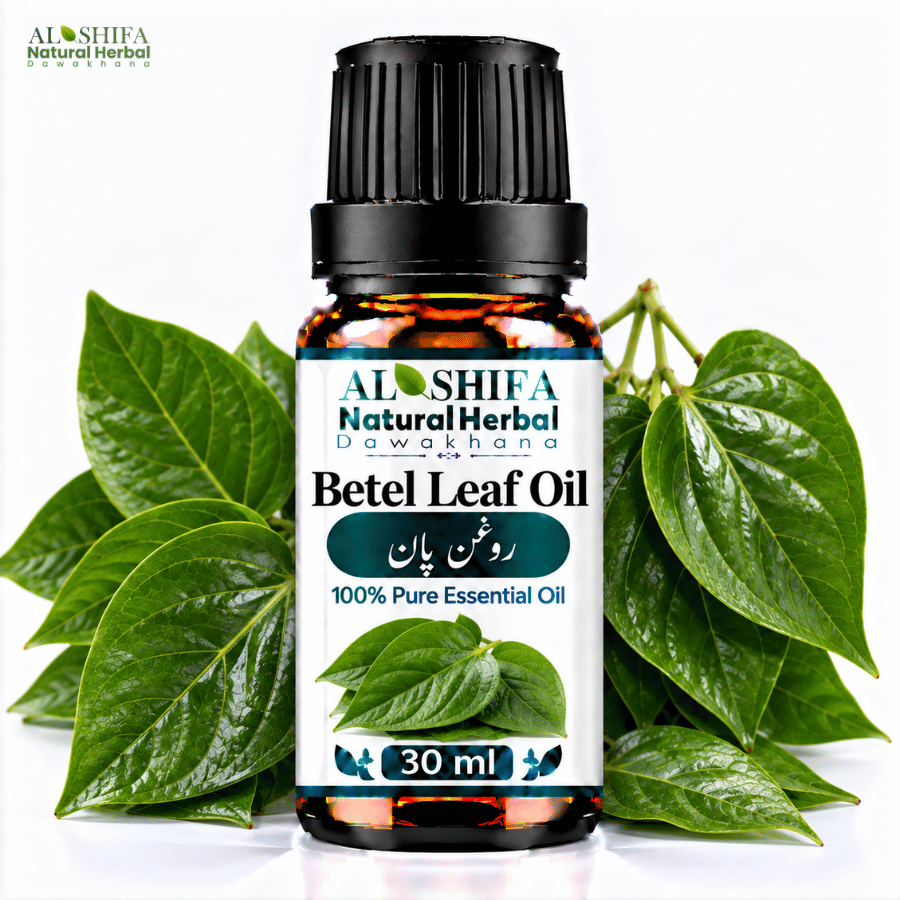
Betel Leaf Essential Oil / Roghan Paan is a concentrated natural essential oil obtained from the aromatic leaves of Piper betle. It has a distinctive warm, spicy, fresh, green and phenolic aroma and may naturally contain aromatic compounds such as chavibetol, eugenol and chavicol. It is particularly suitable for aromatherapy, natural perfumery, fragrance blends, diluted massage, hair and scalp preparations, soaps and cosmetic formulations.
Al Shifa Betel Leaf Essential Oil is carefully selected with attention to its genuine botanical identity, characteristic aroma, essential-oil quality, freshness, clean handling and protective packaging.
Key Features:
Usage: Use a small amount in a suitable diffuser or aromatic blend, or dilute appropriately in a carrier oil before using for massage, hair, scalp or cosmetic formulations.
Important Note: Betel Leaf Essential Oil is a concentrated volatile oil and should be appropriately diluted before topical use. Genuine Betel Leaf Oil is obtained from Piper betle and should not be confused with Areca Nut, prepared Paan mixtures, Black Pepper Oil or Clove Oil.
Betel Leaf Essential Oil / Roghan Paan – روغن پان is a concentrated aromatic essential oil obtained from the leaves of Piper betle L., an evergreen climbing plant belonging to the Piperaceae family. Betel leaf is widely known throughout South and Southeast Asia as Paan Leaf and is valued for its distinctive warm, spicy, fresh, green and phenolic aroma.
The essential oil is generally obtained through steam or hydrodistillation of Betel leaves. Its natural aromatic profile can contain compounds such as chavibetol, eugenol, chavicol and other phenolic and terpenoid constituents, although the exact composition varies considerably between Betel varieties, geographic origins and extraction conditions.
Betel Leaf Essential Oil is primarily suitable for aromatherapy, natural perfumery, fragrance blends, diluted massage preparations, soaps, hair and scalp formulations and other cosmetic applications.
At Al Shifa Natural Herbal Dawakhana, Betel Leaf Essential Oil is selected with attention to its correct botanical identity, characteristic aroma, essential-oil quality, freshness, clean handling and protective packaging.
Betel Leaf Essential Oil is the volatile aromatic oil obtained from the leaves of Piper betle.
Fresh or suitably prepared Betel leaves are distilled to release their volatile aromatic constituents. After condensation, the essential oil is separated from the aromatic water.
The resulting product is a:
Because it is concentrated, Betel Leaf Essential Oil should generally be appropriately diluted before topical application.
Product Name: Betel Leaf Essential Oil / Roghan Paan – روغن پان
English Name: Betel Leaf Essential Oil / Betel Oil / Paan Leaf Oil
Urdu Name: روغن پان / پان کے پتوں کا تیل
Roman Name: Betel Leaf Essential Oil / Roghan Paan
Scientific Name: Piper betle L.
Plant Family: Piperaceae
Plant Part: Leaves
Oil Type: Volatile Essential Oil
Common Forms: Steam-Distilled Betel Leaf Oil / Hydrodistilled Betel Leaf Essential Oil
Appearance: Pale Yellow to Yellowish or Brownish Liquid, Depending on Variety and Distillation
Aroma: Warm, Spicy, Green, Fresh, Phenolic & Characteristic
Primary Applications: Aromatherapy, Perfumery, Fragrance Blends, Diluted Massage, Hair & Scalp Formulations, Soaps & Cosmetics
Product Type: Botanical Essential Oil
Piper betle is an evergreen perennial climbing plant cultivated widely in tropical parts of South and Southeast Asia.
The plant belongs to the Piperaceae family, which also includes Black Pepper and several other Piper species.
Its glossy, heart-shaped leaves are strongly aromatic and are the primary botanical material used for producing Betel Leaf Essential Oil.
Betel leaves are generally:
Their characteristic aroma comes from naturally occurring volatile compounds stored within the leaf tissues.
Different cultivated varieties of Betel can differ noticeably in:
For this reason, not every Betel Leaf Essential Oil has exactly the same fragrance or constituent percentages.
Betel Leaf Essential Oil is generally obtained through steam distillation or hydrodistillation of Piper betle leaves.
The process may include:
The resulting oil is much more concentrated than ordinary fresh Betel leaves.
Good-quality Betel Leaf Essential Oil generally has a distinctive aromatic profile that may be described as:
Natural variations occur because different Piper betle cultivars can produce chemically different essential oils.
Betel Leaf Essential Oil contains a complex mixture of naturally occurring volatile compounds.
Depending on variety and geographic origin, these may include:
The exact composition can vary substantially.
Therefore, Betel Leaf Essential Oil should not be described as though every batch contains identical percentages of individual compounds.
Chavibetol is an aromatic phenolic compound strongly associated with several Betel Leaf varieties.
It contributes to the characteristic:
However:
Betel Leaf Essential Oil ≠ Pure Chavibetol
The natural oil contains a mixture of volatile compounds.
Eugenol may occur in Betel Leaf Essential Oil, depending on the particular variety and chemotype.
It contributes:
Eugenol is also found in several other aromatic plants, especially Clove.
However:
Betel Leaf Oil ≠ Clove Oil
and
Betel Leaf Oil ≠ Pure Eugenol
Chavicol and related aromatic compounds may contribute to the sharp, warm and characteristic fragrance of Betel leaves.
Their concentration varies among different Betel varieties.
The complete natural oil therefore has a more complex profile than any single isolated compound.
One important feature of Piper betle is the chemical diversity between cultivated varieties.
Different Betel oils may contain different dominant compounds.
This means two genuine Piper betle essential oils can differ in:
Botanical identity alone does not guarantee an identical chemical profile.
For professional formulation, a supplier’s specification or chemical analysis is preferable when exact constituent levels matter.
Betel Leaf Essential Oil can be used as an aromatic ingredient because of its powerful warm, spicy and green fragrance.
It may be incorporated into:
Because its aroma can be intense, relatively small amounts may be sufficient in aromatic compositions.
Aromatherapy should not be presented as a replacement for medical treatment.
Betel Leaf Essential Oil can contribute unusual spicy-green and phenolic notes to fragrance compositions.
It may complement:
Its intensity means careful formulation is important.
Betel Leaf Essential Oil may be incorporated into a suitable carrier oil for external massage.
Possible carrier oils include:
Appropriate dilution is important because concentrated Betel Leaf Oil may irritate sensitive skin.
Properly diluted Betel Leaf Essential Oil may be incorporated into:
The final concentration should be appropriate for the intended application.
Betel Leaf Essential Oil may be incorporated into suitable hair-care formulations primarily as an aromatic botanical ingredient.
Possible applications include:
It should be diluted appropriately before scalp application.
A small, properly diluted quantity of Betel Leaf Essential Oil may be incorporated into a carrier oil for scalp massage.
Such an oil blend can provide:
Avoid application to severely irritated, injured or infected scalp areas.
Betel leaves may appear in traditional hair preparations, but this should not be converted into guaranteed hair-growth claims.
Betel Leaf Essential Oil ≠ Proven Hair-Growth Medication
It should not be presented as a guaranteed treatment for:
Persistent hair loss may require professional evaluation.
The strong spicy-green fragrance of Betel Leaf Essential Oil may make it suitable for carefully formulated soaps.
It can contribute:
Appropriate concentration should be determined according to the complete soap formulation.
Betel Leaf Essential Oil may be incorporated at suitable concentrations into:
Because the oil contains potent aromatic constituents, higher concentration does not necessarily mean a better formulation.
Betel leaves, extracts and essential oil have been investigated in laboratory antimicrobial studies.
Such studies may involve:
These conditions differ significantly from ordinary cosmetic use.
Therefore:
Laboratory Antimicrobial Activity ≠ Proven Treatment for Human Infection
Betel Leaf Essential Oil should not replace appropriate medical treatment for bacterial, fungal or other infections.
Betel leaves and extracts have also been investigated for antioxidant properties.
Research may involve phenolic-rich extracts or laboratory testing systems that are not equivalent to normal topical essential-oil use.
Therefore:
Laboratory Antioxidant Activity ≠ Proven Disease Treatment
Betel leaf and its constituents have been studied in laboratory and traditional contexts involving oral microorganisms and oral care.
However:
Betel Leaf Essential Oil ≠ Dental Treatment
Concentrated essential oil should not be applied directly to:
without an appropriately formulated product and suitable professional guidance.
Dental pain, gum disease and oral infections require appropriate dental evaluation.
Betel leaves have a long history of traditional use after meals and in various South Asian practices.
However:
Fresh Betel Leaf ≠ Concentrated Betel Leaf Essential Oil
Traditional use of the whole leaf does not establish the safety or effectiveness of swallowing concentrated essential oil.
Accurate product identification is particularly important for Betel Leaf Oil.
These distinctions are particularly important because the word Paan may refer to the leaf itself or to a prepared chewing mixture containing several additional ingredients.
Betel leaf and Areca nut are frequently associated culturally, but they come from completely different plants.
Betel Leaf:
Areca Nut:
Therefore:
Piper betle Betel Leaf ≠ Areca catechu Areca Nut
Betel Leaf Essential Oil should not be confused with Areca Nut preparations.
A fresh Betel leaf is sometimes used as a wrapper for a prepared Paan mixture.
Prepared Paan may contain various additional ingredients depending on regional practice.
Therefore:
Betel Leaf ≠ Complete Paan Mixture
and
Betel Leaf Essential Oil ≠ Prepared Paan
Claims or risks associated with a complete chewing preparation should not automatically be assigned to pure Piper betle leaf essential oil, and vice versa.
Betel Leaf Essential Oil itself is not tobacco.
Piper betle ≠ Tobacco
Some prepared Paan products may contain tobacco, but that does not make tobacco a natural constituent of Betel leaves.
A genuine Piper betle essential oil is derived from the aromatic plant leaves.
Both Betel Leaf and Clove essential oils may contain phenolic compounds such as eugenol in varying amounts.
However:
Betel Leaf Essential Oil ≠ Clove Essential Oil
Clove Oil is generally obtained from Syzygium aromaticum, while Betel Leaf Oil comes from Piper betle.
Their overall composition and aroma differ.
Betel and Black Pepper belong to the same botanical genus, Piper, but they are different species.
Betel Leaf: Piper betle
Black Pepper: Piper nigrum
Therefore:
Piper betle ≠ Piper nigrum
Their essential oils also differ in aroma and chemical profile.
Betel Leaf Essential Oil is concentrated and may contain potent phenolic aromatic constituents.
For topical use:
Possible reactions can include:
Sensitive skin requires additional caution.
Betel Leaf oils containing appreciable eugenol may require additional attention in cosmetic formulation.
Eugenol is a recognized fragrance component capable of causing irritation or sensitization in susceptible individuals.
This is another reason to avoid applying concentrated Betel Leaf Essential Oil directly to the skin.
Essential oils gradually change when repeatedly exposed to:
Oxidation may alter the fragrance and potentially increase sensitivity.
Keeping the container properly closed and protected from heat and light helps preserve product quality.
A conservative approach is appropriate with concentrated Betel Leaf Essential Oil during pregnancy and breastfeeding.
For regular topical or aromatic use:
Concentrated Betel Leaf Essential Oil requires caution around children.
For children:
Professional guidance is preferable for infants and very young children.
Betel leaves have a history of traditional use, but this does not make concentrated Betel Leaf Essential Oil equivalent to fresh leaves.
Therefore:
Fresh Paan Leaf ≠ Concentrated Betel Leaf Essential Oil
An oil sold for:
should not automatically be consumed.
Essential-Oil Grade ≠ Automatically Food-Grade
Avoid unsupervised internal use.
At Al Shifa Natural Herbal Dawakhana, Betel Leaf Essential Oil is selected with attention to:
Botanical Identity – Genuine Piper betle leaf source.
Plant Part – Aromatic leaves.
Oil Identity – Concentrated volatile essential oil.
Aroma – Characteristic warm, spicy, green and phenolic profile.
Natural Constituents – Naturally occurring volatile aromatic compounds.
Aromatherapy Applications – Suitable for carefully designed aromatic blends.
Perfumery Applications – Suitable for distinctive spicy-green fragrance compositions.
Massage Applications – Suitable after appropriate dilution.
Hair Applications – Suitable for properly formulated hair oils.
Scalp Applications – Suitable for diluted scalp preparations.
Soap Applications – Suitable for professionally formulated soaps.
Cosmetic Applications – Suitable for appropriate fragranced cosmetic products.
Freshness – Attention to essential-oil condition and aroma.
Clean Handling – Carefully handled during packing.
Protective Packaging – Helps reduce unnecessary exposure to air, heat and light.
Responsible Claims – Laboratory research is not presented as proof of medical treatment.
Al Shifa Natural Herbal Dawakhana, established in 1999, supplies carefully selected essential oils, herbal oils and botanical materials throughout Pakistan.
Our focus for Betel Leaf Essential Oil includes:
For Aromatherapy: Add a small amount to a suitable aromatic blend according to the intended application.
For Diffusers: Use sparingly according to the diffuser manufacturer’s instructions and maintain good ventilation.
For Massage: Dilute appropriately in a suitable carrier oil before topical application.
For Hair Care: Add a small, appropriately diluted quantity to a suitable hair oil or pre-shampoo blend.
For Scalp Massage: Dilute in a compatible carrier oil and massage gently into the scalp.
For Perfumery: Use as part of a professionally balanced spicy, herbal or green fragrance composition.
For Soap & Cosmetics: Incorporate at an appropriate concentration according to the complete formulation and intended use.
Betel Leaf Essential Oil / Roghan Paan – روغن پان is the concentrated volatile aromatic oil obtained from the leaves of Piper betle. It has a characteristic warm, spicy, fresh, green and phenolic aroma and may contain chavibetol, eugenol, chavicol and other naturally occurring aromatic constituents depending on the plant variety and origin.
It is primarily suitable for aromatherapy, natural perfumery, fragrance blends, diluted massage preparations, hair and scalp formulations, soaps and cosmetics.
Betel Leaf Essential Oil should not be confused with Areca Nut, prepared Paan mixtures, Black Pepper Oil or Clove Oil. It is concentrated and should generally be appropriately diluted before topical use.
For best quality:
Betel Leaf Essential Oil / Roghan Paan – روغن پان is a concentrated botanical essential oil obtained from the aromatic leaves of Piper betle. Its characteristic warm, spicy, green, fresh and phenolic fragrance makes it suitable for aromatherapy, natural perfumery, fragrance blends, diluted massage, hair and scalp formulations, soaps and cosmetic products.
Customers searching for Betel Leaf Essential Oil, Betel Oil, Paan Leaf Oil, Roghan Paan, Piper Betle Oil, Piper Betle Essential Oil, Pure Betel Leaf Oil, Natural Betel Leaf Oil, Betel Leaf Oil for Aromatherapy, Betel Oil for Diffuser, Betel Leaf Oil for Perfume, Betel Leaf Oil for Massage, Betel Leaf Oil for Hair, Betel Leaf Oil for Scalp, Betel Leaf Oil for Soap, Betel Leaf Oil for Cosmetics, Betel Leaf Essential Oil Pakistan, Roghan Paan Pakistan, Betel Leaf Oil Lahore, Betel Leaf Oil price in Pakistan, Roghan Paan price in Pakistan, buy Betel Leaf Oil Pakistan or Betel Leaf Oil online Pakistan can choose Al Shifa Natural Herbal Dawakhana for carefully selected quality.
Since 1999, Al Shifa Natural Herbal Dawakhana has focused on supplying natural oils and botanical materials with attention to correct botanical identity, quality selection, characteristic aroma, freshness, clean handling, responsible product information, protective packaging and proper storage.
Product Name: Betel Leaf Essential Oil / Roghan Paan – روغن پان
English Name: Betel Leaf Essential Oil / Betel Oil / Paan Leaf Oil
Urdu Name: روغن پان / پان کے پتوں کا تیل
Roman Name: Betel Leaf Essential Oil / Roghan Paan
Scientific Name: Piper betle L.
Plant Family: Piperaceae
Plant Part: Leaves
Oil Type: Volatile Essential Oil
Common Forms: Steam-Distilled Betel Leaf Oil / Hydrodistilled Betel Leaf Essential Oil
Appearance: Pale Yellow to Yellowish or Brownish Liquid, Depending on Variety and Distillation
Aroma: Warm, Spicy, Green, Fresh, Phenolic & Characteristic
Primary Applications: Aromatherapy, Perfumery, Fragrance Blends, Diluted Massage, Hair & Scalp Formulations, Soaps & Cosmetics
Product Type: Botanical Essential Oil
Important Note: Genuine Betel Leaf Essential Oil is obtained from Piper betle leaves. It is different from Areca Nut and from complete prepared Paan mixtures. Because the essential oil is concentrated and its composition can vary between Betel chemotypes, appropriate dilution and responsible topical use are important.
روغن پان پان کے خوشبودار پتوں سے بھاپ کے ذریعے حاصل ہونے والا قدرتی تیز خوشبودار روغن ہے۔ پان ایک سدا بہار بیل ہے جس کے سبز، چمک دار اور دل کی شکل والے پتے اپنی خاص تیز، گرم اور مصالحہ دار خوشبو رکھتے ہیں۔
پان کے پتے پاکستان، بھارت، بنگلہ دیش اور جنوب مشرقی ایشیا میں مشہور ہیں۔ حکمت میں پان کے پتے اپنی خوشبو اور گرم طبی خاصیت کی وجہ سے مختلف ادویات میں استعمال کیے جاتے ہیں۔
روغن پان عام بیجوں سے حاصل ہونے والا چکنائی والا روغن نہیں ہے۔ یہ پتوں سے حاصل ہونے والا تیز خوشبودار روغن ہے، اس لیے جلد پر اسے خالص حالت میں زیادہ مقدار میں استعمال نہیں کیا جاتا۔ بیرونی استعمال کے لیے اسے روغن بادام، روغن ناریل، روغن جوجوبا یا دوسرے بنیادی روغن میں کم مقدار میں ملایا جاتا ہے۔
اردو: پان، برگ پان، پان کے پتے، روغن پان
پنجابی: پان، پان دے پتے، پان دا تیل
ہندی: پان، ناگ بیل، پان کا پتہ، پان کا تیل
فارسی: برگ پان، پان، روغن پان
عربی: تنبول، ورق التنبول، زيت ورق التنبول
انگریزی نام: بیٹل لیف، بیٹل لیف آئل، بیٹل آئل
سائنسی نام: پائپر بیٹل
خاندان: پائپریسی
استعمال ہونے والا حصہ: خوشبودار پتے
پان ایک سدا بہار بیل ہے۔
اس کی بیل دوسرے درختوں یا سہاروں کے ساتھ اوپر چڑھتی ہے۔
اس کے پتے سبز، چمک دار اور دل کی شکل کے ہوتے ہیں۔
پتے کے کنارے ہموار ہوتے ہیں۔
پتے کی نوک نمایاں ہوتی ہے۔
تازہ پتہ توڑنے یا مسلنے پر خاص تیز اور مصالحہ دار خوشبو آتی ہے۔
پان کی مختلف قسموں کے پتوں کی خوشبو اور تیزی الگ رہتی ہے۔
روغن حاصل کرنے کے لیے صاف اور خوشبودار پتے استعمال کیے جاتے ہیں۔
اچھے پان کے پتے:
صاف اور خوشبودار پان کے پتے منتخب کیے جاتے ہیں۔
پتوں کو صاف کیا جاتا ہے۔
اس کے بعد انہیں بھاپ کے ذریعے روغن نکالنے کے طریقے میں استعمال کیا جاتا ہے۔
گرم بھاپ پتوں میں موجود اڑنے والے خوشبودار اجزا اپنے ساتھ لے جاتی ہے۔
بھاپ کو ٹھنڈا کرنے کے بعد پانی اور خوشبودار روغن الگ ہو جاتے ہیں۔
روغن کو پانی سے الگ کر کے صاف کیا جاتا ہے۔
اس طرح حاصل ہونے والا روغن پان بہت تیز اور خوشبودار ہوتا ہے، اس لیے کم مقدار میں استعمال کیا جاتا ہے۔
پان پاکستان اور برصغیر کی حکمت میں معروف خوشبودار پتہ ہے۔
حکمت کی معروف کتب مفردات میں پان کو گرم اور خشک مزاج کے ساتھ بیان کیا جاتا ہے۔
پان کے پتے اپنی گرم اور خوشبودار طبی خاصیت کی وجہ سے مختلف حکیمی ادویات میں استعمال کیے جاتے ہیں۔
پان کے مکمل پتے اور ان سے بھاپ کے ذریعے حاصل روغن مقدار میں ایک جیسے نہیں رکھے جاتے، کیونکہ روغن زیادہ تیز اور خوشبودار ہوتا ہے۔
روغن پان کی سب سے نمایاں پہچان اس کی تیز، گرم، سبز اور مصالحہ دار خوشبو ہے۔
اس کی خوشبو میں لونگ، مرچ اور تازہ سبز پتوں جیسا احساس بھی محسوس ہوتا ہے۔
یہ عام بنیادی روغن نہیں ہے۔
جلد پر استعمال سے پہلے اسے دوسرے بنیادی روغن میں کم مقدار میں ملایا جاتا ہے۔
روغن پان میں کئی قدرتی خوشبودار اجزا پائے جاتے ہیں، جن میں نمایاں یہ ہیں:
پان کی قسم، علاقے، موسم، پتوں کی عمر اور روغن حاصل کرنے کے طریقے کے مطابق ان اجزا کی مقدار بدلتی رہتی ہے۔
چاوائی بیٹول پان کے پتوں کے نمایاں قدرتی خوشبودار اجزا میں شامل ہے۔
یہ پان کی خاص گرم، تیز اور مصالحہ دار خوشبو میں اہم جگہ رکھتا ہے۔
پان کی مختلف اقسام میں اس کی مقدار ایک جیسی نہیں رہتی۔
چاویکول پان کے پتوں میں پایا جانے والا خوشبودار قدرتی جز ہے۔
یہ پان کے پتوں کی تیزی اور خاص خوشبو کا حصہ ہے۔
یوجینول پان کے پتوں میں پایا جانے والا قدرتی خوشبودار جز ہے۔
یہ لونگ میں بھی پایا جاتا ہے۔
یہ روغن پان کی گرم اور مصالحہ دار خوشبو میں اہم جگہ رکھتا ہے۔
کیریوفائلین کئی خوشبودار جڑی بوٹیوں اور مصالحوں میں پایا جاتا ہے۔
یہ روغن پان کی گرم، لکڑی اور مصالحہ دار خوشبو کا حصہ ہے۔
حکمت میں پان کے پتوں کو مختلف طبی ادویات میں استعمال کیا جاتا ہے۔
پان کے پتے خاص طور پر:
استعمال کیے جاتے ہیں۔
کسی بیماری کے لیے پان یا روغن پان کا اندرونی طبی استعمال معالج سے پوچھ کر کریں۔
روغن پان کو جسمانی مالش میں خالص حالت میں استعمال نہیں کیا جاتا۔
اس کے چند قطرے روغن بادام، روغن ناریل، روغن جوجوبا یا دوسرے بنیادی روغن میں ملائے جاتے ہیں۔
اس آمیزے کو جسم کے مطلوبہ حصے پر ہلکے ہاتھ سے لگایا جاتا ہے۔
جسمانی تھکن کے بعد روغن پان کو بنیادی روغن میں کم مقدار میں ملا کر مالش کی جاتی ہے۔
اسے کندھوں، بازوؤں، ٹانگوں اور پاؤں کی مالش میں استعمال کیا جاتا ہے۔
اس کی تیز اور گرم خوشبو مالش کو خوشگوار بناتی ہے۔
پٹھوں کے کھنچاؤ والی جگہ کی مالش میں روغن پان کے چند قطرے بنیادی روغن میں ملا کر استعمال کیے جاتے ہیں۔
خالص روغن براہ راست جلد پر نہ لگائیں۔
پٹھوں کے امراض یا مسلسل درد میں طبی استعمال معالج سے پوچھ کر کریں۔
روغن پان کو بنیادی روغن میں ملا کر پاؤں کی مالش میں استعمال کیا جاتا ہے۔
اس کی تیز اور مصالحہ دار خوشبو پاؤں کی مالش کو تازہ احساس دیتی ہے۔
حساس جلد پر پہلے تھوڑی مقدار آزمائیں۔
روغن پان تیز خوشبودار روغن ہے۔
اسے جلد پر خالص حالت میں استعمال نہیں کرنا چاہیے۔
چند قطرے کسی بنیادی روغن میں ملا کر جلد کی روغنی دیکھ بھال میں استعمال کیے جاتے ہیں۔
خشک جلد کے لیے اصل نرمی بنیادی روغن فراہم کرتا ہے۔
خشک جلد پر روغن پان کو روغن بادام، روغن جوجوبا یا دوسرے نرم بنیادی روغن میں بہت کم مقدار میں ملایا جاتا ہے۔
تیار آمیزے کو صاف جلد پر ہلکے ہاتھ سے لگایا جاتا ہے۔
پہلی بار استعمال سے پہلے جلد کے چھوٹے حصے پر آزمائیں۔
روغن پان کو سر کی جلد پر خالص حالت میں نہ لگائیں۔
اس کے چند قطرے روغن ناریل، روغن بادام یا دوسرے بنیادی روغن میں ملا کر سر کی مالش میں استعمال کیے جاتے ہیں۔
سر کی جلد کے امراض میں طبی استعمال معالج سے پوچھ کر کریں۔
روغن پان عام بالوں کا بنیادی روغن نہیں ہے۔
اسے بالوں کے روغنی آمیزوں میں بہت کم مقدار میں شامل کیا جاتا ہے۔
بالوں کو نرم رکھنے کے لیے بنیادی روغن اہم جگہ رکھتا ہے جبکہ روغن پان اپنی خاص خوشبو فراہم کرتا ہے۔
روغن پان کی تیز اور مصالحہ دار خوشبو اسے خوشبودار استعمال کے لیے نمایاں بناتی ہے۔
اسے دوسرے خوشبودار روغنوں کے ساتھ ملا کر استعمال کیا جاتا ہے۔
چند قطرے ہی کافی رہتے ہیں۔
روغن پان کو خوشبو پھیلانے والے آلے میں کم مقدار میں استعمال کیا جاتا ہے۔
اس کی خوشبو گرم، سبز اور مصالحہ دار ہوتی ہے۔
بند جگہ میں بہت زیادہ مقدار استعمال نہ کریں۔
روغن پان کو نہانے کے پانی میں خالص حالت میں براہ راست زیادہ مقدار میں نہ ڈالیں۔
اسے پہلے کسی بنیادی روغن یا بغیر خوشبو والے غسل کے آمیزے میں بہت کم مقدار میں ملایا جاتا ہے۔
اس کے بعد غسل کے لیے استعمال کیا جاتا ہے۔
پان کے مکمل پتے میں خوشبودار روغن کے ساتھ دوسرے قدرتی اجزا بھی موجود ہوتے ہیں۔
بھاپ کے ذریعے حاصل روغن میں پتے کے اڑنے والے خوشبودار اجزا زیادہ نمایاں ہوتے ہیں۔
اس لیے مکمل پان کے پتے اور روغن پان کی مقدار ایک جیسی نہیں رکھی جاتی۔
پان کا جوہر اور روغن پان الگ شکلیں ہیں۔
جوہر میں پان کے منتخب اجزا دوسرے طریقے سے حاصل کیے جاتے ہیں۔
روغن پان پتوں سے بھاپ کے ذریعے حاصل ہونے والا تیز خوشبودار روغن ہے۔
دونوں کی مقدار اور استعمال الگ رکھے جاتے ہیں۔
پان کا اصل پتہ پائپر بیٹل نامی بیل سے حاصل ہوتا ہے۔
بازار میں کھانے کے لیے تیار پان میں پتوں کے ساتھ دوسری چیزیں بھی شامل کی جاتی ہیں۔
تیار کھانے والا پان اور خالص پان کا پتہ ایک جیسی چیزیں نہیں ہیں۔
روغن پان صرف پان کے خوشبودار پتوں سے حاصل کیا جاتا ہے۔
روغن بادام، روغن ناریل، روغن زیتون اور روغن جوجوبا بنیادی روغن ہیں۔
انہیں جلد اور بالوں پر نسبتاً زیادہ مقدار میں استعمال کیا جاتا ہے۔
روغن پان تیز خوشبودار روغن ہے۔
اسے چند قطروں کی مقدار میں بنیادی روغن کے ساتھ ملا کر استعمال کیا جاتا ہے۔
خالص روغن پان کی رنگت ہلکی زرد، زردی مائل بھوری یا قدرے گہری ہو سکتی ہے۔
پان کی قسم اور روغن حاصل کرنے کے طریقے کے مطابق قدرتی رنگت بدلتی رہتی ہے۔
تیز مصنوعی سبز رنگ خالص روغن پان کی لازمی پہچان نہیں ہے۔
روغن پان کی خوشبو تیز، گرم، سبز اور مصالحہ دار ہوتی ہے۔
اس میں لونگ اور تازہ پان کے پتے جیسی خاص خوشبو محسوس ہوتی ہے۔
خوشبو گہری ہونے کی وجہ سے بہت کم مقدار کافی رہتی ہے۔
روغن پان ہلکا اور تیز خوشبودار روغن ہے۔
یہ عام چکنائی والے بنیادی روغن کی طرح گاڑھا نہیں ہوتا۔
اسے جلد اور بالوں پر خالص حالت میں زیادہ مقدار میں استعمال نہیں کیا جاتا۔
روغن پان کے چند قطرے کسی بنیادی روغن میں ملائیں۔
اچھی طرح ملانے کے بعد جلد کے مطلوبہ حصے پر تھوڑی مقدار لگائیں۔
پہلی بار استعمال سے پہلے جلد کے چھوٹے حصے پر آزمائیں۔
خارش، سرخی، سوجن یا جلن پیدا ہو تو استعمال بند کریں۔
روغن بادام، روغن ناریل یا دوسرے بنیادی روغن میں روغن پان کی کم مقدار شامل کریں۔
تیار آمیزے کو ہتھیلیوں پر پھیلائیں۔
کمر، کندھوں، بازوؤں، ٹانگوں یا پاؤں پر نرم ہاتھ سے مالش کریں۔
خالص روغن پان سے پورے جسم کی مالش نہ کریں۔
روغن پان کو:
جیسے بنیادی روغنوں کے ساتھ ملا کر استعمال کیا جاتا ہے۔
خوشبودار آمیزوں میں اسے لونگ، دارچینی، الائچی اور دوسرے گرم و مصالحہ دار خوشبو والے روغنوں کے ساتھ بہت کم مقدار میں شامل کیا جاتا ہے۔
پان کا پتہ اور اس سے حاصل تیز خوشبودار روغن ایک جیسی مقدار میں استعمال نہیں کیے جاتے۔
خالص روغن پان بہت تیز ہوتا ہے۔
اسے خود سے منہ، مسوڑھوں یا زبان پر براہ راست نہ لگائیں۔
منہ کے امراض کے لیے طبی استعمال معالج سے پوچھ کر کریں۔
روغن پان عام کھانے والا روغن نہیں ہے۔
اسے خود سے نہ پئیں۔
کسی بیماری کے لیے روغن پان کا اندرونی طبی استعمال معالج سے پوچھ کر کریں۔
پان کے مکمل پتے اور ان سے حاصل تیز خوشبودار روغن کی مقدار ایک جیسی نہیں رکھی جاتی۔
حساس جلد پر روغن پان خالص حالت میں نہ لگائیں۔
اسے بنیادی روغن میں بہت کم مقدار میں ملا کر استعمال کریں۔
پہلی بار استعمال سے پہلے جلد کے چھوٹے حصے پر آزمائیں۔
خارش، سرخی، سوجن یا جلن پیدا ہو تو استعمال بند کریں۔
جلدی امراض میں طبی استعمال معالج سے پوچھ کر کریں۔
حمل کے دوران روغن پان کا اندرونی استعمال خود سے نہ کریں۔
کسی بیماری کے لیے اندرونی طبی استعمال معالج سے پوچھ کر کریں۔
بیرونی استعمال میں بھی اسے بنیادی روغن میں بہت کم مقدار میں ملا کر استعمال کریں۔
دودھ پلانے کے دوران روغن پان کا اندرونی طبی استعمال معالج سے پوچھ کر کریں۔
اسے چھاتی یا ایسی جگہ نہ لگائیں جہاں سے بچے کے منہ تک روغن پہنچے۔
تیز خوشبو کی وجہ سے بچے کے بہت قریب زیادہ مقدار میں استعمال نہ کریں۔
بچوں پر خالص روغن پان خود سے استعمال نہ کریں۔
بچوں کے چہرے، منہ، ناک اور آنکھوں کے قریب نہ لگائیں۔
بچوں کو روغن پان نہ پلائیں۔
کسی بیماری کے لیے طبی استعمال معالج سے پوچھ کر کریں۔
اسے بچوں کی پہنچ سے دور رکھیں۔
اصل پان: روغن اصل پائپر بیٹل کے خوشبودار پتوں سے حاصل کیا گیا ہو۔
اچھے پتے: صاف، تازہ اور قدرتی خوشبو رکھنے والے پتوں کو اہمیت دی گئی ہو۔
قدرتی خوشبو: تیز، گرم، سبز اور مصالحہ دار خوشبو رکھتا ہو۔
قدرتی رنگت: ہلکی زرد سے زردی مائل قدرتی رنگت رکھتا ہو۔
صاف روغن: پانی، گرد اور غیر ضروری ذرات سے پاک ہو۔
تازگی: باسی یا خراب بو نہ رکھتا ہو۔
غیر ضروری ملاوٹ سے پاک: مصنوعی رنگ، غیر ضروری مصنوعی خوشبو اور کم معیار کے دوسرے روغن کی ملاوٹ سے پاک ہو۔
روغن پان پائپر بیٹل کے خوشبودار پتوں سے بھاپ کے ذریعے حاصل ہونے والا قدرتی تیز خوشبودار روغن ہے۔
اس میں چاوائی بیٹول، چاویکول، یوجینول، کیریوفائلین اور دوسرے قدرتی خوشبودار اجزا پائے جاتے ہیں۔
اس کا بیرونی استعمال جسمانی مالش کے آمیزوں، پٹھوں کے کھنچاؤ والی جگہ کی مالش، پاؤں اور سر کی مالش اور خوشبودار استعمال میں کیا جاتا ہے۔
یہ عام بنیادی روغن نہیں ہے، اس لیے جلد پر خالص حالت میں زیادہ مقدار میں استعمال نہ کریں۔
خالص روغن پان کو خود سے منہ میں نہ لگائیں اور نہ پئیں۔
الشفاء نیچرل ہربل دواخانہ میں روغن پان کے لیے درج ذیل باتوں کو اہمیت دی جاتی ہے:
اصل پان کے پتے: پائپر بیٹل کے صاف اور خوشبودار پتوں سے حاصل روغن کو اہمیت دی جاتی ہے۔
اچھے پتے: تازہ، صاف، سبز اور اچھی حالت والے پتوں کو اہمیت دی جاتی ہے۔
قدرتی خوشبو: گرم، تیز، سبز اور مصالحہ دار قدرتی خوشبو کو اہمیت دی جاتی ہے۔
قدرتی رنگت: ہلکی زرد سے زردی مائل قدرتی رنگت کو دیکھا جاتا ہے۔
صاف روغن: پانی، گرد اور غیر ضروری ذرات سے پاک روغن کو اہمیت دی جاتی ہے۔
تازگی: باسی یا خراب بو والے روغن سے بچا جاتا ہے۔
غیر ضروری ملاوٹ سے پاک: مصنوعی رنگ، غیر ضروری مصنوعی خوشبو اور کم معیار کے دوسرے روغن کی ملاوٹ سے پاک ہونے کو اہمیت دی جاتی ہے۔
الشفاء نیچرل ہربل دواخانہ سنہ ۱۹۹۹ سے قدرتی جڑی بوٹیوں، پتوں، پھلوں، بیجوں اور ان سے حاصل ہونے والے روغنوں کی سپلائی کر رہا ہے۔
ہم روغن پان میں اصل پائپر بیٹل کے خوشبودار پتے، قدرتی رنگت، خاص گرم اور مصالحہ دار خوشبو، صاف حالت، تازگی اور غیر ضروری ملاوٹ سے پاک ہونے کو اہمیت دیتے ہیں۔
اچھے روغن پان کی پہچان اصل پان کے پتے، قدرتی رنگت، تیز اور مصالحہ دار خوشبو، صاف حالت اور تازگی سے کی جاتی ہے۔
روغن پان کو ٹھنڈی، خشک اور روشنی سے محفوظ جگہ پر کسی جار میں اچھی طرح پیک کر کے رکھیں۔
تیز دھوپ اور زیادہ گرمی سے بچائیں۔
استعمال کے بعد ڈھکن اچھی طرح بند کریں۔
پانی سے محفوظ رکھیں۔
باسی یا خراب بو پیدا ہونے پر استعمال نہ کریں۔
اسے بچوں کی پہنچ سے دور رکھیں۔
روغن پان تیز خوشبودار روغن ہے۔
اسے عام بنیادی روغن کی طرح خالص حالت میں زیادہ مقدار میں جلد پر استعمال نہ کریں۔
جلد پر استعمال سے پہلے روغن بادام، روغن ناریل، روغن جوجوبا یا دوسرے بنیادی روغن میں بہت کم مقدار میں ملائیں۔
پہلی بار استعمال سے پہلے جلد کے چھوٹے حصے پر آزمائیں۔
خارش، سرخی، سوجن یا جلن پیدا ہو تو استعمال بند کریں۔
آنکھوں، منہ، ناک کے اندرونی حصے اور کھلے زخموں پر نہ لگائیں۔
اسے خود سے نہ پئیں۔
کسی بیماری کے لیے اندرونی طبی استعمال معالج سے پوچھ کر کریں۔
روغن پان پائپر بیٹل کے خوشبودار پتوں سے بھاپ کے ذریعے حاصل ہونے والا قدرتی تیز خوشبودار روغن ہے۔
اس کی نمایاں پہچان تیز، گرم، سبز اور مصالحہ دار خوشبو ہے۔ اس میں چاوائی بیٹول، چاویکول، یوجینول، کیریوفائلین اور دوسرے قدرتی خوشبودار اجزا پائے جاتے ہیں۔
اسے جسمانی مالش کے خوشبودار آمیزوں، پٹھوں کے کھنچاؤ والی جگہ، پاؤں اور سر کی مالش اور ماحول کو خوشبودار بنانے میں استعمال کیا جاتا ہے۔
حکمت کی معروف کتب مفردات میں پان کو گرم اور خشک مزاج کے ساتھ بیان کیا جاتا ہے۔ پتوں سے حاصل ہونے والا روغن زیادہ تیز ہوتا ہے، اس لیے اسے کم مقدار میں استعمال کیا جاتا ہے۔
اچھے روغن پان کی پہچان اصل پائپر بیٹل کے پتے، قدرتی ہلکی رنگت، خاص گرم اور مصالحہ دار خوشبو، صاف حالت، تازگی اور غیر ضروری ملاوٹ سے پاک ہونے سے کی جاتی ہے۔