روغنِ گلِ صلیبی
Original price was: ₨ 4,500.₨ 4,300Current price is: ₨ 4,300.
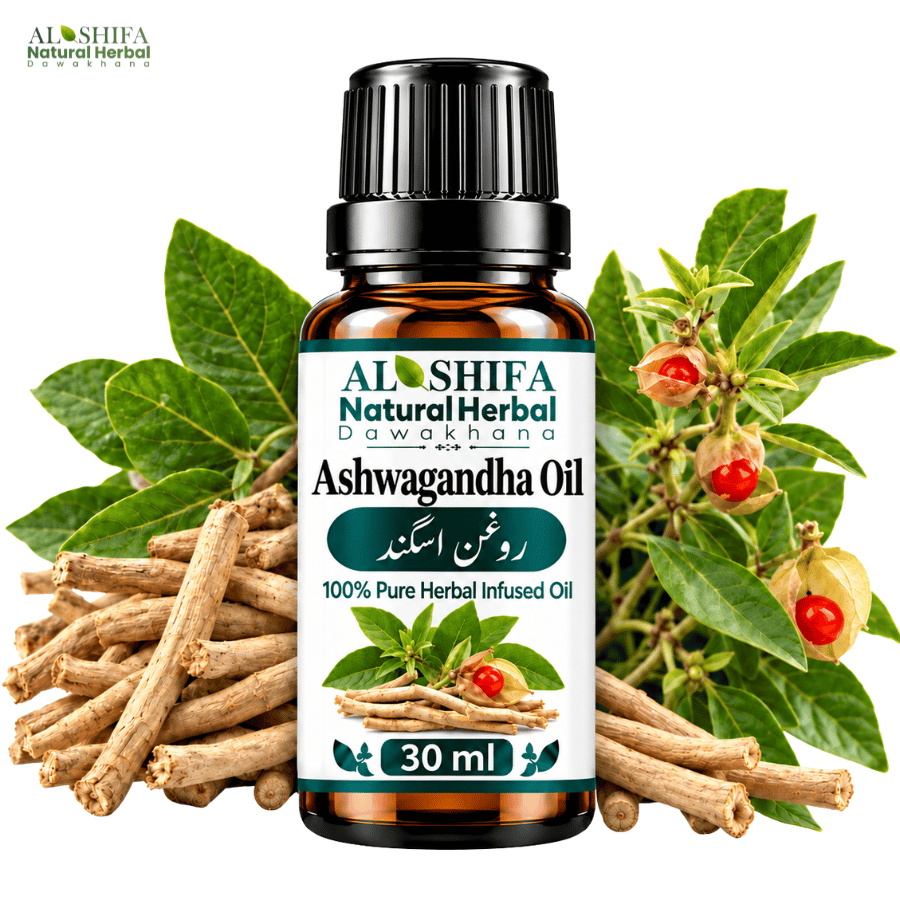
Ashwagandha Oil / Roghan Asgandh is a botanical herbal oil prepared using Withania somnifera, primarily its well-known root. It is generally produced as an infused or macerated herbal oil in a suitable carrier-oil base rather than as a conventional essential oil. It is particularly suitable for body massage, relaxing massage routines, skin conditioning, scalp massage, hair care and herbal cosmetic formulations.
Al Shifa Ashwagandha Oil is carefully selected with attention to its genuine botanical identity, herbal-oil quality, freshness, clean handling and protective packaging.
Key Features:
Usage: Apply a suitable amount for body or scalp massage, use lightly on hair and dry skin, or incorporate into compatible herbal and cosmetic formulations.
Important Note: Ashwagandha Oil is generally a herbal infused or macerated oil, not a conventional steam-distilled essential oil. Research on standardized oral Ashwagandha extracts should not be interpreted as evidence of identical effects from topical Ashwagandha Oil.
Ashwagandha Oil / Roghan Asgandh – روغن اسگند is a botanical herbal oil prepared using Withania somnifera (L.) Dunal, a well-known plant belonging to the Solanaceae family. Ashwagandha is widely known in South Asian herbal traditions, with its root being the most commonly used part of the plant.
Unlike conventional steam-distilled essential oils, products sold as Ashwagandha Oil are generally herbal infused or macerated oils, in which Ashwagandha root or its extract is incorporated into a suitable carrier-oil base. The exact composition therefore depends on the Ashwagandha material, extraction method and carrier oil used.
Ashwagandha Oil is primarily valued for body massage, skin conditioning, scalp massage, hair-care oils and herbal cosmetic formulations. Its traditional reputation should not be confused with clinical evidence for Ashwagandha root powders or standardized oral extracts, as these are different preparations.
At Al Shifa Natural Herbal Dawakhana, Ashwagandha Oil is selected with attention to its botanical identity, herbal-oil quality, freshness, clean handling and protective packaging.
Ashwagandha Oil is a herbal botanical oil associated with Withania somnifera.
It is generally produced by incorporating Ashwagandha root or a suitable botanical extract into a fixed vegetable carrier oil.
Depending on the manufacturing method, the preparation may involve:
This produces a herbal oil intended primarily for external applications.
Product Name: Ashwagandha Oil / Roghan Asgandh – روغن اسگند
English Name: Ashwagandha Oil / Ashwagandha Herbal Oil
Urdu Name: روغن اسگند / اسگند کا تیل
Roman Name: Ashwagandha Oil / Roghan Asgandh
Scientific Name: Withania somnifera (L.) Dunal
Plant Family: Solanaceae
Plant Part: Primarily Root
Oil Type: Herbal Infused Oil / Macerated Botanical Oil
Common Forms: Ashwagandha Root Infused Oil / Herbal Massage Oil / Ashwagandha Extract in Carrier Oil
Appearance: Yellowish to Golden or Brownish, Depending on Carrier Oil and Extraction
Aroma: Mild, Earthy, Herbal & Characteristic
Primary Applications: Body Massage, Skin Conditioning, Scalp Massage, Hair Care & Herbal Cosmetic Formulations
Product Type: Botanical Herbal Oil
Withania somnifera is a small shrub associated particularly with South Asian herbal traditions.
Different parts of the plant exist, but the root is the best-known herbal material and is widely used in traditional preparations.
Ashwagandha is also commonly known as:
However, Ashwagandha is not botanically related to true ginseng species of the genus Panax.
The root is one of the most commercially important parts of Withania somnifera.
Good dried Ashwagandha root generally has:
Root identity is important because Ashwagandha leaf and root can differ considerably in their natural chemical composition.
Ashwagandha Oil is generally not obtained simply by pressing Ashwagandha roots.
Instead, commercial herbal oils may be produced by:
The finished oil therefore contains characteristics of both:
The exact preparation method should be considered when evaluating the product.
Ashwagandha contains several naturally occurring groups of plant compounds.
The plant is particularly associated with compounds known as:
However, their concentration depends heavily on:
An ordinary Ashwagandha infused oil should therefore not automatically be described as a standardized source of a specific percentage of withanolides.
Withanolides are among the best-known natural compounds associated with Withania somnifera.
They are widely discussed in Ashwagandha research and standardized herbal extracts.
However:
Ashwagandha Oil ≠ Standardized Withanolide Extract
A herbal infused oil may contain a different chemical profile and much lower or variable levels of these compounds compared with standardized extracts.
One of the most suitable uses of Ashwagandha Oil is body massage.
It can be used as part of:
The carrier-oil base provides lubrication and skin-conditioning properties, while Ashwagandha contributes the botanical identity of the preparation.
Ashwagandha has a long-standing reputation in traditional wellness practices, and its oil is commonly incorporated into relaxing massage routines.
Massage itself can contribute to:
However, these effects should not automatically be attributed to Ashwagandha pharmacology.
Relaxing Massage ≠ Treatment for Anxiety, Depression or Sleep Disorders
Medical conditions require appropriate professional evaluation.
Ashwagandha Oil is commonly selected for massage after physical activity or during general body-care routines.
It may be massaged over:
The oil provides lubrication that allows comfortable manual massage.
However:
Massage Oil ≠ Treatment for Muscle Disease or Injury
Persistent pain, swelling, weakness or injury should be medically evaluated.
Ashwagandha herbal oils may also be incorporated into external joint-massage routines.
The oil can provide:
It should not be described as a proven treatment for:
The skin-care characteristics of Ashwagandha Oil depend substantially on the carrier oil used.
It may be suitable for:
The carrier oil generally provides most of the emollient fatty-acid profile.
A well-formulated Ashwagandha herbal oil can help condition dry-feeling skin by providing an oil layer that reduces the rough, dry sensation associated with loss of surface lipids.
It can be incorporated into:
Individual skin tolerance should always be considered.
Ashwagandha Oil may be incorporated into herbal hair-care routines.
It can be applied in suitable formulations to:
Its cosmetic effect depends substantially on the carrier oil and overall formulation.
Ashwagandha Oil may be used for scalp massage where the formulation is suitable for topical application.
Scalp massage with oil can provide:
Avoid application to an irritated, injured or infected scalp without appropriate professional advice.
Ashwagandha is sometimes promoted online for hair growth, particularly because stress and nutritional factors can influence hair health.
However, this requires careful distinction.
Ashwagandha Oil ≠ Proven Hair-Growth Medication
It should not be presented as a guaranteed treatment for:
Hair-loss conditions can have many different causes and may require professional assessment.
Ashwagandha has been investigated in human research for areas including stress and perceived anxiety.
However, much of this research involves:
These preparations are fundamentally different from topical herbal oil.
Therefore:
Research on Oral Standardized Ashwagandha Extract ≠ Evidence for the Same Effects from Topical Ashwagandha Oil
Topical oil should not be marketed as though it delivers the same exposure as an oral standardized extract.
Some clinical research has investigated oral Ashwagandha preparations in relation to sleep and stress.
This does not establish that applying Ashwagandha Oil to the skin treats:
A relaxing oil massage may form part of a personal evening routine, but this is different from treating a medical sleep condition.
Ashwagandha supplements and standardized oral extracts have also been studied in relation to physical performance and exercise.
This should not be transferred directly to topical oil.
Therefore:
Oral Supplement Research ≠ Topical Oil Effect
Applying Ashwagandha Oil to muscles does not establish the same biological effects as consuming a standardized research preparation.
Ashwagandha is frequently marketed in relation to testosterone and male wellness.
This requires careful product distinction.
Studies discussing testosterone or reproductive parameters generally involve specific oral Ashwagandha preparations.
Topical Ashwagandha Oil should not be described as a proven method for increasing testosterone.
Therefore:
Ashwagandha Oil ≠ Testosterone Medication or Hormone Therapy
Research involving oral Ashwagandha preparations should not be used to claim that topical Ashwagandha Oil treats:
Topical massage oil and standardized oral botanical extracts are different preparations with different exposure.
Ashwagandha is widely described in modern herbal marketing as an “adaptogen.”
The term is primarily used in relation to internal herbal preparations and proposed responses to physiological stress.
An Ashwagandha-infused topical oil should not automatically be described as delivering the same systemic effects.
Ashwagandha Oil can be combined with other suitable herbal oils according to the intended formulation.
It may be incorporated into:
The compatibility and safety of the complete formulation should be considered.
The carrier oil used to prepare Ashwagandha Oil has a major influence on:
For example, Ashwagandha infused into Sesame Oil will not have exactly the same cosmetic characteristics as Ashwagandha infused into Sweet Almond, Sunflower or another vegetable oil.
Therefore, the carrier oil should be identified whenever possible.
Correct product identification prevents misleading claims.
These distinctions are especially important when describing Ashwagandha products online.
The term “Ashwagandha Essential Oil” is sometimes used commercially, but this can create confusion.
Ashwagandha root is not generally treated like classic aromatic plants such as Lavender, Peppermint or Eucalyptus for conventional essential-oil production.
Most products marketed simply as Ashwagandha Oil are better understood as:
The actual ingredient declaration should be checked before describing a product as an essential oil.
Before broader topical use:
Sensitivity can arise from Ashwagandha itself, the carrier oil or another ingredient in the formulation.
Ashwagandha has important pregnancy considerations, particularly for internal preparations.
For topical Ashwagandha Oil during pregnancy, a conservative approach is appropriate.
Avoid unsupervised medicinal use during pregnancy and seek guidance from a qualified healthcare professional where regular or extensive use is intended.
For breastfeeding:
Ashwagandha Oil intended for adults should not automatically be assumed suitable for infants or young children.
For children:
Professional guidance is appropriate where regular use is intended.
Ashwagandha oral preparations have been studied in relation to thyroid function, and interactions may be relevant for people with thyroid conditions or those using thyroid medicines.
The systemic exposure from topical oil is not equivalent to oral supplementation.
Nevertheless, Ashwagandha Oil should not be promoted as a treatment for:
Individuals with diagnosed thyroid disease should follow their clinician’s treatment plan.
Research and cautions associated with oral Ashwagandha preparations may involve areas such as:
These concerns primarily relate to internal Ashwagandha preparations and should not be automatically transferred to every topical product.
At the same time, topical oil should not be used as a substitute for prescribed treatment.
Ashwagandha Oil sold for:
should not automatically be considered suitable for consumption.
The carrier oil, extraction method, concentration and manufacturing grade all matter.
Therefore:
External-Use Ashwagandha Oil ≠ Oral Ashwagandha Supplement
Avoid unsupervised internal use unless the specific product is manufactured and labelled for that purpose.
At Al Shifa Natural Herbal Dawakhana, Ashwagandha Oil is selected with attention to:
Botanical Identity – Genuine Withania somnifera botanical material.
Plant Part – Root-associated herbal preparation where specified.
Oil Identity – Herbal infused or botanical oil rather than incorrectly assuming a conventional essential oil.
Carrier Quality – Attention to the quality of the oil base.
Appearance – Characteristic herbal-oil colour and consistency.
Aroma – Natural mild, earthy and herbal character.
Massage Applications – Suitable for external body-massage routines.
Skin Applications – Suitable for appropriately formulated conditioning products.
Hair Applications – Suitable for herbal hair and scalp formulations.
Freshness – Attention to the condition of the finished oil.
Clean Handling – Carefully handled during packing.
Protective Packaging – Helps protect the oil from unnecessary exposure to light, heat and air.
Responsible Claims – Oral Ashwagandha research is not presented as proof of identical effects from topical oil.
Al Shifa Natural Herbal Dawakhana, established in 1999, supplies carefully selected herbal oils, natural oils, herbs and botanical materials throughout Pakistan.
Our focus for Ashwagandha Oil includes:
For Body Massage: Apply a suitable amount to the desired area and massage gently into the skin.
For Relaxing Massage: Use as part of a comfortable body, shoulder, back, leg or foot massage routine.
For Skin Care: Apply a small amount to suitable areas of dry-feeling skin or incorporate into compatible cosmetic formulations.
For Scalp Massage: Apply a suitable amount to the scalp and massage gently before washing where desired.
For Hair Care: Apply lightly to hair lengths and dry ends, or use as part of a pre-shampoo oil treatment.
For Cosmetic Formulations: Incorporate according to the intended formulation and the characteristics of the carrier oil.
Ashwagandha Oil / Roghan Asgandh – روغن اسگند is a botanical herbal oil associated with Withania somnifera. Commercial Ashwagandha Oil is generally prepared as an infused, macerated or extract-containing carrier oil rather than a conventional steam-distilled essential oil.
It is primarily suitable for body massage, skin conditioning, scalp massage, hair care and herbal cosmetic formulations.
Research involving standardized oral Ashwagandha extracts should not be interpreted as evidence that topical Ashwagandha Oil produces identical effects on stress, sleep, testosterone, fertility, physical performance or other systemic functions.
For best quality:
The storage stability of the finished product also depends on the carrier oil used.
Ashwagandha Oil / Roghan Asgandh – روغن اسگند is a herbal botanical oil associated with Withania somnifera, one of South Asia’s best-known herbal plants. It is particularly suitable for body massage, relaxing massage routines, skin conditioning, scalp massage, herbal hair care, balms and cosmetic formulations.
Customers searching for Ashwagandha Oil, Ashwagandha Herbal Oil, Roghan Asgandh, Withania Somnifera Oil, Pure Ashwagandha Oil, Natural Ashwagandha Oil, Ashwagandha Root Oil, Ashwagandha Massage Oil, Ashwagandha Oil for Body Massage, Ashwagandha Oil for Skin, Ashwagandha Oil for Hair, Ashwagandha Oil for Scalp, Ashwagandha Oil Pakistan, Roghan Asgandh Pakistan, Ashwagandha Oil Lahore, Ashwagandha Oil price in Pakistan, buy Ashwagandha Oil Pakistan or Ashwagandha Oil online Pakistan can choose Al Shifa Natural Herbal Dawakhana for carefully selected quality.
Since 1999, Al Shifa Natural Herbal Dawakhana has focused on supplying herbal oils and botanical materials with attention to correct identity, quality selection, freshness, clean handling, responsible product information, protective packaging and proper storage.
Product Name: Ashwagandha Oil / Roghan Asgandh – روغن اسگند
English Name: Ashwagandha Oil / Ashwagandha Herbal Oil
Urdu Name: روغن اسگند / اسگند کا تیل
Roman Name: Ashwagandha Oil / Roghan Asgandh
Scientific Name: Withania somnifera (L.) Dunal
Plant Family: Solanaceae
Plant Part: Primarily Root
Oil Type: Herbal Infused Oil / Macerated Botanical Oil
Common Forms: Ashwagandha Root Infused Oil / Herbal Massage Oil / Ashwagandha Extract in Carrier Oil
Appearance: Yellowish to Golden or Brownish, Depending on Carrier Oil and Extraction
Aroma: Mild, Earthy, Herbal & Characteristic
Primary Applications: Body Massage, Skin Conditioning, Scalp Massage, Hair Care & Herbal Cosmetic Formulations
Product Type: Botanical Herbal Oil
Important Note: Ashwagandha Oil is generally a herbal infused or macerated oil rather than a conventional essential oil. Its composition and cosmetic characteristics depend on the Ashwagandha preparation and carrier oil used. Research involving standardized oral Ashwagandha extracts should not be used to claim identical effects from topical Ashwagandha Oil.
روغن اسگند اسگند کی جڑ سے تیار کیا جانے والا جڑی بوٹیوں کا روغن ہے۔ اسگند برصغیر کی معروف جڑی بوٹی ہے جس کی جڑ حکمت اور آیوروید میں خاص اہمیت رکھتی ہے۔ پاکستان میں اسے اسگند، اسگند ناگوری اور اشوگندھا کے نام سے بھی جانا جاتا ہے۔
اسگند کی خشک جڑ کو صاف کر کے کسی بنیادی روغن، جیسے روغن تل، میں مخصوص طریقے سے شامل کر کے روغن اسگند تیار کیا جاتا ہے۔ اس لیے بازار میں ملنے والا روغن اسگند عام طور پر اسگند کی جڑ سے براہ راست نچوڑا ہوا روغن نہیں ہوتا بلکہ جڑ کے اجزا کو بنیادی روغن میں شامل کر کے تیار کیا جاتا ہے۔
روغن اسگند خاص طور پر جسمانی مالش، پٹھوں کے کھنچاؤ، جسمانی تھکن، خشک جلد، سر کی مالش اور جسم کی روغنی دیکھ بھال میں استعمال کیا جاتا ہے۔
اردو: اسگند، اسگند ناگوری، اشوگندھا، اسگند کی جڑ، روغن اسگند
پنجابی: اسگند، اسگند ناگوری، اسگند دی جڑ، اسگند دا تیل
ہندی: اشوگندھا، اسگندھ، اسگندھ ناگوری، اشوگندھا کا تیل
فارسی: اسگند، اسگند ناگوری، روغن اسگند
عربی: عبعب منوم، اشوگندا، زيت الاشوگندا
انگریزی نام: اشواگندھا، انڈین جنسینگ، ونٹر چیری، اشواگندھا آئل
سائنسی نام: وتھانیا سومنیفیرا
خاندان: سولینیسی
استعمال ہونے والا اہم حصہ: جڑ
اسگند ایک چھوٹے قد کی جھاڑی نما جڑی بوٹی ہے۔
اس کی شاخیں نرم اور پھیلی ہوئی ہوتی ہیں۔
اس کے پتے سبز، سادہ اور بیضوی ہوتے ہیں۔
اس پر چھوٹے سبزی مائل پھول آتے ہیں۔
پھولوں کے بعد چھوٹے گول پھل بنتے ہیں۔
پکنے پر پھل نارنجی یا سرخ رنگ کے ہو جاتے ہیں۔
پھل ایک باریک پردے کے اندر بند رہتے ہیں۔
اسگند کا سب سے زیادہ استعمال ہونے والا حصہ اس کی جڑ ہے۔
جڑ لمبی، موٹی، ہلکی بھوری یا کریمی رنگت کی ہوتی ہے۔
خشک جڑ کی اپنی خاص مٹی اور جڑی بوٹی جیسی بو ہوتی ہے۔
اسی جڑ کو حکمت میں خاص اہمیت حاصل ہے۔
اچھی اسگند کی جڑ:
اسگند ناگوری اسگند کی مشہور قسم اور تجارتی نام ہے۔
حکمت میں اچھی، موٹی، صاف، مکمل خشک اور قدرتی رنگت والی جڑ کو خاص اہمیت دی جاتی ہے۔
اسگند ناگوری کی جڑ کو سفوف، مرکب ادویات اور روغن بنانے میں استعمال کیا جاتا ہے۔
روغن اسگند تیار کرتے وقت بھی اچھی اور صاف جڑ کا انتخاب اہم ہے۔
اسگند کی صاف اور خشک جڑ منتخب کی جاتی ہے۔
جڑ کو چھوٹے ٹکڑوں یا موٹے سفوف کی شکل میں تیار کیا جاتا ہے۔
اس کے بعد اسے روغن تل یا کسی دوسرے بنیادی روغن کے ساتھ مخصوص طریقے سے شامل کیا جاتا ہے۔
جڑ کے روغن میں شامل ہونے والے اجزا بنیادی روغن میں آ جاتے ہیں۔
اس کے بعد جڑ کے ذرات الگ کر کے روغن کو صاف کیا جاتا ہے۔
اس طرح تیار ہونے والے روغن کو روغن اسگند کہا جاتا ہے۔
اس لیے روغن اسگند کی پہچان کرتے وقت یہ دیکھنا بھی ضروری ہے کہ اسے کس بنیادی روغن میں تیار کیا گیا ہے۔
اسگند کی جڑ عام خوشبودار جڑی بوٹیوں کی طرح بڑی مقدار میں تیز خوشبودار روغن فراہم نہیں کرتی۔
اسی لیے بازار میں روغن اسگند کے نام سے ملنے والا روغن زیادہ تر اسگند کی جڑ کو کسی بنیادی روغن میں شامل کر کے تیار کیا جاتا ہے۔
اسے لیونڈر، یوکلپٹس یا لونگ کے تیز خوشبودار روغن کی طرح نہیں سمجھنا چاہیے۔
یہ پہچان خالص اور درست روغن اسگند کے انتخاب میں بہت اہم ہے۔
اسگند پاکستان اور برصغیر کی معروف حکیمی جڑی بوٹی ہے۔
حکمت کی معروف کتب مفردات میں اسگند کو گرم اور خشک مزاج کے ساتھ بیان کیا جاتا ہے۔
اسگند کی جڑ کو جسمانی طاقت، پٹھوں، اعصاب اور جسمانی کمزوری کے لیے استعمال ہونے والی حکیمی ادویات میں شامل کیا جاتا ہے۔
روغن اسگند میں بنیادی روغن بھی شامل ہوتا ہے، اس لیے تیار روغن کی مکمل طبی خاصیت صرف اسگند کی خشک جڑ کے برابر نہیں سمجھی جاتی۔
حکمت میں اسگند کی جڑ مختلف ادویات میں استعمال کی جاتی ہے۔
اسے خاص طور پر:
استعمال کیا جاتا ہے۔
کسی بیماری کے لیے اسگند یا روغن اسگند کا اندرونی طبی استعمال معالج سے پوچھ کر کریں۔
روغن اسگند جسمانی مالش کے لیے خاص طور پر استعمال کیا جاتا ہے۔
اسے ہاتھوں پر لے کر جسم کے مطلوبہ حصے پر ہلکے ہاتھ سے مالش کی جاتی ہے۔
کمر، کندھوں، بازوؤں، ٹانگوں اور پاؤں کی مالش میں اس کا استعمال کیا جاتا ہے۔
دن بھر کی جسمانی تھکن کے بعد روغن اسگند سے ہلکی مالش کی جاتی ہے۔
اسے خاص طور پر بازوؤں، ٹانگوں، کندھوں اور کمر کی مالش میں استعمال کیا جاتا ہے۔
روغنی مالش جسم کو نرم اور آرام دہ احساس دیتی ہے۔
روغن اسگند پٹھوں کی مالش میں استعمال کیا جاتا ہے۔
ورزش یا جسمانی کام کے بعد بازوؤں اور ٹانگوں پر ہلکی مالش کی جاتی ہے۔
پٹھوں کے امراض یا مسلسل درد میں طبی استعمال معالج سے پوچھ کر کریں۔
پٹھوں کے کھنچاؤ والی جگہ پر روغن اسگند سے ہلکی مالش کی جاتی ہے۔
زیادہ زور سے مالش نہ کریں۔
مسلسل کھنچاؤ یا درد کی بیماری میں معالج سے چیک کروائیں۔
روغن اسگند کمر کی مالش کے روغنوں میں استعمال کیا جاتا ہے۔
تھوڑی مقدار لے کر کمر پر نرم ہاتھ سے مالش کی جاتی ہے۔
کمر کے امراض یا مسلسل درد میں طبی استعمال معالج سے پوچھ کر کریں۔
جسمانی کام اور طویل وقت بیٹھنے کے بعد گردن اور کندھوں میں تھکن محسوس ہو تو روغن اسگند سے نرم مالش کی جاتی ہے۔
مالش میں زیادہ دباؤ دینے کے بجائے ہلکے ہاتھ استعمال کیے جاتے ہیں۔
روغن اسگند ہاتھوں اور پاؤں کی مالش میں استعمال کیا جاتا ہے۔
یہ خشک جلد کو نرم رکھنے کے لیے بھی فائدہ مند ہے۔
رات کے وقت پاؤں پر ہلکی مالش بھی کی جاتی ہے۔
اگر روغن اسگند نرم بنیادی روغن میں تیار کیا گیا ہو تو اسے خشک جلد کی روغنی دیکھ بھال میں استعمال کیا جاتا ہے۔
اس کی تھوڑی مقدار صاف جلد پر لگا کر ہلکے ہاتھ سے پھیلائی جاتی ہے۔
یہ خشک اور کھردری جلد کو نرم رکھنے کے لیے فائدہ مند ہے۔
روغن اسگند کو سر کی مالش میں بھی استعمال کیا جاتا ہے۔
تھوڑی مقدار سر کی جلد پر لگا کر ہلکے ہاتھ سے مالش کی جاتی ہے۔
سر کی جلد کے امراض میں طبی استعمال معالج سے پوچھ کر کریں۔
اگر روغن اسگند بالوں کے لیے تیار کیا گیا ہو تو اسے خشک اور روکھے بالوں کی روغنی دیکھ بھال میں استعمال کیا جاتا ہے۔
اسے سر کی جلد اور بالوں کی لمبائی پر تھوڑی مقدار میں لگایا جاتا ہے۔
بالوں کو نرم رکھنے میں بنیادی روغن بھی اہم جگہ رکھتا ہے۔
اسگند کی جڑ میں کئی اہم قدرتی اجزا پائے جاتے ہیں، جن میں نمایاں یہ ہیں:
ان اجزا کی مقدار اسگند کی قسم، جڑ کی عمر، علاقے اور روغن تیار کرنے کے طریقے کے مطابق بدلتی رہتی ہے۔
وتھانولائڈز اسگند کی جڑ کے نمایاں قدرتی اجزا میں شامل ہیں۔
یہ اسگند کی خاص جڑی بوٹی والی ساخت کا اہم حصہ ہیں۔
اچھی اسگند کی جڑ کے معیار پر بات کرتے وقت ان اجزا کو خاص اہمیت دی جاتی ہے۔
وتھانوسائڈز اسگند میں پائے جانے والے قدرتی اجزا میں شامل ہیں۔
یہ جڑ کی قدرتی ساخت کا حصہ ہیں۔
ان کی مقدار اسگند کی قسم اور جڑ کے معیار کے مطابق بدلتی رہتی ہے۔
اسگند کی جڑ میں قدرتی سٹیرولز بھی پائے جاتے ہیں۔
یہ جڑ کے قدرتی اجزا کا حصہ ہیں۔
اسگند کی مکمل جڑ اور روغن اسگند ایک جیسی شکلیں نہیں ہیں۔
خشک جڑ میں اسگند کے تمام جڑی بوٹی والے اجزا موجود ہوتے ہیں۔
روغن اسگند میں وہ اجزا شامل ہوتے ہیں جو اسے تیار کرنے کے دوران بنیادی روغن میں آتے ہیں۔
اس لیے جڑ کے سفوف اور روغن کی مقدار اور استعمال الگ رکھے جاتے ہیں۔
اسگند کا سفوف خشک جڑ کو باریک پیس کر تیار کیا جاتا ہے۔
روغن اسگند جڑ کو بنیادی روغن میں شامل کر کے تیار کیا جاتا ہے۔
سفوف زیادہ تر حکیمی ادویات میں اندرونی استعمال کے لیے شامل کیا جاتا ہے، جبکہ روغن زیادہ تر بیرونی مالش میں استعمال کیا جاتا ہے۔
اسگند کا جوہر اور روغن اسگند الگ شکلیں ہیں۔
جوہر میں جڑ کے منتخب اجزا دوسری صورت میں حاصل کیے جاتے ہیں۔
روغن اسگند میں جڑ کے روغن میں آنے والے اجزا بنیادی روغن کے ساتھ موجود ہوتے ہیں۔
دونوں کی مقدار اور استعمال ایک جیسا نہیں رکھا جاتا۔
روغن اسگند کی رنگت اس بات پر منحصر ہوتی ہے کہ اسے کس بنیادی روغن میں تیار کیا گیا ہے۔
اس کی رنگت ہلکی زرد، سنہری، زردی مائل بھوری یا ہلکی بھوری ہو سکتی ہے۔
اسگند کی جڑ کے ساتھ تیار روغن میں رنگت بنیادی روغن سے قدرے گہری بھی ہو سکتی ہے۔
تیز مصنوعی رنگ خالص روغن اسگند کی لازمی پہچان نہیں ہے۔
روغن اسگند میں اسگند کی جڑ کی مٹی، جڑ اور جڑی بوٹی جیسی خاص بو محسوس ہو سکتی ہے۔
بنیادی روغن کی اپنی خوشبو بھی اس میں شامل رہتی ہے۔
تیز مصنوعی خوشبو اصل روغن اسگند کی ضروری پہچان نہیں ہے۔
باسی، کھٹی یا سڑی ہوئی بو تازہ روغن کی پہچان نہیں ہے۔
روغن اسگند کی ساخت بنیادی روغن کے مطابق ہلکی یا قدرے گاڑھی ہو سکتی ہے۔
روغن تل میں تیار کیا گیا روغن اسگند جلد پر آسانی سے پھیلتا ہے۔
اچھی طرح تیار روغن صاف اور غیر ضروری ذرات سے پاک ہوتا ہے۔
روغن تل اسگند کی جڑ کے ساتھ روغن تیار کرنے کے لیے معروف بنیادی روغنوں میں شامل ہے۔
روغن تل کی نرم اور مالش کے لیے آسان ساخت اسگند کے ساتھ جسمانی مالش میں اچھی رہتی ہے۔
تیار روغن کی پہچان کرتے وقت بنیادی روغن کا نام معلوم کرنا فائدہ مند ہے۔
صاف جلد پر روغن اسگند کی تھوڑی مقدار لگائیں۔
ہلکے ہاتھ سے جلد پر پھیلائیں۔
جسمانی مالش کے لیے مطلوبہ حصے پر نرم ہاتھ سے مالش کریں۔
پہلی بار استعمال سے پہلے جلد کے چھوٹے حصے پر تھوڑی مقدار آزمائیں۔
روغن اسگند کی تھوڑی مقدار ہاتھوں پر لیں۔
ہتھیلیوں کے درمیان ہلکا سا پھیلائیں۔
کمر، کندھوں، بازوؤں، ٹانگوں یا پاؤں پر نرم ہاتھ سے مالش کریں۔
جلد پر بہت زیادہ دباؤ نہ دیں۔
روغن اسگند کو دوسرے بنیادی روغنوں کے ساتھ ملا کر بھی استعمال کیا جاتا ہے۔
اس کے ساتھ:
جیسے روغن استعمال کیے جاتے ہیں۔
جسمانی مالش کے لیے روغن کا انتخاب جلد اور مطلوبہ استعمال کے مطابق رکھا جاتا ہے۔
بازار میں فروخت ہونے والا روغن اسگند زیادہ تر بیرونی استعمال اور جسمانی مالش کے لیے تیار کیا جاتا ہے۔
اسے خود سے نہ پئیں۔
کسی بیماری کے لیے روغن اسگند کا اندرونی طبی استعمال معالج سے پوچھ کر کریں۔
اسگند کی جڑ، سفوف، جوہر اور روغن کی مقدار ایک جیسی نہیں رکھی جاتی۔
حساس جلد پر پہلی بار روغن اسگند کی تھوڑی مقدار آزمائیں۔
خارش، سرخی، سوجن یا جلن پیدا ہو تو استعمال بند کریں۔
جلدی امراض میں طبی استعمال معالج سے پوچھ کر کریں۔
حمل کے دوران اسگند کی جڑ، سفوف، جوہر یا روغن کا اندرونی طبی استعمال خود سے نہ کریں۔
کسی بیماری کے لیے اندرونی استعمال معالج سے پوچھ کر کریں۔
بیرونی استعمال بھی محدود مقدار میں کریں اور پہلی بار جلد کے چھوٹے حصے پر آزمائیں۔
دودھ پلانے کے دوران روغن اسگند کا اندرونی طبی استعمال معالج سے پوچھ کر کریں۔
بیرونی استعمال میں اسے ایسی جگہ نہ لگائیں جہاں سے بچے کے منہ تک روغن پہنچے۔
بچوں پر روغن اسگند خود سے زیادہ مقدار میں استعمال نہ کریں۔
بچوں کی جلد پر پہلی بار استعمال سے پہلے چھوٹے حصے پر تھوڑی مقدار آزمائیں۔
کسی بیماری کے لیے اندرونی طبی استعمال معالج سے پوچھ کر کریں۔
اسے بچوں کی پہنچ سے دور رکھیں۔
اچھی اسگند کی جڑ: صاف، مکمل خشک، قدرتی رنگت اور اپنی خاص بو رکھنے والی جڑ استعمال کی گئی ہو۔
اصل اسگند: وتھانیا سومنیفیرا کی جڑ سے تیار کیا گیا ہو۔
بنیادی روغن: جس روغن میں اسگند تیار کی گئی ہو اس کی پہچان واضح ہو۔
قدرتی رنگت: ہلکی زرد، سنہری یا ہلکی بھوری قدرتی رنگت رکھتا ہو۔
قدرتی خوشبو: اسگند کی جڑ اور بنیادی روغن کی قدرتی بو رکھتا ہو۔
صاف روغن: پانی، گرد اور غیر ضروری ذرات سے پاک ہو۔
تازگی: باسی، کھٹی یا سڑی ہوئی بو نہ رکھتا ہو۔
غیر ضروری ملاوٹ سے پاک: مصنوعی رنگ، غیر ضروری مصنوعی خوشبو اور کم معیار کے روغن کی ملاوٹ سے پاک ہو۔
روغن اسگند وتھانیا سومنیفیرا کی صاف اور خشک جڑ کو بنیادی روغن میں شامل کر کے تیار کیا جانے والا جڑی بوٹیوں کا روغن ہے۔
اسگند کی جڑ میں وتھانولائڈز، وتھانوسائڈز، قدرتی سٹیرولز اور دوسرے جڑی بوٹی والے اجزا پائے جاتے ہیں۔
اس کا بیرونی استعمال جسمانی مالش، جسمانی تھکن، پٹھوں کے کھنچاؤ والی جگہ کی مالش، کمر، کندھوں، بازوؤں، ٹانگوں، پاؤں اور خشک جلد کی روغنی دیکھ بھال میں کیا جاتا ہے۔
روغن اسگند عام طور پر اسگند کی جڑ سے براہ راست نچوڑا ہوا روغن نہیں بلکہ جڑ کو بنیادی روغن میں شامل کر کے تیار کیا جاتا ہے۔
کسی بیماری کے لیے اندرونی طبی استعمال معالج سے پوچھ کر کریں۔
الشفاء نیچرل ہربل دواخانہ میں روغن اسگند کے لیے درج ذیل باتوں کو اہمیت دی جاتی ہے:
اچھی اسگند کی جڑ: صاف، مکمل خشک، اچھی حالت اور قدرتی رنگت والی جڑ کو اہمیت دی جاتی ہے۔
اصل جڑی بوٹی: وتھانیا سومنیفیرا کی جڑ سے تیار روغن کو اہمیت دی جاتی ہے۔
اچھا بنیادی روغن: صاف اور تازہ بنیادی روغن میں تیار ہونے کو اہمیت دی جاتی ہے۔
قدرتی رنگت: ہلکی زرد، سنہری یا ہلکی بھوری قدرتی رنگت کو دیکھا جاتا ہے۔
قدرتی خوشبو: اسگند کی جڑ اور بنیادی روغن کی اپنی قدرتی بو کو اہمیت دی جاتی ہے۔
صاف روغن: پانی، گرد اور غیر ضروری ذرات سے پاک روغن کو اہمیت دی جاتی ہے۔
تازگی: باسی یا خراب بو والے روغن سے بچا جاتا ہے۔
غیر ضروری ملاوٹ سے پاک: مصنوعی رنگ، غیر ضروری مصنوعی خوشبو اور کم معیار کے دوسرے روغن کی ملاوٹ سے پاک ہونے کو اہمیت دی جاتی ہے۔
الشفاء نیچرل ہربل دواخانہ سنہ ۱۹۹۹ سے قدرتی جڑی بوٹیوں، جڑوں، پھلوں، بیجوں اور ان سے تیار ہونے والے روغنوں کی سپلائی کر رہا ہے۔
ہم روغن اسگند میں اصل وتھانیا سومنیفیرا کی اچھی جڑ، صاف بنیادی روغن، قدرتی رنگت، جڑ کی خاص قدرتی بو، صاف حالت، تازگی اور غیر ضروری ملاوٹ سے پاک ہونے کو اہمیت دیتے ہیں۔
اچھے روغن اسگند کی پہچان اصل اسگند کی جڑ، صاف بنیادی روغن، قدرتی رنگت، جڑ جیسی ہلکی بو، صاف حالت اور تازگی سے کی جاتی ہے۔
روغن اسگند کو ٹھنڈی، خشک اور روشنی سے محفوظ جگہ پر کسی جار میں اچھی طرح پیک کر کے رکھیں۔
تیز دھوپ اور زیادہ گرمی سے بچائیں۔
استعمال کے بعد ڈھکن اچھی طرح بند کریں۔
پانی سے محفوظ رکھیں۔
باسی یا خراب بو پیدا ہونے پر استعمال نہ کریں۔
اسے بچوں کی پہنچ سے دور رکھیں۔
اسگند کی خشک جڑ، سفوف، جوہر اور روغن الگ شکلیں ہیں۔
روغن اسگند زیادہ تر اسگند کی جڑ کو کسی بنیادی روغن میں شامل کر کے تیار کیا جاتا ہے۔
اس لیے اسے اسگند کی جڑ سے براہ راست نکالا ہوا خالص خوشبودار روغن نہ سمجھیں۔
بازار میں بیرونی استعمال کے لیے فروخت ہونے والا روغن خود سے نہ پئیں۔
جلد پر پہلی بار استعمال سے پہلے تھوڑی مقدار آزمائیں۔
خارش، سرخی، سوجن یا جلن پیدا ہو تو استعمال بند کریں۔
آنکھوں، منہ، ناک کے اندرونی حصے اور کھلے زخموں پر نہ لگائیں۔
کسی بیماری کے لیے اندرونی طبی استعمال معالج سے پوچھ کر کریں۔
روغن اسگند وتھانیا سومنیفیرا کی جڑ سے تیار ہونے والا جڑی بوٹیوں کا روغن ہے۔
اسگند کی جڑ میں وتھانولائڈز، وتھانوسائڈز، قدرتی سٹیرولز اور دوسرے اہم قدرتی اجزا پائے جاتے ہیں۔
اسے جسمانی مالش، جسمانی تھکن، پٹھوں کے کھنچاؤ والی جگہ، کمر، کندھوں، بازوؤں، ٹانگوں، پاؤں، خشک جلد اور سر کی روغنی مالش میں استعمال کیا جاتا ہے۔
حکمت کی معروف کتب مفردات میں اسگند کو گرم اور خشک مزاج کے ساتھ بیان کیا جاتا ہے۔ تیار روغن میں بنیادی روغن بھی شامل ہوتا ہے، اس لیے روغن کی مکمل طبی خاصیت صرف خشک اسگند کی جڑ کے برابر نہیں سمجھی جاتی۔
اچھے روغن اسگند کی پہچان اصل وتھانیا سومنیفیرا کی جڑ، صاف بنیادی روغن، قدرتی رنگت، جڑ جیسی قدرتی بو، صاف حالت، تازگی اور غیر ضروری ملاوٹ سے پاک ہونے سے کی جاتی ہے۔