روغن کلونجی
Original price was: ₨ 2,800.₨ 2,500Current price is: ₨ 2,500.

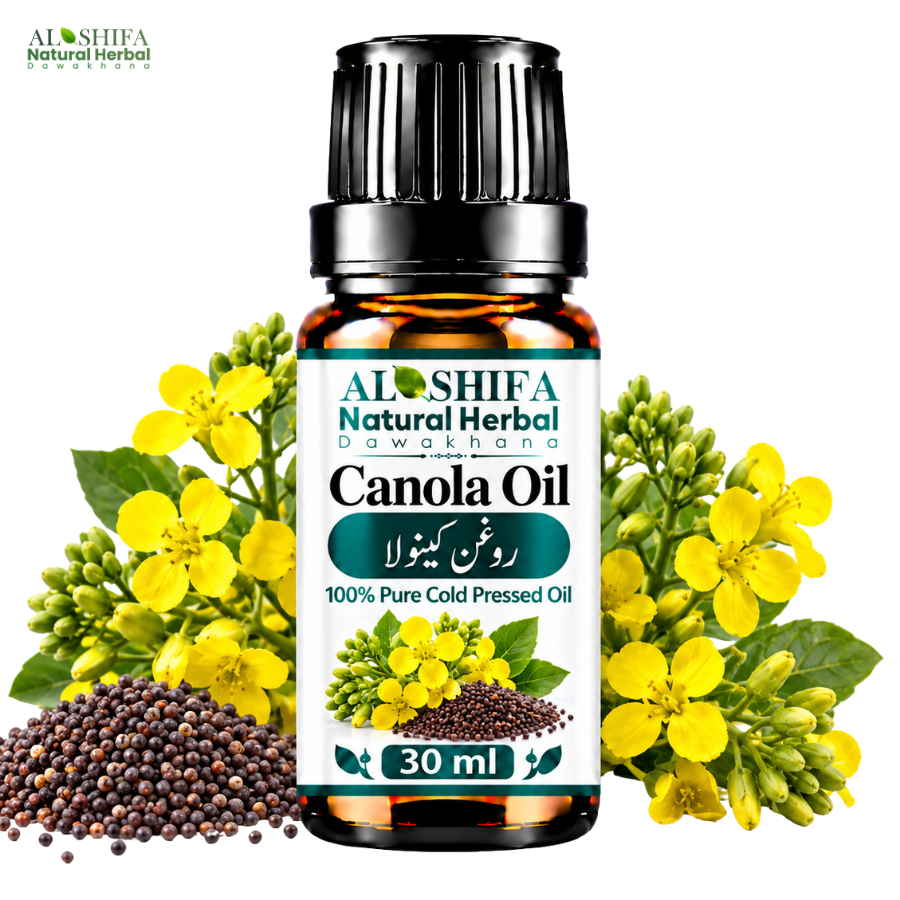
Canola Oil / Roghan Canola is a natural fixed vegetable oil obtained from specially selected low-erucic rapeseed varieties, primarily associated with Brassica napus. Naturally rich in oleic acid (Omega-9) and containing linoleic acid (Omega-6) and alpha-linolenic acid (plant Omega-3), it is suitable for skin care, body care, massage, hair and scalp conditioning, soap making and cosmetic formulations.
Al Shifa Canola Oil is carefully selected with attention to its correct oil identity, low-erucic profile, characteristic fatty-acid composition, freshness, clean handling and protective packaging.
Key Features:
Usage: Apply a suitable amount to skin, hair or scalp, use for massage, blend with compatible carrier oils, or incorporate into soaps, creams, lotions, balms, hair oils and other cosmetic formulations.
Important Note: Canola Oil is a low-erucic fixed vegetable oil and should not be confused with traditional high-erucic Rapeseed Oil, Mustard Oil or Broccoli Seed Oil. Its plant Omega-3 is alpha-linolenic acid (ALA), not EPA or DHA, and cosmetic-grade Canola Oil should not automatically be considered suitable for consumption.
Canola Oil / Roghan Canola – روغن کینولا is a natural fixed vegetable oil obtained from the seeds of specially developed low-erucic-acid rapeseed varieties, primarily belonging to Brassica napus and related Brassica species. It belongs to the Brassicaceae family and is widely known as a versatile vegetable oil with a fatty-acid profile naturally rich in oleic acid, along with linoleic acid and alpha-linolenic acid.
In cosmetic applications, Canola Oil is valued for its smooth texture, emollient properties, spreadability and conditioning effect. It can be incorporated into skin care, body care, massage oils, hair and scalp products, soaps, creams, lotions, balms and other cosmetic formulations.
An important feature of genuine canola-quality oil is its low erucic-acid content, which distinguishes it from traditional high-erucic rapeseed oils.
At Al Shifa Natural Herbal Dawakhana, Canola Oil is selected with attention to its correct oil identity, suitable seed source, characteristic fatty-acid profile, freshness, clean handling and protective packaging.
Canola Oil is a fixed vegetable oil produced from seeds of low-erucic-acid cultivars of rapeseed.
The term canola does not refer to one separate botanical species. Instead, it refers to rapeseed varieties developed to meet specific compositional standards, particularly low levels of erucic acid and glucosinolates.
The oil is composed primarily of natural triglycerides containing fatty acids such as:
This fatty-acid balance gives Canola Oil good versatility for both commercial and cosmetic applications.
Product Name: Canola Oil / Roghan Canola – روغن کینولا
English Name: Canola Oil
Urdu Name: روغن کینولا / کینولا کا تیل
Roman Name: Canola Oil / Roghan Canola
Scientific Name: Brassica napus L. and related low-erucic Brassica cultivars
Plant Family: Brassicaceae
Plant Part: Seeds
Oil Type: Fixed Vegetable Oil / Seed Oil / Carrier Oil
Common Forms: Cold-Pressed Canola Oil / Refined Canola Oil / Cosmetic-Grade Canola Oil / Food-Grade Canola Oil
Appearance: Pale Yellow to Golden-Yellow Oil
Aroma: Mild and Characteristic; Refined Grades Are Usually More Neutral
Primary Applications: Skin Care, Body Care, Massage, Hair & Scalp Conditioning, Soap, Creams, Lotions, Balms & Cosmetic Formulations
Product Type: Low-Erucic Rapeseed Fixed Oil
Canola is associated mainly with specially selected cultivars of Brassica napus and other suitable Brassica plants.
These plants produce small seeds containing a substantial natural oil fraction.
After harvesting, the seeds can be processed to obtain Canola Oil.
Canola belongs to the same botanical family as:
However, the composition and intended use of their oils can differ considerably.
Canola Oil can be obtained through mechanical pressing or commercial extraction and refining processes.
Production may involve:
Cold-pressed Canola Oil generally undergoes less processing and may retain a stronger natural colour and aroma.
Refined Canola Oil is usually lighter, more neutral and more standardized for commercial use.
Canola Oil generally has:
Refining can significantly reduce colour, aroma and naturally occurring minor constituents.
Canola Oil has a balanced unsaturated fatty-acid profile.
Important fatty acids generally include:
Exact proportions vary according to cultivar, processing and product specification.
Oleic acid is generally the dominant fatty acid in Canola Oil.
It contributes to:
Its naturally high oleic-acid content makes Canola Oil suitable for many skin and hair formulations.
Canola Oil naturally contains linoleic acid, an Omega-6 polyunsaturated fatty acid.
It forms an important part of the oil’s natural lipid composition and contributes to its overall cosmetic profile.
Canola Oil also naturally contains alpha-linolenic acid, commonly abbreviated as ALA.
ALA is a plant-derived Omega-3 fatty acid.
An important distinction is:
ALA ≠ EPA or DHA
The Omega-3 naturally present in Canola Oil should therefore not be described as though it were chemically identical to marine Omega-3 fatty acids.
Depending on processing, Canola Oil can contain minor lipid-soluble compounds including:
Cold-pressed and refined oils can differ in the amounts of these minor compounds.
One of the most important features distinguishing Canola Oil from traditional rapeseed oil is its low erucic-acid content.
Traditional rapeseed varieties can contain substantially higher levels of erucic acid.
Canola-quality varieties were specifically developed and selected for a low-erucic profile.
Therefore:
Canola Oil ≠ Traditional High-Erucic Rapeseed Oil
This distinction is particularly important when discussing product identity and food-grade specifications.
Canola Oil can be used as an emollient ingredient in skin-care formulations.
It provides:
It may be used alone or combined with other compatible carrier oils.
Its fatty-acid profile makes Canola Oil suitable for formulations intended for dry and rough-feeling skin.
It can be incorporated into:
The oil primarily functions as an emollient and conditioning ingredient.
Canola Oil can be included in facial oils, creams and lotions where its texture and fatty-acid profile are appropriate for the intended formulation.
Skin type and personal preference should be considered when using any carrier oil directly on the face.
A small amount is generally sufficient for testing individual suitability.
Canola Oil is versatile in body-care formulations.
It may be incorporated into:
Its fluid consistency also makes it useful for blending with thicker oils and butters.
Canola Oil provides smooth spreadability and lubrication, making it suitable for massage formulations.
It can be used:
The desired texture can be adjusted by blending it with other carrier oils.
Canola Oil can be incorporated into hair-care formulations for its lubricating and emollient properties.
It may help:
These effects relate primarily to cosmetic conditioning of the hair surface.
Canola Oil can be useful in products designed for dry or frizzy hair.
It may be incorporated into:
The amount should be adjusted according to hair thickness and texture.
Canola Oil can be used as part of scalp massage formulations.
It provides:
It can also act as a carrier base for compatible cosmetic ingredients.
Canola Oil can condition the hair and scalp and reduce dryness-related roughness.
However:
Hair Conditioning ≠ New Hair Growth
It should not be presented as a guaranteed treatment for baldness, thinning hair or medical causes of hair loss.
Canola Oil can be used as one of the vegetable oils in soap formulations.
Its fatty-acid composition influences characteristics such as:
Soap formulation requires proper calculation of alkali and the complete oil blend.
Canola Oil should not simply be substituted into a soap formula without recalculating the formulation.
Canola Oil can serve as an oil-phase ingredient in:
Its relatively fluid texture makes it easy to combine with other oils, butters and cosmetic ingredients.
Canola Oil may be incorporated into:
Its availability and versatile fatty-acid profile make it useful in many cosmetic systems.
Canola Oil should be identified correctly because the terms canola and rapeseed are sometimes used interchangeably even though compositional standards matter.
Important distinctions include:
The correct product grade and specification should always be considered according to intended use.
Canola Oil originates from rapeseed-type Brassica plants but is defined by its improved compositional profile.
The major distinction is the selection of varieties with low erucic acid and appropriately controlled glucosinolate characteristics.
For this reason, the terms should not always be treated as identical without checking the product specification.
Both oils can originate from plants in the Brassicaceae family, but their characteristic fatty-acid profiles differ substantially.
Broccoli Seed Oil is known for a much higher erucic-acid profile and is particularly valued for its distinctive hair slip and silicone-like cosmetic feel.
Canola Oil is specifically associated with a low-erucic composition.
They should therefore not be treated as interchangeable oils.
Canola Oil and Mustard Oil come from related Brassica-family plants but differ in:
They should be identified and labelled separately.
Although Canola Oil is widely used, individual sensitivity can occur.
Patch testing is advisable before widespread topical use.
Stop use if significant:
develops.
Avoid applying cosmetic oil to severely irritated, infected or damaged skin without appropriate professional guidance.
Canola belongs to the Brassicaceae family.
Individuals with known sensitivity to rapeseed, mustard-family plants or related botanical materials should introduce the oil cautiously.
Processing may alter the amount of residual plant material present, but individual reactions remain possible.
For ordinary topical cosmetic use, use an appropriately produced Canola Oil according to its intended directions.
Pregnant or breastfeeding individuals should distinguish between:
A cosmetic oil should not automatically be consumed.
For children, use age-appropriate cosmetic formulations.
Avoid contact with:
Keep the oil securely out of reach of young children.
Canola Oil is widely produced as an edible vegetable oil.
However, this does not mean every Canola Oil sold for cosmetic purposes is suitable for consumption.
Food use requires appropriate:
Therefore:
Cosmetic Grade ≠ Automatically Food Grade
Only consume a product specifically manufactured and labelled for food use.
Because Canola Oil contains polyunsaturated fatty acids, prolonged exposure to heat, light and air can gradually affect its quality.
For best stability:
A significant rancid or unpleasant odour may indicate deterioration.
At Al Shifa Natural Herbal Dawakhana, Canola Oil is selected with attention to:
Oil Identity – Genuine Canola Oil from suitable low-erucic rapeseed varieties.
Plant Part – Seed-derived fixed vegetable oil.
Fatty-Acid Profile – Naturally rich in oleic acid with linoleic and alpha-linolenic acids.
Low-Erucic Identity – Clear distinction from traditional high-erucic rapeseed oils.
Skin Applications – Suitable for emollient skin-care formulations.
Body Applications – Suitable for oils, creams and lotions.
Massage Applications – Provides good lubrication and spreadability.
Hair Applications – Suitable for conditioning dry and rough-feeling hair.
Scalp Applications – Suitable for compatible scalp massage products.
Soap Applications – Suitable for properly calculated soap formulations.
Cosmetic Applications – Suitable for a wide range of cosmetic products.
Freshness – Attention to natural oil condition.
Clean Handling – Carefully handled during packing.
Protective Packaging – Helps maintain product quality.
Responsible Claims – No exaggerated hair-growth, medical or disease-treatment claims.
Al Shifa Natural Herbal Dawakhana, established in 1999, supplies carefully selected natural oils, herbs and botanical materials throughout Pakistan.
Our focus for Canola Oil includes:
For Skin Care: Apply a small amount to clean skin or combine with other compatible carrier oils.
For Dry Skin: Massage gently into dry or rough-feeling areas.
For Body Care: Use alone or incorporate into body oils, creams, lotions, balms and body butters.
For Massage: Use in an appropriate amount alone or blend with other compatible carrier oils.
For Hair: Apply a suitable amount to hair lengths and ends or incorporate into hair oils, masks and conditioners.
For Scalp Care: Massage an appropriate amount into the scalp alone or as part of a compatible oil blend.
For Soap Making: Use only within a properly calculated soap formulation.
For Cosmetic Formulations: Incorporate according to the requirements of the finished product.
Canola Oil / Roghan Canola – روغن کینولا is a natural fixed vegetable oil obtained from specially developed low-erucic rapeseed varieties and is valued for its oleic-rich fatty-acid profile, smooth spreadability and versatile emollient properties.
It can be used in skin care, body care, massage, hair and scalp conditioning, soaps, creams, lotions, balms and other cosmetic formulations.
Canola Oil should not be confused with traditional high-erucic rapeseed oil, Mustard Oil, Broccoli Seed Oil or an essential oil. Its naturally occurring plant Omega-3 is alpha-linolenic acid and should not be confused with EPA or DHA.
Cosmetic-grade Canola Oil should not automatically be considered suitable for internal use.
For best quality:
Canola Oil / Roghan Canola – روغن کینولا is a versatile low-erucic fixed vegetable oil naturally rich in oleic acid, with linoleic acid and plant-derived alpha-linolenic acid. Its smooth texture and good spreadability make it suitable for skin care, dry skin, body care, massage, hair conditioning, scalp care, soap making, creams, lotions and cosmetic formulations.
Customers searching for Canola Oil, Roghan Canola, Brassica Napus Oil, Canola Seed Oil, Pure Canola Oil, Natural Canola Oil, Cold Pressed Canola Oil, Canola Carrier Oil, Canola Oil Omega 3, Canola Oil Omega 6, Canola Oil for Skin, Canola Oil for Dry Skin, Canola Oil for Massage, Canola Oil for Hair, Canola Oil for Scalp, Canola Oil for Soap, Canola Oil Pakistan, Roghan Canola Pakistan, Canola Oil Lahore, Canola Oil price in Pakistan, buy Canola Oil Pakistan or Canola Oil online Pakistan can choose Al Shifa Natural Herbal Dawakhana for carefully selected quality.
Since 1999, Al Shifa Natural Herbal Dawakhana has focused on supplying natural oils and botanical materials with attention to correct identity, quality selection, freshness, clean handling, responsible product information, protective packaging and proper storage.
Product Name: Canola Oil / Roghan Canola – روغن کینولا
English Name: Canola Oil
Urdu Name: روغن کینولا / کینولا کا تیل
Roman Name: Canola Oil / Roghan Canola
Scientific Name: Brassica napus L. and related low-erucic Brassica cultivars
Plant Family: Brassicaceae
Plant Part: Seeds
Oil Type: Fixed Vegetable Oil / Seed Oil / Carrier Oil
Common Forms: Cold-Pressed Canola Oil / Refined Canola Oil / Cosmetic-Grade Canola Oil / Food-Grade Canola Oil
Appearance: Pale Yellow to Golden-Yellow Oil
Aroma: Mild and Characteristic; Refined Grades Are Usually More Neutral
Primary Applications: Skin Care, Body Care, Massage, Hair & Scalp Conditioning, Soap, Creams, Lotions, Balms & Cosmetic Formulations
Product Type: Low-Erucic Rapeseed Fixed Oil
Important Note: Canola Oil is a low-erucic fixed vegetable oil produced from specially selected rapeseed varieties. It should not be confused with traditional high-erucic rapeseed oil, Mustard Oil or Broccoli Seed Oil. Its natural Omega-3 is alpha-linolenic acid (ALA), not EPA or DHA, and cosmetic-grade Canola Oil should not automatically be considered suitable for consumption.
روغن کینولا کینولا کے صاف، پکے اور خشک بیجوں سے حاصل ہونے والا قدرتی روغن ہے۔ کینولا سرسوں کے خاندان سے تعلق رکھنے والے پودوں کی خاص اقسام سے حاصل کیا جاتا ہے جن کے بیجوں کے روغن میں ایروسک تیزاب بہت کم رکھا جاتا ہے۔
یہ دنیا بھر میں خوراک کے لیے استعمال ہونے والے مشہور بیجوں کے روغنوں میں شامل ہے۔ اس کی قدرتی روغنی ساخت میں اولیک تیزاب نمایاں مقدار میں پایا جاتا ہے، جبکہ لینولیک تیزاب اور الفا لینولینک تیزاب بھی اس کے اہم اجزا ہیں۔
روغن کینولا ہلکی ساخت، نرم ذائقے اور کم تیز خوشبو کی وجہ سے خوراک میں مشہور ہے۔ بیرونی طور پر اسے خشک جلد، جسمانی مالش اور بالوں کی روغنی دیکھ بھال میں بھی استعمال کیا جاتا ہے۔
اردو: کینولا، تخم کینولا، کینولا کے بیج، روغن کینولا
پنجابی: کینولا، کینولا دے بیج، کینولا دا تیل
ہندی: کینولا، کینولا بیج، کینولا تیل
فارسی: کانولا، دانه کانولا، روغن کانولا
عربی: كانولا، بذور الكانولا، زيت الكانولا
انگریزی نام: کینولا آئل
سائنسی نام: براسیکا نیپس، براسیکا ریپا اور کینولا کے لیے منتخب دوسری براسیکا اقسام
خاندان: براسیکیسی
استعمال ہونے والا حصہ: پکے، صاف اور خشک بیج
کینولا ایک زرد پھولوں والا پودا ہے جو سرسوں، رائی اور دوسری براسیکا اقسام کے خاندان سے تعلق رکھتا ہے۔
اس کا پودا سیدھا بڑھتا ہے اور اس پر زرد رنگ کے چھوٹے پھول آتے ہیں۔
پھولوں کے بعد لمبی پھلیاں بنتی ہیں جن کے اندر چھوٹے گول بیج موجود ہوتے ہیں۔
ان بیجوں میں قدرتی چکنائی پائی جاتی ہے اور انہی سے روغن کینولا حاصل کیا جاتا ہے۔
کینولا کی خاص پہچان یہ ہے کہ اسے ایسی اقسام کے لیے استعمال کیا جاتا ہے جن کے روغن میں ایروسک تیزاب کی مقدار بہت کم ہوتی ہے۔
اچھے کینولا کے بیج:
کینولا کے پکے ہوئے بیج جمع کیے جاتے ہیں۔
بیجوں کو صاف کر کے ان میں موجود گرد، مٹی اور غیر ضروری اجزا الگ کیے جاتے ہیں۔
اس کے بعد بیجوں سے روغن نکالا جاتا ہے۔
روغن کو صاف کر کے خوراک یا دوسرے استعمال کے لیے تیار کیا جاتا ہے۔
سرد دباو سے حاصل روغن اور زیادہ صاف کیا ہوا کینولا روغن اپنی رنگت، خوشبو اور ذائقے میں الگ پہچان رکھتے ہیں۔
کینولا جدید دور میں تیار کی گئی کم ایروسک تیزاب والی براسیکا اقسام کے لیے استعمال ہونے والا نام ہے۔
اسی وجہ سے پاکستانی اور برصغیر کی قدیم معروف حکیمی کتب مفردات میں روغن کینولا کے نام سے الگ مستند مزاج مقرر نہیں ہے۔
سرسوں یا دوسری براسیکا اقسام کا حکیمی مزاج کینولا روغن پر خود سے لاگو کرنا درست نہیں، کیونکہ کینولا کے بیج اور ان کا روغن اپنی منتخب روغنی ساخت کی وجہ سے الگ پہچان رکھتے ہیں۔
روغن کینولا کی خاص اہمیت اس کی قدرتی چکنائیوں کی ساخت ہے۔
اس میں اولیک تیزاب نمایاں مقدار میں پایا جاتا ہے۔
اس کے ساتھ لینولیک تیزاب اور الفا لینولینک تیزاب بھی موجود ہوتے ہیں۔
خوراک کے قابل کینولا روغن میں سیر شدہ چکنائی کی مقدار نسبتاً کم ہوتی ہے۔
اسی وجہ سے یہ روزمرہ کھانا پکانے کے لیے مشہور بیجوں کے روغنوں میں شامل ہے۔
خوراک کے قابل روغن کینولا کھانا پکانے میں استعمال کیا جاتا ہے۔
اس کا ذائقہ ہلکا ہوتا ہے، اسی لیے یہ مختلف کھانوں کے قدرتی ذائقے کو بہت زیادہ نہیں بدلتا۔
اسے سبزیوں، سالن، دال، چاول اور دوسری روزمرہ غذاؤں کی تیاری میں استعمال کیا جاتا ہے۔
خوراک کے لیے ہمیشہ واضح طور پر کھانے کے قابل روغن کینولا استعمال کریں۔
روغن کینولا میں غیر سیر شدہ چکنائیاں نمایاں مقدار میں پائی جاتی ہیں۔
اس میں اولیک تیزاب کے ساتھ اومیگا چھ خاندان کا لینولیک تیزاب اور اومیگا تین خاندان کا الفا لینولینک تیزاب موجود ہوتا ہے۔
یہ چکنائیاں انسانی خوراک میں اہم غذائی چکنائیوں میں شامل ہیں۔
روغن کینولا خشک جلد کی روغنی دیکھ بھال میں استعمال کیا جاتا ہے۔
اس کی تھوڑی مقدار صاف جلد پر لگا کر ہلکی مالش کی جاتی ہے۔
اس کی قدرتی چکنائیاں جلد کو نرم اور ہموار رکھنے کے لیے فائدہ مند ہیں۔
خشک ہاتھوں اور پاؤں پر روغن کینولا کی تھوڑی مقدار لگائی جاتی ہے۔
خاص طور پر خشک موسم میں اسے جلد کو نرم رکھنے کے لیے استعمال کیا جاتا ہے۔
رات کے وقت ہلکی مالش بھی کی جاتی ہے۔
خشک اور کھردری کہنیوں اور ایڑیوں پر روغن کینولا لگایا جاتا ہے۔
یہ خشک حصوں کو روغنی نرمی دینے کے لیے فائدہ مند ہے۔
روغن کینولا جسمانی مالش میں بھی استعمال کیا جاتا ہے۔
اسے اکیلا یا دوسرے بنیادی روغنوں کے ساتھ ملا کر جلد پر لگایا جاتا ہے۔
اس کی نرم روغنی ساخت جسمانی جلد پر آسانی سے پھیلتی ہے۔
روغن کینولا خشک اور روکھے بالوں کی روغنی دیکھ بھال میں استعمال کیا جاتا ہے۔
اس کی تھوڑی مقدار بالوں کی لمبائی پر لگائی جاتی ہے۔
یہ بالوں کو نرم اور ہموار رکھنے کے لیے فائدہ مند ہے۔
بالوں کے خشک اور کھردرے سروں پر روغن کینولا کی کم مقدار لگائی جاتی ہے۔
چند قطرے ہتھیلیوں پر پھیلا کر بالوں کے سروں پر لگائے جاتے ہیں۔
یہ بالوں کے سروں کو نرم رکھنے کے لیے فائدہ مند ہے۔
سر کی خشک جلد پر روغن کینولا کی تھوڑی مقدار لگا کر ہلکی مالش کی جاتی ہے۔
اسے دوسرے بالوں کے روغنوں کے ساتھ ملا کر بھی استعمال کیا جاتا ہے۔
سر کی جلد کے امراض میں طبی استعمال معالج سے پوچھ کر کریں۔
روغن کینولا میں اہم قدرتی روغنی اجزا یہ ہیں:
اولیک تیزاب روغن کینولا کی نمایاں قدرتی چکنائی ہے۔
یہ اومیگا نو خاندان سے تعلق رکھتا ہے۔
کینولا روغن کی کل روغنی ساخت میں اس کی مقدار نمایاں ہوتی ہے۔
لینولیک تیزاب اومیگا چھ خاندان کی قدرتی چکنائی ہے۔
یہ کینولا کے بیجوں کے روغن کا اہم حصہ ہے اور انسانی خوراک میں ضروری چکنائیوں میں شامل ہے۔
الفا لینولینک تیزاب اومیگا تین خاندان کی قدرتی چکنائی ہے۔
روغن کینولا میں اس کی موجودگی اسے کئی دوسرے عام کھانے کے روغنوں سے الگ پہچان دیتی ہے۔
پالمیٹک اور سٹیئرک تیزاب روغن کینولا میں پائی جانے والی سیر شدہ قدرتی چکنائیوں میں شامل ہیں۔
ان کی مقدار اولیک اور لینولیک تیزاب کے مقابلے میں کم رہتی ہے۔
روغن کینولا میں قدرتی ٹوکوفیرولز بھی پائے جاتے ہیں۔
یہ وٹامن ای خاندان سے تعلق رکھنے والے قدرتی اجزا ہیں اور کینولا کے بیجوں کی روغنی ساخت کا حصہ ہیں۔
کینولا کے بیجوں کے روغن میں قدرتی سٹیرولز پائے جاتے ہیں۔
یہ بیجوں میں قدرتی طور پر موجود روغنی اجزا میں شامل ہیں۔
کینولا کی سب سے اہم پہچان اس کے روغن میں ایروسک تیزاب کی بہت کم مقدار ہے۔
پرانے ریپ سیڈ کی کئی اقسام کے روغن میں ایروسک تیزاب زیادہ پایا جاتا تھا۔
کینولا کے لیے ایسی اقسام منتخب کی گئی ہیں جن کے روغن میں ایروسک تیزاب بہت کم ہوتا ہے۔
اسی وجہ سے ہر ریپ سیڈ آئل کو کینولا آئل کہنا درست نہیں۔
کینولا کا تعلق ریپ سیڈ اور سرسوں کے براسیکا خاندان سے ہے، لیکن کینولا نام مخصوص معیار رکھنے والی کم ایروسک تیزاب والی اقسام کے لیے استعمال کیا جاتا ہے۔
عام ریپ سیڈ کی ہر قسم کینولا نہیں ہوتی۔
اس لیے خریدتے وقت روغن کا واضح نام اور خوراک کے لیے اس کا معیار دیکھنا ضروری ہے۔
روغن کینولا اور روغن سرسوں کو ایک ہی روغن نہیں سمجھنا چاہیے۔
دونوں براسیکا خاندان سے تعلق رکھتے ہیں، لیکن بیجوں کی قسم، روغنی ساخت، خوشبو اور ذائقہ الگ ہوتے ہیں۔
روغن سرسوں میں سرسوں کی مخصوص تیز خوشبو اور ذائقہ نمایاں ہوتا ہے۔
روغن کینولا کا ذائقہ اور خوشبو زیادہ ہلکی رکھی جاتی ہے۔
کینولا کے مکمل بیجوں میں چکنائی کے ساتھ پروٹین، ریشہ اور دوسرے اجزا موجود ہوتے ہیں۔
روغن کینولا بیجوں سے حاصل کیا جانے والا چکنائی والا حصہ ہے۔
اس لیے مکمل بیج اور ان سے حاصل روغن الگ شکلیں ہیں۔
سرد دباو سے حاصل روغن کینولا بیجوں کو نسبتاً کم حرارت میں دبا کر حاصل کیا جاتا ہے۔
اس میں بیجوں کی قدرتی رنگت اور ہلکی خوشبو زیادہ نمایاں رہتی ہے۔
اس کی رنگت سنہری یا زردی مائل ہوتی ہے۔
زیادہ صاف کیا ہوا روغن کینولا بہت ہلکی رنگت، ہلکی خوشبو اور نرم ذائقہ رکھتا ہے۔
یہ روزمرہ خوراک میں عام طور پر استعمال ہونے والی شکل ہے۔
روغن کینولا کی رنگت اس کے حاصل کرنے اور صاف کرنے کے طریقے کے مطابق ہلکی زرد سے سنہری ہوتی ہے۔
زیادہ صاف روغن بہت ہلکی رنگت رکھتا ہے۔
سرد دباو سے حاصل روغن نسبتاً گہری سنہری رنگت رکھتا ہے۔
اچھے روغن کینولا میں ہلکی بیجوں جیسی خوشبو ہوتی ہے۔
زیادہ صاف کیے گئے خوراکی روغن میں خوشبو بہت ہلکی رہتی ہے۔
باسی، سڑی ہوئی یا خراب بو اچھے روغن کی پہچان نہیں ہے۔
روغن کینولا بہنے والا اور نسبتاً ہلکا روغن ہے۔
یہ جلد پر آسانی سے پھیل جاتا ہے۔
خوراک میں بھی اس کی ہلکی ساخت اور نرم ذائقے کی وجہ سے اسے بڑے پیمانے پر استعمال کیا جاتا ہے۔
صاف جلد پر روغن کینولا کی تھوڑی مقدار لگائیں۔
خشک حصوں پر ہلکے ہاتھ سے مالش کریں۔
پہلی بار استعمال سے پہلے جلد کے چھوٹے حصے پر تھوڑی مقدار آزمائیں۔
جلدی امراض میں طبی استعمال معالج سے پوچھ کر کریں۔
روغن کینولا کی تھوڑی مقدار بالوں کی لمبائی اور خشک سروں پر لگائیں۔
سر کی خشک جلد پر استعمال کے لیے کم مقدار لگا کر ہلکی مالش کریں۔
اسے دوسرے بنیادی بالوں کے روغنوں کے ساتھ ملا کر بھی استعمال کیا جاتا ہے۔
حساس جلد پر پہلی بار بہت تھوڑی مقدار آزمائیں۔
خارش، سرخی، سوجن یا جلن پیدا ہو تو استعمال بند کریں۔
جلدی امراض میں طبی استعمال معالج سے پوچھ کر کریں۔
خوراک کے لیے صرف واضح طور پر کھانے کے قابل روغن کینولا استعمال کریں۔
کسی بیماری کے لیے اس کا اندرونی طبی استعمال معالج سے پوچھ کر کریں۔
صرف بیرونی استعمال کے لیے فروخت ہونے والا روغن نہ پئیں۔
عام خوراک میں کھانے کے قابل روغن کینولا استعمال کیا جاتا ہے۔
حمل کے دوران کسی بیماری کے لیے اس کا اندرونی طبی استعمال معالج سے پوچھ کر کریں۔
خوراک کے قابل روغن کینولا عام غذا کا حصہ ہو سکتا ہے۔
کسی بیماری کے لیے زیادہ مقدار یا الگ طبی استعمال معالج سے پوچھ کر کریں۔
بچوں کی خوراک میں استعمال کے لیے صرف کھانے کے قابل معیاری روغن کینولا استعمال کریں۔
کسی بیماری کے لیے اندرونی طبی استعمال معالج سے پوچھ کر کریں۔
بیرونی استعمال سے پہلے جلد کے چھوٹے حصے پر تھوڑی مقدار آزمائیں۔
اچھے بیج: پکے، صاف اور خشک کینولا بیجوں سے حاصل کیا گیا ہو۔
قدرتی رنگت: ہلکی زرد سے سنہری رنگت رکھتا ہو۔
ہلکی خوشبو: تیز، باسی یا سڑی ہوئی بو نہ ہو۔
صاف روغن: پانی، گرد اور غیر ضروری ذرات سے پاک ہو۔
تازگی: روغن تازہ ہو اور خراب بو نہ رکھتا ہو۔
درست قسم: کینولا کے لیے منتخب کم ایروسک تیزاب والی اقسام سے حاصل کیا گیا ہو۔
غیر ضروری ملاوٹ سے پاک: مصنوعی رنگ، غیر ضروری مصنوعی خوشبو اور کم معیار کے دوسرے روغن کی ملاوٹ سے پاک ہو۔
روغن کینولا کینولا کے پکے، صاف اور خشک بیجوں سے حاصل ہونے والا قدرتی روغن ہے۔
اس میں اولیک تیزاب، لینولیک تیزاب اور الفا لینولینک تیزاب اہم قدرتی چکنائیوں کے طور پر پائے جاتے ہیں۔
کینولا کی خاص پہچان اس میں ایروسک تیزاب کی بہت کم مقدار ہے۔
خوراک کے قابل روغن کینولا روزمرہ کھانا پکانے میں استعمال کیا جاتا ہے، جبکہ بیرونی طور پر اسے خشک جلد، جسمانی مالش اور بالوں کی روغنی دیکھ بھال میں استعمال کیا جاتا ہے۔
پاکستانی اور برصغیر کی قدیم معروف حکیمی کتب مفردات میں روغن کینولا کے نام سے الگ مستند مزاج مقرر نہیں ہے۔
خوراک کے لیے صرف واضح طور پر کھانے کے قابل روغن استعمال کریں۔
الشفاء نیچرل ہربل دواخانہ میں روغن کینولا کے لیے درج ذیل باتوں کو اہمیت دی جاتی ہے:
اچھے کینولا کے بیج: پکے، صاف، خشک اور اچھی حالت والے بیجوں سے حاصل روغن کو اہمیت دی جاتی ہے۔
درست قسم: کینولا کی کم ایروسک تیزاب والی اقسام سے حاصل روغن کو اہمیت دی جاتی ہے۔
قدرتی رنگت: ہلکی زرد سے سنہری قدرتی رنگت کو دیکھا جاتا ہے۔
ہلکی خوشبو: صاف اور ہلکی قدرتی خوشبو کو اہمیت دی جاتی ہے۔
صاف روغن: پانی، گرد اور غیر ضروری ذرات سے پاک روغن کو اہمیت دی جاتی ہے۔
تازگی: باسی یا خراب بو والے روغن سے بچا جاتا ہے۔
غیر ضروری ملاوٹ سے پاک: مصنوعی رنگ، غیر ضروری مصنوعی خوشبو اور کم معیار کے دوسرے روغن کی ملاوٹ سے پاک ہونے کو اہمیت دی جاتی ہے۔
الشفاء نیچرل ہربل دواخانہ سنہ ۱۹۹۹ سے قدرتی جڑی بوٹیوں، بیجوں اور ان سے حاصل ہونے والے روغنوں کی سپلائی کر رہا ہے۔
ہم روغن کینولا میں اچھے بیج، درست قسم، صاف حالت، قدرتی رنگت، ہلکی خوشبو، تازگی اور غیر ضروری ملاوٹ سے پاک ہونے کو اہمیت دیتے ہیں۔
اچھے روغن کینولا کی پہچان صاف حالت، قدرتی رنگت، ہلکی خوشبو، تازگی اور اچھی پیکنگ سے کی جاتی ہے۔
روغن کینولا کو ٹھنڈی، خشک اور روشنی سے محفوظ جگہ پر کسی جار میں اچھی طرح پیک کر کے رکھیں۔
اسے تیز دھوپ، پانی اور زیادہ گرمی سے بچائیں۔
استعمال کے بعد ڈھکن اچھی طرح بند کریں۔
باسی یا خراب بو پیدا ہونے پر روغن استعمال نہ کریں۔
اسے بچوں کی پہنچ سے دور رکھیں۔
خوراک کے لیے صرف کھانے کے قابل روغن کینولا استعمال کریں۔
صرف بیرونی استعمال کے لیے تیار روغن کو نہ پئیں۔
کینولا کو عام ریپ سیڈ یا روغن سرسوں کے بالکل برابر نہ سمجھیں۔
پہلی بار جلد پر لگانے سے پہلے تھوڑی مقدار آزمائیں۔
خارش، سرخی، سوجن یا جلن پیدا ہو تو استعمال بند کریں۔
کسی بیماری کے لیے اندرونی طبی استعمال معالج سے پوچھ کر کریں۔
روغن کینولا کینولا کے پکے اور صاف بیجوں سے حاصل ہونے والا قدرتی روغن ہے۔
اس کی اہم پہچان اولیک تیزاب کی نمایاں مقدار، لینولیک تیزاب، الفا لینولینک تیزاب، نسبتاً کم سیر شدہ چکنائی اور بہت کم ایروسک تیزاب ہے۔
خوراک کے قابل روغن کینولا روزمرہ کھانا پکانے میں استعمال کیا جاتا ہے۔
بیرونی طور پر اسے خشک جلد، جسمانی مالش، خشک بالوں اور سر کی خشک جلد کی روغنی دیکھ بھال میں استعمال کیا جاتا ہے۔
پاکستانی اور برصغیر کی قدیم معروف حکیمی کتب مفردات میں روغن کینولا کا الگ مستند مزاج مقرر نہیں ہے۔
اچھے روغن کینولا کی پہچان درست کینولا بیج، صاف حالت، قدرتی ہلکی زرد سے سنہری رنگت، ہلکی خوشبو، تازگی اور غیر ضروری ملاوٹ سے پاک ہونے سے کی جاتی ہے۔