روغنِ بابونہ
Original price was: ₨ 500.₨ 450Current price is: ₨ 450.

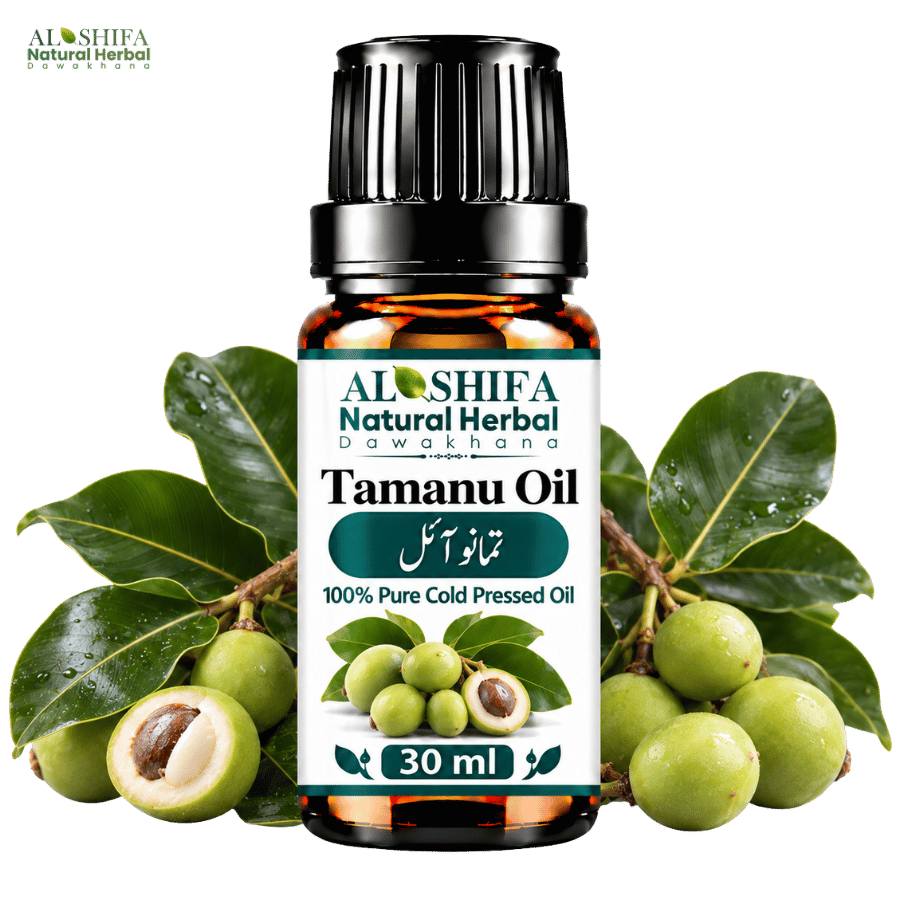
Tamanu Oil / Roghan Tamanu is a distinctive natural fixed vegetable oil obtained from the fruit kernels of Calophyllum inophyllum. Naturally containing oleic acid, linoleic acid, palmitic acid and characteristic Calophyllum compounds, it is valued for dry and rough skin care, facial and body care, hair and scalp conditioning, massage and cosmetic formulations.
Al Shifa Tamanu Oil is carefully selected with attention to its correct botanical identity, characteristic natural oil profile, freshness, clean handling and protective packaging.
Key Features:
Usage: Apply a small amount to clean skin, hair or scalp, blend with compatible carrier oils, or incorporate into suitable creams, balms, body oils and other cosmetic formulations.
Important Note: Tamanu Oil is a fixed kernel oil, not an essential oil. Its benefits are primarily cosmetic and conditioning in nature. It should not be considered a guaranteed treatment for scars, stretch marks, acne, eczema, wounds, infections or hair loss.
Tamanu Oil / Roghan Tamanu – تمانو آئل is a distinctive natural fixed vegetable oil obtained from the kernels of the fruit of Calophyllum inophyllum L., an evergreen tropical tree belonging to the Calophyllaceae family. Tamanu Oil has a long history of topical use in tropical regions and is now widely used in skin-care oils, facial formulations, dry and rough skin care, body care, massage products, hair and scalp preparations, balms and cosmetic formulations.
Tamanu Oil is easily recognised by its characteristic greenish-yellow to deep green or brownish-green colour, rich texture and strong nutty, earthy or characteristic aroma. Its natural composition includes fatty acids such as oleic acid and linoleic acid, together with palmitic and stearic acids and a distinctive group of minor lipid-soluble compounds.
Unlike many ordinary carrier oils, Tamanu Oil has attracted particular cosmetic and research interest because of naturally occurring compounds associated with Calophyllum inophyllum, including calophyllolide and related coumarin-type constituents. These compounds are scientifically interesting, but their presence should not be interpreted as proof that ordinary Tamanu Oil cures wounds, scars, infections or inflammatory skin diseases.
At Al Shifa Natural Herbal Dawakhana, Tamanu Oil is selected with attention to its correct botanical identity, kernel-oil quality, characteristic appearance and aroma, natural oil profile, freshness, clean handling, protective packaging and proper storage.
Tamanu Oil is a natural fixed oil produced from the kernels contained within the fruits of Calophyllum inophyllum.
The fruits develop a hard inner nut or kernel from which the oil is obtained after appropriate preparation.
Tamanu Oil is primarily used externally in:
It is generally used as a specialty botanical oil rather than a volatile aromatic essential oil.
Product Name: Tamanu Oil / Roghan Tamanu – تمانو آئل
English Name: Tamanu Oil / Tamanu Kernel Oil
Urdu Name: تمانو آئل / روغن تمانو
Roman Name: Tamanu Oil / Roghan Tamanu
Scientific Name: Calophyllum inophyllum L.
Plant Family: Calophyllaceae
Plant Part: Fruit Kernels / Seeds
Oil Type: Fixed Vegetable Oil / Kernel Oil / Carrier Oil
Common Forms: Cold-Pressed Tamanu Oil / Unrefined Tamanu Oil / Refined Tamanu Oil
Appearance: Greenish-Yellow to Deep Green or Brownish-Green, Depending on Processing
Aroma: Distinctive Nutty, Earthy, Woody or Characteristic Aroma
Primary Applications: Skin Care, Facial Care, Dry & Rough Skin Care, Body Care, Hair & Scalp Conditioning, Massage & Cosmetic Formulations
Product Type: Tamanu Kernel Fixed Oil
Calophyllum inophyllum is a tropical evergreen tree naturally distributed across parts of Asia, the Pacific and Indian Ocean regions.
The tree produces rounded fruits containing kernels that can yield a distinctive natural oil.
Tamanu Oil has been used in local topical-care traditions in several tropical cultures and has more recently become popular in international natural cosmetic formulations.
Traditional and commercial Tamanu Oil production generally involves collecting mature fruits, separating the kernels and allowing appropriate preparation or drying before pressing or extracting the oil.
Processing conditions influence:
Cold-pressed and unrefined Tamanu Oil usually retains more of its characteristic colour and aroma than heavily refined oil.
Tamanu Oil is commonly recognised by its:
However:
Colour or Aroma Alone ≠ Proof of Authenticity
Botanical source, extraction and product quality must also be considered.
Tamanu Oil consists primarily of natural lipids.
It is therefore classified as a:
Fixed Vegetable Oil
It is not a conventional steam-distilled essential oil.
Therefore:
Tamanu Oil ≠ Essential Oil
It can instead function as a specialty carrier or conditioning oil in suitable formulations.
Tamanu Oil commonly contains:
The exact composition varies with botanical source, growing conditions, kernel preparation and processing.
Oleic acid is a monounsaturated fatty acid commonly found in Tamanu Oil.
It contributes to:
However:
Tamanu Oil ≠ Pure Oleic Acid
Linoleic acid is an Omega-6 polyunsaturated fatty acid naturally present in Tamanu Oil.
It forms an important part of the complete lipid profile and contributes to the oil’s cosmetic characteristics.
However:
Tamanu Oil ≠ Pure Linoleic Acid
Palmitic and stearic acids contribute to the natural consistency and emollient characteristics of Tamanu Oil.
Together with oleic and linoleic acids, they form part of the complete fatty-acid profile.
Tamanu Oil is particularly interesting because Calophyllum inophyllum contains naturally occurring compounds including calophyllolide.
Calophyllolide and related compounds have attracted scientific interest in laboratory and experimental research.
However:
Presence of Calophyllolide ≠ Proof that Tamanu Oil Treats Disease
The amount present can vary according to botanical material, extraction and processing.
Depending on processing and product quality, Tamanu Oil can contain various minor lipid-soluble compounds, including:
These compounds contribute to research interest in the oil but should not be used to justify exaggerated medical claims.
Skin care is the best-known modern application of Tamanu Oil.
It can provide:
Its relatively rich texture means that only a small amount may be needed.
Tamanu Oil can be incorporated into products for dry and rough-feeling skin.
Common applications include:
Its primary role is to provide lipid-based conditioning.
Tamanu Oil is frequently included in facial oils and serums.
It may be used alone in small amounts or blended with lighter carrier oils.
Because it has a strong natural aroma and rich texture, formulation level should be adjusted according to:
Tamanu Oil is commonly marketed for mature-looking skin.
Its emollient properties can improve:
However:
Smoother-Looking Skin ≠ Reversal of Biological Aging
Tamanu Oil should not be described as a product that permanently reverses aging.
Tamanu Oil is widely promoted for scars and scar appearance.
Its emollient properties can condition and soften the skin surface, which may improve the cosmetic appearance and feel of dry scarred skin in some people.
However, scars vary considerably according to:
Therefore:
Tamanu Oil ≠ Guaranteed Scar Removal Treatment
It should not be claimed to erase scars.
Tamanu Oil is also commonly included in products marketed for stretch marks.
Moisturising and conditioning oils can improve skin softness and appearance.
However:
Skin Conditioning ≠ Guaranteed Removal of Stretch Marks
Stretch marks are structural changes within the skin and cannot be assumed to disappear through application of an oil.
Tamanu Oil and compounds associated with Calophyllum inophyllum have attracted research interest in relation to wound-healing processes.
However, experimental research should not be converted into instructions to apply ordinary cosmetic oil to open wounds.
Therefore:
Tamanu Oil Should Not Automatically Be Applied to Open, Deep or Infected Wounds
Appropriate medical wound care should be used where necessary.
Tamanu Oil is often promoted online for acne-prone skin.
However, acne is a complex medical skin condition.
Individual response to rich botanical oils varies considerably.
Therefore:
Tamanu Oil ≠ Acne Medication
People with acne-prone skin should introduce the oil cautiously and assess personal tolerance.
Tamanu Oil is sometimes marketed for dark spots, pigmentation and uneven skin tone.
Although improving dryness and skin conditioning can enhance overall skin appearance:
Tamanu Oil ≠ Proven Treatment for Melasma or Hyperpigmentation
Persistent pigmentation concerns require appropriate skin-care or medical assessment.
The emollient nature of Tamanu Oil may help condition dry-feeling skin.
However:
Tamanu Oil ≠ Proven Treatment for Eczema
Eczema is an inflammatory skin condition with multiple possible triggers and requires appropriate management.
Psoriasis is a chronic immune-mediated skin condition.
Although emollients can help reduce dryness:
Tamanu Oil ≠ Psoriasis Treatment
Cosmetic conditioning should not be confused with medical control of psoriasis.
Extracts and compounds from Calophyllum inophyllum have been studied under laboratory conditions for antimicrobial activity.
However:
Laboratory Antimicrobial Activity ≠ Proven Treatment for Human Infection
Ordinary Tamanu Oil should not replace appropriate treatment for bacterial or fungal infections.
Calophyllolide and other compounds associated with Tamanu have been investigated in experimental research involving inflammatory pathways.
However:
Experimental Anti-Inflammatory Activity ≠ Clinically Proven Anti-Inflammatory Medicine
This distinction is important when describing cosmetic Tamanu Oil.
Natural oils can contain minor compounds with antioxidant activity.
However:
Antioxidant Activity ≠ Treatment or Prevention of Disease
Antioxidant terminology should not be used to imply guaranteed medical outcomes.
Tamanu Oil can be incorporated into:
Because of its characteristic aroma, it is often blended with other compatible carrier oils.
Tamanu Oil can provide useful lubrication in massage formulations.
It may be used:
Its relatively rich character makes blending useful when a lighter texture is desired.
Tamanu Oil can also be incorporated into hair-care formulations.
It can help:
Tamanu Oil can be included in scalp massage oils.
Its emollient properties provide:
However:
Scalp Conditioning ≠ Treatment for Dandruff, Dermatitis or Scalp Infection
Tamanu Oil may be marketed for hair growth, but its established cosmetic role is primarily conditioning.
It can improve lubrication and may reduce dryness-related hair breakage.
However:
Reduced Hair Breakage ≠ New Hair Growth
and
Tamanu Oil ≠ Clinically Proven Hair-Regrowth Treatment
Tamanu Oil may be incorporated into:
Tamanu Oil is a fixed kernel oil.
It does not evaporate like a conventional essential oil.
Therefore:
Tamanu Oil ≠ Essential Oil
Both oils have strong characteristic aromas and are used in traditional topical applications, but they come from completely different plants.
Tamanu Oil: Calophyllum inophyllum
Neem Oil: Azadirachta indica
Therefore:
Tamanu Oil ≠ Neem Oil
Tea Tree Oil is a volatile essential oil obtained from Melaleuca alternifolia.
Tamanu Oil is a fixed vegetable oil from Calophyllum inophyllum kernels.
Therefore:
Tamanu Oil ≠ Tea Tree Essential Oil
Their composition, concentration and application principles are different.
Rosehip Oil is generally obtained from seeds or fruit material of Rosa species.
Tamanu Oil is obtained from Calophyllum inophyllum kernels.
Both may appear in facial formulations, but their chemical profiles are different.
Therefore:
Tamanu Oil ≠ Rosehip Oil
Castor Oil is obtained from Ricinus communis seeds and is rich in ricinoleic acid.
Tamanu Oil comes from Calophyllum inophyllum and has a different fatty-acid and minor-compound profile.
Therefore:
Tamanu Oil ≠ Castor Oil
Coconut Oil comes from Cocos nucifera and is naturally rich in lauric acid.
Tamanu Oil contains a different balance of fatty acids and characteristic minor constituents.
Therefore:
Tamanu Oil ≠ Coconut Oil
A concentrated botanical extract can contain a different range or concentration of compounds depending on the extraction method.
Therefore:
Tamanu Oil ≠ Concentrated Calophyllum Extract
Research involving purified extracts or isolated compounds should not automatically be attributed to ordinary oil.
Cold-pressed or minimally refined Tamanu Oil usually retains more of its:
Refined Tamanu Oil may be:
Therefore:
Cold-Pressed Tamanu Oil ≠ Refined Tamanu Oil
Natural Tamanu Oil may vary from greenish-yellow to dark green or brownish-green.
Variation can result from:
Colour alone should not be used as the only measure of purity.
Unrefined Tamanu Oil can have a pronounced nutty, earthy or woody aroma.
Refined products may have a much milder smell.
Therefore:
Strong Aroma ≠ Automatic Proof of Purity
and
Mild Aroma ≠ Automatic Proof of Adulteration
Processing must be considered.
Tamanu Oil can cause sensitivity in some individuals.
Patch testing is advisable before wider topical application.
Discontinue use if significant:
develops.
People with known sensitivities to botanical oils should use additional caution.
Ordinary external cosmetic use is different from internal or medicinal use.
When Tamanu Oil is part of a multi-ingredient product, the complete formulation should be considered.
Pregnant or breastfeeding individuals should seek appropriate professional advice before medicinal or internal use.
For children, use only appropriately formulated products suitable for their age.
Avoid contact with:
Keep securely out of reach of young children.
Tamanu Oil is primarily valued for external topical applications.
A cosmetic product should not automatically be consumed.
Therefore:
Cosmetic-Grade Tamanu Oil ≠ Food or Supplement Grade
Do not use internally unless a specific product is clearly manufactured and labelled for that purpose.
Like other natural vegetable oils, Tamanu Oil can deteriorate with poor storage.
Factors that can reduce quality include:
Freshness and appropriate packaging are important.
At Al Shifa Natural Herbal Dawakhana, Tamanu Oil is selected with attention to:
Botanical Identity – Correctly identified as Calophyllum inophyllum.
Plant Part – Genuine kernel-derived oil.
Fixed-Oil Identity – A natural vegetable oil rather than essential oil.
Fatty-Acid Profile – Naturally containing oleic, linoleic, palmitic and stearic acids.
Characteristic Constituents – Awareness of naturally occurring Calophyllum compounds such as calophyllolide.
Skin Applications – Suitable for dry and rough-feeling skin conditioning.
Facial Applications – Suitable for appropriate facial oil formulations.
Hair Applications – Suitable for dry hair conditioning.
Scalp Applications – Suitable for appropriate scalp massage blends.
Cosmetic Applications – Suitable for creams, balms, body oils and other formulations.
Identity Awareness – Clearly distinguished from Neem Oil, Tea Tree Oil, Rosehip Oil and essential oils.
Freshness – Attention to characteristic oil condition.
Clean Handling – Carefully handled during packing.
Protective Packaging – Helps maintain product quality.
Responsible Claims – No guaranteed scar removal, wound healing, acne treatment, pigmentation treatment or hair-regrowth claims.
Al Shifa Natural Herbal Dawakhana, established in 1999, supplies carefully selected natural oils, herbs and botanical materials throughout Pakistan.
Our focus for Tamanu Oil includes:
For Facial Care: Apply a very small amount to clean skin or blend with a lighter compatible carrier oil after establishing individual tolerance.
For Dry Skin: Apply a small amount to dry or rough-feeling areas.
For Body Care: Incorporate into body oils, creams, balms and butters.
For Massage: Blend with compatible carrier oils according to the desired texture and aroma.
For Hair: Apply a small amount to dry lengths and ends or incorporate into a pre-wash conditioning blend.
For Scalp Care: Use an appropriate amount in a scalp massage formulation when suitable.
For Cosmetic Formulations: Incorporate according to the requirements of the finished product.
Tamanu Oil / Roghan Tamanu – تمانو آئل is a natural fixed kernel oil obtained from Calophyllum inophyllum and is valued primarily for skin, hair and cosmetic conditioning.
Important distinctions include:
For best quality:
Tamanu Oil / Roghan Tamanu – تمانو آئل is a distinctive natural fixed oil obtained from the fruit kernels of Calophyllum inophyllum. Recognised by its characteristic greenish to brownish-green appearance, rich texture and nutty-earthy aroma, Tamanu Oil is widely valued in premium skin, facial, body, hair and scalp-care formulations.
Its natural composition contains fatty acids such as oleic acid, linoleic acid, palmitic acid and stearic acid, together with characteristic minor constituents associated with Calophyllum inophyllum.
Tamanu Oil can be incorporated into facial oils, dry-skin blends, body oils, massage preparations, balms, creams, hair oils, scalp oils and other cosmetic formulations.
Customers searching for Tamanu Oil, Roghan Tamanu, Tamanu Kernel Oil, Calophyllum Inophyllum Oil, Pure Tamanu Oil, Natural Tamanu Oil, Cold Pressed Tamanu Oil, Unrefined Tamanu Oil, Tamanu Carrier Oil, Tamanu Oil for Skin, Tamanu Oil for Dry Skin, Tamanu Oil for Face, Tamanu Oil for Scars, Tamanu Oil for Hair, Tamanu Oil for Scalp, Tamanu Oil for Massage, Tamanu Oil Pakistan, Roghan Tamanu Pakistan, Tamanu Oil Lahore, Tamanu Oil price in Pakistan, Roghan Tamanu price, buy Tamanu Oil Pakistan or Tamanu Oil online Pakistan can choose Al Shifa Natural Herbal Dawakhana for carefully selected quality.
Since 1999, Al Shifa Natural Herbal Dawakhana has focused on supplying natural oils and botanical materials with attention to correct identity, quality selection, clean handling, freshness, responsible product information, protective packaging and proper storage.
Product Name: Tamanu Oil / Roghan Tamanu – تمانو آئل
English Name: Tamanu Oil / Tamanu Kernel Oil
Urdu Name: تمانو آئل / روغن تمانو
Roman Name: Tamanu Oil / Roghan Tamanu
Scientific Name: Calophyllum inophyllum L.
Plant Family: Calophyllaceae
Plant Part: Fruit Kernels / Seeds
Oil Type: Fixed Vegetable Oil / Kernel Oil / Carrier Oil
Common Forms: Cold-Pressed Tamanu Oil / Unrefined Tamanu Oil / Refined Tamanu Oil
Appearance: Greenish-Yellow to Deep Green or Brownish-Green, Depending on Processing
Aroma: Distinctive Nutty, Earthy, Woody or Characteristic Aroma
Primary Applications: Skin Care, Facial Care, Dry & Rough Skin Care, Body Care, Hair & Scalp Conditioning, Massage & Cosmetic Formulations
Product Type: Tamanu Kernel Fixed Oil
Important Note: Tamanu Oil is a fixed kernel oil, not an essential oil. Its fatty acids and characteristic Calophyllum constituents make it valuable for cosmetic skin and hair conditioning, but research on isolated compounds or extracts should not be interpreted as proof that ordinary Tamanu Oil removes scars, heals wounds, treats infections, cures acne or stimulates guaranteed hair regrowth.
تمانو آئل تمانو درخت کے پکے ہوئے پھل کے اندر موجود گٹھلی سے حاصل ہونے والا قدرتی روغن ہے۔ یہ درخت جنوب مشرقی ایشیا، بحرالکاہل کے جزیروں اور گرم ساحلی علاقوں میں پایا جاتا ہے۔
تمانو کی گٹھلی کو پھل سے نکال کر خشک کیا جاتا ہے۔ خشک ہونے کے بعد اس میں قدرتی چکنائی نمایاں ہوتی ہے اور اسی سے تمانو آئل حاصل کیا جاتا ہے۔
اس روغن میں اولیک تیزاب، لینولیک تیزاب، پالمیٹک تیزاب، سٹیئرک تیزاب، کیلوفیلولائڈ، کیلوفیلک تیزاب اور قدرتی روغنی اجزا پائے جاتے ہیں۔
تمانو آئل اپنی گہری سبزی مائل سے بھوری رنگت، گاڑھی ساخت اور خاص گری جیسی خوشبو کی وجہ سے آسانی سے پہچانا جاتا ہے۔
اسے خشک جلد، کھردری جلد، ہاتھوں، پاؤں، کہنیوں، ایڑیوں، جسمانی مالش، سر کی خشک جلد، بالوں اور داڑھی کی روغنی دیکھ بھال میں استعمال کیا جاتا ہے۔
اردو: تمانو، تمانو آئل، روغن تمانو
پنجابی: تمانو، تمانو دا تیل
ہندی: تمانو، تمانو تیل
فارسی: تمانو، روغن تمانو
عربی: تامانو، زیت تامانو
انگریزی نام: تمانو آئل، تمانو نٹ آئل، کالوفیلم آئل
سائنسی نام: کیلوفیلم انوفیلم
خاندان: کیلوفیلیسی
استعمال ہونے والا حصہ: پکے ہوئے پھل کے اندر موجود خشک گٹھلی
تمانو درمیانے سے بڑے قد کا سدا بہار درخت ہے۔
اس کے پتے موٹے، ہموار، چمک دار اور گہرے سبز ہوتے ہیں۔
اس پر سفید رنگ کے خوشبودار پھول آتے ہیں۔
پھولوں کے بعد گول پھل بنتے ہیں جو پکنے پر زردی مائل یا بھورے ہو جاتے ہیں۔
پھل کے اندر سخت گٹھلی ہوتی ہے۔
اسی گٹھلی کے اندر موجود حصہ خشک کرنے کے بعد روغن حاصل کرنے کے لیے استعمال کیا جاتا ہے۔
اچھے تمانو پھل اور گٹھلی میں یہ خصوصیات دیکھی جاتی ہیں:
پکے ہوئے تمانو پھل درخت سے حاصل کیے جاتے ہیں۔
پھل کے اندر سے گٹھلی نکالی جاتی ہے۔
گٹھلی کے اندر موجود حصہ اچھی طرح خشک کیا جاتا ہے۔
خشک ہونے کے بعد اس میں قدرتی چکنائی بڑھ کر نمایاں ہو جاتی ہے۔
اس خشک حصے کو دبا کر تمانو آئل حاصل کیا جاتا ہے۔
بعد میں غیر ضروری ذرات الگ کر کے روغن کو صاف کیا جاتا ہے۔
تمانو پاکستان اور برصغیر کی معروف حکیمی جڑی بوٹیوں میں شامل نہیں ہے۔
پاکستانی اور برصغیر کی معروف حکیمی کتب مفردات میں تمانو یا روغن تمانو کا الگ مستند مزاج واضح طور پر مقرر نہیں ہے۔
اس لیے اسے اپنی طرف سے گرم، سرد، تر یا خشک مزاج دینا درست نہیں۔
اس کی پہچان تمانو کے پھل کی گٹھلی سے حاصل ہونے والے قدرتی روغن کے طور پر رکھی جاتی ہے۔
تمانو آئل خاص طور پر جلد کی روغنی دیکھ بھال کے لیے مشہور ہے۔
اس کی گاڑھی قدرتی ساخت خشک، کھردری اور بے رونق جلد کے لیے فائدہ مند ہے۔
اسے جسم کے بہت خشک حصوں، ہاتھوں، پاؤں، کہنیوں اور ایڑیوں پر استعمال کیا جاتا ہے۔
بالوں اور سر کی خشک جلد کے لیے بھی اسے کم مقدار میں یا دوسرے بنیادی روغنوں کے ساتھ ملا کر استعمال کیا جاتا ہے۔
تمانو آئل کے اہم بیرونی استعمال یہ ہیں:
تمانو آئل خشک اور کھردری جلد کی روغنی دیکھ بھال میں استعمال کیا جاتا ہے۔
اس میں موجود قدرتی چکنائیاں جلد کو نرم اور ملائم رکھنے کے لیے فائدہ مند ہیں۔
اس کی گاڑھی ساخت کی وجہ سے کم مقدار سے استعمال شروع کیا جاتا ہے۔
تمانو آئل چہرے کی خشک جلد پر کم مقدار میں استعمال کیا جاتا ہے۔
اس کے چند قطرے روغن جوجوبا یا روغن بادام کے ساتھ ملا کر لگائے جاتے ہیں۔
چہرے پر پہلی بار استعمال سے پہلے جلد کے چھوٹے حصے پر تھوڑی مقدار آزمائیں۔
جلدی امراض میں طبی استعمال معالج سے پوچھ کر کریں۔
تمانو آئل بہت خشک اور کھردری جلد کی روغنی دیکھ بھال کے لیے استعمال کیا جاتا ہے۔
اسے ہاتھوں، پاؤں، کہنیوں، گھٹنوں اور ایڑیوں پر لگایا جاتا ہے۔
اس کی بھرپور روغنی ساخت جلد کو نرمی دینے کے لیے فائدہ مند ہے۔
خشک ہاتھوں اور پاؤں پر تمانو آئل کی تھوڑی مقدار لگائی جاتی ہے۔
رات کے وقت ہلکی مالش کے ساتھ استعمال کیا جاتا ہے۔
اسے روغن بادام یا روغن جوجوبا کے ساتھ ملا کر بھی لگایا جاتا ہے۔
خشک اور کھردری ایڑیوں پر تمانو آئل استعمال کیا جاتا ہے۔
اس کی تھوڑی مقدار لگا کر ہلکی مالش کی جاتی ہے۔
بہت گاڑھا محسوس ہونے پر اسے کسی ہلکے بنیادی روغن کے ساتھ ملا کر لگایا جاتا ہے۔
خشک کہنیوں اور گھٹنوں پر تمانو آئل کی کم مقدار لگائی جاتی ہے۔
اس کی قدرتی چکنائی ان حصوں کو روغنی نرمی دینے کے لیے فائدہ مند ہے۔
تمانو آئل جلد کے پرانے نشانات کی ظاہری دیکھ بھال کے لیے بھی استعمال کیا جاتا ہے۔
اسے صاف اور مکمل بند جلد پر کم مقدار میں لگایا جاتا ہے۔
کھلے، تازہ یا خون آنے والے زخم پر تمانو آئل نہ لگائیں۔
زخم یا جلدی امراض میں طبی استعمال معالج سے پوچھ کر کریں۔
تمانو آئل کو دانوں والی جلد پر استعمال کرتے وقت کم مقدار رکھیں۔
ہر شخص کی جلد مختلف ہوتی ہے، اس لیے پہلے جلد کے چھوٹے حصے پر آزمائیں۔
مہاسوں کی بیماری یا مسلسل سوجن والے دانوں میں طبی استعمال معالج سے پوچھ کر کریں۔
تمانو آئل خشک جسمانی جلد پر استعمال کیا جاتا ہے۔
نہانے کے بعد اس کی تھوڑی مقدار خشک حصوں پر لگائی جاتی ہے۔
اسے دوسرے ہلکے روغنوں کے ساتھ ملا کر پورے جسم پر بھی استعمال کیا جاتا ہے۔
تمانو آئل جسمانی مالش میں استعمال کیا جاتا ہے۔
اس کی گاڑھی ساخت کی وجہ سے اسے روغن بادام، روغن جوجوبا، روغن ناریل یا روغن زیتون کے ساتھ ملا کر لگایا جاتا ہے۔
یہ خشک جسمانی جلد کی مالش کے لیے فائدہ مند ہے۔
تمانو آئل کو دوسرے مالش والے روغنوں کے ساتھ ملا کر پٹھوں کے کھنچاؤ کے دوران بیرونی مالش میں استعمال کیا جاتا ہے۔
پٹھوں کے امراض یا چوٹ میں طبی استعمال معالج سے پوچھ کر کریں۔
تمانو آئل خشک اور کھردرے بالوں کی روغنی دیکھ بھال میں استعمال کیا جاتا ہے۔
اس کی کم مقدار بالوں کی لمبائی اور خشک سروں پر لگائی جاتی ہے۔
اسے روغن ناریل، روغن جوجوبا یا روغن بادام کے ساتھ ملا کر استعمال کرنا آسان رہتا ہے۔
تمانو آئل سر کی خشک جلد پر کم مقدار میں استعمال کیا جاتا ہے۔
اسے کسی ہلکے بنیادی روغن کے ساتھ ملا کر سر کی جلد پر لگایا جاتا ہے۔
انگلیوں کے پوروں سے ہلکی مالش کی جاتی ہے۔
سر کی جلد کے امراض میں طبی استعمال معالج سے پوچھ کر کریں۔
بالوں کے خشک اور کھردرے سروں پر تمانو آئل کی بہت تھوڑی مقدار لگائی جاتی ہے۔
اسے جوجوبا یا بادام کے روغن کے ساتھ ملا کر بھی استعمال کیا جاتا ہے۔
یہ بالوں کے خشک حصوں کو روغنی نرمی دینے کے لیے فائدہ مند ہے۔
بالوں کا بہت زیادہ گرنا، مسلسل پتلا ہونا یا سر پر خالی جگہیں بننا بالوں کے امراض سے جڑا مسئلہ ہے۔
ایسی صورت میں معالج سے چیک کروائیں۔
تمانو آئل کو بالوں اور سر کی جلد کی روزمرہ روغنی دیکھ بھال کے لیے استعمال کیا جاتا ہے۔
تمانو آئل داڑھی اور اس کے نیچے کی خشک جلد پر استعمال کیا جاتا ہے۔
اس کی گاڑھی ساخت کی وجہ سے اسے روغن جوجوبا کے ساتھ ملا کر استعمال کیا جاتا ہے۔
چند قطرے داڑھی کی روغنی دیکھ بھال کے لیے کافی رہتے ہیں۔
تمانو آئل ناخنوں اور ان کے اردگرد خشک جلد پر استعمال کیا جاتا ہے۔
رات کے وقت تھوڑی مقدار لگا کر ہلکی مالش کی جاتی ہے۔
تمانو آئل میں اہم قدرتی اجزا یہ ہیں:
اولیک تیزاب تمانو آئل کی اہم قدرتی چکنائیوں میں شامل ہے۔
یہ اومیگا نو خاندان کی چکنائی ہے۔
یہ خشک جلد اور بالوں کو روغنی نرمی دینے کے لیے فائدہ مند ہے۔
لینولیک تیزاب اومیگا چھ خاندان کی قدرتی چکنائی ہے۔
یہ تمانو آئل کی اہم روغنی ساخت کا حصہ ہے۔
یہ جلد اور بالوں کی روغنی دیکھ بھال میں استعمال ہونے والے کئی قدرتی روغنوں میں پایا جاتا ہے۔
پالمیٹک تیزاب تمانو کی گٹھلی سے حاصل ہونے والے روغن میں پایا جاتا ہے۔
یہ اس کی قدرتی چکنائی کا حصہ ہے۔
سٹیئرک تیزاب بھی تمانو آئل میں پایا جاتا ہے۔
یہ روغن کی قدرتی ساخت میں شامل ہے۔
کیلوفیلولائڈ تمانو آئل کے خاص قدرتی اجزا میں شامل ہے۔
یہ تمانو کے درخت اور اس کی گٹھلی سے حاصل ہونے والے روغن کی نمایاں پہچان سے جڑا جز ہے۔
کیلوفیلک تیزاب بھی تمانو سے جڑا قدرتی جز ہے۔
یہ تمانو آئل کی خاص قدرتی ساخت کا حصہ ہے۔
تمانو آئل میں گٹھلی سے آنے والے قدرتی رال نما اجزا بھی موجود ہوتے ہیں۔
یہ اس روغن کی گہری رنگت، خاص خوشبو اور گاڑھی ساخت سے جڑے ہوتے ہیں۔
تمانو کا مکمل پھل اور گٹھلی سے حاصل روغن ایک چیز نہیں ہیں۔
پھل کے اندر سخت گٹھلی ہوتی ہے۔
گٹھلی کے اندر موجود حصہ خشک کرنے کے بعد روغن حاصل کیا جاتا ہے۔
تمانو آئل کی پہچان اسی خشک گٹھلی سے حاصل ہونے والے روغن کے طور پر رکھی جاتی ہے۔
تمانو آئل گٹھلی سے حاصل ہونے والی قدرتی چکنائی ہے۔
تمانو کا جوہر درخت کے کسی دوسرے حصے سے الگ طریقے سے تیار کیا جا سکتا ہے۔
دونوں کی ساخت اور استعمال ایک جیسے نہیں ہیں۔
خالص تمانو آئل خریدتے وقت گٹھلی سے حاصل ہونے کی وضاحت دیکھیں۔
خالص تمانو آئل کی رنگت عموما گہری سبز، زردی مائل سبز، سبزی مائل بھوری یا گہری بھوری ہوتی ہے۔
رنگت گٹھلی، خشک کرنے کے طریقے اور روغن کی صفائی کے مطابق بدلتی ہے۔
بہت شوخ مصنوعی رنگ خالص تمانو آئل کی پہچان نہیں ہے۔
خالص تمانو آئل کی اپنی خاص قدرتی خوشبو ہوتی ہے۔
یہ گری، بیج، لکڑی یا مٹی سے ملتی جلتی محسوس ہو سکتی ہے۔
یہ خوشبو دوسرے ہلکے بنیادی روغنوں کے مقابلے میں زیادہ نمایاں ہو سکتی ہے۔
باسی یا سڑی ہوئی بو اچھے روغن کی پہچان نہیں ہے۔
تمانو آئل عام طور پر نسبتاً گاڑھی اور بھرپور روغنی ساخت رکھتا ہے۔
یہ ہلکے روغنوں کے مقابلے میں جلد پر زیادہ بھرپور محسوس ہوتا ہے۔
اسی لیے چہرے یا بالوں پر کم مقدار سے استعمال شروع کیا جاتا ہے۔
تمانو آئل کے چند قطرے صاف جلد پر لگائیں۔
ہلکے ہاتھ سے مالش کریں۔
بہت خشک حصوں پر ضرورت کے مطابق تھوڑی مقدار بڑھائیں۔
چہرے پر استعمال کے لیے اسے جوجوبا یا بادام کے روغن کے ساتھ ملا کر بھی استعمال کیا جاتا ہے۔
پہلی بار استعمال سے پہلے جلد کے چھوٹے حصے پر تھوڑی مقدار آزمائیں۔
تمانو آئل کی تھوڑی مقدار کسی ہلکے بنیادی روغن کے ساتھ ملائیں۔
اسے سر کی جلد اور بالوں کی لمبائی پر لگائیں۔
انگلیوں کے پوروں سے ہلکی مالش کریں۔
بالوں کے خشک سروں پر بھی تھوڑی مقدار لگائیں۔
بعد میں بال اپنے معمول کے مطابق دھو لیں۔
تمانو آئل کو درج ذیل روغنوں کے ساتھ ملا کر استعمال کیا جاتا ہے:
ان روغنوں کے ساتھ اسے چہرے، جسمانی جلد، بالوں، داڑھی اور جسمانی مالش میں استعمال کیا جاتا ہے۔
حساس جلد پر پہلی بار تمانو آئل کی تھوڑی مقدار آزمائیں۔
خارش، سرخی یا جلن پیدا ہو تو استعمال بند کریں۔
جلدی امراض میں طبی استعمال معالج سے پوچھ کر کریں۔
تمانو آئل کو کھلے، تازہ یا خون آنے والے زخم پر اپنی طرف سے نہ لگائیں۔
زخم، جلنے یا جلد کے گہرے امراض میں معالج سے چیک کروائیں۔
اسے روزمرہ جلد کی روغنی دیکھ بھال کے لیے صاف اور بند جلد پر استعمال کیا جاتا ہے۔
تمانو آئل بنیادی طور پر بیرونی استعمال کے لیے مشہور روغن ہے۔
جلد اور بالوں کے لیے فروخت ہونے والے تمانو آئل کو خوراک میں استعمال نہ کریں۔
اسے کھانے والا عام بنیادی روغن نہ سمجھیں۔
تمانو آئل کا اندرونی طبی استعمال اپنی طرف سے نہ کریں۔
اندرونی طبی استعمال معالج سے پوچھ کر کریں۔
بیرونی استعمال کے لیے تیار تمانو آئل کو نہ پئیں۔
حمل کے دوران تمانو آئل کا اندرونی طبی استعمال اپنی طرف سے نہ کریں۔
اندرونی طبی استعمال معالج سے پوچھ کر کریں۔
بیرونی استعمال سے پہلے جلد کے چھوٹے حصے پر تھوڑی مقدار آزمائیں۔
دودھ پلانے کے دوران تمانو آئل کا اندرونی طبی استعمال معالج سے پوچھ کر کریں۔
بیرونی روغن کو چھاتی اور بچے کے منہ سے لگنے والی جگہ پر نہ لگائیں۔
بچوں میں کسی بیماری کے لیے تمانو آئل کا طبی استعمال اپنی طرف سے نہ کریں۔
طبی استعمال معالج سے پوچھ کر کریں۔
تمانو آئل کو بچوں کی پہنچ سے دور رکھیں۔
درست گٹھلی: تمانو کے پکے ہوئے پھل کی صاف اور اچھی طرح خشک گٹھلی سے حاصل کیا گیا ہو۔
قدرتی رنگت: سبزی مائل، سبزی مائل بھوری یا گہری بھوری قدرتی رنگت ہو۔
خاص خوشبو: گری، بیج، لکڑی یا مٹی سے ملتی جلتی قدرتی خوشبو ہو۔
گاڑھی ساخت: بھرپور اور نسبتاً گاڑھی روغنی ساخت ہو۔
صاف روغن: پانی، گرد اور غیر ضروری ذرات سے پاک ہو۔
تازگی: باسی، سڑی ہوئی یا خراب بو نہ ہو۔
غیر ضروری ملاوٹ سے پاک: مصنوعی رنگ، غیر ضروری مصنوعی خوشبو اور کم معیار کے دوسرے روغن کی ملاوٹ سے پاک ہو۔
تمانو آئل تمانو کے پکے ہوئے پھل کی خشک گٹھلی سے حاصل ہونے والا قدرتی روغن ہے۔
اس میں اولیک تیزاب، لینولیک تیزاب، پالمیٹک تیزاب، سٹیئرک تیزاب، کیلوفیلولائڈ، کیلوفیلک تیزاب اور دوسرے قدرتی روغنی اجزا پائے جاتے ہیں۔
اس کا بیرونی استعمال خشک اور کھردری جلد، ہاتھوں، پاؤں، کہنیوں، ایڑیوں، سر کی خشک جلد، بالوں، داڑھی اور جسمانی مالش میں کیا جاتا ہے۔
پاکستانی اور برصغیر کی معروف حکیمی کتب مفردات میں تمانو آئل کا الگ مستند مزاج واضح طور پر مقرر نہیں ہے۔
تمانو آئل بنیادی طور پر بیرونی استعمال کے لیے رکھا جاتا ہے اور اسے اپنی طرف سے پینا نہیں چاہیے۔
الشفاء نیچرل ہربل دواخانہ میں تمانو آئل کے لیے درج ذیل باتوں کو اہمیت دی جاتی ہے:
اچھی گٹھلی: پکے ہوئے پھل کی صاف، خشک اور اچھی حالت والی گٹھلی سے حاصل روغن کو اہمیت دی جاتی ہے۔
قدرتی رنگت: سبزی مائل سے بھوری قدرتی رنگت کو دیکھا جاتا ہے۔
قدرتی خوشبو: گری، بیج یا لکڑی سے ملتی جلتی صاف قدرتی خوشبو کو اہمیت دی جاتی ہے۔
قدرتی ساخت: گاڑھی اور بھرپور روغنی ساخت کو اہمیت دی جاتی ہے۔
صاف روغن: پانی، گرد اور غیر ضروری ذرات سے پاک روغن کو اہمیت دی جاتی ہے۔
تازگی: باسی یا خراب بو والے روغن سے بچا جاتا ہے۔
غیر ضروری ملاوٹ سے پاک: مصنوعی رنگ، غیر ضروری مصنوعی خوشبو اور کم معیار کے دوسرے روغن کی ملاوٹ سے پاک ہونے کو اہمیت دی جاتی ہے۔
الشفاء نیچرل ہربل دواخانہ سنہ ۱۹۹۹ سے قدرتی جڑی بوٹیوں، بیجوں، پھلوں، گٹھلیوں اور ان سے حاصل ہونے والے روغنوں کی سپلائی کر رہا ہے۔
ہم تمانو آئل میں درست اصل، اچھی خشک گٹھلی، قدرتی رنگت، خاص قدرتی خوشبو، صاف حالت، تازگی اور غیر ضروری ملاوٹ سے پاک ہونے کو اہمیت دیتے ہیں۔
اچھے تمانو آئل کی پہچان اس کی درست اصل، سبزی مائل سے بھوری رنگت، خاص قدرتی خوشبو، گاڑھی روغنی ساخت، صاف حالت، تازگی اور اچھی پیکنگ سے کی جاتی ہے۔
تمانو آئل کو ٹھنڈی، خشک اور روشنی سے محفوظ جگہ پر کسی جار میں اچھی طرح پیک کر کے رکھیں۔
اسے تیز دھوپ، پانی اور زیادہ گرمی سے بچائیں۔
استعمال کے بعد ڈھکن اچھی طرح بند کریں۔
اگر روغن میں باسی یا خراب بو پیدا ہو جائے تو استعمال نہ کریں۔
اسے بچوں کی پہنچ سے دور رکھیں۔
تمانو آئل خریدتے وقت دیکھیں کہ وہ تمانو کے پھل کی خشک گٹھلی سے حاصل کیا گیا ہو۔
پہلی بار جلد کے چھوٹے حصے پر تھوڑی مقدار آزمائیں۔
آنکھوں، کھلے زخموں اور تازہ کٹی ہوئی جلد پر نہ لگائیں۔
خارش، سرخی یا جلن پیدا ہو تو استعمال بند کریں۔
بیرونی استعمال کے لیے تیار تمانو آئل کو نہ پئیں۔
کسی بیماری میں طبی استعمال معالج سے پوچھ کر کریں۔
تمانو آئل تمانو کے پکے ہوئے پھل کے اندر موجود خشک گٹھلی سے حاصل ہونے والا قدرتی روغن ہے۔
پاکستانی اور برصغیر کی معروف حکیمی کتب مفردات میں تمانو آئل کا الگ مستند مزاج واضح طور پر مقرر نہیں ہے۔
اس میں اولیک تیزاب، لینولیک تیزاب، پالمیٹک تیزاب، سٹیئرک تیزاب، کیلوفیلولائڈ اور کیلوفیلک تیزاب سمیت کئی قدرتی اجزا پائے جاتے ہیں۔
اسے خشک اور کھردری جلد، ہاتھوں، پاؤں، کہنیوں، ایڑیوں، بالوں، سر کی خشک جلد، داڑھی اور جسمانی مالش کے لیے استعمال کیا جاتا ہے۔
اس کی گہری سبزی مائل سے بھوری رنگت، خاص گری اور لکڑی جیسی خوشبو اور گاڑھی روغنی ساخت اس کی نمایاں پہچان ہیں۔
اچھے تمانو آئل کی پہچان درست گٹھلی، قدرتی رنگت، خاص خوشبو، گاڑھی ساخت، صاف حالت، تازگی اور غیر ضروری ملاوٹ سے پاک ہونے سے کی جاتی ہے۔