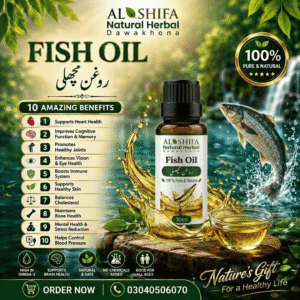
روغن مچھلی
Price range: ₨ 400 through ₨ 10,000
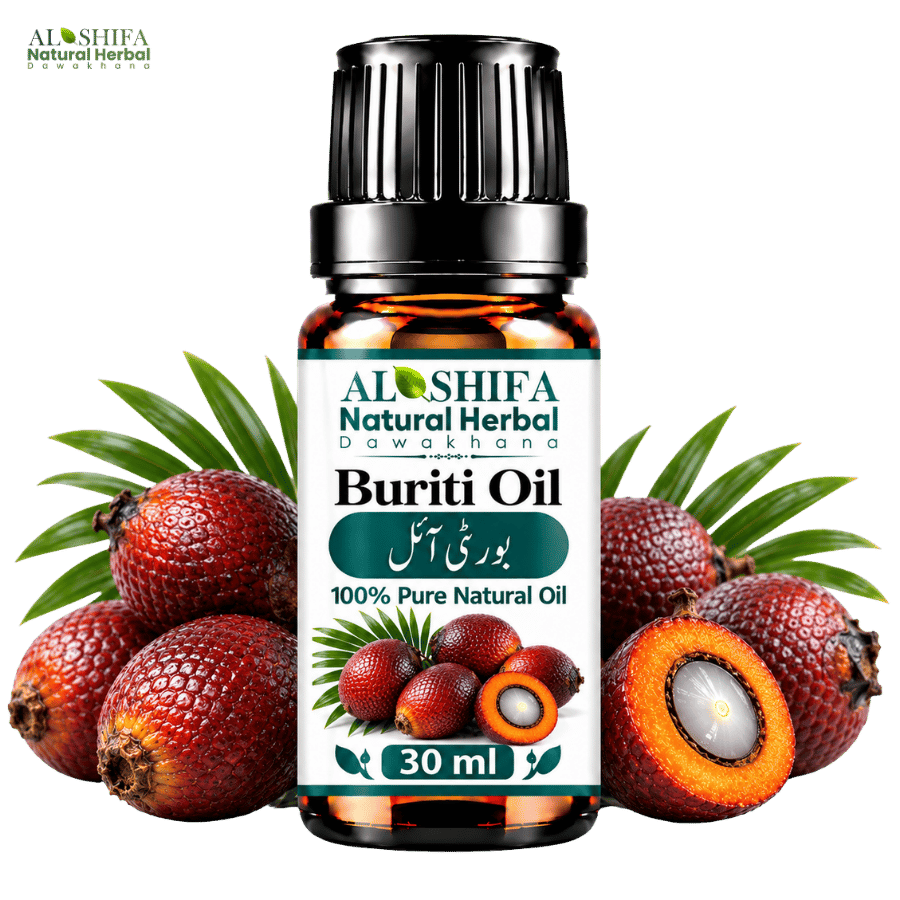
Buriti Oil / Roghan Buriti is a rich natural fixed vegetable oil obtained primarily from the fruit pulp of Mauritia flexuosa. Naturally rich in oleic acid and containing carotenoids, tocopherols and other fatty acids, it is valued for dry skin care, hair conditioning, body care, massage and cosmetic formulations.
Al Shifa Buriti Oil is carefully selected with attention to its correct botanical identity, characteristic natural oil profile, freshness, clean handling and protective packaging.
Key Features:
Usage: Apply a small amount to the skin, hair or dry ends, use in massage blends, or combine with compatible carrier oils and cosmetic formulations.
Important Note: Buriti Oil is a fixed fruit oil, not an essential oil. Its natural carotenoids and emollient properties support cosmetic skin and hair conditioning, but it should not be considered a substitute for tested sunscreen, a medical Vitamin A product or a clinically proven hair-regrowth treatment.
Buriti Oil / Roghan Buriti – بوریٹی آئل is a rich natural vegetable oil obtained from the fruit of Mauritia flexuosa L.f., a tropical palm belonging to the Arecaceae family. Native to South America and strongly associated with the Amazon region, Buriti Oil is recognised for its distinctive orange to reddish-orange colour, high oleic-acid content and naturally occurring carotenoid compounds.
The oil is widely used in modern skin care, dry and mature-looking skin formulations, hair conditioning, body oils, soaps, balms and cosmetic products. Its rich emollient character makes it particularly useful where softness, lubrication and improved surface conditioning are desired.
Buriti Oil is naturally rich in oleic acid, while palmitic and linoleic acids occur in smaller proportions. Unrefined oil is also recognised for naturally occurring carotenoids, tocopherols and other lipid-soluble compounds, although their levels vary with fruit quality, extraction and refining.
At Al Shifa Natural Herbal Dawakhana, Buriti Oil is selected with attention to its correct botanical identity, characteristic colour and oil profile, freshness, clean handling, protective packaging and proper storage.
Buriti Oil is a fixed botanical oil obtained primarily from the pulp of the fruit of the Buriti palm, Mauritia flexuosa.
The Buriti palm produces distinctive fruits with a reddish-brown outer surface and an oil-rich pulp.
The extracted oil is valued primarily for:
Unlike essential oils, Buriti Oil is a non-volatile fatty oil.
Product Name: Buriti Oil / Roghan Buriti – بوریٹی آئل
English Name: Buriti Oil / Buriti Fruit Oil
Urdu Name: بوریٹی آئل / روغن بوریٹی
Roman Name: Buriti Oil / Roghan Buriti
Scientific Name: Mauritia flexuosa L.f.
Plant Family: Arecaceae
Plant Part: Fruit Pulp
Oil Type: Fixed Vegetable Oil / Fruit Oil / Carrier Oil
Common Forms: Cold-Pressed Buriti Oil / Unrefined Buriti Oil / Refined Buriti Oil
Appearance: Golden-Orange to Deep Reddish-Orange, Depending on Processing
Aroma: Mild to Characteristic Fruity, Earthy or Oily Aroma
Primary Applications: Skin Care, Dry Skin Care, Hair Conditioning, Body Care, Massage & Cosmetic Formulations
Product Type: Buriti Palm Fruit Fixed Oil
The Buriti palm, Mauritia flexuosa, grows naturally across tropical South America and is particularly associated with wetland and Amazonian environments.
Its fruit contains an oil-rich pulp from which Buriti Oil can be extracted.
The palm and its fruit have long-standing local importance, while Buriti Oil has become increasingly popular internationally as a cosmetic ingredient.
Good-quality Buriti Oil is commonly recognised by a combination of:
The appearance can vary considerably between unrefined and refined oils.
One of the most recognisable features of unrefined Buriti Oil is its intense orange or reddish-orange colour.
This colour is associated largely with naturally occurring carotenoid pigments.
Processing and refining can reduce the intensity of these pigments.
Therefore:
Deep Colour ≠ Automatically Better Quality
and
Lighter Colour ≠ Automatically Poor Quality
The extraction and refining history must also be considered.
Buriti Oil consists primarily of natural lipids.
It does not behave like a conventional steam-distilled essential oil.
Therefore:
Buriti Oil ≠ Essential Oil
It belongs to the category of fixed vegetable oils and can be used as an emollient or carrier component in suitable cosmetic formulations.
The fatty-acid composition of Buriti Oil is one of its most important characteristics.
It commonly contains:
Oleic acid is generally one of the dominant fatty acids.
Exact percentages vary according to fruit source, maturity, extraction and processing.
Oleic acid is a monounsaturated fatty acid and contributes significantly to the rich emollient character of Buriti Oil.
In cosmetic applications, oleic-rich oils can contribute to:
However:
Buriti Oil ≠ Pure Oleic Acid
Its properties come from the complete natural oil composition.
Palmitic acid is another naturally occurring component of Buriti Oil.
It contributes to:
Its concentration is generally lower than oleic acid in typical Buriti Oil.
Linoleic acid is an essential Omega-6 fatty acid present in Buriti Oil.
It forms part of the natural lipid mixture and contributes to the overall skin-conditioning characteristics of the oil.
However:
Buriti Oil ≠ Pure Linoleic Acid
Buriti Oil is particularly known for its naturally occurring carotenoid compounds.
These pigments contribute to its distinctive colour.
Carotenoids are commonly associated with antioxidant activity, but their presence should be interpreted responsibly.
Therefore:
Carotenoid Content ≠ Treatment or Prevention of Disease
The concentration of carotenoids can also be substantially affected by refining, heat, light and storage.
Beta-carotene is one of the carotenoid compounds commonly discussed in relation to Buriti fruit and its oil.
Beta-carotene has provitamin A activity when appropriately consumed and metabolised.
However, this does not mean that applying Buriti Oil to the skin is equivalent to using a medical vitamin A preparation.
Therefore:
Buriti Oil ≠ Retinol
and
Buriti Oil ≠ Prescription Vitamin A Treatment
Buriti Oil can contain naturally occurring tocopherols, members of the Vitamin E family.
These lipid-soluble compounds contribute to the natural antioxidant system of vegetable oils.
However:
Buriti Oil ≠ Pure Vitamin E Oil
The concentration and composition depend on the individual oil and its processing.
Buriti Oil is increasingly used in cosmetic skin-care products because of its rich emollient properties.
It can help:
These are primarily cosmetic conditioning effects.
Its rich fatty-acid profile makes Buriti Oil particularly suitable for dry-feeling skin.
It may be incorporated into:
The amount used should be adjusted according to skin type and formulation.
Buriti Oil is frequently included in products marketed for mature-looking skin because of its emollient character and naturally occurring carotenoids and tocopherols.
It can help improve:
However:
Smoother-Looking Skin ≠ Reversal of Biological Aging
Buriti Oil should not be presented as a treatment that reverses the natural aging process.
Small amounts of Buriti Oil can be incorporated into suitable facial formulations.
Because the oil is rich and naturally strongly coloured, formulation level matters.
Depending on the product, excessive amounts may:
Individual tolerance and formulation suitability should therefore be considered.
Buriti Oil can be used in body-care formulations designed to improve skin softness and reduce dry feeling.
Common applications include:
Buriti Oil is also used as a hair-conditioning ingredient.
Its natural lipid profile can help:
Hair exposed to frequent washing, heat styling, chemical treatment or environmental stress can become dry and rough-looking.
Buriti Oil can provide surface conditioning and lubrication.
This may improve:
However:
Hair Conditioning ≠ Complete Repair of Structural Hair Damage
Rich botanical oils such as Buriti Oil can be useful in formulations designed for curly, coarse or textured hair.
They can provide:
Fine hair may require smaller amounts to avoid excessive heaviness.
Buriti Oil may be incorporated into scalp oils and massage blends.
It can provide:
However:
Scalp Conditioning ≠ Treatment for Dandruff, Dermatitis or Other Scalp Disease
Buriti Oil may appear in online discussions about hair growth.
Its established cosmetic role is primarily as a conditioning oil.
Improved lubrication may reduce friction and dryness-related breakage, helping hair maintain a healthier appearance.
However:
Reduced Breakage ≠ New Hair Growth
and
Buriti Oil ≠ Clinically Proven Hair-Regrowth Treatment
Buriti Oil can be incorporated into suitable lip-care formulations because of its rich emollient properties.
It may be included in:
Only ingredients and grades specifically suitable for the intended application should be used.
Buriti Oil can be incorporated into handcrafted and cosmetic soap formulations.
Its use can contribute to:
The finished soap characteristics depend on the complete formulation rather than Buriti Oil alone.
Buriti Oil may be used in:
Its strong natural colour should be considered when determining formulation percentage.
Carotenoids and tocopherols naturally present in Buriti Oil can demonstrate antioxidant properties.
However, laboratory antioxidant activity does not automatically establish clinical treatment effects.
Therefore:
Antioxidant Activity ≠ Cure or Prevention of Disease
Buriti Oil is sometimes promoted online as a natural sunscreen because of its carotenoid content.
This requires an important clarification.
Natural plant oils should not be relied upon as substitutes for properly tested sunscreen products.
Therefore:
Buriti Oil ≠ Tested Broad-Spectrum Sunscreen
and
Buriti Oil ≠ Guaranteed SPF Protection
For meaningful sun protection, use appropriately tested and labelled sun-protection products.
The strong orange-red colour of unrefined Buriti Oil comes from natural pigments.
This does not mean it medically treats pigmentation disorders.
Therefore:
Natural Pigments ≠ Treatment for Melasma or Hyperpigmentation
Whole Buriti fruit contains water, carbohydrates, fibre and numerous natural compounds.
Buriti Oil represents primarily the lipid-soluble fraction extracted from the fruit pulp.
Therefore:
Buriti Oil ≠ Whole Buriti Fruit
Nutritional information about the complete fruit should not automatically be attributed to the oil.
A concentrated plant extract may contain a different range of compounds depending on the extraction method.
Therefore:
Buriti Oil ≠ Buriti Extract
Research involving extracts should not automatically be presented as evidence for ordinary Buriti Oil.
The orange colour of Buriti Oil can lead to confusion with carotenoid-rich or carrot-related cosmetic ingredients.
Buriti Oil comes from:
Mauritia flexuosa
Carrot Seed Essential Oil comes from:
Daucus carota
They are botanically and chemically different.
Therefore:
Buriti Oil ≠ Carrot Seed Essential Oil
Rosehip Oil is generally obtained from seeds or fruit material of Rosa species.
Buriti Oil comes from Mauritia flexuosa palm fruit.
Both may be used in skin-care products, but their natural lipid and pigment profiles differ.
Therefore:
Buriti Oil ≠ Rosehip Oil
Sea Buckthorn Oil comes from Hippophae rhamnoides, while Buriti Oil comes from Mauritia flexuosa.
Both can display orange or reddish coloration because of naturally occurring pigments.
However, their fatty-acid profiles are different.
Therefore:
Buriti Oil ≠ Sea Buckthorn Oil
Buriti belongs to the palm family, but it should not automatically be treated as equivalent to standard commercial palm oil.
Common commercial palm oil is generally associated with Elaeis guineensis, whereas Buriti Oil is obtained from Mauritia flexuosa.
Therefore:
Buriti Oil ≠ Standard Palm Oil
Both oils come from palms, but they are different products.
Buriti Oil: Mauritia flexuosa
Batana Oil: traditionally associated with Elaeis oleifera
Their botanical sources, traditional uses, appearance and oil profiles differ.
Therefore:
Buriti Oil ≠ Batana Oil
Buriti Oil may naturally contain tocopherols.
However, this does not make it equivalent to concentrated Vitamin E preparations.
Therefore:
Buriti Oil ≠ Vitamin E Oil
Buriti Oil is a fixed fruit oil.
Essential oils are volatile aromatic substances generally obtained through processes such as steam distillation or expression, depending on the plant.
Therefore:
Buriti Oil ≠ Essential Oil
Cold-pressed or minimally processed Buriti Oil may retain more of its characteristic:
Refined oil may have:
Therefore:
Cold-Pressed Buriti Oil ≠ Refined Buriti Oil
Neither term alone proves overall quality.
Like other natural vegetable oils, Buriti Oil can gradually oxidise.
Oxidation can be accelerated by:
Changes in odour or other clear signs of deterioration may indicate declining quality.
Although Buriti Oil is used cosmetically, individual sensitivity remains possible.
Patch testing is appropriate before wider use, particularly for sensitive skin.
Discontinue use if significant:
develops.
Ordinary external cosmetic use is different from medicinal or internal use.
When Buriti Oil is part of a multi-ingredient product, the safety of the complete formulation should be considered rather than judging Buriti Oil alone.
For children, use only products appropriately formulated for their age and intended application.
Avoid unnecessary contact with:
Keep the oil securely out of reach of young children.
Some vegetable oils have both cosmetic and food applications.
However, Buriti Oil sold for cosmetic use should not automatically be considered edible.
Therefore:
Cosmetic-Grade Buriti Oil ≠ Automatically Food-Grade Buriti Oil
Follow the intended grade and product labelling.
At Al Shifa Natural Herbal Dawakhana, Buriti Oil is selected with attention to:
Botanical Identity – Genuine Mauritia flexuosa fruit oil.
Plant Part – Oil associated primarily with the fruit pulp.
Fixed-Oil Identity – A true vegetable lipid oil rather than an essential oil.
Fatty-Acid Profile – Naturally rich in oleic acid with palmitic, linoleic and other fatty acids.
Natural Pigments – Characteristic carotenoid-rich appearance in less-refined grades.
Skin Applications – Suitable for dry and rough-feeling skin care.
Hair Applications – Suitable for dry, rough and textured hair conditioning.
Cosmetic Applications – Suitable for oils, creams, balms, hair masks, soaps and other formulations.
Identity Awareness – Clearly distinguished from Batana Oil, Palm Oil, Rosehip Oil, Sea Buckthorn Oil and essential oils.
Freshness – Attention to characteristic oil quality.
Clean Handling – Carefully handled during packing.
Protective Packaging – Helps reduce unnecessary exposure to light and contamination.
Responsible Claims – No guaranteed sunscreen, anti-aging, hair-regrowth or disease-treatment claims.
Al Shifa Natural Herbal Dawakhana, established in 1999, supplies carefully selected natural oils, herbs and botanical materials throughout Pakistan.
Our focus for Buriti Oil includes:
For Skin Care: Apply a small amount to clean skin after establishing individual tolerance.
For Dry Skin: Use alone in a small quantity or blend with compatible carrier oils, creams or body-care formulations.
For Facial Care: Use sparingly because unrefined Buriti Oil can be rich and strongly coloured.
For Hair Care: Apply a small amount to dry lengths and ends or use as part of a pre-wash conditioning treatment.
For Scalp Care: Incorporate into an appropriate scalp massage blend when suitable.
For Curly & Textured Hair: Use according to hair density and texture to provide lubrication without unnecessary heaviness.
For Massage: Use alone when suitable or combine with lighter carrier oils.
For Cosmetic Formulations: Incorporate at an appropriate level according to the desired colour, texture and finished formulation.
Buriti Oil / Roghan Buriti – بوریٹی آئل is a natural fixed vegetable oil obtained primarily from the fruit pulp of Mauritia flexuosa. It is valued for its rich emollient character, high oleic-acid content and naturally occurring carotenoid pigments.
Important distinctions include:
For best quality:
Buriti Oil / Roghan Buriti – بوریٹی آئل is a distinctive natural fruit oil obtained from the Buriti palm, Mauritia flexuosa. Recognised for its orange to reddish-orange colour, rich emollient texture, high oleic-acid content and naturally occurring carotenoid compounds, it is increasingly valued in premium skin, hair and body-care formulations.
Buriti Oil is particularly suitable for dry skin, mature-looking skin, dry and rough hair, curly and textured hair, body oils, massage blends, balms, soaps and cosmetic formulations.
Its rich natural profile makes it a versatile botanical oil, while its characteristic pigments give unrefined grades a distinctive appearance. These pigments should not, however, be confused with guaranteed sunscreen or medical Vitamin A activity.
Customers searching for Buriti Oil, Roghan Buriti, Buriti Fruit Oil, Mauritia Flexuosa Oil, Pure Buriti Oil, Natural Buriti Oil, Cold Pressed Buriti Oil, Unrefined Buriti Oil, Buriti Carrier Oil, Buriti Oil for Skin, Buriti Oil for Dry Skin, Buriti Oil for Face, Buriti Oil for Hair, Buriti Oil for Dry Hair, Buriti Oil for Curly Hair, Buriti Oil for Scalp, Buriti Oil Pakistan, Roghan Buriti Pakistan, Buriti Oil Lahore, Buriti Oil price in Pakistan, Roghan Buriti price, buy Buriti Oil Pakistan or Buriti Oil online Pakistan can choose Al Shifa Natural Herbal Dawakhana for carefully selected quality.
Since 1999, Al Shifa Natural Herbal Dawakhana has focused on providing natural oils and botanical materials with attention to correct identity, quality selection, freshness, clean handling, responsible product information, protective packaging and proper storage.
Product Name: Buriti Oil / Roghan Buriti – بوریٹی آئل
English Name: Buriti Oil / Buriti Fruit Oil
Urdu Name: بوریٹی آئل / روغن بوریٹی
Roman Name: Buriti Oil / Roghan Buriti
Scientific Name: Mauritia flexuosa L.f.
Plant Family: Arecaceae
Plant Part: Fruit Pulp
Oil Type: Fixed Vegetable Oil / Fruit Oil / Carrier Oil
Common Forms: Cold-Pressed Buriti Oil / Unrefined Buriti Oil / Refined Buriti Oil
Appearance: Golden-Orange to Deep Reddish-Orange, Depending on Processing
Aroma: Mild to Characteristic Fruity, Earthy or Oily Aroma
Primary Applications: Skin Care, Dry Skin Care, Hair Conditioning, Body Care, Massage & Cosmetic Formulations
Product Type: Buriti Palm Fruit Fixed Oil
Important Note: Buriti Oil is a fixed fruit oil, not an essential oil. Its natural carotenoids, fatty acids and emollient properties make it useful for cosmetic skin and hair conditioning, but it should not be presented as a replacement for tested sunscreen, a medical Vitamin A preparation, a guaranteed anti-aging treatment or a clinically proven hair-regrowth product.
بوریٹی آئل بوریٹی پام کے پکے ہوئے پھل کے روغنی گودے سے حاصل ہونے والا قدرتی روغن ہے۔ بوریٹی پام جنوبی امریکہ کے گرم اور مرطوب علاقوں، خاص طور پر برازیل اور ایمیزون کے خطے میں پایا جاتا ہے۔
بوریٹی آئل کی سب سے خاص پہچان اس کی سنہری نارنجی سے سرخی مائل رنگت ہے۔ یہ رنگت اس میں موجود قدرتی کیروٹینائڈز کی وجہ سے ہوتی ہے۔
اس روغن میں اولیک تیزاب، پالمیٹک تیزاب، لینولیک تیزاب، سٹیئرک تیزاب، قدرتی ٹوکوفیرولز، کیروٹینائڈز اور سٹیرولز پائے جاتے ہیں۔
اسے خاص طور پر خشک جلد، چہرے، جسمانی جلد، خشک اور کھردرے بالوں، بالوں کے خشک سروں، سر کی جلد، داڑھی اور جسمانی مالش میں استعمال کیا جاتا ہے۔
اردو: بوریٹی، بوریٹی پام، بوریٹی آئل، روغن بوریٹی
پنجابی: بوریٹی، بوریٹی دا تیل
ہندی: بوریٹی، بوریٹی تیل
فارسی: بوریٹی، روغن بوریٹی
عربی: بوريتي، زیت بوريتي
انگریزی نام: بوریٹی آئل، بوریٹی فروٹ آئل، موریچی پام آئل
سائنسی نام: موریٹیا فلیکسیوسا
خاندان: اریکیسی
استعمال ہونے والا حصہ: پکے ہوئے پھل کا روغنی گودا
بوریٹی ایک لمبا پام کا درخت ہے جو پانی والے، دلدلی اور مرطوب علاقوں میں اچھی طرح بڑھتا ہے۔
اس کے بڑے پنکھے جیسے پتے ہوتے ہیں۔
درخت پر پھل گچھوں کی شکل میں لگتے ہیں۔
پکے ہوئے پھل کی بیرونی سطح سرخی مائل بھوری اور چھوٹے سخت چھلکوں جیسی ہوتی ہے۔
پھل کے اندر زرد سے نارنجی رنگ کا روغنی گودا موجود ہوتا ہے۔
اسی گودے سے بوریٹی آئل حاصل کیا جاتا ہے۔
اچھے بوریٹی پھل میں یہ خصوصیات دیکھی جاتی ہیں:
پکے ہوئے بوریٹی پھل جمع کیے جاتے ہیں۔
پھل کا روغنی گودا الگ کیا جاتا ہے۔
اسی گودے سے قدرتی چکنائی حاصل کی جاتی ہے۔
تیار روغن کو صاف کر کے پھل کے غیر ضروری ذرات الگ کیے جاتے ہیں۔
اچھی طرح تیار کیا گیا بوریٹی آئل اپنی نارنجی سے سرخی مائل قدرتی رنگت برقرار رکھتا ہے۔
بوریٹی جنوبی امریکہ کا پام ہے اور پاکستان و برصغیر کی معروف حکیمی کتب مفردات میں بوریٹی یا بوریٹی آئل کا الگ مستند مزاج واضح طور پر مقرر نہیں ہے۔
اس لیے اسے اپنی طرف سے گرم، سرد، تر یا خشک مزاج دینا درست نہیں۔
اس کی پہچان پھل کے گودے سے حاصل ہونے والے قدرتی روغن کے طور پر رکھی جاتی ہے۔
بوریٹی آئل قدرتی اولیک تیزاب اور کیروٹینائڈز سے بھرپور روغن کے طور پر مشہور ہے۔
اس کی بھرپور روغنی ساخت خشک جلد اور خشک بالوں کی دیکھ بھال کے لیے خاص طور پر فائدہ مند ہے۔
اس کی قدرتی نارنجی رنگت اسے دوسرے بہت سے بنیادی روغنوں سے الگ پہچان دیتی ہے۔
اسے اکیلا کم مقدار میں یا دوسرے ہلکے روغنوں کے ساتھ ملا کر استعمال کیا جاتا ہے۔
بوریٹی آئل کے اہم بیرونی استعمال یہ ہیں:
بوریٹی آئل خشک اور کھردری جلد کی روغنی دیکھ بھال میں استعمال کیا جاتا ہے۔
اس میں موجود اولیک تیزاب اور دوسرے قدرتی روغنی اجزا جلد کو نرم اور ملائم رکھنے کے لیے فائدہ مند ہیں۔
اس کی بھرپور روغنی ساخت کی وجہ سے تھوڑی مقدار کافی رہتی ہے۔
بوریٹی آئل چہرے کی خشک جلد کی روغنی دیکھ بھال میں استعمال کیا جاتا ہے۔
اس کی قدرتی رنگت کافی گہری ہو سکتی ہے، اس لیے چہرے پر بہت کم مقدار استعمال کی جاتی ہے۔
اسے روغن جوجوبا یا روغن بادام کے ساتھ ملا کر بھی لگایا جاتا ہے۔
جلدی امراض میں طبی استعمال معالج سے پوچھ کر کریں۔
خشک ہاتھوں اور پاؤں پر بوریٹی آئل کی تھوڑی مقدار لگائی جاتی ہے۔
اسے رات کے وقت ہلکے ہاتھ سے مالش کے ساتھ استعمال کیا جاتا ہے۔
بہت خشک جلد کے لیے اسے روغن بادام یا روغن ناریل کے ساتھ ملا کر بھی لگایا جاتا ہے۔
خشک اور کھردری ایڑیوں پر بوریٹی آئل استعمال کیا جاتا ہے۔
اس کی قدرتی چکنائی خشک جلد کو روغنی نرمی دینے کے لیے فائدہ مند ہے۔
رات کے وقت تھوڑی مقدار لگا کر ہلکی مالش کی جاتی ہے۔
خشک کہنیوں اور گھٹنوں پر بوریٹی آئل کی کم مقدار لگائی جاتی ہے۔
اسے دوسرے بنیادی روغنوں کے ساتھ ملا کر بھی استعمال کیا جاتا ہے۔
بوریٹی آئل خشک جسمانی جلد کی روغنی دیکھ بھال میں استعمال کیا جاتا ہے۔
نہانے کے بعد نم جلد پر اس کی تھوڑی مقدار لگانے سے جلد پر آسانی سے پھیل جاتی ہے۔
اس کی گہری رنگت کی وجہ سے کم مقدار استعمال کرنا بہتر رہتا ہے۔
بوریٹی آئل جسمانی مالش میں استعمال کیا جاتا ہے۔
اسے روغن بادام، روغن جوجوبا، روغن ناریل یا روغن زیتون کے ساتھ ملا کر لگایا جاتا ہے۔
اس کی قدرتی چکنائی خشک جسمانی جلد کے لیے فائدہ مند ہے۔
بوریٹی آئل کو دوسرے مالش والے روغنوں کے ساتھ ملا کر پٹھوں کے کھنچاؤ کے دوران بیرونی مالش میں استعمال کیا جاتا ہے۔
پٹھوں کے امراض یا چوٹ میں طبی استعمال معالج سے پوچھ کر کریں۔
بوریٹی آئل خشک اور کھردرے بالوں کی روغنی دیکھ بھال میں استعمال کیا جاتا ہے۔
اس کی تھوڑی مقدار بالوں کی لمبائی اور خشک سروں پر لگائی جاتی ہے۔
اس کی قدرتی چکنائی بالوں کو نرم، ہموار اور چمک دار دکھانے کے لیے فائدہ مند ہے۔
بہت خشک بالوں پر بوریٹی آئل کو روغن ناریل، روغن جوجوبا یا روغن بادام کے ساتھ ملا کر استعمال کیا جاتا ہے۔
اس کی بھرپور روغنی ساخت بالوں کو نرمی دیتی ہے۔
کم مقدار استعمال کرنے سے بال بہت زیادہ چکنے محسوس نہیں ہوتے۔
بوریٹی آئل بالوں کو روغنی نرمی اور قدرتی چمک دینے کے لیے استعمال کیا جاتا ہے۔
ہتھیلی پر ایک یا دو قطرے لے کر بالوں کی لمبائی پر ہلکے ہاتھ سے لگائے جاتے ہیں۔
اس کی گہری رنگت کی وجہ سے ہلکے رنگ کے بالوں پر بہت کم مقدار استعمال کریں۔
بوریٹی آئل بالوں کے خشک سروں کے لیے فائدہ مند روغن ہے۔
چند قطرے بالوں کے آخری حصوں پر لگائے جاتے ہیں۔
اسے جوجوبا یا بادام کے روغن کے ساتھ ملا کر بھی استعمال کیا جاتا ہے۔
بوریٹی آئل سر کی خشک جلد کی روغنی دیکھ بھال میں استعمال کیا جاتا ہے۔
اسے کسی ہلکے بنیادی روغن کے ساتھ ملا کر سر کی جلد پر لگایا جاتا ہے۔
انگلیوں کے پوروں سے ہلکی مالش کی جاتی ہے۔
سر کی جلد کے امراض میں طبی استعمال معالج سے پوچھ کر کریں۔
بالوں کا بہت زیادہ گرنا، مسلسل پتلا ہونا یا سر پر خالی جگہیں بننا بالوں کے امراض سے جڑا مسئلہ ہے۔
ایسی صورت میں معالج سے چیک کروائیں۔
بوریٹی آئل کو بالوں اور سر کی جلد کی روزمرہ روغنی دیکھ بھال کے لیے استعمال کیا جاتا ہے۔
بوریٹی آئل داڑھی کی روغنی دیکھ بھال میں استعمال کیا جاتا ہے۔
اس کی گہری رنگت اور بھرپور ساخت کی وجہ سے اسے جوجوبا یا بادام کے روغن کے ساتھ ملا کر استعمال کرنا آسان رہتا ہے۔
چند قطرے داڑھی اور اس کے نیچے کی خشک جلد پر لگائے جاتے ہیں۔
بوریٹی آئل ناخنوں اور ان کے اردگرد خشک جلد پر استعمال کیا جاتا ہے۔
رات کے وقت تھوڑی مقدار لگا کر ہلکی مالش کی جاتی ہے۔
بوریٹی آئل میں اہم قدرتی روغنی اجزا یہ ہیں:
اولیک تیزاب بوریٹی آئل کی نمایاں قدرتی چکنائی ہے۔
یہ اومیگا نو خاندان سے تعلق رکھتا ہے۔
یہ خشک جلد اور بالوں کو روغنی نرمی دینے کے لیے فائدہ مند ہے۔
پالمیٹک تیزاب بھی بوریٹی آئل کی اہم قدرتی چکنائیوں میں شامل ہے۔
یہ پام کے پھل سے حاصل روغن کی بھرپور ساخت کا حصہ ہے۔
لینولیک تیزاب اومیگا چھ خاندان کی قدرتی چکنائی ہے۔
یہ بوریٹی آئل میں اولیک تیزاب کے مقابلے میں کم مقدار میں پایا جاتا ہے۔
یہ جلد اور بالوں کی روغنی دیکھ بھال میں استعمال ہونے والے کئی قدرتی روغنوں کا حصہ ہے۔
سٹیئرک تیزاب بھی بوریٹی آئل کی قدرتی چکنائی میں پایا جاتا ہے۔
یہ روغن کی قدرتی ساخت کا حصہ ہے۔
بوریٹی آئل میں قدرتی ٹوکوفیرولز پائے جاتے ہیں۔
یہ وٹامن ای خاندان سے تعلق رکھنے والے قدرتی اجزا ہیں۔
کیروٹینائڈز بوریٹی آئل کی سب سے نمایاں خصوصیات میں شامل ہیں۔
ان میں بیٹا کیروٹین خاص اہمیت رکھتا ہے۔
یہی قدرتی رنگ دار اجزا بوریٹی آئل کو اس کی خاص سنہری نارنجی سے سرخی مائل رنگت دیتے ہیں۔
بوریٹی آئل میں قدرتی سٹیرولز بھی پائے جاتے ہیں۔
یہ بوریٹی پھل کے روغنی حصے کی قدرتی ساخت میں شامل ہیں۔
بوریٹی آئل اپنی قدرتی بیٹا کیروٹین کی مقدار کی وجہ سے دوسرے بہت سے بنیادی روغنوں سے الگ پہچانا جاتا ہے۔
بیٹا کیروٹین نارنجی اور سرخی مائل رنگ دینے والا قدرتی جز ہے۔
اسی لیے خالص بوریٹی آئل کی گہری قدرتی رنگت اس کی نمایاں پہچان ہے۔
بوریٹی کا مکمل پھل اور اس سے حاصل روغن ایک چیز نہیں ہیں۔
پھل میں گودا، پانی، ریشہ اور دوسرے اجزا ہوتے ہیں۔
بوریٹی آئل پھل کے روغنی گودے سے حاصل ہونے والی قدرتی چکنائی ہے۔
اس لیے پھل کے تمام غذائی اجزا کو براہ راست روغن کے اجزا نہیں سمجھنا چاہیے۔
بازار میں بوریٹی آئل کا نام دیکھتے وقت یہ دیکھنا ضروری ہے کہ روغن پھل کے گودے سے حاصل کیا گیا ہے یا کسی دوسرے حصے سے۔
بوریٹی کے نام سے مشہور نارنجی سے سرخی مائل روغن عموما پھل کے روغنی گودے سے حاصل کیا جاتا ہے۔
اس کی اصل لیبل پر واضح ہونی چاہیے۔
خالص بوریٹی آئل کی سب سے خاص پہچان اس کی گہری قدرتی رنگت ہے۔
یہ سنہری نارنجی، گہری نارنجی یا سرخی مائل نارنجی ہو سکتا ہے۔
یہ رنگت قدرتی کیروٹینائڈز سے آتی ہے۔
مصنوعی رنگ شامل کیا ہوا روغن خالص بوریٹی آئل کی اچھی پہچان نہیں ہے۔
خالص بوریٹی آئل میں ہلکی پھل دار، گری جیسی یا پام کے پھل سے جڑی قدرتی خوشبو ہو سکتی ہے۔
اس کی خوشبو بہت تیز مصنوعی نہیں ہونی چاہیے۔
باسی یا سڑی ہوئی بو روغن کے خراب ہونے کی پہچان ہے۔
بوریٹی آئل بھرپور اور نرم روغنی ساخت رکھتا ہے۔
یہ جلد اور بالوں پر آسانی سے پھیلتا ہے۔
اس کی رنگت گہری ہونے کی وجہ سے کم مقدار سے استعمال شروع کرنا بہتر رہتا ہے۔
بوریٹی آئل میں قدرتی کیروٹینائڈز پائے جاتے ہیں، لیکن اسے دھوپ سے حفاظت کرنے والی کریم کا بدل نہ سمجھیں۔
دھوپ میں نکلتے وقت جلد کی حفاظت کے لیے الگ سے دھوپ سے بچانے والی کریم استعمال کریں۔
بوریٹی آئل کو جلد کی روزمرہ روغنی دیکھ بھال کے لیے استعمال کیا جاتا ہے۔
بوریٹی آئل کے چند قطرے صاف جلد پر لگائیں۔
ہلکے ہاتھ سے مالش کریں۔
اس کی گہری رنگت کی وجہ سے بہت کم مقدار سے استعمال شروع کریں۔
اسے جوجوبا، بادام یا ناریل کے روغن کے ساتھ ملا کر بھی استعمال کیا جاتا ہے۔
بوریٹی آئل کی تھوڑی مقدار بالوں کی لمبائی اور خشک سروں پر لگائیں۔
سر کی جلد پر استعمال کے لیے اسے کسی ہلکے بنیادی روغن کے ساتھ ملا لیں۔
انگلیوں کے پوروں سے ہلکی مالش کریں۔
بعد میں بال اپنے معمول کے مطابق دھو لیں۔
بوریٹی آئل کو درج ذیل روغنوں کے ساتھ ملا کر استعمال کیا جاتا ہے:
ان روغنوں کے ساتھ اسے چہرے، جسمانی جلد، بالوں، داڑھی اور جسمانی مالش میں استعمال کیا جاتا ہے۔
بوریٹی آئل کی قدرتی نارنجی سے سرخی مائل رنگت گہری ہوتی ہے۔
زیادہ مقدار استعمال کرنے سے ہلکے رنگ کے کپڑوں، تکیے یا تولیے پر روغنی رنگ لگ سکتا ہے۔
اس لیے تھوڑی مقدار استعمال کریں اور روغن لگانے کے فوراً بعد ہلکے رنگ کے کپڑے سے رگڑنے سے بچیں۔
حساس جلد پر پہلی بار بوریٹی آئل کی تھوڑی مقدار آزمائیں۔
خارش، سرخی یا جلن پیدا ہو تو استعمال بند کریں۔
جلدی امراض میں طبی استعمال معالج سے پوچھ کر کریں۔
جلد اور بالوں کی دیکھ بھال کے لیے فروخت ہونے والے ہر بوریٹی آئل کو خوراک میں استعمال نہ کریں۔
خوراک کے لیے صرف وہ روغن استعمال کریں جس پر کھانے کے قابل ہونے کی واضح ہدایت موجود ہو۔
بیرونی استعمال کے لیے تیار بوریٹی آئل کو نہ پئیں۔
کسی بیماری کے لیے بوریٹی آئل کا اندرونی طبی استعمال اپنی طرف سے نہ کریں۔
اندرونی طبی استعمال معالج سے پوچھ کر کریں۔
جلد اور بالوں کے لیے تیار روغن کو اندرونی طور پر استعمال نہ کریں۔
حمل کے دوران کسی بیماری کے لیے بوریٹی آئل کا اندرونی طبی استعمال اپنی طرف سے نہ کریں۔
اندرونی طبی استعمال معالج سے پوچھ کر کریں۔
بیرونی استعمال سے پہلے جلد کے چھوٹے حصے پر تھوڑی مقدار آزمائیں۔
دودھ پلانے کے دوران کسی بیماری کے لیے اندرونی طبی استعمال معالج سے پوچھ کر کریں۔
بیرونی روغن کو چھاتی اور بچے کے منہ سے لگنے والی جگہ پر نہ لگائیں۔
بچوں میں کسی بیماری کے لیے بوریٹی آئل کا طبی استعمال اپنی طرف سے نہ کریں۔
طبی استعمال معالج سے پوچھ کر کریں۔
روغن کو بچوں کی پہنچ سے دور رکھیں۔
درست اصل: بوریٹی پام کے پھل کے روغنی گودے سے حاصل کیا گیا ہو۔
قدرتی رنگت: سنہری نارنجی سے گہری سرخی مائل نارنجی رنگت ہو۔
قدرتی خوشبو: ہلکی پھل دار، گری جیسی یا پام کے پھل سے جڑی خوشبو ہو۔
بھرپور ساخت: نرم اور بھرپور روغنی ساخت ہو۔
صاف روغن: پانی، گرد اور غیر ضروری ذرات سے پاک ہو۔
تازگی: باسی، سڑی ہوئی یا خراب بو نہ ہو۔
غیر ضروری ملاوٹ سے پاک: مصنوعی رنگ، غیر ضروری مصنوعی خوشبو اور کم معیار کے دوسرے روغن کی ملاوٹ سے پاک ہو۔
بوریٹی آئل بوریٹی پام کے پکے ہوئے پھل کے روغنی گودے سے حاصل ہونے والا قدرتی روغن ہے۔
اس میں اولیک تیزاب، پالمیٹک تیزاب، لینولیک تیزاب، سٹیئرک تیزاب، قدرتی ٹوکوفیرولز، کیروٹینائڈز اور سٹیرولز پائے جاتے ہیں۔
اس کا بیرونی استعمال خشک جلد، چہرے، بالوں، بالوں کے خشک سروں، سر کی خشک جلد، داڑھی اور جسمانی مالش میں کیا جاتا ہے۔
اس کی نارنجی سے سرخی مائل رنگت قدرتی کیروٹینائڈز کی وجہ سے نمایاں ہوتی ہے۔
پاکستانی اور برصغیر کی معروف حکیمی کتب مفردات میں بوریٹی آئل کا الگ مستند مزاج واضح طور پر مقرر نہیں ہے۔
الشفاء نیچرل ہربل دواخانہ میں بوریٹی آئل کے لیے درج ذیل باتوں کو اہمیت دی جاتی ہے:
درست بوریٹی پھل: صاف، پکے اور اچھی حالت والے پھل سے حاصل روغن کو اہمیت دی جاتی ہے۔
قدرتی رنگت: سنہری نارنجی سے سرخی مائل قدرتی رنگت کو دیکھا جاتا ہے۔
قدرتی خوشبو: بوریٹی پھل کی اپنی ہلکی اور صاف خوشبو کو اہمیت دی جاتی ہے۔
قدرتی ساخت: صاف اور بھرپور روغنی ساخت کو اہمیت دی جاتی ہے۔
صاف روغن: پانی، گرد اور غیر ضروری ذرات سے پاک روغن کو اہمیت دی جاتی ہے۔
تازگی: باسی یا خراب بو والے روغن سے بچا جاتا ہے۔
غیر ضروری ملاوٹ سے پاک: مصنوعی رنگ، غیر ضروری مصنوعی خوشبو اور کم معیار کے دوسرے روغن کی ملاوٹ سے پاک ہونے کو اہمیت دی جاتی ہے۔
الشفاء نیچرل ہربل دواخانہ سنہ ۱۹۹۹ سے قدرتی جڑی بوٹیوں، بیجوں، پھلوں اور ان سے حاصل ہونے والے روغنوں کی سپلائی کر رہا ہے۔
ہم بوریٹی آئل میں درست اصل، قدرتی نارنجی سے سرخی مائل رنگت، صاف خوشبو، بھرپور روغنی ساخت، تازگی اور غیر ضروری ملاوٹ سے پاک ہونے کو اہمیت دیتے ہیں۔
اچھے بوریٹی آئل کی پہچان اس کی درست اصل، قدرتی گہری رنگت، صاف خوشبو، روغنی ساخت، تازگی اور اچھی پیکنگ سے کی جاتی ہے۔
بوریٹی آئل کو ٹھنڈی، خشک اور روشنی سے محفوظ جگہ پر کسی جار میں اچھی طرح پیک کر کے رکھیں۔
اسے تیز دھوپ، پانی اور زیادہ گرمی سے بچائیں۔
استعمال کے بعد ڈھکن اچھی طرح بند کریں۔
اگر روغن میں باسی یا خراب بو پیدا ہو جائے تو استعمال نہ کریں۔
اسے بچوں کی پہنچ سے دور رکھیں۔
بوریٹی آئل خریدتے وقت دیکھیں کہ اس کی اصل واضح ہو اور یہ بوریٹی پام کے پھل سے حاصل کیا گیا ہو۔
اس کی قدرتی نارنجی سے سرخی مائل رنگت کی وجہ سے کپڑوں اور ہلکے رنگ کے کپڑے پر داغ لگ سکتا ہے۔
پہلی بار جلد کے چھوٹے حصے پر تھوڑی مقدار آزمائیں۔
آنکھوں اور کھلے زخموں پر نہ لگائیں۔
خارش، سرخی یا جلن پیدا ہو تو استعمال بند کریں۔
جلد اور بالوں کے لیے تیار بوریٹی آئل کو نہ پئیں۔
کسی بیماری میں طبی استعمال معالج سے پوچھ کر کریں۔
بوریٹی آئل جنوبی امریکہ کے بوریٹی پام کے پکے ہوئے پھل کے روغنی گودے سے حاصل ہونے والا قدرتی روغن ہے۔
پاکستانی اور برصغیر کی معروف حکیمی کتب مفردات میں بوریٹی آئل کا الگ مستند مزاج واضح طور پر مقرر نہیں ہے۔
اس میں اولیک تیزاب، پالمیٹک تیزاب، لینولیک تیزاب، سٹیئرک تیزاب، قدرتی ٹوکوفیرولز، کیروٹینائڈز اور سٹیرولز پائے جاتے ہیں۔
اسے خشک جلد، چہرے، ہاتھوں، پاؤں، خشک اور کھردرے بالوں، بالوں کے خشک سروں، سر کی خشک جلد، داڑھی اور جسمانی مالش کے لیے استعمال کیا جاتا ہے۔
اس کی سنہری نارنجی سے سرخی مائل رنگت اور قدرتی کیروٹینائڈز اس کی نمایاں پہچان ہیں۔
اچھے بوریٹی آئل کی پہچان درست اصل، قدرتی گہری رنگت، صاف خوشبو، بھرپور روغنی ساخت، تازگی اور غیر ضروری ملاوٹ سے پاک ہونے سے کی جاتی ہے۔