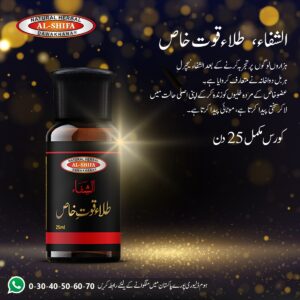
الشفاء طلاء قوت خاص۔
₨ 9,000
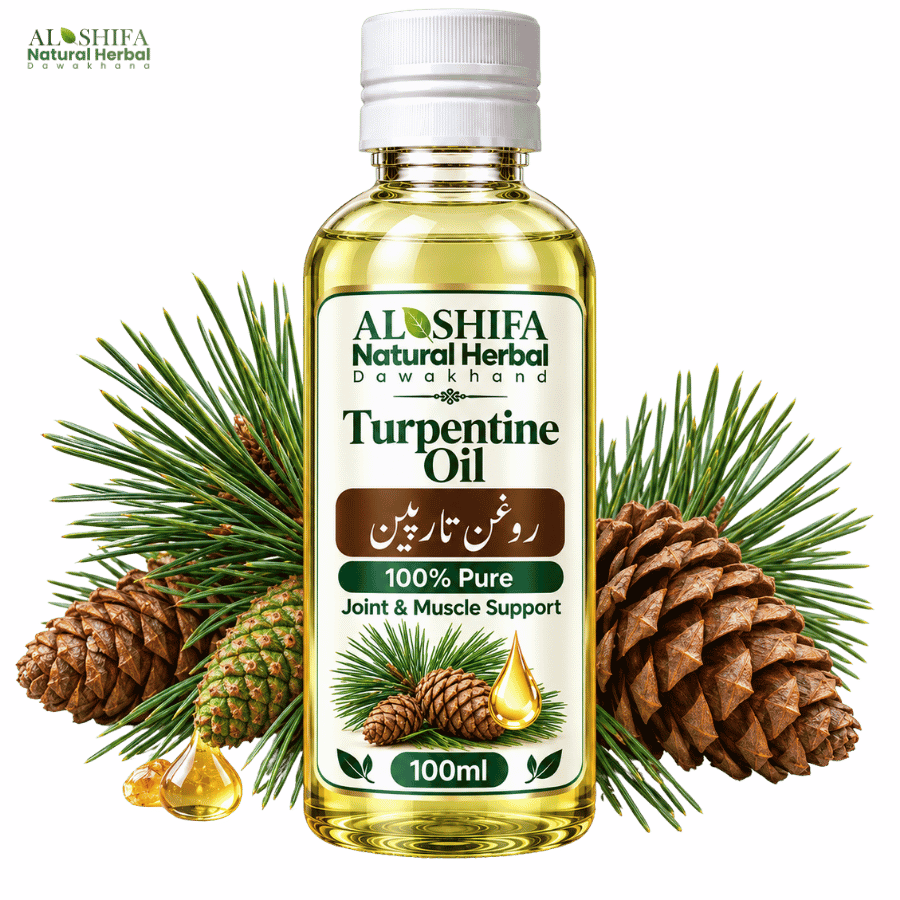
Pure Gum Turpentine Oil (Roghan Tarpeen) – For Massage & External Use.
Turpentine Oil / Roghan Tarpeen is a strong, volatile oil obtained by distilling the resin or oleoresin of selected Pinus species. Naturally rich in alpha-pinene, beta-pinene and other terpenes, it has a distinctive fresh, resinous, pine-like aroma and is used in specialised external preparations and formulation applications according to grade.
Al Shifa Turpentine Oil is carefully selected with attention to its pine-derived identity, characteristic aroma, appropriate quality, clean handling, protective packaging and safe external-use guidance.
Key Features:
Usage: Use only in an appropriate concentration for specialised external preparations or according to the requirements of the intended formulation and product grade. Turpentine Oil should not be treated as an ordinary undiluted massage or carrier oil.
Important Note: Turpentine Oil is a concentrated, volatile material that can irritate the skin, eyes and respiratory system and can be harmful if swallowed. Keep away from flames, sparks and excessive heat. Natural pine-derived Turpentine Oil should not be confused with petroleum-derived Mineral Turpentine, Mineral Spirits or White Spirit.
Pure Gum Turpentine Oil (Roghan Tarpeen) – For Massage & External Use.
Turpentine Oil / Roghan Tarpeen – روغن تارپین is a strong, volatile oil obtained by distilling the resinous material of selected pine trees, particularly species belonging to the genus Pinus. It is commonly known as Oil of Turpentine, Gum Turpentine Oil or Spirit of Turpentine, depending on source and commercial terminology.
Unlike ordinary fixed carrier oils such as Almond, Peanut or Sunflower Oil, Turpentine Oil is a volatile terpene-rich material. Its major natural constituents commonly include alpha-pinene and beta-pinene, together with smaller amounts of other terpenes. It has a powerful, fresh, resinous, pine-like aroma and requires careful handling because concentrated Turpentine Oil can irritate the skin, eyes and respiratory system and can be harmful if swallowed.
Turpentine has a long history of use in industrial applications and in older topical preparations. Modern use requires an important distinction between properly identified Turpentine Oil, pine-derived essential oils, petroleum-derived mineral spirits and finished topical products containing controlled amounts of Turpentine.
At Al Shifa Natural Herbal Dawakhana, Turpentine Oil is selected with attention to its pine-derived identity, characteristic aroma, clean handling, appropriate quality, protective packaging, clear external-use guidance and proper storage.
Turpentine Oil is the volatile fraction obtained by distilling resin or oleoresin collected from suitable pine trees.
Pine resin contains both:
During distillation, the volatile fraction is separated as Turpentine Oil, while the heavier non-volatile resinous material remains largely as rosin.
Therefore:
Turpentine Oil ≠ Pine Resin
and
Turpentine Oil ≠ Rosin
Turpentine Oil can be obtained from several species of the genus Pinus rather than one universal botanical species.
Product Name: Turpentine Oil / Roghan Tarpeen – روغن تارپین
English Name: Turpentine Oil / Oil of Turpentine / Gum Turpentine Oil
Urdu Name: روغن تارپین / تارپین کا تیل
Roman Name: Roghan Tarpeen / Tarpeen Oil
Botanical Source: Pinus species
Common Botanical Sources: Selected resin-producing Pinus species, depending on geographical and commercial source
Plant Family: Pinaceae
Plant Part / Source: Resin / Oleoresin
Oil Type: Volatile Resin-Derived Oil / Terpene-Rich Distillate
Production Method: Distillation of Pine Resin / Oleoresin
Major Constituents: Commonly Alpha-Pinene and Beta-Pinene, with other terpenes depending on source
Appearance: Usually Clear, Colourless to Pale Yellow Liquid
Aroma: Strong, Fresh, Resinous, Pine-Like & Penetrating
Primary Applications: Specialised External Preparations, Traditional Topical Formulations, Fragrance/Industrial Applications & Formulation Use According to Grade
Product Type: Pine Resin-Derived Volatile Oil
Natural gum Turpentine Oil is associated with resin-producing pine trees.
Resin or oleoresin is collected from suitable pine species and then distilled.
The volatile liquid obtained during this process is Turpentine Oil.
Because several Pinus species can be used commercially, a product described simply as Turpentine Oil should not automatically be assigned to one specific pine species unless its botanical source is documented.
Turpentine Oil is naturally rich in volatile terpenes.
Depending on botanical and geographical source, constituents may include:
The proportions can vary substantially between Turpentine Oils.
Alpha-pinene is commonly one of the principal constituents of natural Turpentine Oil.
It contributes significantly to its:
However:
Turpentine Oil ≠ Pure Alpha-Pinene
Beta-pinene can also form an important part of the natural terpene profile.
Its amount varies with pine species and geographical source.
Therefore:
Turpentine Oil ≠ Pure Beta-Pinene
Turpentine Oil evaporates much more readily than fixed vegetable oils.
This is why it should not be treated like:
These are triglyceride-rich fixed oils, whereas Turpentine Oil is predominantly a volatile terpene mixture.
Turpentine has historically appeared in external preparations designed for rubbing or massage.
It has been associated with products intended to create a noticeable warming, stimulating or counterirritant sensation on the skin.
However, historical use does not mean concentrated Turpentine Oil should be applied directly to the skin.
Turpentine has historically been incorporated in controlled amounts into specialised massage and rubbing preparations.
However:
Concentrated Turpentine Oil Should Not Be Treated as an Ordinary Massage Carrier Oil.
It requires appropriate formulation and dilution because concentrated exposure can cause significant irritation.
Turpentine has historically been included in topical rubs and liniment-type formulations.
Its sensory action can produce a strong local warming or stimulating sensation.
However:
A Warming or Counterirritant Sensation ≠ Treatment of Arthritis, Joint Disease or Muscular Injury
Persistent or severe pain requires appropriate evaluation.
Older topical preparations sometimes use Turpentine-derived ingredients in products marketed for temporary external comfort.
However:
Turpentine Oil Should Not Be Presented as a Cure for Pain, Arthritis, Rheumatism or Nerve Disease.
Its topical sensory effects should be distinguished from treatment of the underlying condition.
Turpentine Oil is not an ordinary facial or moisturising skin-care oil.
Concentrated application can cause:
It should therefore only be used in appropriately formulated external products when suitable.
Turpentine Oil should not be promoted as an ordinary hair-conditioning oil.
It lacks the triglyceride-rich emollient profile of conventional carrier oils.
There is also no basis for presenting concentrated Turpentine Oil as a guaranteed hair-growth treatment.
Therefore:
Turpentine Oil ≠ Hair-Regrowth Oil
Direct concentrated application to the scalp can cause irritation.
It should not be casually added to scalp products without appropriate formulation knowledge.
Scalp burning or irritation should not be interpreted as evidence that a product is “working.”
The strong vapours of Turpentine Oil can irritate the respiratory tract.
Therefore, concentrated Turpentine vapour should not be deliberately inhaled as a home treatment for:
People with respiratory sensitivity require particular caution.
Turpentine and individual terpene constituents have been investigated in laboratory settings for activity against selected microorganisms.
However:
Laboratory Antimicrobial Activity ≠ Treatment for Infection
Turpentine Oil should not be applied to wounds or infected areas as a substitute for appropriate treatment.
This distinction is important.
Turpentine Oil is commonly distilled from pine resin or oleoresin.
Pine Essential Oil is commonly distilled from needles, twigs or other aromatic aerial parts of selected pine species.
Therefore:
Turpentine Oil ≠ Pine Needle Essential Oil
Their source material, composition, intended applications and safety profiles can differ.
Pine Resin is the sticky resinous material produced by pine trees.
Turpentine Oil is the volatile fraction separated from resin through distillation.
Therefore:
Turpentine Oil ≠ Pine Resin
Rosin is the largely non-volatile resinous material remaining after volatile Turpentine components are distilled from pine resin.
Therefore:
Turpentine Oil ≠ Rosin
Rosin is generally solid or semi-solid, whereas Turpentine Oil is a volatile liquid.
This is one of the most important identity distinctions.
Gum Turpentine is derived from pine resin.
Mineral Turpentine / Mineral Spirits is petroleum-derived.
Therefore:
Natural Gum Turpentine Oil ≠ Petroleum-Derived Mineral Spirits
The word “turpentine” in commercial products can create confusion, so source identification is important.
White Spirit is a petroleum-derived solvent.
It is not botanical pine-resin Turpentine Oil.
Therefore:
Turpentine Oil ≠ White Spirit
Kerosene is a petroleum-derived fuel mixture.
Turpentine Oil is a volatile pine-resin-derived material.
Therefore:
Turpentine Oil ≠ Kerosene
They should never be treated as interchangeable.
Camphor and Turpentine are chemically and botanically different materials.
Camphor is associated with specific aromatic plant sources or manufactured camphor preparations.
Turpentine is associated with pine resin.
Therefore:
Turpentine Oil ≠ Camphor Oil
Eucalyptus Essential Oil commonly contains substantial amounts of 1,8-cineole, depending on species and chemotype.
Turpentine Oil is typically rich in pinene-type terpenes.
Therefore:
Turpentine Oil ≠ Eucalyptus Oil
Wintergreen Essential Oil is characteristically rich in methyl salicylate.
Turpentine Oil is a pinene-rich resin-derived volatile oil.
Therefore:
Turpentine Oil ≠ Wintergreen Oil
Both require careful handling but for different chemical reasons.
Carrier oils such as:
are fixed vegetable oils.
Turpentine Oil is volatile and can be irritating.
Therefore:
Turpentine Oil Should Not Be Used as a Substitute for a Carrier Oil.
The term “Turpentine” may sometimes be loosely used around different solvent products.
For herbal and botanical identification, the source matters.
A genuine pine-derived Gum Turpentine should not be confused with:
Terpene-rich oils can change chemically during prolonged exposure to oxygen.
Oxidation products may increase the likelihood of skin sensitivity.
For this reason:
Turpentine Oil is a concentrated volatile material.
It should not be casually applied undiluted over large areas of skin.
Avoid use on:
Turpentine Oil can be harmful when swallowed.
Internal exposure can cause serious toxicity.
Therefore:
Turpentine Oil Intended for External, formulation or industrial use should never be consumed.
Do not use it as a home oral remedy.
Volatile hydrocarbon-like liquids can present an additional danger if they enter the lungs during swallowing or vomiting.
For this reason, accidental ingestion requires urgent professional medical or poison-control guidance rather than home treatment.
Do not intentionally induce vomiting after accidental ingestion unless specifically instructed by a qualified medical professional.
Turpentine Oil can strongly irritate the eyes.
Avoid splashing.
If accidental eye exposure occurs, rinse promptly with plenty of clean water and seek medical attention if irritation persists or is significant.
Concentrated Turpentine can irritate the skin.
Possible reactions include:
Discontinue exposure if irritation develops.
Turpentine vapour can irritate:
Use only with adequate ventilation.
Avoid prolonged breathing of concentrated vapour.
Turpentine Oil is flammable.
Keep it away from:
Never heat Turpentine Oil directly.
Concentrated Turpentine Oil is not an ordinary gentle skin-care oil.
During pregnancy and breastfeeding, unnecessary exposure to concentrated Turpentine Oil should be avoided unless its use is part of an appropriately formulated product considered suitable for the intended purpose.
Turpentine Oil requires particularly careful storage around children.
Accidental swallowing can be dangerous.
Do not use concentrated Turpentine Oil as a home remedy on or around young children.
Keep the bottle securely closed and completely out of their reach.
Because strong vapours can irritate the respiratory tract, people with asthma or other respiratory sensitivities should avoid concentrated Turpentine vapour.
For a properly diluted or finished topical formulation containing Turpentine, a limited patch test can help identify local skin intolerance.
However, patch testing does not make concentrated Turpentine suitable for unrestricted use.
At Al Shifa Natural Herbal Dawakhana, Turpentine Oil is selected with attention to:
Source Identity – Pine resin-derived Turpentine Oil.
Oil-Type Identity – Volatile terpene-rich material rather than fixed carrier oil.
Characteristic Aroma – Strong, fresh, resinous and pine-like.
Composition Awareness – Naturally associated with alpha-pinene, beta-pinene and related terpenes.
Grade Awareness – Recognition that intended use and product grade matter.
Identity Clarification – Distinguished from petroleum-derived Mineral Turpentine and White Spirit.
External-Use Awareness – Appropriate caution for concentrated topical exposure.
Clean Handling – Carefully handled during packing.
Protective Packaging – Suitable container for a volatile product.
Responsible Information – No exaggerated pain, respiratory, antimicrobial or hair-growth claims.
Proper Storage – Protected from heat, sunlight and ignition sources.
Al Shifa Natural Herbal Dawakhana, established in 1999, supplies natural oils, herbs and specialised botanical materials throughout Pakistan.
Our focus for Turpentine Oil includes:
For Specialised Topical Formulations: Use only at an appropriate concentration in a properly formulated external product.
For Massage/Rubbing Preparations: Turpentine Oil should be incorporated into a suitable formulation rather than treated as an ordinary undiluted massage oil.
For Formulation Use: Follow appropriate formulation requirements for the specific grade and intended application.
For Industrial or Technical Applications: Use only according to the labelled product grade and relevant handling precautions.
Do Not Use Internally: Turpentine Oil should not be swallowed or used as an oral home remedy.
Turpentine Oil / Roghan Tarpeen – روغن تارپین is a volatile terpene-rich oil obtained primarily by distillation of resin or oleoresin from selected Pinus species. It is not an ordinary fixed carrier oil and requires careful handling because concentrated Turpentine can irritate the skin, eyes and respiratory system and can be harmful if swallowed.
Important distinctions include:
Store Turpentine Oil in a cool, dry and well-ventilated place.
For safe storage:
Turpentine Oil / Roghan Tarpeen – روغن تارپین is a strong, volatile, resin-derived oil obtained primarily by distilling oleoresin from selected Pinus species.
It is characterised by a fresh, penetrating, resinous pine aroma and a natural terpene profile commonly dominated by alpha-pinene and beta-pinene. Unlike fixed vegetable oils, Turpentine Oil is highly volatile and requires careful handling.
Turpentine has applications in specialised external formulations as well as technical and industrial uses, depending on the grade supplied. Natural pine-derived Turpentine should always be distinguished from petroleum-derived products such as Mineral Spirits or White Spirit.
Customers searching for Turpentine Oil, Oil of Turpentine, Gum Turpentine Oil, Roghan Tarpeen, Tarpeen Oil, Pine Turpentine Oil, Pinus Turpentine Oil, Natural Turpentine Oil, Turpentine Oil Pakistan, Roghan Tarpeen Pakistan, Turpentine Oil Lahore, Turpentine Oil price in Pakistan, Roghan Tarpeen price in Pakistan, buy Turpentine Oil Pakistan or Turpentine Oil online Pakistan can choose Al Shifa Natural Herbal Dawakhana for carefully selected quality.
Since 1999, Al Shifa Natural Herbal Dawakhana has focused on supplying natural oils and botanical materials with attention to correct identity, quality selection, clean handling, responsible product information, protective packaging and proper storage.
Product Name: Turpentine Oil / Roghan Tarpeen – روغن تارپین
English Name: Turpentine Oil / Oil of Turpentine / Gum Turpentine Oil
Urdu Name: روغن تارپین / تارپین کا تیل
Roman Name: Roghan Tarpeen / Tarpeen Oil
Botanical Source: Pinus species
Scientific Name: Pinus spp.
Plant Family: Pinaceae
Plant Part / Source: Resin / Oleoresin
Oil Type: Volatile Resin-Derived Oil / Terpene-Rich Distillate
Production Method: Distillation of Pine Resin / Oleoresin
Major Constituents: Commonly Alpha-Pinene, Beta-Pinene & Other Terpenes
Appearance: Usually Clear, Colourless to Pale Yellow Liquid
Aroma: Strong, Fresh, Resinous, Pine-Like & Penetrating
Primary Applications: Specialised External Preparations, Traditional Topical Formulations, Fragrance/Industrial Applications & Formulation Use According to Grade
Product Type: Pine Resin-Derived Volatile Oil
Important Note: Turpentine Oil is a concentrated, volatile pine-resin distillate and should not be treated like an ordinary carrier or massage oil. It can irritate the skin, eyes and respiratory system, is harmful if swallowed, and is flammable. Natural Gum Turpentine must also be distinguished from petroleum-derived Mineral Turpentine, Mineral Spirits and White Spirit. Use only according to the product’s specified grade and intended application.
روغن تارپین صنوبر کے درخت سے نکلنے والی رال سے کشید کر کے حاصل کیا جانے والا تیز خوشبو والا روغن ہے۔ اسے تارپین کا تیل بھی کہا جاتا ہے۔
یہ عام چکنائی والا تیل نہیں بلکہ صنوبر کی رال سے حاصل ہونے والا اڑ جانے والا روغن ہے۔ اس میں الفا پائینین، بیٹا پائینین، کیمفین، کیرین اور لیمونین جیسے قدرتی خوشبودار اجزا پائے جاتے ہیں۔
روغن تارپین کو بیرونی حکیمی ادویات، جسمانی مالش کے روغنوں اور پٹھوں و جوڑوں کی مالش کے لیے بنائے جانے والے آمیزوں میں استعمال کیا جاتا ہے۔ اس کی تیزی کی وجہ سے جلد پر خالص اور زیادہ مقدار میں لگانے کے بجائے بنیادی روغن میں کم مقدار شامل کر کے استعمال کیا جاتا ہے۔
اردو: روغن تارپین، تارپین کا تیل، روغن صنوبر
پنجابی: تارپین دا تیل، صنوبر دا تیل
ہندی: تارپین تیل، ترپین کا تیل
فارسی: روغن تربانتین، روغن صنوبر
عربی: زیت التربنتین، زیت الصنوبر
انگریزی نام: ٹرپینٹائن آئل، آئل آف ٹرپینٹائن، گم ٹرپینٹائن
سائنسی نام: پائنس پالسٹریس، پائنس پناسٹر اور پائنس کی دوسری اقسام
خاندان: پائنیسی
استعمال ہونے والا حصہ: صنوبر کے درخت سے حاصل ہونے والی رال
صنوبر کے درخت کی کئی اقسام سے خوشبودار رال نکلتی ہے۔
اس رال کو جمع کر کے کشید کیا جاتا ہے۔ کشید کے دوران حاصل ہونے والا اڑ جانے والا مائع حصہ روغن تارپین کہلاتا ہے۔
اس کی بو تیز، تازہ اور صنوبر جیسی ہوتی ہے۔
اس کی رنگت عموما بے رنگ سے ہلکی زرد ہوتی ہے۔
یہ پانی کی طرح ہلکا دکھائی دے سکتا ہے لیکن اس کی خوشبو اور تیزی بہت نمایاں ہوتی ہے۔
صنوبر کے درخت سے حاصل رال کو کشید کیا جاتا ہے۔
کشید سے دو اہم حصے حاصل ہوتے ہیں۔
ایک حصہ ہلکا اور اڑ جانے والا روغن ہوتا ہے جسے روغن تارپین کہا جاتا ہے۔
دوسرا حصہ گاڑھی رال کی شکل میں باقی رہتا ہے۔
طبی اور بیرونی استعمال کے لیے صاف اور درست قسم کا روغن تارپین منتخب کرنا ضروری ہے۔
اچھے روغن تارپین میں یہ خصوصیات دیکھی جاتی ہیں:
صنعتی استعمال کے تارپین اور جسمانی استعمال کے لیے تیار صاف تارپین کو ایک جیسا نہ سمجھیں۔
پاکستانی اور برصغیر کی حکیمی کتب مفردات میں روغن تارپین کو گرم اور خشک مزاج کے ساتھ بیان کیا جاتا ہے۔
اس کی تیز اور گرم خاصیت کی وجہ سے اسے بیرونی مالش کی ادویات میں کم مقدار میں شامل کیا جاتا ہے۔
حکمت میں اس کا بیرونی استعمال خاص طور پر جسمانی مالش، پٹھوں اور جوڑوں کے لیے تیار روغنوں میں کیا جاتا ہے۔
روغن تارپین اپنی تیز بو اور گرم خاصیت کی وجہ سے حکیمی مالش کے روغنوں میں معروف ہے۔
اسے پٹھوں، جوڑوں، کمر، گردن، کندھوں اور ٹانگوں کی مالش کے لیے تیار بیرونی ادویات میں شامل کیا جاتا ہے۔
اسے عام طور پر تل، زیتون، سرسوں یا دوسرے بنیادی روغن میں کم مقدار میں ملا کر استعمال کیا جاتا ہے۔
روغن تارپین کے اہم بیرونی استعمال یہ ہیں:
روغن تارپین کو جسمانی مالش کے لیے تیار کیے جانے والے روغنوں میں کم مقدار میں شامل کیا جاتا ہے۔
اسے تل، زیتون، سرسوں یا دوسرے بنیادی روغن کے ساتھ ملا کر جسم پر مالش کی جاتی ہے۔
اس کی تیز خاصیت کی وجہ سے زیادہ مقدار استعمال نہیں کی جاتی۔
روغن تارپین پٹھوں کی مالش والے روغنوں میں مشہور ہے۔
جسمانی محنت، ورزش یا زیادہ چلنے پھرنے کے بعد پٹھوں کی مالش کے لیے اسے بنیادی روغن کے ساتھ ملا کر استعمال کیا جاتا ہے۔
بازوؤں، ٹانگوں، کندھوں اور کمر کی مالش میں اس کے روغنی آمیزے استعمال کیے جاتے ہیں۔
پٹھوں کے کھنچاؤ کی مالش میں روغن تارپین کو دوسرے مالش والے روغنوں کے ساتھ کم مقدار میں شامل کیا جاتا ہے۔
اس سے متاثر جگہ کے اردگرد ہلکے ہاتھ سے مالش کی جاتی ہے۔
شدید چوٹ، سوجن یا پٹھوں کے امراض میں طبی استعمال معالج سے پوچھ کر کریں۔
گردن اور کندھوں کی جسمانی تھکاوٹ کے بعد روغن تارپین والے مالش کے تیل استعمال کیے جاتے ہیں۔
اسے بنیادی روغن میں ملا کر گردن اور کندھوں کے پٹھوں پر ہلکے ہاتھ سے مالش کی جاتی ہے۔
جلد پر خالص روغن تارپین لگانے سے بچیں۔
روغن تارپین کمر کی مالش کے لیے بنائے جانے والے ہربل روغنوں میں استعمال کیا جاتا ہے۔
اسے تل، سرسوں یا زیتون کے روغن میں کم مقدار میں ملا کر کمر پر ہلکے ہاتھ سے مالش کی جاتی ہے۔
کمر کے امراض یا مسلسل درد میں طبی استعمال معالج سے پوچھ کر کریں۔
جسمانی محنت، ورزش یا زیادہ چلنے کے بعد ٹانگوں کی مالش کے روغن میں تارپین شامل کیا جاتا ہے۔
اسے بنیادی روغن کے ساتھ ملا کر پنڈلیوں اور ٹانگوں پر ہلکے ہاتھ سے لگایا جاتا ہے۔
روغن تارپین گھٹنوں اور جوڑوں کی مالش کے لیے تیار بیرونی روغنوں میں استعمال کیا جاتا ہے۔
اسے بنیادی روغن کے ساتھ ملا کر جلد پر ہلکے ہاتھ سے مالش کی جاتی ہے۔
جوڑوں کے امراض میں طبی استعمال معالج سے پوچھ کر کریں۔
ورزش کے بعد پٹھوں کی تھکاوٹ اور کھنچاؤ کی مالش کے لیے روغن تارپین والے آمیزے استعمال کیے جاتے ہیں۔
اسے براہ راست بڑی مقدار میں لگانے کے بجائے بنیادی روغن کے ساتھ ملا کر استعمال کیا جاتا ہے۔
روغن تارپین میں اہم قدرتی خوشبودار اجزا یہ ہیں:
ان اجزا کی مقدار صنوبر کی قسم اور روغن حاصل کرنے کے طریقے کے مطابق بدلتی ہے۔
الفا پائینین روغن تارپین کے نمایاں قدرتی اجزا میں شامل ہے۔
صنوبر جیسی خاص تازہ اور تیز خوشبو میں اس کا اہم حصہ ہے۔
یہ صنوبر کے کئی دوسرے خوشبودار حصوں میں بھی پایا جاتا ہے۔
بیٹا پائینین بھی روغن تارپین میں پایا جانے والا قدرتی خوشبودار جز ہے۔
یہ روغن کی خاص صنوبر جیسی خوشبو کا حصہ ہے۔
کیمفین صنوبر سے حاصل ہونے والے خوشبودار روغنوں میں پایا جاتا ہے۔
یہ روغن تارپین کی قدرتی خوشبودار ساخت کا حصہ ہے۔
کیرین روغن تارپین کی کئی اقسام میں پایا جانے والا قدرتی خوشبودار جز ہے۔
اس کی مقدار استعمال ہونے والے صنوبر کی قسم سے جڑی ہوتی ہے۔
لیمونین روغن تارپین میں کم یا نمایاں مقدار میں پایا جاتا ہے۔
یہ کئی خوشبودار پودوں اور پھلوں کے چھلکوں کے روغن میں بھی پایا جاتا ہے۔
روغن تارپین اور صنوبر کی سوئیوں سے حاصل خوشبودار روغن کو ایک چیز نہ سمجھیں۔
روغن تارپین بنیادی طور پر صنوبر کی رال سے کشید کیا جاتا ہے۔
صنوبر کی سوئیوں سے حاصل تیل درخت کے پتوں جیسے سوئی نما حصوں سے تیار کیا جاتا ہے۔
دونوں کا درخت ایک خاندان سے ہو سکتا ہے لیکن حاصل کرنے والا حصہ الگ ہے۔
بازار میں تارپین پینٹ، وارنش اور دوسرے صنعتی کاموں کے لیے بھی فروخت کیا جاتا ہے۔
صنعتی تارپین کو جسم، جلد یا مالش کے لیے استعمال نہ کریں۔
جسمانی استعمال کے لیے صرف وہ صاف روغن منتخب کریں جس کی شناخت اور استعمال واضح طور پر بیرونی جسمانی استعمال کے لیے دیا گیا ہو۔
اچھا روغن تارپین عموما صاف، بے رنگ یا ہلکی زرد رنگت رکھتا ہے۔
بہت گہری یا غیر معمولی رنگت والے روغن کی شناخت اور صفائی دیکھیں۔
روغن تارپین کی بو تیز، تازہ، رال جیسی اور صنوبر کی خاص خوشبو والی ہوتی ہے۔
باسی یا خراب بو صاف روغن کی اچھی پہچان نہیں ہے۔
روغن تارپین تیز روغن ہے۔
اسے جلد پر خالص اور بڑی مقدار میں لگانے کے بجائے کسی بنیادی روغن میں کم مقدار میں ملا کر استعمال کریں۔
پہلی بار استعمال سے پہلے جلد کے چھوٹے حصے پر تھوڑی مقدار آزمائیں۔
روغن تارپین کو درج ذیل روغنوں کے ساتھ ملا کر بیرونی مالش میں استعمال کیا جاتا ہے:
روغن تارپین کی مقدار کم رکھی جاتی ہے کیونکہ یہ تیز روغن ہے۔
حساس جلد پر روغن تارپین خاص احتیاط کے ساتھ استعمال کریں۔
جلد پر جلن، سرخی یا خارش پیدا ہو تو اسے فوراً صاف کر دیں اور دوبارہ استعمال نہ کریں۔
جلدی امراض میں طبی استعمال معالج سے پوچھ کر کریں۔
روغن تارپین چہرے کی روزمرہ جلدی دیکھ بھال کے لیے عام بنیادی روغن نہیں ہے۔
اسے آنکھوں، ہونٹوں، ناک کے اندرونی حصے اور چہرے کی نازک جگہوں سے دور رکھیں۔
روغن تارپین کو کھلے زخم، کٹی ہوئی جلد، چھالے، جلی ہوئی جلد یا زخمی جگہ پر نہ لگائیں۔
زخموں اور جلدی امراض میں طبی استعمال معالج سے پوچھ کر کریں۔
روغن تارپین کو اپنی طرف سے پینا محفوظ استعمال نہیں ہے۔
اسے خوراک کے روغن کی طرح استعمال نہ کریں۔
اندرونی استعمال سے جسم کو نقصان پہنچ سکتا ہے۔
کسی طبی مقصد کے لیے اندرونی استعمال معالج سے پوچھ کر کریں۔
روغن تارپین کو بچوں کی پہنچ سے دور رکھیں۔
بچوں کی جلد پر اپنی طرف سے خالص روغن تارپین استعمال نہ کریں۔
بچوں میں طبی استعمال معالج سے پوچھ کر کریں۔
حمل کے دوران روغن تارپین کا اندرونی استعمال نہ کریں۔
بیرونی طبی استعمال معالج سے پوچھ کر کریں۔
دودھ پلانے کے دوران روغن تارپین کو چھاتی یا بچے کے منہ سے لگنے والی جگہ پر نہ لگائیں۔
طبی استعمال معالج سے پوچھ کر کریں۔
روغن تارپین جلد آگ پکڑنے والا روغن ہے۔
اسے آگ، چولہے، ہیٹر، سگریٹ، چنگاری اور بہت زیادہ گرمی سے دور رکھیں۔
استعمال کے بعد ڈھکن اچھی طرح بند کریں۔
درست صنوبر: روغن صاف صنوبر کی رال سے حاصل کیا گیا ہو۔
صاف کشید: روغن صاف اور غیر ضروری ذرات سے پاک ہو۔
قدرتی رنگت: بے رنگ سے ہلکی زرد قدرتی رنگت ہو۔
قدرتی بو: صنوبر اور رال جیسی خاص تیز بو ہو۔
صاف روغن: پانی، گرد اور غیر ضروری ذرات سے پاک ہو۔
تازگی: باسی یا خراب بو نہ ہو۔
واضح استعمال: صنعتی اور جسمانی استعمال والے تارپین کی شناخت واضح ہو۔
غیر ضروری ملاوٹ سے پاک: غیر ضروری رنگ اور کم معیار کے دوسرے روغن کی ملاوٹ سے پاک ہو۔
روغن تارپین صنوبر کے درخت کی رال سے کشید کر کے حاصل کیا جانے والا تیز خوشبودار روغن ہے۔
اس میں الفا پائینین، بیٹا پائینین، کیمفین، کیرین، لیمونین اور دوسرے قدرتی خوشبودار اجزا پائے جاتے ہیں۔
اس کا بیرونی استعمال جسمانی مالش، پٹھوں، گردن، کندھوں، کمر، ٹانگوں اور جوڑوں کے لیے تیار مالش والے روغنوں میں کیا جاتا ہے۔
یہ عام بنیادی روغن نہیں ہے، اس لیے جلد پر خالص اور زیادہ مقدار میں لگانے کے بجائے بنیادی روغن میں کم مقدار شامل کر کے استعمال کریں۔
صنعتی تارپین کو جسمانی استعمال کے لیے استعمال نہ کریں۔
روغن تارپین کو اپنی طرف سے نہ پئیں اور اسے خوراک کے روغن کی طرح استعمال نہ کریں۔
الشفاء نیچرل ہربل دواخانہ میں روغن تارپین کے لیے درج ذیل باتوں کو اہمیت دی جاتی ہے:
درست صنوبر کی رال: درست شناخت والے صنوبر سے حاصل رال کو اہمیت دی جاتی ہے۔
صاف کشید: صاف طریقے سے حاصل روغن کو اہمیت دی جاتی ہے۔
قدرتی خوشبو: صنوبر اور رال کی اپنی خاص تیز بو کو اہمیت دی جاتی ہے۔
قدرتی رنگت: صاف، بے رنگ سے ہلکی زرد رنگت کو دیکھا جاتا ہے۔
صاف روغن: پانی، گرد اور غیر ضروری ذرات سے پاک روغن کو اہمیت دی جاتی ہے۔
تازگی: باسی یا خراب بو والے روغن سے بچا جاتا ہے۔
درست شناخت: جسمانی استعمال والے صاف روغن اور صنعتی تارپین کی الگ شناخت کو اہمیت دی جاتی ہے۔
غیر ضروری ملاوٹ سے پاک: غیر ضروری رنگ اور کم معیار کے دوسرے روغن کی ملاوٹ سے پاک ہونے کو اہمیت دی جاتی ہے۔
الشفاء نیچرل ہربل دواخانہ سنہ ۱۹۹۹ سے قدرتی جڑی بوٹیوں، بیجوں، رال اور ان سے حاصل ہونے والے روغنوں کی سپلائی کر رہا ہے۔
ہم روغن تارپین میں درست شناخت، صاف کشید، قدرتی رنگت، صنوبر جیسی خاص بو، صاف حالت، تازگی اور غیر ضروری ملاوٹ سے پاک ہونے کو اہمیت دیتے ہیں۔
اچھے روغن تارپین کی پہچان صاف حالت، بے رنگ سے ہلکی زرد رنگت، صنوبر جیسی خاص بو اور اچھی پیکنگ سے کی جاتی ہے۔
روغن تارپین کو ٹھنڈی، خشک اور روشنی سے محفوظ جگہ پر کسی جار میں اچھی طرح پیک کر کے رکھیں۔
اسے آگ، چولہے، ہیٹر، چنگاری، سگریٹ اور بہت زیادہ گرمی سے دور رکھیں۔
استعمال کے بعد ڈھکن اچھی طرح بند کریں۔
اسے بچوں کی پہنچ سے دور رکھیں۔
روغن تارپین تیز اور جلد آگ پکڑنے والا روغن ہے۔
اسے خالص حالت میں بڑی مقدار میں جلد پر نہ لگائیں۔
آنکھوں، ہونٹوں، ناک کے اندرونی حصے، کھلے زخم، جلی ہوئی جلد اور چھالوں سے دور رکھیں۔
پہلی بار استعمال سے پہلے بنیادی روغن میں ملا کر جلد کے چھوٹے حصے پر تھوڑی مقدار آزمائیں۔
خارش، سرخی یا جلن پیدا ہو تو استعمال بند کریں۔
صنعتی تارپین کو جسم پر استعمال نہ کریں۔
اسے اپنی طرف سے نہ پئیں۔
جلدی امراض، پٹھوں اور جوڑوں کے امراض میں طبی استعمال معالج سے پوچھ کر کریں۔
حمل، دودھ پلانے اور بچوں میں طبی استعمال معالج سے پوچھ کر کریں۔
روغن تارپین صنوبر کے درخت کی رال سے کشید کر کے حاصل کیا جانے والا تیز خوشبودار روغن ہے۔
پاکستانی اور برصغیر کی حکیمی کتب مفردات میں روغن تارپین کو گرم اور خشک مزاج کے ساتھ بیان کیا جاتا ہے۔
اس میں الفا پائینین، بیٹا پائینین، کیمفین، کیرین اور لیمونین جیسے قدرتی خوشبودار اجزا پائے جاتے ہیں۔
اسے جسمانی مالش، پٹھوں، گردن، کندھوں، کمر، ٹانگوں اور جوڑوں کے لیے تیار بیرونی روغنوں میں کم مقدار میں استعمال کیا جاتا ہے۔
روغن تارپین عام مالش کے بنیادی روغن جیسا نہیں ہے۔ اسے دوسرے بنیادی روغن میں کم مقدار میں ملا کر بیرونی استعمال کیا جاتا ہے۔
صنعتی تارپین اور جسمانی استعمال کے لیے تیار صاف روغن تارپین کو ایک چیز نہ سمجھیں۔
اچھے روغن تارپین کی پہچان درست شناخت، صاف کشید، قدرتی رنگت، صنوبر جیسی خاص بو، صاف حالت اور غیر ضروری ملاوٹ سے پاک ہونے سے کی جاتی ہے۔