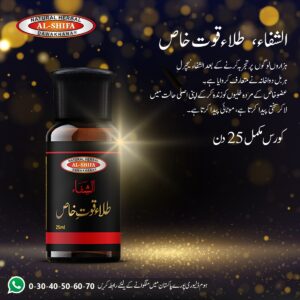
الشفاء طلاء قوت خاص۔
₨ 9,000
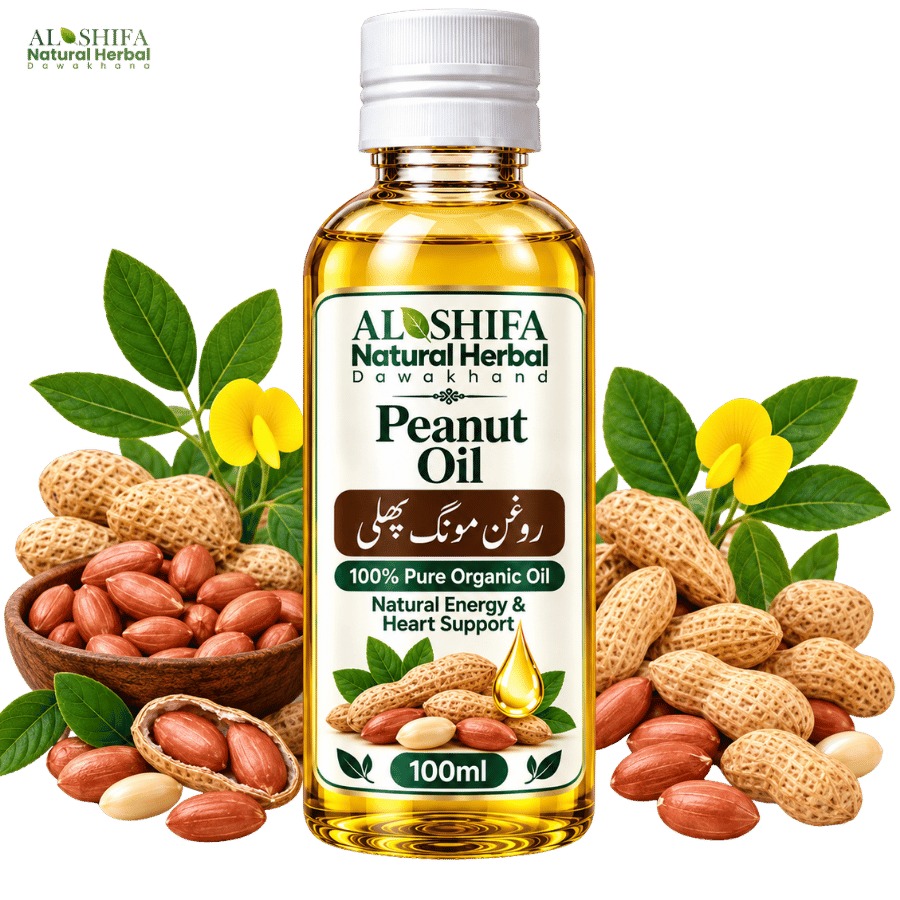
Organic Peanut Oil (Roghan Moongphali) – Healthy Cooking & Natural Skin Care.
Peanut Oil / Groundnut Oil is a natural fixed vegetable oil obtained from the seeds of Arachis hypogaea. Naturally rich in oleic and linoleic acids, it is widely used for skin conditioning, massage, hair and scalp care, soap making and cosmetic formulations.
Al Shifa Peanut Oil is carefully selected with attention to its correct botanical identity, seed quality, characteristic appearance, clean handling, protective packaging and suitability for cosmetic and personal-care applications.
Key Features:
Usage: Apply an appropriate amount to the skin, hair or scalp, use for massage, or incorporate into compatible carrier-oil, soap and cosmetic formulations.
Important Note: Peanut Oil may be cold-pressed, unrefined or refined, and these forms can differ in composition and residual peanut proteins. Because Peanut is a major allergen, people with a known Peanut allergy should use appropriate caution. Cosmetic-grade Peanut Oil should not automatically be considered suitable for consumption.
Organic Peanut Oil (Roghan Moongphali) – Healthy Cooking & Natural Skin Care.
Peanut Oil / Roghan Moong Phali – روغن مونگ پھلی is a natural fixed vegetable oil obtained from the seeds of Arachis hypogaea L., commonly known as Peanut, Groundnut or Moong Phali. It is a widely used plant oil with applications in skin care, massage, hair and scalp care, soap making, cosmetic formulations and, when specifically produced as food-grade oil, culinary use.
Peanut Oil contains a natural mixture of fatty acids, particularly oleic acid and linoleic acid, together with smaller amounts of palmitic, stearic and other fatty acids. Depending on processing, it may also contain naturally occurring tocopherols and phytosterols.
An especially important consideration with Peanut Oil is peanut allergy. Refined and unrefined Peanut Oils can differ significantly in their residual protein content, so cosmetic or topical use should not automatically be considered suitable for a person with a known peanut allergy.
At Al Shifa Natural Herbal Dawakhana, Peanut Oil is selected with attention to its correct botanical identity, seed source, characteristic quality, clean handling, appropriate grade, protective packaging and proper storage.
Peanut Oil is a fixed oil obtained from the seeds or kernels of the Peanut plant.
Its botanical name is:
Arachis hypogaea L.
It belongs to the Fabaceae family.
The oil may be produced through different methods, including:
The production and refining process can significantly affect the oil’s colour, aroma, stability and composition.
Product Name: Peanut Oil / Roghan Moong Phali – روغن مونگ پھلی
English Name: Peanut Oil / Groundnut Oil
Urdu Name: روغن مونگ پھلی / مونگ پھلی کا تیل
Roman Name: Roghan Moong Phali / Moong Phali Oil
Scientific Name: Arachis hypogaea L.
Plant Family: Fabaceae
Plant Part: Seeds / Kernels
Oil Type: Fixed Vegetable Oil / Carrier Oil
Common Names: Peanut Oil / Groundnut Oil / Arachis Oil
Production Method: Cold Pressing, Mechanical Pressing or Refining, Depending on Product Grade
Appearance: Pale Yellow to Golden Yellow, Depending on Processing and Refinement
Aroma: Mild to Characteristically Nutty, Depending on Refining
Primary Applications: Skin Care, Massage, Hair & Scalp Care, Soap Making, Cosmetic Formulations and Culinary Applications When Food Grade
Product Type: Natural Seed-Derived Fixed Vegetable Oil
Peanut is a leguminous plant belonging to the Fabaceae family.
One of its distinctive botanical characteristics is that after flowering, the developing pods mature underground.
The seeds inside these pods are rich in natural oil and are used to produce Peanut Oil.
Despite commonly being called a nut:
Peanut is botanically a legume rather than a true tree nut.
This botanical distinction does not reduce the importance of peanut allergy.
Peanut Oil can be produced using different processing methods.
The method used influences:
For this reason:
Cold-Pressed Peanut Oil ≠ Highly Refined Peanut Oil
They originate from the same plant but can have different characteristics.
Cold-pressed Peanut Oil is produced using mechanical pressure with limited processing.
It generally retains more of the seed’s characteristic:
It may therefore differ considerably from highly refined Peanut Oil.
Refined Peanut Oil undergoes additional processing intended to remove impurities and modify characteristics such as:
Refining can also substantially reduce peanut proteins, which is particularly relevant to allergy discussions.
However, a person with a serious peanut allergy should follow professional medical advice rather than assuming any Peanut Oil is automatically safe.
Peanut Oil naturally contains a mixture of fatty acids.
Major fatty acids commonly include:
Smaller amounts of other fatty acids may also occur.
The exact proportions depend on:
Oleic acid is a monounsaturated fatty acid and commonly represents a substantial proportion of Peanut Oil.
In cosmetic formulations, oleic-acid-containing oils are valued for their:
However:
Peanut Oil ≠ Pure Oleic Acid
It is a complete natural vegetable oil containing multiple fatty acids and minor constituents.
Peanut Oil also contains linoleic acid, an Omega-6 polyunsaturated fatty acid.
Linoleic acid contributes to the overall lipid profile of the oil.
Again:
Peanut Oil ≠ Pure Linoleic Acid
Peanut Oil can contain naturally occurring tocopherols associated with Vitamin E activity.
However:
Peanut Oil ≠ Vitamin E Oil
A natural vegetable oil containing tocopherols should not be confused with concentrated Vitamin E ingredients.
Peanut Oil can also contain naturally occurring plant sterols known as phytosterols.
Their concentration varies according to the oil and processing method.
These compounds form part of the oil’s natural minor-component profile.
Peanut Oil can be incorporated into skin-care and body-care formulations because of its emollient nature.
It may contribute to:
It can be used in suitable:
As a fixed vegetable oil, Peanut Oil can help condition dry-feeling skin.
It creates an oil layer on the skin surface that can reduce excessive moisture loss and improve softness.
However:
Moisturising Dry Skin ≠ Treatment for Skin Disease
Persistent dryness, inflammation, cracking or itching may require appropriate evaluation.
Massage is one of the practical cosmetic applications of Peanut Oil.
Its oil-rich texture provides:
It can be used alone when suitable or combined with compatible carrier oils.
Peanut Oil can function as a carrier oil in selected formulations.
It may be combined with:
However, its allergen identity must be considered, particularly when creating products for general public use.
Peanut Oil may be incorporated into hair-care preparations.
Its fixed-oil composition can contribute to:
It may be included in pre-wash hair oils and herbal oil blends.
Peanut Oil may also be used in suitable scalp-conditioning formulations.
It provides:
However:
Scalp Conditioning ≠ Treatment for Dandruff or Scalp Disease
Peanut Oil is sometimes included in herbal oils promoted for hair growth.
However:
Peanut Oil Should Not Be Presented as a Proven Hair-Regrowth Treatment.
Its primary role in hair care is as a conditioning and lubricating fixed oil.
Peanut Oil can be incorporated into soap and cleansing formulations.
Its fatty-acid composition contributes to the characteristics of the finished soap.
The final performance depends on the complete formulation rather than Peanut Oil alone.
Peanut Oil may be incorporated into:
Formulators should clearly consider peanut-allergy implications when selecting it.
This is one of the most important safety considerations.
Peanut allergy is an immune reaction to specific peanut proteins.
The amount of residual protein in Peanut Oil depends strongly on how the oil is produced.
Unrefined or Cold-Pressed Peanut Oil may retain more peanut-derived protein.
Highly Refined Peanut Oil generally contains much lower levels of peanut protein.
However:
Known Peanut Allergy Requires Individual Caution
People with a history of severe peanut allergy should not experiment with topical or internal Peanut Oil without appropriate professional guidance.
It is incorrect to treat all Peanut Oils as identical in allergy discussions.
Refining can remove substantial amounts of protein.
Unrefined oils may retain more allergenic protein.
Therefore:
Refined Peanut Oil ≠ Unrefined Peanut Oil
The exact product grade matters.
Applying Peanut Oil to the skin is not the same exposure route as eating peanuts.
However, topical exposure does not automatically make an allergen irrelevant.
People with known Peanut allergy, particularly a history of serious reactions, should check the product and obtain appropriate guidance before use.
Peanut Oil and Groundnut Oil generally refer to the same botanical oil.
Both are associated with:
Arachis hypogaea
The terminology differs by region and market.
“Arachis Oil” is another name derived from the botanical genus Arachis.
Therefore:
Peanut Oil = Groundnut Oil = Arachis Oil, when they refer to oil obtained from Arachis hypogaea seeds.
Processing grade may still differ.
Peanut Oil is primarily a fixed vegetable oil.
It does not behave like a conventional volatile essential oil.
Therefore:
Peanut Oil ≠ Conventional Essential Oil
Peanut Extract can refer to a preparation containing selected compounds extracted from peanuts.
Peanut Oil is the lipid-rich fixed oil fraction.
Therefore:
Peanut Extract ≠ Peanut Oil
Peanut and Almond are different botanical sources.
Peanut Oil: Arachis hypogaea
Sweet Almond Oil: Prunus dulcis
Therefore:
Peanut Oil ≠ Sweet Almond Oil
Peanut is a legume, whereas Almond belongs to the Rosaceae family.
Both can cause allergic reactions in susceptible individuals, but their allergens are not botanically identical.
Sesame Oil is obtained from Sesamum indicum seeds.
Peanut Oil is obtained from Arachis hypogaea seeds.
Therefore:
Peanut Oil ≠ Sesame Oil
Both are fixed seed oils but have different botanical identities and natural compositions.
Sunflower Oil comes from Helianthus annuus seeds.
Peanut Oil comes from Arachis hypogaea.
Therefore:
Peanut Oil ≠ Sunflower Oil
Their fatty-acid profiles and allergen considerations differ.
Mustard Oil is obtained from seeds of selected Brassica-related plants.
Peanut Oil is obtained from Arachis hypogaea.
Therefore:
Peanut Oil ≠ Mustard Oil
Their aroma, composition and traditional applications differ considerably.
White Mineral Oil is a highly refined petroleum-derived hydrocarbon oil.
Peanut Oil is plant-derived and consists primarily of triglycerides.
Therefore:
Peanut Oil ≠ Mineral Oil
Peanut Oil can naturally contain tocopherols, but this does not make it Vitamin E Oil.
Therefore:
Peanut Oil ≠ Vitamin E Oil
Some Peanut varieties are bred to produce oils with a higher proportion of oleic acid.
High-oleic Peanut Oil can have a different fatty-acid balance and oxidative stability compared with conventional Peanut Oil.
Therefore:
High-Oleic Peanut Oil ≠ Standard Peanut Oil in Exact Fatty-Acid Composition
Peanut Oil contains unsaturated fatty acids that can gradually oxidise.
Oxidation can be accelerated by:
Proper storage is therefore important for maintaining freshness.
A significant change in:
may indicate deterioration.
Oil showing clear signs of rancidity should not be used.
Peanut Oil is widely used as a cooking oil when produced and supplied as food grade.
However, Al Shifa product descriptions should distinguish between food and cosmetic applications.
Therefore:
Cosmetic-Grade Peanut Oil ≠ Automatically Food-Grade Peanut Oil
Only consume an oil specifically produced and labelled for food use.
Refined food-grade Peanut Oil is widely used in cooking and frying because of its practical cooking characteristics.
However, this does not mean that every Peanut Oil sold for herbal, massage or cosmetic use is suitable for cooking.
The labelled grade and intended application must be followed.
Peanuts and Peanut Oil contain naturally occurring minor compounds that have been investigated in relation to antioxidant activity.
However:
Antioxidant Activity ≠ Treatment or Prevention of Disease
Food, cosmetic and laboratory contexts should not be mixed.
Dietary patterns involving unsaturated vegetable oils have been widely studied in nutrition.
However:
Peanut Oil Should Not Be Presented as a Treatment for Heart Disease
The effects of dietary fats depend on the overall diet, amount consumed, replacement nutrients and individual health circumstances.
Topical Peanut Oil has no equivalent nutritional effect.
Peanut Oil can act as an emollient and skin-conditioning oil.
However:
Peanut Oil ≠ Treatment for Wounds, Burns, Eczema or Psoriasis
Damaged or diseased skin requires appropriate care.
Peanut Oil may suit some cosmetic formulations, but individual skin response varies.
Therefore:
Peanut Oil ≠ Acne Treatment
People with acne-prone skin should assess the complete formulation and individual tolerance.
Before wider topical application, test a small amount on a limited area of skin.
Observe for:
Discontinue use if a significant reaction develops.
People with known Peanut allergy require greater caution than an ordinary cosmetic patch test can provide.
Normal external cosmetic use of an appropriately produced Peanut Oil is different from medicinal use.
During pregnancy and breastfeeding, use according to the product’s intended purpose.
People with known Peanut allergy should continue to observe appropriate allergy precautions.
Use only an appropriately formulated product suitable for the child’s age.
Because Peanut is a major food allergen, extra care is appropriate when a child has:
Keep the product securely out of reach of young children.
At Al Shifa Natural Herbal Dawakhana, Peanut Oil is selected with attention to:
Botanical Identity – Genuine Arachis hypogaea seed source.
Seed Quality – Carefully selected Peanut kernels.
Oil-Type Identity – Genuine fixed vegetable oil.
Processing Awareness – Recognition of differences between cold-pressed, unrefined and refined oil.
Fatty-Acid Profile – Naturally containing oleic, linoleic and other fatty acids.
Skin-Care Applications – Suitable for selected cosmetic and body-care formulations.
Hair-Care Applications – Suitable for conditioning oils and botanical blends.
Massage Applications – Useful as an emollient massage oil when appropriate.
Allergen Awareness – Clear recognition of Peanut allergy considerations.
Clean Handling – Carefully handled during packing.
Protective Packaging – Helps preserve freshness and quality.
Responsible Information – No exaggerated disease-treatment or hair-growth claims.
Proper Storage – Protected from unnecessary heat, light and contamination.
Al Shifa Natural Herbal Dawakhana, established in 1999, supplies natural oils, herbs and specialised botanical materials throughout Pakistan.
Our focus for Peanut Oil includes:
For Skin Care: Apply an appropriate amount to the skin or incorporate into compatible body oils, creams, lotions and balms.
For Massage: Use a suitable amount for massage when Peanut Oil is appropriate for the individual and there is no known Peanut allergy concern.
For Hair Care: Apply a suitable amount to the hair as a pre-wash conditioning oil or combine with compatible botanical oils.
For Scalp Care: Massage gently into the scalp as part of a regular conditioning routine.
For Cosmetic Formulation: Incorporate according to the requirements of the finished formulation while clearly considering Peanut allergen labelling.
For Culinary Use: Use only when the specific Peanut Oil is produced, packaged and labelled as food grade.
Peanut Oil / Roghan Moong Phali – روغن مونگ پھلی is a natural fixed vegetable oil obtained from the seeds of Arachis hypogaea. Its characteristics vary according to whether it is cold-pressed, unrefined, refined or otherwise processed. Peanut allergy is an important safety consideration, particularly with unrefined oils that may retain greater amounts of Peanut protein.
Important distinctions include:
Store Peanut Oil in a cool, clean and dry place.
For best quality:
Peanut Oil / Roghan Moong Phali – روغن مونگ پھلی is a natural fixed vegetable oil obtained from the seeds of Arachis hypogaea L., commonly known as Peanut or Groundnut.
It is naturally rich in oleic and linoleic acids and is widely used in skin-care products, massage oils, hair and scalp formulations, soaps and specialised cosmetics. Food-grade Peanut Oil also has established culinary applications, although cosmetic and food grades should not automatically be treated as interchangeable.
An important consideration when selecting Peanut Oil is whether it is cold-pressed, unrefined or refined, particularly because processing can affect colour, aroma, composition and residual Peanut proteins.
Customers searching for Peanut Oil, Groundnut Oil, Arachis Oil, Roghan Moong Phali, Moong Phali Oil, Arachis hypogaea Oil, Peanut Carrier Oil, Peanut Oil for Skin, Peanut Oil for Massage, Peanut Oil for Hair, Peanut Oil for Scalp, Groundnut Oil for Hair, Peanut Oil Pakistan, Groundnut Oil Pakistan, Peanut Oil Lahore, Peanut Oil price in Pakistan, Roghan Moong Phali price, buy Peanut Oil Pakistan or Peanut Oil online Pakistan can choose Al Shifa Natural Herbal Dawakhana for carefully selected botanical quality.
Since 1999, Al Shifa Natural Herbal Dawakhana has focused on supplying natural oils and botanical materials with attention to correct identity, quality selection, clean handling, responsible product information, protective packaging and proper storage.
Product Name: Peanut Oil / Roghan Moong Phali – روغن مونگ پھلی
English Name: Peanut Oil / Groundnut Oil
Urdu Name: روغن مونگ پھلی / مونگ پھلی کا تیل
Roman Name: Roghan Moong Phali / Moong Phali Oil
Scientific Name: Arachis hypogaea L.
Plant Family: Fabaceae
Plant Part: Seeds / Kernels
Oil Type: Fixed Vegetable Oil / Carrier Oil
Common Names: Peanut Oil / Groundnut Oil / Arachis Oil
Production Method: Cold Pressing, Mechanical Pressing or Refining, Depending on Product Grade
Appearance: Pale Yellow to Golden Yellow, Depending on Processing and Refinement
Aroma: Mild to Characteristically Nutty, Depending on Refining
Primary Applications: Skin Care, Massage, Hair & Scalp Care, Soap Making, Cosmetic Formulations and Culinary Applications When Food Grade
Product Type: Natural Seed-Derived Fixed Vegetable Oil
Important Note: Peanut Oil is a natural fixed vegetable oil, but its processing method matters. Cold-pressed or unrefined oils can differ significantly from highly refined Peanut Oil, particularly in aroma, minor constituents and residual Peanut proteins. Because Peanut is a major allergen, people with known Peanut allergy should not assume that a Peanut Oil is suitable for topical or internal use without considering its exact grade and appropriate professional guidance.
روغن مونگ پھلی مونگ پھلی کے دانوں سے حاصل ہونے والا قدرتی روغن ہے۔ مونگ پھلی غذائیت سے بھرپور بیج ہے جس میں قدرتی چکنائی کی اچھی مقدار پائی جاتی ہے۔ اسی چکنائی کو نکال کر روغن مونگ پھلی حاصل کیا جاتا ہے۔
اس روغن میں اولیک تیزاب، لینولیک تیزاب، پالمیٹک تیزاب، سٹیئرک تیزاب، وٹامن ای اور قدرتی سٹیرولز پائے جاتے ہیں۔
روغن مونگ پھلی کھانے، جسمانی مالش، خشک جلد، بالوں اور سر کی جلد کی روغنی دیکھ بھال میں استعمال کیا جاتا ہے۔ خوراک کے لیے صرف وہ روغن استعمال کریں جس پر کھانے کے قابل ہونے کی واضح ہدایت موجود ہو۔
اردو: مونگ پھلی، مونگ پھلی کے دانے، روغن مونگ پھلی، مونگ پھلی کا تیل
پنجابی: مونگ پھلی، مونگ پھلی دا تیل
ہندی: مونگ پھلی، مونگ پھلی کا تیل
فارسی: بادام زمینی، روغن بادام زمینی
عربی: فول سودانی، زیت الفول السودانی
انگریزی نام: پینٹ آئل، گراؤنڈ نٹ آئل، آراچس آئل
سائنسی نام: آراچس ہائپوگیا
خاندان: فیبیسی
استعمال ہونے والا حصہ: مونگ پھلی کا دانہ
مونگ پھلی ایک چھوٹا پودا ہے جس کی خاص بات یہ ہے کہ اس کے پھول زمین کے اوپر بنتے ہیں لیکن پھلیاں زمین کے اندر تیار ہوتی ہیں۔
ہر پھلی کے اندر عموما ایک سے کئی دانے ہوتے ہیں۔
یہ دانے سفید سے ہلکے کریمی ہوتے ہیں اور ان کے اوپر سرخی مائل یا بھوری باریک چھال ہوتی ہے۔
مونگ پھلی کے دانوں میں قدرتی چکنائی کی اچھی مقدار ہوتی ہے، اسی لیے ان سے روغن آسانی سے حاصل کیا جاتا ہے۔
اچھی مونگ پھلی کے دانے:
روغن حاصل کرنے کے لیے صاف، تازہ اور اچھی حالت والے دانوں کو اہمیت دی جاتی ہے۔
مونگ پھلی کے صاف دانوں سے دباؤ کے ذریعے قدرتی چکنائی نکالی جاتی ہے۔
اس کے بعد روغن کو صاف کیا جاتا ہے تاکہ غیر ضروری ذرات الگ ہو جائیں۔
ٹھنڈے دباؤ سے حاصل روغن میں مونگ پھلی کی اپنی خاص بو اور ذائقہ زیادہ نمایاں رہتا ہے۔
زیادہ صاف کیے گئے روغن کی رنگت، بو اور ذائقہ نسبتاً ہلکا ہوتا ہے۔
پاکستانی اور برصغیر کی حکیمی کتب مفردات میں مونگ پھلی کو گرم و تر مزاج کے ساتھ بیان کیا جاتا ہے۔
مونگ پھلی غذائیت اور قدرتی چکنائی سے بھرپور غذا ہے۔
اس سے حاصل روغن جسمانی مالش، خشک جلد اور بالوں کی روغنی دیکھ بھال میں بھی استعمال کیا جاتا ہے۔
مونگ پھلی غذائیت سے بھرپور بیج ہے۔
اس میں چکنائی، لحمیات، وٹامن ای اور دوسرے غذائی اجزا پائے جاتے ہیں۔
اس کا روغن جسمانی مالش، جلد اور بالوں کی دیکھ بھال کے لیے استعمال کیا جاتا ہے۔
کھانے کے قابل روغن کو خوراک میں بھی استعمال کیا جاتا ہے۔
روغن مونگ پھلی کے اہم استعمال یہ ہیں:
روغن مونگ پھلی جسمانی مالش کے لیے استعمال کیا جاتا ہے۔
اس کی روغنی ساخت جلد پر آسانی سے پھیلتی ہے اور مالش کے دوران جلد کو نرم رکھنے کے لیے فائدہ مند ہے۔
اسے اکیلا یا دوسرے مالش والے روغنوں کے ساتھ ملا کر استعمال کیا جاتا ہے۔
جسمانی محنت یا ورزش کے بعد روغن مونگ پھلی سے ہاتھوں، بازوؤں، ٹانگوں، کندھوں اور کمر کی مالش کی جاتی ہے۔
ہلکی مالش جسم کو آرام دہ احساس دیتی ہے اور خشک جلد کو روغنی نرمی فراہم کرتی ہے۔
روغن مونگ پھلی خشک اور کھردری جلد کے لیے استعمال کیا جاتا ہے۔
اس میں موجود قدرتی چکنائی جلد کو نرم اور ملائم رکھنے کے لیے فائدہ مند ہے۔
اسے نہانے کے بعد جسمانی جلد پر کم مقدار میں لگایا جاتا ہے۔
خشک اور کھردرے ہاتھوں پر روغن مونگ پھلی کی تھوڑی مقدار لگا کر ہلکی مالش کی جاتی ہے۔
رات کے وقت استعمال کرنے سے جلد پر روغنی نرمی برقرار رہتی ہے۔
خشک پاؤں اور کھردری ایڑیوں پر روغن مونگ پھلی لگایا جاتا ہے۔
اسے ناریل، بادام یا دوسرے بنیادی روغن کے ساتھ ملا کر بھی استعمال کیا جاتا ہے۔
کہنیوں اور گھٹنوں کی خشک اور کھردری جلد پر روغن مونگ پھلی کی تھوڑی مقدار لگائی جاتی ہے۔
اس کے قدرتی روغنی اجزا جلد کو نرم رکھنے کے لیے فائدہ مند ہیں۔
روغن مونگ پھلی بالوں کی روغنی دیکھ بھال میں استعمال کیا جاتا ہے۔
اسے بالوں کی جڑوں، لمبائی اور خشک سروں پر کم مقدار میں لگایا جاتا ہے۔
اسے ناریل، بادام، زیتون یا دوسرے بالوں کے روغن کے ساتھ ملا کر بھی استعمال کیا جاتا ہے۔
خشک اور کھردرے بالوں کے لیے روغن مونگ پھلی روغنی نرمی فراہم کرتا ہے۔
اسے بالوں کی لمبائی پر کم مقدار میں لگایا جاتا ہے۔
یہ بالوں کو نرم، ہموار اور چمک دار دکھانے کے لیے فائدہ مند ہے۔
بالوں کے خشک سروں پر روغن مونگ پھلی کے چند قطرے لگائے جاتے ہیں۔
اسے بادام، جوجوبا یا ناریل کے روغن کے ساتھ ملا کر بھی استعمال کیا جاتا ہے۔
روغن مونگ پھلی سر کی خشک جلد کی روغنی دیکھ بھال میں استعمال کیا جاتا ہے۔
اس سے سر کی جلد پر ہلکے ہاتھ سے مالش کی جاتی ہے۔
سر کی جلد کے امراض میں طبی استعمال معالج سے پوچھ کر کریں۔
روغن مونگ پھلی داڑھی اور اس کے نیچے کی خشک جلد کے لیے بھی استعمال کیا جاتا ہے۔
اسے کم مقدار میں داڑھی پر لگا کر ہلکے ہاتھ سے پھیلایا جاتا ہے۔
مونگ پھلی کی الرجی والے افراد اسے داڑھی یا جلد پر استعمال نہ کریں۔
روغن مونگ پھلی میں اہم قدرتی اجزا یہ ہیں:
یہ اجزا روغن مونگ پھلی کی غذائی اور روغنی ساخت کا اہم حصہ ہیں۔
اولیک تیزاب روغن مونگ پھلی کے اہم روغنی اجزا میں شامل ہے۔
یہ زیتون اور کئی دوسرے قدرتی روغنوں میں بھی پایا جاتا ہے۔
یہ جلد اور بالوں کی روغنی دیکھ بھال کے لیے فائدہ مند چکنائی ہے۔
لینولیک تیزاب روغن مونگ پھلی میں پایا جانے والا اہم قدرتی روغنی تیزاب ہے۔
یہ جلد اور بالوں کے لیے استعمال ہونے والے کئی قدرتی روغنوں میں پایا جاتا ہے۔
پالمیٹک تیزاب مونگ پھلی کے روغن کی قدرتی چکنائی میں شامل ہے۔
یہ روغن کی قدرتی ساخت کا حصہ ہے۔
سٹیئرک تیزاب بھی مونگ پھلی کے روغن میں کم مقدار میں پایا جاتا ہے۔
یہ کئی قدرتی چکنائیوں میں پایا جانے والا روغنی جز ہے۔
روغن مونگ پھلی میں قدرتی وٹامن ای پایا جاتا ہے۔
وٹامن ای جلد، بالوں اور غذائی روغنوں میں اہم جز سمجھا جاتا ہے۔
یہ مونگ پھلی کے روغن کی قدرتی غذائی خوبیوں کا حصہ ہے۔
روغن مونگ پھلی میں پودے سے حاصل قدرتی سٹیرولز پائے جاتے ہیں۔
یہ مونگ پھلی کے دانوں کی قدرتی چکنائی کا حصہ ہیں۔
کھانے کے قابل روغن مونگ پھلی کو مختلف کھانوں میں استعمال کیا جاتا ہے۔
اس کا ذائقہ ہلکا سے قدرے مونگ پھلی جیسا ہوتا ہے۔
تلنے اور مختلف کھانے پکانے میں بھی کھانے کے درجے کا روغن استعمال کیا جاتا ہے۔
خوراک کے لیے صرف وہ روغن استعمال کریں جس پر کھانے کے قابل ہونے کی واضح ہدایت موجود ہو۔
ہر روغن مونگ پھلی کو خوراک میں استعمال نہیں کیا جاتا۔
جلد، بالوں، مالش یا دوسری بیرونی ادویات کے لیے تیار روغن کو کھانے میں استعمال نہ کریں۔
خوراک کے لیے واضح طور پر کھانے کے درجے کا روغن منتخب کریں۔
ٹھنڈے دباؤ سے حاصل روغن مونگ پھلی میں مونگ پھلی کی قدرتی بو، ذائقہ اور رنگت زیادہ نمایاں رہتی ہے۔
اس کی رنگت عموما ہلکی زرد سے سنہری ہوتی ہے۔
اسے جلد، بالوں اور خوراک میں اس کے درجے کے مطابق استعمال کیا جاتا ہے۔
زیادہ صاف کیے گئے روغن مونگ پھلی کی بو اور ذائقہ نسبتاً ہلکا ہوتا ہے۔
کھانے کے لیے تیار کئی اقسام اسی شکل میں دستیاب ہوتی ہیں۔
بوتل پر دی گئی استعمال کی ہدایت ضرور دیکھیں۔
اچھے روغن مونگ پھلی کی رنگت عموما ہلکی زرد سے سنہری ہوتی ہے۔
زیادہ صاف کیے گئے روغن کی رنگت بہت ہلکی بھی ہو سکتی ہے۔
غیر ضروری مصنوعی رنگ روغن کے معیار کی پہچان نہیں ہے۔
ٹھنڈے دباؤ سے حاصل روغن میں مونگ پھلی کی اپنی ہلکی خاص بو محسوس ہوتی ہے۔
زیادہ صاف کیے گئے روغن میں یہ بو بہت ہلکی رہتی ہے۔
باسی، تیز خراب یا سڑی ہوئی بو والا روغن استعمال نہ کریں۔
روغن مونگ پھلی کی تھوڑی مقدار جلد پر لگا کر ہلکے ہاتھ سے مالش کریں۔
پہلی بار استعمال سے پہلے جلد کے چھوٹے حصے پر تھوڑی مقدار آزمائیں۔
مونگ پھلی کی الرجی والے افراد اسے جلد پر استعمال نہ کریں۔
روغن مونگ پھلی کی تھوڑی مقدار سر کی جلد اور بالوں پر لگائیں۔
انگلیوں کے پوروں سے ہلکی مالش کریں۔
اسے بالوں کی لمبائی اور خشک سروں پر بھی لگایا جاتا ہے۔
بعد میں بال اپنے معمول کے مطابق دھو لیں۔
مونگ پھلی کی الرجی ایک اہم غذائی الرجی ہے۔
مونگ پھلی سے شدید الرجی رکھنے والے افراد روغن مونگ پھلی کو کھانے، جلد، بالوں یا جسمانی مالش کے لیے اپنی طرف سے استعمال نہ کریں۔
خاص طور پر کم صاف یا ٹھنڈے دباؤ سے حاصل روغن میں مونگ پھلی کے پروٹین کے معمولی اجزا باقی رہ سکتے ہیں۔
مونگ پھلی کی الرجی کی بیماری میں استعمال سے پہلے معالج سے چیک کروائیں۔
حساس جلد پر پہلی بار بہت تھوڑی مقدار آزمائیں۔
خارش، سرخی یا جلن پیدا ہو تو استعمال بند کریں۔
جلدی امراض میں طبی استعمال معالج سے پوچھ کر کریں۔
صرف کھانے کے درجے کا روغن مونگ پھلی خوراک میں استعمال کریں۔
بیرونی استعمال یا جسمانی مالش کے لیے تیار روغن کو نہ پئیں۔
کسی بیماری کے لیے اندرونی طبی استعمال معالج سے پوچھ کر کریں۔
خوراک میں کھانے کے درجے کا روغن اپنی معمول کی غذا کے مطابق استعمال کیا جاتا ہے۔
مونگ پھلی کی الرجی موجود ہو تو استعمال نہ کریں۔
کسی بیماری کے لیے اندرونی طبی استعمال معالج سے پوچھ کر کریں۔
کھانے کے درجے کا روغن خوراک میں استعمال کیا جاتا ہے۔
مونگ پھلی کی الرجی موجود ہو تو استعمال نہ کریں۔
کسی بیماری کے لیے طبی استعمال معالج سے پوچھ کر کریں۔
بچوں میں مونگ پھلی کی الرجی کا خاص خیال رکھیں۔
بچے کو مونگ پھلی کی الرجی ہو تو روغن مونگ پھلی کھانے یا جلد پر لگانے کے لیے استعمال نہ کریں۔
بچوں میں کسی بیماری کے لیے طبی استعمال معالج سے پوچھ کر کریں۔
اچھی مونگ پھلی: صاف، خشک، مکمل اور اچھی حالت والے دانوں سے حاصل روغن کو اہمیت دی جاتی ہے۔
قدرتی رنگت: ہلکی زرد سے سنہری قدرتی رنگت دیکھی جاتی ہے۔
قدرتی بو: روغن کی قسم کے مطابق مونگ پھلی کی اپنی ہلکی بو ہو سکتی ہے۔
صاف روغن: پانی، گرد اور غیر ضروری ذرات سے پاک ہونا چاہیے۔
تازگی: باسی اور خراب بو نہیں ہونی چاہیے۔
واضح درجہ: خوراک اور بیرونی استعمال والے روغن کی پہچان واضح ہونی چاہیے۔
غیر ضروری ملاوٹ سے پاک: مصنوعی رنگ، مصنوعی خوشبو اور کم معیار کے دوسرے روغن کی ملاوٹ سے پاک ہونا چاہیے۔
روغن مونگ پھلی مونگ پھلی کے دانوں سے حاصل ہونے والا قدرتی روغن ہے۔
اس میں اولیک تیزاب، لینولیک تیزاب، پالمیٹک تیزاب، سٹیئرک تیزاب، وٹامن ای اور قدرتی سٹیرولز پائے جاتے ہیں۔
اس کا بیرونی استعمال جسمانی مالش، خشک جلد، بالوں، سر کی جلد، ہاتھوں، پاؤں اور ایڑیوں کی روغنی دیکھ بھال میں کیا جاتا ہے۔
خوراک کے لیے صرف وہ روغن استعمال کریں جس پر کھانے کے قابل ہونے کی واضح ہدایت موجود ہو۔
مونگ پھلی کی الرجی والے افراد روغن مونگ پھلی کے استعمال میں خاص احتیاط رکھیں اور الرجی کی بیماری میں معالج سے چیک کروائیں۔
الشفاء نیچرل ہربل دواخانہ میں روغن مونگ پھلی کے لیے درج ذیل باتوں کو اہمیت دی جاتی ہے:
اچھی مونگ پھلی: صاف، خشک، مکمل اور اچھی حالت والے دانوں کو اہمیت دی جاتی ہے۔
قدرتی رنگت: روغن کی ہلکی زرد سے سنہری قدرتی رنگت کو دیکھا جاتا ہے۔
قدرتی بو: مونگ پھلی کی اپنی صاف اور ہلکی بو کو اہمیت دی جاتی ہے۔
صاف روغن: پانی، گرد اور غیر ضروری ذرات سے پاک روغن کو اہمیت دی جاتی ہے۔
تازگی: باسی یا خراب بو والے روغن سے بچا جاتا ہے۔
واضح درجہ: خوراک اور بیرونی استعمال کے روغن کی الگ پہچان کو اہمیت دی جاتی ہے۔
غیر ضروری ملاوٹ سے پاک: مصنوعی رنگ، غیر ضروری مصنوعی خوشبو اور کم معیار کے دوسرے روغن کی ملاوٹ سے پاک ہونے کو اہمیت دی جاتی ہے۔
الشفاء نیچرل ہربل دواخانہ سنہ ۱۹۹۹ سے قدرتی جڑی بوٹیوں، بیجوں، گری دار غذاؤں اور ان سے حاصل ہونے والے روغنوں کی سپلائی کر رہا ہے۔
ہم روغن مونگ پھلی میں اچھے دانے، درست شناخت، صاف حالت، قدرتی رنگت، قدرتی بو، تازگی اور غیر ضروری ملاوٹ سے پاک ہونے کو اہمیت دیتے ہیں۔
اچھے روغن مونگ پھلی کی پہچان اچھی مونگ پھلی، قدرتی رنگت، صاف حالت، تازگی اور اچھی پیکنگ سے کی جاتی ہے۔
روغن مونگ پھلی کو ٹھنڈی، خشک اور روشنی سے محفوظ جگہ پر کسی جار میں اچھی طرح پیک کر کے رکھیں۔
اسے تیز دھوپ، پانی اور زیادہ گرمی سے بچائیں۔
استعمال کے بعد ڈھکن اچھی طرح بند کریں۔
اسے بچوں کی پہنچ سے دور رکھیں۔
مونگ پھلی کی الرجی والے افراد روغن مونگ پھلی کے استعمال میں خاص احتیاط رکھیں۔
شدید مونگ پھلی الرجی کی بیماری والے افراد اسے کھانے یا جلد اور بالوں پر لگانے کے لیے اپنی طرف سے استعمال نہ کریں۔
پہلی بار جلد پر استعمال سے پہلے تھوڑی مقدار آزمائیں۔
آنکھوں اور کھلے زخموں پر نہ لگائیں۔
خارش، سرخی یا جلن پیدا ہو تو استعمال بند کریں۔
جلدی امراض میں طبی استعمال معالج سے پوچھ کر کریں۔
خوراک کے لیے صرف کھانے کے درجے کا روغن استعمال کریں۔
روغن مونگ پھلی مونگ پھلی کے دانوں سے حاصل ہونے والا قدرتی روغن ہے۔
پاکستانی اور برصغیر کی حکیمی کتب مفردات میں مونگ پھلی کو گرم و تر مزاج کے ساتھ بیان کیا جاتا ہے۔
اس روغن میں اولیک تیزاب، لینولیک تیزاب، پالمیٹک تیزاب، سٹیئرک تیزاب، وٹامن ای اور قدرتی سٹیرولز پائے جاتے ہیں۔
اس کا استعمال جسمانی مالش، خشک جلد، ہاتھوں، پاؤں، ایڑیوں، بالوں اور سر کی جلد کی روغنی دیکھ بھال کے لیے کیا جاتا ہے۔
کھانے کے درجے کا روغن مونگ پھلی خوراک میں بھی استعمال کیا جاتا ہے۔
مونگ پھلی کی الرجی اس روغن کے استعمال میں سب سے اہم احتیاط ہے۔
اچھے روغن مونگ پھلی کی پہچان اچھی مونگ پھلی، قدرتی رنگت، صاف حالت، تازگی اور غیر ضروری ملاوٹ سے پاک ہونے سے کی جاتی ہے۔