روغن سرسوں
Price range: ₨ 200 through ₨ 1,500
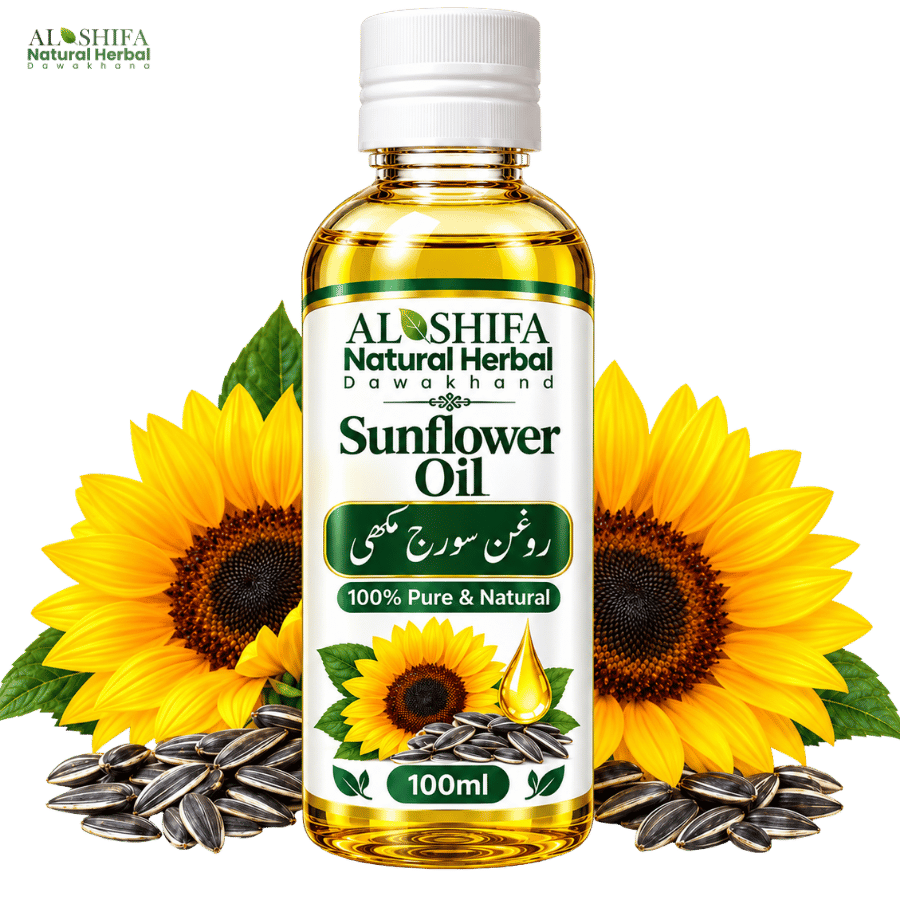
Sunflower Oil is a natural fixed carrier oil obtained from the seeds of Helianthus annuus. Known for its smooth, light-to-medium texture and naturally occurring fatty acids, it is widely used in skin care, hair care, scalp care, massage, body oils, soaps and cosmetic formulations.
Al Shifa Sunflower Oil is carefully selected with attention to its correct botanical identity, characteristic oil quality, clean handling, protective packaging and proper storage.
Key Features:
Usage: Apply an appropriate amount for skin, hair, scalp or massage use, or use as a carrier oil in properly diluted essential-oil blends, soaps and cosmetic formulations.
Important Note: Sunflower Oil is a fixed carrier oil, not an essential oil. Its fatty-acid profile can vary between conventional, high-linoleic and high-oleic varieties. People with known Sunflower seed allergy should use appropriate caution. Oil supplied for cosmetic or external use should not automatically be considered suitable for internal use.
Sunflower Oil is a natural plant-derived fixed oil obtained from the seeds of the Sunflower plant, Helianthus annuus L. It is valued for its light-to-medium texture, emollient properties and naturally occurring fatty-acid profile, making it useful in skin care, hair care, scalp care, massage, soap, carrier-oil blends and cosmetic formulations.
Sunflower Oil is naturally composed mainly of triglycerides containing fatty acids such as linoleic acid and oleic acid, although their proportions can vary considerably according to the Sunflower variety and oil type. It can also naturally contain tocopherols associated with the Vitamin E family.
Unlike essential oils, Sunflower Oil is a non-volatile fixed oil and can function as a carrier oil for appropriately diluted essential oils.
At Al Shifa Natural Herbal Dawakhana, Sunflower Oil is selected with attention to its botanical identity, seed source, characteristic oil quality, clean handling, protective packaging and proper storage.
Sunflower Oil is extracted from the seeds of the Sunflower plant.
Its botanical source is:
Helianthus annuus L.
The plant belongs to the Asteraceae family and is widely recognised for its large yellow flower heads and oil-rich seeds.
After harvesting, the seeds are cleaned and processed to separate their natural oil. Depending on the intended grade, the extracted oil may be filtered, refined or otherwise processed before packaging.
Product Name: Sunflower Oil / Roghan Suraj Mukhi – روغنِ سورج مکھی
English Name: Sunflower Oil
Urdu Name: روغنِ سورج مکھی / سورج مکھی کا تیل
Roman Name: Roghan Suraj Mukhi / Sunflower Oil
Scientific Name: Helianthus annuus L.
Plant Family: Asteraceae
Plant Part: Seeds
Oil Type: Fixed Oil / Carrier Oil
Common Production Method: Mechanical Pressing or Extraction of Sunflower Seeds, with Further Processing Depending on Product Grade
Appearance: Pale Yellow to Golden-Yellow Oily Liquid, Depending on Processing
Aroma: Mild to Nearly Neutral, Depending on Processing and Refinement
Texture: Smooth, Light to Medium & Emollient
Primary Applications: Skin Care, Hair Care, Scalp Care, Massage, Carrier-Oil Blends, Soap, Cosmetics & Personal-Care Formulations
Product Type: Natural Plant-Derived Fixed / Carrier Oil
Sunflower Oil is produced from oil-rich Sunflower seeds.
Production commonly involves:
The extraction and refining process can influence the final oil’s colour, aroma, stability and minor natural constituents.
Sunflower Oil commonly has:
However, visual appearance alone cannot establish purity or grade.
Accurate product identity depends on the source, processing and quality specifications.
Sunflower Oil can function as a carrier oil for suitable essential oils and aromatic ingredients.
It may be incorporated into:
The essential oil should always be used at a concentration suitable for the intended application.
Sunflower Oil is widely used as an emollient ingredient in cosmetic skin-care products.
It can be incorporated into:
Its smooth texture can help improve the softness and conditioned feel of the skin.
Sunflower Oil may be particularly useful in formulations intended for dry or rough-feeling skin.
As an emollient, it can contribute to:
However:
Skin Conditioning ≠ Treatment for Skin Disease
Sunflower Oil should not be presented as a cure for eczema, psoriasis, dermatitis or other skin diseases.
Sunflower Oil can be incorporated into facial oils, cleansing oils, creams and moisturising formulations.
Its suitability depends on:
People with acne-prone or highly reactive skin should introduce any new facial oil carefully.
Sunflower Oil can be used in cosmetic hair-care products such as:
Its emollient properties can help improve the cosmetic feel, lubrication and manageability of dry or rough hair.
Sunflower Oil may be incorporated into scalp oils and pre-wash hair formulations.
It can function as:
However:
Scalp Conditioning ≠ Treatment for Scalp Disease
Persistent dandruff, fungal infection, psoriasis, dermatitis or unexplained scalp inflammation requires appropriate evaluation.
Sunflower Oil may help condition the hair and scalp, but conditioning should not be confused with stimulation of new hair growth.
Therefore:
Sunflower Oil ≠ Proven Hair-Regrowth Treatment
It should not be promoted as a treatment for alopecia or other causes of significant hair loss.
Its smooth spreading properties make Sunflower Oil useful in massage-oil formulations.
It may be:
The final formulation should be adjusted according to the desired texture and intended application.
Sunflower Oil naturally contains a mixture of fatty acids primarily present as triglycerides.
Important fatty acids can include:
The exact proportions vary according to the Sunflower variety, growing conditions and oil type.
Many conventional Sunflower Oils are naturally rich in linoleic acid, an omega-6 polyunsaturated fatty acid.
Linoleic acid contributes to the characteristic fatty-acid profile and cosmetic properties of the oil.
However:
Sunflower Oil ≠ Pure Linoleic Acid
Sunflower Oil is a complete fixed oil containing multiple fatty acids and minor oil-soluble components.
Oleic acid is another important fatty acid found in Sunflower Oil.
Its proportion can differ significantly between different Sunflower varieties.
Some specially selected Sunflower varieties produce oils with considerably higher oleic-acid levels.
Therefore, not every Sunflower Oil has the same fatty-acid profile.
Sunflower Oil is available in different compositional types.
High-Linoleic Sunflower Oil contains a comparatively higher proportion of linoleic acid.
High-Oleic Sunflower Oil contains a comparatively higher proportion of oleic acid.
These are both Sunflower Oils, but their fatty-acid profiles and oxidative characteristics differ.
Therefore:
All Sunflower Oils ≠ Identical Fatty-Acid Composition
The exact type should only be claimed when supported by the product specification.
Sunflower Oil naturally contains tocopherols belonging to the Vitamin E family.
These compounds contribute antioxidant activity within the oil.
However:
Sunflower Oil ≠ Pure Vitamin E Oil
Naturally occurring Vitamin E in a complete vegetable oil is different from a concentrated Vitamin E ingredient or Vitamin E Oil formulation.
Whole Sunflower seeds contain:
Sunflower Oil primarily represents the lipid fraction extracted from those seeds.
Therefore:
Whole Sunflower Seeds ≠ Sunflower Oil
Nutritional characteristics of whole seeds should not automatically be attributed to topical Sunflower Oil.
A Sunflower seed extract can contain components obtained through an extraction process different from fixed-oil production.
Therefore:
Sunflower Seed Extract ≠ Sunflower Oil
Research conducted on a specific extract should not automatically be presented as evidence for ordinary Sunflower Oil.
Sunflower Oil is a non-volatile fixed oil.
It is not a conventional aromatic essential oil.
Therefore:
Sunflower Oil ≠ Essential Oil
This distinction is important when determining concentration, formulation and intended use.
Sunflower Oil naturally contains tocopherols, but it remains a complete vegetable fixed oil.
Vitamin E Oil refers to a concentrated or formulated Vitamin E-based product.
Therefore:
Sunflower Oil ≠ Vitamin E Oil
Sunflower Oil comes from:
Helianthus annuus
Olive Oil comes from:
Olea europaea
Both are fixed plant oils, but their botanical origins and typical fatty-acid profiles differ.
Therefore:
Sunflower Oil ≠ Olive Oil
Sunflower Oil is obtained from Sunflower seeds.
Sweet Almond Oil is obtained from the kernels of Prunus dulcis.
Both may function as carrier oils, but they are botanically and compositionally different.
Therefore:
Sunflower Oil ≠ Sweet Almond Oil
Sunflower Oil is obtained from seeds of Helianthus annuus.
Avocado Oil is characteristically obtained from the fruit pulp of Persea americana.
Therefore:
Sunflower Oil ≠ Avocado Oil
Their texture and fatty-acid profiles can also differ.
Sunflower Oil is primarily composed of triglycerides.
Jojoba is chemically characterised mainly by liquid wax esters.
Therefore:
Sunflower Oil ≠ Jojoba Oil
Although both may be used in cosmetic formulations, they are structurally different materials.
Sunflower Oil is plant-derived.
Mineral Oil is petroleum-derived and refined for its intended application.
Therefore:
Sunflower Oil ≠ Mineral Oil
Both can function as emollients, but their origins and chemical compositions are different.
Sunflower Oil may be available in different processing forms.
Cold-Pressed Sunflower Oil is mechanically extracted under controlled conditions and may retain more characteristic colour, aroma and minor natural components.
Refined Sunflower Oil undergoes additional processing to produce a more neutral colour, aroma and performance profile.
The preferred form depends on the intended application.
Refining can reduce characteristic aroma, colour and certain minor compounds.
However:
Refined Sunflower Oil ≠ Automatically Poor-Quality Sunflower Oil
Refined oil can be useful in cosmetic formulations where a neutral appearance and mild aroma are preferred.
Sunflower Oil can vary from very pale yellow to a deeper golden shade.
Therefore:
Darker Colour ≠ Automatic Proof of Greater Purity
Colour may be influenced by:
Purity should not be judged by colour alone.
Cold-pressed oils can retain more characteristic seed aroma, while refined oils may smell nearly neutral.
Therefore:
Stronger Aroma ≠ Automatic Proof of Better Quality
The appropriate sensory profile depends on the grade and intended use.
Sunflower Oil can be incorporated into suitable soap formulations.
It may contribute:
The appropriate percentage depends on the complete soap recipe and desired properties.
Sunflower Oil can be incorporated into the oil phase of emulsified products such as:
However:
Sunflower Oil + Water ≠ Stable Cream by Itself
An appropriate emulsification system is required for stable oil-and-water formulations.
Sunflower Oil does not provide broad-spectrum antimicrobial preservation for water-containing cosmetic products.
Therefore:
Sunflower Oil ≠ Cosmetic Preservative
Products containing water require an appropriate preservation strategy when necessary.
Sunflower Oil contains naturally occurring tocopherols and other oil-soluble components associated with antioxidant activity.
However:
Antioxidant Activity ≠ Treatment for Disease
Laboratory antioxidant properties should not be converted into claims that Sunflower Oil prevents or cures human diseases.
The fatty-acid profile of Sunflower Oil, particularly its linoleic-acid content in suitable oil types, makes it relevant to skin-conditioning formulations.
However, cosmetic support for the skin’s surface should not be presented as treatment for diagnosed skin disease.
Sunflower Oil may be included in facial and body-care formulations, but:
Sunflower Oil ≠ Acne Treatment
Acne has multiple causes and persistent or severe acne requires appropriate management.
Sunflower Oil can soften and condition the skin.
However:
Skin Conditioning ≠ Proven Treatment for Hyperpigmentation
It should not be presented as a guaranteed solution for dark spots or uneven skin tone.
Sunflower Oil may be incorporated into cosmetic formulations intended for delicate skin areas when appropriately formulated.
However:
Sunflower Oil ≠ Proven Treatment for Dark Circles
Avoid direct contact with the eyes.
Sunflower Oil can provide lubrication and emollient conditioning in body and massage formulations.
However:
Moisturising & Massage ≠ Guaranteed Prevention or Removal of Stretch Marks
Sunflower Oil can improve the cosmetic softness and appearance of dry-feeling skin.
However:
Skin Conditioning ≠ Reversal of Skin Ageing
It should not be described as permanently removing wrinkles or reversing the natural ageing process.
Sunflower Oil is widely used in cosmetic products, but individual sensitivity can still occur.
Stop use if significant:
develops.
People with a known Sunflower seed allergy should use appropriate caution.
Before wider topical application, particularly on sensitive or allergy-prone skin, test a small amount on a limited skin area.
Observe for an unwanted reaction before broader use.
Sunflower Oil can be used as a carrier oil for compatible essential oils.
The appropriate dilution depends on:
Carrier oil dilution does not automatically make every essential oil suitable for every individual.
Sunflower Oil is produced for different markets and applications.
A cosmetic product may be manufactured specifically for external use.
Therefore:
Cosmetic-Grade Sunflower Oil ≠ Automatically Food-Grade Sunflower Oil
Oil supplied for cosmetic or external use should not automatically be consumed.
Sunflower Oil is widely used as a carrier and cosmetic oil.
During pregnancy and breastfeeding, topical products should be used according to their intended application and complete ingredient composition.
If essential oils or other active ingredients are added, their individual safety must also be considered.
Products containing Sunflower Oil should be selected according to the child’s age and intended use.
Known Sunflower seed allergy or significant skin sensitivity should be considered.
Keep cosmetic ingredients securely away from young children.
At Al Shifa Natural Herbal Dawakhana, Sunflower Oil is selected with attention to:
Botanical Identity – Genuine Helianthus annuus source.
Plant Part Identity – Obtained from Sunflower seeds.
Oil Type – Natural fixed / carrier oil.
Characteristic Texture – Smooth and emollient.
Natural Fatty-Acid Profile – Contains naturally occurring linoleic, oleic and other fatty acids.
Natural Tocopherols – Contains naturally occurring Vitamin E-family compounds.
Carrier-Oil Function – Suitable for appropriately diluted essential-oil blends.
Cosmetic Versatility – Suitable for selected skin, hair, scalp, massage, soap and personal-care formulations.
Clean Handling – Carefully handled during packing.
Protective Packaging – Helps maintain oil quality.
Responsible Information – Clearly distinguished from essential oils and concentrated Vitamin E Oil.
Proper Storage – Protected from unnecessary heat, light, air and contamination.
Al Shifa Natural Herbal Dawakhana, established in 1999, supplies natural oils, essential oils, herbs and specialised botanical materials throughout Pakistan.
Our focus for Sunflower Oil includes:
For Skin Care: Apply an appropriate amount directly as a cosmetic oil or incorporate into facial oils, body oils, creams, lotions and other suitable formulations.
For Hair: Apply an appropriate amount to the hair or incorporate into hair oils, masks, conditioners and grooming formulations.
For Scalp Care: Use alone or as part of a suitable scalp massage or pre-wash oil blend.
For Massage: Use alone or combine with other compatible carrier oils according to the desired texture.
For Essential-Oil Blends: Use as a carrier oil for compatible essential oils at an appropriate dilution.
For Soap & Cosmetics: Incorporate according to the requirements of the complete formulation.
Sunflower Oil is a natural fixed carrier oil obtained from the seeds of Helianthus annuus. It is valued for its smooth emollient texture, naturally occurring fatty acids and versatility in skin, hair, massage and cosmetic formulations.
Important distinctions include:
Store Sunflower Oil in a cool, clean and dry place.
For best quality:
Because oils containing higher levels of polyunsaturated fatty acids can be sensitive to oxidation, proper storage is particularly important for maintaining oil quality.
Sunflower Oil / Roghan Suraj Mukhi – روغنِ سورج مکھی is a natural fixed carrier oil obtained from the seeds of Helianthus annuus.
It is valued for its smooth emollient texture, naturally occurring fatty acids and versatile cosmetic applications in skin care, hair care, scalp care, body care, massage, soap, carrier-oil blends and personal-care formulations.
Correct identification is important because Sunflower Oil is different from essential oils, concentrated Vitamin E Oil, Olive Oil, Sweet Almond Oil, Avocado Oil, Jojoba Oil and Mineral Oil.
Customers searching for Sunflower Oil, Roghan Suraj Mukhi, Helianthus annuus Oil, Pure Sunflower Oil, Natural Sunflower Oil, Sunflower Carrier Oil, Sunflower Seed Oil, Sunflower Oil for Skin, Sunflower Oil for Face, Sunflower Oil for Hair, Sunflower Oil for Scalp, Sunflower Oil for Body, Sunflower Oil for Massage, Sunflower Oil for Soap, Sunflower Oil for Cosmetics, Sunflower Oil Pakistan, Sunflower Oil Lahore, Sunflower Oil price in Pakistan, buy Sunflower Oil Pakistan or Sunflower Oil online Pakistan can choose Al Shifa Natural Herbal Dawakhana for carefully selected oil quality.
Since 1999, Al Shifa Natural Herbal Dawakhana has focused on supplying natural oils and botanical materials with attention to correct identity, quality selection, clean handling, responsible information, protective packaging and proper storage.
Product Name: Sunflower Oil / Roghan Suraj Mukhi – روغنِ سورج مکھی
English Name: Sunflower Oil
Urdu Name: روغنِ سورج مکھی / سورج مکھی کا تیل
Roman Name: Roghan Suraj Mukhi / Sunflower Oil
Scientific Name: Helianthus annuus L.
Plant Family: Asteraceae
Plant Part: Seeds
Oil Type: Fixed Oil / Carrier Oil
Common Production Method: Mechanical Pressing or Extraction of Sunflower Seeds, with Further Processing Depending on Product Grade
Appearance: Pale Yellow to Golden-Yellow Oily Liquid, Depending on Processing
Aroma: Mild to Nearly Neutral, Depending on Processing and Refinement
Texture: Smooth, Light to Medium & Emollient
Primary Applications: Skin Care, Hair Care, Scalp Care, Massage, Carrier-Oil Blends, Soap, Cosmetics & Personal-Care Formulations
Product Type: Natural Plant-Derived Fixed / Carrier Oil
Important Note: Sunflower Oil is a fixed carrier oil obtained from Helianthus annuus seeds and should not be confused with an essential oil or concentrated Vitamin E Oil. Its fatty-acid profile can vary between conventional, high-linoleic and high-oleic types. People with known Sunflower seed allergy should use appropriate caution, and oil supplied for cosmetic or external use should not automatically be considered suitable for internal use.
روغن سورج مکھی سورج مکھی کے بیجوں سے حاصل ہونے والا ہلکا اور مشہور قدرتی روغن ہے۔ اسے خوراک کے ساتھ جلد، بالوں، جسمانی مالش، صابن، کریم، لوشن اور مختلف روغنی ادویات میں استعمال کیا جاتا ہے۔
اس روغن میں لینولیک تیزاب، اولیک تیزاب، پامٹک تیزاب، سٹیئرک تیزاب، وٹامن ای اور پودوں کے قدرتی سٹیرول پائے جاتے ہیں۔ سورج مکھی کی قسم کے مطابق لینولیک یا اولیک تیزاب کی مقدار زیادہ ہو سکتی ہے۔
جلد کی دیکھ بھال میں روغن سورج مکھی اپنی ہلکی، نرم اور آسانی سے پھیلنے والی ساخت کی وجہ سے پسند کیا جاتا ہے۔ یہ خشک جلد، جسمانی مالش، ہاتھوں، پاؤں، بالوں اور سر کی جلد کی دیکھ بھال میں استعمال کیا جاتا ہے۔
اردو: روغن سورج مکھی، سورج مکھی کا تیل
پنجابی: سورج مکھی دا تیل
ہندی: سورج مکھی تیل، سورج مکھی کا تیل
فارسی: روغن آفتاب گردان
عربی: زیت دوار الشمس
انگریزی نام: سن فلاور آئل، سن فلاور سیڈ آئل
سائنسی نام: ہیلیانتھس اینوس
خاندان: ایسٹری ایسی
استعمال ہونے والا حصہ: سورج مکھی کے بیج
سورج مکھی ایک لمبا پودا ہے جس کا بڑا زرد پھول بہت نمایاں ہوتا ہے۔
پھول کے درمیانی حصے میں بڑی تعداد میں بیج بنتے ہیں۔ انہی بیجوں سے روغن سورج مکھی حاصل کیا جاتا ہے۔
سورج مکھی کے بیج کالے، دھاری دار یا مختلف شکل و رنگ کے ہو سکتے ہیں۔
روغن حاصل کرنے کے لیے صاف، خشک، پکے اور اچھی حالت والے بیج منتخب کیے جاتے ہیں۔
روغن سورج مکھی پکے اور صاف بیجوں کو دبا کر حاصل کیا جاتا ہے۔
ٹھنڈے طریقے سے دبا کر حاصل کیے گئے روغن میں سورج مکھی کے بیجوں کے کئی قدرتی روغنی اجزا برقرار رہتے ہیں۔
تجارتی خوراک میں استعمال ہونے والے روغن کو مزید صاف بھی کیا جاتا ہے تاکہ رنگت، بو اور استعمال کو خوراک کے مطابق بنایا جائے۔
اچھے روغن کے لیے بیجوں کی تازگی، صفائی اور درست پیکنگ بہت اہم ہے۔
پاکستانی اور برصغیر کی معروف حکیمی کتبِ مفردات میں مزاج طبی لحاظ سے گرم و تر (درجہ دوم) مانا جاتا ہے۔
اس لیے اپنی طرف سے اسے گرم، سرد، خشک یا تر قرار دینا درست نہیں۔
اس کا مزاج سرسوں، تل، بادام یا کسی دوسرے بیج کے روغن سے لے کر سورج مکھی پر لاگو نہیں کیا جاتا۔
روغن سورج مکھی کی ساخت نسبتاً ہلکی ہوتی ہے اور یہ جلد پر آسانی سے پھیلتا ہے۔
اسے خشک جلد، جسمانی مالش، ہاتھوں، پاؤں، بالوں اور سر کی جلد کی دیکھ بھال میں استعمال کیا جاتا ہے۔
یہ کریم، لوشن، صابن، بالوں کے روغن اور دوسرے خوشبودار روغن ملانے کے لیے بھی موزوں ہے۔
کھانے کے قابل معیار کا روغن سورج مکھی پاکستان میں عام غذائی روغن کے طور پر بھی استعمال کیا جاتا ہے۔
روغن سورج مکھی کے مشہور استعمال یہ ہیں:
روغن سورج مکھی خشک جلد کی روزمرہ دیکھ بھال میں استعمال کیا جاتا ہے۔
اس کی ہلکی روغنی ساخت جلد پر آسانی سے پھیلتی ہے اور جلد کو نرم اور ہموار محسوس کراتی ہے۔
نہانے کے بعد ہلکی نم جلد پر تھوڑی مقدار لگانا آسان طریقہ ہے۔
روغن سورج مکھی جلد پر نرم روغنی تہہ بناتا ہے۔
یہ جلد کی خشکی کم محسوس کرانے اور جلد کو نرم رکھنے کے لیے کریم، لوشن اور جسمانی روغن میں استعمال کیا جاتا ہے۔
چہرے کی خشک جلد پر روغن سورج مکھی کی بہت تھوڑی مقدار استعمال کی جاتی ہے۔
رات کے وقت صاف جلد پر چند قطرے ہلکے ہاتھ سے لگائے جاتے ہیں۔
چکنی یا دانوں والی جلد پر پہلے چھوٹے حصے پر آزمائیں۔
جلد کے امراض میں طبی استعمال معالج سے پوچھ کر کریں۔
روغن سورج مکھی خشک اور کھردرے ہاتھوں کی دیکھ بھال میں استعمال کیا جاتا ہے۔
اسے اکیلا یا ہاتھوں کی کریم اور لوشن میں شامل کر کے لگایا جاتا ہے۔
رات کے وقت ہاتھوں اور انگلیوں پر تھوڑی مقدار سے ہلکی مالش کی جاتی ہے۔
خشک پاؤں اور ایڑیوں پر روغن سورج مکھی استعمال کیا جاتا ہے۔
پاؤں صاف کرنے کے بعد تھوڑی مقدار سے ہلکی مالش کریں۔
گہرے زخم یا جلد کے امراض میں معالج سے چیک کروائیں۔
کہنیوں اور گھٹنوں کی خشک اور کھردری جلد پر روغن سورج مکھی کی مالش کی جاتی ہے۔
اسے بادام، ایووکاڈو یا دوسرے مناسب روغنوں کے ساتھ بھی استعمال کیا جاتا ہے۔
روغن سورج مکھی جسمانی مالش کے لیے ایک ہلکا بنیادی روغن ہے۔
یہ جلد پر آسانی سے پھیلتا ہے اور اسے اکیلا یا دوسرے مناسب روغنوں کے ساتھ استعمال کیا جاتا ہے۔
گردن، کندھوں، بازوؤں، کمر، ٹانگوں، ہاتھوں اور پاؤں کی ہلکی مالش میں اس کا استعمال مشہور ہے۔
جسمانی تھکن کے بعد روغن سورج مکھی سے ہلکی مالش کی جاتی ہے۔
اس میں لیونڈر، روزمیری، صندل یا دوسرے مناسب خوشبودار روغن کی کم مقدار بھی شامل کی جاتی ہے۔
روغن سورج مکھی کو پٹھوں کے کھنچاؤ والی جگہ کی ہلکی مالش کے لیے بنیادی روغن کے طور پر استعمال کیا جاتا ہے۔
اس میں مناسب خوشبودار روغن کم مقدار میں ملایا جاتا ہے۔
پٹھوں کے امراض یا مسلسل درد میں معالج سے چیک کروائیں۔
روغن سورج مکھی گردن اور کندھوں کی مالش میں استعمال کیا جاتا ہے۔
اس کی ہلکی ساخت جسمانی مالش کے لیے موزوں رہتی ہے۔
روغن سورج مکھی ہاتھوں اور پاؤں کی مالش کے لیے بھی استعمال کیا جاتا ہے۔
خاص طور پر خشک جلد والے ہاتھوں اور پاؤں پر اس کی تھوڑی مقدار آسانی سے لگائی جاتی ہے۔
صاف اور مناسب معیار کا روغن سورج مکھی بچوں کی ہلکی جسمانی مالش میں بھی استعمال کیا جاتا ہے۔
بچے کی جلد پر پہلی بار استعمال سے پہلے چھوٹے حصے پر تھوڑی مقدار آزمائیں۔
بچے کی جلد پر بیماری، خارش یا زخم موجود ہوں تو طبی استعمال معالج سے پوچھ کر کریں۔
روغن سورج مکھی بالوں کی دیکھ بھال میں استعمال کیا جاتا ہے۔
اس کی ہلکی ساخت کی وجہ سے اسے ناریل، بادام، زیتون، جوجوبا اور دوسرے بالوں کے روغن کے ساتھ بھی ملایا جاتا ہے۔
یہ خشک اور کھردرے بالوں کو نرم اور ہموار محسوس کراتا ہے۔
خشک بالوں کی لمبائی اور سروں پر روغن سورج مکھی کی تھوڑی مقدار استعمال کی جاتی ہے۔
اسے دوسرے مناسب بالوں کے روغن کے ساتھ ملا کر بھی لگایا جاتا ہے۔
زیادہ مقدار بالوں کو چکنا محسوس کرا سکتی ہے، اس لیے مقدار مناسب رکھیں۔
خشک اور کھردرے بالوں کے سروں پر روغن سورج مکھی کے چند قطرے استعمال کیے جاتے ہیں۔
یہ بالوں کو نرم اور ہموار محسوس کراتا ہے۔
روغن سورج مکھی سے سر کی جلد کی ہلکی مالش کی جاتی ہے۔
اسے ناریل، بادام، زیتون اور دوسرے مناسب روغنوں کے ساتھ ملایا جاتا ہے۔
سر کی جلد کے امراض میں طبی استعمال معالج سے پوچھ کر کریں۔
روغن سورج مکھی داڑھی کے روغن میں ہلکے بنیادی روغن کے طور پر استعمال کیا جاتا ہے۔
اسے جوجوبا، بادام اور مناسب خوشبودار روغنوں کے ساتھ ملا کر داڑھی اور نیچے کی جلد پر لگایا جاتا ہے۔
روغن سورج مکھی ناخنوں کے اردگرد خشک جلد کی دیکھ بھال میں استعمال کیا جاتا ہے۔
رات کے وقت ناخنوں اور انگلیوں کے کناروں پر تھوڑی مقدار سے ہلکی مالش کی جاتی ہے۔
روغن سورج مکھی خوشبودار روغنوں کو جلد پر استعمال کے لیے ملانے والے بنیادی روغن کے طور پر استعمال کیا جاتا ہے۔
اس میں لیونڈر، روزمیری، جیرینئم، صندل، بچولی اور دوسرے مناسب خوشبودار روغن کم مقدار میں ملائے جاتے ہیں۔
اس کی ہلکی ساخت جسمانی مالش والے روغن کے لیے موزوں رہتی ہے۔
روغن سورج مکھی جلد کی کریم اور لوشن میں نرم روغنی جز کے طور پر شامل کیا جاتا ہے۔
یہ جلد پر آسانی سے پھیلتا ہے اور خشک جلد کو نرم محسوس کراتا ہے۔
روغن سورج مکھی صابن بنانے میں بھی استعمال کیا جاتا ہے۔
اسے ناریل، زیتون اور دوسرے مناسب روغنوں کے ساتھ شامل کیا جاتا ہے۔
روغن سورج مکھی میں لینولیک تیزاب، اولیک تیزاب، پامٹک تیزاب، سٹیئرک تیزاب، وٹامن ای اور پودوں کے قدرتی سٹیرول پائے جاتے ہیں۔
سورج مکھی کی قسم کے مطابق لینولیک اور اولیک تیزاب کی مقدار مختلف ہو سکتی ہے۔
یہی وجہ ہے کہ بازار میں سورج مکھی کے روغن کی مختلف غذائی قسمیں دستیاب ہوتی ہیں۔
لینولیک تیزاب روغن سورج مکھی کے اہم قدرتی روغنی اجزا میں شامل ہے۔
عام سورج مکھی کے روغن میں اس کی مقدار نمایاں ہو سکتی ہے۔
یہ جلد اور بالوں کی دیکھ بھال میں استعمال ہونے والے کئی پودوں کے روغنوں کا اہم حصہ ہے۔
اولیک تیزاب بھی روغن سورج مکھی میں پایا جاتا ہے۔
سورج مکھی کی خاص اقسام میں اولیک تیزاب زیادہ مقدار میں پایا جاتا ہے۔
یہ روغن کو نرم اور ہموار ساخت دینے والے اہم روغنی اجزا میں شامل ہے۔
پامٹک تیزاب روغن سورج مکھی کی قدرتی چکنائیوں کا حصہ ہے۔
یہ لینولیک اور اولیک تیزاب کے ساتھ روغن کی مکمل روغنی ساخت میں شامل رہتا ہے۔
سٹیئرک تیزاب بھی سورج مکھی کے بیجوں کے روغن میں کم مقدار میں پایا جاتا ہے۔
یہ روغن کے قدرتی چکنائی والے اجزا میں شامل ہے۔
روغن سورج مکھی وٹامن ای کے مشہور قدرتی غذائی ذرائع میں شامل ہے۔
وٹامن ای کی موجودگی کی وجہ سے سورج مکھی کا روغن جلد اور بالوں کی دیکھ بھال میں بھی خاص اہمیت رکھتا ہے۔
روغن سورج مکھی میں پودوں کے قدرتی سٹیرول پائے جاتے ہیں۔
یہ سورج مکھی کے بیجوں میں موجود قدرتی روغنی اجزا کا حصہ ہیں۔
سورج مکھی کے عام روغن میں لینولیک تیزاب نمایاں مقدار میں پایا جاتا ہے۔
یہ قسم خوراک، جلد اور بالوں کے لیے مختلف معیار میں دستیاب ہوتی ہے۔
خریدتے وقت بوتل پر درج قسم اور استعمال دیکھنا اہم ہے۔
سورج مکھی کی ایسی اقسام بھی اگائی جاتی ہیں جن کے روغن میں اولیک تیزاب کی مقدار زیادہ ہوتی ہے۔
اس روغن کو زیادہ اولیک تیزاب والا سورج مکھی کا روغن کہا جاتا ہے۔
اس کی چکنائی کی ساخت عام لینولیک قسم سے الگ ہوتی ہے۔
ٹھنڈے طریقے سے حاصل کیا گیا کم صفائی والا روغن عموماً ہلکی زرد سے سنہری رنگت رکھتا ہے۔
زیادہ صاف کیا گیا خوراکی روغن بہت ہلکی زرد رنگت رکھ سکتا ہے۔
صرف رنگت دیکھ کر خالص ہونے کا فیصلہ نہیں کرنا چاہیے؛ بیج، خوشبو، صفائی اور روغن کی شناخت بھی اہم ہیں۔
کم صفائی والے روغن میں سورج مکھی کے بیجوں جیسی ہلکی قدرتی خوشبو ہو سکتی ہے۔
زیادہ صاف کیے گئے روغن میں خوشبو بہت کم ہوتی ہے۔
باسی، کھٹی، سڑی ہوئی یا بہت تیز غیر ضروری خوشبو اچھے روغن کی پہچان نہیں ہے۔
اچھے سورج مکھی کے بیج: صاف، خشک، پکے اور اچھی حالت والے بیج اہم ہیں۔
درست شناخت: ہیلیانتھس اینوس کے بیجوں سے حاصل روغن کو اہمیت دی جاتی ہے۔
قدرتی رنگت: ہلکی زرد سے سنہری قدرتی رنگت کو دیکھا جاتا ہے۔
قدرتی خوشبو: کم صفائی والے روغن میں بیجوں کی ہلکی قدرتی خوشبو کو اہمیت دی جاتی ہے۔
صاف روغن: پانی، گرد اور غیر ضروری ذرات سے پاک ہونا چاہیے۔
ہموار ساخت: روغن صاف، ہلکا اور ہموار ہونا چاہیے۔
تازگی: باسی، کھٹی یا خراب بو نہیں ہونی چاہیے۔
غیر ضروری ملاوٹ سے پاک: مصنوعی رنگ، مصنوعی خوشبو اور کم معیار کے دوسرے روغنوں کی ملاوٹ نہیں ہونی چاہیے۔
ٹھنڈے طریقے سے دبا کر حاصل کیے گئے روغن میں بیجوں کی ہلکی خوشبو اور قدرتی رنگت زیادہ نمایاں رہتی ہے۔
زیادہ صاف کیے گئے خوراکی روغن کی رنگت اور خوشبو ہلکی ہوتی ہے۔
دونوں کا انتخاب مطلوبہ استعمال کے مطابق کیا جاتا ہے۔
سورج مکھی کے بیج مکمل غذائی چیز ہیں جن میں روغن، پروٹین اور دوسرے غذائی اجزا موجود ہوتے ہیں۔
روغن سورج مکھی بیج کے چکنائی والے حصے سے حاصل کیا جاتا ہے۔
اسی لیے مکمل بیج اور اس سے حاصل روغن کی غذائی ساخت ایک جیسی نہیں ہوتی۔
روغن سورج مکھی اور روغن سرسوں الگ بیجوں سے حاصل کیے جاتے ہیں۔
سورج مکھی کا روغن نسبتاً ہلکی بو رکھتا ہے جبکہ سرسوں کے روغن کی خوشبو زیادہ تیز اور خاص ہوتی ہے۔
دونوں کے قدرتی روغنی اجزا کی مقدار بھی الگ ہوتی ہے۔
روغن سورج مکھی بیجوں سے حاصل کیا جاتا ہے جبکہ روغن زیتون زیتون کے پھل سے حاصل کیا جاتا ہے۔
روغن سورج مکھی کی کئی اقسام میں لینولیک تیزاب نمایاں ہوتا ہے جبکہ زیتون کے روغن میں اولیک تیزاب نمایاں ہوتا ہے۔
روغن سورج مکھی خوشبودار روغن نہیں ہے۔
یہ بنیادی روغن ہے جس میں لیونڈر، روزمیری، ٹی ٹری اور دوسرے مناسب خوشبودار روغن کم مقدار میں ملائے جاتے ہیں۔
روغن سورج مکھی کی تھوڑی مقدار صاف جلد پر لگائیں۔
ہلکے ہاتھ سے مالش کریں۔
خشک جلد پر نہانے کے بعد استعمال آسان رہتا ہے۔
چہرے پر بہت کم مقدار استعمال کریں۔
روغن سورج مکھی کو اکیلا یا دوسرے مناسب روغنوں کے ساتھ ملا کر جسمانی مالش میں استعمال کریں۔
گردن، کندھوں، بازوؤں، کمر، ٹانگوں، ہاتھوں اور پاؤں پر ہلکے ہاتھ سے مالش کریں۔
روغن سورج مکھی کی مناسب مقدار سر کی جلد اور بالوں پر لگائیں۔
خشک بالوں کے سروں پر بہت کم مقدار کافی رہتی ہے۔
اسے دوسرے مناسب بالوں کے روغن کے ساتھ بھی ملایا جاتا ہے۔
صاف چہرے پر روغن سورج مکھی کے چند قطرے لگائیں۔
خشک جلد پر ہلکے ہاتھ سے پھیلائیں۔
چکنی یا دانوں والی جلد پر پہلے چھوٹے حصے پر آزمائیں۔
کھانے کے قابل معیار کا روغن سورج مکھی روزمرہ خوراک میں استعمال کیا جاتا ہے۔
اسے مختلف کھانوں، سالن اور دوسری غذائی ضرورتوں میں استعمال کیا جاتا ہے۔
خوراک کے لیے صرف واضح طور پر کھانے کے قابل معیار کا روغن استعمال کریں۔
روغن سورج مکھی عام غذائی روغن ہے، لیکن اندرونی استعمال کے لیے خوراک کے قابل معیار منتخب کرنا ضروری ہے۔
صرف جلد، بالوں یا جسمانی مالش کے لیے فروخت ہونے والے روغن کو اپنی طرف سے نہ پئیں۔
کسی بیماری کے لیے طبی مقدار میں اندرونی استعمال معالج سے پوچھ کر کریں۔
سورج مکھی کے روغن میں غیر سیر شدہ چکنائیاں پائی جاتی ہیں اور اس کی مختلف اقسام میں لینولیک یا اولیک تیزاب نمایاں ہوتا ہے۔
دل کے امراض، کولیسٹرول کی بیماری یا خاص غذائی پابندی میں روزانہ استعمال کی مناسب مقدار معالج سے پوچھ کر رکھیں۔
حساس جلد پر پہلی بار روغن سورج مکھی کی تھوڑی مقدار آزمائیں۔
خارش، سرخی یا جلن محسوس ہو تو استعمال بند کریں۔
جلد کے امراض میں طبی استعمال معالج سے پوچھ کر کریں۔
سورج مکھی کے بیج سے حساسیت رکھنے والے افراد روغن استعمال کرنے سے پہلے احتیاط کریں۔
اگر سورج مکھی سے شدید حساسیت معلوم ہو تو استعمال سے پہلے معالج سے پوچھ کر کریں۔
کھانے کے قابل روغن سورج مکھی عام خوراک میں استعمال کیا جاتا ہے۔
حمل کے دوران کسی بیماری کے لیے طبی مقدار میں اندرونی استعمال معالج سے پوچھ کر کریں۔
جلد پر پہلی بار استعمال سے پہلے تھوڑی مقدار آزمائیں۔
کھانے کے قابل روغن سورج مکھی عام غذائی استعمال میں لیا جاتا ہے۔
جلد پر لگاتے وقت بچے کے منہ سے لگنے والی جگہ صاف رکھیں۔
کسی بیماری کے لیے طبی مقدار میں استعمال معالج سے پوچھ کر کریں۔
صاف اور مناسب معیار کا روغن سورج مکھی بچوں کی ہلکی جسمانی مالش میں استعمال کیا جاتا ہے۔
پہلی بار جلد کے چھوٹے حصے پر تھوڑی مقدار آزمائیں۔
کسی بیماری کے لیے بچوں میں طبی استعمال معالج سے پوچھ کر کریں۔
روغن سورج مکھی ہیلیانتھس اینوس کے بیجوں سے حاصل ہونے والا قدرتی روغن ہے۔
اس میں لینولیک تیزاب، اولیک تیزاب، پامٹک تیزاب، سٹیئرک تیزاب، وٹامن ای اور پودوں کے قدرتی سٹیرول پائے جاتے ہیں۔
اس کا بیرونی استعمال خشک جلد، بالوں، سر کی جلد، جسمانی مالش، ہاتھوں، پاؤں اور داڑھی کی دیکھ بھال میں کیا جاتا ہے۔
پاکستانی اور برصغیر کی معروف حکیمی کتبِ مفردات میں روغن سورج مکھی کا کوئی مستند اور یکساں حکیمی مزاج واضح طور پر مقرر نہیں ہے، اس لیے اپنی طرف سے اس کا مزاج مقرر نہیں کیا جاتا۔
سورج مکھی کی مختلف اقسام کے روغن میں لینولیک یا اولیک تیزاب نمایاں ہو سکتا ہے۔
خوراک کے لیے صرف واضح طور پر کھانے کے قابل معیار کا روغن استعمال کریں۔
کسی بیماری کے لیے طبی مقدار میں اندرونی استعمال معالج سے پوچھ کر کریں۔
الشفاء نیچرل ہربل دواخانہ میں روغن سورج مکھی کے لیے درج ذیل باتوں کو اہمیت دی جاتی ہے:
اچھے سورج مکھی کے بیج: صاف، خشک، پکے اور اچھی حالت والے بیجوں کو اہمیت دی جاتی ہے۔
درست شناخت: ہیلیانتھس اینوس کے بیجوں کی درست شناخت کو اہمیت دی جاتی ہے۔
قدرتی خوشبو: بیجوں کی ہلکی قدرتی خوشبو کو اہمیت دی جاتی ہے۔
قدرتی رنگت: ہلکی زرد سے سنہری قدرتی رنگت کو دیکھا جاتا ہے۔
صاف روغن: پانی، گرد اور غیر ضروری ذرات سے پاک روغن کو اہمیت دی جاتی ہے۔
قدرتی روغنی اجزا: لینولیک تیزاب، اولیک تیزاب، وٹامن ای اور دوسرے اصل روغنی اجزا کو اہمیت دی جاتی ہے۔
تازگی: باسی، کھٹی یا خراب بو والے روغن سے بچا جاتا ہے۔
غیر ضروری ملاوٹ سے پاک: مصنوعی رنگ، مصنوعی خوشبو اور کم معیار کے دوسرے روغنوں کی ملاوٹ سے پاک ہونے کو اہمیت دی جاتی ہے۔
الشفاء نیچرل ہربل دواخانہ سنہ ۱۹۹۹ سے قدرتی جڑی بوٹیوں، بیجوں اور ان سے حاصل ہونے والے روغنوں کی سپلائی کر رہا ہے۔
ہم روغن سورج مکھی میں اچھے بیج، درست شناخت، صاف حالت، قدرتی رنگت، ہلکی خوشبو، تازگی اور غیر ضروری ملاوٹ سے پاک ہونے کو اہمیت دیتے ہیں۔
اچھے روغن سورج مکھی کی پہچان اس کی درست شناخت، ہلکی قدرتی رنگت، صاف حالت، نرم ساخت، تازگی اور مناسب پیکنگ سے کی جاتی ہے۔
روغن سورج مکھی کو ٹھنڈی، خشک اور روشنی سے محفوظ جگہ پر کسی جار میں اچھی طرح پیک کر کے رکھیں۔
اسے تیز دھوپ، پانی اور زیادہ گرمی سے بچائیں۔
استعمال کے بعد ڈھکن اچھی طرح بند کریں۔
باسی، کھٹی یا خراب بو محسوس ہونے پر روغن استعمال نہ کریں۔
اسے بچوں کی پہنچ سے دور رکھیں۔
روغن سورج مکھی خریدتے وقت بیجوں کی درست شناخت، روغن کی صفائی اور مطلوبہ استعمال کو دیکھیں۔
جلد پر پہلی بار استعمال سے پہلے چھوٹے حصے پر تھوڑی مقدار آزمائیں۔
آنکھوں کے اندر روغن نہ جانے دیں۔
سورج مکھی کے بیج سے حساسیت رکھنے والے افراد احتیاط کریں۔
خوراک کے لیے صرف واضح طور پر کھانے کے قابل معیار کا روغن استعمال کریں۔
حمل، دودھ پلانے، بچوں اور کسی بیماری کے لیے طبی اندرونی استعمال معالج سے پوچھ کر کریں۔
روغن سورج مکھی سورج مکھی کے بیجوں سے حاصل ہونے والا ہلکا اور مشہور قدرتی روغن ہے۔
اس میں لینولیک تیزاب، اولیک تیزاب، پامٹک تیزاب، سٹیئرک تیزاب، وٹامن ای اور پودوں کے قدرتی سٹیرول پائے جاتے ہیں۔
سورج مکھی کی قسم کے مطابق لینولیک یا اولیک تیزاب زیادہ مقدار میں پایا جا سکتا ہے۔
اس کا استعمال خشک جلد، جسمانی مالش، بالوں، سر کی جلد، ہاتھوں، پاؤں، داڑھی، کریم، لوشن اور صابن میں کیا جاتا ہے۔
کھانے کے قابل معیار کا روغن سورج مکھی عام غذائی روغن کے طور پر بھی استعمال کیا جاتا ہے۔
اچھے روغن سورج مکھی کی پہچان اچھے بیج، درست شناخت، قدرتی ہلکی رنگت، صاف حالت، تازگی اور غیر ضروری ملاوٹ سے پاک ہونے سے کی جاتی ہے۔