میٹھا سوڈا
Price range: ₨ 200 through ₨ 1,430
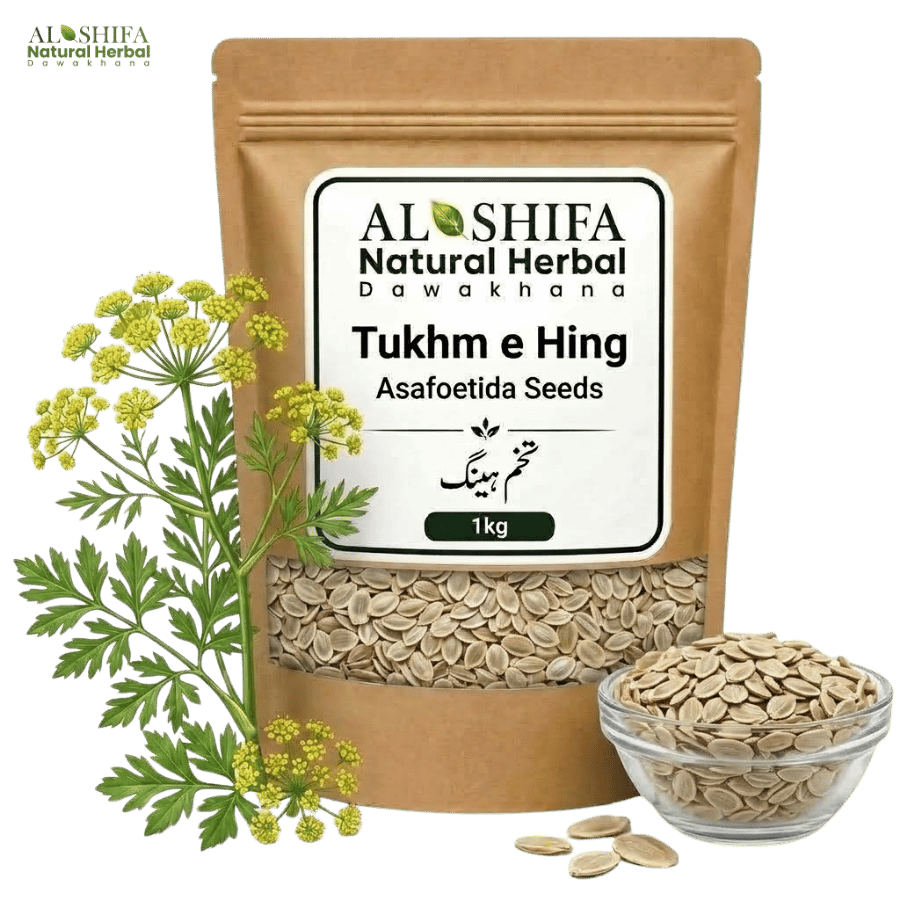
Tukhm e Hing, commonly known as Asafoetida Seeds or Ferula Seeds, refers to the seeds of Ferula plants associated with Asafoetida. These seeds are a specialised traditional botanical material used in selected digestive, appetite, warming and general herbal preparations and should be distinguished from the strongly aromatic Hing resin.
Al Shifa Tukhm e Hing is carefully selected with attention to its botanical identity, characteristic seed form, maturity, cleanliness, proper dryness and responsible storage.
Key Features:
Usage: Use whole or in suitable traditional herbal formulations according to the intended preparation and qualified professional guidance.
Important Note: Tukhm e Hing refers to Ferula seed material and is different from Hing or Asafoetida oleo-gum-resin. Seed and resin composition should not be considered identical. Concentrated internal use, particularly during pregnancy or alongside regular medicines, requires professional guidance.
Tukhm e Hing, commonly known as Asafoetida Seeds, refers to the seeds of Ferula plants associated with Asafoetida. Ferula plants belong to the Apiaceae family and are best known for producing the strongly aromatic oleo-gum-resin commonly called Hing or Asafoetida.
The seeds are a separate botanical part of the plant and should not be confused with the commercial Hing resin widely used as a spice and traditional herbal material. This distinction is especially important because Asafoetida Seeds and Asafoetida Resin are not the same product and differ in their composition, aroma, concentration and traditional applications.
At Al Shifa Natural Herbal Dawakhana, Tukhm e Hing is selected with attention to its botanical identity, seed form, characteristic appearance, maturity, cleanliness, proper dryness and responsible storage.
Tukhm e Hing are seeds obtained from plants belonging to the Ferula genus.
These plants are native to parts of Central and Southwest Asia and are recognised for their strong-smelling resinous material.
While the plant’s root and lower stem are traditionally tapped to obtain Asafoetida resin, its flowers naturally develop seeds as part of the plant’s reproductive cycle.
Therefore:
Tukhm e Hing ≠ Hing Resin
English Name: Asafoetida Seeds / Ferula Seeds
Urdu Name: تخم ہینگ
Roman Name: Tukhm e Hing
Botanical Association: Ferula spp.
Commonly Associated Species: Ferula assa-foetida L. and related Ferula species
Plant Family: Apiaceae
Plant Part: Seeds
Product Type: Whole Botanical Seeds / Traditional Herbal Raw Material
Ferula is a genus of large herbaceous plants belonging to the Apiaceae family.
This is the same broad botanical family that includes plants such as:
Ferula plants develop large flowering structures and produce flattened seeds after flowering.
Selected Ferula species are also known for the characteristic resin obtained from their root and lower stem.
Hing, commonly known as Asafoetida, is traditionally obtained as an oleo-gum-resin from selected Ferula species.
It is collected from cuts made in the root or lower stem region of the plant.
Hing is known for its:
However, this resin should not be confused with the plant’s seeds.
This is the most important identity distinction for this product.
Tukhm e Hing: Seeds of the Ferula plant.
Hing / Asafoetida: Oleo-gum-resin obtained from selected Ferula plants.
Therefore:
Asafoetida Seeds ≠ Asafoetida Resin
Information about Hing resin should not automatically be applied to Tukhm e Hing.
Different plant parts naturally contain different proportions of botanical compounds.
Seeds are reproductive structures, while Hing is a resinous secretion collected from another part of the plant.
Therefore:
Seed Constituents ≠ Resin Constituents
A strong medicinal or chemical property associated with Hing resin should not automatically be claimed for Asafoetida Seeds.
Tukhm e Hing has been supplied as a specialised traditional botanical raw material.
In traditional herbal practice, Ferula plant materials have been associated with preparations involving:
However, traditional information about the Ferula plant or Hing resin should not automatically be treated as specific clinical evidence for the seeds.
Ferula and Asafoetida are especially well known in traditional digestive preparations.
They have historically been associated with:
However:
Tukhm e Hing ≠ Treatment for Digestive Disease
Persistent abdominal pain, severe bloating, vomiting, bleeding or major changes in bowel habits require appropriate medical assessment.
Hing is widely known in South Asian households and traditional systems for gas-related digestive use.
Tukhm e Hing may be encountered in specialised herbal formulations, but the seed should not automatically be assigned the same strength or action as concentrated Hing resin.
Therefore:
Hing Resin Use ≠ Identical Seed Effect
Ferula materials have traditionally been included in preparations associated with appetite and digestion.
However:
Tukhm e Hing ≠ Guaranteed Appetite Stimulant
Persistent appetite loss can be related to many health conditions and should not be managed solely with herbal materials without understanding the cause.
Asafoetida Seeds are botanical structures containing the natural materials required for plant reproduction.
Depending on species and seed quality, they may contain:
Their composition should not be assumed to be identical to Asafoetida oleo-gum-resin.
Ferula plant materials may have characteristic aromatic qualities.
However:
Strong Smell ≠ Confirmed Asafoetida Seed Identity
and
Strong Smell ≠ Higher Quality
Correct botanical identification depends on more than aroma alone.
The genus Ferula contains many species.
Not every Ferula species produces exactly the same resin or seed composition.
Commercial Asafoetida may also originate from more than one Ferula species depending on geographic and trade sources.
Therefore:
One Ferula Species ≠ Every Ferula Species
Where exact species identity is important, reliable botanical sourcing is necessary.
Ferula assa-foetida is one of the names strongly associated with Asafoetida.
Other Ferula species have also been associated with commercial Asafoetida materials.
For this reason, describing Tukhm e Hing simply as one fixed species without verified source information may be misleading.
The broader botanical identification Ferula spp. may be more appropriate when the exact seed species has not been analytically confirmed.
Commercial Hing powder sold for cooking is often not pure raw resin.
It may contain Asafoetida resin mixed with ingredients such as starch, flour or gum to make it easier to handle.
Therefore:
Tukhm e Hing ≠ Raw Hing Resin ≠ Compound Hing Powder
These are three different product forms.
Tukhm e Hing may be supplied as whole seeds or ground material.
Grinding increases exposed surface area and can affect:
Therefore:
Whole Tukhm e Hing ≠ Tukhm e Hing Powder
Whole seeds are generally easier to visually inspect for identity and cleanliness.
If oil is obtained from Ferula seeds, it becomes a different preparation from whole seeds.
Therefore:
Asafoetida Seeds ≠ Asafoetida Seed Oil
Their concentration and suitable uses should not automatically be treated as identical.
A concentrated extract produced from seeds can contain selected soluble compounds at a different concentration from whole seeds.
Therefore:
Whole Seeds ≠ Seed Powder ≠ Seed Extract
The same amount should not automatically be used across these forms.
Scientific publications discussing “Asafoetida” commonly focus on the oleo-gum-resin, its extracts or compounds isolated from it.
This is important when evaluating claims about Tukhm e Hing.
Therefore:
Research on Asafoetida Resin ≠ Research on Asafoetida Seeds
Evidence should be matched to the actual plant part and preparation being sold.
Different Ferula species and preparations have been investigated for antioxidant activity.
However:
Laboratory Antioxidant Activity ≠ Disease Prevention
Laboratory findings should not be converted into claims that Tukhm e Hing prevents specific diseases.
Ferula materials have also attracted experimental interest for antimicrobial activity.
However:
Laboratory Antimicrobial Activity ≠ Infection Treatment
Tukhm e Hing should not replace appropriate medical treatment for bacterial, fungal or other infections.
Asafoetida has appeared historically in selected traditional respiratory formulations.
However, this traditional history is mainly associated with Hing and related Ferula preparations.
Tukhm e Hing should not be promoted as treatment for:
Breathing difficulty requires appropriate medical attention.
Experimental studies on Ferula materials should not be interpreted as proof that Tukhm e Hing treats blood-pressure or cardiovascular diseases.
Therefore:
Tukhm e Hing ≠ Blood Pressure Medicine
and
Tukhm e Hing ≠ Heart Disease Treatment
Ferula-related research may include metabolic areas.
However:
Tukhm e Hing ≠ Diabetes Medicine
People with diabetes should not replace prescribed treatment with Ferula seeds or Asafoetida products.
Asafoetida and Ferula materials have appeared in historical reproductive and menstrual preparations.
However, such traditional use requires particular caution because the exact plant part, concentration and preparation matter greatly.
Tukhm e Hing should not be presented as a guaranteed fertility or hormonal treatment.
Concentrated Asafoetida preparations have historically been associated with reproductive and uterine-related traditional uses.
For this reason, concentrated or medicinal use during pregnancy should be approached cautiously.
Pregnant individuals should avoid unsupervised internal use of Tukhm e Hing or concentrated Ferula preparations.
Safety information specifically concerning concentrated Asafoetida Seed preparations during breastfeeding is limited.
Normal culinary exposure to Hing and concentrated medicinal use are different situations.
Professional guidance is appropriate before regular concentrated use.
Tukhm e Hing is not an ordinary children’s supplement.
Concentrated seed preparations should not automatically be given to young children.
Use should depend on product identity, preparation and appropriate professional guidance.
Ferula belongs to the Apiaceae family.
People with known sensitivity to related plants should use unfamiliar Ferula products cautiously.
Any significant allergic reaction requires appropriate medical attention.
Asafoetida preparations are sometimes discussed in relation to blood-clotting and platelet activity.
Because evidence and product forms differ, people using anticoagulant or antiplatelet medicines should use concentrated Ferula preparations responsibly.
Professional guidance is appropriate before regular concentrated use for people with:
At Al Shifa Natural Herbal Dawakhana, Tukhm e Hing is selected with attention to:
Botanical Identity – Seeds associated with appropriate Ferula plant material.
Seed Form – Characteristic whole seed appearance.
Maturity – Properly developed botanical material.
Cleanliness – Selected to reduce unnecessary foreign matter.
Proper Dryness – Appropriate condition for storage.
Product Distinction – Clearly distinguished from Hing resin and compound Asafoetida powder.
Responsible Information – Seed-specific information separated from claims about Asafoetida resin.
Proper Storage – Protected from moisture, excessive heat, sunlight and contamination.
Al Shifa Natural Herbal Dawakhana, established in 1999, supplies herbs, seeds, botanical extracts, oils and specialised natural raw materials throughout Pakistan.
Our focus for Tukhm e Hing includes:
The appropriate use of Tukhm e Hing / Asafoetida Seeds depends on the exact botanical identity, preparation and intended formulation.
Before use, distinguish between:
These forms should not automatically be used in the same amount or for the same purpose.
For internal medicinal use, follow qualified professional guidance rather than assuming that directions for Hing resin also apply to the seeds.
Pregnant individuals and people taking regular medicines should seek appropriate guidance before concentrated internal use.
Tukhm e Hing refers to Asafoetida/Ferula seeds and should not be confused with the oleo-gum-resin commonly known as Hing.
Important distinctions include:
Store Tukhm e Hing in a cool, clean and dry place.
For best quality:
Tukhm e Hing / Asafoetida Seeds – تخم ہینگ is a specialised traditional botanical raw material obtained from Ferula plants associated with Asafoetida.
The seeds should be clearly distinguished from Hing or Asafoetida oleo-gum-resin, which is collected from the root and lower stem region of selected Ferula plants. Seed material and resin differ in botanical origin within the plant, chemical composition, concentration and traditional applications.
Ferula and Asafoetida have a long history in traditional digestive and warming preparations, but information about Hing resin should not automatically be transferred to Tukhm e Hing. Correct identification of the plant part and Ferula source is therefore particularly important.
Customers searching for Tukhm e Hing, Asafoetida Seeds, Hing Seeds, Ferula Seeds, Tukhm Hing Pakistan, Asafoetida Seeds Pakistan, Hing Seeds Pakistan, Tukhm e Hing Lahore, Asafoetida Seeds Lahore, Tukhm e Hing price in Pakistan, Asafoetida Seeds price in Pakistan, buy Tukhm e Hing Pakistan, buy Asafoetida Seeds Pakistan or Tukhm e Hing online Pakistan can choose Al Shifa Natural Herbal Dawakhana for carefully selected traditional botanical material.
Since 1999, Al Shifa Natural Herbal Dawakhana has focused on supplying herbs, seeds and specialised natural products with attention to correct identity, quality selection, cleanliness, proper dryness, responsible information, careful packing and proper storage.
Product Name: Tukhm e Hing
English Name: Asafoetida Seeds / Ferula Seeds
Urdu Name: تخم ہینگ
Roman Name: Tukhm e Hing
Botanical Association: Ferula spp.
Commonly Associated Species: Ferula assa-foetida L. and related Ferula species
Plant Family: Apiaceae
Plant Part: Seeds
Product Type: Whole Botanical Seeds / Traditional Herbal Raw Material
Traditional Use: Selected digestive, appetite, warming and general traditional herbal preparations
Important Note: Tukhm e Hing is the seed material and is different from Hing or Asafoetida oleo-gum-resin. Ferula includes multiple species, and research or traditional information concerning Asafoetida resin should not automatically be applied to the seeds. Concentrated internal use, particularly during pregnancy or alongside regular medicines, requires appropriate professional guidance.
تخم ہینگ ہینگ کے پودے سے حاصل ہونے والے بیج ہیں۔ ہینگ ایک لمبی عمر والا پودا ہے جس کی جڑ موٹی، پتے بڑے اور پھول زرد رنگ کے ہوتے ہیں۔ پھول آنے کے بعد اس پر چپٹے پھل بنتے ہیں جن کے اندر بیج موجود ہوتے ہیں۔
تخم ہینگ اور بازار میں ملنے والی عام ہینگ ایک چیز نہیں ہیں۔ عام ہینگ پودے کی جڑ اور جڑ کے اوپری حصے سے نکلنے والا گاڑھا گوند ہے، جبکہ تخم ہینگ پودے کے بیج ہیں۔
ہینگ کا گوند حکمت میں بہت مشہور ہے، جبکہ تخم ہینگ کا استعمال اس کے مقابلے میں کم مشہور ہے۔ اس لیے گوند ہینگ کے تمام طبی فوائد کو تخم ہینگ کے فوائد نہیں سمجھنا چاہیے۔
ہینگ ایک مضبوط جڑ والا بڑا جڑی بوٹی نما پودا ہے۔
اس کے پتے بڑے اور تقسیم شدہ ہوتے ہیں جبکہ پھول چھوٹے اور زرد رنگ کے ہوتے ہیں۔
پھولوں کے بعد چپٹے اور چوڑے پھل بنتے ہیں۔
ان پھلوں کے اندر تخم ہینگ موجود ہوتے ہیں۔
اچھے تخم ہینگ صاف، اچھی طرح خشک اور اپنی اصل شکل و رنگت والے ہوتے ہیں۔
ان میں نمی، پھپھوندی، کیڑے اور غیر ضروری اجزا نہیں ہونے چاہئیں۔
تخم ہینگ پودے کے بیج ہیں۔
عام ہینگ پودے کی جڑ سے حاصل ہونے والا گوند ہے۔
ہینگ کا گوند اپنی بہت تیز اور خاص بو کی وجہ سے آسانی سے پہچانا جاتا ہے۔
تخم ہینگ کی شکل، ساخت اور استعمال گوند ہینگ سے الگ ہے۔
حکمت میں ہاضمے، پیٹ کی گیس، بھوک اور بلغمی کیفیت کے لیے مشہور استعمال زیادہ تر ہینگ کے گوند کے ہیں۔
پاکستانی حکمت میں ہینگ یعنی حلتیت کا مزاج گرم اور خشک بیان کیا جاتا ہے۔ معروف حکیمی حوالوں میں اس کے درجے کے بیان میں اختلاف بھی پایا جاتا ہے۔
یہ مزاج بنیادی طور پر ہینگ کے گوند کے لیے بیان کیا جاتا ہے۔
تخم ہینگ کے بیجوں کا الگ مزاج اور درجہ معتبر پاکستانی کتبِ مفردات میں واضح طور پر ثابت نہیں، اس لیے تخم ہینگ کے لیے اپنی طرف سے گرم، سرد، تر یا خشک مزاج مقرر نہیں کیا جاتا۔
یہ فرق اس لیے ضروری ہے کہ ایک ہی پودے کی جڑ، گوند، پتے اور بیج کی طبی خصوصیات لازماً ایک جیسی نہیں ہوتیں۔
تخم ہینگ پودے کا قدرتی بیج ہے۔
اس پودے کے بیجوں میں قدرتی روغنی اجزا، لحمی اجزا اور دوسرے غذائی اجزا پائے جاتے ہیں۔
بیجوں کی غذائی ساخت گوند ہینگ سے الگ ہوتی ہے۔
تخم ہینگ پودے کی افزائش کا قدرتی ذریعہ ہیں۔
اچھی طرح پختہ بیج مناسب ماحول میں نئے پودے پیدا کرتے ہیں۔
ہینگ کے بیجوں میں قدرتی طور پر دیر سے اگنے کی کیفیت پائی جاتی ہے، اس لیے ان کی کاشت میں مناسب سرد ماحول اور درست طریقہ اہم ہوتا ہے۔
حکمت میں ہینگ کا گوند معدے اور ہاضمے کے لیے مشہور ہے۔
اسے پیٹ کی گیس، پیٹ پھولنے، ہاضمے کی کمزوری اور کم بھوک کے لیے تیار ہونے والی حکیمی ادویات میں استعمال کیا جاتا ہے۔
یہ فوائد گوند ہینگ کے ہیں، اس لیے انہیں تخم ہینگ کے بیجوں پر بغیر الگ ثبوت کے لاگو نہیں کیا جاتا۔
ہینگ کا گوند پیٹ کی گیس کے لیے مشہور حکیمی دوا ہے۔
اسے پیٹ پھولنے اور گیس کی وجہ سے ہونے والی بے آرامی کے لیے حکیمی ادویات میں شامل کیا جاتا ہے۔
تخم ہینگ اور گوند ہینگ الگ حصے ہیں، اس لیے اس مقصد کے لیے دونوں کی مقدار اور استعمال ایک نہیں رکھا جاتا۔
ہینگ کا گوند ہاضمے کے لیے حکمت میں استعمال کیا جاتا ہے۔
اسے کمزور ہاضمے، کھانے کے بعد پیٹ کے بھاری پن اور گیس کے لیے تیار ہونے والی ادویات میں شامل کیا جاتا ہے۔
تخم ہینگ کو اسی مقدار میں گوند ہینگ کی جگہ استعمال نہیں کیا جاتا۔
حکمت میں ہینگ کے گوند کو بھوک کے لیے بھی استعمال کیا جاتا ہے۔
اس کا تیز ذائقہ اور خاص بو اسے ہاضمے اور بھوک کے لیے مشہور بناتی ہے۔
تخم ہینگ کے بیج اس گوند سے الگ حصہ ہیں۔
ہینگ کے گوند کو حکمت میں پیٹ کے کیڑوں کے لیے تیار ہونے والی ادویات میں بھی استعمال کیا جاتا ہے۔
اس استعمال کا تعلق بنیادی طور پر ہینگ کے گوند سے ہے۔
پیٹ کے کیڑوں کی بیماری میں مناسب دوا اور مقدار معالج سے چیک کروائیں۔
ہینگ کے گوند کو پرانی حکیمی ادویات میں بلغم اور سانس کے نظام کے لیے استعمال کیا جاتا ہے۔
اسے بلغم خارج کرنے والی حکیمی ادویات میں شامل کیا جاتا ہے۔
سانس کے امراض میں تخم ہینگ کو گوند ہینگ کا سیدھا بدل نہ سمجھیں۔
ہینگ کے پودے کے مختلف حصوں میں کئی قدرتی اجزا پائے جاتے ہیں۔
اس کے گوند میں قدرتی رال، گوند، خوشبودار روغنی اجزا اور گندھک والے اجزا نمایاں ہوتے ہیں۔
گندھک والے اجزا ہینگ کی خاص تیز بو کی بڑی وجہ ہیں۔
بیجوں کی ساخت گوند سے الگ ہوتی ہے اور ان میں غذائی اجزا بھی پائے جاتے ہیں۔
تخم ہینگ چپٹے بیج ہوتے ہیں۔
ان کی رنگت سفید مائل بھوری سے بھوری ہو سکتی ہے۔
اچھے بیج اپنی قدرتی شکل میں مکمل اور اچھی طرح خشک ہوتے ہیں۔
ان میں کیڑا، نمی، پھپھوندی اور باسی بو نہیں ہونی چاہیے۔
ٹوٹے، بہت زیادہ سیاہ، نم یا خراب بیج اچھے معیار کی نشانی نہیں ہیں۔
اچھے تخم ہینگ کے لیے درج ذیل باتیں دیکھی جاتی ہیں:
درست شناخت: بیج اصل ہینگ کے پودے سے حاصل کیے گئے ہوں۔
قدرتی شکل: بیج اپنی اصل چپٹی شکل میں ہوں۔
قدرتی رنگت: رنگت صاف اور بیج کے قدرتی رنگ کے مطابق ہو۔
مناسب خشکی: بیج اچھی طرح خشک ہوں۔
صاف حالت: مٹی، گرد اور غیر ضروری اجزا سے پاک ہوں۔
تازگی: باسی اور خراب بو موجود نہ ہو۔
کیڑوں سے پاک: بیجوں میں کیڑا یا سوراخ نہ ہوں۔
ہینگ کا گوند پودے کی جڑ سے حاصل کیا جاتا ہے۔
تخم ہینگ پودے کے پھل سے حاصل ہونے والے بیج ہیں۔
دونوں کی ظاہری شکل، قدرتی اجزا اور استعمال الگ ہیں۔
اسی لیے ہینگ کے گوند کے لیے لکھی گئی مقدار تخم ہینگ کے لیے استعمال نہیں کی جاتی۔
تخم ہینگ کا استعمال مقصد کے مطابق رکھا جاتا ہے۔
اگر بیج کا مقصد کاشت ہو تو اچھی شناخت اور اگنے کی صلاحیت رکھنے والے بیج منتخب کیے جاتے ہیں۔
اگر تخم ہینگ کو حکیمی نسخے میں اندرونی استعمال کے لیے شامل کرنا ہو تو اس کی مقدار مستند نسخے یا معالج کے مطابق رکھی جاتی ہے۔
گوند ہینگ کی مقدار کو تخم ہینگ کی مقدار نہ سمجھیں۔
تخم ہینگ کے اندرونی طبی استعمال پر گوند ہینگ کے مقابلے میں معلومات محدود ہیں، اس لیے زیادہ مقدار اپنی طرف سے استعمال نہ کریں۔
ہینگ کے پودے سے حساسیت رکھنے والے افراد تخم ہینگ کے استعمال میں احتیاط کریں۔
اگر تخم ہینگ کسی حکیمی دوا میں شامل ہوں تو مقدار اسی نسخے کے مطابق رکھی جاتی ہے۔
ہینگ کے گوند کو حکمت میں ماہانہ نظام سے جڑے استعمالات میں بھی شامل کیا جاتا ہے۔
اس وجہ سے حاملہ خواتین ہینگ کے گوند یا تخم ہینگ کی طبی مقدار اپنی طرف سے استعمال نہ کریں۔
حمل کے دوران حکیمی استعمال معالج سے چیک کروائیں۔
بچوں کو تخم ہینگ کی طبی مقدار اپنی طرف سے نہ دیں۔
بچوں کے لیے جڑی بوٹیوں اور بیجوں کی مقدار عمر اور جسمانی حالت کے مطابق رکھی جاتی ہے۔
طبی استعمال سے پہلے مقدار معالج سے چیک کروائیں۔
تخم ہینگ ہینگ کے پودے کے بیج ہیں جبکہ عام ہینگ اس پودے کی جڑ سے حاصل ہونے والا گوند ہے۔
دونوں کو ایک چیز نہ سمجھیں۔
حکمت میں ہینگ کے گوند کا استعمال ہاضمے، پیٹ کی گیس، بھوک، پیٹ پھولنے اور بلغمی کیفیت کے لیے زیادہ مشہور ہے۔
پاکستانی حکیمی حوالوں میں ہینگ کے گوند کا مزاج گرم اور خشک بیان کیا جاتا ہے، لیکن تخم ہینگ کے بیجوں کا الگ مستند مزاج اور درجہ واضح نہیں۔
تخم ہینگ کا طبی استعمال مستند نسخے اور مناسب مقدار کے مطابق رکھیں۔
الشفاء نیچرل ہربل دواخانہ میں تخم ہینگ کے لیے درج ذیل باتوں کو اہمیت دی جاتی ہے:
اچھے تخم ہینگ: مکمل، صاف اور اچھی حالت والے بیجوں کو اہمیت دی جاتی ہے۔
درست شناخت: اصل ہینگ کے پودے سے حاصل ہونے والے بیجوں کی درست پہچان کو خاص اہمیت دی جاتی ہے۔
قدرتی شکل: بیجوں کی اصل چپٹی اور مکمل شکل کو دیکھا جاتا ہے۔
قدرتی رنگت: بیجوں کی صاف اور قدرتی رنگت کو اہمیت دی جاتی ہے۔
صاف حالت: گرد، مٹی اور غیر ضروری اجزا سے پاک بیجوں کو اہمیت دی جاتی ہے۔
مناسب خشکی: اچھی طرح خشک اور نمی سے پاک بیجوں کو اہمیت دی جاتی ہے۔
تازگی: باسی، خراب اور پھپھوندی والی بو سے پاک بیجوں کو اہمیت دی جاتی ہے۔
غیر ضروری ملاوٹ سے پاک: دوسرے بیجوں اور غیر ضروری اجزا کی ملاوٹ سے پاک ہونے کو اہمیت دی جاتی ہے۔
الشفاء نیچرل ہربل دواخانہ سنہ ۱۹۹۹ سے قدرتی جڑی بوٹیوں، بیجوں، جڑوں اور حکمت میں استعمال ہونے والے قدرتی اجزا کی سپلائی کر رہا ہے۔
ہم تخم ہینگ میں درست شناخت، مکمل بیج، قدرتی رنگت، صاف حالت، مناسب خشکی، تازگی اور غیر ضروری ملاوٹ سے پاک ہونے کو اہمیت دیتے ہیں۔
اچھے تخم ہینگ کی پہچان درست شناخت، مکمل شکل، قدرتی رنگت، مناسب خشکی، صاف حالت اور اچھی پیکنگ سے کی جاتی ہے۔
تخم ہینگ کو ٹھنڈی، خشک اور روشنی سے محفوظ جگہ پر کسی جار میں اچھی طرح پیک کر کے رکھیں۔
اسے نمی، پانی، تیز دھوپ اور زیادہ گرمی سے بچائیں۔
بیج نکالتے وقت صاف اور خشک چمچ استعمال کریں۔
تخم ہینگ اور ہینگ کا گوند ایک چیز نہیں ہیں۔
ہینگ کے گوند کے طبی فوائد، مزاج اور مقدار کو تخم ہینگ پر اسی طرح لاگو نہ کریں۔
حمل، بچوں کے استعمال یا مسلسل طبی استعمال کے لیے تخم ہینگ کی مقدار معالج سے چیک کروائیں۔
تخم ہینگ ہینگ کے پودے سے حاصل ہونے والے بیج ہیں۔ یہ عام ہینگ کے گوند سے الگ ہوتے ہیں۔
ہینگ کا گوند جڑ سے حاصل کیا جاتا ہے جبکہ تخم ہینگ پودے کے پھل میں بنتے ہیں۔
پاکستانی حکیمی حوالوں میں ہینگ کے گوند کا مزاج گرم اور خشک بیان کیا جاتا ہے۔ تخم ہینگ کے بیجوں کے لیے الگ واضح اور مستند حکیمی مزاج دستیاب نہ ہونے کی وجہ سے اپنی طرف سے کوئی مزاج مقرر نہیں کیا جاتا۔
اچھے تخم ہینگ کی پہچان درست شناخت، مکمل بیج، قدرتی رنگت، مناسب خشکی، صاف حالت، تازگی اور غیر ضروری ملاوٹ سے پاک ہونے کی بنیاد پر کی جاتی ہے۔