کوڑ / کٹکی
Price range: ₨ 400 through ₨ 8,000
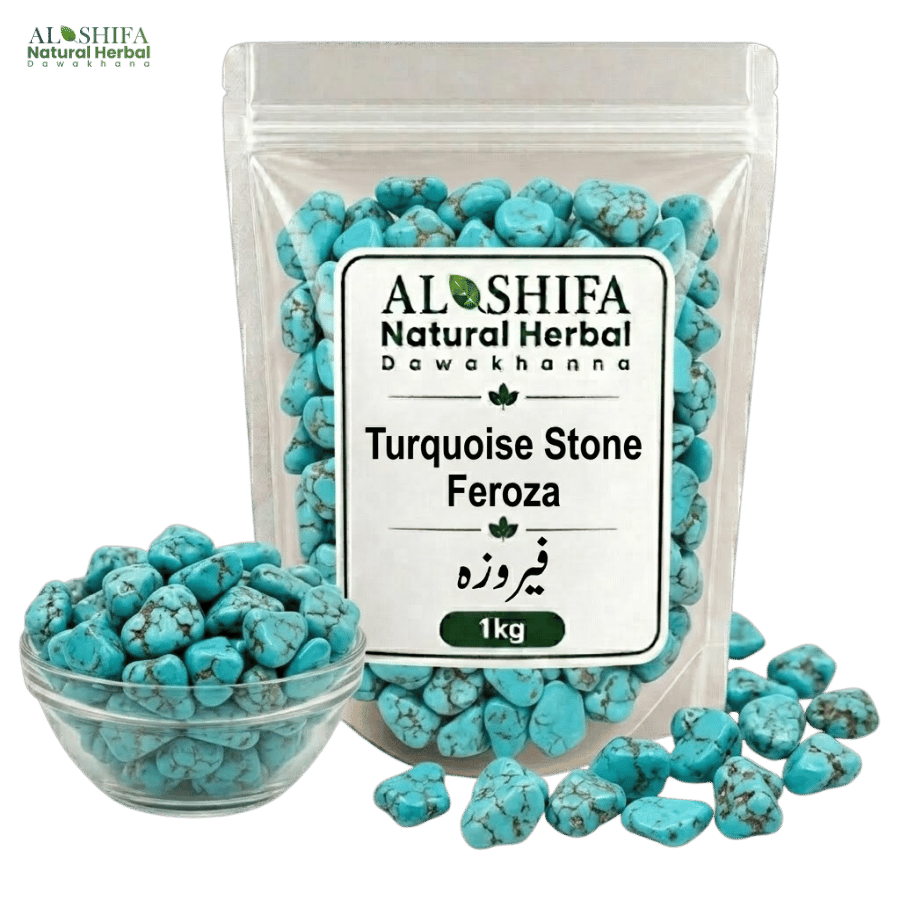
Feroza, commonly known as Turquoise Stone. is a natural blue to greenish-blue ornamental mineral composed of hydrated copper aluminium phosphate. It has traditionally been valued for its distinctive colour, natural matrix patterns and use in rings, jewellery, pendants, beads, ornaments and collections.
Al Shifa Feroza is carefully selected with attention to its traditional mineral identity, characteristic colour, natural stone appearance, physical condition, cleanliness and responsible storage.
Key Features:
Usage: Suitable for rings, pendants, jewellery, beads, ornaments, collections and traditional decorative applications. Cutting, polishing and mounting should be carried out by an appropriately equipped stone professional.
Important Note: Feroza is an ornamental stone, not a medicine or dietary supplement. Natural, stabilized, dyed and imitation Turquoise can look similar, and appearance alone cannot confirm treatment status or geographic origin. Avoid grinding the stone for internal use.
Feroza, commonly known in English as Turquoise Stone or فیروزہ, is a natural blue to green ornamental mineral valued for its distinctive colour, attractive appearance and long history of use in rings, jewellery, beads, pendants, decorative objects and traditional ornaments.
Natural Turquoise is a hydrated copper aluminium phosphate mineral. Its characteristic blue, blue-green or greenish colour is mainly associated with copper and variations in its mineral composition and geological formation.
Feroza has been valued for thousands of years across the Middle East, Central Asia, South Asia and many other regions. It has been used in jewellery, royal ornaments, decorative objects and traditional personal adornment.
Different cultures have also associated Feroza with protection, good fortune, confidence, prosperity and personal well-being. These beliefs are an important part of its cultural history, but they should be distinguished from scientifically established medical effects.
At Al Shifa Natural Herbal Dawakhana, Feroza is selected with attention to its traditional mineral identity, characteristic colour, natural stone appearance, physical condition, cleanliness and responsible storage.
Feroza is the traditional name widely used in Urdu, Persian and regional trade for the mineral known in English as Turquoise.
Turquoise forms naturally through geological processes, commonly in dry regions where copper-containing water interacts with aluminium- and phosphorus-containing minerals in rocks.
Over long periods, these processes can produce deposits of blue to green Turquoise.
English Name: Turquoise Stone / Turquoise
Urdu Name: فیروزہ
Roman Name: Feroza / Firoza
Mineral Name: Turquoise
Chemical Composition: Hydrated Copper Aluminium Phosphate
Chemical Formula: CuAl₆(PO₄)₄(OH)₈·4H₂O
Mineral Class: Phosphate Mineral
Mohs Hardness: Approximately 5–6
Product Type: Natural Ornamental Stone / Traditional Mineral Material
Feroza is a geological mineral.
It does not come from:
Therefore:
Feroza ≠ Herbal Raw Material
It should be classified as an ornamental mineral stone rather than a medicinal herb.
Natural Turquoise commonly has:
Natural Turquoise can vary significantly from one piece to another.
Therefore, uniform appearance is not required for genuine material.
Turquoise is famous for its blue colour.
Natural shades can include:
Colour can be influenced by the mineral’s composition and geological environment.
A stronger blue colour does not automatically prove that a stone is more natural or more valuable.
Copper is an important part of the chemical composition of Turquoise and contributes strongly to its characteristic blue colour.
Changes in composition can produce greener shades.
However, colour alone cannot reliably determine:
Professional gemological examination is more reliable.
Many natural Turquoise stones contain visible lines or patches of surrounding rock known as matrix.
Matrix may appear:
Some Turquoise has very little visible matrix, while other material has strong web-like patterns.
Therefore:
Matrix ≠ Automatically Poor Quality
Its desirability depends on the type of stone, pattern and personal preference.
Some Turquoise displays fine intersecting matrix lines commonly described as spiderweb matrix.
This pattern can be attractive and highly valued in certain stones.
However, imitation materials can also be manufactured with artificial web-like patterns.
Therefore:
Spiderweb Pattern Alone ≠ Proof of Natural Turquoise
Commercial Turquoise may be sold in several forms.
Natural Turquoise:
Stone that has been cut and polished without major material enhancement.
Stabilized Turquoise:
Porous Turquoise treated with resin or another stabilizing material to improve durability.
Dyed Turquoise:
Material treated with colour to improve or alter its appearance.
Reconstituted Turquoise:
Small Turquoise particles or powder combined with binding material and formed into a solid product.
These forms should not automatically be considered identical.
Turquoise can naturally be relatively porous or soft.
Stabilization may improve:
A stabilized stone can contain genuine Turquoise but is not the same as completely untreated natural Turquoise.
Therefore:
Natural Untreated Turquoise ≠ Stabilized Turquoise
Several inexpensive minerals can be dyed blue or green to imitate Turquoise.
Common imitation materials may include:
For this reason:
Blue Colour Alone ≠ Genuine Feroza
Howlite is naturally a pale or white mineral that often contains grey or dark veining.
Because it absorbs dye easily, it is frequently coloured blue and sold as a Turquoise imitation.
Therefore:
Dyed Howlite ≠ Natural Turquoise
Visual examination can sometimes suggest an imitation, but reliable identification may require professional testing.
Magnesite can also be dyed to resemble Turquoise.
Its colour and matrix can be artificially modified.
Therefore, a blue-green stone with dark lines should not automatically be identified as genuine Feroza.
Chrysocolla is another blue-green copper-containing mineral.
Its appearance can sometimes resemble Turquoise.
However:
Chrysocolla ≠ Turquoise
They have different mineral compositions and physical properties.
Feroza and Lapis Lazuli are both popular blue ornamental stones, but they are completely different materials.
Feroza:
Turquoise mineral, generally blue to greenish-blue.
Lapis Lazuli:
A rock composed mainly of lazurite with other minerals.
Therefore:
Turquoise ≠ Lapis Lazuli
Iran has a long historical association with high-quality Turquoise.
The region around Nishapur is especially famous in the traditional Turquoise trade.
Persian Turquoise is often associated with attractive blue stones.
However:
Appearance Alone Cannot Confirm Iranian Origin
Reliable provenance or gemological documentation is preferable when geographic origin is important.
Nishapuri Feroza is a highly recognised traditional trade description associated with Turquoise from the Nishapur region of Iran.
It is often valued for attractive blue colour and historical reputation.
However, the term may also be used commercially as a quality description.
Therefore:
Seller Description ≠ Verified Nishapur Origin
Origin claims should be treated separately from visual quality.
Turquoise has also been culturally important in Tibet and surrounding Himalayan regions.
Traditional Tibetan Turquoise may show:
Again, geographic origin cannot be reliably determined from colour alone.
The southwestern United States is another important source of Turquoise.
Different mines can produce stones with varying:
Mine-origin claims require reliable documentation when authenticity of origin matters.
Feroza has historically been used for:
Its distinctive blue colour has made it one of the world’s most recognisable ornamental stones.
Feroza is especially popular in rings.
A stone may be:
Because Turquoise is softer than Agate and many other gemstones, care should be taken to protect it from hard impacts and scratching.
Across different cultures, Feroza has been associated with beliefs involving:
These beliefs are part of traditional and cultural practices.
However:
Traditional Belief ≠ Scientifically Proven Medical Effect
Turquoise is sometimes marketed as a healing crystal.
Claims may associate it with:
There is not sufficient scientific evidence to establish wearing Turquoise as a treatment for these conditions.
Therefore:
Wearing Feroza ≠ Medical Treatment
A meaningful ring, stone or personal object may provide emotional comfort to some people.
However, this personal experience should not be confused with evidence that Turquoise itself treats:
Feroza should not be promoted as a proven treatment for:
Medical conditions require appropriate diagnosis and care.
Feroza has historically been worn as a protective stone in several cultures.
Such beliefs can be described as cultural traditions.
However, a stone should not be presented as providing guaranteed physical protection from:
Turquoise can sometimes appear to change colour over time.
Possible reasons include exposure to:
Because Turquoise can be porous, these factors may affect its appearance.
A colour change should not automatically be interpreted as a supernatural sign or medical indicator.
Traditional stories sometimes associate changes in Turquoise colour with the health or condition of the wearer.
There is no reliable scientific basis for using Feroza colour changes to diagnose disease.
Therefore:
Stone Colour Change ≠ Medical Diagnosis
Turquoise should not automatically be placed in drinking water to prepare a “crystal elixir.”
Natural or treated stones may contain:
Therefore:
Ornamental Feroza ≠ Drinking-Water Ingredient
Feroza may be available as:
Raw Turquoise:
Uncut or minimally processed natural mineral material.
Cut Turquoise:
Stone shaped for jewellery or decorative work.
Polished Turquoise:
Stone finished to improve surface appearance.
Mounted Turquoise:
Finished stone set into jewellery.
These forms differ mainly in physical processing.
A whole ornamental Feroza stone is different from finely ground mineral material.
Grinding can generate dust.
Turquoise should not be ground into powder for homemade medicinal use.
Therefore:
Turquoise Stone ≠ Dietary Mineral Supplement
Professional stone cutting can generate fine mineral dust.
Appropriate workshop controls should be used, including:
Do not casually grind ornamental mineral stones for medicinal purposes.
The commercial market may contain:
Correct identification is therefore important when purchasing Feroza.
Professional gemological examination may consider factors such as:
No single home test can reliably identify every natural, treated or imitation Turquoise stone.
The value of Feroza can vary considerably.
Factors can include:
Therefore:
Larger Stone ≠ Automatically Higher Quality
Turquoise requires more care than harder stones such as Agate.
Protect it from:
Chemicals can affect the colour or surface of some Turquoise.
For routine care, use a clean, soft cloth.
Avoid aggressive cleaning methods unless the exact treatment status of the stone is known.
Ultrasonic or harsh chemical cleaning may not be appropriate for porous, stabilized or treated Turquoise.
At Al Shifa Natural Herbal Dawakhana, Feroza is selected with attention to:
Traditional Identity – Material consistent with Turquoise/Feroza.
Characteristic Colour – Blue to greenish-blue traditional appearance.
Stone Condition – Attention to cracks, damage and surface condition.
Natural Appearance – Consideration of matrix and stone structure.
Cleanliness – Clean handling of the material.
Responsible Storage – Protection from chemicals, excessive heat and unnecessary damage.
Al Shifa Natural Herbal Dawakhana, established in 1999, supplies herbs, minerals, stones and specialised traditional natural materials throughout Pakistan.
Our focus for Feroza includes:
For Jewellery:
Feroza may be professionally cut, polished and mounted in rings, pendants, bracelets and other jewellery.
For Decorative Use:
It may be used in ornaments, collections, beads and suitable decorative applications.
For Traditional Use:
Feroza may be worn or kept according to personal, cultural and traditional preferences.
Do not grind Feroza into powder for self-medication or place an unknown natural or treated stone in drinking water.
Feroza / Turquoise is an ornamental phosphate mineral and is not an herbal medicine or nutritional supplement.
Important distinctions include:
Store Feroza in a clean, dry and protected place.
For best condition:
Feroza, commonly known as Turquoise Stone or فیروزہ, is a traditional blue to greenish-blue ornamental mineral valued for rings, jewellery, pendants, beads, ornaments and collections.
Natural Turquoise is a hydrated copper aluminium phosphate mineral and is famous for its distinctive colour and natural matrix patterns. Commercial Turquoise may be natural, stabilized, dyed or reconstituted, while materials such as dyed Howlite and Magnesite can also be sold as imitations.
Customers searching for Feroza, Firoza, Turquoise Stone, Feroza Stone, Natural Turquoise, Natural Feroza, Turquoise Gemstone, Feroza Gemstone, Persian Turquoise, Iranian Feroza, Nishapuri Feroza, Neishabour Turquoise, Blue Feroza, Green Feroza, Feroza Stone for Ring, Feroza Ring Stone, original Feroza, natural Feroza Stone, Feroza Pakistan, Turquoise Stone Pakistan, Feroza Lahore, Feroza price in Pakistan, Turquoise Stone price in Pakistan, Nishapuri Feroza price in Pakistan, buy Feroza Pakistan, buy Turquoise Stone Pakistan or Feroza online Pakistan can choose Al Shifa Natural Herbal Dawakhana for carefully selected traditional stone material.
Since 1999, Al Shifa Natural Herbal Dawakhana has focused on supplying herbs, minerals and traditional natural materials with attention to correct identity, characteristic appearance, clean handling, responsible information and proper storage.
Product Name: Feroza
English Name: Turquoise Stone / Turquoise
Urdu Name: فیروزہ
Roman Name: Feroza / Firoza
Mineral Name: Turquoise
Chemical Formula: CuAl₆(PO₄)₄(OH)₈·4H₂O
Mineral Class: Phosphate Mineral
Product Type: Natural Ornamental Stone / Traditional Mineral Material
Traditional Use: Rings, jewellery, pendants, beads, ornaments, collections and cultural applications
Important Note: Feroza is an ornamental Turquoise stone, not a medicine or dietary supplement. Natural, stabilized, dyed and imitation Turquoise can look similar, so appearance alone does not establish treatment status or geographic origin. Traditional healing or protection beliefs should not be presented as scientifically proven medical effects.
فیروزہ ایک مشہور قدرتی معدنی پتھر ہے۔
فیروزہ بنیادی طور پر پانی رکھنے والے تانبے اور ایلومینیم کے فاسفیٹ سے بنا ہوتا ہے۔ قدرتی فیروزہ آسمانی نیلے، سبزی مائل نیلے، نیلگوں سبز، ہلکے سبز اور سرمئی مائل رنگوں میں پایا جاتا ہے۔
فیروزہ کی خاص پہچان اس کی نیلی یا سبزی مائل رنگت اور سطح پر نظر آنے والی بھوری، سیاہ یا زرد رگیں اور جال جیسے قدرتی نقش ہیں۔ ہر فیروزہ ایک جیسا نہیں ہوتا۔ قدرتی پتھر میں رنگ، رگوں اور نقش کی تبدیلی اس کی قدرتی خاصیت ہے۔
فیروزہ کو حکمت کی کتابوں میں بھی ایک معدنی مفرد کے طور پر بیان کیا جاتا ہے۔
الشفاء نیچرل ہربل دواخانہ میں فیروزہ منتخب کرتے وقت اصل معدنی شناخت، قدرتی ساخت، رنگت، سختی، پالش، ظاہری صفائی اور مصنوعی نقل سے الگ پہچان کو اہمیت دی جاتی ہے۔
فیروزہ قدرتی طور پر زمین اور چٹانوں میں بننے والا معدنی پتھر ہے۔
یہ تانبے، ایلومینیم، فاسفیٹ اور پانی رکھنے والا معدنی پتھر ہے۔
فیروزہ عام طور پر ایسی چٹانوں کی دراڑوں اور خالی جگہوں میں بنتا ہے جہاں تانبے اور ایلومینیم والے معدنی اجزا موجود ہوں۔
زمین یا بارش کا پانی ان چٹانوں سے گزرتا ہے تو معدنی اجزا آہستہ آہستہ جمع ہوتے رہتے ہیں۔ طویل عرصے کے بعد یہی اجزا فیروزہ کی شکل اختیار کر سکتے ہیں۔
نام: فیروزہ
معروف نام: سنگ فیروزہ
فارسی نام: فیروزہ، پیروزہ
عربی نام: فیروزج
انگریزی نام: ٹرکوئز
اصل: قدرتی معدنی پتھر
قسم: تانبے اور ایلومینیم کا پانی رکھنے والا فاسفیٹ معدنی پتھر
بنیادی معدنی مادہ: تانبے اور ایلومینیم کا فاسفیٹ
معدنی خاندان: فیروزہ گروپ
عام شکل: گول، بیضوی، بے ترتیب پتھر، کٹا ہوا نگینہ یا پالش شدہ ٹکڑا
عام رنگت: آسمانی نیلی، سبزی مائل نیلی، نیلگوں سبز، ہلکی سبز اور سرمئی مائل
خاص پہچان: نیلی یا سبزی مائل رنگت، قدرتی رگیں اور جال جیسے نقش
استعمال: نگینے، انگوٹھیاں، لاکٹ، زیورات، تسبیح، آرائشی اشیا اور حکمت میں طبی استعمال کے طور پر ذکر
فیروزہ زمین کے اندر طویل قدرتی عمل سے بنتا ہے۔
بارش یا زمین کا پانی تانبے اور ایلومینیم رکھنے والی چٹانوں سے گزرتا ہے۔
یہ پانی چٹانوں کی چھوٹی دراڑوں، سوراخوں اور خالی جگہوں میں داخل ہو جاتا ہے۔ پانی کم ہونے کے ساتھ تانبے، ایلومینیم اور فاسفیٹ والے معدنی اجزا آہستہ آہستہ جمع ہوتے رہتے ہیں۔
اس عمل سے:
بن سکتا ہے۔
اسی وجہ سے قدرتی فیروزہ کے دو ٹکڑے مکمل طور پر ایک جیسے ہونا ضروری نہیں۔
فیروزہ کا بنیادی حصہ تانبے اور ایلومینیم کا پانی رکھنے والا فاسفیٹ ہوتا ہے۔
تانبا فیروزہ کی نیلی اور سبزی مائل رنگت پیدا کرنے میں اہم کردار ادا کرتا ہے۔ اس میں موجود لوہا اور دوسرے معدنی اجزا اس کی رنگت کو سبزی مائل یا مختلف گہرا رنگ دے سکتے ہیں۔
فیروزہ عام طور پر غیر شفاف ہوتا ہے، یعنی اس کے اندر سے روشنی صاف نہیں گزرتی۔
پسینے، کیمیکل اور زیادہ گرمی سے متاثر ہو سکتا ہے۔
اچھا فیروزہ منتخب کرتے وقت:
صرف رنگ دیکھ کر فیروزہ کے اصل یا نقلی ہونے کا فیصلہ نہیں کرنا چاہیے۔
بازار میں رنگا ہوا، رال سے مضبوط کیا ہوا، پاؤڈر سے تیار کیا ہوا اور مصنوعی فیروزہ بھی فروخت ہوتا ہے۔ ماہر کے لیے بھی کچھ تبدیلیوں کی شناخت لیبارٹری جانچ کے بغیر مشکل ہو سکتی ہے۔
فیروزہ کئی قدرتی رنگوں میں پایا جاتا ہے۔
اس میں:
رنگ دیکھے جا سکتے ہیں۔
ایک ہی پتھر میں ہلکے اور گہرے رنگ بھی موجود ہو سکتے ہیں۔ اس کی سطح پر بھوری، سیاہ، زرد یا سرمئی رگیں بھی نظر آ سکتی ہیں۔
نیلا فیروزہ اپنی صاف آسمانی، ہلکی نیلی یا گہری نیلی رنگت کی وجہ سے مشہور ہے۔
صاف اور یکساں نیلی رنگت والا اعلیٰ معیار کا فیروزہ زیادہ پسند کیا جاتا ہے۔ قدرتی نیلے فیروزہ میں ہلکی رگیں یا قدرتی نشان بھی موجود ہو سکتے ہیں۔
سبز فیروزہ ہلکی سبز، نیلگوں سبز یا زردی مائل سبز رنگت رکھ سکتا ہے۔
اس میں موجود لوہے اور دوسرے معدنی اجزا رنگت پر اثر ڈال سکتے ہیں۔ پرانے فیروزہ کی رنگت تیل، پسینے، روشنی یا ماحول کے اثر سے بھی تبدیل ہو سکتی ہے۔
جال دار فیروزہ کی سطح پر بھوری، سیاہ یا زرد رگیں جال کی شکل میں پھیلی ہوتی ہیں۔
یہ رگیں اس چٹان کا حصہ ہو سکتی ہیں جس کے اندر فیروزہ بنا ہوتا ہے۔ خوبصورت اور قدرتی جال رکھنے والا فیروزہ زیورات میں بہت پسند کیا جاتا ہے۔
نیشاپوری فیروزہ ایران کے نیشاپور کے علاقے سے منسوب ہے۔
یہ اپنی خوبصورت آسمانی یا گہری نیلی رنگت کی وجہ سے مشہور ہے۔ اس میں صاف رنگت کے ساتھ قدرتی رگیں بھی موجود ہو سکتی ہیں۔
صرف نیشاپوری نام لکھا ہونے سے فیروزہ کا اصل ایرانی ہونا ثابت نہیں ہوتا۔ مہنگا پتھر خریدتے وقت معتبر لیبارٹری کی رپورٹ دیکھنا بہتر ہے۔
عجمی فیروزہ کا نام بازار میں عموماً صاف، خوبصورت اور کم رگوں والے فیروزہ کے لیے استعمال کیا جاتا ہے۔
اس نام کا استعمال مختلف علاقوں اور بازاروں میں مختلف انداز سے ہو سکتا ہے، اس لیے صرف نام کی بنیاد پر اصل مقام یا معیار کا فیصلہ نہیں کرنا چاہیے۔
شجری فیروزہ میں درخت، شاخوں، جال یا پودوں جیسے قدرتی نقش دکھائی دے سکتے ہیں۔
یہ نقش عام طور پر پتھر میں موجود قدرتی رگوں اور اس چٹانی مادے کی وجہ سے بنتے ہیں جس کے اندر فیروزہ پایا جاتا ہے۔
ہاولائٹ ایک سفید معدنی پتھر ہے جس پر عموماً سرمئی یا سیاہ رگیں ہوتی ہیں۔
اسے نیلا رنگ دے کر فیروزہ کی نقل کے طور پر فروخت کیا جا سکتا ہے۔
فیروزہ:
رنگا ہوا ہاولائٹ:
فیروزہ اور کوارٹز دو الگ معدنی پتھر ہیں۔
فیروزہ تانبے اور ایلومینیم کا پانی رکھنے والا فاسفیٹ پتھر ہے، جبکہ کوارٹز بنیادی طور پر سلیکا سے بنا ہوتا ہے۔
کوارٹز کی سختی فیروزہ سے زیادہ ہوتی ہے۔ فیروزہ کی سختی عام طور پر پانچ سے چھ جبکہ کوارٹز کی سختی سات ہوتی ہے۔
فیروزہ اور رنگین شیشہ دیکھنے میں کبھی ملتے جلتے لگ سکتے ہیں۔
فیروزہ:
رنگین شیشہ:
قیمتی یا مہنگا فیروزہ خریدتے وقت صرف دکاندار کے دعوے پر انحصار کرنے کے بجائے پتھروں کی شناخت کرنے والے ماہر سے چیک کروانا بہتر ہے۔
خاص طور پر مہنگے نگینے کے لیے معتبر پتھر جانچنے والے ادارے کی رپورٹ زیادہ قابلِ اعتماد طریقہ ہے۔
رپورٹ میں یہ بھی معلوم کروائیں کہ پتھر:
فیروزہ معدنی ہے، جڑی بوٹی نہیں۔
حکمت کی کتابوں میں فیروزہ کا مزاج سرد اور خشک بیان کیا گیا ہے۔
حکمت کی کتابوں میں فیروزہ کا ذکر معدنی مفرد کے طور پر ملتا ہے۔
اس سے تیار کی جانے والی مخصوص حکیمی دوائیں:
میں شامل کی جاتی ہیں۔
فیروزہ کے بارے میں حکمت کی کتابوں میں کئی فائدے بیان کیے گئے ہیں۔
حکمت میں فیروزہ سے بنی مخصوص ادویات کو:
میں شامل کیا جاتا ہے۔
حکمت میں فیروزہ سے بنی مخصوص ادویات دل کی کمزوری اور خفقان کی بیماری میں استعمال کی جاتی ہیں۔
حکمت میں فیروزہ سے بنائی گئی مخصوص ادویات معدے کی کمزوری اور معدے کے امراض میں استعمال ہوتی ہیں۔
حکمت میں فیروزہ سے بنی مخصوص ادویات خون بہنے کے مختلف امراض میں استعمال کی جاتی ہیں۔
حکمت کی کتابوں میں فیروزہ سے بنائی گئی مخصوص دواؤں کا ذکر آنکھوں کی بینائی اور آنکھوں کے امراض کے لیے ملتا ہے۔
عام فیروزہ پیس کر آنکھوں میں نہ لگائیں۔ آنکھ بہت حساس عضو ہے اور غیر جراثیم سے پاک معدنی سفوف شدید نقصان پہنچا سکتا ہے۔
حکمت میں فیروزہ کو دماغ کو طاقت اور سکون دینے والی مخصوص ادویات میں شامل کیا جاتا ہے۔
کشتہ فیروزہ:
حکمت میں معدنی کشتے مخصوص مرکب دواؤں میں شامل کیے جا تے ہیں۔
جگر کے امراض میں کشتہ فیروزہ خود سے استعمال نہ کریں۔ غلط تیار شدہ یا آلودہ کشتہ جگر کو نقصان پہنچا سکتا ہے۔
حکمت کی کتابوں میں فیروزہ سے تیار کی گئی مخصوص دواؤں کا ذکر گردے اور مثانے کی پتھری کی بیماری میں ملتا ہے۔
گردوں کے امراض میں کشتہ خود سے استعمال نہ کریں۔ گردے کی پتھری کی جگہ، جسامت اور قسم معلوم کیے بغیر علاج کرنا نقصان دہ ہو سکتا ہے۔
کشتہ فیروزہ کی مقدار اس کی تیاری، معیار، نسخے، مریض کی عمر، جسمانی حالت اور بیماری کے مطابق مختلف ہو سکتی ہے۔
اس کی مقدار خود سے مقرر نہ کریں۔ صرف مستند ڈاکٹر یا تجربہ کار حکیم کی نگرانی میں، رجسٹرڈ اور لیبارٹری سے جانچا ہوا کشتہ استعمال کریں۔
فیروزہ ایک قدرتی معدنی پتھر ہے۔
عام زیورات والے فیروزہ کو پیس کر اندرونی طور پر استعمال نہ کریں۔
فیروزہ یا اس سے تیار کشتہ کسی بیماری میں مستند حکیم کے مشورہ کے بغیر نہ کریں۔
الشفاء نیچرل ہربل دواخانہ میں فیروزہ منتخب کرتے وقت درج ذیل باتوں کو اہمیت دی جاتی ہے:
اچھا فیروزہ: مضبوط اور اچھی حالت والا پتھر منتخب کیا جاتا ہے۔
قدرتی ساخت: قدرتی رنگت، رگوں اور جال جیسے نقش کو اہمیت دی جاتی ہے۔
درست شناخت: شیشے، رنگے ہوئے ہاولائٹ، پلاسٹک اور دوسری مصنوعی نقل سے الگ شناخت کو اہمیت دی جاتی ہے۔
رنگت کی پہچان: قدرتی، رنگی ہوئی اور کیمیکل یا رال سے بدلی گئی رنگت کو سمجھنا ضروری ہے۔
مناسب پالش: ایسی پالش کو اہمیت دی جاتی ہے جس سے پتھر کی قدرتی ساخت اور رنگت واضح رہے۔
الشفاء نیچرل ہربل دواخانہ سنہ ۱۹۹۹ سے جڑی بوٹیوں، معدنی مفردات، روغنوں اور قدرتی مصنوعات کی سپلائی کر رہا ہے۔
فیروزہ میں اصل معدنی شناخت، اچھی حالت، قدرتی ساخت، مناسب پالش اور مصنوعی نقل سے الگ پہچان کو اہمیت دی جاتی ہے۔
فیروزہ خریدتے وقت صرف خوبصورت نیلے رنگ کے بجائے پتھر کی اصل ساخت، قدرتی رنگت، مضبوطی اور درست شناخت زیادہ اہم ہے۔
فیروزہ کے چھوٹے ٹکڑوں یا حکیمی استعمال کے لیے جار میں اچھی طرح پیک کرکے رکھیں۔
فیروزہ کو تیز دھوپ، زیادہ گرمی، تیل، خوشبو، صابن، کیمیکل اور تیزاب سے محفوظ رکھیں۔
فیروزہ کو نرم خشک کپڑے سے صاف کریں۔ اسے زیادہ دیر پانی میں بھگو کر نہ رکھیں اور نہ ہی سخت برش سے رگڑیں۔
نام: فیروزہ
معروف نام: سنگ فیروزہ
فارسی نام: فیروزہ، پیروزہ
عربی نام: فیروزج
انگریزی نام: ٹرکوئز
اصل: قدرتی معدنی پتھر
قسم: تانبے اور ایلومینیم کا پانی رکھنے والا فاسفیٹ پتھر
بنیادی معدنی مادہ: تانبے اور ایلومینیم کا فاسفیٹ
معدنی خاندان: فیروزہ گروپ
عام شکل: قدرتی پتھر، پالش شدہ ٹکڑا یا نگینہ
عام رنگت: آسمانی نیلی، سبزی مائل نیلی، نیلگوں سبز، ہلکی سبز اور سرمئی مائل
خاص پہچان: نیلی یا سبزی مائل رنگت، قدرتی رگیں اور جال جیسے نقش
سختی: موہس پیمانے پر عام طور پر پانچ سے چھ
اہم استعمال: نگینوں، زیورات، تسبیح، آرائشی اشیا اور حکیمی ادویات میں معدنی مفرد کے طور پر۔
اہم احتیاط: زیورات والے عام فیروزہ کو پیس کر اندرونی طور پر استعمال نہ کریں۔ بیماری کے علاج کے لیے کشتہ فیروزہ کی مقدار خود سے مقرر نہ کریں اور مستند ڈاکٹر یا ماہر حکیم سے رابطہ کریں۔
دل اور دماغ کو طاقت دینا: یہ دل کو مضبوط کرتا ہے، وہم، گھبراہٹ اور بلاوجہ کے ڈر یا خوف کو دور کرنے میں مددگار مانا جاتا ہے۔
پٹھوں اور اعصاب کی کمزوری: جسمانی سستی، تھکن اور پٹھوں کی کمزوری کو ختم کر کے جسم میں نئی چستی لاتا ہے۔
گردے اور مثانے کی کمزوری: جن لوگوں کو پیشاب بار بار آتا ہو یا قطرہ قطرہ ٹپکتا ہو، ان کے گردوں اور مثانے کو طاقت دیتا ہے۔
قوتِ مدافعت (امیونٹی) بڑھانا: جسم کو اندرونی طور پر مضبوط کرتا ہے تاکہ وہ بیماریوں کا مقابلہ کر سکے۔
یرقان اور جگر کے مسائل: جگر کی اصلاح اور خون صاف کرنے کے لیے بھی پرانے حکیم اسے استعمال کرواتے ہیں۔
یاد رکھیں! کشتہ بنانا ایک بہت مہارت کا کام ہے، ذرا سی غلطی سے یہ فائدے کی جگہ نقصان پہنچا سکتا ہے، اس لیے اسے گھر پر بنانے کی کوشش نہ کریں۔
کیا کچھ چاہیے ہوگا؟ (اجزاء)
بنانے کا سٹیپ بائی سٹیپ طریقہ:
ضروری احتیاط اور طریقہ استعمال:
کشتہ فیروزہ کی تاثیر گرم اور خشک ہوتی ہے۔ اس کی مقدارِ خوراک بہت ہی کم ہوتی ہے—یعنی صرف ایک چاول کے دانے کے برابر۔ اسے ہمیشہ مکھن، ملائی، سوجی کے حلوے یا دودھ کے ساتھ کھایا جاتا ہے۔ کسی مستند حکیم کے مشورے کے بغیر اسے کبھی استعمال نہ کریں، کیونکہ کچا یا غلط بنا ہوا کشتہ گردوں اور جگر کو شدید نقصان پہنچا سکتا ہے۔