
Oud Hindi,Aquilaria agallocha
Contact for Price
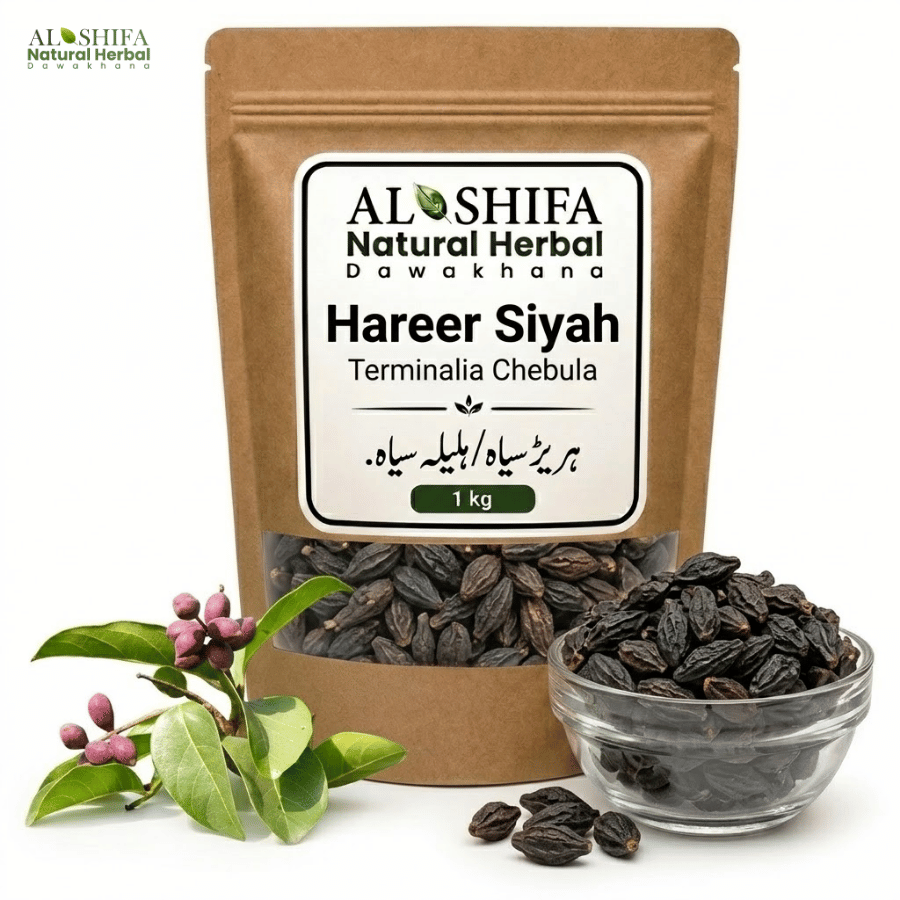
Hareer Siyah, also known as Haleela Siyah, Kali Harar, Black Haritaki, or Black Chebulic Myrobalan, is the traditional dried fruit of Terminalia chebula. It has long been valued in Unani and Ayurvedic practices, particularly in preparations associated with digestive wellness, bowel regularity, intestinal comfort, appetite, astringent support and general restorative wellbeing.
Al Shifa Hareer Siyah is carefully selected for its traditional identity, characteristic dark appearance, natural fruit structure, proper dryness, cleanliness and overall quality. The term “Siyah” generally refers to a darker traditional form or grade of Hareer rather than a separate botanical species.
Key Features:
Important Note: Hareer Siyah should not be considered a guaranteed laxative or treatment for chronic constipation, diarrhoeal disease or other medical conditions. Medicinal use during pregnancy, childhood, chronic illness or alongside regular medication should preferably follow qualified professional guidance.
Hareer Siyah, also known as Haleela Siyah, Kali Harar, Black Haritaki, or Black Chebulic Myrobalan, is the dried fruit of Terminalia chebula, an important traditional medicinal plant used for generations in Unani, Ayurvedic and South Asian herbal practices.
The word “Siyah” means black or dark and generally refers to a darker traditional form, grade, maturity or processed appearance of Hareer. It should not automatically be considered a completely separate botanical species from other forms of Terminalia chebula.
Hareer Siyah has traditionally been valued in formulations associated with digestive wellness, bowel regulation, intestinal comfort, appetite, astringent preparations, general cleansing concepts and restorative wellbeing.
Al Shifa Hareer Siyah is carefully selected with attention to traditional identity, characteristic dark appearance, fruit structure, appropriate dryness, cleanliness and overall raw-material quality.
Hareer Siyah consists primarily of the dried mature or traditionally graded fruit of the Haritaki tree.
The dried fruit may have:
Natural differences in colour, size, shape and surface appearance may occur according to maturity, geographic origin, drying, processing and traditional grading.
English Name: Black Haritaki / Black Chebulic Myrobalan
Urdu Name: ہریڑ سیاہ / ہلیلہ سیاہ / کالی ہریڑ
Roman Name: Hareer Siyah / Haleela Siyah / Kali Harar
Scientific Name: Terminalia chebula Retz.
Plant Part: Dried Fruit
Plant Family: Combretaceae
Product Type: Traditional Dried Herbal Fruit
Hareer, Haritaki and Chebulic Myrobalan are names associated with the fruit of Terminalia chebula.
Traditional markets may classify Hareer into different forms or grades according to:
Hareer Siyah generally describes a darker form or grade.
The word “black” therefore does not necessarily indicate a separate plant species.
Traditional herbal markets may contain different Hareer names and grades.
These can vary in:
Such trade classifications should not automatically be interpreted as scientifically distinct botanical species.
Correct botanical identity remains Terminalia chebula when the material genuinely originates from that species.
Hareer and Baheda are sometimes discussed together because both are important traditional fruits, but they are different botanical materials.
Hareer / Haritaki: Terminalia chebula
Baheda / Belleric Myrobalan: Terminalia bellirica
They belong to the same broad botanical family but are not the same fruit.
Correct identification is particularly important when preparing traditional formulations.
Hareer is one of the three traditional fruits used in the famous Ayurvedic formulation commonly known as Triphala.
The three components traditionally include:
However, Hareer Siyah alone is not Triphala.
A single dried Hareer fruit should not be described as having the exact same composition or characteristics as the complete three-fruit formulation.
Hareer has a long history in Unani and Ayurvedic practice.
Traditional uses of Hareer Siyah may include preparations associated with:
These are traditional uses and should not be interpreted as proof that Hareer Siyah treats diagnosed gastrointestinal or systemic diseases.
One of the most recognized traditional roles of Hareer is in digestive formulations.
It has historically been associated with:
Traditional practitioners may use different forms and preparations according to the intended purpose.
This does not mean that one preparation or dose is appropriate for every digestive complaint.
Hareer is especially well known for its traditional association with bowel function.
Depending on traditional preparation, quantity and accompanying ingredients, it has historically been incorporated into formulations intended to support normal bowel habits.
However, Hareer Siyah should not simply be marketed as a guaranteed laxative.
Bowel symptoms can result from many different causes, and inappropriate self-treatment may delay diagnosis of an underlying problem.
Hareer is commonly searched for in relation to constipation because of its traditional digestive reputation.
It may be included in traditional bowel-support formulations, but it should not be presented as a guaranteed treatment for chronic constipation.
Persistent constipation may be associated with:
Severe abdominal pain, vomiting, inability to pass stool or gas, abdominal swelling or blood in stool requires medical assessment rather than self-treatment with herbal laxative preparations.
Hareer fruit naturally contains a significant amount of tannin-related plant compounds, which contribute to its characteristic astringent taste.
This explains its historical inclusion in certain traditional astringent preparations.
However, this should not be interpreted to mean that Hareer treats infectious diarrhoea, dysentery, inflammatory bowel disease or other serious intestinal disorders.
Persistent diarrhoea, blood in stool, high fever or dehydration requires medical attention.
Terminalia chebula fruit contains a range of naturally occurring plant constituents.
Depending on origin, maturity and processing, these may include:
The amount and composition can vary significantly between whole fruit, powder, extracts and standardized preparations.
The presence of antioxidant-related plant compounds does not establish that ordinary Hareer Siyah prevents or treats disease.
Terminalia chebula has attracted scientific interest because of its naturally occurring polyphenolic and tannin-rich composition.
Laboratory research on individual compounds or concentrated extracts should not automatically be applied to ordinary dried Hareer fruit.
Whole fruit, powder and standardized extracts can differ substantially in concentration and biological activity.
Therefore, claims that Hareer Siyah cures chronic diseases, prevents cancer or reverses ageing should be avoided.
Hareer has historically been included in broader restorative and balancing herbal traditions.
It may be incorporated into compound formulations associated with:
Terms such as “cleansing” should be understood within their traditional context rather than as evidence that Hareer literally removes unspecified toxins from the blood or organs.
Hareer has also appeared historically in selected astringent oral and throat-related preparations.
This traditional use does not mean that it should replace professional treatment for:
Persistent or severe oral and throat symptoms require appropriate evaluation.
Different forms of Hareer should not automatically be considered equivalent.
Whole Hareer Siyah: Traditional dried fruit.
Hareer Powder: Ground dried fruit.
Compound Formulation: Hareer combined with other ingredients.
Extract: Concentrated preparation containing selected plant constituents.
Standardized Extract: Prepared to provide a specified level of particular compounds.
The amount appropriate for one form cannot automatically be applied to another.
Terminalia chebula preparations have been investigated in experimental research related to metabolic and glucose-related effects.
However, ordinary Hareer Siyah should not be marketed as a treatment for diabetes, insulin resistance or high blood sugar.
People using glucose-lowering medicines should seek professional advice before regular concentrated medicinal use because herbal preparations may potentially alter glucose control.
Prescribed diabetes medicines and monitoring should not be replaced with Hareer.
Hareer Siyah should not be advertised as a guaranteed weight-loss or fat-burning product.
Improved bowel movement or temporary changes in digestive contents do not equal body-fat loss.
It should not be promoted as a substitute for balanced nutrition, physical activity or professional management of obesity and metabolic conditions.
Medicinal or concentrated use during pregnancy should be undertaken only with qualified professional guidance.
Traditional use does not automatically establish safety during pregnancy.
Pregnant individuals should avoid self-prescribing concentrated bowel-cleansing or laxative herbal preparations, particularly if experiencing:
Regular medicinal or concentrated use during breastfeeding should preferably be discussed with an appropriately qualified healthcare professional.
This is particularly important if the mother or infant has digestive problems, dehydration, chronic illness or is taking regular medication.
Medicinal use in children should be undertaken with qualified professional guidance.
Whole dried Hareer fruit is hard and is not suitable for young children to chew because it may present a choking or dental-injury risk.
Persistent constipation, diarrhoea, vomiting, abdominal pain or dehydration in a child should be medically evaluated.
Excessive or inappropriate use of bowel-related herbal preparations may potentially cause:
Repeated use of strong bowel-cleansing preparations without understanding the cause of symptoms is not advisable.
Professional guidance is advisable before regular medicinal use if an individual:
The relevance of any interaction depends on the preparation, amount, duration and individual health status.
Hareer Siyah supplied as a dried herbal fruit is a traditional raw ingredient, not a finished medicine.
Raw-material supply does not establish:
The appropriate form and amount can vary according to the intended formulation and individual circumstances.
At Al Shifa Natural Herbal Dawakhana, Hareer Siyah is selected with attention to:
Traditional Identity – Fruit consistent with expected Hareer characteristics.
Characteristic Dark Appearance – Appropriate darker traditional colour and appearance.
Fruit Structure – Recognizable dried fruit shape and surface characteristics.
Proper Drying – Appropriately dried for responsible storage.
Cleanliness – Careful handling to minimize unnecessary foreign material.
Quality Selection – Material showing obvious mould, infestation, excessive moisture or deterioration is avoided.
Al Shifa Natural Herbal Dawakhana, established in 1999, supplies carefully selected herbs, fruits, seeds, roots, barks, gums, resins, spices, oils, minerals and other traditional natural raw materials throughout Pakistan.
Our Hareer Siyah is selected for customers seeking traditional Black Haritaki / Black Chebulic Myrobalan for appropriate digestive, restorative, astringent and compound herbal preparations.
We focus on:
Hareer Siyah has traditionally been used in different forms and compound formulations according to the intended purpose.
There is no single universal medicinal dosage suitable for every person because use can depend on:
Regular medicinal use should preferably follow qualified professional guidance.
Avoid repeated self-treatment with bowel-cleansing preparations when constipation, diarrhoea or abdominal symptoms are persistent or unexplained.
Hareer Siyah is a traditional herbal raw material and should not be considered a proven treatment for:
Seek medical attention for severe or persistent abdominal pain, repeated vomiting, inability to pass stool or gas, abdominal swelling, blood or black tar-like stool, unexplained weight loss, persistent diarrhoea, high fever or significant dehydration.
Store Hareer Siyah in a cool, clean and dry place in a tightly closed container.
For better preservation:
Hareer Siyah (Haleela Siyah / Kali Harar / Black Haritaki) is a traditional dried fruit of Terminalia chebula valued in Unani and Ayurvedic practice for its historical association with digestive wellness, bowel regulation, intestinal comfort, appetite, astringent formulations and restorative wellbeing.
Customers searching for Hareer Siyah Pakistan, Haleela Siyah Pakistan, Kali Harar Pakistan, Black Haritaki Pakistan, Terminalia Chebula Pakistan, pure Hareer Siyah, original Kali Harar, Hareer Siyah benefits, Hareer Siyah uses, Black Haritaki benefits, Black Haritaki uses, Hareer for digestion, Hareer Siyah Lahore, Hareer Siyah price in Pakistan, Kali Harar price in Pakistan, buy Hareer Siyah Pakistan, or Black Haritaki online Pakistan can choose Al Shifa Natural Herbal Dawakhana for carefully selected traditional raw material.
Since 1999, Al Shifa Natural Herbal Dawakhana has focused on supplying traditional natural ingredients with attention to identity, cleanliness, appropriate drying, characteristic appearance, responsible storage and accurate product information.
Product Name: Hareer Siyah
English Name: Black Haritaki / Black Chebulic Myrobalan
Urdu Name: ہریڑ سیاہ / ہلیلہ سیاہ / کالی ہریڑ
Roman Name: Hareer Siyah / Haleela Siyah / Kali Harar
Scientific Name: Terminalia chebula Retz.
Plant Part: Dried Fruit
Product Type: Traditional Dried Herbal Fruit
Traditional Use: Digestive wellness, bowel regulation, intestinal comfort, appetite, astringent and restorative herbal formulations
Important Note: Hareer Siyah is generally a darker traditional form or grade of Terminalia chebula rather than a separate botanical species. It should not be considered a guaranteed laxative or a treatment for chronic constipation, diarrhoeal disease or other diagnosed conditions.
ہریڑ سیاہ جسے ہلیلہ سیاہ اور کالی ہریڑ بھی کہا جاتا ہے، ایک معروف روایتی خشک پھل ہے جسے صدیوں سے طب یونانی، آیورویدی اور برصغیر کی روایتی جڑی بوٹیوں میں اہم مقام حاصل ہے۔
ہریڑ سیاہ کو روایتی طور پر ہاضمے کی عمومی بہتری، آنتوں کی آسودگی، اجابت کی باقاعدگی، بھوک، قابض مرکبات، عمومی تقویت اور بحالی سے متعلق روایتی نسخوں میں شامل کیا جاتا رہا ہے۔
اس کے نام میں موجود لفظ سیاہ عموماً ہریڑ کی نسبتاً گہری رنگت، روایتی درجہ بندی، پختگی یا تیاری کی مخصوص حالت کی طرف اشارہ کرتا ہے۔ اسے محض نام کی بنیاد پر ہریڑ کی ایک مکمل الگ نباتاتی قسم نہیں سمجھنا چاہیے۔
الشفاء نیچرل ہربل دواخانہ میں ہریڑ سیاہ کو روایتی شناخت، مخصوص گہری رنگت، پھل کی قدرتی ساخت، مناسب خشکی، صفائی اور مجموعی معیار کو مدنظر رکھتے ہوئے منتخب کیا جاتا ہے۔
ہریڑ سیاہ بنیادی طور پر ہریڑ کے درخت کا خشک شدہ پھل ہے۔
اس کی ظاہری خصوصیات میں عموماً شامل ہو سکتی ہیں:
پھل کی رنگت، جسامت، ساخت اور بیرونی شکل میں قدرتی فرق اس کی پختگی، علاقے، خشک کرنے کے طریقے اور روایتی درجہ بندی کے مطابق ہو سکتا ہے۔
اردو نام: ہریڑ سیاہ / ہلیلہ سیاہ / کالی ہریڑ
رومن نام: ہریڑ سیاہ / ہلیلہ سیاہ / کالی ہریڑ
معروف نام: سیاہ ہریڑ
مستعمل حصہ: خشک پھل
پودے کا خاندان: ہریڑ خاندان
مصنوعات کی قسم: روایتی خشک نباتاتی پھل
ہریڑ، ہلیلہ اور ہریتکی جیسے مختلف روایتی نام بنیادی طور پر اسی معروف نباتاتی پھل کے لیے استعمال ہوتے ہیں۔
روایتی بازاروں میں ہریڑ کی درجہ بندی مختلف بنیادوں پر کی جا سکتی ہے، مثلاً:
ہریڑ سیاہ عموماً نسبتاً گہری رنگت والی روایتی شکل یا درجہ ہوتی ہے۔
اس لیے لفظ سیاہ کا مطلب لازماً یہ نہیں کہ یہ ایک مکمل الگ نباتاتی پودا ہے۔
روایتی جڑی بوٹیوں کے بازار میں ہریڑ مختلف ناموں اور درجات میں دستیاب ہو سکتی ہے۔
ان میں فرق:
کی بنیاد پر ہو سکتا ہے۔
ان روایتی تجارتی ناموں کو محض نام کی بنیاد پر الگ الگ نباتاتی اقسام قرار دینا درست نہیں۔
اسی لیے معیاری خام مال کے لیے درست شناخت ضروری ہے۔
ہریڑ اور بہیڑہ دونوں روایتی طب میں معروف خشک پھل ہیں اور بعض مرکبات میں ایک ساتھ بھی استعمال ہوتے ہیں، لیکن دونوں ایک ہی چیز نہیں ہیں۔
ہریڑ: ہلیلہ یا ہریڑ کے درخت کا پھل
بہیڑہ: ایک دوسرے قریبی مگر مختلف درخت کا پھل
دونوں ایک ہی نباتاتی خاندان سے تعلق رکھتے ہیں، لیکن ان کی شناخت، پھل اور روایتی استعمال میں فرق پایا جاتا ہے۔
اس لیے روایتی نسخوں میں درست خام مال کا انتخاب ضروری ہے۔
ہریڑ روایتی طور پر بعض مشہور مرکبات میں دوسرے پھلوں کے ساتھ شامل کی جاتی ہے۔
خصوصاً ہریڑ، بہیڑہ اور آملہ کا مجموعہ مختلف روایتی مرکبات کی بنیاد بن سکتا ہے۔
تاہم صرف ہریڑ سیاہ کو ایسے مکمل مرکب کے برابر نہیں سمجھنا چاہیے جس میں دوسرے اجزاء بھی شامل ہوں۔
ایک خام جزو اور کئی اجزاء پر مشتمل مکمل مرکب کی خصوصیات، مقدار اور طریقۂ استعمال مختلف ہو سکتے ہیں۔
ہریڑ کو طب یونانی اور برصغیر کی روایتی جڑی بوٹیوں میں طویل عرصے سے اہمیت حاصل ہے۔
روایتی طور پر اسے درج ذیل مقاصد سے متعلق مرکبات میں شامل کیا جاتا رہا ہے:
یہ روایتی استعمال ہیں اور انہیں معدے یا آنتوں کی کسی تشخیص شدہ بیماری کا ثابت شدہ علاج نہیں سمجھنا چاہیے۔
ہریڑ کا سب سے معروف روایتی استعمال نظام ہضم سے متعلق ہے۔
قدیم روایتی طریقوں میں اسے:
سے متعلق تیاریوں میں شامل کیا جاتا رہا ہے۔
ہریڑ کی مختلف شکلیں، مقداریں اور مرکبات مختلف روایتی مقاصد کے لیے استعمال کیے جاتے رہے ہیں۔
اس لیے ہر قسم کی ہاضمے کی شکایت کے لیے ایک ہی مقدار یا ایک ہی طریقۂ استعمال مناسب نہیں سمجھا جا سکتا۔
ہریڑ کو روایتی طور پر آنتوں کی حرکت اور اجابت کی باقاعدگی سے متعلق خاص شہرت حاصل ہے۔
مقدار، تیاری اور ساتھ شامل کیے جانے والے دوسرے اجزاء کے مطابق اسے مختلف روایتی مرکبات میں استعمال کیا جاتا رہا ہے۔
تاہم ہریڑ سیاہ کو ہر شخص کے لیے یقینی مسہل یا قبض دور کرنے والی دوا قرار دینا مناسب نہیں۔
آنتوں کی حرکت میں تبدیلی کی بہت سی وجوہات ہو سکتی ہیں اور مسلسل مسئلے میں اصل وجہ معلوم کرنا ضروری ہے۔
ہریڑ کو اس کی روایتی شہرت کی وجہ سے قبض سے متعلق بہت تلاش کیا جاتا ہے۔
اسے روایتی طور پر اجابت کی باقاعدگی سے متعلق بعض مرکبات میں شامل کیا جا سکتا ہے، لیکن اسے دائمی قبض کا یقینی علاج نہیں سمجھنا چاہیے۔
مسلسل قبض کی وجوہات میں شامل ہو سکتی ہیں:
اگر قبض کے ساتھ شدید پیٹ درد، قے، پیٹ کا بہت زیادہ پھولنا، پاخانہ یا گیس بالکل خارج نہ ہونا یا پاخانے میں خون آئے تو اپنی طرف سے ہریڑ استعمال کرنے کے بجائے طبی معائنہ کروانا ضروری ہے۔
ہریڑ کے پھل میں قدرتی طور پر کسیلا ذائقہ رکھنے والے نباتاتی اجزاء پائے جاتے ہیں۔
یہی خصوصیت اس کے روایتی قابض استعمال کی ایک وجہ سمجھی جاتی ہے۔
اسے تاریخی طور پر بعض قابض مرکبات میں شامل کیا جاتا رہا ہے، لیکن اس بنیاد پر اسے:
کا علاج نہیں سمجھنا چاہیے۔
مسلسل دست، پاخانے میں خون، تیز بخار یا جسم میں پانی کی نمایاں کمی کی صورت میں طبی توجہ ضروری ہے۔
ہریڑ سیاہ کے پھل میں قدرتی طور پر مختلف نباتاتی اجزاء موجود ہو سکتے ہیں، جن میں:
شامل ہو سکتے ہیں۔
ان اجزاء کی مقدار پودے کے علاقے، پھل کی پختگی، خشک کرنے کے طریقے، ذخیرے اور تیاری کے مطابق مختلف ہو سکتی ہے۔
خام پھل، سفوف اور مرتکز عصارے میں ان اجزاء کی مقدار ایک جیسی ہونا ضروری نہیں۔
ہریڑ میں پائے جانے والے بعض قدرتی نباتاتی اجزاء پر جدید تحقیق بھی کی گئی ہے۔
تاہم تجربہ گاہ میں کسی مخصوص جزو یا مرتکز عصارے پر ہونے والی تحقیق کو براہ راست عام خشک ہریڑ سیاہ پر لاگو نہیں کرنا چاہیے۔
خام پھل، سفوف اور مرتکز عصارے کی طاقت اور ترکیب مختلف ہو سکتی ہے۔
اسی لیے ہریڑ کے بارے میں یہ دعویٰ مناسب نہیں کہ یہ سرطان، بڑھاپے یا کسی دائمی بیماری کو ختم یا روک سکتی ہے۔
ہریڑ کو مختلف قدیم روایتی نظاموں میں عمومی بحالی اور جسمانی توازن سے متعلق مرکبات میں بھی شامل کیا جاتا رہا ہے۔
اس کے روایتی استعمال میں شامل ہو سکتے ہیں:
یہاں صفائی سے مراد روایتی طبی تصور ہے۔
اسے اس معنی میں نہیں لینا چاہیے کہ ہریڑ خون، جگر یا دوسرے اعضا سے نامعلوم زہریلے مادے نکالنے کا سائنسی طور پر ثابت شدہ ذریعہ ہے۔
ہریڑ کو بعض قدیم قابض مرکبات میں منہ اور حلق کی عمومی نگہداشت کے لیے بھی شامل کیا جاتا رہا ہے۔
تاہم اسے:
کا متبادل علاج نہیں سمجھنا چاہیے۔
مسلسل یا شدید علامات کی صورت میں مناسب طبی یا دندانی معائنہ ضروری ہے۔
ہریڑ کی مختلف شکلوں کو ایک دوسرے کے برابر نہیں سمجھنا چاہیے۔
ثابت ہریڑ سیاہ: مکمل خشک روایتی پھل۔
سفوف ہریڑ: خشک پھل کو پیس کر تیار کیا گیا سفوف۔
مرکب تیاری: ہریڑ کے ساتھ دوسرے نباتاتی یا روایتی اجزاء پر مشتمل نسخہ۔
عصارہ: ہریڑ کے مخصوص اجزاء کی نسبتاً مرتکز تیاری۔
خام پھل کی مقدار کو براہ راست مرتکز عصارے کی مقدار کے برابر نہیں سمجھنا چاہیے۔
ہریڑ کے مختلف اجزاء اور عصاروں پر خون میں شکر اور جسمانی استحالے کے حوالے سے بعض تحقیقات کی گئی ہیں۔
تاہم عام ہریڑ سیاہ کو:
کا علاج نہیں سمجھنا چاہیے۔
جو افراد خون میں شکر کم کرنے والی ادویات استعمال کر رہے ہوں، انہیں ہریڑ کی باقاعدہ مرتکز طبی مقدار استعمال کرنے سے پہلے مستند طبی مشورہ حاصل کرنا چاہیے۔
تجویز کردہ ادویات اور خون میں شکر کی باقاعدہ جانچ کو ہریڑ سے تبدیل نہیں کرنا چاہیے۔
ہریڑ سیاہ کو وزن کم کرنے یا جسمانی چربی گھلانے والی یقینی دوا کے طور پر فروخت نہیں کرنا چاہیے۔
اجابت میں اضافہ یا آنتوں کے مواد میں عارضی کمی کو جسمانی چربی میں کمی نہیں کہا جا سکتا۔
صحت مند وزن کے لیے متوازن غذا، مناسب جسمانی سرگرمی اور ضرورت کے مطابق طبی رہنمائی بنیادی اہمیت رکھتی ہے۔
حمل کے دوران ہریڑ سیاہ کی مرتکز یا طبی مقدار صرف مستند طبی رہنمائی کے تحت استعمال کرنی چاہیے۔
کسی جڑی بوٹی کا قدیم روایتی استعمال اس بات کی ضمانت نہیں کہ وہ حمل کے دوران ہر مقدار میں محفوظ ہے۔
خصوصاً اگر حاملہ خاتون کو:
ہو تو اپنی طرف سے اجابت یا صفائی کے لیے نباتاتی مرکبات استعمال نہیں کرنے چاہئیں۔
دودھ پلانے کے دوران ہریڑ کی باقاعدہ یا مرتکز طبی مقدار استعمال کرنے سے پہلے مستند معالج سے مشورہ کرنا بہتر ہے۔
یہ احتیاط خصوصاً اس وقت زیادہ اہم ہے جب ماں یا بچے کو:
ہو۔
بچوں میں ہریڑ کا طبی استعمال مستند طبی رہنمائی کے تحت ہونا چاہیے۔
ثابت خشک ہریڑ سخت ہوتی ہے، اس لیے چھوٹے بچوں کو اسے چبانے کے لیے نہیں دینا چاہیے کیونکہ اس سے گلے میں پھنسنے یا دانت کو نقصان پہنچنے کا خطرہ ہو سکتا ہے۔
بچے میں مسلسل قبض، دست، قے، پیٹ درد یا پانی کی کمی کی صورت میں مناسب طبی معائنہ ضروری ہے۔
اجابت سے متعلق نباتاتی تیاریوں کا زیادہ یا نامناسب استعمال بعض افراد میں:
کا سبب بن سکتا ہے۔
علامات کی اصل وجہ جانے بغیر مسلسل صفائی یا اجابت بڑھانے والے مرکبات استعمال کرنا مناسب نہیں۔
ہریڑ سیاہ کا باقاعدہ طبی استعمال شروع کرنے سے پہلے مستند رہنمائی حاصل کرنا بہتر ہے اگر کوئی شخص:
ممکنہ اثرات کا انحصار مقدار، تیاری، استعمال کی مدت اور فرد کی صحت پر ہوتا ہے۔
ہریڑ سیاہ اگر خشک خام نباتاتی پھل کے طور پر فراہم کی جائے تو اسے تیار دوا نہیں سمجھنا چاہیے۔
خام ہریڑ کی فراہمی اس بات کی ضمانت نہیں کہ:
مناسب مقدار اور استعمال کا طریقہ فرد، مطلوبہ مرکب اور صحت کی حالت کے مطابق مختلف ہو سکتا ہے۔
الشفاء نیچرل ہربل دواخانہ میں ہریڑ سیاہ کے انتخاب کے دوران درج ذیل خصوصیات کو اہمیت دی جاتی ہے:
روایتی شناخت: ہریڑ کی معروف ظاہری خصوصیات سے مطابقت رکھنے والا پھل۔
مخصوص گہری رنگت: سیاہ ہریڑ کے روایتی درجے کے مطابق گہری قدرتی رنگت۔
پھل کی ساخت: خشک ہریڑ کی معروف شکل، سطح اور قدرتی لکیریں۔
مناسب خشکی: بہتر ذخیرے کے لیے مناسب طور پر خشک خام مال۔
صفائی: غیر ضروری بیرونی مواد اور آلودگی کو کم سے کم رکھنے کا خیال۔
معیار: واضح پھپھوندی، کیڑوں، غیر معمولی نمی یا خراب حالت والے پھل سے اجتناب۔
الشفاء نیچرل ہربل دواخانہ سنہ ۱۹۹۹ سے جڑی بوٹیوں، خشک پھلوں، بیجوں، جڑوں، چھال، گوند، قدرتی رال، مصالحہ جات، روغنی اجزاء، معدنی خام مواد اور دیگر روایتی اجزاء کی فراہمی سے وابستہ ہے۔
ہم ہریڑ سیاہ کے انتخاب میں:
کو بنیادی اہمیت دیتے ہیں۔
ہریڑ سیاہ کو روایتی طور پر مختلف شکلوں اور مرکبات میں استعمال کیا جاتا رہا ہے۔
ہر شخص کے لیے ایک ہی عمومی طبی مقدار مقرر کرنا مناسب نہیں کیونکہ استعمال کا انحصار:
پر ہو سکتا ہے۔
باقاعدہ طبی استعمال کے لیے مستند طبی رہنمائی حاصل کرنا بہتر ہے۔
اگر قبض، دست یا پیٹ کی علامات مسلسل برقرار رہیں تو بار بار اپنی طرف سے اجابت یا صفائی کے نباتاتی مرکبات استعمال کرنے کے بجائے اصل وجہ معلوم کروانی چاہیے۔
ہریڑ سیاہ ایک روایتی نباتاتی خام جزو ہے۔ اسے:
کا ثابت شدہ علاج نہیں سمجھنا چاہیے۔
شدید یا مسلسل پیٹ درد، بار بار قے، پاخانہ یا گیس بالکل خارج نہ ہونا، پیٹ کا غیر معمولی پھولنا، پاخانے میں خون، تارکول جیسا سیاہ پاخانہ، غیر واضح وزن میں کمی، مسلسل دست، تیز بخار یا جسم میں شدید پانی کی کمی کی صورت میں طبی مدد حاصل کریں۔
ہریڑ سیاہ کو صاف، ٹھنڈی اور خشک جگہ پر اچھی طرح بند برتن میں محفوظ رکھیں۔
بہتر حفاظت کے لیے:
ہریڑ سیاہ، ہلیلہ سیاہ یا کالی ہریڑ ایک معروف روایتی خشک نباتاتی پھل ہے جسے طب یونانی اور برصغیر کی روایتی جڑی بوٹیوں میں ہاضمے کی عمومی آسودگی، اجابت کی باقاعدگی، آنتوں کی نگہداشت، بھوک، قابض مرکبات، عمومی تقویت اور بحالی سے متعلق تیاریوں میں استعمال کیا جاتا رہا ہے۔
اگر آپ ہریڑ سیاہ پاکستان، ہلیلہ سیاہ پاکستان، کالی ہریڑ پاکستان، خالص ہریڑ سیاہ، اصل ہریڑ، ہریڑ سیاہ کے فوائد، ہلیلہ سیاہ کے فوائد، کالی ہریڑ کے فوائد، ہریڑ کے استعمال، ہاضمے کے لیے ہریڑ، قبض کے لیے ہریڑ، ہریڑ سیاہ لاہور، ہریڑ سیاہ کی قیمت، کالی ہریڑ کی قیمت پاکستان، ہریڑ سیاہ آن لائن، ہلیلہ سیاہ آن لائن یا خالص ہریڑ خریدیں تلاش کر رہے ہیں تو الشفاء نیچرل ہربل دواخانہ احتیاط سے منتخب روایتی خام مال فراہم کرتا ہے۔
سنہ ۱۹۹۹ سے الشفاء نیچرل ہربل دواخانہ روایتی قدرتی اجزاء کی فراہمی میں درست شناخت، صفائی، مناسب خشکی، مخصوص ظاہری حالت، ذمہ دارانہ ذخیرے اور درست معلومات کو بنیادی اہمیت دیتا آ رہا ہے۔
نام: ہریڑ سیاہ
دیگر نام: ہلیلہ سیاہ / کالی ہریڑ
رومن نام: ہریڑ سیاہ / ہلیلہ سیاہ / کالی ہریڑ
مستعمل حصہ: خشک پھل
قسم: روایتی خشک نباتاتی پھل
روایتی استعمال: ہاضمے کی عمومی آسودگی، اجابت کی باقاعدگی، آنتوں کی نگہداشت، بھوک، قابض اور عمومی بحالی سے متعلق مرکبات
اہم وضاحت: ہریڑ سیاہ عموماً ہریڑ کی نسبتاً گہری رنگت والی روایتی شکل یا درجہ ہے، اسے لازماً الگ نباتاتی قسم نہیں سمجھنا چاہیے۔ اسے دائمی قبض، دست یا کسی دوسری تشخیص شدہ بیماری کا یقینی علاج نہ سمجھیں۔