
Brahmi Buti, Bacopa monniera
Contact for Price
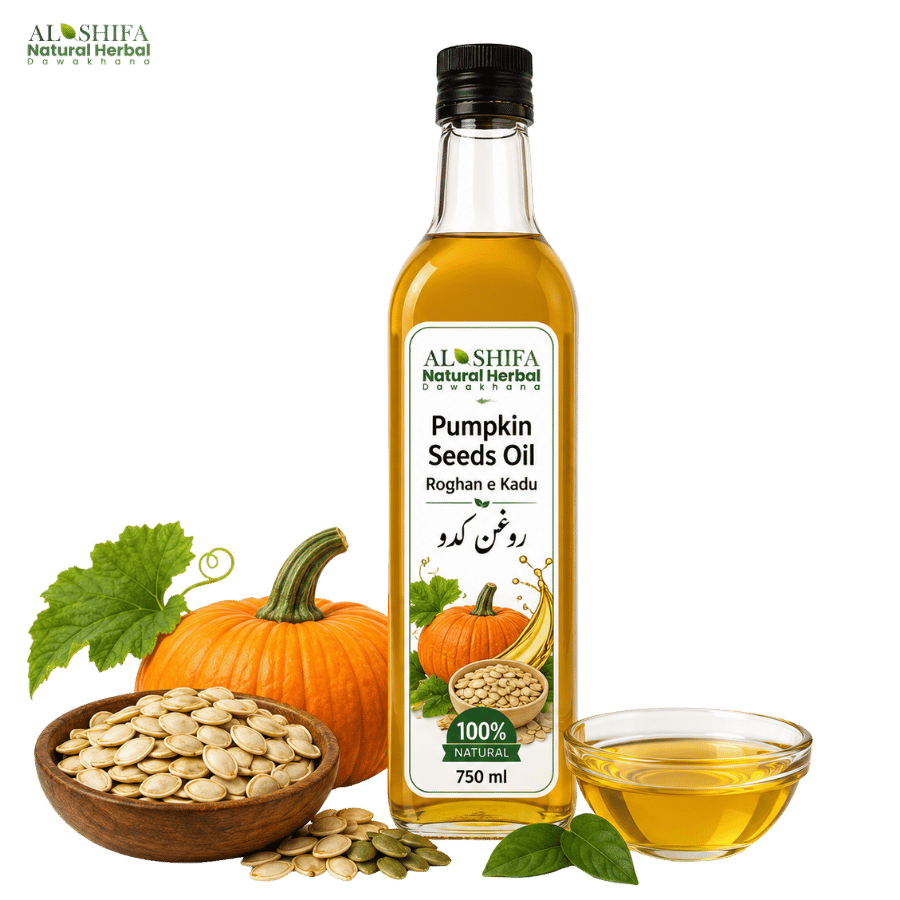
Pumpkin Seed Oil / Roghan-e-Kadu – روغن کدو is a natural oil extracted from premium pumpkin seeds. Naturally rich in unsaturated fatty acids and beneficial plant compounds, it is valued for nutritional use as well as skin, hair, scalp, and body care.
How to Use: Food-grade oil can be added to salads, dressings, vegetables, yogurt, soups, and prepared foods. For external care, apply a small amount to the skin, hair, or scalp and massage gently.
Storage: Store in a cool, dry place away from direct sunlight and excessive heat. Keep the bottle tightly closed after use.
Important Note: Only pumpkin seed oil specifically labelled as food-grade should be consumed. This product should not be considered a treatment for prostate disease, urinary disorders, hair loss, or other medical conditions.
Pumpkin Seed Oil / Roghan-e-Kadu – روغن کدو is a nutrient-rich natural oil obtained from the seeds of pumpkin. Known for its distinctive nutty flavor, deep green to reddish-brown appearance, and naturally occurring fatty acids and plant compounds, pumpkin seed oil has traditionally been valued for culinary use, skin and hair care, and general wellness.
Pumpkin seed oil naturally contains a high proportion of unsaturated fatty acids, particularly linoleic and oleic acids. It also provides naturally occurring tocopherols, phytosterols, carotenoids, and other antioxidant plant compounds, although the exact composition varies according to the pumpkin variety, seed quality, extraction process, and storage conditions.
Depending on how it is manufactured and labelled, pumpkin seed oil may be used as an edible oil or as a topical personal-care oil. Always follow the intended use stated on the specific product.
Product Name: Pumpkin Seed Oil
Urdu Name: روغن کدو
Roman Name: Roghan-e-Kadu / Roghan Kadu
Common English Names: Pumpkin Seed Oil / Pumpkin Oil
Botanical Name: Cucurbita pepo L.
Plant Family: Cucurbitaceae
Plant Part Used: Seeds
Product Form: Oil
Extraction: Seed Oil Extraction
Common Uses: Culinary Use, Skin Care, Hair Care, Scalp Massage & General Wellness
Pumpkin seed oil is produced by extracting the natural oil present in pumpkin seeds.
Pumpkin seeds naturally contain substantial amounts of oil. Depending on the manufacturing process, the oil may be produced through mechanical pressing, cold pressing, or other suitable extraction techniques.
The finished oil can vary in:
These differences are influenced by the pumpkin variety, growing conditions, seed processing, roasting, extraction method, filtration, and storage.
Pumpkin seed oil is particularly valued for its fatty-acid profile.
It naturally contains varying proportions of:
Linoleic and oleic acids generally account for a substantial proportion of the oil.
The precise fatty-acid percentages of a particular product should be determined through laboratory analysis rather than assumed from general reference values.
In addition to fatty acids, pumpkin seed oil can naturally contain several plant-derived compounds, including:
Their concentration depends heavily on the seed variety and processing method.
These compounds contribute to the nutritional and physical characteristics of the oil but should not be interpreted as evidence that the oil can prevent or cure a particular disease.
Food-grade pumpkin seed oil has a distinctive nutty taste and can be used to enhance a variety of foods.
It may be enjoyed with:
Pumpkin seed oil is often particularly suitable as a finishing oil rather than being subjected to prolonged high-temperature cooking.
Only oil clearly manufactured and labelled as food-grade should be consumed.
Pumpkin seed oil is primarily a source of dietary fat.
Its nutritional value comes mainly from its naturally occurring fatty acids, including unsaturated fats.
As with other oils, pumpkin seed oil is energy-dense, so an appropriate serving size should be used as part of a balanced diet.
Its nutritional profile can vary significantly between products, particularly according to extraction and processing.
Replacing foods high in saturated fat with appropriate sources of unsaturated fats can form part of a heart-conscious dietary pattern.
Because pumpkin seed oil naturally contains unsaturated fatty acids, food-grade oil can be incorporated into a varied diet in appropriate quantities.
However, no single oil should be regarded as a treatment for cardiovascular disease, high cholesterol, or high blood pressure.
Overall dietary pattern, physical activity, body weight, smoking status, genetics, and medical conditions remain important.
Pumpkin seeds and pumpkin seed oil have attracted considerable interest in relation to men’s wellness, particularly prostate and urinary health.
Pumpkin seed preparations have been studied for urinary symptoms associated with benign prostate enlargement, but the evidence depends on the specific preparation, dose, and study design.
Therefore, ordinary pumpkin seed oil should not automatically be described as a treatment for an enlarged prostate or urinary disease.
Men experiencing persistent urinary symptoms should seek appropriate medical evaluation.
Pumpkin seed oil is frequently marketed for prostate support.
Some research has examined pumpkin seed-derived preparations in men with lower urinary tract symptoms. While certain studies have reported promising findings, these results should not be generalized into a claim that every commercial pumpkin seed oil can shrink the prostate or cure benign prostatic enlargement.
Persistent symptoms such as:
should be appropriately evaluated, particularly in older adults.
Pumpkin seed products have also been traditionally associated with urinary wellness.
However, urinary symptoms can have many causes, including:
Pumpkin seed oil should not be used to delay medical assessment when symptoms are persistent, severe, painful, or associated with blood in the urine.
Pumpkin seed oil is also used as a natural hair and scalp-conditioning oil.
Its lipid-rich texture can help:
The oil can be used alone or as an ingredient in suitable hair-care formulations.
Pumpkin seed oil has attracted interest in hair-loss research.
A small clinical study of an oral pumpkin seed oil preparation reported improvement in hair counts in men with androgenetic hair loss. However, this does not establish that simply applying ordinary pumpkin seed oil to the scalp will regrow hair or reverse baldness.
For product descriptions, it is therefore more appropriate to describe pumpkin seed oil as supporting hair and scalp conditioning rather than promising guaranteed hair regrowth.
Pumpkin seed oil’s fatty-acid content makes it suitable for many topical skin-care formulations.
When applied appropriately, it may help:
Its oil-based texture helps form a light lipid layer on the skin.
Pumpkin seed oil may be incorporated into:
People with sensitive or acne-prone skin should initially test a small amount, as individual responses to oils can vary.
Pumpkin seed oil can also be used externally as part of a massage-oil blend.
During massage it can:
Massage-related warmth and relaxation are primarily effects of massage itself and should not be interpreted as treatment of an underlying muscle or joint condition.
Pumpkin seed oil naturally contains compounds with antioxidant activity, including certain tocopherols, carotenoids, and phenolic constituents.
Antioxidants participate in protecting molecules from oxidative reactions.
However, describing a food as containing antioxidant compounds is different from claiming that consuming it will prevent cancer, reverse aging, or cure chronic disease.
Pumpkin seed oil naturally contains plant sterols, commonly called phytosterols.
Phytosterols are naturally occurring components of many plant foods, nuts, seeds, and vegetable oils.
The amount present in ordinary pumpkin seed oil varies, and a standard culinary serving should not automatically be assumed to provide the same amount used in specialized phytosterol-enriched foods or supplements.
Pumpkin seed oil can be included as part of a varied diet by both men and women when the product is intended for consumption.
Some research has explored pumpkin seed oil in different areas of women’s health, but evidence remains dependent on the specific population and preparation.
It should therefore be described primarily as a nutritious seed-derived oil rather than as a treatment for hormonal or menopausal disorders.
For food-grade pumpkin seed oil, use according to the manufacturer’s directions.
It can generally be:
Avoid unnecessarily overheating premium cold-pressed oil if you want to preserve its characteristic flavor and quality.
For external skin care:
A patch test is recommended before first use, particularly for sensitive skin.
For hair or scalp conditioning:
The amount needed varies according to hair length, texture, and dryness.
Before applying pumpkin seed oil widely to the skin or scalp, test a small amount on healthy skin.
Stop using it if you develop:
People with known pumpkin or seed allergies should exercise additional caution.
Pumpkin seed allergy is uncommon but possible.
Individuals with a known allergy to pumpkin seeds or related foods should not assume pumpkin seed oil is automatically safe, particularly when the oil is minimally refined and may retain seed proteins.
Seek appropriate medical advice if there is a history of significant food allergy.
High-quality pumpkin seed oil should be appropriately processed, packaged, and stored.
Quality can be influenced by:
Cold-pressed oils may retain distinctive natural flavors and compounds but also require appropriate storage to protect quality.
Cold pressing is a mechanical extraction technique designed to obtain oil without the intense processing conditions associated with some refined oils.
A genuine cold-pressed claim should reflect the actual manufacturing process.
Cold-pressed pumpkin seed oil is often valued for its:
The nutritional composition still varies from one batch and producer to another.
Pumpkin seed oil can have a distinctive appearance ranging from:
Its apparent color may change depending on lighting, oil thickness, seed variety, and production method.
Natural variation in color does not necessarily indicate a quality problem.
Food-grade pumpkin seed oil commonly has a characteristic seed-like or nutty aroma and flavor.
The exact sensory profile depends on whether the seeds were raw, roasted, or otherwise processed before extraction.
A strong unpleasant rancid smell, however, can indicate deterioration.
Pumpkin seed oil contains unsaturated fatty acids that can oxidize when exposed to unfavorable conditions.
For best quality:
Always follow the storage directions on the actual product.
Do not use pumpkin seed oil if it develops:
Natural sediment or color variation may occur in minimally processed oils and does not automatically mean the product is spoiled.
Pumpkin Seed Oil / Roghan-e-Kadu – روغن کدو is a versatile seed-derived oil valued for culinary and personal-care applications.
Product Name: Pumpkin Seed Oil
Urdu Name: روغن کدو
Roman Name: Roghan-e-Kadu / Roghan Kadu
Botanical Source: Cucurbita pepo L.
Plant Family: Cucurbitaceae
Plant Part Used: Seeds
Product Type: Natural Seed Oil
Form: Oil
Typical Color: Deep Green to Reddish-Brown
Typical Flavor: Characteristic Nutty Flavor
Common Uses: Culinary Use, Skin Conditioning, Hair Care, Scalp Massage & External Massage
Storage: Keep tightly closed in a cool, dry place away from direct sunlight and excessive heat.
Pumpkin Seed Oil / Roghan-e-Kadu – روغن کدو is a naturally lipid-rich oil obtained from pumpkin seeds and valued for its distinctive flavor and versatile applications. It naturally provides unsaturated fatty acids along with varying amounts of tocopherols, phytosterols, carotenoids, and other plant compounds.
Food-grade pumpkin seed oil can be enjoyed in salads, dressings, dips, vegetables, soups, and other prepared foods, while cosmetic-grade preparations can be used for skin conditioning, hair care, scalp massage, and external body massage.
Important Note: The intended use of the specific product should always be checked before consumption. Only food-grade pumpkin seed oil should be taken orally. Pumpkin seed oil should not be considered a replacement for medical treatment for prostate disease, urinary disorders, hair loss, cardiovascular disease, or other medical conditions.
روغن کدو کدو کے بیجوں سے حاصل کیا جانے والا ایک قدرتی اور غذائیت سے بھرپور روغن ہے۔ یہ اپنے مخصوص خوش ذائقہ مزے، قدرتی رنگ اور روغنی اجزاء کی وجہ سے غذائی استعمال کے ساتھ ساتھ جلد، بالوں، سر کی جلد اور جسمانی مالش کے لیے بھی معروف ہے۔
کدو کے بیجوں سے حاصل ہونے والے روغن میں قدرتی طور پر غیر سیر شدہ روغنی تیزاب، نباتاتی سٹیرول، قدرتی مانع تکسید اجزاء اور دوسرے نباتاتی مرکبات پائے جاتے ہیں۔ ان اجزاء کی مقدار کدو کی قسم، بیجوں کے معیار، کاشت کے حالات، روغن نکالنے کے طریقے اور محفوظ رکھنے کے حالات کے مطابق مختلف ہو سکتی ہے۔
روغن کدو اگر خوردنی معیار کے مطابق تیار کیا گیا ہو تو اسے غذا میں استعمال کیا جا سکتا ہے، جبکہ بیرونی استعمال کے لیے تیار کردہ روغن جلد، بالوں اور مالش کے لیے استعمال کیا جا سکتا ہے۔ ہمیشہ اصل پروڈکٹ پر درج طریقۂ استعمال کو ترجیح دیں۔
پروڈکٹ کا نام: روغن کدو
عام نام: کدو کے بیجوں کا تیل
ماخذ: کدو کے بیج
پودے کا خاندان: کدو خاندان
استعمال ہونے والا حصہ: بیج
پروڈکٹ کی قسم: قدرتی بیجوں کا روغن
شکل: مائع روغن
عام استعمال: غذائی استعمال، جلد کی نگہداشت، بالوں کی نگہداشت، سر کی مالش اور جسمانی مالش
روغن کدو کدو کے بیجوں میں قدرتی طور پر موجود تیل کو نکال کر حاصل کیا جاتا ہے۔
کدو کے بیج قدرتی طور پر روغنی اجزاء سے بھرپور ہوتے ہیں۔ انہیں مختلف طریقوں سے دبا کر یا مناسب طریقۂ کشید کے ذریعے روغن حاصل کیا جا سکتا ہے۔
تیار شدہ روغن کا:
بیجوں اور تیاری کے طریقے کے مطابق مختلف ہو سکتے ہیں۔
روغن کدو اپنی قدرتی روغنی ساخت کی وجہ سے اہمیت رکھتا ہے۔
اس میں مختلف مقدار میں:
پائے جا سکتے ہیں۔
عام طور پر اس میں غیر سیر شدہ روغنی اجزاء نمایاں مقدار میں موجود ہوتے ہیں۔
کسی مخصوص پروڈکٹ میں ان اجزاء کی درست مقدار جاننے کے لیے لیبارٹری تجزیہ ضروری ہوتا ہے۔
کدو کے بیجوں کا روغن صرف چکنائی ہی نہیں بلکہ مختلف قدرتی نباتاتی مرکبات بھی فراہم کر سکتا ہے۔
ان میں شامل ہو سکتے ہیں:
ان کی مقدار بیجوں کی قسم، تازگی اور روغن نکالنے کے طریقے کے مطابق مختلف ہو سکتی ہے۔
اگر روغن کدو خوردنی معیار کے مطابق تیار کیا گیا ہو تو اسے مختلف غذاؤں کے ساتھ استعمال کیا جا سکتا ہے۔
مثلاً:
اس کا مخصوص قدرتی ذائقہ کھانے میں خوشگوار اضافہ کر سکتا ہے۔
بہترین معیار کے کم حرارت پر نکالے گئے روغن کو بہت زیادہ گرم کرنے کے بجائے تیار شدہ کھانوں پر استعمال کرنا زیادہ مناسب ہو سکتا ہے۔
روغن کدو بنیادی طور پر قدرتی چکنائی کا ذریعہ ہے۔
اس میں موجود غیر سیر شدہ روغنی اجزاء اسے متوازن غذا کا حصہ بنا سکتے ہیں۔
دیگر خوردنی روغنوں کی طرح روغن کدو بھی توانائی سے بھرپور ہوتا ہے، اس لیے اسے مناسب مقدار میں استعمال کرنا بہتر ہے۔
کسی ایک روغن کو مکمل غذا کا متبادل نہیں سمجھنا چاہیے۔
غذا میں مختلف قدرتی بیج، خشک میوے اور مناسب نباتاتی روغن شامل کرنا متوازن غذائی طرز کا حصہ ہو سکتا ہے۔
روغن کدو میں قدرتی طور پر غیر سیر شدہ روغنی اجزاء موجود ہوتے ہیں، اس لیے خوردنی معیار کا روغن مناسب مقدار میں روزمرہ غذا کا حصہ بنایا جا سکتا ہے۔
تاہم دل، فشار خون یا خون میں چکنائی سے متعلق کسی بیماری کے علاج کے لیے صرف کسی ایک روغن پر انحصار نہیں کرنا چاہیے۔
کدو کے بیج اور ان سے حاصل ہونے والا روغن مردانہ عمومی صحت کے حوالے سے بھی معروف ہیں۔
خصوصاً مردوں میں پیشاب اور غدۂ مثانہ سے متعلق صحت کے حوالے سے کدو کے بیجوں اور ان سے حاصل ہونے والی بعض مصنوعات پر تحقیق کی گئی ہے۔
بعض تحقیقات میں مخصوص کدو کے بیجوں کی مصنوعات کے حوالے سے حوصلہ افزا نتائج سامنے آئے ہیں، تاہم ان نتائج کا مطلب یہ نہیں کہ ہر عام روغن کدو غدۂ مثانہ کی بیماری کا علاج کرتا ہے۔
کدو کے بیجوں اور ان کے روغن کا ذکر مردوں کے غدۂ مثانہ کی عمومی صحت کے حوالے سے کیا جاتا ہے۔
بعض مطالعات میں کدو کے بیجوں سے تیار کردہ مخصوص مصنوعات کو پیشاب سے متعلق بعض علامات کے حوالے سے جانچا گیا ہے۔
تاہم عام روغن کدو کو:
والی ثابت شدہ دوا نہیں سمجھنا چاہیے۔
کدو کے بیجوں کی بعض مصنوعات کا روایتی تعلق پیشاب کی عمومی صحت سے بھی رہا ہے۔
پیشاب سے متعلق علامات کی بہت سی وجوہات ہو سکتی ہیں، مثلاً:
اگر پیشاب میں خون، شدید درد، جلن، پیشاب رکنے یا مسلسل دشواری جیسی علامات موجود ہوں تو مستند معالج سے رجوع کرنا ضروری ہے۔
روغن کدو میں موجود قدرتی روغنی اجزاء اسے جلد کی بیرونی نگہداشت کے لیے بھی موزوں بناتے ہیں۔
جلد پر مناسب مقدار میں استعمال کرنے سے یہ:
ہر شخص کی جلد مختلف ہوتی ہے، اس لیے ابتدا میں تھوڑی مقدار استعمال کرنا بہتر ہے۔
خشک جلد پر روغنی مصنوعات جلد کی سطح پر حفاظتی تہہ بنانے میں مدد دے سکتی ہیں۔
روغن کدو کا مناسب بیرونی استعمال جلد کو:
محسوس کرانے میں مدد دے سکتا ہے۔
اگر جلد پر مستقل خارش، شدید سرخی، زخم یا سوزش ہو تو صرف روغن استعمال کرنے کے بجائے اصل وجہ معلوم کرنا ضروری ہے۔
روغن کدو کو بعض جلدی نگہداشت کی مصنوعات میں بھی شامل کیا جاتا ہے۔
یہ مختلف اقسام کی مصنوعات میں استعمال ہو سکتا ہے، مثلاً:
حساس یا دانوں والی جلد رکھنے والے افراد کو پہلے تھوڑی مقدار آزمانی چاہیے۔
روغن کدو کو بیرونی جسمانی مالش کے لیے بھی استعمال کیا جا سکتا ہے۔
مالش کے دوران یہ:
مالش کے دوران محسوس ہونے والی گرمائش اور سکون بنیادی طور پر مالش کی وجہ سے بھی پیدا ہوتے ہیں اور انہیں کسی بیماری کے علاج کا ثبوت نہیں سمجھنا چاہیے۔
روغن کدو بالوں کی بیرونی نگہداشت کے لیے بھی استعمال کیا جاتا ہے۔
اس کی روغنی ساخت:
بالوں کی مقدار اور ساخت کے مطابق استعمال ہونے والے روغن کی مقدار مختلف ہو سکتی ہے۔
روغن کدو کو سر کی جلد پر نرم مالش کے لیے بھی استعمال کیا جا سکتا ہے۔
استعمال کے لیے:
بہت زیادہ مقدار استعمال کرنے کی ضرورت نہیں۔
روغن کدو کے حوالے سے بالوں کی افزائش پر بھی تحقیق ہوئی ہے۔
ایک محدود تحقیق میں منہ کے ذریعے استعمال ہونے والی مخصوص کدو کے بیجوں کے روغن کی تیاری کے ساتھ بعض مردوں میں بالوں کی تعداد میں بہتری دیکھی گئی۔
تاہم اس کا مطلب یہ نہیں کہ عام روغن کدو کو سر پر لگانے سے لازماً نئے بال اگیں گے یا گنج پن ختم ہو جائے گا۔
اس لیے روغن کدو کو زیادہ مناسب طور پر بالوں اور سر کی جلد کی نگہداشت کے لیے بیان کرنا چاہیے۔
روغن بالوں کی موجودہ سطح پر تہہ بنا کر انہیں نرم اور چمکدار بنا سکتا ہے۔
اس سے:
لیکن یہ اثرات لازماً نئی جڑیں بننے یا گنج پن ختم ہونے کی علامت نہیں ہوتے۔
روغن کدو میں قدرتی طور پر مختلف مانع تکسید نباتاتی اجزاء موجود ہو سکتے ہیں۔
یہ اجزاء قدرتی طور پر نباتات اور بیجوں میں پائے جاتے ہیں۔
تاہم کسی روغن میں ایسے اجزاء کی موجودگی کا مطلب یہ نہیں کہ وہ سرطان، بڑھاپے یا کسی دائمی بیماری کو روکنے یا ختم کرنے کی ضمانت دیتا ہے۔
کدو کے بیجوں کے روغن میں قدرتی طور پر نباتاتی سٹیرول بھی پائے جا سکتے ہیں۔
یہ مرکبات بہت سے:
میں قدرتی طور پر موجود ہوتے ہیں۔
ان کی اصل مقدار پروڈکٹ اور تیاری کے طریقے کے مطابق مختلف ہو سکتی ہے۔
خوردنی معیار کا روغن کدو مرد اور خواتین دونوں اپنی متوازن غذا میں مناسب مقدار میں شامل کر سکتے ہیں۔
خواتین کی صحت کے مختلف پہلوؤں کے حوالے سے بھی کدو کے بیجوں کے روغن پر محدود تحقیق ہوئی ہے، لیکن اسے خواتین کے ہارمون، سن یاس یا کسی مخصوص بیماری کا ثابت شدہ علاج نہیں سمجھنا چاہیے۔
اسے بنیادی طور پر ایک قدرتی بیجوں سے حاصل ہونے والے غذائی روغن کے طور پر استعمال کرنا زیادہ مناسب ہے۔
صرف خوردنی معیار کا روغن کدو کھانے کے لیے استعمال کریں۔
اسے حسبِ ضرورت:
مقدار کے لیے اصل پروڈکٹ کی ہدایات کو ترجیح دیں۔
بیرونی جلدی نگہداشت کے لیے:
بالوں کی نگہداشت کے لیے:
خشک اور لمبے بالوں میں مقدار ضرورت کے مطابق بڑھائی جا سکتی ہے۔
اگر روغن کدو بیرونی طور پر پہلی مرتبہ استعمال کر رہے ہوں تو تھوڑی مقدار صحت مند جلد کے ایک چھوٹے حصے پر لگا کر آزمائش کرنا بہتر ہے۔
درج ذیل علامات ظاہر ہونے پر استعمال بند کر دیں:
اگر کسی شخص کو کدو یا کدو کے بیجوں سے معلوم الرجی ہو تو روغن کدو استعمال کرتے وقت احتیاط ضروری ہے۔
کم صاف شدہ روغن میں بیجوں سے تعلق رکھنے والے بعض اجزاء باقی رہ سکتے ہیں۔
شدید غذائی الرجی کی سابقہ تاریخ رکھنے والے افراد کو خوردنی استعمال سے پہلے مناسب طبی مشورہ لینا چاہیے۔
کم حرارت پر دباؤ کے ذریعے روغن نکالنے کا طریقہ بیجوں سے تیل حاصل کرنے کا ایک معروف طریقہ ہے۔
اس طریقے سے تیار کردہ روغن کو عموماً اس کی:
کی وجہ سے پسند کیا جاتا ہے۔
تاہم کم حرارت پر تیار ہونے کا دعویٰ صرف اسی صورت میں کیا جانا چاہیے جب پروڈکٹ حقیقتاً اسی طریقے سے تیار کی گئی ہو۔
روغن کدو کا رنگ مختلف ہو سکتا ہے۔
یہ:
دکھائی دے سکتا ہے۔
روشنی، روغن کی تہہ کی موٹائی، بیجوں کی قسم اور تیاری کا طریقہ اس کے ظاہری رنگ کو متاثر کر سکتے ہیں۔
رنگ میں قدرتی فرق لازماً خرابی کی علامت نہیں۔
خوردنی روغن کدو میں عموماً بیجوں جیسی مخصوص خوشبو اور قدرے خوش ذائقہ مزہ پایا جا سکتا ہے۔
اگر بیجوں کو روغن نکالنے سے پہلے بھونا گیا ہو تو ذائقے اور خوشبو میں فرق آ سکتا ہے۔
البتہ بہت زیادہ تیز، ناگوار یا باسی بو روغن کے خراب ہونے کی علامت ہو سکتی ہے۔
روغن کدو کا معیار کئی عوامل سے متاثر ہو سکتا ہے، مثلاً:
معیاری پیکنگ روغن کو روشنی، ہوا اور آلودگی سے محفوظ رکھنے میں مدد دیتی ہے۔
روغن کدو میں غیر سیر شدہ روغنی اجزاء موجود ہوتے ہیں، اس لیے اسے مناسب طریقے سے محفوظ کرنا ضروری ہے۔
اگر روغن میں درج ذیل تبدیلیاں پیدا ہو جائیں تو استعمال نہ کریں:
کم عمل کاری والے قدرتی روغن میں معمولی تلچھٹ یا رنگ کا فرق لازماً خرابی کی علامت نہیں ہوتا۔
روغن کدو کدو کے بیجوں سے حاصل ہونے والا ایک کثیر المقاصد قدرتی روغن ہے۔
پروڈکٹ کا نام: روغن کدو
عام نام: کدو کے بیجوں کا تیل
ماخذ: کدو کے بیج
پودے کا خاندان: کدو خاندان
استعمال ہونے والا حصہ: بیج
پروڈکٹ کی قسم: قدرتی بیجوں کا روغن
شکل: مائع روغن
عمومی رنگ: گہرے سبز سے سرخی مائل بھورے تک
عمومی ذائقہ: بیجوں جیسا مخصوص خوش ذائقہ مزہ
عام استعمال: غذائی استعمال، جلد کی نگہداشت، بالوں کی نگہداشت، سر کی مالش اور جسمانی مالش
محفوظ رکھنے کا طریقہ: ٹھنڈی اور خشک جگہ پر اچھی طرح بند کرکے رکھیں اور براہِ راست دھوپ اور زیادہ گرمی سے محفوظ رکھیں۔
روغن کدو کدو کے بیجوں سے حاصل کیا جانے والا قدرتی روغن ہے جو اپنی روغنی ساخت، مخصوص ذائقے اور مختلف استعمالات کی وجہ سے اہمیت رکھتا ہے۔ اس میں قدرتی طور پر غیر سیر شدہ روغنی اجزاء کے ساتھ نباتاتی سٹیرول، قدرتی مانع تکسید اجزاء اور دیگر نباتاتی مرکبات موجود ہو سکتے ہیں۔
خوردنی معیار کا روغن کدو سلاد، سبزیوں، دہی، شوربے اور مختلف تیار شدہ غذاؤں میں استعمال کیا جا سکتا ہے، جبکہ بیرونی استعمال کے لیے موزوں روغن جلد کی نرمی، بالوں کی نگہداشت، سر کی مالش اور جسمانی مالش کے لیے استعمال کیا جا سکتا ہے۔
اہم نوٹ: صرف خوردنی معیار کے مطابق تیار کردہ روغن کو خوراک میں استعمال کریں۔ روغن کدو کو غدۂ مثانہ کی بیماری، پیشاب کے مسائل، گنج پن، دل کی بیماری یا کسی دوسری طبی کیفیت کا متبادل علاج نہ سمجھیں۔ کسی بیماری یا مسلسل علامت کی صورت میں مستند معالج سے مشورہ کریں۔