روغن تارا میرا
Price range: ₨ 500 through ₨ 2,500
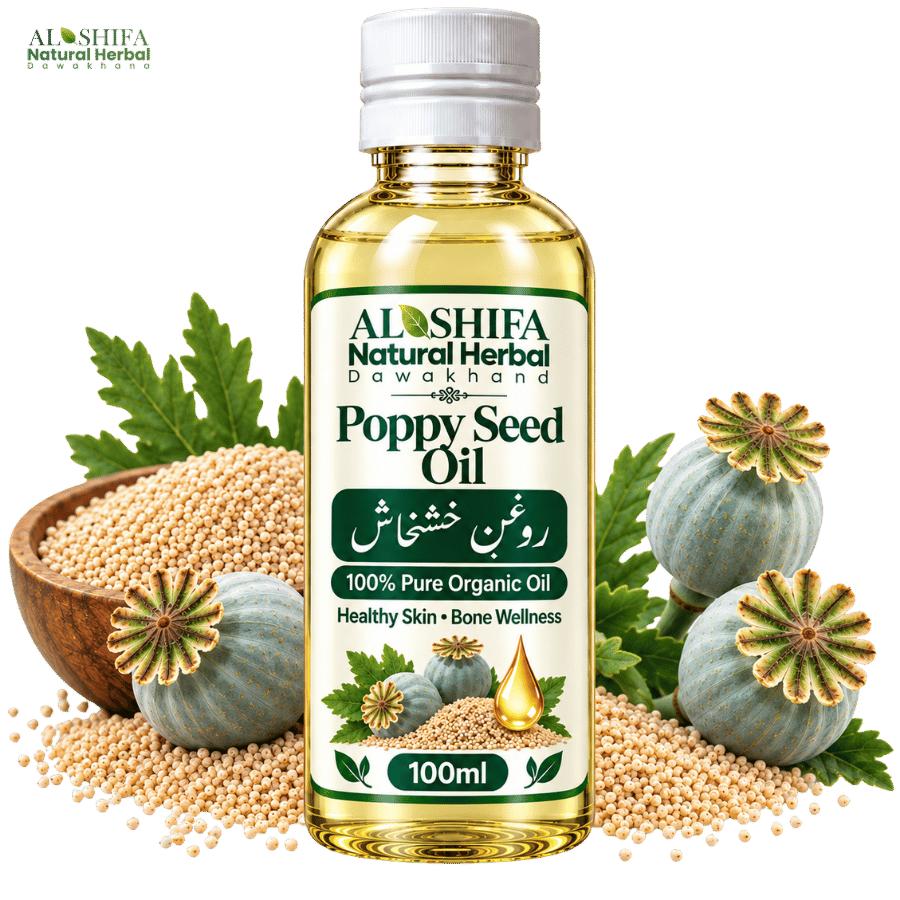
Poppy Seed Oil / Roghan Khashkhash is a natural fixed vegetable oil obtained from the mature seeds of Papaver somniferum. Naturally rich in linoleic acid (Omega-6) with oleic and other fatty acids, it is valued for skin conditioning, hair and scalp care, massage, soap making and cosmetic formulations.
Al Shifa Poppy Seed Oil is carefully selected with attention to its correct botanical identity, quality mature seeds, natural fatty-acid profile, freshness, clean handling and protective packaging.
Key Features:
Usage: Apply an appropriate amount to the hair, scalp or skin, use for massage, or blend with compatible carrier oils and cosmetic formulations. Use internally only when specifically supplied and labelled as food-grade Poppy Seed Oil.
Important Note: Poppy Seed Oil is a fixed oil from mature poppy seeds, not an essential oil, poppy latex, opium or opioid preparation. Its hair and skin benefits are primarily cosmetic and conditioning in nature and should not be considered treatment for hair loss or skin disease.
Poppy Seed Oil / Roghan Khashkhash – روغنِ خشخاش is a natural fixed vegetable oil obtained from the mature seeds of Papaver somniferum L., the opium poppy plant belonging to the Papaveraceae family. The oil is valued for its light texture, emollient character and naturally rich fatty-acid profile and is used in skin care, hair and scalp care, massage, soap making and cosmetic formulations.
Poppy seeds naturally contain a substantial amount of oil, with linoleic acid generally forming a major part of its fatty-acid profile alongside oleic acid, palmitic acid and smaller amounts of other fatty acids. Properly produced seed oil should be clearly distinguished from the latex and other parts of the poppy plant associated with opium alkaloids.
Depending on processing, Poppy Seed Oil may be cold-pressed, mechanically pressed or refined. Its colour, aroma and minor constituents can vary according to seed quality and extraction method.
At Al Shifa Natural Herbal Dawakhana, Poppy Seed Oil is selected with attention to its correct Papaver somniferum seed identity, quality seeds, characteristic oil profile, clean processing, freshness, protective packaging and proper storage.
Poppy Seed Oil is a fixed vegetable oil extracted from mature poppy seeds.
It consists primarily of triglycerides containing naturally occurring fatty acids and does not behave like a volatile essential oil.
It is particularly valued in cosmetic formulations for its:
Food-grade Poppy Seed Oil may also have culinary applications where legally marketed and specifically supplied for food use.
Product Name: Poppy Seed Oil / Roghan Khashkhash – روغن خشخاش
English Name: Poppy Seed Oil
Urdu Name: روغن خشخاش / خشخاش کا تیل
Roman Name: Roghan Khashkhash / Khashkhash Oil / Poppy Seed Oil
Scientific Name: Papaver somniferum L.
Plant Family: Papaveraceae
Plant Part: Mature Seeds
Oil Type: Fixed Vegetable Oil / Carrier Oil
Common Forms: Cold-Pressed Poppy Seed Oil / Mechanically Pressed Poppy Seed Oil / Refined Poppy Seed Oil
Appearance: Pale Yellow to Golden Yellow, Depending on Processing
Aroma: Mild, Nutty to Characteristic Seed-Like Aroma
Primary Applications: Skin Care, Hair & Scalp Care, Massage, Soap Making & Cosmetic Formulations
Product Type: Poppy Seed Fixed Oil
Papaver somniferum is an annual flowering plant recognised for its distinctive flowers and seed capsules.
After appropriate maturation, its capsules contain numerous small seeds.
The seeds are naturally rich in fixed oil and are the source material used for producing Poppy Seed Oil.
This seed oil should be clearly distinguished from materials obtained from other parts of the plant.
Poppy Seed Oil can be obtained by pressing mature seeds.
Common commercial forms include:
Cold-Pressed Poppy Seed Oil – Produced with limited heat exposure and generally retains more of its natural colour, aroma and characteristic minor constituents.
Refined Poppy Seed Oil – Further processed to provide a lighter colour, milder aroma and more neutral characteristics.
The extraction and refining method can influence:
Poppy Seed Oil is a fixed vegetable oil rather than a volatile essential oil.
Fixed oils consist mainly of triglycerides and fatty acids.
Therefore:
Poppy Seed Oil ≠ Poppy Essential Oil
It can instead function as a carrier or emollient oil in appropriate formulations.
Poppy Seed Oil naturally contains a mixture of fatty acids.
Commonly reported fatty acids include:
The precise percentages vary according to seed variety, growing conditions and processing.
Linoleic acid is an essential Omega-6 fatty acid and generally forms a major proportion of Poppy Seed Oil.
In cosmetic formulations, linoleic-acid-rich oils are valued for:
However:
Poppy Seed Oil ≠ Pure Linoleic Acid
Oleic acid is a monounsaturated fatty acid naturally present in Poppy Seed Oil.
It contributes to:
However:
Poppy Seed Oil ≠ Pure Oleic Acid
Depending on processing, Poppy Seed Oil can contain smaller amounts of naturally occurring:
Refining can alter the concentrations of some minor compounds.
Poppy Seed Oil can function as an emollient in skin-care formulations.
It may contribute to:
Its relatively light character can make it useful in different cosmetic oil blends.
The oil can be incorporated into preparations intended for dry or rough-feeling skin.
It can help provide:
However:
Skin Conditioning ≠ Treatment for Eczema, Psoriasis or Other Skin Disease
Poppy Seed Oil can be used as part of massage-oil formulations.
It provides:
It may be used alone when suitable or blended with other compatible carrier oils.
Poppy Seed Oil may be incorporated into hair oils and pre-wash conditioning treatments.
It can contribute to:
These are cosmetic conditioning effects.
Poppy Seed Oil may also be used in scalp-conditioning and massage formulations.
It can provide:
However:
Scalp Conditioning ≠ Treatment for Scalp Disease
Poppy Seed Oil is sometimes promoted in traditional hair-care preparations.
However:
Poppy Seed Oil Should Not Be Presented as a Guaranteed Hair-Regrowth Treatment.
Improved lubrication and conditioning may help reduce mechanical damage and improve the appearance of hair, but this is different from stimulating new follicular growth.
Conditioning oils can reduce friction between hair fibres.
This may help reduce:
However:
Reduced Hair Breakage ≠ Treatment for Hair Loss
Persistent hair loss can have many causes and requires appropriate evaluation.
Poppy Seed Oil can be incorporated into:
The appropriate concentration depends on the complete formulation.
Poppy Seed Oil may be incorporated into handcrafted and cosmetic soaps.
Its fatty-acid composition contributes to the characteristics of the finished soap.
The final soap properties depend on the complete oil blend and formulation process.
Whole poppy seeds contain:
Poppy Seed Oil primarily represents the extracted lipid fraction.
Therefore:
Poppy Seed Oil ≠ Whole Poppy Seeds
Nutritional information for whole seeds should not automatically be applied to the oil.
Poppy Seed Extract can be produced through different extraction processes and may have a chemical profile different from pressed seed oil.
Therefore:
Poppy Seed Extract ≠ Poppy Seed Oil
This is an especially important distinction.
Poppy Seed Oil is produced from mature seeds.
Opium is associated with the dried latex obtained from immature capsules of Papaver somniferum.
Therefore:
Poppy Seed Oil ≠ Opium
The source material and composition are fundamentally different.
Mature poppy seeds themselves are not the principal site of production of the characteristic opium alkaloids.
However, seeds can become externally contaminated with residues from other parts of the plant during harvesting and processing.
Appropriate cleaning and processing therefore matter, particularly for products intended for food use.
Poppy Seed Oil should not be described as a morphine oil.
Morphine is an alkaloid associated primarily with poppy latex rather than the fixed lipid fraction of mature seeds.
Therefore:
Poppy Seed Oil ≠ Morphine
Similarly:
Poppy Seed Oil ≠ Codeine
and
Poppy Seed Oil ≠ Opium Extract
Properly produced Poppy Seed Oil is a fixed seed oil and should not be confused with narcotic preparations derived from poppy latex.
Its normal cosmetic role is based primarily on its lipid and fatty-acid composition.
Poppy Seed Oil is a fixed vegetable oil.
It is not a conventional steam-distilled essential oil.
Therefore:
Poppy Seed Oil ≠ Essential Oil
It may instead be used as a carrier for appropriately diluted essential oils.
Poppy seeds and Black Seeds are botanically unrelated.
Poppy Seed: Papaver somniferum
Black Seed / Kalonji: Nigella sativa
Therefore:
Poppy Seed Oil ≠ Black Seed Oil
Their botanical sources and chemical profiles are entirely different.
Sesame Oil is obtained from Sesamum indicum, while Poppy Seed Oil comes from Papaver somniferum.
Both are fixed vegetable oils, but they have different:
Therefore:
Poppy Seed Oil ≠ Sesame Oil
Both oils can contain substantial amounts of linoleic acid, but they come from completely different botanical sources.
Poppy Seed Oil: Papaver somniferum
Walnut Oil: Juglans regia
Therefore:
Poppy Seed Oil ≠ Walnut Oil
Poppy Seed Oil can naturally contain tocopherols.
However:
Poppy Seed Oil ≠ Vitamin E Oil
Tocopherols are only one group of minor components within the complete oil.
Poppy and poppy-related materials have historically been associated with calming and sleep-related claims.
However, it is important not to transfer the pharmacological properties of poppy latex or opioid alkaloids to pressed seed oil.
Therefore:
Poppy Seed Oil Should Not Be Presented as an Opioid Sedative or Sleeping Medicine.
External application of the fixed oil should not be described as producing narcotic effects.
Traditional oil preparations may be used for massage, but massage lubrication and comfort should not be confused with pharmacological opioid pain relief.
Therefore:
Poppy Seed Oil ≠ Opioid Pain Medicine
It should not be presented as a substitute for appropriate pain treatment.
Poppy seeds and their oil contain naturally occurring minor constituents that have been investigated for antioxidant properties.
However:
Antioxidant Activity ≠ Treatment or Prevention of Disease
The relevance of experimental findings depends on the specific oil, processing method and study conditions.
The fatty-acid composition of Poppy Seed Oil makes it useful as an emollient.
However, this does not establish it as a treatment for:
Cosmetic conditioning and medical treatment should remain clearly distinguished.
Poppy seed allergy is possible, although individual reactions vary.
People with known sensitivity to poppy seeds should use appropriate caution with Poppy Seed Oil.
Before wider topical use, patch testing may be appropriate.
Discontinue use if significant:
develops.
Cold-Pressed Poppy Seed Oil generally retains more of its characteristic aroma, colour and minor constituents.
Refined Poppy Seed Oil generally has a lighter colour and more neutral aroma.
Processing can influence:
Therefore:
Cold-Pressed Poppy Seed Oil ≠ Refined Poppy Seed Oil
Because Poppy Seed Oil is naturally rich in polyunsaturated fatty acids, it can be sensitive to oxidation.
Exposure to:
can accelerate deterioration.
Proper storage is therefore important.
Normal external cosmetic use of a properly prepared seed oil is different from medicinal use of other poppy-derived materials.
Do not assume that safety information for poppy seeds, poppy latex, opioid medicines and Poppy Seed Oil is interchangeable.
Internal use should be limited to appropriately produced and legally marketed food-grade oil.
Use topical cosmetic oil only according to its intended purpose.
Keep the bottle securely out of reach of young children.
Do not confuse Poppy Seed Oil with medicinal or narcotic poppy-derived preparations.
Poppy Seed Oil can be produced for cosmetic, technical or food applications.
Therefore:
Cosmetic-Grade Poppy Seed Oil ≠ Automatically Food-Grade Poppy Seed Oil
Only consume oil specifically supplied and labelled for food use and in accordance with applicable local requirements.
At Al Shifa Natural Herbal Dawakhana, Poppy Seed Oil is selected with attention to:
Botanical Identity – Genuine Papaver somniferum seed oil.
Seed Quality – Carefully selected mature poppy seeds.
Fixed-Oil Identity – Genuine vegetable carrier oil rather than essential oil.
Fatty-Acid Profile – Naturally rich in linoleic acid with oleic and other fatty acids.
Skin-Care Applications – Suitable for emollient and conditioning formulations.
Hair-Care Applications – Suitable for hair-conditioning oils.
Scalp-Care Applications – Suitable for appropriate scalp-conditioning preparations.
Massage Applications – Suitable for compatible massage-oil blends.
Cosmetic Applications – Suitable for creams, balms, soaps and oil-based formulations.
Identity Awareness – Clear distinction from poppy latex, opium and opioid alkaloids.
Freshness Awareness – Attention to oxidation and appropriate storage.
Clean Handling – Carefully handled during packing.
Protective Packaging – Helps preserve oil quality.
Responsible Claims – No narcotic, opioid, guaranteed hair-growth or disease-treatment claims.
Al Shifa Natural Herbal Dawakhana, established in 1999, supplies natural oils, herbs and botanical materials throughout Pakistan.
Our focus for Poppy Seed Oil includes:
For Skin Care: Apply a small amount to clean skin or incorporate into compatible creams, lotions, body oils and balms.
For Hair Care: Apply an appropriate amount to the hair as a pre-wash conditioning oil or combine with compatible hair oils.
For Scalp Care: Massage a suitable amount gently into the scalp when appropriate for the individual.
For Massage: Use alone when suitable or blend with compatible fixed oils.
As a Carrier Oil: Use as a base for appropriately diluted essential oils according to formulation requirements.
For Soap & Cosmetics: Incorporate according to the requirements of the finished formulation.
For Culinary Use: Consume only when specifically supplied, legally marketed and labelled as food-grade Poppy Seed Oil.
Poppy Seed Oil / Roghan Khashkhash – روغنِ خشخاش is a fixed vegetable oil obtained from mature seeds of Papaver somniferum L. It should be clearly distinguished from poppy latex, opium and opioid alkaloids associated with other parts of the plant.
Important distinctions include:
Poppy Seed Oil is relatively sensitive to oxidation because of its naturally high proportion of polyunsaturated fatty acids.
For best quality:
Poppy Seed Oil / Roghan Khashkhash – روغنِ خشخاش is a natural fixed vegetable oil obtained from the mature seeds of Papaver somniferum L. It is valued for its light texture, smooth application and naturally rich linoleic-acid-based fatty-acid profile.
Poppy Seed Oil can be used in skin care, dry-skin formulations, hair and scalp care, massage oils, soaps and specialised cosmetic formulations. It functions as a fixed carrier oil rather than a volatile essential oil.
Importantly, seed-derived Poppy Seed Oil should be distinguished from poppy latex, opium, morphine, codeine and other opioid-related materials. Its cosmetic properties are primarily associated with its natural lipid composition.
Customers searching for Poppy Seed Oil, Roghan Khashkhash, Khashkhash Oil, Papaver Somniferum Oil, Poppy Seed Carrier Oil, Pure Poppy Seed Oil, Natural Poppy Seed Oil, Cold Pressed Poppy Seed Oil, Poppy Seed Oil for Skin, Poppy Seed Oil for Hair, Poppy Seed Oil for Scalp, Poppy Seed Oil for Massage, Poppy Seed Oil Pakistan, Roghan Khashkhash Pakistan, Poppy Seed Oil Lahore, Poppy Seed Oil price in Pakistan, Roghan Khashkhash price, buy Poppy Seed Oil Pakistan or Poppy Seed Oil online Pakistan can choose Al Shifa Natural Herbal Dawakhana for carefully selected quality.
Since 1999, Al Shifa Natural Herbal Dawakhana has focused on supplying natural oils and botanical materials with attention to correct identity, quality selection, clean handling, freshness, responsible product information, protective packaging and proper storage.
Product Name: Poppy Seed Oil / Roghan Khashkhash – روغنِ خشخاش
English Name: Poppy Seed Oil
Urdu Name: روغنِ خشخاش / خشخاش کا تیل
Roman Name: Roghan Khashkhash / Khashkhash Oil / Poppy Seed Oil
Scientific Name: Papaver somniferum L.
Plant Family: Papaveraceae
Plant Part: Mature Seeds
Oil Type: Fixed Vegetable Oil / Carrier Oil
Common Forms: Cold-Pressed Poppy Seed Oil / Mechanically Pressed Poppy Seed Oil / Refined Poppy Seed Oil
Appearance: Pale Yellow to Golden Yellow, Depending on Processing
Aroma: Mild, Nutty to Characteristic Seed-Like Aroma
Primary Applications: Skin Care, Hair & Scalp Care, Massage, Soap Making & Cosmetic Formulations
Product Type: Poppy Seed Fixed Oil
Important Note: Poppy Seed Oil is a fixed vegetable oil obtained from mature Papaver somniferum seeds. It is fundamentally different from poppy latex, opium and opioid alkaloids such as morphine and codeine. It should not be promoted as a narcotic, sedative or opioid pain-relieving oil. Cosmetic-grade Poppy Seed Oil should not automatically be considered suitable for internal use.
روغن خشخاش خشخاش کے پکے ہوئے بیجوں سے حاصل ہونے والا قدرتی روغن ہے۔ خشخاش کے بیج چھوٹے، گول اور قدرتی چکنائی سے بھرپور ہوتے ہیں۔ انہی بیجوں کو دبا کر ان میں موجود روغن حاصل کیا جاتا ہے۔
روغن خشخاش میں لینولیک تیزاب، اولیک تیزاب، پالمیٹک تیزاب، سٹیئرک تیزاب، قدرتی سٹیرولز اور وٹامن ای سمیت کئی قدرتی روغنی اجزا پائے جاتے ہیں۔
یہ ہلکا اور نرم روغن جلد، بالوں، سر کی جلد اور جسمانی مالش میں استعمال کیا جاتا ہے۔ کھانے کے درجے کا روغن خشخاش خوراک میں بھی استعمال کیا جاتا ہے۔
اردو: خشخاش، تخم خشخاش، روغن خشخاش، خشخاش کا تیل
پنجابی: خشخاش، خشخاش دا تیل
ہندی: خس خس، پوست دانہ، خس خس کا تیل
فارسی: خشخاش، روغن خشخاش
عربی: خشخاش، بزر الخشخاش، زیت الخشخاش
انگریزی نام: پاپی سیڈ آئل، پاپی آئل
سائنسی نام: پاپاور سومنی فیرم
خاندان: پاپاویریسی
استعمال ہونے والا حصہ: پکے ہوئے بیج
خشخاش ایک سالانہ پودا ہے جس پر خوبصورت پھول آتے ہیں۔
پھول ختم ہونے کے بعد پودے پر گول ڈوڈی بنتی ہے جس کے اندر بڑی تعداد میں چھوٹے بیج ہوتے ہیں۔
پکے اور صاف خشخاش کے بیج سفید، کریمی، سرمئی، نیلے یا سیاہی مائل رنگت کے ہو سکتے ہیں۔
بیجوں میں قدرتی چکنائی پائی جاتی ہے اور اسی چکنائی سے روغن خشخاش حاصل کیا جاتا ہے۔
خشخاش کے بیج اور پودے کی کچی ڈوڈی سے نکلنے والا دودھ ایک چیز نہیں ہیں۔ روغن خشخاش پکے ہوئے بیجوں سے حاصل کیا جاتا ہے۔
اچھے خشخاش کے بیجوں میں یہ خصوصیات دیکھی جاتی ہیں:
روغن حاصل کرنے کے لیے صاف، پکے اور اچھی حالت والے بیجوں کو اہمیت دی جاتی ہے۔
صاف اور خشک خشخاش کے بیجوں کو دبا کر ان میں موجود قدرتی چکنائی الگ کی جاتی ہے۔
ٹھنڈے دباؤ سے حاصل روغن میں بیجوں کی اپنی ہلکی خوشبو اور قدرتی روغنی اجزا زیادہ نمایاں رہتے ہیں۔
روغن حاصل کرنے کے بعد اس میں موجود غیر ضروری بیجوں کے ذرات الگ کیے جاتے ہیں۔
صاف روغن خشخاش عموما ہلکی زرد سے سنہری رنگت رکھتا ہے۔
پاکستانی اور برصغیر کی حکیمی کتب مفردات میں تخم خشخاش کو سرد اور تر مزاج کے ساتھ بیان کیا جاتا ہے۔
حکمت میں خشخاش کے بیجوں کو غذائی استعمال کے ساتھ جسم کو سکون دینے والی غذاؤں میں شمار کیا جاتا ہے۔
روغن خشخاش کو جلد، بالوں، سر کی جلد اور جسمانی مالش کے لیے استعمال کیا جاتا ہے۔
خشخاش کے بیج حکمت میں معروف غذائی بیج ہیں۔
ان میں قدرتی چکنائی، پروٹین اور دوسرے غذائی اجزا پائے جاتے ہیں۔
تخم خشخاش کو غذائی ادویات اور کھانوں میں شامل کیا جاتا ہے۔
ان سے حاصل روغن کو جسمانی مالش، جلد اور بالوں کی روغنی دیکھ بھال کے لیے استعمال کیا جاتا ہے۔
روغن خشخاش کے اہم استعمال یہ ہیں:
روغن خشخاش خشک اور کھردری جلد کی روغنی دیکھ بھال میں استعمال کیا جاتا ہے۔
اس میں موجود لینولیک اور اولیک تیزاب جلد کو نرم اور ملائم رکھنے کے لیے فائدہ مند ہیں۔
نہانے کے بعد نم جلد پر اس کی تھوڑی مقدار لگا کر ہلکی مالش کی جاتی ہے۔
روغن خشخاش کو خشک چہرے کی روغنی دیکھ بھال میں کم مقدار میں استعمال کیا جاتا ہے۔
اس کی ہلکی روغنی ساخت جلد کو نرم رکھنے کے لیے فائدہ مند ہے۔
چہرے پر پہلی بار استعمال سے پہلے جلد کے چھوٹے حصے پر تھوڑی مقدار آزمائیں۔
جلدی امراض میں طبی استعمال معالج سے پوچھ کر کریں۔
خشک ہاتھوں اور پاؤں پر روغن خشخاش لگایا جاتا ہے۔
اسے رات کے وقت جلد پر لگا کر ہلکے ہاتھ سے مالش کی جاتی ہے۔
یہ خشک جلد کو روغنی نرمی دینے کے لیے فائدہ مند ہے۔
خشک اور کھردری ایڑیوں پر روغن خشخاش استعمال کیا جاتا ہے۔
اسے روغن بادام، روغن ناریل یا روغن زیتون کے ساتھ ملا کر بھی لگایا جاتا ہے۔
کہنیوں اور گھٹنوں کی خشک جلد پر روغن خشخاش کی تھوڑی مقدار لگائی جاتی ہے۔
اس کی قدرتی چکنائی کھردری جلد کو نرم رکھنے کے لیے فائدہ مند ہے۔
روغن خشخاش جسمانی مالش کے لیے استعمال کیا جاتا ہے۔
اسے اکیلا یا بادام، تل، ناریل اور زیتون کے روغن کے ساتھ ملا کر استعمال کیا جاتا ہے۔
اس کی نرم روغنی ساخت جسمانی جلد کی مالش کے لیے اچھی رہتی ہے۔
جسمانی محنت یا ورزش کے بعد بازوؤں، کندھوں، کمر اور ٹانگوں کی ہلکی مالش میں روغن خشخاش استعمال کیا جاتا ہے۔
اس کی نرم روغنی ساخت جلد پر آسانی سے پھیلتی ہے اور جسمانی مالش کے لیے فائدہ مند ہے۔
روغن خشخاش کو دوسرے مالش والے روغنوں کے ساتھ ملا کر پٹھوں کے کھنچاؤ کی مالش میں استعمال کیا جاتا ہے۔
اسے متاثر حصے کے اردگرد ہلکے ہاتھ سے لگایا جاتا ہے۔
پٹھوں کے امراض یا چوٹ میں طبی استعمال معالج سے پوچھ کر کریں۔
روغن خشخاش بالوں کی روغنی دیکھ بھال میں استعمال کیا جاتا ہے۔
اسے بالوں کی جڑوں، لمبائی اور خشک سروں پر لگایا جاتا ہے۔
اس میں موجود قدرتی چکنائی خشک اور کھردرے بالوں کو نرم رکھنے کے لیے فائدہ مند ہے۔
روغن خشخاش سر کی خشک جلد پر لگایا جاتا ہے۔
اسے انگلیوں کے پوروں سے ہلکے ہاتھ سے سر کی جلد پر پھیلایا جاتا ہے۔
سر کی جلد کے امراض میں طبی استعمال معالج سے پوچھ کر کریں۔
خشک اور کھردرے بالوں پر روغن خشخاش کم مقدار میں استعمال کیا جاتا ہے۔
اسے ناریل، بادام یا جوجوبا کے روغن کے ساتھ ملا کر بھی لگایا جاتا ہے۔
یہ بالوں کو نرم، ہموار اور چمک دار دکھانے کے لیے فائدہ مند ہے۔
بالوں کے خشک اور کھردرے سروں پر روغن خشخاش کے چند قطرے لگائے جاتے ہیں۔
اسے بال دھونے سے پہلے بالوں کی لمبائی پر بھی استعمال کیا جاتا ہے۔
روغن خشخاش کو داڑھی اور اس کے نیچے کی خشک جلد کی روغنی دیکھ بھال میں استعمال کیا جاتا ہے۔
اسے جوجوبا، بادام یا دوسرے بنیادی روغن کے ساتھ ملا کر بھی لگایا جاتا ہے۔
روغن خشخاش ناخنوں اور ان کے اردگرد خشک جلد پر لگایا جاتا ہے۔
چند قطرے لگا کر ہلکی مالش جلد کو نرم رکھنے کے لیے فائدہ مند ہے۔
روغن خشخاش میں اہم قدرتی روغنی اجزا یہ ہیں:
لینولیک تیزاب روغن خشخاش کی قدرتی چکنائی کا بڑا حصہ ہے۔
یہ اومیگا چھ خاندان کی قدرتی چکنائی ہے۔
یہ جلد اور بالوں کی روغنی دیکھ بھال میں استعمال ہونے والے کئی قدرتی روغنوں میں پایا جاتا ہے۔
اولیک تیزاب بھی روغن خشخاش میں پایا جاتا ہے۔
یہ اومیگا نو خاندان کی قدرتی چکنائی ہے۔
یہ جلد اور بالوں کو روغنی نرمی دینے والے قدرتی اجزا میں شامل ہے۔
پالمیٹک تیزاب روغن خشخاش کی قدرتی چکنائی کا حصہ ہے۔
یہ کئی بیجوں سے حاصل ہونے والے روغنوں میں بھی پایا جاتا ہے۔
سٹیئرک تیزاب روغن خشخاش میں کم مقدار میں پایا جاتا ہے۔
یہ بیجوں کی قدرتی چکنائی کا حصہ ہے۔
روغن خشخاش میں قدرتی وٹامن ای پایا جاتا ہے۔
یہ بیجوں سے حاصل روغن کے قدرتی اجزا میں شامل ہے۔
خشخاش کے روغن میں قدرتی سٹیرولز پائے جاتے ہیں۔
یہ بیجوں کی قدرتی چکنائی کے اہم اجزا میں شامل ہیں۔
خشخاش کا پودا اور افیون ایک ہی پودے سے جڑے نام ہیں، لیکن روغن خشخاش اور افیون ایک چیز نہیں ہیں۔
روغن خشخاش پکے ہوئے بیجوں کی چکنائی سے حاصل کیا جاتا ہے۔
افیون کچی ڈوڈی سے نکلنے والے دودھ سے حاصل ہوتی ہے۔
پکے اور صاف خشخاش کے بیجوں سے حاصل روغن بنیادی طور پر غذائی چکنائیوں پر مشتمل ہوتا ہے۔
اسی لیے روغن خشخاش کی پہچان بیجوں سے حاصل ہونے والے روغن کے طور پر واضح رکھنا ضروری ہے۔
خشخاش کے پکے بیج کھانوں میں بھی استعمال کیے جاتے ہیں۔
خشخاش کی کچی ڈوڈی ایک الگ حصہ ہے۔
روغن خشخاش کے لیے صاف اور پکے بیج استعمال کیے جاتے ہیں۔
اس لیے بیجوں کے روغن کو کچی ڈوڈی کے اجزا کے برابر نہ سمجھیں۔
اچھے روغن خشخاش کی رنگت عموما ہلکی زرد سے سنہری ہوتی ہے۔
ٹھنڈے دباؤ سے حاصل روغن میں بیجوں کی اپنی قدرتی رنگت زیادہ نمایاں رہتی ہے۔
بہت شوخ مصنوعی رنگ اچھے روغن کی پہچان نہیں ہے۔
اچھے روغن خشخاش کی بو ہلکی اور بیجوں جیسی ہوتی ہے۔
اس میں تیز باسی، سڑی ہوئی یا خراب بو نہیں ہونی چاہیے۔
باسی بو روغن کے خراب ہونے کی اہم پہچان ہے۔
کھانے کے درجے کا روغن خشخاش خوراک میں استعمال کیا جاتا ہے۔
اس کا ذائقہ ہلکا اور بیجوں جیسا ہوتا ہے۔
اسے سلاد، ٹھنڈے کھانوں اور مختلف غذائی استعمال میں شامل کیا جاتا ہے۔
خوراک کے لیے صرف وہ روغن استعمال کریں جس پر کھانے کے قابل ہونے کی واضح ہدایت موجود ہو۔
ہر روغن خشخاش خوراک کے لیے نہیں ہوتا۔
جلد، بالوں اور جسمانی مالش کے لیے تیار روغن میں دوسرے اجزا شامل ہو سکتے ہیں۔
خوراک کے لیے صرف واضح طور پر کھانے کے درجے کا روغن استعمال کریں۔
روغن خشخاش کی تھوڑی مقدار صاف جلد پر لگائیں۔
ہلکے ہاتھ سے مالش کریں۔
پہلی بار استعمال سے پہلے جلد کے چھوٹے حصے پر تھوڑی مقدار آزمائیں۔
آنکھوں اور کھلے زخموں پر نہ لگائیں۔
روغن خشخاش کی تھوڑی مقدار سر کی جلد اور بالوں پر لگائیں۔
انگلیوں کے پوروں سے ہلکی مالش کریں۔
بالوں کی لمبائی اور خشک سروں پر بھی کم مقدار لگائیں۔
بعد میں بال اپنے معمول کے مطابق دھو لیں۔
روغن خشخاش کو درج ذیل روغنوں کے ساتھ ملا کر استعمال کیا جاتا ہے:
ان روغنوں کے ساتھ اسے بالوں، جلد، داڑھی اور جسمانی مالش میں استعمال کیا جاتا ہے۔
حساس جلد پر پہلی بار تھوڑی مقدار آزمائیں۔
خارش، سرخی یا جلن پیدا ہو تو استعمال بند کریں۔
جلدی امراض میں طبی استعمال معالج سے پوچھ کر کریں۔
صرف کھانے کے درجے کا روغن خشخاش خوراک میں استعمال کریں۔
بالوں، جلد یا جسمانی مالش کے لیے تیار روغن کو نہ پئیں۔
کسی بیماری کے لیے اندرونی طبی استعمال معالج سے پوچھ کر کریں۔
کھانے کے درجے کے خشخاش کے روغن کو غذائی استعمال اور بیماری کے لیے طبی استعمال ایک جیسا نہ سمجھیں۔
حمل کے دوران کسی بیماری کے لیے اندرونی طبی استعمال معالج سے پوچھ کر کریں۔
بیرونی استعمال سے پہلے اس میں شامل دوسرے اجزا بھی دیکھیں۔
دودھ پلانے کے دوران کسی بیماری کے لیے روغن خشخاش کا اندرونی طبی استعمال معالج سے پوچھ کر کریں۔
بیرونی روغن کو چھاتی اور بچے کے منہ سے لگنے والی جگہ پر نہ لگائیں۔
بچوں میں کسی بیماری کے لیے روغن خشخاش کا طبی استعمال اپنی طرف سے نہ کریں۔
طبی استعمال معالج سے پوچھ کر کریں۔
روغن کو بچوں کی پہنچ سے دور رکھیں۔
اچھے بیج: صاف، پکے، خشک اور اچھی حالت والے خشخاش کے بیج استعمال کیے گئے ہوں۔
قدرتی رنگت: ہلکی زرد سے سنہری قدرتی رنگت ہو۔
قدرتی بو: بیجوں کی اپنی ہلکی اور صاف بو ہو۔
صاف روغن: پانی، گرد اور غیر ضروری ذرات سے پاک ہو۔
تازگی: باسی، سڑی ہوئی یا خراب بو نہ ہو۔
درست استعمال: خوراک اور بیرونی استعمال والے روغن کی پہچان واضح ہو۔
غیر ضروری ملاوٹ سے پاک: مصنوعی رنگ، غیر ضروری مصنوعی خوشبو اور کم معیار کے دوسرے روغن کی ملاوٹ سے پاک ہو۔
روغن خشخاش پکے ہوئے خشخاش کے بیجوں سے حاصل ہونے والا قدرتی روغن ہے۔
اس میں لینولیک تیزاب، اولیک تیزاب، پالمیٹک تیزاب، سٹیئرک تیزاب، قدرتی سٹیرولز اور وٹامن ای پائے جاتے ہیں۔
اس کا بیرونی استعمال بالوں، سر کی جلد، خشک جسمانی جلد، چہرے، ہاتھوں، پاؤں، داڑھی اور جسمانی مالش میں کیا جاتا ہے۔
کھانے کے درجے کا روغن خشخاش خوراک میں بھی استعمال کیا جاتا ہے۔
روغن خشخاش پکے ہوئے بیجوں سے حاصل ہوتا ہے اور اسے کچی ڈوڈی سے حاصل ہونے والی افیون کے برابر نہیں سمجھنا چاہیے۔
خوراک کے لیے صرف وہ روغن استعمال کریں جس پر کھانے کے قابل ہونے کی واضح ہدایت موجود ہو۔
الشفاء نیچرل ہربل دواخانہ میں روغن خشخاش کے لیے درج ذیل باتوں کو اہمیت دی جاتی ہے:
اچھے خشخاش کے بیج: صاف، پکے، خشک اور اچھی حالت والے بیجوں کو اہمیت دی جاتی ہے۔
قدرتی خوشبو: خشخاش کے بیجوں کی اپنی ہلکی خوشبو کو اہمیت دی جاتی ہے۔
قدرتی رنگت: ہلکی زرد سے سنہری قدرتی رنگت کو دیکھا جاتا ہے۔
صاف روغن: پانی، گرد اور غیر ضروری ذرات سے پاک روغن کو اہمیت دی جاتی ہے۔
تازگی: باسی یا خراب بو والے روغن سے بچا جاتا ہے۔
واضح درجہ: خوراک اور بیرونی استعمال والے روغن کی الگ پہچان کو اہمیت دی جاتی ہے۔
غیر ضروری ملاوٹ سے پاک: مصنوعی رنگ، غیر ضروری مصنوعی خوشبو اور کم معیار کے دوسرے روغن کی ملاوٹ سے پاک ہونے کو اہمیت دی جاتی ہے۔
الشفاء نیچرل ہربل دواخانہ سنہ ۱۹۹۹ سے قدرتی جڑی بوٹیوں، بیجوں اور ان سے حاصل ہونے والے روغنوں کی سپلائی کر رہا ہے۔
ہم روغن خشخاش میں اچھے بیج، صاف حالت، قدرتی رنگت، ہلکی قدرتی خوشبو، تازگی اور غیر ضروری ملاوٹ سے پاک ہونے کو اہمیت دیتے ہیں۔
اچھے روغن خشخاش کی پہچان صاف اور پکے بیجوں، قدرتی رنگت، صاف حالت، تازگی اور اچھی پیکنگ سے کی جاتی ہے۔
روغن خشخاش کو ٹھنڈی، خشک اور روشنی سے محفوظ جگہ پر کسی جار میں اچھی طرح پیک کر کے رکھیں۔
اسے تیز دھوپ، ہوا، پانی اور زیادہ گرمی سے بچائیں۔
استعمال کے بعد ڈھکن اچھی طرح بند کریں۔
اگر روغن کی بو باسی یا خراب ہو جائے تو استعمال نہ کریں۔
اسے بچوں کی پہنچ سے دور رکھیں۔
روغن خشخاش خریدتے وقت یہ دیکھیں کہ وہ پکے اور صاف خشخاش کے بیجوں سے حاصل کیا گیا ہو۔
پہلی بار جلد پر استعمال سے پہلے چھوٹے حصے پر تھوڑی مقدار آزمائیں۔
آنکھوں اور کھلے زخموں پر نہ لگائیں۔
خارش، سرخی یا جلن پیدا ہو تو استعمال بند کریں۔
خوراک کے لیے صرف کھانے کے درجے کا روغن استعمال کریں۔
بالوں اور جلد کے لیے تیار روغن کو نہ پئیں۔
جلدی امراض، سر کی جلد کے امراض یا کسی دوسری بیماری میں طبی استعمال معالج سے پوچھ کر کریں۔
روغن خشخاش پکے ہوئے خشخاش کے بیجوں کی قدرتی چکنائی سے حاصل کیا جانے والا روغن ہے۔
پاکستانی اور برصغیر کی حکیمی کتب مفردات میں تخم خشخاش کو سرد اور تر مزاج کے ساتھ بیان کیا جاتا ہے۔
اس میں لینولیک تیزاب، اولیک تیزاب، پالمیٹک تیزاب، سٹیئرک تیزاب، وٹامن ای اور قدرتی سٹیرولز پائے جاتے ہیں۔
اسے بالوں، سر کی جلد، خشک جسمانی جلد، چہرے، ہاتھوں، پاؤں، داڑھی اور جسمانی مالش کے لیے استعمال کیا جاتا ہے۔
کھانے کے درجے کا روغن خشخاش غذائی استعمال میں بھی شامل کیا جاتا ہے۔
روغن خشخاش پکے بیجوں سے حاصل ہوتا ہے، جبکہ افیون پودے کی کچی ڈوڈی سے نکلنے والے دودھ سے حاصل ہوتی ہے۔
اچھے روغن خشخاش کی پہچان صاف اور پکے بیجوں، قدرتی رنگت، ہلکی بو، صاف حالت، تازگی اور غیر ضروری ملاوٹ سے پاک ہونے سے کی جاتی ہے۔