پچولی آئل
Original price was: ₨ 8,500.₨ 6,500Current price is: ₨ 6,500.
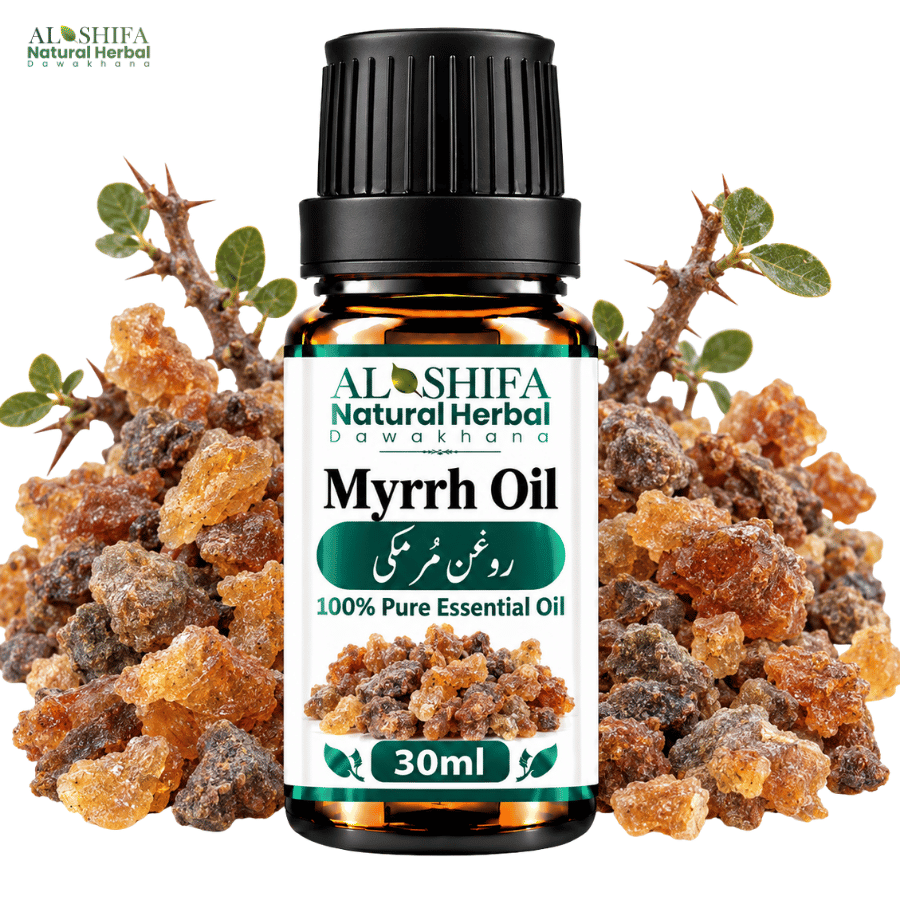
Myrrh Essential Oil / Roghan Mur Makki / Mur is a natural resin essential oil steam-distilled from the oleo-gum-resin of Commiphora myrrha. Its warm, deep, resinous, balsamic, earthy, woody and slightly spicy aroma makes it ideal for perfumery, attars, aromatic blends, incense-inspired fragrances, massage formulations, body care, soaps and cosmetics.
Al Shifa Myrrh Essential Oil is carefully selected for botanical identity, characteristic rich resinous aroma, freshness, quality and clean handling.
Key Features:
Usage: Dilute appropriately in a suitable carrier oil for topical use, or use at an appropriate concentration in compatible perfumes, attars, aromatic blends, soaps and cosmetic formulations.
Important Note: Myrrh Essential Oil is the concentrated volatile fraction distilled from Myrrh oleo-gum-resin and is different from whole Myrrh resin, extracts, resinoids, infused oils and fragrance oils.
Myrrh Essential Oil / Roghan Mur Makki – روغن مُر مکی is a distinctive resinous essential oil obtained from the aromatic oleo-gum-resin of Commiphora myrrha (Nees) Engl., a small thorny tree belonging to the Burseraceae family. The hardened aromatic resin is commonly known as Myrrh / Mur / مُر and has a long history of use in perfumery, incense, aromatic preparations and traditional herbal systems.
Myrrh Essential Oil is generally produced by steam distillation or hydrodistillation of Myrrh oleo-gum-resin. The resulting oil has a characteristic warm, deep, resinous, balsamic, earthy, woody, smoky and slightly spicy aroma. Its rich fragrance makes it especially valuable in perfumery, attars, incense-inspired aromatic blends, soaps, body-care products and cosmetic formulations.
Myrrh belongs to the same botanical family as Frankincense, but the two are obtained from different plant genera and have clearly different aromatic profiles.
At Al Shifa Natural Herbal Dawakhana, Myrrh Essential Oil is carefully selected for its botanical identity, characteristic resinous aroma, freshness, quality and clean handling.
Myrrh is the naturally occurring aromatic oleo-gum-resin obtained from certain Commiphora trees.
When the bark is naturally damaged or intentionally tapped, a sticky resinous exudate emerges. It gradually thickens and hardens into reddish-brown to dark brown aromatic resin pieces known as Myrrh.
The resin contains both volatile and non-volatile constituents. Distillation separates its volatile aromatic fraction to produce Myrrh Essential Oil.
Common names include:
Product Name: Myrrh Essential Oil / Roghan Mur Makki / Mur – روغن مُر مکی / مُر
English Name: Myrrh Essential Oil / Myrrh Oil
Urdu Name: روغن مُر مکی / مُر
Roman Name: Roghan Mur Makki / Mur / Mur Makki
Scientific Name: Commiphora myrrha (Nees) Engl.
Plant Family: Burseraceae
Plant Part: Oleo-Gum-Resin / Resinous Exudate
Plant Type: Aromatic Resin-Producing Tree/Shrub
Oil Type: Volatile Resin Essential Oil
Extraction Method: Steam Distillation / Hydrodistillation
Common Names: Myrrh / Gum Myrrh / Mur / Mur Makki
Appearance: Usually yellow to amber, reddish-amber or brownish liquid; natural variation can occur
Aroma: Warm, Resinous, Balsamic, Earthy, Woody, Smoky & Slightly Spicy
Primary Applications: Perfumery, Attars, Aromatic Blends, Incense-Inspired Fragrances, Body Care, Soaps & Cosmetics
Product Type: Natural Distilled Resin Essential Oil
Commiphora myrrha is a thorny shrub or small tree adapted to dry and arid environments.
It belongs to the Burseraceae family, a botanical family well known for aromatic resin-producing plants.
The plant develops:
The valuable aromatic material is obtained primarily from the resin rather than flowers or leaves.
Mur Makki / مُر مکی is a familiar regional and herbal-trade name for Myrrh.
The word Mur / مُر is also commonly associated with Myrrh resin.
Because several Commiphora species can produce aromatic resins, the botanical identity is important when purchasing a precisely defined Myrrh product.
For this product, the intended botanical identity is:
Commiphora myrrha (Nees) Engl.
Myrrh is more accurately described as an oleo-gum-resin, rather than simply a plant sap.
It naturally contains different fractions, including:
When the resin is steam-distilled, primarily the volatile aromatic fraction is collected as essential oil.
This distinction is extremely important because:
Whole Myrrh Resin ≠ Myrrh Essential Oil
Myrrh Essential Oil is commonly obtained through steam distillation or hydrodistillation of the oleo-gum-resin.
During production:
The resulting oil contains the volatile fraction of Myrrh and should not be considered chemically identical to the original whole resin.
Myrrh Essential Oil has a deep and distinctive fragrance.
Its aroma can be described as:
Its aroma is particularly well suited to oriental-style, woody, resinous, amber-like and incense-inspired fragrance compositions.
Myrrh Essential Oil contains a complex mixture of volatile aromatic compounds.
Depending on botanical origin, resin quality and distillation conditions, its volatile profile can contain various:
The exact proportions can vary significantly between samples.
These constituents contribute to Myrrh Oil’s characteristic deep resinous and balsamic aroma.
Myrrh is particularly noted for its characteristic furanosesquiterpene-type constituents.
These compounds contribute significantly to the identity and aroma of the volatile fraction of Myrrh resin.
However, the presence and concentration of individual compounds vary according to botanical source and processing.
A specific isolated constituent should not be treated as equivalent to the complete Myrrh Essential Oil.
Myrrh Essential Oil is particularly valuable in perfumery because of its deep resinous character.
It can contribute:
It works particularly well in:
Its depth makes it particularly useful in the base and heart structure of complex fragrance compositions.
Myrrh Essential Oil can add warmth, richness and resinous depth to attars.
It can complement compatible:
Its strong character means that careful balancing is important in perfume-oil formulations.
Myrrh Essential Oil can be incorporated into compatible aromatic compositions where a warm, resinous and grounding fragrance profile is desired.
It blends particularly well with compatible:
Its fragrance can provide depth to otherwise bright or light aromatic compositions.
When appropriately diluted, Myrrh Essential Oil may be incorporated into compatible massage formulations.
Suitable carrier oils can include:
Myrrh Essential Oil is concentrated and should not be treated as a fixed carrier oil.
Properly diluted Myrrh Essential Oil can be incorporated as an aromatic botanical ingredient into compatible:
The concentration should be appropriate for the complete cosmetic formulation.
At an appropriate concentration, Myrrh Essential Oil may be incorporated into compatible:
The concentrated essential oil should not be applied directly to the scalp without appropriate dilution.
The warm resinous fragrance of Myrrh makes it useful for:
It can be combined with compatible woody, spicy and resinous aromatic ingredients to produce a deep fragrance profile.
Properly formulated Myrrh Essential Oil may be incorporated into:
Appropriate concentration depends on the specific oil, complete formula and intended application.
This distinction is particularly important.
Myrrh Resin: Whole dried oleo-gum-resin collected from the plant.
Myrrh Essential Oil: Volatile aromatic fraction separated from the resin through distillation.
Whole resin contains substantial non-volatile material that does not transfer into the distilled essential oil.
Therefore:
Myrrh Resin ≠ Myrrh Essential Oil
Research involving whole resin or resin extracts should not automatically be applied to distilled Myrrh Oil.
Myrrh extracts can contain different chemical fractions depending on the extraction solvent and process.
A distilled essential oil primarily captures volatile compounds.
Therefore:
Myrrh Extract ≠ Myrrh Essential Oil
The two should not be presented as chemically interchangeable.
Myrrh and Frankincense are related aromatic resins because their plants belong to the same botanical family, Burseraceae.
However:
Myrrh: Commiphora myrrha
Frankincense: Boswellia species
They are separate botanical materials with different chemical and aromatic profiles.
Myrrh tends to have a deeper, warmer, earthier and more balsamic character, while Frankincense generally has a fresher, resinous, woody and sometimes citrus-terpenic character.
Therefore:
Myrrh Essential Oil ≠ Frankincense Essential Oil
Myrrh Resinoid is another perfumery material produced from the resin through extraction rather than conventional steam distillation.
It generally contains a broader resinous fraction and may smell heavier and more persistent than distilled essential oil.
Therefore:
Myrrh Essential Oil ≠ Myrrh Resinoid
For perfume formulation, the exact material should be identified correctly.
A Myrrh infused oil is made by incorporating Myrrh material into a fixed carrier oil.
It is not the same as distilled volatile essential oil.
Therefore:
Myrrh Essential Oil ≠ Myrrh Infused Oil
Myrrh fragrance oil may contain formulated aromatic ingredients intended to reproduce a Myrrh-like fragrance.
Genuine Myrrh Essential Oil is distilled from natural Commiphora myrrha oleo-gum-resin.
Therefore:
Natural Myrrh Essential Oil ≠ Myrrh Fragrance Oil
Scientific research involving Myrrh may examine:
These are not chemically identical.
Therefore:
Whole Myrrh Resin ≠ Myrrh Essential Oil
Myrrh Extract ≠ Myrrh Essential Oil
Isolated Constituents ≠ Complete Myrrh Essential Oil
Laboratory Findings ≠ Proven Human Treatment
Research involving another Commiphora species should also not automatically be attributed to Commiphora myrrha Essential Oil.
Myrrh Essential Oil is concentrated and should be appropriately diluted for routine topical applications.
For skin use:
Myrrh has a long history of traditional medicinal use, but concentrated essential oil requires a more conservative approach.
During pregnancy, unsupervised medicinal or internal use of Myrrh Essential Oil should be avoided.
During pregnancy or breastfeeding:
Concentrated Myrrh Essential Oil should be kept securely away from children.
For child-specific products:
Myrrh Essential Oil sold for aromatic or cosmetic use should not automatically be considered suitable for ingestion.
Unless the specific product is manufactured and labelled for food or professionally supervised medicinal use:
Natural Essential Oil ≠ Automatically Food Grade
Myrrh Resin ≠ Concentrated Myrrh Essential Oil
At Al Shifa Natural Herbal Dawakhana, Myrrh Essential Oil is selected with attention to:
Botanical Identity – Commiphora myrrha.
Plant Part – Natural oleo-gum-resin.
Extraction – Distilled volatile resin essential oil.
Characteristic Aroma – Warm, resinous, balsamic, earthy, woody and slightly spicy.
Perfumery Applications – Suitable for resinous, woody and oriental-style fragrance compositions.
Attar Applications – Suitable for compatible perfume-oil formulations.
Aromatic Applications – Suitable for incense-inspired and botanical fragrance blends.
Massage Applications – Suitable when appropriately diluted.
Body-Care Applications – Suitable for properly formulated cosmetic products.
Soap & Cosmetic Applications – Suitable for compatible formulations.
Responsible Identification – Clearly distinguished from whole Myrrh resin, extracts, resinoids and fragrance oils.
Clean Handling – Carefully handled during packing.
Protective Packaging – Helps preserve the natural volatile aromatic profile.
Al Shifa Natural Herbal Dawakhana, established in 1999, supplies carefully selected botanical oils and essential oils throughout Pakistan.
Our focus for Myrrh Essential Oil includes:
For Perfumery: Incorporate into woody, resinous, amber-style, oriental-style and incense-inspired fragrance compositions.
For Attars: Use at an appropriate concentration in compatible perfume-oil formulations.
For Aromatic Blends: Combine carefully with compatible woody, resinous, floral, citrus or spice aromatic materials.
For Massage: Dilute appropriately in a suitable carrier oil before topical application.
For Skin & Body Care: Incorporate at an appropriate concentration into properly formulated cosmetic products.
For Hair & Scalp Care: Add at an appropriate concentration to compatible hair-care formulations.
For Soap & Cosmetics: Follow the complete formulation and applicable ingredient safety limits.
Myrrh Essential Oil / Roghan Mur Makki / Mur – روغن مُر مکی / مُر should be botanically identified as Commiphora myrrha (Nees) Engl.
It should be clearly distinguished from whole Myrrh resin, Myrrh extracts, Myrrh resinoid, infused oil and fragrance oil.
The essential oil represents primarily the volatile aromatic fraction of the oleo-gum-resin, so research or properties associated with whole resin and non-volatile extracts should not automatically be transferred to the distilled essential oil.
For best quality:
Myrrh Essential Oil / Roghan Mur Makki / Mur – روغن مُر مکی / مُر is a distinctive natural resin essential oil distilled from the oleo-gum-resin of Commiphora myrrha. Its warm, deep, resinous, balsamic, earthy, woody and slightly spicy aroma makes it particularly suitable for perfumery, attars, incense-inspired aromatic blends, properly diluted body-care formulations, soaps and cosmetics.
Customers searching for Myrrh Essential Oil, Myrrh Oil, Commiphora myrrha Oil, Roghan Mur Makki, Mur Makki Oil, Mur Oil, Pure Myrrh Oil, Natural Myrrh Essential Oil, Myrrh Resin Oil, Myrrh Oil for Perfume, Myrrh Oil for Attar, Myrrh Oil for Massage, Myrrh Oil for Skin Care, Myrrh Oil for Soap, Myrrh Essential Oil Pakistan, Roghan Mur Makki Pakistan, Myrrh Oil Lahore, Myrrh Oil price in Pakistan or buy Myrrh Essential Oil online Pakistan can choose Al Shifa Natural Herbal Dawakhana for carefully selected quality and clear botanical identification.
Since 1999, Al Shifa Natural Herbal Dawakhana has focused on supplying botanical oils and essential oils with attention to identity, quality, freshness, clean handling, responsible information, protective packaging and proper storage.
Product Name: Myrrh Essential Oil / Roghan Mur Makki / Mur – روغن مُر مکی / مُر
English Name: Myrrh Essential Oil / Myrrh Oil
Urdu Name: روغن مُر مکی / مُر
Roman Name: Roghan Mur Makki / Mur / Mur Makki
Scientific Name: Commiphora myrrha (Nees) Engl.
Plant Family: Burseraceae
Plant Part: Oleo-Gum-Resin / Resinous Exudate
Oil Type: Volatile Resin Essential Oil
Extraction Method: Steam Distillation / Hydrodistillation
Common Names: Myrrh / Gum Myrrh / Mur / Mur Makki
Appearance: Usually Yellow to Amber, Reddish-Amber or Brownish
Aroma: Warm, Resinous, Balsamic, Earthy, Woody, Smoky & Slightly Spicy
Primary Applications: Perfumery, Attars, Aromatic Blends, Incense-Inspired Fragrances, Properly Diluted Body Care, Soaps & Cosmetics
Product Type: Natural Distilled Resin Essential Oil
Important Note: Genuine Myrrh Essential Oil is the distilled volatile fraction of Commiphora myrrha oleo-gum-resin. It is different from whole Myrrh resin, resin extracts, resinoids, infused oils and synthetic fragrance oils.
روغن مر مکی ایک گہری، گرم اور خاص خوشبو رکھنے والا قدرتی روغن ہے جو مر کے درخت سے نکلنے والی خوشبودار گوند سے حاصل کیا جاتا ہے۔ مر کا اہم سائنسی نام کوممیفورا مائرہا ہے اور اس کا تعلق برسیریسی خاندان سے ہے۔
مر کا درخت زیادہ تر گرم اور خشک علاقوں میں اگتا ہے۔ اس کے تنے اور شاخوں کی چھال پر قدرتی طور پر یا ہلکا شگاف لگنے سے گاڑھا رس نکلتا ہے جو ہوا کے ساتھ خشک ہو کر زرد، سرخی مائل بھورے یا گہرے بھورے گوند کے ٹکڑوں میں تبدیل ہو جاتا ہے۔ یہی خوشبودار گوند مر کہلاتی ہے۔
روغن مر مکی اسی خوشبودار گوند سے زیادہ تر بھاپ کے ذریعے حاصل کیا جاتا ہے۔ اس کی خوشبو گرم، گہری، گوند جیسی، لکڑی جیسی، مٹی جیسی، قدرے دھوئیں جیسی اور ہلکی تلخ ہوتی ہے۔
مر مکی صدیوں سے حکمت، خوشبو سازی، جسمانی دیکھ بھال اور خوشبودار روغنوں میں اہم مقام رکھتی ہے۔
اردو نام: مر، مر مکی، مر مکی، روغن مر مکی
پنجابی نام: مر، مر مکی
ہندی نام: ہیرابول، مر، مر مکی
فارسی نام: مر، مر مکی
عربی نام: مر، مر مکی
انگریزی نام: مائر، مائر آئل، مائر ایسینشل آئل
سائنسی نام: کوممیفورا مائرہا
خاندان: برسیریسی
استعمال ہونے والا حصہ: درخت سے حاصل ہونے والی خوشبودار گوند
روغن کی قسم: مر کی گوند سے بھاپ کے ذریعے حاصل ہونے والا قدرتی خوشبودار روغن
مر ایک چھوٹا، کانٹے دار اور خشک علاقوں میں اگنے والا درخت یا بڑی جھاڑی ہے۔
اس کی شاخیں سخت اور بے ترتیب ہوتی ہیں۔
چھال ہلکی سرمئی یا بھوری ہوتی ہے۔
اس کے پتے نسبتاً چھوٹے ہوتے ہیں۔
درخت کی سب سے اہم چیز اس کی خوشبودار گوند ہے۔
چھال سے نکلنے والا رس شروع میں نرم اور چپچپا ہوتا ہے۔ خشک ہونے کے بعد یہ سخت گوند کے ٹکڑوں میں تبدیل ہو جاتا ہے۔
اچھی مر کی خوشبو گرم، گہری، گوند جیسی اور قدرے تلخ ہوتی ہے۔
اچھی مر مکی کی اہم پہچان:
ہے۔
مر مکی کی گوند اور اس سے حاصل ہونے والا روغن ایک جیسی چیز نہیں ہیں۔ روغن گوند سے حاصل ہونے والی زیادہ طاقتور خوشبودار شکل ہے۔
مر کے درخت گرم اور خشک علاقوں میں اچھی نشوونما پاتے ہیں۔
یہ درخت مشرقی افریقہ اور جزیرہ عرب کے کئی خشک علاقوں سے خاص نسبت رکھتا ہے۔
درخت کی چھال سے نکلنے والی گوند جمع کی جاتی ہے، صاف کی جاتی ہے اور خشک ہونے کے بعد مختلف استعمال میں لائی جاتی ہے۔
اسی گوند سے روغن مر مکی حاصل کیا جاتا ہے۔
خشک مر مکی کی خوشبودار گوند کو بھاپ کے ذریعے کشید کیا جاتا ہے۔
بھاپ گوند کے خوشبودار اجزا کو اپنے ساتھ لے جاتی ہے۔
بعد میں بھاپ کو ٹھنڈا کیا جاتا ہے اور پانی سے خوشبودار روغن الگ کیا جاتا ہے۔
اس طرح حاصل ہونے والا روغن گوند کے مقابلے میں زیادہ طاقتور خوشبو رکھتا ہے۔
روغن مر مکی کی خوشبو:
ہوتی ہے۔
اس کی خوشبو دیر تک قائم رہتی ہے، اسی لیے اسے خوشبو سازی میں خاص اہمیت حاصل ہے۔
روغن مر مکی کی رنگت ہلکی زرد، سنہری زرد، عنبری یا زردی مائل بھوری رہتی ہے۔
وقت کے ساتھ روغن قدرے گاڑھا اور گہرا بھی ہو جاتا ہے۔
قدرتی روغن کی رنگت گوند کی حالت، درخت کی قسم اور روغن حاصل کرنے کے طریقے کے مطابق رہتی ہے۔
پاکستانی اور برصغیر کی معروف حکیمی کتب مفردات میں مر مکی کو گرم اور خشک مزاج کی دوا شمار کیا جاتا ہے۔
اسے معدہ، منہ اور مسوڑھوں، جلد، زخموں اور خواتین کے مخصوص امراض کے لیے تیار حکیمی ادویات میں استعمال کیا جاتا ہے۔
مر مکی کی اصل گوند اور اس سے حاصل ہونے والا خالص خوشبودار روغن ایک جیسی مقدار میں استعمال نہیں کیے جاتے۔
خالص روغن زیادہ طاقتور ہوتا ہے، اس لیے اندرونی طبی استعمال خود سے نہ کریں۔
مر مکی حکمت میں معروف خوشبودار گوند ہے۔
اسے:
کے لیے تیار حکیمی ادویات میں استعمال کیا جاتا ہے۔
مر مکی کی گوند، سفوف اور خالص روغن کی مقدار ایک جیسی نہیں ہوتی۔
کسی بیماری کے لیے اندرونی طبی استعمال معالج سے پوچھ کر کریں۔
مر مکی کو حکمت اور جڑی بوٹیوں پر مبنی منہ کی صفائی کی ادویات میں خاص اہمیت حاصل ہے۔
اسے مسوڑھوں کی کمزوری، منہ کی صفائی اور منہ کے امراض کے لیے تیار ادویات میں شامل کیا جاتا ہے۔
مر کی گوند اور اس سے تیار طبی آمیزوں کا استعمال خالص روغن کو براہ راست منہ میں لگانے سے الگ ہے۔
خالص روغن خود سے منہ میں نہ ڈالیں اور نہ نگلیں۔
منہ یا مسوڑھوں کی بیماری کے لیے طبی استعمال معالج سے پوچھ کر کریں۔
حکمت میں مر مکی کو معدے کے لیے استعمال ہونے والی گوندوں میں شمار کیا جاتا ہے۔
اسے معدے کی کمزوری، بدہضمی اور پیٹ کی گیس کے لیے تیار حکیمی ادویات میں شامل کیا جاتا ہے۔
یہ استعمال مر مکی کی اصل گوند سے جڑا ہے۔
خالص روغن مر مکی کو خود سے پینا درست نہیں۔
معدے کی کسی بیماری کے لیے طبی استعمال معالج سے پوچھ کر کریں۔
مر مکی جلد کی دیکھ بھال کے لیے مشہور خوشبودار گوند ہے۔
روغن مر مکی کو بنیادی روغن کے ساتھ ملا کر جلد کے روغنی آمیزوں میں استعمال کیا جاتا ہے۔
اسے خاص طور پر خشک اور کھردری جلد کے لیے تیار روغنی آمیزوں میں کم مقدار میں شامل کیا جاتا ہے۔
خالص روغن کو براہ راست زیادہ مقدار میں جلد پر نہ لگائیں۔
روغن مر مکی کو خشک جلد کے لیے روغن بادام، روغن جوجوبا، روغن ناریل یا دوسرے بنیادی روغنوں کے ساتھ کم مقدار میں ملایا جاتا ہے۔
اس کی گہری خوشبو جلد کی دیکھ بھال کے روغنوں اور کریموں میں بھی پسند کی جاتی ہے۔
پہلی بار استعمال سے پہلے جلد کے چھوٹے حصے پر تھوڑی مقدار آزمائیں۔
روغن مر مکی کو خشک ہاتھوں، پاؤں اور ایڑیوں کے لیے تیار روغنی آمیزوں میں کم مقدار میں شامل کیا جاتا ہے۔
اسے بنیادی روغن کے ساتھ اچھی طرح ملا کر جلد پر لگایا جاتا ہے۔
پھٹی یا زخمی جلد پر خالص روغن براہ راست نہ لگائیں۔
روغن مر مکی کو جسمانی مالش کے روغنوں میں کم مقدار میں شامل کیا جاتا ہے۔
اسے روغن بادام، روغن جوجوبا، روغن تل، روغن ناریل یا روغن زیتون کے ساتھ ملایا جاتا ہے۔
اس کی گرم، گہری اور لکڑی جیسی خوشبو جسمانی مالش کے روغن کو خاص مہک دیتی ہے۔
جسمانی مشقت، سفر یا ورزش کے بعد روغن مر مکی کو بنیادی روغن میں ملا کر خوشبودار مالش میں استعمال کیا جاتا ہے۔
اسے کندھوں، بازوؤں، کمر، ٹانگوں اور پاؤں کی مالش میں کم مقدار میں شامل کیا جاتا ہے۔
اس کی گرم اور گہری خوشبو آرام کے وقت خوشگوار احساس دیتی ہے۔
روغن مر مکی کو پٹھوں کی خوشبودار مالش کے آمیزوں میں شامل کیا جاتا ہے۔
اسے بنیادی روغن میں کم مقدار میں ملا کر گردن، کندھوں، بازوؤں، کمر اور ٹانگوں پر نرم ہاتھ سے مالش کی جاتی ہے۔
پٹھوں یا جوڑوں کے امراض میں طبی استعمال معالج سے پوچھ کر کریں۔
روغن مر مکی میں کئی قدرتی خوشبودار اجزا پائے جاتے ہیں، جن میں:
جیسے خوشبودار اجزا شامل رہتے ہیں۔
مر مکی کی خاص گرم، گوند جیسی، لکڑی جیسی اور گہری خوشبو میں یہ اجزا اہم حصہ رکھتے ہیں۔
گوند مر مکی میں موجود تمام اجزا بھاپ سے حاصل ہونے والے روغن میں ایک جیسی مقدار میں نہیں آتے، اس لیے اصل گوند اور روغن کو ایک جیسی چیز نہ سمجھیں۔
مر مکی کی گوند درخت کی چھال سے نکلنے والا قدرتی مادہ ہے جو خشک ہو کر سخت ٹکڑوں میں تبدیل ہوتا ہے۔
روغن مر مکی اسی گوند سے بھاپ کے ذریعے حاصل ہونے والی خوشبودار شکل ہے۔
گوند حکیمی ادویات میں اپنی مقررہ مقدار کے مطابق استعمال ہوتی ہے۔
خالص روغن بہت طاقتور ہوتا ہے اور اسے کم مقدار میں استعمال کیا جاتا ہے۔
گوند کی طبی مقدار کو روغن کی مقدار نہ سمجھیں۔
بازار میں مر سے حاصل ہونے والی مختلف شکلیں دستیاب ہوتی ہیں۔
بھاپ سے حاصل ہونے والا روغن نسبتاً بہنے والا خوشبودار روغن ہوتا ہے۔
مر کا گاڑھا جوہر زیادہ گاڑھا، چپچپا اور گہرے رنگ کا رہتا ہے۔
دونوں کی خوشبو ایک ہی گوند سے جڑی ہوتی ہے، لیکن ان کی گاڑھا پن، استعمال اور خوشبو کی شدت الگ رہتی ہے۔
خریدتے وقت بوتل پر روغن کی قسم دیکھنا اہم ہے۔
مر مکی اور کندر دونوں خوشبودار گوندیں ہیں لیکن دونوں الگ درختوں سے حاصل ہوتی ہیں۔
مر مکی کوممیفورا نسل کے درخت سے حاصل ہوتی ہے۔
کندر بوسویلیا نسل کے درخت سے حاصل ہوتا ہے۔
مر مکی کی خوشبو زیادہ گہری، گرم، مٹی جیسی، گوند جیسی اور قدرے تلخ ہوتی ہے۔
کندر کی خوشبو نسبتاً تازہ، گوند جیسی، لکڑی جیسی اور ہلکی ترش مہک رکھتی ہے۔
دونوں روغنوں کو ایک ہی چیز نہ سمجھیں۔
روغن مر مکی خوشبو سازی میں بہت اہم خوشبودار روغن ہے۔
اس کی گہری، گرم، گوند جیسی، مٹی جیسی اور لکڑی جیسی خوشبو دوسرے خوشبودار اجزا کو گہرائی دیتی ہے۔
اسے خاص طور پر مشرقی، گوند، لکڑی، مصالحہ اور گرم خوشبو والے آمیزوں میں استعمال کیا جاتا ہے۔
اس کی خوشبو دیر تک قائم رہنے کی وجہ سے عطر اور خوشبو کے آمیزوں میں پسند کی جاتی ہے۔
روغن مر مکی کو:
کے ساتھ خوشبودار آمیزوں میں ملایا جاتا ہے۔
روغن مر مکی کو خوشبودار صابن میں کم مقدار میں استعمال کیا جاتا ہے۔
اس کی گرم، گہری اور گوند جیسی مہک صابن کو الگ خوشبو دیتی ہے۔
جلد کے لیے تیار صابن میں اس کی مقدار کم رکھی جاتی ہے۔
روغن مر مکی کو خوشبودار غسل کے لیے کم مقدار میں استعمال کیا جاتا ہے۔
اسے پہلے بنیادی روغن یا غسل کے لیے تیار بغیر خوشبو والے آمیزے میں اچھی طرح ملایا جاتا ہے۔
اس کے بعد غسل کے پانی میں شامل کیا جاتا ہے۔
خالص روغن براہ راست زیادہ مقدار میں پانی میں نہ ڈالیں۔
روغن مر مکی کو خوشبو پھیلانے والے آلے میں کم مقدار میں استعمال کیا جاتا ہے۔
اس کی گرم، گہری، لکڑی اور گوند جیسی خوشبو کمرے کو بھرپور مہک دیتی ہے۔
اسے کندر، صندل، سنترہ یا دوسرے خوشبودار روغنوں کے ساتھ ملا کر بھی استعمال کیا جاتا ہے۔
روغن مر مکی کو بالوں اور سر کی جلد کے خوشبودار روغنی آمیزوں میں بہت کم مقدار میں شامل کیا جاتا ہے۔
اسے روغن ناریل، روغن جوجوبا یا روغن بادام کے ساتھ ملایا جاتا ہے۔
خالص روغن براہ راست زیادہ مقدار میں سر کی جلد پر نہ لگائیں۔
سر کی جلد کے امراض میں طبی استعمال معالج سے پوچھ کر کریں۔
اصل روغن مر مکی کے لیے درج ذیل چیزیں دیکھیں:
صرف مر یا مائر نام دیکھنے کے بجائے سائنسی نام اور روغن کی قسم دیکھنا اہم ہے۔
روغن مر مکی کو بنیادی روغن میں کم مقدار میں ملائیں۔
تیار آمیزے کی تھوڑی مقدار جلد پر لگائیں۔
پہلی بار استعمال سے پہلے جلد کے چھوٹے حصے پر آزمائیں۔
سرخی، خارش، سوجن یا جلن پیدا ہو تو استعمال بند کریں۔
روغن بادام، روغن جوجوبا، روغن ناریل، روغن تل یا روغن زیتون میں روغن مر مکی کی کم مقدار شامل کریں۔
دونوں روغن اچھی طرح ملانے کے بعد مطلوبہ جسمانی حصے پر نرم ہاتھ سے مالش کریں۔
خالص روغن کو براہ راست زیادہ مقدار میں جسم پر نہ لگائیں۔
روغن مر مکی کو آنکھوں، پلکوں، ہونٹوں، منہ، ناک کے اندرونی حصے اور جسم کے حساس حصوں پر نہ لگائیں۔
کھلے زخم یا جلی ہوئی جلد پر خالص روغن نہ لگائیں۔
استعمال کے بعد ہاتھ اچھی طرح دھوئیں۔
روغن مر مکی کو خود سے نہ پئیں۔
مر مکی کی گوند، سفوف اور اس سے حاصل ہونے والا خالص روغن ایک جیسی مقدار میں استعمال نہیں کیے جاتے۔
حکیمی ادویات میں مر مکی کی گوند کی مقدار کو خالص روغن کی مقدار نہ سمجھیں۔
کسی بیماری کے لیے اندرونی طبی استعمال معالج سے پوچھ کر کریں۔
حمل کے دوران روغن مر مکی کا اندرونی استعمال نہ کریں۔
مر مکی کو حکمت میں خواتین کے مخصوص نظام سے جڑی ادویات میں بھی استعمال کیا جاتا ہے، اس لیے حمل کے دوران اس کے خالص روغن سے خاص احتیاط ضروری ہے۔
حمل کے دوران طبی استعمال معالج سے پوچھ کر کریں۔
دودھ پلانے کے دوران روغن مر مکی کا اندرونی استعمال خود سے نہ کریں۔
اسے چھاتی یا ایسی جگہ نہ لگائیں جہاں سے بچے کے منہ تک پہنچے۔
طبی استعمال معالج سے پوچھ کر کریں۔
بچوں کو روغن مر مکی خود سے نہ پلائیں۔
خالص روغن بچوں کے منہ، ناک اور آنکھوں کے قریب استعمال نہ کریں۔
بچوں کے لیے طبی استعمال معالج سے پوچھ کر کریں۔
روغن بچوں کی پہنچ سے دور رکھیں۔
روغن مر مکی کوممیفورا مائرہا کے درخت سے حاصل ہونے والی خوشبودار گوند سے بھاپ کے ذریعے حاصل کیا جاتا ہے۔
اس کی نمایاں پہچان گرم، گہری، گوند جیسی، لکڑی جیسی، مٹی جیسی اور قدرے تلخ خوشبو ہے۔
اس میں فرانو یودیسما ایک تین ڈائین، کرزیرین، لنڈیسٹرین، جرماکرین بی، ایلیمین، کیریوفائلین اور دوسرے قدرتی خوشبودار اجزا پائے جاتے ہیں۔
پاکستانی اور برصغیر کی معروف حکیمی کتب مفردات میں مر مکی کو گرم اور خشک مزاج کی دوا شمار کیا جاتا ہے۔
حکمت میں مر مکی کو معدے، منہ اور مسوڑھوں، جلد، زخموں اور خواتین کے مخصوص امراض کے لیے تیار ادویات میں استعمال کیا جاتا ہے۔
خالص روغن مر مکی گوند کے مقابلے میں زیادہ طاقتور خوشبودار شکل ہے، اس لیے اسے خود سے اندرونی طور پر استعمال نہ کریں۔
الشفاء نیچرل ہربل دواخانہ میں روغن مر مکی کے لیے درج ذیل باتوں کو اہمیت دی جاتی ہے:
اصل مر مکی: کوممیفورا مائرہا کے درخت سے حاصل ہونے والی صحیح خوشبودار گوند کو اہمیت دی جاتی ہے۔
اچھی گوند: صاف، خشک، خوشبودار اور اچھی حالت والی مر مکی کی گوند کو اہمیت دی جاتی ہے۔
قدرتی خوشبو: گرم، گہری، گوند جیسی، لکڑی جیسی اور مٹی جیسی اپنی خاص خوشبو کو اہمیت دی جاتی ہے۔
قدرتی رنگت: زرد، سنہری، عنبری یا زردی مائل بھوری قدرتی رنگت کو دیکھا جاتا ہے۔
صاف روغن: پانی، گرد اور غیر ضروری ذرات سے پاک روغن کو اہمیت دی جاتی ہے۔
تازگی: باسی یا خراب بو والے روغن سے بچا جاتا ہے۔
صحیح پہچان: سائنسی نام، استعمال ہونے والی گوند اور روغن حاصل کرنے کا طریقہ واضح ہونے کو اہمیت دی جاتی ہے۔
غیر ضروری ملاوٹ سے پاک: غیر ضروری رنگ، مصنوعی خوشبو اور کم معیار کے روغن کی ملاوٹ سے پاک ہونے کو اہمیت دی جاتی ہے۔
الشفاء نیچرل ہربل دواخانہ سنہ ۱۹۹۹ سے قدرتی جڑی بوٹیوں، پھولوں، پتوں، جڑوں، بیجوں، خوشبودار گوندوں اور ان سے حاصل ہونے والے روغنوں کی سپلائی کر رہا ہے۔
ہم روغن مر مکی میں اصل کوممیفورا مائرہا کی پہچان، اچھی خوشبودار گوند، قدرتی رنگت، مخصوص گرم اور گہری خوشبو، صاف حالت، تازگی اور غیر ضروری ملاوٹ سے پاک ہونے کو اہمیت دیتے ہیں۔
اچھے روغن مر مکی کی پہچان اس کی اصل گوند، مخصوص گرم خوشبو، قدرتی رنگت، صاف حالت اور تازگی سے کی جاتی ہے۔
روغن مر مکی کو ٹھنڈی، خشک اور روشنی سے محفوظ جگہ پر کسی جار میں اچھی طرح پیک کر کے رکھیں۔
تیز دھوپ اور زیادہ گرمی سے بچائیں۔
استعمال کے بعد ڈھکن اچھی طرح بند کریں۔
پانی سے محفوظ رکھیں۔
وقت کے ساتھ مر مکی کا روغن قدرے گاڑھا ہو سکتا ہے۔
باسی یا خراب بو پیدا ہونے پر استعمال نہ کریں۔
بچوں کی پہنچ سے دور رکھیں۔
روغن مر مکی خریدتے وقت سائنسی نام کوممیفورا مائرہا دیکھیں۔
مر مکی اور کندر دو الگ خوشبودار گوندیں ہیں، اس لیے دونوں کو ایک نہ سمجھیں۔
خالص روغن کو براہ راست زیادہ مقدار میں جلد پر نہ لگائیں۔
پہلی بار استعمال سے پہلے جلد کے چھوٹے حصے پر تھوڑی مقدار آزمائیں۔
سرخی، خارش، سوجن یا جلن پیدا ہو تو استعمال بند کریں۔
آنکھوں، ہونٹوں، منہ، ناک کے اندرونی حصے اور کھلے زخموں پر خالص روغن نہ لگائیں۔
خالص روغن خود سے نہ پئیں۔
حمل کے دوران اندرونی استعمال نہ کریں۔
کسی بیماری کے لیے اندرونی طبی استعمال معالج سے پوچھ کر کریں۔
روغن مر مکی مر کے درخت کی خوشبودار گوند سے حاصل ہونے والا قدرتی خوشبودار روغن ہے۔
اس کا اہم سائنسی نام کوممیفورا مائرہا ہے۔
اس کی نمایاں پہچان گرم، گہری، گوند جیسی، لکڑی جیسی، مٹی جیسی اور ہلکی تلخ خوشبو ہے۔
پاکستانی اور برصغیر کی حکمت میں مر مکی کو گرم اور خشک مزاج کی دوا شمار کیا جاتا ہے اور اسے معدے، منہ اور مسوڑھوں، جلد اور خواتین کے مخصوص امراض کے لیے تیار حکیمی ادویات میں استعمال کیا جاتا ہے۔
روغن مر مکی کو جسمانی مالش، خشک جلد کے روغنی آمیزوں، ہاتھوں اور پاؤں کی دیکھ بھال، بالوں کے روغنی آمیزوں، خوشبودار غسل، صابن سازی، خوشبو سازی اور ماحول کو خوشبودار بنانے میں کم مقدار میں استعمال کیا جاتا ہے۔
اصل کوممیفورا مائرہا، اچھی خوشبودار گوند، قدرتی گرم مہک، صاف حالت، قدرتی رنگت اور غیر ضروری ملاوٹ سے پاک ہونا اچھے روغن مر مکی کی اہم پہچان ہے۔